Pacer

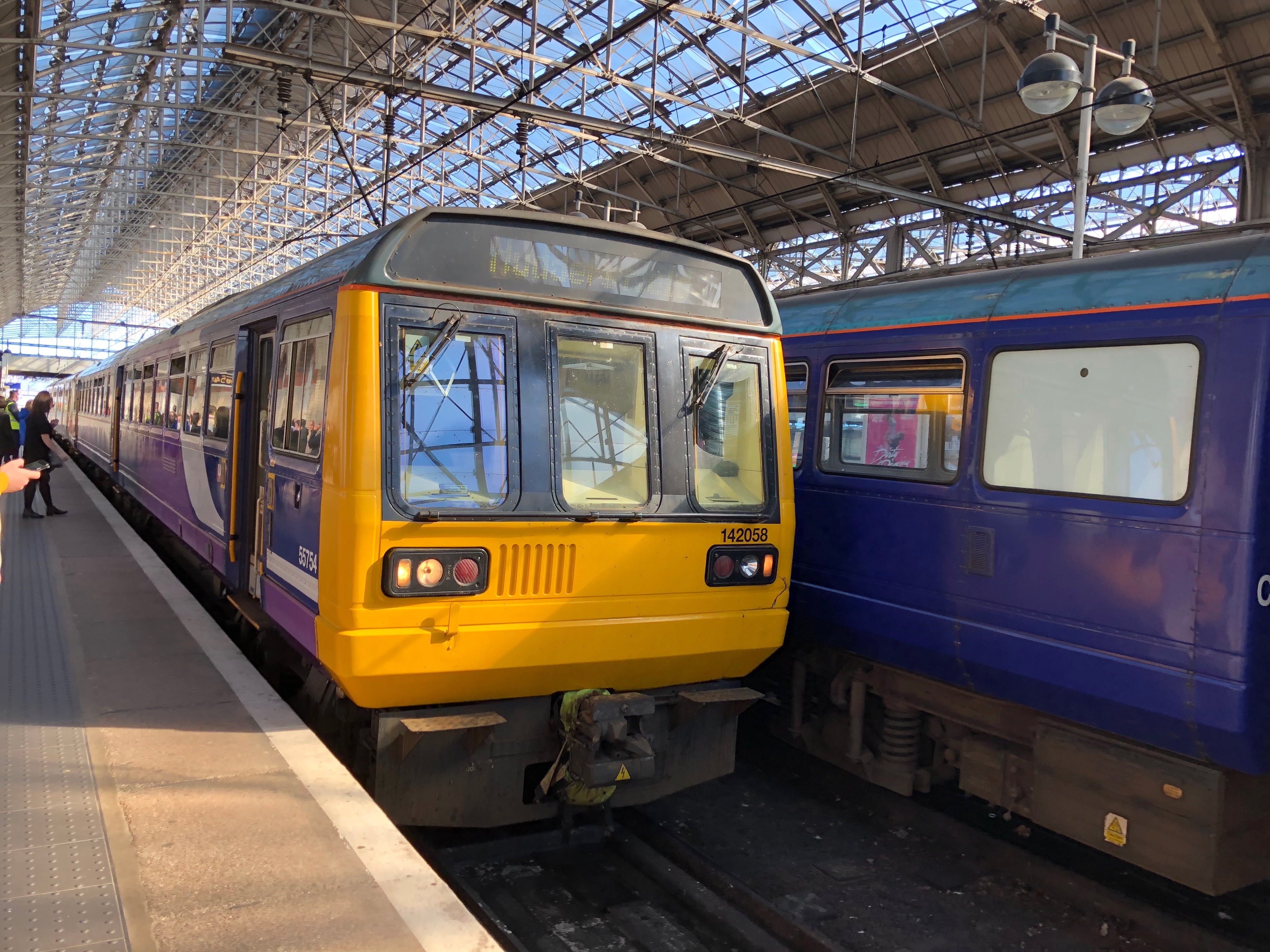
Class 142 Pacer

A week or so ago I found myself riding a number of trains in Northern England. Two of these were Pacers. What possibly can be interesting about a boring old commuter train I hear you ask. Nothing much as it turns out other than the fact they are truly abysmal trains. They were introduced in the mid eighties and were abysmal trains back then too. So abysmal in fact that they’ve never seen service in the fashionable southeast region and most of them have spent their lives plying the highly unglamorous routes in Wales, the South West and above all, in Northern England. Initially with British Rail, they have long since worn the colours of the Northern Trains franchise, the poor a’poth of train operating companies. They truly are so bad that I actually enjoyed the journeys I took in them in the same way one might enjoy a trip from Mumbai to Delhi in third class.
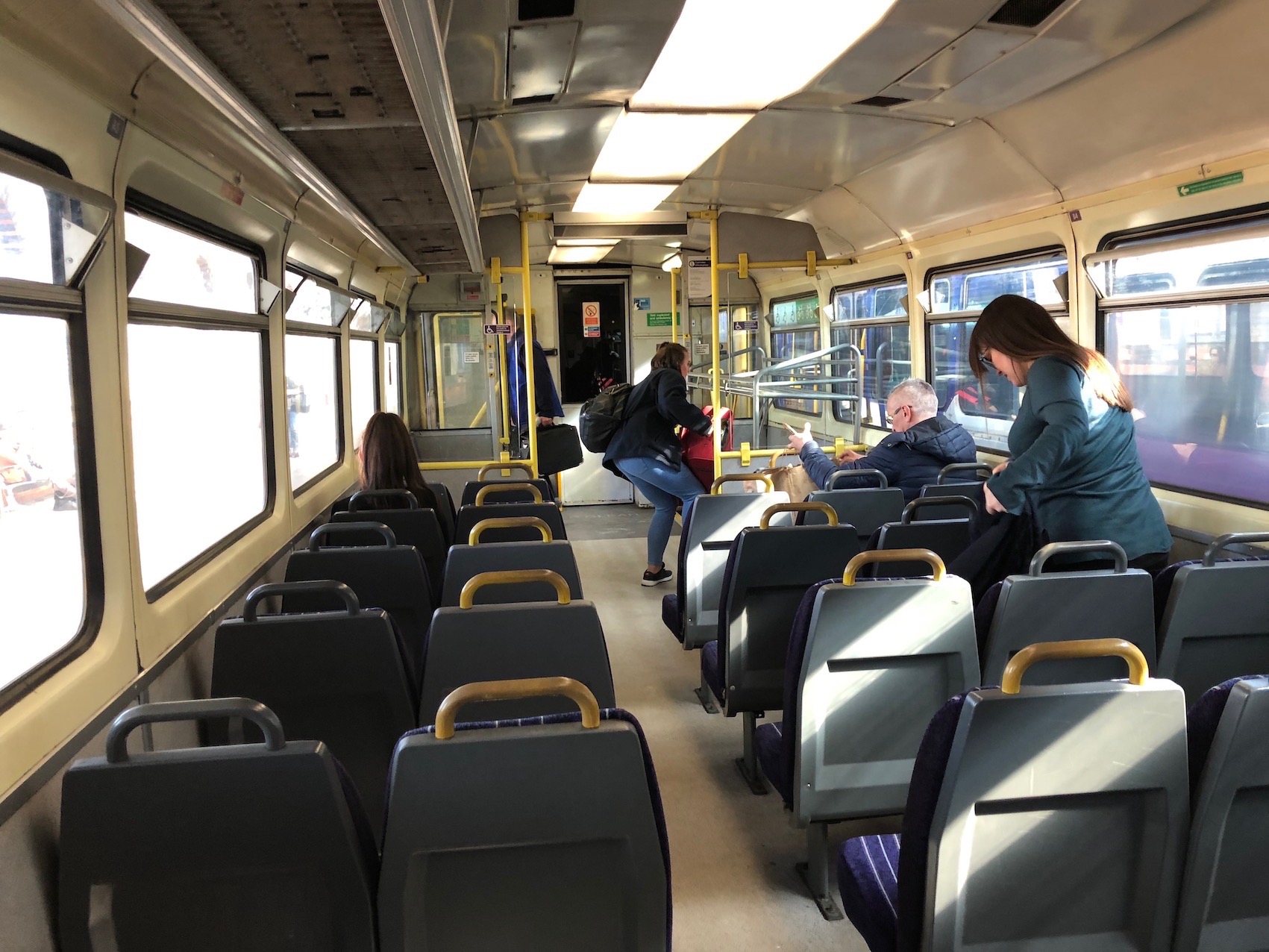
Upgraded seats, ideal for folk with no legs.

A quick history lesson courtesy of Wikipedia: The Class 140, 141, 142, 143 and 144 diesel multiple units were given the generic name “Pacer’. Built between 1980 and 1987, Pacers were basically Leyland buses plonked on top of a four wheel freight wagon under frame. They were deliberately designed on the cheap as a stopgap measure to replace ageing rolling stock and were only supposed to last twenty years at the most. Each carriage runs on four wheels set on two axels rather than the usual two sets of four wheel bogies which means the 165 Pacer trains built suffer from excessive squeal when cornering. They also suffer from a bumpy ride and earned the nickname ‘nodding donkeys’ and having now ridden a couple, I can state it is not a name that is unwarranted. The bus theme was carried through to the fittings. Bi-fold doors are still the portal of choice for the Pacer passenger and even the bench seating was the same as what you would have found on the Number 42 bus to Kirkburton. Whilst most sets have had a bit of an upgrade, bench seating still exists on some trains though luckily not the ones I sampled.
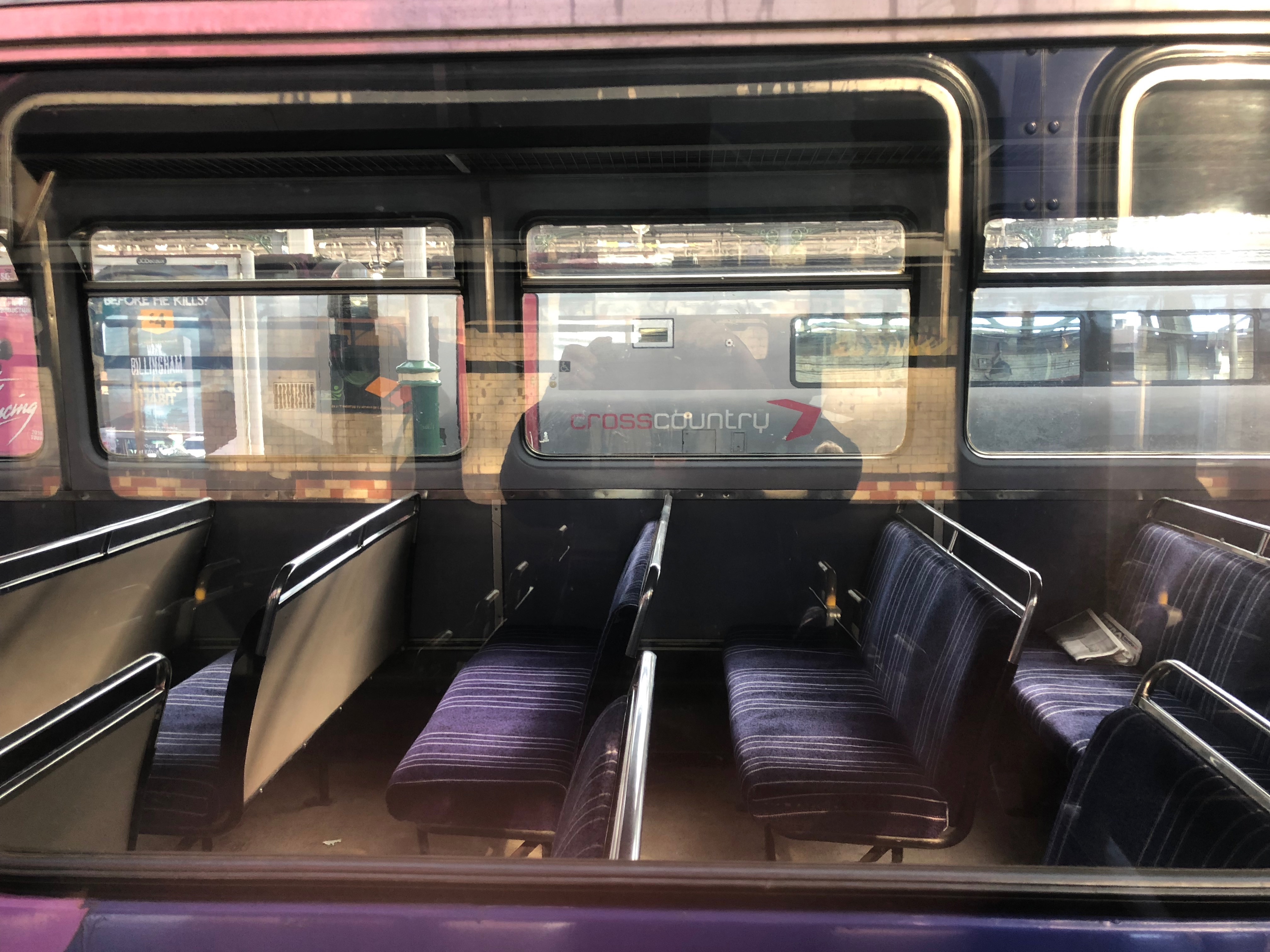
An adjacent Pacer complete with original bus seats.

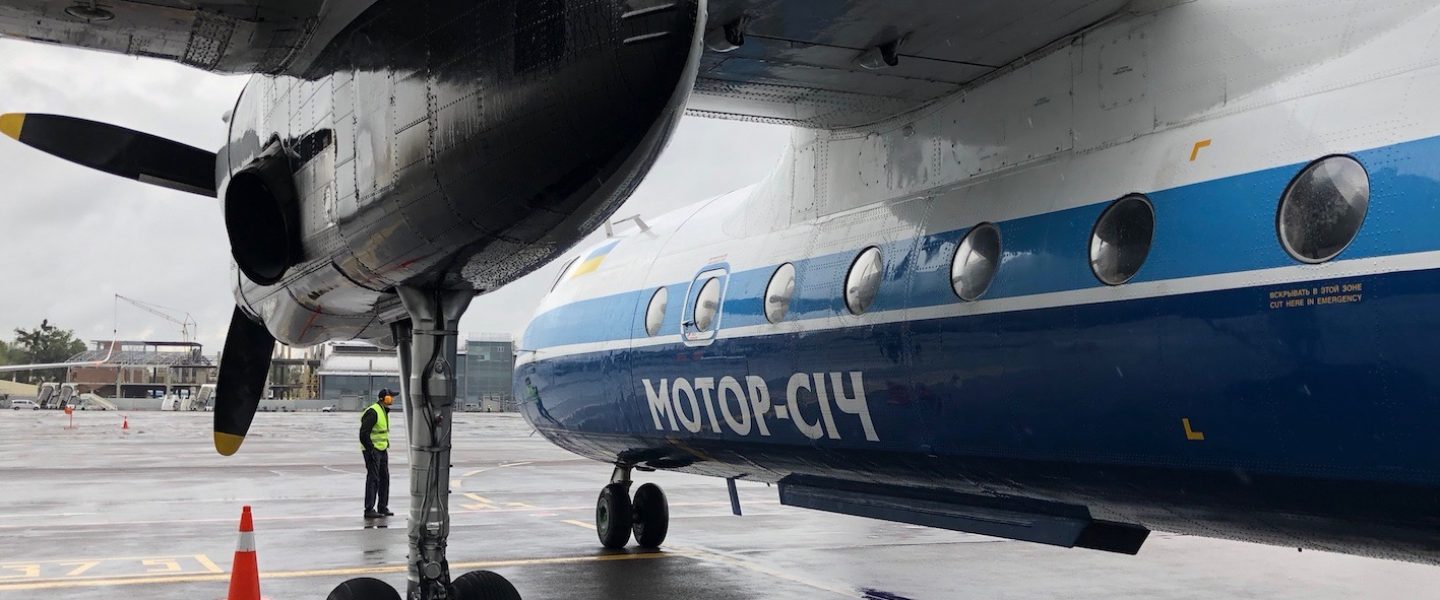
My first journey was from Manchester to Huddersfield. To be fair I could have taken the more usual Transpennine Express service and enjoyed their newer, if frequently overcrowded, trains but being a tight fisted Yorkshireman returning to God’s Own County I was particularly taken with Northern’s dirt cheap (£4.50, thanks for asking) advance fare. The journey was just five minutes longer thanks to the Pacer’s 75mph speed limit, a speed it only managed to reach after it had passed through the Standedge Tunnel high in the Pennines and started to go downhill, and the fact it had to stop at places like Mossley and Greenside. These are the sort of places the Pacer was made for. On boarding through the infamous bi-fold door I was greeted with an aroma that seemed familiar. Then I remembered – the 45 year old Antonov I’d flown on in Ukraine six months and many blogs ago smelled similar, that musty scent you often find in museum pieces. The seats that had replaced the original bus benches provided enough knee room for a dwarf with a growth defect but I got a couple to myself so spent a pleasant three quarters of an hour sitting sideways whilst being bounced around and deafened by the occasional squeal from the wheels. The second journey was a couple of days later from Huddersfield to Wakefield Kirkgate. Different seating made it a touch more comfortable and it was definitely less smelly but the rest of the Pacer experience was much the same.

Having said all that, being the geek I am I’m glad I took the journeys. Having passed their sell by dates some ten to fifteen years ago, the Pacers’ days are finally numbered. They will fall foul of the latest accessibility rules by the end of the year and be withdrawn from service. Northern have some brand new Spanish built trains joining the fleet which won’t replace the Pacers directly. Instead they will displace Sprinters, themselves a mere 30 years old, which will be cascaded down the company’s network to the services so unloved that they are currently operated by a 35 year old bus on rails. I hope the National Railway Museum preserves a working example, just so future generations can have a good laugh.
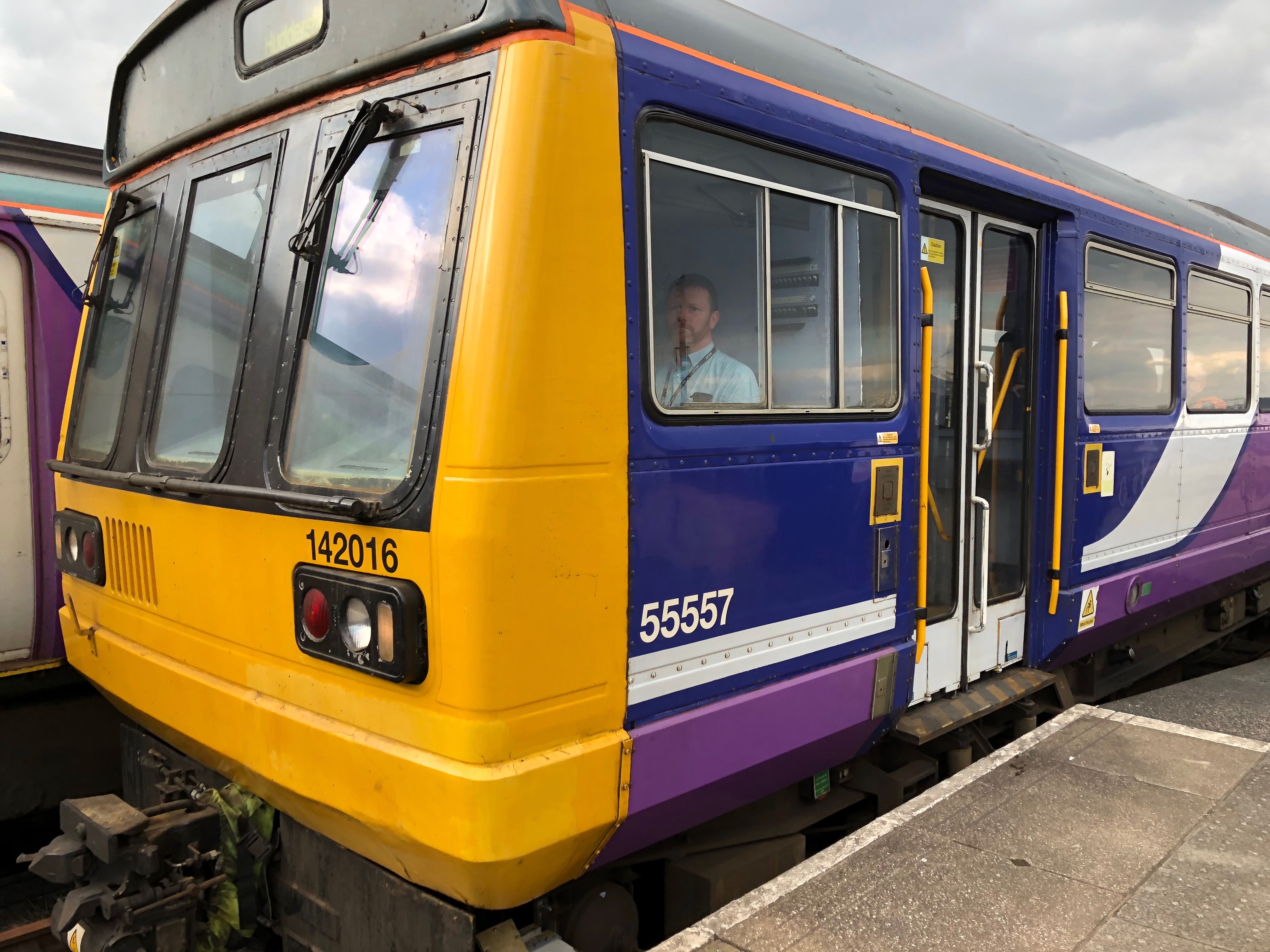
Another Class 142 Pacer with driver filling in his Eurostar Driver application form

Inter City

Back in the seventies the promotional department of British Rail, the nationalised rail company, commissioned an advert that ran on the one commercial television station, ITV. In those days there was no chance of recording a programme and whizzing the playback on during the commercial breaks so this type of advertising was very effective, especially if it utilised a catchy tune. Despite it being aired over forty years ago I can remember the advert and the beginning of the song quite clearly. A woman on a train starts singing:

We’ll travel InterCity like the men do

Inter City Sitting Pretty all the way…

The camera pans out to reveal a carriage load of ladies who all join in with the song which mentions getting away from the kitchen sink and suchlike. It ends with the line:

Away from it all and home again

The advert finishes with a view of a train crossing a viaduct in the sunset. It is hard to imagine an advert like that being aired today. Surely there would be a Twitterstorm of outrage at such blatant misogyny even though the advertisers of the day would claim it was a small step on the road to women’s rights. Women were allowed to travel Inter City before of course, it was just something that maybe they hadn’t thought of, being weak and feeble women and all that. Whatever, if the advert increased the amount of ladies taking the train to London, for that is where most Inter City routes went, I have no idea. Cringeworthy though the advert was, British Rail’s later attempts to curry favour with the British public involved hiring Jimmy Saville as the frontman and that didn’t turn out well, did it?

Class 43? No, it will always be an InterCity 125 to me.

It was a train journey I made last week that brought that advert to mind. It wasn’t because I found myself in a carriage of singing ladies, no, it was because the train I was on was some forty years old and of a similar vintage. The train in question was had a Class 43 diesel power car on each end and four Mark 3 coaches between them. Those rather dull designations hide the fact that this was one of a type of train that used to be called InterCity 125. Back in the mid seventies British Rail was in a bit of a mess. Passenger numbers were falling, hence the attempt to entice women on board, and the service was lousy. Running on a Victorian infrastructure, ageing rolling stock was coming to the end of its life and needed replacing. To halt the slide the BR engineers came up with a two new trains, one to run on the electrified West Coast Line and the other on the non-electrified East Coast and Western Region lines. The former was the original tilting train, the Inter City APT, and was something of a disaster. The latter was the Inter City 125 and was a big success. It is said it saved the railways in Britain, a bold claim perhaps but it certainly was a rare bit of good news for a failing service.

At the time it was a big deal. High speed trains had been running in Japan for ten years but no other country had any claim to speed. The French would go on to develop the TGV network and other countries have followed suit but the Inter City 125 in the mid to late seventies was cutting edge. In testing one of the prototypes reached 143.2MPH, a world speed record for a diesel train that stands to this day. Its maximum operational speed, limited by the ancient rail infrastructure, was 125MPH (hence the Inter City 125 name), a speed that shaved an hour off the journey from Edinburgh to London. Prior to their entry into service, the speed limit on Britain’s railways was 100MPH. The trains entered service in 1976 on Western Region and the East Coast Mainline a couple of year later. Living to the east of the Pennines a trip to London suddenly became rather appealing. Catching the train from Wakefield Westgate, the metropolis was just two hours away and the journey was remarkably smooth and quiet. Yes, the British Rail sandwich was just as bad as it always was but who cares when you are travelling at 125MPH through Newark North Gate? The trains did sterling service on the ECML until the line was electrified in 1989. On the line to Bristol, South Wales and the West Country, however, they provided continual service until a year or so ago when they were finally replaced with dual powered Hitachi Class 800 sets. In other words, shiny new trains. I’ve been on one. It was very nice.

Slam doors. Very hard to operate.

All of which is very nostalgic but probably of little interest to most of you. Bringing the story up to the present, Scotrail, the company that provides nearly all the rail services within Scotland, connects the country’s major cities with a fleet of Class 170s, diesel multiple units that date from the early 2000s. Perfectly adequate, if a little dull, these trains were showing their age and consisting of just three carriages got full very quickly. It was time for a change. The solution was to replace them with trains more than twice their age. Twenty six of the retiring Inter City 125s that had served the Western Region/GWR for forty years were to be acquired, refurbished and put to work linking Glasgow and Edinburgh with Inverness, Aberdeen, Dundee, Perth and Stirling in what was to be branded Inter7City. As the speed limit on those lines is 100MPH, utilising the ‘125’ suffix might have been seen as taking the piss so it is not used. The refurbishment of the power cars has gone well; that of the carriages has not. As a consequence a number of non-upgraded units have been pressed into service. It was one of those I found myself on last week, travelling from Dundee to Glasgow. As a geeky sort of chap I was delighted.

All important door opening instructions.

These trains remain as they were when they ended their days with GWR, minus the branding but retaining GWR seat moquette. They had been upgraded from the original specification in the nineties but still seemed a bit tired, even compared with the Class 170 that had delivered me to Dundee earlier that day. Once upgraded they will have electric doors, new seats properly aligned with the windows and toilets that flush into tanks and no longer onto the tracks. This last point is quite a sore one with those employees of Network Rail who now have to maintain those human ordure covered tracks. You can’t really blame them for that. The old slam doors on the unmodified trains have given Scotrail a bit of a headache as they are having to teach passengers how to use them. Announcements are made and leaflets are available as it is a long time since Scotland’s rail passengers have had to open the window, lean out and open the door using the external handle. Despite all this it was really very pleasant to travel on one of these groundbreaking trains, still as smooth and quiet as they were back in 1978. The sandwiches are better too.

Some might say that Scotland is being a bit short changed when it comes to the railways. I say poppycock! Recycling is all the rage nowadays and the Inter City 125s are too good a train to be broken up. Refurbishment (whenever it is complete) isn’t a cheap option but it has to be better value than buying a whole new fleet of trains. I don’t suppose many people actually give a monkey’s about the story behind the train they are travelling on but the extra capacity, slightly shorter journey times and a smooth ride might just make them decide to ‘let the train take the strain’. Oh, that was a Jimmy Saville tagline, sorry.

Travelling Inter7City like the students do.