Back in March, not long after I’d completed my Aberdeen to Penzance mega train ride, I had a free day. Still in railway mode, I decided to head up to Glasgow and purchase a Strathclyde Roundabout ticket for the princely sum of £7.40. This gave me a day’s off peak travel on Glasgow’s suburban railways, much of which I had never travelled on before. I had no plan, just to start at Paisley Canal St station, take the short ride to Glasgow Central and choose whatever trains that subsequently took my fancy. That day saw me visit the delights of Newton, Hamilton, Dalmuir and <Neilston>, the last of which is displayed on the departure boards at Central Station with the < and > to aid passengers in distinguishing between it and Newton. Many a rushed commuter had caught the wrong train home in the past so a solution was sought and for all I know it probably works. There wasn’t much in the way of nice scenery and some of the trains were old and smelly but it was interesting getting to know some of Glasgow’s urban and suburban rail network, the largest in the UK outside of London. Having travelled on new ‘metals’ (its a word trainfans use to mean ‘tracks’ as having an extra syllable is as important as the right anorak) that day, along with some more on the earlier cross country trip, I started to wonder just how much of the Scottish passenger rail network I had not been on. I downloaded a couple of maps off the Scotrail website and a plan was formulated. It wasn’t a very complex plan: I was to travel on every mile of the network with a time limit of whenever.
Yellow highlighted lines already completed…
…with still a fair bit of the Central Belt left.
The maps showed me that I’d done a fair bit of the network as it was. Of the ‘biggies’ the West Highland Line, Highland Line, Stranraer Line, Dundee-Aberdeen Line, West Coast and East Coast Mainlines, Kilmarnock, Dumfries and Carlisle Line along with a number of Glasgow-Edinburgh lines were already in the bag so to speak. However, three major lines in the north of the country were notably absent from my tally along with plenty more suburban lines in Glasgow, the Central Belt, Edinburgh and Fife. There was also an annoying number of short branch lines to places like North Berwick and Ardrossan Harbour that would prove a bit tricky. The East Kilbride Line would have to wait as it was closed whilst being upgraded and whilst the line from Kilmarnock to Glasgow was technically ticked off, it must be more than forty years ago that I travelled on it so I was never quite happy that it counted. So plenty to do, best to crack on.
I hastily arranged a trip to Inverness to bag those lines at the northern extremity of the British railway network. I purchased a Spirit of Scotland Rover ticket for £100 with a railcard (£155 if you don’t have one). This gave me four days of travel within an eight day period on any train within Scotland with the exception of some, but not all, peak morning services. Unlike my day on the suburban railways of Glasgow, I made a plan and set off. The Rover ticket allowed me to take a leisurely route up to Inverness thereby ticking off the Glasgow-Edinburgh via Shotts line and most of the Fife lines that I needed. Annoyingly the branch to Leven wasn’t completed and I’d have to formulate a plan to do that later. In Inverness I checked in to my cheap and not exactly cheerful hotel – when in Inverness do yourself a favour and pay a bit extra to stay in hotel that isn’t the Waverley Guest House – and prepared myself for the early start the following morning. The first train to Thurso and Wick departed Inverness at 07:00 and the Rover Ticket is accepted on this route despite the ‘peak’ departure. The Far North Line takes over four hours to reach Wick having first branched off to Thurso to visit Britain’s most northerly railway station before returning to Britain’s most northerly railway junction and continuing on to Wick. I had actually done some of this line before but north of Dunrobin Castle it was new ‘metals’ for me. Once in Wick the obvious option was to return to Inverness but I had an alternative plan. I’d take Wick Airport’s one daily service to Aberdeen, thereby ticking off another airport in another potential challenge, and get a bus to the city’s station. There I would catch the next train to Inverness which meant I’d complete another line before dinner. The following day I needed to get home but not before I’d ticked off the Kyle of Lochalsh Line, an outrageously scenic trundle from the east coast to the west. I had to do this both ways before catching the train from Inverness back to Glasgow with a small detour to Alloa on the way to capture one of those annoying little branchlines I was talking about. Even in Glasgow I managed to tick off a stretch of suburban railway that might otherwise have been a bit of a pain to complete, before returning home.
The Rover Ticket still had one day left on it and a few days later I used it to do more of the Glasgow suburban lines including extremities such as Helensburgh, Gourock and the legendary Cathcart Circle. That left plenty of suburban lines still to do and through a mixture of opportunism and another Strathclyde Roundabout ticket, I ticked them off by late-May. The East Kilbride line had reopened and was the last of the Glasgow lines to be completed. This left just two small branchlines to do, North Berwick to the east of Edinburgh and Leven in Fife, the latter being a newly reopened line that had been closed to passengers following the Beeching Report on the 60s. It took me a while to get round to doing them as summer stuff had got in the way. On August 27, however, I set out from Troon via the Kilmarnock Line, thereby taking away my unease at a journey forty years ago counting towards the total, to Glasgow and then Edinburgh. There I changed onto the local service to North Berwick and removed that short branch off the East Coast Mainline from my to do list. Back at Edinburgh I changed onto a train to Leven and prepared to tick off the last short stretch of railway – only for signalling problems that saw the service cancelled at Kirkcaldy. An hour on the platform at Kirkcaldy is long enough for anyone but thankfully the issue was fixed by the time the next scheduled service came along. I got on it and a short while later we branched off the main line onto the curiously meandering line to Leven. At 15:16 the train pulled into Leven Station and my not exactly onerous quest to ride on all of Scotland’s passenger railways was complete.
Scotland’s Railways complete. Note: the carriage behind was not the one I’d travelled in.
Well, almost. Technically speaking there is a short section of track on the Fife Circle and another near Cathcart in Glasgow where passenger trains sometimes route but I’ve discounted these as they don’t contain any stations. I’ll maybe get round to doing them someday, just for the hell of it. Anyway, enough of the boring stuff, what you all want to know is what are my favourite bits of the network, where are the hidden gems, which bits are the most depressing and other stuff that might make you want to jump on a Scotrail Class 150.
Best Line
The West Coast Highland Line takes the gold medal, though it is a close run thing. The journey from Glasgow Queen Street to Mallaig is just spectacular. Sure, the Scotrail trains aren’t up to much but they’ve got big windows from which to enjoy the big country outside. Branching off the North Clyde line at Helensburgh, the line climbs high above Gare Loch and Loch Long before cutting through a gap in the hills at Arrochar. Loch Lomond is on the other side of the gap and the line heads north along its bonnie, bonnie banks to Crianlarich. There the train splits with one half heading along the Oban branch, itself quite spectacular, the other beginning the climb up to the bleak Rannoch Moor. Traversing the moor, the train calls at Corrour Station, 15 miles from the closest public road, before travelling high above Loch Treig and then following the River Spean around the north of the Ben Nevis range. After pulling into Fort William Station, the train reverses out again and branches off to the northwest, passing Neptune’s Staircase on the Caledonian Canal. Following the northern banks of Loch Eil, the train then crosses the iconic Glenfinnan Viaduct, that of Harry Potter fame, heading west to Arisaig, Britain’s most westerly railway station. The Small Isles of Muck, Eigg and Rum are visible as the train heads north to its destination of Mallaig. The journey takes five and a quarter hours. There are alternatives to Scotrail’s old DMUs though and good ones at that. You can take the Caledonian Sleeper from Euston to Fort William, waking up on the banks of Loch Lomond and having breakfast as Rannoch Moor goes by is really quite special. You can also do the section from Fort William to Mallaig steam hauled in heritage rolling stock during the summer months which is perhaps even more special, as long as it is running which it wasn’t the last time I tried it.
Glasgow – Fort William is particularly scenic in Autumn……and rather dramatic in Winter.Fort William – Malaig. Do it steam hauled if you can. You’ll see nice things no matter what is hauling you though like Our Lady of the Braes……the Small Isles and of course, Glenfinnan Viaduct.
Hidden Gem
Ayr-Stranraer Line. This line endured thanks to a connection with the ferries from Stranraer to Belfast, but they ceased a few years ago. Stranraer Station still lies next to the abandoned ferry port. The ferries now go from Cairnryan a couple of miles up the coast from Stranraer and there is a connecting bus from Ayr Station for those relying on public transport. Luckily, closing railway lines is a particularly tricky thing to do nowadays and several trains a day make the journey to Stranraer largely devoid of passengers. It is very scenic with both coastal and countryside views and a surprising amount of wilderness to observe. You can also have a chuckle at the name Glenwhillie on the side of a signal box miles from anywhere of note.
Not spectacular but generally rather pleasant with Ailsa Craig keeping you company for some of the way.
More Scenic Lines
The Kyle of Lochalsh Line is almost as good as the West Highland Line. The scenery is just as good but you only get two and a half hours of it rather than five and a half. Like the Stranraer Line it used to connect to a ferry which is probably why it survived the Beeching Cuts of the 60s but there is a bridge to Skye now and the line is served by a mere four trains per day. Catch one though, you won’t regret it.
Of course, doing the Kyle Line on a glorious day helps. The Kyle Line is almost the Skye Line, Skye being the other side of that bridge.
The Far North Line is rather spectacular in places though not as dramatic as the West Highland and Kyle lines. It is definitely worth doing though and has the feel of being on some sort of expedition rather than a simple train ride.
The Far North Line is all sea lochs and wilderness.Basic station facilities at Altnabreac and me at the end of the line.
Edinburgh-Dundee-Aberdeen gets a mention too. Not only is the scenery great, you get to traverse two iconic bridges, the Tay Bridge and the mighty Forth Bridge.
Tay and Forth Bridges.
Best Suburban Lines
Very subjective this but I rather enjoyed the East Kilbride Line when I finally got to ride on it. Unlike most of Glasgow’s suburban railway network, it seemed to pass through rather pleasant suburbs and even a bit of countryside before reaching its new town destination.
Sadly, I took no photos other than this end of the line selfie so you’ll have to take my word for it.
There’s nice views of the Clyde along the Greenock Line and also the line to Helensburgh and whilst I’m so used to it now I barely notice, the Ayr line is pleasing on the eye in sections.
Firth of Clyde from the north looking south and the south looking north.
Neil’s Least Favourite Lines
To be honest I don’t hate any railway line. There are some, however, that are a bit, well, sad. The Glasgow Central Low Level line utilises old rolling stock that smells vaguely of boiled cabbage, as do the subterranean stations in the middle of the city, and when they emerge from the tunnels at either end it is hardly the sort of scenery that makes you want to look out of the window. It’s a good, frequent service though so I’m not knocking it.
Argyle St Station. A bit smelly.
Neil’s Favourite Trains
Ignoring the heritage stock that does the Fort William-Malaig tourist run and non-Scotrail operators, there can only be one train that takes the crown. A train that, sadly, is unlikely to be gracing the Scottish network for much longer. That is the Class 43, better known as the Inter City 125. Back when I blogged about them in 2019 they were in the process of being introduced onto the Scottish network. Since then they have all been refurbished and their classy interiors disguise the fact that the trains are over 40 years old. Not that you really want to disguise the age of these classic trains, they have so much more appeal than the other types on the Scotrail network. They are due to be replaced soon by new, unspecified stock. You can bet your bottom dollar that the replacements will be soulless and probably have hard seats.
Inter City 125, what an icon and me in an Inter City 125, what an icon.
Neil’s Favourite Stations
Weymss Bay is the jewel in the crown of Scottish Stations. It is a Victorian masterpiece and I’ll let the pictures speak for themselves. As for a major station, it’s hard to look past Glasgow Central, Scotland’s busiest, another Victorian masterpiece but on a grand scale.
Weymss Bay Station and ferry port.
Neil’s Summary
Neil says ‘do it’ but then Neil would, wouldn’t he? I like travelling by train and find the history of the railways interesting. Like most people I enjoy gazing at spectacular scenery, unlike most people I can spend hours doing it and little else. See my Trans Canada epic journey for if you need convincing. Scotland has some lovely lines that I can’t guarantee you will enjoy them would be very surprised if you didn’t. As for the other, non-lovely lines? You may need to be a bit of a train nerd to enjoy them. Now, should I do Wales next?
Last year I blogged about a River Cruise I had taken on the Rhine. In it I mentioned that I’d visited a museum in the town of Speyer. I gave scant details about it and shared just three of the gazillion photos I had taken but that’s not because I didn’t like it. It was the Technik Museum and packed to the brim with aircraft, trains, u-boats, spaceships and other bits of mechanical hardware that make gentlemen of a certain age go a bit weak at the knees. As it happens Germany has two Technik Museums, this one at Speyer and a similar one at Sinsheim, some fifty kilometres away. Naturally, I had to do the set so a plan was formulated earlier this year. As with my trip to Amsterdam to fly on a DC-3 some three years ago, I would be accompanied by my friend and fellow avgeek Graeme for this journey. A year ago we had gone to Paris to visit the Musee de l’Air et Espace, taking the Eurostar to get there, but ended up having limited time at the museum itself due to us having to rearrange our return home plans thanks to a French ATC strike. Who’d have guessed? Anyway, we enjoyed the time we had there and resolved to visit more museums full of old aircraft. The plan for this year’s old plane extravaganza was a simple one: fly from Glasgow to Frankfurt with Lufthansa, get the train to Heidelberg, stay in the Ibis hotel next to the station and on the subsequent two days take the train to Speyer and Sinsheim to visit the museums. Although we knew little about it, Heidelberg proved to be a handy place between the two museums to base ourselves. Apart from a delay at German passport control and a late running train, getting to Heidelberg proved very straight forward and we were all set for our Technik Museums adventure.
Technik Museum Speyer
There must have been a reason why we chose to do Speyer first but I can’t remember what it was. A regional transport day pass was obtained at Heidelberg station for €19 and then a regional train delivered us to Speyer’s Hauptbahnhoff in about fifty minutes. A local bus got us to the museum via the city’s rather attractive (in the spring sunshine) main street. Before you enter the museum you get sight of several exhibits, some of which are situated outside the museum’s fence, others being mounted high on plinths and can be seen from some distance away. We each purchased a ticket that covered both museums including entry to the iMax theatres at both venues. They cost €52, a saving of €6 on buying them individually. If you don’t fancy the iMax, and as the various shows have been dubbed into German you might not want to, it is cheaper to buy individual tickets, €23 at each location. Children aged 5-14 get a discount, children under 5 go free. Armed with our tickets we passed through the turnstile and entered the first display hall. The museum has two main halls and an extensive number of exhibits situated outside. As mentioned, some of these are mounted on plinths and can be accessed by stairs. The most striking exhibit is a Boeing 747-200 formerly of Lufthansa that dominates the skyline both in the museum and beyond. Equally as impressive is a massive Soviet era Antonov An-22 in Aeroflot colours so naturally we made a beeline for both of those. It is quite bizarre climbing up stars to enter these behemoths of the sky and exploring all their nooks and crannies. However, there was much, much more to see. Although we didn’t count them there are supposedly more than 70 aircraft on display at Speyer and we must have seen them all. Commercial airliners, military aircraft, water bombers, wartime transports, cold war jets, we lapped it all up. The second display hall was dedicated mainly to spaceflight and contained a Soviet Buran space shuttle, not something you will see at any other museum. In fact it is fair to say that Speyer has got aviation pretty much covered. Not quite though as you will find out later.
The museum is not all about flight though. There is a big collection of railway locomotives, displays of cars, fire engines, some maritime stuff including an old U-boat and some mechanical organs. There is also a larger number of motorbikes that share the second hall with the space exhibition. It takes at least a day to see everything. We saw most but missed out on the motorbikes. The iMax showing was A Beautiful Planet including a lot of film taken on board the ISS. As mentioned, the soundtrack was dubbed into German and my German is limited to ‘ja’, ‘nein’ and ‘auf wiedersehn’ but the visuals were good enough to keep me awake for at least half of the show. There is a large cafe for lunch and much needed refreshment – it was a warm, humid day – and a big gift shop where I managed to not buy anything. The museum was very quiet on the day we visited. I’d expected groups of schoolkids on their end of term excursions but there were none. Having been there some fourteen months earlier took nothing away from the day at all, the museum is pretty awesome and Graeme was in full agreement. We retraced our steps to Heidelberg, grabbed a burger for dinner and prepared for Day Two.
Speyer photos coming up. Most will be from my previous visit as I felt I didn’t need to take any more so I could simply enjoy the exhibits.
Boeing 747 outsideBoeing 747 insideAntonov An-22 outsideAntonov An-22 insideDassault Mercure, outside and insideVickers Viscount outside and insideF4 Phantom and Hawker HunterCanadair CL-215 and Antonov An-2Buran Space ShuttleChinese steam and German diesel locomotivesNautical stuffAutomotive stuff
Technik Museum Sinsheim
Once again we purchased €19 regional day tickets and jumped on a train going in the other direction. The journey was a bit shorter and there is a station right by the museum itself. The weather was less kind to us but we managed to avoid the worst of the rain by fitting in the outdoor exhibits between showers. Like Speyer, Sinsheim has mounted some of its aviation exhibits on plinths, most of which are on top of Hall Two. Not wanting to be outdone by Speyer and its huge aircraft exhibits, Sinsheim has got not one, but two supersonic airliners on the roof. An ex-Air France Concorde is mounted next to an ex-Aeroflot Tu-144. This is unique and a big deal for aviation enthusiasts. We were both going ‘wow’ and we hadn’t entered the museum yet. Once inside the gate we set off on our voyage of discovery once more. There are slightly fewer aviation exhibits at Sinsheim but it still took up a big chunk of the day seeing them. The stars were, of course, the supersonics. Last year, in our brief visit to the museum in Paris, we got to see two Concordes side by side which was pretty special. Seeing a Concorde next to the Tu-144, given the nickname ‘Concrodski’ by the western press, was on another level. We went inside both, the Tupolev first. The Tu-144 was, by a few months, the first supersonic transport aircraft to fly. It was slightly bigger than Concorde, went slightly faster and was slightly earlier into service. Funny, that. It wasn’t a success, however, for a number of reasons. That being said it was still quite incredible being on board one, even though it isn’t going anywhere any time soon. Having said that, and you can call me biased if you want to, but the Anglo-French Concorde is just a bit sexier than the Russian Tu-144.
What else is there to see at Sinsheim? Loads. In fact if your primary focus is cars then it beats Speyer hands down. Graeme likes Formula One and told me he’s never seen so many F1 cars in one place and he’s even attended some races. As well as racers, there are hundreds of vintage cars, sports cars, military cars, American limousines and there was a special exhibition in Hall 3 about Volkswagen vs Opel. There is also a large military display with tanks, trucks, armoured cars and so on with some of the wartime aircraft included. If tractors are your thing there is a section of Hall 2 dedicated to agricultural vehicles and like Speyer, they are very proud of their U-boat, this one being from the 70s but no less cramped inside. There is a big cafe again and the iMax show was Hubble, another one with footage from the ISS but in 3D this time. Yes, it was in German and yes, I did drop off more than once behind the polarising glasses but the showing was after lunch and a pint of Museum Lager so defy anyone else not to do the same. One other thing to note was the slides. To keep those kids entertained, who might otherwise be less than enthralled about examples of old engineering, there were numerous slides from the platforms on which some exhibits stood and the ground. There was one at Speyer too, a long one down from the 747. We didn’t indulge. Having spent most of the day there we headed back to Heidelberg and decided we ought to have something German for dinner, choosing Das Boots Haus where very large schnitzels were served with a most acceptable pils lager.
Our return home the following morning went off without a hitch and we both agreed that it had been a very successful trip. It might not be everyone’s idea of fun spending two days gazing at old bits of metal but if you are the sort that likes museums full of planes, cars, submarines, space vehicles, railway engines and plenty of other mechanical things then the Technik Museums really should be on your ‘to do’ list. Unless you have already done them in which case you could do worse than do them again.
Sinsheim photos coming up, all taken on this visit.
Not many museums have two supersonic airliners enticing you in.Tupolev Tu-144 and BAC/Aerospatiale Concorde Tu-144 and Concorde again from a unique angle.Tu-144 and Concorde flight decksTupolev Tu-134 and Ilyushin IL-18Ilyushin IL-14 and Vickers ViscountJunkers Ju-87 and Heinkel 111Nicky Lauda’s F1 car and Back To The Future De LoreanElectric locomotive and a 1970s U-BoatMore planes on plinths.
A couple of years ago I had my first experience of travelling with that tour company for mature folk, Saga. You can read about it here. That was a short cruise up and down the English Channel. Last year I sampled their river cruising which, if you can stand it, you can read about here. This year it was back to the high seas on board Spirit of Discovery, one of two cruise ships owned by Saga and the same one I sampled two years ago. As with the past two Saga trips, I was accompanied by my mum and sister. It is a particularly good was for us to get away together as it is fair to say that mum is getting on a bit and Saga are geared up for the older traveller. We chose the cruise many months ago. All of Saga’s cruises depart from the south coast of England and whilst the itineraries are varied, that fact does put certain limitations on what they offer. To get to traditional cruising destinations like the Mediterranean or Canary Islands requires several days of getting there and back so these itineraries tend to be long. Priding themselves on all inclusive ’boutique’ cruising, a couple of weeks on board a Saga ship is going to set you back quite a lot of money. Week long cruises tend to go to the Norwegian Fjord’s, something mum and Jill have already done and the shorter sample cruise to nowhere in particular is what we all did two years ago. The itinerary we decided on was Island Hopping round the UK which was ten nights on board, a bit longer than we would have preferred, but the stops looked interesting so we booked it. Departure day was May 5th so we were hoping for the weather gods to take pity on us as we were staying in British waters and let’s be honest, anything can happen. It turned out that apart from a little glitch at the very start of the cruise, those weather gods were very much on our side.
In my previous blog (here’s the link again) I gave you an insight to what cruising on the Spirit of Adventure was like. In two years it hasn’t changed a bit which gets me out of writing about it again. The only difference was that we were in standard cabins on Deck 8 this time. When we booked there were superior cabins that were actually bit cheaper due to some promotion or other but they were dotted around the ship. We felt it was better to be close together and were allotted three standard cabins next to each other on the starboard side amidships. This had the bonus of us being able to open up our balconies to make one big one. The only difference between the standard and superior cabins is the latter have a bit more floor space and maybe an extra chair. That’s it. The standard cabin is fitted out to the same high standard as the superior ones and looked after by the hard working housekeepers in the same way. Go for superior cabins if you wish but I don’t think they are worth spending much more money on. There are a few fancier rooms and suites but I don’t think they would be worth turning an expensive cruise into a very expensive cruise for. Cabin aside, take a look at the other blog to see what facilities the ship has to offer. I’ll just add here that it is a lovely ship, just about the right size and the staff are still as good as they were last time.
Instead, for this blog, I will concentrate on the itinerary. This may not have the wow factor of the Norwegian Fjords, the interest of foreign ports or indeed the weather of the Mediterranean but… Hang on, we had fantastic weather that was actually better than parts of the Med at the time, not to mention interesting British ports and even some wow factor scenery so let’s not belittle the cruise by the simple fact that we never entered ‘foreign’ waters. Let’s get started with Day One
Day One: Portsmouth Sailaway
Experience Is Everything. Including check-in.
The nice thing about going with Saga is that they put on a nice car with a nice driver to take you to the port. It’s as if Saga guests appreciate ‘nice’. As before a rather fancy Mercedes Van pitched up on time at mum’s house in Huddersfield for the 247 mile journey to Portsmouth. As before there was one other traveller already in the vehicle. Not the same one as last time, that would have been spooky, but a 95 year old solo traveller taking her first Saga cruise. The driver was a very polite young man and he delivered us to Portsmouth without incident. Check-in was in the Brittany Ferries Terminal and formalities were completed quickly. We were bused to the ship, mum was given some assistance up the gangway and we were shown to our cabins without any fuss. The ship’s buffet restaurant, The Grill, was open for a late lunch and after that we went back to the cabin for lifeboat drill just in case we encountered any stray icebergs in the Irish or North Seas later on in the cruise. We set sail bang on time at 5pm and once we’d slipped our moorings Captain Simon Moore came on the ship’s PA system to welcome us on board and tell us that Day Two’s port of call had changed. We were due to visit the island of Guernsey in the Channel Islands but the forecast winds were in such a direction that tendering the guests to the port would be too risky so he had made the decision to take us to Fowey in Cornwall instead. This was a tad disappointing as we’d got excursions booked in Guernsey that we were looking forward to but we weren’t in a position to organise a mutiny so Fowey it was. We ate in the main dining room as we would do on most evenings. The food was as good as I remembered. Later, the ship’s entertainment company gave us a show based on rock music which may seem a bit odd for a cruise where the average age of the passenger was 79 (the cruise director gave us this information so I’m not making it up) but those present seemed to enjoy the cast’s rendition of Bat Out Of Hell.
Standard Cabin. Very comfortable and just marginally less floor space than the Superior Cabin last time.Portsmouth sailaway with HMS Queen Elizabeth seeing us off again and the Spinnaker Tower – again.
The Saga crowd love a bit of Meatloaf.
Day Two: Guernsey Fowey
Fowey, emiting small Cornish town vibes.
Situated up a narrow estuary that the ship had to reverse up before dropping anchor, Fowey (pronounced ‘Foy’) is a very picturesque Cornish town with narrow streets and an active harbour. With the sun shining and light winds, it was hard to believe that the weather had prevented us from calling at St Peter Port in Guernsey but then I’m no expert in parking cruise ships so what would I know? Having cancelled our planned excursions on the Channel Island, Saga had quickly cobbled together a few trips from Fowey and we had rather hastily booked ourselves on one to Lanhydrock House, a National Trust property that I’d last visited thirty years ago. In hindsight we shouldn’t have bothered. The tour set off late due to delays in getting the ship’s tenders permission to land and there was a lot more walking for mum to do than we had anticipated. Consequently we had limited time in the house itself before we had to head back to the bus for the journey back to the ship. The captain had arranged for one of the ship’s tenders to do a mini cruise up and down the estuary so we nabbed one of those in the afternoon and I also had time to nip into the town. It is a very pretty town and we would have just been as well doing this in the morning rather than the tour but there you go. The evening’s entertainment was provided by Belfast comedian William Caulfield as we sailed out into the channel at the end of Day Two.
Lanhydrock House and Fowey High Street. Alas, Nile’s pasty shop was closed.
Day Three: At Sea
The obligatory lifebelt shot.
Sea days. Not much to report. We spent time in the Britannia Lounge, on deck and even in the pool. Ice creams were eaten, quizzes were entered where as usual we finished second and they day passed at a slow pace. Sailing up the Irish Sea provided little in the way of views but we enjoyed the day nevertheless. It was Formal Night, the first of two on this cruise. Now I’m not a fan of wearing collar and tie but as my mum was watching I grumpily complied. It is possible to avoid the formal dress code by eating in The Grill or staying in your cabin but we had a reservation at East Meets West, a speciality restaurant that specialises in Asian cuisine. We had eaten there two years ago and it was just as good this time. One of the nice things about Saga is everything on board is included in the price including the speciality restaurants. You’ve just got to get in quick to make a reservation. Entertainment was a choice of a Motown show in the theatre or an Abba show in the Britannia Lounge. We chose the latter. Mama mia!
The bathing beauty scrubs up well for Formal Night complete with Dastardly and Mutley tie. The sun sets on another glorious day.
Day Four: Belfast
Norn Iron red squirrel.
With views of Samson and Goliath, we moored in Belfast not far from George Best Belfast City Airport which pleased the avgeek in me. We had booked a tour for the morning, Scenic Coasts and Glens. It certainly delivered on that with a nice drive along the Antrim coast, although ‘Glens’ should really have been ‘Glen’, singular. That glen was Glenariff and the reason it was chosen was it had a teashop which is important to your average Saga guest. You could, if you were feeling relatively vigorous, go for a walk down the glen to a waterfall which I did. It was very nice but the highlight of the place was the red squirrel that was going about its business oblivious to a bloke with an iPhone taking a hundred pictures of it from not too far away. The trip back was via a different route and thanks once again to the glorious sunshine, Northern Ireland was looking rather nice. Afternoon was spent sat in the sunshine whilst I watched the comings and goings from Belfast City Airport and mum and Jill enjoyed my commentary on them. It was the 80th anniversary of VE Day and the ship’s crew made an effort. There was a religious service conducted by the ship’s chaplain which mum, who isn’t a religious person but has genuine memories of the original VE Day, wanted to attend. I can’t say any of us were too impressed. The evening show in the theatre was a variety affair with a VE Day theme which where the ship’s company and visiting acts made a better job of it than the vicar. Many flags were waved.
Norn Iron. Samson and Goliath and GlenariffVE Day 80 celebrations. Union flags provided.
Day Five: Holyhead
North Wales. It’s quite pretty.
There was only one tour we were ever going to do on our stop in Wales. The Ffestiniog Railway is one of North Wales’ numerous narrow gauge railways and whenever the three of us are on a holiday we like to grab a bit of heritage railway action. It was an hour long bus ride to Porthmadog where the line commences its journey to Bleanau Ffestiniog in the hills. Alas, the lovely weather North Wales had been suffering for several weeks resulted in our train being diesel hauled rather than steam as the railway was keen not to be responsible for setting Wales alight from stray cinders. It wasn’t too much of a problem, the diesel loco was kind of cute anyway and the glorious scenery was the main thing. Indeed, it was a lovely run along a line that was built in the 19th century to transport slate from the mines at Bleanau to the port at Porthmadog. The journey was one way for us – the bus was awaiting us in Bleanau and it took a very scenic route through Snowdonia to get us back to the ship in time for a late lunch. The evening’s entertainment offering was something different for the ship’s resident cast of four singers and six dancers. They put on an Agatha Christie mystery. It was not a nice juicy murder to be solved by a Belgian detective, just a minor burglary at the seaside, but it was good fun and I think the performers enjoyed turning their hands to acting for a change. At least they said they did as they thanked us all for coming as we filed out. By then we were already at our next destination as it wasn’t too far away. We dropped anchor for the night off the Isle of Man, British and not British at the same time. A British Isle though, definitely, so it fitted the brief for the cruise.
Ffestiniog Railway, not steam hauled today.Tryfan, Snowdonia, sunset over the Isle of Man and the ships singers and dances perform Agatha Christie.
Day Six: Douglas
State of the art Electric Railway
Prior to the cruise we had decided that we were going to go independent in Douglas and declined the offer to buy an official excursion. The three of us had been to the Isle of Man in 2019 and felt we knew the place and could hack a few things by ourselves. Consequently, we took a tender to the town and then took a few minutes deciding precisely what those few things would be. We decided to hit the rails again and took a taxi to the start of the Isle of Man Electric Railway at the far end of Douglas promenade. This railway – more of a tramway than a railway – trundles up the Manx coast to Ramsey on rolling stock that dates back to the 1890s. We didn’t go all the way, stopping instead in Laxey. We could have taken another tram from there up Snaefell, the highest hill on the Island, but decided instead to go on a the Laxey Mine Steam Train. This was a former mine train, or at least a modern copy. It didn’t go far but it was well worth the three quid it cost each of us. After a somewhat more comfortable tram back to Douglas we took the Horse Tram along the promenade. This was only partially open the last time we were here and it was nice to go the full distance which unfortunately wasn’t quite close enough to the port to avoid the need for another taxi. Back on board we considered that this had been a successful day of independent travel. Some new guest entertainers joined us today, one of which was an American chap called Brad Sherwood who entertained us with his magic show in the evening. I still wish I could work out how they do it.
As well as electricity, we were hauled by steam power and original horsepower.First Class on the Electric Railway, the ship from the Electric Railway and the Electric Railway from the ship.
Day Seven: Sea Day
The Paps of Jura
Not another boring sea day I hear you ask? As it happens no it wasn’t. The captain had told us the previous day that we would not be taking the high seas route to Ullapool, complete with its Atlantic swells and increased risks of chunder, but we would do some scenic cruising amongst the islands of Scotland’s west coast. All we needed was a nice day and a place on deck that was sheltered from any wind we might encounter. Whilst there was a bit more cloud around than on previous days, it was remained nice enough for us to spend much of the day on deck with the Orca team. Orca team? What are they? It was a group of four people who accompany cruises to point out interesting wildlife which must be quite a nice gig for the guys who get them. Their presence added to what would have been a pleasant day’s cruising anyway. We had woken up passing the Mull of Kintyre and headed north past Islay and Jura. We would pass through Sound of Corryvrechan, also known as The Race, where the world’s third largest whirlpool awaits careless navigators. Thankfully our navigator wasn’t careless so we avoided being sucked down to a watery grave, and passed into the Firth of Lorn. The Sound of Mull followed before we entered less sheltered seas for the overnight transit to Ullapool. On the way we had seen maelstroms, mountains, castles, hills shaped like boobs, porpoises, two types of dolphin, a lost homing pigeon and an autogyro. After coming third in the quiz – a nice change from second – we avoided the entertainment that was on offer for some reason and had an early night. Passing through the Inner Hebrides at 12 knots is obviously tiring work.
Jura’s Paps in a bit more detail, approaching The Race, Corryvrechan Whirlpool.Bad photo of a dolphin, Duart Castle and Glenforsa on Mull.
Day Eight: Ullapool
Ullapool. Small town set in big country.
For those who are unaware, Ullapool is in the far northwest of Scotland. It is a small town which would be of little significance were it not for the fact it hosts the ferry from the mainland to Stornoway on the Isle of Lewis. Its fame has increased in the past few years as it is a ‘major’ stop on the North Coast 500, a road trip around the top of Scotland beloved by drivers of motorhomes and less so by locals who get stuck behind the aforementioned motorhomes. It is situated in an estuary with a backdrop of hills and mountains so on a day when the sun was shining and the mercury topped out at 21C, it wasn’t going to be anything other than gorgeous. I had booked onto an afternoon tour labeled ‘strenuous’ in the official literature but mum and Jill had a free day. We took the tender into the town in the morning and discovered a boat trip for them to do in the afternoon. Consequently, off they went to discover the Summer Islands and its associated wildlife (porpoises mainly) whilst I headed off on my strenuous official trip. Strenuous is a relative term but bear in mind the average customer on the cruise was 79. It involved a bus journey to a lookout point, nothing remotely strenuous about that but then the bus took us to Corrishaloch Gorge. There was a bit of walking to do which whilst far from strenuous for a fine physical specimen like me, would certainly have been a challenge for half of those on the ship. It took us down the gorge to a suspension bridge and waterfall and was all very nice. We could then go back the way we came or take an alternative route which a handful of us did. I was five minutes late back at the bus, the others were twenty. I don’t think the guide will be offering that alternative again. Back on the ship we watched the sailaway from as the views were really rather lovely apart from the bit where we passed the headland and discovered the motorhome park. They’ve got to park them somewhere I suppose.
The non-Saga tour to the Summer Islands sets off.Knockan Crag viewpoint and Corrishaloch Gorge and strenuous hike to the suspension bridge.Sailaway. What’s round this headland? Oh, that’s where they hide them!
Day Nine: Kirkwall
The remaining standing stones of Steness.
The Orkney Islands lie off the north coast of Scotland across the Pentland Firth. For the first and only time on this cruise the weather let us down a bit. It was a bit misty at first and that mist developed into a low overcast for the rest of the day. As it didn’t rain and there was little wind it was, however, a cracking day for Orkney. Here we had booked two tours. The one in the morning was one of three free tours Saga offered on the cruise and consisted of a bus trip to a set of standing stones and back. Not much perhaps but as it was free it was pretty good value. Orkney has a lot of history and much of that goes back to neolithic times where standing stones were a bit of a thing for reasons we can only speculate about. We passed the impressively large Ring of Brodgar on the bus but stopped at the nearby Stones of Stenness, probably because it was nearer the car park for the less mobile guests. There’s only four stones left here, or three and a half to be precise, but it was nice to get up close and personal with them. On our return I had a brief wander round Kirkwall, taking the free shuttle bus the two miles into town before returning to the ship for trip number two. This took in Scapa Flow, the Churchill Barriers, the Italian Chapel a small Orcadian fishing village and a stop for tea and shortbread. The latter two stops were padding the tour out a bit but the first three had very interesting stories to tell. In particular the Italian Chapel which was built in 1944 by Italian prisoners of war that had been taken to Orkney to build the Churchill Barriers which guard the entrance to Scapa Flow, the stretch of water where the Royal Navy moored many of their ships between assignments in both World Wars. The Chapel was made from two Nissun Huts and anything else the prisoners could get their hands on, decorated by hand with paint traded from locals. It’s a work of art really. We departed Kirkwall in the evening and came second in the evening quiz again. The ship’s company put on a West End/Broadway show. There was a big audience for that one.
The Italian Chapel.A Churchill Barrier, made by Italians. Scapa Flow Selfie. The Orkney flag looking suspiciously Norwegian.
“Um diddl iddle iddle um diddle eye”
Day Ten: Sea Day
Scenic North Sea Cruising.
Getting from the north of Scotland to Dover takes a while in a ship so there was no chance of any scenic cruising today unless you count gas platforms and wind turbines as scenic. The lack of stops on this final leg of the journey did mean I could get some washing done – there are two laundrettes on board for passengers to use – though I’d managed to get most of it done on Day Seven. Laundry might not add much fun to a holiday but it makes the getting home bit more bearable. That aside we spent much of the day doing very little as the North Sea passed by. We had a go at deck quoits, played a bit of table tennis and I even took another dip in the pool. In the evening we dined in The Club, another speciality restaurant that is basically a steakhouse. We hadn’t meant it to be our last supper so to speak but reservations can be hard to come by. We never managed to get a reservation in the third speciality restaurant which does seafood. Our final chance of glory in the evening quiz came to naught, we didn’t even come second for goodness sake, and a variety show in the theatre gave us a chance to say cheerio to the performers. With suitcases left in the corridor for collection it was lights out for one last time.
Serious deck quoit action, The Club fare and Latin Fever, the only fever on board that didn’t result in quarantine.
The final curtain call.
Day Eleven: Dover Disembarkation
Dover Cruise Ship Terminal with a bit of White Cliff behind.
The sharp eyed amongst you will notice that we ended the cruise at a different port to the one where we started. I don’t know why but it really doesn’t matter too much with Saga where a fleet of Mercedes vans are on hand to whisk all the passengers to where they need to go. Disembarkation was a straightforward process and within a few minutes we were heading northwards along with the same lady who had shared our car on the way down. The journey was slightly less straightforward due to a big hold up on the M25 resulting in us detouring through London, crossing beneath the Thames via the Blackwall Tunnel, but we arrived back at mum’s house at 15:00 which was precisely the time I had estimated before setting off. Thus ended my third Saga experience.
To conclude, this cruise was a great success. Yes, the weather gods were on our side but I can’t fault Saga for what they do for their target audience. The only question you need to ask is are you the target audience and there’s more to that question than just being of the required age. If the answer is yes then you get a ship that is big enough to be interesting but small enough to be personal, a nicely equipped cabin with a balcony, decent entertainment, excellent service throughout, all the drink you could ever need (other than Diet Coke) and some really excellent food. Add to that the transport to and from the port and included (sort of) insurance and it is an ideal package for those who want a holiday without the hassle. They are not cheap – this ten day cruise in a single occupancy cabin cost just shy of £5,000 with optional tours on top of that but my bill at the end of the cruise meant that Saga owed me money (due to the cancelled excursions in Guernsey) as I hadn’t spent an additional penny on board. Last year I sampled Cunard’s service on the Transatlantic crossing and found it good. In cruising terms, Saga was on a par with them, if not better. They just need to ditch the Pepsi for Coke although I suspect I was the only person on board who was bothered about that aspect of the cruise.
Cross Country Trains Class 220 Voyager. Looks cool. Isn’t.
Apologies for the lack of action on this blogging site. I tend to do mini blogs on Facebook, usually day by day on any trips I make. I feel this is adequate for the stuff I’m doing but I really ought to make the effort to blog about entire trips or anything that takes my fancy. It’s not been happening though and it is possible that I might wind the site up when it comes to the annual invoice from WordPress. We will see. To prove to myself I’m still in the zone for blog writing, I’m sharing with you a little trip I did recently. A year or so ago I travelled down to Stourbridge in the West Midlands to ride on the Stourbridge Shuttle, a train ride that lasts all of three minutes. You can read about it here although it was more about the reaction to it than the journey itself. It turns out that that particular train trip is the shortest in the country. Yes, there are stations closer together but the trains connecting them do not start and end there. The Stourbridge Shuttle completes an entire 0.8 mile journey between its point of departure and final destination. So what? I hear you say. Well, if that is the shortest, there has to be a longest. Once again by longest we are meaning a complete journey by one train. You could travel from the far north of Scotland to the extreme south west of England but you would have to change trains a few times. The longest single journey is, however, from the not quite far north of Scotland to the extreme south west of England. It departs Aberdeen at 08:20 each weekday and arrives in Penzance at 21:31. As the return service doesn’t go all the way to Aberdeen, the southbound service is officially the longest train ride in the country at 13 hrs 11 mins and 774 or 785 miles depending on which source you believe. I had to do it, didn’t I?
Unlike the Stourbridge experience I couldn’t do the journey to Aberdeen and back from Penzance in a day so I had to do a bit of forward planning. I’d head to Aberdeen the day before, spend a night in a Premier Inn, do the trip, spend another night in a Premier Inn in Penzance and return home the day after. All tickets and hotels were secured at the beginning of January which was handy as there was a sale on, part of Railway 200 celebrations. The hotels were inexpensive too. I’ll reveal the costings at the end. To get to Aberdeen I took the local Scotrail service to Glasgow Central, walked to Queen Street and took the Inter7City service to Aberdeen. The nice thing about the latter service was that it was on board an Inter City 125, the world’s fastest diesel train, the grand old lady of active British trains. Whilst their days of doing 125mph have past they still provide a comfortable and pleasant ride between Scotland’s seven cities despite being well over forty years old. Having obtained them from GWR and refurbished them to modern standards seven years ago, Scotrail have stated that they are going to get rid of them and replace them with something almost certainly less exciting and probably less comfortable too. This seems to be the way with trains at the moment. Whatever happens, I was glad to get this opportunity to ride in one and it delivered me to Aberdeen on time. A wander through a strangely quiet town centre got me to the Premier Inn and a handy curry house nearby.
Class 43, aka Intercity 125. Looks cool. Is.
Retracing my steps the following morning, I returned to the station in good time for the 08:20 departure. The train was sitting at the platform having arrived from Dundee earlier which allowed me to take the necessary photographs before boarding and finding my seat for the next 13.5 hours. The train was a Class 220 Voyager operated by Cross Country Trains. The train and indeed the company are not particularly well loved by the travelling public. It was a four car unit which gave it a passenger capacity that would prove woefully inadequate later. The front carriage was reserved for First Class passengers and it was here where my seat was situated. There was a not insubstantial premium to travel in First Class, an amount that was far more than the value of the included catering we were supposed to receive. It was, however, worth it for the extra amount of personal space it gave you and the fact it meant avoiding the overcrowded Standard Class carriages further back. If I was going to be on the train for over thirteen hours I wanted to be as comfortable as possible. The chair itself was nothing special – it was a bit worn and not particularly kind to the old bum but there was a bit of recline which was nice and being a solo seat there was no need to worry about facing or sitting beside some other traveller. I had read that a forward facing seat on the left hand side was the best for the views. Mine was rearward facing and on the right. I wasn’t too disappointed but I did miss out of photographing most of the interesting sights on the way which is possibly a blessing as there’s not many worth including in this blog. We departed Aberdeen right on time and were immediately subjected to a ticket check. The carriage steward came down the aisle and served us hot drinks and some seventeen minutes after departing we made a stop at Stonehaven. This was the first of 39 intermediate stations we would call at including some biggies like York and Birmingham New Street and some small ones like Ladybank and Liskeard. We would sit at some stations for a few minutes as the train crews were changed and supplies were reloaded but for most of them we spent no more than a minute. Before the second stop, Montrose, the steward handed out bacon rolls which looked a bit insipid but were not actually too bad. For the next few hours we were regularly visited by the steward with drinks and snacks. No alcohol though, my request for a beer went unheeded. I could have gone in to Standard Class and bought one from their trolly service but I wasn’t that desperate, not a 11 in the morning at any rate. The first of several notable bridges was crossed after leaving Dundee. The Tay Bridge, which we crossed seemingly at snail’s pace, impressively spans (of which there are many) the Firth of Tay and deposits southbound trains in the Kingdom of Fife where the aforementioned Ladybank is one of the small towns we would visit in that grandly named county. We left Fife by way of notable bridge number two, the Forth Bridge, possibly the most impressive piece of Victorian engineering in Britain. Like most bridges it is better seen when not on it but it is still an impressive sight seeing the bits of the structure pass by just a few feet away.
My seat for the next 13+ hours. It was ok, not exactly plush but better than Standard Class.First Class Catering. No silver service on Cross Country.
Tay Bridge, it has lasted longer than the original.
Forth Bridge. Scotland’s Eiffel Tower, only better.
Edinburgh Castle in moody silhouette and Arthur’s Seat hiding behind a fence.
My rather pathetic attempt at capturing the Scotland (unicorn)/England (lion) border.
Tyne Bridges and Durham Cathedral. As with the Tay Bridge I had to sneak over to the other side to get the photo.
Our first extended stop was Edinburgh Waverley where there was even enough time to stretch my legs on the platform. That brought back memories of ‘smoke’ stops on long distance trains in Canada and the USA, not that anyone could have a fag of course. The train then followed the East Coast Mainline which for some of its length runs along the coast either side of the Scotland/England border. That border was passed nearly three and a half hours after departing Aberdeen. At Newcastle we got a crew change but the galley wasn’t restocked as it should have been so any chance of something warm for lunch was gone. Leaving the ECML just to the south of York, we entered the best part of God’s Own County, the West bit. Passing through Wakefield I caught sight of the mighty Emley Moor Mast and was tantalisingly close to the place I spent my formative years. Not for long though, we entered South Yorkshire with the stop at Sheffield being the half way point of the journey. I was feeling good, if slightly peckish. The train, however, was getting busy. The seat reservations were confusing a lot of people in First Class. Back in steerage the aisles and vestibules were filling up with standing passengers. Passing through the East Midlands on what for me are unfamiliar tracks, the scenic stretches dried up somewhat. The West Midlands was no improvement, Birmingham is a huge industrial sprawl when seen from the train.
Emley Moor Mast, proudly thrusting skywards and Chesterfield’s spire, wonkily thrusting skywards. I finally resort to listening to IQ as outside the window the midlands didn’t have much to offer. Except the HS2 work in Birmingham.
Our arrival at New Street allowed the galleys to be restocked, not that we’d find out until much later. The train was, by now, absolutely rammed which may have had something to do with the horse racing at Cheltenham. If it was not that, several gentlemen on board were going to a fancy dress party dressed as turf accountants. Arriving at Cheltenham itself didn’t improve the situation and it wasn’t until Bristol that things started to ease and Exeter before there were any unoccupied seats. Meanwhile someone discovered that there had indeed been some provisions loaded in Birmingham but the trolly service was suspended due to aisles and vestibules being blocked. If you wanted something you had to visit the galley. By the time I realised this the only hot option was a sausage roll so I had it. After Bristol the catering ended although we were welcome to raid the remaining snacks and soft drinks. Scenery wise, things had picked up after escaping the Birmingham conurbation as we skirted the cotswolds before Bristol and enjoyed a pleasant Somerset sunset after. By the time we reached Exeter at 18:45 the light had faded and the rest of the journey was completed in darkness. This meant missing seeing the stretch of line along the seawall at Dawlish, the Royal Albert Bridge and the scenic Cornish countryside. With the last three hours of the journey taking place in darkness, things started to drag. As the last few stations were ticked off, however, Penzance was getting closer and at 21:42, some eleven minutes behind schedule, we pulled into Platform 4 and came to a standstill. Britain’s longest (single) train journey done and dusted.
A Somerset Sunset means the solar panels are little more than rural artwork until sunrise the following day.Your correspondent reporting from Penzance, his epic journey completed. Penzance welcomed me when I arrived but I waited until the morning to photo the welcoming committee. The train that delivered me there is behind and just about to depart, destination Edinburgh.
That evening’s Premier Inn was just across the road from the station and a little further was USA Chicken which, thankfully, was open. It was more kebab shop than a KFC clone but it provided me a fried chicken wrap the size of a well inflated rugby ball. My hunger didn’t last long. My journey home started at 09:10 the following morning with a ride in a GWR Class 802 IET to London Paddington. This is another train that is loathed by railway enthusiasts but in reality, apart from a lack of padding in the seats, it is a decent machine on which to make a five hour journey to the capital. I was in First Class again as it only cost £7 more than Standard and I really enjoyed the journey. I got to see what I’d missed when it went dark the previous evening and then had the chance to enjoy the Taunton-Reading branch of the Great Western Mainline. From Paddington I caught the Heathrow Express which is vastly overpriced but if you plan more than a month in advance and use a railcard you can pick up a ‘bargain’. From Heathrow it was a BA flight to Glasgow, the airport bus and train from Glasgow Central to Barassie completing the trip.
The Class 802 that would whisk me to London was called Shania Train. GWR have a sense of humour.Train enthusiasts hate them but I think it looks rather smart. The seat could be a bit softer but otherwise it was fine. It was nice to get to see what I’d missed in the darkness of the previous evening. Here is the Royal Albert Bridge crossing the Tamar and taking us into Devon. Speeding along the seawall at Dawlish and the Westbury White Horse. To be fair, the horse was on a different line to the one I came down on.
Would I do it again? No, but that’s not to say I didn’t enjoy it. It’s a long old haul but that’s the point. You get to see a good bit of Britain on the way, warts and all, but the important thing is knowing that you’ve done it. I wasn’t the only one to think the same thing – there were at least five other folk making the journey for the same reason as me and that was just in the First Class carriage. A longer, newer, better catered and more comfortable train would not have gone amiss but I wasn’t expecting Pullman service. Here’s the thing though, it was just as well I did it when I did as this service is due to be curtailed in the middle of May. The train will likely depart Aberdeen and terminate at Plymouth. This will inconvenience hardly anyone other than folk like me that want to do the full journey ‘because it is there’. Its ending will, however, hand over the crown of Britain’s longest (single) rail journey to the Caledonian Sleeper’s service between Euston and Fort William. Will that be on my to do list come May? No, as I already did it five years ago. You can read about it here.
Costings:
Barassie-Aberdeen, Standard Class £22.70 (Split ticket, senior railcard)
Premier Inn Aberdeen £46
Aberdeen-Penzance, First Class £161.55 (Senior Railcard. Standard Class was £62.20)
Premier Inn Penzance £54
Penzance-Paddington, First Class £48.60 (Senior Railcard, Standard Class was £41.00)
Heathrow Express, Standard Class £6.65 (Senior Railcard, one month advanced purchase)
For Part One of the tale of my mega trip from my home in Troon to see my daughter in Victoria, Canada, using surface transport, click HERE.
I finished Pt 1 of this two part blog having disembarked the Queen Mary 2 in New York and getting a taxi to the Moynihan Train Hall in the middle of Manhattan. To get to Victoria within the rules I’d set myself I had to get across the North American continent without using aircraft. There are limited options for doing this. I quickly decided that train was the only mode of transport I would consider – Greyhound Bus never entered my thoughts – so I had looked into the various rail routes from the Atlantic to the Pacific. Whilst rail travel is by no means popular in the USA or Canada, there are a number of ways to cross the continent by train. I could have caught a train to Toronto and then taken The Canadian, a fantastic four day trip across Canada to Vancouver. I had done this before though and wanted to try something different. I decided that the US operator Amtrak had the best option, a three day journey to Seattle utilising two different trains. On reaching Seattle I could have taken an Amtrak bus to Vancouver where I could then get a ferry but I decided to stay the night in Seattle and get the FRS Clipper ferry the following morning directly to Victoria. I reserved roomettes on the trains some ten months in advance along with the transatlantic crossing on the QM2. The first train was The Lakeshore Limited. This runs from New York to Chicago, a 21 hour overnight journey. After five hour wait in Chicago, The Empire Builder would take me to Seattle in a total of 46 hours over two nights.
Moynihan Train Hall, New York
The Moynihan Train Hall is a new expansion of New York’s Penn Station. It was completed in 2021 and is rather magnificent. They say that first impressions count which meant my initial thoughts on Amtrak were very positive. On long distance trains you can check your luggage through to your destination which is a particularly good idea if you have a roomette. There isn’t a lot of room in there for a couple of suitcases. On the last day of the transatlantic voyage I had made sure to pack a small bag with the stuff required for three nights on the train and headed to the main Amtrak ticket office where the two suitcases were checked through all the way to Seattle. I then headed to a very nice business class lounge which is open to sleeper passengers. A much needed sandwich and a couple of drinks whilst overlooking the main concourse was very pleasant, especially after being in a bit of a rush to get there. About twenty minutes before departure we were called to head down to the train. I was in luck. I had been given an upgrade. Instead of a roomette I was in a bedroom which had more space and an en suite. Things were going well! It wasn’t a long train and it was easy enough to find my room. Sure enough, it was a bedroom rather than the roomette. That was about as good as it got for this first journey. We departed bang on time into the labyrinth of train tunnels beneath New York before emerging into the daylight in the north of the city. The car steward introduced himself and congratulated me on the cabin upgrade. He then mentioned the downside which was the best views were on the other side of the train. The track runs alongside the Hudson River for quite a long way and my views of this were through the corridor window. It wan’t much of a problem to be honest but it put a slight dampener on the joy of the upgrade. The room itself was, well, tatty. Trains to the east of Chicago use Viewliner stock which is old and badly in need of refurbishment or better still, replacement. Size is limited by the tunnels that run through New York and whilst they seem big enough, when you compare them to the Superliner stock that runs on the services to the west of Chicago they feel inadequate. The train consists of a couple of Viewliner sleeping cars, a restaurant car, baggage car and two or three coach cars but doubles in size when it reaches Albany and is coupled up to the Boston service. The bedroom features a bench seat that converts to a bed, with another bed that can be pulled down to form a bunk. There is a strange looking extra chair that serves no purpose other than to reduce the available space. I tried sitting in it but it was in a bad state of repair that I got straight out of it again. The en suite was a wet room so a bit of planning may be required as to the order of one’s ablutions. It was perhaps the best feature of the room as everything else was tired and worn. There was a little sink with a couple of plug sockets and a table by the window. When I booked the trip I seem to remember a room cost quite a bit more than a roomette. I’m glad I didn’t have to pay that premium.
Sleeper Car Bedroom. An upgrade from the Roomette. Complete with pointless extra chair and compact en suite.
We progressed along the eastern bank of the Hudson for a couple of hours before we reached Albany. I spent much of that trying to connect to the train’s wifi. I had bought a sim card before I departed the UK to use data in the USA and Canada. I was kind of hoping that the train’s wifi would mean I could stay connected to the outside world. It didn’t work. I was destined to be ‘off grid’ for my entire trip across the USA except for a couple of wifi hotspots I managed to briefly connect to. It was quite a major downer for me. I know we are supposed to enjoy being unconnected to the world from time to time but on a solo journey like this I do like to keep in touch with friends, family and above all Elaine. We had about an hour in Albany where I was able to use the station wifi and that was me off grid until I arrived at my hotel in Seattle. Down on the tracks the other half of the Lake Shore Limited had arrived from Boston and was shunted into our half to double the size of the train. We set off again into the evening. I had a dinner booking for 7:15pm so headed along to the dining car. I plumped for the Chicken Enchiladas. It wasn’t great. The meals are prepared in advance and heated up on the train and compared with my previous experience of train food across the border in Canada, it was poor. Later I wandered along the train to the cafe/bar where I bought a Twix. I mention this only because it got me a walk through the rest of the train to see how the coach passengers were getting on. They were making themselves comfortable for the night in their seats. These looked decent but I’d have hated to try and sleep the night on them. Stops at Utica and Syracuse gave me a brief chance to stretch my legs – such stops are called ‘smoke stops’ although smoking wasn’t compulsory – and eventually it was time for bed. With a little bit of difficulty I worked out how to set the bed up – I’m sure the car steward would have done it for me had I asked – and I settled down to try and sleep.
The Hudson, from the bedroom and from the corridor.Albany Station, an oasis of WiFi and Coach seats. They look comfy enough but I wouldn’t want to spend a night on them.
It wasn’t a great night. I slept on and off but along with the general rattling of a fifty year old Viewliner car and a very whiney A/C, every so often the train would make a rather violent sideways motion, possibly as we passed over the points onto another track. I got up and used the en suite. It was a bit bijou of course but the water was warm and at least I didn’t have to wander down the corridor to the ‘public’ shower. Breakfast was another reheated effort, ok but nothing special, and I settled back in the room as we passed through midwest farmland and the industrial outskirts of Chicago. We arrived five minutes early. I wasn’t unhappy to get off the train.
Maumee River and Toledo Station with many platforms no longer in use. The long and industrial approach to Chicago before a glimpse of the downtown skyline.
I had five hours in Chicago before the next leg of the journey. I happen to have relatives in Chicago, or, to be more precise, north of Chicago. What’s more, I had only met one of them before. We’ve known each other for a few years now through social media via other relatives in Canada who had got in contact with my mum via a genealogy website. David is my third cousin and was there with his wife Jane and daughter Erin. I had met Erin before when she was over in Edinburgh. The three of them were there to meet me getting off the train and later joined by Erin’s cousin Kiersten and we spent a happy few hours together wandering round downtown Chicago and enjoying one of the famous Chicago pizzas. It was delicious! Alas, Amtrak waits for no man, just freight trains, so I was back at the station in time to catch The Empire Builder to Seattle, a 2206 mile journey through seven states. I didn’t receive an upgrade on this train so on boarding I went to find my roomette. This wasn’t as easy as it should have been. It was Room 1 in car 730. I couldn’t find car 730. I found car 830 but if I know one thing about the number 830, it isn’t 730. I walked up and down the train a couple of times before I found an Amtrak employee. I was getting a bit flustered by then. I was informed that car 730 was down there. I’ve been down there I said and can only find car 830. She informed me that that was the correct car. It is called car 830 on the eastbound service and they don’t bother changing the number, presumably just to confuse first time passengers on the service. I finally discovered my roomette just as we made an on time departure from Chicago.
The Chicago Welcome Committee at Grand Central StationWillis, formerly Sears Tower from the bottom and the ‘Neil in a 91F Chicago’ shot.What can be more Chicago than Pizza Pie and the elevated railway?
The Chicago Farewell Committee.
The stock used on trains to the west of Chicago is an improvement on that used to the east. The Superliner cars are double deckers and whilst not exactly new, my car was in a much better state than the Viewliner that had delivered me to Chicago. The roomette contained two seats facing each other which converted into the lower bunk with a pull out table between them. There was a small closet with a couple of hangers that should immediately be removed as they annoyingly clunk about with the motion of the train. Above is a pull down bunk which suggests the roomette can be used by two people but it would be a bit of a squeeze. It came in useful, however, as there is no space for bags on the floor. With the bed half pulled down my two pieces of hand luggage were placed on top out of the way along with the bedding for the lower bunk when in day mode. The downside was I cracked my head on the bunk whilst getting out of the seat on several occasions. There are two 110V US power sockets. The nearest toilet was across the corridor and downstairs there were more loos and a shower which was stocked with towels and bars of soap. There was also a luggage stack for larger items if you didn’t fancy checking in your suitcases. Carlos, the cabin steward, was in a roomette across the corridor and a thoroughly decent chap. The rest of the train consisted of more sleeper cars, several coach cars with similar seating to that on the previous train, a dining car and the panorama car which had a cafe on the lower deck. Thanks to the panorama car and the overall state of the train, it was a marked improvement on the Lake Shore Limited.
Roomette. Fine for one person, a bit of a squeeze for two.Panorama Car. Only available to Spokane.Two of these locomotives were required to haul us across America. The smoke stop at Minot was utilised for some DIY window cleaning. Alas, my roomette was on the other side so remained dirty for the entire trip.
The train headed northwards to Milwaukee and then northwest towards Minneapolis. Progress was stop-start due to passing freight trains and a tech issue. Long distance Amtrak trains utilise lines owned by the fright companies in much the same way as ViaRail do in Canada so it was no surprise. As it turned out, these were the last delays of note we encountered and we were pretty much on time for the rest of the journey. I headed for dinner which as before is included in the fare for sleeper passengers. Coach passengers can pay $45 and are fitted in at the end of service for sleeper passengers. Like the train in general, the food was a big improvement on what I’d been served on the Lake Shore Regional. You are allocated a specific time for dinner and when called you are seated at the first available table. As a solo traveller this means you get to meet some interesting people. For the first dinner my dining companions were a university lecturer, an orthodox presbyterian minister and a young mum with an eleven month old baby. I’d end up sitting with the first two on other occasions but the mum got off somewhere in North Dakota in the wee small hours. Amtrak do a signature dish of Flatiron Steak so I decided to give that a try. It was pretty good. An alcoholic drink is included and along with the lecturer and minister I went for a beer. I headed for bed at around 10:30pm. I asked Carlos to make the bed up and took notes so I could do it myself the following evening. The bed and bedding were comfortable and I had high hopes for a decent night’s sleep.
I can now say I’ve been to Milwaukee.
What’s for dinner?
Dinner. I managed to score an extra delicious Brie for my starter as the bloke across the way didn’t want his, Amtrak’s signature flatiron steak for the main course. No photo of the cheesecake, sorry.
It was a decent night’s sleep. I did wake up at 04:50 but that was a good thing as I witnessed the most glorious pre-sunrise with northern skyline a shade of crimson that I have never seen before. We had just passed Fargo, North Dakota and after another couple of hours sleep I awoke again to the endless flat lands of the Great Plains. I headed to the lower deck to try the shower which was very good and after getting dressed I went to the dining car to get my name on the breakfast waiting list. Once called I had a good breakfast of omelette, sausage, potatoes and a croissant at a table shared with a grandad, mum and son on their way to Glacier Park. As usual, interesting stories were swapped and friendships that lasted for a whole day were forged, such is the nature of long distance train travel in these parts. At lunch I was sat opposite Bruce and Becca and next to Jim. Bruce was a recently retired dairy farmer from Wisconsin whilst Becca had homeschooled many daughters indeed. Jim was the presbyterian minister I’d met the night before. Once Bruce and Becca found out what Jim did that was it. I found myself in the middle of a long and involved doctrinal discussion and before long Bruce was thanking God for our Amtrak lunch. I was respectfully silent when it came to the ‘Amens’. As it happened I was wearing a Genesis tee shirt. Becca’s curiosity got the better of her. Sorry Becca, in this instance Genesis is a rock band who take their name from the first book of the Bible. She took it well but I could see the disappointment in her eyes. Eating aside, I spent most of the day in the panorama car. The Great Plains are pretty much the same as the Canadian Prairies. A few small towns, including Glasgow Montana which I was determined to get a photo of, and a lot of flat, dull countryside. I had loved it on The Canadian, just losing myself in the whole big country and even bigger sky thing. Was it the same on this journey? Almost, but not quite. I did enjoy the big country aspect but the big sky was overcast and rainy at times. There was, perhaps, a bit more of humanity’s odd endeavours to see, even if it was only a field full of abandoned cars or a line of nodding donkeys. No different to Canada but more frequently encountered. It wasn’t all plains either, the North Dakota Badlandnds provided some relief (literally) to the landscape. There were a number of smoke stops which meant I can now say I’ve set foot in North Dakota and Montana. Despite the summer solstice being just a few days away, it was getting quite chilly outside, just 5C in Shelby Montana. As the afternoon turned to evening and I went for dinner, the Great Plains started to give way to the Rocky Mountains.
Pre-dawn near Fargo, the camera fails to reproduce the crimson red. However, it perfectly captures the excitement of Great Plains.Nodding Donkeys and flare stacks.North Dakota Badlands bring some relief to the views. Then it is back to the plains and, if you are lucky, some cows. Glasgow, Montana. Just like the real Glasgow?There were many fields full of abandoned cars and even one for abandoned motorhomes.
The Rockies are the scenic highlight of the trip. If you make the trip in winter, however, you aren’t going to see much of them due to lack of daylight. My trip was mid-June, close to the longest day which gave me an evening of Rocky action before the light finally faded. The views were good, though low cloud obscured some of the peaks. After a couple of hours we reached Whitefish, the final destination for a number of passengers and a smoke stop for the rest of us. When we commenced our journey the light had faded and the rest of the Rockies passed by unnoticed.
Rocky Mountains with low cloud eventually giving way to allow…
…a decent mountain photo.
Whitefish, MT, Glacier National Park. Light fading, no more Rockies for us.
I didn’t sleep particularly well and with gaining another hour overnight I was up and ready to go by 06:30. During the night we had stopped in Spokane where the train had split. One half, along with the panorama car, was going to Portland, Oregon with my half heading to Seattle. The dining car came with us which meant a decent breakfast whilst the fruit farms of eastern Washington State passed by. It was all rather pleasant. After breakfast, however, things started to drag. The train passed through the Cascade Mountains. This sounds scenic and they possibly are but deep in the valleys with tall trees lining the track views were fleeting at best. The route is by necessity meandering which limited speed to 25mph and with the panorama car on its way to Portland rather than Seattle I was pretty much restricted to the roomette for the rest of the journey. We eventually emerged from the Cascades and through more fruit farms before reaching the coast just beyond Everett. The track turned south and followed the Puget Sound into Seattle where the train would terminate. We were actually half an hour ahead of schedule which was a little bonus as by then I was ready for the rail part of the journey to end.
My one glimpse of the Cascade Mountains between the trees. There was some nice river action though. Cherry trees and blueberry farm. Washington State loves its fruit.Puget Sound and the end of the line, Seattle.
I would have to wait until the following morning to complete the journey though. Amtrak does operate to Vancouver but the train departs before the Empire Builder arrives and the afternoon service is by bus. I didn’t really fancy that so I had booked a night in Seattle and a seat on the FRS Clipper ferry direct to Victoria the following morning. I took a taxi to the Moore Hotel due to the fact I had no idea where it was thanks to my lack of internet access. There I was able to check in early which was a big bonus. The hotel had an air of faded glory but was perfectly fine for my needs. Importantly it had wifi and I managed to reconnect with the world. I also had an afternoon and evening to kill which I did do by wandering round the local area. It was a good area as it happens, with tourist hotspots like Pike Place Market and the aquarium just a few minutes away. It was a little less desirable in the evening as the hotel appeared to be just a block away from where the many homeless of the city gather but that is a problem in most major western cities. It was only a brief visit but overall I liked Seattle and will have to go again.
Seattle touristy bits.
Mount Rainier along with a cloud pretending to be Mount Rainier
It was an early start the following morning. I needed to be at Pier 69 by 07:00 to check in for the FRS Clipper to Victoria. It wasn’t too far a walk from the hotel, even with two heavy suitcases in tow, and I was there in good time. Victoria Clipper V is a twin hull high speed passenger only ferry. Whilst it can be used simply for ferrying folk between Seattle and Victoria the schedules are timed for those Americans who fancy a day trip or short break to the capital of British Columbia, hence the 08:00 departure. At check in I had to pay $20 for each suitcase which was on top of the fare. A single fare isn’t much less than a return which is another indication that they prefer day trippers. There are three classes on board, I took the basic one which was perfectly fine. The journey took three hours to travel the 72 miles between Seattle and Victoria. It was a good run in perfect weather, up the Puget Sound and across the Strait of Juan Da Fuca at a healthy 29 knots. Slowing to a snail’s pace we entered Victoria Harbour and moored at our berth just a short distance from the BC Parliament Building. It took a while to clear Canadian immigration but once through, Rebecca was there to meet me and with the bags deposited in the boot of her ageing VW Beetle, I considered that this was Journey’s End.
FRS Clipper (in Victoria a couple of days later)
Fast boat to Victoria, all the way from the Bahamas apparently. Pulling into our Victoria Harbour berth, who is that waving at me?
Eleven days and nine hours after leaving my house, Journey’s End.
Conclusion
At the beginning of Part One of this two part blog I explained why I set out on this adventure. Was it possible to get from Troon to Victoria on the far side of Canada using surface transport. The answer is, of course, yes as I have shown. Is it a practical way of getting between the two? It is, but only if you have a lot of spare time on your hands and are prepared to spend a fair amount of amount of cash or if you are really, really keen to avoid flying. From start to finish the journey took eleven days and nine hours. That is a significant chunk out of anyone’s life. You could possibly shave half a day off that time with different connections at either end but that’s about it. I’ll detail the cost below but we are talking in the region of £3,300 for the ‘fare’. That could be significantly reduced if you take a coach seat on the train rather than sleeping accommodation or sleeping in a hostel rather than hotels but had they been the only options, I wouldn’t have gone as I’m not a masochist. Of course there was more than practicality to my trip. For me the journey is part of the travel experience and it was an experience I enjoyed. As mentioned in Part One the QM2 crossing was great to do once but as a ‘cruise’ it was a bit of a dead loss with five days out of sight of land. They treat you nicely and everything but it does get a bit, well, boring. That arrival into New York though… As for the train, again I enjoyed the journey but I was a bit disappointed with Amtrak. The Lake Shore Limited wasn’t great, despite my upgraded room. Shabby carriages and below average food means I won’t be taking that train again any time soon. The Empire Builder had much better rolling stock and the food was pretty good. On both trains the car stewards were great but otherwise the service wasn’t the best. I can’t help but compare the journey with my rail trip across Canada in 2022. That was an epic journey that I’d do again in a heartbeat. Just about every aspect of it was better than the Lake Shore Limited and Empire Builder including the scenery. I believe the California Zephyr is the Amtrak service to go on if you want to be wowed by the scenery so maybe I’ll put that on the to do list. I might be sounding a bit ungrateful here as I really did enjoy the journey. I met some interesting people, saw some things that I’ll never see again and have memories that will last a lifetime, or at least until the dementia sets in. Would I do it again? As I’m unlikely to develop a fear of flying it’s a big ‘no’.
Costings:
Train Barassie – Glasgow £5.00
Train Glasgow – Southampton £61.19
Hotel Premier Inn Southampton £103.00
Ship Southampton – New York £1388.00
Train New York – Seattle £1450.44 ($1836)
Hotel Moore Hotel Seattle £152.00
Ship Seattle – Victoria £89.86 ($113.75)
Checked Bags Seattle – Victoria £31.60 ($40)
Taxis New York and Seattle £27.65 ($35)
TOTAL £3308.74
Notes: Above costings in US Dollars are converted at a rate of £0.79 to the dollar. In addition I would add the following ‘essentials’, Internet on board the QM2 £81.90 (special offer) plus at least £80 towards drinks on board the ship. I was in a shared taxi in New York which probably saved me £40. You might want to tip your cabin steward on the trains so maybe add another £30. The Barassie-Glasgow train was bought on the day with a Scottish bus pass discount. Train from Glasgow to Southampton was booked on trainline using a ticket split. Both the QM2 and Amtrak fares were booked ten months in advance. Premier Inn was booked direct online a few months in advance. The Moore Hotel was reserved through Expedia. FRS Clipper was booked online several months ahead.
Me on the Stourbridge Shuttle. A perfect face for radio, also appearing in a tabloid near you.
I became famous a couple of weeks ago. Not very, just a bit, and I’m not famous any more. Andy Worhol stated that in the future, “everyone will be world-famous for fifteen minutes” and whilst my stardom was unlikely to extend round the word, it lasted a bit longer than quarter of an hour. The reason for this fame is something I find it utterly bizarre. It is a story of a dull day out I had on a chilly February Tuesday and how it touched the heart of a nation. Or maybe made a few people in the West Midlands chuckle which, thinking about it, is the more likely. The story goes as follows:
Winter is a dull time for someone with a bit of wanderlust such as me. That’s fine though, I tend to spend the time arranging trips both long and short for later on in the year when the weather has a chance of being clement. However, if I’ve nothing planned in a certain month I do like to arrange a Day Out. In January for no good reason I flew from Glasgow to Dublin, then to Heathrow. There, a bus and a couple of trains took me to Luton Airport where another flight delivered me back to Glasgow. I did visit an aircraft model shop in Hillingdon that I hadn’t been to for a while but that was just a bonus, the journey was the only reason I did the trip. A coincidence was that all three flights were 53 minutes long, take off to landing which is of no significance whatsoever but pleasing nevertheless. I enjoyed the day and decided to do something similar in February. This journey, however, would have a ‘reason’. You may not think it a good one but to me it justified the eighteen hour door to door round trip. Back in 2017 a YouTuber called Geoff Marshall along with his then partner Vicky Pipe went on a journey around Britain visiting all the railway stations on the National Rail network. There were 2,563 of them at the time. It was during this journey I learnt of the Stourbridge Branch Line. This is a 0.8 mile branch off the Birmingham to Worcester (via Kidderminster) line that links Stourbridge Junction Station with Stourbridge Town. It is advertised as the shortest branchline in Europe though this is disputed by the Germans and, strangely, the Vatican City. Whatever, it is certainly the shortest in Britain and not only that it has unique rolling stock. The Class 139 Parry People Movers utilise flywheel technology to shuttle what is a small single carriage ‘train’ between the two stations at a maximum speed of 20mph. The journey takes place almost entirely in a cutting where the most exciting thing to see is a retaining wall, and lasts three minutes. On learning about the service I decided I wanted to try it one day and that day finally arrived on February 27. To get there I decided to utilise three unremarkable EasyJet flights. The absence of a direct flight to Birmingham in the morning necessitated flying from Glasgow to Belfast and from there to Birmingham. This had the bonus of seeing me tick off another UK airport as I’d never been to Belfast Aldergrove before. From Birmingham Airport I would take a train into New Street Station, walk to Snow Hill Station then get another train to Stourbridge Junction where my experience of the Stourbridge Shuttle would commence. The journey home would see me reverse my tracks to Birmingham Airport where a direct flight would take me back to Glasgow. Due to the scheduling of the flights the whole trip, including the getting to and from Glasgow Airport, took over eighteen hours, all to experience two three minute journeys on this unique service.
The Class 139 Parry People Mover, Britain’s cutest train.
If you are still with me, and I wouldn’t blame you if you are not, you maybe wondering why? Isn’t that a very dull day out? Well yes, it is for most people. For me, however, I quite like flying and trains. I also like transport oddities and the Stourbridge Shuttle is certainly one of those. Whilst I agree that a day out like that is not for everyone, I enjoyed it and that is the main thing, eh? I realised that the dullness of this trip might be something of a story worth telling. Not here, at least not at first, but on Facebook. Facebook you see has a group called the Dull Men’s Club. It started appearing on my timeline last Autumn and it appealed to me. It is a celebration of the dull, banal and downright boring. Gentlemen (and ladies, don’t be put off by the title) telling tales of their spreadsheets, packed lunches, favourite kitchen implements etc. In fact anything that is considered dull is fair game assuming it gets past the moderators. The group went viral and there are now over a million members. Not only that there’s another group with exactly the same name which has half a million members. How annoyingly dull is that? I decided that the dull trip to Stourbridge to ride a short, dull branchline would be right up their street, especially as I’d taken three dull flights to get there and back. I wrote it up and submitted it. It was deleted by the moderators without any explanation. The following day I wrote it up again, the narrative was a bit shorter and I included three photos instead of one. I submitted it and then went out for a walk. A couple of hours later I checked Facebook. I had several hundred notifications. The write-up had been published and the group members were going crazy about it.
Leaving Stourbridge Junction. Round the curve we enter a cutting in which nearly all the branchline runs. The views aren’t great.
The responses were generally positive. A small number had a moan about me being personally responsible for destroying the planet but nearly all fell into one of two camps – one that thought going all that way for a six minute ride was actually quite interesting or another which agreed it was the dullest thing they’d ever heard. It is the Dull Men’s Group so both of those reactions are positive! After about a week the posting had received 18,700 likes, over 2,500 comments and, crucially, 607 shares. Somewhere along the line the post caught the attention of a few journalists. I received several messages through the Facebook Messenger system from folk not in my friends list. Usually when I get those there’s a picture of some voluptuous young lady who wants to be my friend and probably liberate me of a large amount of cash. These, however, were not. One was from a lady at BBC Radio WM, another from the Express and Star, the newspaper of the West Midlands. There was also one from Pre Metro Operations, the company that runs the Stourbridge Shuttle on behalf of West Midlands Trains. I’d later get a phone call from news agency SWNS. They all wanted the same thing – the reasons I did such an insane trip for a six minute ride on a small train. I happily told them my story and provided them with the same photos I’d used in the Dull Men’s Club posting. I figured they might lose interest but no, the following week I appeared on BBC Radio WM (the local radio station of the west midlands) with an accompanying piece on the BBC News website. The morning show is presented by Kath Stanczyszyn (I was relieved that I didn’t have to pronounce her surname) and we had a lovely chat about my day out in the much sought after 10:45 to 11:00 slot. I think we’ve even got a date should I ever return to Stourbridge. The Express and Star did their article about me which appeared the day following the BBC interview and got most of the details correct apart from the paragraph where they called me Paul for some reason. The day after that I hit the national newspapers. The SWNS article had been picked up by the following: The Metro, The Daily Express, The Daily Record, The Daily Mirror and, for good measure, The Stourbridge News. Each shared the article as written by the agency and included my mugshot from on board the train. The Sun also took the story but re-wrote it meaning I only got a quick mention. The Daily Mail did an article about the Shuttle in its travel section in which I wasn’t mentioned at all. The cheek! It was notable that the Broadsheets didn’t pick it up which is a bit of a shame but there you go.
Naturally I informed my nearest and dearest about my elevation to media sensation whilst some other friends were surprised to see my dull looking face looking out of the papers. The original posting in DMC sprung back to life as a few members shared the links and even photos of the Metro article that they’d seen on their morning commutes. For a couple of days people had a laugh about it. Then, no doubt, they forgot about it. Fame is a fickle mistress. Now, a week or so later, I’m just the same old dull man I was before. It was fun whilst it lasted, but not as much fun as the two three minute rides on the Stourbridge Shuttle.
Links to the articles. I’ve no idea how long these survive on their appropriate websites but rest assured they were there for a week or two.
BBC Sounds (Edited highlights of my Radio WM interview)
I’d hoped that this blog site would be having regular updates by now with pandemic madness largely behind us but it just hasn’t happened. I don’t know why, it’s not as if I’m stuck in a lockdown stupor and haven’t been for some time. As the world has opened up again I’ve been doing stuff which might be of interest to other people but I feel that it has not been much different to what I was doing before. I’ve shared daily holiday blogs on Facebook but apart from the last blog, which was written five months ago, there’s been nothing I’ve done that has inspired me to return to Glad To Be Grey and get writing. Until now. I’m just back from what was an epic trip and if I can’t write a blog about this then I might as well give the site up.
Prologue 2
I first had the idea for this trip about a year ago. We had booked a holiday in Canada with our daughter for the summer of this year. This involved a rather indirect journey by air to and from Victoria in British Columbia where she resides. This got me wondering if there was any way to get to Victoria without using aircraft. The environmentalists will have you believe that your flight is directly responsible for the end of the world so maybe there’s a practical way to get there without killing your grandkids. The answer is of course no, so sorry grandkids, I’m still more than happy to take a plane (or four) to get to see my daughter and have a holiday. However, a seed was planted in my mind – travel to Victoria, which is 4,500 miles away from Troon, by surface transport. I soon found out it could be done and without too much difficulty. All I would need was a lot of time and a shedload of money. The plan was to get the train to Southampton and cross the Atlantic on the Queen Mary II. Once in New York I would cross the North American continent by train. There were a number of alternative routes I could have taken, even on a continent where rail travel is an afterthought. All itineraries would have ended in Vancouver where I would then have to get myself to the ferry terminal for a ferry to Vancouver Island where Rebecca would pick me up and transport me into the city of Victoria. This was a great idea, right up until I looked into the details for crossing the Atlantic on the QM2. The crossing takes seven days which is longer than is necessary as the ship could easily do it in five. Cunard want you to make a holiday if it apparently. The cheapest fare for a single occupancy cabin, presumably in the bilges, was in excess of £4000. Whilst I’m not averse to cruising holidays, four grand for a week of seeing nothing but ocean, and possibly a stormy ocean at that, was just too much. I came up with another idea.
What I would do was take the shortest possible flight to Canada which was Glasgow to Halifax, Nova Scotia. From there I would cross Canada by train to Vancouver, ending the journey to Victoria as mentioned above. The frustrated Travel Agent in me had a great time coming up with a suitable itinerary and I booked the trip in the early part of this year. The journey would be a solo one as Elaine really didn’t fancy spending five days on a train. In the summer, Canadian airline WestJet threw a spanner in the works by cancelling the Glasgow-Halifax flight. I rebooked myself with Air Canada from Heathrow to Halifax which included a connecting BA flight from Glasgow. Once in Halifax I’d spend a couple of days there before boarding the first of three different trains that would get me to Vancouver. It would take six days and six nights and get me from The Atlantic to The Pacific and as a bonus I’d arrive there on my birthday so Rebecca could buy me a beer.
Halifax Harbour, Nova Scotia. It is an inlet of the Atlantic Ocean. I really should have taken a selfie here as the starting point.
The Ocean
Halifax Station. Not bad for two trains a week.
The Ocean. It’s quite difficult getting a Canadian train in one frame.
Halifax – Montreal
Trains in Canada are not really like trains in Europe. They give them names and numbers for a start. Train Number 15 is called The Ocean. It runs from Halifax to Montreal just two times a week. It is scheduled to take a leisurely 22 hours and, thanks to the small problem of the US state of Maine being in the way, follows a far from direct track through the Canadian provinces of Nova Scotia, New Brunswick and Quebec. Despite only servicing two arriving and two departing trains a week, Halifax has a pleasant station and it was to this I walked on Friday October 14th for the 1pm departure. My extra day in Halifax had proven essential as between them, British Airways, Heathrow Airport and Air Canada had failed to transport my bag to Halifax with me and it took another thirty hours or so for it to turn up. Until it did I had visions of it following me across Canada but never quite catching me up. The bag itself required checking in at Halifax Station so forward planning had been required to liberate sufficient items into a smaller bag to see me through the overnight journey to Montreal. The bag was duly tagged through to Toronto so I wouldn’t see it again for well over a day. I was advised that there was a lounge where sleeper passengers could relax before boarding. I found it, it was full of armchairs, a coffee machine and a fridge full of pop. One Diet Coke later and I got a bit bored and went back to the concourse where I confirmed my lunch and dinner sitting and waited for the boarding announcement. When it came I excitedly head for the train. Although the train was backed up right to the buffers, it was still a long walk to my carriage, or car as the Canadians (and me from now on) call it. These sleeper trains are long and along with two different types of sleeping car, consist of normal seating cars, restaurant car, lounge car and cars for the train staff. My car was a ‘modern’ Renaissance Class one. This meant it was nearly 30 years old. These cars had been built for Cross-Channel sleeper services through the Channel Tunnel and when those services failed to take off, the Canadians bought some of them specifically for The Ocean. They are getting a bit worn now but the advantage of these cars is that the cabins have en-suite facilities. They comfortably accommodate two people on generous seats in day mode and bunk beds at night. As there was only me it seemed rather spacious by sleeper cabin standards, not that I’ve got much experience in the matter.
My cabin in day mode with the en-suite. The Lounge Car was a bit utilitarian but I preferred sitting there than in the cabin.
Restaurant Car.
Lunch. Don’t worry, I won’t post a picture of every meal I had on the trains.
The train pulled out of Halifax bang on time. Whilst the cabin was comfortable I soon left it and made my way to the Lounge Car. Whilst this sounds a lot grander than it actually was, it was light and airy and you could see out of both sides of the train. It also had WiFi which I was surprised about. This, however, depended on the local cellphone coverage and as Canada is big – I might have mentioned this in previous blogs – it was a bit hit and miss as to whether there was any service. I had chosen second sitting for lunch and was called through to the restaurant car at 2:45pm by which time I was rather peckish. Sleeper passengers have meals included in their fare. A soup, chowder in this case – was followed by a choice of main courses. I had chicken schnitzel salad and followed it up with a quite a large slab of carrot cake. It was rather filling for a lunch and I can safely say I wasn’t peckish once I’d finished it. Lunch done, I continued to watch Canada roll by. Whilst I had not booked this journey in October to specifically view the autumnal colours, I was delighted to see the full spectrum of red and gold foliage passing by, sometimes tantalisingly close to the window. There were a number of stops at places like Truro, Amherst and Moncton. There were also numerous ‘flag’ stops at smaller settlements. These appear in the timetable even though we passed most without stopping. Eventually the sun set and the second sitting for dinner was called. Soup or salad for starter, a choice of three mains – butter chicken for me – and pecan pie for dessert. Soft drinks were free with meals or you could pay for an alcoholic one so it was a beer for me which I could have had for free as we were out of range of data and the card machine wasn’t working. I paid the following morning. I’m too honest for my own good sometimes.
Autumn colours in The Maritimes.More Autumn colours in the Maritimes.
The cabin in night mode. The bed definitely tilted away from the wall.
Eventually it was time for bed. The cabin had been transferred to night mode by the car attendant. It wasn’t the comfiest of beds. I found I could only sleep on my right hand side otherwise I was likely to fall out. The train rattles, rolls and is quite noisy but despite this I slept very well. That might have been down to medication I was taking for a cold I’d developed just as I was setting out for Canada a couple of days earlier. If it was the Canadian version of Night Nurse that resulted in me sleeping like a log then I’m mightily impressed. I woke up as the province of Quebec was passing outside, not that I could see much of it due to the morning mist. The clocks had also gone back an hour as I crossed into the second of five time zones on this trip. The en-suite was most welcome and fresh as a daisy I headed for breakfast. This is done on a first come, first served basis but I walked straight in. Breakfast is a big affair in Canada. Even I, who has a healthy appetite, couldn’t manage it all. Eventually the mist burnt off to reveal flat farmland and trees that were somehow even more spectacular than those I’d seen the previous day. Eventually we found ourselves in the suburbs of Montreal and crossing the mighty St Lawrence River, we pulled into Montreal Central Station, arriving an hour late just shy of 11am local time. This was a bit of a shame as I had hoped to get myself on the 11am train to Toronto but it was pulling out of the adjacent platform as I headed to the main concourse.
Quebec, Autumn colours emerging from the mist……to glorious effect.We cross the Richleau River at Drummondville and then the mighty St Lawrence into Montreal.
The Corridor
Montreal – Toronto
I had a couple of hours to kill before the 1:23pm train to Toronto. It was a nice day so I had a bit of a wander round Montreal, at least the bit of the city near the station. I got to see Notre Dame which, unlike its namesake in Paris, appears to not be fire damaged. However, the train was calling so I headed back to the station and awaited train number 67. Whilst this specific service does not have a name, all trains that run between Quebec City in the north to Windsor Ontario in the south are called Corridor trains. Trains linking Montreal and Toronto make up the bulk of these services with five or six of them a day connecting Canada’s two largest cities. The one I was on was scheduled to take five hours ten minutes. The train itself was much the same as trains in the UK and Europe. 2-2 seating in economy/second class, a trolly service for drinks and snacks and a couple of business/first class cars at one end of the train. It was busy too with most seats in my car taken. I was happy to see my checked bag had been transferred from The Ocean directly to one of the luggage stacks in my car. We pulled out of Montreal on time and headed southeasat. A brief stop at Dorval, for Montreal Airport, turned into rather longer one than anticipated but once we got a green signal we were soon rattling along at an impressive 95mph. Both Quebec and then Ontario continued to deliver on the autumn colours for much of the journey. We followed the St Lawrence and then the western shore of Lake Ontario but only saw them fleetingly as the train tried, and failed, to make up for the time lost at Dorval. It was a comfortable enough journey. The train itself was unremarkable though there appeared to be quite a few on board for whom train travel was a novelty. We pulled into Toronto’s Union Station fifteen minutes late which was a bit of a shame as I had a hockey game to go to and it was due to start at 7pm. I grabbed my bags and set off for my accommodation for the night. It was close to the station, as was the arena but unfortunately they were in opposite directions. A quick check-in and a dumping of the bags later, I hot-footed it to the Scotiabank Arena to see the Toronto Maple Leafs play the Ottawa Senators. I was sweating profusely by the time I made it to my seat which was way up in the gods. I only missed five minutes of action so I consider it a result. Speaking of results, the Maple Leafs won, 3-2.
Yet more glorious Autumn colours leaving Montreal, the sun setting as we approach Toronto.
Scotiabank Arena from the cheap, but not the cheapest seats.
My accommodation happened to be a hostel. Whilst I’m not really the hostel type – actually, I’m not even remotely the hostel type – this one had private rooms with facilities. With hotel prices for a Saturday night in Toronto being insanely expensive, especially when the hockey is on, I felt it was worth the risk of encountering caftan wearing, weed-smoking young people singing protest songs badly to get a bed for the night for seventy quid. I was right. The rooms were in a separate building to the dorms, were perfectly comfortable and I got a decent night’s rest. I decided to forgo the included breakfast though as I thought it might be a bit heavy on the avocado and oat milk.
The Canadian
The following morning I went through the rigmarole of sorting out luggage before heading back to the station for the next, and mightiest part of the journey. This was the 9:55am departure from Union Station to Vancouver aboard train Number 1, The Canadian. This takes 97 hours, traverses four time zones and five different provinces. It runs twice a week on a Sunday and Wednesday and passes through dozens of stations on the way. As with The Ocean, most of these are flag stops but there are plenty of compulsory stops too, due to a strict twelve hour working rule for the ‘engineers’, or drivers as we call them in the UK.
It might be worth a paragraph to explain a bit about the Canadian railway system here. Passenger trains in Canada are run by a state owned company called VIA Rail. Prior to 1978 the two rail companies, privately owned Canadian Pacific and state owned (since privatised) Canadian National had provided passenger services but these were experiencing huge losses since the early sixties when the Trans Canada Highway was completed. Having divested themselves of passenger services, the two companies concentrated on the highly profitable freight market. They retained ownership of nearly all the rail infrastructure and as such VIA Rail has to pay them to gain access to the tracks. The upshot of this is VIA Rail’s passenger services on all but the Corridor play second fiddle to freight. The Canadian uses the CN line which runs further north than its CP counterpart. For virtually its entire length this is a single track with passing loops. These passing loops are long as they have to accommodate freight trains which can be over two miles in length. They come around so frequently you wonder why they don’t just connect them all up and make it a much more efficient twin-track system. With a top speed of 70mph being achieved infrequently, extended stops for driver changes and refuelling, stops at passing loops and some bizarre shunting required to access certain stations, the whole 2775 miles from Toronto to Vancouver is covered at an average speed of 28.6 mph. The bullet train it is not.
Toronto Union Station. Just a bit of it. It is impressive.
A far more leisurely stroll than the previous evening’s rush to Toronto Union Station, which is a very impressive building, meant I pitched up an hour before departure. As in Halifax there is a Business Class lounge where sleeper passengers could check in. It seemed very busy. Having done the necessary paperwork I went and deposited my suitcase with the baggage people and hoped I would see it again in Vancouver. Back in the lounge I wondered just how busy the train would be as the lounge itself was barely able to cope. I needn’t have worried. Once boarding was called, I caught a first glimpse of the train. It was huge. Twenty-two Stainless Steel cars, built in the 1950s, hauled by two diesel locomotives. The Canadian has four passenger classes. At the front of the train is the baggage car and two cars for the Economy (seating) passengers. Some of those seating passengers would do the entire journey to Vancouver including one woman with a large dog called Ellie. They are braver folk than me. Towards the rear were two Prestige sleeping cars each containing six luxury cabins with en-suite facilities. Behind that was the Park Car, a very well appointed lounge for the Prestige passengers with its own upstairs dome and a unique bullet shaped rear providing panoramic views of where you’d just been. Unfortunately Transport Canada, the regulator for all things public transport, had decided that this was unsafe and this particular journey was the first that required an extra empty car behind the Park car to serve as a buffer thereby spoiling the view. Between the economy and prestige sections lay the bulk of the cars which housed the sleeper passengers. There were approximately ten sleeping cars. Accommodation in each consisted of six double cabins, four singles, one of which was reserved for the car manager, and six semi-private bunk berths with night time privacy provided by heavy curtains. Passengers in these cars had access to two restaurant cars and two Skyline cars. The Skyline cars had a lounge area and a panorama dome upstairs. A third Skyline car was provided for the Economy passengers. There was another car for the train staff and I’ve possibly missed a few more so suffice it to say it was a long train. Almost half a mile long, yet still dwarfed by the endless freight trains we would pass.
Two diesel electric locomotives are required to haul 22 1950 era stainless steel cars.Skyline Car downstairs and upstairs in the dome. Park Car for Prestige Class passengers until 4pm after which the plebs are allowed in. View out of the back ruined by the buffer car.
For my trip I had chosen a cabin for one. A Prestige cabin would have been nice but as they were all for two people the cost might have been prohibitive and they had all sold out when I came to book the trip anyway. Having been shown my cabin by car manager Gerard I was left to get acquainted with it. It was, well, bijou. In day mode there was a seat and a footrest. A sink was tucked up in the corner and that was about it. There was a solid sliding door and also heavy curtains which seemed like overkill but I’d soon find out why. But wait! What’s this? Lifting the lid of the footrest up revealed your own personal toilet. Erm, okay… For the night a bed is pulled down from the rear of the cabin and it takes up virtually all the space in the cabin. That included covering the toilet rendering it unusable at night unless you went to the faff of putting the bed up before you used it and back down again afterwards. I never used my personal loo at all, day or night, preferring the public ‘washroom’ at the end of the car. It seemed more hygienic to dispose of one’s body waste somewhere other than place you sat and slept. With the bed down there was hardly any floor space to stand. With the hard door open and the curtains closed you could expand slightly out into the corridor which helped when you were getting ready for bed. The hard door could be locked from the inside only. Leaving valuables in the cabin took a bit of a leap of faith at first but by the end of the trip iPhones were being left on charge unattended in open rooms, corridors and sometimes in the washroom shaver sockets. Apparently there have been no reports of things being stolen on The Canadian ever.
My Sleeper Plus cabin for one in day mode. The sink was useful, the secret lavatory less so, especially when it was covered by the bed.
Day One: Toronto – Hornepayne
We pulled out of Union Station on schedule at 9:55am. For the first hour or so the train passes through largely unremarkable suburbs of Toronto. Some backing up and other jiggery-pokery was required to get us onto the correct track out of the city. It was an inauspicious start but gave me a chance to discover where everything was. I soon worked out that the Skyline car was the place I’d spend most of my conscious hours on board the train. The cabin was comfortable enough but as with The Ocean, it only gave access to one window. The Skyline had a couple of spacious areas to sit and, of course, the best part of the train, the panoramic dome. Twenty-four seats with views forward, backwards, left, right and even up thanks to its full length curved windows. In short, you could sit there completely surrounded by Canada. The dome could get busy at times but only rarely was full. The car had its own steward who would organise events and double as a barman. Tea and coffee were always available along with a few snacks. Soft and alcoholic drinks were available for purchase. Meals were arranged in two sittings, I was on the second today. Whilst the first sitting were being fed the Skyline car hostess gave those of us in the dome a talk about the history of the railway and more details of what to expect. There was no WiFi on the train. Contact with the outside world was restricted to Canada’s notoriously expensive cellphone data network which for long periods of the journey was unsurprisingly absent. By the time the second sitting was called to lunch we had left Toronto behind and passing through rural Ontario dotted with small settlements. As on The Ocean, lunch was a three course affair with a rather good cannelloni as the main. I wasn’t going to go hungry on this train either. In fact my emergency rations were barely touched by the time I reached Vancouver. We passed Parry Sound, a small town notable as being the birthplace of hockey legend Bobby Orr. Our first scheduled stop, where we could get off and stretch our legs, was in Caperol. Leaving there marked the beginning of the Canadian Shield. This is a vast area between the St Lawrence lowlands and the prairies. It is largely made up of boreal forest and ancient pre-Cambrian rock. Think lakes and trees then multiply that by several million and you’ll get the idea. Although we were leaving the vivd autumnal reds of Eastern Canada behind, the scenery was spectacular in a wild and unspoilt sort of way. Canada has many ‘Back of Beyonds’, the Canadian Shield is one of them that not many people know about. Eventually the light faded and the second sitting for dinner was called, steak and mash was the main. Unlike The Ocean, I was put on any table that happened to have a space which meant socialising with other people. As a shy, retiring type I felt a bit uneasy about this. I’m a silly sod. It was fine. We all had stories to tell including me. Eventually it was time for bed. The car steward Gerard had made up the bed as I ate. I hadn’t yet discovered the knack for getting changed without any floor to stand on but I managed it. It was time to sleep…
Urban Toronto gave way to leafy suburban Toronto and then to not Toronto at all. I discover my favourite seat on the train as we pass through Parry Sound, with the autumn colours still putting on a show.The first stop, Caperol, eight hours after departing Toronto. Passengers stretch their legs. Unlike most stops, this at least had a nice lake to look at. Restaurant car with tables for four. Nowhere for solo travellers to hide. Steak and mash for dinner. Craft beer for nine dollars.My cabin in night mode and me in night mode. How would I sleep though?
Day Two – Hornepayne – Winnipeg
(Hornepayne was a technical stop in the middle of the night. I wasn’t tempted to step out and discover if it had anything to offer.) I had a terrible night. Whilst the bed was comfy enough and the bedding very nice, it could do nothing to stop all the rattling and racket of the train. My cabin was right over one of the car’s bogies and I felt every rough bit of track and there was plenty of that. To cap it all we had moved into another time zone so there was an extra hour in bed to endure. I needed to get out of bed and wander down the corridor to the toilet a couple of times (still better than trying to use the one in the room) and peeking out of the window the ground appeared to have taken on a white hue. Eventually nighttime became daytime and it became obvious that snow was covering the ground. Not much, but enough to turn an autumn Canadian Shield into a winter one. I pulled on some clothes and headed for breakfast. It’s first come, first served and I was stuck on a wait list. I went up into the dome, where ice on the window was spoiling the forward views, and waited. For quite a long time as it happens. I had either been forgotten about or not heard my name being called. So it was a late breakfast and last dibs for the day’s meal sittings which were being allocated by the waiting staff. It was to be first sitting or nothing which meant lunch would be only two hours after breakfast. It was an inauspicious start to my second day on The Canadian. However, things soon picked up. Each sleeping car has its own shower and it was pretty good. Refreshed, I headed back to the dome to watch a wintery looking Canadian Shield go by. It was really quite spectacular. Sure enough lunch came all too soon and in the early afternoon we came to a standstill in the only town for miles around, Sioux Lookout. It was time for a stretch of the legs again. The temperature was a chilly -4C with some light snowfall. Despite this, I wasn’t going to miss an opportunity to walk, even if it was only up and down the side of the train. With the new engineers arriving late, our stay there was a bit longer than anticipated but the bonus was the town has 4G and I was able to check in with home before we re-entered the data desert. Once they had turned up, the engineers moved us out of Sioux Lookout and it was more hours of the Canadian Shield, the snow eventually running out and returning the Shield to autumn once more. In the evening we finally managed to escape the surprisingly huge province of Ontario and enter Manitoba but the Shield hadn’t finished. As I watched the sun set over the front of the train, I actually felt very much at peace with a world that was gently rolling past me, increasingly unseen. We rolled into Winnipeg at about 9pm. The stop there was a couple of hours so I got off and went for a wander. Although the station is in the city, there wasn’t much to see at that time of the evening. It was -2C too so I spent most of the time in the station building which was quite impressive. Soon though it was back on board to see if I’d have a better night’s sleep.
Open the curtains to a snowy scene and telegraph pole. The snow had iced up the forward facing windows in the dome.Nice clear view out of the back though of what was to become the very familiar sight of Canada’s trade deficit heading east. My notes say we were passing Savant Lake and who am I to argue? Snowy bogies and a chilly selfie at Sioux Lookout.The ice on the dome front window finally melts to reveal ancient rock and the engineers enjoy a stretch of the legs whilst we wait on a passing loop for two huge freight trains to pass.Not so much autumnal reds in the Shield but still plenty of gold. There’s just a few short tunnels to pass through, hacked by hand out of the pre-Cambrian rock over a hundred years ago. We have left the snow behind by Lake Canyon, but not the telegraph poles.Trees, rocks, lakes. The Canadian Shield. I can’t resist a photo of a Beech 18 that won’t be flying out of the tiny settlement of Redditt anytime soon. The lights turn red once the locos have passed it as the sun sets on the Canadian Shield.Winnipeg Station, Monday evening, 10pm. A busy time with The Canadian’s extended stop and the arrival of the 45 hour VIA Rail service from Churchill on the shores of Hudson Bay.
Day Three – Winnipeg-Edmonton
The train had a crew change at Winnipeg. Most of the onboard crew are based there. A new car manager introduced himself before I settled down for the night. I had a great night’s sleep, despite the same noise and motion problems as before. It might have had something to do with me taking another couple of Canadian Night Nurse capsules before lights out. I don’t think they should really be used as sleeping pills but never mind. The another hour had been added to the clock overnight and as I went for breakfast, we left the province of Manitoba and entered Saskatchewan. Today was Prairie day. Lying between the Canadian Shield and the Rockies are the Prairies, a vast area of lowlands and plains, largely grassland and very fertile. Despite leaving a good bit of it behind overnight, it would still take us the rest of the day to cross it. There were several introductions to the new crew members and I definitely felt as though I was getting into the swing of things as far as train living was concerned. We stopped for a couple of hours in Saskatoon. The station was out of town by a rather ugly logistics hub but it was good to stretch the legs in the cool sunshine. It took yet more reversing and waiting before we could get going again but you’ve just got to accept that that is the way with Canadian railways. Prairie day had always been a bit of a concern to me. Would I be bored crossing endless flatlands with nothing but the occasional grain elevator to relive the monotony? The answer to that was a great big no! I absolutely loved the day. The dome car was quiet so I got my preferred seat and spent virtually all day there, pausing only to have lunch. I simply lost myself in the enormity of the place. It was big country and even bigger sky. And whilst it certainly didn’t have the spectacular scenery of the Rockies or the Shield, the beauty was in the detail – a car graveyard, a Ukrainian Orthodox church, a small town with a Scottish sounding name and yes, the grain elevators. Grain is no longer transported by rail but the elevators remain, discharging vast quantities of grain into trucks, the town where they are situated proudly displayed on the side. There was even an old wooden elevator, no longer used but a reminder of an earlier, more innocent time. Eventually we passed from Saskatchewan to Alberta where nothing much changed, other than the addition of some nodding donkeys to the scene. Oil production is done on a micro scale here, such is the desire for Black Gold. As the sun set over the distant horizon it was time for dinner and socialising again. Interesting people, good food. Where else could you join in a discussion about the differences between Rugby Union, Rugby League and Aussie Rules Footie with a larger than life Australian lady and a couple from Vancouver? As we finished our dessert, the amount of lights outside the train informed us that we were approaching Edmonton. It still took an age to get to the station but once there we could stretch our legs in the late evening air. The station was a pretty soulless place. Edmonton’s city centre station, an impressive building by all accounts, is no more and the city is now served by something akin to a Portacabin on an industrial estate well out of town. It served as the destination for quite a few folk though, and the starting point for others. By the time we departed at midnight, I was already in bed. The next day was the one everyone was looking forward to, crossing the mighty Rockies.
I open the curtains to endless prairies. The Saskatchewan River brings temporary relief to the vast flatlands.Chance for a walk at Saskatoon Station where the most interesting thing to photograph was this old baggage cart. The Prairies sometimes throw up other things like potash mines and surprisingly pleasing wind turbines……or a car graveyard and numerous grain elevators……but most of all it is big country and even bigger skies.These seemingly innocuous dirt tracks crossed the railway every mile. The Prairies were subdivided into square miles during the Dominion Land Survey in the 1870s, delineated by roads and tracks. These can clearly be seen from 38,000ft in this photo I took in the summer.I had my favourite seat to myself for hours, where I could watch the train being overtaken by houses.New York is big, but we are Biggar is the tagline for the pleasant looking town on the left with a Scottish name. Not sure if Unity has a similarly witty tagline. Milepost 101 marks the border of Saskatchewan and Alberta. The scenery doesn’t change much though, we do get to see some nodding donkeys.The Ukrainian Orthodox Church in Holden and an old wooden grain elevator.The sun sets on a surprisingly memorable day in the Prairies.
Day Four – Edmonton – Kamloops
It was a patchy night’s sleep and I awoke at 5-30am as the train ground to a halt in the town of Jasper having arrived an hour ahead of schedule. There was a long stop here which would have been really nice if it had been scheduled later in the day when the town opened up. There was one enterprising gift shop that opened up along with a coffee shop but most of the town would remain in their slumbers until the train left. It’s a shame as it looked like a nice place. However, it was Rockies day and although we’d passed through quite a lot of them during the night, there was still plenty of Rocky action to come. The dome promised to extra busy today so I ignored the normal big breakfast and grabbed a few buffet items, claiming my seat early. It was a long wait until we set off. By then the place was understandably packed. The sun had risen over the mountains whilst we were stopped at Jasper giving us a preview of what was to come. It was, of course, fantastic. Mountains, trees, rivers, waterfalls, lakes and the regular sight of passing shipping containers heading eastwards on massive freight trains. Strangely enough, those didn’t spoil the view. What did spoil the view a bit was all the people in the dome car. It is perfectly understandable that they wanted to get the perfect photo but didn’t they know the I wanted to get the perfect photo too? After a while I decamped downstairs to the lounge area which was almost empty. You don’t get the stunning panoramic views that you get in the dome but at least there was no one jumping in front of me when another beautiful mountain gently sauntered past the window. After an early lunch I returned to a less busy dome car and spent most of the afternoon there. Emerging from the Rockies, we were told to put our watches back an hour as we entered the Pacific time zone. Finally I was in the same time zone as Rebecca in Victoria. The scenery remained spectacular, just not quite as spectacular as the Rockies. I became quite obsessed with the telegraph poles. Long since redundant, these poles, many with the wires still strung between them, once lined the entire track. Many of them remain in the Canadian Shield but they had all more or less gone from the Prairies. I suspect they were a valuable source of firewood for the harsh winters they have there. I was glad to see them back as we passed through the Rockies. Some have collapsed, some wires have snapped but many remain upright supporting cables that transmitted their last message many years ago. Eventually we started seeing signs of civilisation with some cultivated fields and isolated villages. This gave way to bigger settlements as we entered the furthest reaches of the town of Kamloops. As usual it took a lot of waiting and backing up to get into Kamloops. The town is a major railhead and the station part of the shunting yards so we were under strict instructions to remain on the platform. This was the last stop before journey’s end in Vancouver. There was to be just one last night onboard The Canadian.
Pre-sunrise in Jasper and the dome gets a wash in preparation for what’s to come. It’s looking promising as the sun rises and we eventually pull out of Jasper. Autumn colours enhanced by passing containers. The first of several tunnels today, none of which were even remotely close to the length of the train. Rocky Mountains High.Having escaped from the dome for a while, it was much easier capturing the lakes, trees and mountains downstairs. The tallest peak in the Canadian Rockies at 12,972ft, Mount Robson with the top obscured by cloud as it nearly always is. Meanwhile, the North Thompson River provided some good reflection shot opportunities. Pyramid Creek Falls. Blink and you’ll miss them. The landslip warning system is distinctly low tech but a vital part of the railway infrastructure.Emerging from the Rockies and back in the dome, the North Thompson River is a constant companion. Two mountain peaks peek over tree covered lesser mountains to bid us farewell. It became a challenge to get a telegraph pole in every shot. I even caught a comet the existence of which seems to have eluded the foremost astronomers in the land. The dome car was great but reflections could be a bit of an issue. Telegraph poles hidden in the first shot but my word, I made up for it in the second. Time for one last reflection shot as the sun sets, revealing the burnt tree trunks of the 2003 McClure fire which destroyed 65,000 acres of forest. The fire was caused by a discarded cigarette.
Day Five – Kamloops – Vancouver – Victoria
I slept reasonably well. The route from Kamloops to Vancouver has, apparently some spectacular bits to it as it follows the Fraser River for much of the way. You don’t get to see that at night of course but I guess it’s nice to know it’s there. I woke at 6am just as the train pulled into Vancouver’s Pacific Central Station. It was two hours early! I suspect the schedule has the inevitable delays built into it. We had to disembark the train by 8am so there was time to pack and for the usual morning activities concerning ablutions and breakfast. Then, at 7-45am on October 20th, my 61st birthday, I stepped down from the train and headed up the platform to the main concourse. No bells and whistles, no ceremony, that was it. The rail trip was over. It wasn’t quite the end of the journey though. Collecting my suitcase, I walked a mile or so to one of Vancouver’s Transit stations, went on the Skytrain for a few stops, transferred onto a bus which took me to the BC Ferries terminal at Tsawwassen and bought a foot passenger ticket to Swartz Bay. The Spirit of British Columbia was the ferry charged with the task of navigating through the Gulf Islands to Vancouver Island and once there, Rebecca was waiting for me with her 18 year old Volkswagen Beetle, Frog. We stopped in the town of Sidney for lunch and that birthday beer before heading to my hotel in downtown Victoria. It was just a short walk from there to Milepost Zero, the start (or end) of the Trans Canada Highway. Although the other Milepost Zero is in St Johns, Newfoundland rather than my starting point in Halifax, and I’d crossed the country by train, not car, it seemed a fitting place to take an end of trip selfie there with the Strait of Juan da Fuca, part of the Pacific Ocean in the background. Atlantic to the Pacific by surface transport, TICK.
7-45am and with no fanfare, I walk along the platform and my trip on The Canadian is over…
…and I leave Vancouver’s Pacific Central Station behind.
The Spirit of British Columbia arrives at Tsawwassen to whisk me to Vancouver Island. I can’t resist a funnel selfie on board.The 1hr 20min sailing through the Gulf Islands is a very scenic one.
Rebecca was there to meet me with Frog.
Across the road from Trans Canada Highway Milepost Zero seemed a fitting place to take an end of journey selfie with the Pacific Ocean in the background. If only I’d taken a similar selfie in Halifax.
Postscript
It is hard to convey to you just how much I enjoyed this journey. Of course it isn’t a practical way of travelling between Troon and Victoria. After a few days with Rebecca it took me about 23 hours from leaving my hotel to walking through my front door at home. In that time I’d flown from Victoria – Calgary – London – Glasgow including a cheeky little Business Class upgrade between Calgary and London for less than half the cost of the flight out and train fares. Even if environmentalism is your thing, I can’t imagine five days on a diesel hauled train releases any less CO2 than nine hours on a Boeing 787. I didn’t take the trip for practical reasons though. The journey was the experience and for me, an experience like no other I’ve had before. I found myself getting quite emotional about the colours of the Autumn trees. I was surprised at the size of the Canadian Shield. I already knew the Rockies were spectacular but there’s nothing wrong being reminded of the fact. The biggest surprise to me, however, was just how much I enjoyed the day in the Prairies, a place where the Earth seems infinite and the skies even bigger! It wasn’t just the sights though. The staff on board both long distance trains were lovely. A special mention to the Skyline Car host on the Winnipeg – Vancouver section, Edgard, who made our days through the Prairies and Rockies even better with his knowledge and friendliness. If you ever go on this trip here’s a tip – tip! Some tipped as they went, others at the end. We Brits aren’t particularly au fait with the concept of tipping but I tipped the restaurant staff, sleeper car host and the Skyline car host before Winnipeg where the crew changes and in Vancouver when the trip ended. Another aspect of a journey like this was meeting fellow travellers. On the Ocean this wasn’t an issue as it was lightly loaded and most people kept themselves to themselves. At meals I had a table to myself and there was no dome car where people would mix during the day. On The Canadian the only way to avoid mixing with the other passengers was to stay in your cabin for the entire trip. I met some very interesting people on the way. I’m not the most gregarious of people but I enjoyed the interaction with the other passengers. Most were from Canada and the USA. There was a smattering of Aussies and Germans. One Austrian couple were on honeymoon. Surprisingly, I think I was the only Brit in our section of the train though there was an Irish chap so full of the Blarney that he knew everyone’s name and life story by the time we reached the Canadian Shield. Whilst most were towards the older end of the age spectrum and travelling in pairs, there were plenty of other solo travellers, from a young Chinese girl in her early twenties to Enid, a similar age to the only other Enid I know (my mum), who was travelling as far as Edmonton in one of the curtained bunk beds.
So, the sights, people, food and drink were great. Were there any downsides? Well yes, sleep on board a train is not the easiest. My previous experience was on the Caledonian Sleeper and I didn’t find it easy then, despite being upgraded to the best accommodation on the train. Trains are noisy, rattly and bounce around a lot. I shouldn’t be surprised at this but during the day you tend not to notice. Lying in your bed at night trying to get to sleep you do. Having said that, only one of the five nights I spent on the two trains was particularly bad. It is the price you have to pay for the full experience. Another thing to consider is that whilst tourists make up the bulk of the passengers, this is not a tourist train. The scenic highlight is, of course, the Rockies yet we passed through a good part of it at night. Then we stopped in Jasper for several hours whilst it was closed. If the Rockies is your reason for going on this train, consider The Rocky Mountaineer. That is a tourist train and is scheduled to run in daylight hours and any night stops are spent in hotels on the way. However, it wasn’t just about the Rockies for me, it was about the entire journey from Atlantic to Pacific and for that I can have no complaints. I loved it.
Back in the eighties when I first came up to live in Scotland I was young enough to hold a Young Person’s Railcard. On a couple of occasions I took advantage of it to travel to London just to watch a football match. I seem to remember it only cost in the region of six quid for a day return. To qualify for that day return you had to board the train home before midnight and at the time British Rail ran a service called the Night Rider. Unlike the sleeper service the Night Rider just had normal carriages, not sleeping berths. The train progressed slowly northwards stopping at just about every station on the West Coast Main Line as far as Carlisle, where the electric locomotive was noisily replaced by a diesel which would then haul us at snail’s pace up the Dumfries and Kilmarnock line to Glasgow. The first time I rode it the carriages were old compartmental stock. I managed to get a compartment to myself where I could dim the lights, lie down and nod off, waking up at each of the hundred stops between Euston and Glasgow. The second time the carriages were old First Class mainline carriages. Worn hard by the bottoms of numerous fat cats over the previous years, they didn’t recline and the carriage was bathed in the type of light that penetrates even the tightest shut eyelid. Sleep was impossible. The journey took an eternity but it felt far longer than that. When I finally reached Glasgow Central, my ebb had sunk to the bottom of the Marianas Trench. It was brutal. The Night Rider stopped not long after my second trip which I’m sure made a distinct improvement to the suicide rate in both Glasgow and London.
But enough of the personal history lesson. Despite those bad experiences of overnight train travel I have for some time hankered to attempt it once more. Not on a seat of course, that would be masochistic, but on a proper sleeper service. Sleepers have operated between London and Scotland since 1873. In 1996 Scotrail took over the running of the service and named it the Caledonian Sleeper. In 2014 the franchise was awarded to Serco with the promise of major investment in the service. This was good news as one of the things that put me off using the sleeper was the old carriages. Cabins either contained one bed (First Class) or two bunk beds (Standard Class). Purchasing a single ticket in Standard Class meant you were likely to be buddied up with a stranger of the same sex which was a bit off putting. I mean I don’t, erm, snore and my farts smell of roses, honest, but I suspect the chances of being paired off with someone of a similarly pleasant nocturnal disposition were slim. I could have raided my piggy bank and gone for a First Class berth. Even that was unappealing. The cabins had a sink but there was always the niggling problem of what to do when you needed a wee in the middle of the night. There were lavatories at the end of the carriage but wandering down the corridor in your boxers didn’t seem quite right and bare feet in a train toilet is right out. You’d basically have to get dressed every time your bladder decided it had reached capacity. Then, in the morning, I do quite like to have a shower but a sink was all that was available to do one’s ablutions. Consequently I never experienced the old sleeper trains. Would the new ones be any better? Well, according to the hype put out by Caledonian Sleeper it was a big yes. There would be four choices of accommodation for the overnight services. At the bottom end of the scale was a seat. It may well be a comfy seat but it was a seat nevertheless. Sod that. The memories of the Night Rider have not yet faded. Going on a sleeper service meant reserving a place to sleep.
(If you are wondering where the photos are don’t worry, they are coming)
Of the three rooms available to book, the cheapest was the Classic Room. It has two bunk beds and a sink. Unlike the old Standard Class rooms you could book it for solo occupancy. There was still the problem of the nocturnal wee, however, and the thought that previous passengers may have opted to avoid the corridor walk and utilise the washbasin for that very purpose. It’s bound to have happened. Next up is the Club Room. Like the Classic it has two bunk beds but if you book solo occupancy more than a couple of days in advance the upper bed will be stowed. Crucially, the room has an en-suite and also affords you access to the Club Car, more of which later. At the very top end of the accommodation is the Caledonian Double where you are promised a double bed with a mattress made by the same company that supplies the Queen. Of course it has the en-suite and Club Car access too and it can also be booked for solo occupancy, though I suspect half or even all of the fun would be if you were sharing it with a suitably willing bedmate. Not exactly Mile High but a damn sight more comfortable than an aircraft lavatory I would have thought. Alas, such thoughts were not at the forefront of my mind as I was to be travelling solo on this trip so decided it would have to be the Club Room. The next thing to choose was precisely which service to use.
Caledonian Sleeper operate a service called the Lowland Sleeper. This departs London Euston and when it gets to Carstairs it splits. Half the train goes to Edinburgh, the other half to Glasgow. At the same time another Lowland Sleeper operates the service in the other direction. One of these would be the obvious candidate for me as Glasgow is the nearest terminus to where I live. The other service operated is, as you might have guessed, the Highland Sleeper. This departs Euston a bit earlier and proceeds to Edinburgh where the train splits into three. One heads north to Inverness, another to Aberdeen and the third trundles across to Glasgow and then takes the West Highland Line up to Fort William. The reverse services are of course offered too. The Fort William service was the longest in terms of time, taking nearly thirteen hours to complete the trip and had the bonus of being able to take breakfast as some stunning scenery passes by on one of the most scenic railways in the world. It wasn’t hugely more expensive than the ‘short’ hop to Glasgow so I decided to go for it. Fares vary according to demand and flexibility but my Club Room came in at £205, no refunds. The Classic Room was £170 so in effect I was paying £35 to have a shower, avoid using a communal lavatory and I got a free breakfast too so it was definitely worth it. The Caledonian Double would have been a whopping £395, in effect an extra £190 to sleep on the Queen’s mattress. A seat in the seating carriage was £53 by the way. No. Just no. Interestingly, if you were to share the rooms with someone the prices were £205 for the Classic, £250 for the Club and an eye-watering £470 for the Caledonian Double. Excuse the crudity here but it would have to be one hell of a shag to justify that outlay. Having obtained the ticket for a February Monday night I had then to make the logistical arrangements to ensure I was at London Euston by 21:15 that day and book a handy train from Fort William back to Troon after the scheduled sleeper arrival of 09:58. I swithered with the idea of flying down to London just to annoy Greta but decided that this was going to be a rail journey, just like Michael Portillo only without the silly trousers.
(Photos will be here soon…)
Then Storm Ciara happened. She brought mayhem to the rail network on the Sunday and whilst her anger had abated slightly on the Monday, the knock-on effects threatened to throw the mockers on my planned railway adventure. All the Caledonian Sleeper services on the Sunday night had been cancelled but they were hoping to run the trains on the Monday evening. More of a problem was that the West Coast mainline was closed due to flooding just north of Carlisle. All the Avanti West Coast services were cancelled up until the 13:40 departure from Glasgow. That was my train. It seemed likely it would be cancelled too but as I queued up for the replacement bus to Carlisle an Avanti train pulled in to Platform One. We got on it and it set off bang on time. All went well until we crossed the English border when we stopped. And waited. And waited. The flooding had been cleared but Network Rail had to test the line. This took a long time. We eventually set off again and finally pulled into Euston over two hours late. Thankfully I’d given myself three hours so as tiresome as the delay was it worked to my advantage – two fewer hours to kill in the hideous Euston Station and hopefully a full refund of the £93.50 I paid for my First Class ticket. A quick review of Avanti West Coast First Class: it’s exactly the same as the Virgin West Coast First Class it replaced last December. Same trains, same staff, probably the same menu. I guess that’s franchising for you. The only difference was the livery of the train and announcements which said Avanti West Coast instead of Virgin West Coast. I had a few minutes to have a look at the Avanti West Coast lounge at Euston – your Caledonian Sleeper Club ticket gives you access – before heading to Euston’s Platform One where the Highland Sleeper was waiting.
I must admit I was getting a wee bit excited by now. The train was huge, sixteen carriages long. My allocated room was Number 6 in Coach E. A member of the staff was standing by the door with a clipboard. I gave him my name and he had a look at his list, flipped over a couple of pages and told me my room had been changed to G5 a couple of carriages down. I found it, hopped on board and discovered the room conveniently situated between rooms 6 and 4. I opened the door and… Surely some mistake. G5 had a double bed and presumably the Queen’s mattress. I had been given an upgrade to a Caledonian Double! Maybe Mister Caledonian Sleeper employee had got it wrong. I wasn’t going back to him and tell him though as I’d probably been moved for operational reasons and if not why embarrass the guy? I had a quick look around but decided I’d discover what the room had to offer a bit later. Before then I went to discover the rest of the train. Quite a long walk down the platform got me to the front where I got the geeky photo of the Class 92 Electric locomotive stood resplendent in it’s Caledonian Sleeper livery. Normally a freight hauler, this and several other Class 92s are tasked with hauling the sleeper on the electrified sections of the route. Back on board the train I discovered two seating carriages and two Club Cars. One of each was allocated to the Inverness section of the train, the others to the Aberdeen section. What about Fort William though? Caledonian Sleeper have a little trick up their sleeve for that. In the meantime Fort William passengers in Club or Double would utilise the Aberdeen Club Car whilst those hardy types who had booked their £53 seat for the journey would be sharing the seating car with those going to Aberdeen. The correct Club Car discovered, I headed back to G5 just as the train was pulling out of Euston.
This freight hauler was pulling a cargo of sleepy humans that night.
So what do you get for your £395 Caledonian Double? I tried to be rational despite only paying a little over half that amount for it. An understandably compact space for a start. Capacious it is not. Most of the space is taken up by the bed which can only just be described as a double. It is certainly big enough for one and probably big enough for two who like each other’s company and are not too fat. There’s a space beneath the bed to store a bag, a couple of hangers to hang stuff, a rather shallow sink, a retractable table underneath said sink, a couple of storage trays for your bits and pieces, plenty of sockets and USB ports and a control panel for the lights and room heating. The limited space was used well. A door led to the en-suite. On first inspection this had a wooden seat and a shower. However, the wooden seat lifted to reveal a toilet and a bog roll. It was emphasised that the toilet cover should be down when the shower was in use and if required you could sit on the cover whilst showering. Towels were stored in a string bag hanging on a hook in the en-suite. Best not to keep them there when you are showering. On the bed were three amenity kits for some reason. Squeezing the third person into the room would definitely be a bit of a push but I suspect the third bag was a bonus. The other two had identical toiletries, a bottle of water and a pack containing a bar of soap, eye mask and ear plugs. The third was a cloth bag containing the same toiletries only in bigger bottles. Whether or not it should have been there, that one came home with me.
Rooms are accessed through this narrow corridor .
Behold, the Caledonian Double with a mattress fit for a Queen.
And here is the en-suite. But where’s the loo?
Here it is!
The sink. It doesn’t need to be filled too much for the water to slop over the side.
Hidden table if you prefer room service to socialising in the Club Car.
The seating car. Thirteen hours overnight? No thanks.
As it wasn’t yet time to road test the room, I headed to the Club Car. This is described as the heart of the Caledonian Sleeper, a place to eat, drink and socialise with like minded people feeling smug that they aren’t flying Easyjet. Unless those like minded people are in the seating coach as they aren’t allowed in. If you are in a Classic Room you are allowed in as long as there is space otherwise you are confined to your billet for the entire journey, lavatory breaks notwithstanding. There’s usually space though. One side of the carriage has tables and seats, the other a peculiar saw tooth bench and bar stools. I half expected The Fabulous Baker Boys to pitch up with Michelle Pfeiffer sprawled on a Grand Piano but I’m guessing size constraints preclude it. I decided to eat there, purely for research purposes. The menu was suitably Scottish, prices were reasonable for onboard catering and the food actually looked quite good. I had the soup, some lentil and pepper concoction that was very pleasant though it’s flatulent effects mean I’d give it a miss if you are sharing your room with someone you like. The same could probably be said for my main course which, bearing in mind I was on the Highland Sleeper and heading for Fort William, I felt could only be the Haggis, Neeps and Tatties with a whisky cream sauce. It fitted the bill quite nicely. Many different Scotch whiskies are on offer but I’m not a fan so I plumped for a lager. A Scottish one mind you. As for the socialising aspect I didn’t partake, despite sharing the table with a bloke who plumped for the Macaroni Cheese and about five different whiskies. He was busy on his laptop – the on-board wifi was good – and I’m pretty useless at socialising with strangers when it gets down to it. Others in the carriage didn’t seem to be suffering from a similar lack of social skills. Fed, watered and passing Milton Keynes, I decided it was time to retire to G5 and the Queen’s Mattress.
Club Car. Make friends for life here. Or a few hours at least.
Lentil and Pepper Soup. Recommended for those in solo occupancy rooms only.
Haggis, Neeps and Tatties. It’s not the Caledonian Sleeper for nothing.
Once ensconced in the room I did, for the first time ever, get undressed on a train. I pulled on my night attire (boxer shorts), brushed my teeth using the bottled water (the tap water was not suitable for drinking) and got in to bed. The bedding was lovely, as were the pillows. The mattress was comfortable enough but if I’m being honest I felt it was a bit thin considering it is the mattress of choice for the reigning monarch. Perhaps Her Majesty prefers just a tad of discomfort to feel more at one with her subjects. Maybe she should be told that most of her subject sleep on thicker mattresses. Anyway, it was a minor complaint and overall it felt very comfortable. I read a bit before deciding it was time to put the bed to the ultimate test. Well, almost the ultimate test. It was time to try and sleep. I pulled the window blind down and turned the lights off. It didn’t go pitch black. There was a light in the en-suite that remained on and was seeping out through the door jamb. Also, the control panels various switches were illuminated and these cast out far more photons than you might think, bathing the room in a dim cyan glow. That’s why there’s an eye mask in the amenity kit I thought. I don’t like eye masks though so decided that shutting my eyes might be sufficient. I drifted off to sleep. I woke up again. I drifted off once more. I woke up again. This pattern continued until 04:30 when I had a peek outside and discovered we were at Edinburgh’s Waverley Station. I had slept on and off but the quality of the sleep wasn’t very good. There were two reasons for this. The motion of the train is surprisingly jerky. It was like being on a plane going through light to moderate turbulence. I later spoke to a steward who said that the old carriages had a more gentle rocking motion which some people found aided rather than hindered sleep. Despite the new stock being thirty years newer than the old, the ride quality is noticeably worse. This also added to the second problem which was the noise. The normal noises concerned with train operation are not suppressed and are joined by assorted rattles and creaks brought about by the jerky motion of the carriage. I tried the ear plugs included in the amenity kit. Not a single decibel was kept from my tympanic membrane by those green bits of putty so they were quickly cast aside. At Waverley the carriages for Inverness and Aberdeen were uncoupled from the Fort William carriages which had kept them separate on the journey up from London. A new Club Car and Seating carriage was attached – presumably those seated passengers to Fort William had to hang around on the platform whilst the new coach manoeuvred in to position – and after what seemed quite a long time we pulled out of Edinburgh heading west. I decided that it would be a good time to try and get a bit more sleep. This was much more successful. I believe this might have been down to the fact the train went significantly slower so it didn’t rattle about as much. Or perhaps I was just tired. I woke up at 07:30. We had just left Helensburgh High and were heading up the side of the Gareloch. We were on the West Highland Line and the inky light of dawn was beginning to illuminate the countryside. This is why I decided to take the Highland Sleeper to Fort William rather than the Lowland Sleeper to Glasgow.
Time to wake up. Let’s see, where are we now?
Shower time! It’s a bit feeble and not exactly hot but I’d paid extra for the shower so I was going to damn well use it.
Shaving was a slightly hazardous pastime on this train.
Before I could enjoy the scenery I had to road test the en-suite facilities. The toilet worked well, that’s all I have to say on that particular matter, and with the wooden cover very firmly down I turned on the shower. A power shower it wasn’t. The water dribbled out at a leisurely pace and despite it being at its maximum setting, the temperature never rose above tepid. I could live with the low pressure but the lack of heat was a bit disappointing. It wasn’t a place to linger but perhaps that is just as well as I might have missed some of the wondrous sights that were passing by outside the window. Dried and dressed I headed to the Club Car for breakfast. It wasn’t there. It took me a while to realise that the one I’d been in for dinner was now at approaching Aberdeen and the new one that had been attached at Edinburgh was in the other direction. I found it and noticed I had a reserved table with my name on it and everything. I was impressed. Breakfast is ordered when you board the train and I’d plumped for the Highland Breakfast as I thought it was as appropriate as the haggis had been the night before. It duly arrived and I enjoyed a splendid breakfast as we climbed up the imposing Rannoch Moor. I’ve been on the West Highland Line before. Perhaps the best time to go is in the autumn thanks to the russet and ochre colours that cast the Highlands in a glorious light. However, the monochrome of winter is almost as impressive as we passed from clear skies to snow showers and mountains tops lost in the mist. Rannoch Moor itself was for a while in almost white out conditions but the fifty year old Class 73 which had hauled us from Edinburgh took it all in its stride whilst we watched in awe from the comfort of our air conditioned carriage. I say ‘we’, there was just four or five passengers in the Club Car. It seemed a bit of a waste of one of the train’s best resources. They say it’s the most beautiful train ride in the world. There’s other trains that might dispute that claim but by golly it’s good. As the train passed Ben Nevis I headed back to G5 where I packed up and we pulled into Fort William forty minutes late.
Table for G5 reserved for 08:30.
A breakfast with a view.
Speaking of views…
Near Bridge of Orchy the line draws a contour round this valley. Where we are heading…
…where we have come from.
It’s a single line so at Bridge of Orchy we had to wait for the Scotrail train to pass…
…before heading out onto the bleak Rannoch Moor.
Corrour Station. I’ll be here again in May. Hopefully the snow will have melted.
Loch Treig as we gradually descend back to sea level.
The River Spean was a bit of a torrent.
Ben Nevis! It’s the one in the middle covered in cloud.
There’s a Caledonian Sleeper lounge in Fort William that can be used by arriving passengers who had travelled in the Club and Double rooms. I had a Tunnocks Teacake there before walking down the high street and back just to stretch the legs. It was cold and damp. The Scotrail service to Glasgow left an hour or so after I’d arrived. Whilst that train was hardly as luxurious as the one that had delivered me to Fort William, the views were the same and I simply sat and enjoyed them through the rather grubby window. Four hours later I was hoofing it from Queen Street to Central to board another train home. By the time I got there I’d spent 25 of the previous 29 hours on board trains. If the environmentalists are right I’m probably personally responsible for saving the planet.
This re-engined Class 73 is more than fifty years old and has just hauled us from Edinburgh to Fort William.
Conclusion time: I really enjoyed the experience. It is something I’ve wanted to do for ages and I’m delighted I finally got the chance. Will the Caledonian Sleeper be my new favoured way of travelling between home and London? No. What was particularly good about the journey I made was waking up with three hours of the West Highland Line still to go. It was the journey itself that made it special. The novelty of sleeper travel would soon ware off if I was using it purely as a way to get from A to B. For a start it’s expensive, though I do get the argument that it could save you the cost of a night’s accommodation which at London prices makes the sleeper seem like a good deal. The Club Car is nice, the food is decent and the staff are very friendly but what you really want on a sleeper is a good night’s sleep. Being upgraded to the Caledonian Double should have given me the best chance of a decent slumber yet it didn’t really happen for me. The somewhat erratic motion and to a lesser extent the noise conspired to make it a rather restless night on the Queen’s mattress. Having said that, the line up to Inverness is rather nice…
Is railway nostalgia a uniquely British thing? Do the Dutch go weak at the knees whenever a steam locomotive hones into view? Is Italy getting covered in heritage rail lines? Are there societies in the Japan dedicated to the preservation of obsolete Diesel locomotives? I don’t know the answer to those questions, though I’m aware that heritage railway lines are not restricted to the UK. I don’t think any country goes as far as ours, however. One website I found 181 different heritage railways and tramways listed in the UK, Isle of Man and Ireland. It is clear that old trains are a big draw, not only for a day out but for those who give up their time to keep these examples of industrial archaeology alive. Whilst there are those concerned with preserving diesel and electric locomotives, it is fair to say that the main draw is the steam locomotive. It’s been over fifty years since steam hauled trains ran regular scheduled services on the UK’s mainline network but the desire to experience steam power first hand is, it appears, stronger than ever. Perhaps it is because the British invented them. Richard Trevithick made the first full sized steam locomotive, John Blenkinsop the first that was commercially successful and, most famously of all, George Stephenson produced the first that would haul passengers. Other countries may well do railways better now but we’ve always got this to be proud of.
Just look at that filth. Makes you proud to be British. No wonder the blokes on the footplate are smiling.
There’s just something about steam locomotives that stirs the senses. The sound, smells and sight of one puts a smile on your face. Even those who have no interest in trains turn their heads when a steam train goes past. Ask anyone to draw a train and you are likely to be presented with one with steam emerging from a stack at the front. Despite diesel and electric trains having ruled the roost for fifty years, there is still a big market for those wishing to experience the power of steam. Earlier this year I decided that it would be a nice day out to go on a steam excursion. An internet search revealed many to choose from. These take place on the national rail network and by and large utilise preserved engines and rolling stock. I say by and large as there are engines out there that have been built from scratch quite recently. One, named Tornado, is almost as popular as the preserved examples despite it being built by a charitable trust in 2008. It was the first steam locomotive to be built in Britain since 1960. Even more popular than Tornado is the Flying Scotsman, arguably the most famous steam locomotive in the world. Built in 1923, this engine has been active on and off since being spared the scrapman’s blowtorch in 1963. Excursions hauled by Flying Scotsman command premium fares.
The Duchess vents steam just for effect
The excursion that I chose was not hauled by either of these fine locomotives. The LMS Coronation Class 4-6-2 Pacific 6233 Duchess of Sutherland, a locomotive popular enough to have its own Facebook page, was on duty. The excursion, which I took with my two brother-in-laws Andrew and Martin, was called the West Somerset Steam Express and organised by The Railway Touring Company. This commenced at Paddington Station and headed westward to Taunton after which it left the national rail network joined the heritage line of the West Somerset Railway. At Bishops Lydeard the Duchess was replaced by one of the WSR’s own locomotives and the tour continued to Minehead, the terminus of the WSR. We were then to retrace our steps back to Paddington where we were due to arrive the best part of fifteen hours after we’d set off. There were three levels of service we could choose from, Standard Class, First Class, and Premier Class. The latter was First Class with breakfast and dinner served at the seat and is what we opted for. Our seats were at the very back of the last carriage for the ‘down’ (ie, outward) journey meaning we would be next to the engine on the ‘up’ journey back to Paddington. The prospect of the steam, smoke and ash coming through the window on that return leg was quite appealing.
The Old and the Even Older. The 79 year old Duchess of Sutherland next to a 41 year old Class 43, aka Intercity 125 at Taunton.
We departed at the appointed hour, 8am, and were soon tucking into a Full English served by the attentive on board crew as we headed through the London suburbs towards Reading. Here we left the GWR mainline to Bristol and headed down the Taunton line before the first of two scheduled stops to take on water. One of the disadvantages of steam power is that it needs water to make the steam and steam locomotives need a lot of steam so are particularly thirsty. On a steam excursion this is no real problem as these stops provide good photo opportunities and the passengers on board like nothing better than taking photos. So do other folk. Many steam geeks were spotted on the way with their cameras and tripods at the ready. Other people just stood in awe and watched as the Duchess and her eleven carriages thundered past. The power of steam extends beyond mere traction it would seem. The top speed recorded was 75mph, nothing compared to the modern Azumas that regularly whizzed past us, but with a full head of steam it felt as though we were the fastest people on the planet at that time. It was a marvellous feeling. At Frome we took on more water courtesy of the local Fire Brigade, took more photos, before we eventually made Taunton. A normal train would have got us there a couple of hours earlier but where would have been he fun in that? Another wait at Taunton (more photos) followed before we finally crossed the points at Norton Fitzwarren that took us on to the West Somerset Railway and its southerly terminus at Bishops Lydeard. Aren’t place names in this neck of the woods wonderful?
53808 takes over hauling duties at Bishops Lydeard. Just look at all those happy snappers.
Here, a lengthy break ensued as Duchess was taken off to the engine shed for a well earned rest and one of the WSR locomotives, the 1925 vintage 53808. A former freight hauler, this engine was not nearly important enough to have a name but it had sufficient horsepower to haul ten coaches (one coach remained with Duchess) and several hundred passengers to Minehead. The excitement amongst those passengers reached fever pitch as the engine change meant even more photo opportunities. I mean two steam locos in the same shot? Does it get any better? Once coupled up to 53808 we set off north towards Minehead. The WSR has been a heritage railway since the mid-seventies. It has one of the longest tracks too, twenty miles, with seven stations and one unstaffed halt between the two terminuses at Bishops Lydeard and Minehead. It is a single track with passing loops and this combined with a top speed of 25mph, means a journey from one end to another takes an hour and twenty minutes. On this section of the trip we certainly didn’t feel like the fastest people on the planet but the West Somerset scenery is very pleasing on the eye and of course the extra stops meant more photos as the WSR’s normal services were allowed to pass. At Minehead we had two hours to wander round the place. We each had a cake. It was huge.
Here we see WSR loco 935, tender first, passing us at Blue Anchor, leading to much excitement amongst the passengers.
Nice though Minehead was in the summer sunshine it acted merely as a break for the steam nostalgia. Back at the station we boarded our carriage, now at the front of the train just behind 53808’s tender, and settled down for the return journey. The slow journey back to Bishops Lydeard saw commencement of the dinner service, the soup dispensing waiting staff glad of the leisurely pace we were making on WSR rails. Arriving at Bishops Lydeard where we were due to reacquaint ourselves with the Duchess of Sutherland there was an announcement. The Duchess had, apparently, been a naughty girl on the earlier outbound journey. The cinders she belched out had caused two separate trackside fires near Castle Cary and Network Rail were none too pleased. They slapped a blanket ban on steam services on their tracks and as a result we were marooned at Bishops Lydeard. Here’s a thought though – back in the day when Britain was covered in railway lines and steam locomotives were everywhere, did the country come ablaze with trackside fires every time there was a dry spell? How on earth did we cope? We were informed that a diesel locomotive had been summonsed and was making its way from Southall near London to rescue us. In the mean time we were served the rest of our dinner to the sound of people moaning about ‘health and safety’ rather than the music of pistons and the rattle of train on track.
Our saviour arrives, sadly with no need to use the water tower.
Eventually the diesel locomotive turned up and we pulled out of Bishops Lydeard some two hours behind schedule. In itself the replacement locomotive was something of a museum piece. A Class 47, it had been one of several hundred of the type that earned its keep in the sixties and seventies, doing the sort of things steam locomotives had been doing a decade earlier only without setting the embankments on fire. It is rare nowadays to get a train that is locomotive hauled as most modern trains are multiple carriage sets with the diesel or electric motors, and sometimes both, built in. In a way it made the journey back to Paddington even more unique but it was scant consolation for missing out on our chance to be next to the Duchess literally going full steam ahead. The vague smell of diesel fumes did not compensate for missing out on nostrils full of smoke and steam, ash in our hair or indeed the unique sounds of steam power. On the plus side a Class 47 does not need to stop to take on water and it made up nearly all the time we had lost by travelling at a constant 70mph between Taunton and Reading. We pulled into Paddington just twenty minutes late.
47 802 did a sterling job in getting us back to Paddington. It just isn’t the same as steam though.
Whilst the enforced engine change was disappointing, it was a grand day out. It is one we want to repeat, not on the same trip but one of the many others there are to choose from. The Premier dining seats weren’t particularly cheap but the experience was good, as was the food served so I’m glad we did it. Maybe next time I’d stick to the normal First Class seats and take a picnic or just buy stuff from the buffet car. In an adjacent carriage there appeared to be a party going on with several couples having brought their own liquid catering. Some of them seemed somewhat inebriated by the time we reached Reading. That’s Reading on the way out, not the way back. It is a long time in a train seat so I’d probably pass on the standard class seats though they would certainly have a bit of retro charm about them. For the first half hour at least.
A few days later I discovered this video on You Tube. It shows the West Somerset Steam Express thundering past the Crofton Beam Engines in Wiltshire alongside the Kennet and Avon Canal:
By pure chance I took a photograph out of the window as we passed that very spot, hoping to capture some steam, a narrowboat and a lock in the one frame. I inadvertently captured the guy who made the video too, slightly obscured by steam.
A week or so ago I found myself riding a number of trains in Northern England. Two of these were Pacers. What possibly can be interesting about a boring old commuter train I hear you ask. Nothing much as it turns out other than the fact they are truly abysmal trains. They were introduced in the mid eighties and were abysmal trains back then too. So abysmal in fact that they’ve never seen service in the fashionable southeast region and most of them have spent their lives plying the highly unglamorous routes in Wales, the South West and above all, in Northern England. Initially with British Rail, they have long since worn the colours of the Northern Trains franchise, the poor a’poth of train operating companies. They truly are so bad that I actually enjoyed the journeys I took in them in the same way one might enjoy a trip from Mumbai to Delhi in third class.
Upgraded seats, ideal for folk with no legs.
A quick history lesson courtesy of Wikipedia: The Class 140, 141, 142, 143 and 144 diesel multiple units were given the generic name “Pacer’. Built between 1980 and 1987, Pacers were basically Leyland buses plonked on top of a four wheel freight wagon under frame. They were deliberately designed on the cheap as a stopgap measure to replace ageing rolling stock and were only supposed to last twenty years at the most. Each carriage runs on four wheels set on two axels rather than the usual two sets of four wheel bogies which means the 165 Pacer trains built suffer from excessive squeal when cornering. They also suffer from a bumpy ride and earned the nickname ‘nodding donkeys’ and having now ridden a couple, I can state it is not a name that is unwarranted. The bus theme was carried through to the fittings. Bi-fold doors are still the portal of choice for the Pacer passenger and even the bench seating was the same as what you would have found on the Number 42 bus to Kirkburton. Whilst most sets have had a bit of an upgrade, bench seating still exists on some trains though luckily not the ones I sampled.
An adjacent Pacer complete with original bus seats.
My first journey was from Manchester to Huddersfield. To be fair I could have taken the more usual Transpennine Express service and enjoyed their newer, if frequently overcrowded, trains but being a tight fisted Yorkshireman returning to God’s Own County I was particularly taken with Northern’s dirt cheap (£4.50, thanks for asking) advance fare. The journey was just five minutes longer thanks to the Pacer’s 75mph speed limit, a speed it only managed to reach after it had passed through the Standedge Tunnel high in the Pennines and started to go downhill, and the fact it had to stop at places like Mossley and Greenside. These are the sort of places the Pacer was made for. On boarding through the infamous bi-fold door I was greeted with an aroma that seemed familiar. Then I remembered – the 45 year old Antonov I’d flown on in Ukraine six months and many blogs ago smelled similar, that musty scent you often find in museum pieces. The seats that had replaced the original bus benches provided enough knee room for a dwarf with a growth defect but I got a couple to myself so spent a pleasant three quarters of an hour sitting sideways whilst being bounced around and deafened by the occasional squeal from the wheels. The second journey was a couple of days later from Huddersfield to Wakefield Kirkgate. Different seating made it a touch more comfortable and it was definitely less smelly but the rest of the Pacer experience was much the same.
Having said all that, being the geek I am I’m glad I took the journeys. Having passed their sell by dates some ten to fifteen years ago, the Pacers’ days are finally numbered. They will fall foul of the latest accessibility rules by the end of the year and be withdrawn from service. Northern have some brand new Spanish built trains joining the fleet which won’t replace the Pacers directly. Instead they will displace Sprinters, themselves a mere 30 years old, which will be cascaded down the company’s network to the services so unloved that they are currently operated by a 35 year old bus on rails. I hope the National Railway Museum preserves a working example, just so future generations can have a good laugh.
Another Class 142 Pacer with driver filling in his Eurostar Driver application form


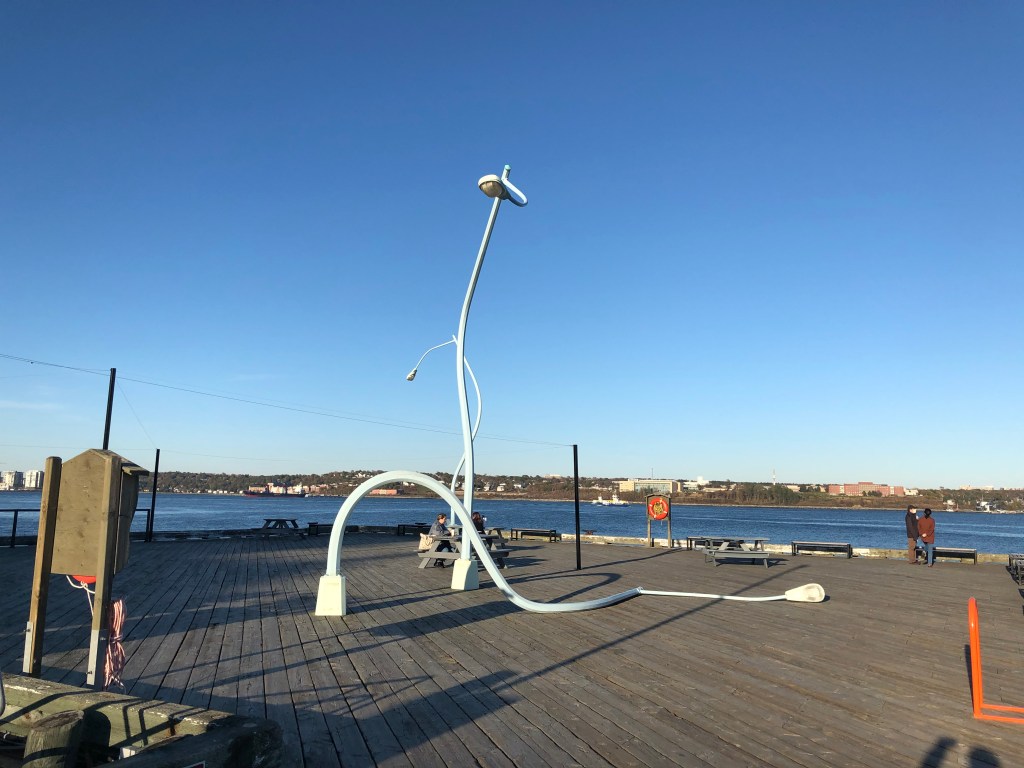
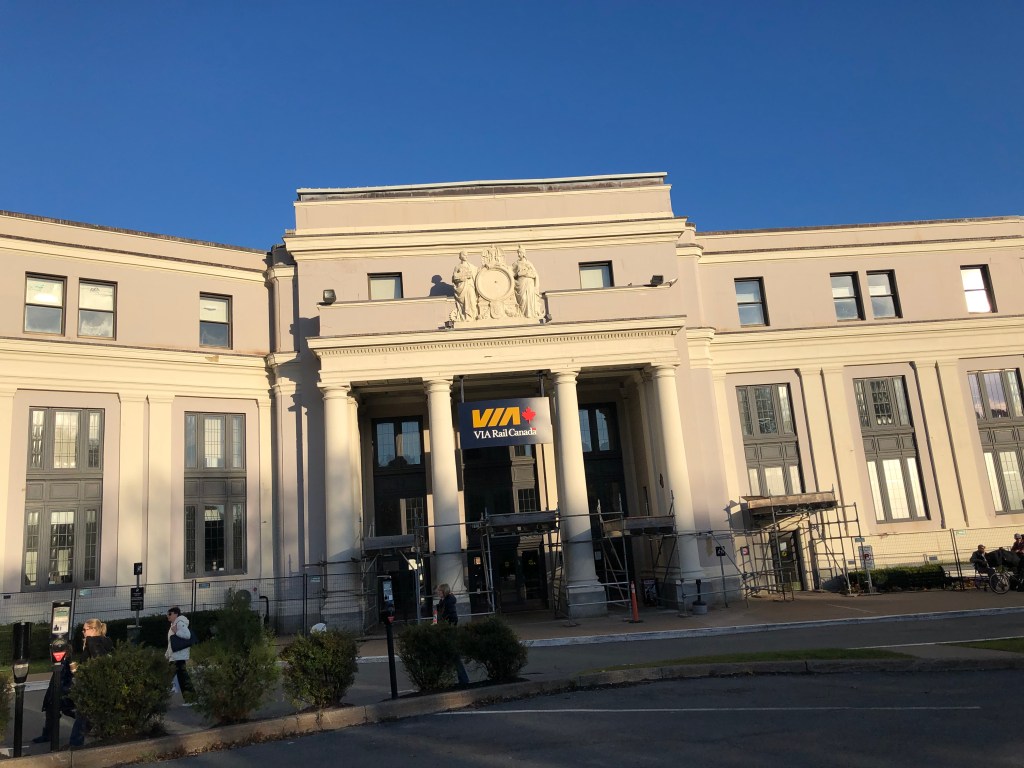

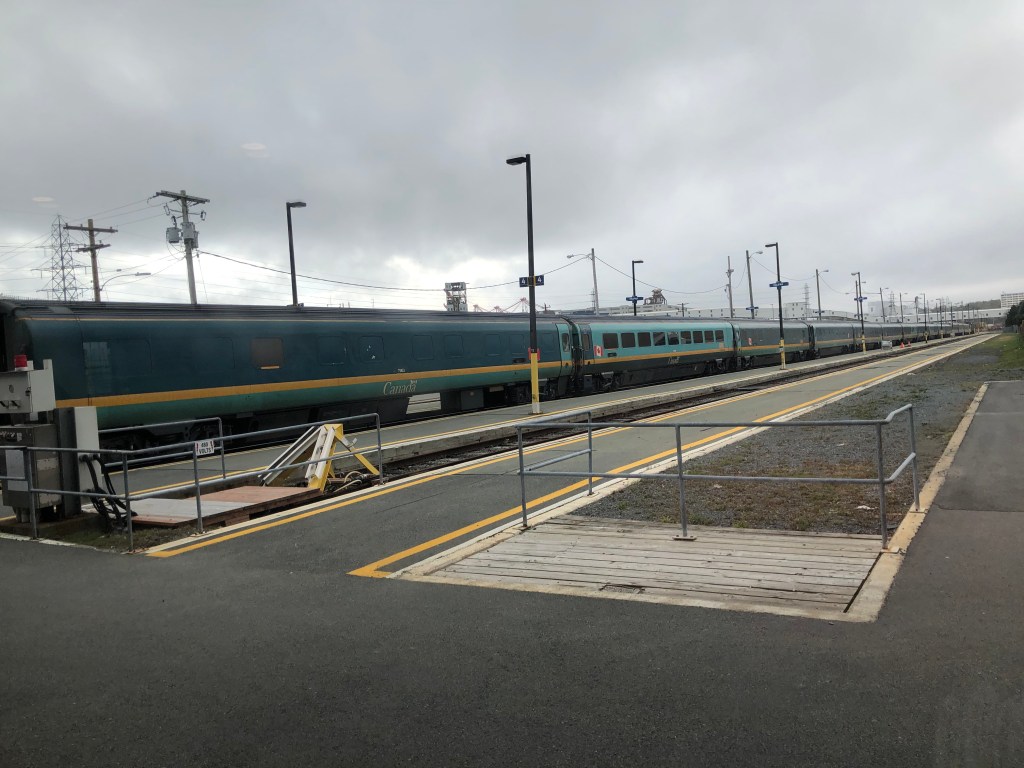
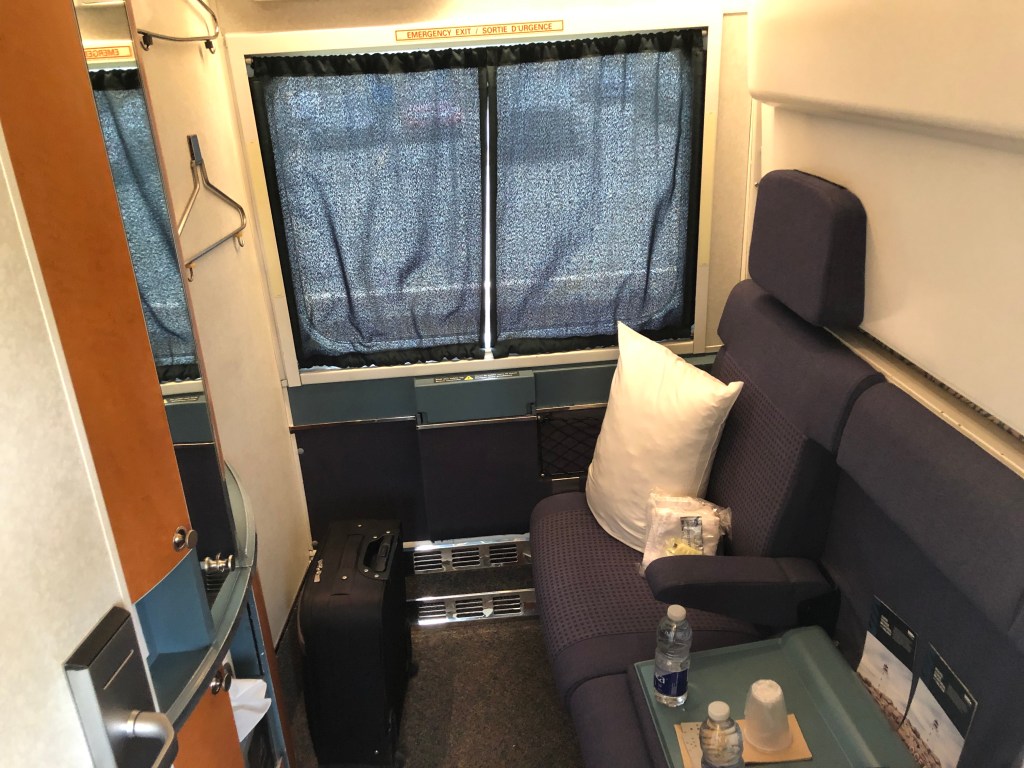


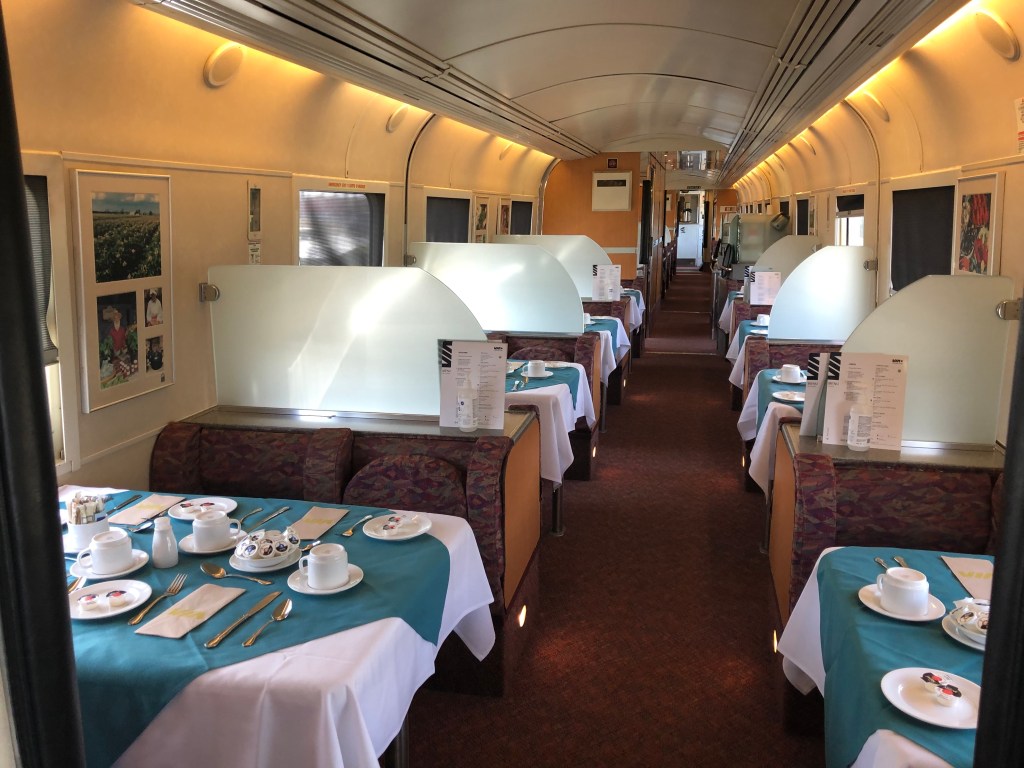
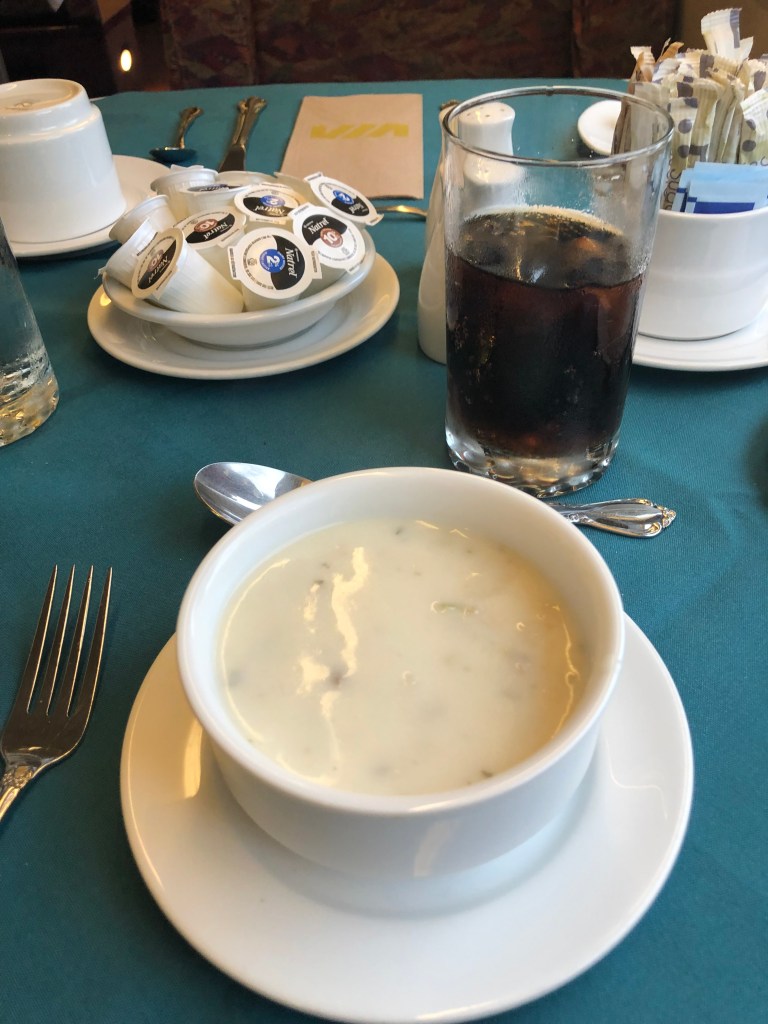
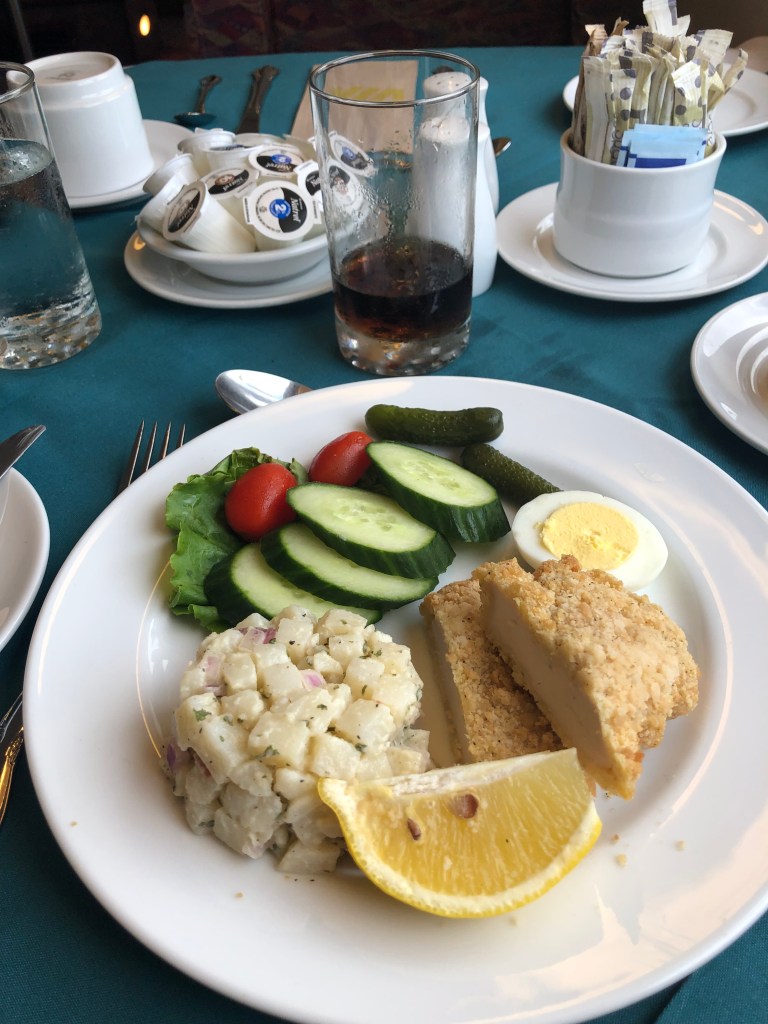
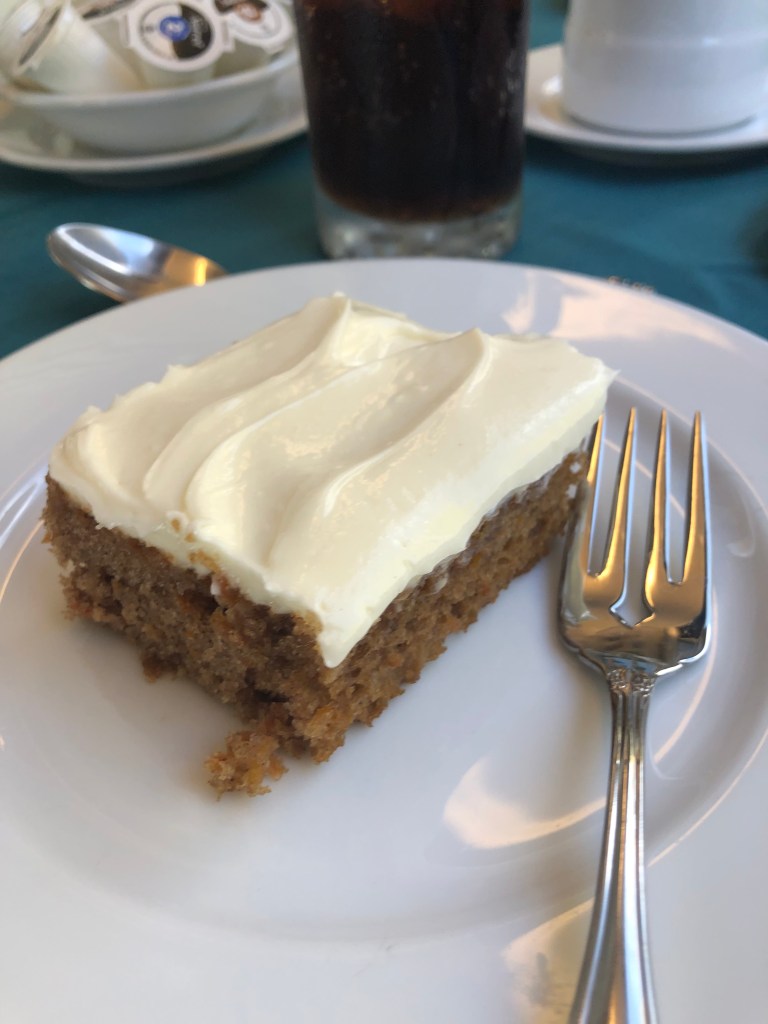







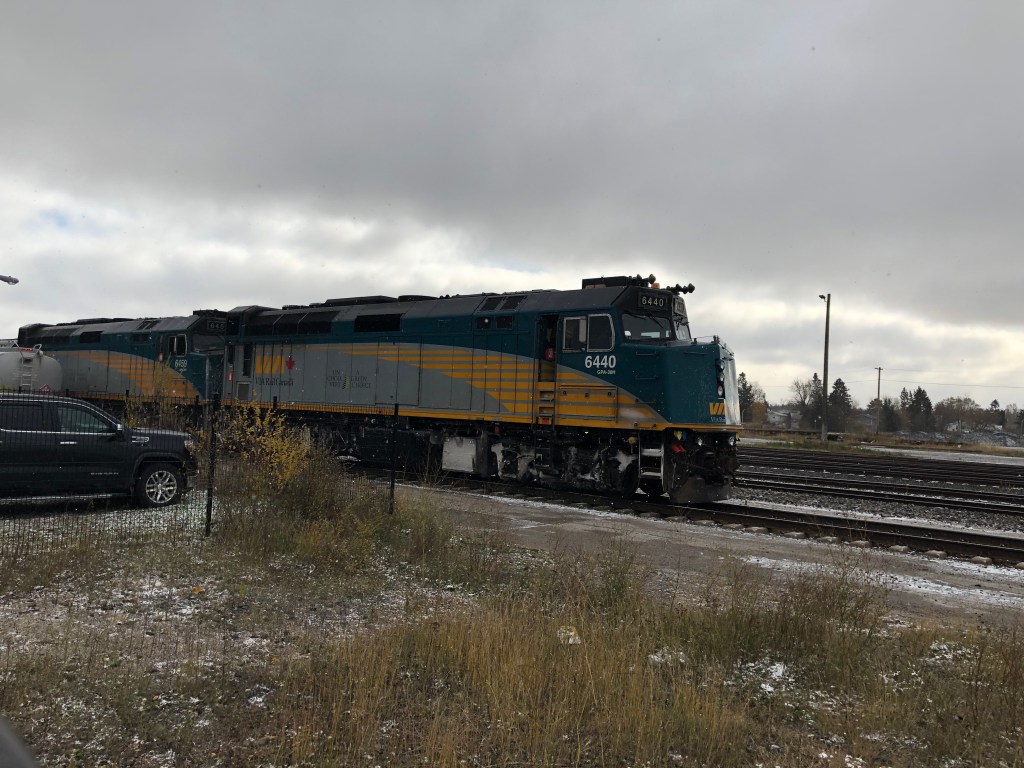
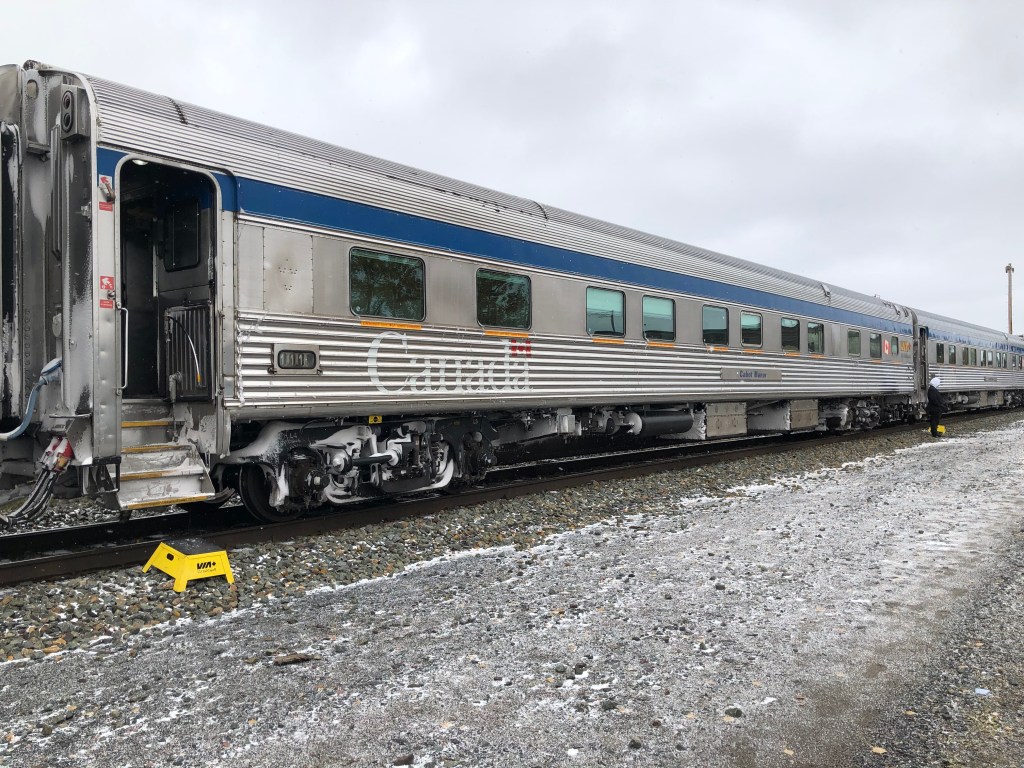


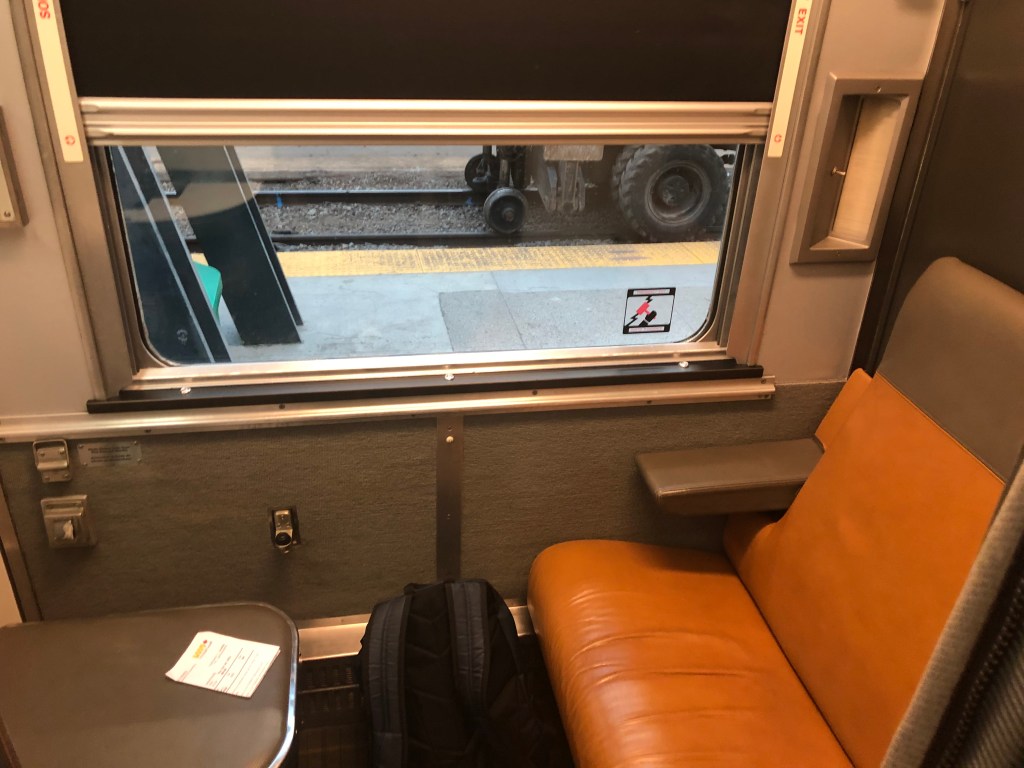
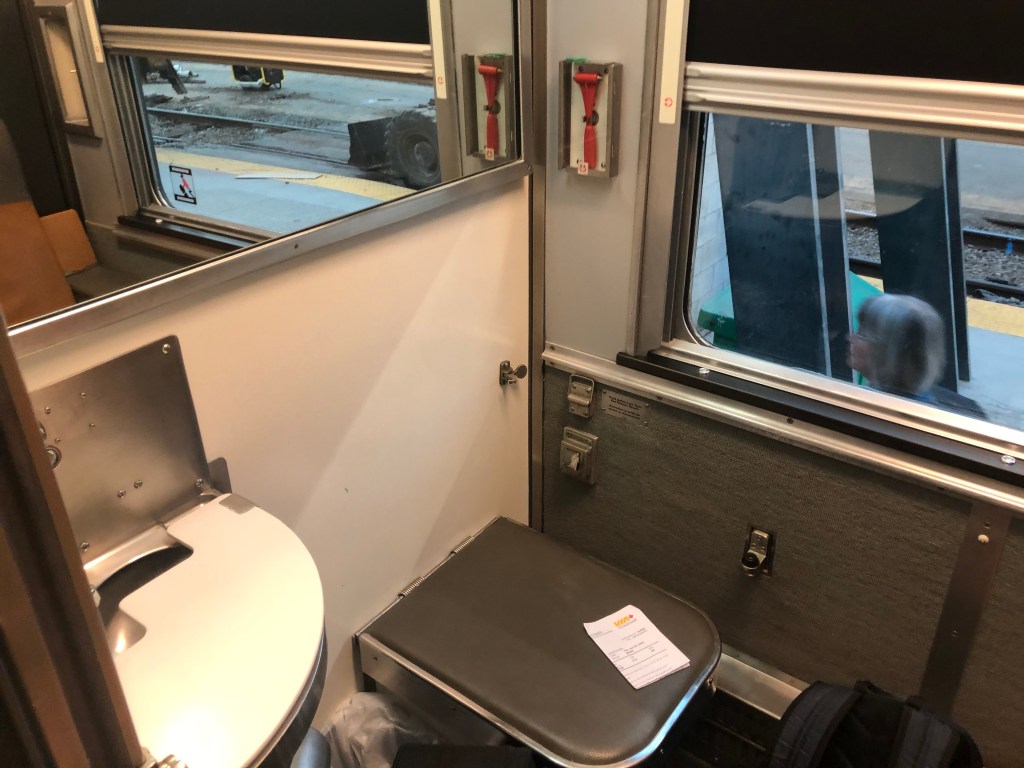
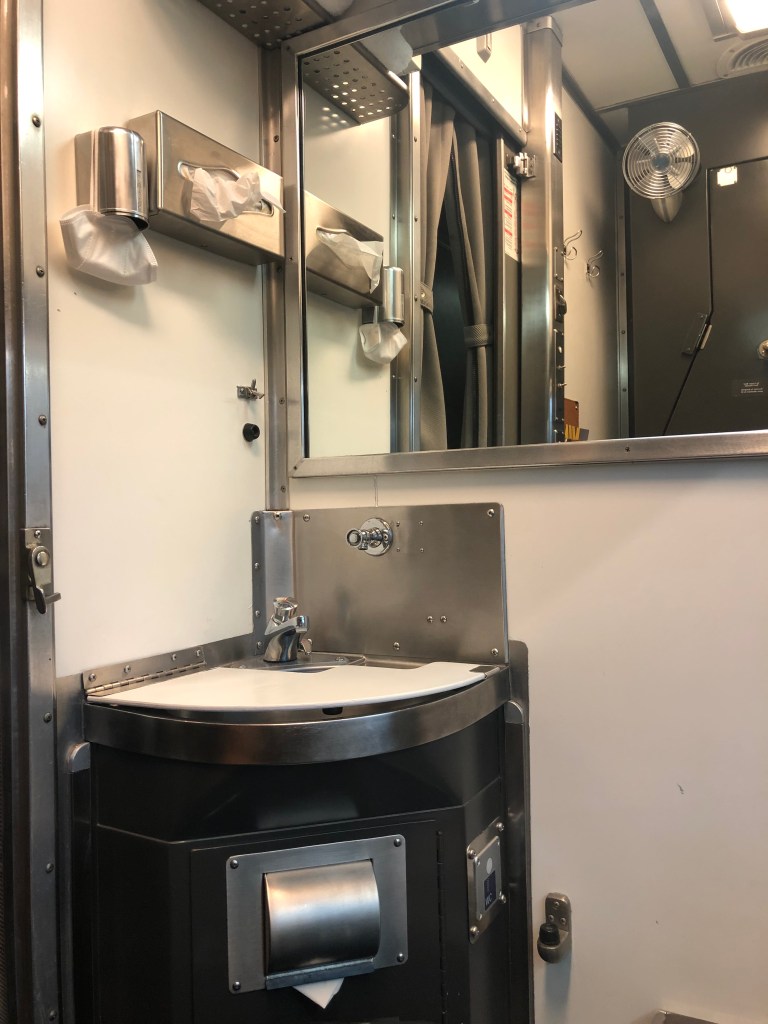
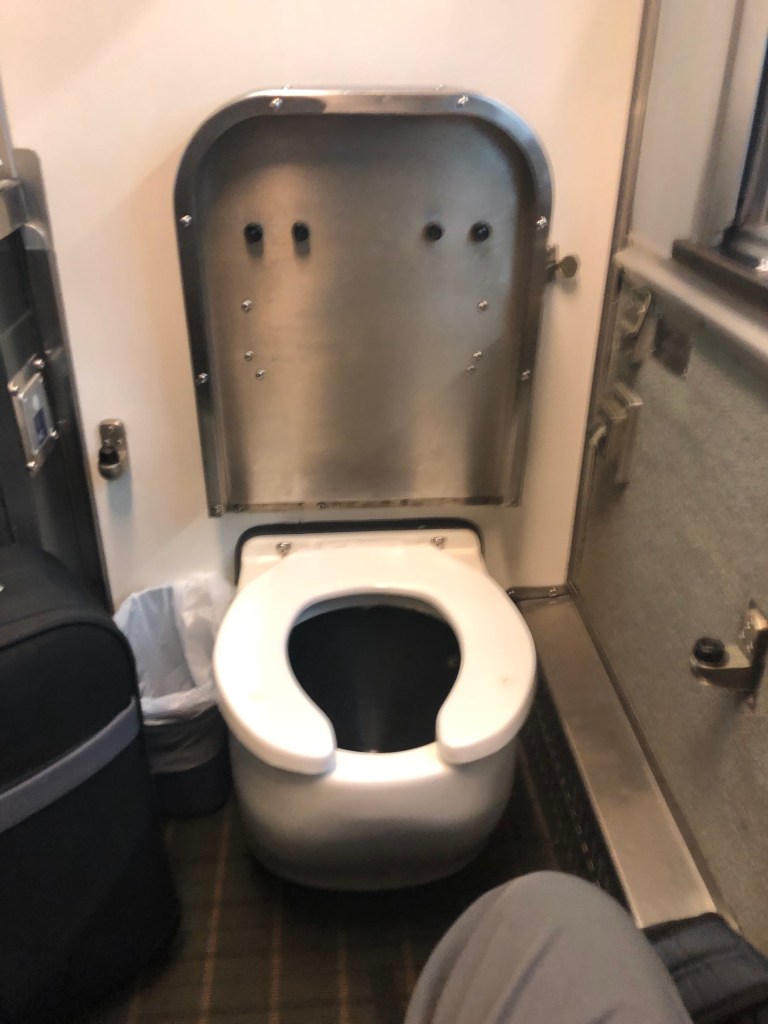
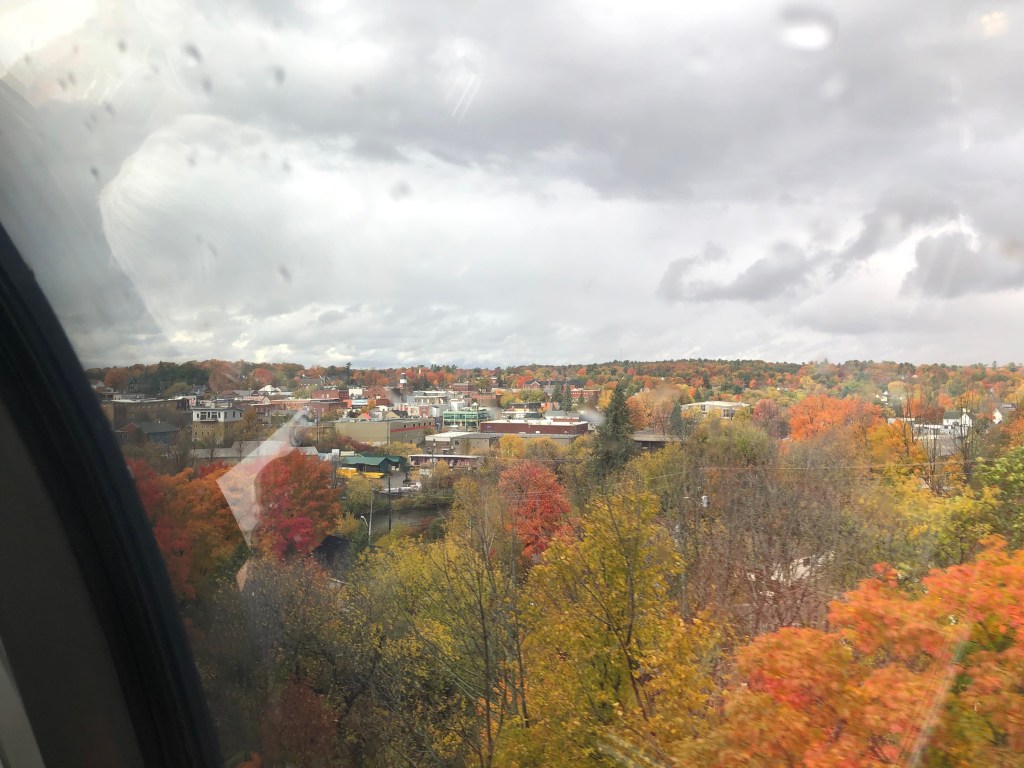
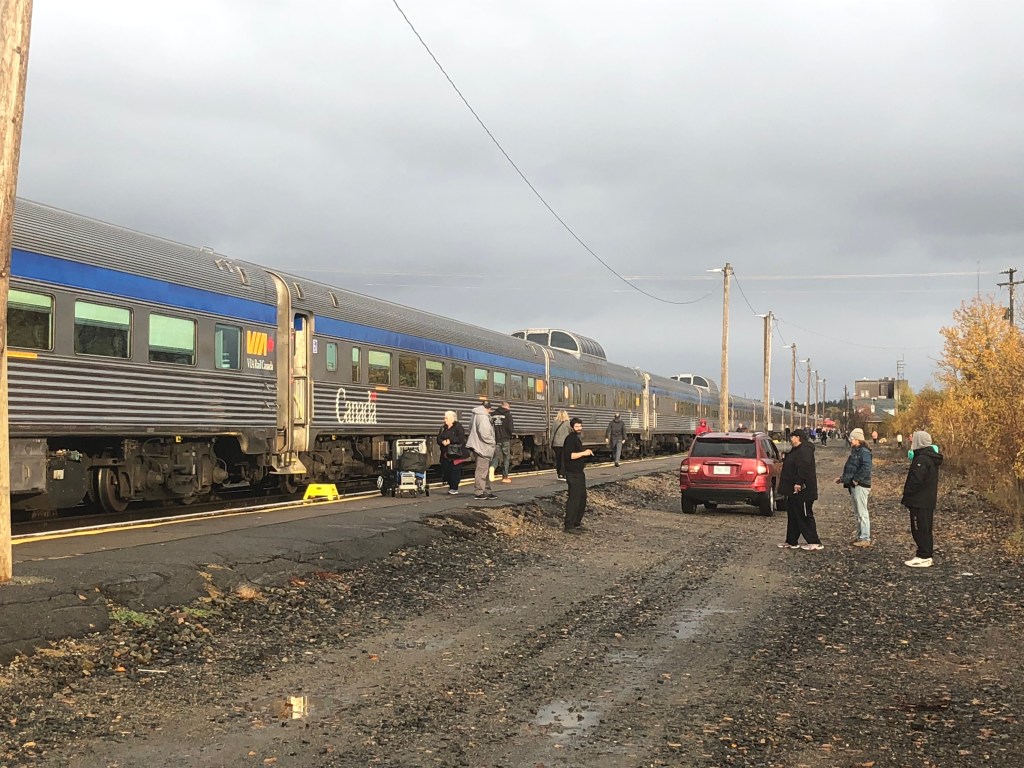

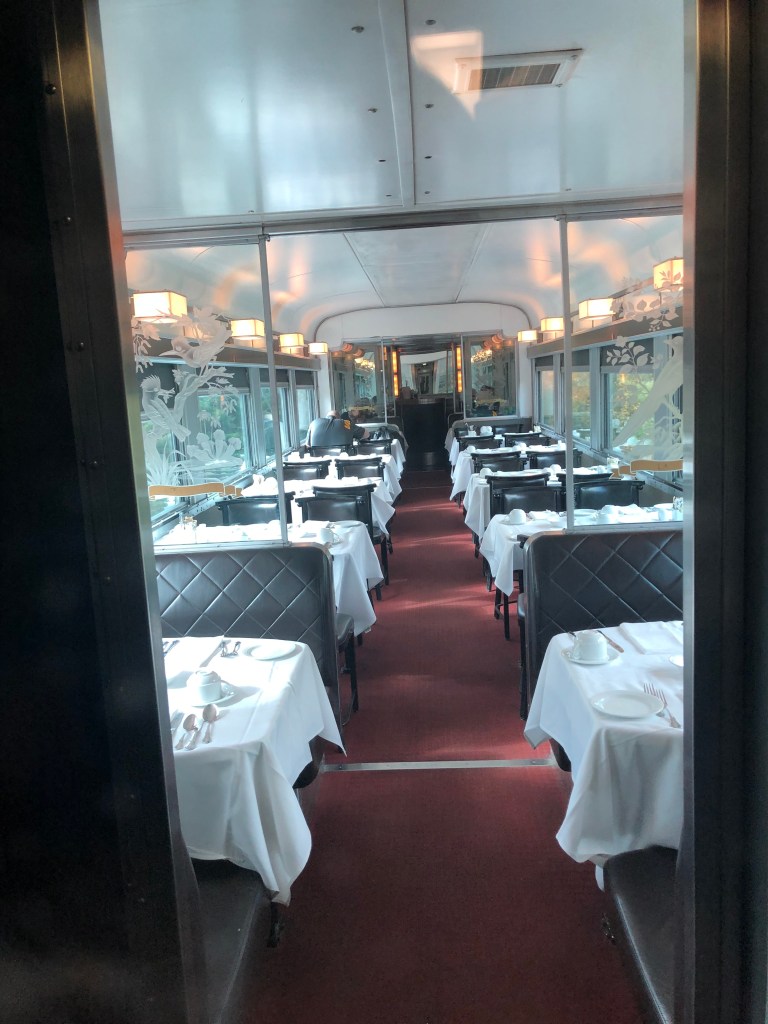
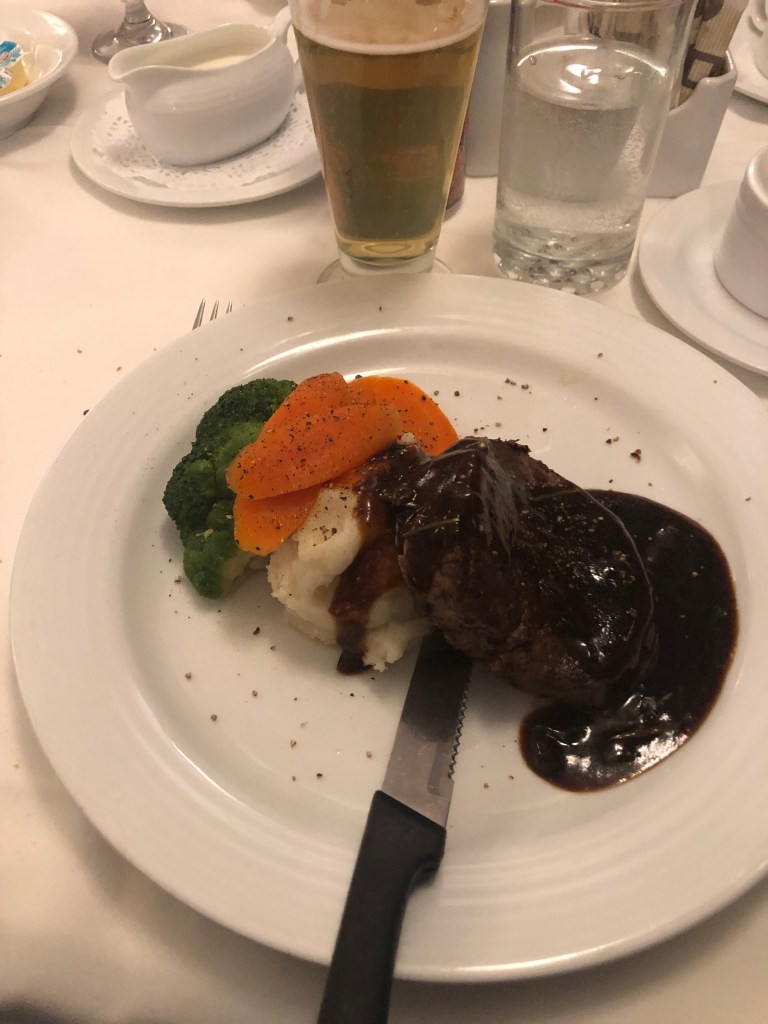
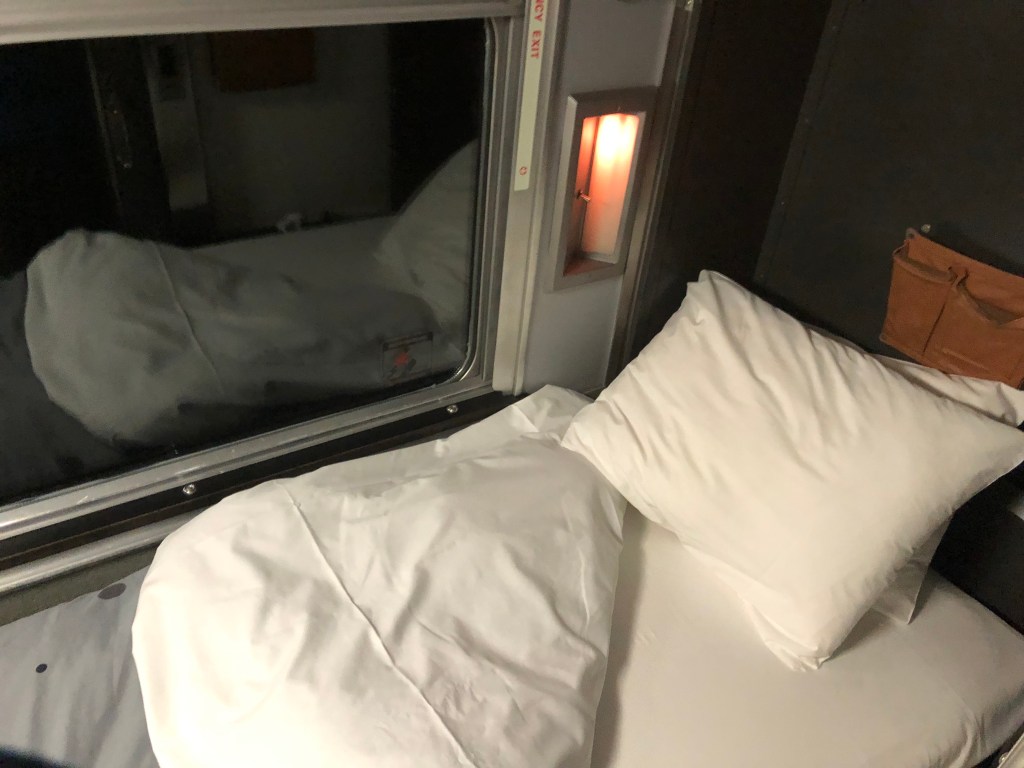

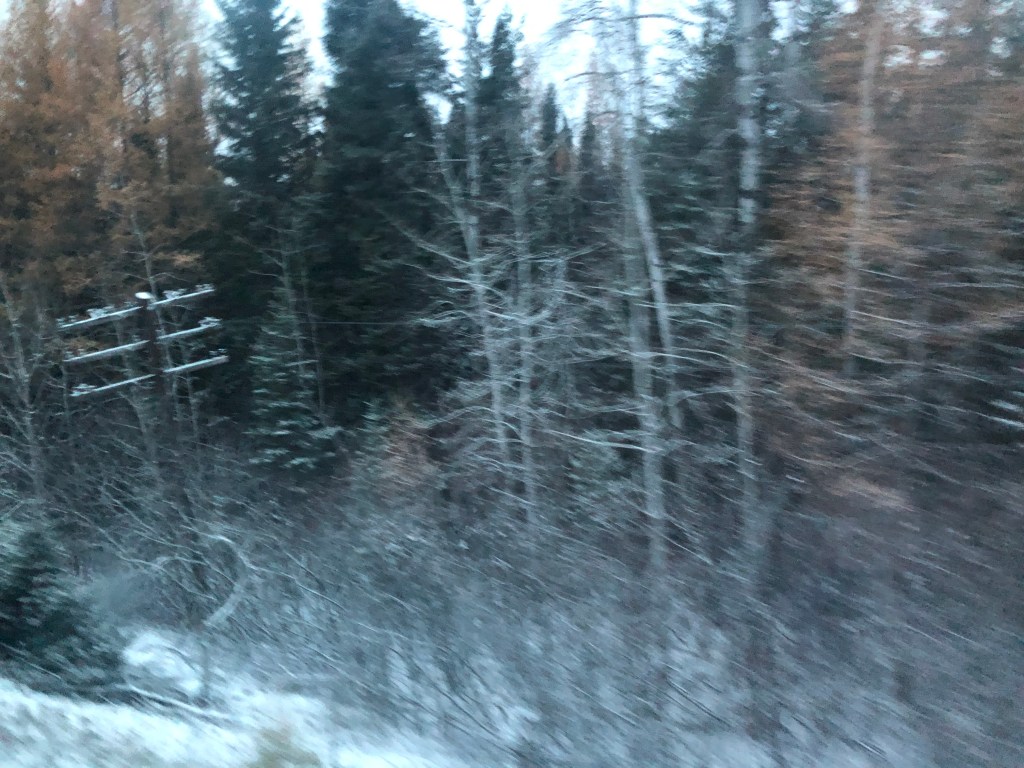
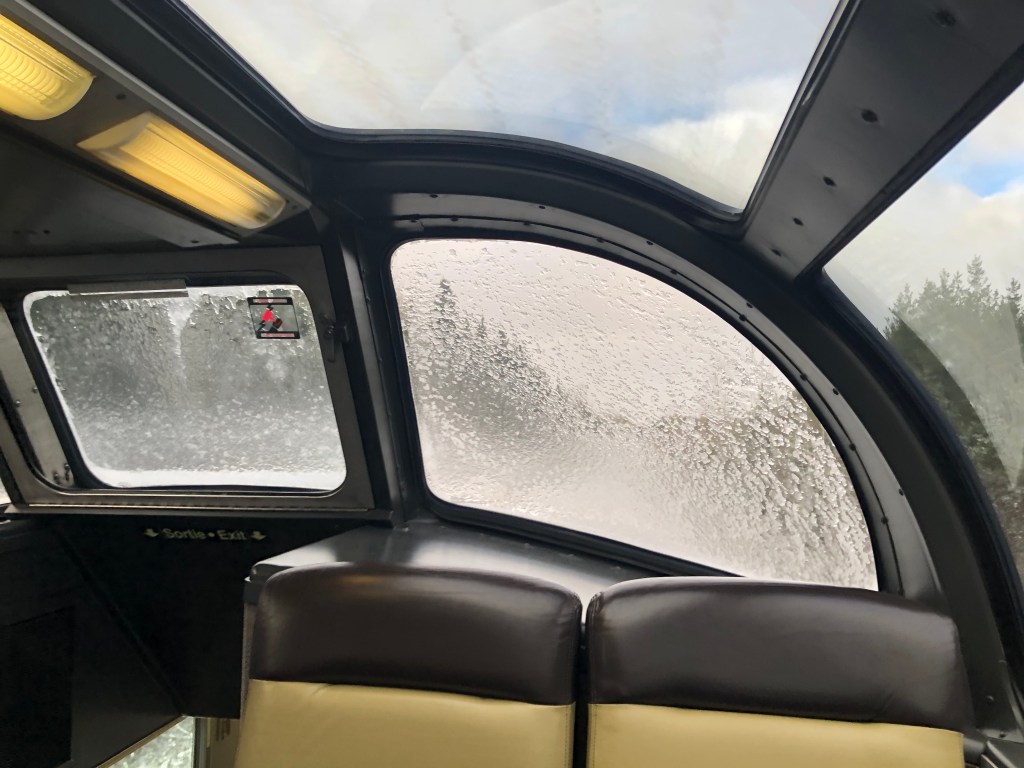
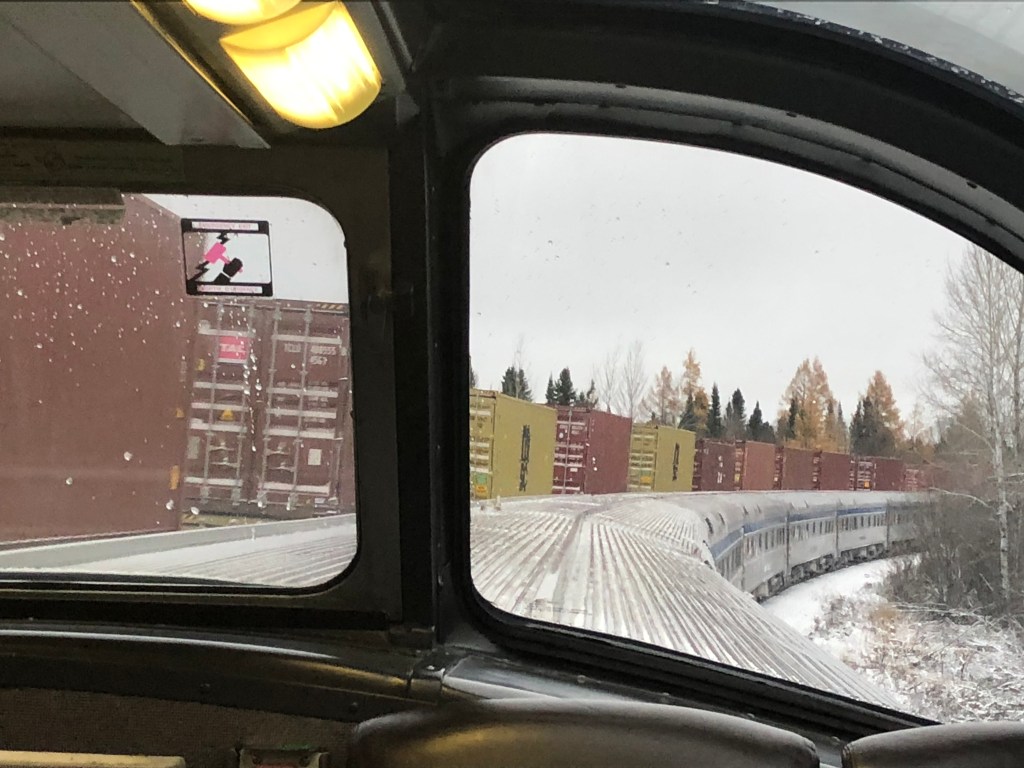
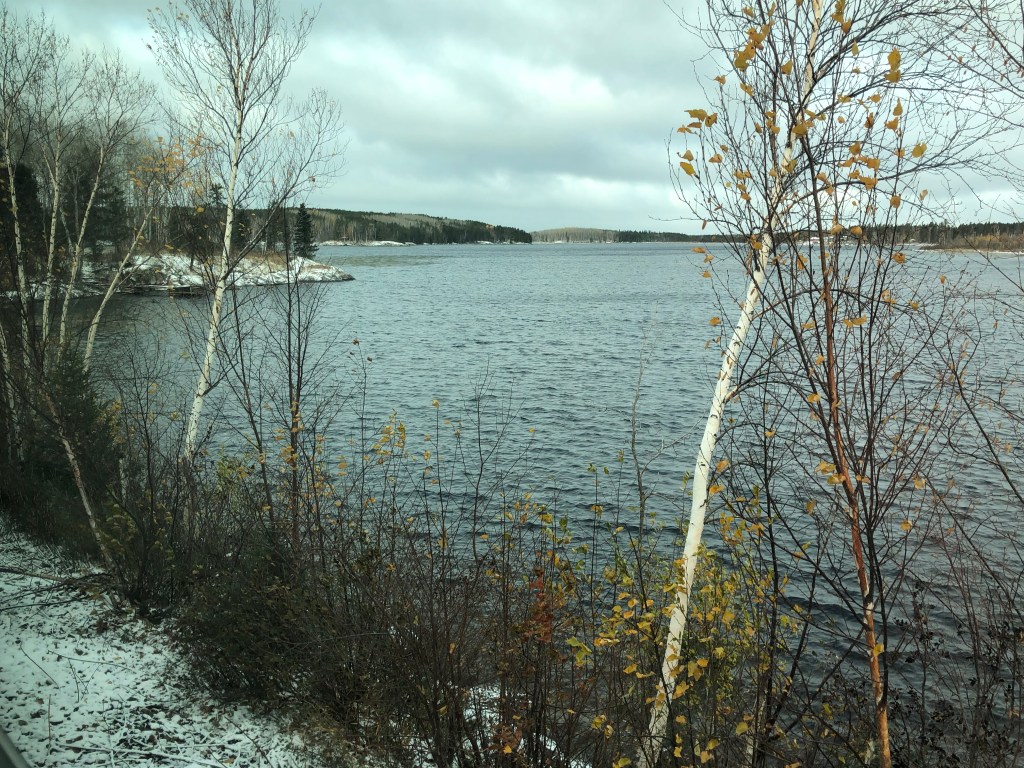

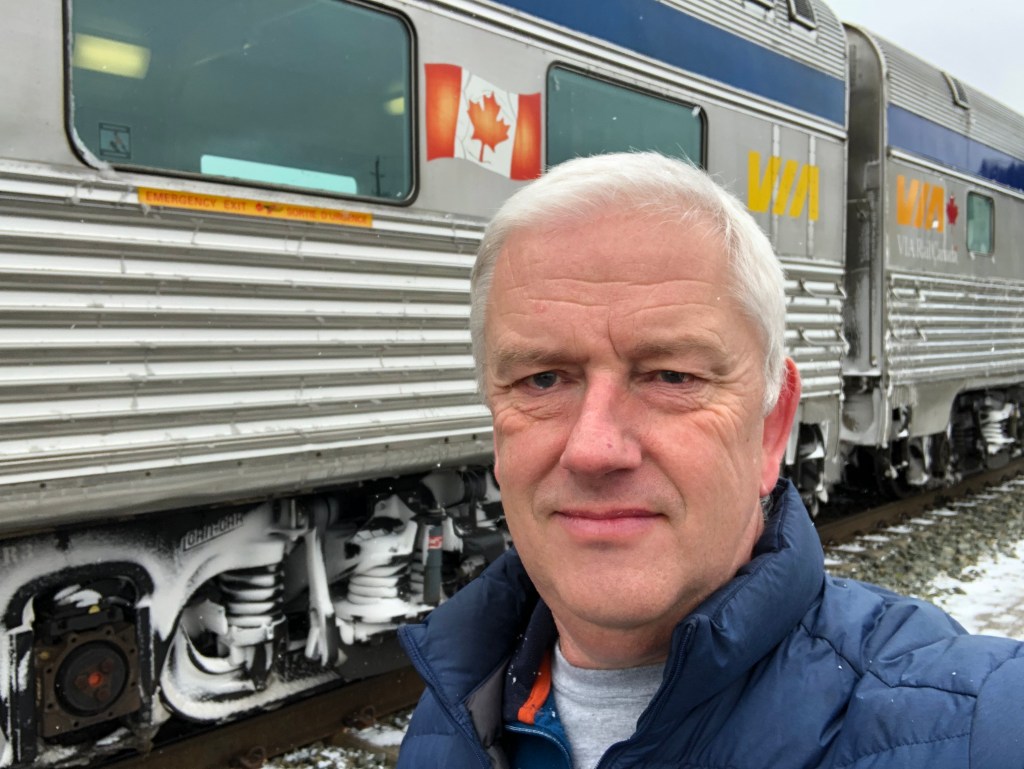
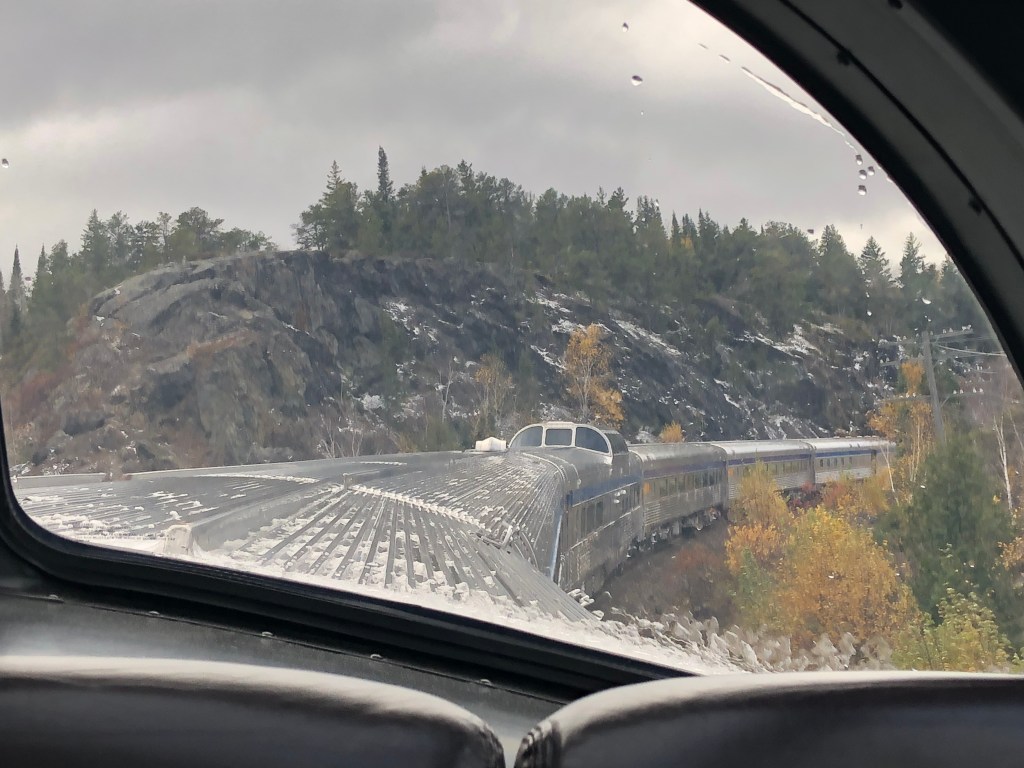
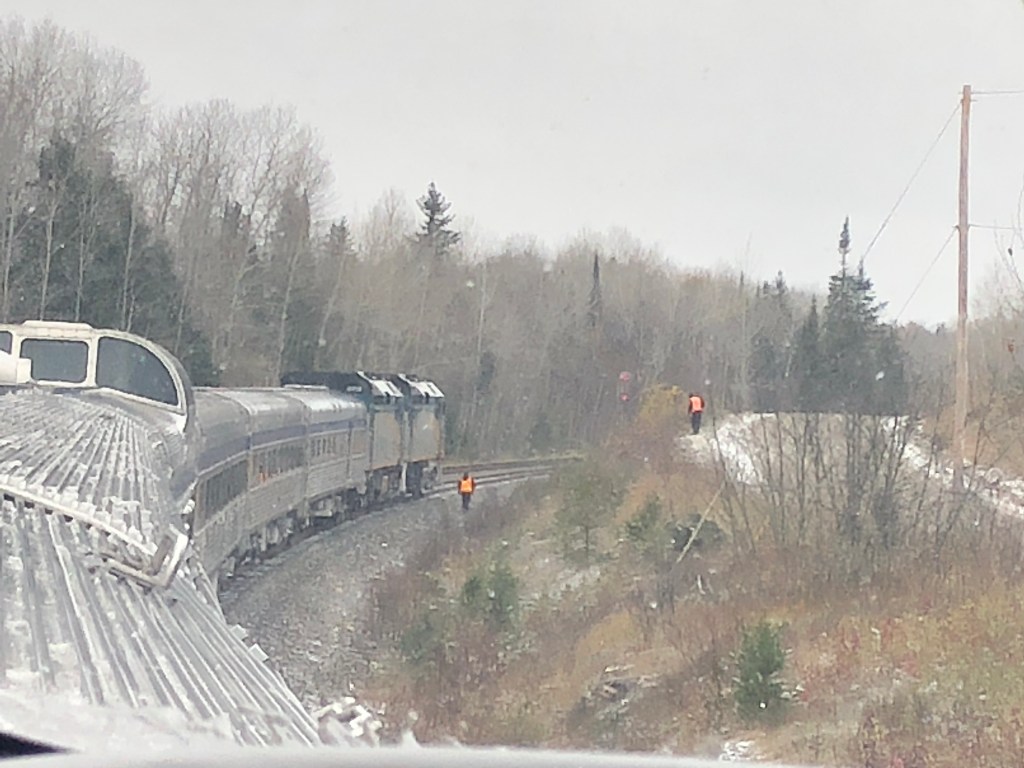

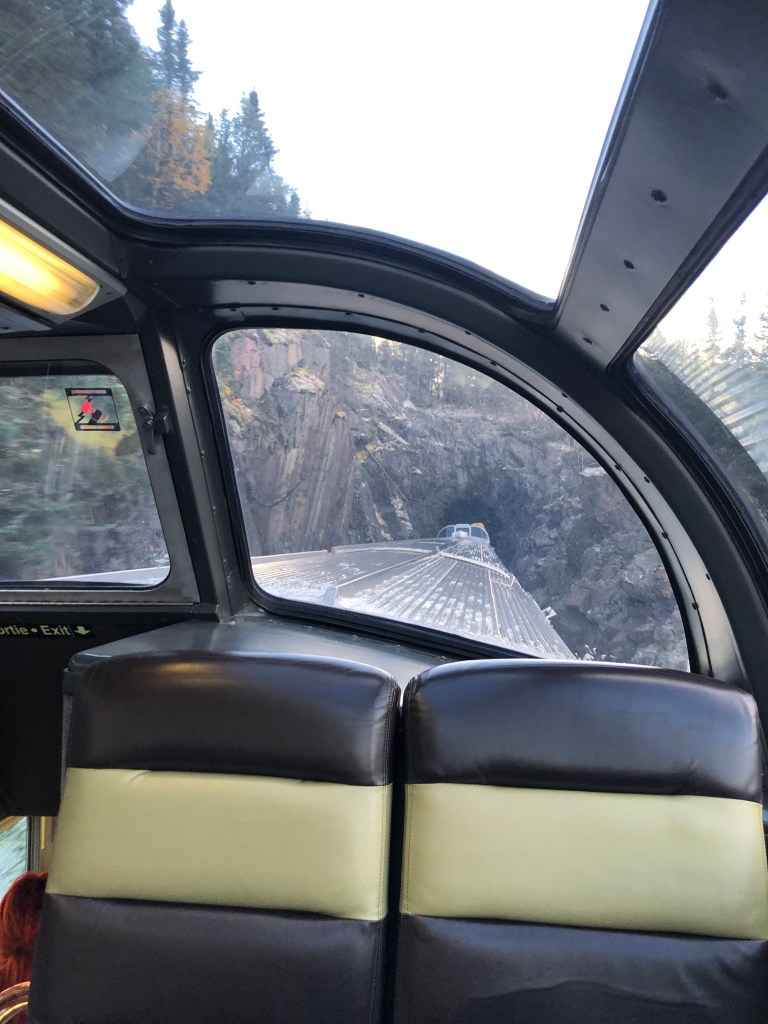
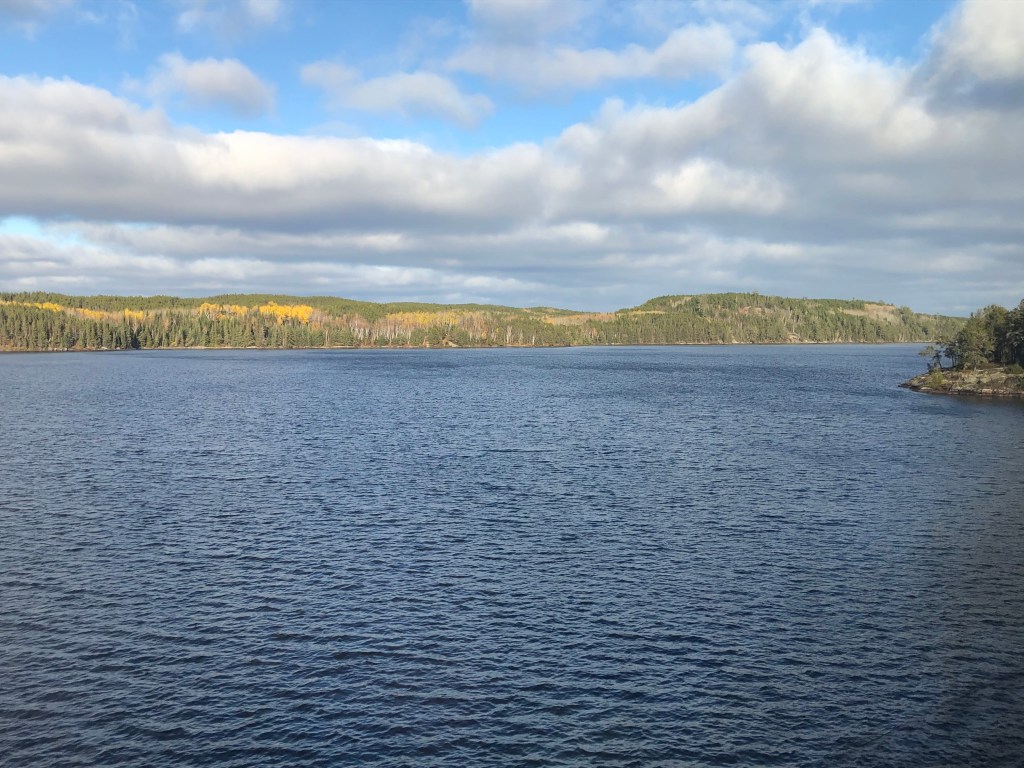

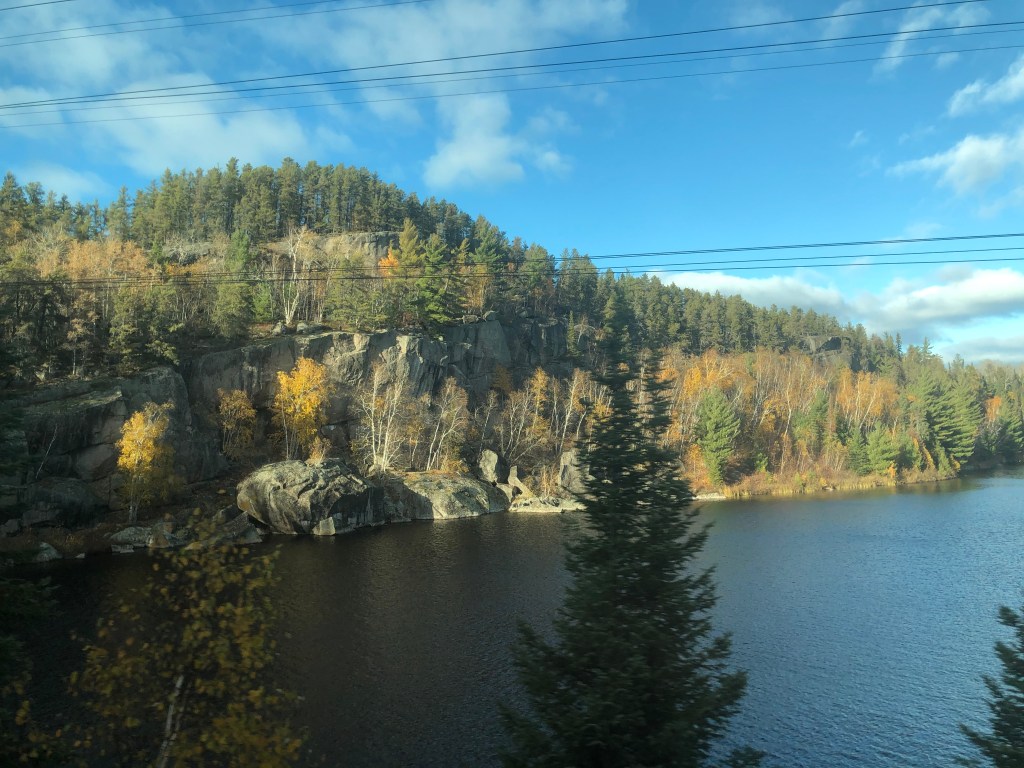
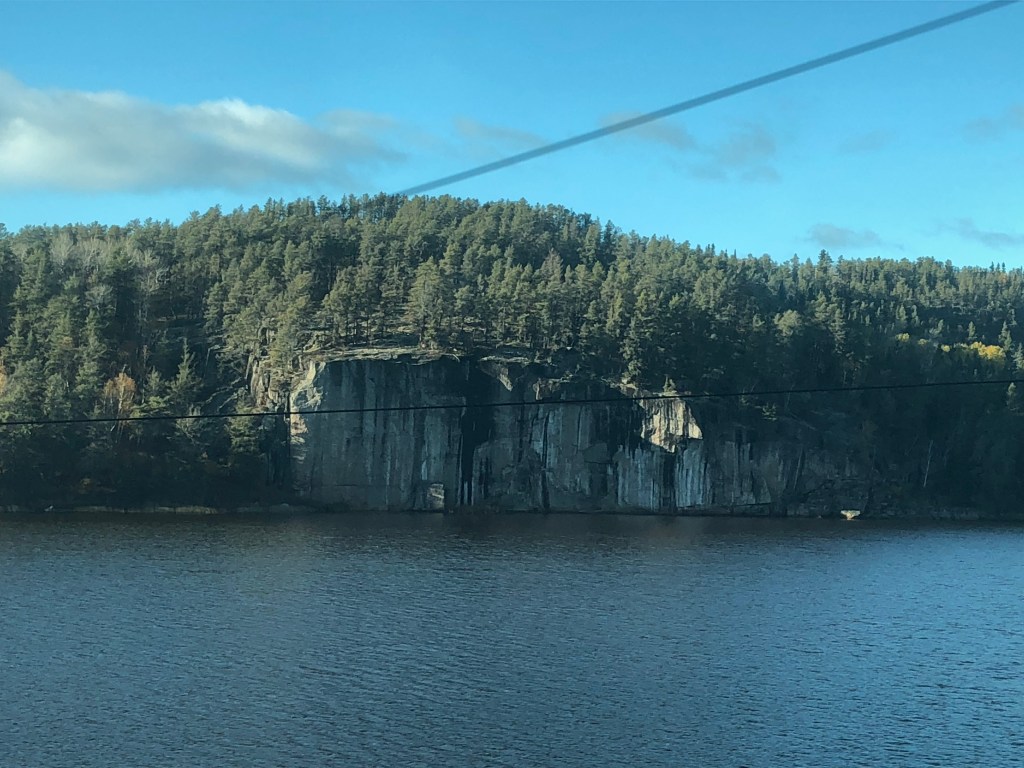

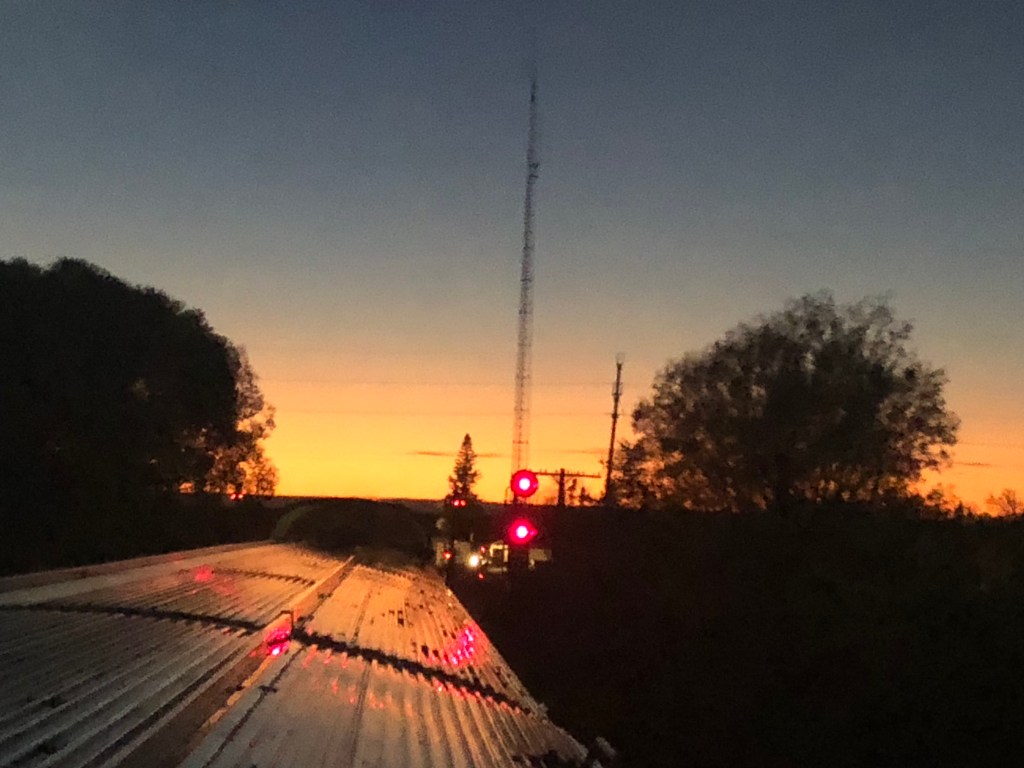
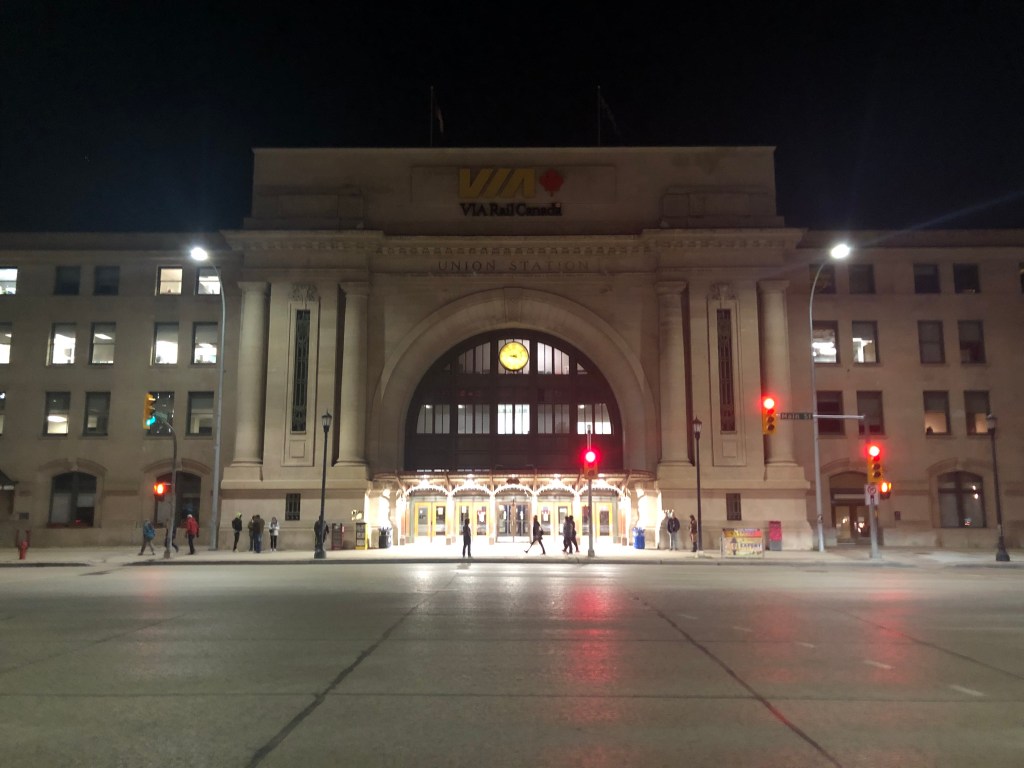
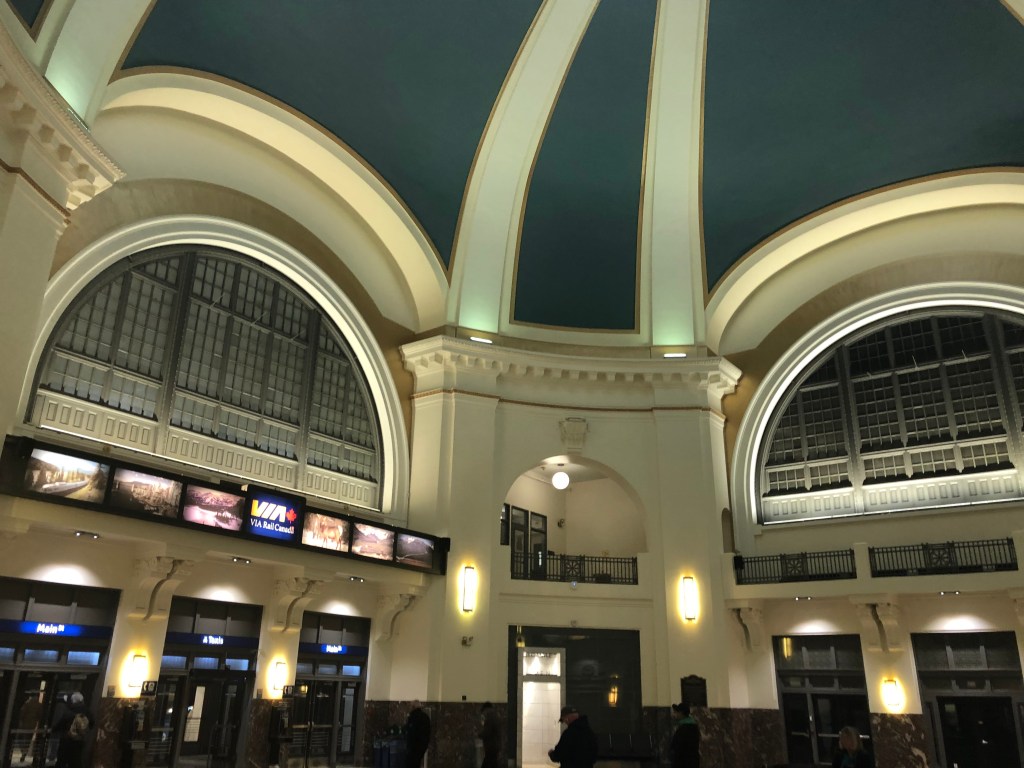

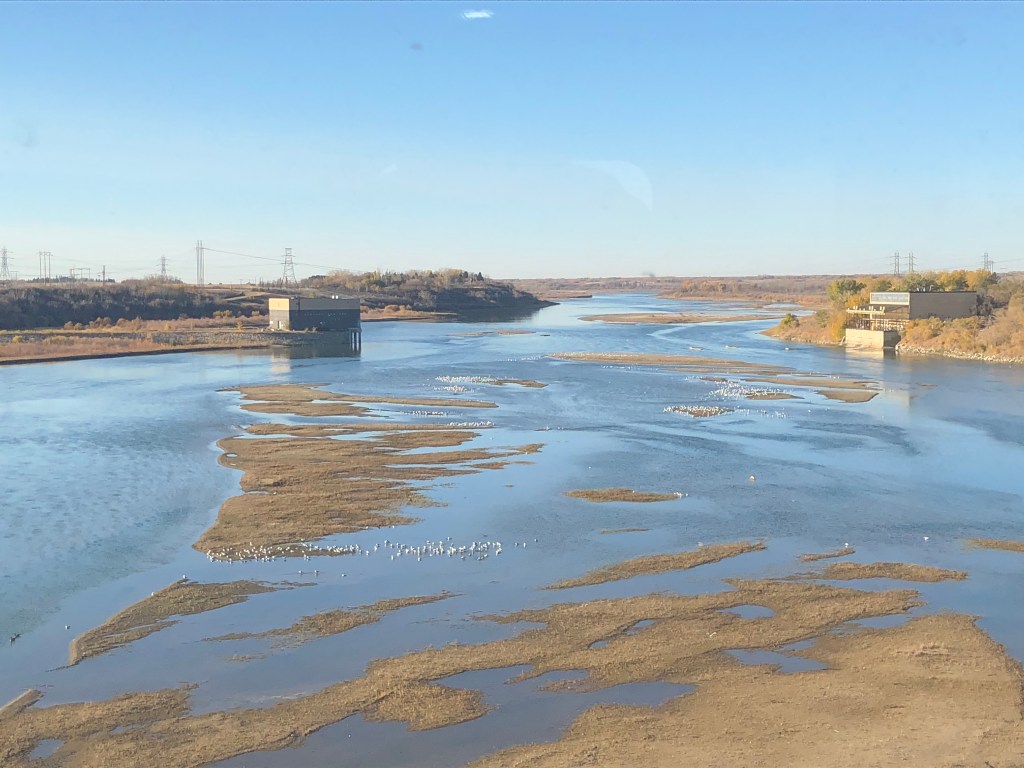
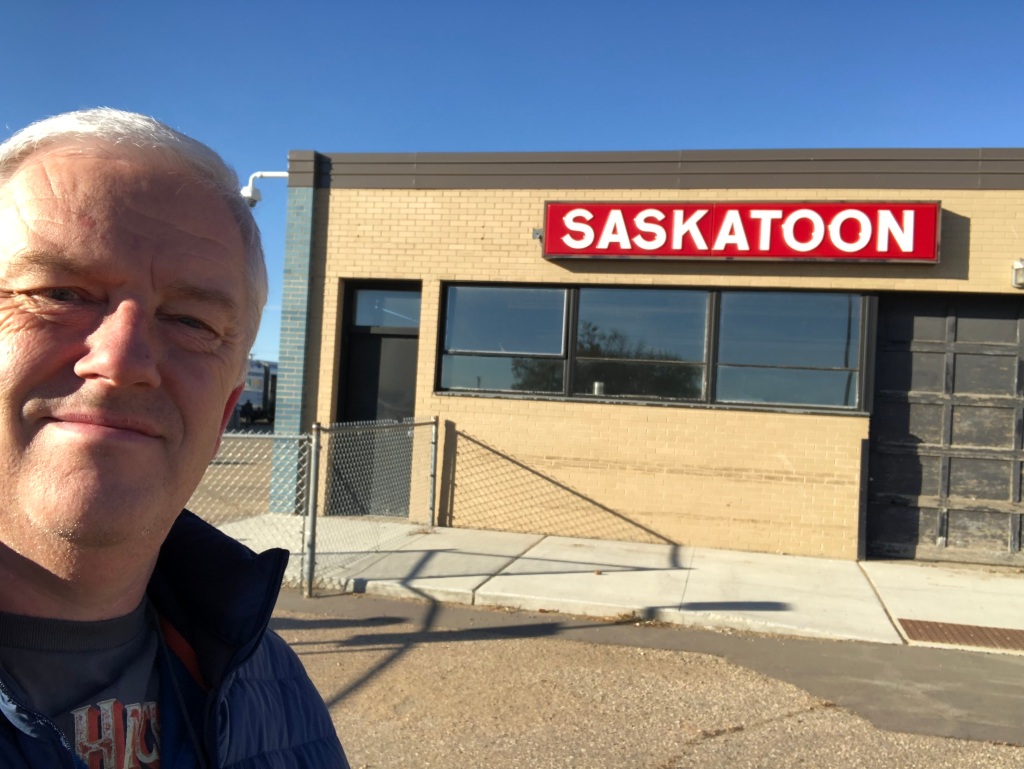


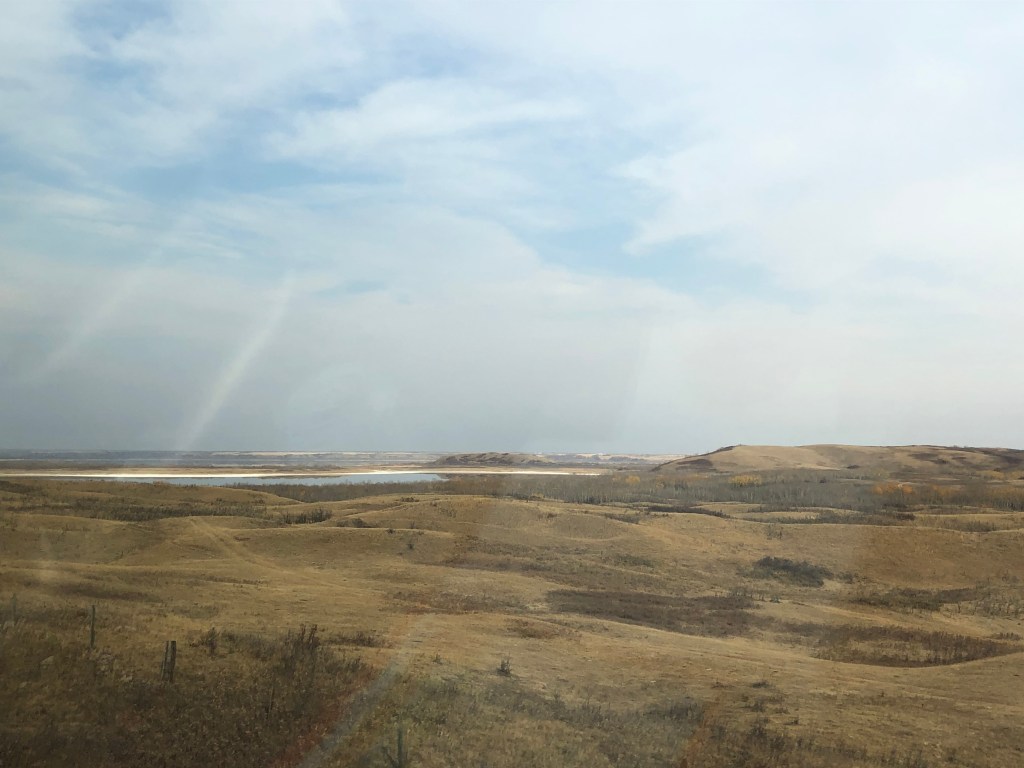
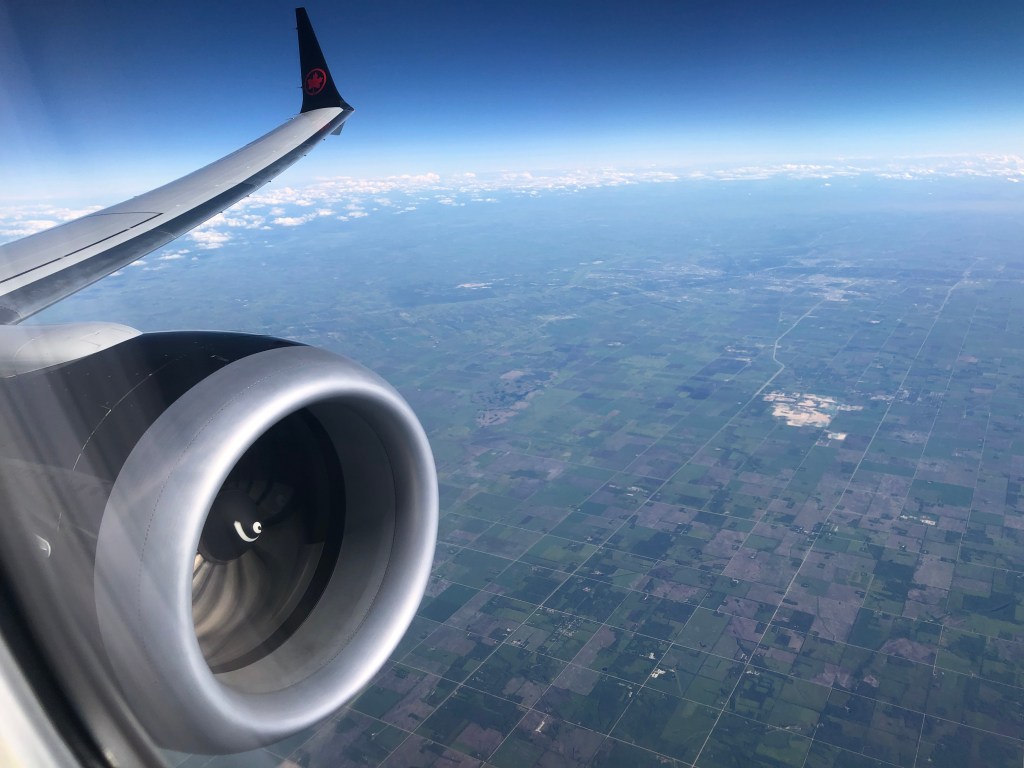




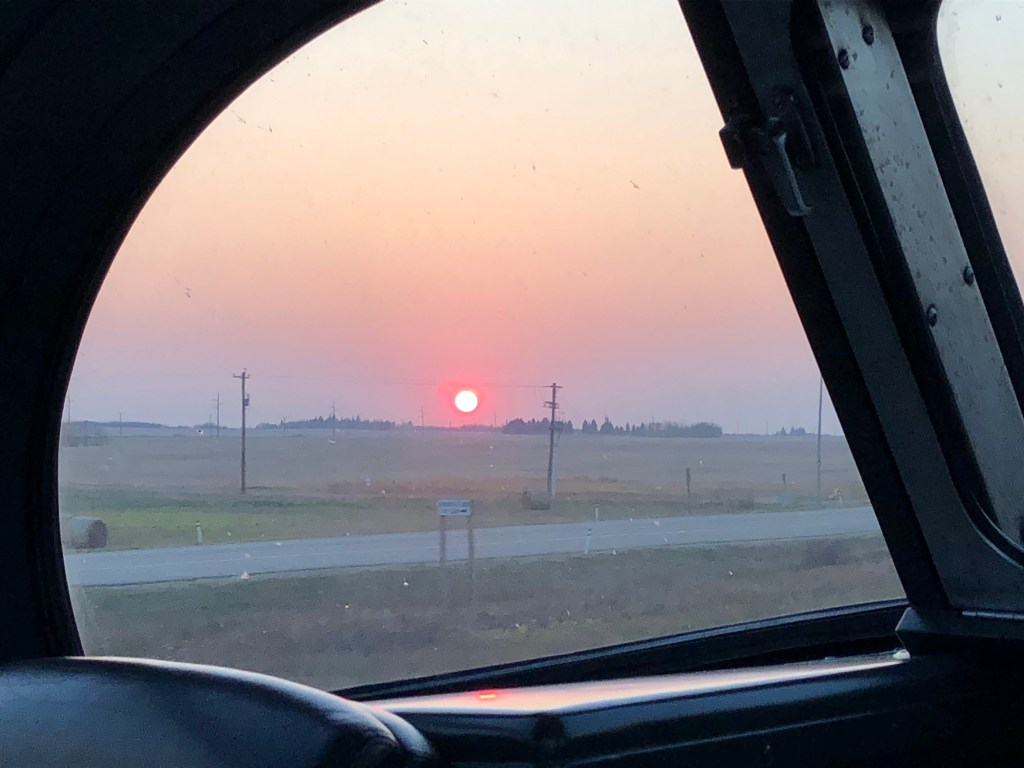
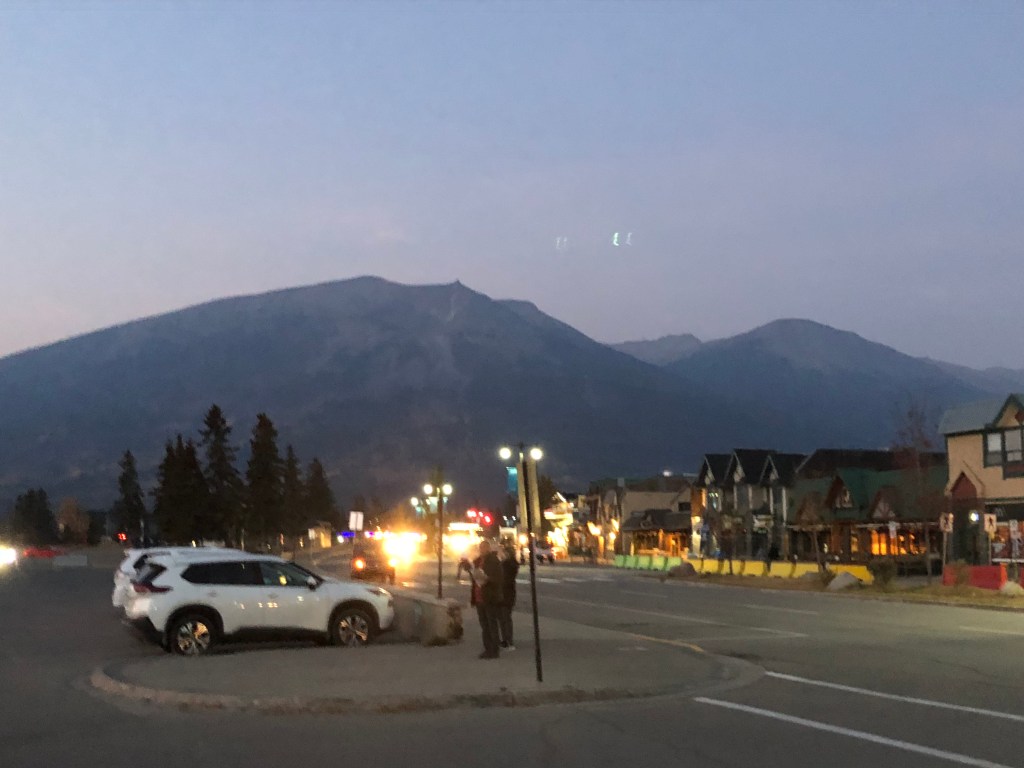
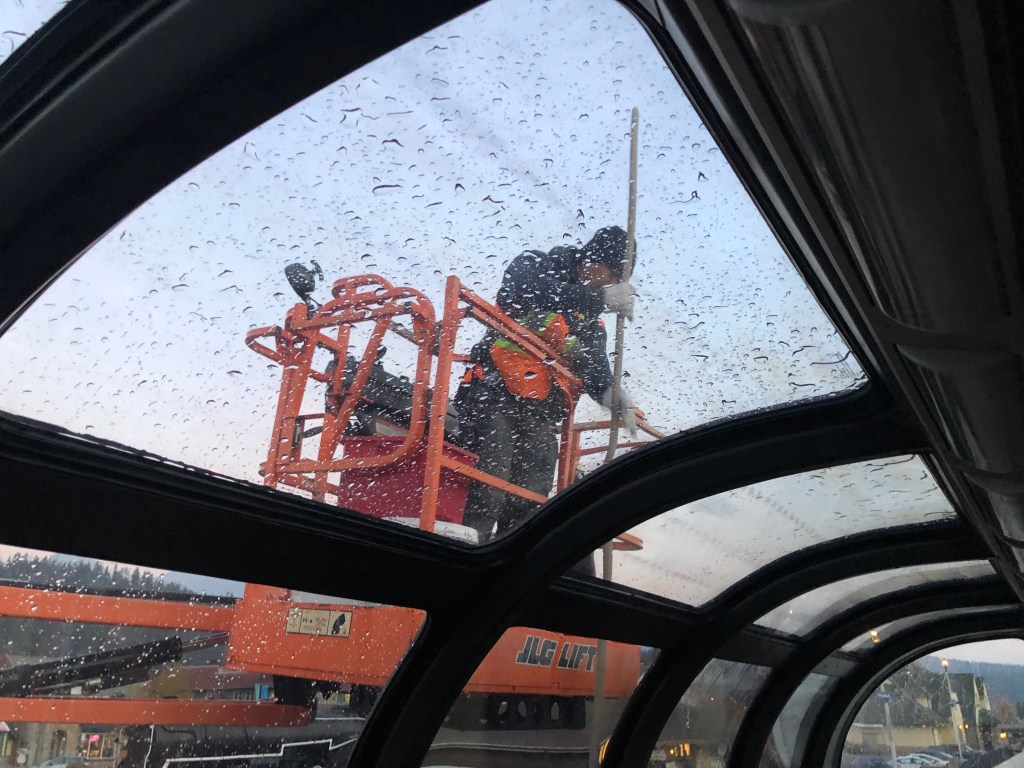

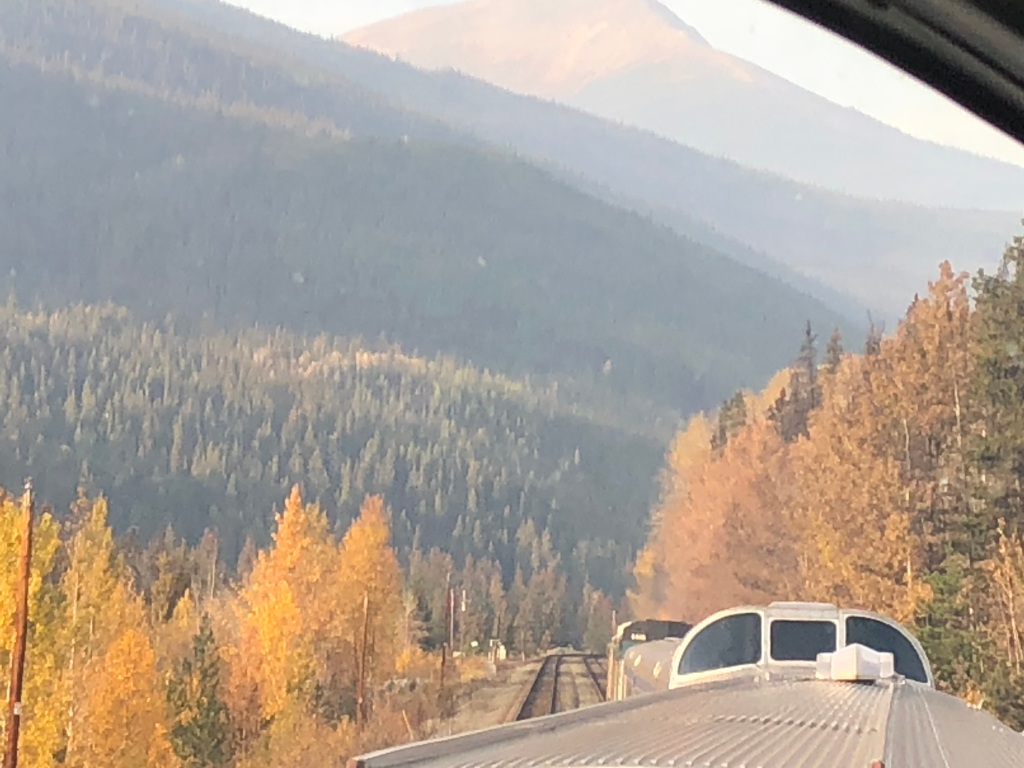


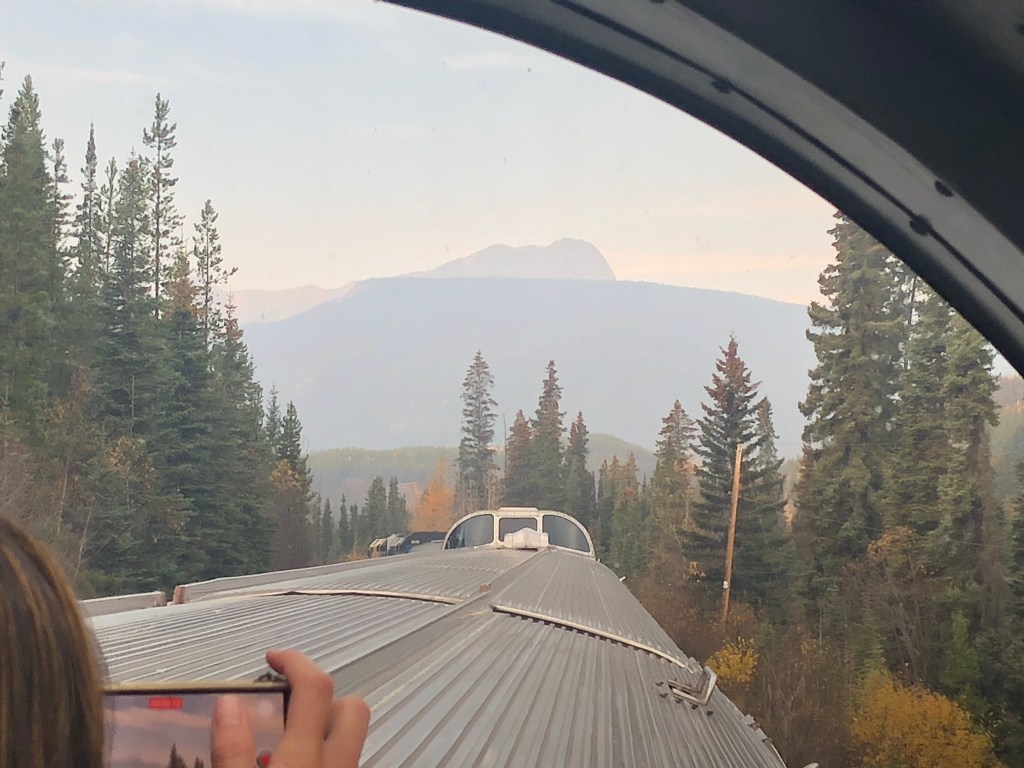

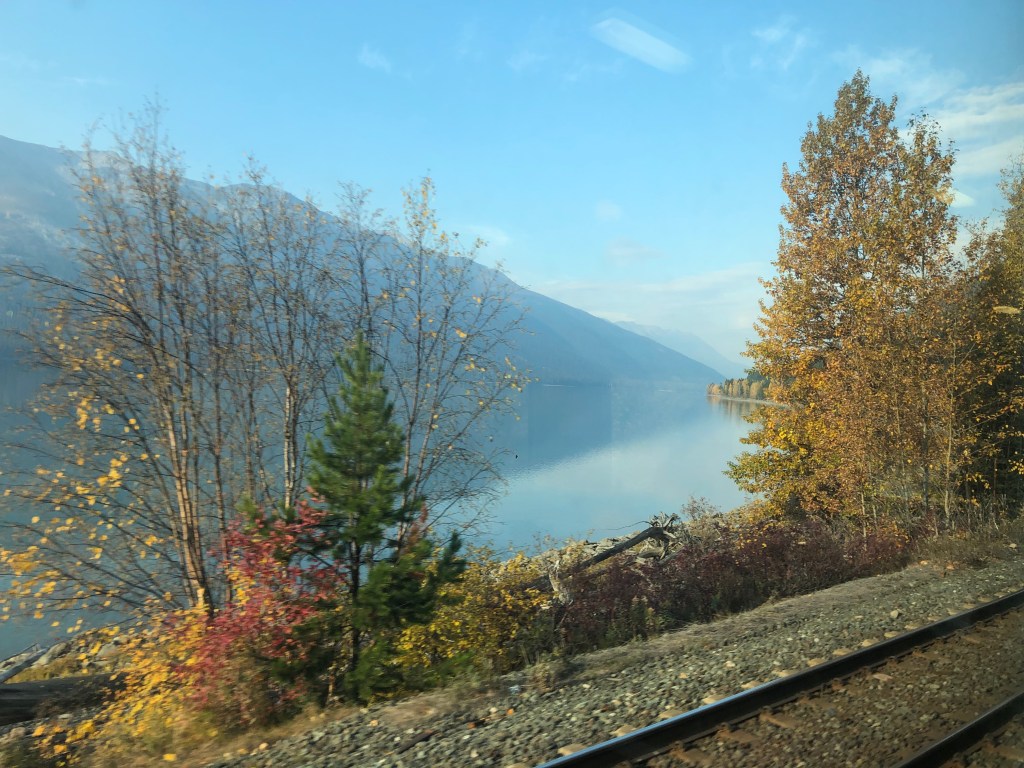

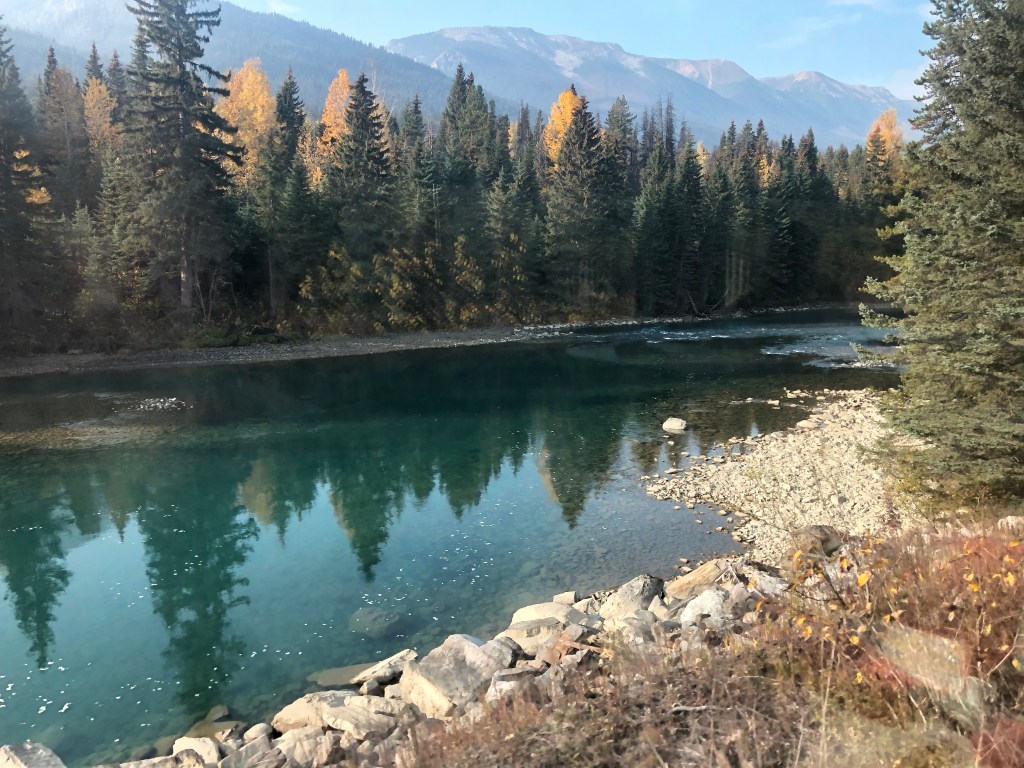


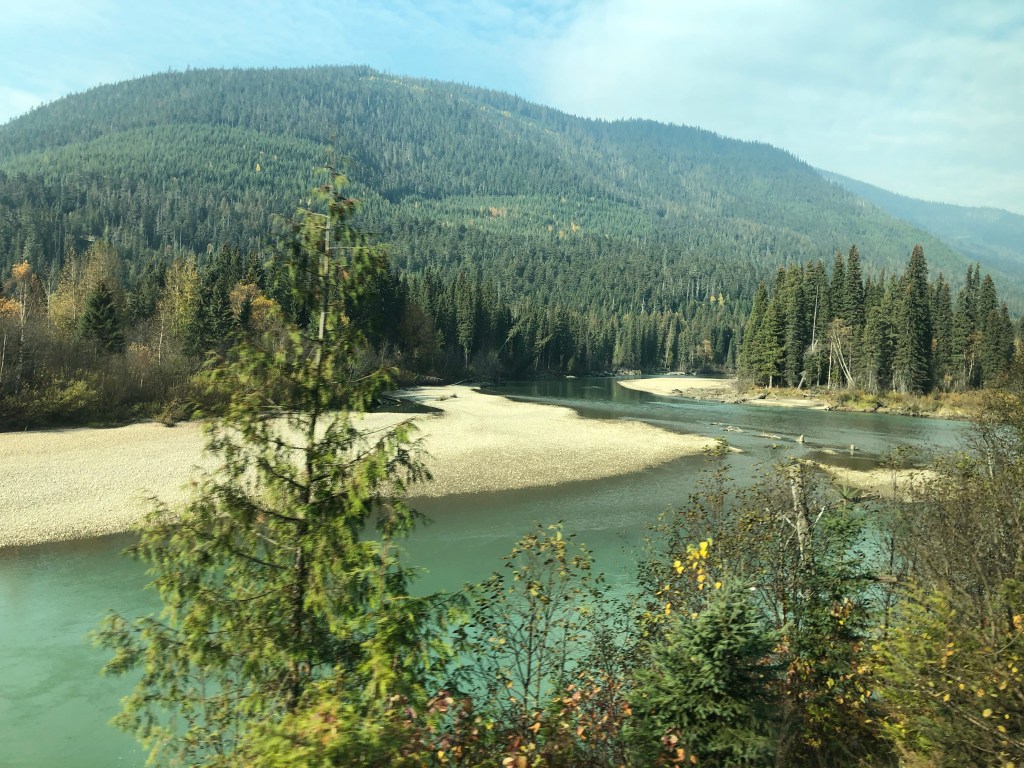
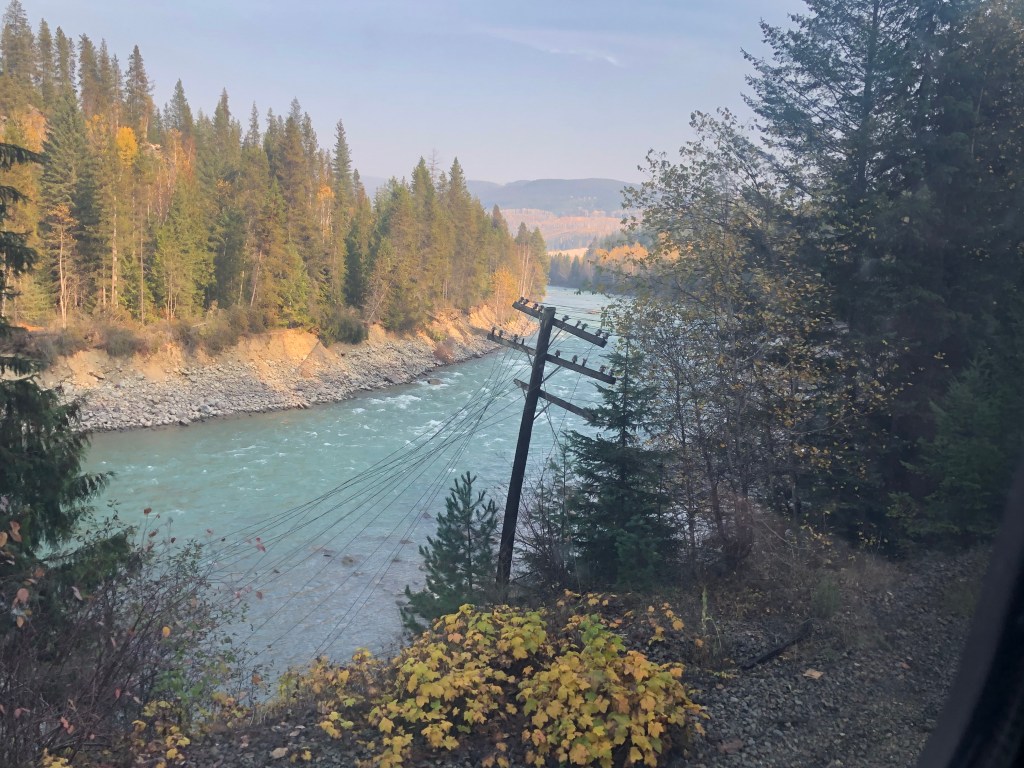
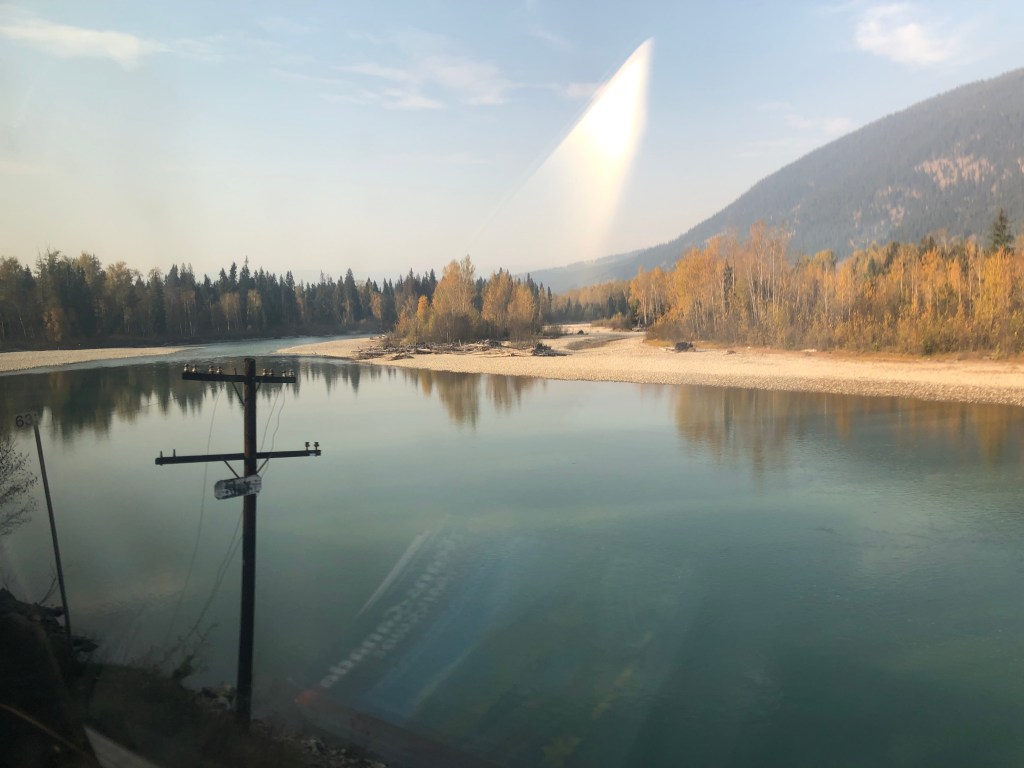
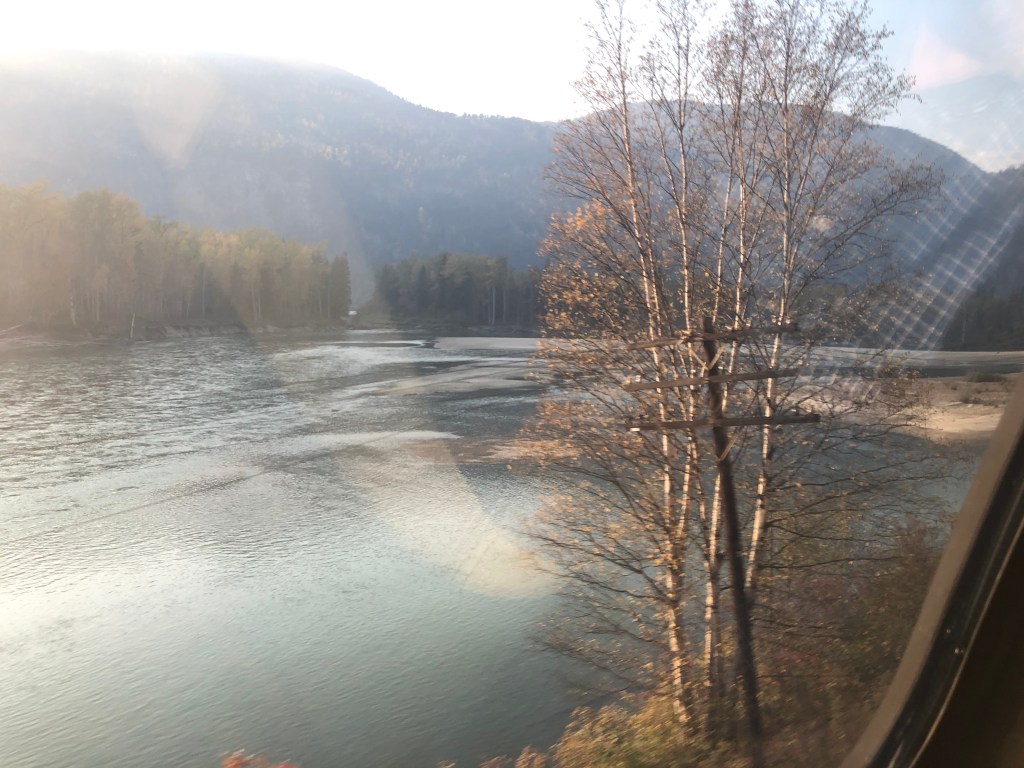
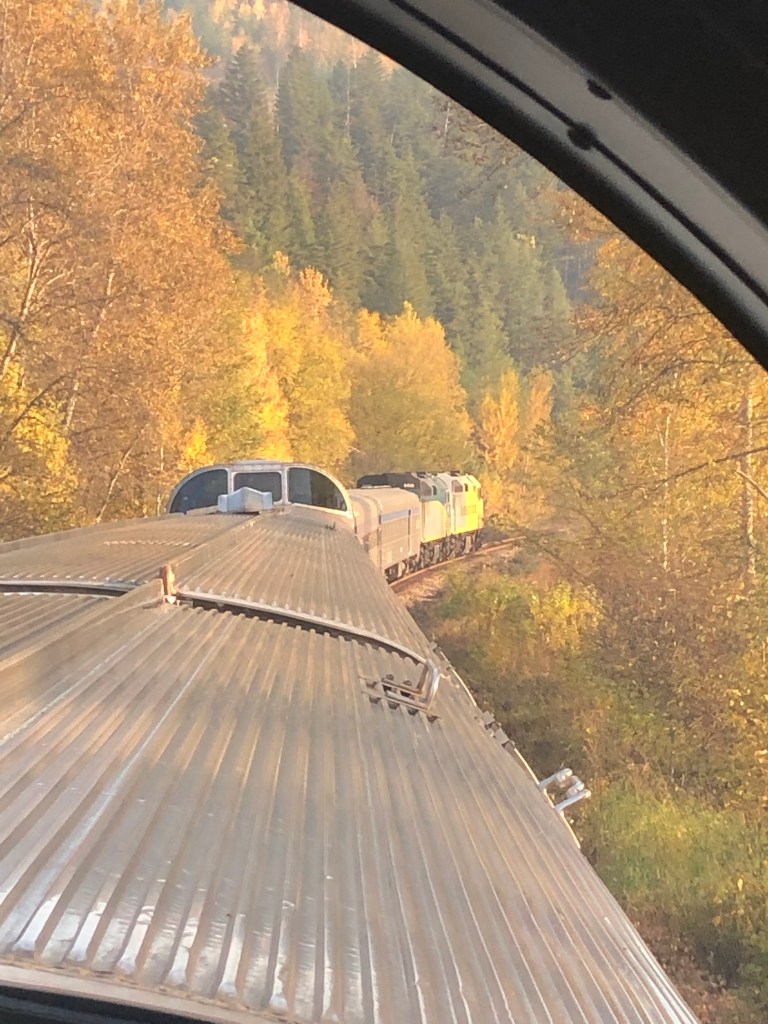
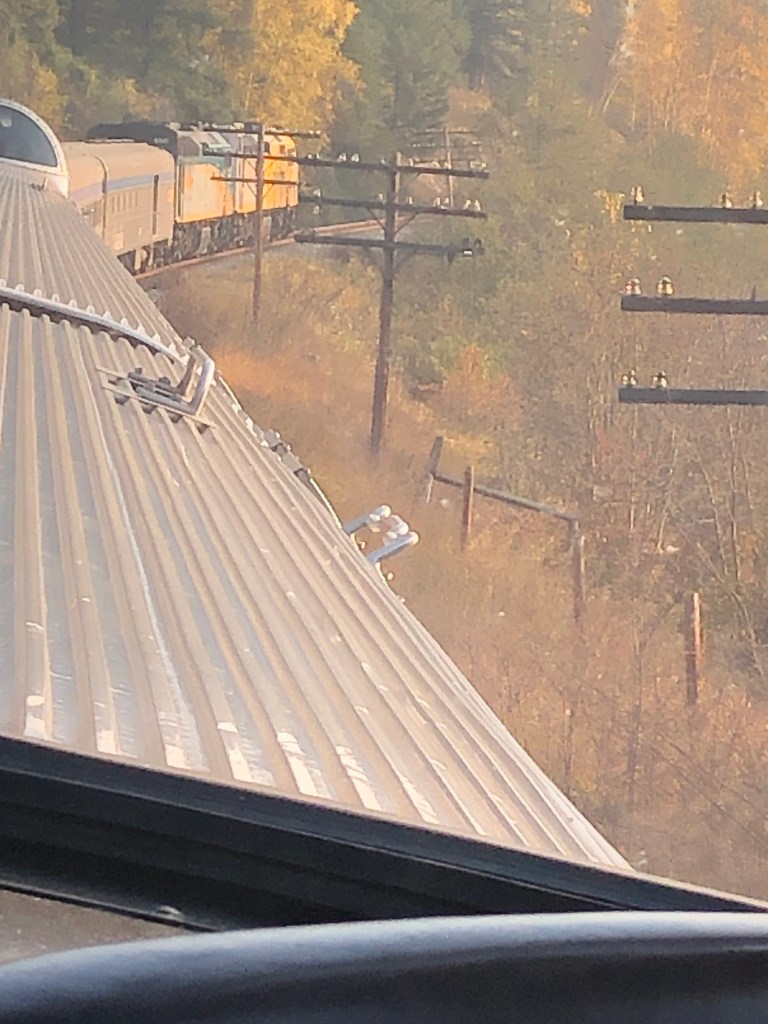


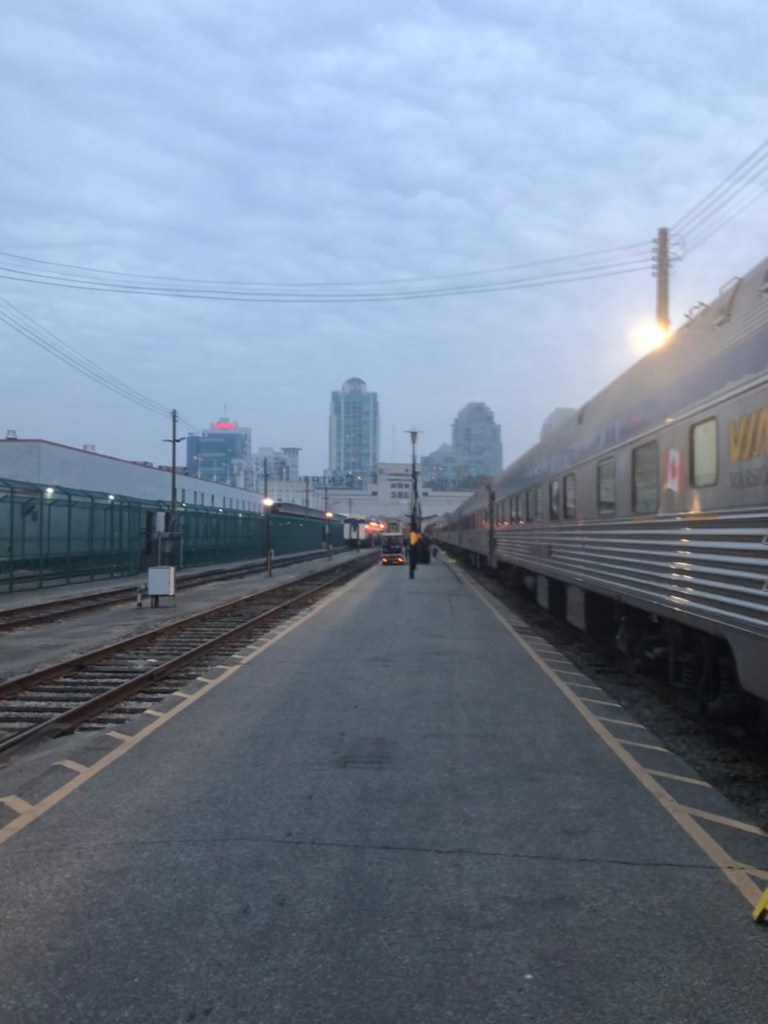
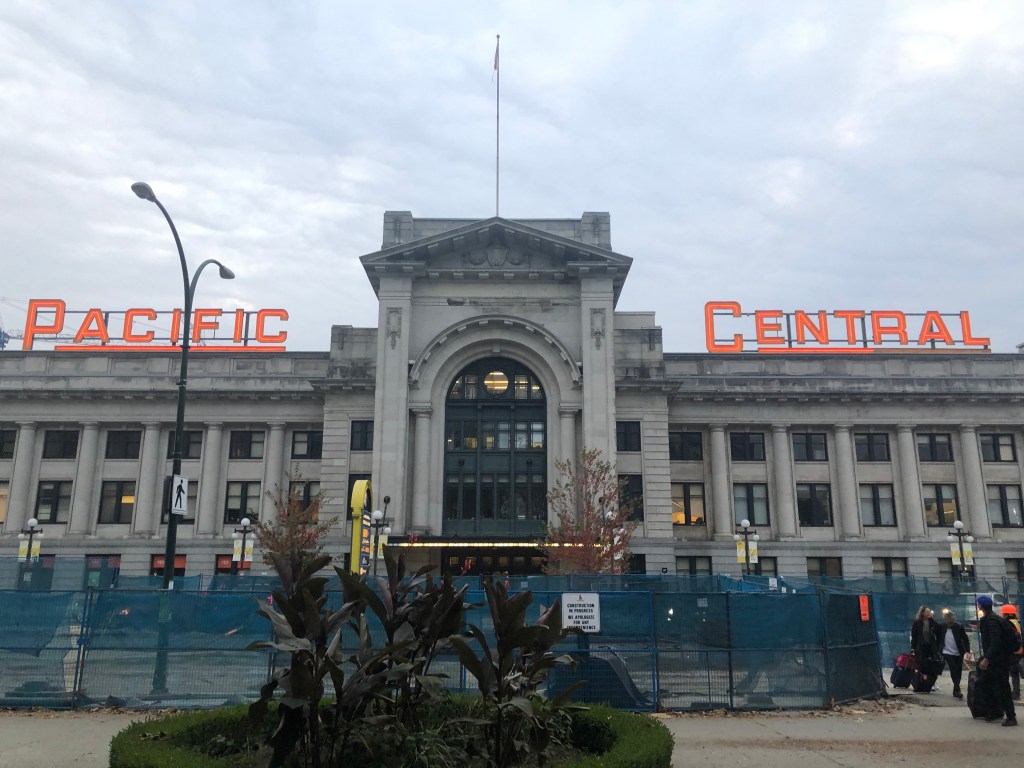
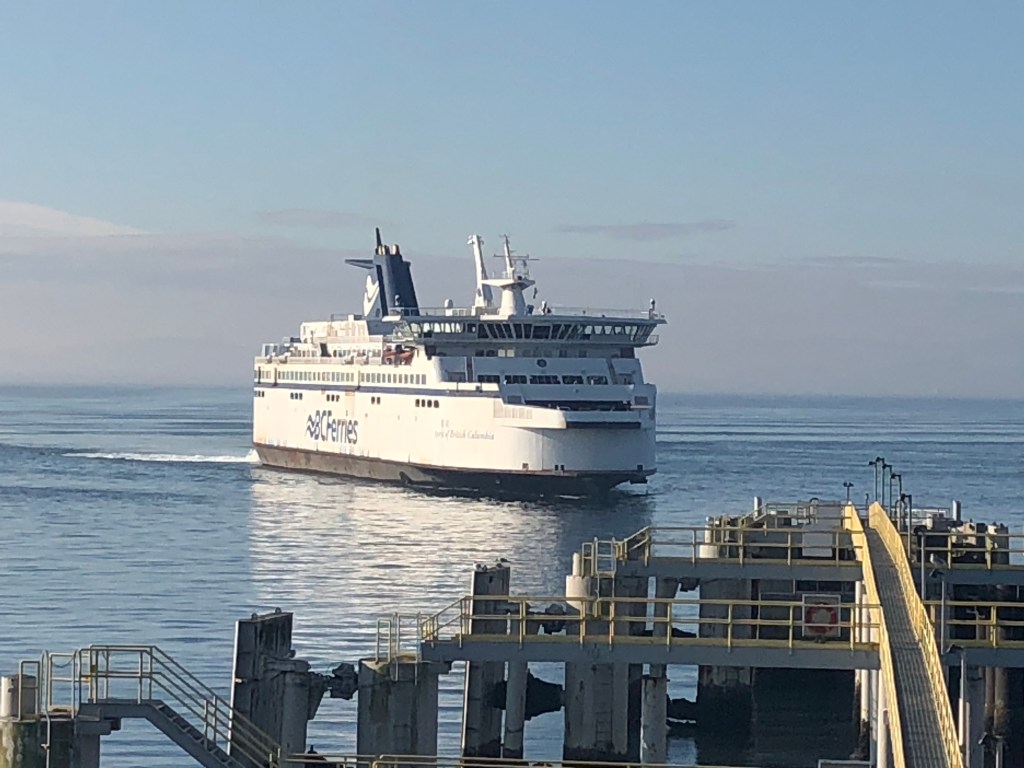

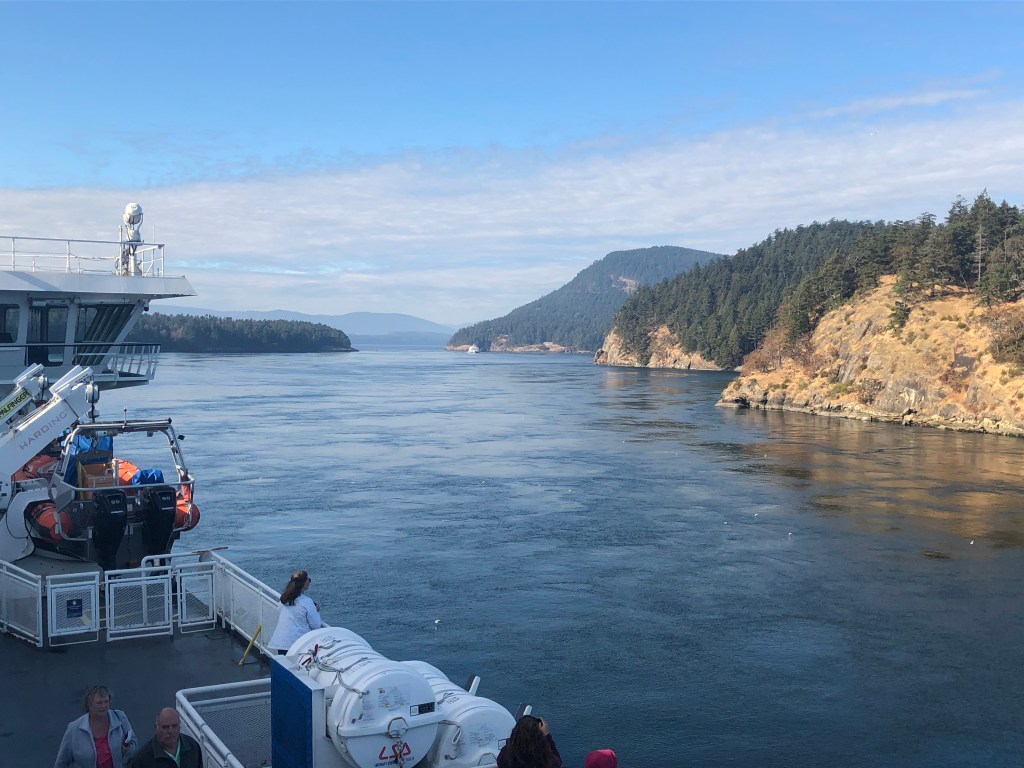
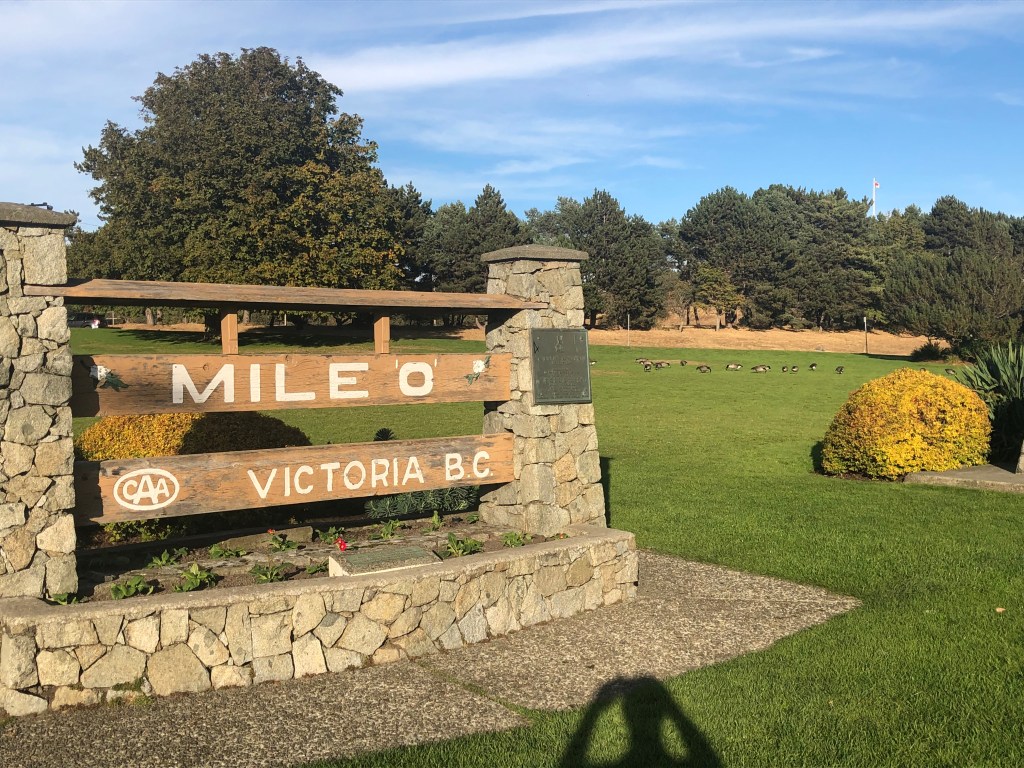


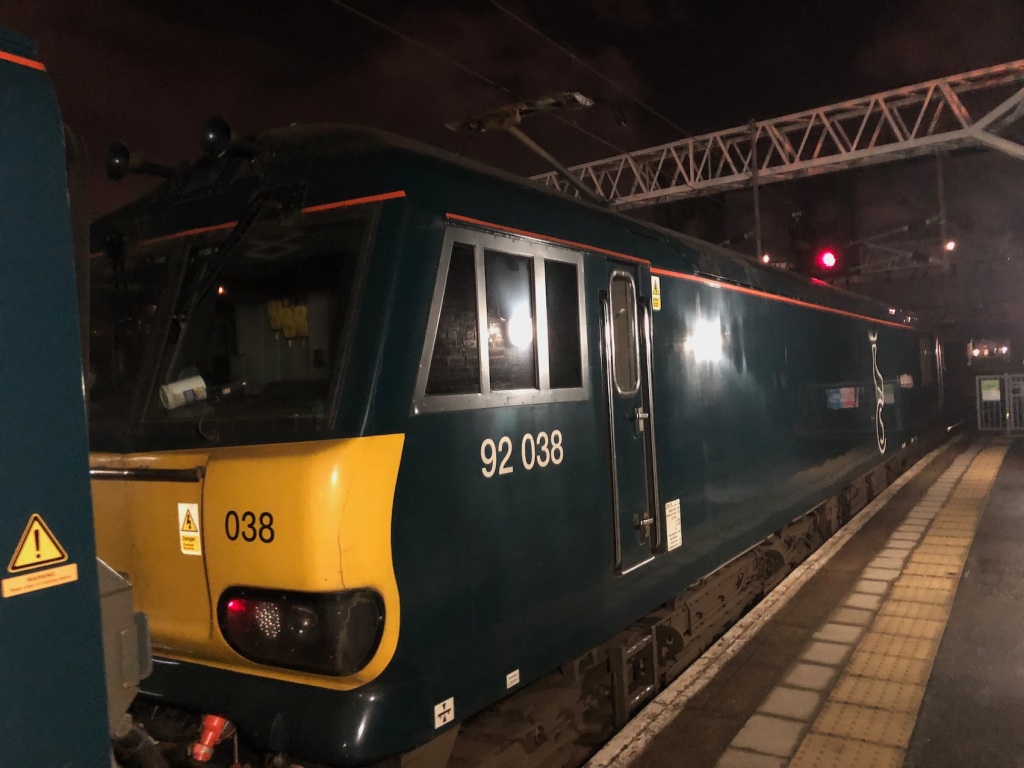
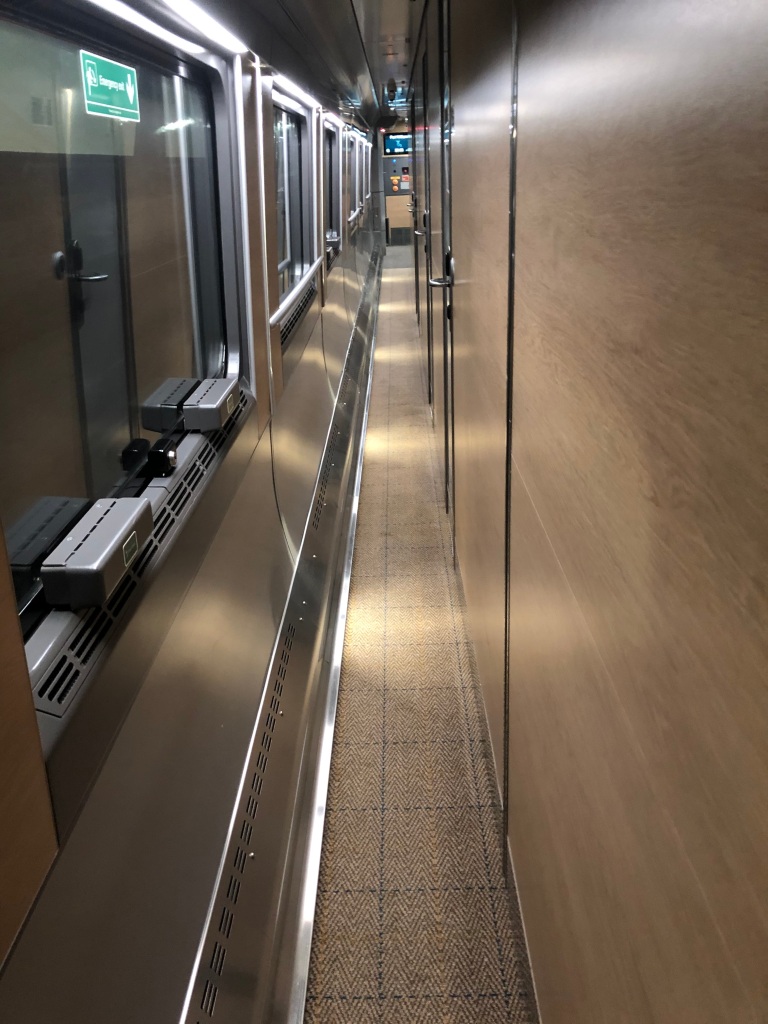
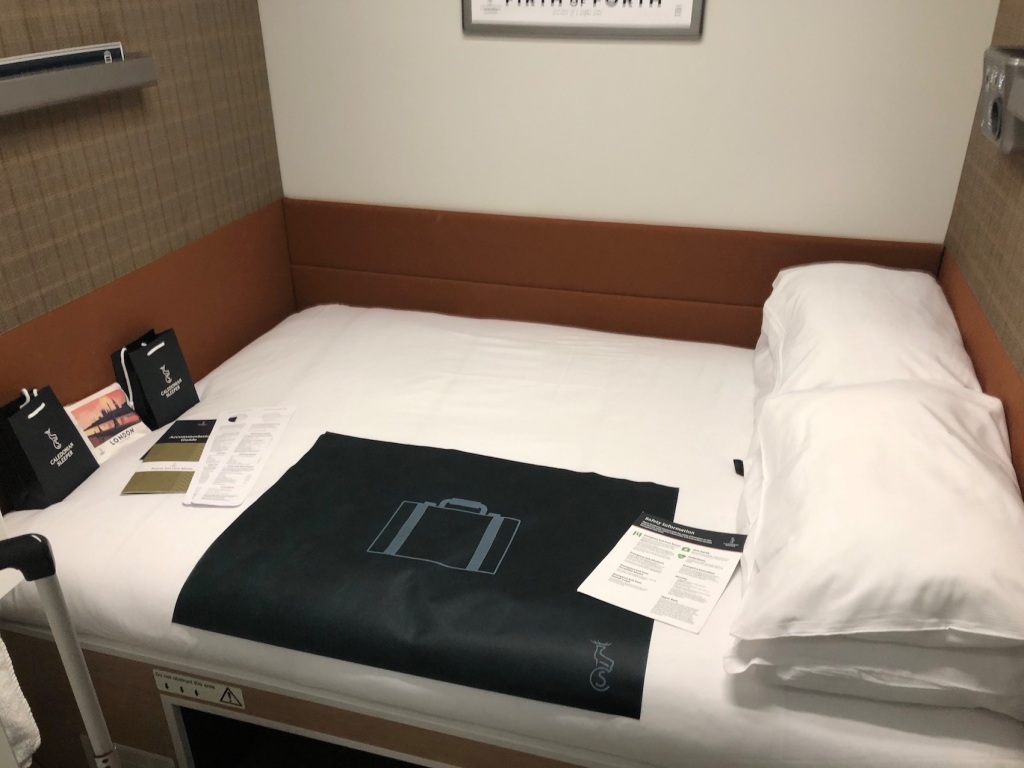
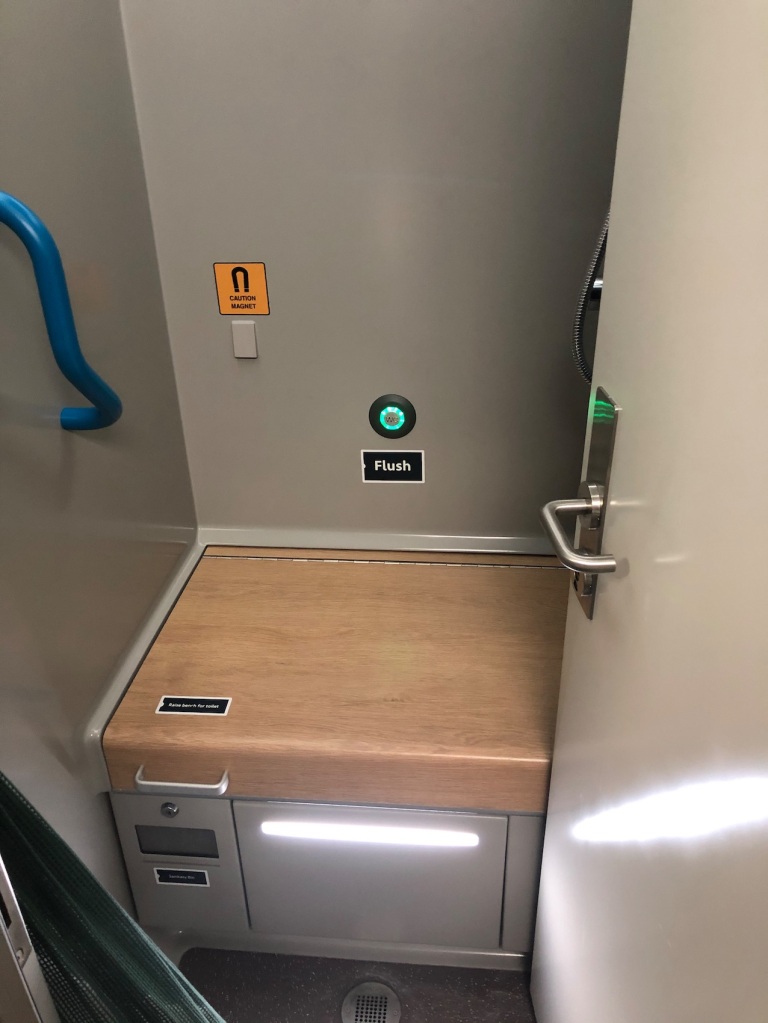
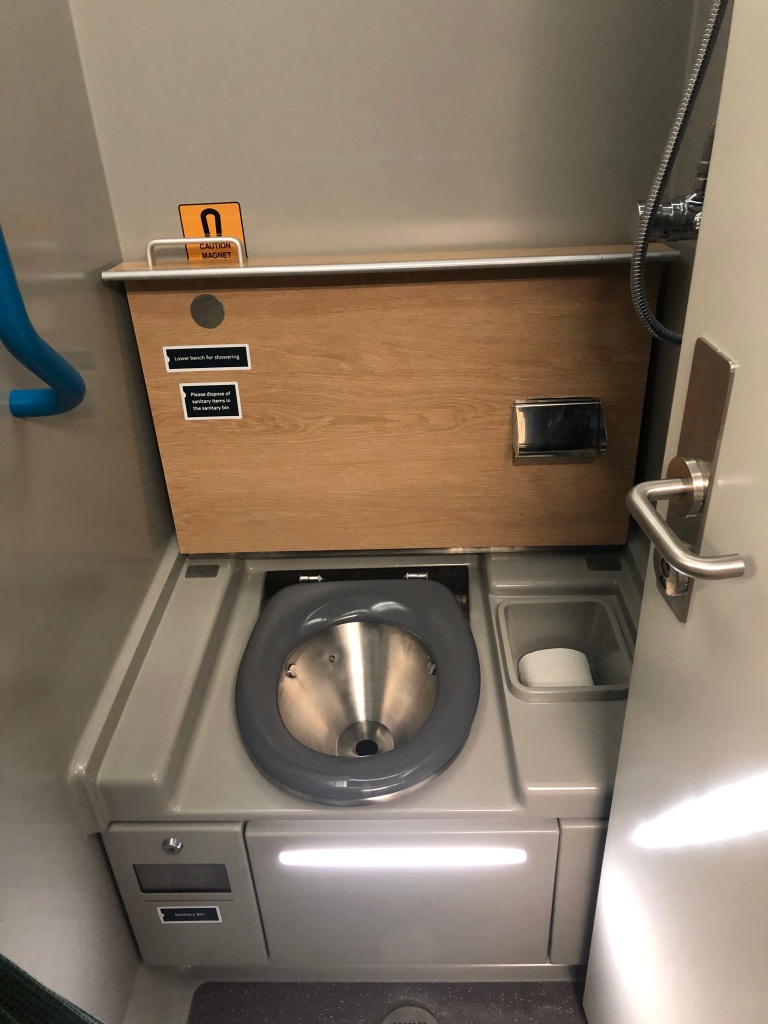
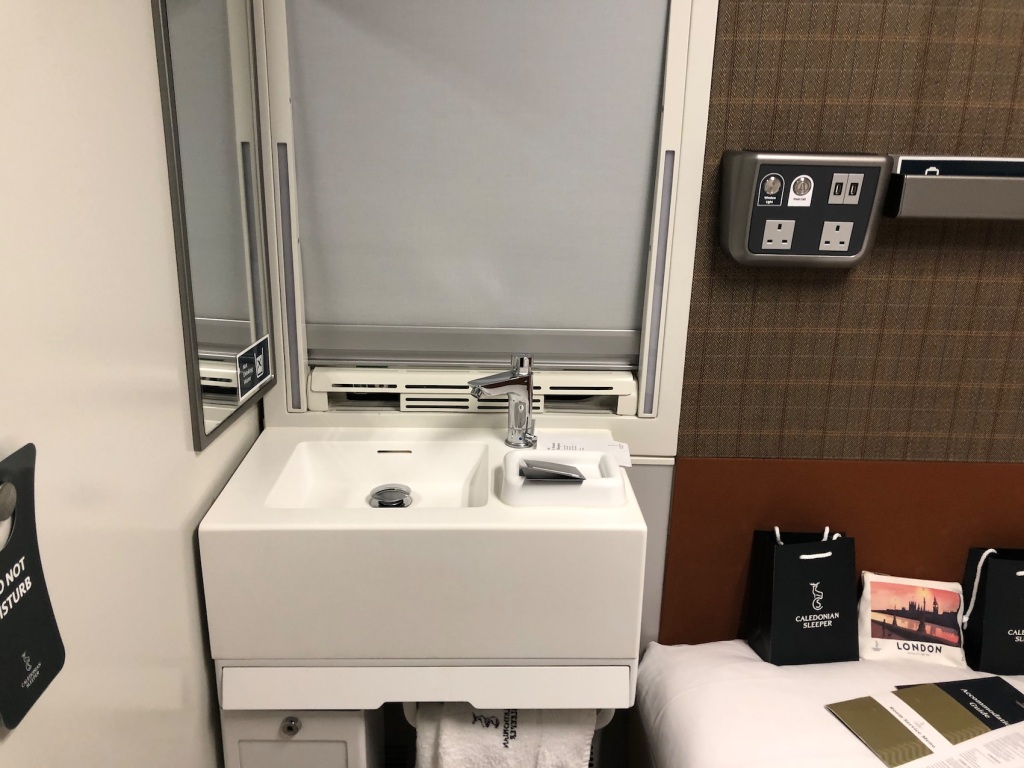
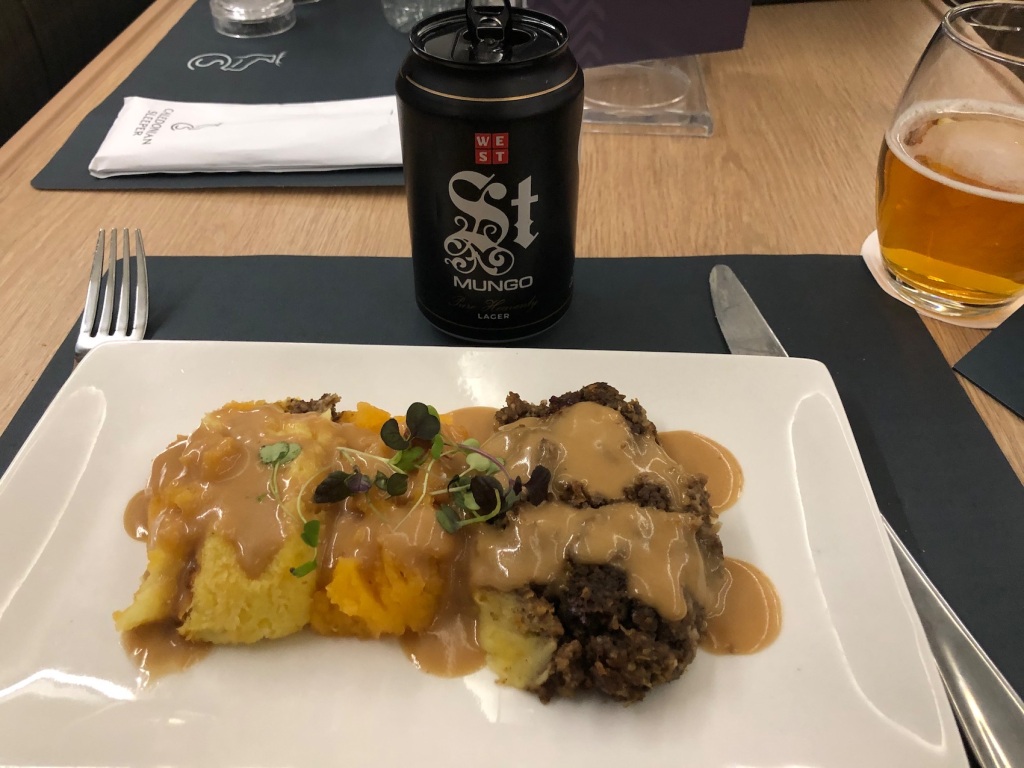
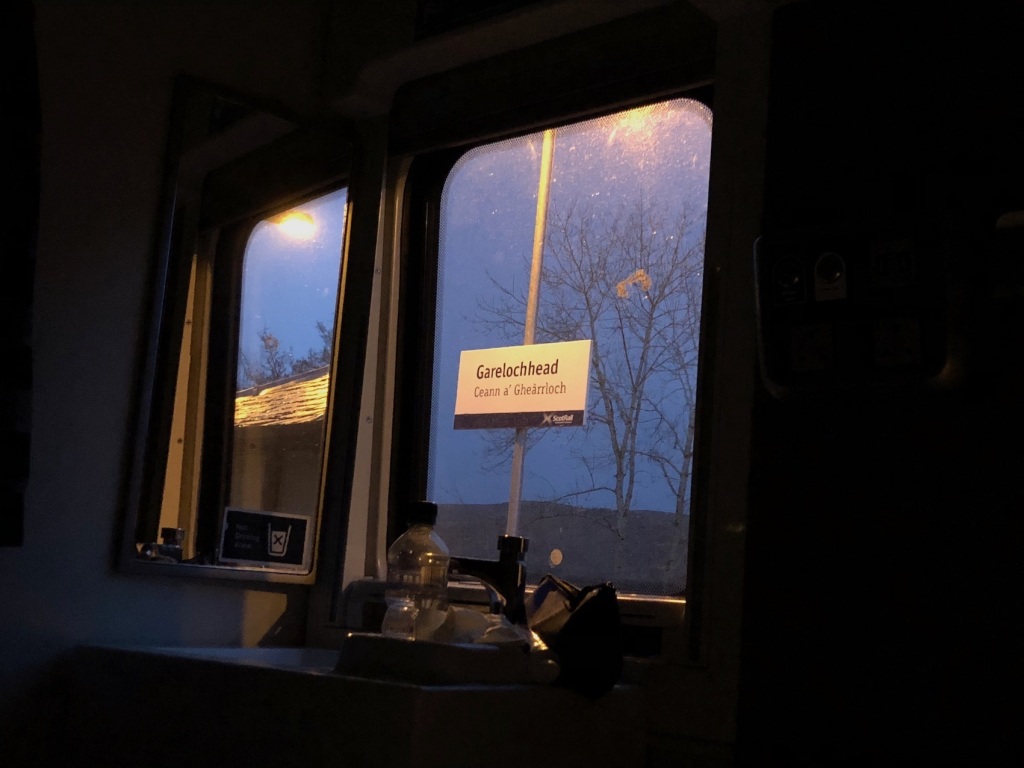
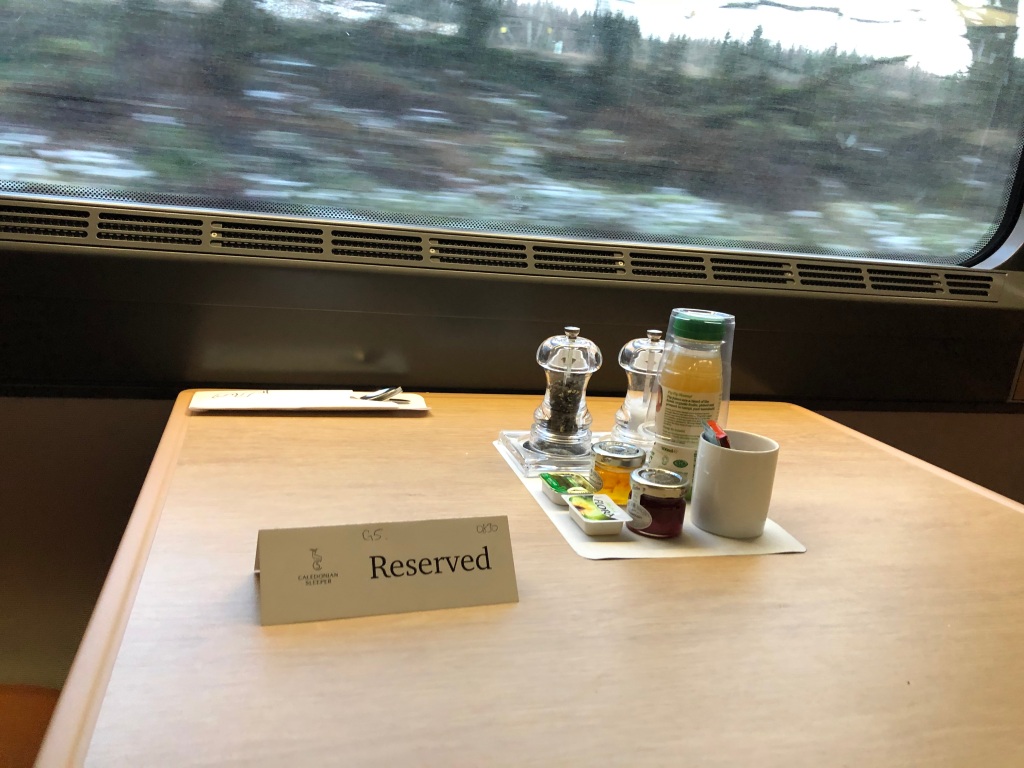
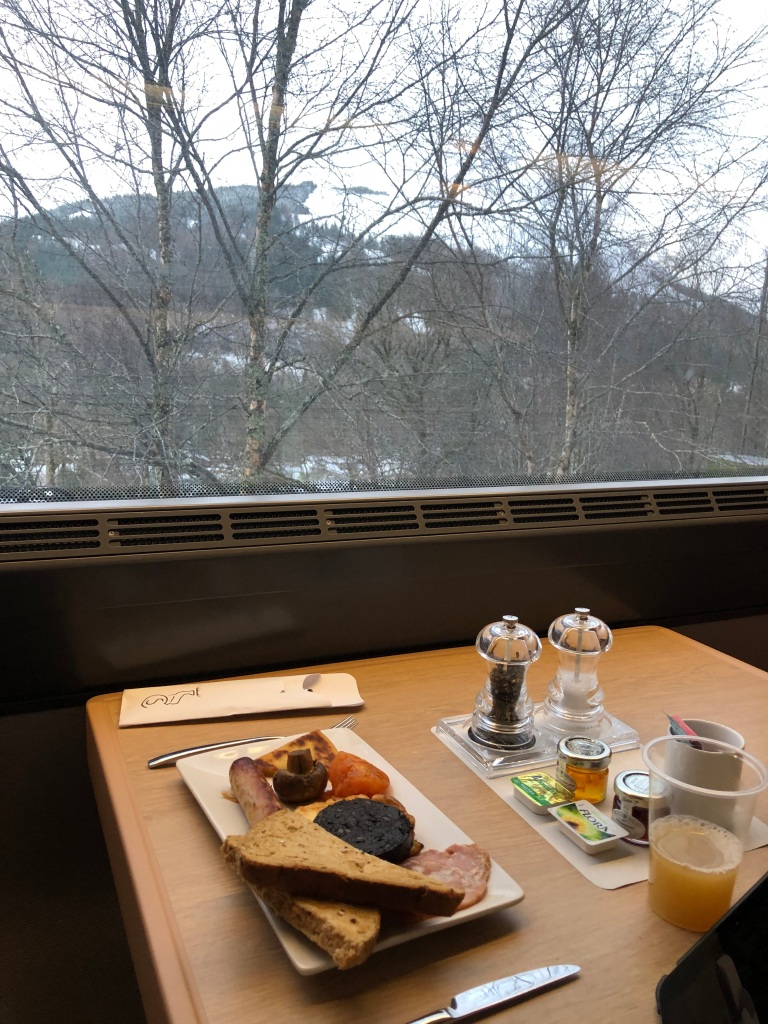
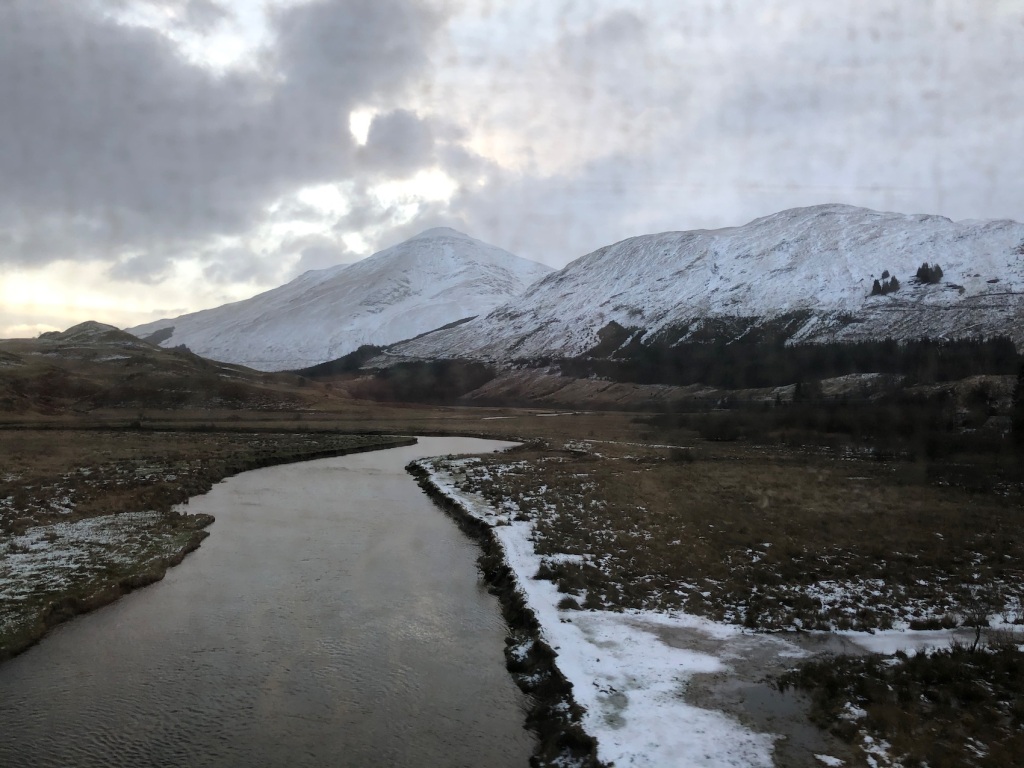
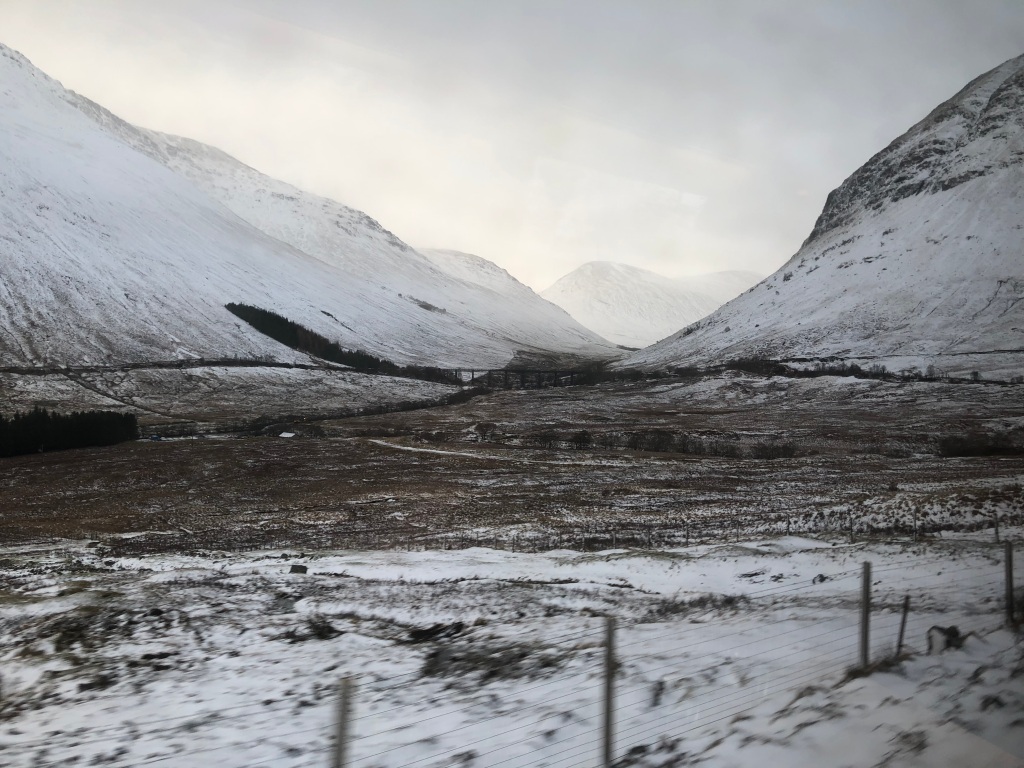
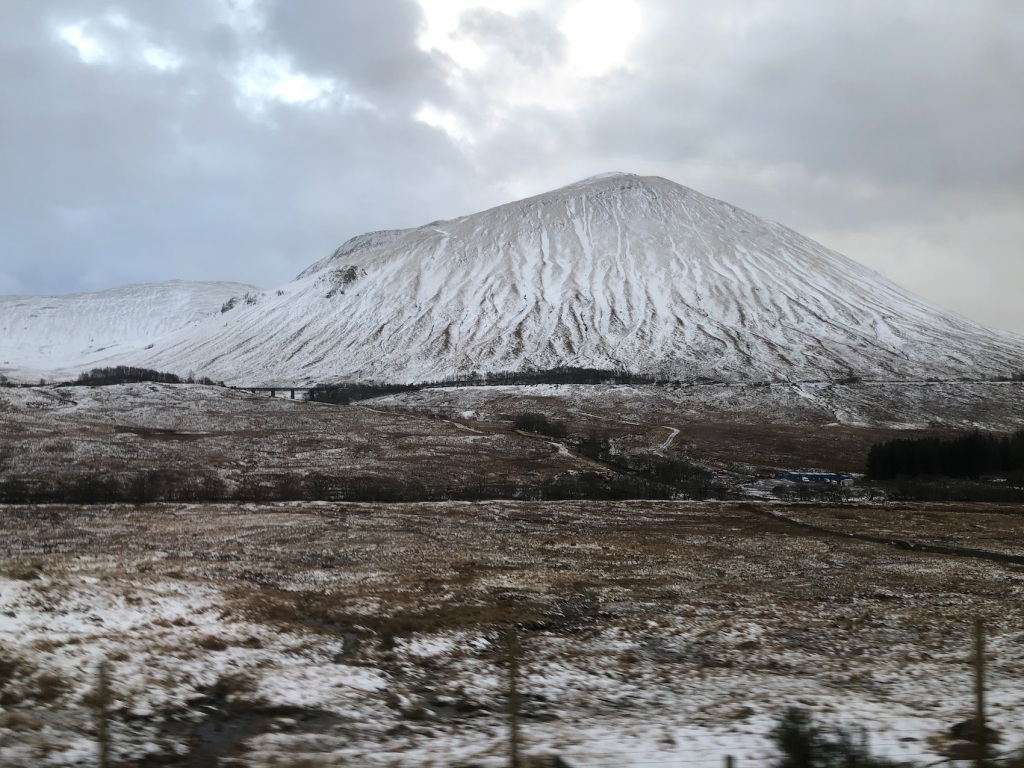
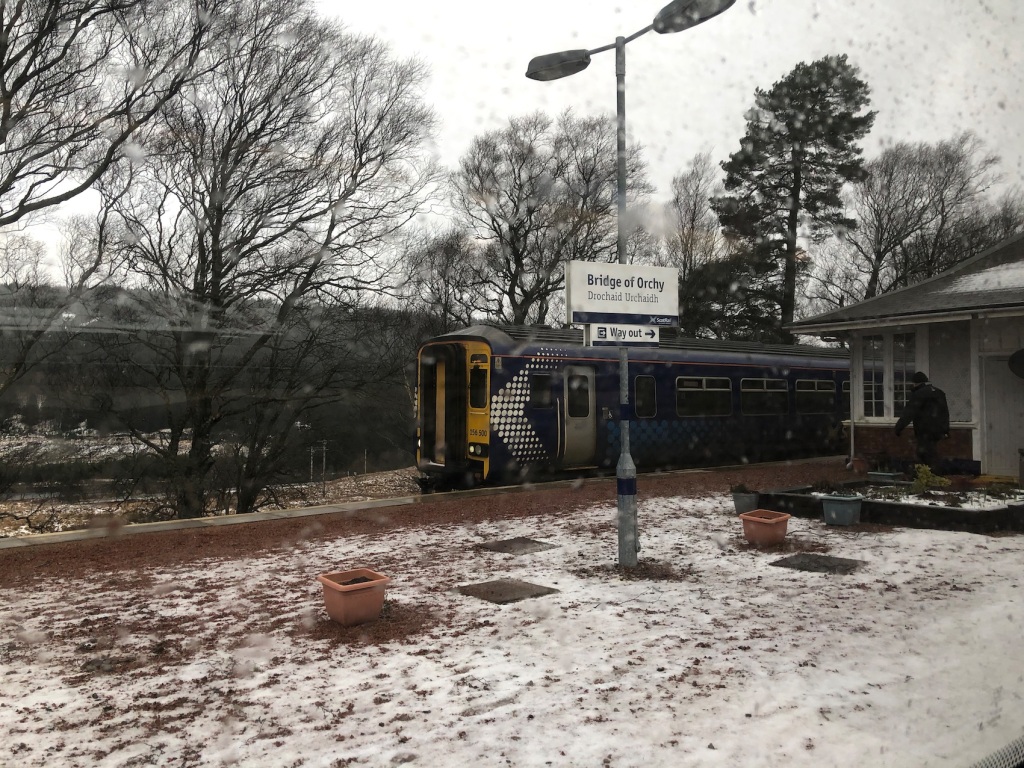
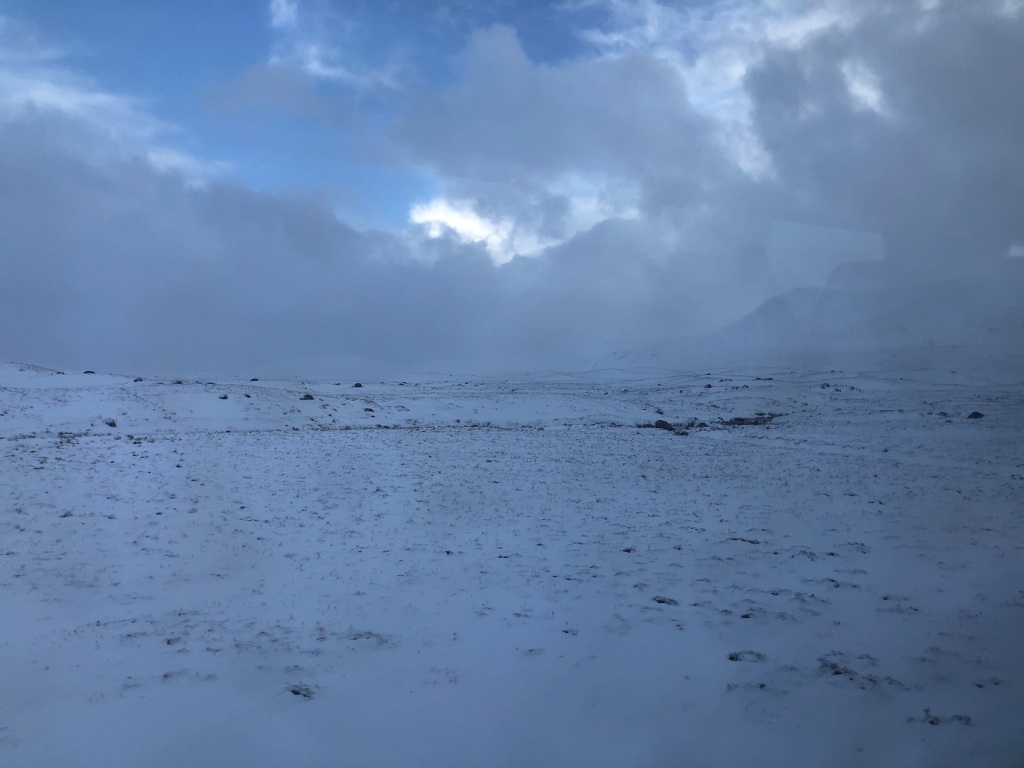
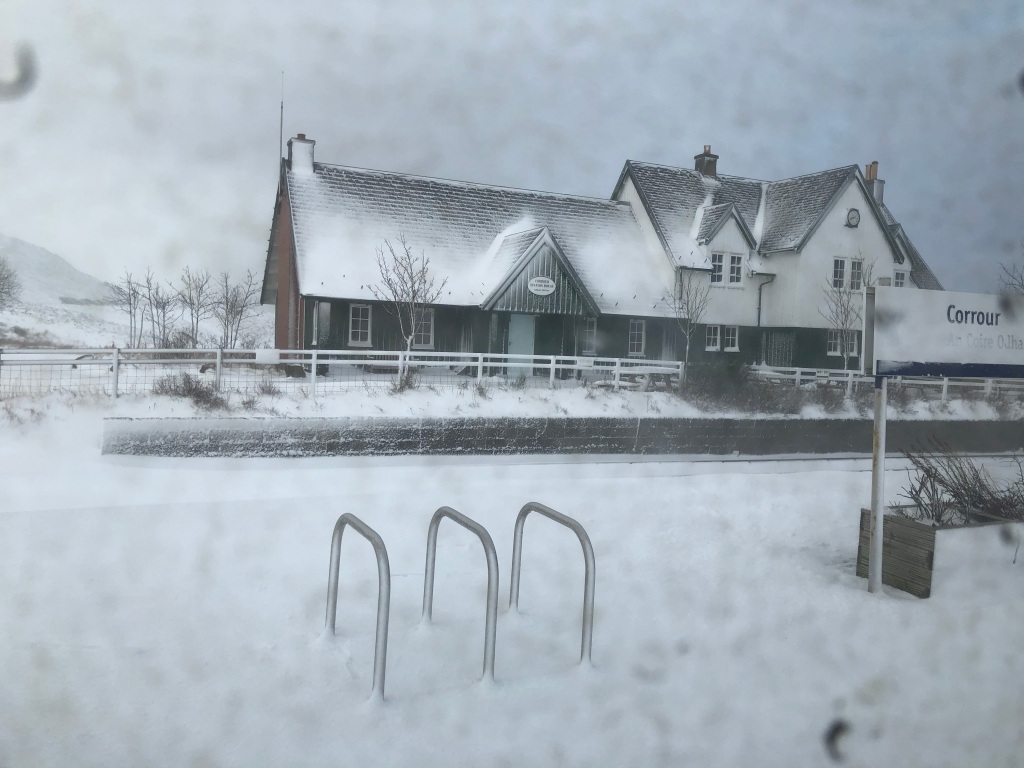
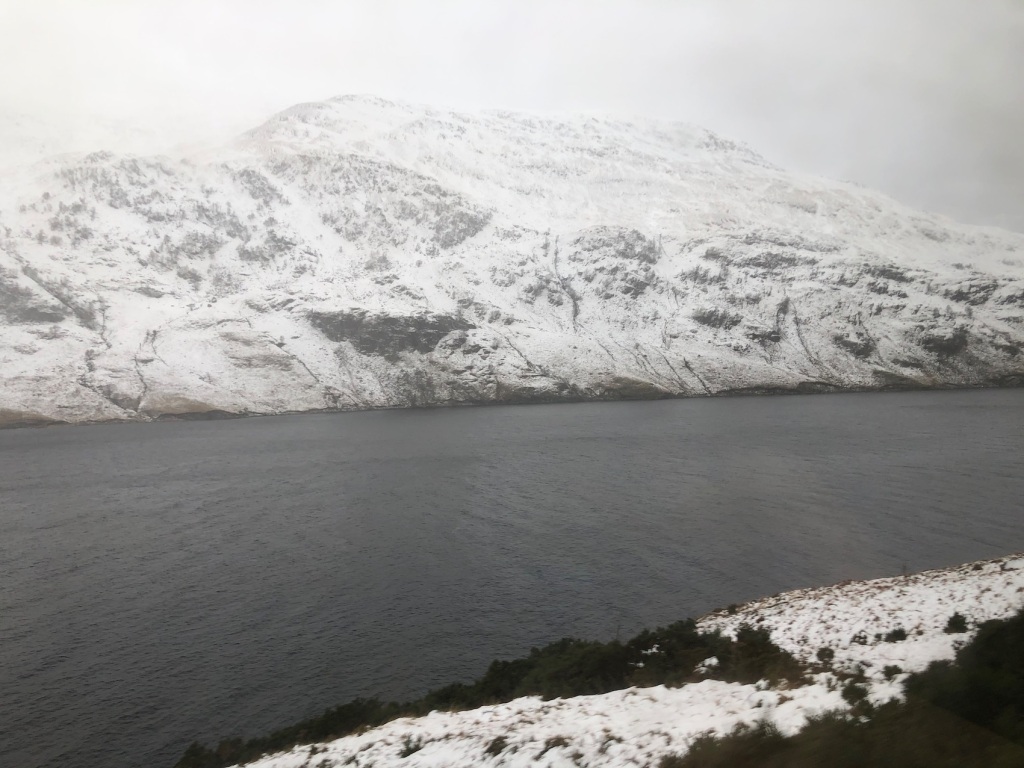
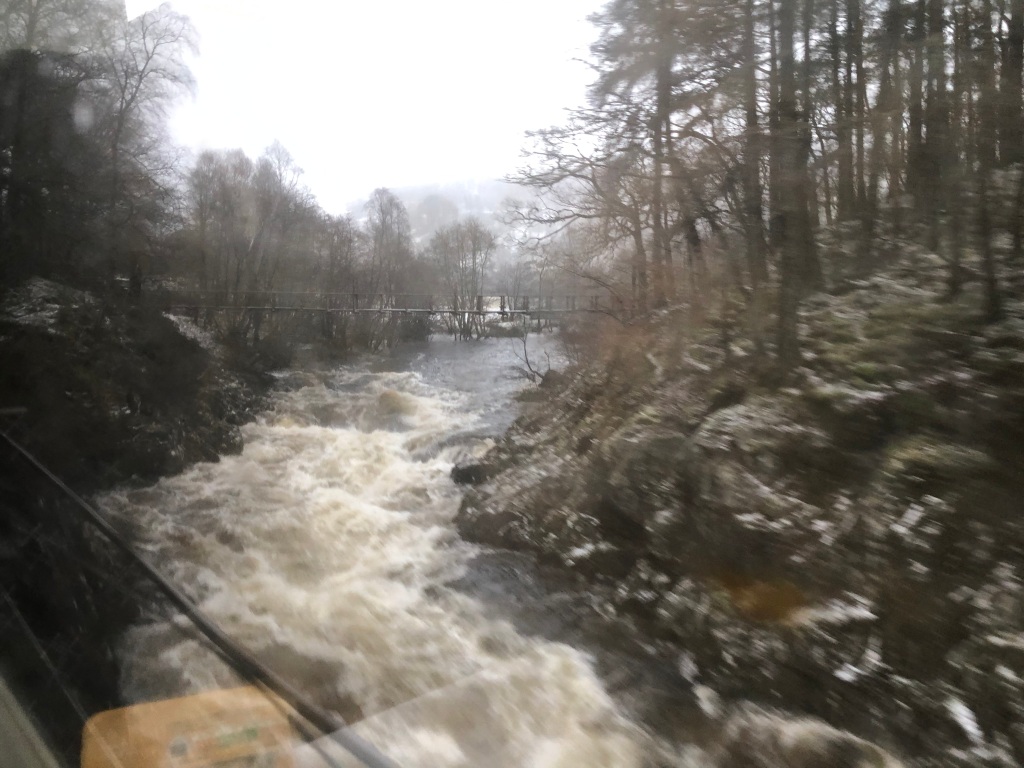
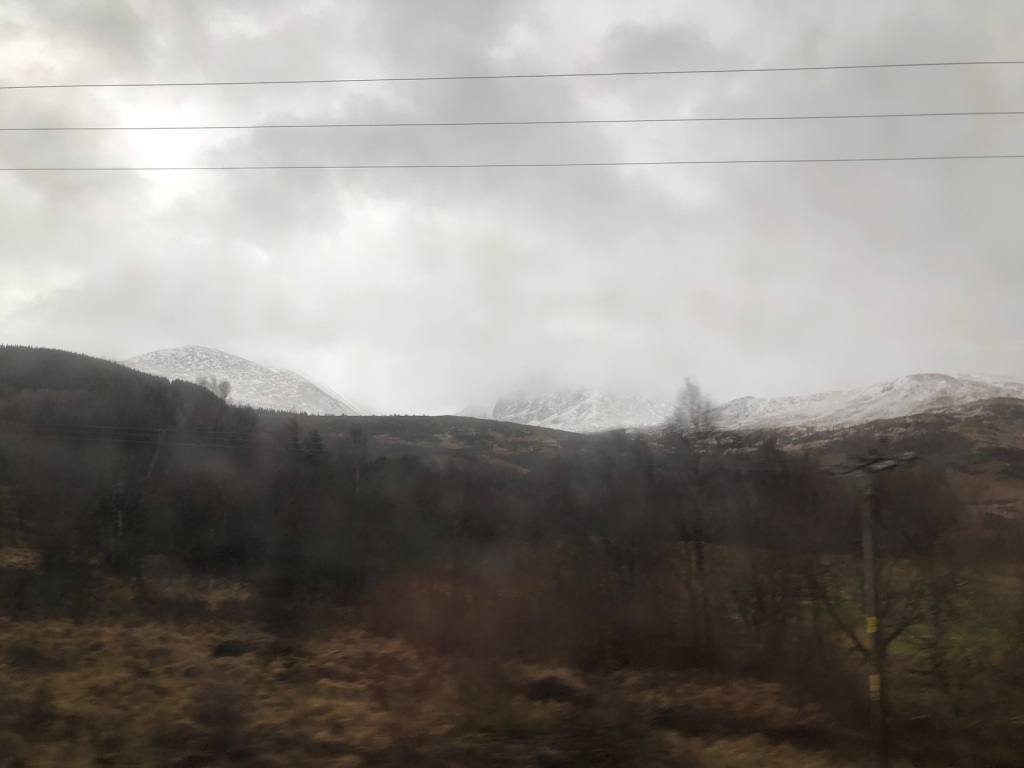
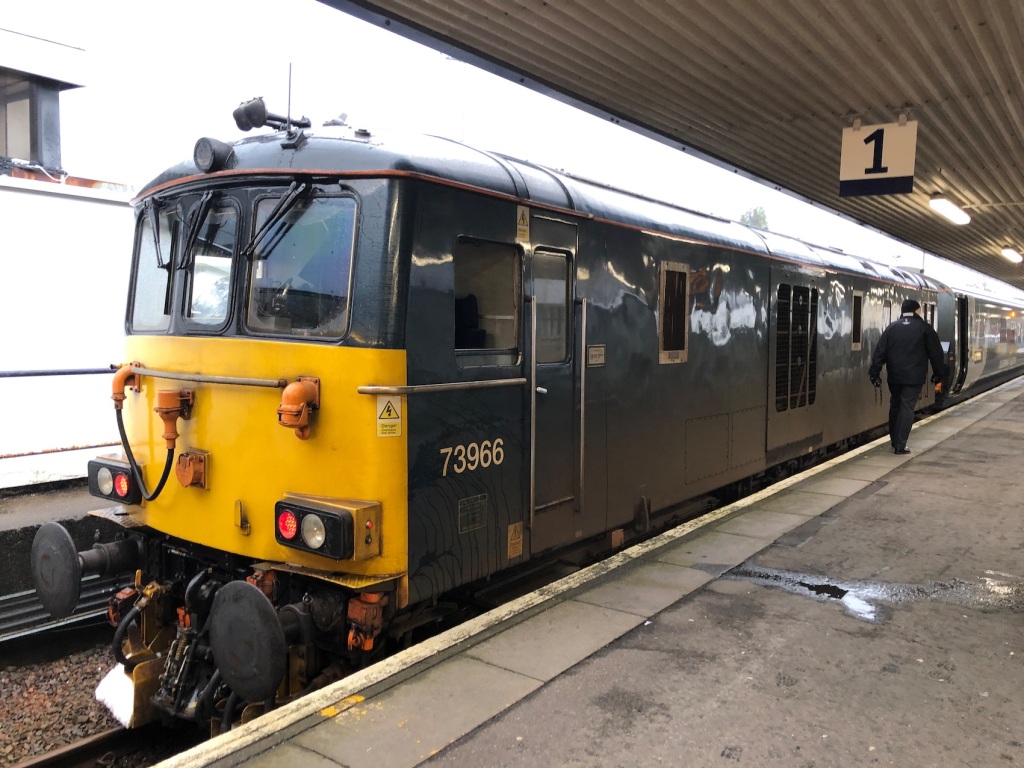
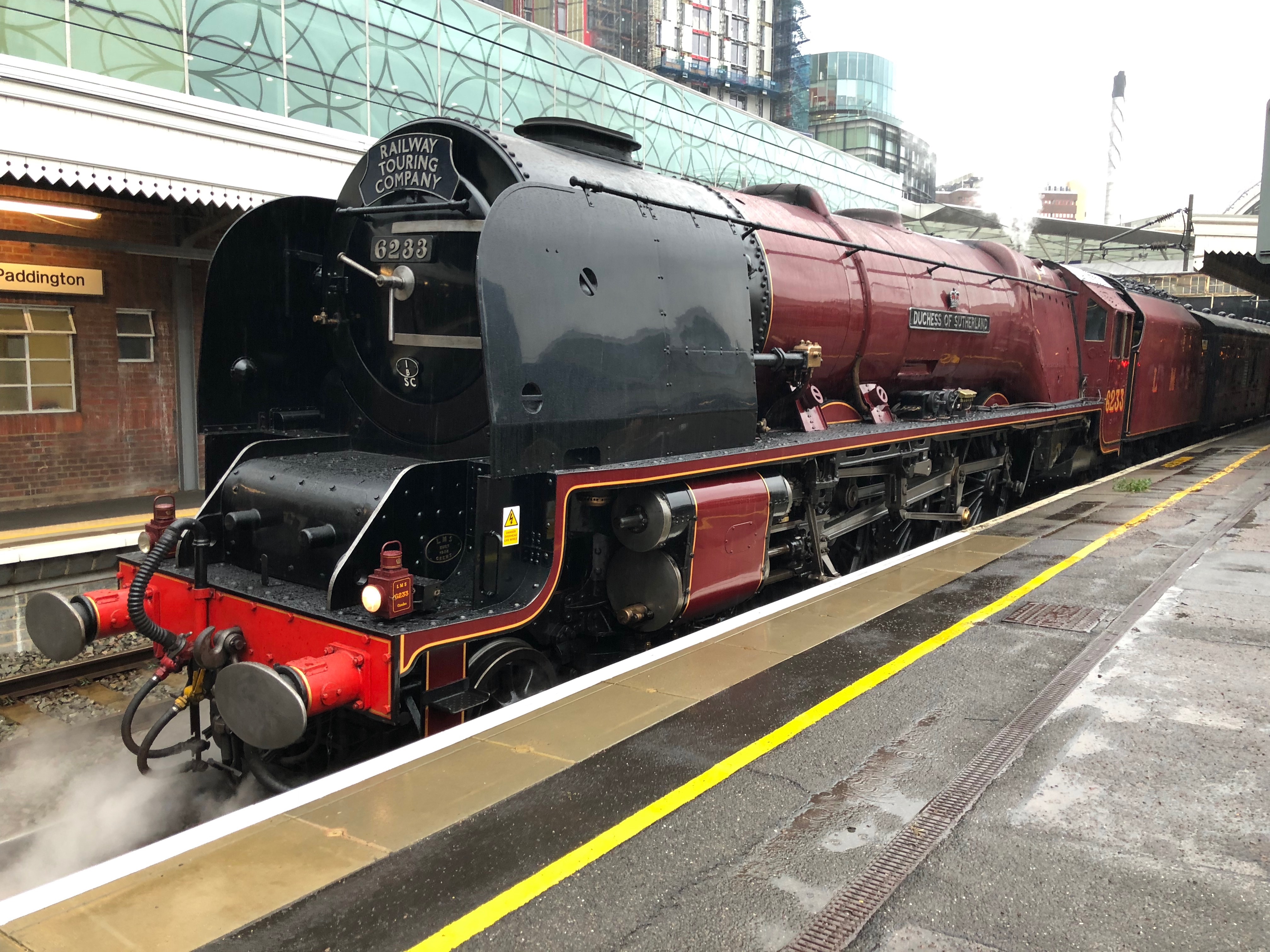
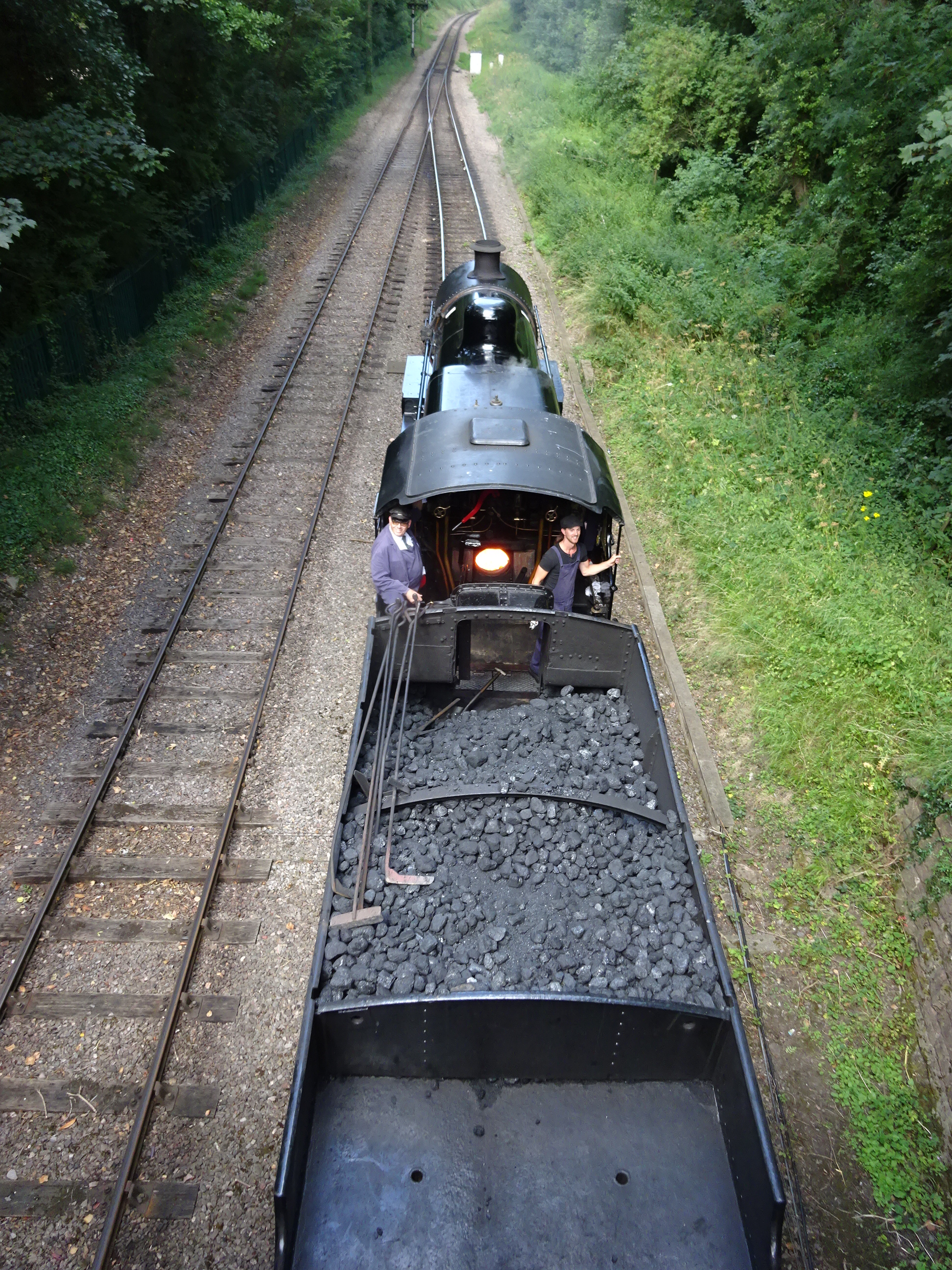
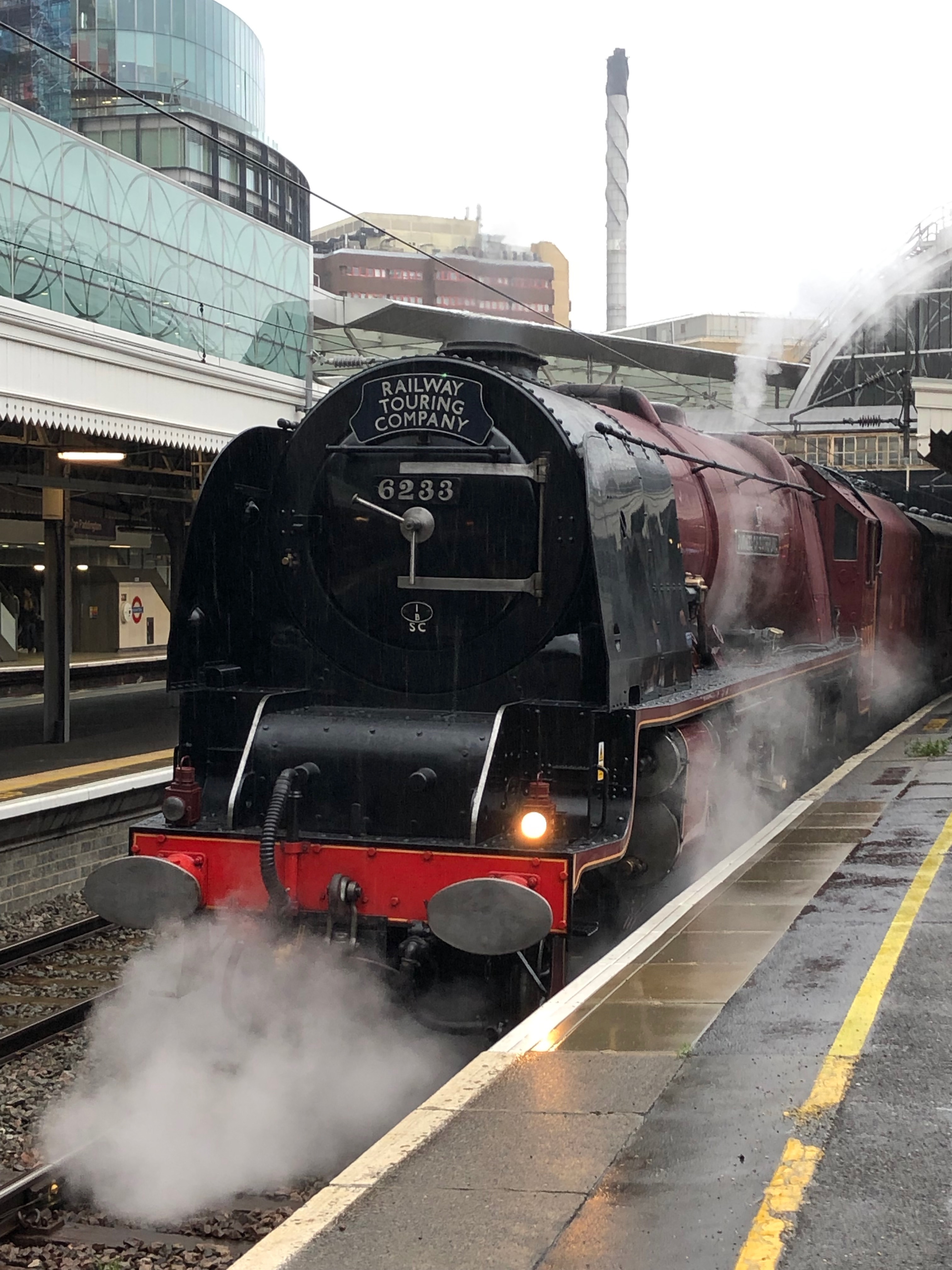
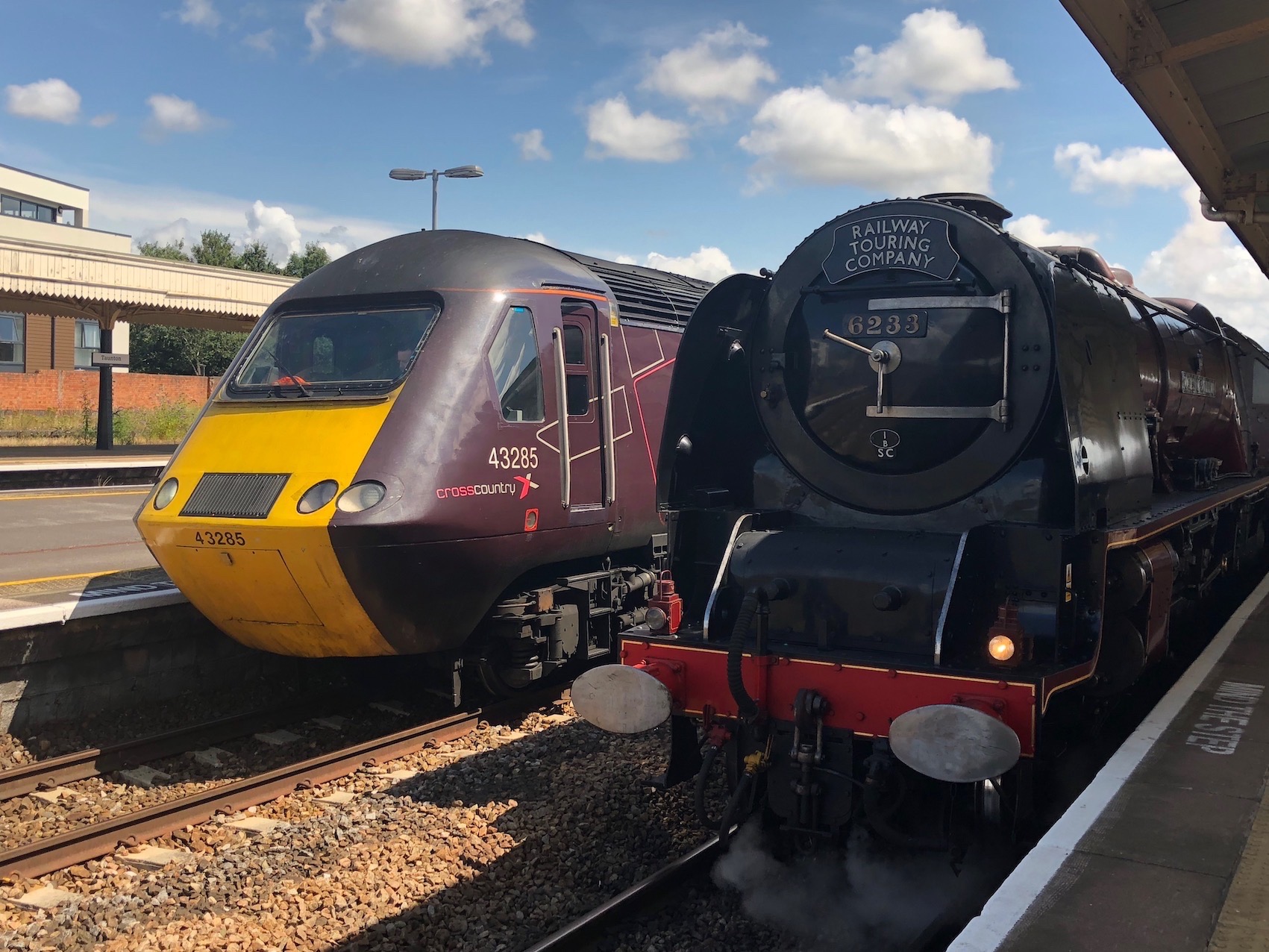
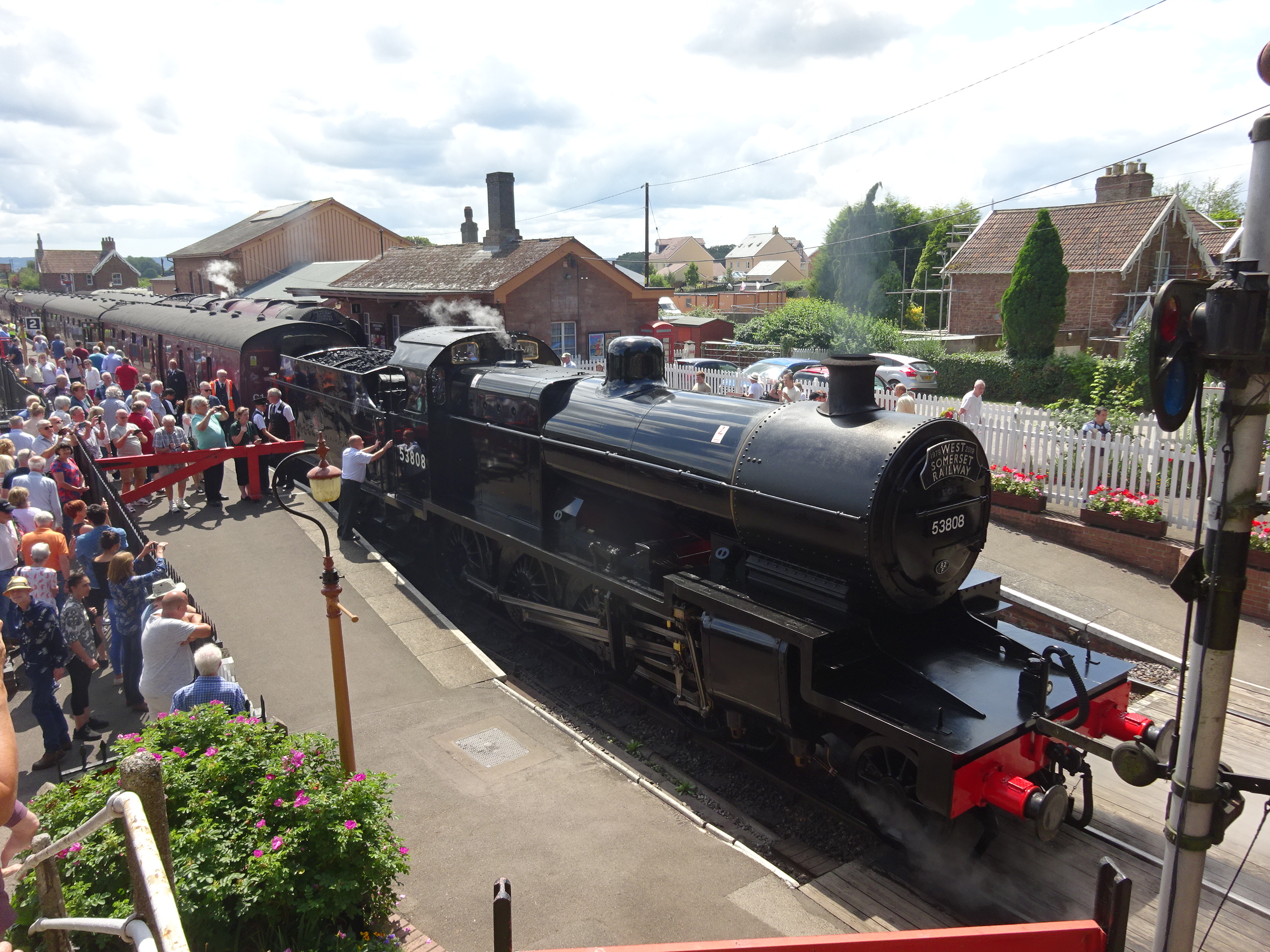
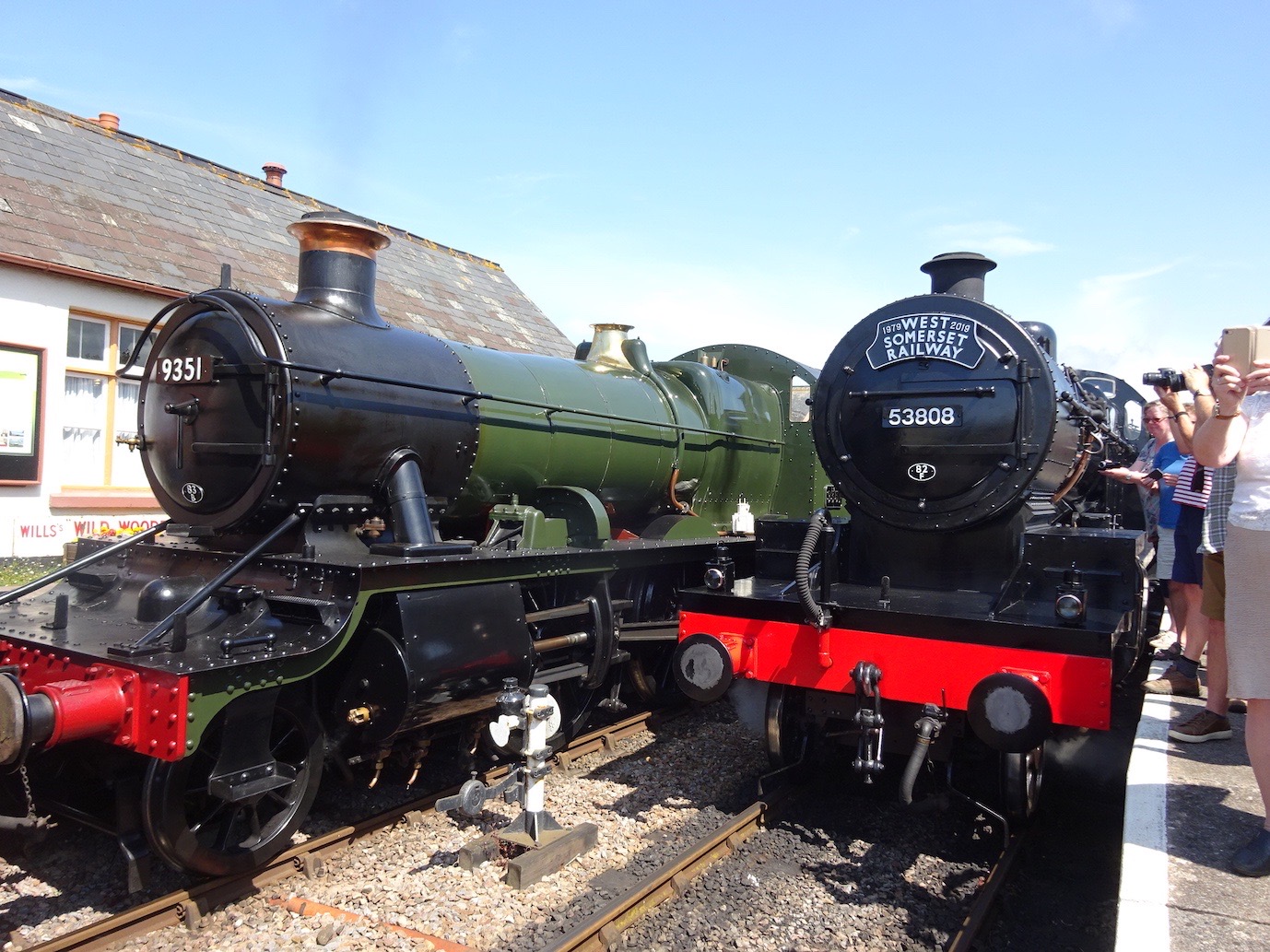
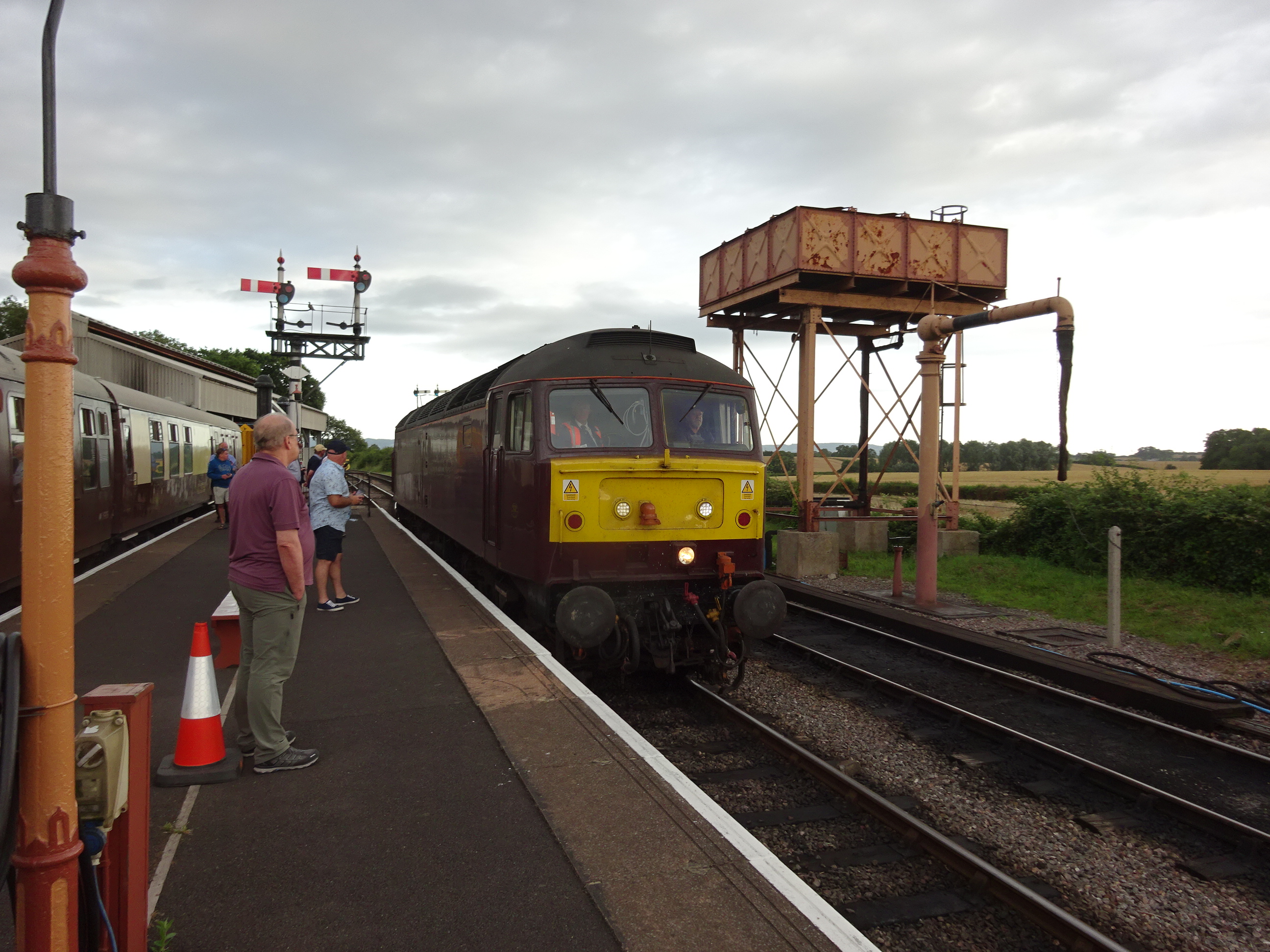
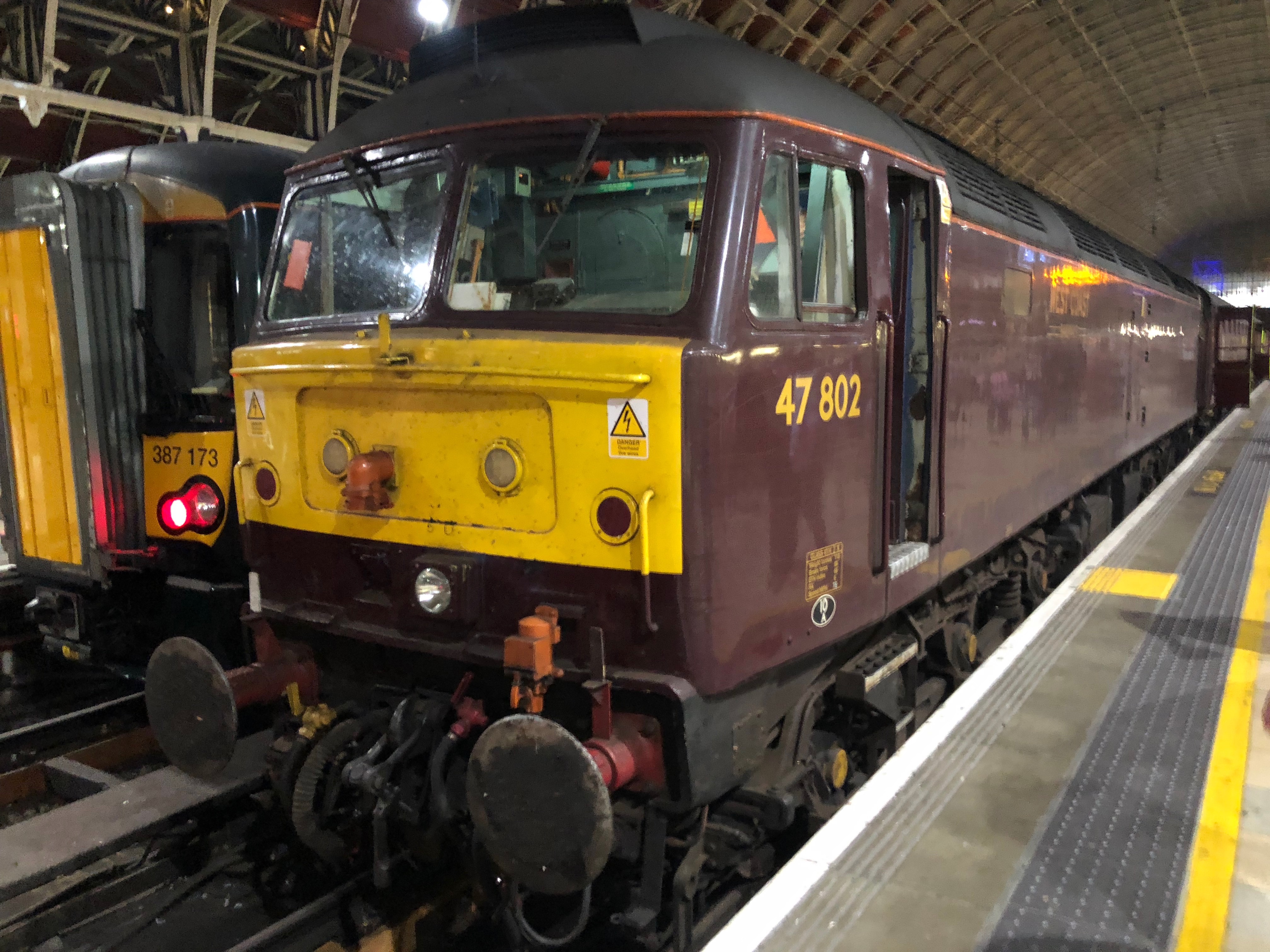
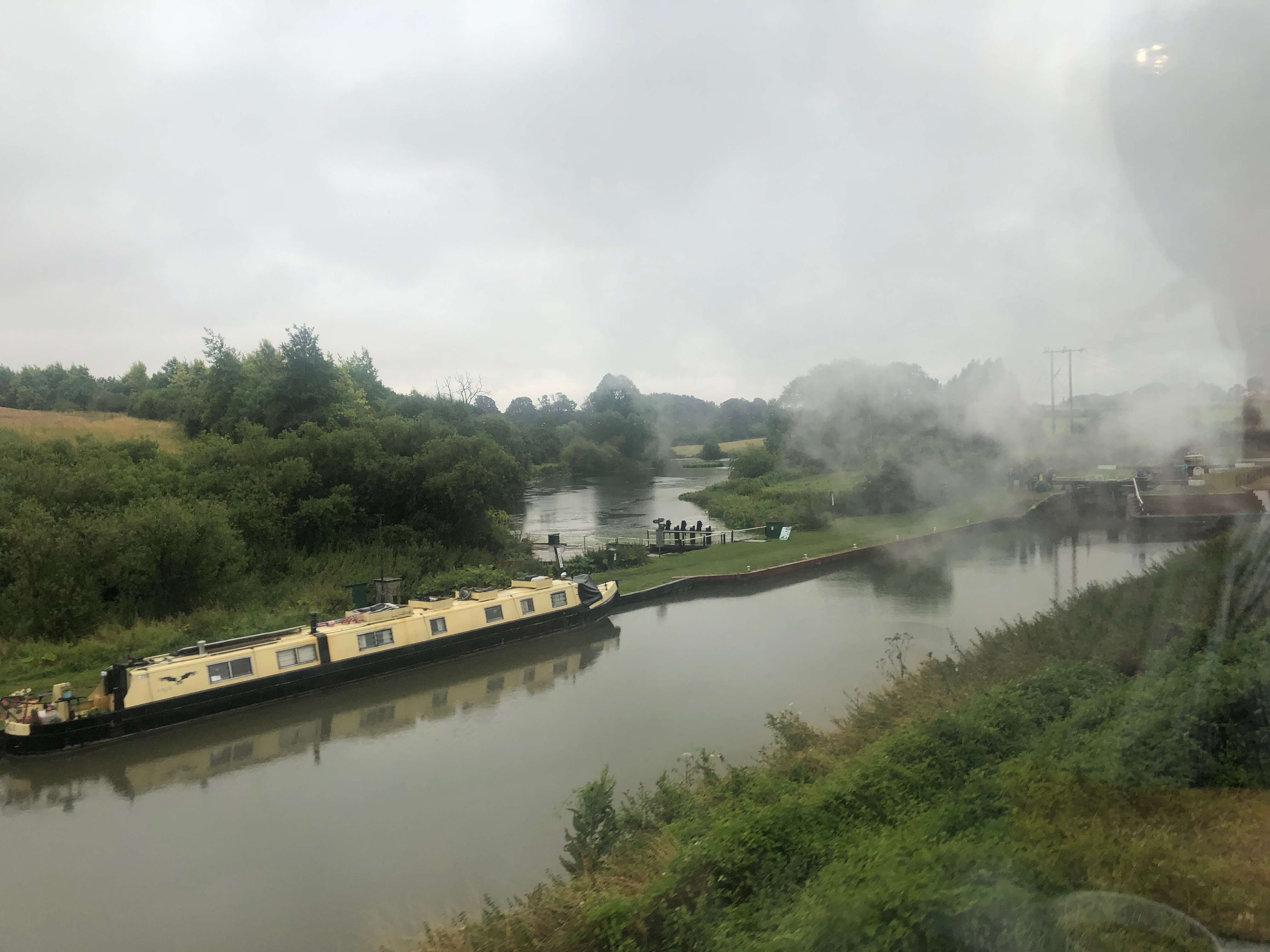
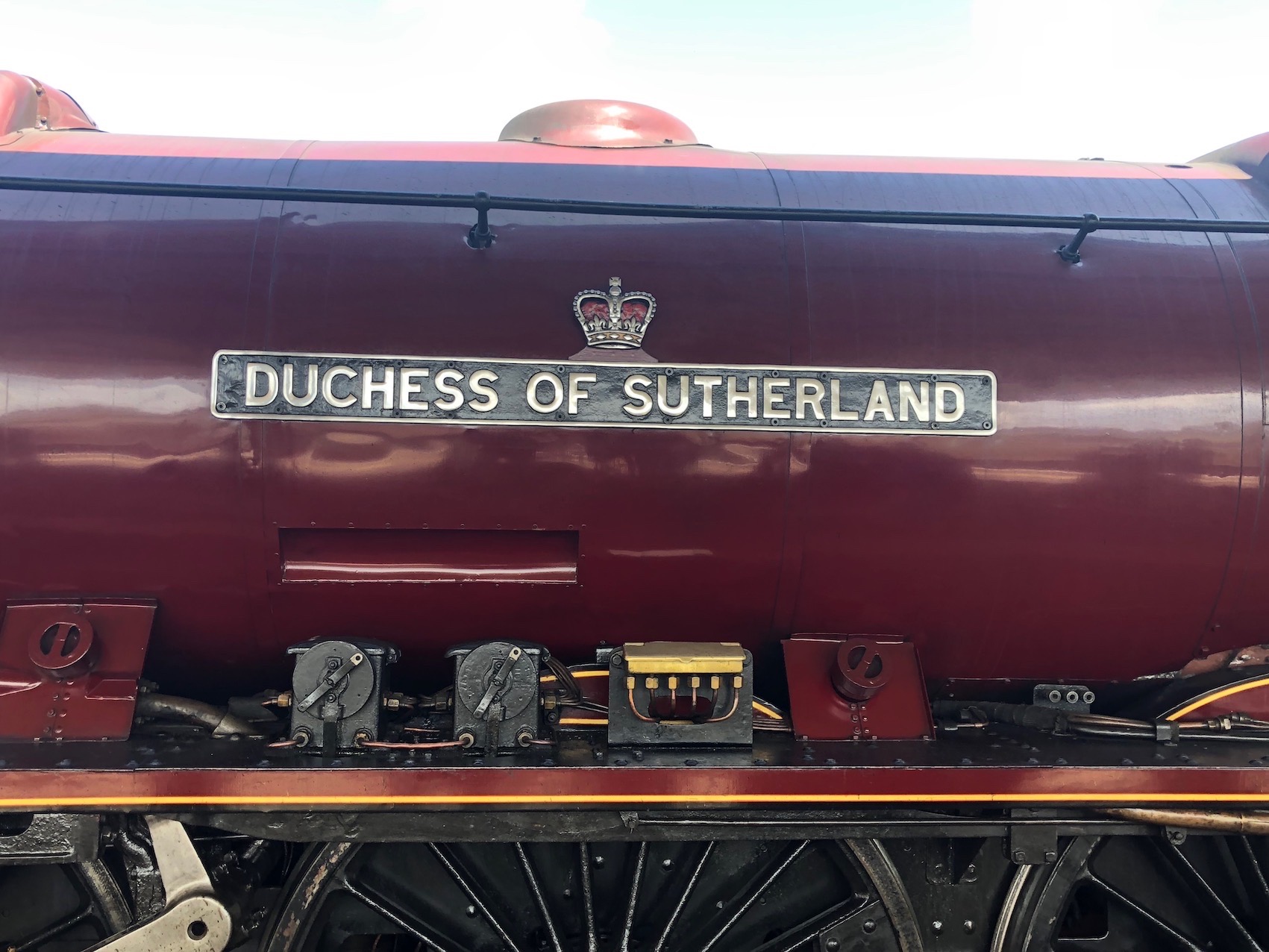
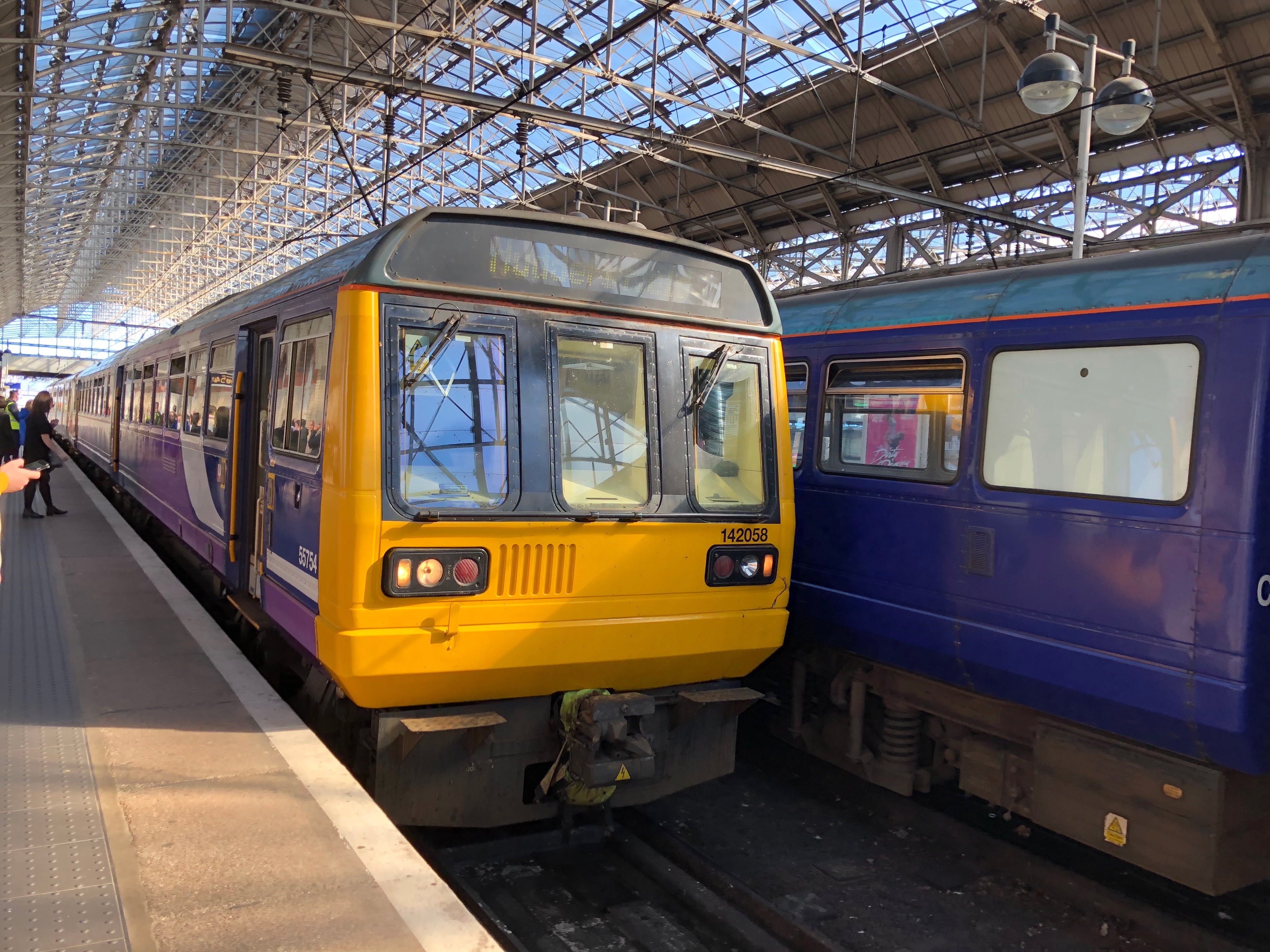
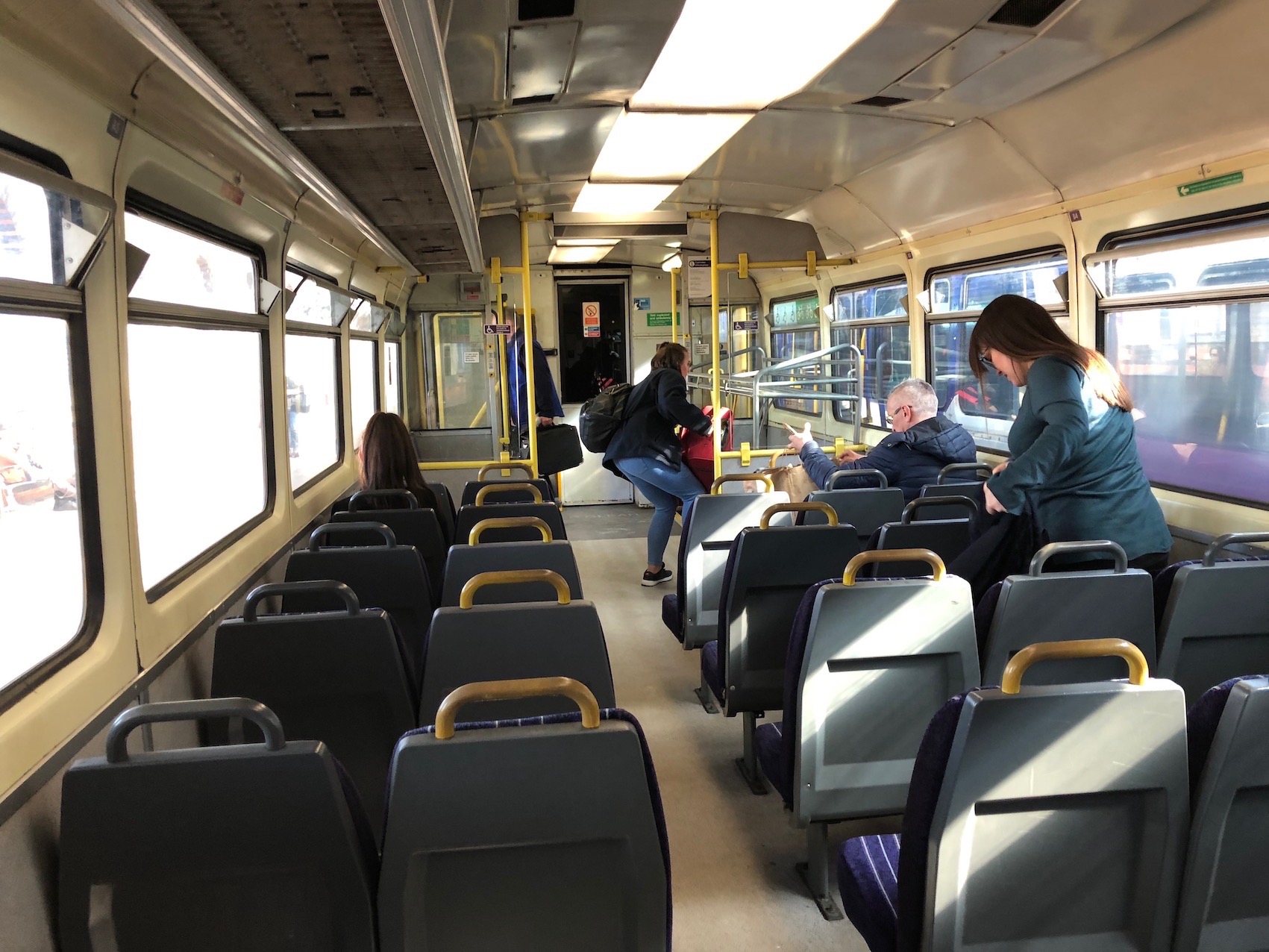
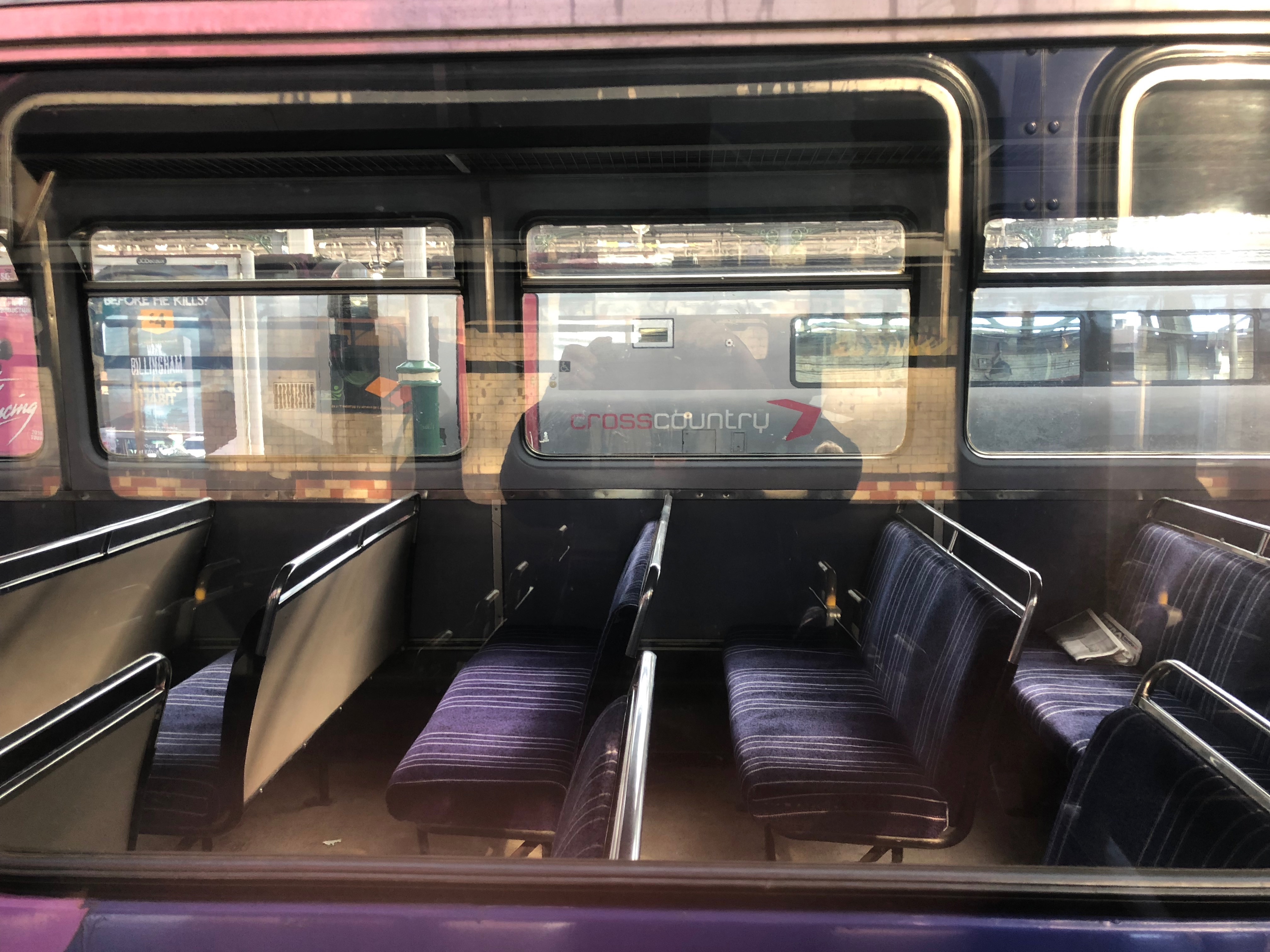
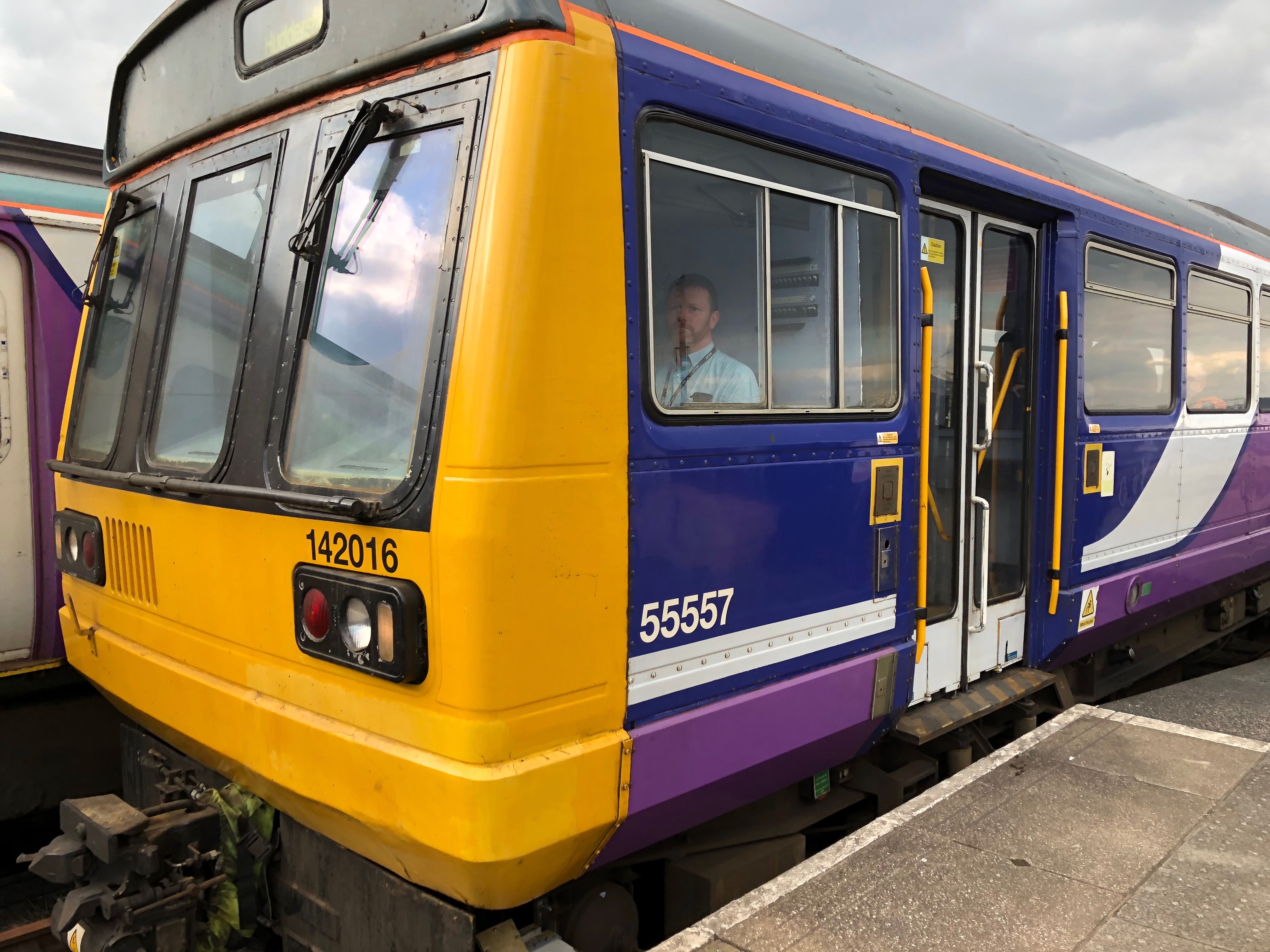
 Glad to be Grey