
What is the ideal destination for a weekend city break? Of course this is a highly subjective question but I believe I know of a city that ticks most of the boxes – Berlin. It’s accessible being just a couple of hours away by plane from many British airports. It’s easy to get around once you are there. Most people seem to have a good grasp of English. It is surprisingly good value for money. When it comes to things to do it has an embarrassment of riches. Above all else though, it has more than any other city I can think of, it tells the story of the twentieth century and whilst not everyone is a history buff, you can’t fail to be captivated by the stories the city tells of events that happened not so very long ago. It might not be the prettiest city in the world but boy does it make up for it with its recent history. I first went to Berlin in 2011 along with Elaine and Rebecca. I made my second visit a couple of weeks ago with my son Nicholas who couldn’t make it that first time for some reason. Would Berlin live up to what I remembered of it? Would it have changed?
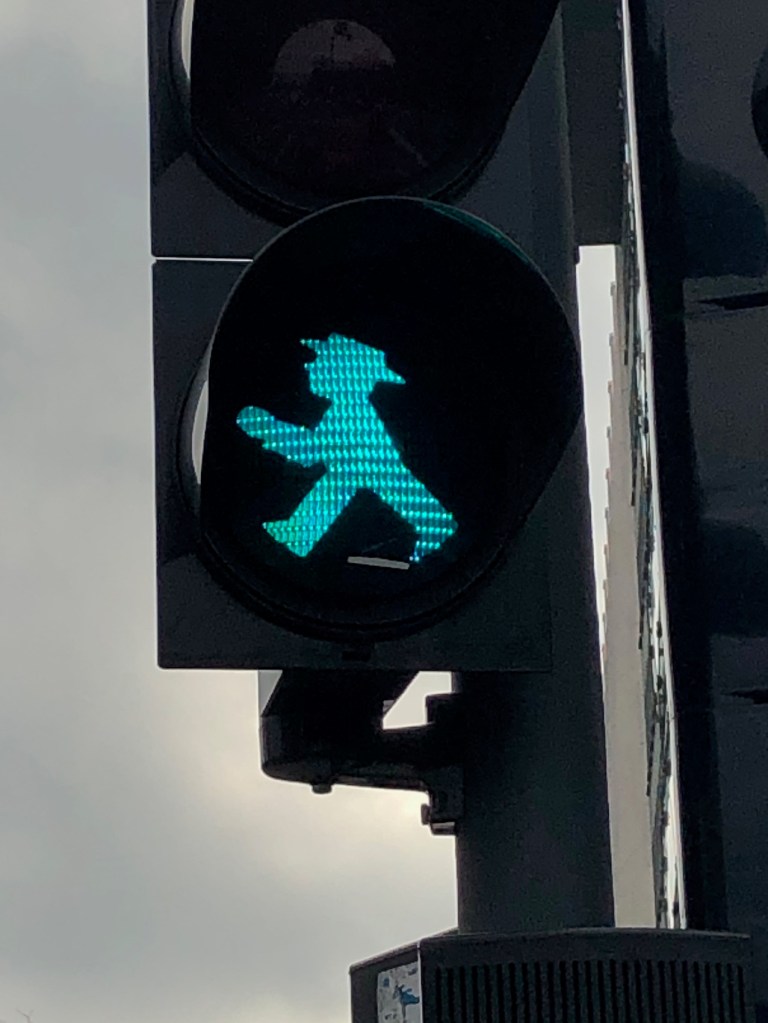
We flew with EasyJet from Glasgow direct to one of Berlin’s two airports, Schonefeld. That is something that hadn’t changed in eight years. Schonefeld is the airport that used to serve East Berlin and does not give a great first impression of the city. Neither, I believe, does Tegel, the one remaining West Berlin airport. To the south of Schonefeld lies a new airport that was supposed to replace those two no longer fit for purpose facilities. Due to open in 2012, Brandenburg Airport, or Willy Brandt Airport as it has been renamed, remains closed to traffic. Germany’s legendary efficiency has seemingly been absent in this project to present the capital city’s bold new face to visitors from all over the world. The building stands empty apart from the contractors endeavouring to fix a multitude of problems that have delayed its opening by eight years and counting. One alleged problem is that no one knows how to turn the lights off. When it opens, if indeed it ever does, it will likely be now too small for the expected numbers of passengers. All in all, Berlin’s airport situation is not a great start or end to your Berlin experience.
Don’t let that put you off though. Once out of Schonefeld, you jump on a train and are in the centre of town in twenty minutes. Unlike some cities I could mention, that airport train doesn’t cost an arm and a leg. It is also one advantage Schonfeld has over Tegel where a service bus is your only public transport option. Getting around is, in fact, very straight forward. You can buy passes on the public transport for seven euros a day, about the price of three individual trips. You can also invest in the Berlin Welcome Card where you not only get your transport for however long you stay, you get a 25% or more discount to many of Berlin’s numerous attractions and some restaurants. Our five day card cost €42 and covered transport to and from the airport. Buy it online and collect at the information desk in the arrivals hall. We saved €20 each on the Trabi Safari alone and with a couple of other discounts the card just about paid for itself. Just remember to validate the ticket the first time you use it and cary it with you all the time – Berlin works on a random check system where plain clothed inspectors will appear out of nowhere to make sure you have a valid ticket.
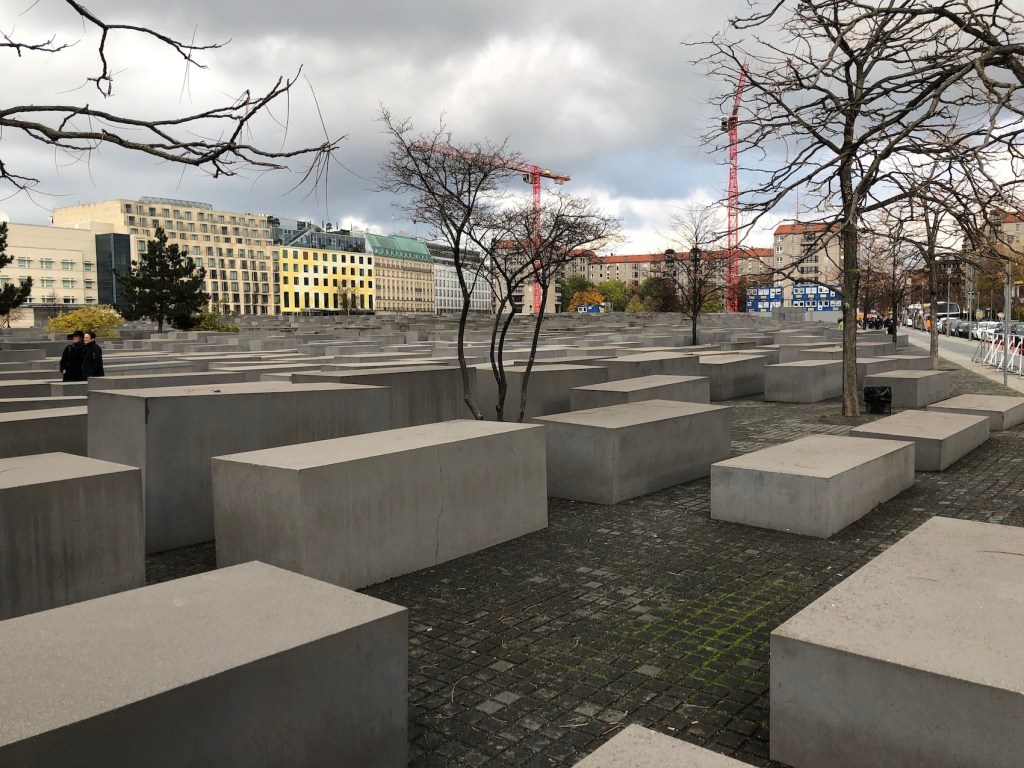
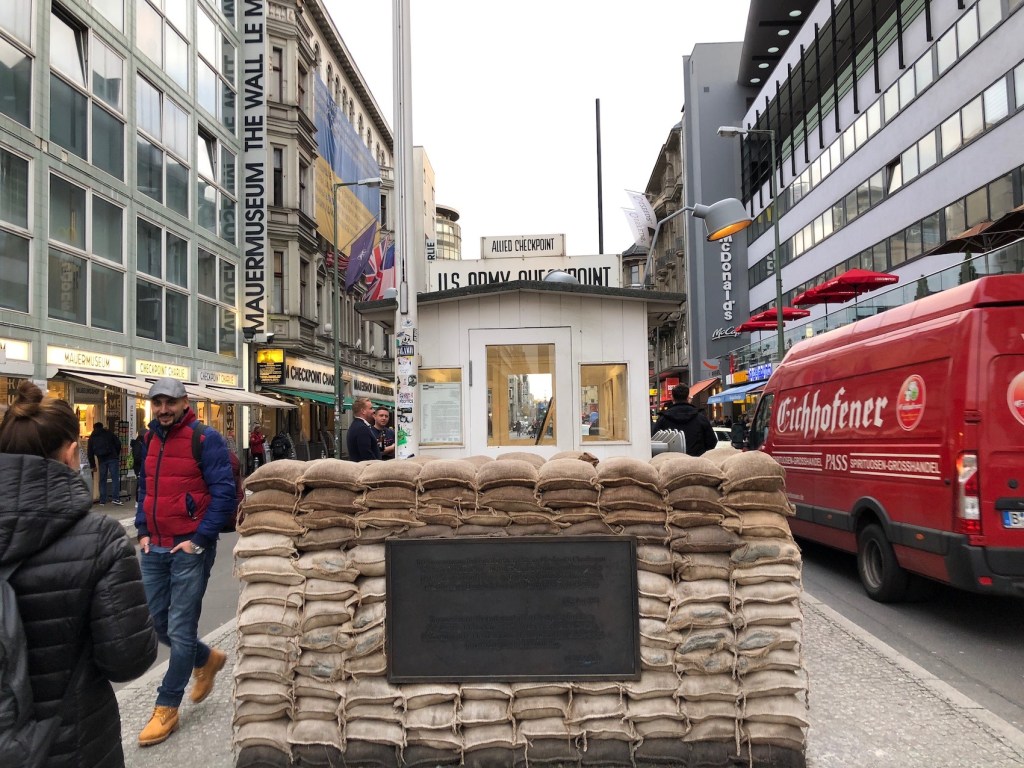
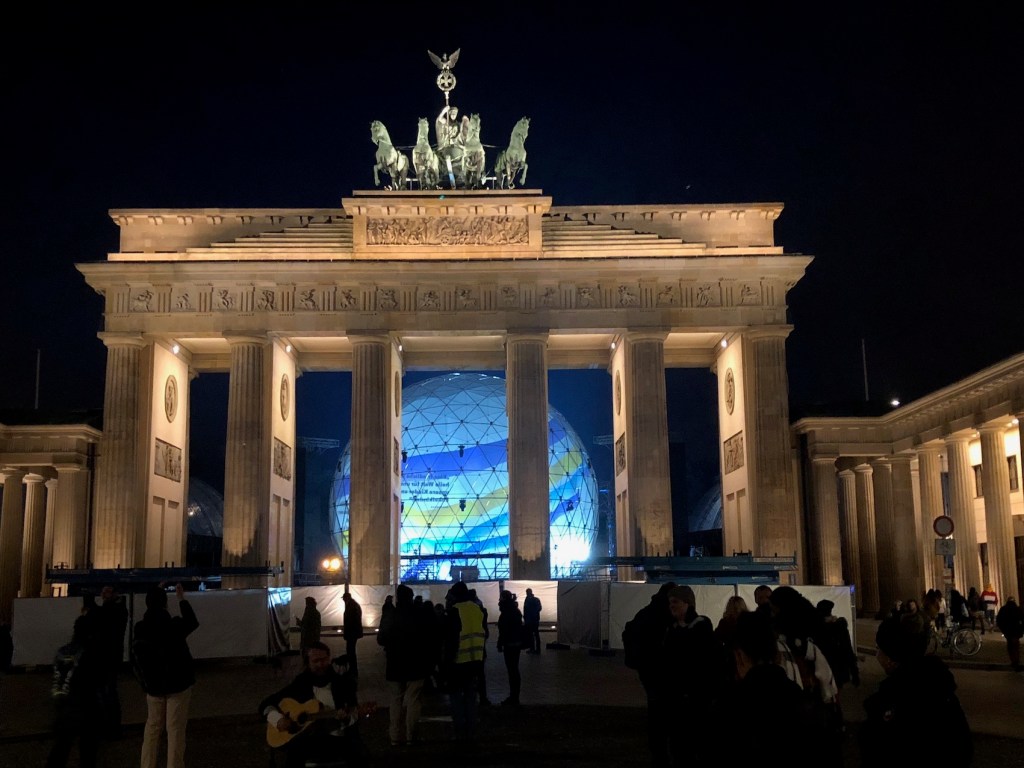
The public transport system is extensive and widespread and the chances are that your hotel will be close enough to a station or stop that staying central is not exactly vital. What constitutes ‘central’ though? The Brandenburg Gate probably takes that honour. It turned out that our hotel was just a ten minute walk to the iconic symbol of the city and a similar distance from Checkpoint Charlie, another icon, this time of the Cold War and division of the city. The area was ‘Mitte’ meaning ‘Middle’ which suggested we’d chosen a well situated hotel and indeed many of Berlin’s major attractions were close by. So what attractions to see? There are many. It turned out that on the weekend we were there was the thirtieth anniversary of the fall of the Berlin Wall. This was a big occasion for the once divided city of Berlin and indeed the entire once divided country of Germany. We spent the first afternoon wandering around the Mitte area and took in the Holocaust Memorial, Checkpoint Charlie and the Brandenburg Gate. The latter was cordoned off for the thirtieth anniversary party that was due to take place a couple of evenings later. The Holocaust Memorial is nearby and consists of over 2700 concrete slabs of various sizes. To my mind it didn’t really work as a memorial to the appalling slaughter of six million Jews by the Third Reich but others may disagree. There is a museum below the memorial which tells just some of the stories from that dark period of the twentieth century and it was that which brought it home to me rather than the monoliths. Checkpoint Charlie, a replica American guard booth stood at the former border between East and West Berlin serves as a reminder of another tyranny. The Checkpoint Charlie Museum is next to the guard post and has a wealth of information about the division of Berlin and the attempts, quite often fatal, of those who wished to pass from the totalitarian regime of Socialist East Germany to the freedom of the West. It is a fascinating place that opened not long after the wall was erected and has been telling its story ever since.
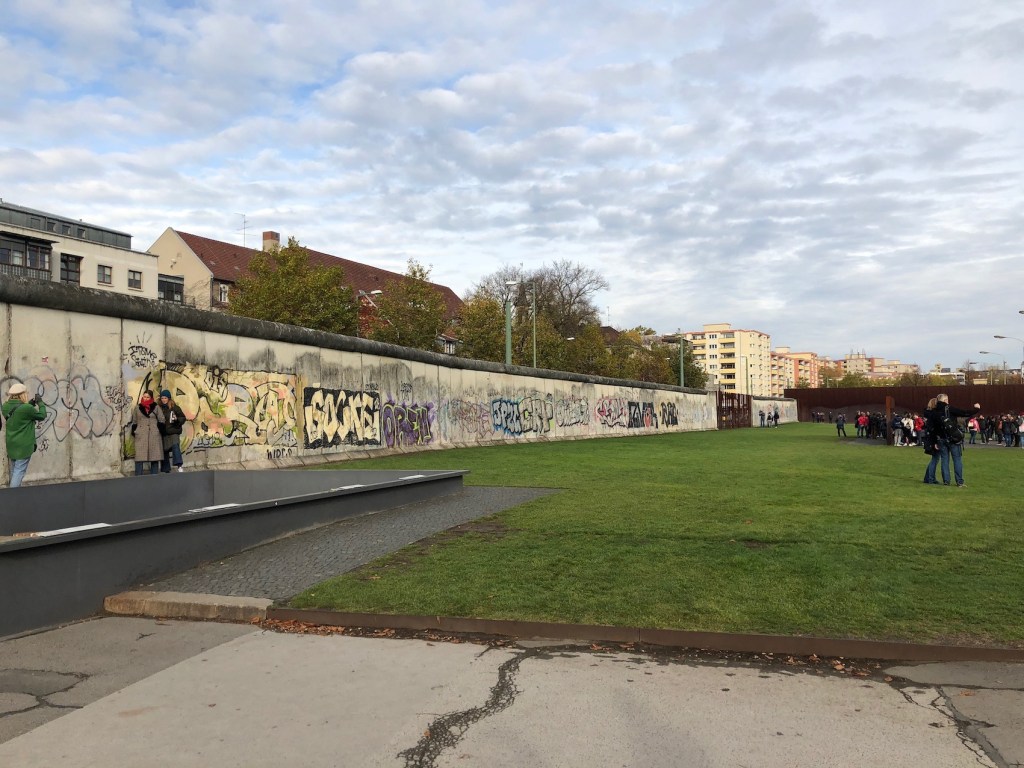
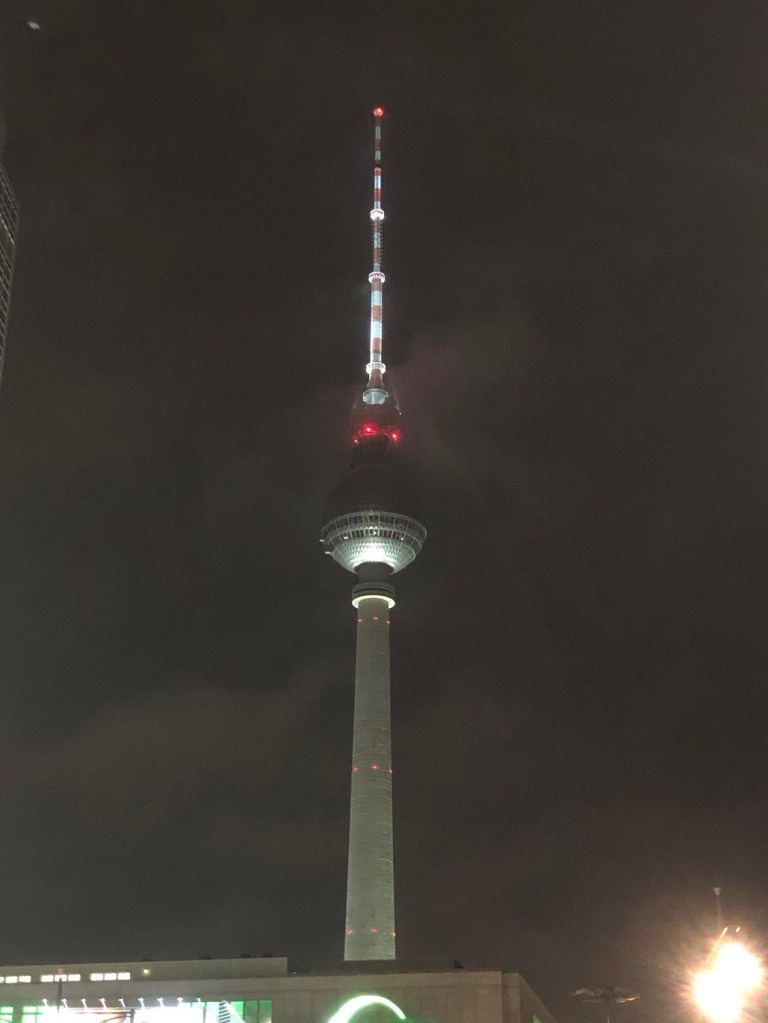
With the Berlin Wall being the hot topic that weekend we decided to find out more the following day. We booked ourselves on to a Berliner Unterwelten Tour. There are a number of tours to choose from but the one entitled ‘Under the Wall’ seemed to be most apt. We were led through a doorway and into a labyrinth of subterranean rooms that were part of Berlin’s U-Bahn underground railway system. Here we were told stories of those who risked their lives to escape the East. Initially, the subway proved a handy way of escaping as a number of West Berlin lines passed beneath East Berlin. Once the East Germans grew wise to this, escapees took to the sewers. Eventually the sewers were blocked too. The tour went on to Bernaur Strasse where we entered the basements of a couple of buildings. The stories here related to those who tunnelled to safety beneath the wall with actual tunnels on display. It was a fascinating insight into the lengths people would go to in helping those in the East get to the West. Bernaur Strasse is also home to the Wall Memorial which includes a stretch of the Berlin Wall itself. There’s a museum and many information boards which try and paint the picture of what it was like thirty years previously when the city was still divided. It was still hard to imagine the Death Strip on the Eat German side. We later went up the TV Tower. This is unusual in that it is a Berlin icon that was built in the East. Like tall things in other cities you go up it for the view which, as it happened, wasn’t that good when we went due to the lack of sunlight and reflections off the windows. It did, however, show you just how big the city is.
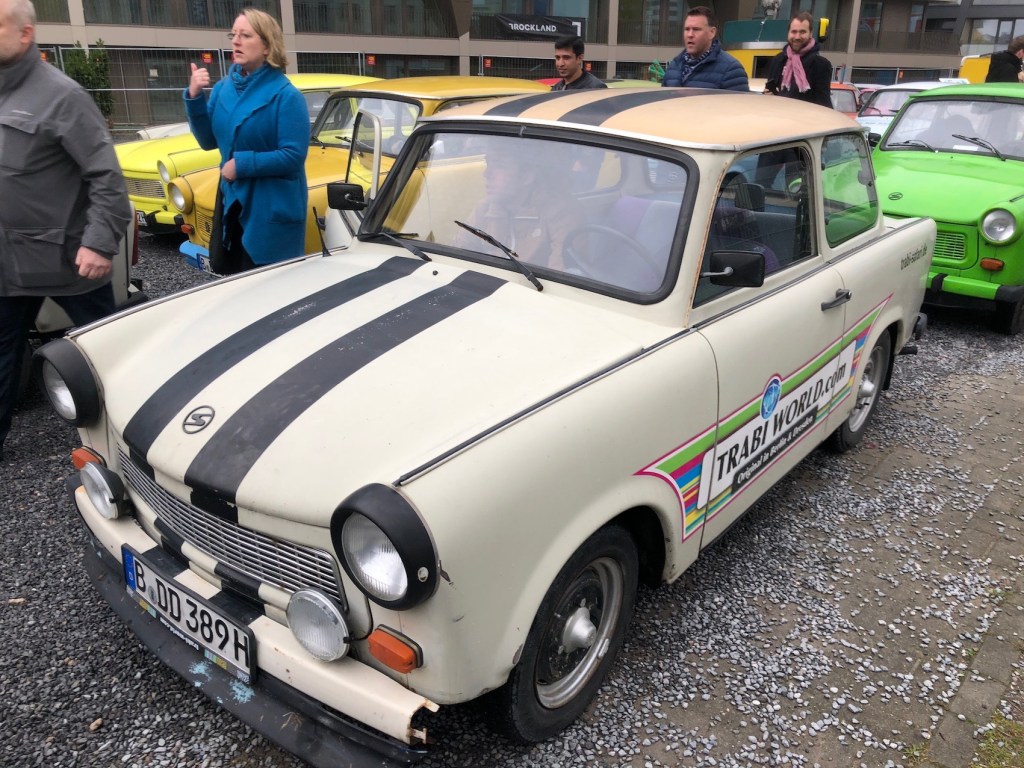
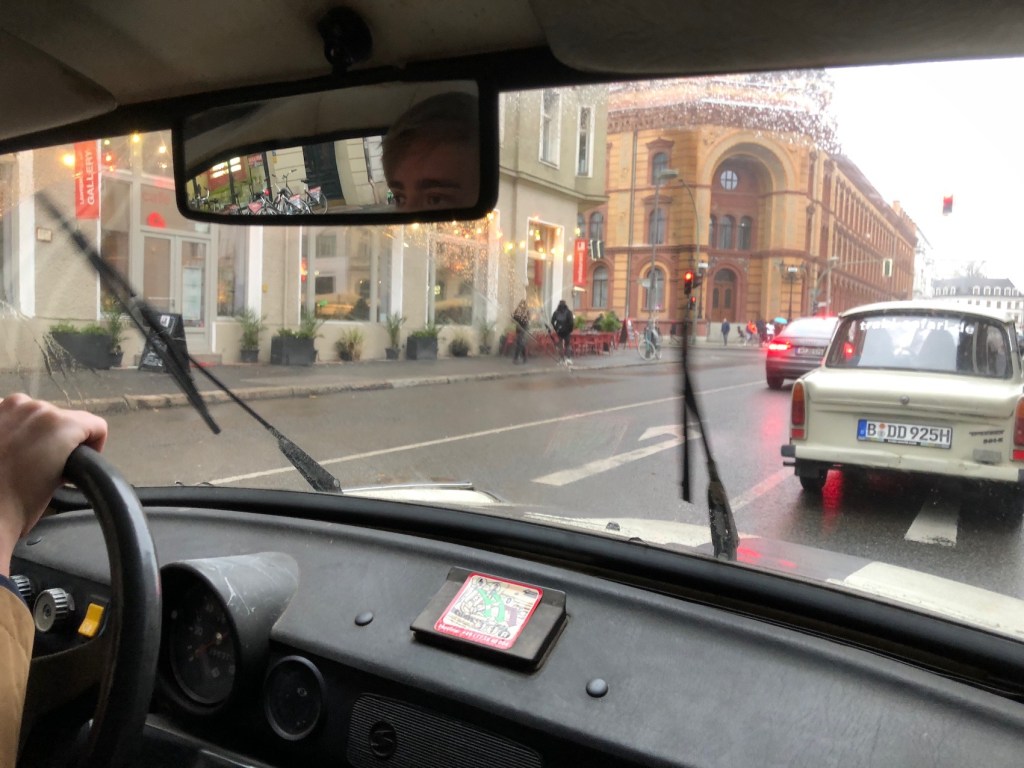
The size of the city became clearer the following day when we embarked on a Trabi Safari. Over three million Trabant cars were produced in East Germany from the mid-fifties to 1991 when production ceased with the unification of Germany. In that time the design scarcely changed meaning that whilst those in the West were driving around in state of the art Volkswagen and Mercedes Benz vehicles, those in the East were, if they were lucky, travelling in a small plastic 600cc two stroke engined car which was noisy and polluting. When the wall came down, these cars became something of a cult and thirty years on you can hire one to go on a tour of Berlin. The starting point is near Checkpoint Charlie and after a rudimentary induction into the car’s interesting foibles such as the steering column mounted gear shift, we were on our way in a convoy of seven. This was led by a tour leader who kept in contact via walkie-talkie. We must have driven through quite a bit of Berlin but in truth we spent much of the time concentrating on avoiding hitting cyclists who seem to believe they are immortal, ensuring the car didn’t stall, battling our way through heavy Berlin traffic (on the wrong side of the road of course) and generally feeling vulnerable in a car that is unlikely to score highly in a latter-day safety test. It was great fun though, despite the offset foot pedals, very heavy steering and a foot break that only worked if you applied all your strength through your right leg. I don’t believe I have ever been photographed as much either. Every time we stopped at the lights, which was often, we were enthusiastically snapped by tourist who were delighted to see these machines still tootling round Berlin. That evening we joined in the 30th anniversary celebrations of the wall coming down. We didn’t stay long as it involved a lot of speeches and neither of us are exactly fluent in German but it was nice to be there for such a significant anniversary.

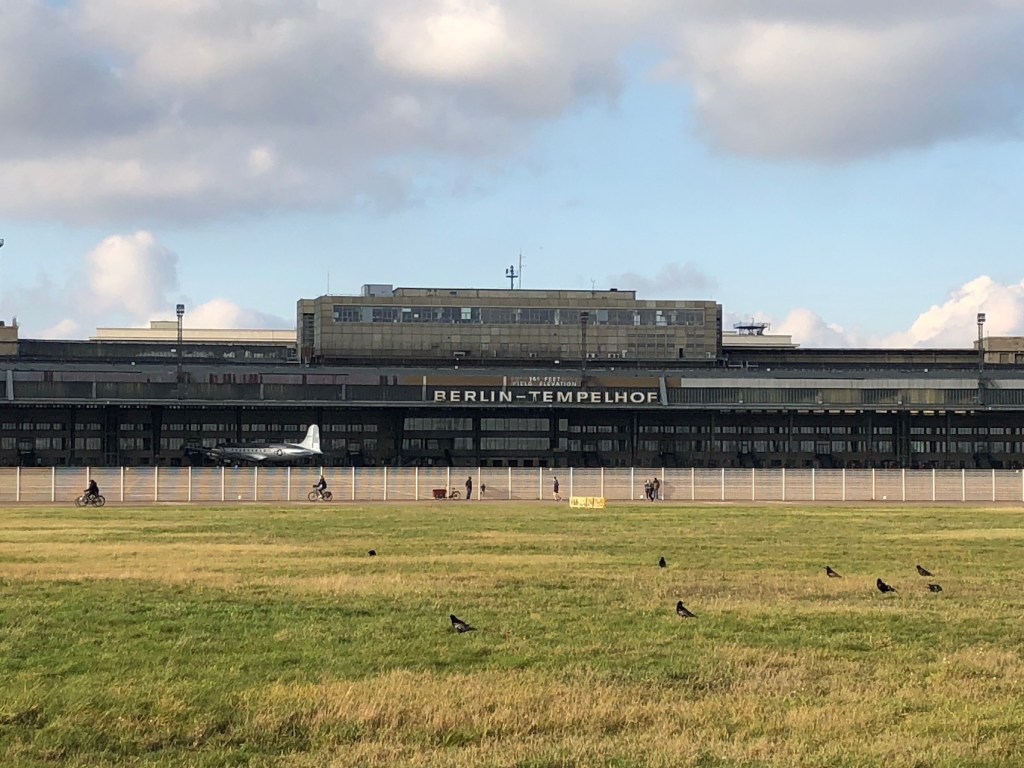
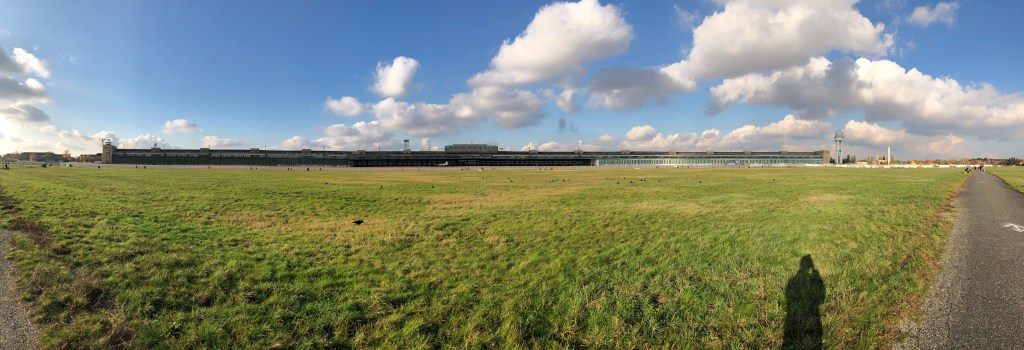
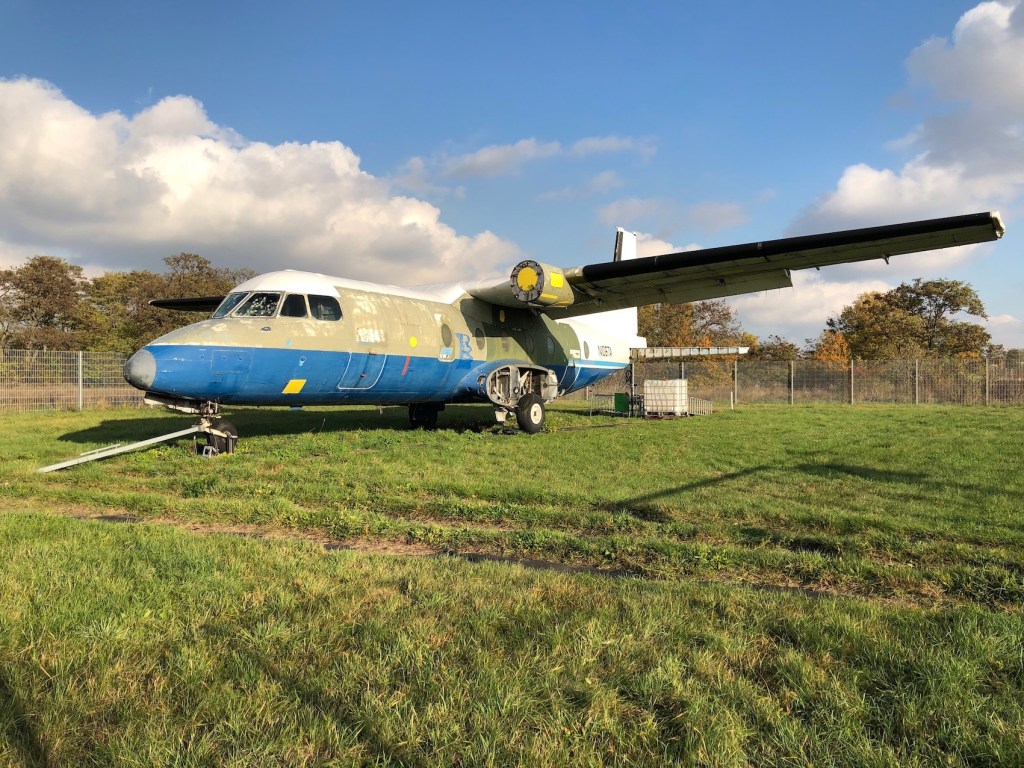
In the time that remained we visited three other attractions. The first was Tempelhof Airport. As an avgeek I was particularly looking forward to this but when I got there the English tour had sold out. This was a shame as the airport building, built in the 30s, is a 1.2km long arc shape and a truly massive bit of architecture. It was part of Albert Speer’s plan to rebuild Berlin to the glory of National Socialism and as horrendous as that creed was, it left the city with some impressive, if not particularly pretty, buildings. Tempelhof closed as an airport in 2008. Some eleven years on there are still signs to departures and arrivals and, from what I could see through the windows, retains its check in desks and passenger concourse. The airfield itself was turned into a public park. Not that they did much to it. It too is much like the terminal that served it in that it is largely unchanged. Airport signs are still evident, as are the markings on the two parallel runways. The old fire service training aircraft was left behind too and can be found rotting away in one corner of the field. The park is popular with the locals and whilst it was a shame to miss out on the tour of the building, wandering round an airfield with such an interesting history was still a rewarding couple of hours. In 1949 when the Soviets in effect blockaded West Berlin, Tempelhof along with Tegel and Gatow airports was of vital importance. For its part in the Berlin Airlift, Tempelhof deserves to be remembered.
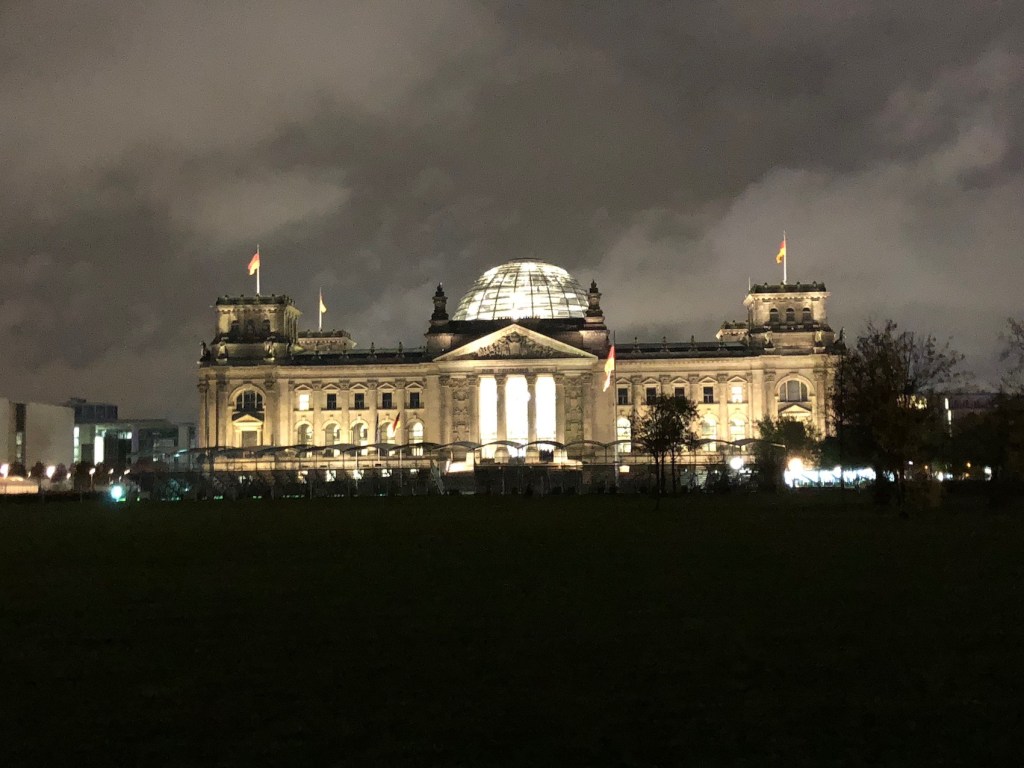
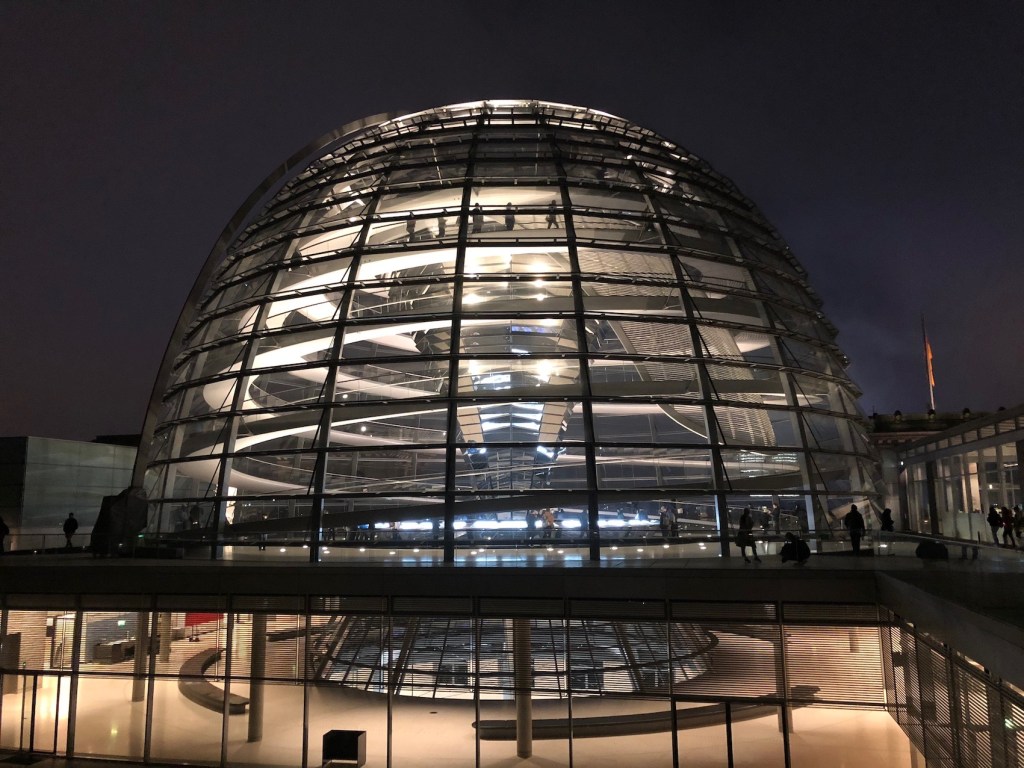
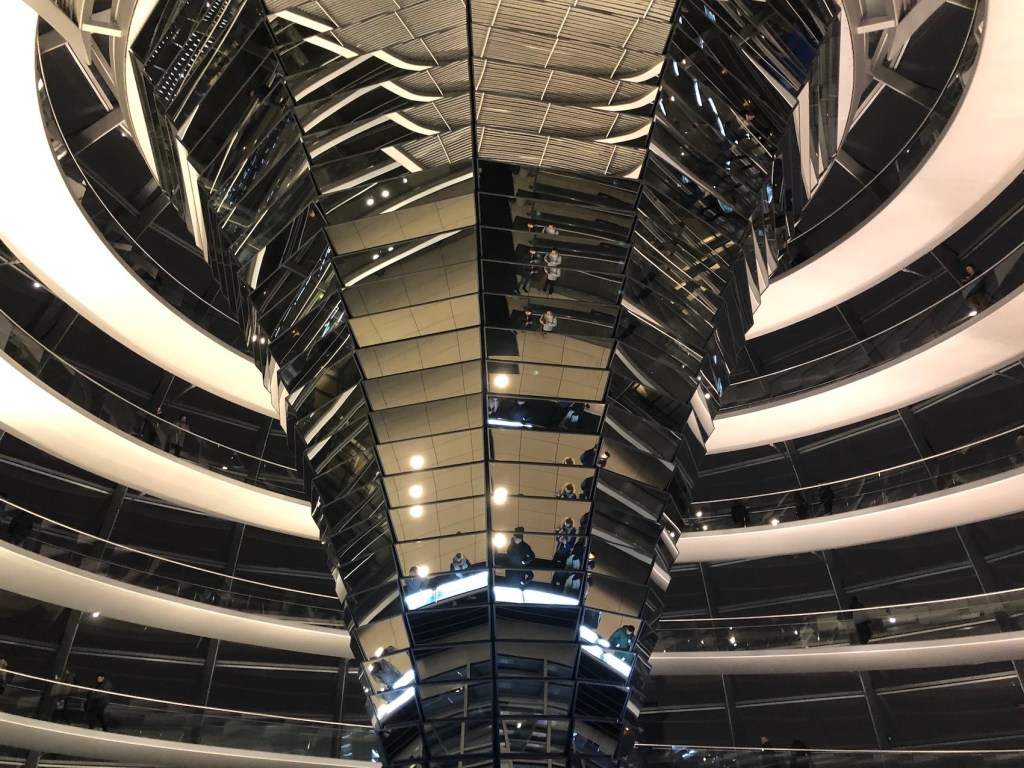
In the evening we visited the Reichstag Dome. Germany’s parliament moved back to Berlin following the reunification of Germany in 1991. Later that decade, the old Reichstag (parliament building) was completely renovated. The architect was British, Sir Norman Foster. Foster retained the towers on each corner and the traditional frontage of the building but had a blank canvass for the rest. On the top of the building he placed a glass dome with 360 degree views to represent the reunification of Germany. You can request to visit the dome. It is a popular thing to do so worth planning ahead for and is free. We could only get a timed slot on the Sunday evening. It is most certainly worth it though. From a distance the dome might seem out of place on what from the outside looks like an old building. Up close and inside, however, it looks magnificent. An audio guide explains things as you wander up one of the spiral ramps to the top. Due to the dark and misty conditions it was difficult to identify the buildings that were being pointed out but that didn’t really matter. The dome itself was impressive enough. An array of mirrors hangs from the centre reflecting so much light down on to the Bundestag below that a large shade, which follows the sun, had to be installed to prevent Germany’s politicians from being blinded. You’ve got to jump through a security hoop or two to get there but it was more than worth it.
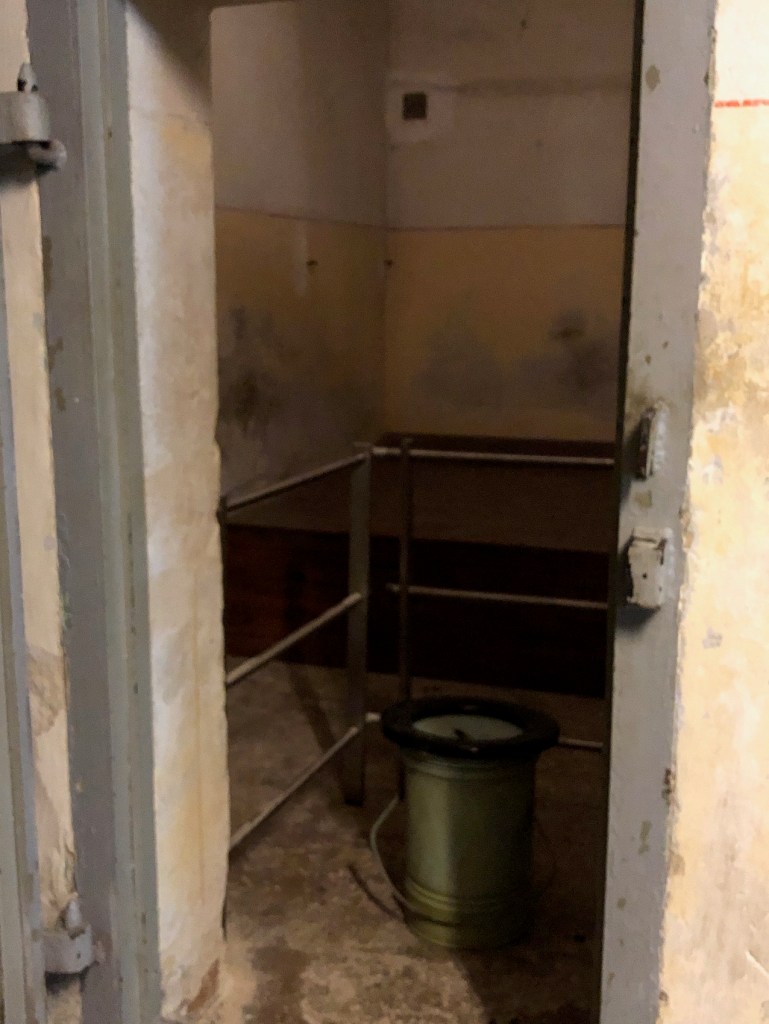
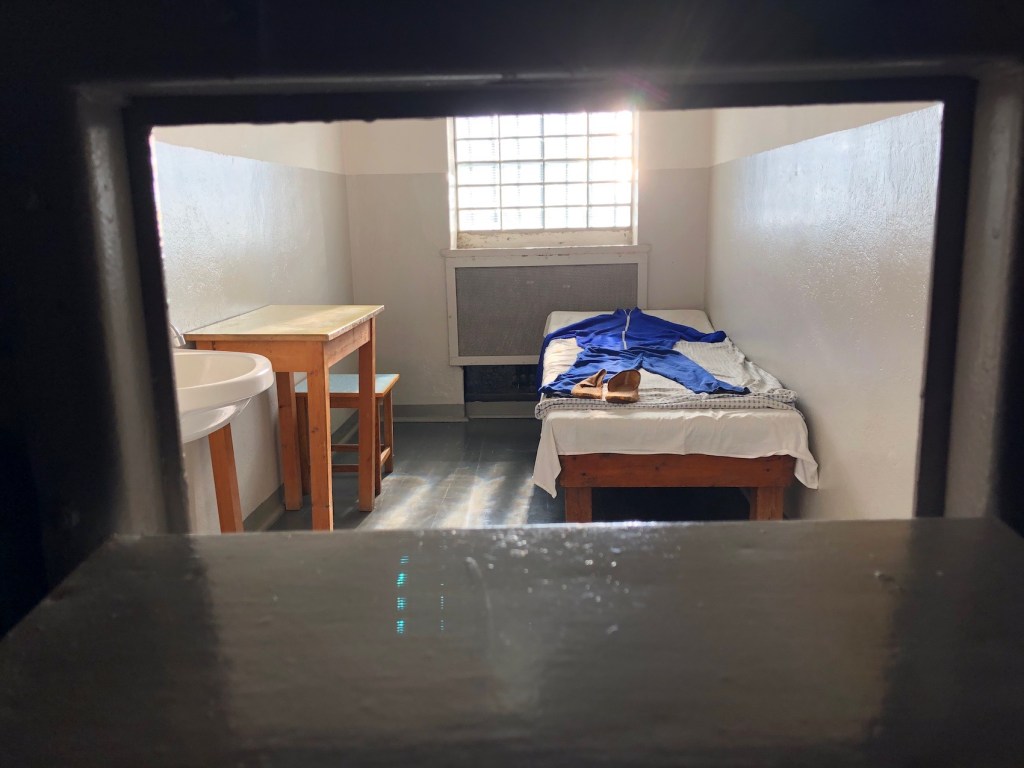
Our last ‘attraction’ was the Stasi Prison in Hohenschonhausen. This tells the story of the political prisoners who were incarcerated there between the end of the second world war until the reunification of Germany. You need to take a tram to a nondescript area in the East of the city to where an old factory had been repurposed into a prison. The Soviets controlled it until 1951 when it was handed over to the Stasi, East Germany’s secret police force. The tales of Soviet mistreatment of the prisoners were horrendous but somehow the East German’s psychological torture of just about anyone they suspected was more sinister. Physical torture wasn’t particularly effective in soliciting information so the Stasi developed techniques whereby the prisoners were kept alive but completely isolated from other human contact. After weeks or even months the interrogation would start by which time a prisoner would be far more likely to crack. The visit was a fascinating one but it only served to emphasise that Socialism and the hard left is no better than Fascism and the extreme right.
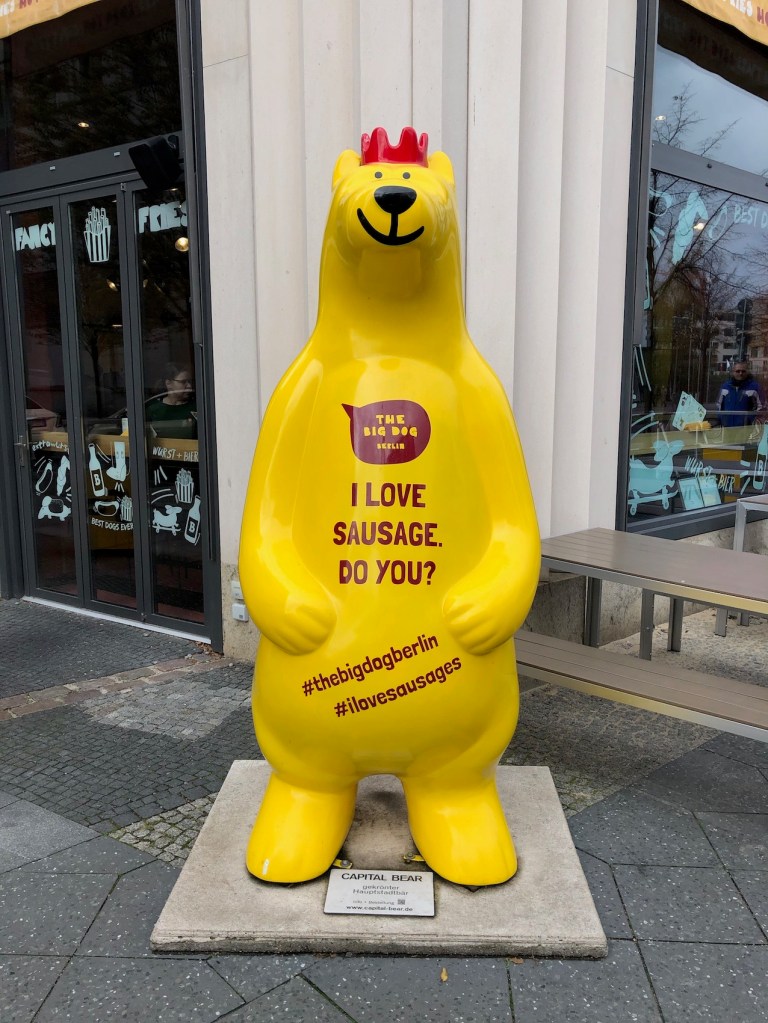
You will not be short of things to do in Berlin. Neither will you be short of places to eat. Germany is not overly renowned for its cuisine. Despite this, Berlin is blessed with twenty-three Michelin Star restaurants and despite my natural reluctance to spend money on fancy food, we went to one of them. You can read about that experience in the blog before this one. As for the rest of the time, Berliners love their sausages, especially with a mild curry dip. Currywurst can be found all over the place, as can kebab shops thanks to the large Turkish community. That aside there is the usual mix of world cuisines to choose from, so much so you can avoid sausages altogether if you wish. The Germans also produce a vast range of beer to wash this food down with. We visited a Munich style beer house near Alexanderplatz just because it was there. Sadly, we found it full of British stag groups which probably meant it was quite an authentic Bavarian experience.
For the second time in my life, Berlin delivered. It’s hard to think of a city that can match it for things to do. I may have to make an effort to go back. If nothing else I want to do the Templehof Tour but there are many other things we didn’t see on this visit. I’ll maybe try and choose a week when Eisbaren Berlin are at home too.
 Glad to be Grey
Agree your comments on the ‘attractions’ – did you not do the DDR Museum?
One of the most informative places in the city, particularly regarding the why and the how that socialism failed.
https://www.ddr-museum.de/en
LikeLike
We did the DDR Museum last time we were there. Just ran out of time on this trip. I agree, it was very informative on just what it was like living under a totalitarian regime.
LikeLike