
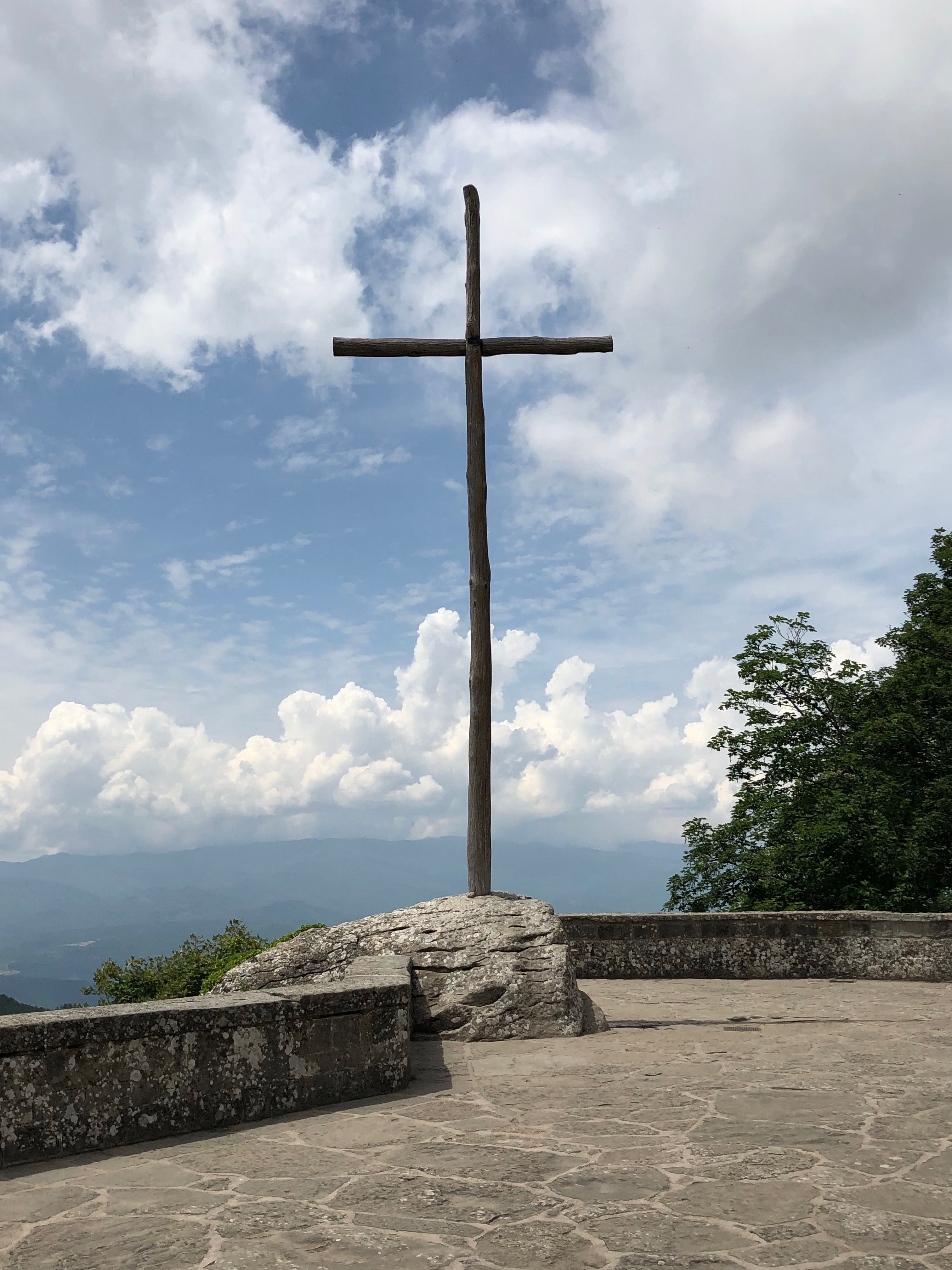
Happy New Year everyone. The year 2019 has just begun but what exactly does that number refer to? When I was a lad we learnt that the year should be suffixed with the letters AD for Anno Domini. This Latin term means “in the year of the Lord” and as I’m sure you all know, “The Lord” in this case is a certain Jesus Christ. A monk called Dionysius Exiguus devised the AD system five hundred years or so after Christ was nailed to the cross so there was a certain amount of back estimating going on, complicated by the fact that the concept of zero had not yet been fully established. Contemporary thinking reckons that Dionysius was a few years out meaning the son of God popped out of the Virgin’s womb sometime between 6 and 4BC. The BC suffix means “before Christ” which makes things a little awkward but then God moves in mysterious ways so we are told. A couple of millennia on and we’ve suddenly become a little embarrassed about referring to Jesus as it might just offend those who subscribe to other profits or gods. As someone who doesn’t subscribe to any god whatsoever I have to say I am totally ambivalent to the AD/BC notation but hey, we’ve got to go with the times. Now we have CE and BCE which are abbreviations of Common Era and Before Common Era. Apparently the Jews, who are a bit sensitive on the topic of Christ, have been using this notation for years whenever they are forced to stray from their Hebrew calendar, which must be often as a lunar based system is a bit rubbish compared to a solar one. But “Common Era”? There’s something unsatisfactory about it.
All of which has little to do with this latest blog. It merely serves to illustrate that the modern world is, whether we like it or not, shaped by religion. Britain is a Christian country. Not by the dwindling congregations in its churches or with the inward migration of many other systems of belief, but by the sheer weight of history. Christianity shaped everything in the country for hundreds of years and whilst it has recently lost its grasp on the heart and souls of most people, it is impossible to be totally free of its historic influence. Just wander through any small village in the country and the largest building is likely to be a church that has stood there for hundreds of years. In cities Cathedrals may now have been surpassed by skyscrapers and sports stadia in terms of size but their imposing presence cannot be ignored. St Pauls Cathedral is just as much a symbol of London as Tower Bridge, Buckingham Palace or any number of modern buildings such as the Shard. The long tendrils of religious influence extend into our lives without us realising it. Education is one of those areas. In all areas of the UK, Religious Education is obligatory in state schools. What’s more, thousands of schools are maintained faith schools which, whilst state funded, have direct links to a religious organisation. In Scotland the most obvious faith schools are Roman Catholic. In Troon, the small town where I live, there are five primary schools, one of which is Catholic. The one secondary school we have is non-denominational so children from catholic families have the option of being bused to Ayr where the catholic high school is situated. Is it just me or does anyone else think this situation is completely absurd? It is a form of theological apartheid and only serves to perpetuate age old bigotries based on your, or to be more accurate, your parent’s specific interpretation of superstitious fairy tales. State sponsored education should be wholly secular. Send your kids to Sunday School if you must, but keep religion out of schools.
Having got that out of my system I’n going to take you back to 1970. Pele was about to win a third World Cup with Brazil and decimal currency in Britain was still a year away. Imagine me as an eight year old boy walking up the hill to my school, Lepton C of E, on a chilly winter’s morning. C of E as in Church of England I hear you ask? Yes, my primary school was a ‘faith’ school and remains so to this day, though it has moved to a new location in the village. There are over four thousand C of E schools in England that are affiliated to their local Anglican church though from what I can gather the links are not nearly as strong as those between the catholic schools and churches. You didn’t have to be a member of a C of E congregation for a start. As an eight year old I was none the wiser to any of this of course, I just went to school and did whatever I was told. Hanging my coat up on my peg, I’d enter the classroom where the resister was taken. Then, along with all the other pupils in the school, I was sent off to the hall where assembly took place. Assembly was a daily ritual. There, Mr Garfett the headmaster would inform us of all the school news which was spliced in to an act of Christian worship. We all had hymn books and there would be two hymns to sing accompanied by Mrs Allat on the piano. There would be a short sermon, maybe a bible story of some sort, and we all had to pray. Even at eight years old I was starting to get a bit sceptical as to the actual value of prayer as despite being told that God was listening, it seemed quite obvious to me that He most certainly was not. After all, Huddersfield Town still lost games despite my pleading. The hymns didn’t really make much sense either but we belted them out as Mr Garfett, a good headmaster I seem to remember, was not averse to giving you a good spanking if he felt you weren’t taking things seriously. The assembly concluded with a blessing but not before we all had to recite The Lord’s Prayer, something we had learned through countless repetition ever since we had entered the reception class. What were the education authorities thinking about by requiring children, the most impressionable people on the planet, to learn this ridiculous litany? The prayer utilises words and expressions that were long since obsolete and made no sense whatsoever to a child. Even in Yorkshire, where those with a broad accent would still use biblical words such as thee, thy and thine, there was much for a young mind to interpret.
Our father, who art in heaven: well my father was at work at a local dye company. I eventually sussed that I had another father called God and heaven was His abode, somewhere up in the sky, but not the moon as my mate Neil Armstrong had recently been there and there was a notable absence of angels.
Hallowed be thy name: do they mean Harold? Strange name for a deity I though He was just called God?
Thy kingdom come: this made no sense at all. I though God lived in heaven? Isn’t that His kingdom. If it has just come, where was it in the first place?
Thy will be done: Errr…
In earth as it is in heaven: oh, that explains it then. At some stage God’s work will be done. Perhaps he will retire to a small bungalow at the seaside? That’s what my grandad did once his work was done. He took my nana with him and she was a right so and so. God dodged a bullet there.
Give us this day our daily bread: he never bloody did. My mum had to buy it from the local bakers.
And forgive us our trespasses: well that’s very nice of God but frankly I’d rather the local farmer who set the dogs on us when we took a shortcut across his field one day would forgive us, the miserable sod.
As we forgive those who trespass against us: well ok, should anyone walk across our small garden, an unlikely event it has to be said, then I’ll forgive them.
And lead us not into temptation: I think my biggest temptation at that age was to play football whenever I had the chance. Maybe this was aimed at those in the top class who were approaching adolescence. There would be many temptations from that age onwards and in hindsight it is quite obvious that God failed to lead us not into temptation.
But deliver us from evil: only two things I knew were delivered, mail and cricket balls. It would be a year or two before we realised babies were delivered too. Perhaps this is what it refers to, though I think midwives are better qualified to do the job and calling a mother’s uterus ‘evil’ is a bit harsh.
For thine is the kingdom: hadn’t we established that at the beginning of the prayer? We still don’t know where it had come from though.
The power, the glory: sounds a bit like God is a bit of a meglomaniac to me, not that we knew what megalomania was at the age of eight of course.
For ever and ever: blimey, that’s a long time to wait for that bungalow by the seaside.
Amen: what the hell does that mean? We said it at the end of every prayer and were never, ever told why. Our men? Are men? Hay men? I think I came to the conclusion it was just something like a full stop, only verbalised. Good, we can open our eyes and stick our hands back in our pockets and get led into temptation.
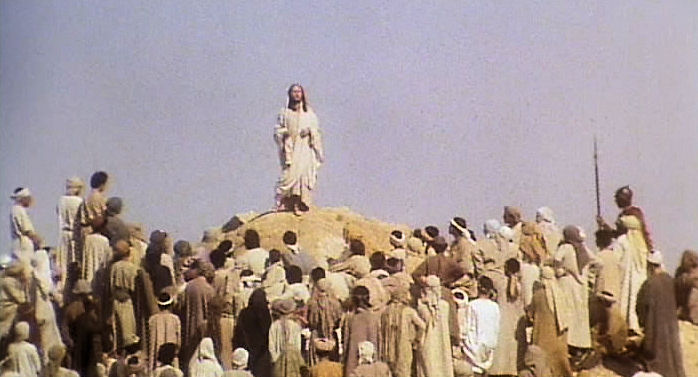
I know some of you will feel that children should be subject to Christian religious education. How else are they going to learn to worship God? Sure as hell God himself isn’t going to tell them. Neither is Allah, Krishna, Buddha or Zeus for that matter, a point I find rather telling. I, however, think we should teach our children about humanity rather than getting them to recite a soliloquy that is as irrelevant now as it probably was to those who heard it on the mountain in Galilee two thousand years ago.
 Glad to be Grey
“In the name of the Father, Son and Holy Ghostie men” used to keep my brother amused at mass. Also when incense was being wafted, (I hate that smell), I had to resist the temptation to shout, “oi mate, yer handbag’s on fire!”
LikeLike
At least being catholic you could wank yourself stupid as long as you confessed it to the priest every so often…
LikeLike