
During my thirty seven years of gainful employment as an Air Traffic Controller there were thankfully few incidents of note. There is one occurrence, however, that sticks out. Some thirty years ago in 1988 it was approaching Christmas. Elaine was six months pregnant with our first child and we had arranged to visit my parents in Huddersfield over the festive period. With my shifts following a six on and four off pattern I had requested six days’ leave commencing from the start of the cycle that began on December 21. I later decided to save a day’s leave by going in to work on the 21st and taking the rest of the cycle off with us planning to travel down to England on the 22nd. Those days the cycle started with afternoon shifts and so it was that I turned up for work at 13:00 that Wednesday.
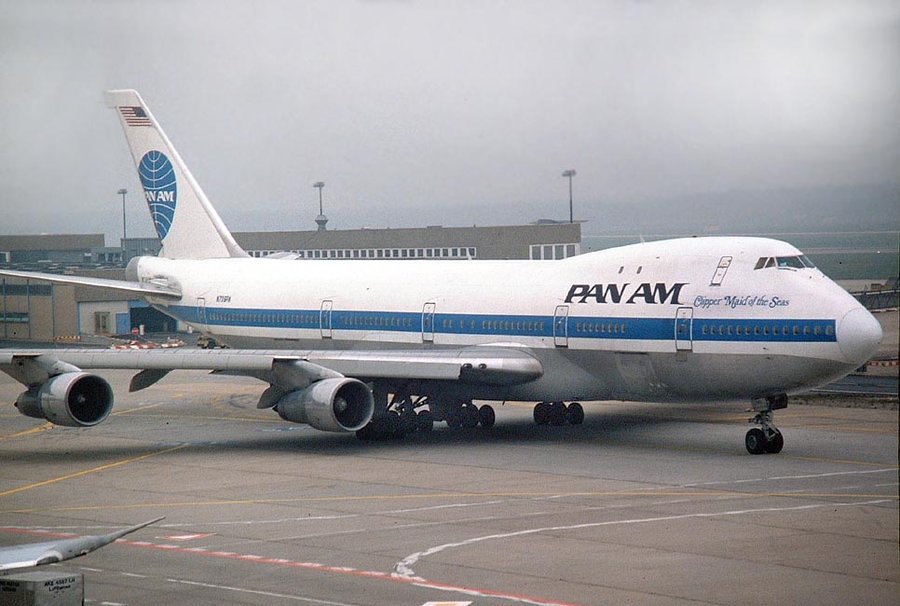
That same afternoon some four hundred miles south 243 people were, by various means, converging on Heathrow Airport’s Terminal Three. Some of those were flying in on a Boeing 727 of the American airline Pan Am from Frankfurt. The flight number was PA103, a service that would continue to New York’s JFK Airport. It would involve a change at Heathrow with passengers and baggage transferring to another aircraft where they would be joined by the others commencing their journeys in London. Americans heading home for Christmas, Europeans looking forward to a festive break in the USA, the passengers were a standard cross section of the flying public at the time. The aircraft appointed to the task of flying them to New York was Boeing 747 registration N739PA, which Pan Am had named Clipper Maid of the Seas. As well as the passengers, sixteen crew members were on board. At 18:04 the 747 pushed back from its gate and twenty one minutes later it took off from runway 27 Right, quickly disappearing from view into the low overcast.
At about the same time I was part of a two man team controlling the Talla sector at the Scottish Air Traffic Control Centre, located in Atlantic House, Prestwick. This piece of airspace extended from Edinburgh through the Scottish Borders down to the Lake District in England and extended vertically to 28,000ft. It was at that time primarily concerned with traffic into Glasgow and both in and out of Edinburgh. Sat to my left was my colleague Jim Hood who was the radar controller, responsible for ensuring separation of the aircraft under his control. I was the sector planner, assisting Jim in his tasks, planning ahead utilising flight information written on paper strips, passing and receiving information by phone to adjacent sectors and airfields. It was Jim who spoke to the aircraft though we both listened to their transmissions. At approximately 19:03 the pilot of a British Airways Shuttle Service from London to Edinburgh or Glasgow, I can’t remember which, called up to say he had seen a large ground explosion ahead of him. This was news to us and I immediately rang the watch supervisor, Adrian Ford, to inform him of this report. Adrian came down to the sector to take the details and Jim asked another lower flying aircraft if he could see anything. Vectored to the assumed area of the explosion, the pilot of this aircraft could see nothing due to cloud and continued on his way. Meanwhile we were noticing a lot of extra radar returns in the same area which was unusual but not a cause for concern.
On the other side of the room sat Alan Topp who was the high level controller. In those days the whole of Scottish upper airspace (above 25,000ft in general, 28,000ft in the area of the incident) was split into just three geographic sectors. At quiet times, which included the evening, these sectors were combined and as such, Toppo as he was universally known was the sole controller of a huge piece of airspace. Just before 19:00 PA103 (callsign Clipper One Zero Three) was transferred to his frequency by the controller of the Pole Hill sector at the London Air Traffic Control Centre at West Drayton, just north of Heathrow. As was the convention at the time, Toppo positively identified the aircraft on his radar screen and confirmed the reported altitude as Flight Level 310 (31,000ft). He then advised the crew of the aircraft to route direct to 59N 10W. This position was where PA103 was due to exit Scottish airspace and enter the Shanwick Oceanic Control Area. It was also the clearance limit for PA103. To proceed beyond that point and across the Atlantic the crew would need to obtain clearance from Shanwick Control who were situated in a different room within Atlantic House. This they did via their second VHF radio and the planning controller there generated a route for the aircraft to follow, passing it to Tom Fraser, the Clearance Delivery Officer (CDO), who had the task of informing the PA103 crew. As the route is long and complex the crew were supposed to give a full read back but after Fraser had passed on all the details, the only response was silence.
At 19:03, during or immediately after the CDO’s message, a bomb, hidden inside a radio cassette player in a suitcase, exploded in the forward cargo hold of Clipper Maid of the Seas. The bomb punched a hole in the aircraft’s fuselage and caused an explosive decompression that effectively sheared off the nose section. As it fell to earth, the aircraft broke up into several sections. The wings and centre fuselage section fell onto Sherwood Crescent, a residential street in the small town of Lockerbie where, thanks to the thousands of gallons of Jet A1 aviation fuel still contained within the wing tanks it exploded like a bomb, leaving a crater 154ft long that extended on to the southbound carriageway of the A74, the main road linking Glasgow with England. The 259 passengers and crew on board PA103 had no chance of survival. Neither did eleven residents of Sherwood Crescent whose houses were destroyed on impact. With debris raining down on other parts of the town it was something of a miracle that there were no other ground victims. Then again, it was a huge stroke of bad luck that it hit a small town that is quite isolated amongst agricultural land in the first place.
Fifty miles to the northwest in Atlantic House, which incidentally was situated on Sherwood Rd in Prestwick, Alan Topp was unaware of the apocalyptic scenes in Lockerbie. All he knew was that PA103’s radar return had changed. At that time there were two types of radar, Primary and Secondary. Primary is the raw radar that was developed in World War II. A powerful ultra high frequency electromagnetic pulse is transmitted by the rotating radar antenna and a tiny amount of that is reflected back off anything that gets in the way. That reflection is detected by the same antenna and the direction and time it took for the signal to arrive back can be used to plot a position on a radar display. Things that reflect the radar waves include aircraft, thunder clouds, flocks of birds and nearby hills. As maintaining identification of an aircraft in and amongst all the other stuff became increasingly difficult, secondary surveillance radar (SSR) was developed. Here, a much less powerful signal is transmitted from the rotating radar transmitter. This signal is picked up by a device on board an aircraft called a transponder which then TRANSmits a reSPONse that is detected by the radar antenna. Once again, the direction from which the response comes from and the time it takes is used to plot the aircraft on the radar display. What’s more, the response is a coded four figure number called a squawk which is unique to a specific aircraft in any one air traffic control unit which enables the controller’s display to show the aircraft’s callsign. The coded response also informs the controller of the aircraft’s altitude (Flight Level). The benefits of SSR are obvious – flocks of birds and nearby hills are not equipped with transponders so don’t show up – but it relies on a functioning piece of equipment onboard the aircraft to work. Toppo noticed that first of all the FL310 indication below PA103 disappeared from his display. Six seconds later, PA103 disappeared too. The explosion had rapidly disabled all the communications systems including the transponder. As far as SSR was concerned, PA103 no longer existed.
Toppo’s display was, however, a composite of primary and secondary. The primary signal went from detecting one large aircraft to three different aircraft, slowly spreading out. In hindsight it seems obvious what was happening but at the time it was anything but. Transponder failures were rare but not unheard of and Toppo tried calling PA103 several times to recycle the squawk code, in effect turning the transponder off and on again. There was, of course, no response from the crew. A KLM aircraft that was also under Toppo’s control was asked to relay a message to PA103. That too resulted in silence. With five primary radar returns now on his screen where PA103 once was it began to dawn on him that something catastrophic may have happened. “Clipper One Zero Three, this is Scottish, how do you read?” Silence. “Clipper One Zero Three, Scottish…” Silence. Toppo selected the phone line to the supervisor’s desk and informed Adrian Ford that there was a possibility that he had lost an aircraft. Ford responded that he was dealing with a report of a ground explosion. It was becoming apparent that these two incidents were one and the same thing.
Back over on the Talla sector, Jim Hood and I were carrying on work as normal. We had passed on the information to the supervisor, drawn a blank from another aircraft that had gone for a look but still had a job to do with other traffic in our sector. The primary radar returns on our screen were puzzling though. They were increasing in number and spreading out eastwards. It looked to us like a weather system though it was only really severe the rain and hail of large thunder clouds that showed up on our processed displays. I remember phoning Newcastle ATC to see if they could see anything as the cloud was extending in their direction. They could and suggested that it maybe weather related. Eventually we were relieved from the sector for a break and to fill out the paperwork required after the BA pilot’s report of the ground explosion. It was only then, half an hour after Clipper Maid of the Seas’ final flight had come to an appalling end, that we heard that Toppo had lost contact with PA103. On the rest room television I checked the news on teletext. There were reports of a petrol station having exploded in Lockerbie. It wasn’t the petrol station that the BA pilot had seen. It was the fireball after the fuel tanks of PA103 exploded on contact with Sherwood Crescent. As the evening drew on an understandably sombre mood came over the Ops Room. We knew that there would have been many fatalities and we knew that the cause would almost certainly be a bomb. It became clear that the cloud of primary radar contacts was the lighter debris, held aloft by strong winds. It remained there for a couple of hours, maybe longer, some items reaching the North Sear before gravity’s unerring pull finally overcame the turbulent air that had carried it. It was a haunting sight at the time and remains so in my memory.
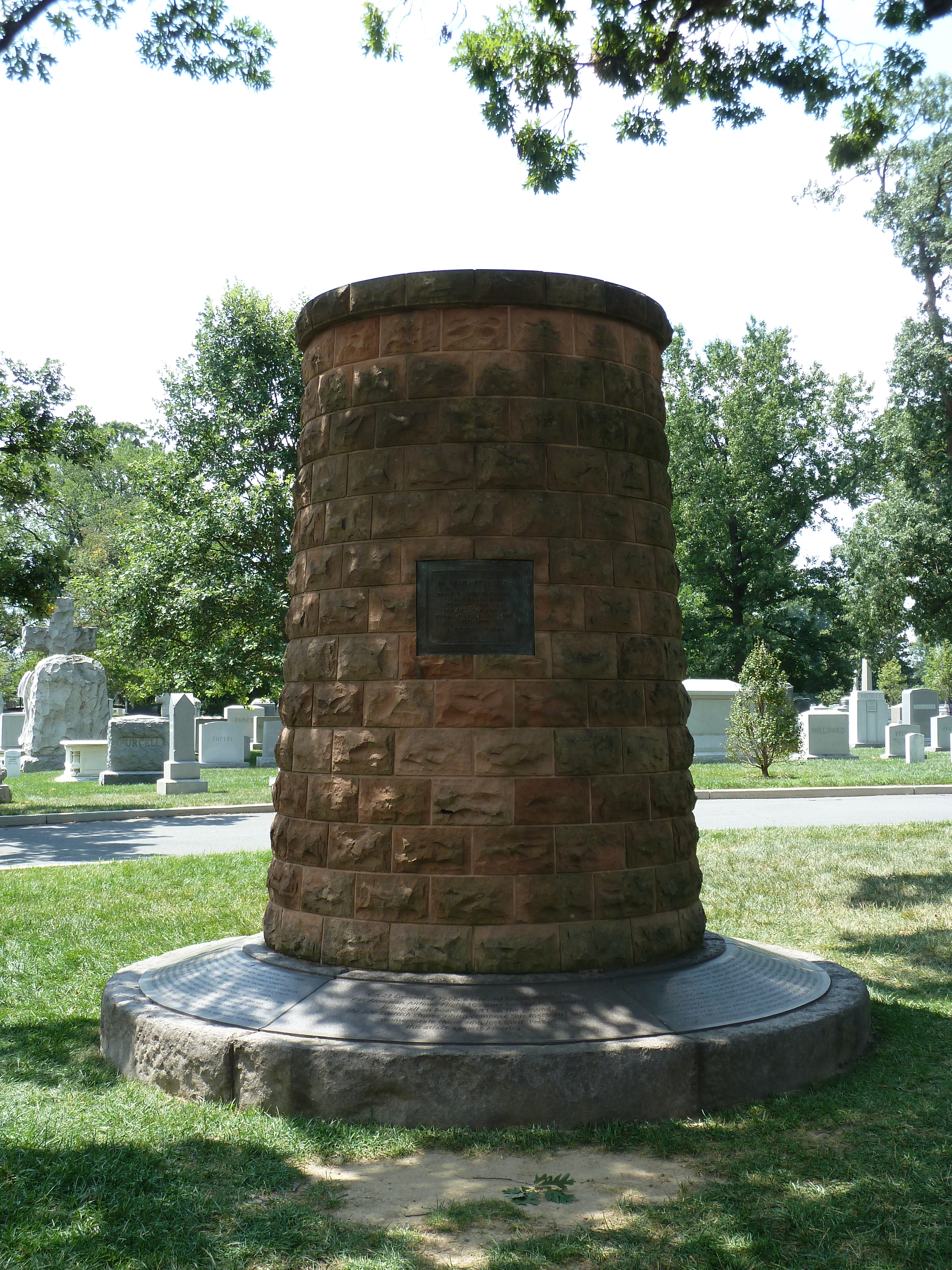
The following day Elaine and I travelled down to Huddersfield. We would normally have travelled via the A74 past Lockerbie but chose an alternative route. After Christmas we returned. This time we did use the A74 and were met with a scene of utter devastation. It was a week or so after the event and the road was open as a contraflow on the northbound carriageway. That was because part of the southbound carriageway no longer existed. What was left of Sherwood Crescent was next to this. It was a like a World War 2 bomb site. I’ve seen pictures of the Blitz; seeing something like that in the flesh leaves a lasting impression. Some of the dead were never found – most of those had lost their lives at that particular location. Since then the A74 has been replaced by the M74. Sherwood Crescent was rebuilt but an earth bank separates it from the new motorway. No house stands at number 13 though. Here, where the mid section, wings and fuel tanks hit, a small area of parkland contains a memorial to those who lives ended there.
Of the characters mentioned in this tale Tom Fraser was affected the most. His was the last voice heard by the flight crew on board PA103, a fact that continued to haunt him. He died a few years later, having collapsed in a corridor at work. I remember him being wheeled out of the building by paramedics as I returned from the canteen. It is only recently that I found out it was he who was working the CDO position that evening. Jim Hood retired in 1995. He lives not far from me and I see him fairly frequently. Now in his eighties he is as fit as a fiddle and has made the most of his retirement. Alan Topp retired a couple of years later. A slightly eccentric character, he faired less well than Jim dying of heart failure in 2011. Adrian Ford went to work at an ATC college in southern England a few years after the event. I believe he is now happily retired. I was 27 at the time. As you know I continued in Air Traffic Control until September this year when I too joined the ranks of the retired. The events of 21 December 1988 have of course left a lasting impression on me. I often wonder as to how much the victims knew of their impending deaths, were they conscious as they tumbled through the airspace that Jim and I controlled? I hope not. I would not claim to be traumatised though. Maybe Toppo was. Losing an aircraft under your control, even when you are completely blameless, is an Air Traffic Controller’s worst nightmare. It’s one I’m glad I avoided throughout my 37 year career. There is much more that I could write about this massacre but I’ll leave it here. It was the personal aspect I wanted to get across, even though I was a very small part of the tragedy. I’ve only ever been through Lockerbie on the train, or passed it on the A/M74. I will make an effort to go there next year and stand on Sherwood Crescent. It will change nothing of course, but it is something I feel is right to do.
 Glad to be Grey
Nice piece Neil. I was night shift at Aberdeen that evening. I saw the newsflash on telly followed by a phone call from the afternoon Sup to advise I was to expect upto 30 helicopters going south. As it turned out, only a Herc arrived to take 2 fire appliances to Carlisle. It was a wild night of weather and a long somber shift.
Cheers for now, Douglas
LikeLike
Thanks Doug, it was indeed a foul night in more ways than one.
LikeLike
A poignant story Neil – thank you for sharing. I was in the RAF based at Waddington at the time, and remember the morning newspaper dropping through the letterbox … “Airliner Crashes on Scottish Town”. An intense feeling of sadness, helplessness and anger. I drove home for Christmas two days later, along the A74, and clearly recall the smell if jet fuel, the crater on the opposite carriageway, the lime-green pieces of confetti (aluminium chromate aircraft structure) just swept to the side of the road, and an engine in a field to the west. Chilling, absolutely chilling. Even today whenever I drive south, the hair stands on the back of my neck, I turn the radio off, and I say a wee prayer for the victims.
LikeLike
I was very interested to read this, Neil as I’m Jim Hood’s daughter and he has spoken often of that night. I know it has never left him either. Thank you for sharing
LikeLike
Hi Gillian, thanks for the comment. I see your dad quite often and it amazes me how young he looks! Pass on my regards the next time you speak to him and feel free to show him the blog if he hasn’t already seen it.
LikeLike