SAGA

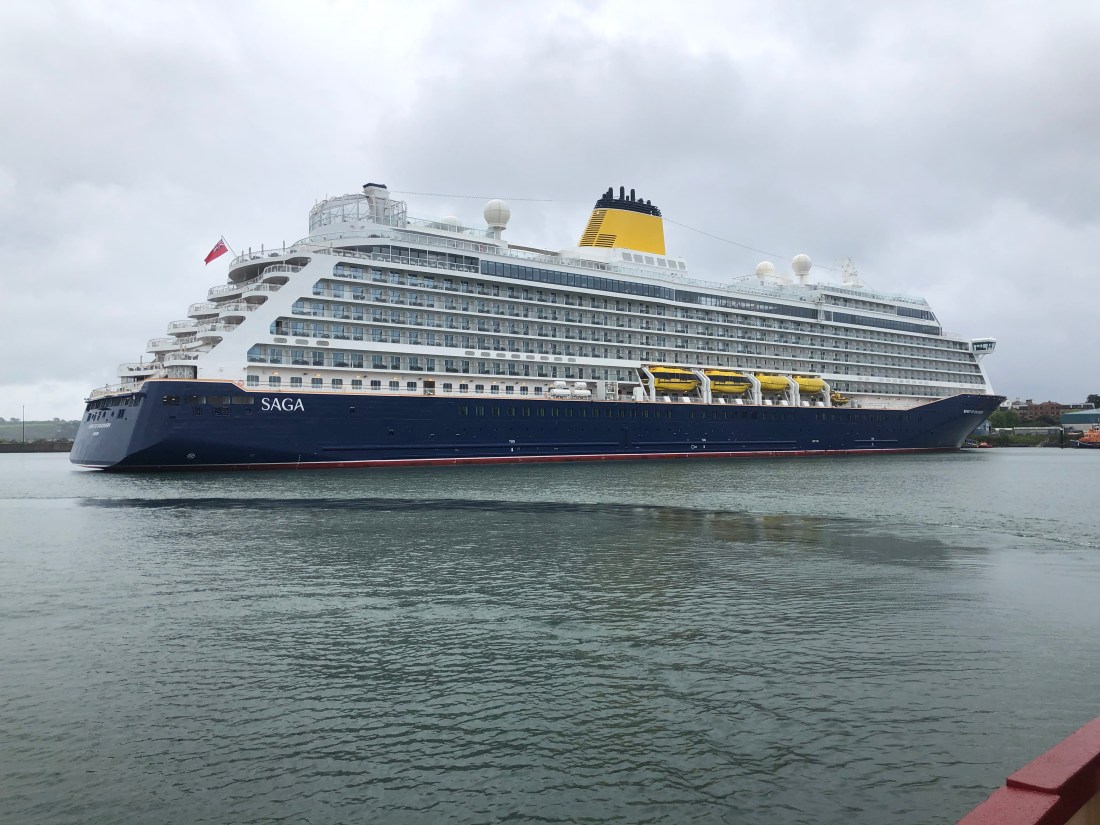
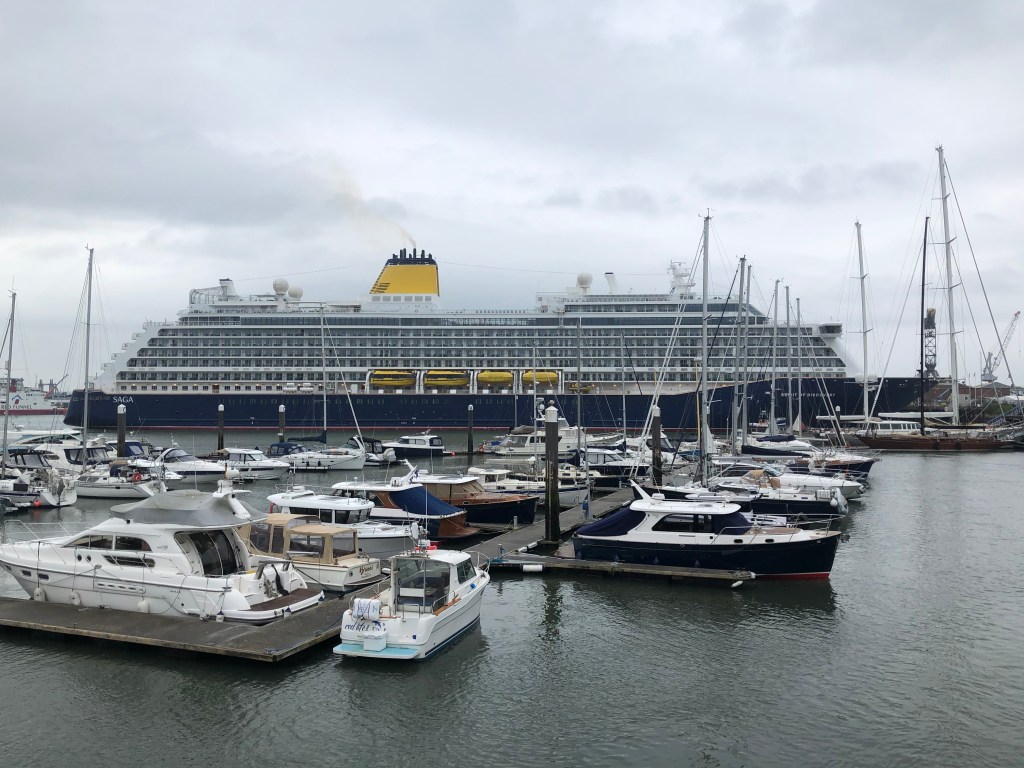
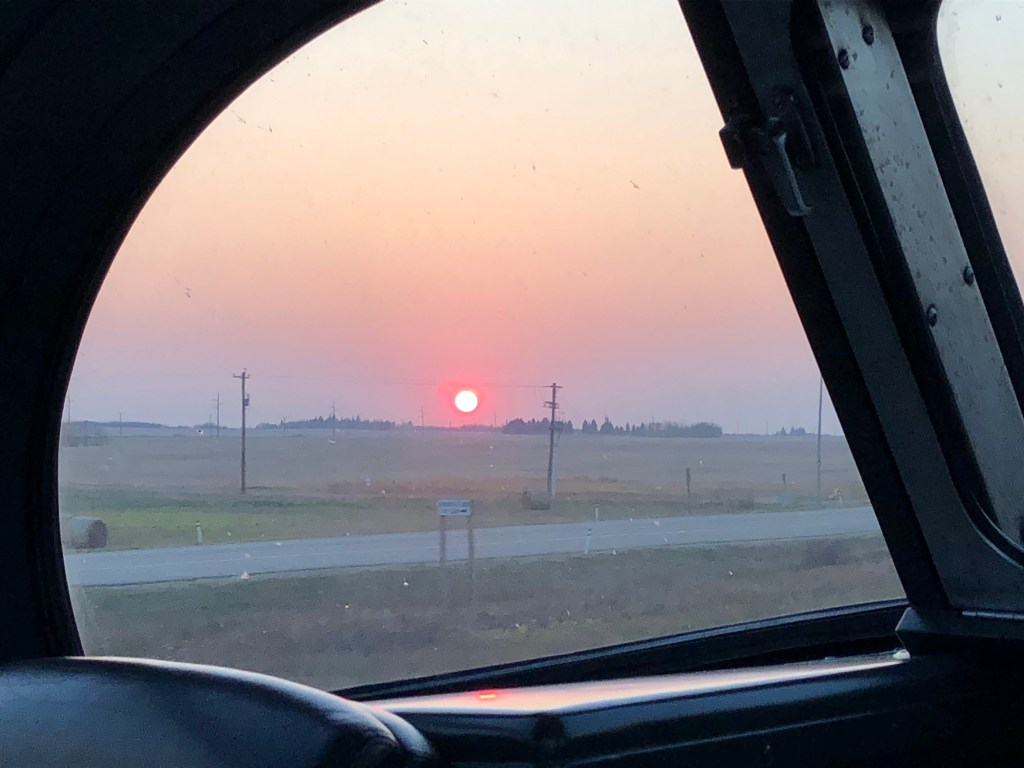
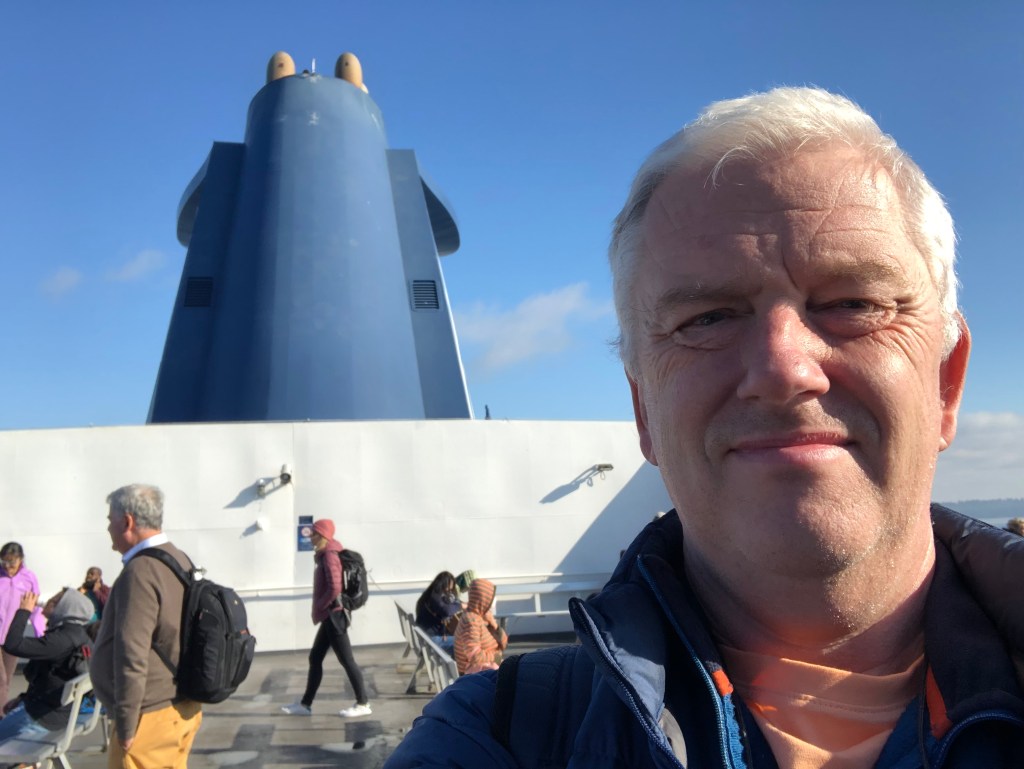
Spirit of Discovery. It’s not easy getting a decent shot to be honest.

Back in the dark ages that was forty-odd years ago, I was discussing various aspects of holidaying with some of my co-students at the College of Air Traffic Control where we were all setting out on long and (mostly) successful careers. The college was in Bournemouth which was, and still is a seaside holiday resort that attracted a reasonable cross section of British society. This included the more mature holidaymaker who were catered for by a number of specialist tour operators, the most famous of which is Saga. Formed in 1951, Saga runs tours, river and ocean cruises, all inclusive package deals and extras such as travel insurance for Britain’s over 50s. Back in that common room at the College of ATC we were mostly in our early 20s so you felt you had to be very old indeed to experience a Saga tour and ‘very old’ people on holiday were generally perceived to be a bit, well, grumpy. As such we decided that the name ‘Saga’ was an acronym for ‘Stupid Arrogant Geriatric Arseholes’. Oh how we laughed. Fast forward forty years. I’m now 61 years old, well beyond the minimum age you have to be to book a Saga holiday and have just returned from my first Stupid Arrogant Geriatric Arseholes holiday. Yes indeed, my desired reputation for being a hard nosed traveller is about to take a battering as I plump for the easy option of paying a company a lot of money and letting them deal with everything. My inner 20 year old was shaking his head in despair.

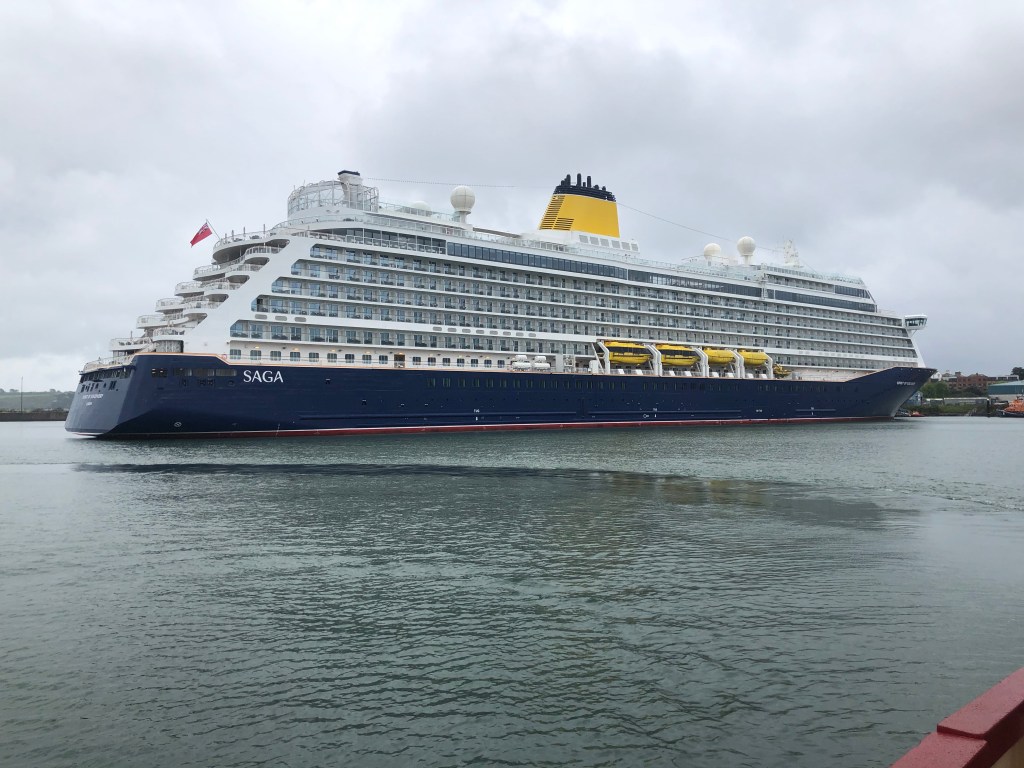
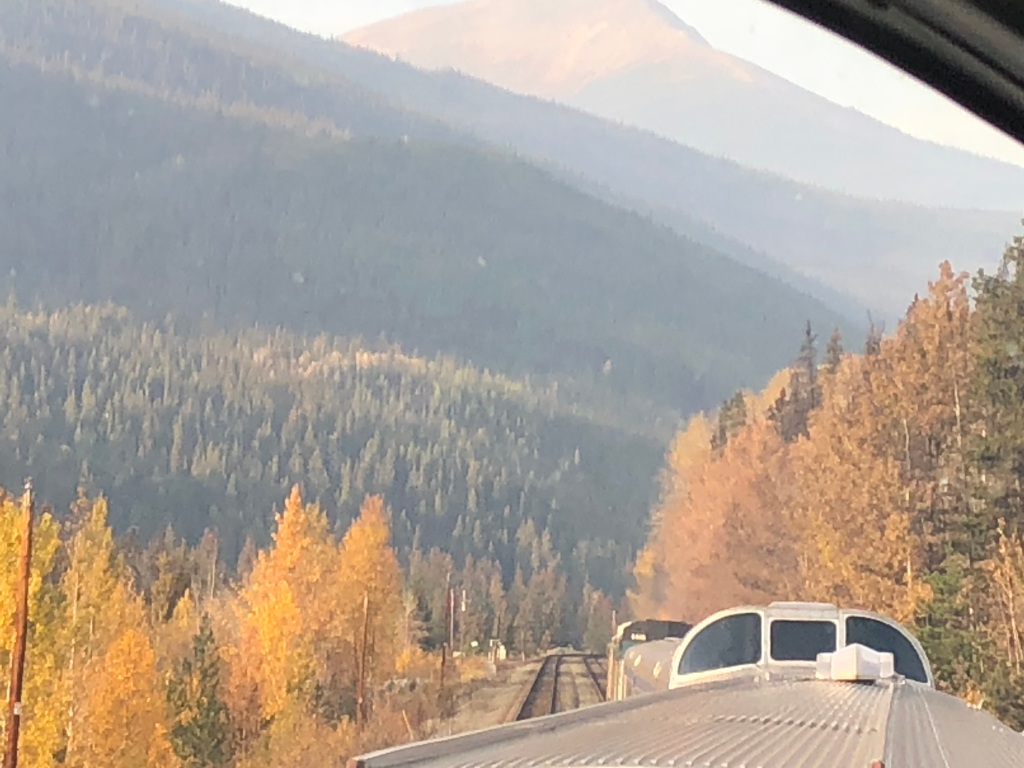
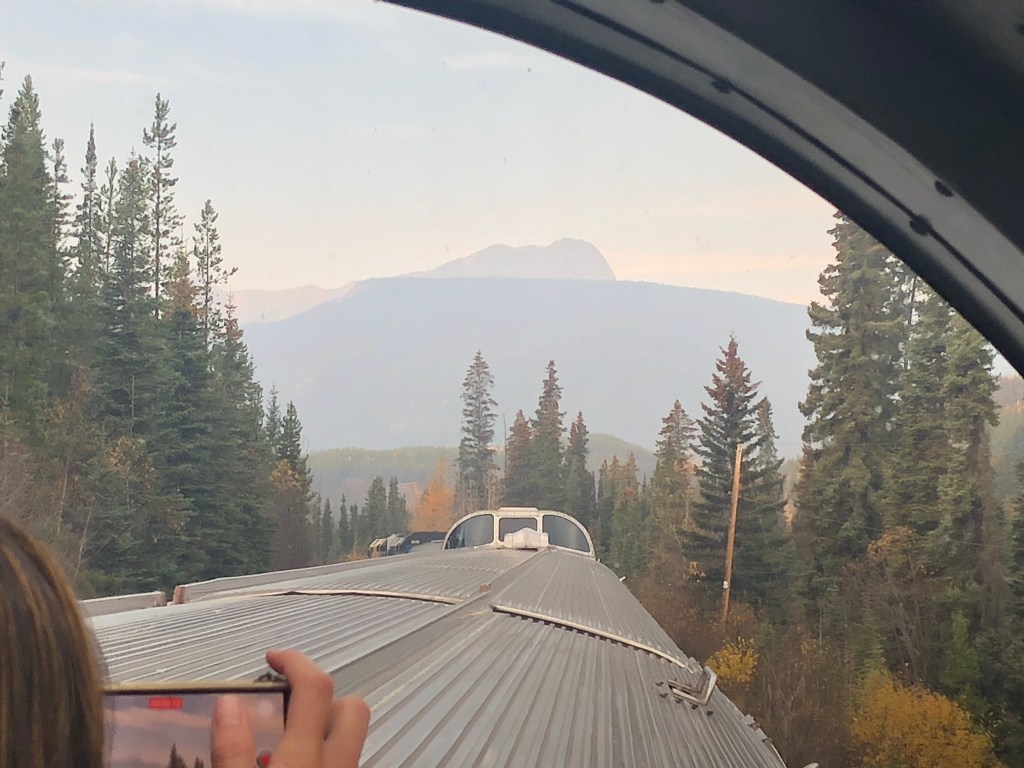
The best shot I have from the front.

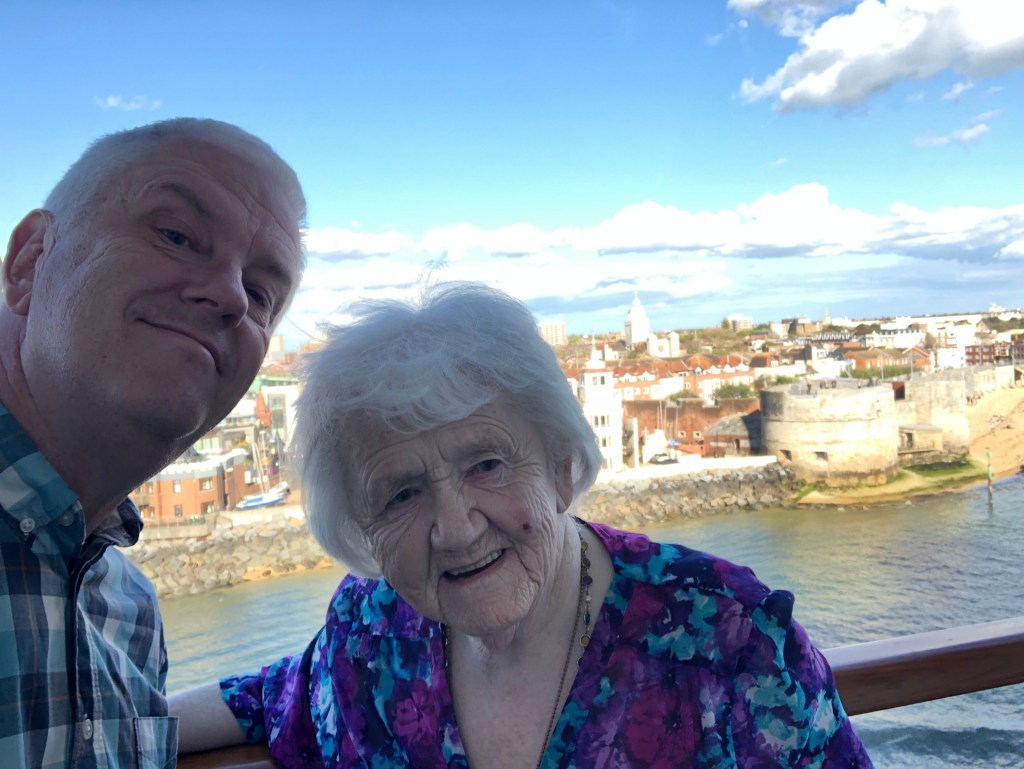
How did it come to this? It should have been a year earlier as it happens. For the past few years my sister Jill and I have taken our mum away for a few days. Jill has in fact gone further and taken mum away herself. Those trips have been with Saga on both river and sea cruises. The fact that Saga look after the oldies was a big selling point for them, as was the travel cheap insurance that was an optional-but-you’d-be-mad-not-to-take-it extra. Mum is, in her own words, getting on a bit and has a number of medical issues that make normal travel insurance prohibitively expensive. Last year I decided to lose my Saga virginity by joining mum and Jill on a Rhine river cruise. Sadly, ten days before we were due to travel I came down with a dose of the Covid and as soon as Saga found out, they immediately refunded our money and strictly forbade us from setting foot within a hundred miles of their boat. I may be exaggerating a bit but it was quite obvious they were shit-scared of an outbreak on a boat full of elderly people with assorted levels of morbidity. My symptoms were mild, I’d have been over it by the time we were due to board but we weren’t welcome any more so that was that. We ended up spending a few days in Stratford-upon-Avon which was very nice, if a little lacking in German castles. A few months later we were looking to book this year’s trip. We went back to Saga and discovered a five night cruise on one of their two new ’boutique’ cruise ships, the Spirit of Discovery. It wasn’t the most exciting of itineraries as we would barely leave the English Channel but the cruise itself is the holiday, the ports of call are just a bonus. We booked it.

It starts with a Mercedes van.

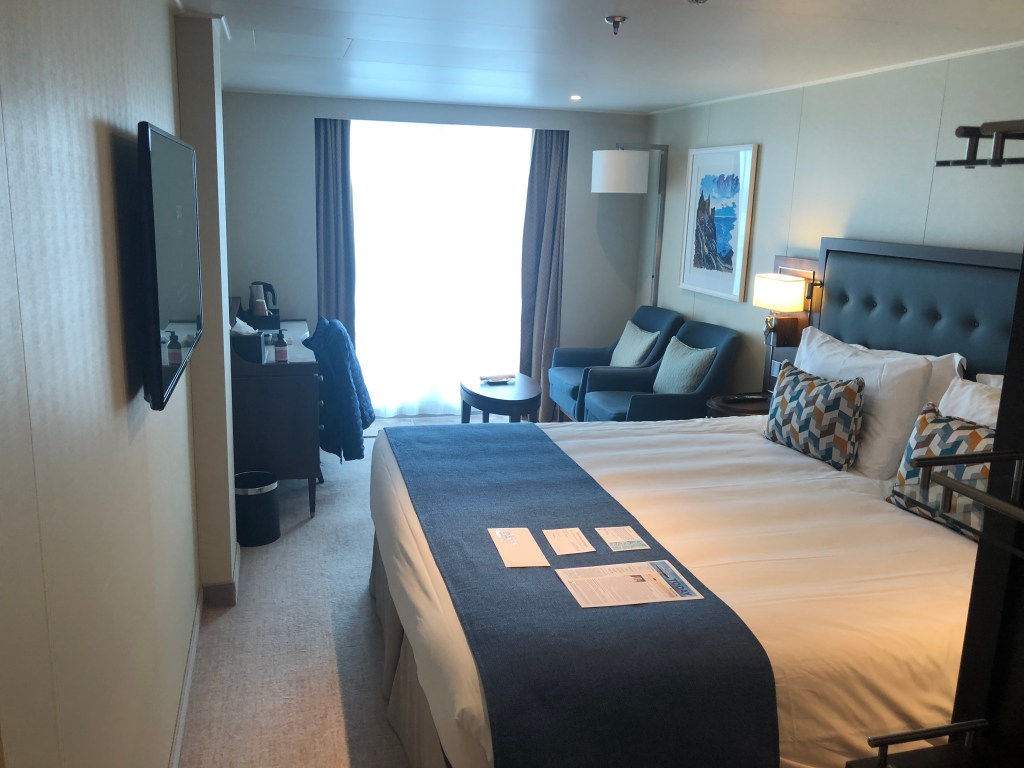
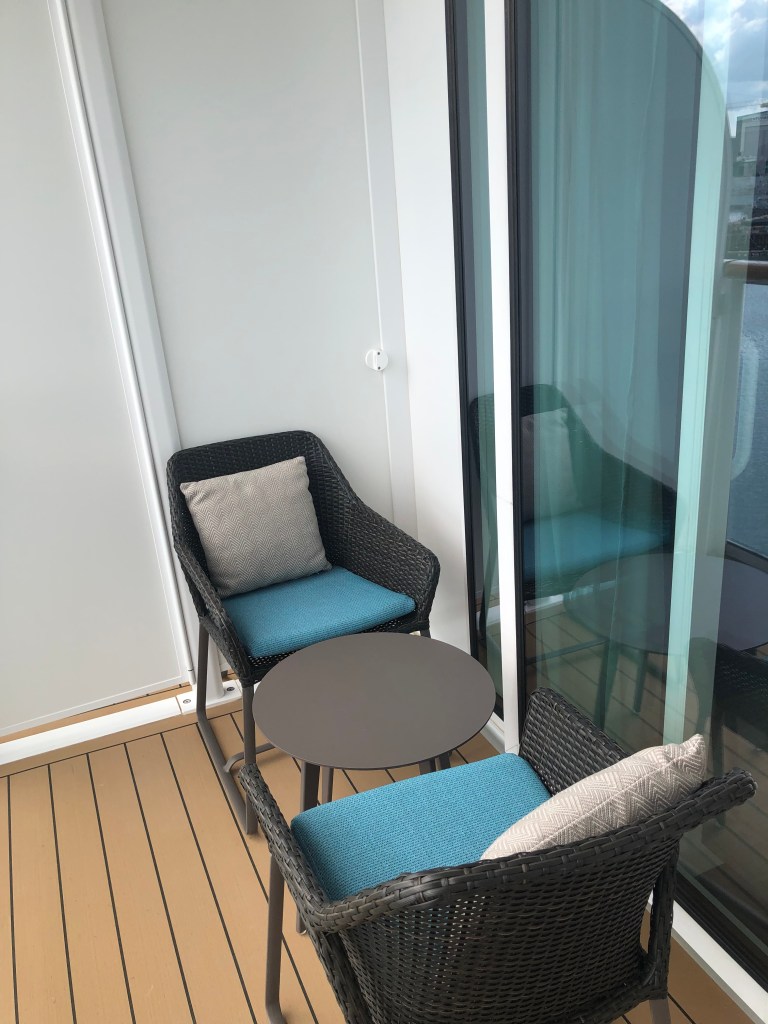
Another advantage of booking a Saga cruise is that they all go from the UK. That’s a bonus to most people but not necessarily an avgeek like me who rather enjoys a trip on a plane. Not having the hassle of airports is a good thing for many people, especially those who are of an age to take a Saga holiday. Not only that, Saga send someone to pick you up and drive you to the port. This service is free for anyone within 250 miles (300 miles from next year) of the port of departure. For this cruise it was Portsmouth which meant I, or anyone else residing in Scotland didn’t qualify for the free chauffeur service although Saga do supposedly offer cheap transfer services to those living outside the zone. As it happens, my mum’s house is 247 miles from Portsmouth so we booked the pick up from there. The driver duly arrived at the appointed time in a rather nice Mercedes people mover. There was one other passenger already in the vehicle and we set off to Portsmouth a four and a half hour drive away. For some reason I hadn’t really been looking forward to this but it was fine, very pleasant in fact. At the port the baggage, including mum’s wheelchair, was taken directly from the car before we were dropped off at the check-in. We had pre-booked assistance but needn’t have bothered as there was very little walking for mum to do. A bus took us from the check-in building to the gangplank where we boarded and were shown to our rooms. We’d each got a Superior Single cabin on the port aft of Deck 12. Look at me with the nautical terminology. I have been on a few cruises before. On none of those cruises have I stayed in a cabin as good as this one. All cabins on the Spirit of Discovery and its sister ship Spirit of Adventure have a balcony. That was a first for me and there’s no going back to inside cabins or even outside cabins with a non-opening porthole as I’d experienced a few years ago. Despite being a single cabin, it had a bed plenty big enough for two should any of the old solo travellers score on the cruise (stop being ageist and disapproving). There was plenty of living space and a small but well thought out bathroom, good storage and all the other little bits and pieces that you’d get in a good quality hotel room. Our cabin steward Jennifer introduced herself and promised not to fold the towels into animal shapes like you get with other cruise lines. Actually she didn’t promise, she just didn’t do it as presumably the Saga clientele is generally too old to be impressed by a towel folded into the shape of an elephant being left on the bed. I must be getting old too as wasn’t disappointed. I thought the room/cabin/stateroom, call it what you will, was fantastic.

A word about the crew. All the cabin stewards, waiting staff, bartenders and just about every other job that had day to day contact with the passengers, were Filipino. For some reason all cruise lines, not just Saga, recruit from the Philippines and have no difficulty in filling the available vacancies. Some people can struggle with this: wealthy westerners being served by people from relatively poor countries. However, the Filipinos seem happy in their work and genuinely friendly towards the passengers. Yes, they could just be acting and secretly despise us but I very much doubt it. As mentioned, there is no shortage of people applying for all the various posts which suggests it is seen as a good employment option. Guilt avoided, let’s look at the ship they call home for much of the year. The Spirit of Discovery was built in 2019, the first of a pair of new ‘small’ cruise ships built exclusively for Saga, Spirit of Adventure being the other which took to the seas the following year just in time for the pandemic. I say ‘small’ but that is a relative term. Gross tonnage, which is actually a measure of internal volume rather than weight, is 58,250. By contrast, the world’s largest cruise ship, Wonder of the Seas, has a gross tonnage of 236,857 so Discovery is a tiddler by comparison. The difference is it caters for 987 passengers as opposed to Wonder’s nearly 7000. Wonder is indeed massive but do the maths and you can see they need to fit seven times as many passenger in four times the volume. Discovery has a higher crew to passenger ratio too, more than one to two as opposed to one to three in the big ship. The big cruise lines are all going down the road of huge ships but there is still a market for smaller, more intimate vessels and as Saga’s clientele is hardly likely to need the water slides, climbing walls and go kart tracks on the mega liners, it seemed a wise choice to commission two ships at the smaller end of the size range.

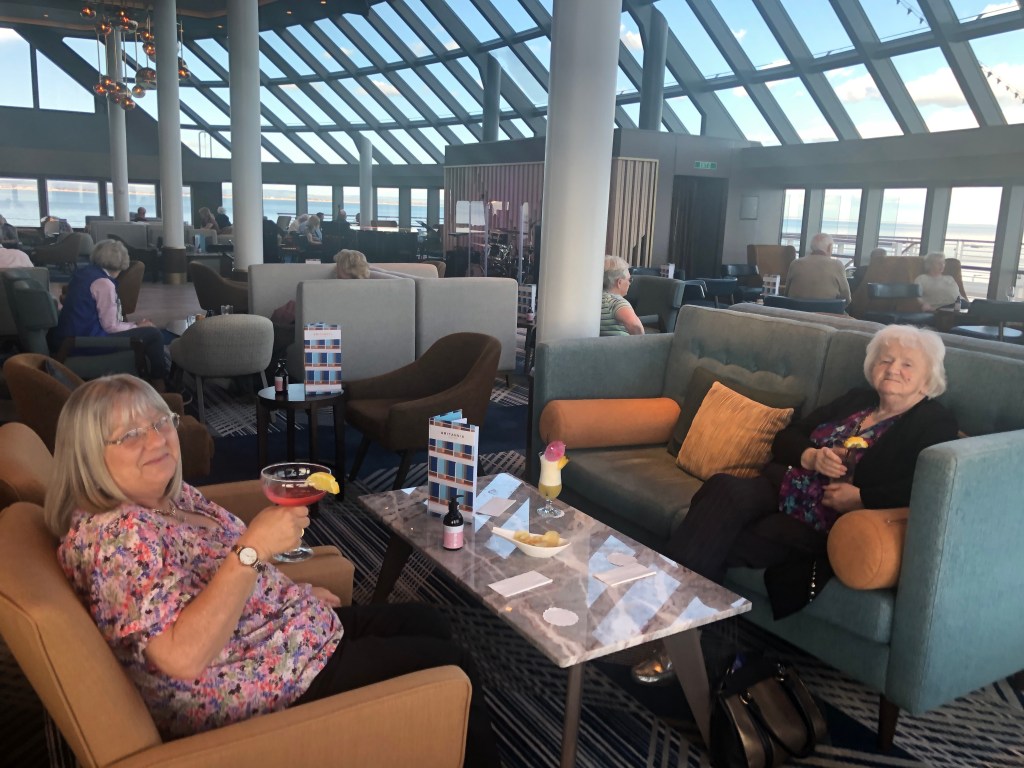
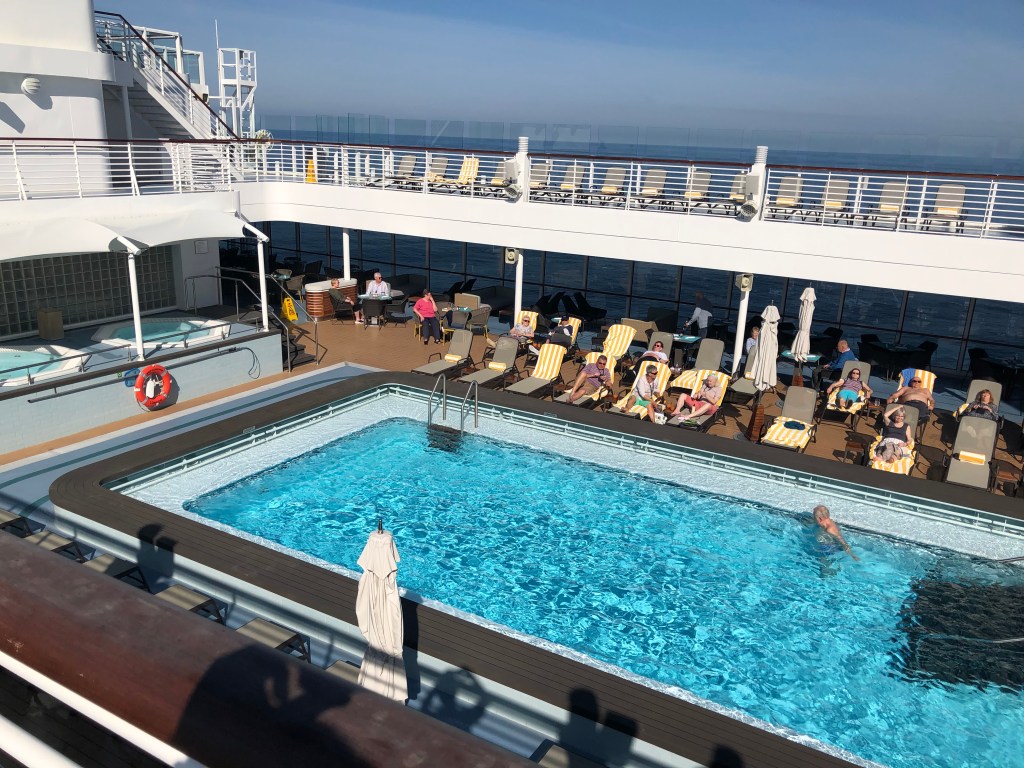
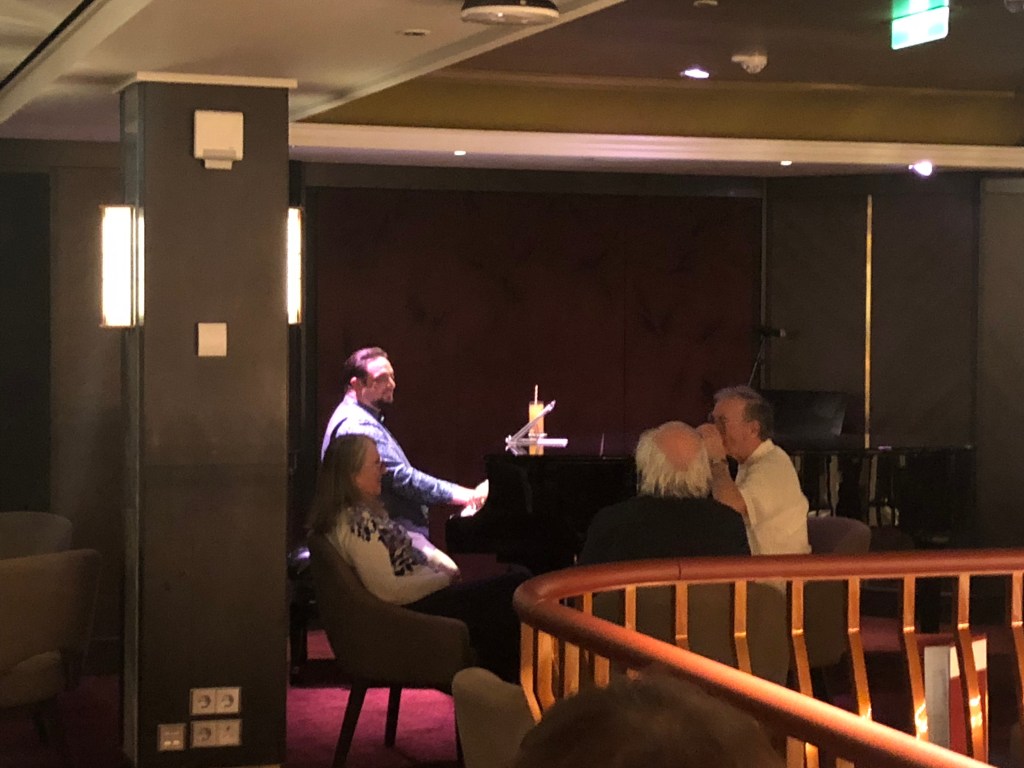
What do they manage to squeeze into their 58,250 tonnes? 554 cabins for a start. Around a quarter of those are for single occupancy which is a far higher ratio than other cruise lines which once again reflects the elderly clientele. There are five dining rooms: The Main Dining Room, the slightly less formal Grill and three speciality restaurants. The Club by Jools is a steakhouse under the patronage of Jools Holland, East to West is Asian cuisine and Coast to Coast which specialises in seafood. There was no supplement to use the speciality restaurants though for our short cruise they limited passengers to just one visit to one of them. We somehow managed to blag our way into two though, the only one we missed was Coast to Coast, much to mum’s disappointment as she rather fancied the lobster. Whilst you needed a reservation in the speciality restaurants, it was open dining in the others so no set sittings to worry about. The longest we had to wait was about two minutes. There are four different bars including the large Britannia Lounge at the pointy end of the ship (see, I told you I knew all the nautical terms). A lot of the entertainment takes place there including the daily quiz which we so nearly won one evening, losing out on a tie break. We would have won it had we not ‘checked’ an answer which only goes to show that bending the rules doesn’t always pay. The Club by Jools aptly becomes a piano bar after dinner is over and occasionally the pianist is Jools himself. Not on our cruise though, we had the equally impressive Zoltan to tickle the ivories. The Living Room is near the hub of the ship where you could sip a pina colada to the sounds of a classical four piece or some light jazz by a three piece who were forever telling us that they loved jazz. We didn’t frequent the South Cape Bar which was the fourth drinking establishment on the ship. The Playhouse Theatre could seat 444 people and held shows every evening either by the ship’s resident entertainment crew or visiting acts. Other things took place there such as lectures in the afternoon and it also served as the rendezvous point for the shore excursions. Up on deck there were more than enough sun loungers, something not all cruise lines can claim, a swimming pool filled with warm, fresh water and a couple of spa pools which were positively steaming. There is a bar there too with waiters bringing drinks directly to your sun lounger so no need to do the long walk of a few yards to get it yourself. There’s a few games you can play like table tennis, darts and the cruise line favourite, quoits, and if you are feeling fit, four times round the promenade deck is a mile. To complete the ship tour, there’s a couple of shops near the reception, a library for those who fancy some peace and quiet, a gym, a hairdressers and a spa. The hairdresser and the spa require additional payment but apart from some of the more expensive drinks, everything else on board is free, including the WiFi. Or, to be more precise, included in the price. Saga cruises aren’t the cheapest but you do get a lot for your money. We bought a bottle of Champagne to celebrate a special occasion and that was the only thing that we were charged for on disembarkation and that was only £30 which seemed more of a supermarket price than what you might find in a bar or restaurant.

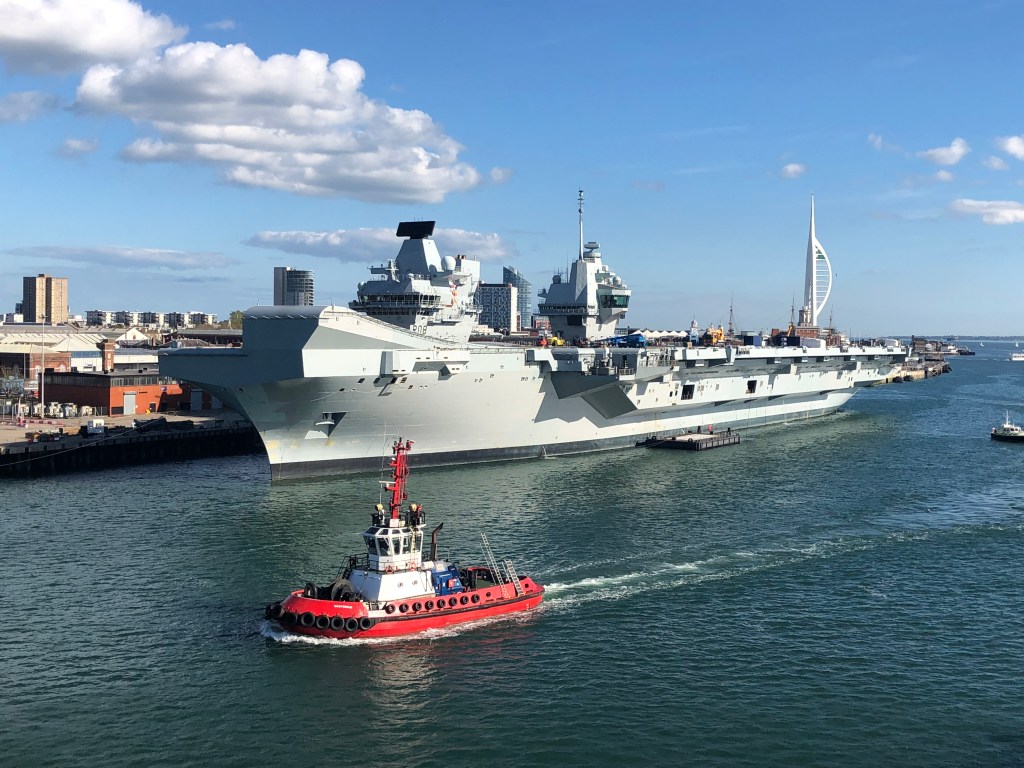
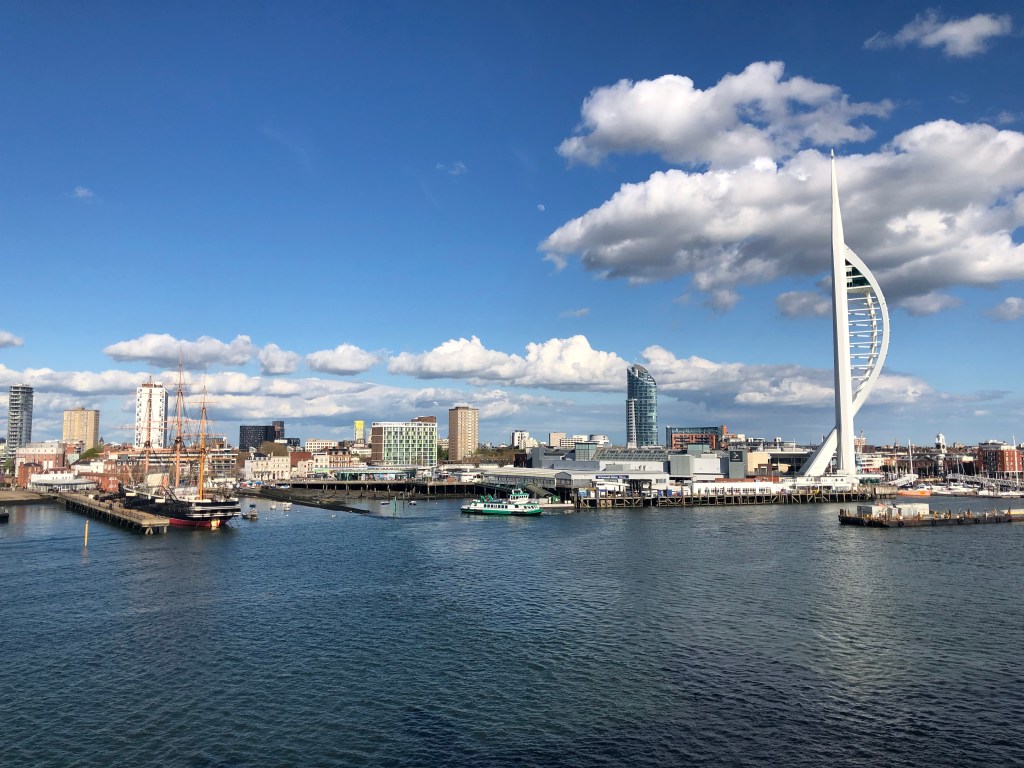
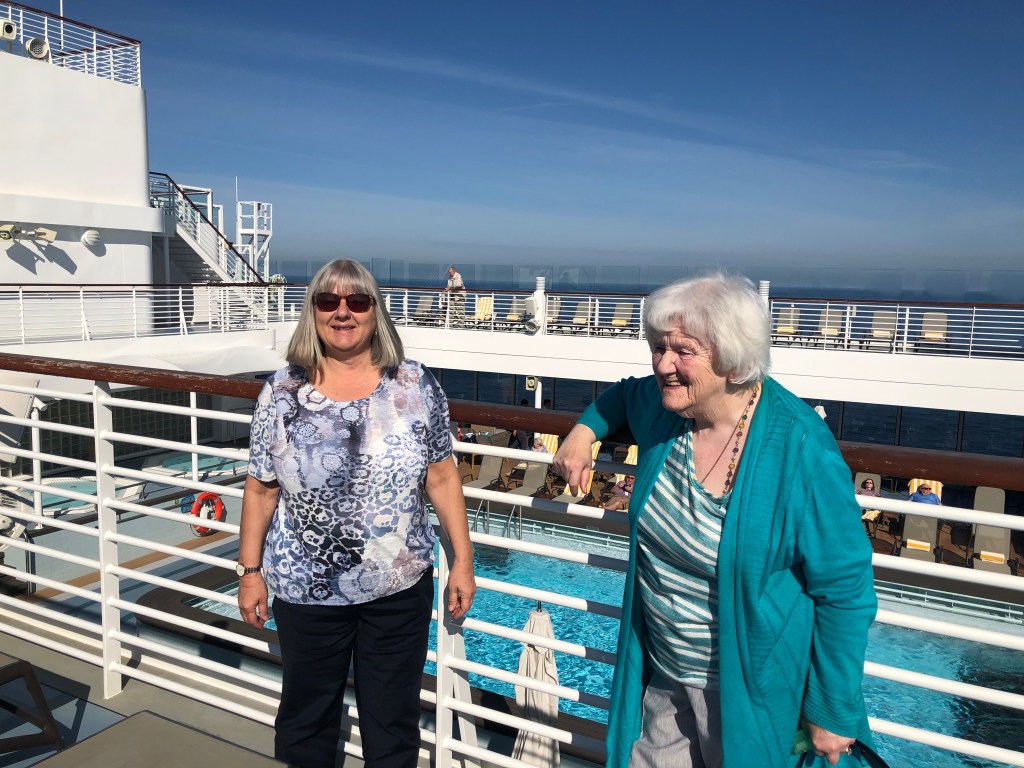
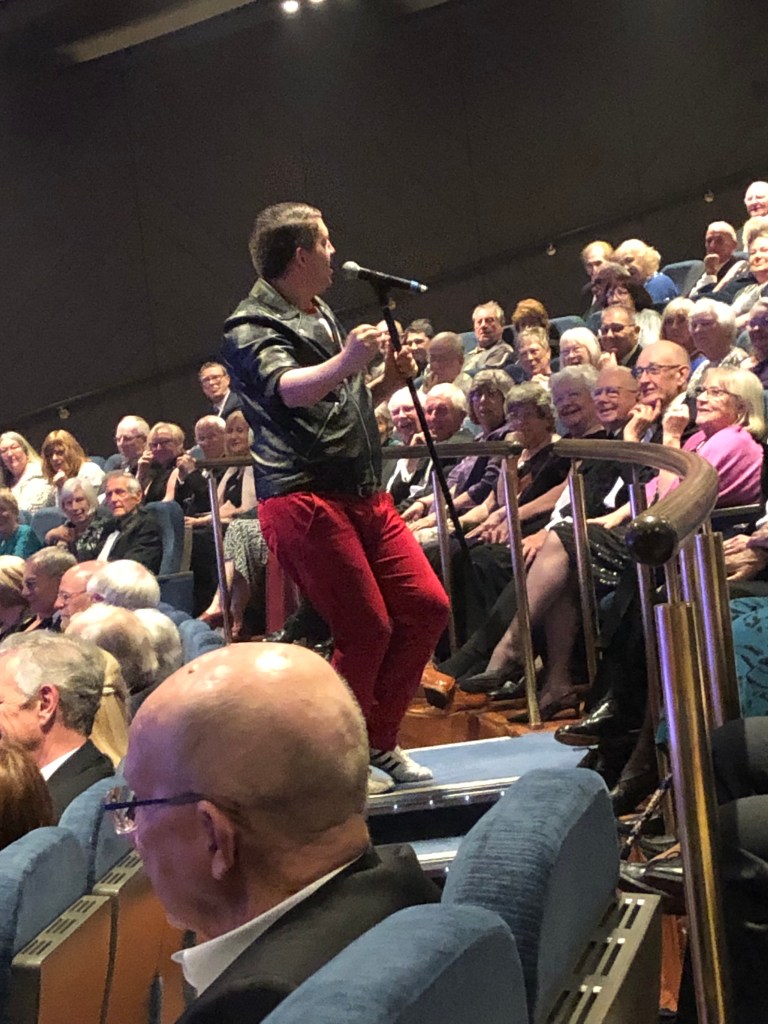
To summarise, it is a very nice ship, tastefully kitted out, with enough of what you might want on a cruise and not a lot of what you don’t. It is perfect for the 60+ age bracket and probably suits the 50+ cruisers too although to be honest, I didn’t see that many passengers who looked to be in their fifties. In fact at 61 I felt rather youthful. The cruise itself is a bit of a backstory to this blog but it is worth mentioning what happened to give an idea of what to expect on any Saga cruise itinerary. Sailaway from Portsmouth was not accompanied by much fanfare which I found a bit odd but it was very pleasant watching it from the balcony of mum’s room. Portsmouth isn’t an overly scenic place but there was a lot of interesting stuff to see. Day two was a sea day. We were lucky as the weather was particularly kind so spent much of the day on deck. There were plenty of organised activities to keep folk occupied if sitting around isn’t your thing but lots did take advantage of the sunshine. I even had a dip in the pool. That evening was Formal Night. Formal dress was required throughout the ship with the exception of The Grill where the chaps could get away without wearing a tie. We had booked The Club for that evening so I had to dig out my suit and blow the moths off. I may have grumbled about it once or twice but the steaks were fantastic. In the theatre that evening were a Queen tribute band which led to the comedy moment of the cruise: a lot of old folk DJs and cocktail dresses getting on down to Don’t Stop Me Now, especially the “I’m a sex machine ready to reload” bit. Don’t knock it though, the band were excellent and ties or no ties, it was a great evening. Day Three saw us dock in Brest. Another good thing about a Saga cruise is that some of the shore excursions are included. In Brest this was a trip to the Breton village of Locronan. It’s a nice place, even when it is full of Saga cruise ship passengers. That evening’s entertainment was a show put together by the ship’s entertainment company. There was some loose storyline which served as an excuse to perform song and dance and a bit of acrobatics.

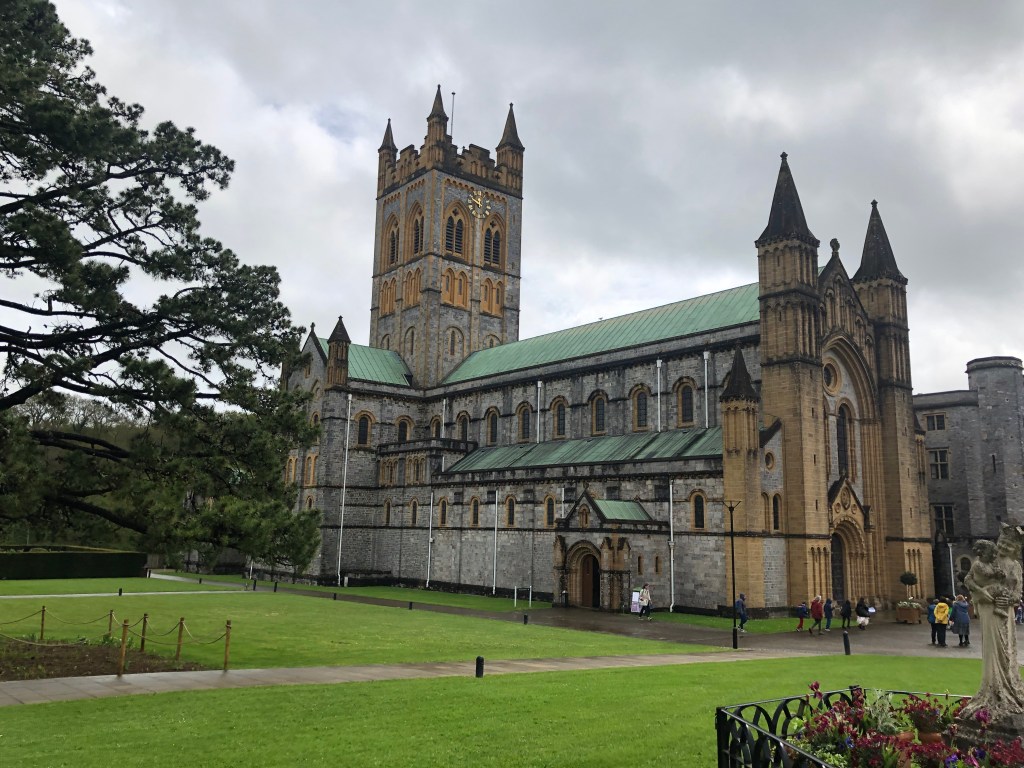
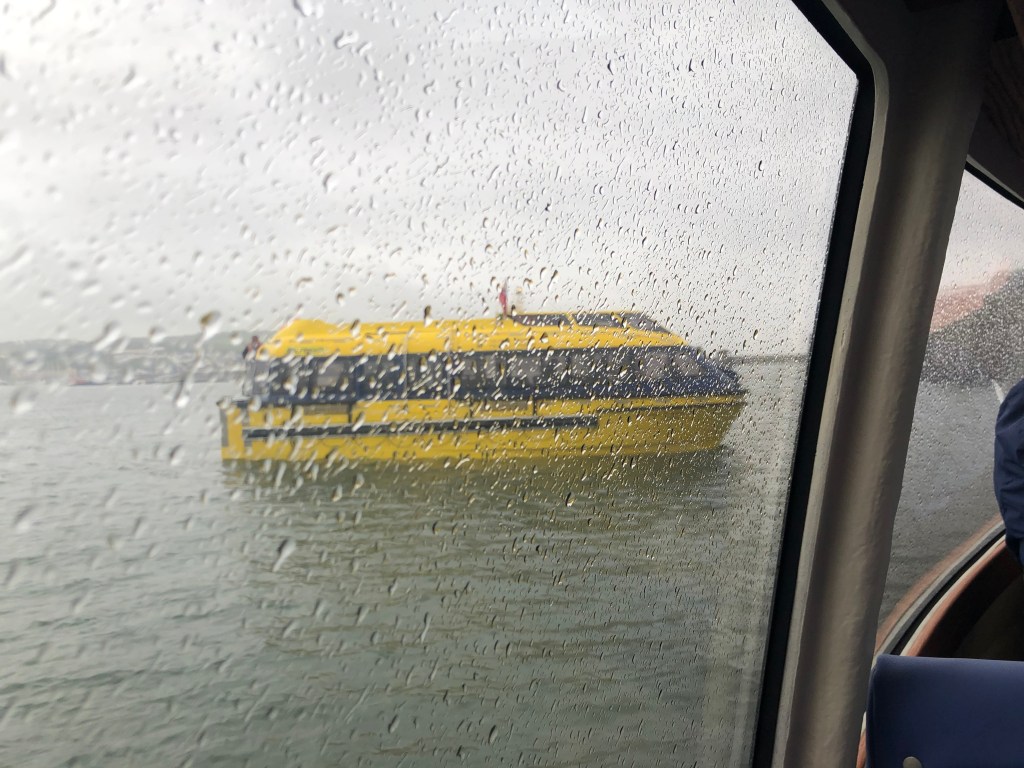
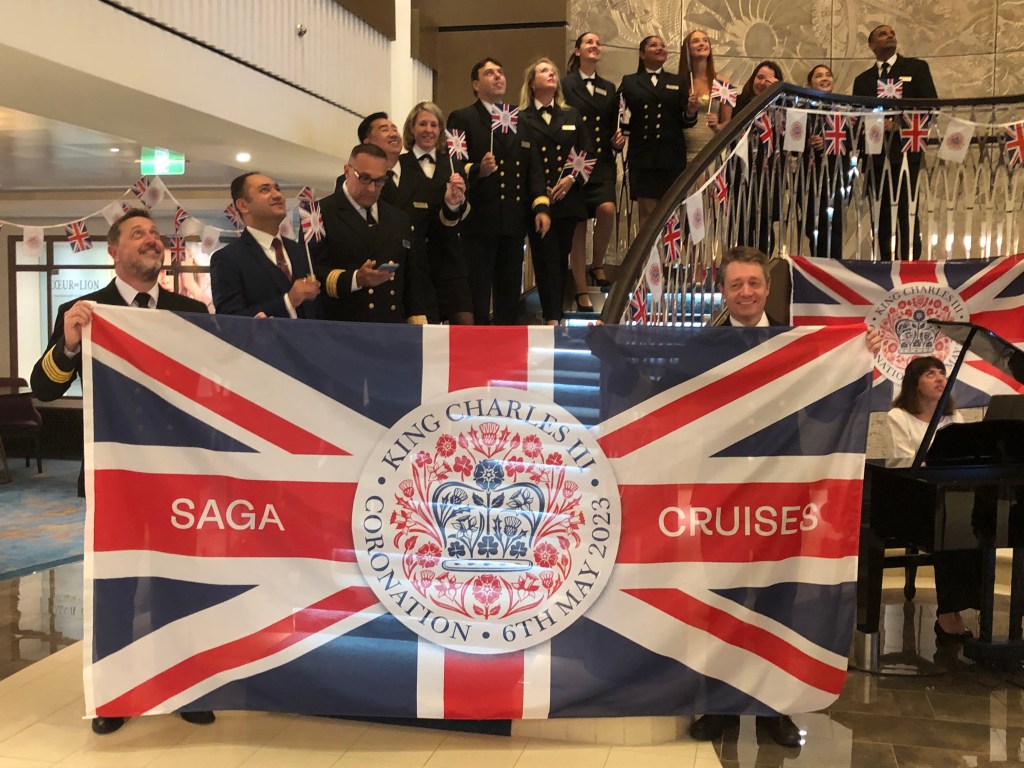
Day Four was spent in Falmouth. The weather had taken a turn for the worse which was a shame. We had decided to avoid the included excursion and pay for a different one which was a cruise up the Helford River in one of the tourist boats that ply their trade in Falmouth Harbour. However, the weather put paid to that idea and we headed off up the River Fal estuary instead. It was, well, a bit rubbish. It would have probably been ok if the weather had been better but a scenic cruise where you can’t see much is never likely to be the best. After dinner in The Grill, we nearly won the quiz as mentioned above, and then saw a magician do magic things in the theatre. He was pretty good at it too but I always try and work out how they do it and it frustrates me when I can’t. Day Five saw us drop anchor in Plymouth Harbour. This is always interesting as it requires the use of a tender to get the passengers to shore. That tender is in fact one of the lifeboats and it is quite a fun journey. We took another optional extra excursion in Plymouth. This was to Buckfast Abbey, three quarters of an hour or so away by bus. It was an interesting place. The abbey is less than 100 years old but made in the gothic style of many centuries earlier. However, the most interesting thing about it is that the monks produce their tonic wine, so beloved of the young scallywags of Scotland. I bought a bottle and took it home. It was a bit like taking coals to Newcastle. There’s something, however, about buying Bucky at the place where it is produced rather than the Spar just round the corner. That evening we got ourselves into the East to West restaurant despite us using up our speciality restaurant allocation of one a couple of days earlier. The food was amongst the finest Asian food I have ever tasted. It was another Queen night at the theatre with the tribute band, who go by the name of Royal Rhapsody, giving us another rousing night of classic Queen stuff. There were fewer people there this time and not a dinner jacket in sight but I have to give a big thumbs up to the cruise director for booking them. The band members were quite young and I do wonder what they made of their not young audience. Whatever, they put on a show and those present seemed to love it. Day Six of our five day cruise saw us dock in Portsmouth early. One final breakfast and we were off the ship by half past eight. Our bags had been collected overnight and were there for us at the quayside. Another bloke in a different Mercedes van was there to whisk us back to Yorkshire. It was Coronation Day and we got back in time to turn the telly on and. see the King and Queen on the balcony of Buckingham Palace.

What then of Saga cruises? I couldn’t really fault them. You are looked after from stepping out of your front door to stepping back inside it again how ever many days later. The ship is really classy. It looks good outside and in. In terms of size it was pretty much ideal. Not huge and intimidating but not small and too exclusive either. The cabins are great and you’ll get a balcony even in the cheapest one. The food was top notch in all locations with good portion sizes, not always a given with other cruise lines. If I was being really picky I would say the food could have been a bit hotter but you couldn’t fault it for quality and flavour. There were enough activities and entertainment on offer to fill your time on board and it was easy to avoid it if you just fancied a bit of peace and quiet. Yes, it’s full of old people and it the bathing beauties by the pool may be a bit on the wrinkly side but so what? I’m no spring chicken either. Would I do it again? Most certainly. Here’s the big question though, is Saga just for Stupid, Arrogant, Geriatric Arseholes? If I ever get to use a time machine I’m going back to that common room in Bournemouth and informing young me and my co-students that no it isn’t and to stop being a bunch of young wanks.

Atlantic to Pacific By Rail

Prologue 1

I’d hoped that this blog site would be having regular updates by now with pandemic madness largely behind us but it just hasn’t happened. I don’t know why, it’s not as if I’m stuck in a lockdown stupor and haven’t been for some time. As the world has opened up again I’ve been doing stuff which might be of interest to other people but I feel that it has not been much different to what I was doing before. I’ve shared daily holiday blogs on Facebook but apart from the last blog, which was written five months ago, there’s been nothing I’ve done that has inspired me to return to Glad To Be Grey and get writing. Until now. I’m just back from what was an epic trip and if I can’t write a blog about this then I might as well give the site up.

Prologue 2

I first had the idea for this trip about a year ago. We had booked a holiday in Canada with our daughter for the summer of this year. This involved a rather indirect journey by air to and from Victoria in British Columbia where she resides. This got me wondering if there was any way to get to Victoria without using aircraft. The environmentalists will have you believe that your flight is directly responsible for the end of the world so maybe there’s a practical way to get there without killing your grandkids. The answer is of course no, so sorry grandkids, I’m still more than happy to take a plane (or four) to get to see my daughter and have a holiday. However, a seed was planted in my mind – travel to Victoria, which is 4,500 miles away from Troon, by surface transport. I soon found out it could be done and without too much difficulty. All I would need was a lot of time and a shedload of money. The plan was to get the train to Southampton and cross the Atlantic on the Queen Mary II. Once in New York I would cross the North American continent by train. There were a number of alternative routes I could have taken, even on a continent where rail travel is an afterthought. All itineraries would have ended in Vancouver where I would then have to get myself to the ferry terminal for a ferry to Vancouver Island where Rebecca would pick me up and transport me into the city of Victoria. This was a great idea, right up until I looked into the details for crossing the Atlantic on the QM2. The crossing takes seven days which is longer than is necessary as the ship could easily do it in five. Cunard want you to make a holiday if it apparently. The cheapest fare for a single occupancy cabin, presumably in the bilges, was in excess of £4000. Whilst I’m not averse to cruising holidays, four grand for a week of seeing nothing but ocean, and possibly a stormy ocean at that, was just too much. I came up with another idea.

What I would do was take the shortest possible flight to Canada which was Glasgow to Halifax, Nova Scotia. From there I would cross Canada by train to Vancouver, ending the journey to Victoria as mentioned above. The frustrated Travel Agent in me had a great time coming up with a suitable itinerary and I booked the trip in the early part of this year. The journey would be a solo one as Elaine really didn’t fancy spending five days on a train. In the summer, Canadian airline WestJet threw a spanner in the works by cancelling the Glasgow-Halifax flight. I rebooked myself with Air Canada from Heathrow to Halifax which included a connecting BA flight from Glasgow. Once in Halifax I’d spend a couple of days there before boarding the first of three different trains that would get me to Vancouver. It would take six days and six nights and get me from The Atlantic to The Pacific and as a bonus I’d arrive there on my birthday so Rebecca could buy me a beer.

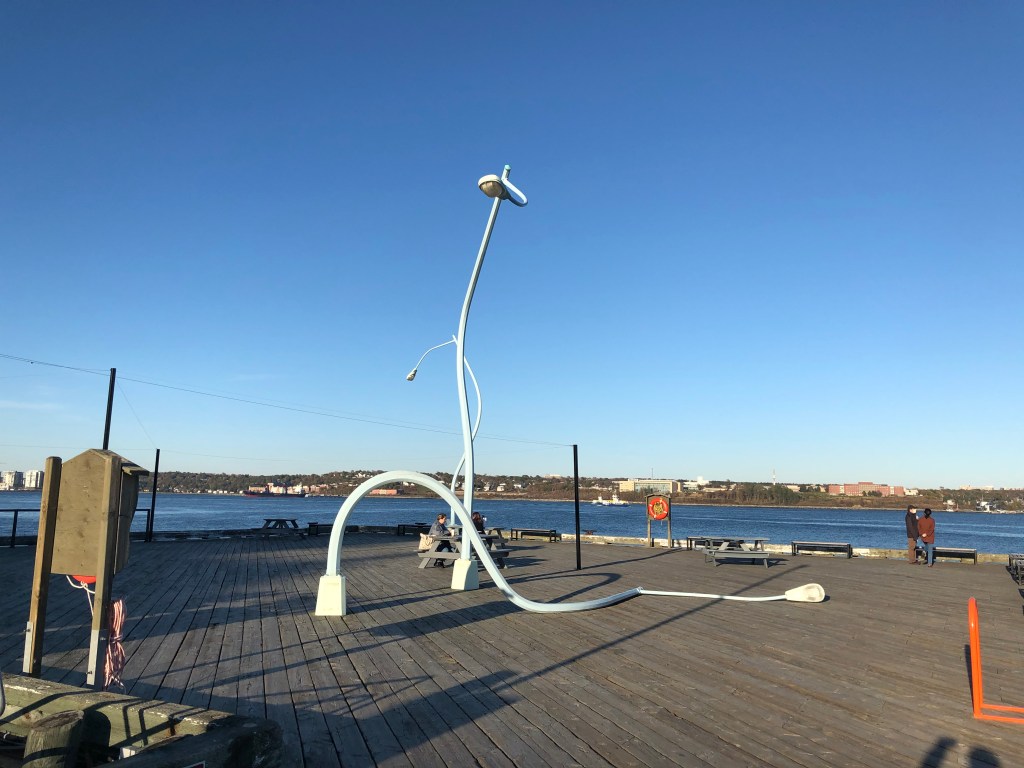
Halifax Harbour, Nova Scotia. It is an inlet of the Atlantic Ocean. I really should have taken a selfie here as the starting point.

The Ocean

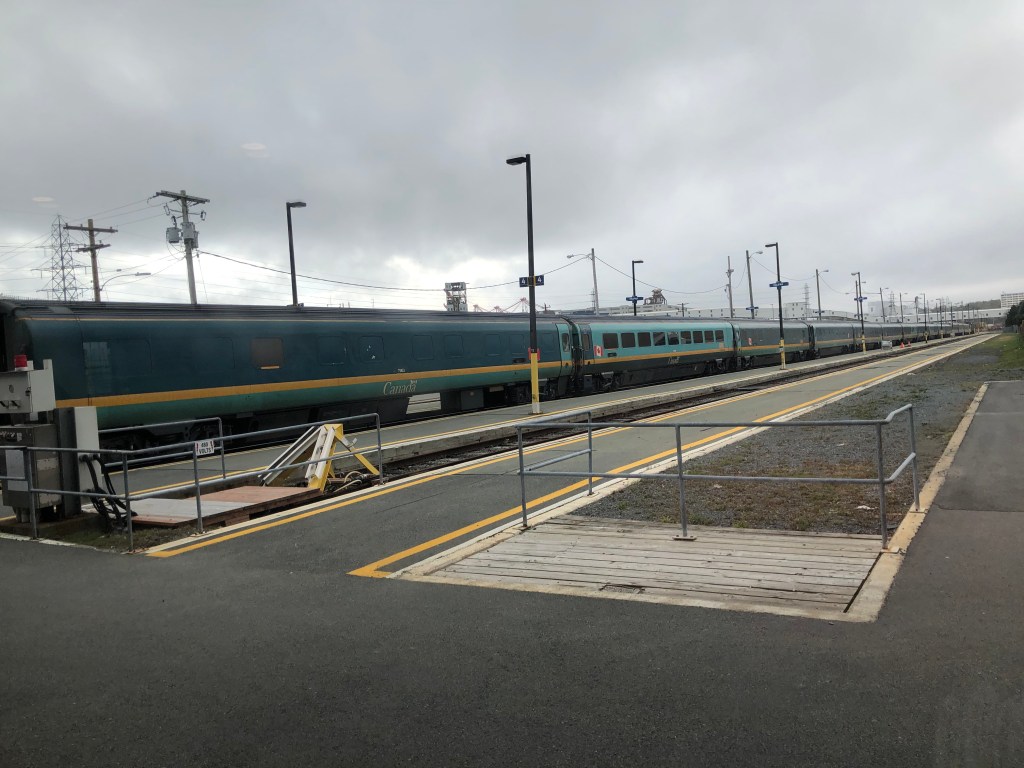
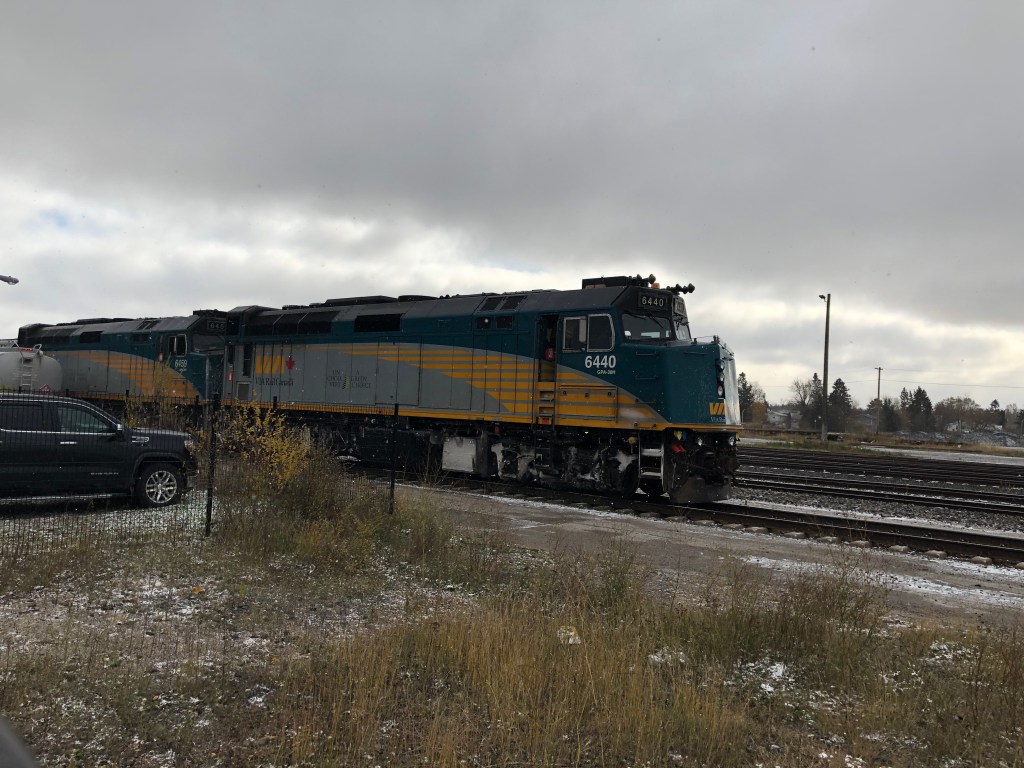
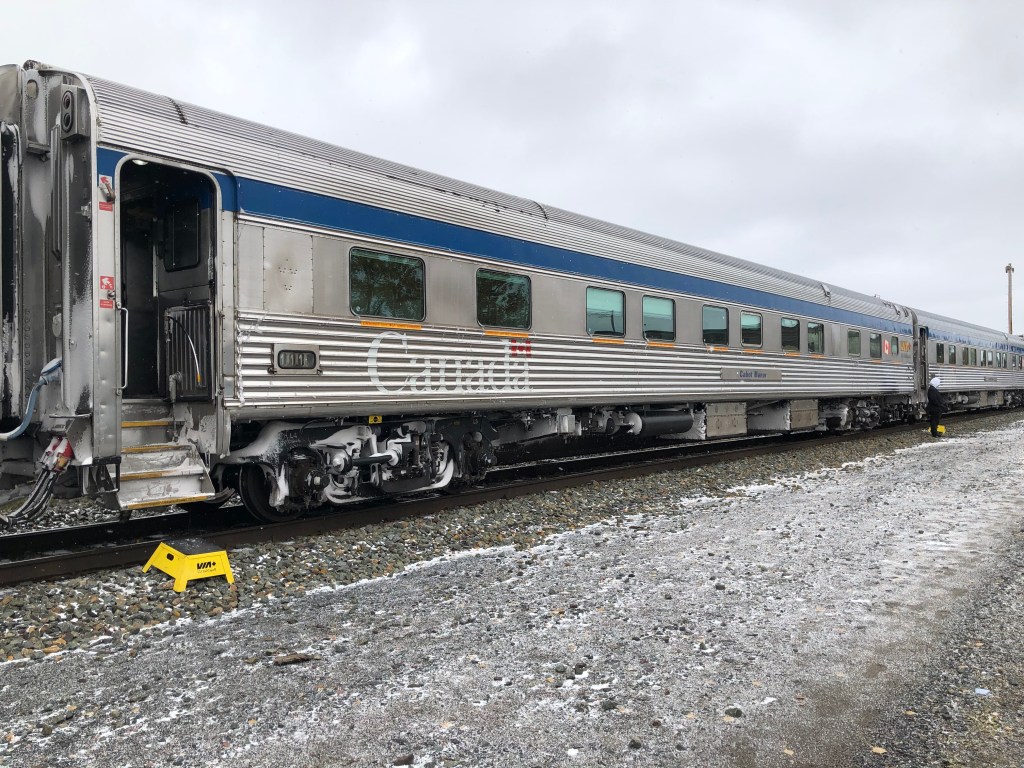
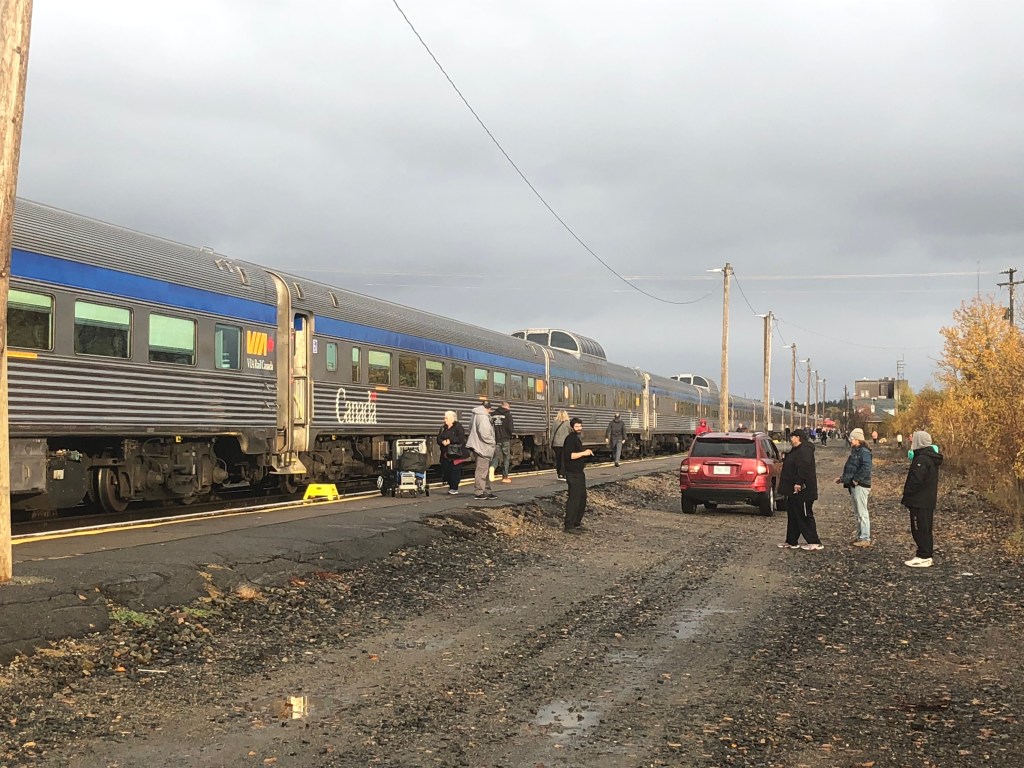
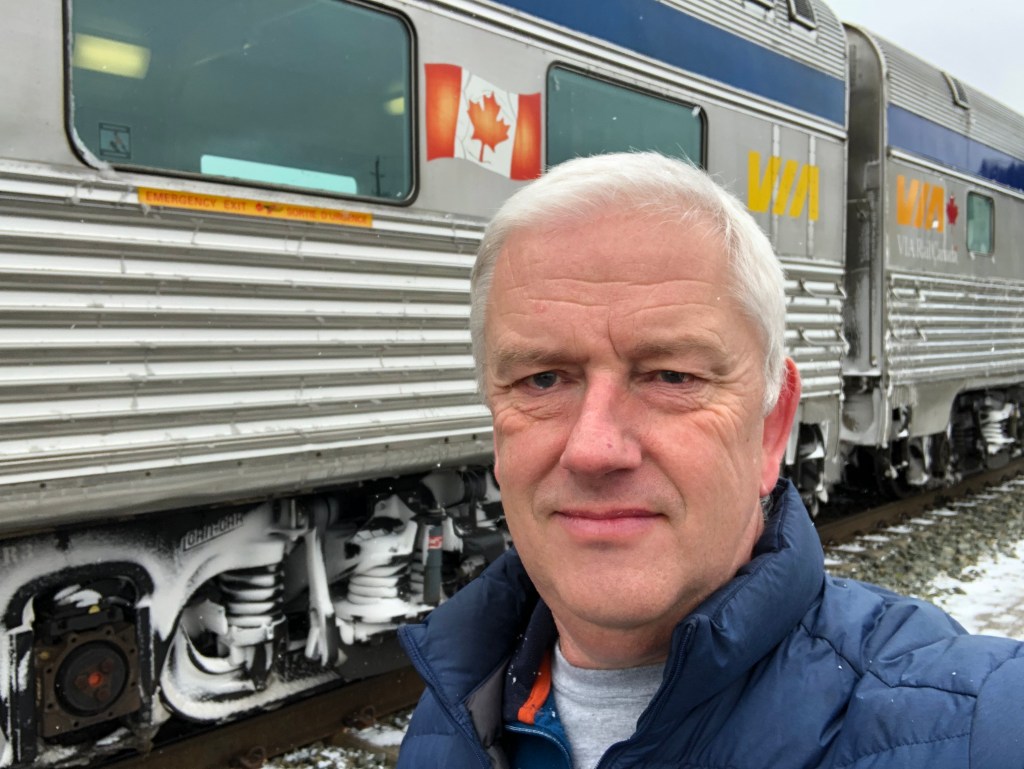
The Ocean. It’s quite difficult getting a Canadian train in one frame.

Halifax – Montreal

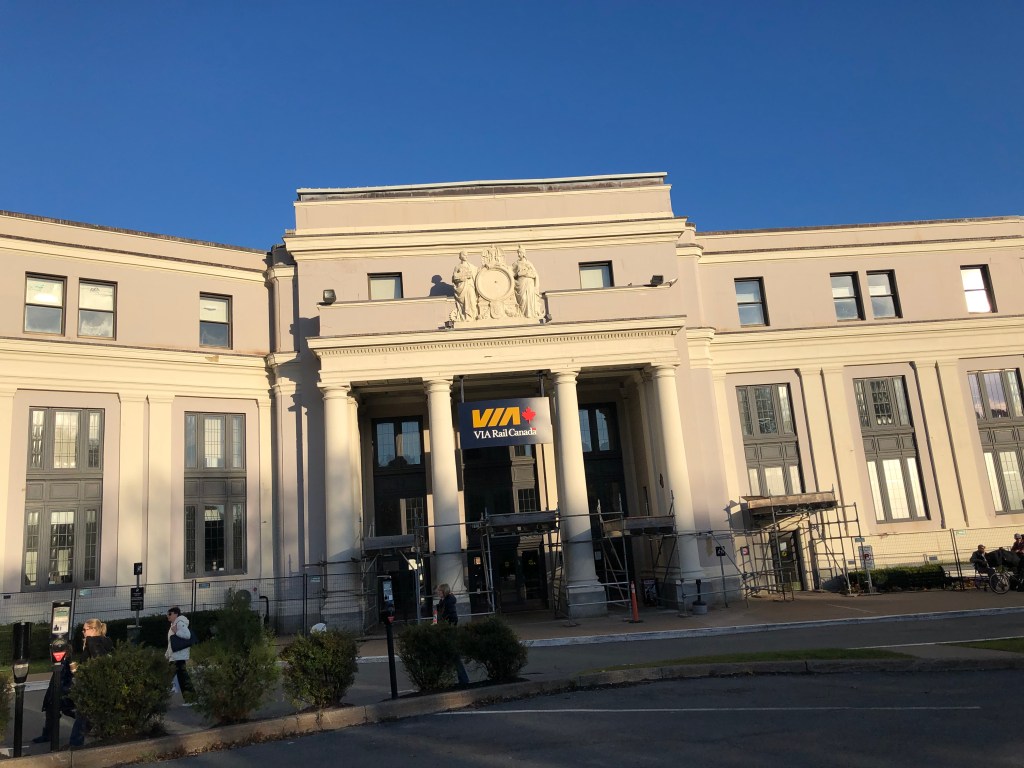
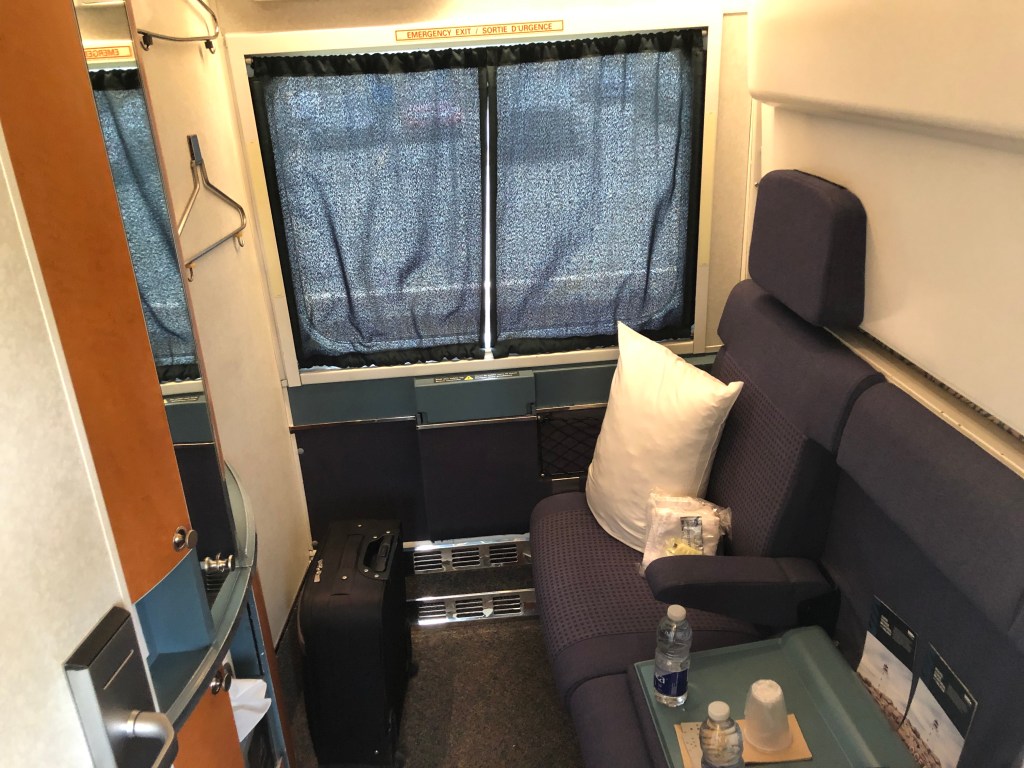
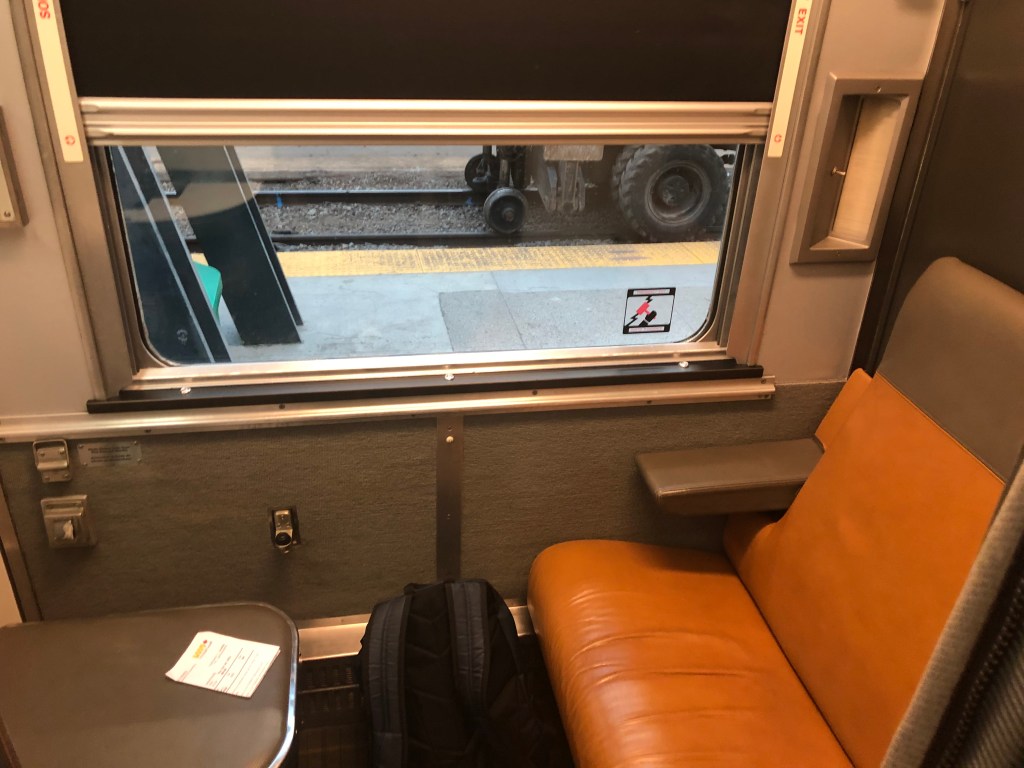
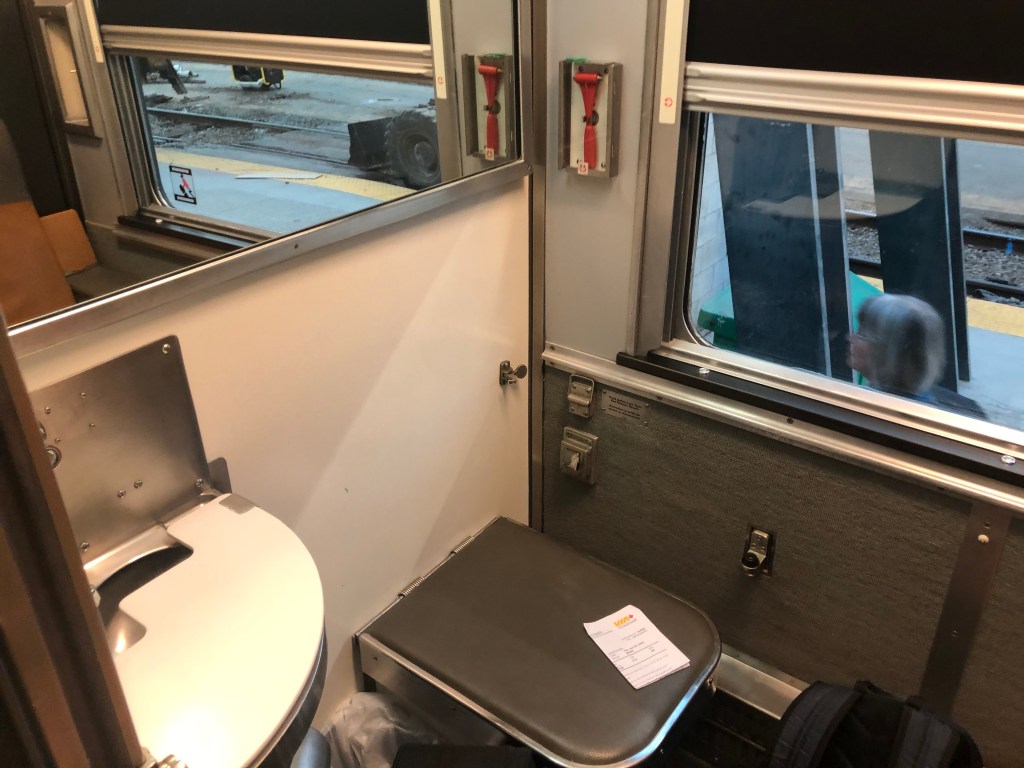
Trains in Canada are not really like trains in Europe. They give them names and numbers for a start. Train Number 15 is called The Ocean. It runs from Halifax to Montreal just two times a week. It is scheduled to take a leisurely 22 hours and, thanks to the small problem of the US state of Maine being in the way, follows a far from direct track through the Canadian provinces of Nova Scotia, New Brunswick and Quebec. Despite only servicing two arriving and two departing trains a week, Halifax has a pleasant station and it was to this I walked on Friday October 14th for the 1pm departure. My extra day in Halifax had proven essential as between them, British Airways, Heathrow Airport and Air Canada had failed to transport my bag to Halifax with me and it took another thirty hours or so for it to turn up. Until it did I had visions of it following me across Canada but never quite catching me up. The bag itself required checking in at Halifax Station so forward planning had been required to liberate sufficient items into a smaller bag to see me through the overnight journey to Montreal. The bag was duly tagged through to Toronto so I wouldn’t see it again for well over a day. I was advised that there was a lounge where sleeper passengers could relax before boarding. I found it, it was full of armchairs, a coffee machine and a fridge full of pop. One Diet Coke later and I got a bit bored and went back to the concourse where I confirmed my lunch and dinner sitting and waited for the boarding announcement. When it came I excitedly head for the train. Although the train was backed up right to the buffers, it was still a long walk to my carriage, or car as the Canadians (and me from now on) call it. These sleeper trains are long and along with two different types of sleeping car, consist of normal seating cars, restaurant car, lounge car and cars for the train staff. My car was a ‘modern’ Renaissance Class one. This meant it was nearly 30 years old. These cars had been built for Cross-Channel sleeper services through the Channel Tunnel and when those services failed to take off, the Canadians bought some of them specifically for The Ocean. They are getting a bit worn now but the advantage of these cars is that the cabins have en-suite facilities. They comfortably accommodate two people on generous seats in day mode and bunk beds at night. As there was only me it seemed rather spacious by sleeper cabin standards, not that I’ve got much experience in the matter.

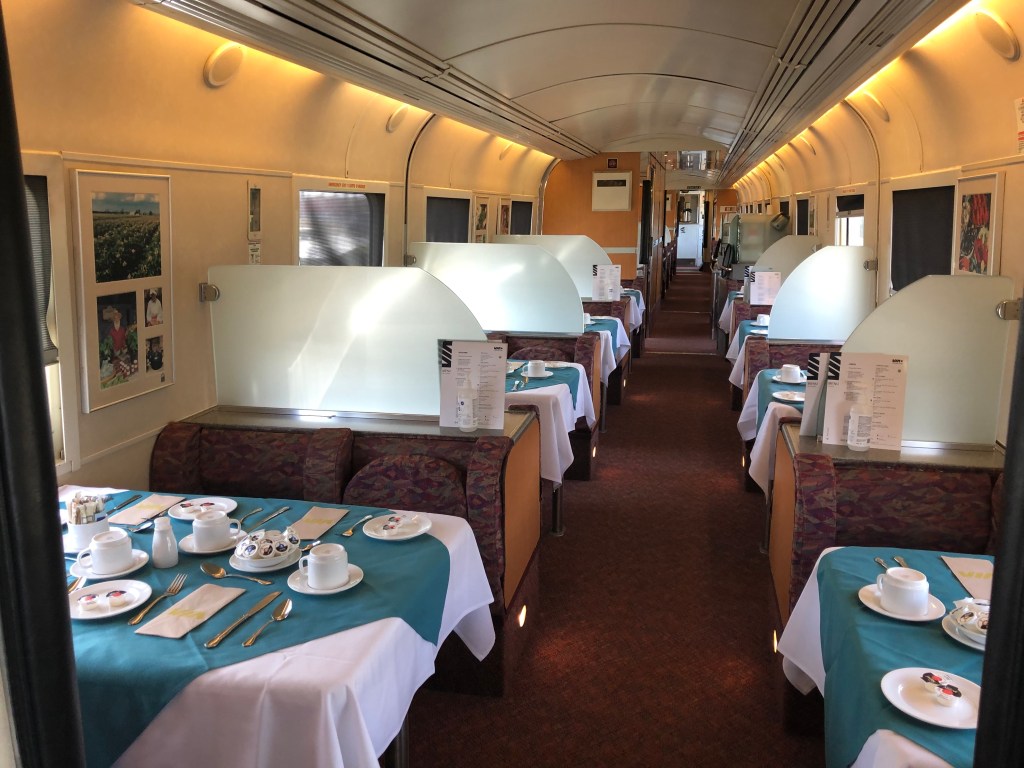
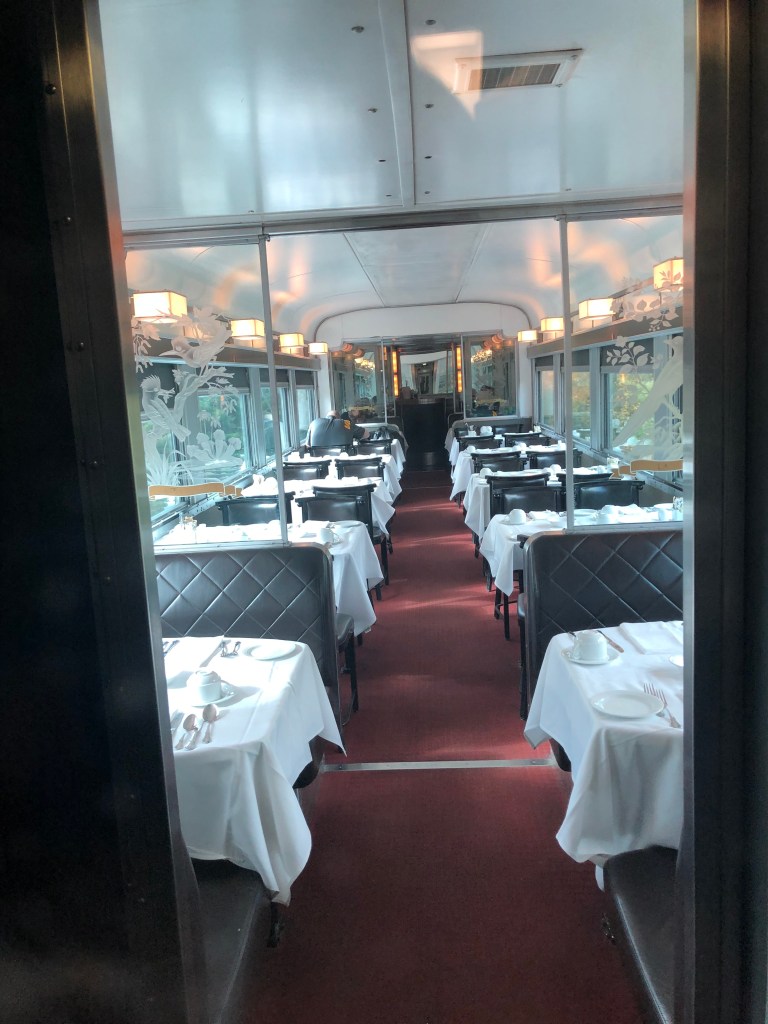
Restaurant Car.

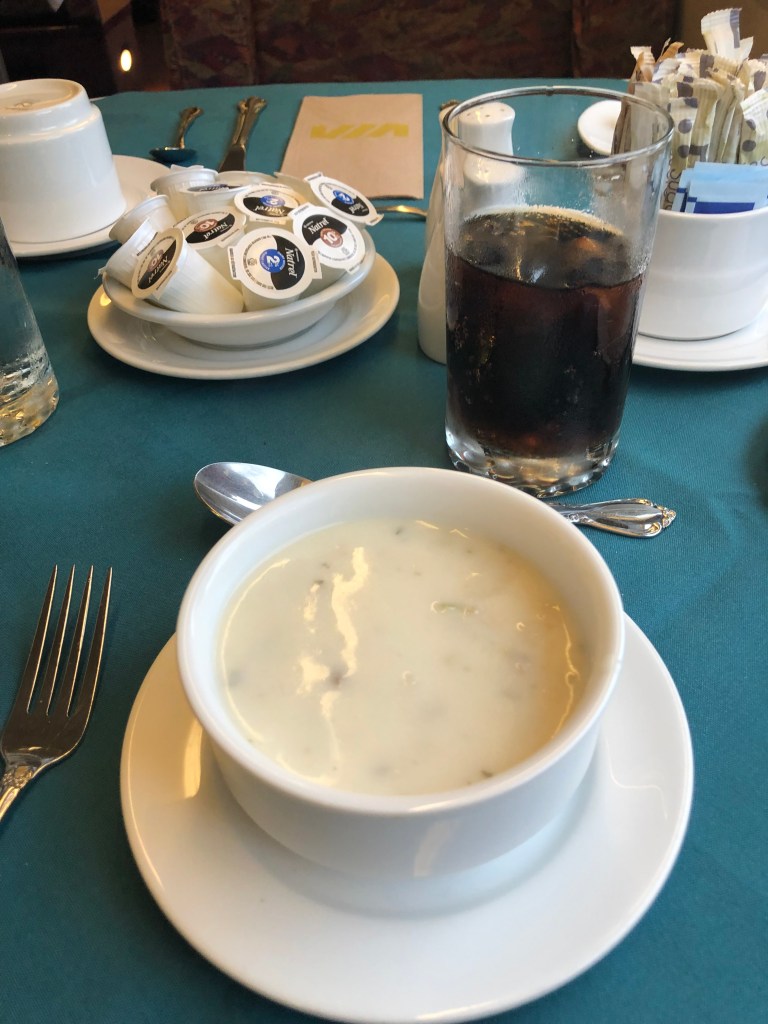
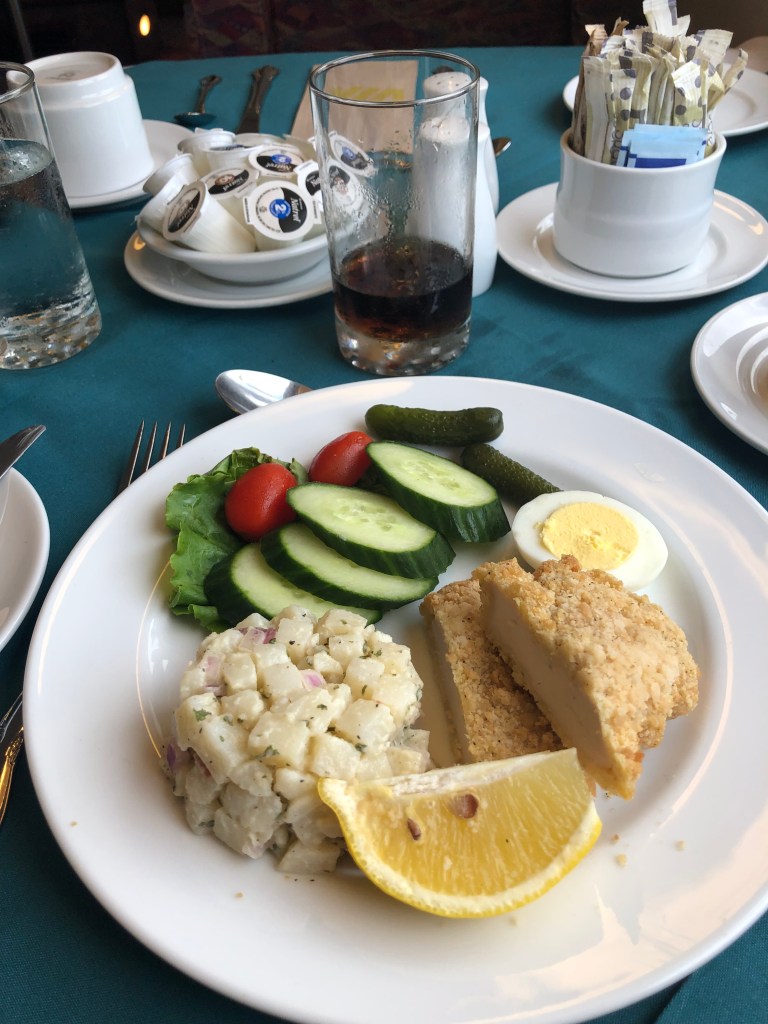
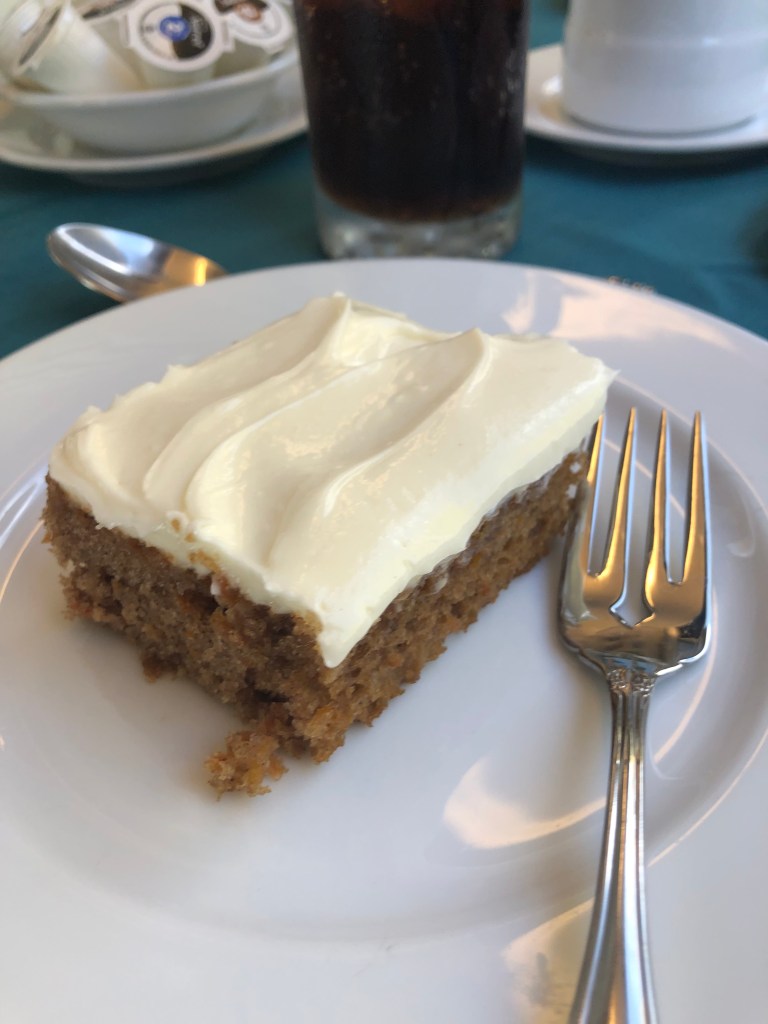
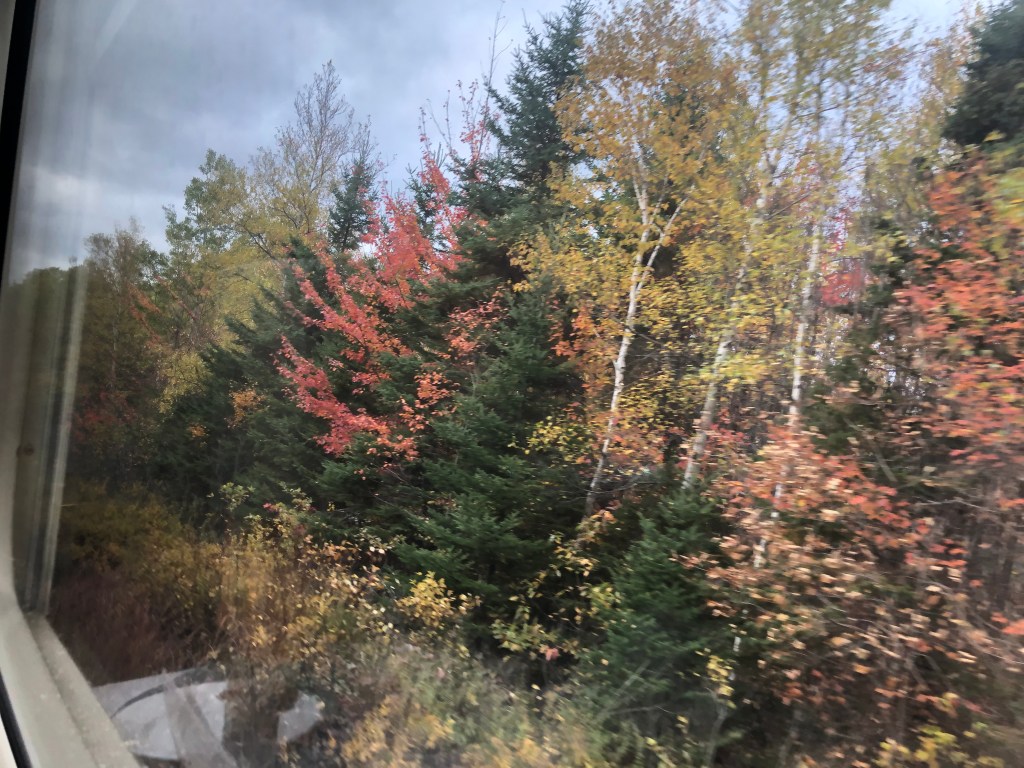
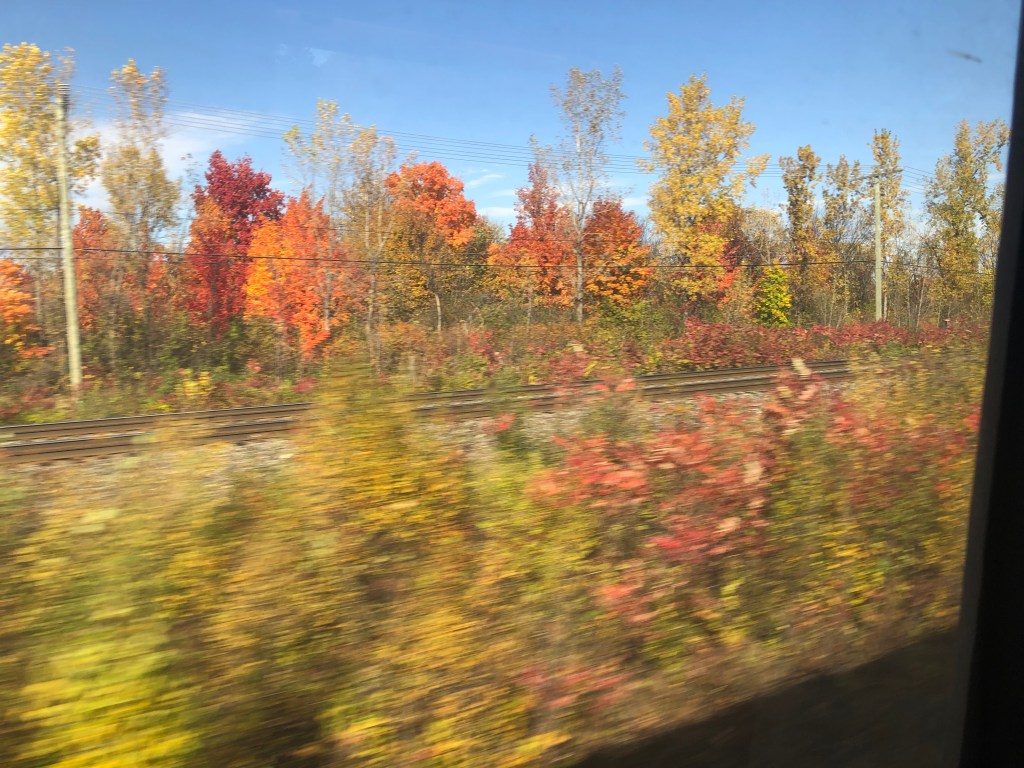
The train pulled out of Halifax bang on time. Whilst the cabin was comfortable I soon left it and made my way to the Lounge Car. Whilst this sounds a lot grander than it actually was, it was light and airy and you could see out of both sides of the train. It also had WiFi which I was surprised about. This, however, depended on the local cellphone coverage and as Canada is big – I might have mentioned this in previous blogs – it was a bit hit and miss as to whether there was any service. I had chosen second sitting for lunch and was called through to the restaurant car at 2:45pm by which time I was rather peckish. Sleeper passengers have meals included in their fare. A soup, chowder in this case – was followed by a choice of main courses. I had chicken schnitzel salad and followed it up with a quite a large slab of carrot cake. It was rather filling for a lunch and I can safely say I wasn’t peckish once I’d finished it. Lunch done, I continued to watch Canada roll by. Whilst I had not booked this journey in October to specifically view the autumnal colours, I was delighted to see the full spectrum of red and gold foliage passing by, sometimes tantalisingly close to the window. There were a number of stops at places like Truro, Amherst and Moncton. There were also numerous ‘flag’ stops at smaller settlements. These appear in the timetable even though we passed most without stopping. Eventually the sun set and the second sitting for dinner was called. Soup or salad for starter, a choice of three mains – butter chicken for me – and pecan pie for dessert. Soft drinks were free with meals or you could pay for an alcoholic one so it was a beer for me which I could have had for free as we were out of range of data and the card machine wasn’t working. I paid the following morning. I’m too honest for my own good sometimes.

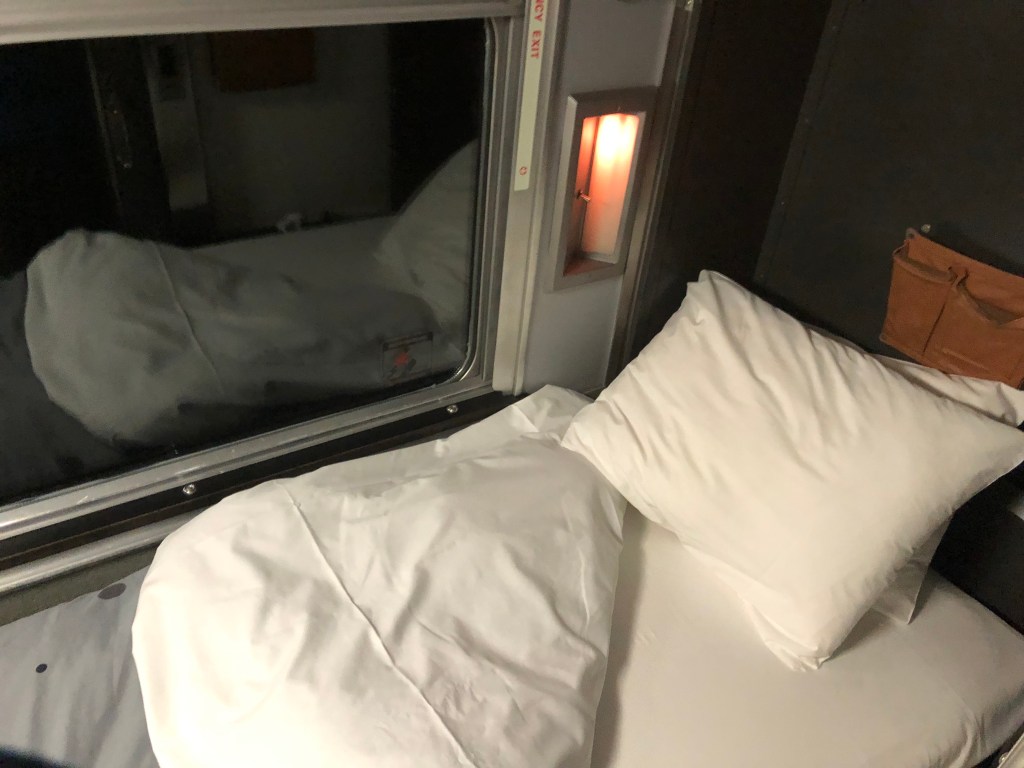
The cabin in night mode. The bed definitely tilted away from the wall.

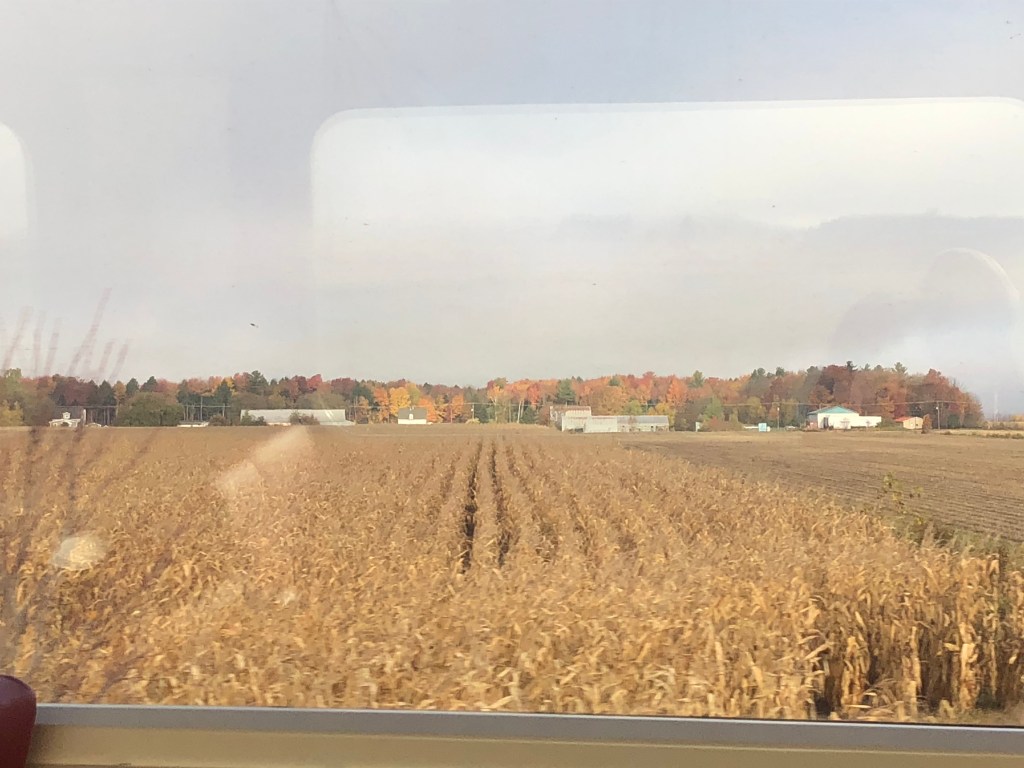
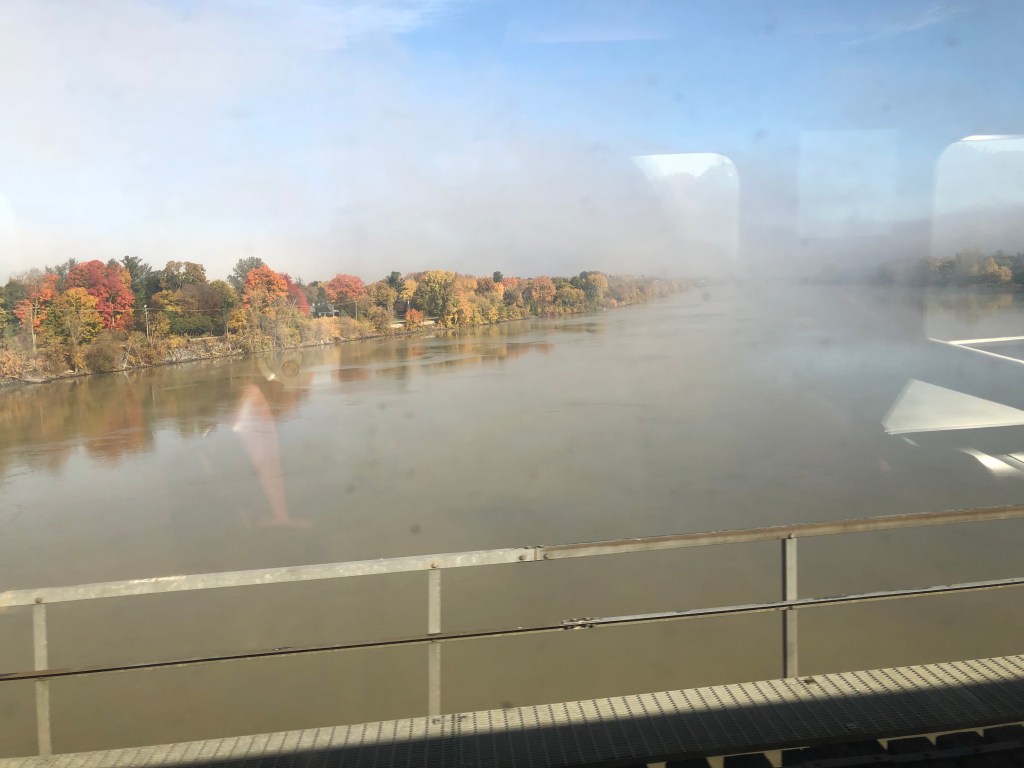
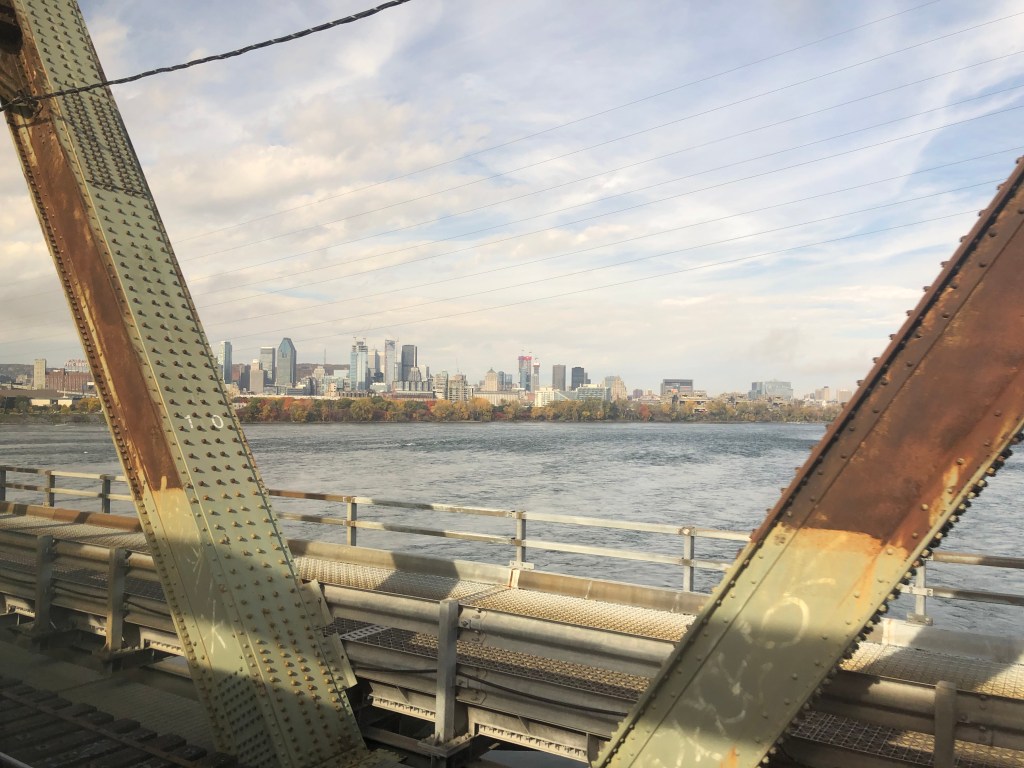
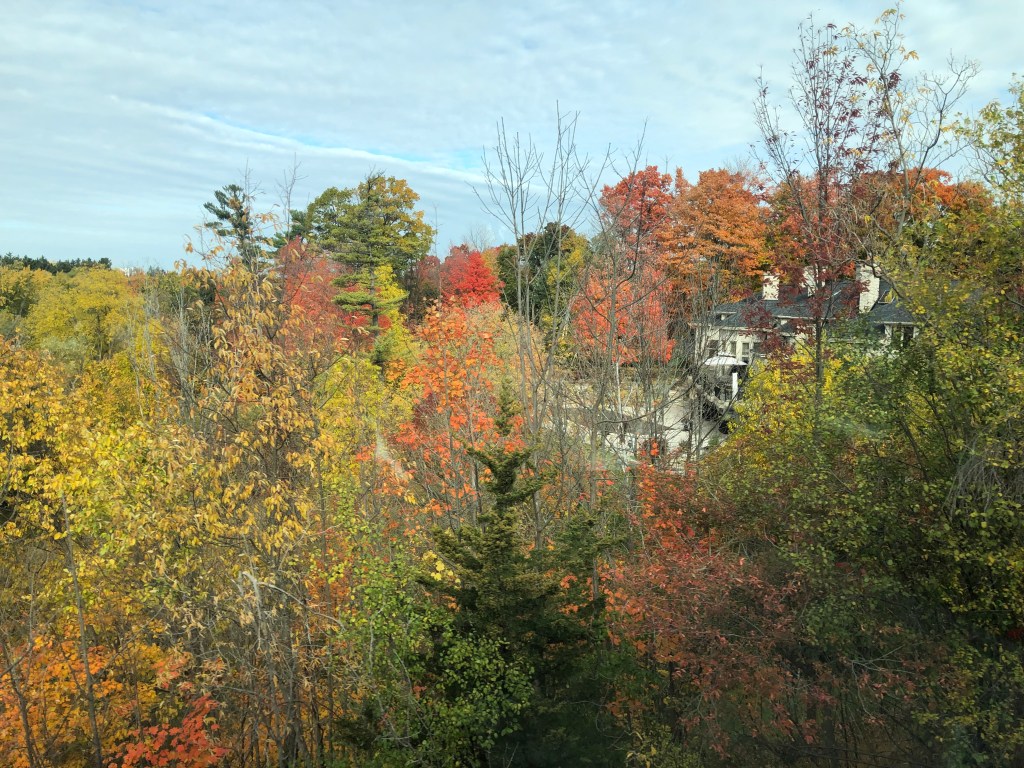
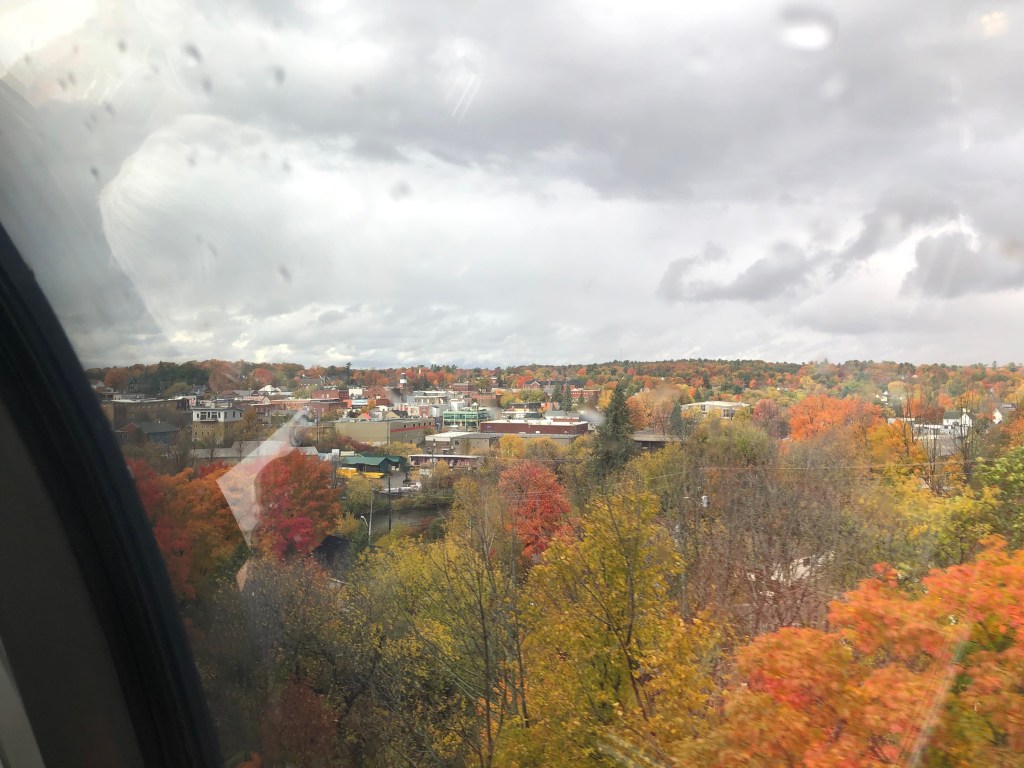
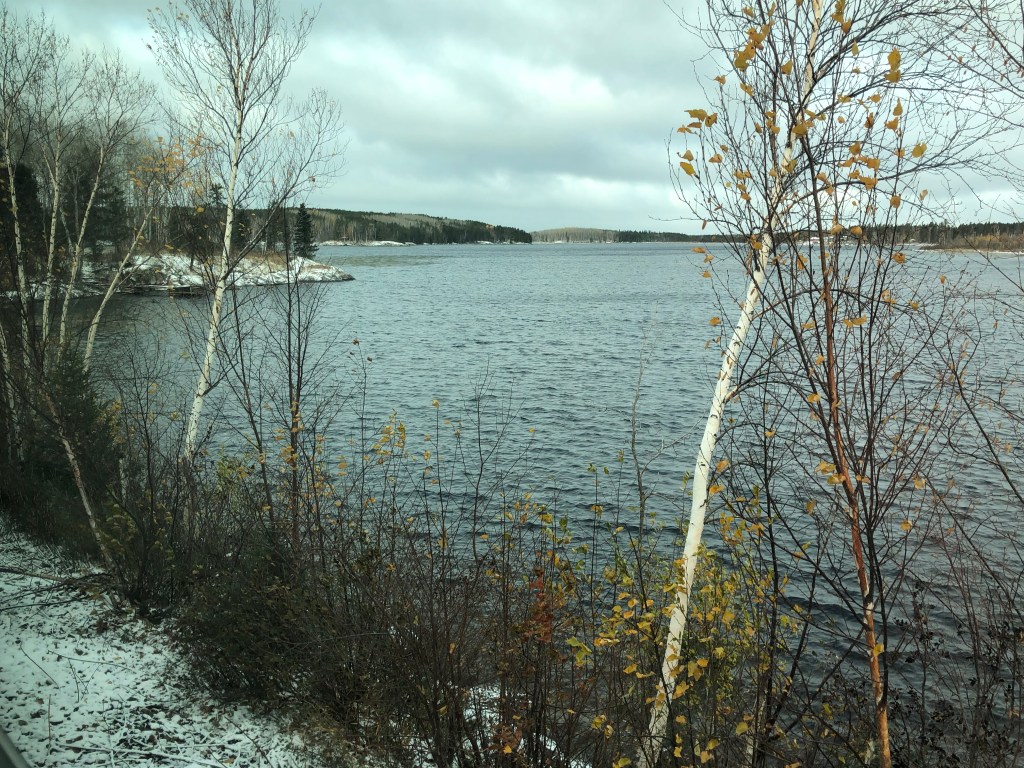
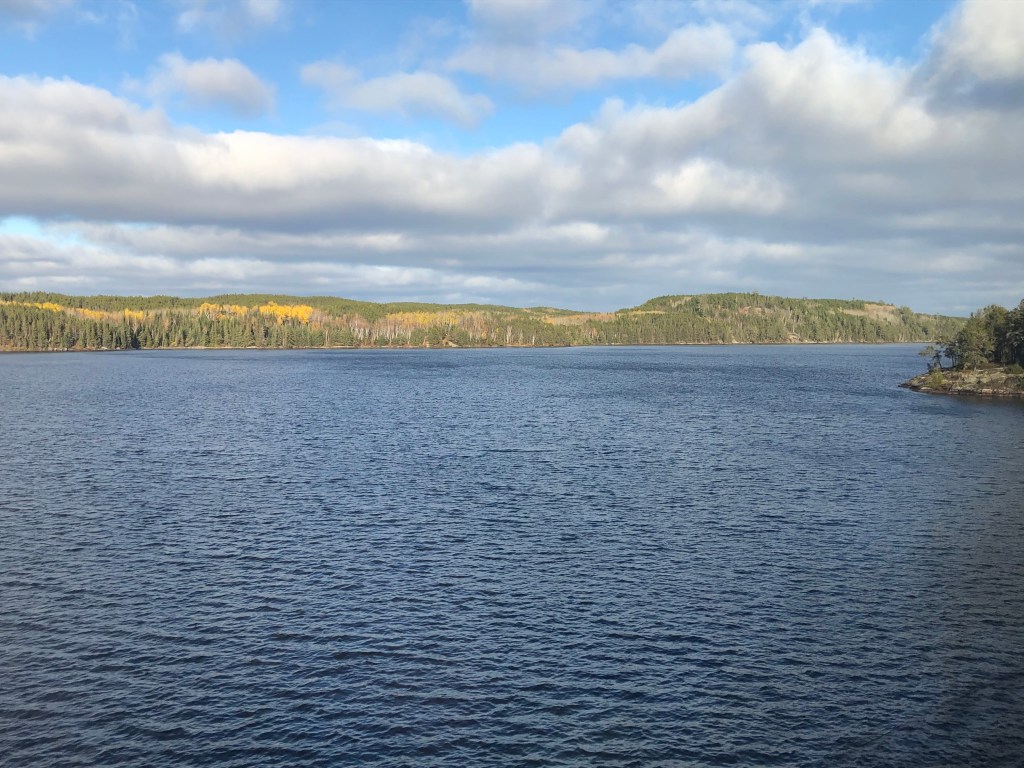
Eventually it was time for bed. The cabin had been transferred to night mode by the car attendant. It wasn’t the comfiest of beds. I found I could only sleep on my right hand side otherwise I was likely to fall out. The train rattles, rolls and is quite noisy but despite this I slept very well. That might have been down to medication I was taking for a cold I’d developed just as I was setting out for Canada a couple of days earlier. If it was the Canadian version of Night Nurse that resulted in me sleeping like a log then I’m mightily impressed. I woke up as the province of Quebec was passing outside, not that I could see much of it due to the morning mist. The clocks had also gone back an hour as I crossed into the second of five time zones on this trip. The en-suite was most welcome and fresh as a daisy I headed for breakfast. This is done on a first come, first served basis but I walked straight in. Breakfast is a big affair in Canada. Even I, who has a healthy appetite, couldn’t manage it all. Eventually the mist burnt off to reveal flat farmland and trees that were somehow even more spectacular than those I’d seen the previous day. Eventually we found ourselves in the suburbs of Montreal and crossing the mighty St Lawrence River, we pulled into Montreal Central Station, arriving an hour late just shy of 11am local time. This was a bit of a shame as I had hoped to get myself on the 11am train to Toronto but it was pulling out of the adjacent platform as I headed to the main concourse.

The Corridor

Montreal – Toronto

I had a couple of hours to kill before the 1:23pm train to Toronto. It was a nice day so I had a bit of a wander round Montreal, at least the bit of the city near the station. I got to see Notre Dame which, unlike its namesake in Paris, appears to not be fire damaged. However, the train was calling so I headed back to the station and awaited train number 67. Whilst this specific service does not have a name, all trains that run between Quebec City in the north to Windsor Ontario in the south are called Corridor trains. Trains linking Montreal and Toronto make up the bulk of these services with five or six of them a day connecting Canada’s two largest cities. The one I was on was scheduled to take five hours ten minutes. The train itself was much the same as trains in the UK and Europe. 2-2 seating in economy/second class, a trolly service for drinks and snacks and a couple of business/first class cars at one end of the train. It was busy too with most seats in my car taken. I was happy to see my checked bag had been transferred from The Ocean directly to one of the luggage stacks in my car. We pulled out of Montreal on time and headed southeasat. A brief stop at Dorval, for Montreal Airport, turned into rather longer one than anticipated but once we got a green signal we were soon rattling along at an impressive 95mph. Both Quebec and then Ontario continued to deliver on the autumn colours for much of the journey. We followed the St Lawrence and then the western shore of Lake Ontario but only saw them fleetingly as the train tried, and failed, to make up for the time lost at Dorval. It was a comfortable enough journey. The train itself was unremarkable though there appeared to be quite a few on board for whom train travel was a novelty. We pulled into Toronto’s Union Station fifteen minutes late which was a bit of a shame as I had a hockey game to go to and it was due to start at 7pm. I grabbed my bags and set off for my accommodation for the night. It was close to the station, as was the arena but unfortunately they were in opposite directions. A quick check-in and a dumping of the bags later, I hot-footed it to the Scotiabank Arena to see the Toronto Maple Leafs play the Ottawa Senators. I was sweating profusely by the time I made it to my seat which was way up in the gods. I only missed five minutes of action so I consider it a result. Speaking of results, the Maple Leafs won, 3-2.

Scotiabank Arena from the cheap, but not the cheapest seats.

My accommodation happened to be a hostel. Whilst I’m not really the hostel type – actually, I’m not even remotely the hostel type – this one had private rooms with facilities. With hotel prices for a Saturday night in Toronto being insanely expensive, especially when the hockey is on, I felt it was worth the risk of encountering caftan wearing, weed-smoking young people singing protest songs badly to get a bed for the night for seventy quid. I was right. The rooms were in a separate building to the dorms, were perfectly comfortable and I got a decent night’s rest. I decided to forgo the included breakfast though as I thought it might be a bit heavy on the avocado and oat milk.

The Canadian

The following morning I went through the rigmarole of sorting out luggage before heading back to the station for the next, and mightiest part of the journey. This was the 9:55am departure from Union Station to Vancouver aboard train Number 1, The Canadian. This takes 97 hours, traverses four time zones and five different provinces. It runs twice a week on a Sunday and Wednesday and passes through dozens of stations on the way. As with The Ocean, most of these are flag stops but there are plenty of compulsory stops too, due to a strict twelve hour working rule for the ‘engineers’, or drivers as we call them in the UK.

It might be worth a paragraph to explain a bit about the Canadian railway system here. Passenger trains in Canada are run by a state owned company called VIA Rail. Prior to 1978 the two rail companies, privately owned Canadian Pacific and state owned (since privatised) Canadian National had provided passenger services but these were experiencing huge losses since the early sixties when the Trans Canada Highway was completed. Having divested themselves of passenger services, the two companies concentrated on the highly profitable freight market. They retained ownership of nearly all the rail infrastructure and as such VIA Rail has to pay them to gain access to the tracks. The upshot of this is VIA Rail’s passenger services on all but the Corridor play second fiddle to freight. The Canadian uses the CN line which runs further north than its CP counterpart. For virtually its entire length this is a single track with passing loops. These passing loops are long as they have to accommodate freight trains which can be over two miles in length. They come around so frequently you wonder why they don’t just connect them all up and make it a much more efficient twin-track system. With a top speed of 70mph being achieved infrequently, extended stops for driver changes and refuelling, stops at passing loops and some bizarre shunting required to access certain stations, the whole 2775 miles from Toronto to Vancouver is covered at an average speed of 28.6 mph. The bullet train it is not.

Toronto Union Station. Just a bit of it. It is impressive.

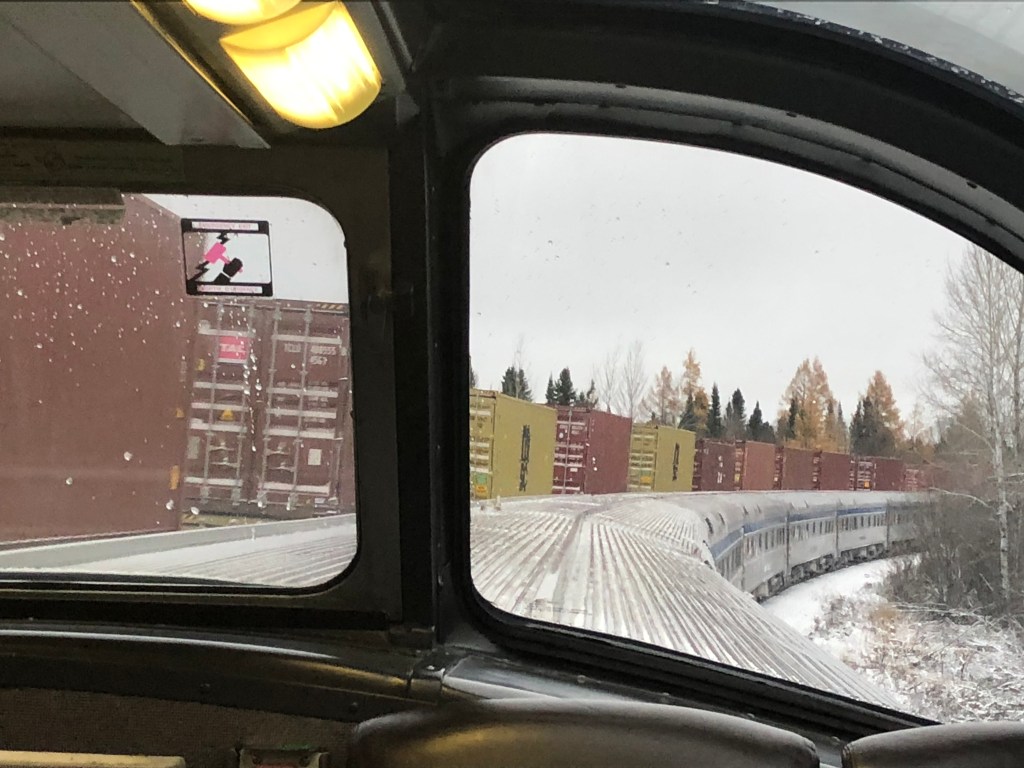
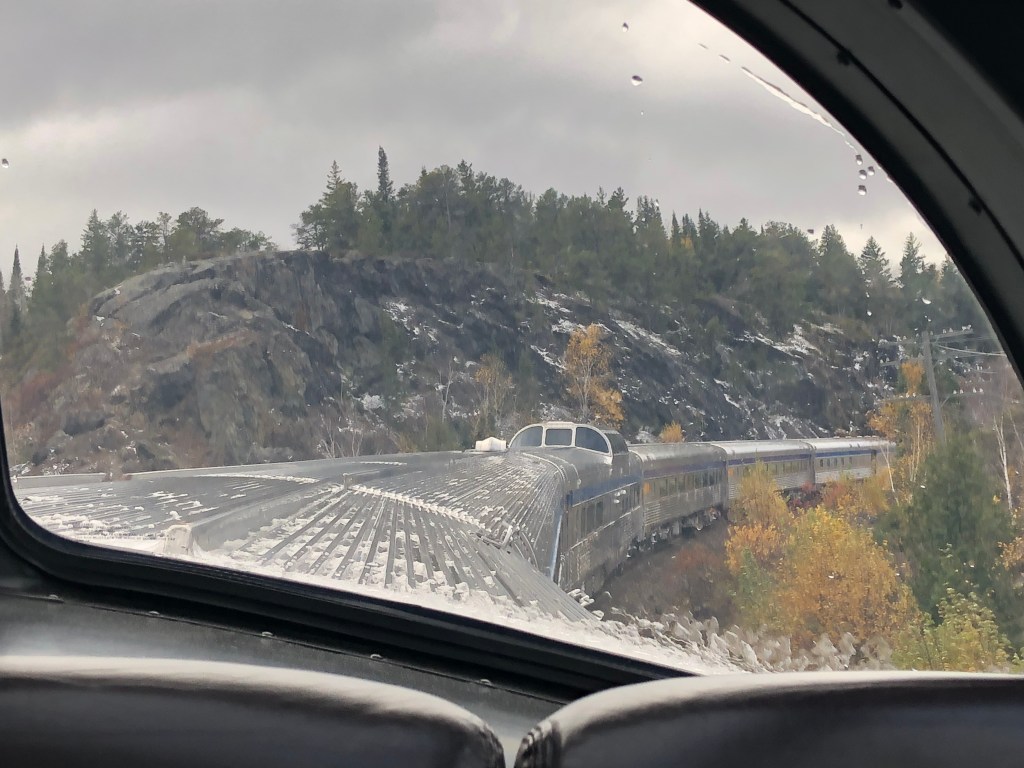
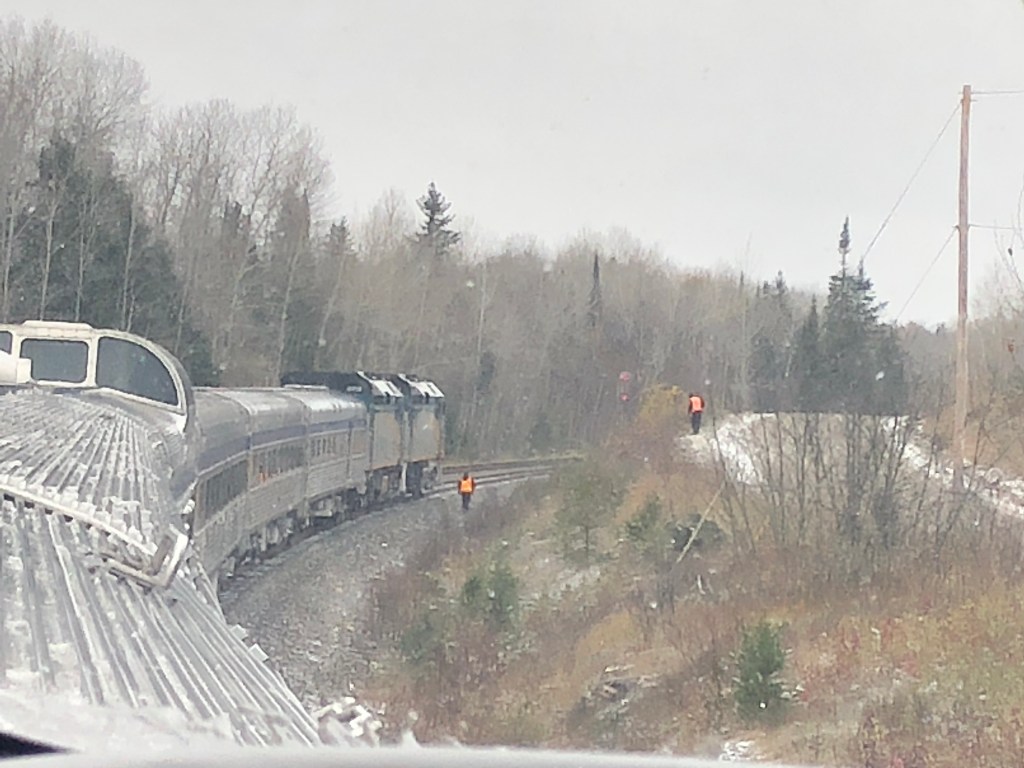
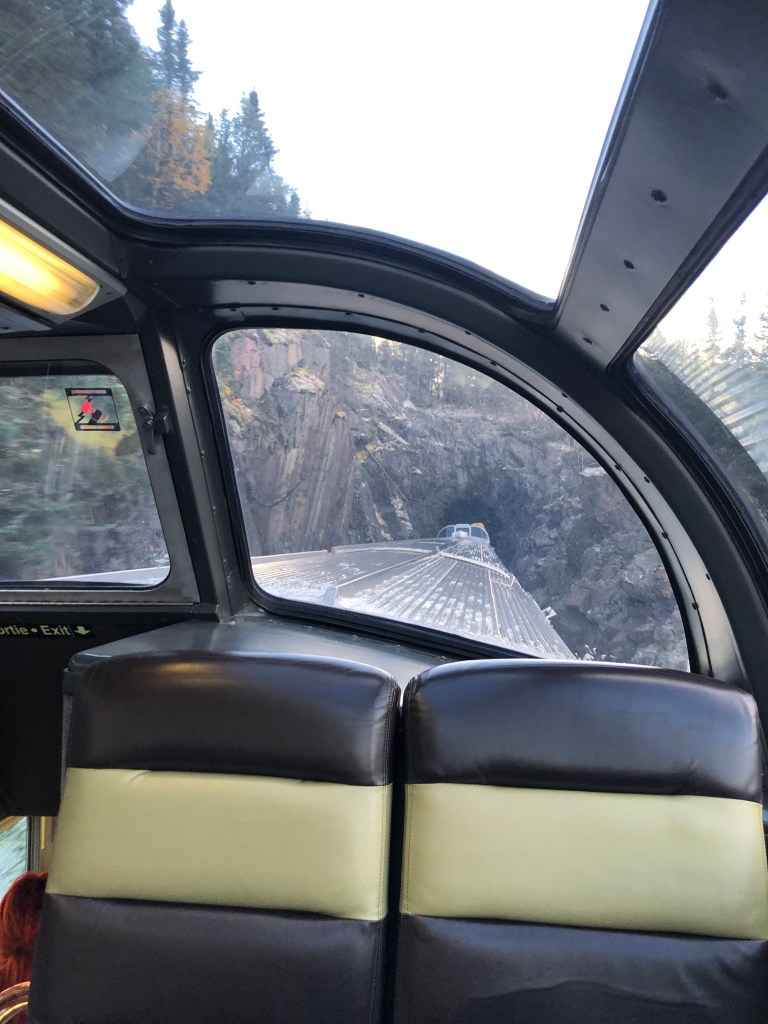
A far more leisurely stroll than the previous evening’s rush to Toronto Union Station, which is a very impressive building, meant I pitched up an hour before departure. As in Halifax there is a Business Class lounge where sleeper passengers could check in. It seemed very busy. Having done the necessary paperwork I went and deposited my suitcase with the baggage people and hoped I would see it again in Vancouver. Back in the lounge I wondered just how busy the train would be as the lounge itself was barely able to cope. I needn’t have worried. Once boarding was called, I caught a first glimpse of the train. It was huge. Twenty-two Stainless Steel cars, built in the 1950s, hauled by two diesel locomotives. The Canadian has four passenger classes. At the front of the train is the baggage car and two cars for the Economy (seating) passengers. Some of those seating passengers would do the entire journey to Vancouver including one woman with a large dog called Ellie. They are braver folk than me. Towards the rear were two Prestige sleeping cars each containing six luxury cabins with en-suite facilities. Behind that was the Park Car, a very well appointed lounge for the Prestige passengers with its own upstairs dome and a unique bullet shaped rear providing panoramic views of where you’d just been. Unfortunately Transport Canada, the regulator for all things public transport, had decided that this was unsafe and this particular journey was the first that required an extra empty car behind the Park car to serve as a buffer thereby spoiling the view. Between the economy and prestige sections lay the bulk of the cars which housed the sleeper passengers. There were approximately ten sleeping cars. Accommodation in each consisted of six double cabins, four singles, one of which was reserved for the car manager, and six semi-private bunk berths with night time privacy provided by heavy curtains. Passengers in these cars had access to two restaurant cars and two Skyline cars. The Skyline cars had a lounge area and a panorama dome upstairs. A third Skyline car was provided for the Economy passengers. There was another car for the train staff and I’ve possibly missed a few more so suffice it to say it was a long train. Almost half a mile long, yet still dwarfed by the endless freight trains we would pass.

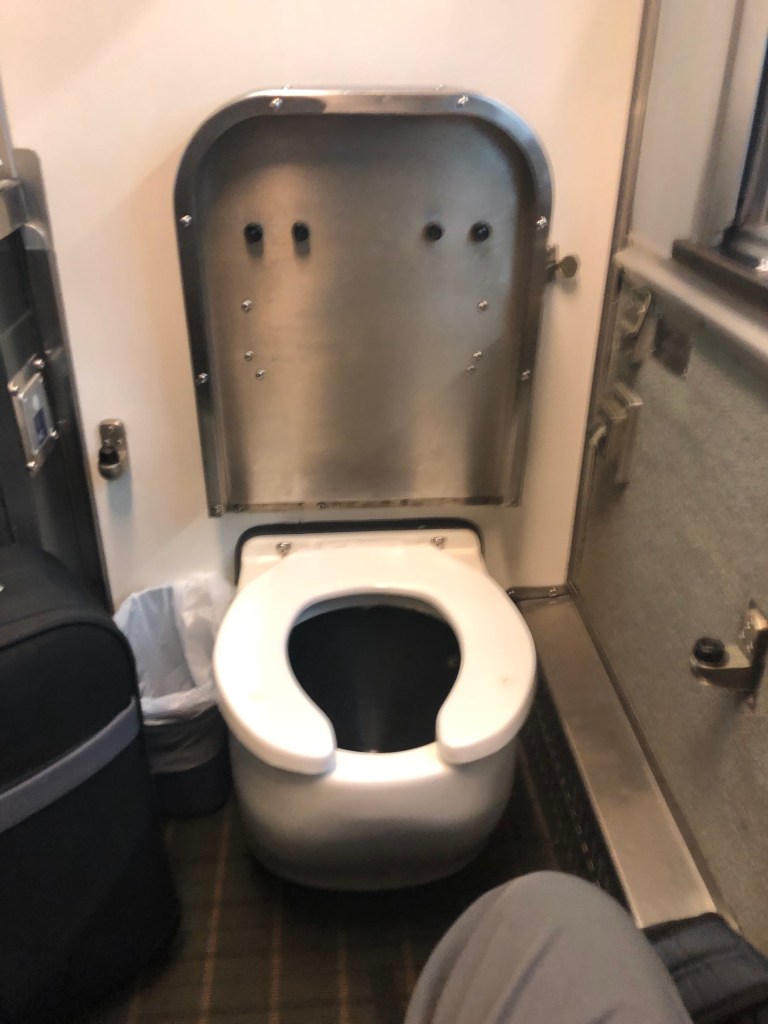
For my trip I had chosen a cabin for one. A Prestige cabin would have been nice but as they were all for two people the cost might have been prohibitive and they had all sold out when I came to book the trip anyway. Having been shown my cabin by car manager Gerard I was left to get acquainted with it. It was, well, bijou. In day mode there was a seat and a footrest. A sink was tucked up in the corner and that was about it. There was a solid sliding door and also heavy curtains which seemed like overkill but I’d soon find out why. But wait! What’s this? Lifting the lid of the footrest up revealed your own personal toilet. Erm, okay… For the night a bed is pulled down from the rear of the cabin and it takes up virtually all the space in the cabin. That included covering the toilet rendering it unusable at night unless you went to the faff of putting the bed up before you used it and back down again afterwards. I never used my personal loo at all, day or night, preferring the public ‘washroom’ at the end of the car. It seemed more hygienic to dispose of one’s body waste somewhere other than place you sat and slept. With the bed down there was hardly any floor space to stand. With the hard door open and the curtains closed you could expand slightly out into the corridor which helped when you were getting ready for bed. The hard door could be locked from the inside only. Leaving valuables in the cabin took a bit of a leap of faith at first but by the end of the trip iPhones were being left on charge unattended in open rooms, corridors and sometimes in the washroom shaver sockets. Apparently there have been no reports of things being stolen on The Canadian ever.

Day One: Toronto – Hornepayne

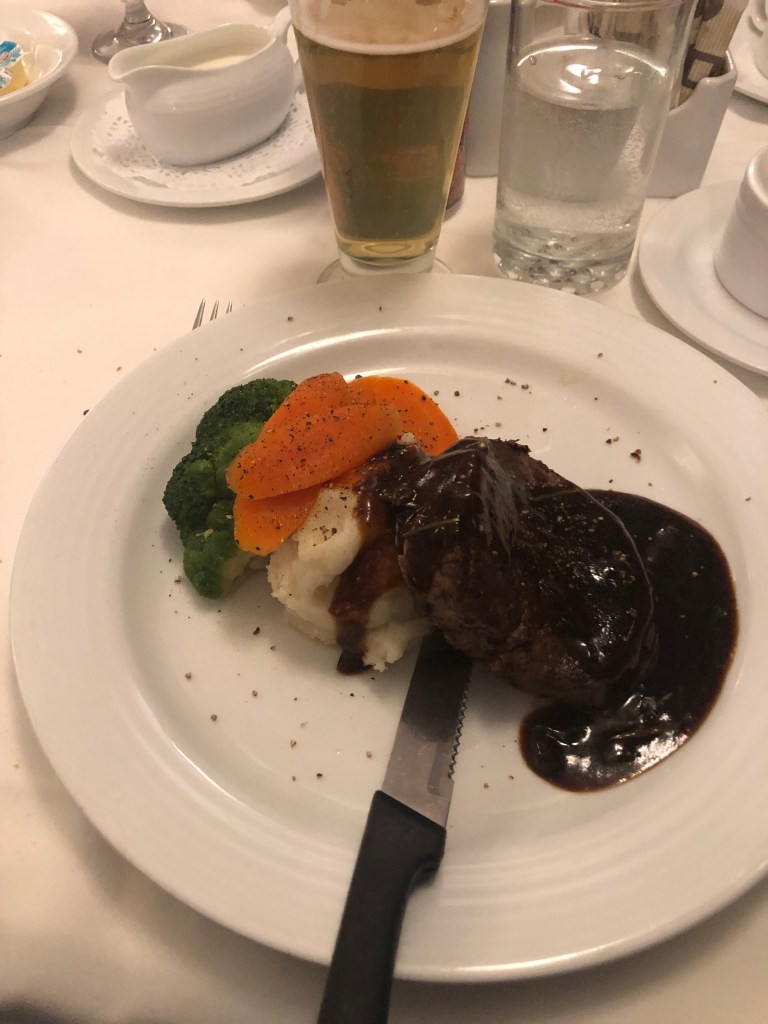
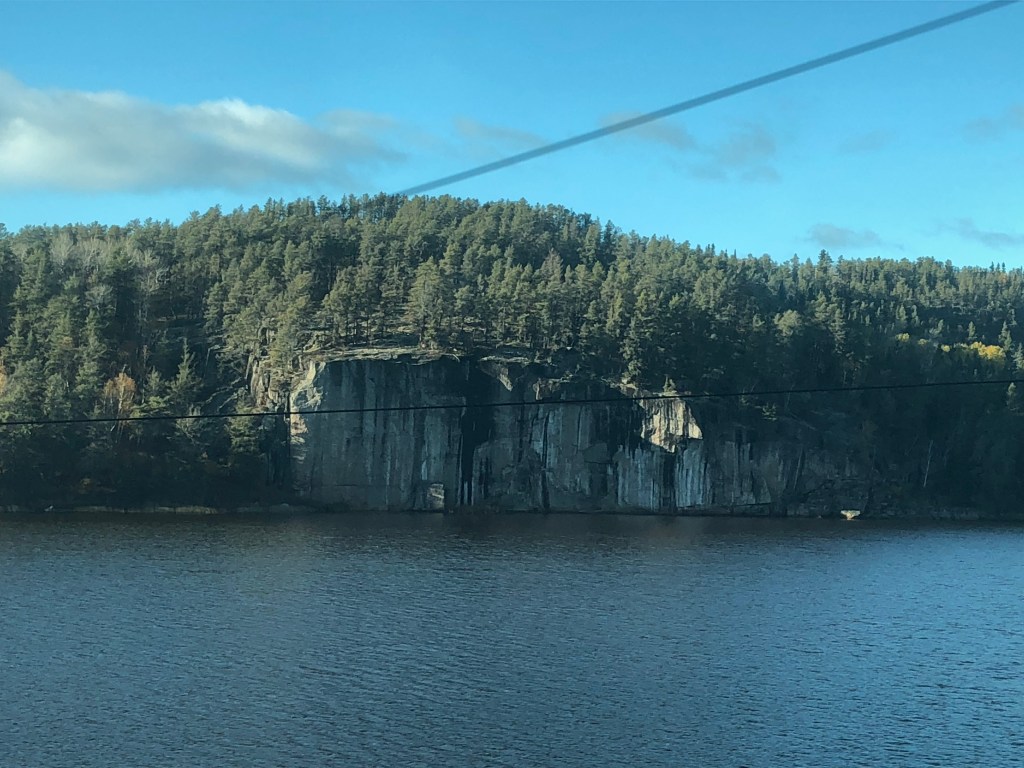
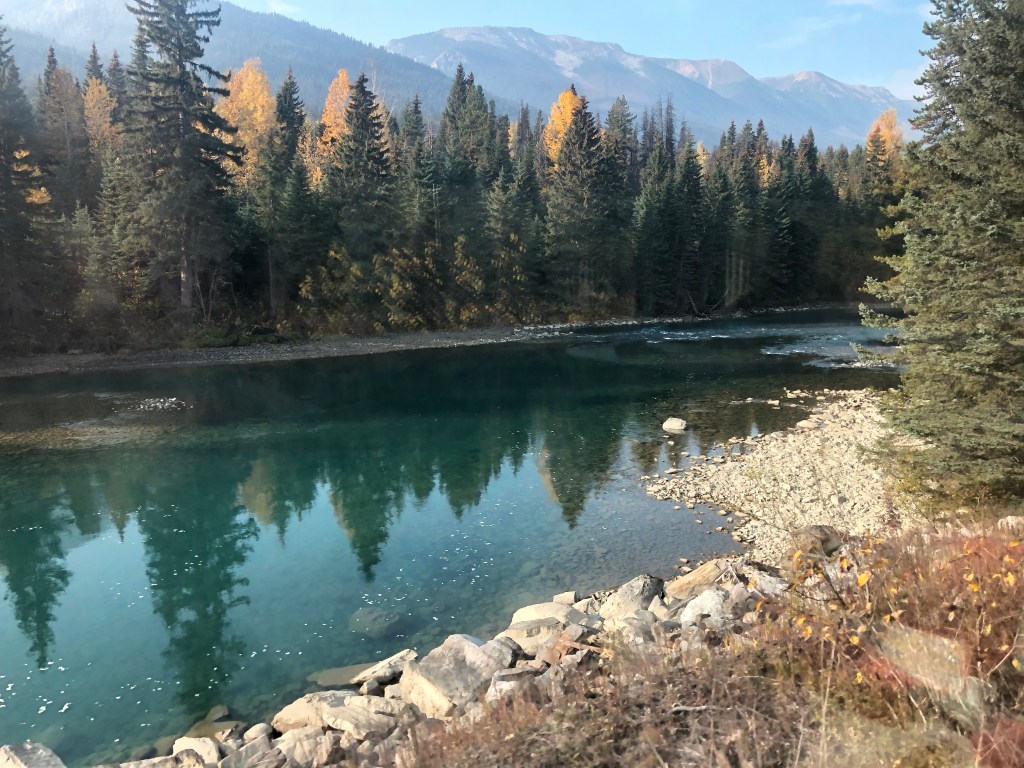
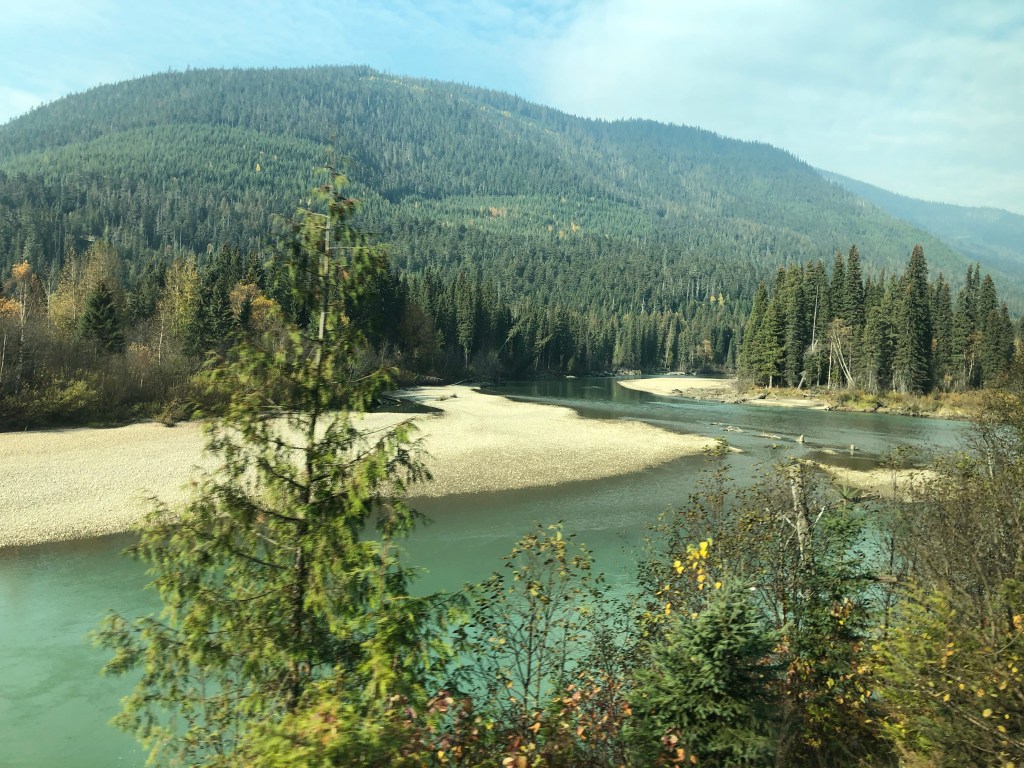
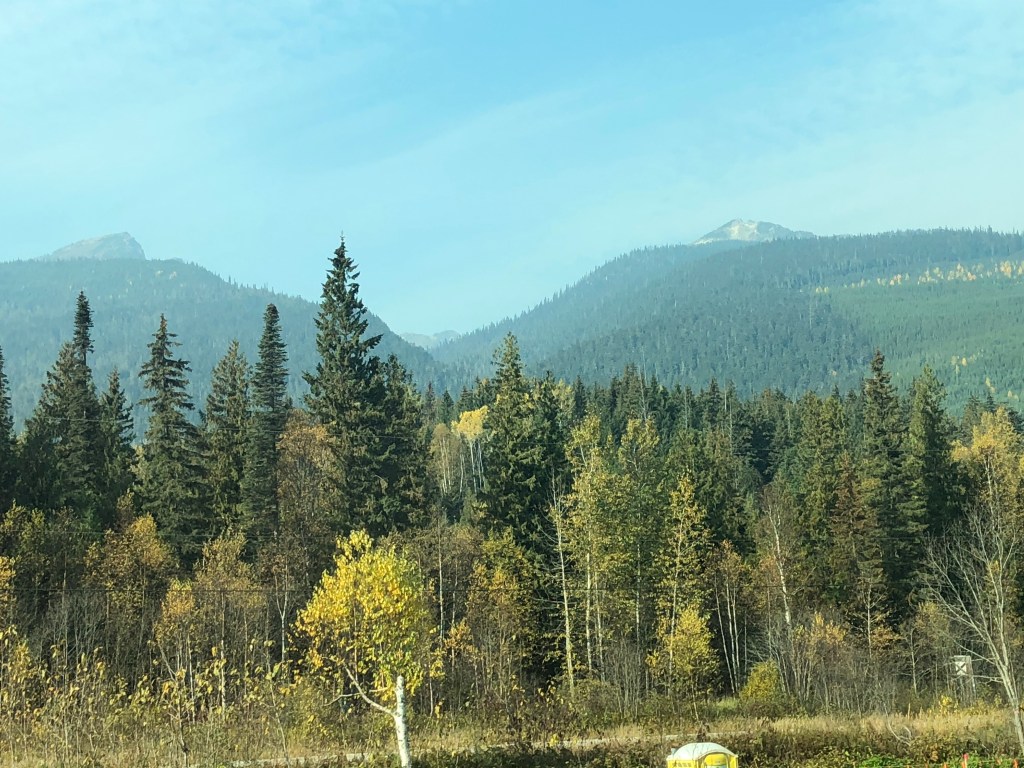
We pulled out of Union Station on schedule at 9:55am. For the first hour or so the train passes through largely unremarkable suburbs of Toronto. Some backing up and other jiggery-pokery was required to get us onto the correct track out of the city. It was an inauspicious start but gave me a chance to discover where everything was. I soon worked out that the Skyline car was the place I’d spend most of my conscious hours on board the train. The cabin was comfortable enough but as with The Ocean, it only gave access to one window. The Skyline had a couple of spacious areas to sit and, of course, the best part of the train, the panoramic dome. Twenty-four seats with views forward, backwards, left, right and even up thanks to its full length curved windows. In short, you could sit there completely surrounded by Canada. The dome could get busy at times but only rarely was full. The car had its own steward who would organise events and double as a barman. Tea and coffee were always available along with a few snacks. Soft and alcoholic drinks were available for purchase. Meals were arranged in two sittings, I was on the second today. Whilst the first sitting were being fed the Skyline car hostess gave those of us in the dome a talk about the history of the railway and more details of what to expect. There was no WiFi on the train. Contact with the outside world was restricted to Canada’s notoriously expensive cellphone data network which for long periods of the journey was unsurprisingly absent. By the time the second sitting was called to lunch we had left Toronto behind and passing through rural Ontario dotted with small settlements. As on The Ocean, lunch was a three course affair with a rather good cannelloni as the main. I wasn’t going to go hungry on this train either. In fact my emergency rations were barely touched by the time I reached Vancouver. We passed Parry Sound, a small town notable as being the birthplace of hockey legend Bobby Orr. Our first scheduled stop, where we could get off and stretch our legs, was in Caperol. Leaving there marked the beginning of the Canadian Shield. This is a vast area between the St Lawrence lowlands and the prairies. It is largely made up of boreal forest and ancient pre-Cambrian rock. Think lakes and trees then multiply that by several million and you’ll get the idea. Although we were leaving the vivd autumnal reds of Eastern Canada behind, the scenery was spectacular in a wild and unspoilt sort of way. Canada has many ‘Back of Beyonds’, the Canadian Shield is one of them that not many people know about. Eventually the light faded and the second sitting for dinner was called, steak and mash was the main. Unlike The Ocean, I was put on any table that happened to have a space which meant socialising with other people. As a shy, retiring type I felt a bit uneasy about this. I’m a silly sod. It was fine. We all had stories to tell including me. Eventually it was time for bed. The car steward Gerard had made up the bed as I ate. I hadn’t yet discovered the knack for getting changed without any floor to stand on but I managed it. It was time to sleep…

Day Two – Hornepayne – Winnipeg

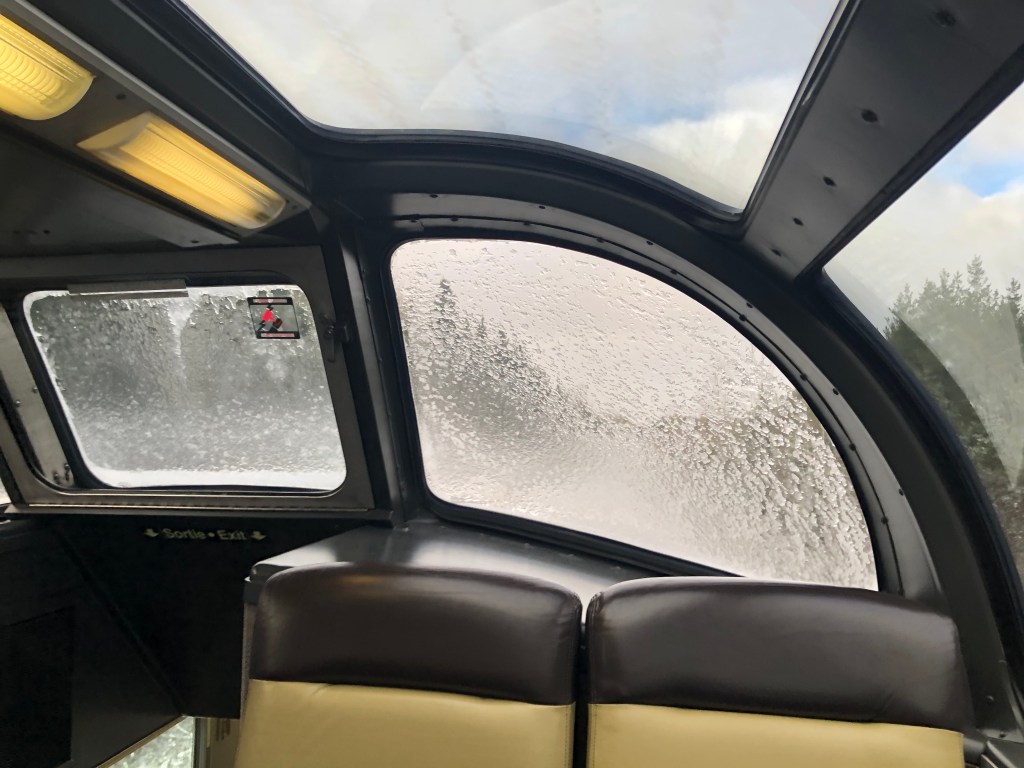
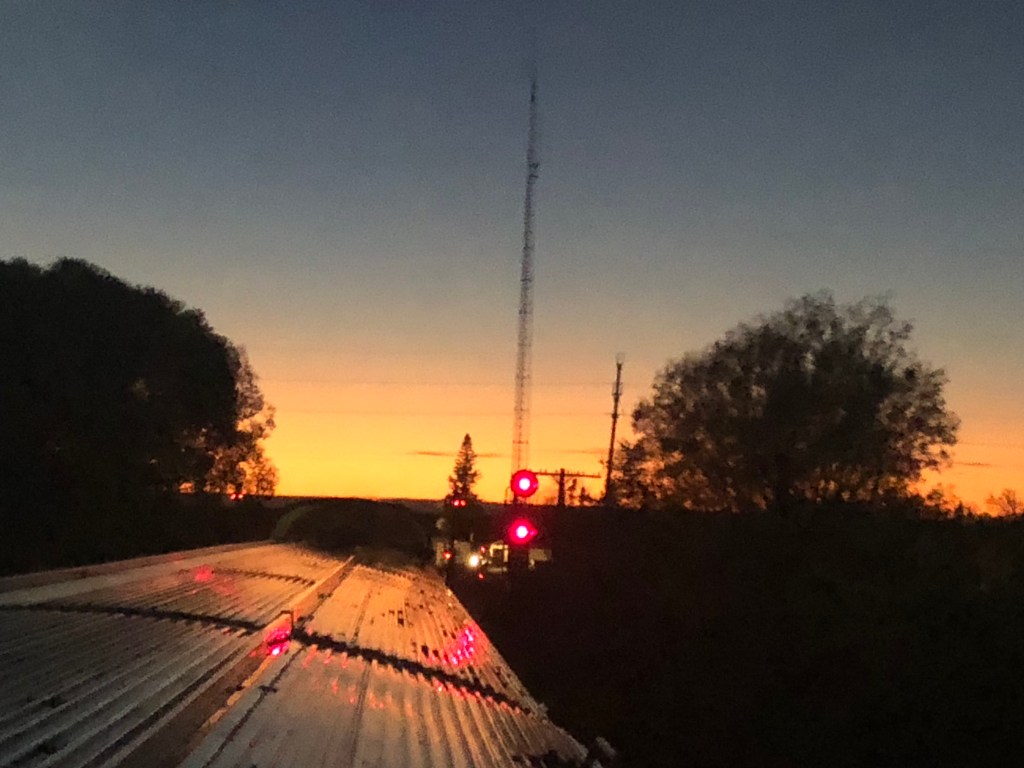
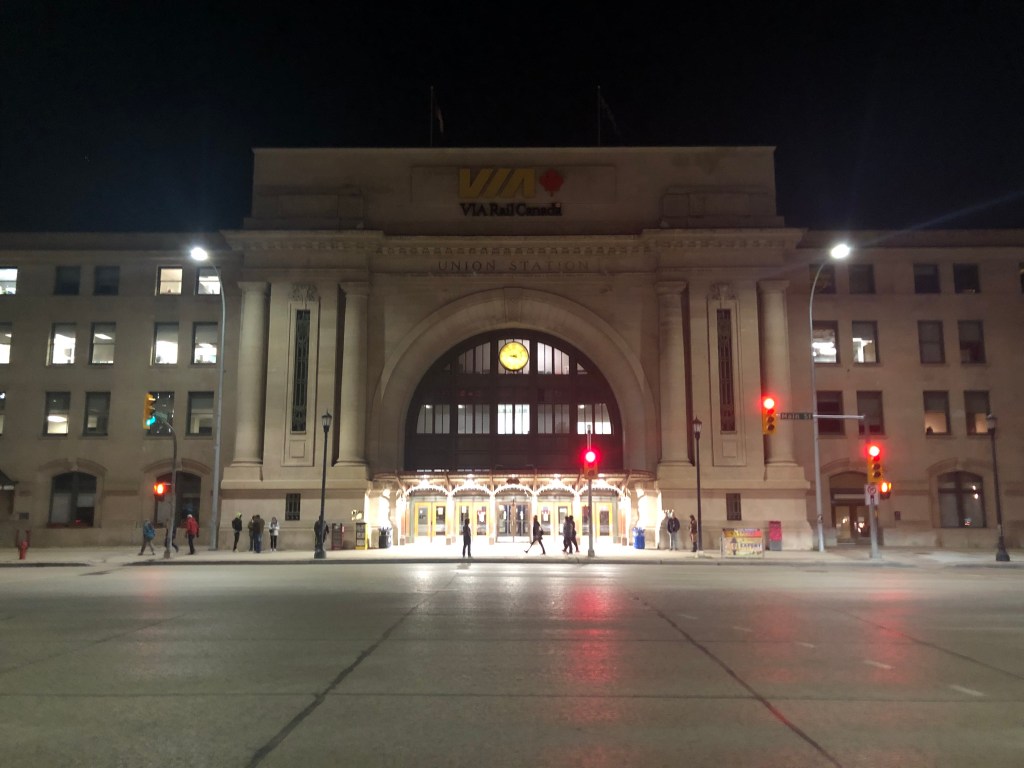
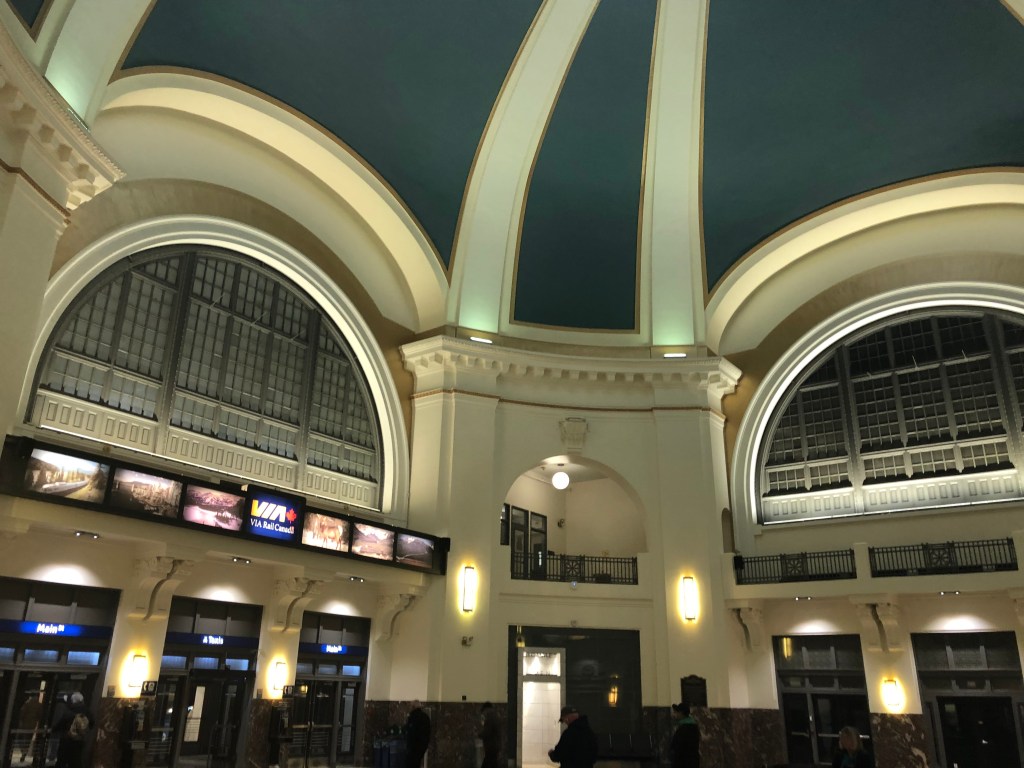
(Hornepayne was a technical stop in the middle of the night. I wasn’t tempted to step out and discover if it had anything to offer.) I had a terrible night. Whilst the bed was comfy enough and the bedding very nice, it could do nothing to stop all the rattling and racket of the train. My cabin was right over one of the car’s bogies and I felt every rough bit of track and there was plenty of that. To cap it all we had moved into another time zone so there was an extra hour in bed to endure. I needed to get out of bed and wander down the corridor to the toilet a couple of times (still better than trying to use the one in the room) and peeking out of the window the ground appeared to have taken on a white hue. Eventually nighttime became daytime and it became obvious that snow was covering the ground. Not much, but enough to turn an autumn Canadian Shield into a winter one. I pulled on some clothes and headed for breakfast. It’s first come, first served and I was stuck on a wait list. I went up into the dome, where ice on the window was spoiling the forward views, and waited. For quite a long time as it happens. I had either been forgotten about or not heard my name being called. So it was a late breakfast and last dibs for the day’s meal sittings which were being allocated by the waiting staff. It was to be first sitting or nothing which meant lunch would be only two hours after breakfast. It was an inauspicious start to my second day on The Canadian. However, things soon picked up. Each sleeping car has its own shower and it was pretty good. Refreshed, I headed back to the dome to watch a wintery looking Canadian Shield go by. It was really quite spectacular. Sure enough lunch came all too soon and in the early afternoon we came to a standstill in the only town for miles around, Sioux Lookout. It was time for a stretch of the legs again. The temperature was a chilly -4C with some light snowfall. Despite this, I wasn’t going to miss an opportunity to walk, even if it was only up and down the side of the train. With the new engineers arriving late, our stay there was a bit longer than anticipated but the bonus was the town has 4G and I was able to check in with home before we re-entered the data desert. Once they had turned up, the engineers moved us out of Sioux Lookout and it was more hours of the Canadian Shield, the snow eventually running out and returning the Shield to autumn once more. In the evening we finally managed to escape the surprisingly huge province of Ontario and enter Manitoba but the Shield hadn’t finished. As I watched the sun set over the front of the train, I actually felt very much at peace with a world that was gently rolling past me, increasingly unseen. We rolled into Winnipeg at about 9pm. The stop there was a couple of hours so I got off and went for a wander. Although the station is in the city, there wasn’t much to see at that time of the evening. It was -2C too so I spent most of the time in the station building which was quite impressive. Soon though it was back on board to see if I’d have a better night’s sleep.

Day Three – Winnipeg-Edmonton

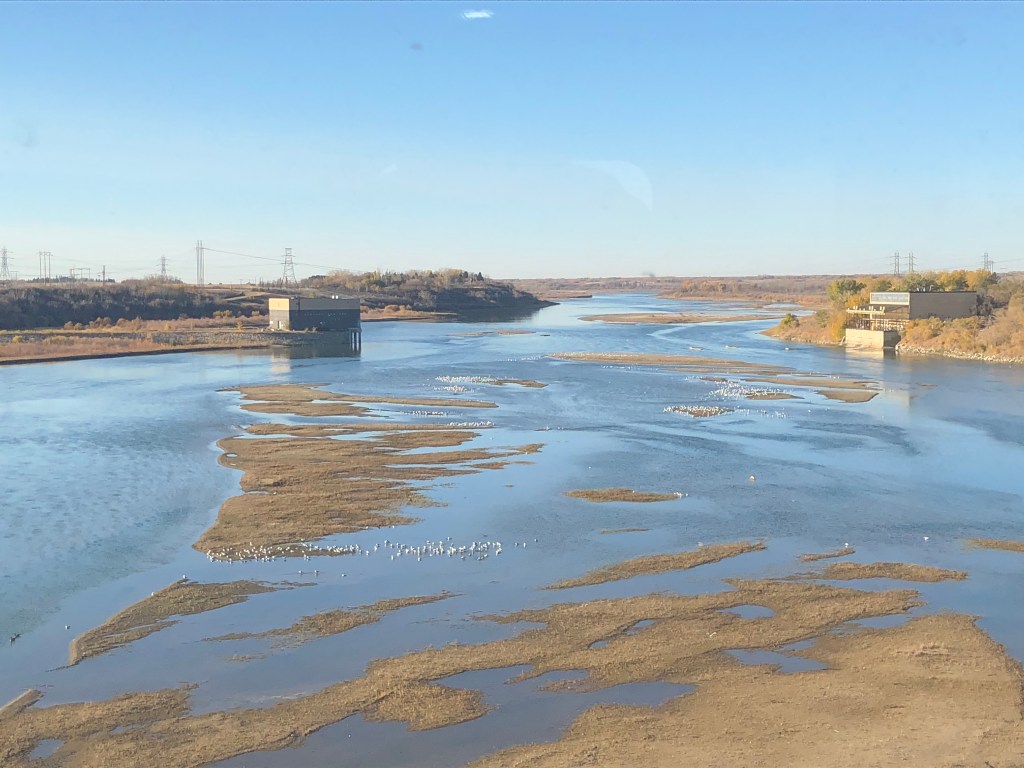
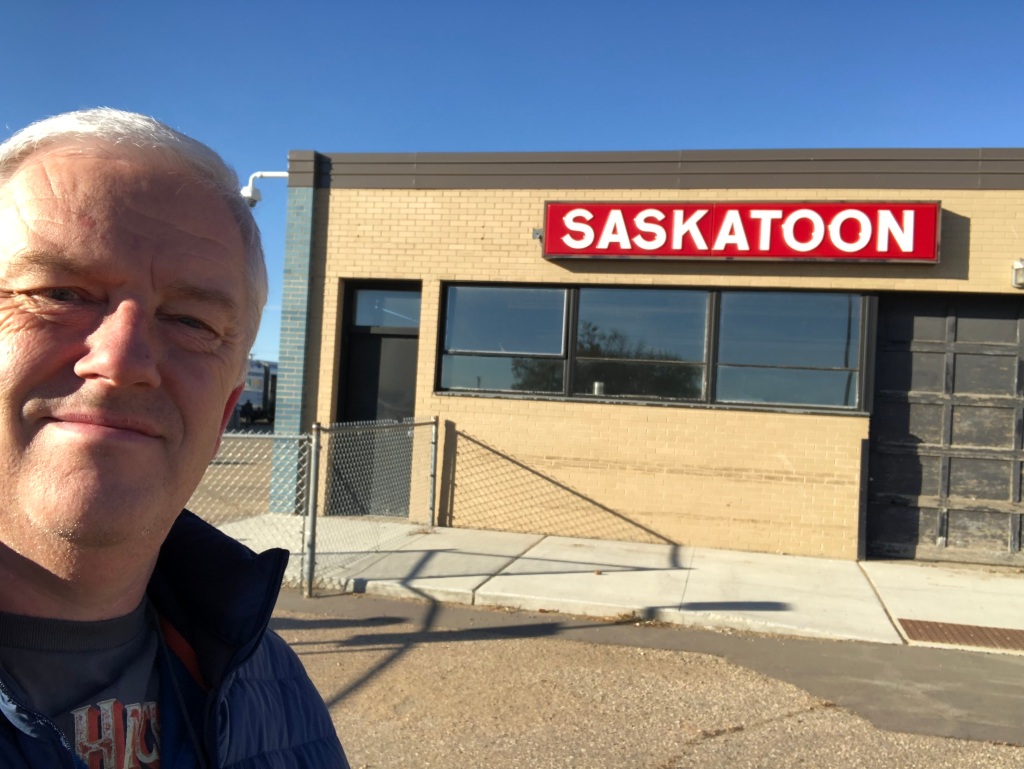
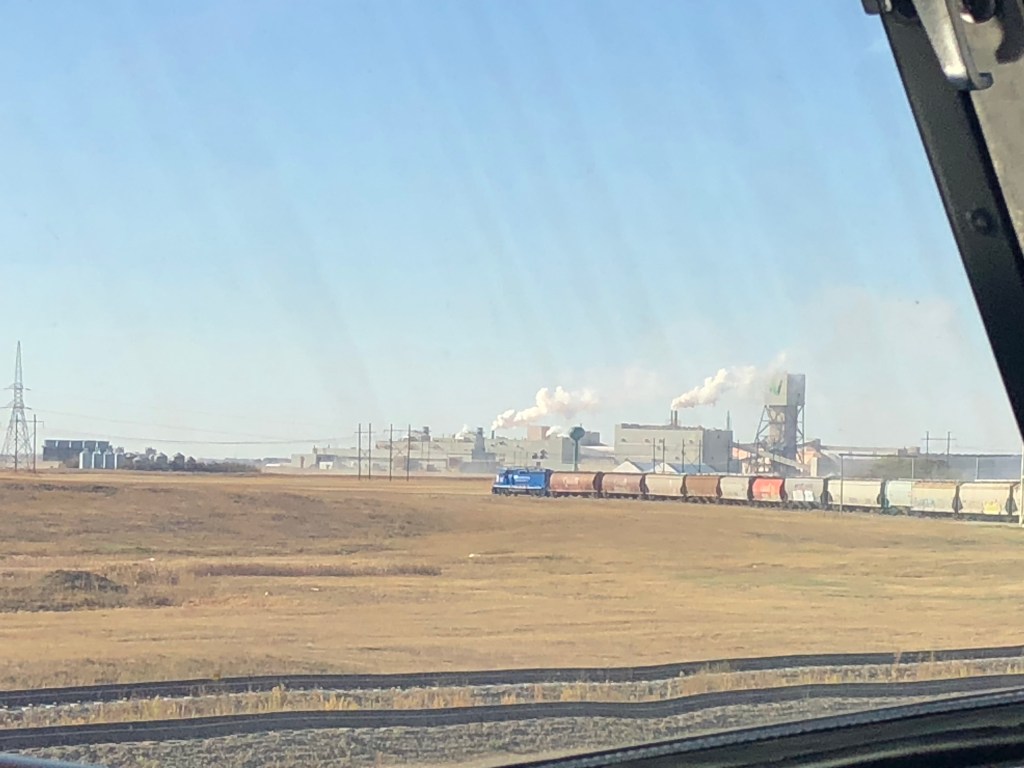
The train had a crew change at Winnipeg. Most of the onboard crew are based there. A new car manager introduced himself before I settled down for the night. I had a great night’s sleep, despite the same noise and motion problems as before. It might have had something to do with me taking another couple of Canadian Night Nurse capsules before lights out. I don’t think they should really be used as sleeping pills but never mind. The another hour had been added to the clock overnight and as I went for breakfast, we left the province of Manitoba and entered Saskatchewan. Today was Prairie day. Lying between the Canadian Shield and the Rockies are the Prairies, a vast area of lowlands and plains, largely grassland and very fertile. Despite leaving a good bit of it behind overnight, it would still take us the rest of the day to cross it. There were several introductions to the new crew members and I definitely felt as though I was getting into the swing of things as far as train living was concerned. We stopped for a couple of hours in Saskatoon. The station was out of town by a rather ugly logistics hub but it was good to stretch the legs in the cool sunshine. It took yet more reversing and waiting before we could get going again but you’ve just got to accept that that is the way with Canadian railways. Prairie day had always been a bit of a concern to me. Would I be bored crossing endless flatlands with nothing but the occasional grain elevator to relive the monotony? The answer to that was a great big no! I absolutely loved the day. The dome car was quiet so I got my preferred seat and spent virtually all day there, pausing only to have lunch. I simply lost myself in the enormity of the place. It was big country and even bigger sky. And whilst it certainly didn’t have the spectacular scenery of the Rockies or the Shield, the beauty was in the detail – a car graveyard, a Ukrainian Orthodox church, a small town with a Scottish sounding name and yes, the grain elevators. Grain is no longer transported by rail but the elevators remain, discharging vast quantities of grain into trucks, the town where they are situated proudly displayed on the side. There was even an old wooden elevator, no longer used but a reminder of an earlier, more innocent time. Eventually we passed from Saskatchewan to Alberta where nothing much changed, other than the addition of some nodding donkeys to the scene. Oil production is done on a micro scale here, such is the desire for Black Gold. As the sun set over the distant horizon it was time for dinner and socialising again. Interesting people, good food. Where else could you join in a discussion about the differences between Rugby Union, Rugby League and Aussie Rules Footie with a larger than life Australian lady and a couple from Vancouver? As we finished our dessert, the amount of lights outside the train informed us that we were approaching Edmonton. It still took an age to get to the station but once there we could stretch our legs in the late evening air. The station was a pretty soulless place. Edmonton’s city centre station, an impressive building by all accounts, is no more and the city is now served by something akin to a Portacabin on an industrial estate well out of town. It served as the destination for quite a few folk though, and the starting point for others. By the time we departed at midnight, I was already in bed. The next day was the one everyone was looking forward to, crossing the mighty Rockies.

Day Four – Edmonton – Kamloops

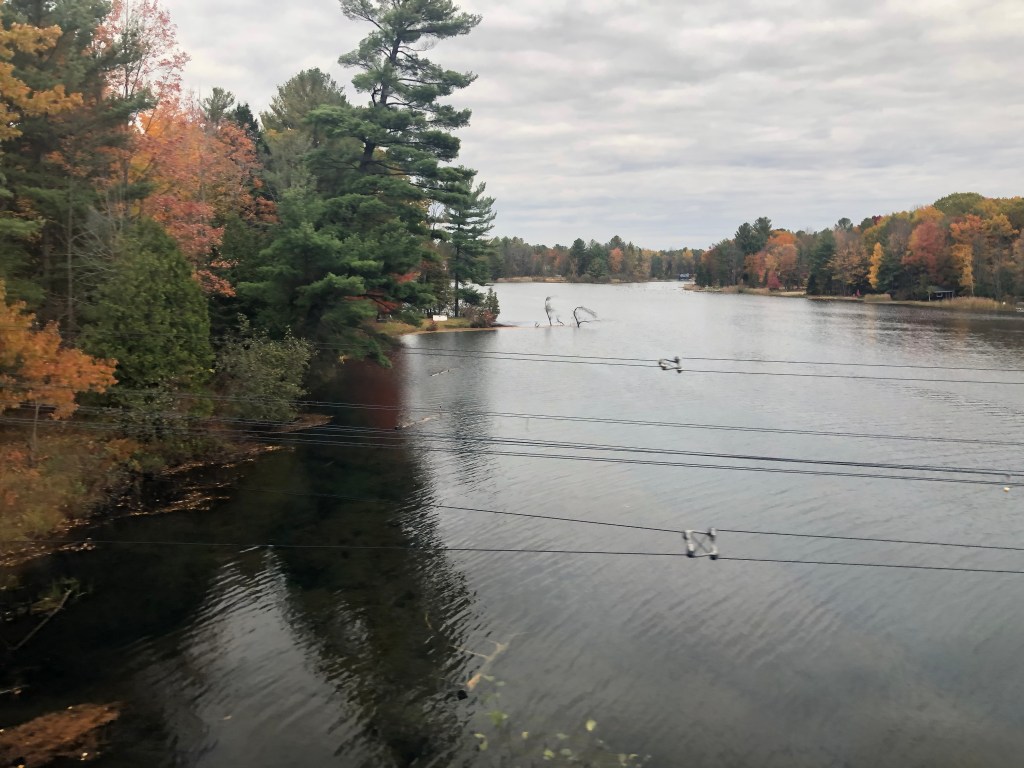
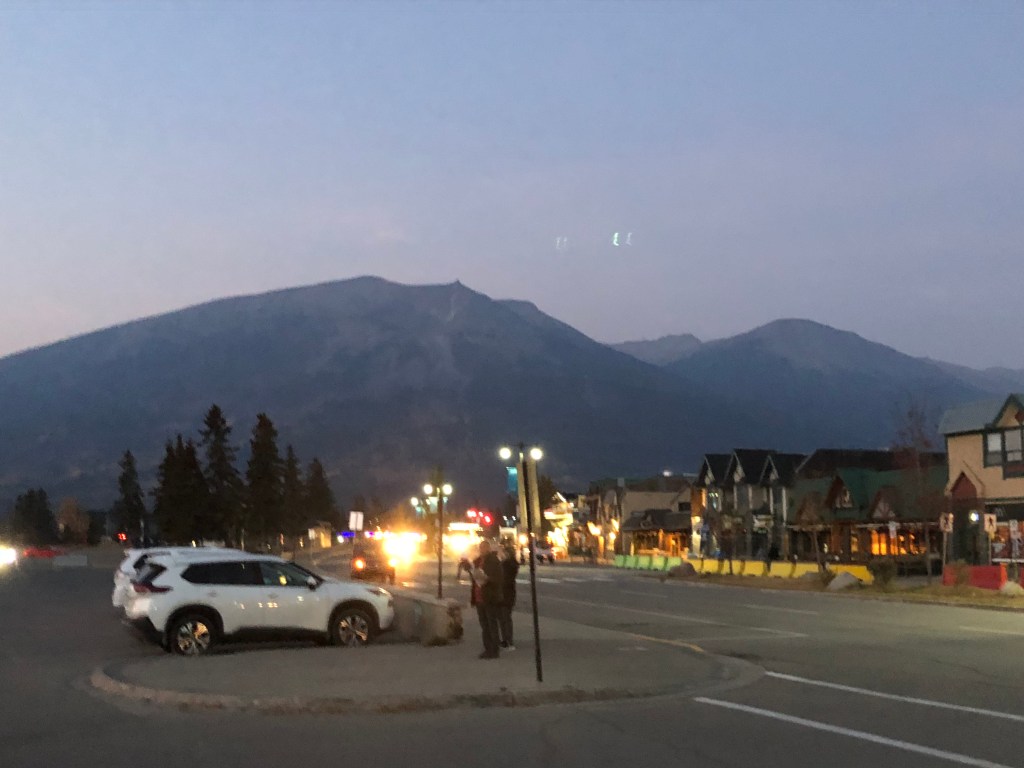
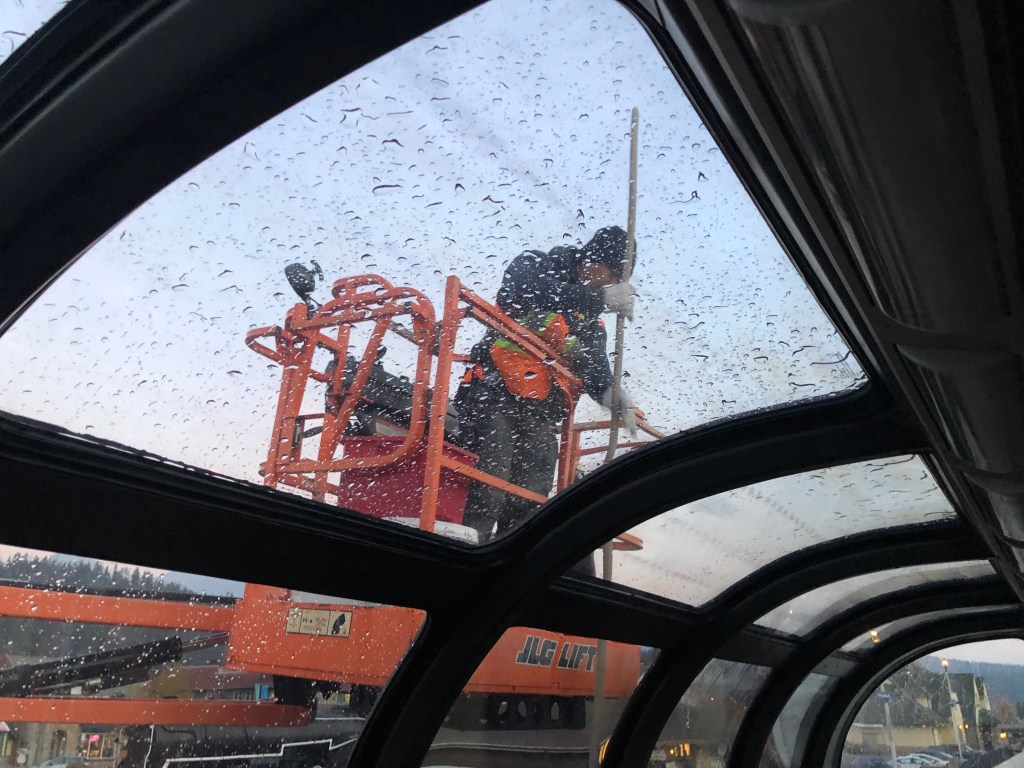
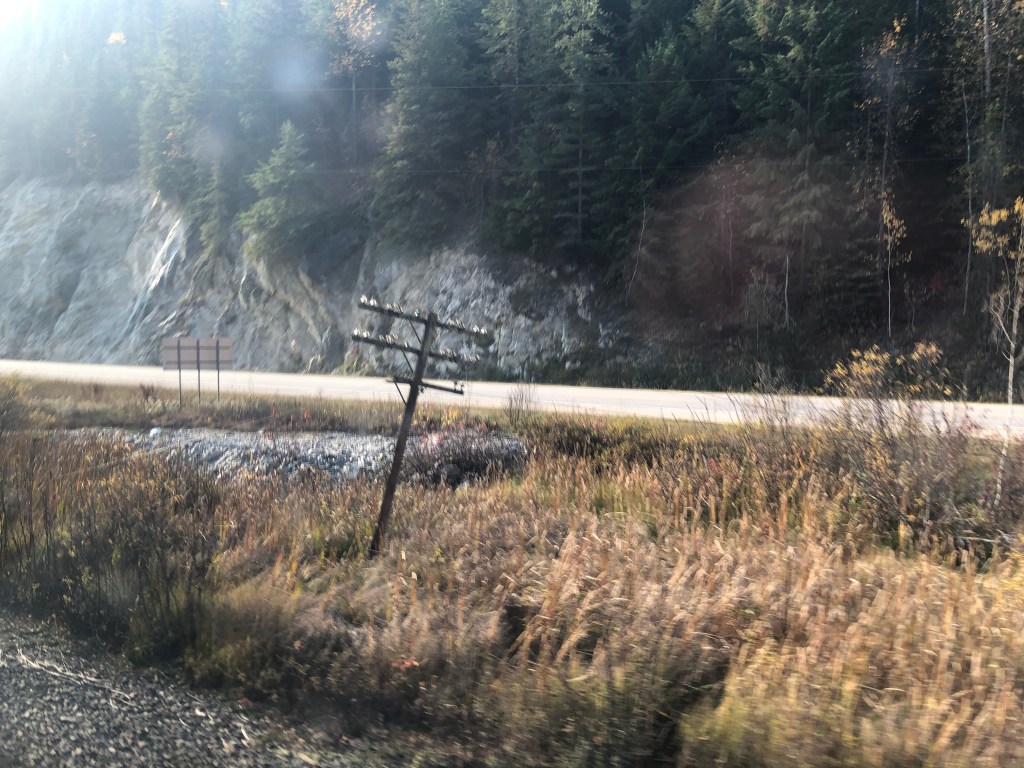
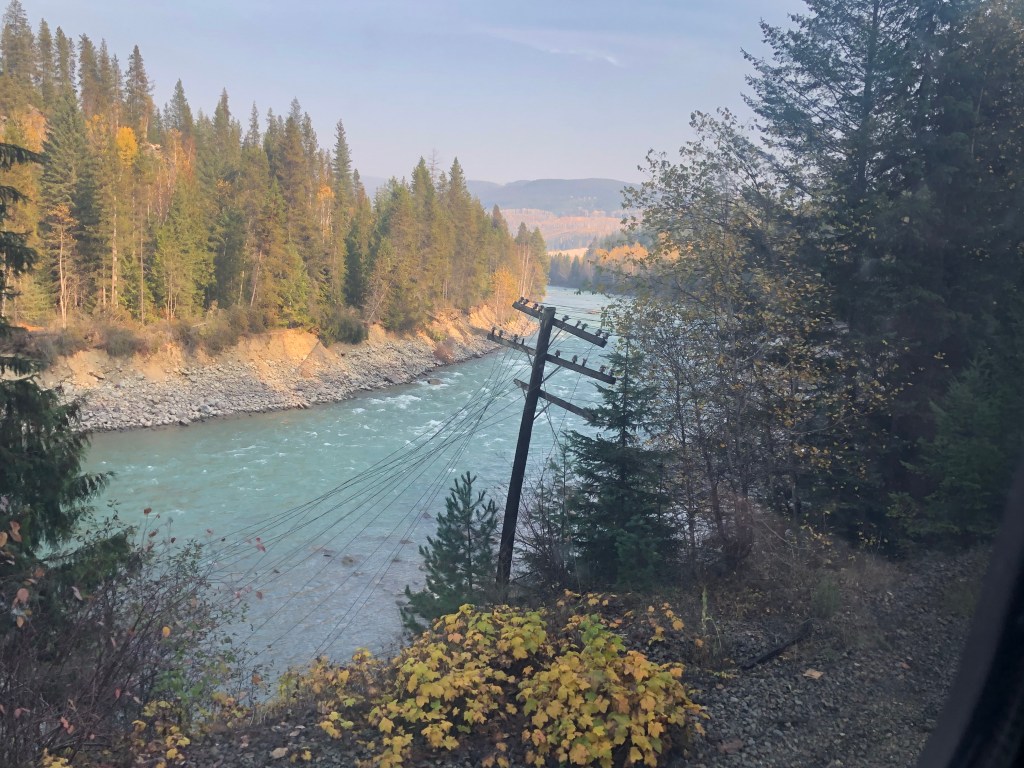
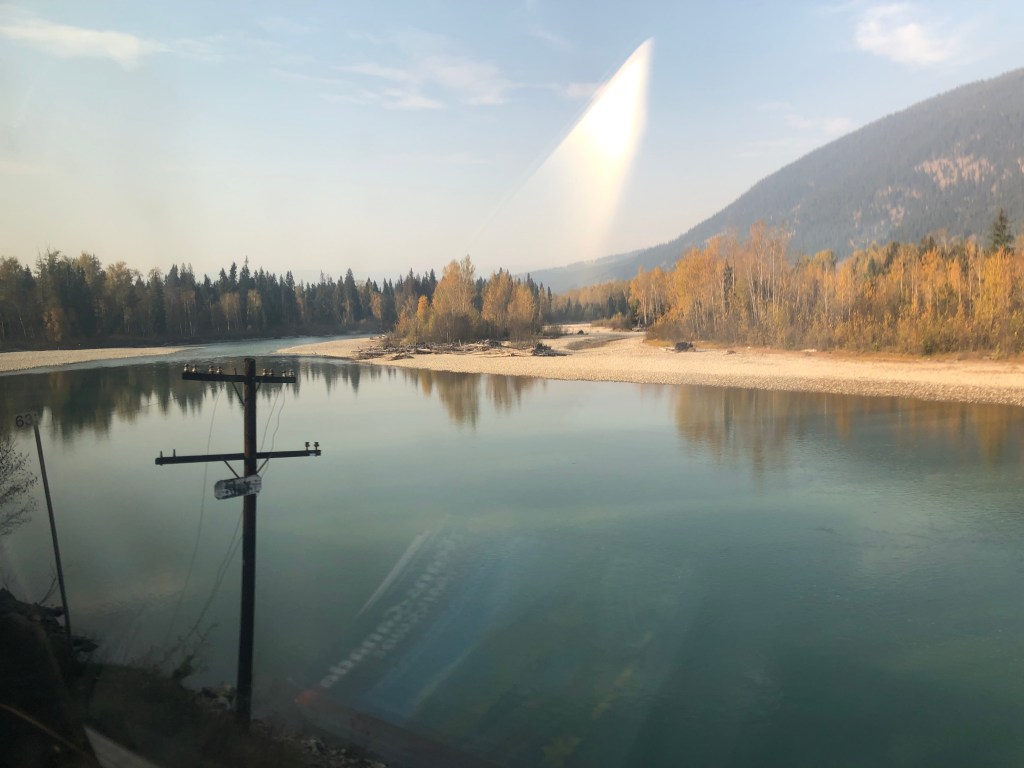
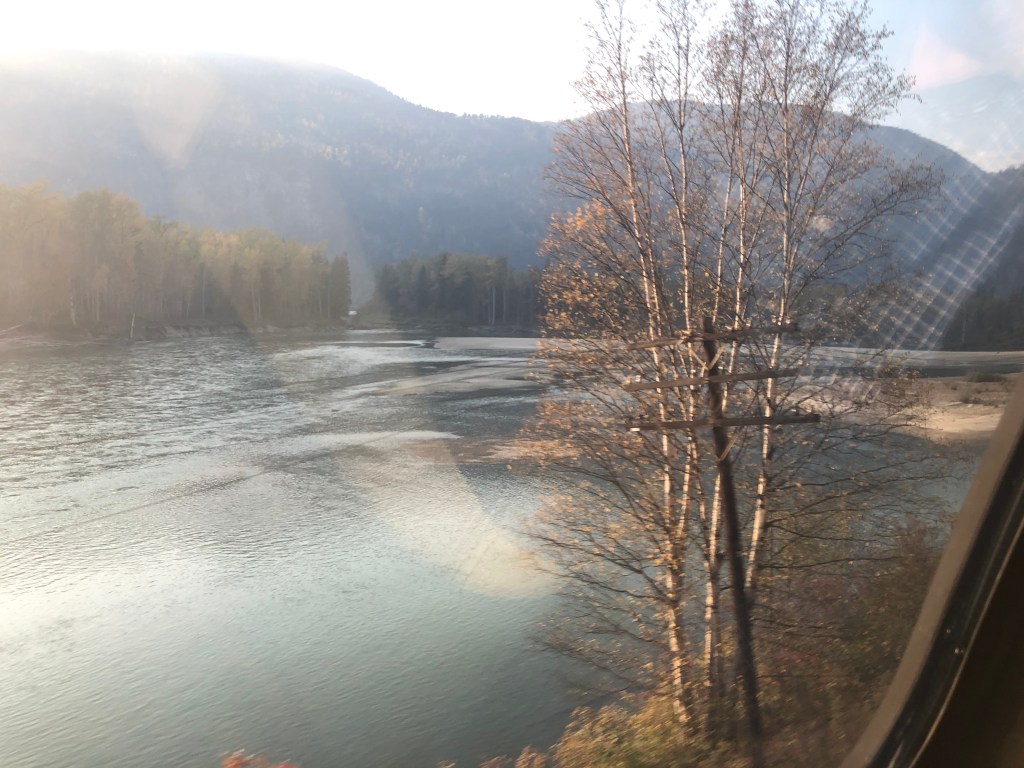
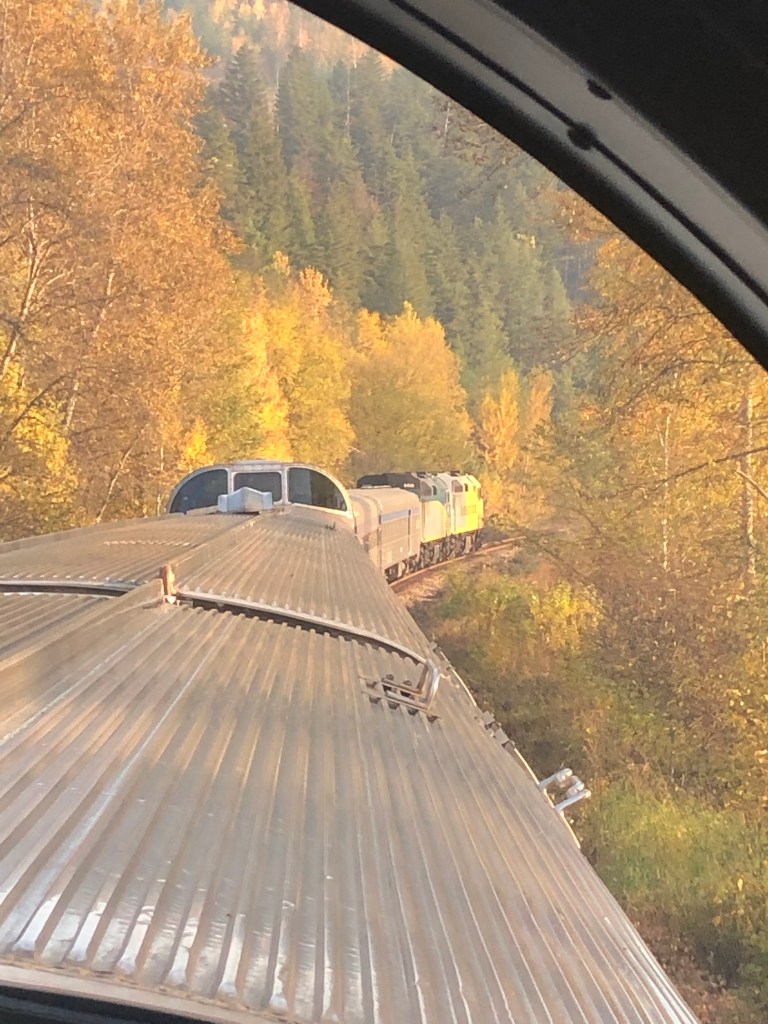
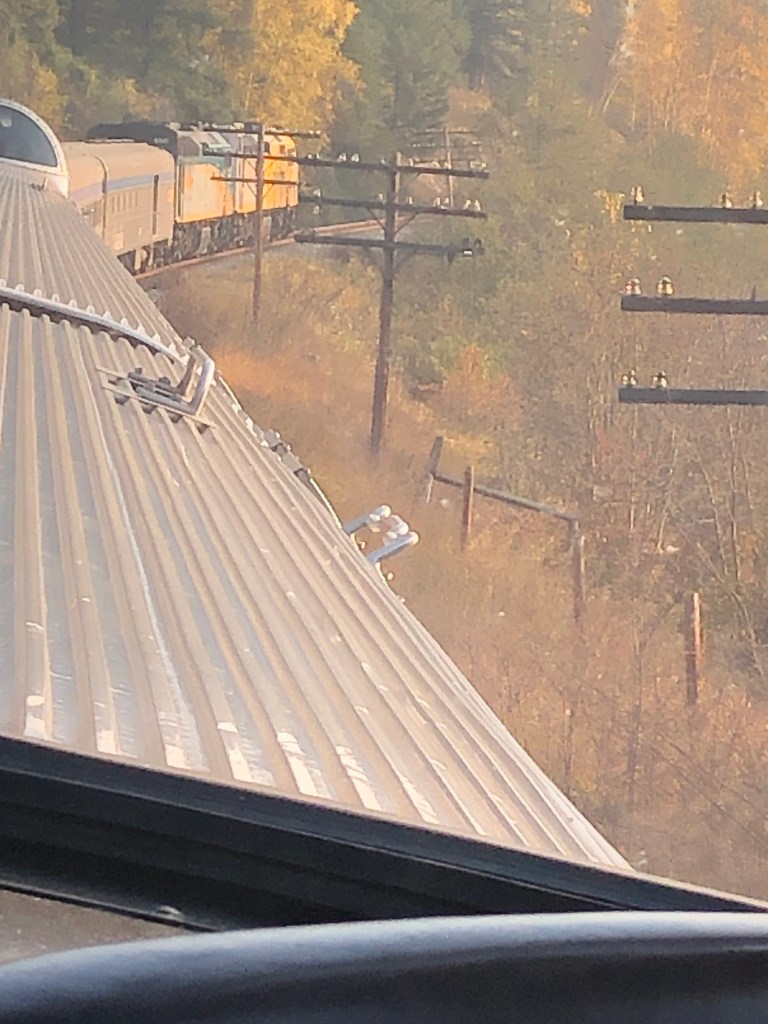
It was a patchy night’s sleep and I awoke at 5-30am as the train ground to a halt in the town of Jasper having arrived an hour ahead of schedule. There was a long stop here which would have been really nice if it had been scheduled later in the day when the town opened up. There was one enterprising gift shop that opened up along with a coffee shop but most of the town would remain in their slumbers until the train left. It’s a shame as it looked like a nice place. However, it was Rockies day and although we’d passed through quite a lot of them during the night, there was still plenty of Rocky action to come. The dome promised to extra busy today so I ignored the normal big breakfast and grabbed a few buffet items, claiming my seat early. It was a long wait until we set off. By then the place was understandably packed. The sun had risen over the mountains whilst we were stopped at Jasper giving us a preview of what was to come. It was, of course, fantastic. Mountains, trees, rivers, waterfalls, lakes and the regular sight of passing shipping containers heading eastwards on massive freight trains. Strangely enough, those didn’t spoil the view. What did spoil the view a bit was all the people in the dome car. It is perfectly understandable that they wanted to get the perfect photo but didn’t they know the I wanted to get the perfect photo too? After a while I decamped downstairs to the lounge area which was almost empty. You don’t get the stunning panoramic views that you get in the dome but at least there was no one jumping in front of me when another beautiful mountain gently sauntered past the window. After an early lunch I returned to a less busy dome car and spent most of the afternoon there. Emerging from the Rockies, we were told to put our watches back an hour as we entered the Pacific time zone. Finally I was in the same time zone as Rebecca in Victoria. The scenery remained spectacular, just not quite as spectacular as the Rockies. I became quite obsessed with the telegraph poles. Long since redundant, these poles, many with the wires still strung between them, once lined the entire track. Many of them remain in the Canadian Shield but they had all more or less gone from the Prairies. I suspect they were a valuable source of firewood for the harsh winters they have there. I was glad to see them back as we passed through the Rockies. Some have collapsed, some wires have snapped but many remain upright supporting cables that transmitted their last message many years ago. Eventually we started seeing signs of civilisation with some cultivated fields and isolated villages. This gave way to bigger settlements as we entered the furthest reaches of the town of Kamloops. As usual it took a lot of waiting and backing up to get into Kamloops. The town is a major railhead and the station part of the shunting yards so we were under strict instructions to remain on the platform. This was the last stop before journey’s end in Vancouver. There was to be just one last night onboard The Canadian.

Day Five – Kamloops – Vancouver – Victoria

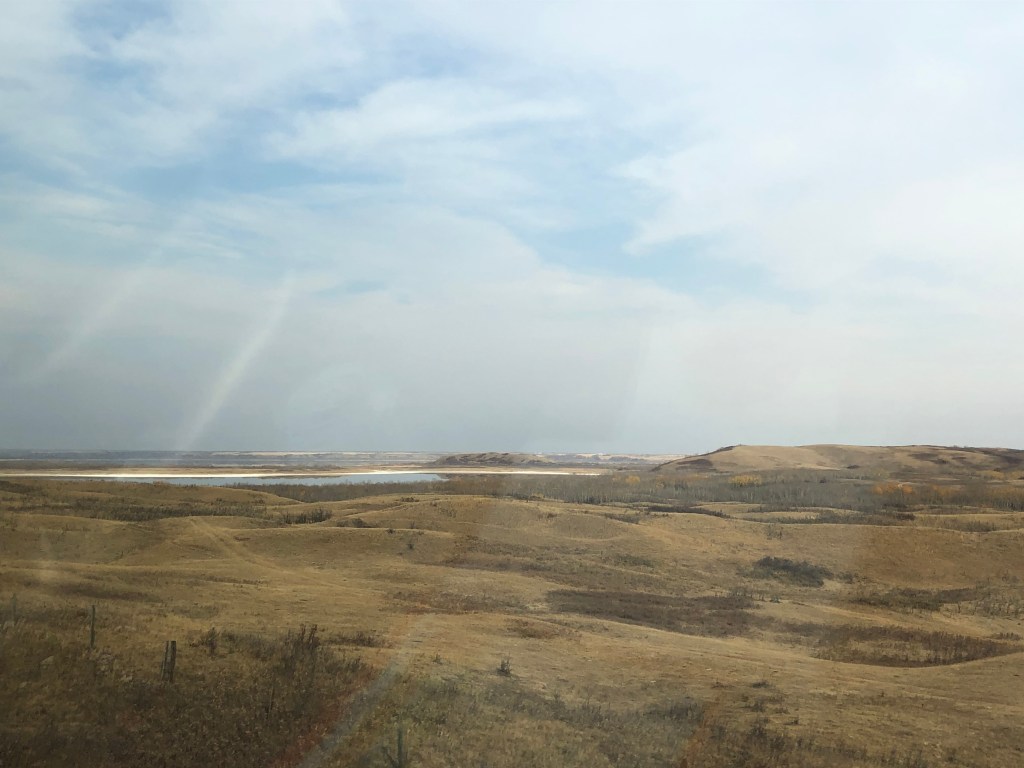
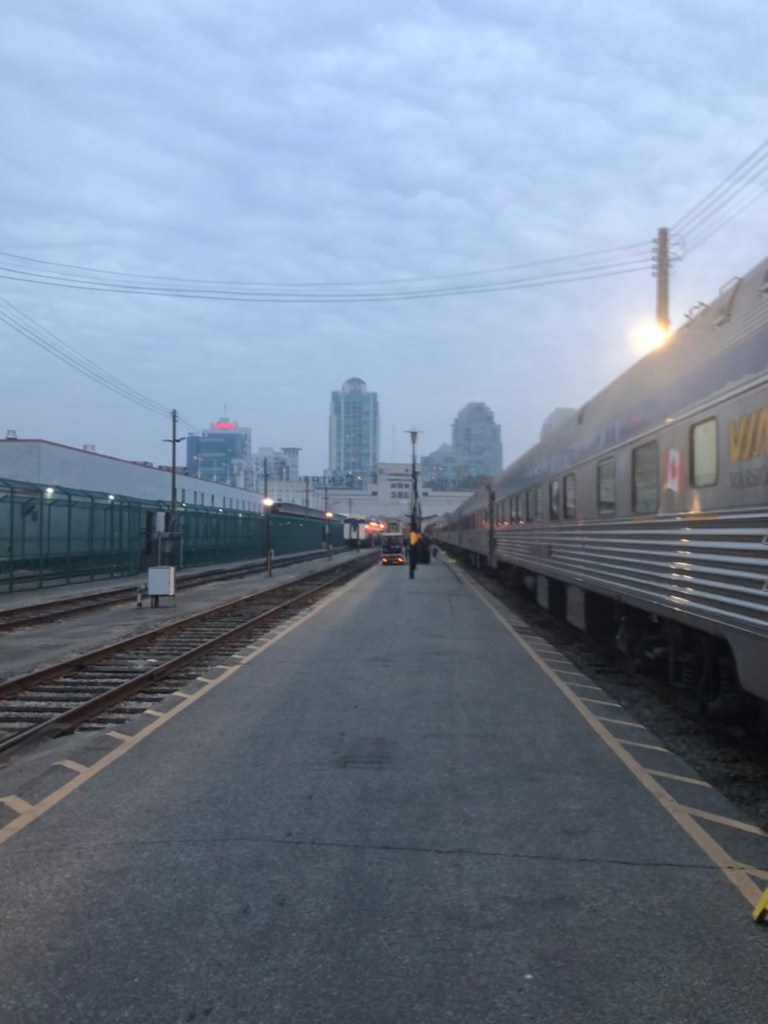
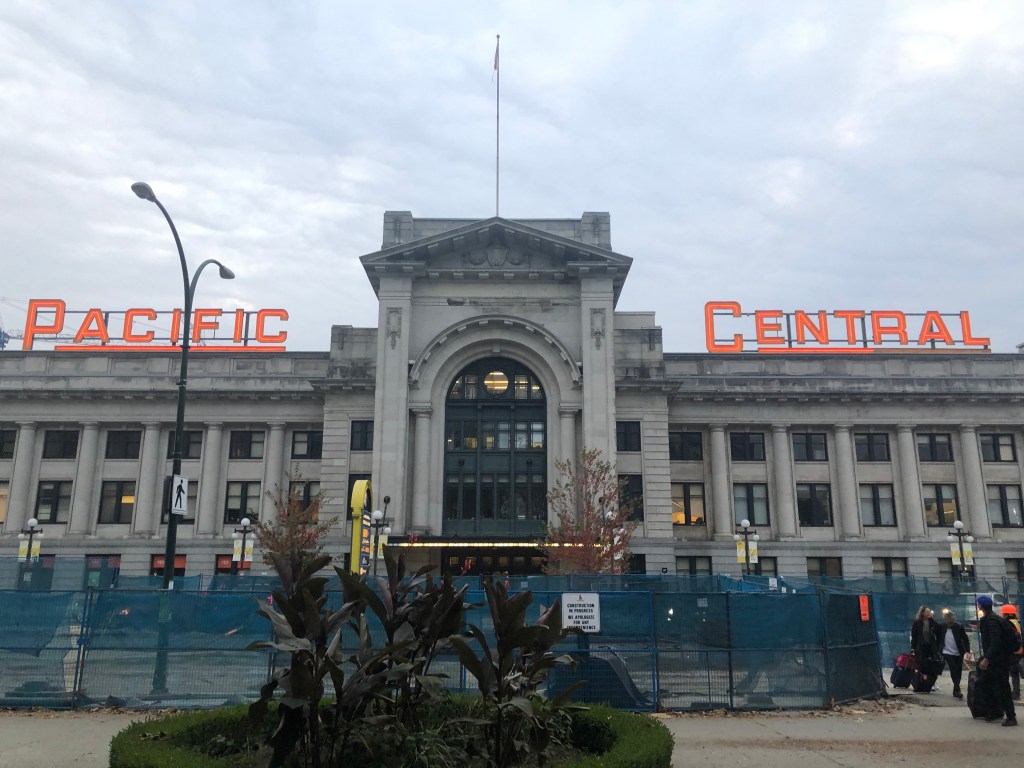
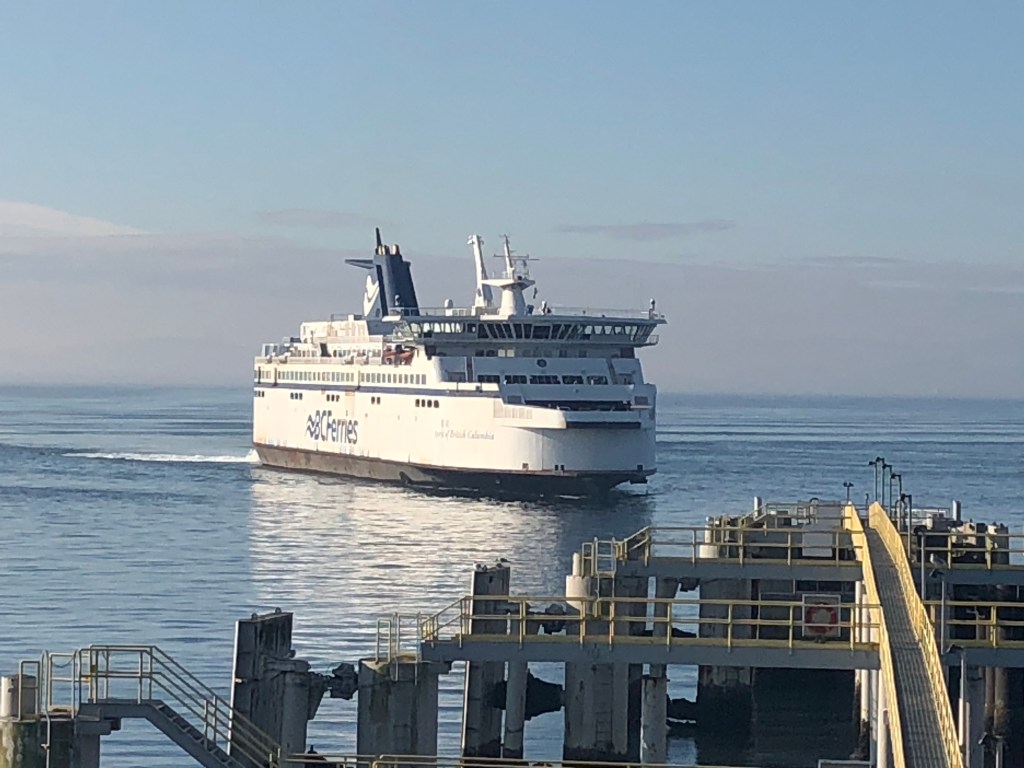
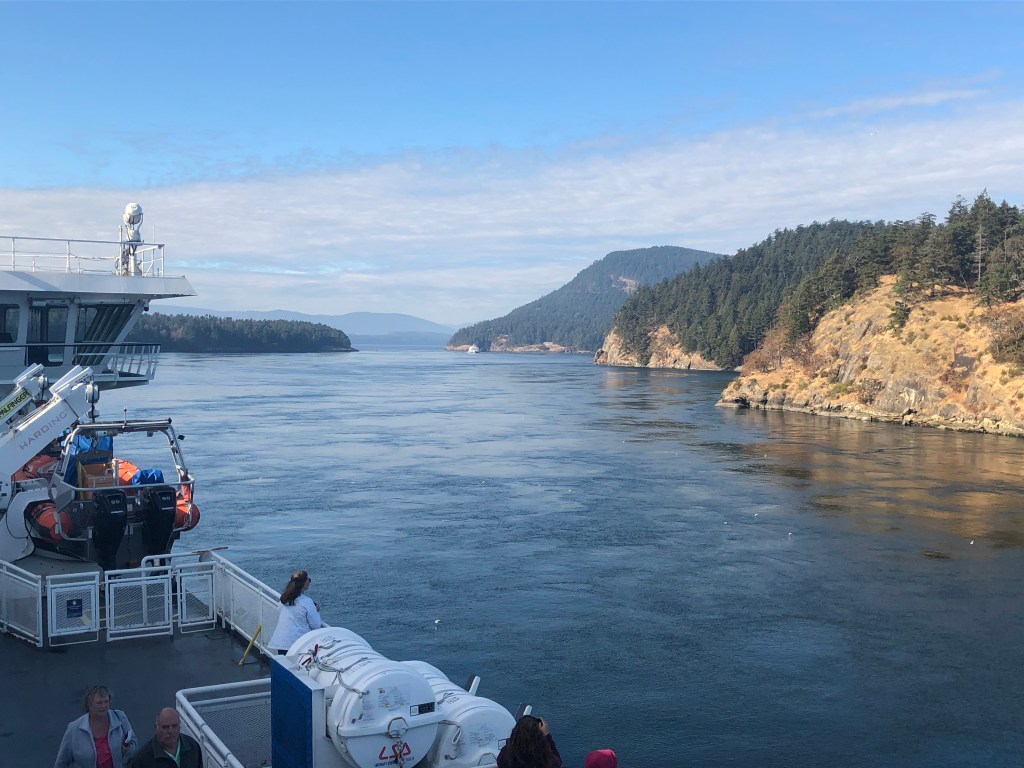
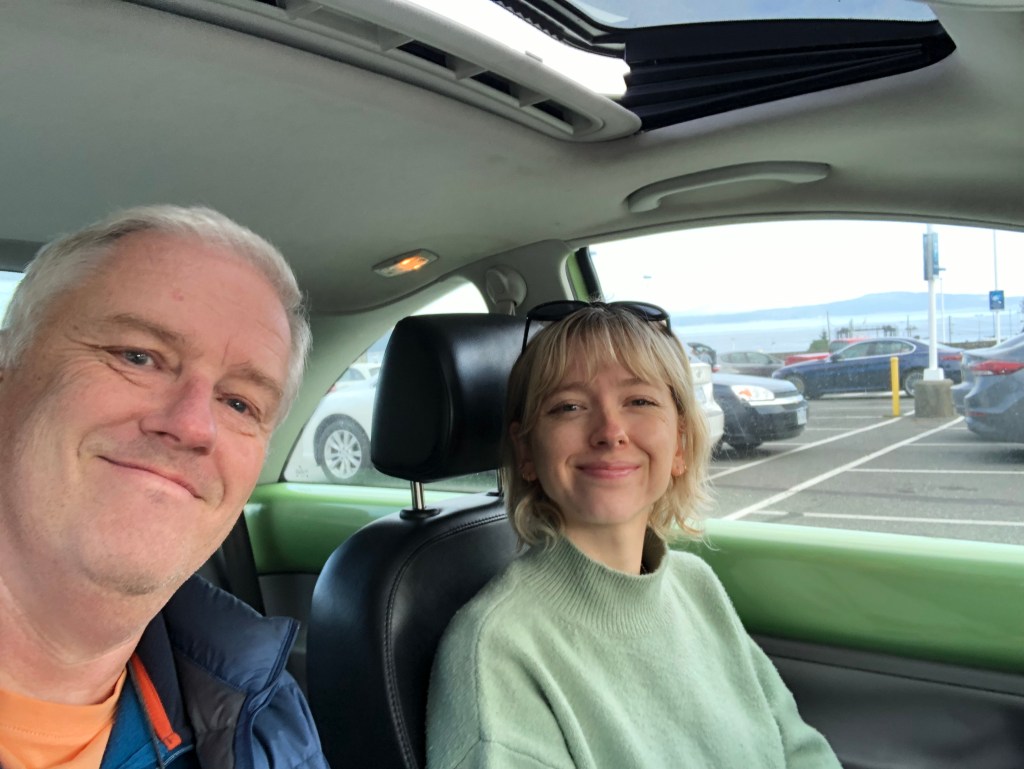
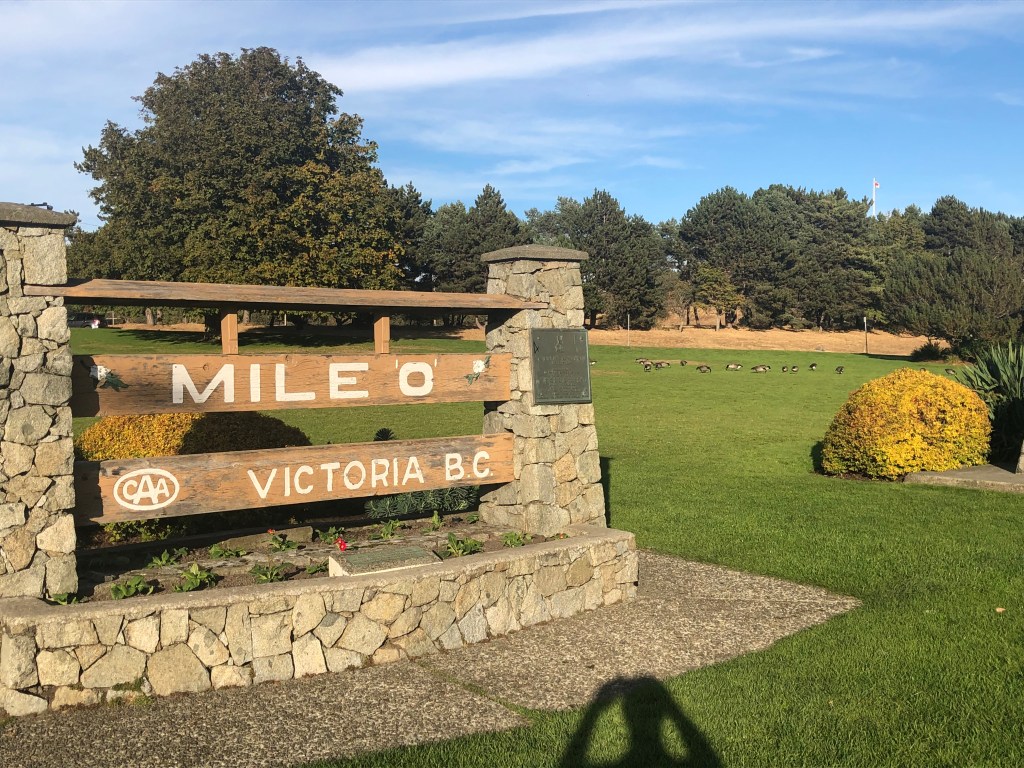
I slept reasonably well. The route from Kamloops to Vancouver has, apparently some spectacular bits to it as it follows the Fraser River for much of the way. You don’t get to see that at night of course but I guess it’s nice to know it’s there. I woke at 6am just as the train pulled into Vancouver’s Pacific Central Station. It was two hours early! I suspect the schedule has the inevitable delays built into it. We had to disembark the train by 8am so there was time to pack and for the usual morning activities concerning ablutions and breakfast. Then, at 7-45am on October 20th, my 61st birthday, I stepped down from the train and headed up the platform to the main concourse. No bells and whistles, no ceremony, that was it. The rail trip was over. It wasn’t quite the end of the journey though. Collecting my suitcase, I walked a mile or so to one of Vancouver’s Transit stations, went on the Skytrain for a few stops, transferred onto a bus which took me to the BC Ferries terminal at Tsawwassen and bought a foot passenger ticket to Swartz Bay. The Spirit of British Columbia was the ferry charged with the task of navigating through the Gulf Islands to Vancouver Island and once there, Rebecca was waiting for me with her 18 year old Volkswagen Beetle, Frog. We stopped in the town of Sidney for lunch and that birthday beer before heading to my hotel in downtown Victoria. It was just a short walk from there to Milepost Zero, the start (or end) of the Trans Canada Highway. Although the other Milepost Zero is in St Johns, Newfoundland rather than my starting point in Halifax, and I’d crossed the country by train, not car, it seemed a fitting place to take an end of trip selfie there with the Strait of Juan da Fuca, part of the Pacific Ocean in the background. Atlantic to the Pacific by surface transport, TICK.

7-45am and with no fanfare, I walk along the platform and my trip on The Canadian is over…
…and I leave Vancouver’s Pacific Central Station behind.
Rebecca was there to meet me with Frog.

Postscript

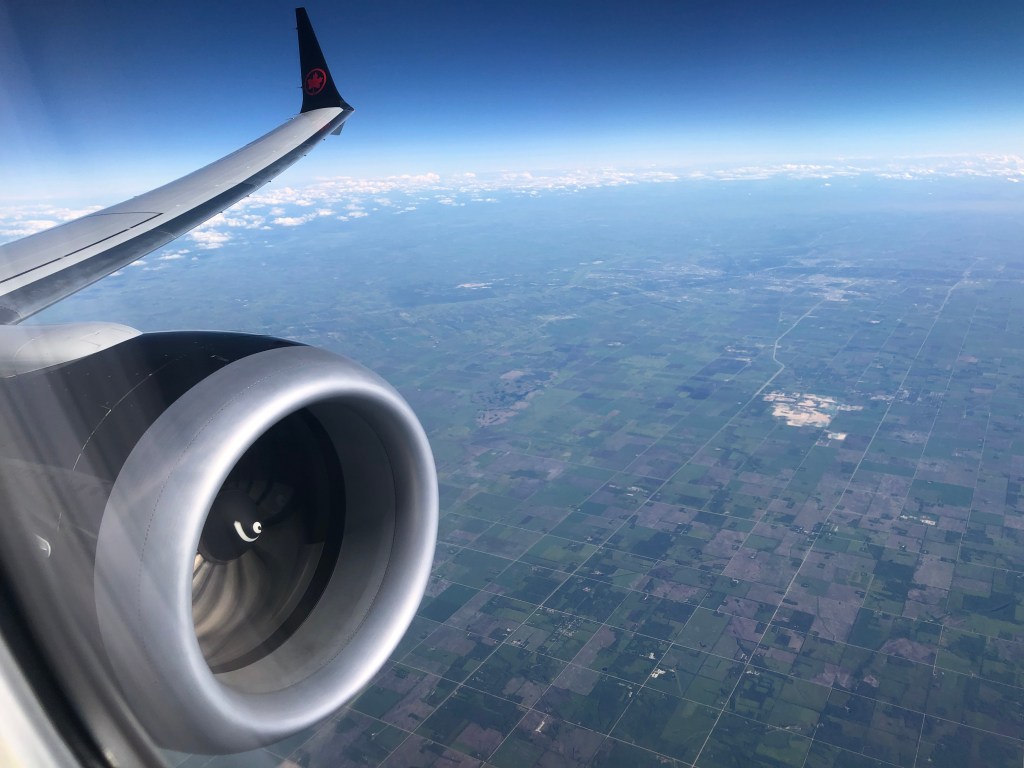
It is hard to convey to you just how much I enjoyed this journey. Of course it isn’t a practical way of travelling between Troon and Victoria. After a few days with Rebecca it took me about 23 hours from leaving my hotel to walking through my front door at home. In that time I’d flown from Victoria – Calgary – London – Glasgow including a cheeky little Business Class upgrade between Calgary and London for less than half the cost of the flight out and train fares. Even if environmentalism is your thing, I can’t imagine five days on a diesel hauled train releases any less CO2 than nine hours on a Boeing 787. I didn’t take the trip for practical reasons though. The journey was the experience and for me, an experience like no other I’ve had before. I found myself getting quite emotional about the colours of the Autumn trees. I was surprised at the size of the Canadian Shield. I already knew the Rockies were spectacular but there’s nothing wrong being reminded of the fact. The biggest surprise to me, however, was just how much I enjoyed the day in the Prairies, a place where the Earth seems infinite and the skies even bigger! It wasn’t just the sights though. The staff on board both long distance trains were lovely. A special mention to the Skyline Car host on the Winnipeg – Vancouver section, Edgard, who made our days through the Prairies and Rockies even better with his knowledge and friendliness. If you ever go on this trip here’s a tip – tip! Some tipped as they went, others at the end. We Brits aren’t particularly au fait with the concept of tipping but I tipped the restaurant staff, sleeper car host and the Skyline car host before Winnipeg where the crew changes and in Vancouver when the trip ended. Another aspect of a journey like this was meeting fellow travellers. On the Ocean this wasn’t an issue as it was lightly loaded and most people kept themselves to themselves. At meals I had a table to myself and there was no dome car where people would mix during the day. On The Canadian the only way to avoid mixing with the other passengers was to stay in your cabin for the entire trip. I met some very interesting people on the way. I’m not the most gregarious of people but I enjoyed the interaction with the other passengers. Most were from Canada and the USA. There was a smattering of Aussies and Germans. One Austrian couple were on honeymoon. Surprisingly, I think I was the only Brit in our section of the train though there was an Irish chap so full of the Blarney that he knew everyone’s name and life story by the time we reached the Canadian Shield. Whilst most were towards the older end of the age spectrum and travelling in pairs, there were plenty of other solo travellers, from a young Chinese girl in her early twenties to Enid, a similar age to the only other Enid I know (my mum), who was travelling as far as Edmonton in one of the curtained bunk beds.
So, the sights, people, food and drink were great. Were there any downsides? Well yes, sleep on board a train is not the easiest. My previous experience was on the Caledonian Sleeper and I didn’t find it easy then, despite being upgraded to the best accommodation on the train. Trains are noisy, rattly and bounce around a lot. I shouldn’t be surprised at this but during the day you tend not to notice. Lying in your bed at night trying to get to sleep you do. Having said that, only one of the five nights I spent on the two trains was particularly bad. It is the price you have to pay for the full experience. Another thing to consider is that whilst tourists make up the bulk of the passengers, this is not a tourist train. The scenic highlight is, of course, the Rockies yet we passed through a good part of it at night. Then we stopped in Jasper for several hours whilst it was closed. If the Rockies is your reason for going on this train, consider The Rocky Mountaineer. That is a tourist train and is scheduled to run in daylight hours and any night stops are spent in hotels on the way. However, it wasn’t just about the Rockies for me, it was about the entire journey from Atlantic to Pacific and for that I can have no complaints. I loved it.

Taking notes…
…probably about the telegraph poles.

DC-3

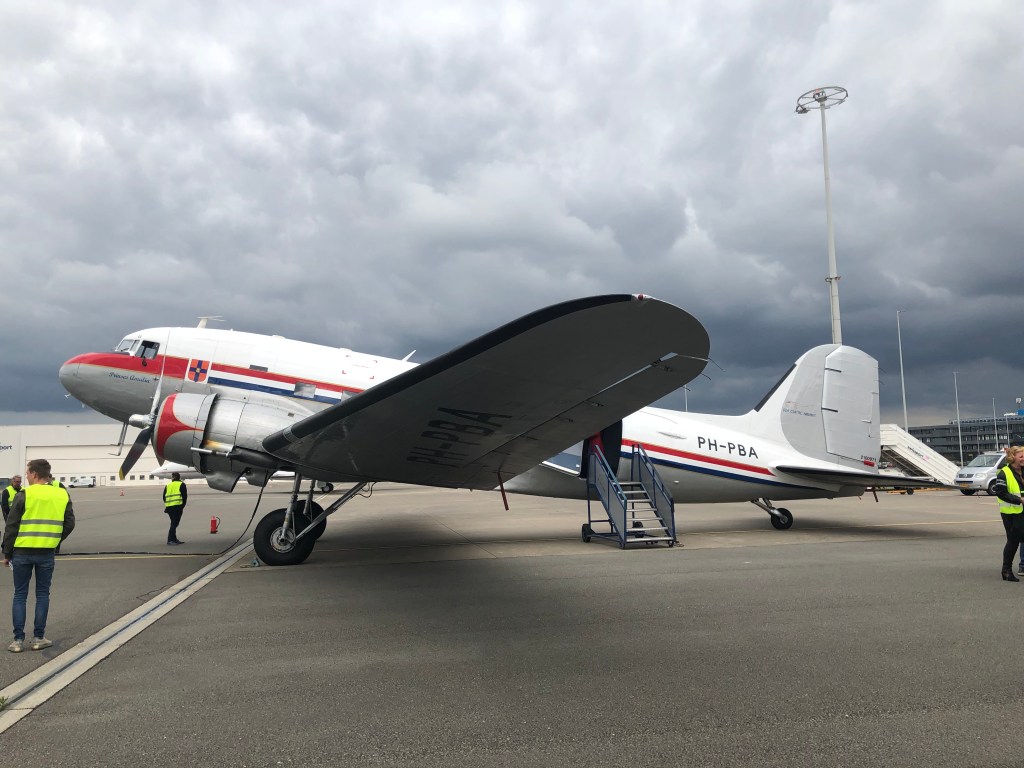
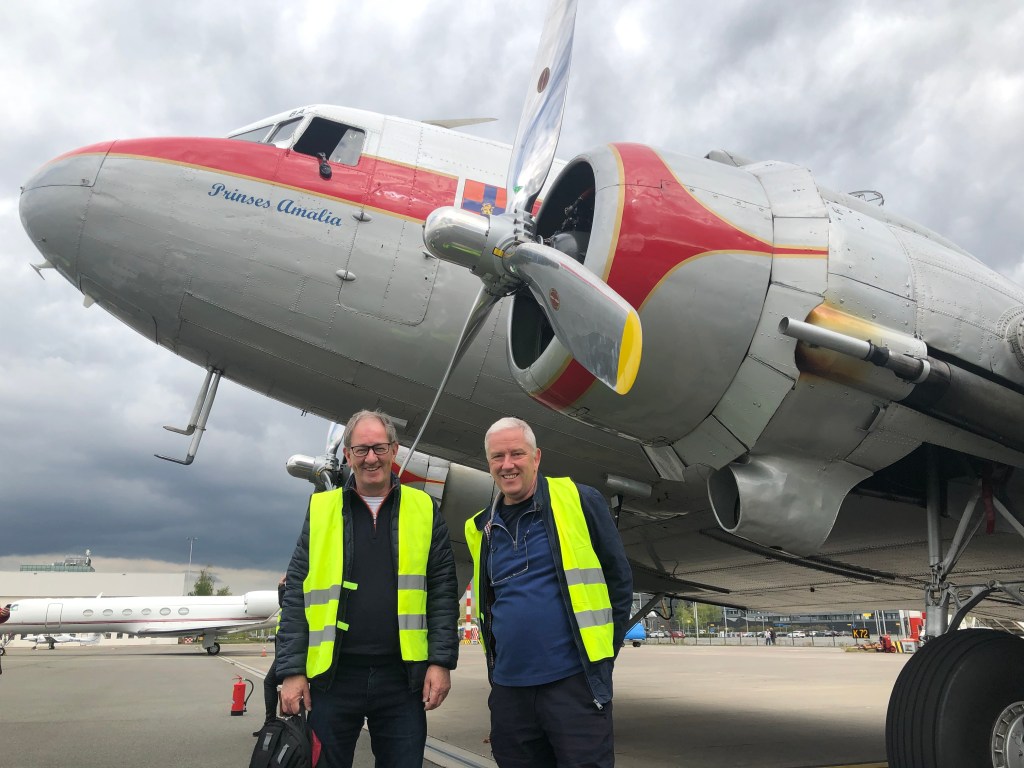
Douglas DC-3. Or maybe C-47. Or Dakota

It’s been a while since my last blog which dealt with the joys of wearing a moon boot after I had done my ankle some serious mischief during a walk in the country last August. Since then the world has gradually been opening up and I have been able to do some things that are enjoyable but not, perhaps, worth blogging about. I came close to doing a trip on one occasion that might have been worth putting pen to paper, or fingers to keyboard to be more accurate, but was thwarted by the weather. Those of you who are friends on Facebook might remember my grumpy post on that particular issue, along with other mini blogs that fit that platform but not this. Recently though I managed to take my first trip out of the British Isles since December 2019. It was a short one, just two nights, but not only did it mean my globetrotting has restarted, it also ticked off a bucket list item. If I can’t blog about bucket list items, I might as well give this site up so without further ado, here’s my first blog in nine months.

Back in February I flew to Dublin to fly in a Fokker 50, a particular type of aircraft I’d not flown in before. This was my first trip out of the UK since I visited my daughter Rebecca in Victoria, Canada in November 2019. Shortly after that the C word hit the world and all future plans went out of the window. That trip to Dublin was supposed to be a big step on the road to normality but once there, a howling gale blowing off the Atlantic a hundred miles or so northwest of Dublin in Donegal put paid to the flight so I had to return home having achieved nothing. As momentous as that trip was in terms of timing, it was a huge disappointment. I had, however, already booked my next foreign adventure and whilst Ireland is abroad, it is still part of the British Isles. This time the destination was Amsterdam in The Netherlands which is also abroad but somehow more abroad than Ireland. Once again the reason was to fly in an aircraft. It wasn’t a Fokker this time, though the factory in which that Fokker 50 had been built was next door, but a DC-3. What was so special about flying in a DC-3? The following two paragraphs will give you a brief history of this type of aircraft and the particular one I was to fly in. Skip them if you want to just read about me being bounced around by the turbulence.
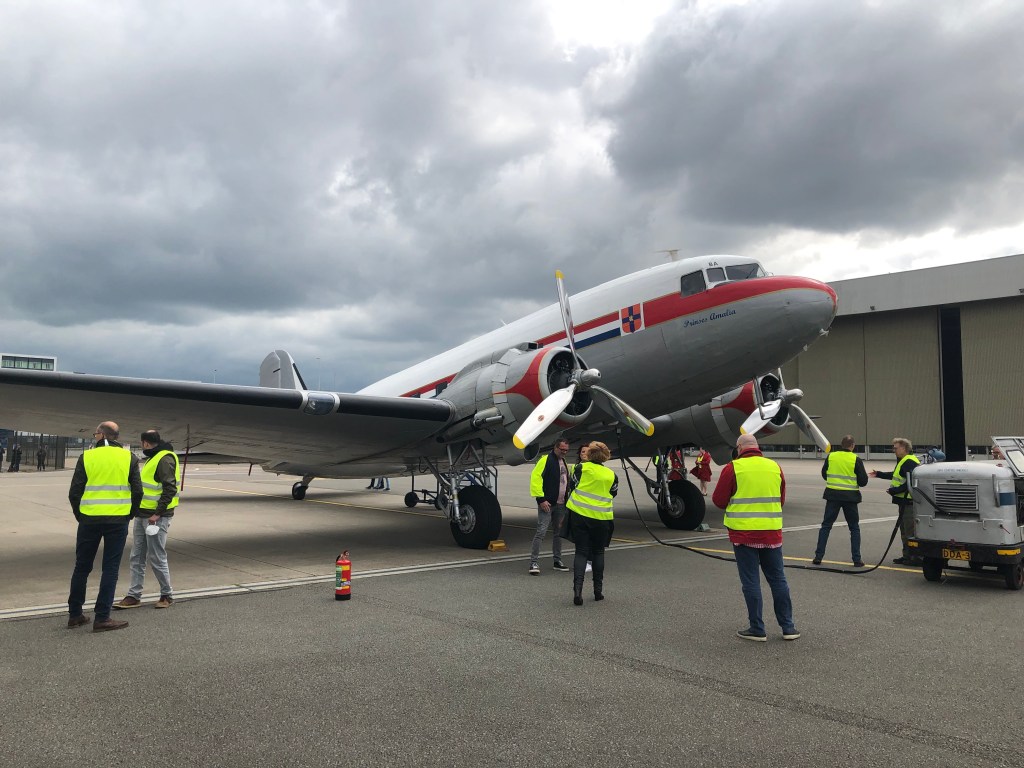
Old blokes in The Netherlands are much the same as old British blokes.

On December 17 1935 a new aircraft took to the skies over Santa Monica in California fresh out of the factory of the Douglas Aircraft Company. Designated the DC-3, it was primarily designed to the specification of American Airlines as the Douglas Sleeper Transport or DST, but was soon used in a more conventional daytime role as the USA’s first airliner that could transport passengers and make a profit at the same time. Hugely popular with the airlines before the USA entered World War 2, production was ramped up to an astonishing degree as the demand for transport aircraft soared. The military versions were known under a number of different designations, most commonly the C-47 Skytrain in the USAF and Dakota in the Royal Air Force. Simple and sturdy, the C-47 was of immense use to the allied forces during the war and no less a person as Eisenhower stated that it was one of the most vital pieces of military equipment used in winning the war. Over 16,000 were built including 3000 built under licence by the Soviet Union and, surprisingly, 500 or so built in Japan before that nation and the USA had a bit of a falling out. Production of the civilian version DC-3 ceased during the war and after hostilities ceased, the manufacturers were offering newer, more modern aircraft to the world’s airlines. However, there was a huge number of ex-military C-47/Dakotas going cheap and many airlines, both big and small, availed themselves of this reliable workhorse which more than other launched the post-war airline industry. For many years DC-3s could be found hauling passengers and freight on less glamorous air routes. Many new aircraft were designed as DC-3 replacements but few were successful. It seems the best replacement for a DC-3 was another DC-3. However, time took its toll and most were gradually withdrawn from service. Not all though. There are still airframes earning a Peso or two in South America. In Yellowknife, Canada, Buffalo Airways operate a number of DC-3s in the harsh, Northern climate and until 2019 utilised it on a scheduled passenger service to Hay River. Whilst there are no scheduled passenger DC-3 services any more, there is still the chance to fly in one as a number of the 80 or so still airworthy airframes offer air experience flights.

Low tail means high nose.

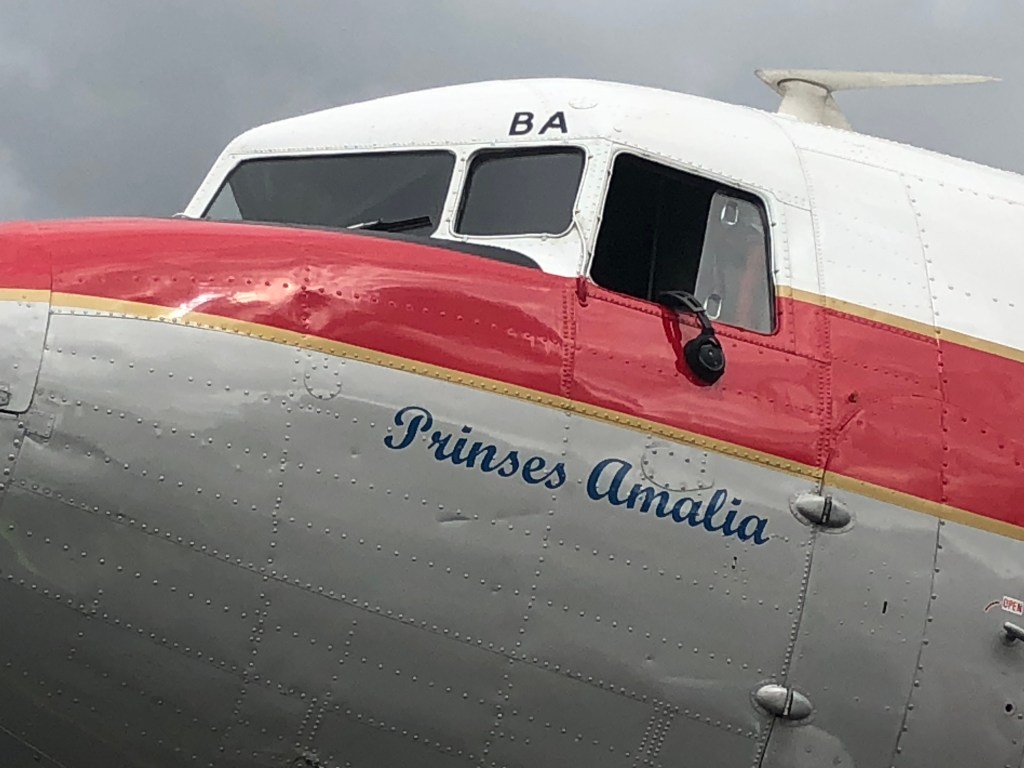
One of those PH-PBA. Built as a C-47 in January 1944 with serial number 19434, she was delivered to the USAF who designated her 42-100971. On June 6 that year she played her part in the allied invasion of Europe. Departing Cottesmore shortly before midnight on the 5th, Pilot Lt. Lee Ross and four other crew members delivered a ‘stick’ of 17 paratroopers to dropzone O near Ste Mere Eglise in Normandy. At 01:57 the 17 paratroopers jump into the night. Despite a bullet passing through the fuselage that had until a few seconds earlier contained the soldiers, 42-100971 returned safely to England. She would later be involved in Operation Market Garden, her first visit to The Netherlands although she didn’t land. Further paratroop dropping details over The Netherlands followed along with glider towing duties. On September 27 1944 she landed in The Netherlands for the first time. After the war she was acquired by HRH Prince Bernhard, a keen aviator and the consort of Princess Juliana, the future queen of The Netherlands. She was given the civilian registration PH-PBA and has remained on The Netherlands register ever since, seeing service with the Dutch Government, Dutch CAA and then the Prince Bernhard Alpha Foundation. Loaned to the Dutch Dakota Association and supported by Dutch airline KLM until 2016, PH-PBA is now licensed to fly 18 passengers on pleasure flights which, Covid break aside, it has been doing on spring, summer and autumn weekends for several years under the guise of DDA Classic Airlines.
The future Queen of The Netherlands is considerably younger than her namesake.

Back in the 1980s I was at an Air Display at Church Fenton in Yorkshire. At that display an airline called Air Atlantique were offering experience flights in a DC-3. I paid some money and was treated to a fifteen minute circuit. I can’t remember much about it. Years later Air Atlantique were forced to end passenger operations of their DC-3s due to European safety regulations and sent one on a farewell tour of the country. Flights were offered and I booked one from Edinburgh Airport. I drove over, entered the terminal, found the appropriate desk and was told that the flight had been cancelled due to some issue with the brakes. I got my money back but it was a bit of an anti-climax as I thought I may never get the chance again to fly in such an iconic aircraft. Roll forward to last year and I discovered the DDA Classic Airlines website. They were offering flights having somehow got round the same safety regulations that had forced Air Atlantique to stop passenger operations. I made the suggestion to my children that a voucher for one of these flights would be a good Christmas present and promptly forgot about it. On Christmas Day I was surprised and delighted to be presented with a voucher! Once the year’s flight schedule was announced I chose a day and crossed my fingers that covid restrictions wouldn’t scupper the journey. What’s more, I persuaded my friend and old work colleague Graeme to come along with me. He didn’t need much convincing. He’s just as much an avgeek as I am if not more so. Flights and hotel were booked, the DC-3 trip reserved and a keen eye was kept on the changing requirements for visiting The Netherlands. Luckily we ticked the appropriate boxes and were confident we wouldn’t be turned away by KLM or the Dutch immigration officials. The flight to Amsterdam went off without a hitch and we even had our passports stamped by a smiling immigration official on entering The Netherlands. Our hotel was the curious CitizenM just a couple of minutes from the central airport plaza. I say curious as I’ve never been in a hotel quite like it but it was comfortable, clean and they certainly came up trumps in supplying us with the airport view rooms I had requested.

Please don’t start the engine.

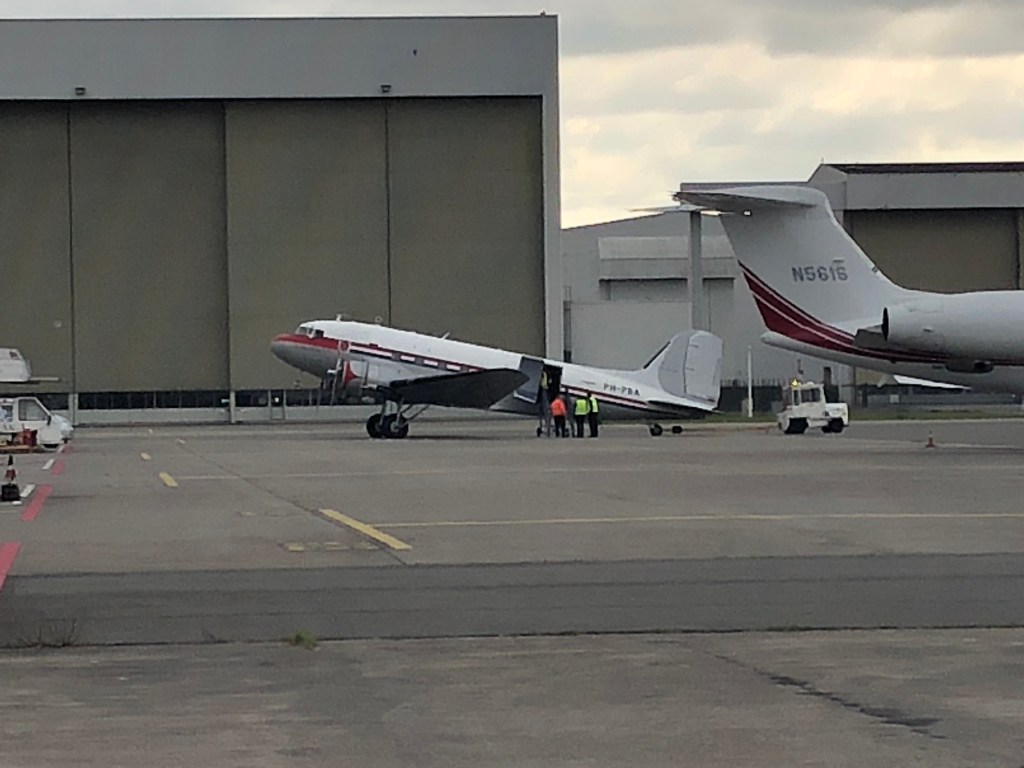
The DC-3 flight was the following day. Like the majority of flights offered by DDA Classic Airlines it was to depart from Schiphol but not the huge main terminal where we had arrived the previous day. We need to get a bus and head to the other side of the airport and the General Aviation Terminal. Having successfully negotiated this potential pitfall, we got off at the appropriate stop and could see our DC-3 parked amongst the business jets of the great and the good and/or the rich. When we found the desk in the terminal we were informed of a delay due to the previous flight having been held up due to the crosswinds. Surely we wouldn’t be scuppered by a mere zephyr at this late stage? Thankfully, no. Eventually one of the pilots pitched up and gave us a brief history of the aircraft in Dutch – I made out the odd word like ‘Market Garden’ and ‘Prince Bernhard’ but not much else and then we were handed high visibility vests and put on a minibus to take us across the apron to the star of the show. We were allowed to wander round and take pictures, which naturally we did, before boarding. PH-PBA is licensed to carry just eighteen passengers, little more than half the maximum number some airlines managed to squeeze in them back in the 1950s. Our seats were in Row 1 on the right hand side. One of the strange things about the DC-3 is that it is a taildragger, in other words it sits on two main wheels under the wing and a small tail wheel at the back. Not unusual back in the 1930s when it was designed, but virtually all post-war commercial aircraft were fitted with tricycle undercarriage with the main gear still under the wing but the other wheel under the nose. The taildragger arrangement meant that once we had boarded through the door at the rear, we had to walk up a fairly steep incline to our seats at the front of the cabin. Once there, we strapped ourselves into the seats, received a personal briefing from the hostess in English, and waited. All further announcements from her and from the cockpit were in Dutch but it mattered little, we were there to experience the aircraft and were not too worried about the name of the towns we were flying over.

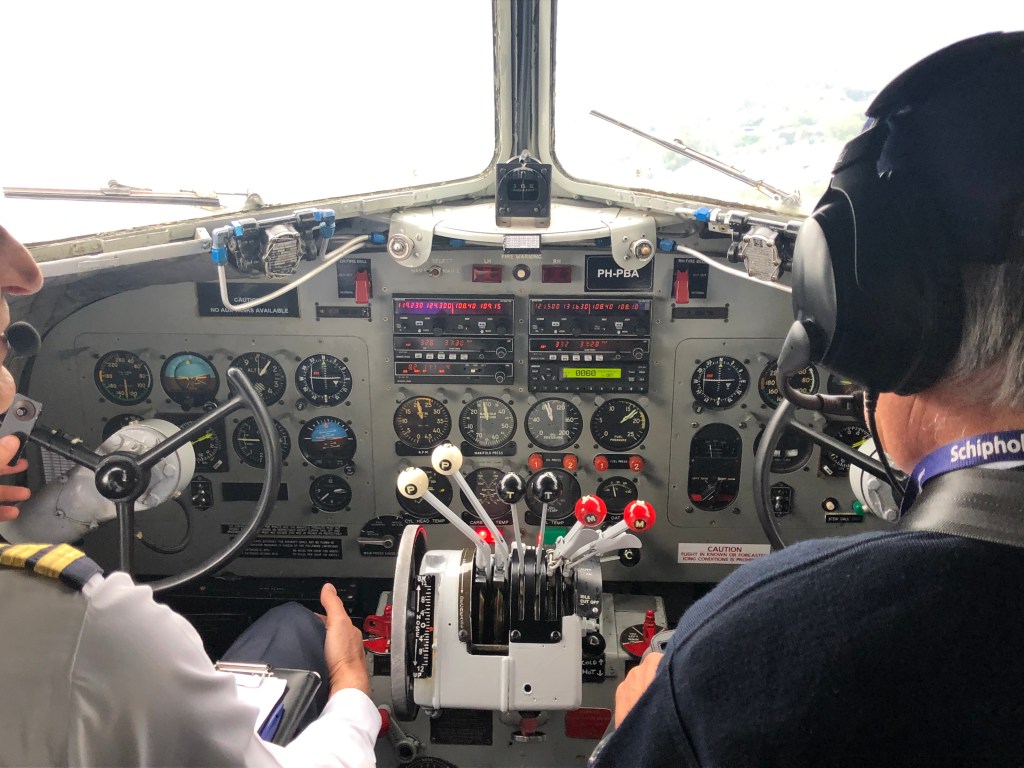
Our seats were right next to the right hand Pratt and Whitney R-1830-92 Twin Wasp radial piston engine. This powerplant is the most produced aircraft engine ever with over 170,000 built. As it fired up I feared that we might be in for a deafening experience but whilst it was hardly a whisperer, it wasn’t really too loud and a bit of radial engine roar is all part of the experience. Graeme was sat in the window seat, although that window is level with your ribcage and gazing out of it involves a bit of contortion. I had a view into the cockpit as the pilots taxied out to Runway 04. Before we entered the runway the pilots performed their power checks, causing the aircraft to vibrate against the brakes, and we then lined up. Cleared for take off, full power was applied and we commenced our roll down the runway. In a taildragger you get the unusual sensation of the rear of the aircraft lifting off first before the main gear break free from the asphalt and this 76 year old aircraft takes to the skies. This was it! I had finally got my second (and almost certainly final) flight in a DC-3! For someone who has genetically malformed smile muscles, I was grinning like a Cheshire cat. With a sweeping left turn directly over the airport’s central area, we headed for the Dutch coast. A DC-3 doesn’t break any records with its rate of climb but we were only going to 1000ft so we soon levelled off. Being that close to the ground meant it was a bit turbulent. Once level, however, DDA Classic Airlines allow you to unfasten your seat belt, get up and walk around the cabin, pop your head into the cockpit. So what if you fall over, bang your head or suffer some other mishap – thankfully I didn’t – health and safety is assumed to be your own responsibility. With just eighteen seats it meant there were plenty windows free to look out of and of course being able to visit the cockpit itself is an avgeek’s dream. I turned to Graeme after a few minutes of being bounced around and said: “This is fantastic!”.

With regular updates on our progress in Dutch, we didn’t really have much of a clue where we were, but we managed to narrow it down to ‘The Netherlands’ due to the fact that a) we weren’t airborne long enough to leave the country at Dakota speed and b) not many other places look quite as wet as The Netherlands. The last vividly coloured bulb fields of the tulip season were a bit of a giveaway too, as was the odd windmill. We maintained 1000ft which might have caused a few problems in other parts of the world but most of The Netherlands is either at or below sea level so it was plenty high enough. A quick read of the flight instruments revealed that we had an indicated airspeed of 130 knots which, at just 1000ft, is as near as dammit to the true airspeed. Thats 150 mph for those of you unfamiliar with nautical miles and knots. With due respect to The Netherlands though, we could have been flying over a featureless desert for all we cared, the star of the show was the DC-3 and we couldn’t fail to observe every nook and cranny of her whilst the towns and country of North Holland (we think) region passed serenely below. Eventually it was time to strap in to our assigned seats for the approach and landing back at Schiphol. This time I had the window seat whilst Graeme observed the pilots doing their thing. As mentioned, the window is not conveniently placed at eye level so to get the views I had to ‘sit’ in a rather prone position but as it was almost certainly my last ever landing in a DC-3 I wasn’t going to let a bit of discomfort get in the way of observing it. The main gear gently touched terra firma a mere 34 minutes after they had last made contact with the same strip of asphalt we had departed from. The tail wheel soon followed and we taxied back to the GA apron to park amongst the business jets of the wealthy. Nice though those Learjets and Gulfstreams were, if I were a multi-millionaire I’d be looking for a DC-3 as my personal runaround. Not very practical for getting to that important business meeting in Los Angeles perhaps but a damn sight more fun.

We had to return the hi-viz vests but we did come away with a certificate and a souvenir hat pin of a DC-3 which I would proudly stick on my headset if I was still working. Naturally I’ve got several hundred photos and several videos to look back on but the main thing to take away is, of course, the memories. Now, is there anyone offering flights on a DC-4 or a DC-6?

Time for bed

Just for good measure, here are a couple of three and a half minute long videos of the landing and take off.

Graeme’s video of the take off.
My video of the landing.

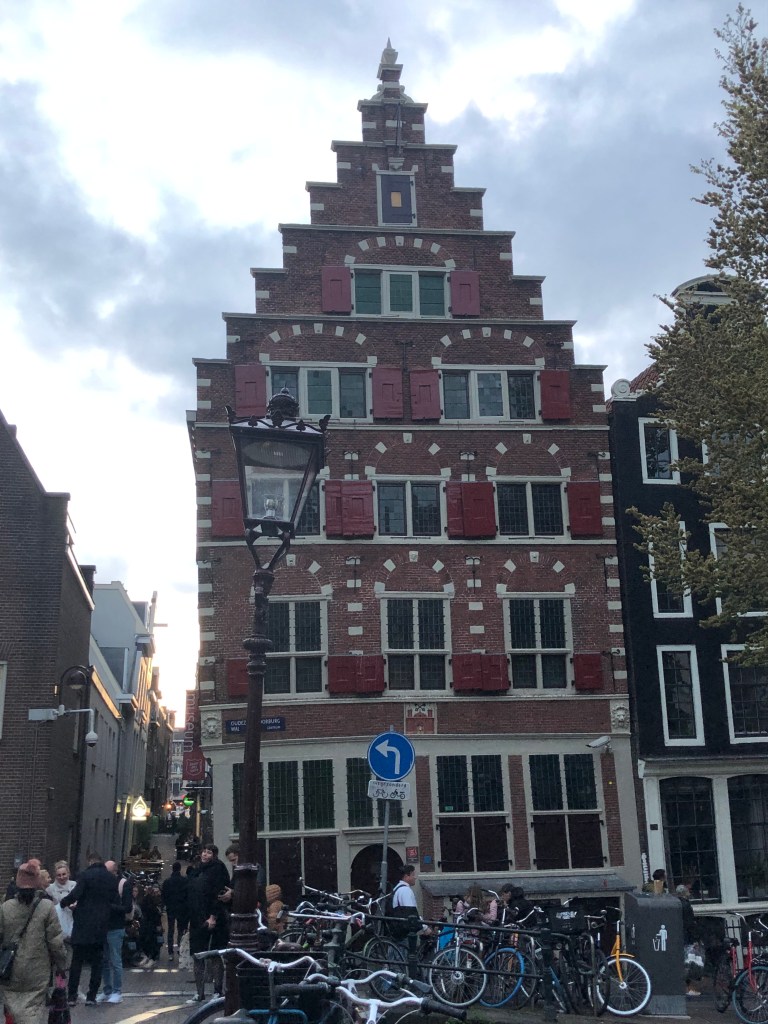
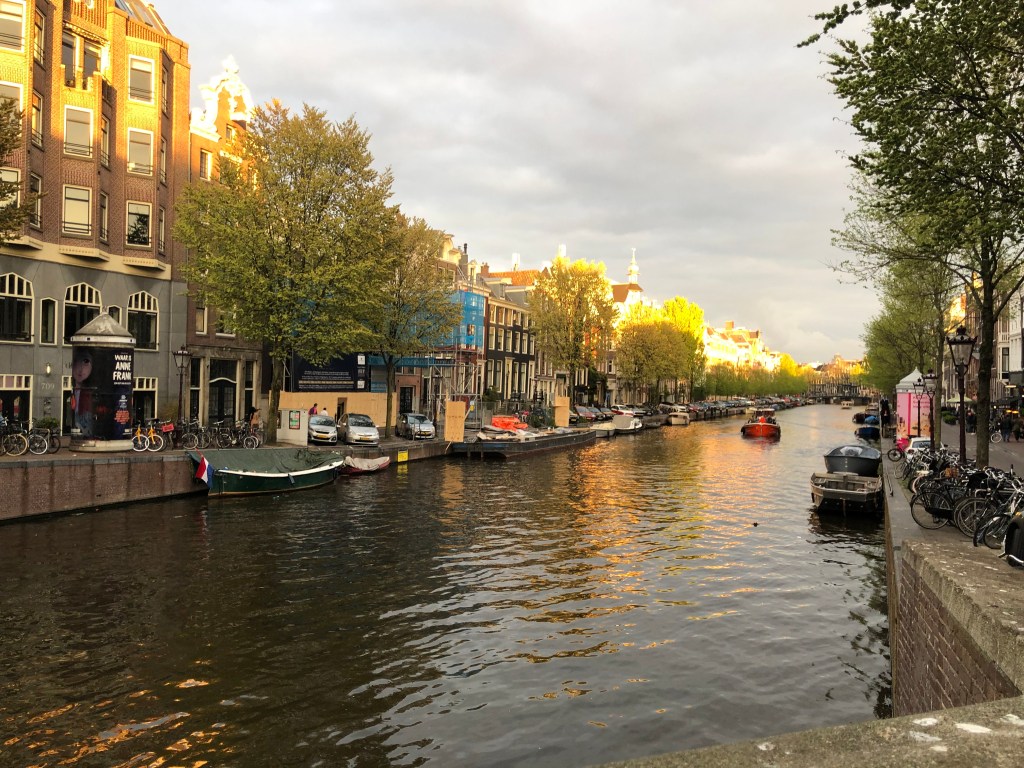
Postscript: whilst this trip was all about flying in an old aircraft, as mentioned in the first paragraph it was also significant in that it has restarted my globetrotting adventures. I love going abroad and have missed being able to do so. That’s not to say I’ve been totally housebound over the past couple of years, I’ve been able to do plenty of things in the UK as and when restrictions allowed and I dare say I’ve come to appreciate this great nation more as a result. There is just something special about stepping just a little bit outside your comfort zone though. Even Amsterdam, which is surely one of the easiest foreign cities to visit, throws up challenges to an irregular visitor like me. What tickets to get for the trains and buses, where to go to find decent food, how to avoid falling into the canals, how to try and avert your eyes at some of the window displays and so on. It’s made just that little bit harder when you are out of practice when it comes to foreign travel. I’m glad to say, however, that between us, Graeme and I worked things out quite quickly, even if we did end up inadvertently ‘stealing’ a couple of bus rides as our travel cards didn’t include that particular bus route. Whilst we only popped into the city on the evening after the DC-3 flight and the following morning, it was good to see a major European capital in all its sometimes naughty and frequently aromatic glory.

Nawlins

Steamboat Natchez without us on it.

“So, we’ve booked a week in Texas” I said, “what shall we do?”

“Let’s go to New Orleans” he said.

“That’s not in Texas” I said.

“I know” he replied.

As mentioned in my previous blog, the destination of Austin, Texas was determined by Avios Reward flight availability. British Airways fly to New Orleans too but that was not available so we had to do it the roundabout way. The day after we arrived in Austin we were back at the airport where Southwest Airlines, the Ryanair of America only much, much better, whisked us off to the Big Easy, just over an hour back the way we had come the previous day. It was Nicholas’s idea. I was more than willing to stay in Texas for the week but he was determined and so it was we found ourselves at the very pleasant Hotel Le Marais in the heart of the French Quarter. We had two and a half days to discover the place. This commenced at a local restaurant called the Acme Oyster House but not before we had popped into a shop that sold over a hundred different hot sauces, all available to try. Some of these were really quite incendiary but they were not enough for Nicholas. He asked the rather bored lady behind the counter which of the sauces was the hottest. She pointed to one called “Satan’s Blood’ and waved a bit of paper in front of his face for him to sign. Apparently it was some sort of waiver to prevent anyone from suing the shop in cases of oesophageal scarring. Carefully inserting the pointy bit of a tortilla chip into the red liquid, he collected the merest smidgeon and popped it in his mouth. Almost immediately he bent double in pain and emitted a string of obscenities that were something of an eye opener to his dad. What a sissy I thought, it can’t be that bad and I signed the waiver. I have to say here that my smidgeon was slightly bigger than his smidgeon which is why I immediately starter breathing dragon like flames from deep within my throat. The pain spread to my eyes which stirred my tear ducts into action, to my mucus membrane which went into overdrive and I’m sure the wax in my ears started to boil. By this time Nicholas had regained enough sense to buy a bottle of water in an attempt to douse the flames. A good idea I thought so I invested a couple of dollars in my own. Relief was immediate but temporary. It took at least half an hour for the 800,000 Scoville Unit heat to finally get to a comfortable level.

By this time we were at the Acme Oyster Bar. This was a hugely popular place which we passed several times later where people were queueing down the street to get in. We were squeezed in straight away by virtue of the fact it was half past three in the afternoon. There a rude waiter who presented us a menu full of New Orleans specialities. These seemed to consist entirely of shrimp and oysters, neither of which do anything for me but there was one dish that took my fancy, red beans and rice. This is probably the equivalent of beans on toast in that neck of the woods and despite looking as though someone had been sick on the plate was quite nice. Nicholas meanwhile had persuaded Mister Grumpy to bring him an oyster to try before his main dish of grilled shrimp. Pouring the aquatic vagina lookalike down his gullet, he pulled a face not too dissimilar to the one he had made after trying the Satan’s Blood sauce, though there was less steam involved. Unlike the hot sauce I was in no way tempted to try one myself. The grilled shrimp cheered him up though and after leaving just a modest tip for Mister Grumpy we left and spent the rest of the day wandering round the French Quarter. 

The French Quarter is New Orleans’ heart. It is a grid of narrow streets with low rise buildings that contain hotels, bars, restaurants, shops, dubious looking clubs and a surprisingly large number of personal dwellings. Most of the buildings are traditional with balconies on the front and everything you may have seen about New Orleans is confirmed. One street in particular was the party hub. Bourbon St is a cacophony of neon and noise and as far as I was concerned, rather ghastly. This was a shame as the rest of the French Quarter was very pleasant. You were never very far from live music, especially when the sun went down when a jazz band would appear on one corner, a blues guitarist on the next. If not on the street you could hear it coming from within the bars and this on a Wednesday evening in November. There was much more of it by the time we left two days later just as the weekend was getting underway. 

The following day we embarked on a tour that took us out of the city, along the banks of the Mississippi to a preserved plantation, of which there are several to choose from. The journey out there was interesting. For a start the bus was late thanks to many of the French Quarter’s streets being dug up. Once clear of the city we followed a highway built on an endless bridge over swampland before arriving at the Oak Alley Plantation. Back in the 1830s a well to do French speaking Cajun couple established a sugar plantation next to the Mississippi. This required funds which they raised by mortgaging their possessions. Most of those possessions were slaves. A rather grand house was built for the family whilst the slaves were housed in shacks near the fields where they worked. The house still remains and we got a tour round it. Very nice it was too with grand columns announcing to the world that this was a family of some importance. It was a short lived dynasty, however, and following the death of the husband, the wife struggled on with not much success and the plantation was passed on through numerous different hands. In the meantime slavery had ended in the USA but with nowhere else to go, most remained where they were as paid labour. Paid in tokens, that is, of no value anywhere but on the plantation itself. Early in the twentieth century the plantation closed and the house was sold to a couple as a retirement home. In the seventies it passed on to a trust who restored the house to its former glory and run it as a tourist attraction. The slave quarters were long since gone but replicas had been built to show the stark contrast in the lives of the owners and the owned. It was a very interesting place to visit. I can’t say there were many laughs though.

On returning to the bus the driver decided to take our money which was $64 less than we thought. I didn’t want to make a scene though so kept quiet. The second part of the tour involved a drive to a place on the outskirts of the city where we were deposited in the care of a swamp tour company. Eventually we were plonked on a boat driven by an old bear of a man with a gammy leg, not that he needed it once he was at the tiller. This was a pleasant trip on which we viewed alligators, turtles, herons, water rats, kestrels and above all else, swamp. There’s tons of it out there. The guide claimed to be a direct descendent of the Cajun settlers who arrived in the area in the mid-eighteenth century after being booted out of the Maritime region of what is now Canada by the British. They weren’t wanted in the other colonies and finally settled in the swamps of Louisiana. They, along with the creole culture of the African slaves give the region its rather unique ‘French but not really French’ feel. Whether or not he was a thoroughbred Cajun, he could certainly spin a good yarn even if his accent and the noise of the outboard motor made it hard to hear at times. 

Back at the hotel the tour company had realised their error and demanded the extra $64. Fearing being taken back to the swamped and dumped there I paid up. Cajun and Creole cuisine dominate the restaurants in New Orleans and once we were back there it was a fairly hard task to find one that wasn’t. We discovered a faux-posh steak restaurant and went there for really rather large pieces of cow.  Say what you like about the Americans, they do a good steak even if they are pretending to be French at the time. Our last day in the city involved us taking a tram just for the hell of it. Well, not really the hell of it, I like trams and New Orleans’ tramway system is something of a gem. The St Charles Ave line has been in continuous use since the 1830s, the odd hurricane disruption aside, the horse drawn cars giving way to electricity in the 1890s. It was this that we, or should I say ‘I’, decided to ride on. Tram Philistine Nicholas just had to grin and bear it. It took us through the warehouse district into a well to do suburb along a wide avenue where the central reservation was shared by the trams and joggers alike. Large houses lined the streets along with the odd university. The trams, or streetcars if you are American, on the St Charles Ave line were built in 1923 and complete with wooden slatted seats where the backrests can be moved depending on the direction of travel. The other lines, which were restored in the early 2000s after a forty year absence, use replica trams. 

With my tram fetish satisfied, we set off to find the Mississippi as one should in New Orleans. It wasn’t far away and we walked along its bank to hear the Steamboat Natchez tooting its horn. A cruise on that might be nice for a couple of hours we though as we walked up to the ticket office only to see the gangplank raised. With that boat sailed we decided that the best way to get a cruise on the mighty Mississippi was to take the Canal St Ferry and at two dollars each way it was somewhat cheaper than the Natchez. Shorter too as the crossing takes five minutes at the most on a rather spartan ferry but at least we can say that we have cruised on the Mississippi. Our last supper in this city saw Nicholas try oysters again. This time though they were grilled and flavoured with garlic and other stuff which went some way to disguising the fact he was eating something akin to snot. I didn’t try one, preferring cajun chicken which was almost exactly unlike the cajun chicken you get over here. With that we headed back to New Orleans’ rather shabby airport – there is a new terminal opening next year – and our flight back to Austin.

It turned out to be a good call by Nicholas for us to go to New Orleans. We fit plenty in our two and a half days there and there is almost certainly a lot more to it than what we saw. It has a deserved reputation as a party town but it also has an interesting history. Whilst it is resolutely Anglophone American (don’t even think about saying ‘Orleans’ the French way), it still plays on its Francophone Cajun and Creole past which manifests itself in street names, food, music (Creole, not Cajun, since when have the French been any good at music?) and trashy culture such as necromancy and voodoo. We didn’t do a cemetery tour but they are a big thing there and you don’t have to go far in the French Quarter to find a voodoo shop full of goat skulls or dolls to stick pins in. Would I go back? Yes, maybe as part of an itinerary that took in a few southern states. It is an interesting place and after all, there’s trams to ride there.