County Championship

I was in two minds about whether to do this blog. That’s no surprise, I usually am in two minds as to whether to do a blog or not, but this one is about cricket and for whatever reason, cricket is a big turn off for many people. However, as my blogs are all too infrequent nowadays, I’m doing this in the hope that the site won’t seize up due to lack of activity. Although it says in Glad To Be Grey’s title that it is about travel, cricket and trams, I’ve only done two other cricket blogs before (and no tram ones just in case you were wondering) so I don’t think I’m guilty of overdoing it. Anyway, enough of the justification, here comes the blog.
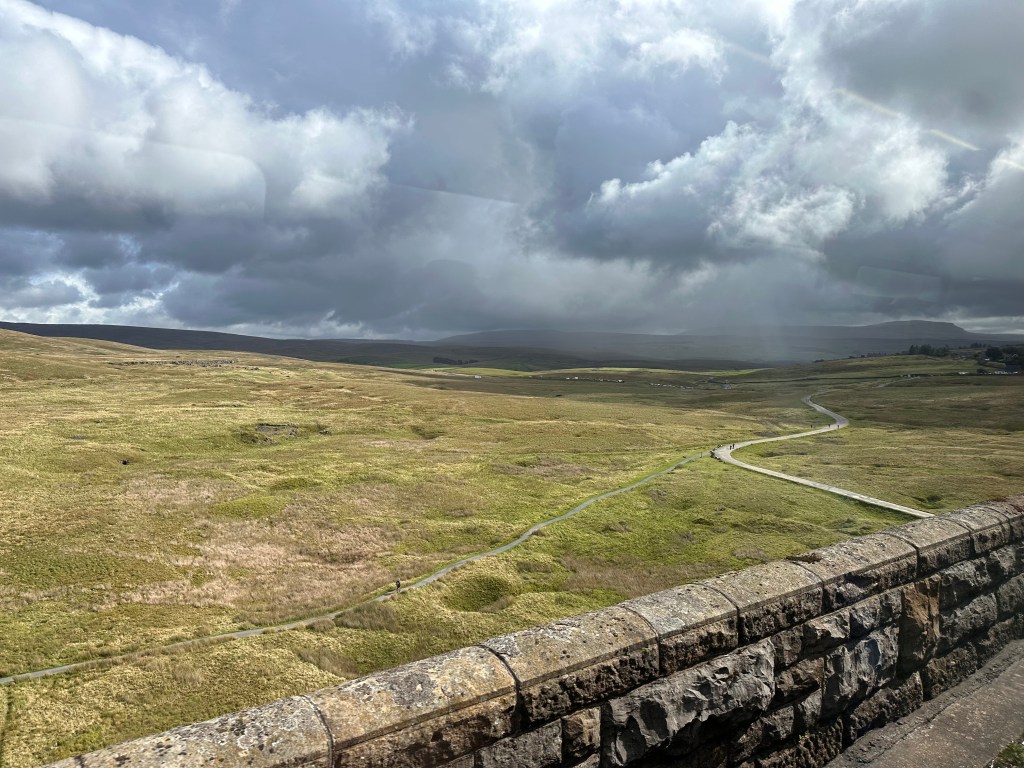
Crossing the Ribbleshead Viaduct on the Settle and Carlisle. Nothing to do with the cricket but it’s a lovely rail journey.

Cricket is a sport that gets a lot of attention. Most of that attention centres on international cricket, be it five day Test Matches or ‘white ball’ cricket of which there are two iterations, One Day and T20. T20 has also given us franchise cricket, particularly in India where team rosters are filled in an auction at the beginning of the season. In Britain we have a similar competition called The Hundred which has attracted the crowds and TV coverage. It is, frankly, rubbish. Yes, I know I’m an old fuddy-duddy and it introduces more people to the game. The extra revenue comes in handy too. But for your traditional cricket fan The Hundred is sacrilegious and gets in the way of the real cricket. That real cricket is played on the village greens of England (and the rest of the UK) by amateurs, at county level by the professionals and elite level by the national sides. The County Championship was once the ultimate national competition and still is despite its popularity being overtaken by shorter forms of the game. The competition commenced in 1890 and since 1992 eighteen counties have competed, seventeen of which are from England and one from Wales. Since 2000 the league has been split into two divisions with promotion and relegation to increase the number of meaningful matches. The counties each play 14 games, each of which has four scheduled playing days. This being cricket, they might only need two of them or lose all of them to the weather. The games tend to be clustered round the start of the season in April and May and the end of the season in September with shorter forms of cricket and the dreaded Hundred taking up the height of summer. It really does feel like the ultimate national competition is now out on the margins of cricket.
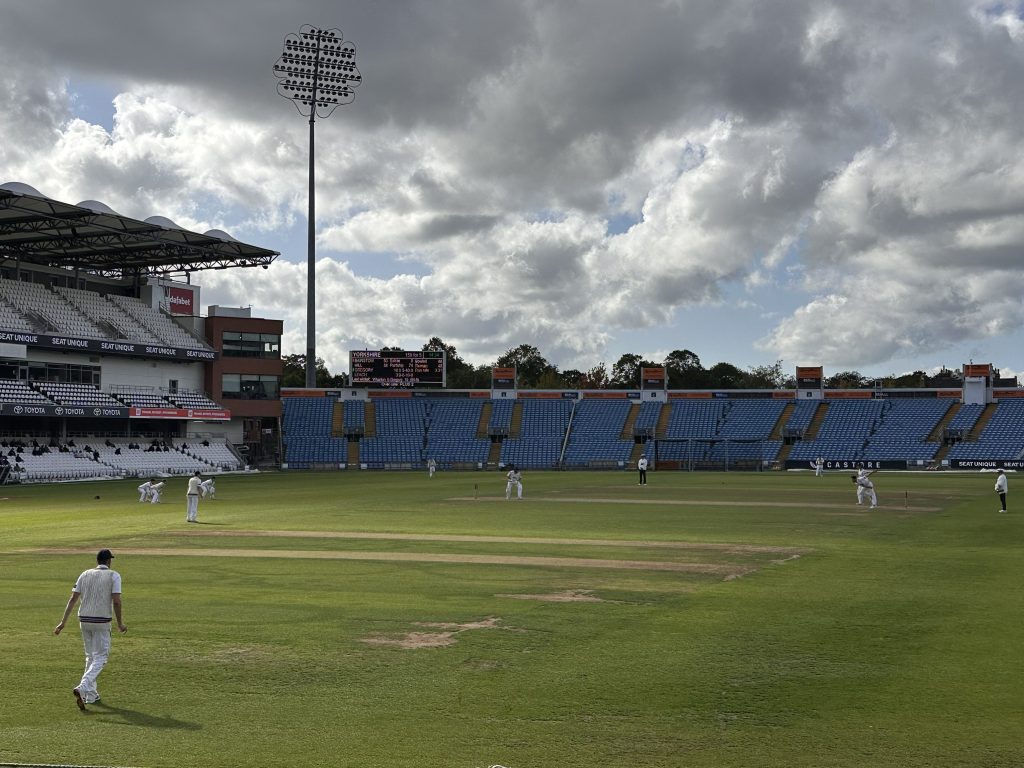
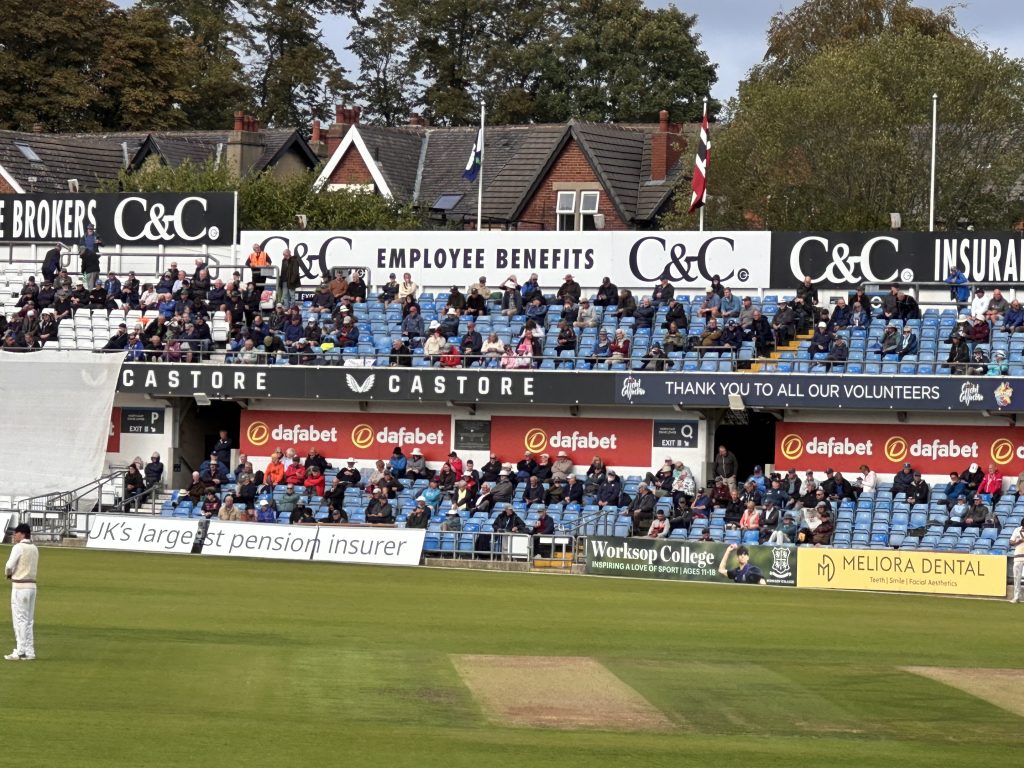
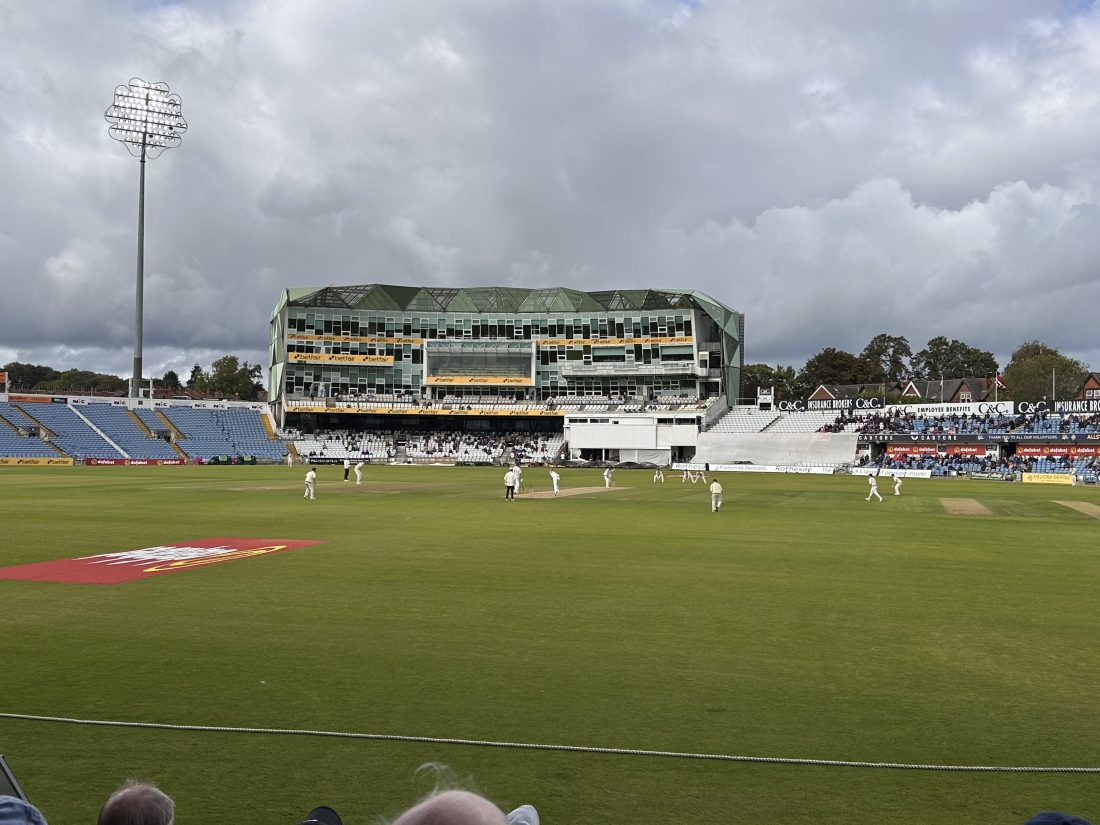
County Championship Division One. I must add here that the Western Terrace (blue seats) and the Howard Stand Upper (white seats) are only used for big games like Test Matches.

So, with that rather miserable summation, I do like to do my bit and contribute to the coffers of my favourite County Cricket Club, Yorkshire. It has to be Yorkshire due to birthright. As a kid growing up in Huddersfield there was absolutely no possibility of me following any other county. With 33 County Championship titles they are by far the most successful county side, though don’t accuse me of being a glory hunter – most of those titles were secured before I was born. No, I follow Yorkshire because I’m a Yorkshireman and Yorkshiremen follow Yorkshire. It’s a closed loop. There’s no escape even if I wanted to. It’s only recently that I’ve been to watch them in person. Living in Scotland means it’s hardly a day trip and some forward planning is required to get to a game. Sometimes it isn’t possible but this year we were determined to get to a game. ‘We’ I hear you cry? Well yes, my friend Graham goes too. He is also a Yorkshire fan though it’s not through birthright as he is from Kilmarnock and currently resides in Penrith. He is, however, an honorary Yorkshireman which is just as good as a real Yorkshireman as he has made a conscious decision to support the white rose county. The game we decided to go to was Yorkshire V Somerset at Headingley, Leeds. It was the middle of September, the penultimate game of the season for both clubs.
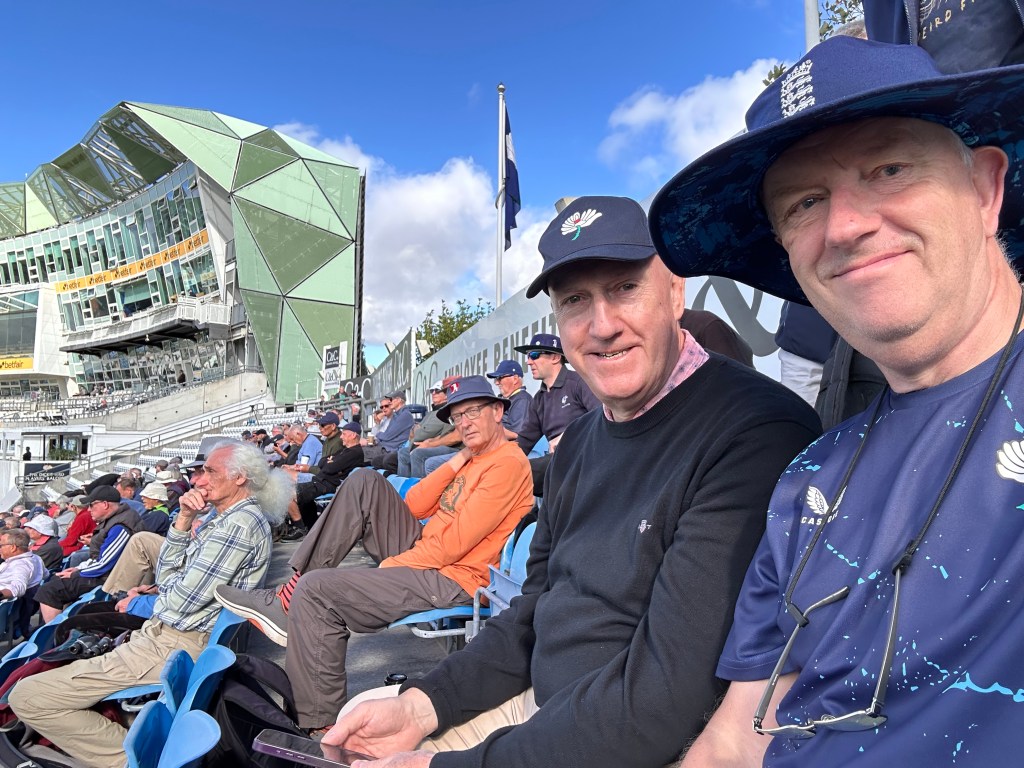
The founder members of the former A Watch Controllers Yorkshire CCC Appreciation Society. Plus a photobombing Somerset fan.

With County Championship games taking place over four days, some forward planning is required for those of us not lucky enough to live in the vicinity. We took the decision to book a nearby hotel for three nights, travelling down on Day One and back on Day Four of the game. With the game commencing at 10:30 each day, this meant we’d miss the start of D1 and if it went the full course we’d probably have to leave before the end of D4. Sure enough, after a trip down the delightful Settle-Carlisle railway (possibly worth a blog of its own) to Leeds we got an Uber to the Headingley Premier Inn, dumped our bags and walked the five minutes to the stadium. It was midway during the afternoon session so we’d missed the first three hours of play. Yorkshire had won the toss and elected to bat and it hadn’t gone particularly well but our arrival coincided with something of a recovery with club captain Jonny Bairstow completing his half century.
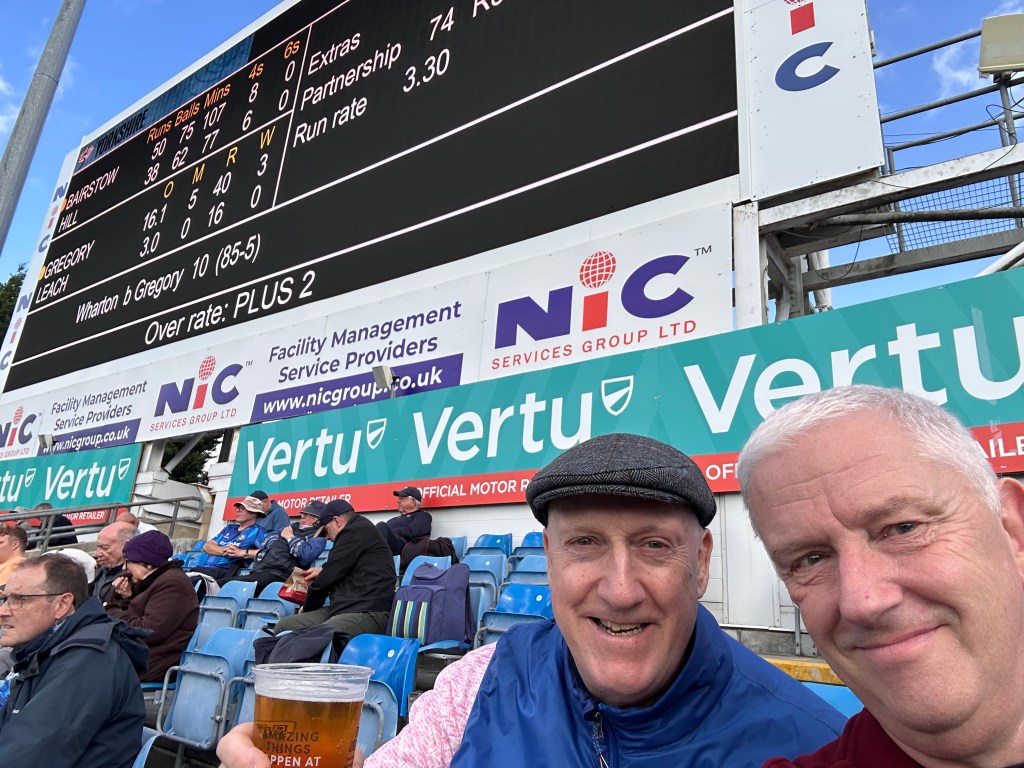
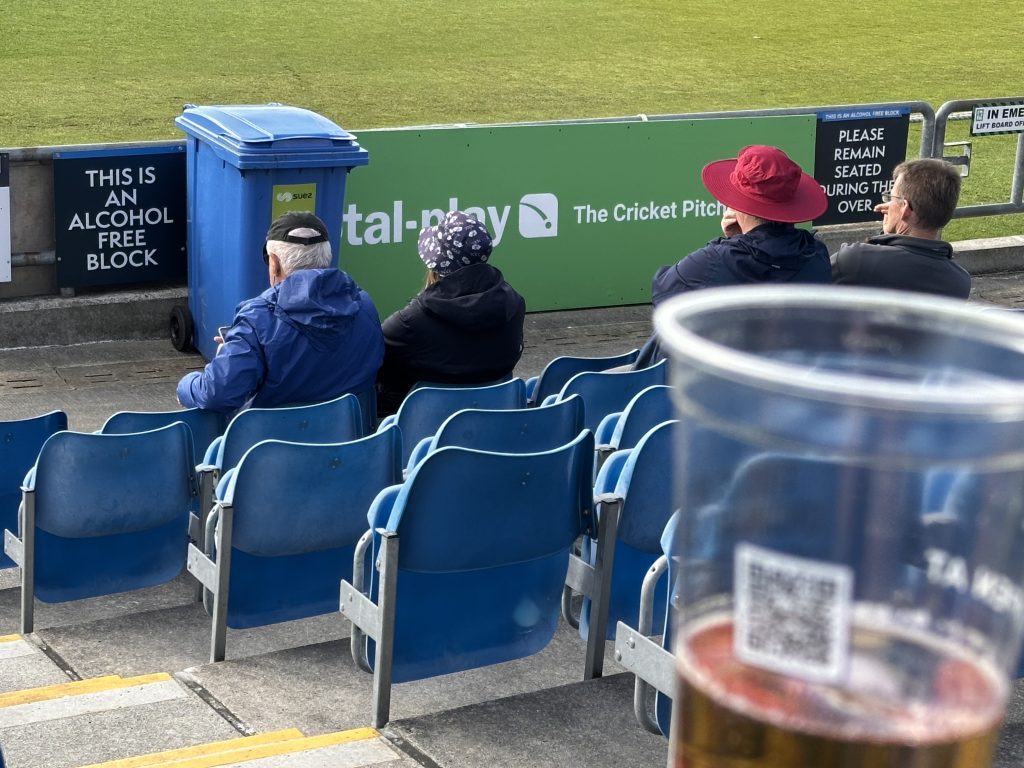
And so it went for the remainder of the day and the next two. Thanks in part to those Bairstow runs Yorkshire posted a modest first innings score of 212. Somerset’s first innings went a similar way with a poor start, a bit of a recovery then ending quickly on an even, erm, modester score of 201. Like their first, Yorkshire’s second innings got off to a poor start but George Hill and Dom Bess had an excellent partnership of 166 runs which helped them get to 275. This meant Somerset needed 287 runs from their second innings to win the game. By the end of Day 3 the visitors were 75 for 3 leaving the game nicely poised.
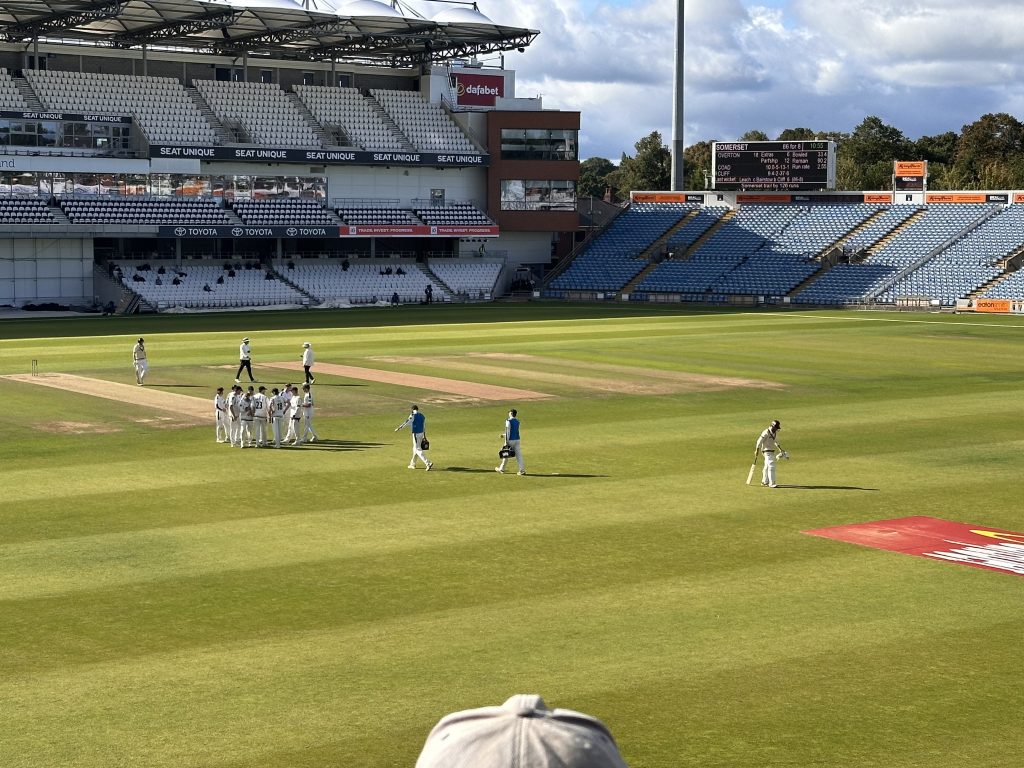
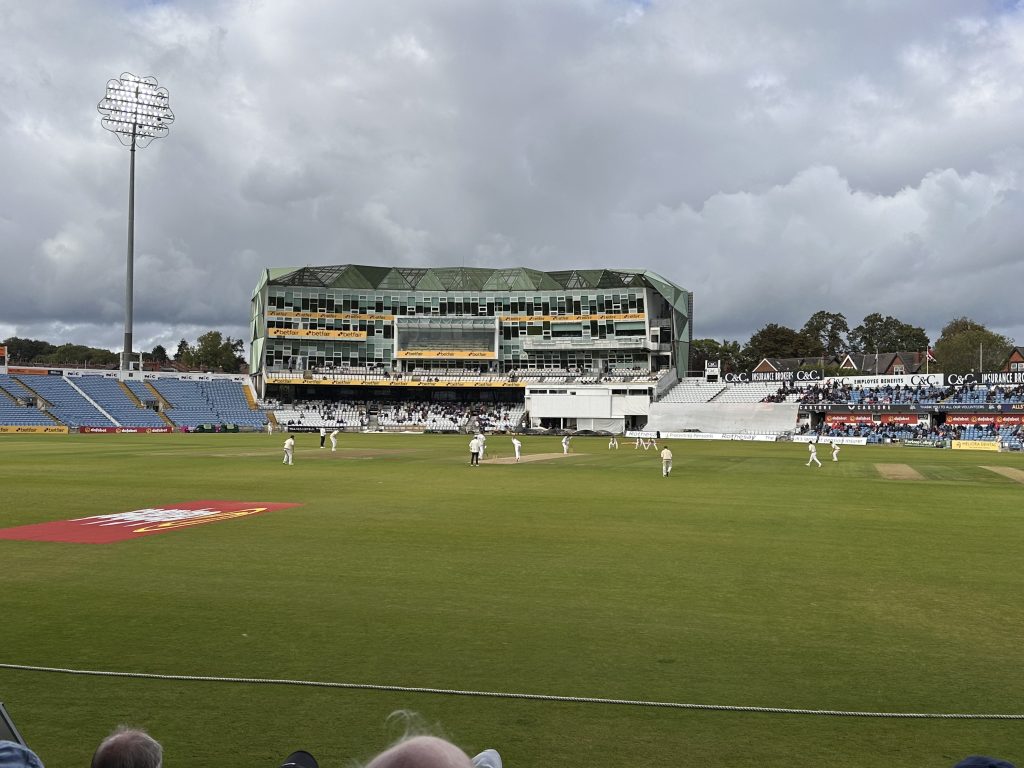
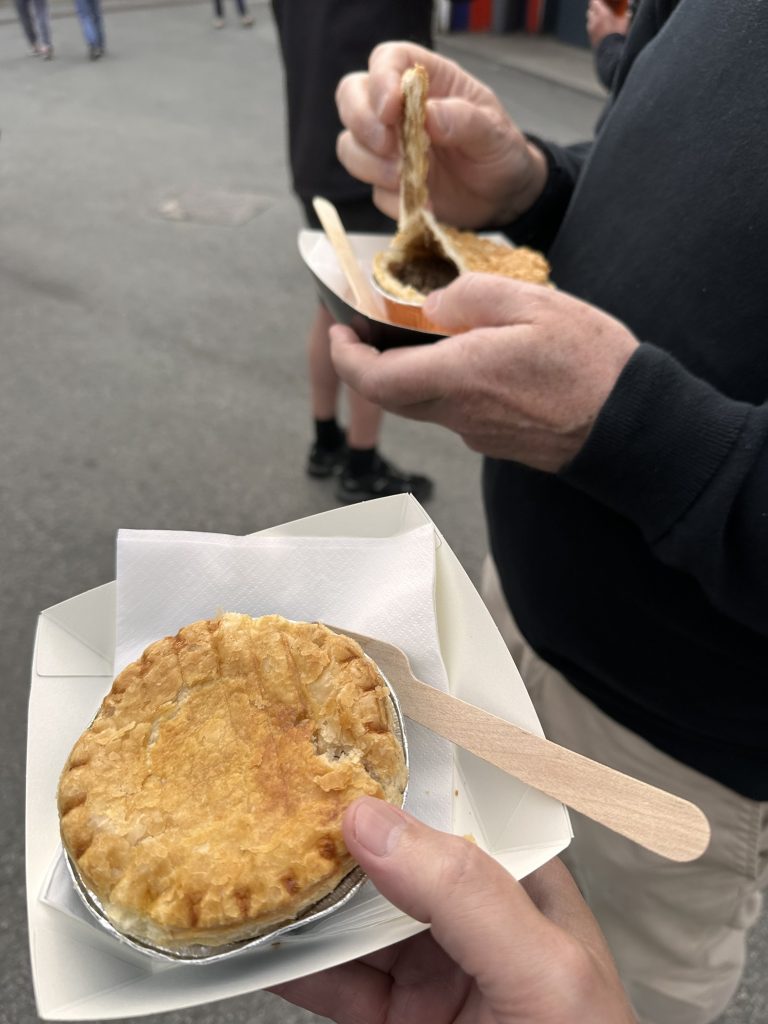
Excellent pies.

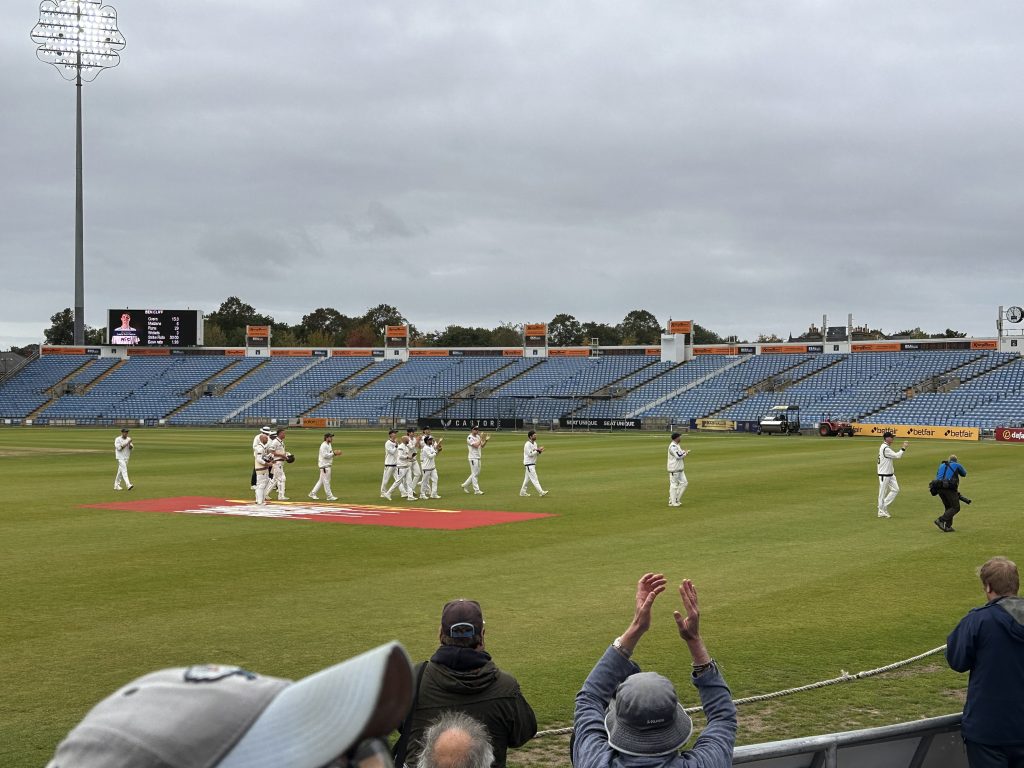
At the start of Day 4, Somerset required 212 more runs for the win whilst Yorkshire needed to take seven wickets. There was plenty of time for either scenario to happen though there was the threat of rain in the afternoon which could have brought the game to a premature end and declared a draw. As it happened, just 80 minutes of the morning session was required as the Yorkshire bowling, aided by a bowler friendly overcast sky, ripped through the remaining Somerset batsmen to dismiss them for 101. We whooped and hollered but in a calm and measured way as befits a cricket game. Yorkshire had won by 175 runs which makes it sound easier than it actually was. Therein lies the delight of watching a four day game of cricket. We had, in order, been happy, a little deflated, been very happy, been very unhappy, been delighted, despondent, happy, cautiously optimistic, ecstatic (in a measured way of course). Probably a few more emotions in between too but you get the picture. Yes, it can be the same in other sports but not for so long.
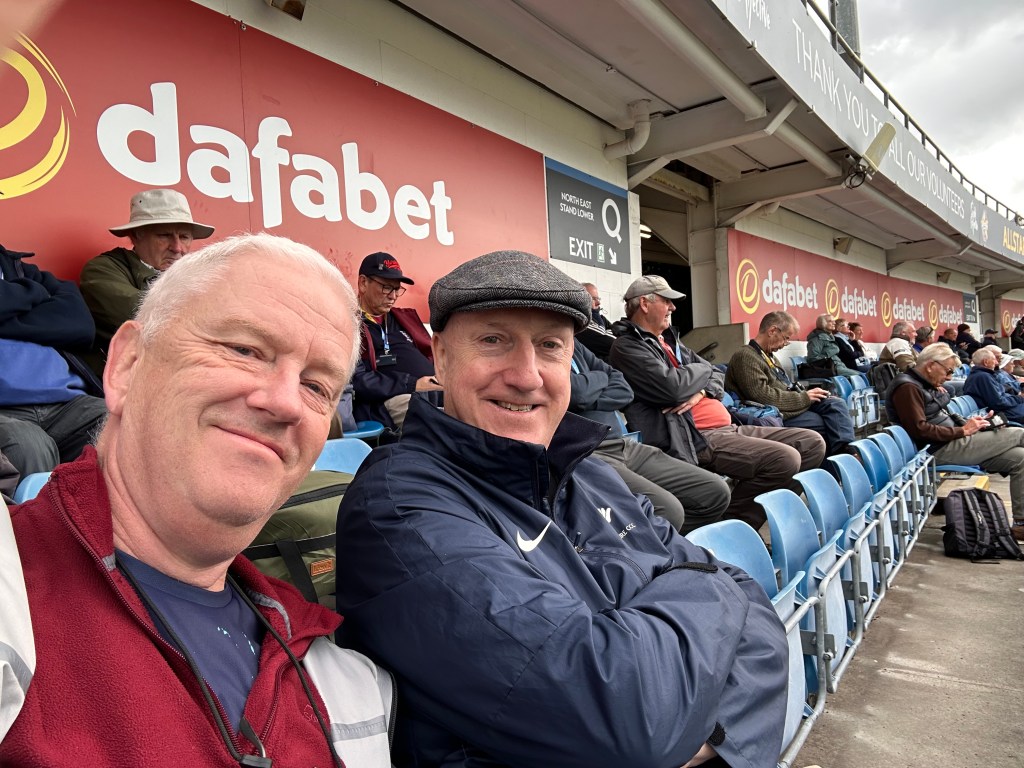
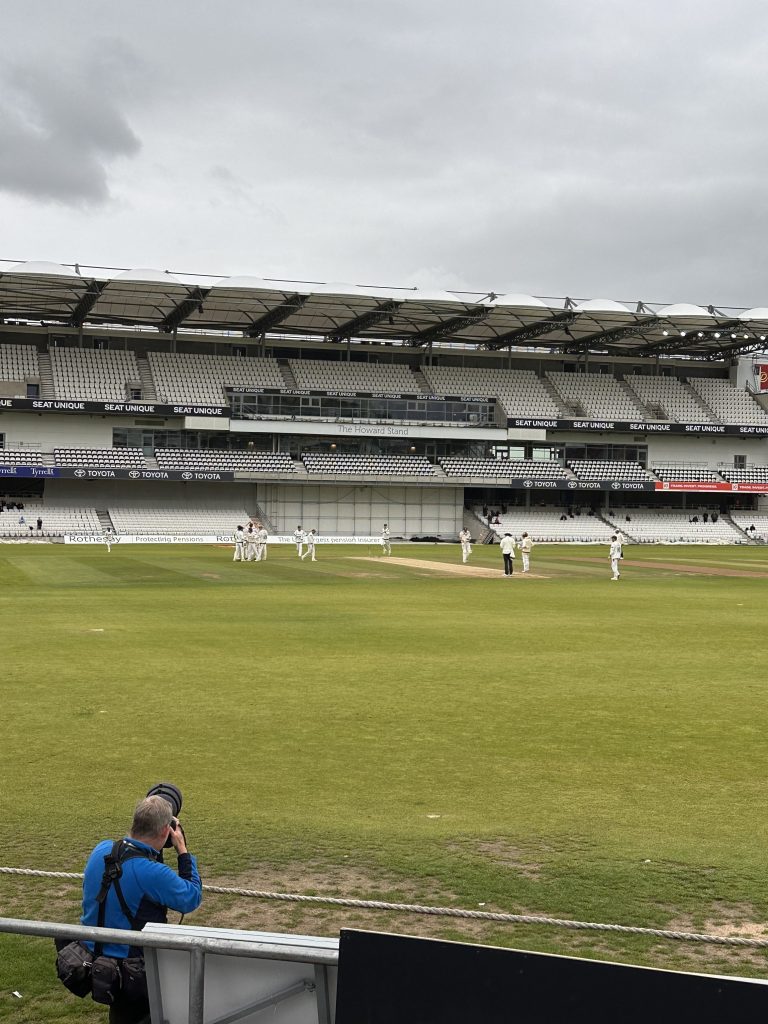
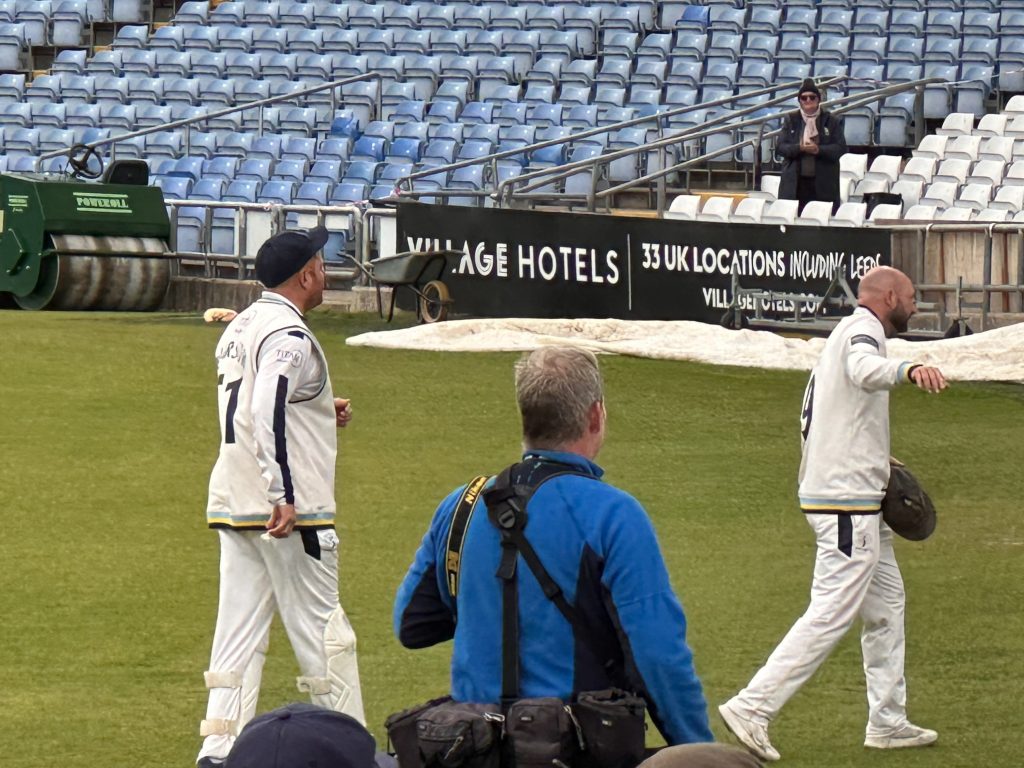
Day Four and wrapped up against an early Yorkshire autumn.
Ball, Bowled Revis for eight. Game over. Yorkshire win.

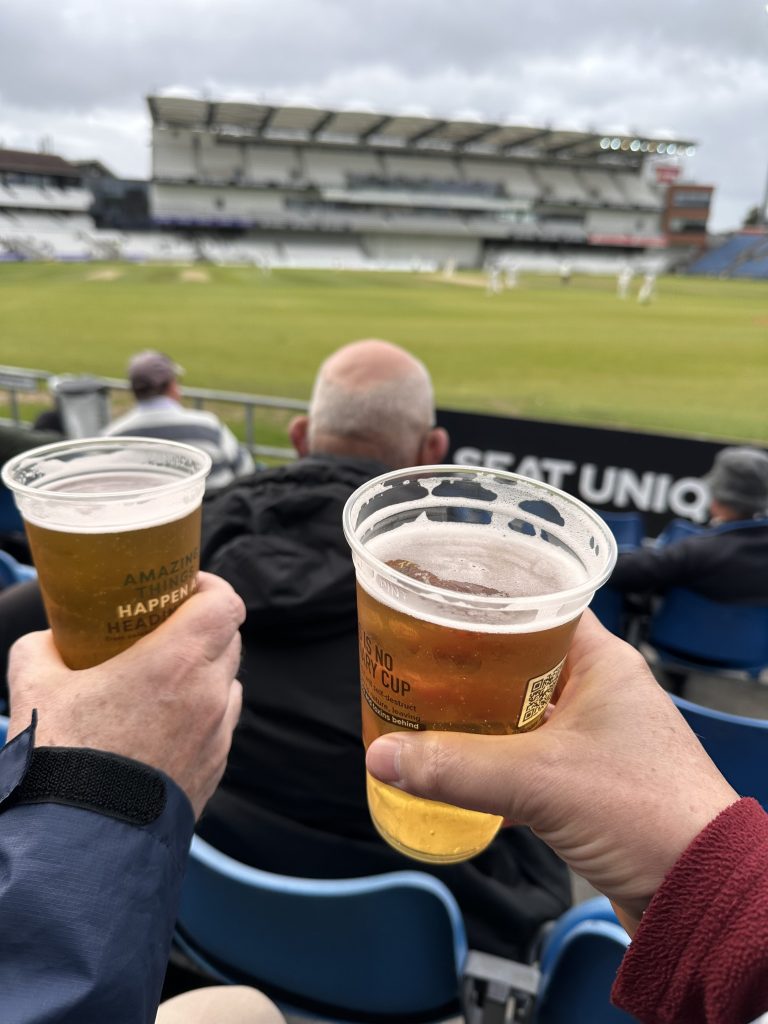
Of course it’s not for everyone. Some people who don’t enjoy cricket got to great pains to tell everyone why they don’t like it. Others can enjoy the shorter forms of the game but not the long form. The truth is the crowds at County Championship games are tiny. Headingley Stadium holds over 18,000 people but there was maybe 2000 folk there on Days one and two, fewer on three and four. Many of those were members, which is the cricket equivalent of season ticket holders. Not many paid at the gate like us. The price for watching a day’s play was £18, not bad when compared to other professional sports but of course you have to multiply that by four to see the entire game. Those that did turn up were nearly all of a certain age where working is no longer compulsory, unsurprising seeing that all four days were weekdays. The ‘crowd’ make up was mainly men but quite a few ladies too, and a couple of dozen Somerset fans had made the journey up from the West Country. There’s a couple of bars and one food and coffee concession that did fantastic pies. It’s hard to see how the counties can make any money out of hosting County Championship games yet they continue to play them, even if they’ve had to push them to the peripheries of the season. With the game ending at lunch time, it was a leisurely trip back up the Settle and Carlisle line as the rain arrived. Yorkshire had beaten both Somerset and the weather and we could not have been happier.
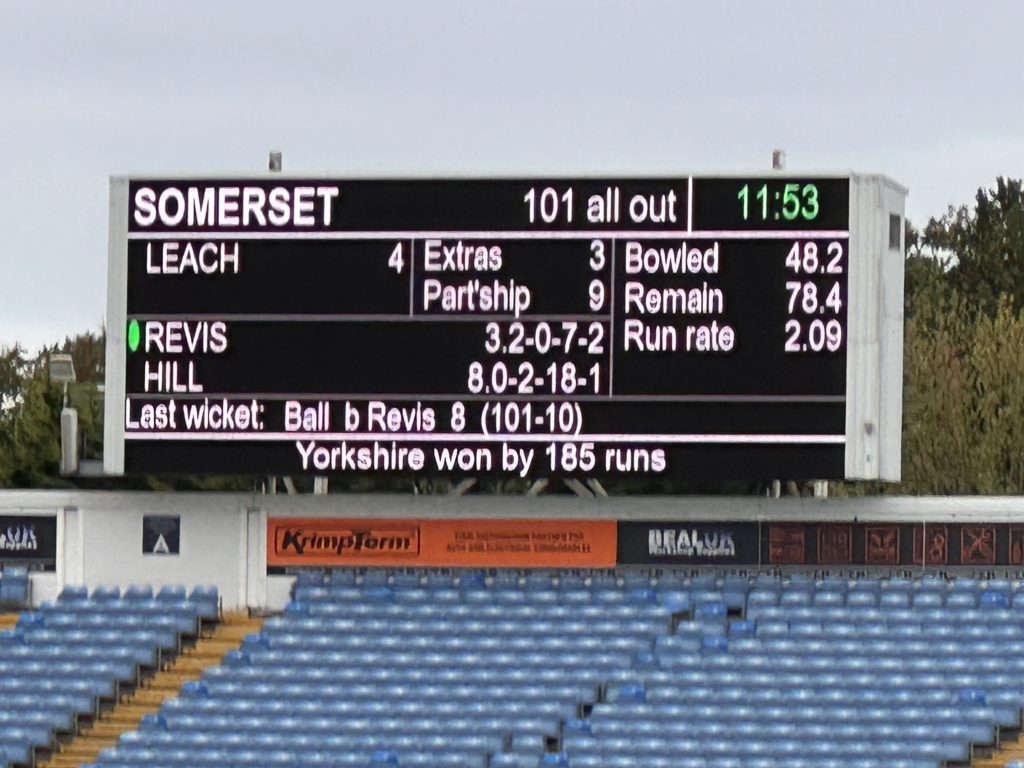
It’s 11:53 on Day Four and it’s all over.

Footnote: Yorkshire won their final game, a very narrow one wicket victory over Nottinghamshire at Trent Bridge. This meant they finished fifth in the ten team Division One of the County Championship. Somerset, who had never won the County Championship, finished second.
Olympiad

It’s been getting on for eight months since I last wrote something for the blogging site and even that was just a silly observation about a song lyric. That’s the problem when there’s only one thing anyone is talking about, something that has put countless lives on hold for the past seventeen months. I could blog about that but I suspect those of you who read these little missives are as sick to death (not literally I hope) of it as much as I am. However, the world is slowly seeing sense and returning to some semblance of normality, albeit at snail’s pace, and Doing Things is itself a thing once more. Ironically, the subject of this first blog in an age is the Olympic Games, a Thing that everyone could Do by watching the telly which would have been possible even in the dark depths of a severe lockdown. That the Games’ ending ending coincided with the “Nearly But Not Quite ‘Cos We Don’t Really Trust You Freedom Day” in Scotland is purely coincidental of course but at least I don’t now have the tricky decision to make as to whether I watch the dancing dressage horses or head to an all-night rave at the local discotheque. 

I happen to like the Olympics. Not everyone does. I’ve had it explained to me that I never show the remotest bit of interest in the aforementioned Dressage in the four (or five) years between Summer Olympiads. Nor do ever even acknowledge the existence of competitive canoeing whilst I actually go out of my way to avoid boxing. Even athletics, which for many people is the only sport that really counts at the Olympics, provides only a passing interest to me in non-Olympic years. This is true, guilty as charged. Far from this being a reason to not like the Olympics, however, it makes it all the more interesting as far as I’m concerned. Who knew horses could dance? Well, I did as I’ve been watching Olympic Games since 1968 when I was six (I was two in the summer of 1964 so memories of the first Tokyo games are somewhat unreliable) but four years is a long enough time to forget about piaffe pirouettes so it’s like a voyage of discovery every time. Not only is it interesting seeing some other sports for a change, it is a chance to be patriotic and whilst Team Great Britain And Northern Ireland (Team GB for short, apologies to my NI pals) is still a thing I’m damn well going to be cheering them on. So what if our thirteen year old skateboarder is actually from Japan, if she’s wearing a Team GB uniform and the Union Flag is raised at the medal ceremony, I’m delighted both for her and my country. 

I’m nothing if not patriotic.

As mentioned in the above paragraph, my first Olympic memories came from the 1968 games in Mexico. I can distinctly remember David Hemery winning the 400m hurdles for GB. It was one of five Gold Medals won by Great Britain which, along with five Silver and three Bronze put GB tenth in the medal table that year. Those of you who can’t really remember further back than London 2012 might feel that five golds and tenth place overall was a rather paltry return for a fine, sporting nation like GB. You’d be right of course but we were nothing if not consistent. In the seven Olympic Games to take place between 1968 and Barcelona 1992 GB finished between 9th and 13th in the medal table achieving five Gold Medals in five of those tournaments, four in one and just three in another. 1996 proved to be a low point with just the one Gold Medal and 36th in the medal table. Since then, thanks in part to the use of National Lottery funding, things have improved with eleven Golds on 2000 and nine in 2004, tenth place in the medal table on both occasions. In 2008 though things really got better with nineteen Golds and fourth in the table. Then, in 1012 with the Olympics on home soil, GB won a remarkable twenty-nine Gold Medals, finishing third in the table. Hosting the tournament obviously had an effect but GB went one place better in 2016. Despite winning two fewer Golds – twenty-seven – only USA finished above GB in the medal table and the overall medal count was two higher than in London at sixty-seven. Second place above China, who’d have predicted that?

I have memories from all those games starting with that David Hemery 400m Hurdles Gold in 1968. Mary Peters winning the Pentathlon at Munich 72, “And it’s WILKIE” shouted by Alan Weeks four years later in Montreal. The Ovett/Coe battles in Moscow 80 and another rivalry between Tessa Sanderson and Fatima Whitbread in Los Angeles 84. In Seoul 88 it’s Barry Davies’s immortal line “Where, oh where were the Germans. And frankly, who cares”. Barcelona 92 gave us Linford Christie and Sally Gunnell and Atlanta 96 gave us Steve Redgrave’s fourth Gold Medal on the trot, though very little else. From Sydney 2000 onwards it is hard to choose. Redgrave’s fifth and final Gold Medal sticks out though, not bad for a diabetic. “You’ve won Kelly, You’ve won” – Kelly Holmes double Gold was the big story in Athens 2004, Rebecca Addlington achieving the same feat in the pool at Beijing 2008. What to choose from London 2012 though? With so many golden moments, I’ve got to plump for Super Saturday with three athletic Golds in one session, made all the more memorable by the fact I’d applied for tickets for that session in the ticket lottery the previous year. I was unsuccessful. Allow me another golden moment though, GB’s utter dominance of the Track Cycling events. Take a bow Chris Hoy. As for Rio, Hollie Webb’s winning penalty in the Women’s Hockey Final is my favourite of many good memories though Max Whitlock’s two gymnastic Golds, secured within a few minutes of each other, comes close.

And so to Tokyo 2020. There was much to dislike about it. It took place a year late for a start. The global pandemic had caused that but was still on hand to taint the event once it started. The stadia were devoid of spectators, the joy of medal ceremonies was tainted by the masks the medallists were forced to wear, competitors had to fly home once their events had ended rather than being able to cheer on their compatriots in other sports. There were other, non-covid issues too such as Russian athletes competing under the flag of the Russian Olympic Committee and the murky waters of biological men competing in women’s competitions. With Tokyo eight hours ahead of the UK, much of the day’s action had taken place by the time I woke up and was all over shortly after lunchtime, not ideal for viewers in Europe and worse I suspect for those in North America. There was little build up to it and I was also away on holiday when it started so it rather crept up on me. And yet… I rather enjoyed it.

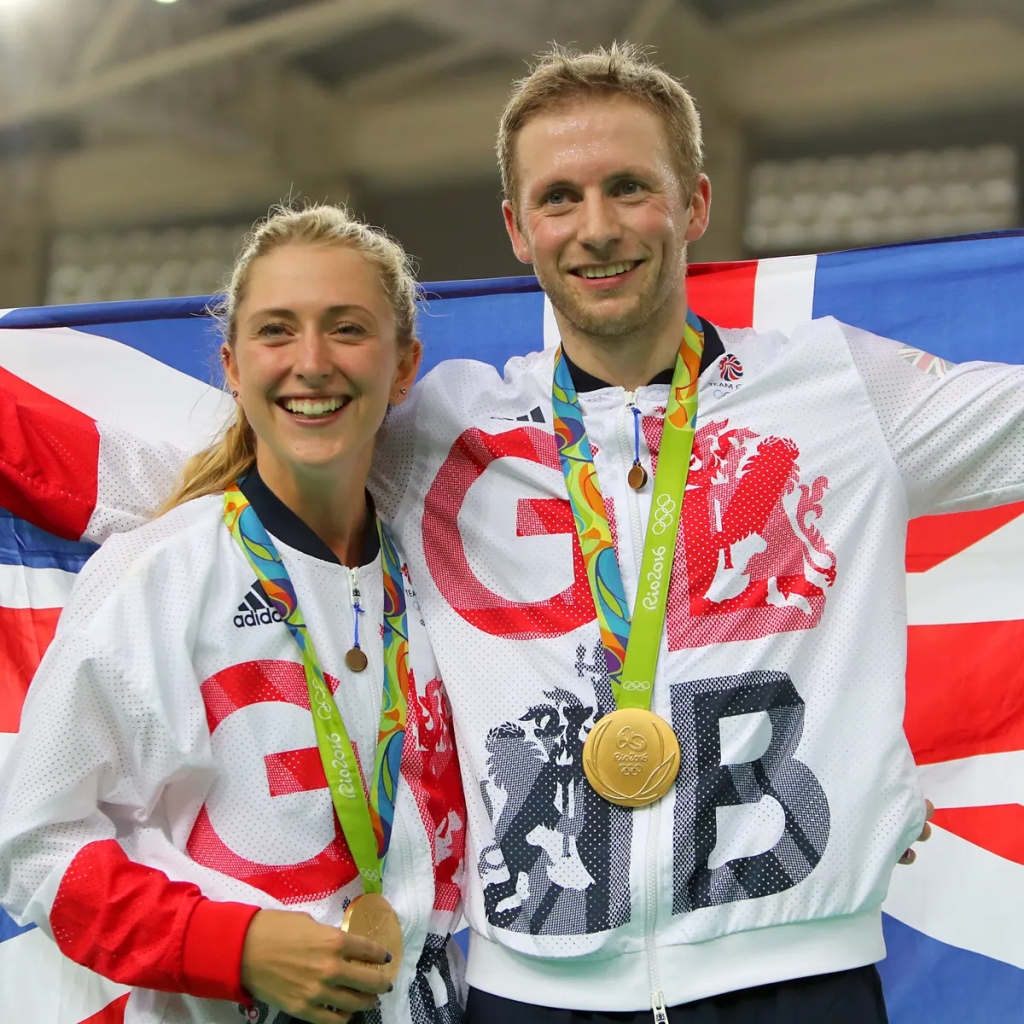
Going into the games GB’s aspirations were tempered somewhat by the uncertainty caused by the pandemic. Also, the generation that had benefitted from lottery funding and done so magnificently over the previous three games were getting on a bit. They were leaving some very big shoes to fill. As it turned out, some old favourites proved they weren’t past it whilst there were indeed others coming through the ranks. GB won sixty-five* medals, the same number as in London nine years earlier and only two less than Rio although it is only fair to add that there were more medals on offer this time round. ‘Only’ twenty-two of those medals were Gold, however, which pushed GB down to fourth in the medal table behind USA, China and Japan who took full advantage of the host effect just like GB had done in London. Cycling again produced the most golds but GB’s dominance in the velodrome was much less than in the previous three games. Three of the six Golds won by British cyclers were in the fresh air – two in the women’s BMX competition and one in the men’s Mountain Bike, all the more impressive as those disciplines receive just a fraction of the funding that the track cyclists get. Rowing, always good for a gold or two in the previous few games, had a bad games with just a Silver and Bronze whilst Athletics failed to produce a Gold for the first time since the dark days of 1996, though the squad had some rotten luck with injuries to a number of their top rated athletes. Thankfully swimming, something of an underachieving sport over the years, picked up the baton winning four Golds out of a total of eight medals, the best return from the pool since the days of woollen swimming trunks. One of those Golds (and no less than three Silvers) was won by Duncan Scott who learnt to swim at Troon Pool so I’m expecting a gold post box in the town soon. Sailing has done well for GB over the years and delivered once again with three Golds whilst the equestrian set contributed two to the total, including one for Huddersfield lad Oliver Townend which particularly delighted me. Two Golds too for Modern Pentathlon, a curious mix of sports, including taming disobedient horses, where Kate French and Joe Choong won the women and men’s events respectively. Max Whitlock’s outstanding performance on the Pommel Horse was great drama seeing that he was the first to go and we had to watch seven others try, and hopefully fail, to perform to his level. There was a Gold apiece for the Men’s and Women’s boxing which saw me saw me shouting “Knock his/her block off” at the telly on more than one occasion. And let’s not forget the 27 year old Tom Daly, who seems to have been around in his minuscule trunks for decades, finally getting an Olympic Gold with partner Matty Lee by managing to cram many twists, turns and rolls in the 1.5 seconds between jumping off the platform and hitting the water. So plenty of memorable moments, all fresh in the memory as they only happened a couple of weeks ago. If I’m going to pick one, however, it has to be in the velodrome. The Madison race is, to the uninitiated observer, just a load of cyclists going round the track, some slow, some fast. Thankfully, in the women’s race Laura Kenny and Katie Archibald know how it works and absolutely annihilated the rest of the field. At least that’s what the commentator said and who am I to suggest otherwise? This was Laura Kenny, formerly Laura Trott’s fifth Gold Medal. Her husband Jason Kenny would later win his seventh in the Keirin event on the same track. That’s some amount of metalwork in the Kenny household. It’s surely has to be Sir Jason and Dame Laura in the New Year’s Honours List.

Albie is not going to be short of things to take to Show and Tell, is he? (Not my picture unfortunately)

One advantage of the 2020 games being delayed is that it’s only three years until the next one. It’s in Paris which is a lot handier than Tokyo and who knows, the world might have learned to live with Covid by then. I’ve decided I’m going to go. I decided I was going to go to London in 2012 and that didn’t exactly go to plan but Paris, I’ll be there. Maybe.

*GB’s medal tally of sixty-five is likely to be reduced to sixty-four following a positive drugs test on a member of the Silver Medal winning 4x100m relay team. Chijindu Ujah had traces of S-23 and Enobasarm in his sample. I’ve no idea what those substances do but if confirmed, Chijindu, you utter dope.