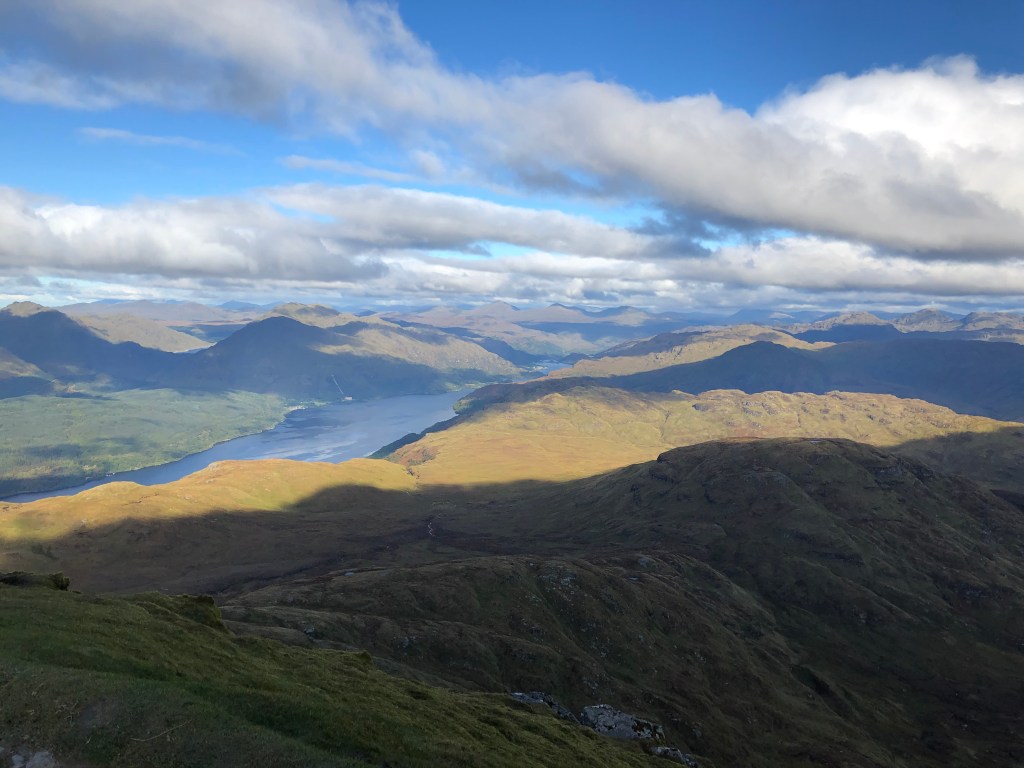
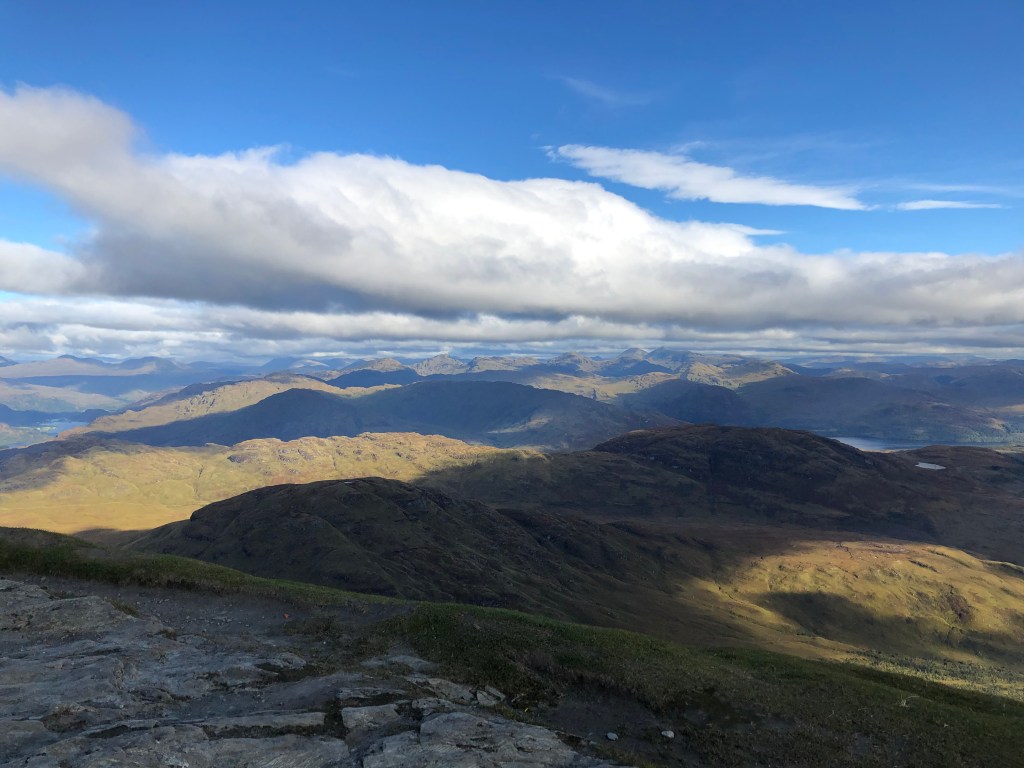
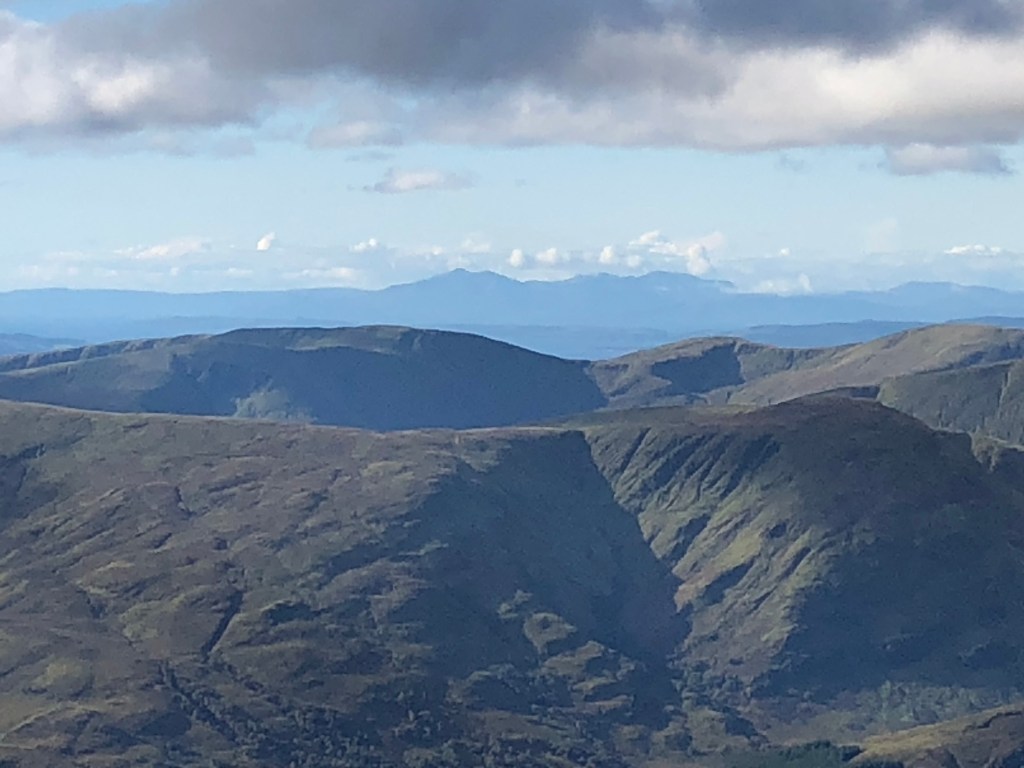
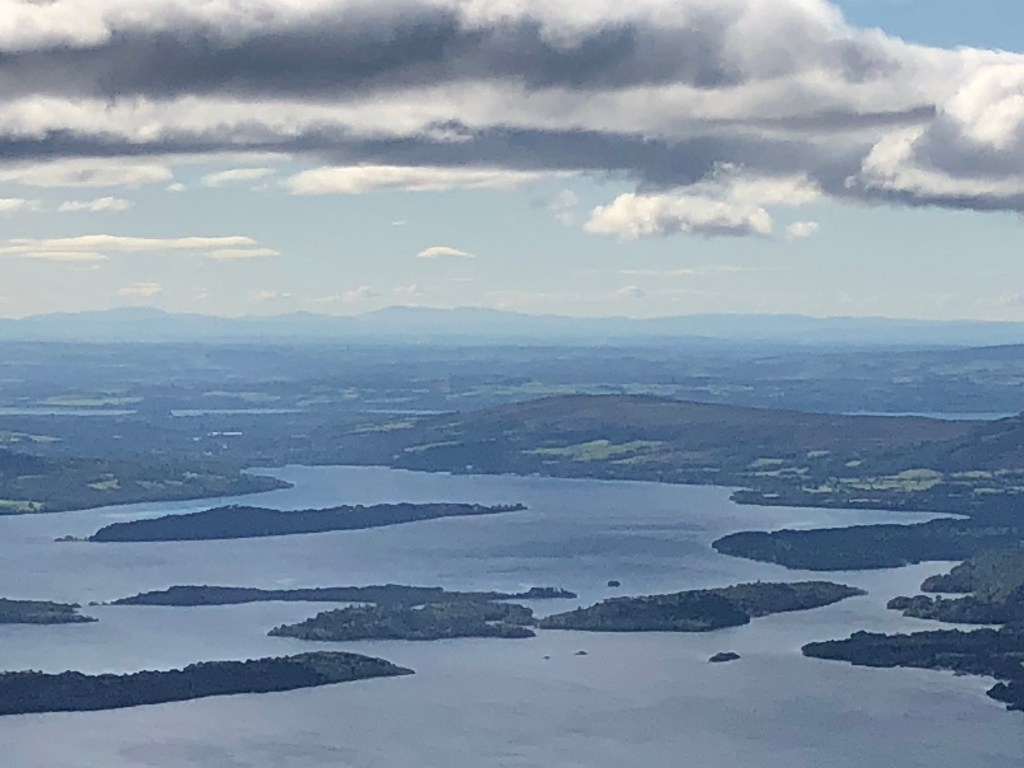
Scotland’s Railways

Back in March, not long after I’d completed my Aberdeen to Penzance mega train ride, I had a free day. Still in railway mode, I decided to head up to Glasgow and purchase a Strathclyde Roundabout ticket for the princely sum of £7.40. This gave me a day’s off peak travel on Glasgow’s suburban railways, much of which I had never travelled on before. I had no plan, just to start at Paisley Canal St station, take the short ride to Glasgow Central and choose whatever trains that subsequently took my fancy. That day saw me visit the delights of Newton, Hamilton, Dalmuir and <Neilston>, the last of which is displayed on the departure boards at Central Station with the < and > to aid passengers in distinguishing between it and Newton. Many a rushed commuter had caught the wrong train home in the past so a solution was sought and for all I know it probably works. There wasn’t much in the way of nice scenery and some of the trains were old and smelly but it was interesting getting to know some of Glasgow’s urban and suburban rail network, the largest in the UK outside of London. Having travelled on new ‘metals’ (its a word trainfans use to mean ‘tracks’ as having an extra syllable is as important as the right anorak) that day, along with some more on the earlier cross country trip, I started to wonder just how much of the Scottish passenger rail network I had not been on. I downloaded a couple of maps off the Scotrail website and a plan was formulated. It wasn’t a very complex plan: I was to travel on every mile of the network with a time limit of whenever.

Yellow highlighted lines already completed…
…with still a fair bit of the Central Belt left.

The maps showed me that I’d done a fair bit of the network as it was. Of the ‘biggies’ the West Highland Line, Highland Line, Stranraer Line, Dundee-Aberdeen Line, West Coast and East Coast Mainlines, Kilmarnock, Dumfries and Carlisle Line along with a number of Glasgow-Edinburgh lines were already in the bag so to speak. However, three major lines in the north of the country were notably absent from my tally along with plenty more suburban lines in Glasgow, the Central Belt, Edinburgh and Fife. There was also an annoying number of short branch lines to places like North Berwick and Ardrossan Harbour that would prove a bit tricky. The East Kilbride Line would have to wait as it was closed whilst being upgraded and whilst the line from Kilmarnock to Glasgow was technically ticked off, it must be more than forty years ago that I travelled on it so I was never quite happy that it counted. So plenty to do, best to crack on.

I hastily arranged a trip to Inverness to bag those lines at the northern extremity of the British railway network. I purchased a Spirit of Scotland Rover ticket for £100 with a railcard (£155 if you don’t have one). This gave me four days of travel within an eight day period on any train within Scotland with the exception of some, but not all, peak morning services. Unlike my day on the suburban railways of Glasgow, I made a plan and set off. The Rover ticket allowed me to take a leisurely route up to Inverness thereby ticking off the Glasgow-Edinburgh via Shotts line and most of the Fife lines that I needed. Annoyingly the branch to Leven wasn’t completed and I’d have to formulate a plan to do that later. In Inverness I checked in to my cheap and not exactly cheerful hotel – when in Inverness do yourself a favour and pay a bit extra to stay in hotel that isn’t the Waverley Guest House – and prepared myself for the early start the following morning. The first train to Thurso and Wick departed Inverness at 07:00 and the Rover Ticket is accepted on this route despite the ‘peak’ departure. The Far North Line takes over four hours to reach Wick having first branched off to Thurso to visit Britain’s most northerly railway station before returning to Britain’s most northerly railway junction and continuing on to Wick. I had actually done some of this line before but north of Dunrobin Castle it was new ‘metals’ for me. Once in Wick the obvious option was to return to Inverness but I had an alternative plan. I’d take Wick Airport’s one daily service to Aberdeen, thereby ticking off another airport in another potential challenge, and get a bus to the city’s station. There I would catch the next train to Inverness which meant I’d complete another line before dinner. The following day I needed to get home but not before I’d ticked off the Kyle of Lochalsh Line, an outrageously scenic trundle from the east coast to the west. I had to do this both ways before catching the train from Inverness back to Glasgow with a small detour to Alloa on the way to capture one of those annoying little branchlines I was talking about. Even in Glasgow I managed to tick off a stretch of suburban railway that might otherwise have been a bit of a pain to complete, before returning home.

The Rover Ticket still had one day left on it and a few days later I used it to do more of the Glasgow suburban lines including extremities such as Helensburgh, Gourock and the legendary Cathcart Circle. That left plenty of suburban lines still to do and through a mixture of opportunism and another Strathclyde Roundabout ticket, I ticked them off by late-May. The East Kilbride line had reopened and was the last of the Glasgow lines to be completed. This left just two small branchlines to do, North Berwick to the east of Edinburgh and Leven in Fife, the latter being a newly reopened line that had been closed to passengers following the Beeching Report on the 60s. It took me a while to get round to doing them as summer stuff had got in the way. On August 27, however, I set out from Troon via the Kilmarnock Line, thereby taking away my unease at a journey forty years ago counting towards the total, to Glasgow and then Edinburgh. There I changed onto the local service to North Berwick and removed that short branch off the East Coast Mainline from my to do list. Back at Edinburgh I changed onto a train to Leven and prepared to tick off the last short stretch of railway – only for signalling problems that saw the service cancelled at Kirkcaldy. An hour on the platform at Kirkcaldy is long enough for anyone but thankfully the issue was fixed by the time the next scheduled service came along. I got on it and a short while later we branched off the main line onto the curiously meandering line to Leven. At 15:16 the train pulled into Leven Station and my not exactly onerous quest to ride on all of Scotland’s passenger railways was complete.

Scotland’s Railways complete. Note: the carriage behind was not the one I’d travelled in.

Well, almost. Technically speaking there is a short section of track on the Fife Circle and another near Cathcart in Glasgow where passenger trains sometimes route but I’ve discounted these as they don’t contain any stations. I’ll maybe get round to doing them someday, just for the hell of it. Anyway, enough of the boring stuff, what you all want to know is what are my favourite bits of the network, where are the hidden gems, which bits are the most depressing and other stuff that might make you want to jump on a Scotrail Class 150.

Best Line

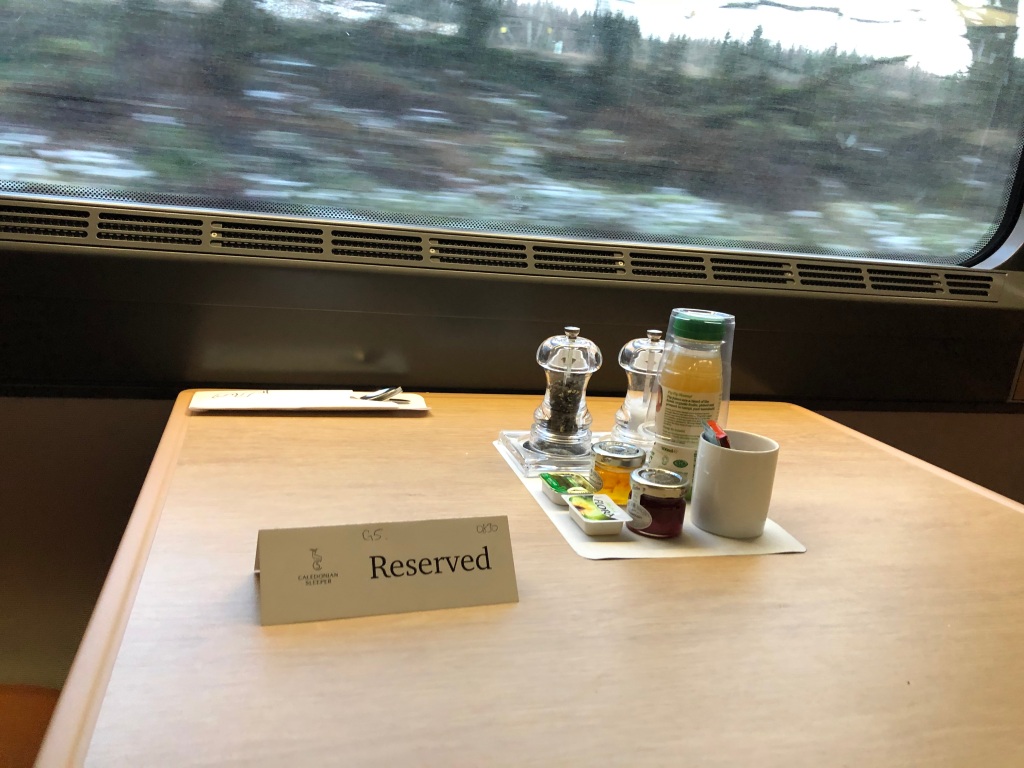
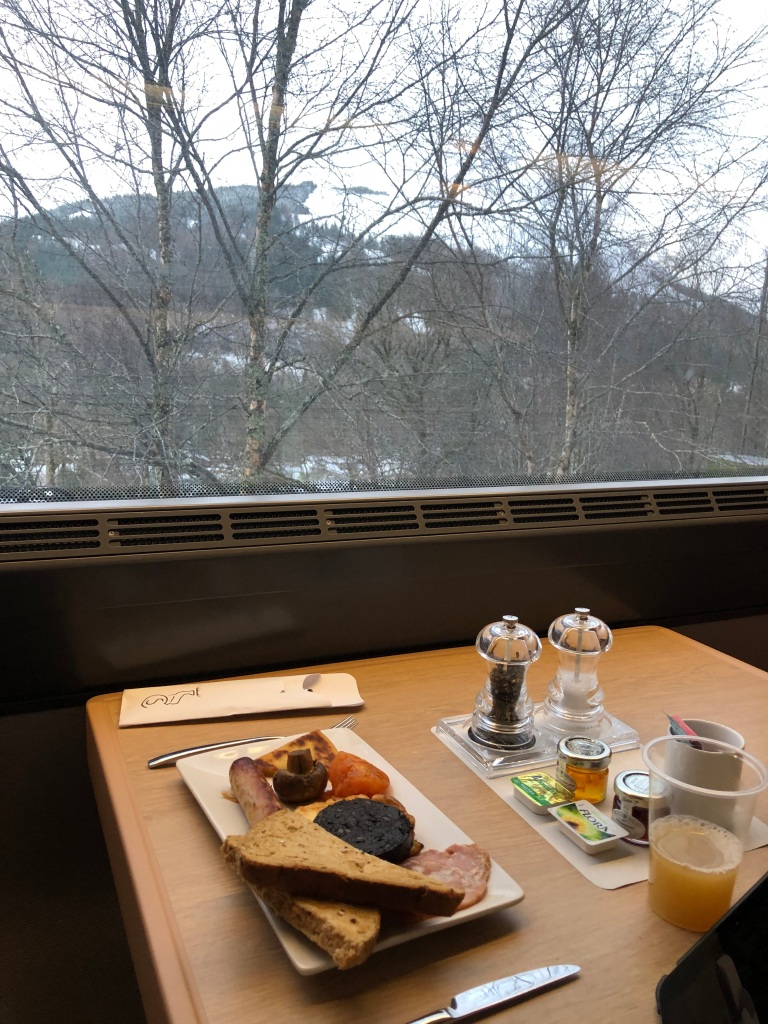
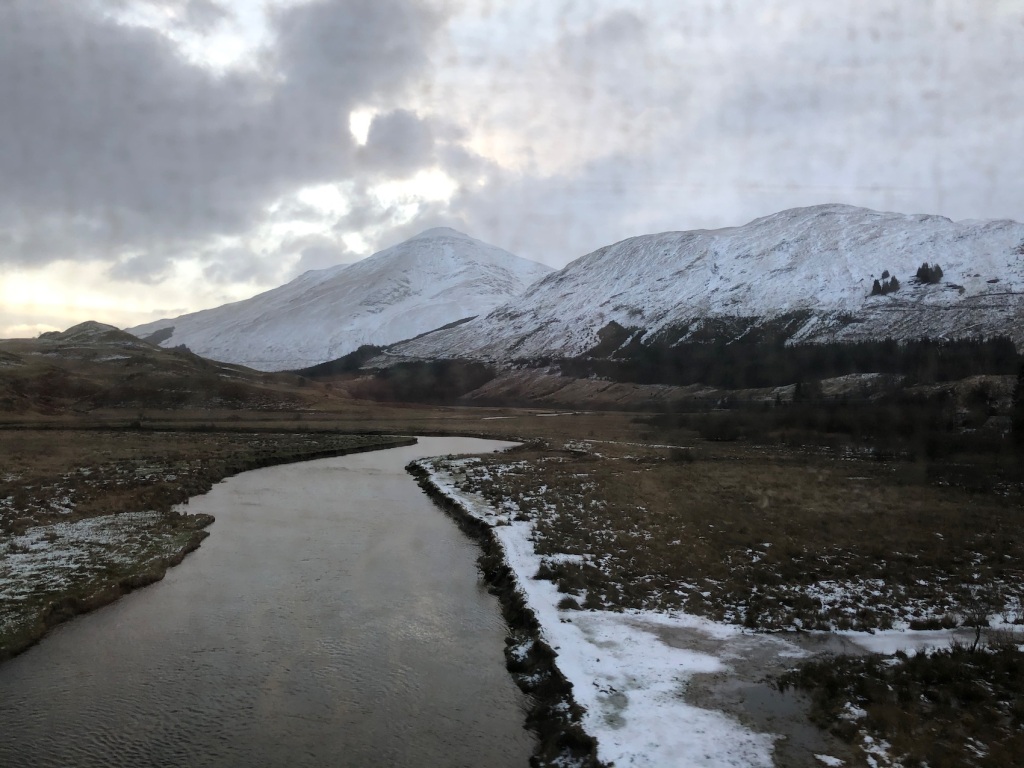
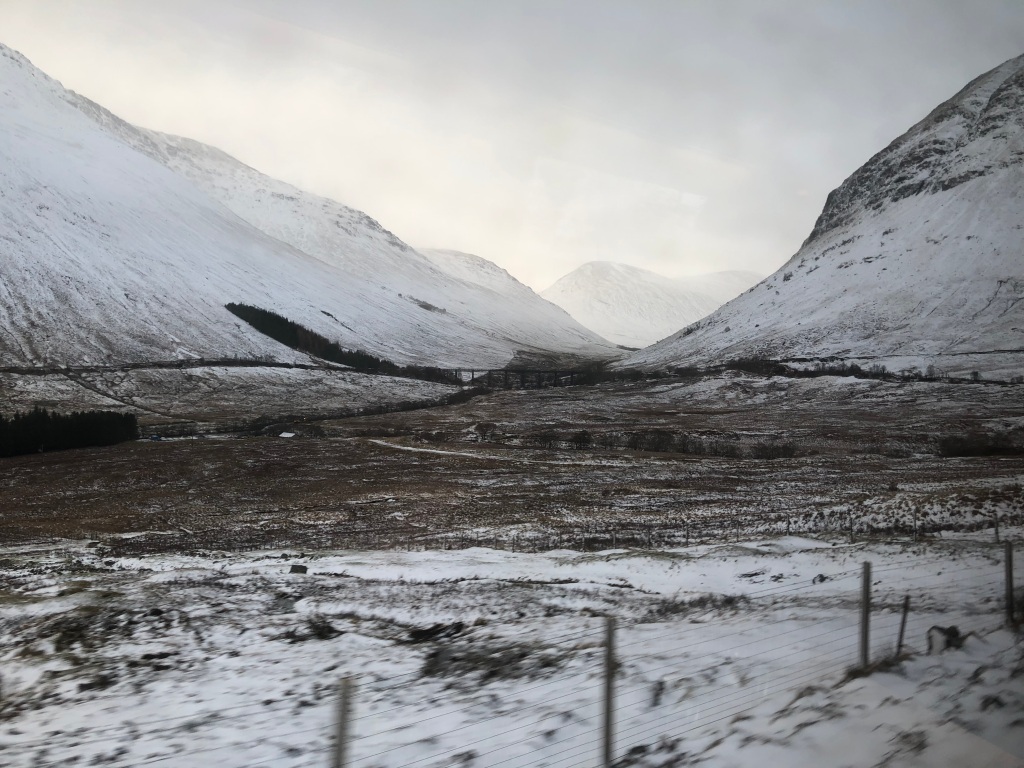
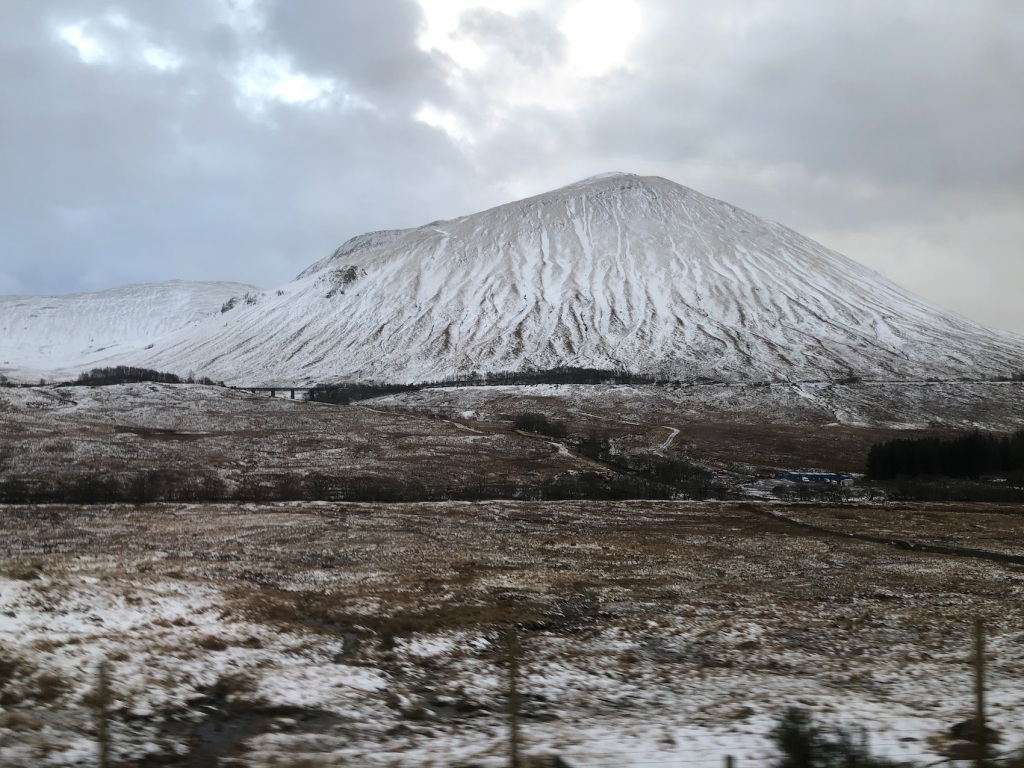
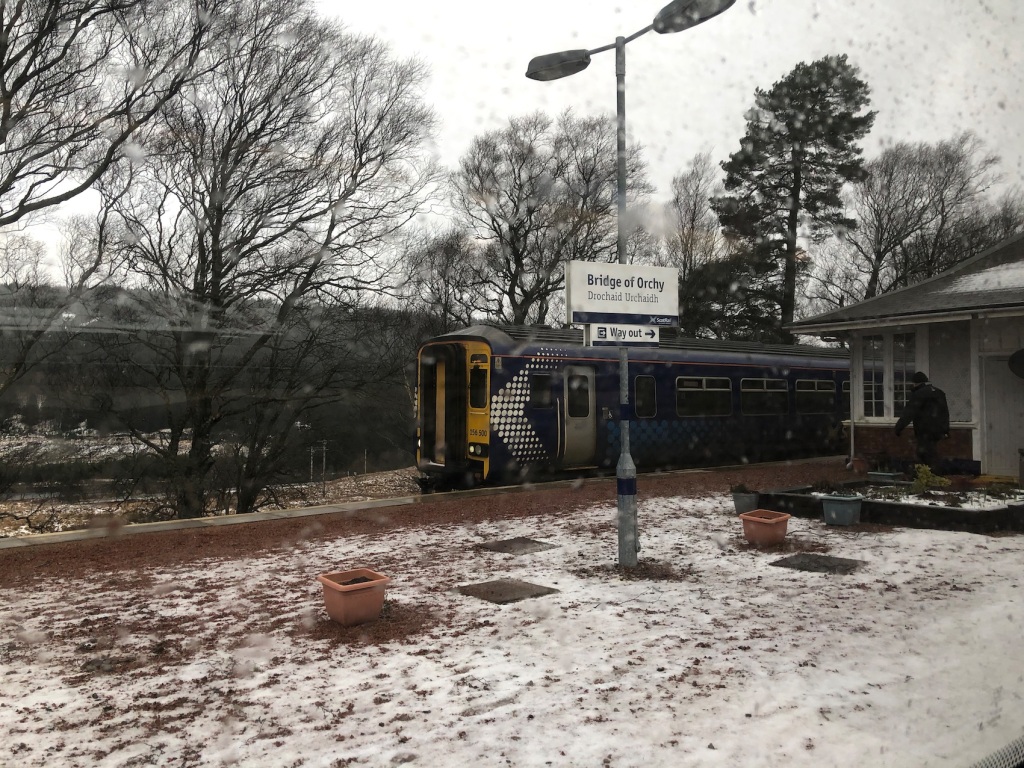
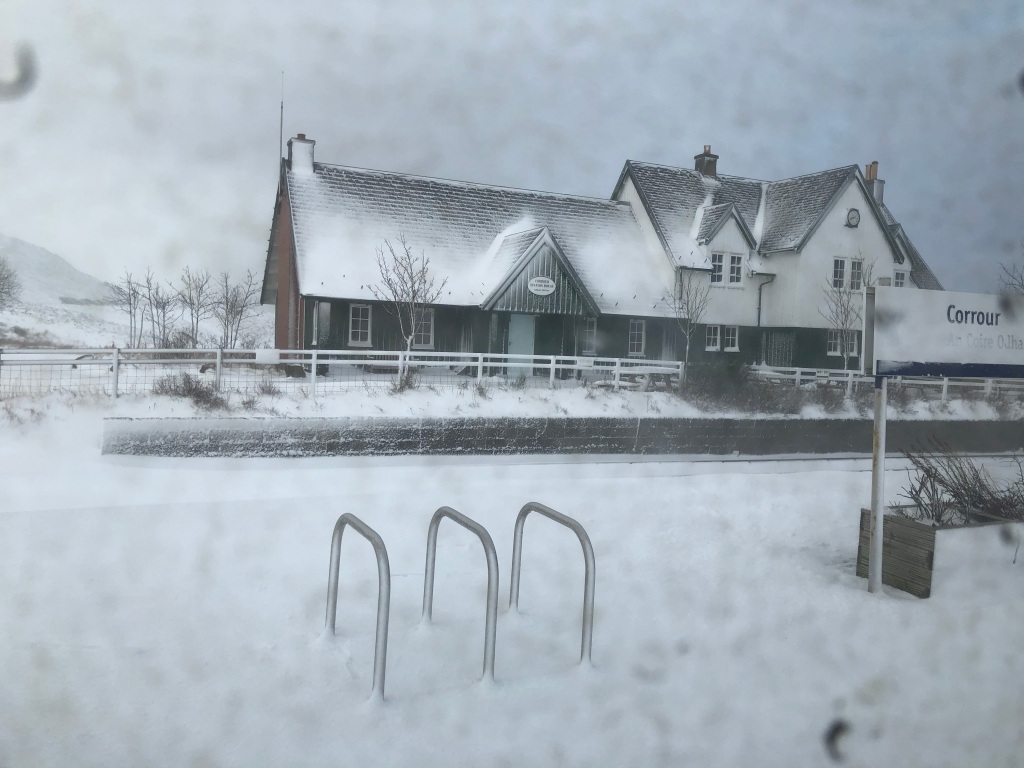
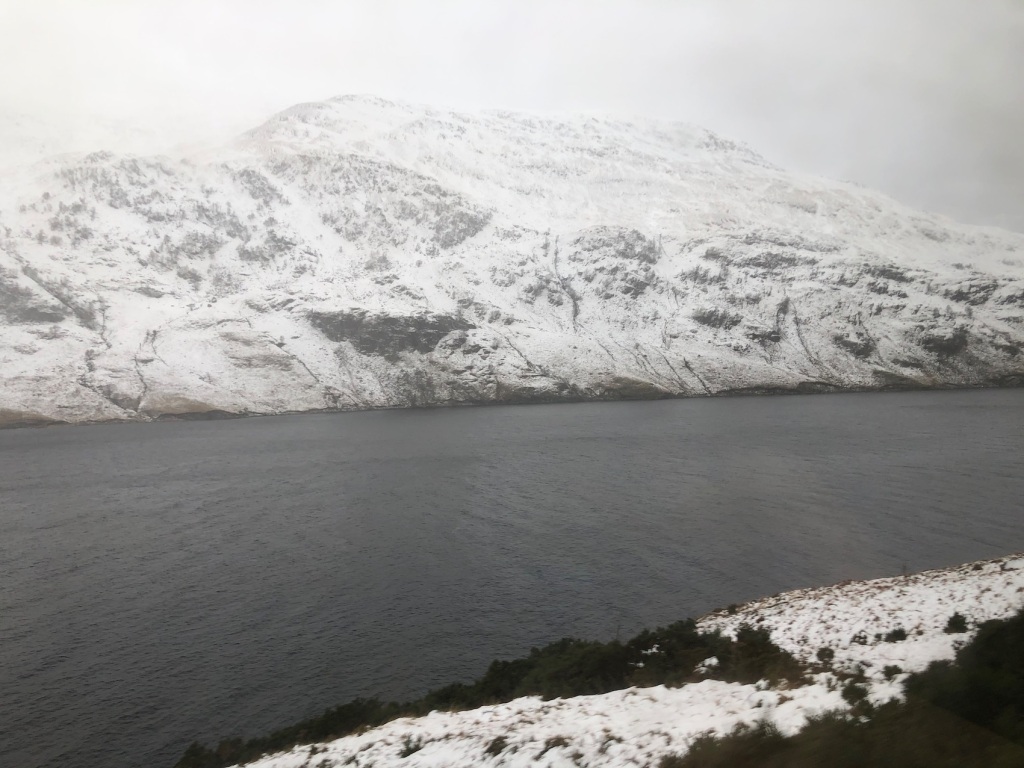
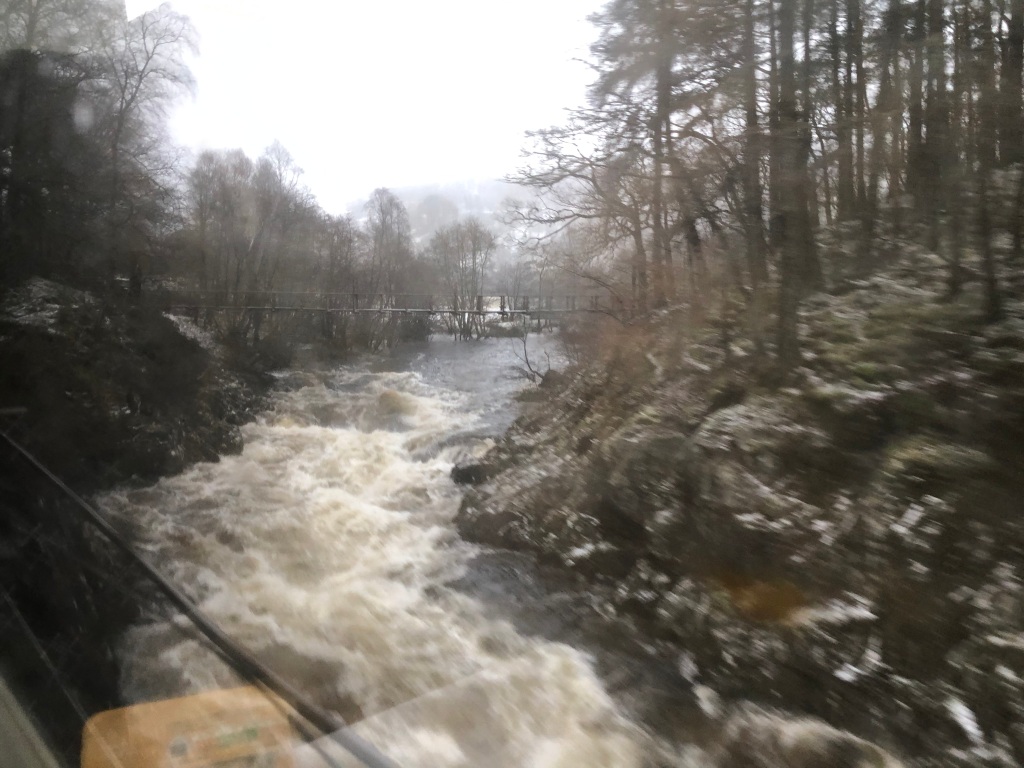
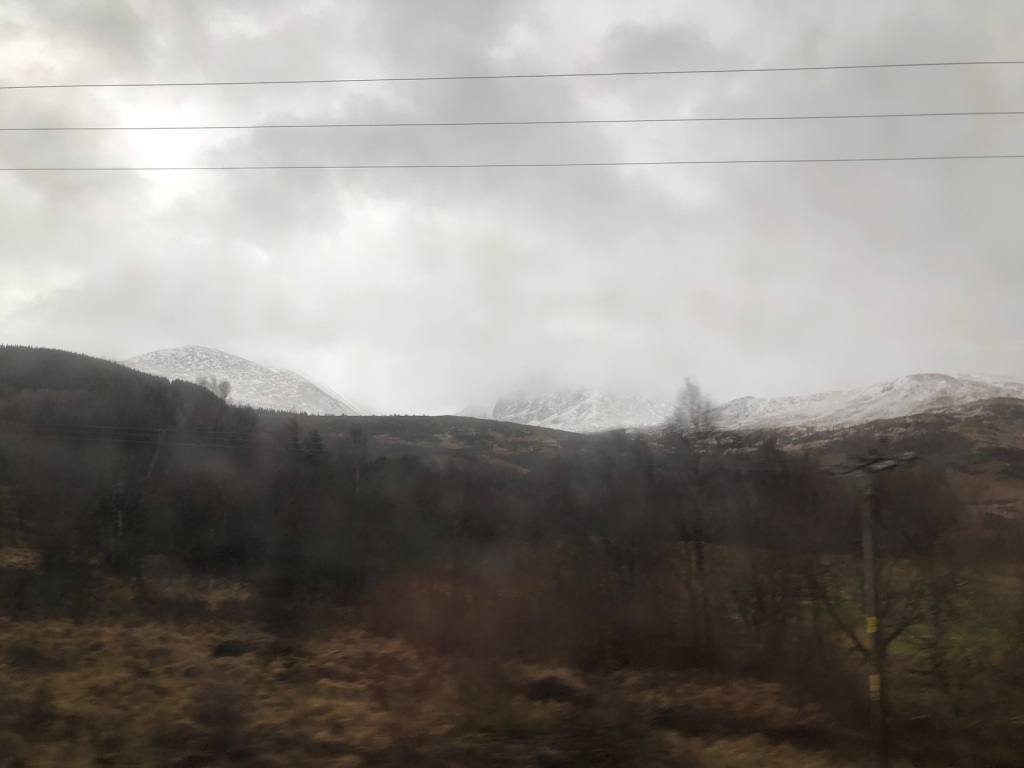
The West Coast Highland Line takes the gold medal, though it is a close run thing. The journey from Glasgow Queen Street to Mallaig is just spectacular. Sure, the Scotrail trains aren’t up to much but they’ve got big windows from which to enjoy the big country outside. Branching off the North Clyde line at Helensburgh, the line climbs high above Gare Loch and Loch Long before cutting through a gap in the hills at Arrochar. Loch Lomond is on the other side of the gap and the line heads north along its bonnie, bonnie banks to Crianlarich. There the train splits with one half heading along the Oban branch, itself quite spectacular, the other beginning the climb up to the bleak Rannoch Moor. Traversing the moor, the train calls at Corrour Station, 15 miles from the closest public road, before travelling high above Loch Treig and then following the River Spean around the north of the Ben Nevis range. After pulling into Fort William Station, the train reverses out again and branches off to the northwest, passing Neptune’s Staircase on the Caledonian Canal. Following the northern banks of Loch Eil, the train then crosses the iconic Glenfinnan Viaduct, that of Harry Potter fame, heading west to Arisaig, Britain’s most westerly railway station. The Small Isles of Muck, Eigg and Rum are visible as the train heads north to its destination of Mallaig. The journey takes five and a quarter hours. There are alternatives to Scotrail’s old DMUs though and good ones at that. You can take the Caledonian Sleeper from Euston to Fort William, waking up on the banks of Loch Lomond and having breakfast as Rannoch Moor goes by is really quite special. You can also do the section from Fort William to Mallaig steam hauled in heritage rolling stock during the summer months which is perhaps even more special, as long as it is running which it wasn’t the last time I tried it.

Hidden Gem

Ayr-Stranraer Line. This line endured thanks to a connection with the ferries from Stranraer to Belfast, but they ceased a few years ago. Stranraer Station still lies next to the abandoned ferry port. The ferries now go from Cairnryan a couple of miles up the coast from Stranraer and there is a connecting bus from Ayr Station for those relying on public transport. Luckily, closing railway lines is a particularly tricky thing to do nowadays and several trains a day make the journey to Stranraer largely devoid of passengers. It is very scenic with both coastal and countryside views and a surprising amount of wilderness to observe. You can also have a chuckle at the name Glenwhillie on the side of a signal box miles from anywhere of note.

More Scenic Lines

The Kyle of Lochalsh Line is almost as good as the West Highland Line. The scenery is just as good but you only get two and a half hours of it rather than five and a half. Like the Stranraer Line it used to connect to a ferry which is probably why it survived the Beeching Cuts of the 60s but there is a bridge to Skye now and the line is served by a mere four trains per day. Catch one though, you won’t regret it.

The Far North Line is rather spectacular in places though not as dramatic as the West Highland and Kyle lines. It is definitely worth doing though and has the feel of being on some sort of expedition rather than a simple train ride.

Edinburgh-Dundee-Aberdeen gets a mention too. Not only is the scenery great, you get to traverse two iconic bridges, the Tay Bridge and the mighty Forth Bridge.

Best Suburban Lines

Very subjective this but I rather enjoyed the East Kilbride Line when I finally got to ride on it. Unlike most of Glasgow’s suburban railway network, it seemed to pass through rather pleasant suburbs and even a bit of countryside before reaching its new town destination.

Sadly, I took no photos other than this end of the line selfie so you’ll have to take my word for it.

There’s nice views of the Clyde along the Greenock Line and also the line to Helensburgh and whilst I’m so used to it now I barely notice, the Ayr line is pleasing on the eye in sections.

Neil’s Least Favourite Lines

To be honest I don’t hate any railway line. There are some, however, that are a bit, well, sad. The Glasgow Central Low Level line utilises old rolling stock that smells vaguely of boiled cabbage, as do the subterranean stations in the middle of the city, and when they emerge from the tunnels at either end it is hardly the sort of scenery that makes you want to look out of the window. It’s a good, frequent service though so I’m not knocking it.

Argyle St Station. A bit smelly.

Neil’s Favourite Trains

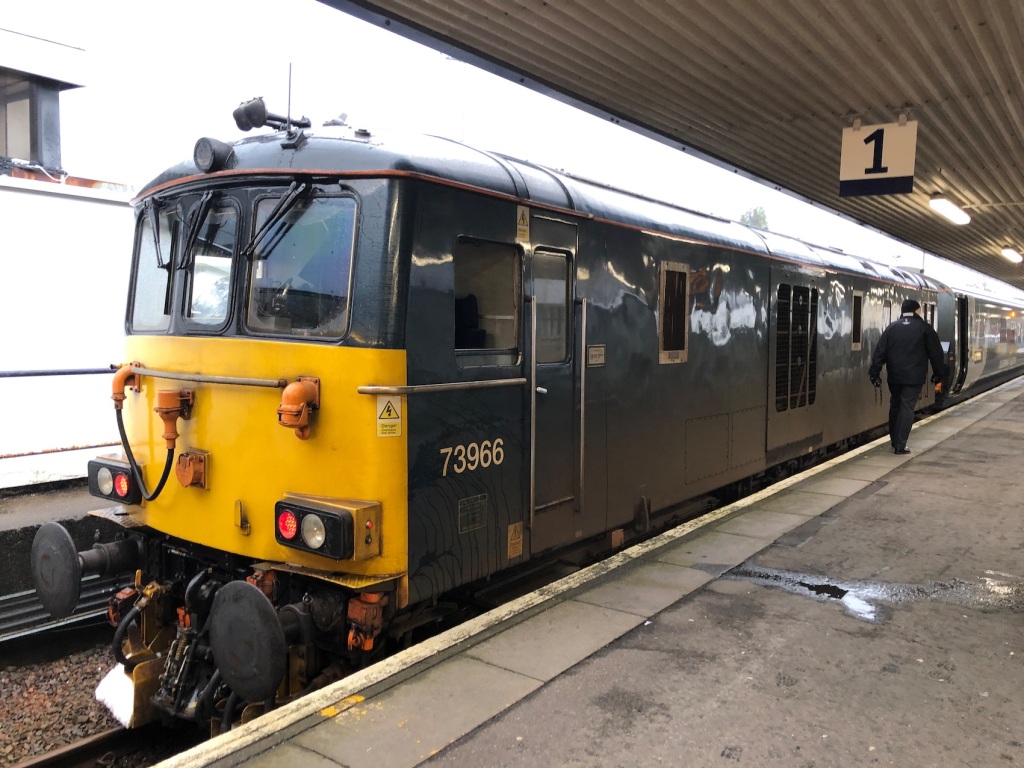
Ignoring the heritage stock that does the Fort William-Malaig tourist run and non-Scotrail operators, there can only be one train that takes the crown. A train that, sadly, is unlikely to be gracing the Scottish network for much longer. That is the Class 43, better known as the Inter City 125. Back when I blogged about them in 2019 they were in the process of being introduced onto the Scottish network. Since then they have all been refurbished and their classy interiors disguise the fact that the trains are over 40 years old. Not that you really want to disguise the age of these classic trains, they have so much more appeal than the other types on the Scotrail network. They are due to be replaced soon by new, unspecified stock. You can bet your bottom dollar that the replacements will be soulless and probably have hard seats.

Neil’s Favourite Stations

Weymss Bay is the jewel in the crown of Scottish Stations. It is a Victorian masterpiece and I’ll let the pictures speak for themselves. As for a major station, it’s hard to look past Glasgow Central, Scotland’s busiest, another Victorian masterpiece but on a grand scale.

Neil’s Summary

Neil says ‘do it’ but then Neil would, wouldn’t he? I like travelling by train and find the history of the railways interesting. Like most people I enjoy gazing at spectacular scenery, unlike most people I can spend hours doing it and little else. See my Trans Canada epic journey for if you need convincing. Scotland has some lovely lines that I can’t guarantee you will enjoy them would be very surprised if you didn’t. As for the other, non-lovely lines? You may need to be a bit of a train nerd to enjoy them. Now, should I do Wales next?

Outer Hebrides

Despite this site being primarily a travel blog, I never really expected to be writing anything about this particular location. It is a place we have been meaning to go to for quite a while but something alway put us off. Maybe that location was the issue. Situated off the northwest coast of Scotland, the Isles of Lewis and Harris form part of the Outer Hebrides, a collection of islands in the Atlantic Ocean. With the exception of the main town, they are sparsely populated and that town, Stornoway, itself is hardly a large metropolis, though it does boast the island’s only Tesco. The island’s attractions are spread thinly across a land largely devoid of trees but perhaps the thing that has put us off the most was the weather we were likely to encounter. The UK as a whole tends to get battered by frontal systems moving in off the Atlantic but a high pressure system over the country can deflect them to the north. These banks of cloud may well miss the bulk of the UK but the far northwest is rarely spared. Of course that doesn’t mean permanent rain but the probability is that a holiday without cloud and wind is unlikely to happen and the mercury will seldom top 20C. Or so we thought. Elaine has lived in Scotland for more than 39 years now and it’s even longer for me. Earlier this year we decided to bite the bullet and book a place on Lewis. So what if it would rain a lot, we’ve got waterproof coats and stuff and it’s only water anyway. Little did we know that yes, we’d get wet but that moisture would come from within rather than from the sky.

The only cloud we saw on Saturday.

We chose our accommodation for the week. We went for a cottage, not through Airbnb this time but Cottages.com. The cottage was called The Summer House and looked pretty good in the pictures on the website. They always do, don’t they? This one, however, had won awards and was, as they used to say in the beer adverts, reassuringly expensive. Interestingly, expense was one of the things that has put us off in the past as there isn’t much in the way of cheap accommodation up there, especially in the summer months. Thus, being a tight Yorkshireman I had to grit my teeth when I made the reservation. It was a lovely place. The Summer House is based in the village of Achmore, assuming a widely dispersed handful of houses can be called a village. It was handily placed in the middle of Lewis and just 20 minutes from Stornoway. A word about the island. Despite there being an Isle of Lewis and an Isle of Harris they are, in fact, just one island. Harris is the southern third, Lewis the northern two thirds. Harris is quite hilly whilst Lewis is more moorland and the bulk of the population live there. Why it requires the two names I do not know. The island is quite big so a car is essential. To get yours there you have two main options. Ferry operator Caledonian MacBrayne provide services from Uig on the Isle of Skye to Tarbert on Harris, and Ullapool on the mainland to Stornoway on Lewis. You can also get ferries from the island of North Uisit if you want to combine all of the Outer Hebrides in one trip. The ferries get busy in the summer and the advice is to book early. The summer schedules go on sale in January and I was in there at the when they did. We decided to take the Uig-Tarbert service to get to the island and Stornoway-Ullapool to get off it. The former takes an hour and a half, the latter an hour longer. For two passengers and a normal car the price was £56.90 and £91.35 respectively. We decided to break our journeys in both directions with a hotels in Invergarry, about half way to Uig on the way up and Ullapool on the way back. Although this added time and expense we are glad we did it as the journeys, whilst very scenic (especially to Uig), are rather tiresome.

Information technology is a wonderful thing but you can get obsessed with things. In the run up to this holiday we had been checking the weather forecast frequently. We knew that forecasts are hopelessly inaccurate any more than a few days in advance but we did it anyway. It was, at first, a rather dismal picture but the closer we got to departure we were feeling optimistic that we might get some sunny spells. There were reports of a heatwave hitting Britain on the weekend we were going but, as previously mentioned, it was unlikely to bother the Outer Hebrides. Maybe, just maybe it would keep those Atlantic fronts at bay? Our Friday crossing from Uig to Tarbert was in unbroken sunshine and the temperature was such that we could sit on the deck. Promising. As it turned out we were visiting the island on the hottest weekend anyone could remember. Temperatures would reach 29C that weekend before it cooled down to a more manageable 21C. We had lovely weather most of the week, maybe one evening and one morning of light rain and a bit of low cloud later on in the week. Otherwise the sun shone brightly during the day and well on into the evening too. I thought I’d done well weatherwise with my Saga cruise in May, this was just as good and even less expected. So what dose Harris and Lewis have to offer the enquiring traveller? I’ll split it up into three categories: Beaches, walks and ‘visitor attractions’.

Beaches

The Hebrides do do a mean beach.

It may seem strange to count beaches on an island situated on the 58th parallel as a major selling point. However, if sitting on a beach is your thing there are plenty to choose from and you may have it all to yourself. We are not great beach dwellers but we certainly appreciated the golden, sandy beaches that abound on Lewis and Harris. Perhaps the most famous beach is Luskentyre on Harris and having already gone for a walk along it, we decided to plonk ourselves down on it to have our lunch. Whilst other folk were embracing the beach life, we lasted about twenty minutes though we did at least dip our feet in the water. Luskentyre is a stunning place and when the temperature is in the high 20s celsius it easily beats any Mediterranean or Caribbean beach. By Hebridean standards the beach was a busy though the few dozen folk there were spread out thinly.

Some other beaches we encountered, not that we lingered there, were either deserted or had two or three other people on them. There are plenty to choose from. We particularly liked Garry Beach to the north of Stornoway which we only discovered the morning we were leaving the island. It had sea stacks you could wander through at low tide, a bit like a mini Hopewell Rocks at the Bay of Fundy.

Another great beach was at Uig Bay. Not the previously mentioned Uig on Skye, but out on a limb on the west coast of Lewis. The Gaels do tend to reuse place names a fair bit. Ardroil Beach is situated in Uig Bay and is where the Norse chess pieces that now reside in the British Museum were found and whilst it is unlikely you will find any others, you can always get a tourist photo next to a carving of a King that stands there as a reminder. It’s a bit of a drive to get there but worth the effort.

There were plenty of other great beaches we saw in passing and plenty left to discover the next time we are there. They are easy to find – they are right next to the sea.

Walks

Going for a walk is a major draw of the islands. The above mentioned beaches are good for walking of course. We had a nice walk at Uig Sands. It wasn’t overly long or particularly taxing but it was worth that long drive to get there as the views were stunning. The Luskentyre beach walk was another easy amble along the sand and back along the road with the benefit of Toby and a couple of Morags enjoying the warm weather. The first walk we did was a coastal walk near the village of Carloway which took in Gearrannan Blackhouse Village. Unlike Uig Sands, this was fairly taxing. We did it the first full day we were there when the temperatures were high though there was a stiff breeze coming in off the sea which prevented us from overheating. Much of the walk was close to the cliffs, not dangerously so, but close enough to enjoy the dramatic scenery. There was no distinct footpath to follow either so planning the next few hundred yards of travel became very imnportant. It was not so much ‘off piste’ as ‘no bloody piste in the first place’. We passed no one on the way and whilst it may well have stretched our definition of a ‘pleasant’ walk, there was definitely a sense of achievement when we reached the top of a hill and the Blackhouse Village came into view. Not that we had finished. I discovered our chosen direct route down the hill was a bit of a mistake when I took a tumble on uneven ground which was hidden in the long grass and ended up on the deck in a less than elegant manner.

A similar cliff walk at the Butt of Lewis was a little easier. The terrain was less of a challenge and whilst there was no defined path again, the ground was ‘machair’, a fertile soil covered in short grass and meadow flowers. The highlight was the Butt of Lewis lighthouse, a splendid red brick structure, situated at the northern tip of the island. It seems a bit counterintuitive that the Butt is at the top of the island rather than the bottom.

58°30’57” N. I was the most northely person on Lewis at the time.

Speaking of lighthouses, we visited another one on the Isle of Scalpay. Scalpay is an island near Tarbert in Harris and is accessed via a bridge. Despite the link with the rest of the island, it retains its own personal character and gives the impression of what island life may well have been like thirty years ago. There are a number of walks you can do, all of which take in Eilean Glas lighthouse on the southern tip of the island. We chose the short one to get there a longer one back along the coast. More on the lighthouse later.

The Eilean Glas lighthouse walk was in fact a last minute decision. We had intended to complete a walk from Urgha to Rhenigdale and back, a seven mile round trip to a tiny settlement that was the last such settlement on Harris to be accessible by road. The track over a hill was known as the Postman’s Trail as that was how the mail was delivered before the road arrived. We set off with the top of the hill shrouded in cloud but when we came to the other side, we were put off by the near vertical precipice we would have had to negotiate via a precarious zig-zag path. Not only down but up again on the way back. The mist was clearing so we did at least get the benefit of the views and once back at the car we had the time to visit Scalpay and any disappointment we felt at not completing the walk was soon forgotten.

These are just a handful of the many walks that are possible on both Harris and Lewis and it is safe to say that we would need several more weeks to discover them all.

Visitor Attractions

The words ‘visitor attractions’ may strike fear into the hearts of those who want to choose a destination to get away from it all but don’t worry. There’s no theme parks, amusement arcades, water parks or anything noisy at all with the exception of the waves crashing into the cliffs. There are, however, a few attractions for the visiting tourist that are worth a visit. I’ve already mentioned the Gearrannan Blackhouse Village. This collection of traditional houses was restored after the last residents left in the 70s. Some are let as holiday homes but three are preserved as a museum and cafe. It’s definitely worth a visit either the easy way by car or the more difficult way that we did it, on foot.

The Callanish Standing Stones is another popular attraction. There’s a lot of neolithic standing stones in Scotland and several examples at Callanish alone. The main one sits atop a small hill and consists of a small stone circle at the apex of a much larger cruciform arrangement. As is the case with most of these standing stones, we don’t really know precisely why they were built, maybe there isn’t a precise reason to be discovered. The neolithic people may have just liked them.

A drive out to Bernera Island takes you the Iron Age House of Bosta. This turf covered building is a replica but stands where archeologists discovered the remains of a small village that dated back 1400 years. It is open for viewing from midday as long as the guide does not go off sick, as was the case when we went there. It’s interesting enough to see from the outside though and there are a few walks on Bernera Island you can do if you don’t mind traversing a bit of boggy ground. The main settlement on Bernera Island is Breacleit and like a number of other villages we passed through it has a museum/shop/cafe/petrol pump. Whilst describing these as visitor attractions is pushing it a bit, these are always handy places to stop and the small museums are worth the two or three quid donation to look around.

As mentioned in the Walks paragraph, Eilean Glas is a lighthouse on the island of Scalpay. Whilst getting there requires a walk, the destination counts as a visitor attraction in its own right, not only because it is commands a very attractive setting but you can also get cake and a cup of tea there. We had a very nice chat with the elderly couple who own the land and most of the buildings there – the current lighthouse is still operational and owned by the Northern Lighthouse Board – and whilst the place is by no means in a pristine condition, it appeared they were doing their best to keep the place going for the benefit of passing walkers. It wasn’t until we got home that we discovered that the couple had a very ‘interesting’ back story that they had somehow failed to mention to us when they were describing how they came to own a lighthouse. This involved them both serving time at Her Majesty’s Pleasure for being a little less than honest with someone else’s money. That was over twenty years ago though, I’m sure they are reformed characters now and are genuinely trying to run the place legally. The cake was nice at any rate.

Peggy’s Cove eat your heart out.

Stornoway’s major visitor attraction is Lews Castle which is part hotel and part museum. It has grounds through which you are normally free to wander. We missed our chance, however, as the week we were there was the run up to a large (in Hebridean terms) music festival called HebCelt. This did mean that we could go to the festival on the opening session which was on Thursday evening, the day before we left. We got to see Eddi Reader and Tide Lines doing their stuff though missed out on the legend that is Lulu who was the headline act on the Friday. I’m not a lover of music festivals and wouldn’t go to Glastonbury if you paid me a lot of money but HebCelt is much less crowded and being the first session following a dry spell it never got too muddy. If festivals are your thing, plan your break to Lewis accordingly.

If visiting a mighty cathedral is your thing then you may want to consider somewhere else for your holidays but we did discover one interesting place of worship up near the Butt of Lewis. St Moluag’s Church, or Teampall Mholuaidh if you prefer your churches in Gaelic, dates back to the 12th or 13th century and sits on or near a 6th century site believed to be the first consecrated ground in the Hebrides. Having originally told people it was in the care of the Church of Scotland, I’ve since discovered it is Episcopalian (Anglican) and having confidently said that the small altar wasn’t an altar, I’m happy to altar that statement (sorry for the pun).

The Whalebone Arch is worth a photo. The story behind it is pretty grim though. Back in the 20s a blue whale washed up on a nearby beach with a harpoon embedded in its body. It had obviously escaped capture by a whaling ship but slowly expired from the harpoon wound before being washed ashore. The islanders waited for a whaling company to come and collect it but no one did so they extracted what useful products they could get out of it. A local chap decided that he’d make a memorial to the sad creature by mounting two jawbones to form an arch. In what today might seem a bit tasteless, he included the harpoon that had killed it too. The arch is in someone’s garden but they don’t mind you going in to take a photo.

Whalebone Arch complete with grizzly form of whale execution.

The Bridge to Nowhere is near the Garry Beach mentioned above. It’s not particularly attractive but with a name like Bridge to Nowhere there has to be an interesting story to it. The bridge was built in the early 20s as part of a plan to develop the northeasten part of the island. It never happened and this bridge, along with a few miles of rough track, are all that remains of Lord Leverhume’s, the landowner at the time, dreams.

Visitor Information

Visitor information? I’m getting all Berlitz Guide here, aren’t I? Still, you might well be wondering about the sort of stuff we were wondering about before we went. Getting around was one of those things. I was half expecting the island to be covered in single track roads and indeed there are plenty. However, most roads you are likely to be travelling on are perfectly normal single carriageway, two-way roads. The single track roads with passing places tend to be on the island’s extremities and even then they tend to be interspersed with sections of dual track. Roads are very quiet, even the main one between Stornoway in Lewis and Tarbert in Harris. The only remotely busy traffic was in Stornoway and it was hardly gridlock. Don’t let the roads put you off, they are fine. You’ll need those roads too. The island is fairly big and there are a lot of peninsulas and extremities to be discovered. There is a bus service but a lot of planning would be required to rely on that to visit everywhere you might want to visit. Take your car, motorbike, motorhome or other jalopy of choice. I don’t have an EV but if you do you should be okay. If the long journey to the ferry ports put you off you can hire a car at Stornoway Airport, though I don’t imagine it is particularly cheap. The island was popular with cyclists too.

Shopping for provisions was another thing that we wondered about. Wonder no more, it’s easy. There is a Tesco in Stornoway which covers your every need and is even open on a Sunday (see below). They even have the delivery service which seems to serve everywhere on the island no matter how much on a limb they might be. As mentioned there are stores in most villages to pick up bits and pieces and there are a lot of roadside honesty box places to pick up some locally produced products (especially eggs).

Sunday trading: this was highlighted as a possible issue. The islands are known for their traditional views on the Sabbath. There’s a lot of churches for a smallish population with a Church of Scotland and Free Church of Scotland in most villages. When I first came to Scotland some forty years ago I was told that the islands were so devout that hanging your washing out on a Sunday was illegal. I think those who told me might have been exaggerating a bit but even now not much opens on a Sunday. We did pass a caravan in a lay-by selling coffee on the road between Tarbert and Luskentyre so it is obvious not everyone is afraid of the wrath of the Presbyterian ministers, but this is the exception rather than the rule. In answer to the age old question, however, yes, some people do hang their washing out on a Sunday.

Ignoring the wrath of the local clergy, and maybe that of Jesus himself, Coffee Isle Harris is open for business on a Sunday.

Language: apparently 60% of the residents of Lewis and Harris speak Gaelic. Road signs are often in Gaelic first and English second and even the Tesco aisles are signed in Gaelic, with English below in a less conspicuous font. Place names are almost exclusively Gaelic although many are of Norse origin rather than celtic. Does this mean you will have a problem communicating when you are there? No, not at all. All of the Gaelic speakers also speak perfectly good English and along with the 40% that have English as a first language, you are unlikely to hear much Gaelic at all.

Mobile phone coverage: we all like to keep connected, even if we go somewhere remote to get a way from it all. The mobile signal was a lot better than I expected. There’s obviously a few places on the extremities that are masked from the nearest mobile towers but in general I had a decent 4G signal all over the island. The internet access at the accommodation was reasonable too. It may have been slightly more laggy than on the mainland but it worked fine for anything we needed it for.

Eating: The island is not awash with dining out options. There’s a few restaurants in Stornoway and one or two others in larger settlements but being in Achmore meant we tended to eat our evening meals at the accommodation. We did try one restaurant in Stornoway and on another evening we got takeaway pizza from a company that produced them in a shipping container in a lay-by not far from where we were staying. Very nice they were too. There are plenty of coffee shops and community cafes for lunch and cake though.

In Conclusion

Is Lewis/Harris worth the effort to get there? Yes, absolutely, if you are looking for a week or so away from the crowds with nice scenery, golden sands and a more relaxed atmosphere than most other places in the UK. We thoroughly enjoyed our week there and would happily go back. Our judgement is, of course, enhanced by the weather we had which was better than we could have reasonably hoped for. Our previous break on Northwest Scotland (on the mainland, not the islands) had seen rain of biblical proportions and had that happened whilst we were on Lewis we may well have formed a different opinion. As it is though, that remote island out in the Atlantic proved us with a magnificent summer holiday.

Yes, that’s me.

An Island Hopping Saga

The Spirit Of Discovery in Fowey Harbour

A couple of years ago I had my first experience of travelling with that tour company for mature folk, Saga. You can read about it here. That was a short cruise up and down the English Channel. Last year I sampled their river cruising which, if you can stand it, you can read about here. This year it was back to the high seas on board Spirit of Discovery, one of two cruise ships owned by Saga and the same one I sampled two years ago. As with the past two Saga trips, I was accompanied by my mum and sister. It is a particularly good was for us to get away together as it is fair to say that mum is getting on a bit and Saga are geared up for the older traveller. We chose the cruise many months ago. All of Saga’s cruises depart from the south coast of England and whilst the itineraries are varied, that fact does put certain limitations on what they offer. To get to traditional cruising destinations like the Mediterranean or Canary Islands requires several days of getting there and back so these itineraries tend to be long. Priding themselves on all inclusive ’boutique’ cruising, a couple of weeks on board a Saga ship is going to set you back quite a lot of money. Week long cruises tend to go to the Norwegian Fjord’s, something mum and Jill have already done and the shorter sample cruise to nowhere in particular is what we all did two years ago. The itinerary we decided on was Island Hopping round the UK which was ten nights on board, a bit longer than we would have preferred, but the stops looked interesting so we booked it. Departure day was May 5th so we were hoping for the weather gods to take pity on us as we were staying in British waters and let’s be honest, anything can happen. It turned out that apart from a little glitch at the very start of the cruise, those weather gods were very much on our side.

In my previous blog (here’s the link again) I gave you an insight to what cruising on the Spirit of Adventure was like. In two years it hasn’t changed a bit which gets me out of writing about it again. The only difference was that we were in standard cabins on Deck 8 this time. When we booked there were superior cabins that were actually bit cheaper due to some promotion or other but they were dotted around the ship. We felt it was better to be close together and were allotted three standard cabins next to each other on the starboard side amidships. This had the bonus of us being able to open up our balconies to make one big one. The only difference between the standard and superior cabins is the latter have a bit more floor space and maybe an extra chair. That’s it. The standard cabin is fitted out to the same high standard as the superior ones and looked after by the hard working housekeepers in the same way. Go for superior cabins if you wish but I don’t think they are worth spending much more money on. There are a few fancier rooms and suites but I don’t think they would be worth turning an expensive cruise into a very expensive cruise for. Cabin aside, take a look at the other blog to see what facilities the ship has to offer. I’ll just add here that it is a lovely ship, just about the right size and the staff are still as good as they were last time.

Instead, for this blog, I will concentrate on the itinerary. This may not have the wow factor of the Norwegian Fjords, the interest of foreign ports or indeed the weather of the Mediterranean but… Hang on, we had fantastic weather that was actually better than parts of the Med at the time, not to mention interesting British ports and even some wow factor scenery so let’s not belittle the cruise by the simple fact that we never entered ‘foreign’ waters. Let’s get started with Day One

Day One: Portsmouth Sailaway

Experience Is Everything. Including check-in.

The nice thing about going with Saga is that they put on a nice car with a nice driver to take you to the port. It’s as if Saga guests appreciate ‘nice’. As before a rather fancy Mercedes Van pitched up on time at mum’s house in Huddersfield for the 247 mile journey to Portsmouth. As before there was one other traveller already in the vehicle. Not the same one as last time, that would have been spooky, but a 95 year old solo traveller taking her first Saga cruise. The driver was a very polite young man and he delivered us to Portsmouth without incident. Check-in was in the Brittany Ferries Terminal and formalities were completed quickly. We were bused to the ship, mum was given some assistance up the gangway and we were shown to our cabins without any fuss. The ship’s buffet restaurant, The Grill, was open for a late lunch and after that we went back to the cabin for lifeboat drill just in case we encountered any stray icebergs in the Irish or North Seas later on in the cruise. We set sail bang on time at 5pm and once we’d slipped our moorings Captain Simon Moore came on the ship’s PA system to welcome us on board and tell us that Day Two’s port of call had changed. We were due to visit the island of Guernsey in the Channel Islands but the forecast winds were in such a direction that tendering the guests to the port would be too risky so he had made the decision to take us to Fowey in Cornwall instead. This was a tad disappointing as we’d got excursions booked in Guernsey that we were looking forward to but we weren’t in a position to organise a mutiny so Fowey it was. We ate in the main dining room as we would do on most evenings. The food was as good as I remembered. Later, the ship’s entertainment company gave us a show based on rock music which may seem a bit odd for a cruise where the average age of the passenger was 79 (the cruise director gave us this information so I’m not making it up) but those present seemed to enjoy the cast’s rendition of Bat Out Of Hell.

The Saga crowd love a bit of Meatloaf.

Day Two: Guernsey Fowey

Fowey, emiting small Cornish town vibes.

Situated up a narrow estuary that the ship had to reverse up before dropping anchor, Fowey (pronounced ‘Foy’) is a very picturesque Cornish town with narrow streets and an active harbour. With the sun shining and light winds, it was hard to believe that the weather had prevented us from calling at St Peter Port in Guernsey but then I’m no expert in parking cruise ships so what would I know? Having cancelled our planned excursions on the Channel Island, Saga had quickly cobbled together a few trips from Fowey and we had rather hastily booked ourselves on one to Lanhydrock House, a National Trust property that I’d last visited thirty years ago. In hindsight we shouldn’t have bothered. The tour set off late due to delays in getting the ship’s tenders permission to land and there was a lot more walking for mum to do than we had anticipated. Consequently we had limited time in the house itself before we had to head back to the bus for the journey back to the ship. The captain had arranged for one of the ship’s tenders to do a mini cruise up and down the estuary so we nabbed one of those in the afternoon and I also had time to nip into the town. It is a very pretty town and we would have just been as well doing this in the morning rather than the tour but there you go. The evening’s entertainment was provided by Belfast comedian William Caulfield as we sailed out into the channel at the end of Day Two.

Day Three: At Sea

The obligatory lifebelt shot.

Sea days. Not much to report. We spent time in the Britannia Lounge, on deck and even in the pool. Ice creams were eaten, quizzes were entered where as usual we finished second and they day passed at a slow pace. Sailing up the Irish Sea provided little in the way of views but we enjoyed the day nevertheless. It was Formal Night, the first of two on this cruise. Now I’m not a fan of wearing collar and tie but as my mum was watching I grumpily complied. It is possible to avoid the formal dress code by eating in The Grill or staying in your cabin but we had a reservation at East Meets West, a speciality restaurant that specialises in Asian cuisine. We had eaten there two years ago and it was just as good this time. One of the nice things about Saga is everything on board is included in the price including the speciality restaurants. You’ve just got to get in quick to make a reservation. Entertainment was a choice of a Motown show in the theatre or an Abba show in the Britannia Lounge. We chose the latter. Mama mia!

Day Four: Belfast

Norn Iron red squirrel.

With views of Samson and Goliath, we moored in Belfast not far from George Best Belfast City Airport which pleased the avgeek in me. We had booked a tour for the morning, Scenic Coasts and Glens. It certainly delivered on that with a nice drive along the Antrim coast, although ‘Glens’ should really have been ‘Glen’, singular. That glen was Glenariff and the reason it was chosen was it had a teashop which is important to your average Saga guest. You could, if you were feeling relatively vigorous, go for a walk down the glen to a waterfall which I did. It was very nice but the highlight of the place was the red squirrel that was going about its business oblivious to a bloke with an iPhone taking a hundred pictures of it from not too far away. The trip back was via a different route and thanks once again to the glorious sunshine, Northern Ireland was looking rather nice. Afternoon was spent sat in the sunshine whilst I watched the comings and goings from Belfast City Airport and mum and Jill enjoyed my commentary on them. It was the 80th anniversary of VE Day and the ship’s crew made an effort. There was a religious service conducted by the ship’s chaplain which mum, who isn’t a religious person but has genuine memories of the original VE Day, wanted to attend. I can’t say any of us were too impressed. The evening show in the theatre was a variety affair with a VE Day theme which where the ship’s company and visiting acts made a better job of it than the vicar. Many flags were waved.

Day Five: Holyhead

North Wales. It’s quite pretty.

There was only one tour we were ever going to do on our stop in Wales. The Ffestiniog Railway is one of North Wales’ numerous narrow gauge railways and whenever the three of us are on a holiday we like to grab a bit of heritage railway action. It was an hour long bus ride to Porthmadog where the line commences its journey to Bleanau Ffestiniog in the hills. Alas, the lovely weather North Wales had been suffering for several weeks resulted in our train being diesel hauled rather than steam as the railway was keen not to be responsible for setting Wales alight from stray cinders. It wasn’t too much of a problem, the diesel loco was kind of cute anyway and the glorious scenery was the main thing. Indeed, it was a lovely run along a line that was built in the 19th century to transport slate from the mines at Bleanau to the port at Porthmadog. The journey was one way for us – the bus was awaiting us in Bleanau and it took a very scenic route through Snowdonia to get us back to the ship in time for a late lunch. The evening’s entertainment offering was something different for the ship’s resident cast of four singers and six dancers. They put on an Agatha Christie mystery. It was not a nice juicy murder to be solved by a Belgian detective, just a minor burglary at the seaside, but it was good fun and I think the performers enjoyed turning their hands to acting for a change. At least they said they did as they thanked us all for coming as we filed out. By then we were already at our next destination as it wasn’t too far away. We dropped anchor for the night off the Isle of Man, British and not British at the same time. A British Isle though, definitely, so it fitted the brief for the cruise.

Day Six: Douglas

State of the art Electric Railway

Prior to the cruise we had decided that we were going to go independent in Douglas and declined the offer to buy an official excursion. The three of us had been to the Isle of Man in 2019 and felt we knew the place and could hack a few things by ourselves. Consequently, we took a tender to the town and then took a few minutes deciding precisely what those few things would be. We decided to hit the rails again and took a taxi to the start of the Isle of Man Electric Railway at the far end of Douglas promenade. This railway – more of a tramway than a railway – trundles up the Manx coast to Ramsey on rolling stock that dates back to the 1890s. We didn’t go all the way, stopping instead in Laxey. We could have taken another tram from there up Snaefell, the highest hill on the Island, but decided instead to go on a the Laxey Mine Steam Train. This was a former mine train, or at least a modern copy. It didn’t go far but it was well worth the three quid it cost each of us. After a somewhat more comfortable tram back to Douglas we took the Horse Tram along the promenade. This was only partially open the last time we were here and it was nice to go the full distance which unfortunately wasn’t quite close enough to the port to avoid the need for another taxi. Back on board we considered that this had been a successful day of independent travel. Some new guest entertainers joined us today, one of which was an American chap called Brad Sherwood who entertained us with his magic show in the evening. I still wish I could work out how they do it.

Day Seven: Sea Day

The Paps of Jura

Not another boring sea day I hear you ask? As it happens no it wasn’t. The captain had told us the previous day that we would not be taking the high seas route to Ullapool, complete with its Atlantic swells and increased risks of chunder, but we would do some scenic cruising amongst the islands of Scotland’s west coast. All we needed was a nice day and a place on deck that was sheltered from any wind we might encounter. Whilst there was a bit more cloud around than on previous days, it was remained nice enough for us to spend much of the day on deck with the Orca team. Orca team? What are they? It was a group of four people who accompany cruises to point out interesting wildlife which must be quite a nice gig for the guys who get them. Their presence added to what would have been a pleasant day’s cruising anyway. We had woken up passing the Mull of Kintyre and headed north past Islay and Jura. We would pass through Sound of Corryvrechan, also known as The Race, where the world’s third largest whirlpool awaits careless navigators. Thankfully our navigator wasn’t careless so we avoided being sucked down to a watery grave, and passed into the Firth of Lorn. The Sound of Mull followed before we entered less sheltered seas for the overnight transit to Ullapool. On the way we had seen maelstroms, mountains, castles, hills shaped like boobs, porpoises, two types of dolphin, a lost homing pigeon and an autogyro. After coming third in the quiz – a nice change from second – we avoided the entertainment that was on offer for some reason and had an early night. Passing through the Inner Hebrides at 12 knots is obviously tiring work.

Day Eight: Ullapool

Ullapool. Small town set in big country.

For those who are unaware, Ullapool is in the far northwest of Scotland. It is a small town which would be of little significance were it not for the fact it hosts the ferry from the mainland to Stornoway on the Isle of Lewis. Its fame has increased in the past few years as it is a ‘major’ stop on the North Coast 500, a road trip around the top of Scotland beloved by drivers of motorhomes and less so by locals who get stuck behind the aforementioned motorhomes. It is situated in an estuary with a backdrop of hills and mountains so on a day when the sun was shining and the mercury topped out at 21C, it wasn’t going to be anything other than gorgeous. I had booked onto an afternoon tour labeled ‘strenuous’ in the official literature but mum and Jill had a free day. We took the tender into the town in the morning and discovered a boat trip for them to do in the afternoon. Consequently, off they went to discover the Summer Islands and its associated wildlife (porpoises mainly) whilst I headed off on my strenuous official trip. Strenuous is a relative term but bear in mind the average customer on the cruise was 79. It involved a bus journey to a lookout point, nothing remotely strenuous about that but then the bus took us to Corrishaloch Gorge. There was a bit of walking to do which whilst far from strenuous for a fine physical specimen like me, would certainly have been a challenge for half of those on the ship. It took us down the gorge to a suspension bridge and waterfall and was all very nice. We could then go back the way we came or take an alternative route which a handful of us did. I was five minutes late back at the bus, the others were twenty. I don’t think the guide will be offering that alternative again. Back on the ship we watched the sailaway from as the views were really rather lovely apart from the bit where we passed the headland and discovered the motorhome park. They’ve got to park them somewhere I suppose.

Day Nine: Kirkwall

The remaining standing stones of Steness.

The Orkney Islands lie off the north coast of Scotland across the Pentland Firth. For the first and only time on this cruise the weather let us down a bit. It was a bit misty at first and that mist developed into a low overcast for the rest of the day. As it didn’t rain and there was little wind it was, however, a cracking day for Orkney. Here we had booked two tours. The one in the morning was one of three free tours Saga offered on the cruise and consisted of a bus trip to a set of standing stones and back. Not much perhaps but as it was free it was pretty good value. Orkney has a lot of history and much of that goes back to neolithic times where standing stones were a bit of a thing for reasons we can only speculate about. We passed the impressively large Ring of Brodgar on the bus but stopped at the nearby Stones of Stenness, probably because it was nearer the car park for the less mobile guests. There’s only four stones left here, or three and a half to be precise, but it was nice to get up close and personal with them. On our return I had a brief wander round Kirkwall, taking the free shuttle bus the two miles into town before returning to the ship for trip number two. This took in Scapa Flow, the Churchill Barriers, the Italian Chapel a small Orcadian fishing village and a stop for tea and shortbread. The latter two stops were padding the tour out a bit but the first three had very interesting stories to tell. In particular the Italian Chapel which was built in 1944 by Italian prisoners of war that had been taken to Orkney to build the Churchill Barriers which guard the entrance to Scapa Flow, the stretch of water where the Royal Navy moored many of their ships between assignments in both World Wars. The Chapel was made from two Nissun Huts and anything else the prisoners could get their hands on, decorated by hand with paint traded from locals. It’s a work of art really. We departed Kirkwall in the evening and came second in the evening quiz again. The ship’s company put on a West End/Broadway show. There was a big audience for that one.

“Um diddl iddle iddle um diddle eye”

Day Ten: Sea Day

Scenic North Sea Cruising.

Getting from the north of Scotland to Dover takes a while in a ship so there was no chance of any scenic cruising today unless you count gas platforms and wind turbines as scenic. The lack of stops on this final leg of the journey did mean I could get some washing done – there are two laundrettes on board for passengers to use – though I’d managed to get most of it done on Day Seven. Laundry might not add much fun to a holiday but it makes the getting home bit more bearable. That aside we spent much of the day doing very little as the North Sea passed by. We had a go at deck quoits, played a bit of table tennis and I even took another dip in the pool. In the evening we dined in The Club, another speciality restaurant that is basically a steakhouse. We hadn’t meant it to be our last supper so to speak but reservations can be hard to come by. We never managed to get a reservation in the third speciality restaurant which does seafood. Our final chance of glory in the evening quiz came to naught, we didn’t even come second for goodness sake, and a variety show in the theatre gave us a chance to say cheerio to the performers. With suitcases left in the corridor for collection it was lights out for one last time.

The final curtain call.

Day Eleven: Dover Disembarkation

Dover Cruise Ship Terminal with a bit of White Cliff behind.

The sharp eyed amongst you will notice that we ended the cruise at a different port to the one where we started. I don’t know why but it really doesn’t matter too much with Saga where a fleet of Mercedes vans are on hand to whisk all the passengers to where they need to go. Disembarkation was a straightforward process and within a few minutes we were heading northwards along with the same lady who had shared our car on the way down. The journey was slightly less straightforward due to a big hold up on the M25 resulting in us detouring through London, crossing beneath the Thames via the Blackwall Tunnel, but we arrived back at mum’s house at 15:00 which was precisely the time I had estimated before setting off. Thus ended my third Saga experience.

To conclude, this cruise was a great success. Yes, the weather gods were on our side but I can’t fault Saga for what they do for their target audience. The only question you need to ask is are you the target audience and there’s more to that question than just being of the required age. If the answer is yes then you get a ship that is big enough to be interesting but small enough to be personal, a nicely equipped cabin with a balcony, decent entertainment, excellent service throughout, all the drink you could ever need (other than Diet Coke) and some really excellent food. Add to that the transport to and from the port and included (sort of) insurance and it is an ideal package for those who want a holiday without the hassle. They are not cheap – this ten day cruise in a single occupancy cabin cost just shy of £5,000 with optional tours on top of that but my bill at the end of the cruise meant that Saga owed me money (due to the cancelled excursions in Guernsey) as I hadn’t spent an additional penny on board. Last year I sampled Cunard’s service on the Transatlantic crossing and found it good. In cruising terms, Saga was on a par with them, if not better. They just need to ditch the Pepsi for Coke although I suspect I was the only person on board who was bothered about that aspect of the cruise.

Cross Country

Cross Country Trains Class 220 Voyager. Looks cool. Isn’t.

Apologies for the lack of action on this blogging site. I tend to do mini blogs on Facebook, usually day by day on any trips I make. I feel this is adequate for the stuff I’m doing but I really ought to make the effort to blog about entire trips or anything that takes my fancy. It’s not been happening though and it is possible that I might wind the site up when it comes to the annual invoice from WordPress. We will see. To prove to myself I’m still in the zone for blog writing, I’m sharing with you a little trip I did recently. A year or so ago I travelled down to Stourbridge in the West Midlands to ride on the Stourbridge Shuttle, a train ride that lasts all of three minutes. You can read about it here although it was more about the reaction to it than the journey itself. It turns out that that particular train trip is the shortest in the country. Yes, there are stations closer together but the trains connecting them do not start and end there. The Stourbridge Shuttle completes an entire 0.8 mile journey between its point of departure and final destination. So what? I hear you say. Well, if that is the shortest, there has to be a longest. Once again by longest we are meaning a complete journey by one train. You could travel from the far north of Scotland to the extreme south west of England but you would have to change trains a few times. The longest single journey is, however, from the not quite far north of Scotland to the extreme south west of England. It departs Aberdeen at 08:20 each weekday and arrives in Penzance at 21:31. As the return service doesn’t go all the way to Aberdeen, the southbound service is officially the longest train ride in the country at 13 hrs 11 mins and 774 or 785 miles depending on which source you believe. I had to do it, didn’t I?

Unlike the Stourbridge experience I couldn’t do the journey to Aberdeen and back from Penzance in a day so I had to do a bit of forward planning. I’d head to Aberdeen the day before, spend a night in a Premier Inn, do the trip, spend another night in a Premier Inn in Penzance and return home the day after. All tickets and hotels were secured at the beginning of January which was handy as there was a sale on, part of Railway 200 celebrations. The hotels were inexpensive too. I’ll reveal the costings at the end. To get to Aberdeen I took the local Scotrail service to Glasgow Central, walked to Queen Street and took the Inter7City service to Aberdeen. The nice thing about the latter service was that it was on board an Inter City 125, the world’s fastest diesel train, the grand old lady of active British trains. Whilst their days of doing 125mph have past they still provide a comfortable and pleasant ride between Scotland’s seven cities despite being well over forty years old. Having obtained them from GWR and refurbished them to modern standards seven years ago, Scotrail have stated that they are going to get rid of them and replace them with something almost certainly less exciting and probably less comfortable too. This seems to be the way with trains at the moment. Whatever happens, I was glad to get this opportunity to ride in one and it delivered me to Aberdeen on time. A wander through a strangely quiet town centre got me to the Premier Inn and a handy curry house nearby.

Class 43, aka Intercity 125. Looks cool. Is.

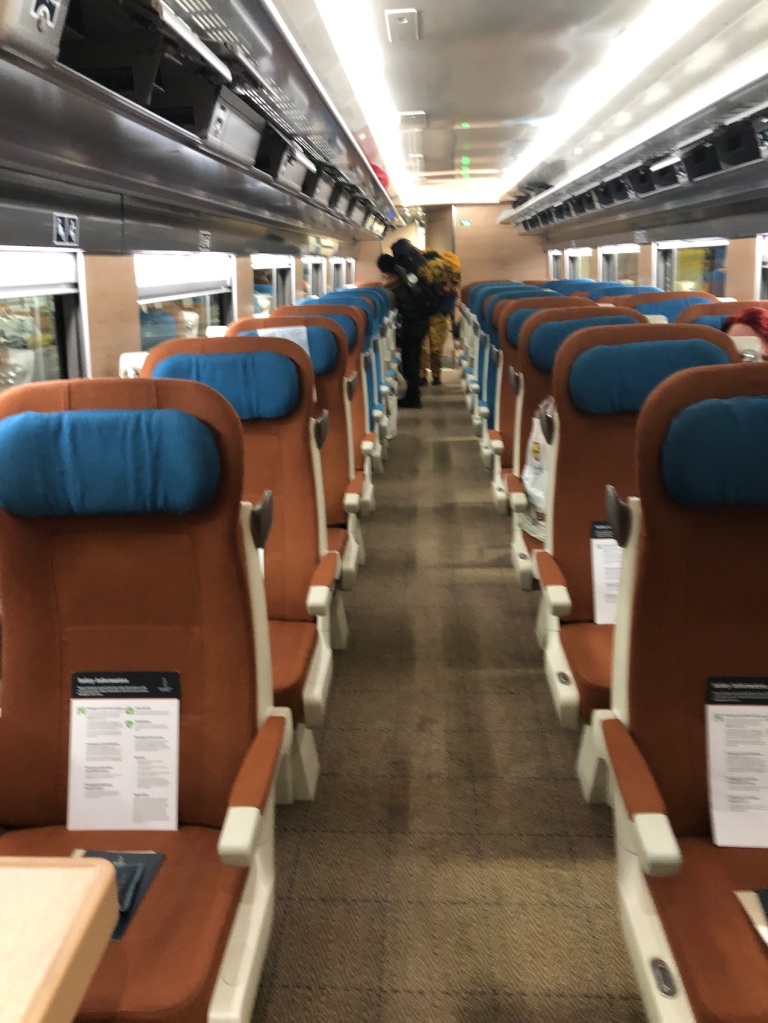
Retracing my steps the following morning, I returned to the station in good time for the 08:20 departure. The train was sitting at the platform having arrived from Dundee earlier which allowed me to take the necessary photographs before boarding and finding my seat for the next 13.5 hours. The train was a Class 220 Voyager operated by Cross Country Trains. The train and indeed the company are not particularly well loved by the travelling public. It was a four car unit which gave it a passenger capacity that would prove woefully inadequate later. The front carriage was reserved for First Class passengers and it was here where my seat was situated. There was a not insubstantial premium to travel in First Class, an amount that was far more than the value of the included catering we were supposed to receive. It was, however, worth it for the extra amount of personal space it gave you and the fact it meant avoiding the overcrowded Standard Class carriages further back. If I was going to be on the train for over thirteen hours I wanted to be as comfortable as possible. The chair itself was nothing special – it was a bit worn and not particularly kind to the old bum but there was a bit of recline which was nice and being a solo seat there was no need to worry about facing or sitting beside some other traveller. I had read that a forward facing seat on the left hand side was the best for the views. Mine was rearward facing and on the right. I wasn’t too disappointed but I did miss out of photographing most of the interesting sights on the way which is possibly a blessing as there’s not many worth including in this blog. We departed Aberdeen right on time and were immediately subjected to a ticket check. The carriage steward came down the aisle and served us hot drinks and some seventeen minutes after departing we made a stop at Stonehaven. This was the first of 39 intermediate stations we would call at including some biggies like York and Birmingham New Street and some small ones like Ladybank and Liskeard. We would sit at some stations for a few minutes as the train crews were changed and supplies were reloaded but for most of them we spent no more than a minute. Before the second stop, Montrose, the steward handed out bacon rolls which looked a bit insipid but were not actually too bad. For the next few hours we were regularly visited by the steward with drinks and snacks. No alcohol though, my request for a beer went unheeded. I could have gone in to Standard Class and bought one from their trolly service but I wasn’t that desperate, not a 11 in the morning at any rate. The first of several notable bridges was crossed after leaving Dundee. The Tay Bridge, which we crossed seemingly at snail’s pace, impressively spans (of which there are many) the Firth of Tay and deposits southbound trains in the Kingdom of Fife where the aforementioned Ladybank is one of the small towns we would visit in that grandly named county. We left Fife by way of notable bridge number two, the Forth Bridge, possibly the most impressive piece of Victorian engineering in Britain. Like most bridges it is better seen when not on it but it is still an impressive sight seeing the bits of the structure pass by just a few feet away.

Tay Bridge, it has lasted longer than the original.
Forth Bridge. Scotland’s Eiffel Tower, only better.
My rather pathetic attempt at capturing the Scotland (unicorn)/England (lion) border.

Our first extended stop was Edinburgh Waverley where there was even enough time to stretch my legs on the platform. That brought back memories of ‘smoke’ stops on long distance trains in Canada and the USA, not that anyone could have a fag of course. The train then followed the East Coast Mainline which for some of its length runs along the coast either side of the Scotland/England border. That border was passed nearly three and a half hours after departing Aberdeen. At Newcastle we got a crew change but the galley wasn’t restocked as it should have been so any chance of something warm for lunch was gone. Leaving the ECML just to the south of York, we entered the best part of God’s Own County, the West bit. Passing through Wakefield I caught sight of the mighty Emley Moor Mast and was tantalisingly close to the place I spent my formative years. Not for long though, we entered South Yorkshire with the stop at Sheffield being the half way point of the journey. I was feeling good, if slightly peckish. The train, however, was getting busy. The seat reservations were confusing a lot of people in First Class. Back in steerage the aisles and vestibules were filling up with standing passengers. Passing through the East Midlands on what for me are unfamiliar tracks, the scenic stretches dried up somewhat. The West Midlands was no improvement, Birmingham is a huge industrial sprawl when seen from the train.

Our arrival at New Street allowed the galleys to be restocked, not that we’d find out until much later. The train was, by now, absolutely rammed which may have had something to do with the horse racing at Cheltenham. If it was not that, several gentlemen on board were going to a fancy dress party dressed as turf accountants. Arriving at Cheltenham itself didn’t improve the situation and it wasn’t until Bristol that things started to ease and Exeter before there were any unoccupied seats. Meanwhile someone discovered that there had indeed been some provisions loaded in Birmingham but the trolly service was suspended due to aisles and vestibules being blocked. If you wanted something you had to visit the galley. By the time I realised this the only hot option was a sausage roll so I had it. After Bristol the catering ended although we were welcome to raid the remaining snacks and soft drinks. Scenery wise, things had picked up after escaping the Birmingham conurbation as we skirted the cotswolds before Bristol and enjoyed a pleasant Somerset sunset after. By the time we reached Exeter at 18:45 the light had faded and the rest of the journey was completed in darkness. This meant missing seeing the stretch of line along the seawall at Dawlish, the Royal Albert Bridge and the scenic Cornish countryside. With the last three hours of the journey taking place in darkness, things started to drag. As the last few stations were ticked off, however, Penzance was getting closer and at 21:42, some eleven minutes behind schedule, we pulled into Platform 4 and came to a standstill. Britain’s longest (single) train journey done and dusted.

Your correspondent reporting from Penzance, his epic journey completed.
Penzance welcomed me when I arrived but I waited until the morning to photo the welcoming committee. The train that delivered me there is behind and just about to depart, destination Edinburgh.

That evening’s Premier Inn was just across the road from the station and a little further was USA Chicken which, thankfully, was open. It was more kebab shop than a KFC clone but it provided me a fried chicken wrap the size of a well inflated rugby ball. My hunger didn’t last long. My journey home started at 09:10 the following morning with a ride in a GWR Class 802 IET to London Paddington. This is another train that is loathed by railway enthusiasts but in reality, apart from a lack of padding in the seats, it is a decent machine on which to make a five hour journey to the capital. I was in First Class again as it only cost £7 more than Standard and I really enjoyed the journey. I got to see what I’d missed when it went dark the previous evening and then had the chance to enjoy the Taunton-Reading branch of the Great Western Mainline. From Paddington I caught the Heathrow Express which is vastly overpriced but if you plan more than a month in advance and use a railcard you can pick up a ‘bargain’. From Heathrow it was a BA flight to Glasgow, the airport bus and train from Glasgow Central to Barassie completing the trip.

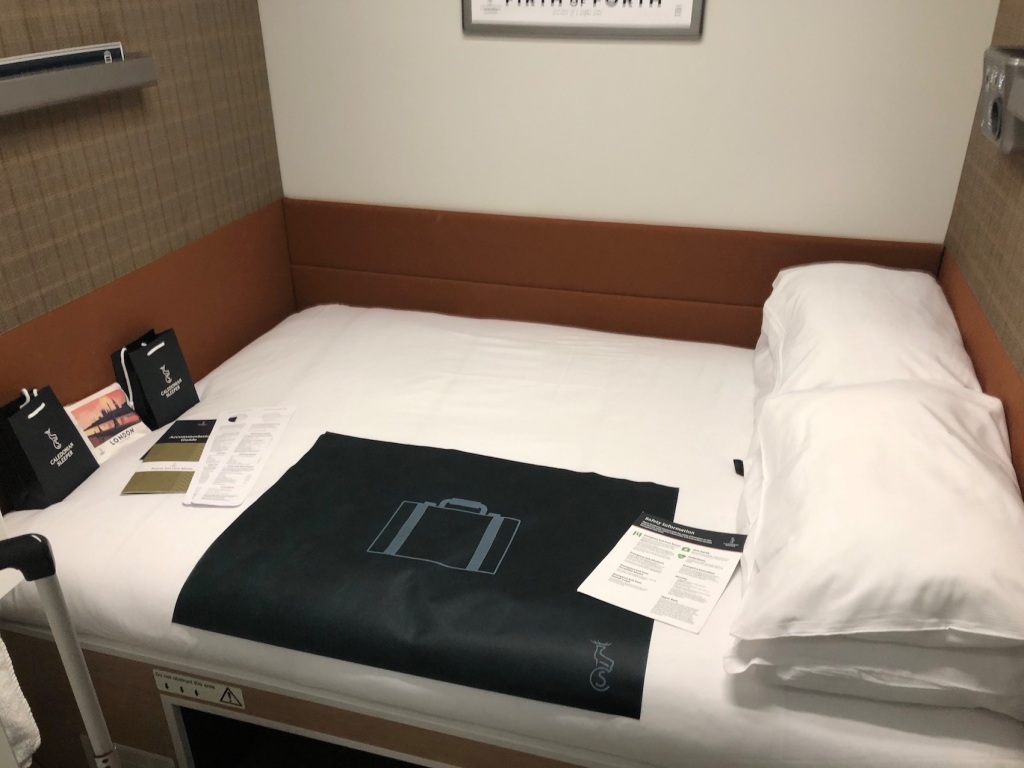
Would I do it again? No, but that’s not to say I didn’t enjoy it. It’s a long old haul but that’s the point. You get to see a good bit of Britain on the way, warts and all, but the important thing is knowing that you’ve done it. I wasn’t the only one to think the same thing – there were at least five other folk making the journey for the same reason as me and that was just in the First Class carriage. A longer, newer, better catered and more comfortable train would not have gone amiss but I wasn’t expecting Pullman service. Here’s the thing though, it was just as well I did it when I did as this service is due to be curtailed in the middle of May. The train will likely depart Aberdeen and terminate at Plymouth. This will inconvenience hardly anyone other than folk like me that want to do the full journey ‘because it is there’. Its ending will, however, hand over the crown of Britain’s longest (single) rail journey to the Caledonian Sleeper’s service between Euston and Fort William. Will that be on my to do list come May? No, as I already did it five years ago. You can read about it here.

Costings:

Barassie-Aberdeen, Standard Class £22.70 (Split ticket, senior railcard)

Premier Inn Aberdeen £46

Aberdeen-Penzance, First Class £161.55 (Senior Railcard. Standard Class was £62.20)

Premier Inn Penzance £54

Penzance-Paddington, First Class £48.60 (Senior Railcard, Standard Class was £41.00)

Heathrow Express, Standard Class £6.65 (Senior Railcard, one month advanced purchase)

Heathrow-Glasgow with British Airways £58.00

Airport Bus Free (Scottish Entitlement Card)

Glasgow Central-Barassie £5 (Scottish Entitlement Card)

Ben Lomond

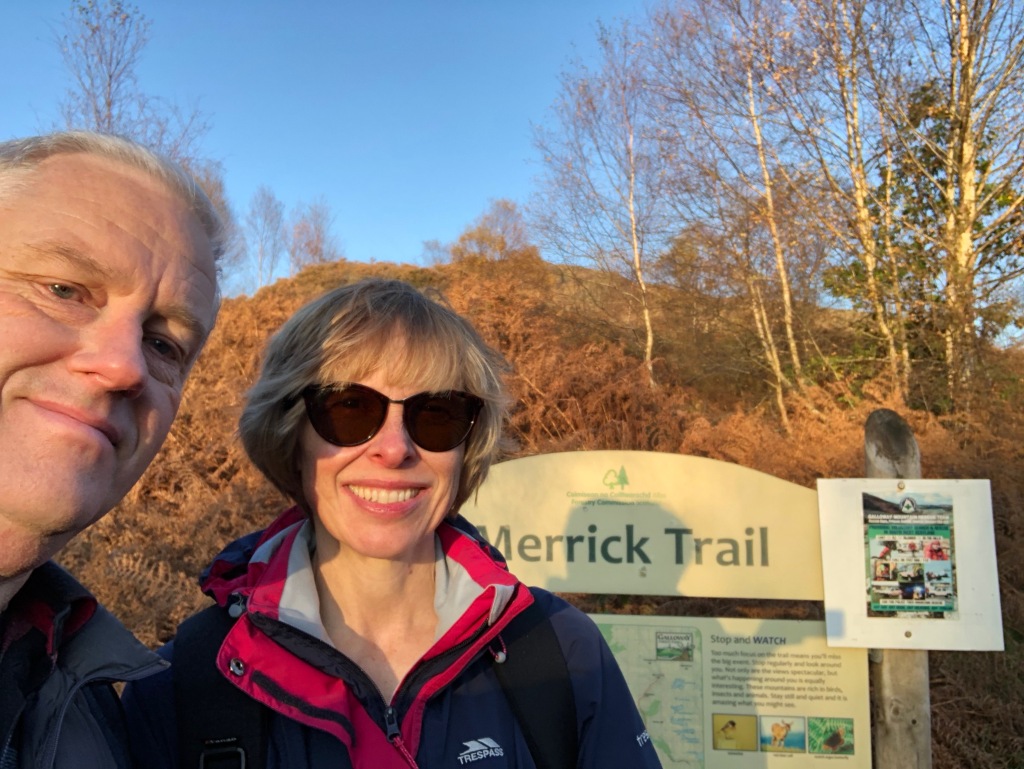
Just under a year go Elaine and I walked up The Merrick, the highest hill in Scotland’s Southern Uplands. You can read about it here in a blog I made about the joys of hillwalking. This was our first real hill walk which obviously made me an expert on the subject. Whilst the blog was really to share some nice pictures, I did conclude it by stating that whilst we were unlikely to become serious hill walkers like some of my former colleagues, we would definitely include a few hills in our walking repertoire. It only took the best part of a year for us to tackle another hill, though to be fair Covid did rather put the mockers on our best intentions for many of the previous eleven months. At the beginning of last week we noted that the weather forecast for Friday 25th was good and we had a free day so we could procrastinate no longer. We booked the ferry tickets and made our plans. The sharp-eyed amongst you will now be saying “ferry, to Ben Lomond?” and you would be quite correct in questioning me about it. The plan was, however, to climb Goat Fell on Arran, a hill that has been a frequent companion of us on our lockdown walks, albeit at a more than healthy social distance across the Firth of Clyde. We’d been meaning to climb it for years and Friday was going to be the day. Two days prior to the event the ferry was cancelled due to ‘operational reasons’, something to do with the port at Ardrossan rather than the boat itself. This led to some hasty rearranging of plans. Instead of Goat Fell we would scale the mighty Ben Lomond instead.

Whilst Goat Fell would have risen us 100 ft nearer the heavens than The Merrick had done, Ben Lomond is 430 ft higher at 3196 ft, or 974 m if you prefer the new fangled metric measurements. This pushes it into a category of mountains called ‘The Munros’. These are Scottish mountains above 3000 ft in height and would you believe there’s 282 of the buggers. Not only that there are another 227 Munro Tops, peaks above 3000 ft in height but lower than a nearby primary mountain summit. It appears that defining what is and isn’t a mountain isn’t exactly straightforward. Such matters are, however, beyond the scope of those of us who simply want a nice walk up a hill. Ben Lomond is the most southerly of the Munros, situated on the eastern shore of Loch Lomond and less than an hour away from the metropolis of Glasgow. It is also considered to be one of the most straight forward to climb, if not the easiest. These two factors make it very popular and around 30,000 people will reach the top each year. It will suffice to say that if you fancy dipping your toes in the turbulent water that is Munro Bagging, Ben Lomond is a good one to start with. It would be our first but would it be our last?

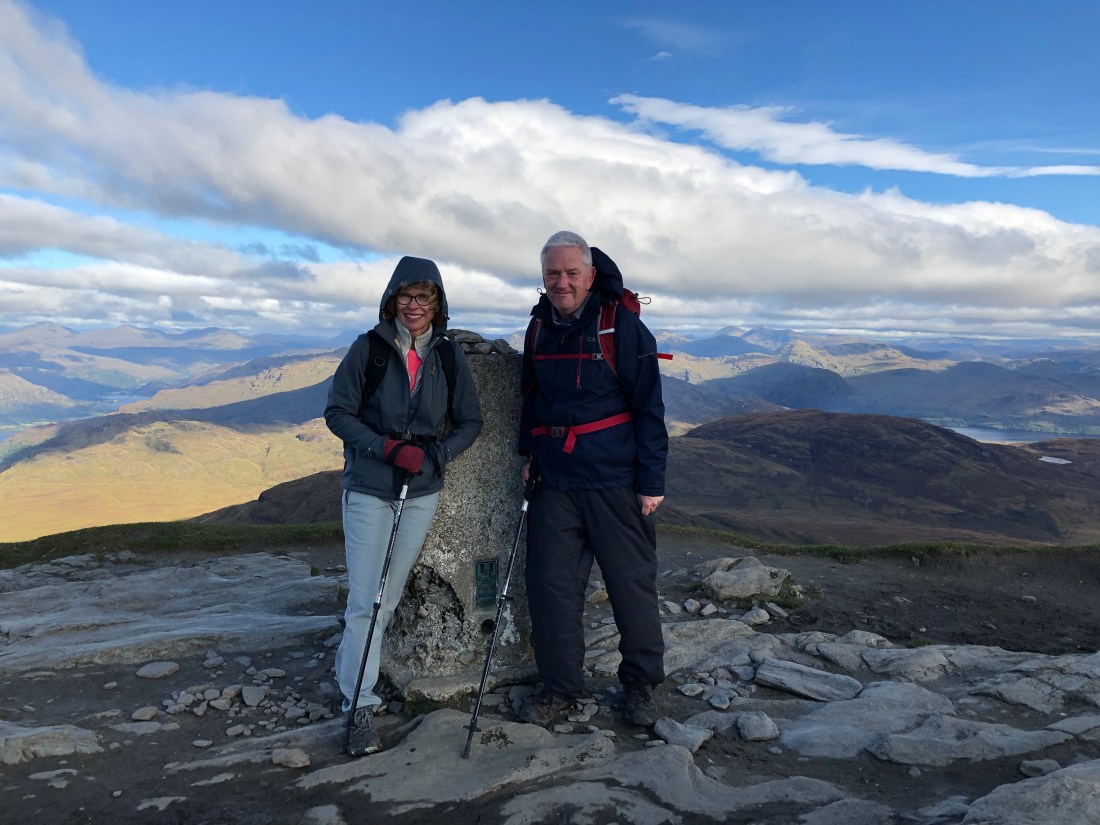
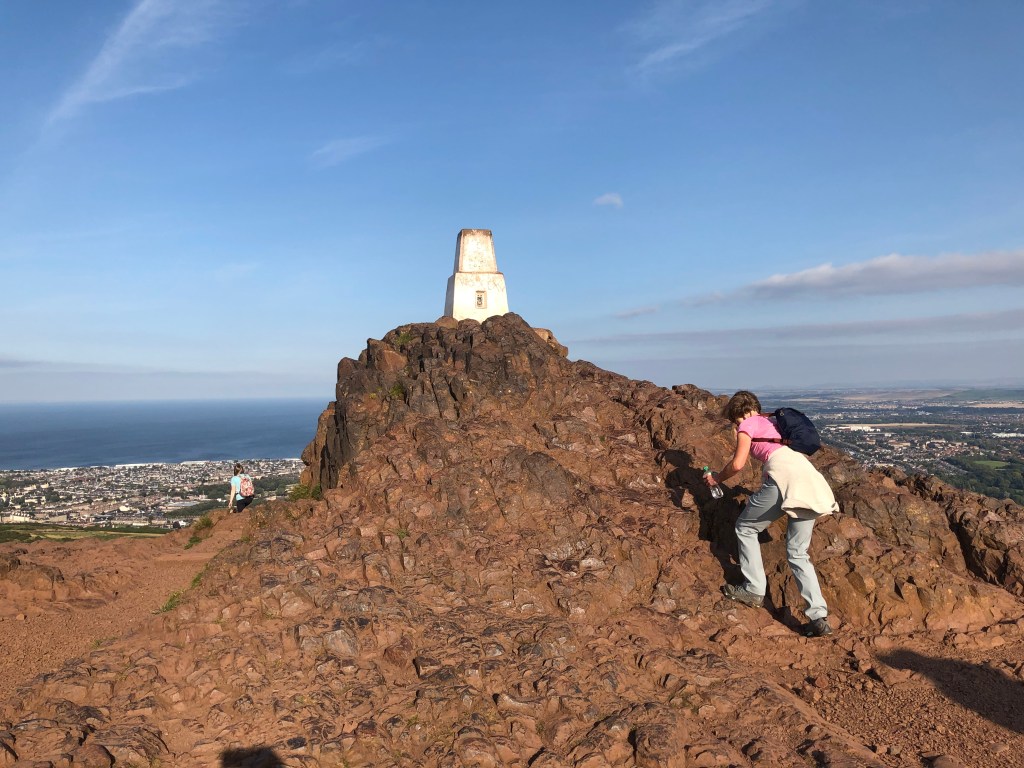
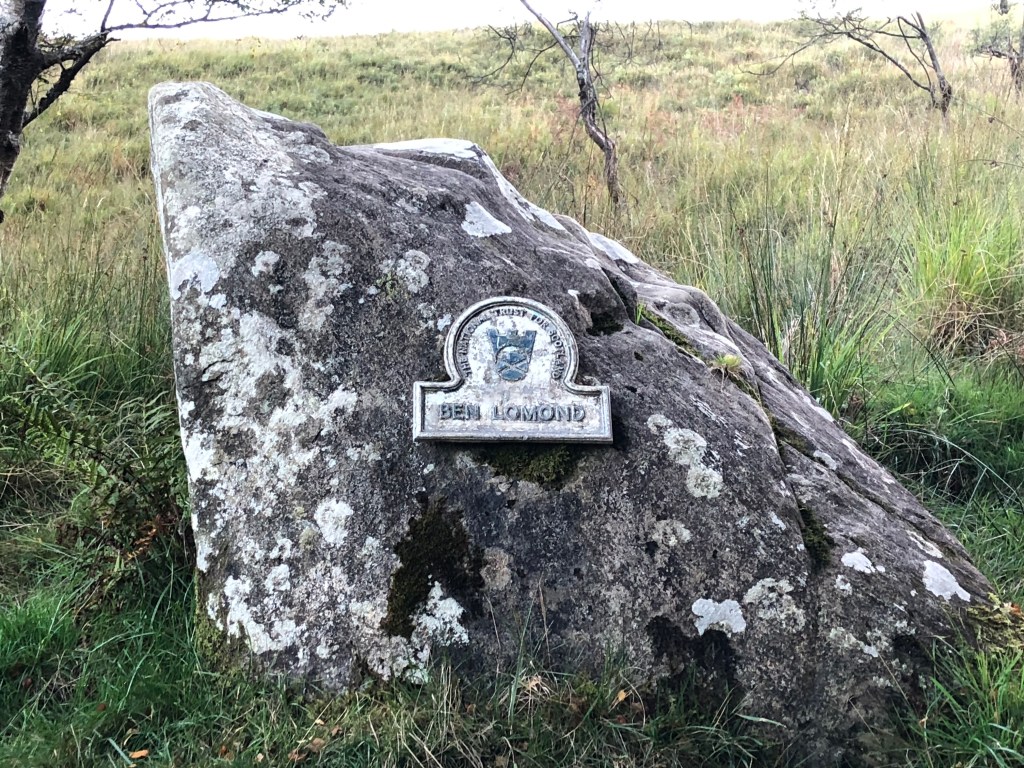
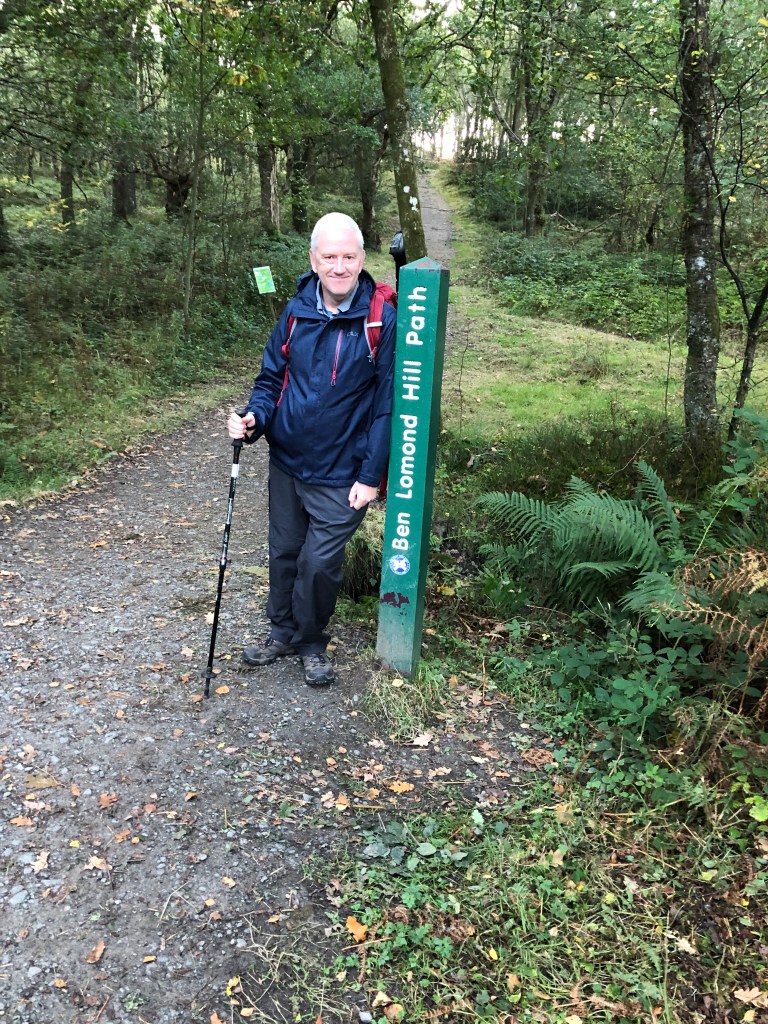
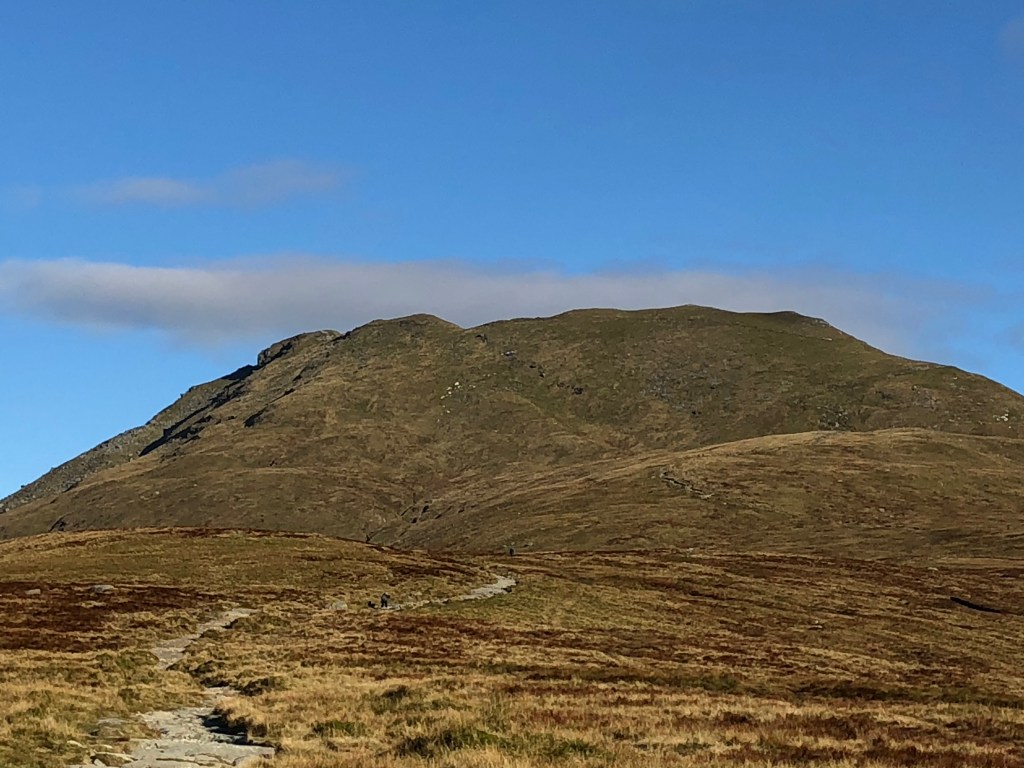
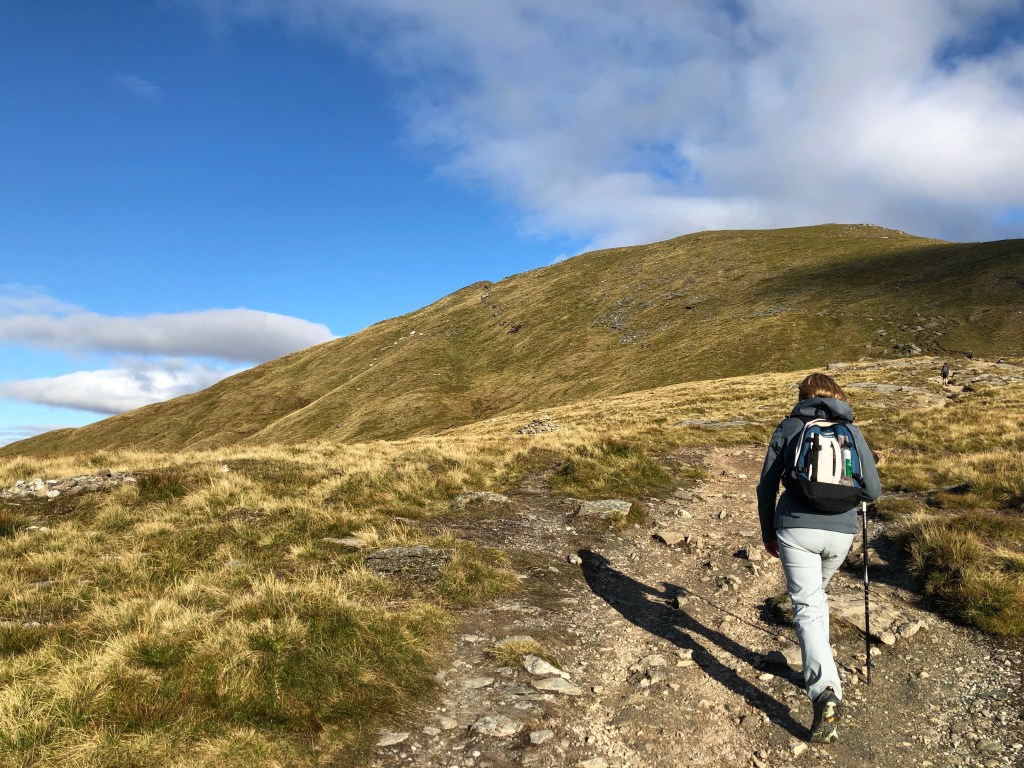
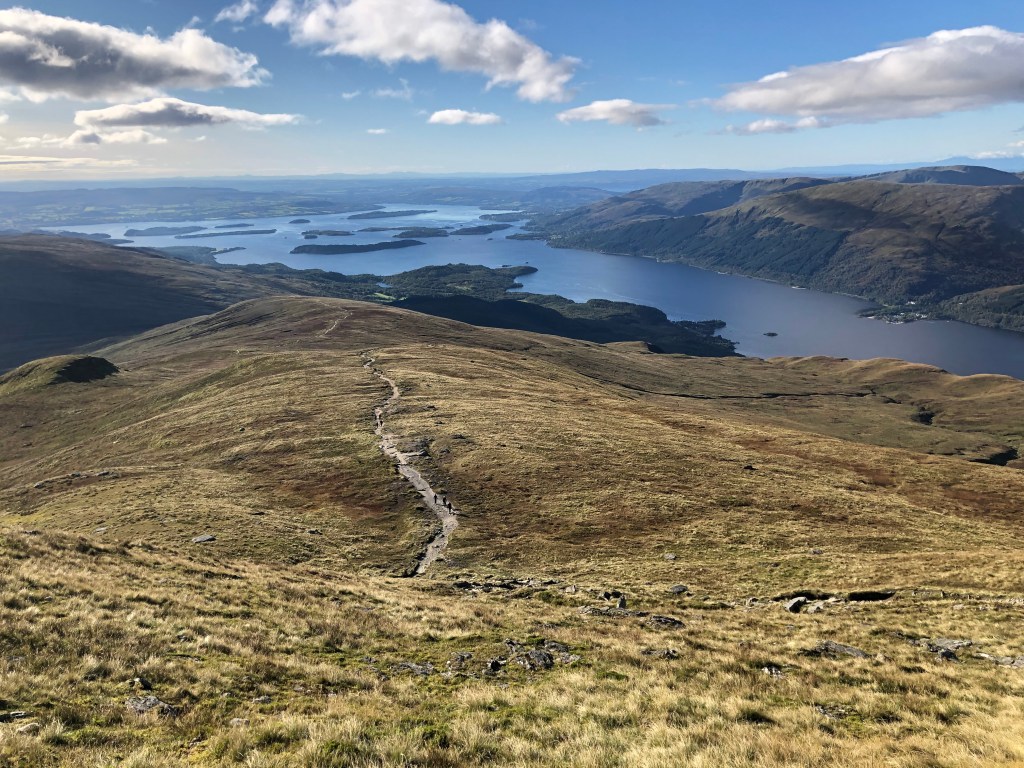
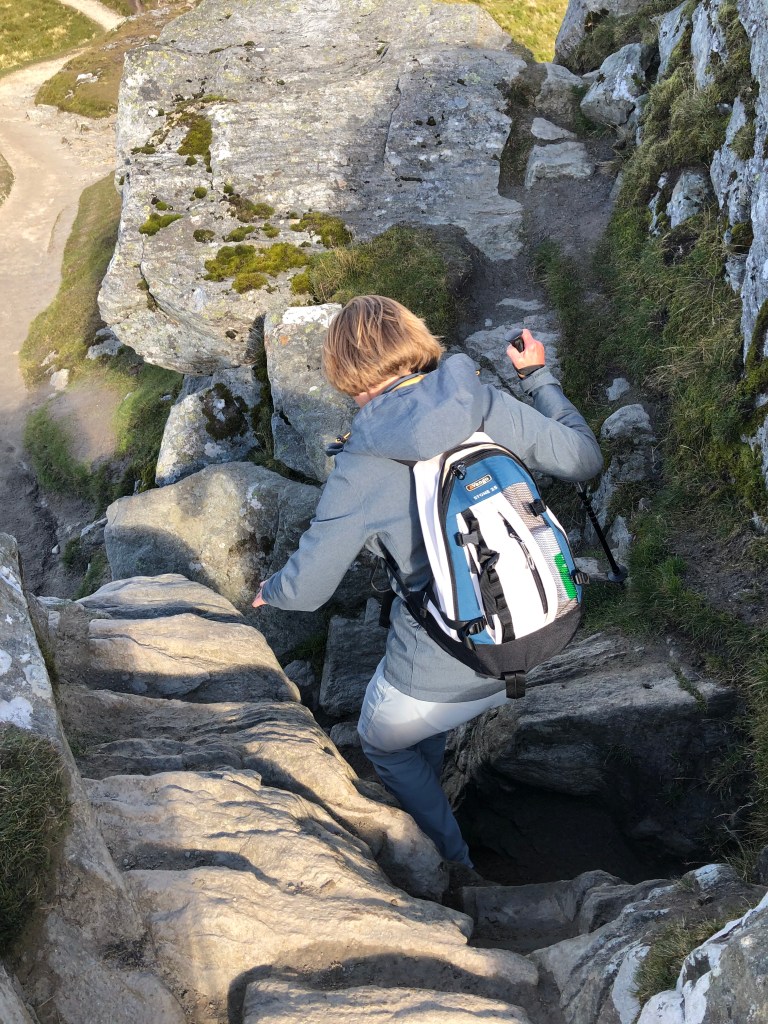
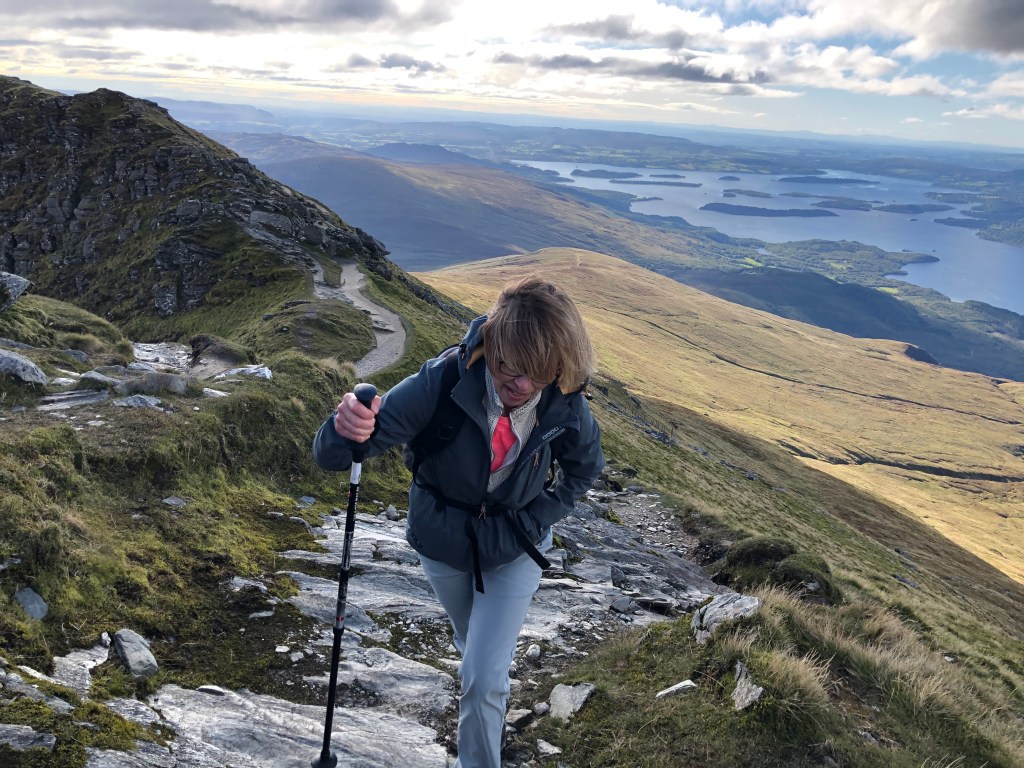
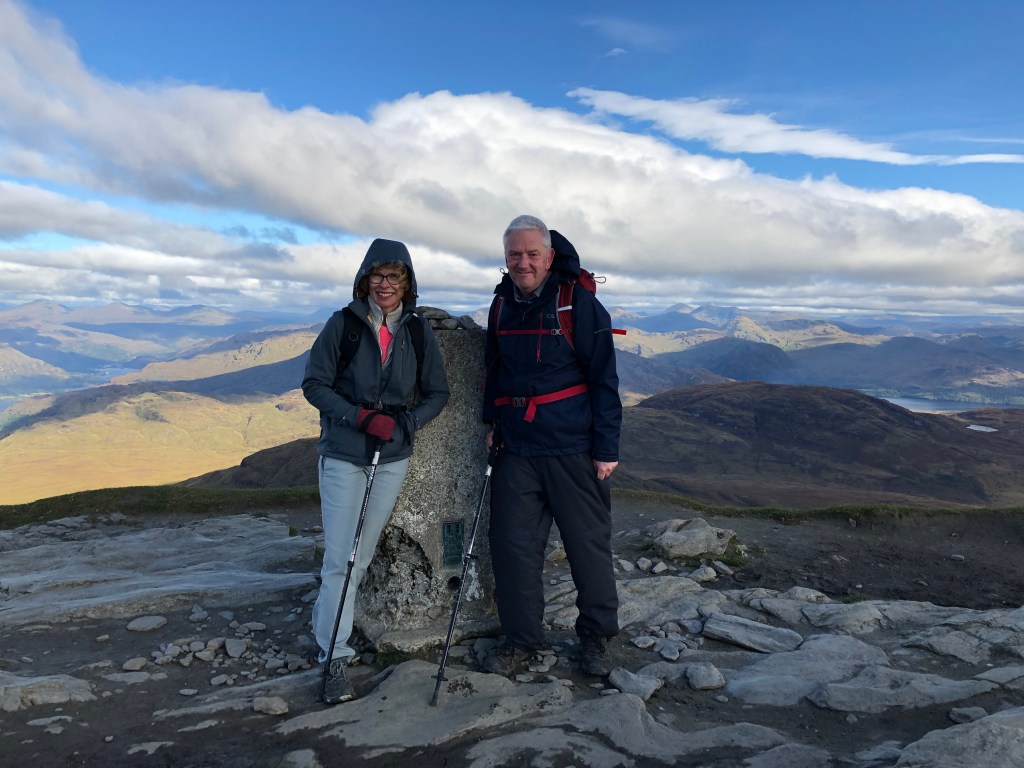
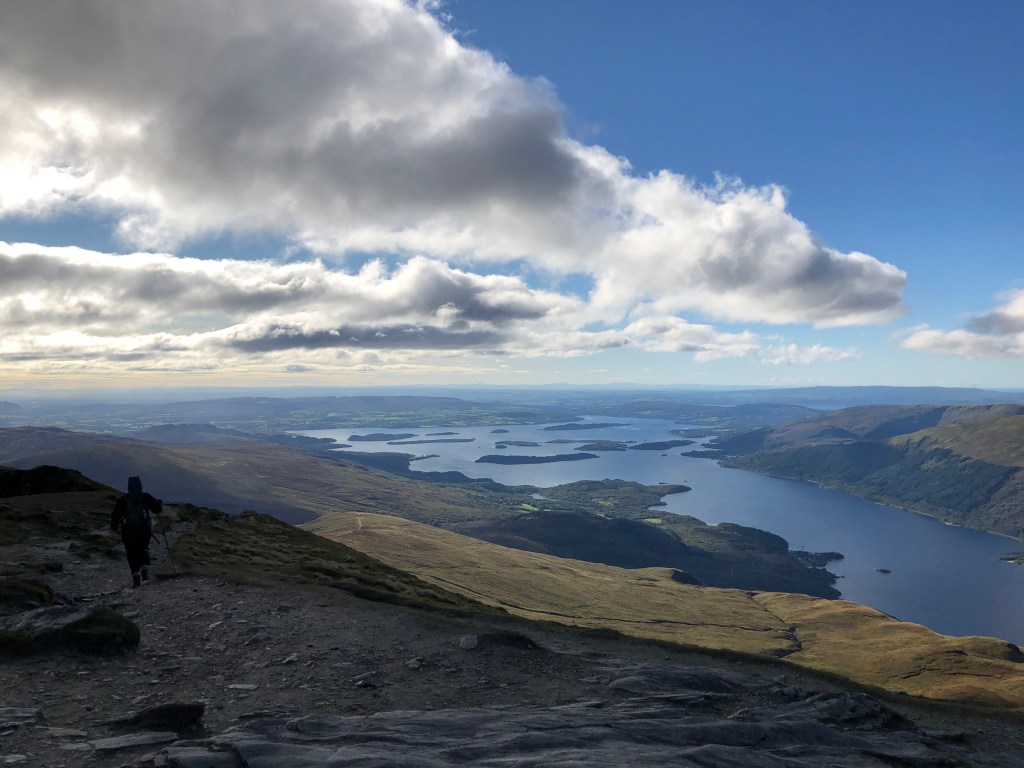
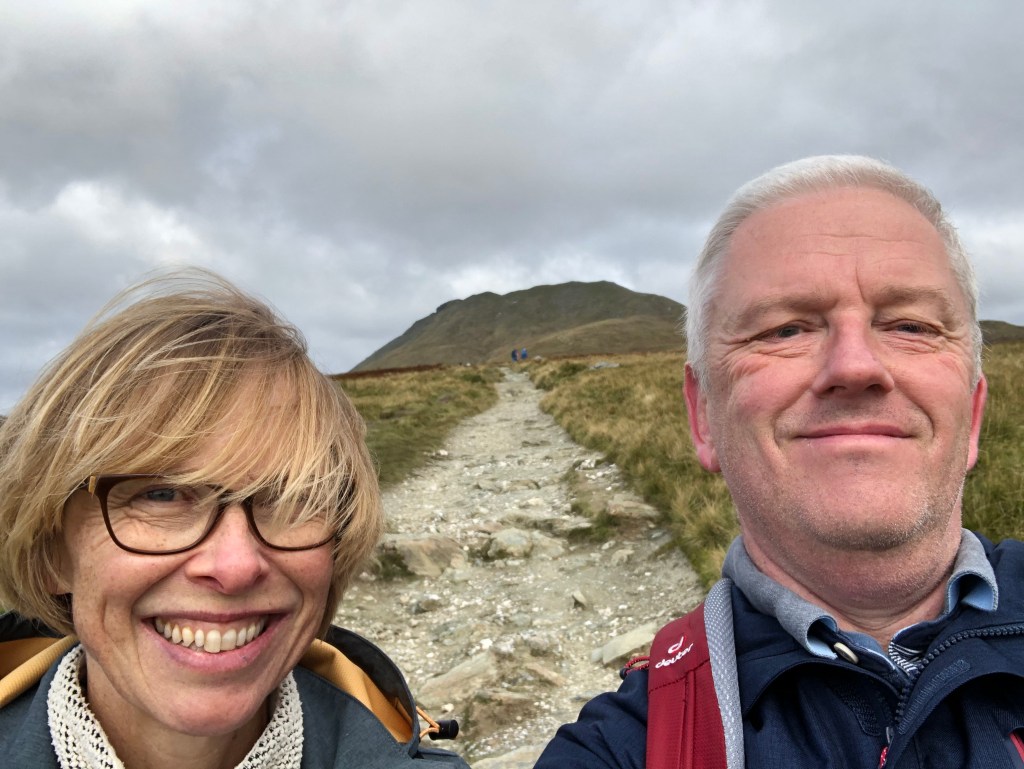
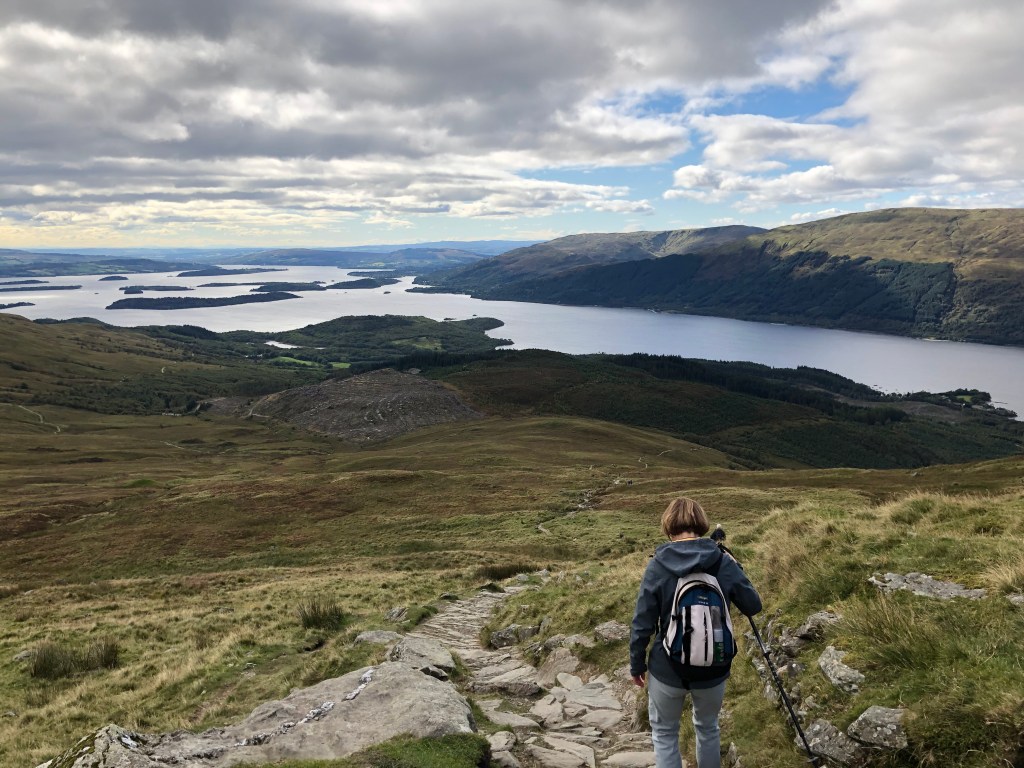
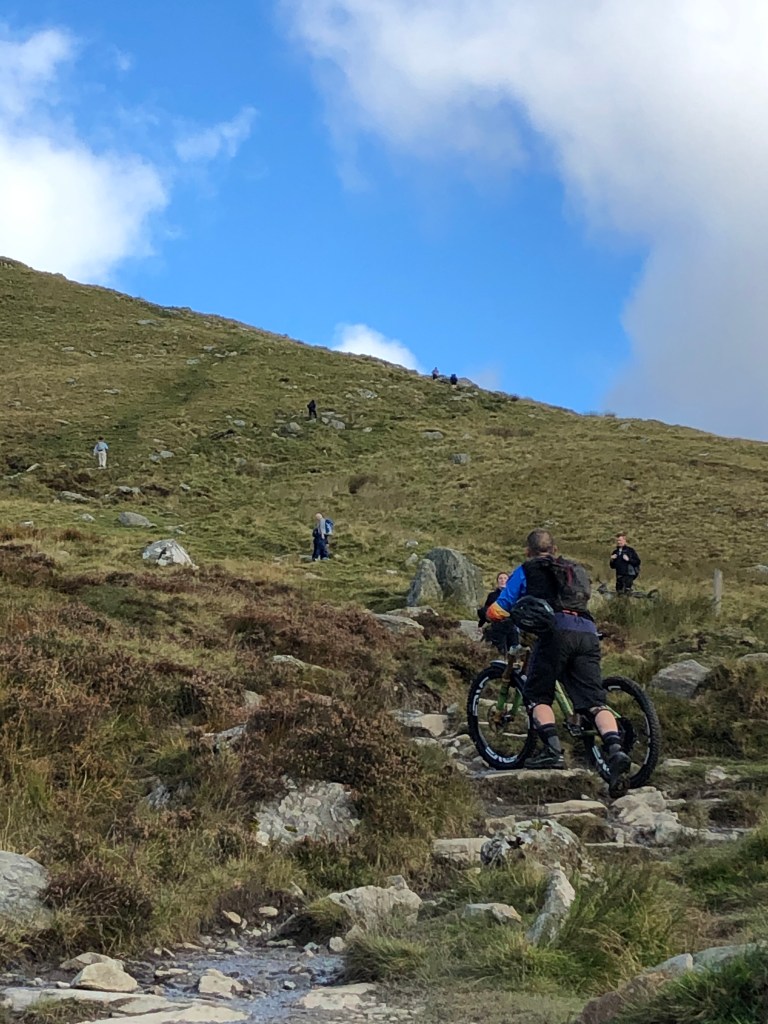
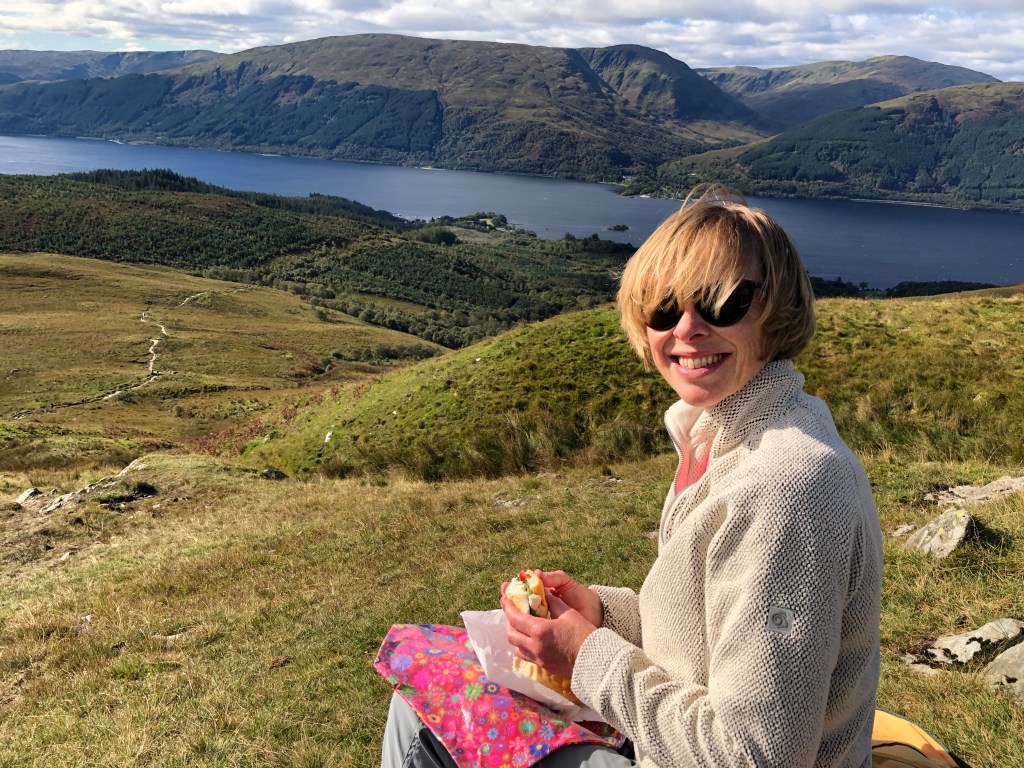
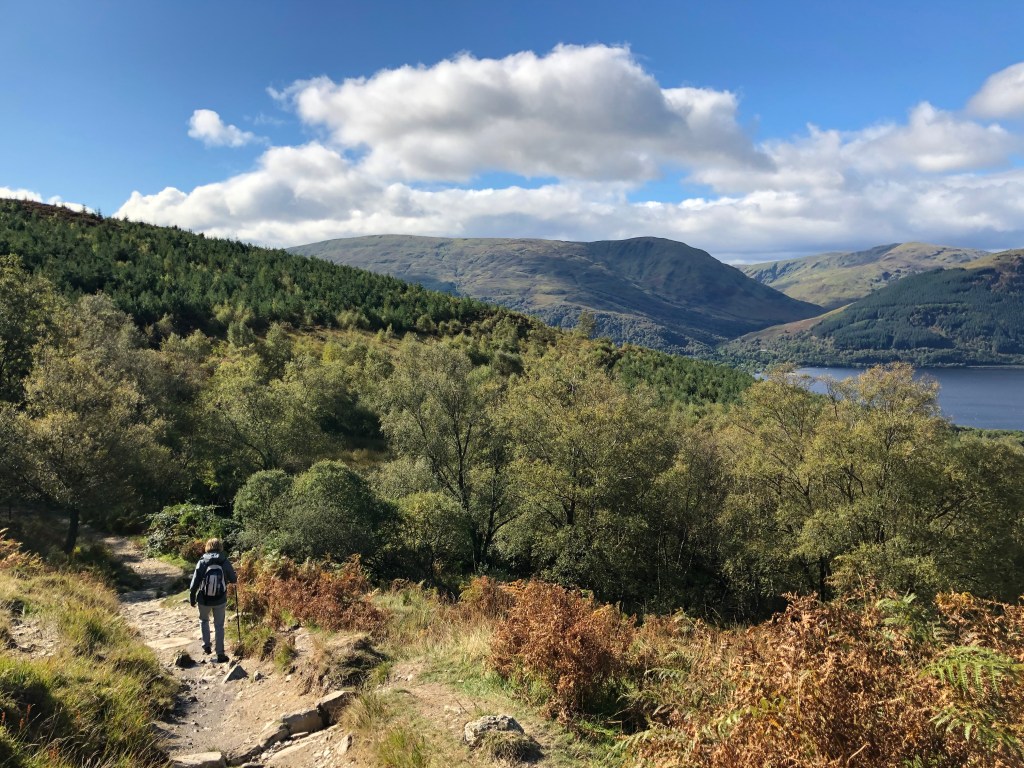
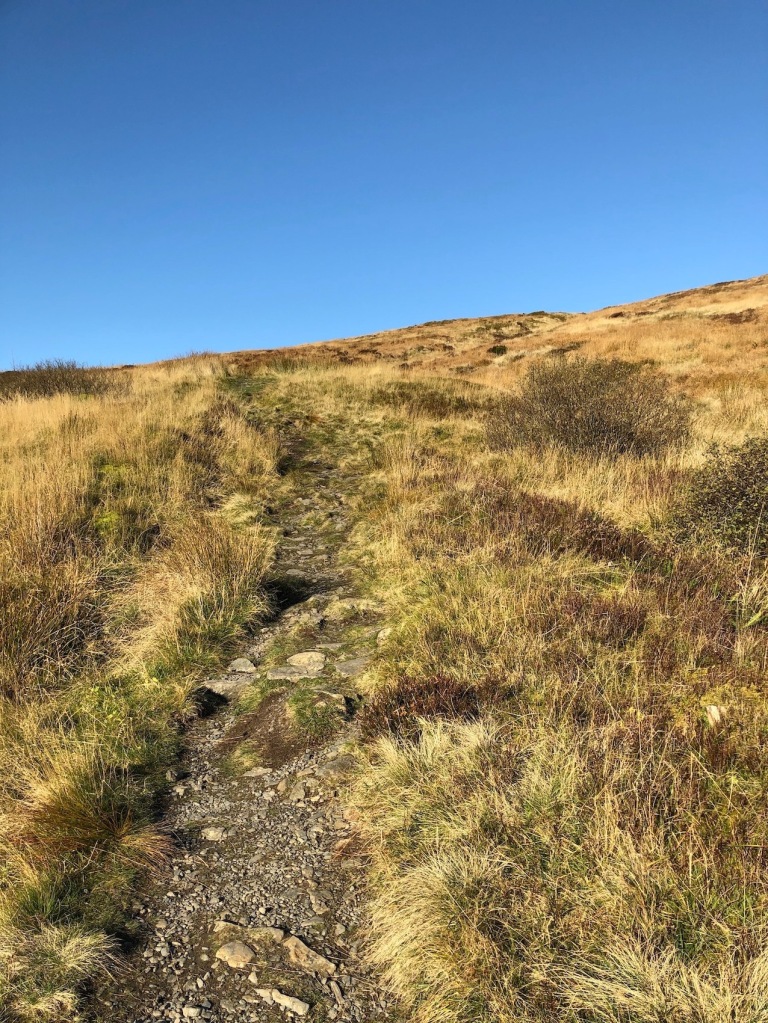
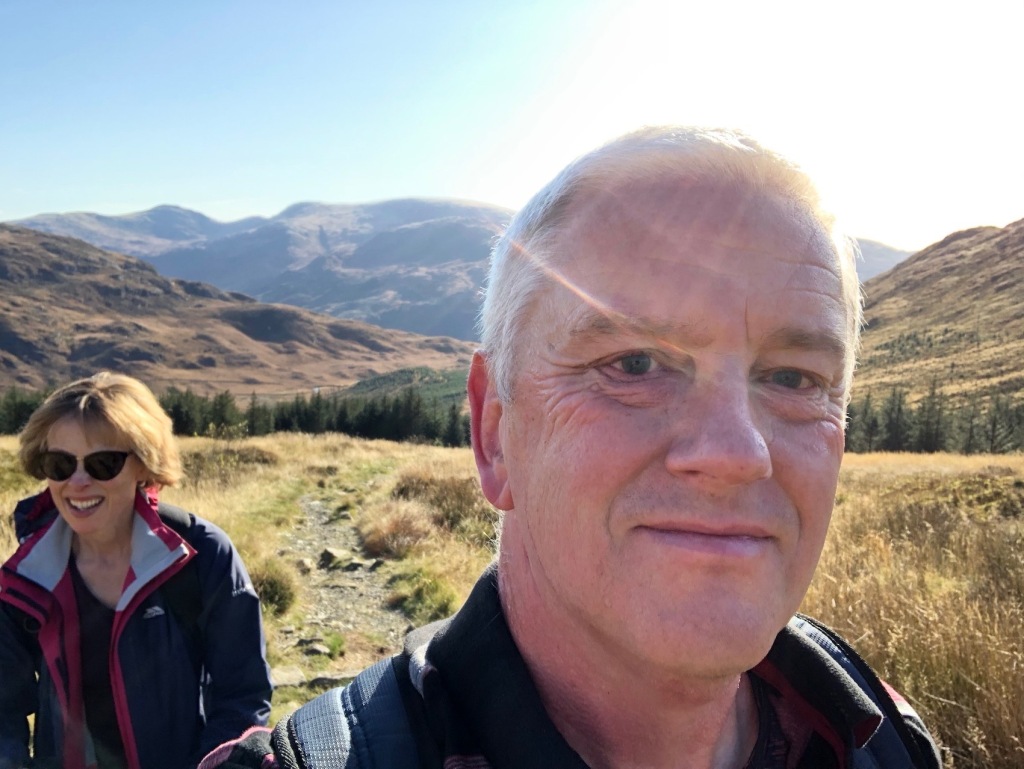
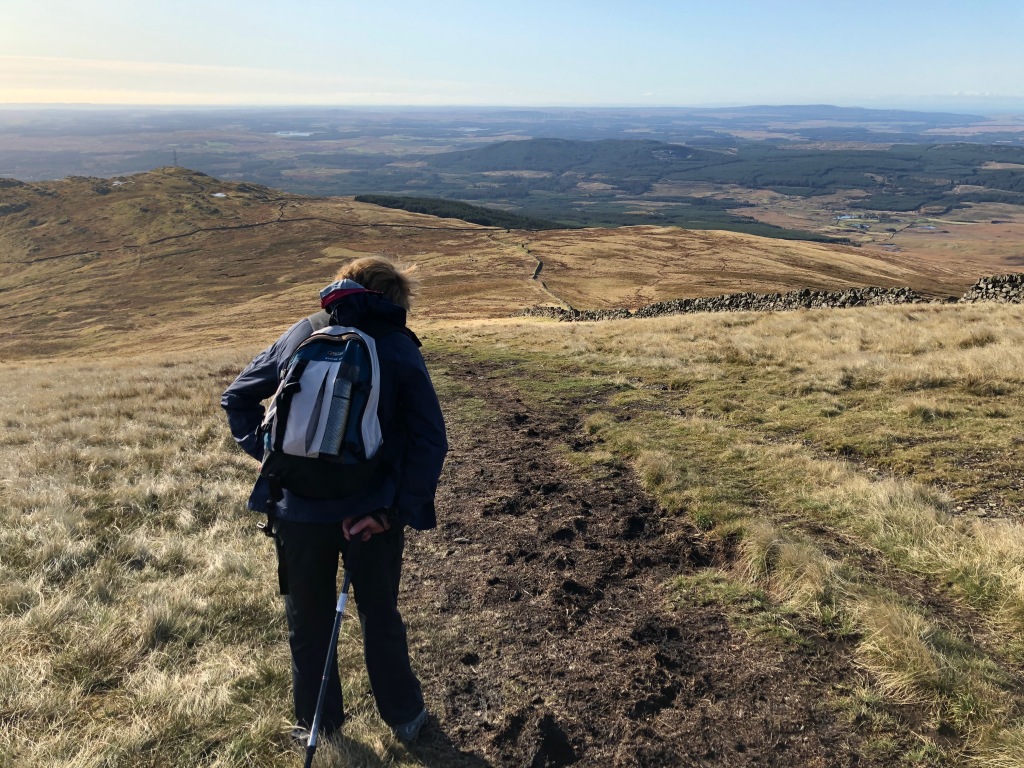
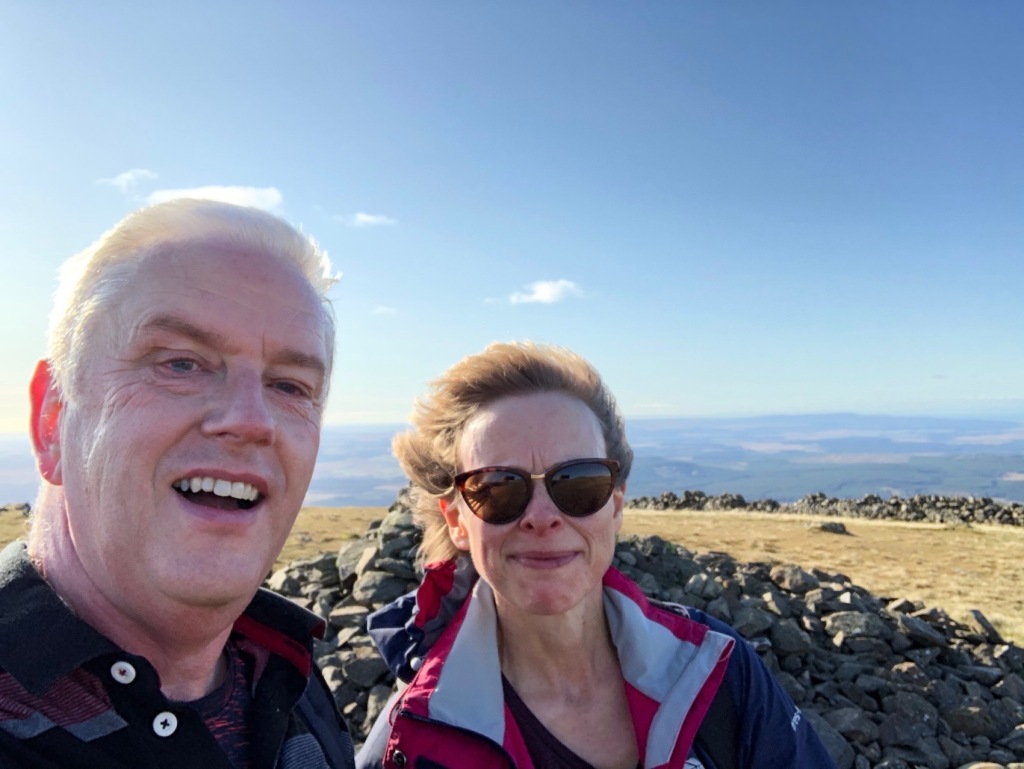
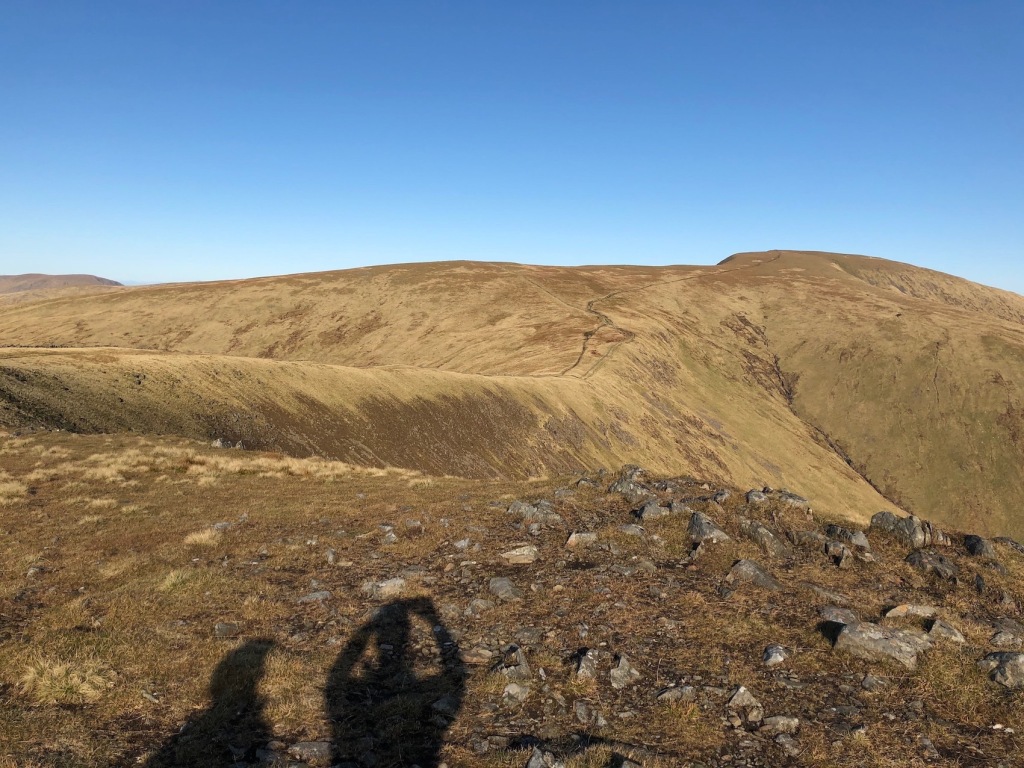
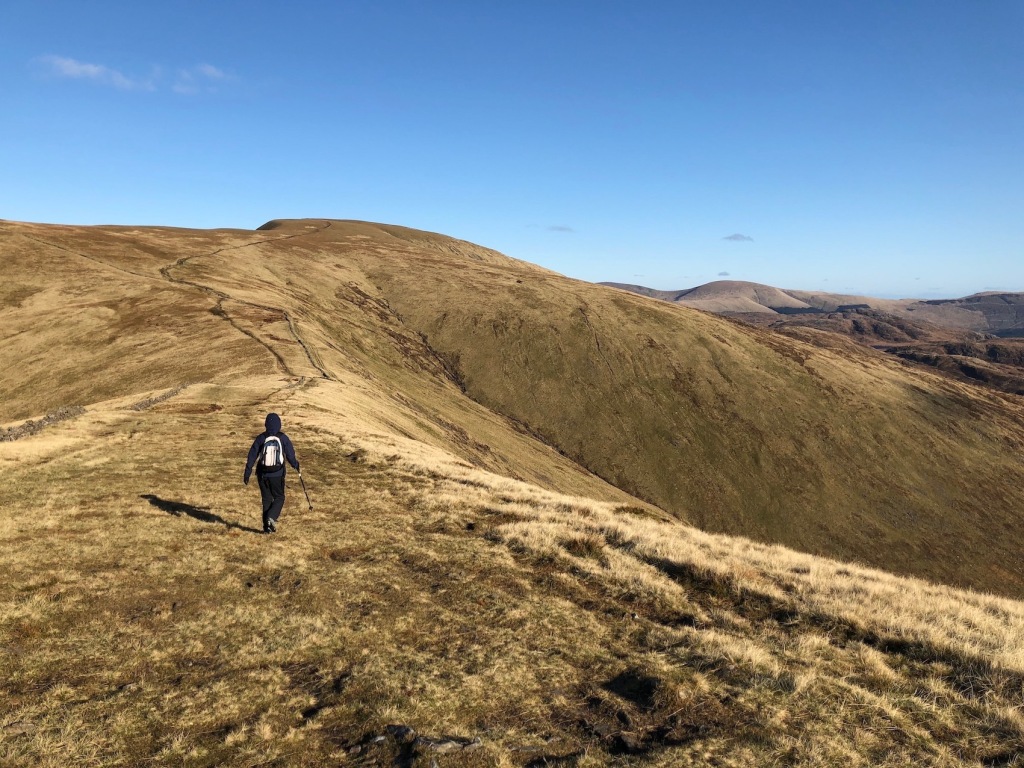
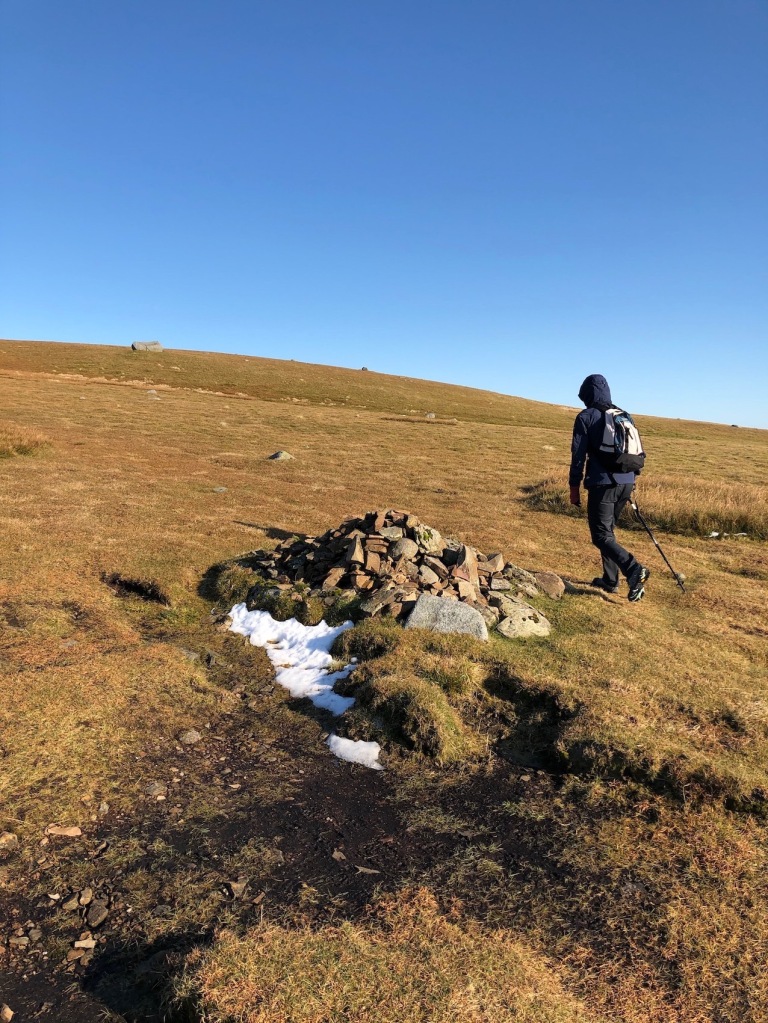
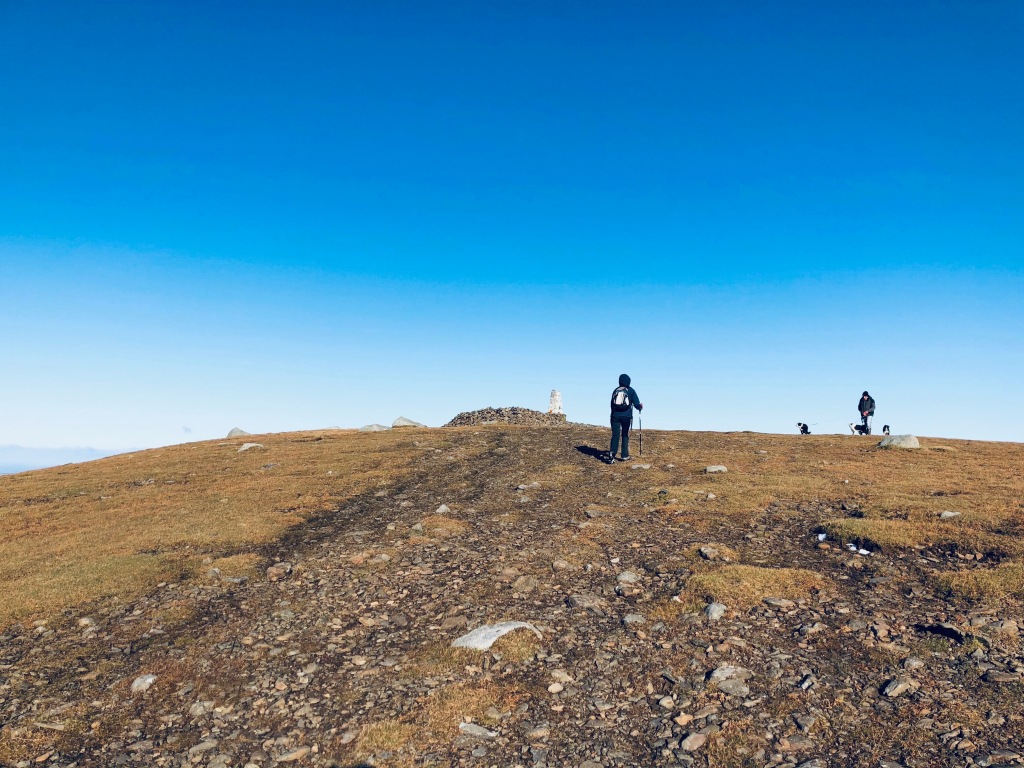
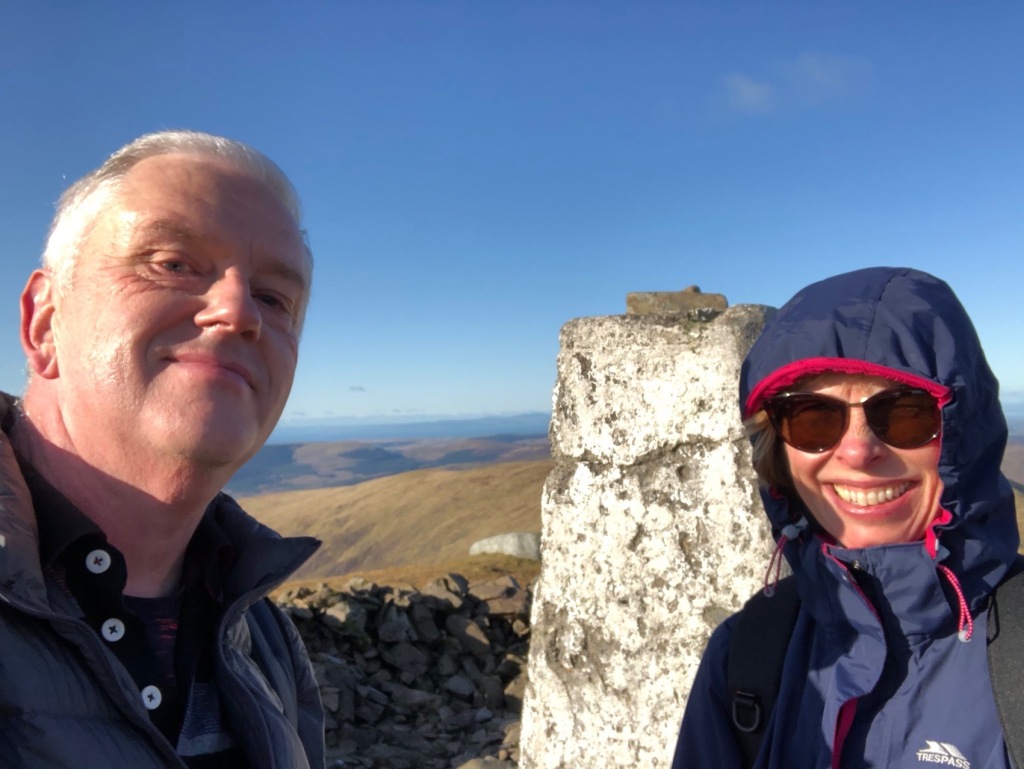
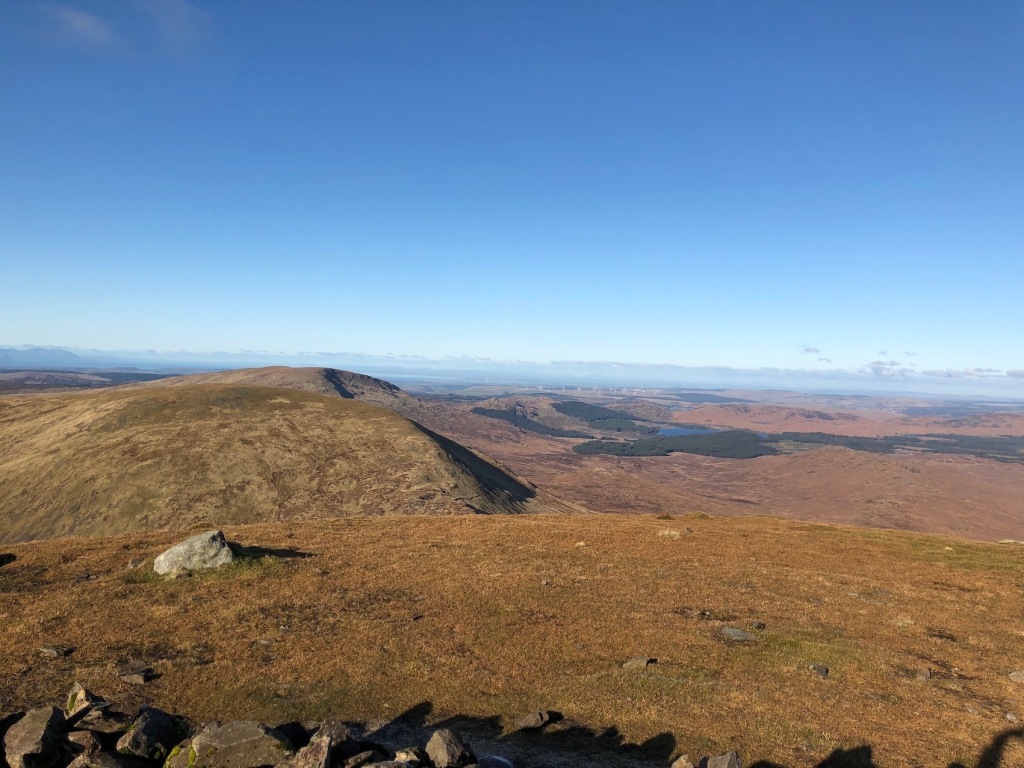
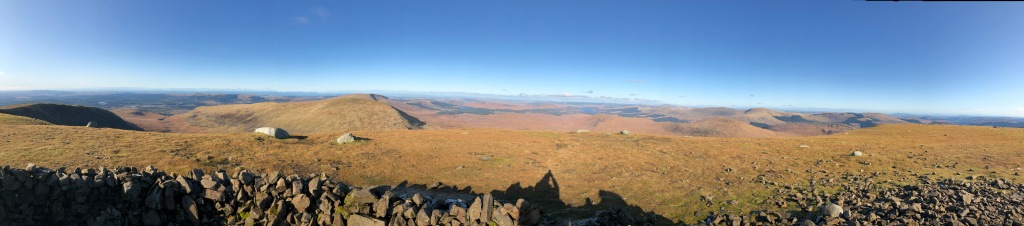
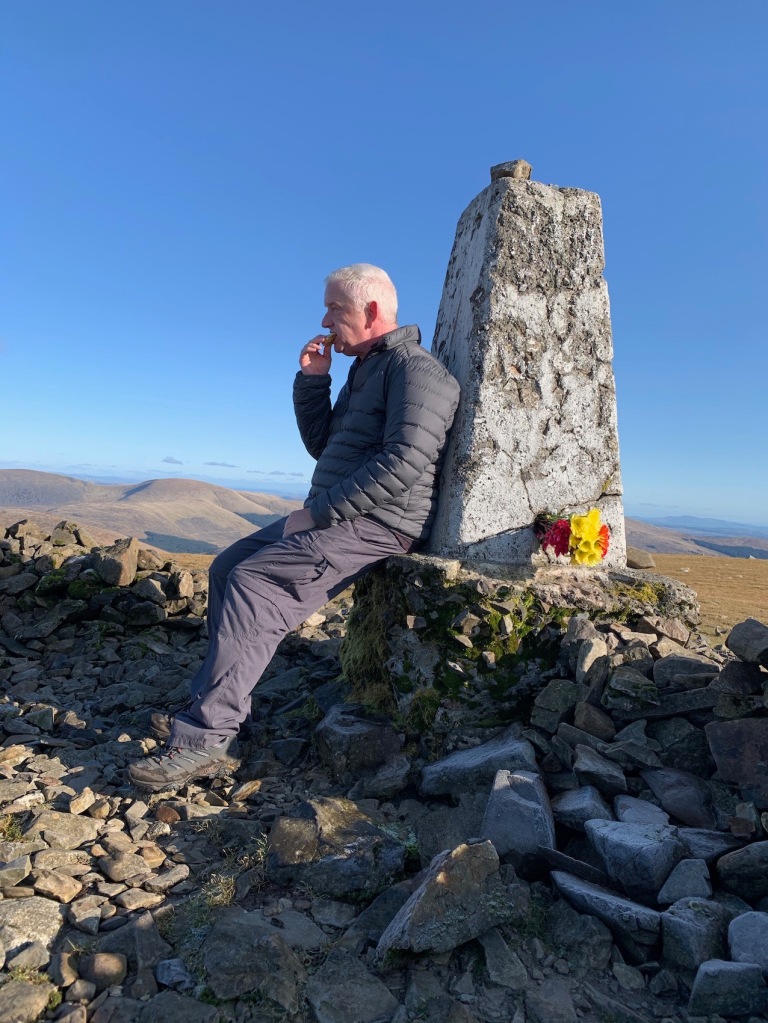
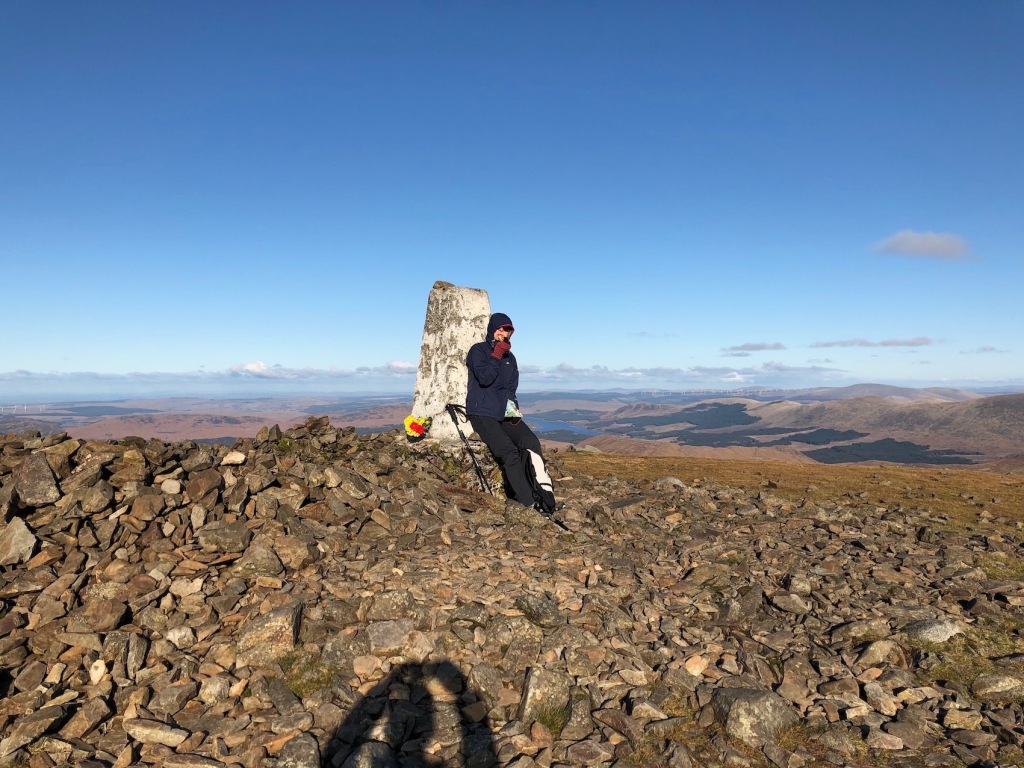
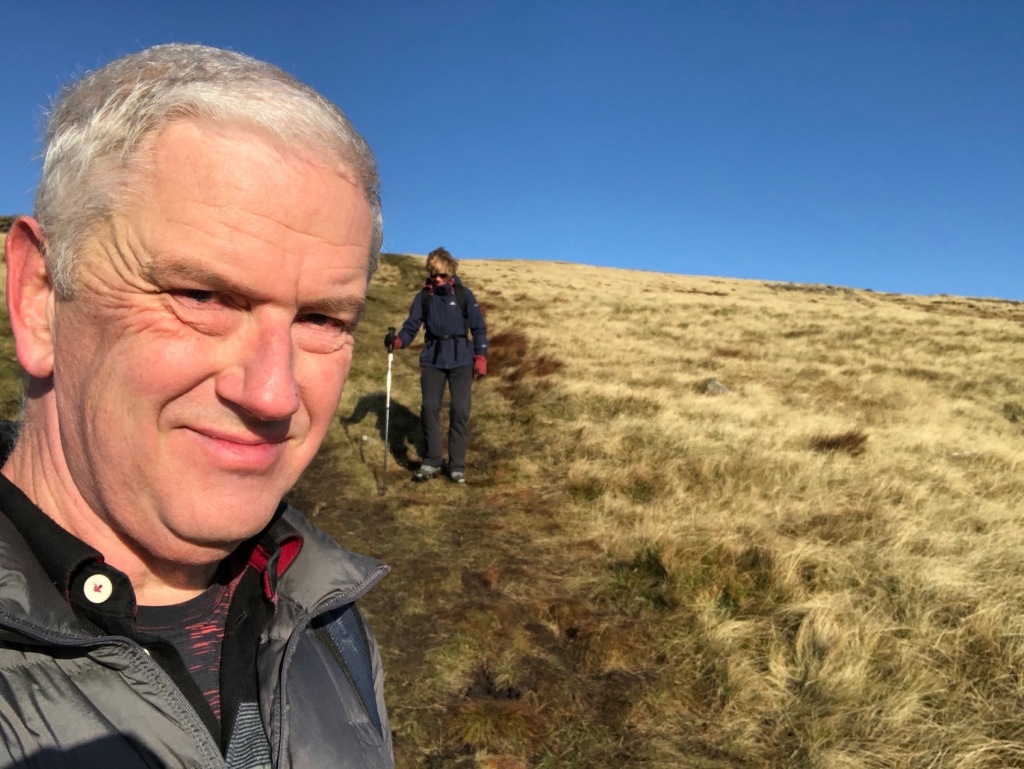
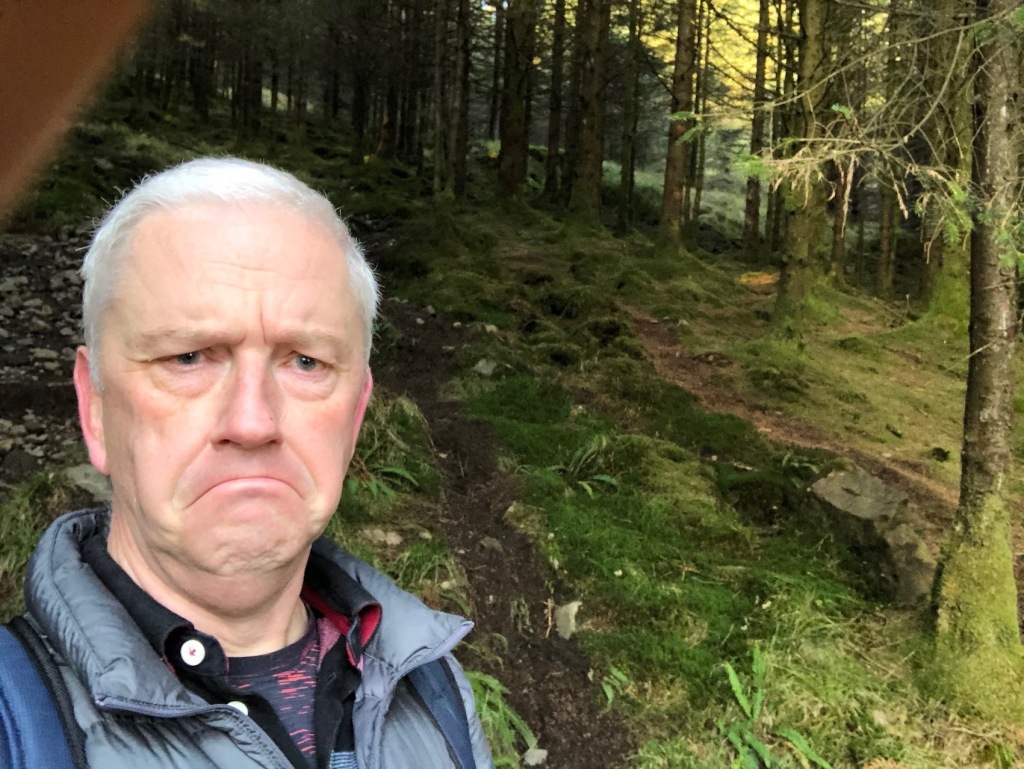
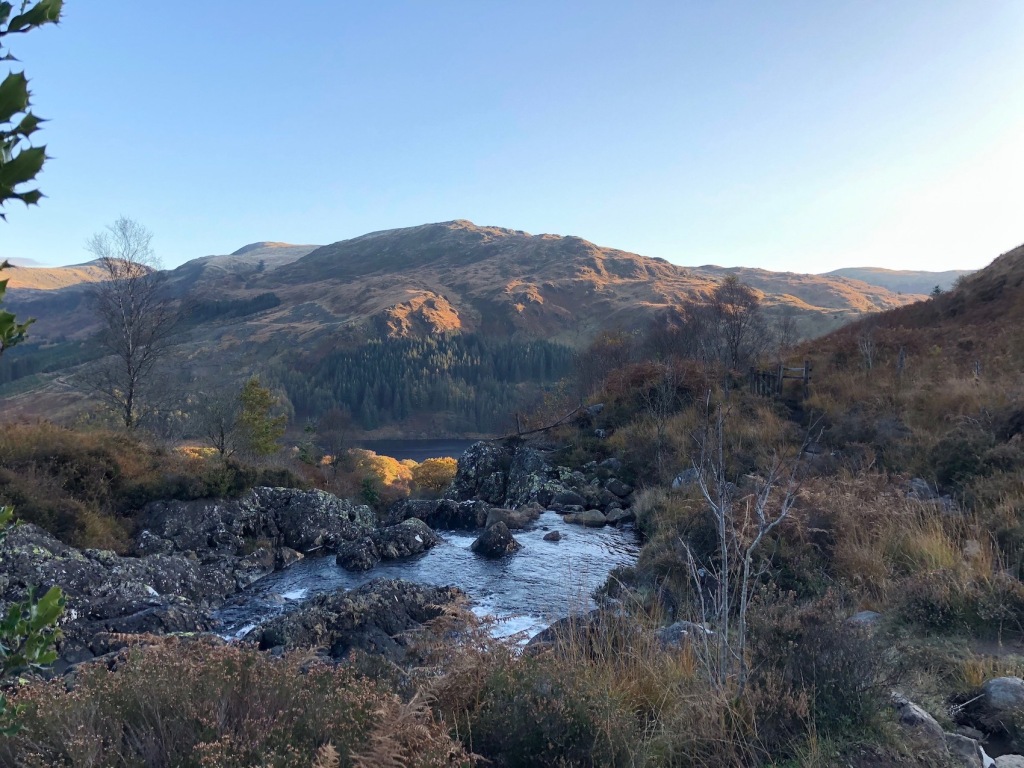
Earlier that week we had visited Edinburgh and climbed up Arthur’s Seat. Whilst this volcanic prominence towers impressively above Scotland’s capital, it is ‘only’ 823 ft high. It does involve a bit of scrambling up rocks and some steep sections so it was a good taster of what was to come. As previously mentioned, Ben Lomond is popular and the day we climbed it happened to be a local holiday in Glasgow. It made sense to set off early in an attempt to beat the hoards to the hill. As such our alarm went off at some unearthly hour and we piled into my car along with all the accoutrements required for a fair weather hill walk. Crampons and an ice axe were not required. Had they been then we would not have gone. It took us an hour and a half to get to the car park in Rowardenan at the foot of the hill. By the time we had got our shoes on, repacked our rucksacks, worked out where the path started from, waited for the portaloos to open, used said portaloos, ate half our picnic for breakfast and generally faffed about as you do, it was 08:10 when we set off. There are three paths up Ben Lomond. One is approached from the east and isn’t really a path at all. We will leave that to the more serious hill walkers. The second is the Ptarmigan Path, named after the Ptarmigan Ridge along which it runs. We were tempted to utilise this for our descent but it is known to be quite tricky so let’s not bite off more than we can chew, shall we? It was, therefore, the main tourist path for us in both directions. This path, which is under the care of the National Trust for Scotland, is clearly defined and well maintained. Not many Munros have the benefit of a path like it. Having said that, it is still a hill path so there is plenty potential for a twisted ankle or inglorious fall thanks to loose stones and gravel covered steps. It paid to be careful, at least for novices like us. There were others we passed who bounced both up and down the path like mountain goats, and three blokes were even carrying bicycles up to the summit with the intention of cycling down. Good for them, the mad fools. Initially the path led off into woodlands. It rose quite steeply at first and included a brief scramble up some rocks. There was a break in the trees where we caught our first glimpse of the summit, illuminated orange by the early morning sunlight. It seemed quite a long way away. We emerged from the forest onto moorland and saw the path weaving its way skywards. Whilst it didn’t look too intimidating, it was a while before the gradient eased. We stopped for drinks every so often which allowed us to take in the scenery. Whilst unchanging, it only seemed to get better with altitude. The central section of the path, whilst not quite a plateau, was gently inclined and so kinder on our bodies. The summit, which had been out a view for a while, finally popped over a ridge and we got a clear view of what awaited us. The ascent to the summit was quite hard work. The path zig-zags up the side and just as the top appears to be within grasp there is another rocky section to negotiate. Once through this you capture a glimpse of the trig point on the summit and it is a short walk to get there.

It had taken us two and a quarter hours to get to the top. It was a perfect day to do it. The sun was shining all the way up yet it was not too powerful. The path had taken us up the southern face and with the wind from the north, the hill itself sheltered us from its chilling effect. That wasn’t the case on the summit of course where there was nowhere to hide from the stiff breeze. Stiff breeze? Who am I trying to kid? It was blowing a hoolie up there which meant we couldn’t stay any longer than it took to give the trig point a hug and take some photos. That doesn’t matter though. We’d made it to the top without mishap and had our first Munro under our belts. Go us! As with any hill that is only half the story. We had to get back down again. Arguments will rage as to which is the hardest, going up or coming back down. Going up you are fighting gravity’s desire to pull you to the centre of the earth. It takes a lot of calories to overcome that. Coming down, that very same gravity should do all the work yet it is still trying to pull you towards the centre of the earth at a rate of 9.8 meters per second squared. Left unchecked you would make very painful and likely fatal descent down the hill so you still need to burn calories fighting gravity’s unerring pull. Maybe not as many calories but you will be utilising muscles that normally have quite an easy life. It took us two hours walking time to get down. In reality it took us longer than that due to a stop for a lunch with a view, other stops for drinks and snacks, waiting to allow the aforementioned hoards on their way up pass us, the occasional chats with some of the other walkers and the patting of dogs. Quite a few of the walkers took their dogs up the hill. One of those dogs was a Chihuahua for whom Ben Lomond must seem like Everest. Whilst you’ve got to keep a careful watch for your footing you do get to appreciate the scenery a bit more on the way down. It was absolutely stunning. Visibility was virtually unlimited. 44 miles away was Goat Fell, the mountain we had planned on being on. We could also clearly see The Merrick, scene of our first real hill walk eleven months ago. It was 72 miles away. The full 360 degree vista was never anything other than wonderful views. You can see why people like this sort of thing. Once we’d reached the bottom we wandered to the shore of Loch Lomond to see the Loch Lomond National Park Memorial sculpture. Since 1995 the area around Ben Lomond has been designated as a war memorial to those who had lost their lives in two world wars and the sculpture, by Doug Cocker, has stood there since 1997. We then discovered a nearby improvised trapeze hanging from a tree and felt we deserved a go. For no reason whatsoever, it seemed a fitting way to conclude our walk.

Will it be another eleven months before we tackle our next hill? I hope not. All walks are pretty good but there was a definite sense of achievement walking to the top of a hill so large it claims to be a mountain. What about attempting more Munros? Well yes, of course. It would be easier if they were just a bit closer to home but that’s not really an excuse not to try. What about bagging all 282? Not a bloody chance! There are few where you require mountaineering experience for a start and I’m not planning on becoming a Mallory any time soon, not least because he died on a hill, albeit one a bit higher than Ben Lomomd. There are, however, several Munros that are reasonably accessible and described as not too demanding. Maybe the next time a perfect day of weather is forecast, Elaine isn’t working and we’ve got nothing else on, we will bag Munro Number Two. Expect a new blog next summer…

Sleeper

Caledonian Sleeper Logo

Back in the eighties when I first came up to live in Scotland I was young enough to hold a Young Person’s Railcard. On a couple of occasions I took advantage of it to travel to London just to watch a football match. I seem to remember it only cost in the region of six quid for a day return. To qualify for that day return you had to board the train home before midnight and at the time British Rail ran a service called the Night Rider. Unlike the sleeper service the Night Rider just had normal carriages, not sleeping berths. The train progressed slowly northwards stopping at just about every station on the West Coast Main Line as far as Carlisle, where the electric locomotive was noisily replaced by a diesel which would then haul us at snail’s pace up the Dumfries and Kilmarnock line to Glasgow. The first time I rode it the carriages were old compartmental stock. I managed to get a compartment to myself where I could dim the lights, lie down and nod off, waking up at each of the hundred stops between Euston and Glasgow. The second time the carriages were old First Class mainline carriages. Worn hard by the bottoms of numerous fat cats over the previous years, they didn’t recline and the carriage was bathed in the type of light that penetrates even the tightest shut eyelid. Sleep was impossible. The journey took an eternity but it felt far longer than that. When I finally reached Glasgow Central, my ebb had sunk to the bottom of the Marianas Trench. It was brutal. The Night Rider stopped not long after my second trip which I’m sure made a distinct improvement to the suicide rate in both Glasgow and London.

But enough of the personal history lesson. Despite those bad experiences of overnight train travel I have for some time hankered to attempt it once more. Not on a seat of course, that would be masochistic, but on a proper sleeper service. Sleepers have operated between London and Scotland since 1873. In 1996 Scotrail took over the running of the service and named it the Caledonian Sleeper. In 2014 the franchise was awarded to Serco with the promise of major investment in the service. This was good news as one of the things that put me off using the sleeper was the old carriages. Cabins either contained one bed (First Class) or two bunk beds (Standard Class). Purchasing a single ticket in Standard Class meant you were likely to be buddied up with a stranger of the same sex which was a bit off putting. I mean I don’t, erm, snore and my farts smell of roses, honest, but I suspect the chances of being paired off with someone of a similarly pleasant nocturnal disposition were slim. I could have raided my piggy bank and gone for a First Class berth. Even that was unappealing. The cabins had a sink but there was always the niggling problem of what to do when you needed a wee in the middle of the night. There were lavatories at the end of the carriage but wandering down the corridor in your boxers didn’t seem quite right and bare feet in a train toilet is right out. You’d basically have to get dressed every time your bladder decided it had reached capacity. Then, in the morning, I do quite like to have a shower but a sink was all that was available to do one’s ablutions. Consequently I never experienced the old sleeper trains. Would the new ones be any better? Well, according to the hype put out by Caledonian Sleeper it was a big yes. There would be four choices of accommodation for the overnight services. At the bottom end of the scale was a seat. It may well be a comfy seat but it was a seat nevertheless. Sod that. The memories of the Night Rider have not yet faded. Going on a sleeper service meant reserving a place to sleep.

(If you are wondering where the photos are don’t worry, they are coming)

Of the three rooms available to book, the cheapest was the Classic Room. It has two bunk beds and a sink. Unlike the old Standard Class rooms you could book it for solo occupancy. There was still the problem of the nocturnal wee, however, and the thought that previous passengers may have opted to avoid the corridor walk and utilise the washbasin for that very purpose. It’s bound to have happened. Next up is the Club Room. Like the Classic it has two bunk beds but if you book solo occupancy more than a couple of days in advance the upper bed will be stowed. Crucially, the room has an en-suite and also affords you access to the Club Car, more of which later. At the very top end of the accommodation is the Caledonian Double where you are promised a double bed with a mattress made by the same company that supplies the Queen. Of course it has the en-suite and Club Car access too and it can also be booked for solo occupancy, though I suspect half or even all of the fun would be if you were sharing it with a suitably willing bedmate. Not exactly Mile High but a damn sight more comfortable than an aircraft lavatory I would have thought. Alas, such thoughts were not at the forefront of my mind as I was to be travelling solo on this trip so decided it would have to be the Club Room. The next thing to choose was precisely which service to use.

Caledonian Sleeper operate a service called the Lowland Sleeper. This departs London Euston and when it gets to Carstairs it splits. Half the train goes to Edinburgh, the other half to Glasgow. At the same time another Lowland Sleeper operates the service in the other direction. One of these would be the obvious candidate for me as Glasgow is the nearest terminus to where I live. The other service operated is, as you might have guessed, the Highland Sleeper. This departs Euston a bit earlier and proceeds to Edinburgh where the train splits into three. One heads north to Inverness, another to Aberdeen and the third trundles across to Glasgow and then takes the West Highland Line up to Fort William. The reverse services are of course offered too. The Fort William service was the longest in terms of time, taking nearly thirteen hours to complete the trip and had the bonus of being able to take breakfast as some stunning scenery passes by on one of the most scenic railways in the world. It wasn’t hugely more expensive than the ‘short’ hop to Glasgow so I decided to go for it. Fares vary according to demand and flexibility but my Club Room came in at £205, no refunds. The Classic Room was £170 so in effect I was paying £35 to have a shower, avoid using a communal lavatory and I got a free breakfast too so it was definitely worth it. The Caledonian Double would have been a whopping £395, in effect an extra £190 to sleep on the Queen’s mattress. A seat in the seating carriage was £53 by the way. No. Just no. Interestingly, if you were to share the rooms with someone the prices were £205 for the Classic, £250 for the Club and an eye-watering £470 for the Caledonian Double. Excuse the crudity here but it would have to be one hell of a shag to justify that outlay. Having obtained the ticket for a February Monday night I had then to make the logistical arrangements to ensure I was at London Euston by 21:15 that day and book a handy train from Fort William back to Troon after the scheduled sleeper arrival of 09:58. I swithered with the idea of flying down to London just to annoy Greta but decided that this was going to be a rail journey, just like Michael Portillo only without the silly trousers.

(Photos will be here soon…)

Then Storm Ciara happened. She brought mayhem to the rail network on the Sunday and whilst her anger had abated slightly on the Monday, the knock-on effects threatened to throw the mockers on my planned railway adventure. All the Caledonian Sleeper services on the Sunday night had been cancelled but they were hoping to run the trains on the Monday evening. More of a problem was that the West Coast mainline was closed due to flooding just north of Carlisle. All the Avanti West Coast services were cancelled up until the 13:40 departure from Glasgow. That was my train. It seemed likely it would be cancelled too but as I queued up for the replacement bus to Carlisle an Avanti train pulled in to Platform One. We got on it and it set off bang on time. All went well until we crossed the English border when we stopped. And waited. And waited. The flooding had been cleared but Network Rail had to test the line. This took a long time. We eventually set off again and finally pulled into Euston over two hours late. Thankfully I’d given myself three hours so as tiresome as the delay was it worked to my advantage – two fewer hours to kill in the hideous Euston Station and hopefully a full refund of the £93.50 I paid for my First Class ticket. A quick review of Avanti West Coast First Class: it’s exactly the same as the Virgin West Coast First Class it replaced last December. Same trains, same staff, probably the same menu. I guess that’s franchising for you. The only difference was the livery of the train and announcements which said Avanti West Coast instead of Virgin West Coast. I had a few minutes to have a look at the Avanti West Coast lounge at Euston – your Caledonian Sleeper Club ticket gives you access – before heading to Euston’s Platform One where the Highland Sleeper was waiting.

I must admit I was getting a wee bit excited by now. The train was huge, sixteen carriages long. My allocated room was Number 6 in Coach E. A member of the staff was standing by the door with a clipboard. I gave him my name and he had a look at his list, flipped over a couple of pages and told me my room had been changed to G5 a couple of carriages down. I found it, hopped on board and discovered the room conveniently situated between rooms 6 and 4. I opened the door and… Surely some mistake. G5 had a double bed and presumably the Queen’s mattress. I had been given an upgrade to a Caledonian Double! Maybe Mister Caledonian Sleeper employee had got it wrong. I wasn’t going back to him and tell him though as I’d probably been moved for operational reasons and if not why embarrass the guy? I had a quick look around but decided I’d discover what the room had to offer a bit later. Before then I went to discover the rest of the train. Quite a long walk down the platform got me to the front where I got the geeky photo of the Class 92 Electric locomotive stood resplendent in it’s Caledonian Sleeper livery. Normally a freight hauler, this and several other Class 92s are tasked with hauling the sleeper on the electrified sections of the route. Back on board the train I discovered two seating carriages and two Club Cars. One of each was allocated to the Inverness section of the train, the others to the Aberdeen section. What about Fort William though? Caledonian Sleeper have a little trick up their sleeve for that. In the meantime Fort William passengers in Club or Double would utilise the Aberdeen Club Car whilst those hardy types who had booked their £53 seat for the journey would be sharing the seating car with those going to Aberdeen. The correct Club Car discovered, I headed back to G5 just as the train was pulling out of Euston.

This freight hauler was pulling a cargo of sleepy humans that night.

So what do you get for your £395 Caledonian Double? I tried to be rational despite only paying a little over half that amount for it. An understandably compact space for a start. Capacious it is not. Most of the space is taken up by the bed which can only just be described as a double. It is certainly big enough for one and probably big enough for two who like each other’s company and are not too fat. There’s a space beneath the bed to store a bag, a couple of hangers to hang stuff, a rather shallow sink, a retractable table underneath said sink, a couple of storage trays for your bits and pieces, plenty of sockets and USB ports and a control panel for the lights and room heating. The limited space was used well. A door led to the en-suite. On first inspection this had a wooden seat and a shower. However, the wooden seat lifted to reveal a toilet and a bog roll. It was emphasised that the toilet cover should be down when the shower was in use and if required you could sit on the cover whilst showering. Towels were stored in a string bag hanging on a hook in the en-suite. Best not to keep them there when you are showering. On the bed were three amenity kits for some reason. Squeezing the third person into the room would definitely be a bit of a push but I suspect the third bag was a bonus. The other two had identical toiletries, a bottle of water and a pack containing a bar of soap, eye mask and ear plugs. The third was a cloth bag containing the same toiletries only in bigger bottles. Whether or not it should have been there, that one came home with me.

Rooms are accessed through this narrow corridor .
Behold, the Caledonian Double with a mattress fit for a Queen.
And here is the en-suite. But where’s the loo?
Here it is!
The sink. It doesn’t need to be filled too much for the water to slop over the side.
Hidden table if you prefer room service to socialising in the Club Car.
The seating car. Thirteen hours overnight? No thanks.

As it wasn’t yet time to road test the room, I headed to the Club Car. This is described as the heart of the Caledonian Sleeper, a place to eat, drink and socialise with like minded people feeling smug that they aren’t flying Easyjet. Unless those like minded people are in the seating coach as they aren’t allowed in. If you are in a Classic Room you are allowed in as long as there is space otherwise you are confined to your billet for the entire journey, lavatory breaks notwithstanding. There’s usually space though. One side of the carriage has tables and seats, the other a peculiar saw tooth bench and bar stools. I half expected The Fabulous Baker Boys to pitch up with Michelle Pfeiffer sprawled on a Grand Piano but I’m guessing size constraints preclude it. I decided to eat there, purely for research purposes. The menu was suitably Scottish, prices were reasonable for onboard catering and the food actually looked quite good. I had the soup, some lentil and pepper concoction that was very pleasant though it’s flatulent effects mean I’d give it a miss if you are sharing your room with someone you like. The same could probably be said for my main course which, bearing in mind I was on the Highland Sleeper and heading for Fort William, I felt could only be the Haggis, Neeps and Tatties with a whisky cream sauce. It fitted the bill quite nicely. Many different Scotch whiskies are on offer but I’m not a fan so I plumped for a lager. A Scottish one mind you. As for the socialising aspect I didn’t partake, despite sharing the table with a bloke who plumped for the Macaroni Cheese and about five different whiskies. He was busy on his laptop – the on-board wifi was good – and I’m pretty useless at socialising with strangers when it gets down to it. Others in the carriage didn’t seem to be suffering from a similar lack of social skills. Fed, watered and passing Milton Keynes, I decided it was time to retire to G5 and the Queen’s Mattress.

Club Car. Make friends for life here. Or a few hours at least.
Lentil and Pepper Soup. Recommended for those in solo occupancy rooms only.
Haggis, Neeps and Tatties. It’s not the Caledonian Sleeper for nothing.

Once ensconced in the room I did, for the first time ever, get undressed on a train. I pulled on my night attire (boxer shorts), brushed my teeth using the bottled water (the tap water was not suitable for drinking) and got in to bed. The bedding was lovely, as were the pillows. The mattress was comfortable enough but if I’m being honest I felt it was a bit thin considering it is the mattress of choice for the reigning monarch. Perhaps Her Majesty prefers just a tad of discomfort to feel more at one with her subjects. Maybe she should be told that most of her subject sleep on thicker mattresses. Anyway, it was a minor complaint and overall it felt very comfortable. I read a bit before deciding it was time to put the bed to the ultimate test. Well, almost the ultimate test. It was time to try and sleep. I pulled the window blind down and turned the lights off. It didn’t go pitch black. There was a light in the en-suite that remained on and was seeping out through the door jamb. Also, the control panels various switches were illuminated and these cast out far more photons than you might think, bathing the room in a dim cyan glow. That’s why there’s an eye mask in the amenity kit I thought. I don’t like eye masks though so decided that shutting my eyes might be sufficient. I drifted off to sleep. I woke up again. I drifted off once more. I woke up again. This pattern continued until 04:30 when I had a peek outside and discovered we were at Edinburgh’s Waverley Station. I had slept on and off but the quality of the sleep wasn’t very good. There were two reasons for this. The motion of the train is surprisingly jerky. It was like being on a plane going through light to moderate turbulence. I later spoke to a steward who said that the old carriages had a more gentle rocking motion which some people found aided rather than hindered sleep. Despite the new stock being thirty years newer than the old, the ride quality is noticeably worse. This also added to the second problem which was the noise. The normal noises concerned with train operation are not suppressed and are joined by assorted rattles and creaks brought about by the jerky motion of the carriage. I tried the ear plugs included in the amenity kit. Not a single decibel was kept from my tympanic membrane by those green bits of putty so they were quickly cast aside. At Waverley the carriages for Inverness and Aberdeen were uncoupled from the Fort William carriages which had kept them separate on the journey up from London. A new Club Car and Seating carriage was attached – presumably those seated passengers to Fort William had to hang around on the platform whilst the new coach manoeuvred in to position – and after what seemed quite a long time we pulled out of Edinburgh heading west. I decided that it would be a good time to try and get a bit more sleep. This was much more successful. I believe this might have been down to the fact the train went significantly slower so it didn’t rattle about as much. Or perhaps I was just tired. I woke up at 07:30. We had just left Helensburgh High and were heading up the side of the Gareloch. We were on the West Highland Line and the inky light of dawn was beginning to illuminate the countryside. This is why I decided to take the Highland Sleeper to Fort William rather than the Lowland Sleeper to Glasgow.

Time to wake up. Let’s see, where are we now?
Shower time! It’s a bit feeble and not exactly hot but I’d paid extra for the shower so I was going to damn well use it.
Shaving was a slightly hazardous pastime on this train.

Before I could enjoy the scenery I had to road test the en-suite facilities. The toilet worked well, that’s all I have to say on that particular matter, and with the wooden cover very firmly down I turned on the shower. A power shower it wasn’t. The water dribbled out at a leisurely pace and despite it being at its maximum setting, the temperature never rose above tepid. I could live with the low pressure but the lack of heat was a bit disappointing. It wasn’t a place to linger but perhaps that is just as well as I might have missed some of the wondrous sights that were passing by outside the window. Dried and dressed I headed to the Club Car for breakfast. It wasn’t there. It took me a while to realise that the one I’d been in for dinner was now at approaching Aberdeen and the new one that had been attached at Edinburgh was in the other direction. I found it and noticed I had a reserved table with my name on it and everything. I was impressed. Breakfast is ordered when you board the train and I’d plumped for the Highland Breakfast as I thought it was as appropriate as the haggis had been the night before. It duly arrived and I enjoyed a splendid breakfast as we climbed up the imposing Rannoch Moor. I’ve been on the West Highland Line before. Perhaps the best time to go is in the autumn thanks to the russet and ochre colours that cast the Highlands in a glorious light. However, the monochrome of winter is almost as impressive as we passed from clear skies to snow showers and mountains tops lost in the mist. Rannoch Moor itself was for a while in almost white out conditions but the fifty year old Class 73 which had hauled us from Edinburgh took it all in its stride whilst we watched in awe from the comfort of our air conditioned carriage. I say ‘we’, there was just four or five passengers in the Club Car. It seemed a bit of a waste of one of the train’s best resources. They say it’s the most beautiful train ride in the world. There’s other trains that might dispute that claim but by golly it’s good. As the train passed Ben Nevis I headed back to G5 where I packed up and we pulled into Fort William forty minutes late.

Table for G5 reserved for 08:30.
A breakfast with a view.
Speaking of views…
Near Bridge of Orchy the line draws a contour round this valley. Where we are heading…
…where we have come from.
It’s a single line so at Bridge of Orchy we had to wait for the Scotrail train to pass…
…before heading out onto the bleak Rannoch Moor.
Corrour Station. I’ll be here again in May. Hopefully the snow will have melted.
Loch Treig as we gradually descend back to sea level.
The River Spean was a bit of a torrent.
Ben Nevis! It’s the one in the middle covered in cloud.

There’s a Caledonian Sleeper lounge in Fort William that can be used by arriving passengers who had travelled in the Club and Double rooms. I had a Tunnocks Teacake there before walking down the high street and back just to stretch the legs. It was cold and damp. The Scotrail service to Glasgow left an hour or so after I’d arrived. Whilst that train was hardly as luxurious as the one that had delivered me to Fort William, the views were the same and I simply sat and enjoyed them through the rather grubby window. Four hours later I was hoofing it from Queen Street to Central to board another train home. By the time I got there I’d spent 25 of the previous 29 hours on board trains. If the environmentalists are right I’m probably personally responsible for saving the planet.

This re-engined Class 73 is more than fifty years old and has just hauled us from Edinburgh to Fort William.

Conclusion time: I really enjoyed the experience. It is something I’ve wanted to do for ages and I’m delighted I finally got the chance. Will the Caledonian Sleeper be my new favoured way of travelling between home and London? No. What was particularly good about the journey I made was waking up with three hours of the West Highland Line still to go. It was the journey itself that made it special. The novelty of sleeper travel would soon ware off if I was using it purely as a way to get from A to B. For a start it’s expensive, though I do get the argument that it could save you the cost of a night’s accommodation which at London prices makes the sleeper seem like a good deal. The Club Car is nice, the food is decent and the staff are very friendly but what you really want on a sleeper is a good night’s sleep. Being upgraded to the Caledonian Double should have given me the best chance of a decent slumber yet it didn’t really happen for me. The somewhat erratic motion and to a lesser extent the noise conspired to make it a rather restless night on the Queen’s mattress. Having said that, the line up to Inverness is rather nice…

Merrick

Watch Your Feet. Sound advice.

When I was working, the shift pattern was one of six days on and four days off. Notwithstanding the fact that the first of those days off may well have been spent sleeping off a couple of night shifts, such a shift pattern did afford us quite a few days at leisure. Quite a large number of my colleagues used the time to indulge in the pastime of hill walking. It is quite a popular pastime in Scotland, probably something to do with the abundance of hills in the country. Whatever the reason, it is seen as virtuous and healthy over that other favourite Scottish pastime of getting completely shitfaced. Some of my colleagues managed both though not usually at the same time. Those hilly types would think nothing of getting up at some God unearthly hour in the morning, piling into the car and driving several hours to the back of beyond, cooking up a hearty breakfast on a Primus stove before bagging a couple of Munros before a lunch of beer and crumpets at a nearby hostelry. In the rain. And, once above a thousand feet, almost certainly the fog. Munros I hear you ask? These are Scottish mountains that rise 3000ft or more above sea level. Scotland is so lumpy that there’s loads of them. Some bloke called Munro catalogued them all, hence the name. Some other bloke called Corbett then went and listed all the hills between 2500 and 3000ft high. There’s quite a lot of Corbetts too.

So why all the extensive and possibly inaccurate information on Scottish hills and those who ascend, and hopefully descend them? Well I like a walk. Elaine likes a walk too and completed the 1000 mile challenge for 2019 by mid July. When we go for a walk, however, we have tended to stick to the level. Some undulations on the way are perfectly acceptable but serious, knee busting hill walks have by and large been off the agenda. Earlier this year we did venture up Conic Hill on the banks of Loch Lomond and it made a nice change to our hoofs through Fullerton Woods and around Troon. We even went the long way round but, apart from the short climb up an eroded path to the summit, it wasn’t particularly challenging. The views from the top were very nice though, even if the summit was rammed with other folk deciding that a sunny summer Saturday was not only nicely alliterate but also ideal for hiking up to the 1184ft summit of Conic Hill. We have, however, had the intention of scaling a proper hill such as Goat Fell on Arran or even Ben Lomond, a hill that just creeps into the Munro category by a few inches and will probably lose that status soon thanks to the cumulative erosion of the thousands of hardy folk that walk to the top every year. The thing is, good intentions are one thing, doing it is another. Unlike your serious hill walker, shit weather is a bit off putting to us and the Scottish hills are particularly good at shit weather. Then there’s the logistics of getting there and all sorts of other excuses that have put us off. Then came today. The forecast was for a perfect Autumn day. We decided to take the plunge. We were going to bag our first Corbett.

We decided that Goat Fell and Ben Lomond would require an early start and the cat had kept us awake overnight so maybe another day for them. We chose The Merrick. The Merrick lays claim to be the highest hill in the Southern Uplands. With many towering Munros up north this may be a very lame claim to fame but it does rise 2766ft above sea level and to walk up it from the car park at the foot of the trail utilises pretty much all of those feet. The hill is part of The Range of the Awful Hand, a series of five hills that look a bit like fingers, though perhaps a few drams of whisky had been drunk by those responsible for its rather splendid name. To get to the summit you have to first reach the summit of one of the other ‘fingers’, Benyellary, and traverse a broad ridge on to the Merrick before a last climb to the top. It’s a little over four miles up and, assuming there’s no navigational errors, the same on the way down. Armed with our finest walking shoes – yes, boots would be better but I’m not getting skinned ankles whilst braking them in for anyone – and a rucksack full of extra layers and sandwiches from the local Co-Op, we headed down the scenic road to Loch Trool and bought an OS Map from the visitor centre just to show we were taking things seriously. The weather was gorgeous, not a cloud in the sky and visibility as far as the eye can see. Yes, I know visibility is always as far as the eye can see but you know what I mean. In the car park we changed into our walking shoes and off we set. Almost immediately we were rewarded with stunning views. The autumnal colours combined with the waters of Loch Trool and the Buchan Burn, which we shadowed for the first three quarters of a mile or so, were stunning. The path was, shall we say, a bit on the aquatic side. In places it was part bog, part burn and we soon became reasonably adept at leaping from stone to stone to prevent the depressing feeling of mud getting over the top of our shoes and inside. Gore tex is great but there’s got to be a gap somewhere to get your foot in. There was one steep section which was something akin to a rock staircase only with more mud and less stability than is normally the case. However, we navigated the frequent swampy bits and made it to the bothy. For those of you that don’t know what a bothy is, it is basically an old house that has been made more or less watertight for hill walkers to seek refuge in if required. It was a bit bleak but it was shelter of sorts for those who needed it. Not that we did of course, we’d only just got going.

The Buchan Burn. A most pleasant start.
A few holly trees provided a colour contrast to the golden autumnal shades.
Never mind that it involves a dodgy climb up some wobbly rocks…
…we took the High Road…
…and somewhat muddy road…
…and at times really quite flooded road…
…to yonder Bothy. The hill behind is Benyellary, our ultimate destination The Merrick is to the right.
Our new house in the country?
A little bit of internal work required perhaps, but shelter from the elements at least.

Passing the bothy we entered a forested area where the path became steeper and a bit more precarious. Just how precarious it was I’d discover on the way down. Emerging from the wood we passed a stone that announced we were leaving the Forest Zone and entering Montane Zone. Montane apparently means mountainous but I guess there was limited space on the stone for the extra letters. Here the path went up Benyellary above the tree line at quite a steep gradient. On the way up we made many stops, some of which were to admire the spectacular views, others to prevent us keeling over and dying, such was the effort required. We pushed on though, eventually reaching the summit of Benyellary where a bitterly cold wind, almost completely absent on the climb up the leeward side of the hll, suddenly appeared and had us delving around our rucksacks for the jackets we had removed as we built up a sweat on the way up. We pondered whether we had come far enough. The summit of the Merrick seemed a fair way away and the cafe at the visitor centre, which had a nice selection of cakes, was due to close at four o’clock. However, by a unanimous vote of one to nil we ventured out towards The Merrick.

Through the Forest of Eternal Peril
Crossing the line into the Montane Zone. The International Date Line it ain’t but it was a line nevertheless.
Above the line where no tree dares to tread, or at least take root.
Those are not smiles, they are grimaces. This bit was seriously hard work…
…and regular stops were made to take in the views and to regulate our breathing.
However, we made it to the top of Benyellary where as you can see, the breeze picked up a bit.

To get there we had to cross a ridge called Neive of the Spit for reasons that are lost in time. It was quite broad so despite the stiff crosswind there was little chance of being blown over the edge. It was a quite boggy in places but once traversed there was a bit more up involved to make it to the summit. On that last push we encountered a few patches of snow. We knew it was cold but not that cold. Eventually we made it to the cairn and trig point that marked the summit of The Merrick. We took the necessary selfie, ate our Co-Op sarnies whilst sat on some frosty rocks, briefly surveyed the glorious 360 degree vista before deciding it was too bloody cold to hang around and setting off back down. It had taken us 2 hours and 16 minutes to get there. It would take us exactly the same length of time to get back down again.

The Merrick awaited us but could we make it there and back down to the visitor centre in time for tea and cakes? Spoiler alert – no.
Heading out over Neive of the Spit, from Benyellary…
…braving the harsh winter snowdrifts…
…we approach the summit of the Merrick only to find some bloke with three dogs had beaten us to it.
The inevitable Summit Selfie. Yes, it was cold…
…but really quite glorious. Here we look back towards our house.
…and here’s a panorama shot that fails miserably to convey the spectacular vistas we observed that day.
The trig point and cairn provided minimal shelter for a picnic…
…but we ravenously devoured our Co-Op sandwiches anyway.

Just a word about going down. According to the physics of potential and kinetic energy, going down should be a damn sight easier than going up. That is, indeed, true in terms of expending energy, especially when you are lugging the sort of mass I have to carry about with me. Consequently, the heart attack inducing steep section that took us to the top of Benyellary did not bother our tickers on the descent. Simple physics does not take other factors into consideration though. You can’t just curl up in a ball and let gravity do all the work. You’d end up with broken bones and everything. You are in fact fighting gravity’s inexorable desire to get you to the bottom of the hill quickly rather than alive. Feet, knees and thighs take the brunt of the strain of trying to keep you upright, a task made all the more harder by a terrain that has scant regard for the safety of less than sure footed humans. The bit in the woods was particularly treacherous. With an inevitability that was just a little annoying, I lost my footing on a particularly evil rock and fell forward, pirouetted round and fell in a rather pathetic heap onto the ground, most of which was other rocks and therefore rather unforgiving. I wasn’t badly hurt which was a bit disappointing as a mere grazed knee does not warrant being helicoptered off the hill which would have made for a better story but I was less than impressed with the situation. We made it back to the car, carefully and without further incident and headed for the visitor centre for celebratory cake. It was a minute past four. It had just shut.

And, after a chilly ten minutes at the summit he headed back down.
Back through the wooded bit where I had just come to grief.
We were, however, rewarded with some delightful views for the brief moments we were not watching our feet…
…as the sun sank lower in the sky…
…and we said our final goodbyes to the Merrick Trail.

Apart from the worryingly high heart rates and of course my inglorious fall, we really enjoyed our trek up the mighty Merrick. So, is hill walking for us? Yes and no. Yes, we will definitely do some more hills, even though we are both physically in pain at the moment and my injured knee has blown up like a football. No as in I don’t think we will ever class ourselves as serious hill walkers. We passed one going up the hill as we were on the way down. He had a rucksack the size of an office block on his back. He explained that he was going to spend the night on the hill. Other than seeing the universe in a true, dark sky, I can see absolutely no benefit in doing something like that. It will be icy cold, pitch black from five o’clock, exceptionally uncomfortable, a bit spooky and that’s all before the serious question of what to do when you want a poo. I like hills. I don’t love them that much though.

Much like the first photo only five hours, eight miles and quite a bit of up and down later.

Kintyre

The author. On a bus.

The Kintyre peninsula in the southwest of Scotland is famous for two things. Firstly, the song Mull of Kintyre by Paul McCartney and Wings which was the UK Christmas Number One in 1977 and seemingly for many months afterwards too. McCartney owned a farm in the Mull of Kintyre, the very end of the peninsula, and the song suggested he was rather fond of the place. The other thing is that it is shaped like a penis. True, it is a penis with a rather nasty gash near the top caused by West Loch Tarbert but it looks like a penis nevertheless. To add to the rather juvenile humour the island of Arran lies adjacent to Kintyre and together they give the impression of a giant cock and bollock. This may well be unique in the limited world of phallic-shaped geographic promontories though please feel free to suggest others. The land around that area was shaped by glaciers in the last ice age and despite being within sight of the shapely Paps of Jura, Kintyre has remained resolutely flaccid ever since. Indeed, it is said the British Board of Film Classification utilised the Mull of Kintyre Test whenever nudity appeared in movies to gauge an acceptable level of tumescence for the male genitalia. If the angle from the vertical was higher than that made by Kintyre on a standard Mercator projection map then that penis had to be cut. Ouch!

It looks like a willy doesn’t it?

I really must apologise for the childish toilet humour in that first paragraph. I should really have higher standards than that. Three quarters of the way down Kintyre, just before the, erm, bell end (aargh, sorry, I can’t help myself) lies the town of Campbeltown. It is in fact the only town on Kintyre and as such is the centre of all things Kintyrish. It lies just 58 miles from the centre of Glasgow as the crow flies yet driving there would put 140 miles on your car’s odometer. Initially you head northwest before winding round a number of mountains and sea lochs before finally heading southwest in the vague direction of Campbeltown. The roads are by and large decent but certainly not motorways. Allow yourself three and a half hours to get there. Alas, the rail building boom of the Victorian era never got as far as Kintyre so getting there has always been a challenge. Apart from a seasonal weekend ferry service from Ardrossan, an extension of the regular Arran crossing, you’ve got just two choices of public transport: bus or plane. Being the sort of chap I am I thought it would be quite a good idea to compare them. Perhaps March wasn’t the best time to undertake this task as severe weather can affect both forms of transport but I was in luck. The day I chose was a brief respite from wind, snow and rain. So it was that I found myself at Glasgow’s Buchanan Bus Station on a bright Monday morning awaiting the 09:15 Citylink service number 926 to Campbeltown.

This is not Buchanan Bust Station in Glasgow.
A rather moody Rest and be Thankful

Ah yes, buses. With the exception of London buses for some reason, I can’t say the thought of bus travel really appeals to me. Once, in the dim and distant past, Elaine and I did one of those holidays where you travel for a day on a coach to your destination, in our case it was the Austrian Tyrol, had a week’s holiday, and then have a 24 hour journey back. The experience of the first journey meant the thought of the second put a severe dampener on the intervening week. Whilst not every bus journey involves overnight travel of course, the experience rather put us off coach travel for life. Add to that the stories of the strange people that traverse the country by National Express and long distance bus travel has become a definite no-no. Of course those stories are almost certainly apocryphal and I should stop being snobbish but old prejudices die hard. As it happens my fellow passengers on the bus were perfectly normal people who just had the need to get from A to B. Well, apart from the bloke who got on in Clydebank and sat in front of me. He had a subtle, yet slightly concerning odour which got stronger whenever he scratched his scalp. I wasn’t too displeased when he got off at Tarbet. The tedium of over four hours on a bus would have been overwhelming had we been travelling down the M6 but this particular long haul had a redeeming feature. About fifty minutes into the journey we escaped the clutches of urbanisation and entered the scenic bit which would last all the way to Campbeltown. Tracking north along Lomond’s bonnie banks, Ben Lomond on the other side of the loch looked superb, its snow covering somehow magnifying its magnificence. At Tarbet we cut through the hills to Arrochar and Loch Long before heading west over the stretch of road called the Rest and Be Thankful. There we briefly climbed above the snow line before descending again to round the tip of Loch Fyne. In Inveraray we had a brief stop allowing us to utilise the facilities – there was a toilet on the bus but no one appeared to get so desperate that they had to use it – then we continued southwards to Lochgilphead. Here, many passengers got off whilst many others replaced them, that’s what happens on buses apparently, and we continued south to finally enter the Kintyre peninsula. At Kennacraig there was another mass exodus from the bus, those travellers heading for the awaiting ferry to Islay in a desire to get home before the forecast storms hit later that day. The road then took us down the western side of Kintyre before cutting across the peninsula into Campbletown and journey’s end bang on schedule. As spectacular as the scenery had been I was happy to get off the bus.

Campbeltown Harbour

I had four hours to kill. I’m going out on a limb here but I strongly suspect that Campbeltown on a March Monday morning isn’t the best place to kill them. It seemed a nice enough place, a bit bigger than I’d expected, but there was really not much going on. The cafe I thought I might lunch in was closed on a Monday and there didn’t seem to be many other options. I found another one though, a small, basic place but the proprietor was friendly and did and decent jacket potato with tuna so that was good. Cash only though, none of this Apple Pay nonsense. There was a marked absence of big high street names on the not so big high street and the independent shoe and clothes shops, hardware stores and so on gave the town a feeling of a bygone age. It didn’t take long for the novelty to wear off, however, and I set off out of town westwards. My destination was three miles away and followed the main road and then a single track road to Campbeltown’s other transport link to civilisation.

Campbeltown Airport

Campbeltown Airport serves around 9000 passengers a year. You would think an airport with that limited amount of throughput would be tiny and indeed the terminal is rather bijou. The airfield is, however, huge. Its sole runway is over 10,000ft long, the longest in Scotland. Or rather it was. Formerly known as Macrihanish after the nearby village, an airfield has occupied the site since 1918. In the Second World War it was a naval air station and remained so until 1963 when it became RAF Macrihanish. Despite the RAF prefix, the station was used by the US Navy as a weapons store and a base for the special operations Navy SEALs. Throughout this time there were many conspiracy theories about what exactly took place there. It was claimed that the top secret spy plane, the Aurora, was based there. This was denied of course as is the existence of the Aurora itself, but the airfield’s location many miles away from a major population centre just seemed to fuel the theories of covert operations. Whether there’s any truth in the rumours or not I’ve no idea.The US Navy left in 1995 and the following year Highlands and Islands Airports Ltd (HIAL), the government owned company that operates a number of small airports in Scotland, received a licence to operate the airfield as a commercial airport. It was still owned by the MOD until 2012 when the western half was sold to the Macrihanish Airbase Community Company for a nominal £1 to be developed for commercial use. The eastern half still has over 5000ft of runway at its disposal, more than enough for the Loganair Twin Otter that operates its only scheduled service.

Twin Otters are not faster than many things but they certainly beat the bus.

Loganair connects Campbeltown with Glasgow twice a day. The service is operated under a public service obligation (PSO) with Scottish Government subsidises. Barra and Tiree are also served by PSO flights and two Twin Otter aircraft are owned by HIAL specifically for Loganair to operate these services. It was one of these, appropriately registered G-HIAL, that would transport me back to Glasgow. I was the first of the eight passengers on the flight to arrive. A good old fashioned cardboard boarding pass was issued and I was informed that they don’t do security checks at the airport. We would, however, be met by security at Glasgow and escorted into the building. This seemed a little odd but I was more than happy to go with it. The inbound flight duly arrived and eight passengers got off and within a couple of minutes we were escorted on to the aircraft to take their places. A briefing by the First Officer was given and with that the engines were started and off we went. Despite the runway being half the size it used to be the backtrack of runway 11 seemed to take a long time but once we’d turned, lined up and the throttles were opened we were airborne in a few seconds. The flight to Glasgow took 30 minutes from take off to touchdown. Due to cloud the views on the way back were not quite as spectacular as those going but with more than three and a half hours saved it would be churlish to complain. We’d departed early and arrived 25 minutes ahead of schedule.

Nearly home in just half an hour.

What then to make of it all? To get to Campbeltown without driving you can take the bus or the plane. The bus cost me £22, though had I left it for two and a half years it would have been free with my wrinklies bus pass. For that you get a nice trip through the some of the finest scenery Scotland has to offer. It is still over four hours on a bus though. The plane cost me £33 and would still cost me that if I was over 60. For that you get the journey over and done with in a jiffy. Also, flying in a small aircraft like a Twin Otter is rather good fun. True, the bus takes you from city centre to town centre but not everyone needs that convenience so for me the plane wins. Will I ever feel the need to go to Campbeltown again though? Probably not. The most spectacular scenery I passed was further north. Kintyre, whilst pleasant enough, wasn’t really any better than the countryside around where I live. Paul McCartney may like the isolation he finds in the Kintyre, but for me it remains no more than an amusingly shaped geographic feature on the map of Scotland.

Better than the bus and indeed the Airbus behind.