Back in March, not long after I’d completed my Aberdeen to Penzance mega train ride, I had a free day. Still in railway mode, I decided to head up to Glasgow and purchase a Strathclyde Roundabout ticket for the princely sum of £7.40. This gave me a day’s off peak travel on Glasgow’s suburban railways, much of which I had never travelled on before. I had no plan, just to start at Paisley Canal St station, take the short ride to Glasgow Central and choose whatever trains that subsequently took my fancy. That day saw me visit the delights of Newton, Hamilton, Dalmuir and <Neilston>, the last of which is displayed on the departure boards at Central Station with the < and > to aid passengers in distinguishing between it and Newton. Many a rushed commuter had caught the wrong train home in the past so a solution was sought and for all I know it probably works. There wasn’t much in the way of nice scenery and some of the trains were old and smelly but it was interesting getting to know some of Glasgow’s urban and suburban rail network, the largest in the UK outside of London. Having travelled on new ‘metals’ (its a word trainfans use to mean ‘tracks’ as having an extra syllable is as important as the right anorak) that day, along with some more on the earlier cross country trip, I started to wonder just how much of the Scottish passenger rail network I had not been on. I downloaded a couple of maps off the Scotrail website and a plan was formulated. It wasn’t a very complex plan: I was to travel on every mile of the network with a time limit of whenever.
Yellow highlighted lines already completed…
…with still a fair bit of the Central Belt left.
The maps showed me that I’d done a fair bit of the network as it was. Of the ‘biggies’ the West Highland Line, Highland Line, Stranraer Line, Dundee-Aberdeen Line, West Coast and East Coast Mainlines, Kilmarnock, Dumfries and Carlisle Line along with a number of Glasgow-Edinburgh lines were already in the bag so to speak. However, three major lines in the north of the country were notably absent from my tally along with plenty more suburban lines in Glasgow, the Central Belt, Edinburgh and Fife. There was also an annoying number of short branch lines to places like North Berwick and Ardrossan Harbour that would prove a bit tricky. The East Kilbride Line would have to wait as it was closed whilst being upgraded and whilst the line from Kilmarnock to Glasgow was technically ticked off, it must be more than forty years ago that I travelled on it so I was never quite happy that it counted. So plenty to do, best to crack on.
I hastily arranged a trip to Inverness to bag those lines at the northern extremity of the British railway network. I purchased a Spirit of Scotland Rover ticket for £100 with a railcard (£155 if you don’t have one). This gave me four days of travel within an eight day period on any train within Scotland with the exception of some, but not all, peak morning services. Unlike my day on the suburban railways of Glasgow, I made a plan and set off. The Rover ticket allowed me to take a leisurely route up to Inverness thereby ticking off the Glasgow-Edinburgh via Shotts line and most of the Fife lines that I needed. Annoyingly the branch to Leven wasn’t completed and I’d have to formulate a plan to do that later. In Inverness I checked in to my cheap and not exactly cheerful hotel – when in Inverness do yourself a favour and pay a bit extra to stay in hotel that isn’t the Waverley Guest House – and prepared myself for the early start the following morning. The first train to Thurso and Wick departed Inverness at 07:00 and the Rover Ticket is accepted on this route despite the ‘peak’ departure. The Far North Line takes over four hours to reach Wick having first branched off to Thurso to visit Britain’s most northerly railway station before returning to Britain’s most northerly railway junction and continuing on to Wick. I had actually done some of this line before but north of Dunrobin Castle it was new ‘metals’ for me. Once in Wick the obvious option was to return to Inverness but I had an alternative plan. I’d take Wick Airport’s one daily service to Aberdeen, thereby ticking off another airport in another potential challenge, and get a bus to the city’s station. There I would catch the next train to Inverness which meant I’d complete another line before dinner. The following day I needed to get home but not before I’d ticked off the Kyle of Lochalsh Line, an outrageously scenic trundle from the east coast to the west. I had to do this both ways before catching the train from Inverness back to Glasgow with a small detour to Alloa on the way to capture one of those annoying little branchlines I was talking about. Even in Glasgow I managed to tick off a stretch of suburban railway that might otherwise have been a bit of a pain to complete, before returning home.
The Rover Ticket still had one day left on it and a few days later I used it to do more of the Glasgow suburban lines including extremities such as Helensburgh, Gourock and the legendary Cathcart Circle. That left plenty of suburban lines still to do and through a mixture of opportunism and another Strathclyde Roundabout ticket, I ticked them off by late-May. The East Kilbride line had reopened and was the last of the Glasgow lines to be completed. This left just two small branchlines to do, North Berwick to the east of Edinburgh and Leven in Fife, the latter being a newly reopened line that had been closed to passengers following the Beeching Report on the 60s. It took me a while to get round to doing them as summer stuff had got in the way. On August 27, however, I set out from Troon via the Kilmarnock Line, thereby taking away my unease at a journey forty years ago counting towards the total, to Glasgow and then Edinburgh. There I changed onto the local service to North Berwick and removed that short branch off the East Coast Mainline from my to do list. Back at Edinburgh I changed onto a train to Leven and prepared to tick off the last short stretch of railway – only for signalling problems that saw the service cancelled at Kirkcaldy. An hour on the platform at Kirkcaldy is long enough for anyone but thankfully the issue was fixed by the time the next scheduled service came along. I got on it and a short while later we branched off the main line onto the curiously meandering line to Leven. At 15:16 the train pulled into Leven Station and my not exactly onerous quest to ride on all of Scotland’s passenger railways was complete.
Scotland’s Railways complete. Note: the carriage behind was not the one I’d travelled in.
Well, almost. Technically speaking there is a short section of track on the Fife Circle and another near Cathcart in Glasgow where passenger trains sometimes route but I’ve discounted these as they don’t contain any stations. I’ll maybe get round to doing them someday, just for the hell of it. Anyway, enough of the boring stuff, what you all want to know is what are my favourite bits of the network, where are the hidden gems, which bits are the most depressing and other stuff that might make you want to jump on a Scotrail Class 150.
Best Line
The West Coast Highland Line takes the gold medal, though it is a close run thing. The journey from Glasgow Queen Street to Mallaig is just spectacular. Sure, the Scotrail trains aren’t up to much but they’ve got big windows from which to enjoy the big country outside. Branching off the North Clyde line at Helensburgh, the line climbs high above Gare Loch and Loch Long before cutting through a gap in the hills at Arrochar. Loch Lomond is on the other side of the gap and the line heads north along its bonnie, bonnie banks to Crianlarich. There the train splits with one half heading along the Oban branch, itself quite spectacular, the other beginning the climb up to the bleak Rannoch Moor. Traversing the moor, the train calls at Corrour Station, 15 miles from the closest public road, before travelling high above Loch Treig and then following the River Spean around the north of the Ben Nevis range. After pulling into Fort William Station, the train reverses out again and branches off to the northwest, passing Neptune’s Staircase on the Caledonian Canal. Following the northern banks of Loch Eil, the train then crosses the iconic Glenfinnan Viaduct, that of Harry Potter fame, heading west to Arisaig, Britain’s most westerly railway station. The Small Isles of Muck, Eigg and Rum are visible as the train heads north to its destination of Mallaig. The journey takes five and a quarter hours. There are alternatives to Scotrail’s old DMUs though and good ones at that. You can take the Caledonian Sleeper from Euston to Fort William, waking up on the banks of Loch Lomond and having breakfast as Rannoch Moor goes by is really quite special. You can also do the section from Fort William to Mallaig steam hauled in heritage rolling stock during the summer months which is perhaps even more special, as long as it is running which it wasn’t the last time I tried it.
Glasgow – Fort William is particularly scenic in Autumn……and rather dramatic in Winter.Fort William – Malaig. Do it steam hauled if you can. You’ll see nice things no matter what is hauling you though like Our Lady of the Braes……the Small Isles and of course, Glenfinnan Viaduct.
Hidden Gem
Ayr-Stranraer Line. This line endured thanks to a connection with the ferries from Stranraer to Belfast, but they ceased a few years ago. Stranraer Station still lies next to the abandoned ferry port. The ferries now go from Cairnryan a couple of miles up the coast from Stranraer and there is a connecting bus from Ayr Station for those relying on public transport. Luckily, closing railway lines is a particularly tricky thing to do nowadays and several trains a day make the journey to Stranraer largely devoid of passengers. It is very scenic with both coastal and countryside views and a surprising amount of wilderness to observe. You can also have a chuckle at the name Glenwhillie on the side of a signal box miles from anywhere of note.
Not spectacular but generally rather pleasant with Ailsa Craig keeping you company for some of the way.
More Scenic Lines
The Kyle of Lochalsh Line is almost as good as the West Highland Line. The scenery is just as good but you only get two and a half hours of it rather than five and a half. Like the Stranraer Line it used to connect to a ferry which is probably why it survived the Beeching Cuts of the 60s but there is a bridge to Skye now and the line is served by a mere four trains per day. Catch one though, you won’t regret it.
Of course, doing the Kyle Line on a glorious day helps. The Kyle Line is almost the Skye Line, Skye being the other side of that bridge.
The Far North Line is rather spectacular in places though not as dramatic as the West Highland and Kyle lines. It is definitely worth doing though and has the feel of being on some sort of expedition rather than a simple train ride.
The Far North Line is all sea lochs and wilderness.Basic station facilities at Altnabreac and me at the end of the line.
Edinburgh-Dundee-Aberdeen gets a mention too. Not only is the scenery great, you get to traverse two iconic bridges, the Tay Bridge and the mighty Forth Bridge.
Tay and Forth Bridges.
Best Suburban Lines
Very subjective this but I rather enjoyed the East Kilbride Line when I finally got to ride on it. Unlike most of Glasgow’s suburban railway network, it seemed to pass through rather pleasant suburbs and even a bit of countryside before reaching its new town destination.
Sadly, I took no photos other than this end of the line selfie so you’ll have to take my word for it.
There’s nice views of the Clyde along the Greenock Line and also the line to Helensburgh and whilst I’m so used to it now I barely notice, the Ayr line is pleasing on the eye in sections.
Firth of Clyde from the north looking south and the south looking north.
Neil’s Least Favourite Lines
To be honest I don’t hate any railway line. There are some, however, that are a bit, well, sad. The Glasgow Central Low Level line utilises old rolling stock that smells vaguely of boiled cabbage, as do the subterranean stations in the middle of the city, and when they emerge from the tunnels at either end it is hardly the sort of scenery that makes you want to look out of the window. It’s a good, frequent service though so I’m not knocking it.
Argyle St Station. A bit smelly.
Neil’s Favourite Trains
Ignoring the heritage stock that does the Fort William-Malaig tourist run and non-Scotrail operators, there can only be one train that takes the crown. A train that, sadly, is unlikely to be gracing the Scottish network for much longer. That is the Class 43, better known as the Inter City 125. Back when I blogged about them in 2019 they were in the process of being introduced onto the Scottish network. Since then they have all been refurbished and their classy interiors disguise the fact that the trains are over 40 years old. Not that you really want to disguise the age of these classic trains, they have so much more appeal than the other types on the Scotrail network. They are due to be replaced soon by new, unspecified stock. You can bet your bottom dollar that the replacements will be soulless and probably have hard seats.
Inter City 125, what an icon and me in an Inter City 125, what an icon.
Neil’s Favourite Stations
Weymss Bay is the jewel in the crown of Scottish Stations. It is a Victorian masterpiece and I’ll let the pictures speak for themselves. As for a major station, it’s hard to look past Glasgow Central, Scotland’s busiest, another Victorian masterpiece but on a grand scale.
Weymss Bay Station and ferry port.
Neil’s Summary
Neil says ‘do it’ but then Neil would, wouldn’t he? I like travelling by train and find the history of the railways interesting. Like most people I enjoy gazing at spectacular scenery, unlike most people I can spend hours doing it and little else. See my Trans Canada epic journey for if you need convincing. Scotland has some lovely lines that I can’t guarantee you will enjoy them would be very surprised if you didn’t. As for the other, non-lovely lines? You may need to be a bit of a train nerd to enjoy them. Now, should I do Wales next?
I’d hoped that this blog site would be having regular updates by now with pandemic madness largely behind us but it just hasn’t happened. I don’t know why, it’s not as if I’m stuck in a lockdown stupor and haven’t been for some time. As the world has opened up again I’ve been doing stuff which might be of interest to other people but I feel that it has not been much different to what I was doing before. I’ve shared daily holiday blogs on Facebook but apart from the last blog, which was written five months ago, there’s been nothing I’ve done that has inspired me to return to Glad To Be Grey and get writing. Until now. I’m just back from what was an epic trip and if I can’t write a blog about this then I might as well give the site up.
Prologue 2
I first had the idea for this trip about a year ago. We had booked a holiday in Canada with our daughter for the summer of this year. This involved a rather indirect journey by air to and from Victoria in British Columbia where she resides. This got me wondering if there was any way to get to Victoria without using aircraft. The environmentalists will have you believe that your flight is directly responsible for the end of the world so maybe there’s a practical way to get there without killing your grandkids. The answer is of course no, so sorry grandkids, I’m still more than happy to take a plane (or four) to get to see my daughter and have a holiday. However, a seed was planted in my mind – travel to Victoria, which is 4,500 miles away from Troon, by surface transport. I soon found out it could be done and without too much difficulty. All I would need was a lot of time and a shedload of money. The plan was to get the train to Southampton and cross the Atlantic on the Queen Mary II. Once in New York I would cross the North American continent by train. There were a number of alternative routes I could have taken, even on a continent where rail travel is an afterthought. All itineraries would have ended in Vancouver where I would then have to get myself to the ferry terminal for a ferry to Vancouver Island where Rebecca would pick me up and transport me into the city of Victoria. This was a great idea, right up until I looked into the details for crossing the Atlantic on the QM2. The crossing takes seven days which is longer than is necessary as the ship could easily do it in five. Cunard want you to make a holiday if it apparently. The cheapest fare for a single occupancy cabin, presumably in the bilges, was in excess of £4000. Whilst I’m not averse to cruising holidays, four grand for a week of seeing nothing but ocean, and possibly a stormy ocean at that, was just too much. I came up with another idea.
What I would do was take the shortest possible flight to Canada which was Glasgow to Halifax, Nova Scotia. From there I would cross Canada by train to Vancouver, ending the journey to Victoria as mentioned above. The frustrated Travel Agent in me had a great time coming up with a suitable itinerary and I booked the trip in the early part of this year. The journey would be a solo one as Elaine really didn’t fancy spending five days on a train. In the summer, Canadian airline WestJet threw a spanner in the works by cancelling the Glasgow-Halifax flight. I rebooked myself with Air Canada from Heathrow to Halifax which included a connecting BA flight from Glasgow. Once in Halifax I’d spend a couple of days there before boarding the first of three different trains that would get me to Vancouver. It would take six days and six nights and get me from The Atlantic to The Pacific and as a bonus I’d arrive there on my birthday so Rebecca could buy me a beer.
Halifax Harbour, Nova Scotia. It is an inlet of the Atlantic Ocean. I really should have taken a selfie here as the starting point.
The Ocean
Halifax Station. Not bad for two trains a week.
The Ocean. It’s quite difficult getting a Canadian train in one frame.
Halifax – Montreal
Trains in Canada are not really like trains in Europe. They give them names and numbers for a start. Train Number 15 is called The Ocean. It runs from Halifax to Montreal just two times a week. It is scheduled to take a leisurely 22 hours and, thanks to the small problem of the US state of Maine being in the way, follows a far from direct track through the Canadian provinces of Nova Scotia, New Brunswick and Quebec. Despite only servicing two arriving and two departing trains a week, Halifax has a pleasant station and it was to this I walked on Friday October 14th for the 1pm departure. My extra day in Halifax had proven essential as between them, British Airways, Heathrow Airport and Air Canada had failed to transport my bag to Halifax with me and it took another thirty hours or so for it to turn up. Until it did I had visions of it following me across Canada but never quite catching me up. The bag itself required checking in at Halifax Station so forward planning had been required to liberate sufficient items into a smaller bag to see me through the overnight journey to Montreal. The bag was duly tagged through to Toronto so I wouldn’t see it again for well over a day. I was advised that there was a lounge where sleeper passengers could relax before boarding. I found it, it was full of armchairs, a coffee machine and a fridge full of pop. One Diet Coke later and I got a bit bored and went back to the concourse where I confirmed my lunch and dinner sitting and waited for the boarding announcement. When it came I excitedly head for the train. Although the train was backed up right to the buffers, it was still a long walk to my carriage, or car as the Canadians (and me from now on) call it. These sleeper trains are long and along with two different types of sleeping car, consist of normal seating cars, restaurant car, lounge car and cars for the train staff. My car was a ‘modern’ Renaissance Class one. This meant it was nearly 30 years old. These cars had been built for Cross-Channel sleeper services through the Channel Tunnel and when those services failed to take off, the Canadians bought some of them specifically for The Ocean. They are getting a bit worn now but the advantage of these cars is that the cabins have en-suite facilities. They comfortably accommodate two people on generous seats in day mode and bunk beds at night. As there was only me it seemed rather spacious by sleeper cabin standards, not that I’ve got much experience in the matter.
My cabin in day mode with the en-suite. The Lounge Car was a bit utilitarian but I preferred sitting there than in the cabin.
Restaurant Car.
Lunch. Don’t worry, I won’t post a picture of every meal I had on the trains.
The train pulled out of Halifax bang on time. Whilst the cabin was comfortable I soon left it and made my way to the Lounge Car. Whilst this sounds a lot grander than it actually was, it was light and airy and you could see out of both sides of the train. It also had WiFi which I was surprised about. This, however, depended on the local cellphone coverage and as Canada is big – I might have mentioned this in previous blogs – it was a bit hit and miss as to whether there was any service. I had chosen second sitting for lunch and was called through to the restaurant car at 2:45pm by which time I was rather peckish. Sleeper passengers have meals included in their fare. A soup, chowder in this case – was followed by a choice of main courses. I had chicken schnitzel salad and followed it up with a quite a large slab of carrot cake. It was rather filling for a lunch and I can safely say I wasn’t peckish once I’d finished it. Lunch done, I continued to watch Canada roll by. Whilst I had not booked this journey in October to specifically view the autumnal colours, I was delighted to see the full spectrum of red and gold foliage passing by, sometimes tantalisingly close to the window. There were a number of stops at places like Truro, Amherst and Moncton. There were also numerous ‘flag’ stops at smaller settlements. These appear in the timetable even though we passed most without stopping. Eventually the sun set and the second sitting for dinner was called. Soup or salad for starter, a choice of three mains – butter chicken for me – and pecan pie for dessert. Soft drinks were free with meals or you could pay for an alcoholic one so it was a beer for me which I could have had for free as we were out of range of data and the card machine wasn’t working. I paid the following morning. I’m too honest for my own good sometimes.
Autumn colours in The Maritimes.More Autumn colours in the Maritimes.
The cabin in night mode. The bed definitely tilted away from the wall.
Eventually it was time for bed. The cabin had been transferred to night mode by the car attendant. It wasn’t the comfiest of beds. I found I could only sleep on my right hand side otherwise I was likely to fall out. The train rattles, rolls and is quite noisy but despite this I slept very well. That might have been down to medication I was taking for a cold I’d developed just as I was setting out for Canada a couple of days earlier. If it was the Canadian version of Night Nurse that resulted in me sleeping like a log then I’m mightily impressed. I woke up as the province of Quebec was passing outside, not that I could see much of it due to the morning mist. The clocks had also gone back an hour as I crossed into the second of five time zones on this trip. The en-suite was most welcome and fresh as a daisy I headed for breakfast. This is done on a first come, first served basis but I walked straight in. Breakfast is a big affair in Canada. Even I, who has a healthy appetite, couldn’t manage it all. Eventually the mist burnt off to reveal flat farmland and trees that were somehow even more spectacular than those I’d seen the previous day. Eventually we found ourselves in the suburbs of Montreal and crossing the mighty St Lawrence River, we pulled into Montreal Central Station, arriving an hour late just shy of 11am local time. This was a bit of a shame as I had hoped to get myself on the 11am train to Toronto but it was pulling out of the adjacent platform as I headed to the main concourse.
Quebec, Autumn colours emerging from the mist……to glorious effect.We cross the Richleau River at Drummondville and then the mighty St Lawrence into Montreal.
The Corridor
Montreal – Toronto
I had a couple of hours to kill before the 1:23pm train to Toronto. It was a nice day so I had a bit of a wander round Montreal, at least the bit of the city near the station. I got to see Notre Dame which, unlike its namesake in Paris, appears to not be fire damaged. However, the train was calling so I headed back to the station and awaited train number 67. Whilst this specific service does not have a name, all trains that run between Quebec City in the north to Windsor Ontario in the south are called Corridor trains. Trains linking Montreal and Toronto make up the bulk of these services with five or six of them a day connecting Canada’s two largest cities. The one I was on was scheduled to take five hours ten minutes. The train itself was much the same as trains in the UK and Europe. 2-2 seating in economy/second class, a trolly service for drinks and snacks and a couple of business/first class cars at one end of the train. It was busy too with most seats in my car taken. I was happy to see my checked bag had been transferred from The Ocean directly to one of the luggage stacks in my car. We pulled out of Montreal on time and headed southeasat. A brief stop at Dorval, for Montreal Airport, turned into rather longer one than anticipated but once we got a green signal we were soon rattling along at an impressive 95mph. Both Quebec and then Ontario continued to deliver on the autumn colours for much of the journey. We followed the St Lawrence and then the western shore of Lake Ontario but only saw them fleetingly as the train tried, and failed, to make up for the time lost at Dorval. It was a comfortable enough journey. The train itself was unremarkable though there appeared to be quite a few on board for whom train travel was a novelty. We pulled into Toronto’s Union Station fifteen minutes late which was a bit of a shame as I had a hockey game to go to and it was due to start at 7pm. I grabbed my bags and set off for my accommodation for the night. It was close to the station, as was the arena but unfortunately they were in opposite directions. A quick check-in and a dumping of the bags later, I hot-footed it to the Scotiabank Arena to see the Toronto Maple Leafs play the Ottawa Senators. I was sweating profusely by the time I made it to my seat which was way up in the gods. I only missed five minutes of action so I consider it a result. Speaking of results, the Maple Leafs won, 3-2.
Yet more glorious Autumn colours leaving Montreal, the sun setting as we approach Toronto.
Scotiabank Arena from the cheap, but not the cheapest seats.
My accommodation happened to be a hostel. Whilst I’m not really the hostel type – actually, I’m not even remotely the hostel type – this one had private rooms with facilities. With hotel prices for a Saturday night in Toronto being insanely expensive, especially when the hockey is on, I felt it was worth the risk of encountering caftan wearing, weed-smoking young people singing protest songs badly to get a bed for the night for seventy quid. I was right. The rooms were in a separate building to the dorms, were perfectly comfortable and I got a decent night’s rest. I decided to forgo the included breakfast though as I thought it might be a bit heavy on the avocado and oat milk.
The Canadian
The following morning I went through the rigmarole of sorting out luggage before heading back to the station for the next, and mightiest part of the journey. This was the 9:55am departure from Union Station to Vancouver aboard train Number 1, The Canadian. This takes 97 hours, traverses four time zones and five different provinces. It runs twice a week on a Sunday and Wednesday and passes through dozens of stations on the way. As with The Ocean, most of these are flag stops but there are plenty of compulsory stops too, due to a strict twelve hour working rule for the ‘engineers’, or drivers as we call them in the UK.
It might be worth a paragraph to explain a bit about the Canadian railway system here. Passenger trains in Canada are run by a state owned company called VIA Rail. Prior to 1978 the two rail companies, privately owned Canadian Pacific and state owned (since privatised) Canadian National had provided passenger services but these were experiencing huge losses since the early sixties when the Trans Canada Highway was completed. Having divested themselves of passenger services, the two companies concentrated on the highly profitable freight market. They retained ownership of nearly all the rail infrastructure and as such VIA Rail has to pay them to gain access to the tracks. The upshot of this is VIA Rail’s passenger services on all but the Corridor play second fiddle to freight. The Canadian uses the CN line which runs further north than its CP counterpart. For virtually its entire length this is a single track with passing loops. These passing loops are long as they have to accommodate freight trains which can be over two miles in length. They come around so frequently you wonder why they don’t just connect them all up and make it a much more efficient twin-track system. With a top speed of 70mph being achieved infrequently, extended stops for driver changes and refuelling, stops at passing loops and some bizarre shunting required to access certain stations, the whole 2775 miles from Toronto to Vancouver is covered at an average speed of 28.6 mph. The bullet train it is not.
Toronto Union Station. Just a bit of it. It is impressive.
A far more leisurely stroll than the previous evening’s rush to Toronto Union Station, which is a very impressive building, meant I pitched up an hour before departure. As in Halifax there is a Business Class lounge where sleeper passengers could check in. It seemed very busy. Having done the necessary paperwork I went and deposited my suitcase with the baggage people and hoped I would see it again in Vancouver. Back in the lounge I wondered just how busy the train would be as the lounge itself was barely able to cope. I needn’t have worried. Once boarding was called, I caught a first glimpse of the train. It was huge. Twenty-two Stainless Steel cars, built in the 1950s, hauled by two diesel locomotives. The Canadian has four passenger classes. At the front of the train is the baggage car and two cars for the Economy (seating) passengers. Some of those seating passengers would do the entire journey to Vancouver including one woman with a large dog called Ellie. They are braver folk than me. Towards the rear were two Prestige sleeping cars each containing six luxury cabins with en-suite facilities. Behind that was the Park Car, a very well appointed lounge for the Prestige passengers with its own upstairs dome and a unique bullet shaped rear providing panoramic views of where you’d just been. Unfortunately Transport Canada, the regulator for all things public transport, had decided that this was unsafe and this particular journey was the first that required an extra empty car behind the Park car to serve as a buffer thereby spoiling the view. Between the economy and prestige sections lay the bulk of the cars which housed the sleeper passengers. There were approximately ten sleeping cars. Accommodation in each consisted of six double cabins, four singles, one of which was reserved for the car manager, and six semi-private bunk berths with night time privacy provided by heavy curtains. Passengers in these cars had access to two restaurant cars and two Skyline cars. The Skyline cars had a lounge area and a panorama dome upstairs. A third Skyline car was provided for the Economy passengers. There was another car for the train staff and I’ve possibly missed a few more so suffice it to say it was a long train. Almost half a mile long, yet still dwarfed by the endless freight trains we would pass.
Two diesel electric locomotives are required to haul 22 1950 era stainless steel cars.Skyline Car downstairs and upstairs in the dome. Park Car for Prestige Class passengers until 4pm after which the plebs are allowed in. View out of the back ruined by the buffer car.
For my trip I had chosen a cabin for one. A Prestige cabin would have been nice but as they were all for two people the cost might have been prohibitive and they had all sold out when I came to book the trip anyway. Having been shown my cabin by car manager Gerard I was left to get acquainted with it. It was, well, bijou. In day mode there was a seat and a footrest. A sink was tucked up in the corner and that was about it. There was a solid sliding door and also heavy curtains which seemed like overkill but I’d soon find out why. But wait! What’s this? Lifting the lid of the footrest up revealed your own personal toilet. Erm, okay… For the night a bed is pulled down from the rear of the cabin and it takes up virtually all the space in the cabin. That included covering the toilet rendering it unusable at night unless you went to the faff of putting the bed up before you used it and back down again afterwards. I never used my personal loo at all, day or night, preferring the public ‘washroom’ at the end of the car. It seemed more hygienic to dispose of one’s body waste somewhere other than place you sat and slept. With the bed down there was hardly any floor space to stand. With the hard door open and the curtains closed you could expand slightly out into the corridor which helped when you were getting ready for bed. The hard door could be locked from the inside only. Leaving valuables in the cabin took a bit of a leap of faith at first but by the end of the trip iPhones were being left on charge unattended in open rooms, corridors and sometimes in the washroom shaver sockets. Apparently there have been no reports of things being stolen on The Canadian ever.
My Sleeper Plus cabin for one in day mode. The sink was useful, the secret lavatory less so, especially when it was covered by the bed.
Day One: Toronto – Hornepayne
We pulled out of Union Station on schedule at 9:55am. For the first hour or so the train passes through largely unremarkable suburbs of Toronto. Some backing up and other jiggery-pokery was required to get us onto the correct track out of the city. It was an inauspicious start but gave me a chance to discover where everything was. I soon worked out that the Skyline car was the place I’d spend most of my conscious hours on board the train. The cabin was comfortable enough but as with The Ocean, it only gave access to one window. The Skyline had a couple of spacious areas to sit and, of course, the best part of the train, the panoramic dome. Twenty-four seats with views forward, backwards, left, right and even up thanks to its full length curved windows. In short, you could sit there completely surrounded by Canada. The dome could get busy at times but only rarely was full. The car had its own steward who would organise events and double as a barman. Tea and coffee were always available along with a few snacks. Soft and alcoholic drinks were available for purchase. Meals were arranged in two sittings, I was on the second today. Whilst the first sitting were being fed the Skyline car hostess gave those of us in the dome a talk about the history of the railway and more details of what to expect. There was no WiFi on the train. Contact with the outside world was restricted to Canada’s notoriously expensive cellphone data network which for long periods of the journey was unsurprisingly absent. By the time the second sitting was called to lunch we had left Toronto behind and passing through rural Ontario dotted with small settlements. As on The Ocean, lunch was a three course affair with a rather good cannelloni as the main. I wasn’t going to go hungry on this train either. In fact my emergency rations were barely touched by the time I reached Vancouver. We passed Parry Sound, a small town notable as being the birthplace of hockey legend Bobby Orr. Our first scheduled stop, where we could get off and stretch our legs, was in Caperol. Leaving there marked the beginning of the Canadian Shield. This is a vast area between the St Lawrence lowlands and the prairies. It is largely made up of boreal forest and ancient pre-Cambrian rock. Think lakes and trees then multiply that by several million and you’ll get the idea. Although we were leaving the vivd autumnal reds of Eastern Canada behind, the scenery was spectacular in a wild and unspoilt sort of way. Canada has many ‘Back of Beyonds’, the Canadian Shield is one of them that not many people know about. Eventually the light faded and the second sitting for dinner was called, steak and mash was the main. Unlike The Ocean, I was put on any table that happened to have a space which meant socialising with other people. As a shy, retiring type I felt a bit uneasy about this. I’m a silly sod. It was fine. We all had stories to tell including me. Eventually it was time for bed. The car steward Gerard had made up the bed as I ate. I hadn’t yet discovered the knack for getting changed without any floor to stand on but I managed it. It was time to sleep…
Urban Toronto gave way to leafy suburban Toronto and then to not Toronto at all. I discover my favourite seat on the train as we pass through Parry Sound, with the autumn colours still putting on a show.The first stop, Caperol, eight hours after departing Toronto. Passengers stretch their legs. Unlike most stops, this at least had a nice lake to look at. Restaurant car with tables for four. Nowhere for solo travellers to hide. Steak and mash for dinner. Craft beer for nine dollars.My cabin in night mode and me in night mode. How would I sleep though?
Day Two – Hornepayne – Winnipeg
(Hornepayne was a technical stop in the middle of the night. I wasn’t tempted to step out and discover if it had anything to offer.) I had a terrible night. Whilst the bed was comfy enough and the bedding very nice, it could do nothing to stop all the rattling and racket of the train. My cabin was right over one of the car’s bogies and I felt every rough bit of track and there was plenty of that. To cap it all we had moved into another time zone so there was an extra hour in bed to endure. I needed to get out of bed and wander down the corridor to the toilet a couple of times (still better than trying to use the one in the room) and peeking out of the window the ground appeared to have taken on a white hue. Eventually nighttime became daytime and it became obvious that snow was covering the ground. Not much, but enough to turn an autumn Canadian Shield into a winter one. I pulled on some clothes and headed for breakfast. It’s first come, first served and I was stuck on a wait list. I went up into the dome, where ice on the window was spoiling the forward views, and waited. For quite a long time as it happens. I had either been forgotten about or not heard my name being called. So it was a late breakfast and last dibs for the day’s meal sittings which were being allocated by the waiting staff. It was to be first sitting or nothing which meant lunch would be only two hours after breakfast. It was an inauspicious start to my second day on The Canadian. However, things soon picked up. Each sleeping car has its own shower and it was pretty good. Refreshed, I headed back to the dome to watch a wintery looking Canadian Shield go by. It was really quite spectacular. Sure enough lunch came all too soon and in the early afternoon we came to a standstill in the only town for miles around, Sioux Lookout. It was time for a stretch of the legs again. The temperature was a chilly -4C with some light snowfall. Despite this, I wasn’t going to miss an opportunity to walk, even if it was only up and down the side of the train. With the new engineers arriving late, our stay there was a bit longer than anticipated but the bonus was the town has 4G and I was able to check in with home before we re-entered the data desert. Once they had turned up, the engineers moved us out of Sioux Lookout and it was more hours of the Canadian Shield, the snow eventually running out and returning the Shield to autumn once more. In the evening we finally managed to escape the surprisingly huge province of Ontario and enter Manitoba but the Shield hadn’t finished. As I watched the sun set over the front of the train, I actually felt very much at peace with a world that was gently rolling past me, increasingly unseen. We rolled into Winnipeg at about 9pm. The stop there was a couple of hours so I got off and went for a wander. Although the station is in the city, there wasn’t much to see at that time of the evening. It was -2C too so I spent most of the time in the station building which was quite impressive. Soon though it was back on board to see if I’d have a better night’s sleep.
Open the curtains to a snowy scene and telegraph pole. The snow had iced up the forward facing windows in the dome.Nice clear view out of the back though of what was to become the very familiar sight of Canada’s trade deficit heading east. My notes say we were passing Savant Lake and who am I to argue? Snowy bogies and a chilly selfie at Sioux Lookout.The ice on the dome front window finally melts to reveal ancient rock and the engineers enjoy a stretch of the legs whilst we wait on a passing loop for two huge freight trains to pass.Not so much autumnal reds in the Shield but still plenty of gold. There’s just a few short tunnels to pass through, hacked by hand out of the pre-Cambrian rock over a hundred years ago. We have left the snow behind by Lake Canyon, but not the telegraph poles.Trees, rocks, lakes. The Canadian Shield. I can’t resist a photo of a Beech 18 that won’t be flying out of the tiny settlement of Redditt anytime soon. The lights turn red once the locos have passed it as the sun sets on the Canadian Shield.Winnipeg Station, Monday evening, 10pm. A busy time with The Canadian’s extended stop and the arrival of the 45 hour VIA Rail service from Churchill on the shores of Hudson Bay.
Day Three – Winnipeg-Edmonton
The train had a crew change at Winnipeg. Most of the onboard crew are based there. A new car manager introduced himself before I settled down for the night. I had a great night’s sleep, despite the same noise and motion problems as before. It might have had something to do with me taking another couple of Canadian Night Nurse capsules before lights out. I don’t think they should really be used as sleeping pills but never mind. The another hour had been added to the clock overnight and as I went for breakfast, we left the province of Manitoba and entered Saskatchewan. Today was Prairie day. Lying between the Canadian Shield and the Rockies are the Prairies, a vast area of lowlands and plains, largely grassland and very fertile. Despite leaving a good bit of it behind overnight, it would still take us the rest of the day to cross it. There were several introductions to the new crew members and I definitely felt as though I was getting into the swing of things as far as train living was concerned. We stopped for a couple of hours in Saskatoon. The station was out of town by a rather ugly logistics hub but it was good to stretch the legs in the cool sunshine. It took yet more reversing and waiting before we could get going again but you’ve just got to accept that that is the way with Canadian railways. Prairie day had always been a bit of a concern to me. Would I be bored crossing endless flatlands with nothing but the occasional grain elevator to relive the monotony? The answer to that was a great big no! I absolutely loved the day. The dome car was quiet so I got my preferred seat and spent virtually all day there, pausing only to have lunch. I simply lost myself in the enormity of the place. It was big country and even bigger sky. And whilst it certainly didn’t have the spectacular scenery of the Rockies or the Shield, the beauty was in the detail – a car graveyard, a Ukrainian Orthodox church, a small town with a Scottish sounding name and yes, the grain elevators. Grain is no longer transported by rail but the elevators remain, discharging vast quantities of grain into trucks, the town where they are situated proudly displayed on the side. There was even an old wooden elevator, no longer used but a reminder of an earlier, more innocent time. Eventually we passed from Saskatchewan to Alberta where nothing much changed, other than the addition of some nodding donkeys to the scene. Oil production is done on a micro scale here, such is the desire for Black Gold. As the sun set over the distant horizon it was time for dinner and socialising again. Interesting people, good food. Where else could you join in a discussion about the differences between Rugby Union, Rugby League and Aussie Rules Footie with a larger than life Australian lady and a couple from Vancouver? As we finished our dessert, the amount of lights outside the train informed us that we were approaching Edmonton. It still took an age to get to the station but once there we could stretch our legs in the late evening air. The station was a pretty soulless place. Edmonton’s city centre station, an impressive building by all accounts, is no more and the city is now served by something akin to a Portacabin on an industrial estate well out of town. It served as the destination for quite a few folk though, and the starting point for others. By the time we departed at midnight, I was already in bed. The next day was the one everyone was looking forward to, crossing the mighty Rockies.
I open the curtains to endless prairies. The Saskatchewan River brings temporary relief to the vast flatlands.Chance for a walk at Saskatoon Station where the most interesting thing to photograph was this old baggage cart. The Prairies sometimes throw up other things like potash mines and surprisingly pleasing wind turbines……or a car graveyard and numerous grain elevators……but most of all it is big country and even bigger skies.These seemingly innocuous dirt tracks crossed the railway every mile. The Prairies were subdivided into square miles during the Dominion Land Survey in the 1870s, delineated by roads and tracks. These can clearly be seen from 38,000ft in this photo I took in the summer.I had my favourite seat to myself for hours, where I could watch the train being overtaken by houses.New York is big, but we are Biggar is the tagline for the pleasant looking town on the left with a Scottish name. Not sure if Unity has a similarly witty tagline. Milepost 101 marks the border of Saskatchewan and Alberta. The scenery doesn’t change much though, we do get to see some nodding donkeys.The Ukrainian Orthodox Church in Holden and an old wooden grain elevator.The sun sets on a surprisingly memorable day in the Prairies.
Day Four – Edmonton – Kamloops
It was a patchy night’s sleep and I awoke at 5-30am as the train ground to a halt in the town of Jasper having arrived an hour ahead of schedule. There was a long stop here which would have been really nice if it had been scheduled later in the day when the town opened up. There was one enterprising gift shop that opened up along with a coffee shop but most of the town would remain in their slumbers until the train left. It’s a shame as it looked like a nice place. However, it was Rockies day and although we’d passed through quite a lot of them during the night, there was still plenty of Rocky action to come. The dome promised to extra busy today so I ignored the normal big breakfast and grabbed a few buffet items, claiming my seat early. It was a long wait until we set off. By then the place was understandably packed. The sun had risen over the mountains whilst we were stopped at Jasper giving us a preview of what was to come. It was, of course, fantastic. Mountains, trees, rivers, waterfalls, lakes and the regular sight of passing shipping containers heading eastwards on massive freight trains. Strangely enough, those didn’t spoil the view. What did spoil the view a bit was all the people in the dome car. It is perfectly understandable that they wanted to get the perfect photo but didn’t they know the I wanted to get the perfect photo too? After a while I decamped downstairs to the lounge area which was almost empty. You don’t get the stunning panoramic views that you get in the dome but at least there was no one jumping in front of me when another beautiful mountain gently sauntered past the window. After an early lunch I returned to a less busy dome car and spent most of the afternoon there. Emerging from the Rockies, we were told to put our watches back an hour as we entered the Pacific time zone. Finally I was in the same time zone as Rebecca in Victoria. The scenery remained spectacular, just not quite as spectacular as the Rockies. I became quite obsessed with the telegraph poles. Long since redundant, these poles, many with the wires still strung between them, once lined the entire track. Many of them remain in the Canadian Shield but they had all more or less gone from the Prairies. I suspect they were a valuable source of firewood for the harsh winters they have there. I was glad to see them back as we passed through the Rockies. Some have collapsed, some wires have snapped but many remain upright supporting cables that transmitted their last message many years ago. Eventually we started seeing signs of civilisation with some cultivated fields and isolated villages. This gave way to bigger settlements as we entered the furthest reaches of the town of Kamloops. As usual it took a lot of waiting and backing up to get into Kamloops. The town is a major railhead and the station part of the shunting yards so we were under strict instructions to remain on the platform. This was the last stop before journey’s end in Vancouver. There was to be just one last night onboard The Canadian.
Pre-sunrise in Jasper and the dome gets a wash in preparation for what’s to come. It’s looking promising as the sun rises and we eventually pull out of Jasper. Autumn colours enhanced by passing containers. The first of several tunnels today, none of which were even remotely close to the length of the train. Rocky Mountains High.Having escaped from the dome for a while, it was much easier capturing the lakes, trees and mountains downstairs. The tallest peak in the Canadian Rockies at 12,972ft, Mount Robson with the top obscured by cloud as it nearly always is. Meanwhile, the North Thompson River provided some good reflection shot opportunities. Pyramid Creek Falls. Blink and you’ll miss them. The landslip warning system is distinctly low tech but a vital part of the railway infrastructure.Emerging from the Rockies and back in the dome, the North Thompson River is a constant companion. Two mountain peaks peek over tree covered lesser mountains to bid us farewell. It became a challenge to get a telegraph pole in every shot. I even caught a comet the existence of which seems to have eluded the foremost astronomers in the land. The dome car was great but reflections could be a bit of an issue. Telegraph poles hidden in the first shot but my word, I made up for it in the second. Time for one last reflection shot as the sun sets, revealing the burnt tree trunks of the 2003 McClure fire which destroyed 65,000 acres of forest. The fire was caused by a discarded cigarette.
Day Five – Kamloops – Vancouver – Victoria
I slept reasonably well. The route from Kamloops to Vancouver has, apparently some spectacular bits to it as it follows the Fraser River for much of the way. You don’t get to see that at night of course but I guess it’s nice to know it’s there. I woke at 6am just as the train pulled into Vancouver’s Pacific Central Station. It was two hours early! I suspect the schedule has the inevitable delays built into it. We had to disembark the train by 8am so there was time to pack and for the usual morning activities concerning ablutions and breakfast. Then, at 7-45am on October 20th, my 61st birthday, I stepped down from the train and headed up the platform to the main concourse. No bells and whistles, no ceremony, that was it. The rail trip was over. It wasn’t quite the end of the journey though. Collecting my suitcase, I walked a mile or so to one of Vancouver’s Transit stations, went on the Skytrain for a few stops, transferred onto a bus which took me to the BC Ferries terminal at Tsawwassen and bought a foot passenger ticket to Swartz Bay. The Spirit of British Columbia was the ferry charged with the task of navigating through the Gulf Islands to Vancouver Island and once there, Rebecca was waiting for me with her 18 year old Volkswagen Beetle, Frog. We stopped in the town of Sidney for lunch and that birthday beer before heading to my hotel in downtown Victoria. It was just a short walk from there to Milepost Zero, the start (or end) of the Trans Canada Highway. Although the other Milepost Zero is in St Johns, Newfoundland rather than my starting point in Halifax, and I’d crossed the country by train, not car, it seemed a fitting place to take an end of trip selfie there with the Strait of Juan da Fuca, part of the Pacific Ocean in the background. Atlantic to the Pacific by surface transport, TICK.
7-45am and with no fanfare, I walk along the platform and my trip on The Canadian is over…
…and I leave Vancouver’s Pacific Central Station behind.
The Spirit of British Columbia arrives at Tsawwassen to whisk me to Vancouver Island. I can’t resist a funnel selfie on board.The 1hr 20min sailing through the Gulf Islands is a very scenic one.
Rebecca was there to meet me with Frog.
Across the road from Trans Canada Highway Milepost Zero seemed a fitting place to take an end of journey selfie with the Pacific Ocean in the background. If only I’d taken a similar selfie in Halifax.
Postscript
It is hard to convey to you just how much I enjoyed this journey. Of course it isn’t a practical way of travelling between Troon and Victoria. After a few days with Rebecca it took me about 23 hours from leaving my hotel to walking through my front door at home. In that time I’d flown from Victoria – Calgary – London – Glasgow including a cheeky little Business Class upgrade between Calgary and London for less than half the cost of the flight out and train fares. Even if environmentalism is your thing, I can’t imagine five days on a diesel hauled train releases any less CO2 than nine hours on a Boeing 787. I didn’t take the trip for practical reasons though. The journey was the experience and for me, an experience like no other I’ve had before. I found myself getting quite emotional about the colours of the Autumn trees. I was surprised at the size of the Canadian Shield. I already knew the Rockies were spectacular but there’s nothing wrong being reminded of the fact. The biggest surprise to me, however, was just how much I enjoyed the day in the Prairies, a place where the Earth seems infinite and the skies even bigger! It wasn’t just the sights though. The staff on board both long distance trains were lovely. A special mention to the Skyline Car host on the Winnipeg – Vancouver section, Edgard, who made our days through the Prairies and Rockies even better with his knowledge and friendliness. If you ever go on this trip here’s a tip – tip! Some tipped as they went, others at the end. We Brits aren’t particularly au fait with the concept of tipping but I tipped the restaurant staff, sleeper car host and the Skyline car host before Winnipeg where the crew changes and in Vancouver when the trip ended. Another aspect of a journey like this was meeting fellow travellers. On the Ocean this wasn’t an issue as it was lightly loaded and most people kept themselves to themselves. At meals I had a table to myself and there was no dome car where people would mix during the day. On The Canadian the only way to avoid mixing with the other passengers was to stay in your cabin for the entire trip. I met some very interesting people on the way. I’m not the most gregarious of people but I enjoyed the interaction with the other passengers. Most were from Canada and the USA. There was a smattering of Aussies and Germans. One Austrian couple were on honeymoon. Surprisingly, I think I was the only Brit in our section of the train though there was an Irish chap so full of the Blarney that he knew everyone’s name and life story by the time we reached the Canadian Shield. Whilst most were towards the older end of the age spectrum and travelling in pairs, there were plenty of other solo travellers, from a young Chinese girl in her early twenties to Enid, a similar age to the only other Enid I know (my mum), who was travelling as far as Edmonton in one of the curtained bunk beds.
So, the sights, people, food and drink were great. Were there any downsides? Well yes, sleep on board a train is not the easiest. My previous experience was on the Caledonian Sleeper and I didn’t find it easy then, despite being upgraded to the best accommodation on the train. Trains are noisy, rattly and bounce around a lot. I shouldn’t be surprised at this but during the day you tend not to notice. Lying in your bed at night trying to get to sleep you do. Having said that, only one of the five nights I spent on the two trains was particularly bad. It is the price you have to pay for the full experience. Another thing to consider is that whilst tourists make up the bulk of the passengers, this is not a tourist train. The scenic highlight is, of course, the Rockies yet we passed through a good part of it at night. Then we stopped in Jasper for several hours whilst it was closed. If the Rockies is your reason for going on this train, consider The Rocky Mountaineer. That is a tourist train and is scheduled to run in daylight hours and any night stops are spent in hotels on the way. However, it wasn’t just about the Rockies for me, it was about the entire journey from Atlantic to Pacific and for that I can have no complaints. I loved it.
I’ve walked a lot this year as regular readers of these blogs will know. Through necessity, many miles have been logged around the streets near to where I live and I’ve got to know Troon more intimately than I’d ever managed in the 37 odd years I’ve lived here. Troon is a small town on the Ayrshire coast, some thirty miles southwest of Glasgow. It is famous for golf with The Open Championship taking place at Royal Troon every nine years or so. Golf aside, however, Troon serves as a dormitory town for nearby large towns and the metropolis of Glasgow forty minutes away by train. Whilst a small amount of industry remains, it is hard to comprehend that the town used to be a busy place with factories, busy docks and shipbuilding being the major drivers of the local economy. In the first decade of the nineteenth century, William Henry Cavendish Bentinck, The Duke of Portland, the major landowner in this part of Ayrshire, commissioned a ‘plateway’ to run from Kilmarnock to Troon. (A brief history of the Kilmarnock and Troon Railway coming up – feel free to skip to the next paragraph if you wish.) Bentinck’s intention was for the railway to be used to carry coal from the many mines he owned in the area to Troon Harbour for onward shipment. Ireland was the primary destination for the coal. Whilst railroads were not new to Scotland – there is evidence of railways serving mines going back at least half a century earlier – the Kilmarnock and Troon railway would be different in that it crossed land, rivers and turnpike roads that were not under the Bentinck’s ownership. An act of parliament was required and in 1808 the Kilmarnock and Troon Railway was incorporated , the first railway line in Scotland to be so. The line was opened in 1812, possibly with wooden rails, but if so these were changed for iron rails just a few years later. Being a ‘plateway’ the guiding flange was on the L-shaped rail itself rather than the wheels of the wagons. The gauge was four feet and all wagons were horse-drawn. As part of its construction, a viaduct was built over the River Irvine near the village of Gatehead. The Laigh Milton Viaduct lays claims to be the first railway viaduct in Scotland, if not the world. In 1813 a regular passenger service was started, another Scottish first for the line. In 1837 the line was upgraded to allow the use of steam locomotives, an earlier attempt to utilise steam power having been unsuccessful. In 1846 the line was leased to the Glasgow, Paisley, Kilmarnock and Ayr Railway. Their line from Glasgow to Ayr ran just to the east of the town, crossing the KTR at Barassie. In 1899 ownership of the line passed to the Glasgow and South Western Railway, the successor to the GPKAR. The line still remains today, under the ownership of Network Rail. Passenger services between Kilmarnock, Ayr and Stranraer still ply the line along with goods traffic.
Thanks to the railways, by the end of the 19th century Troon was a busy place. The main line from Glasgow to Ayr now ran through the town with the original Ayr line acting as an ‘avoidance’ line. The section of the original Kilmarnock and Troon Railway continued to service the harbour along with a link from south of the new Troon Station. The harbour itself was a mass of sidings serving the port and other industries in that area. In addition, Barassie Works was a sizeable manufacturer and maintenance provider of railway wagons and coaches. The town itself grew and was shaped partly by the railways that had fuelled its expansion. In the early 1960s, however, the infamous Dr Beeching’s axe closed many railways and Troon was not immune. The curve to the harbour from the south was first to go in 1966 with the lines from Barassie to the harbour closing in 1973. Barassie Works closed at the same time. The Troon avoidance line closed in 1982, though some of the track remains for use as sidings. The Glasgow-Ayr line was electrified in 1985 and remains an important rail link for Ayrshire. The old rails have long since been removed and much of the track bed, once alive with the sound of steam and pistons, has been built over. Industrial heritage swept beneath the asphalt of human progress.
Whilst it’s hardly as exciting as shinning up Ben Lomond, one of our walking routes takes us along a cycle path that runs north to south to the east of the town centre. This runs for two miles alongside and then on the old Troon avoidance line. The fact that a railway used to run along there is quite obvious but it definitely piqued my interest in Troon’s old railways. I’ve got a couple of books about the railways of Ayrshire and discovered a website called Railscot full of interesting information. In addition to this there is a fascinating resource provided by the National Library of Scotland. On their Map Image website they have a side-by-side viewer that allows the user to have one of dozens of old maps on the left hand side and a modern satellite image on the right. Hover your pointer over one of the maps and a curser appears on the the over in the equivalent place. This works for all of the UK, not just Scotland. The maps go back to the late 19th century and provide history buffs with many hours of entertainment. For railway history buffs in particular, it is an invaluable tool for searching out long lost railway lines and infrastructure. I decided that I’d use the maps to search out Troon’s other lost railways. The old map I used was the OS 1:1250/1:1500 1944-1969. This was the most detailed and covered the time when the railways were at their most extensive. I started with the easy one.
Troon Avoidance Line
Avoidance Line North.Avoidance Line South
The Troon Avoidance Line was never really lost but the maps revealed things about it that I’d been unaware of. As mentioned above, this was the main line to Ayr until 1892 when the loop through the town was completed. It remained as a bypass for freight traffic and the occasional express passenger service. The line ran from Barassie Junction, past Troon’s municipal golf courses and Marr College. To the west of the line were extensive sidings and Barassie Works. Troon’s original station as situated just before the line passed under Dundonald Road with the station buildings, still in use as private dwellings, staggered. This closed to passengers in 1892 when the current station opened following the completion of the loop through the town. The old station continued as a goods yard. South of Dundonald Road the line continued between the municipal golf courses and the houses of Fullarton Crescent. Passing underneath Craigend Road the track rejoined the main line at Lochgreen Junction by Royal Troon’s Portland course. Closed in 1982, the track from Barassie Junction to Marr College remained as a siding along with some of the old Barassie Works sidings. Much of the Barassie Works site has been redeveloped for housing but a large area of abandoned sidings remains between the avoidance and main lines. Three or four sidings are still in occasional use. A small section of the avoidance line’s track bed by Marr College has the houses of Old Station Wynd on it whilst immediately south of Dundonald Road the track bed is overgrown as it passes the cemetery. After the line passes Willockston Road, once the site of a level crossing, the track bed has been tarmaced and is now part of a local cycle path which continues all the way to the former Lochgreen Junction.
Barassie Junction looking north. The old Kilmarnock and Troon Railway branches off to the right, the main line to Glasgow to the left.
Barassie Junction looking south. Main line to the right, the Troon Avoidance Line to the left, now sidings.
Troon avoidance line, now sidings. The site of the Barassie Works behind.
Troon’s original station on the Glasgow-Ayr line.
The bridge that carried Dundonald Road over the line. One of two road bridges over the line. There was a footbridge at Marr College too but that is long gone.
Site of former Willockston Road level crossing.
Cycle path on the original track bed behind Fullarton Crescent.
Lochgreen Junction looking north.
Troon Harbour Branch
Troon Harbour Branch 1. Formerly Kilmarnock and Troon Railway.
Troon Harbour Branch 2 – Templehill Junction.
Troon Harbour Branch 3 – multiple sidings to service the harbour and allied industries.
The branch to Troon Harbour followed the route of the original Kilmarnock and Troon Railway south from Barassie Junction. Running alongside the ‘new’ main line for half a mile, the track began to diverge behind the houses on North Shore Road. It curved westwards along what is now North Shore Lane, past the northwest corner of Portland Park football ground and through land now occupied by new sheltered housing and a Scottish Water facility. A bridge took it over Barassie Street and along an embankment where Troon Pool and Morrisons car park now stand. Here, the line split into multiple tracks, joining the curve from Troon Junction at Templehill Junction. The line then split further into a multitude of sidings connecting all parts of the harbour. Little evidence remains of this branch. For a number of years after I first arrived in Troon in 1983, one of the pillars of the bridge over Barassie Street remained alongside the old gas tower that sat next to the track. There has been much development since then and there is little to suggest Scotland’s first incorporated railway used to run there.
Mainline between Barassie and Troon. The branch to the harbour peeled off to the right here.
North Shore Lane follows the alignment of the branch line embankment.
Scottish Water building, site of the bridge over Barassie Street.
Troon Pool, the branch ran here on an embankment.
Dukes Road, built on the site of Templehill Junction.
Scotts car park. The branch split into many sidings here.
McCallums Restaurant and Wee Hurrie chip shop at Troon Harbour. This building used to be the Kilmarnock and Troon Railway’s powerhouse.
Troon-Templehill Curve
The Troon-Templehill Curve. Elevated on an embankment, if it were still here today it would chop Troon in half.
Whilst I knew of the Troon Avoidance Line and was aware that the harbour was served by a branch that had historical significance, the line from Troon Junction, just south of Troon’s ‘new’ station, to Templehill Junction, site of the current Dukes Road, was a complete surprise to me. The curve ran for two thirds of a mile along an embankment, crossing three roads on bridges, through what is now more or less the town centre. Being elevated above the roads and houses, this length of track must have held a commanding presence in the town. Once it was closed in the mid sixties, not only was the track lifted but the embankment and bridges were cleared too. Troon Junction was situated next to Cavendish Place with the embankment peeling off to the northwest. A bridge carried the line across Victoria Drive, the line continuing to the west of the ramp up to Troon Station and the Scout Hall along the line of what is now Dallas Court. Another bridge took it over St Meddans Street along the site of what is now Academy Court old people’s home. There was no bridge over Academy Street, the road coming to an abrupt end at the base of the embankment, which continued across the ground where the town centre car park now sits. Another bridge carried the line above Portland Street and the embankment curved to the left where the doctor’s surgery and the industrial units of Dukes Road now stand. Here it joined the harbour branch line with Templehill Junction being situated where the aptly named Branchline Industrial Estate now stands. The alignment of buildings, some roads and a few walls are the only clue as to where this railway used to be.
Site of Troon Junction from the Yorke Road bridge. The line to Templehill branched off to the left from just north of here.
The houses stand where the embankment once stood.
Academy Court stands where the curve ran and give an impression of the shape of the embankment cross section.
The site of this unremarkable car park once vibrated to the sound of passing goods trains.
The wall between the car park and Portland Street. I suspect it used to be part of the support for the bridge over the road and a retaining wall for the embankment.
Union Street Lane. Part of the embankment at Templehill Junction. This and the previous photo is the only physical evidence of the Troon-Templehill curve that I could find.
Troon might be a small place but it has four or five miles of old railway if only you know where to look. Even if you do you might not find much but it’s quite fascinating to think that steam engines were too-ing and fro-ing along where familiar roads and landmarks now stand. At least it is to me, anyway.
If you are remotely interested in railway history in Ayrshire I recommend the following books:
Railways of Ayrshire by Gordon Thomson published by The Crowood Press.
Ayrshire’s Forgotten Railways A Walkers Guide by Alisdair Wham, published by The Oakwood Press.
Is railway nostalgia a uniquely British thing? Do the Dutch go weak at the knees whenever a steam locomotive hones into view? Is Italy getting covered in heritage rail lines? Are there societies in the Japan dedicated to the preservation of obsolete Diesel locomotives? I don’t know the answer to those questions, though I’m aware that heritage railway lines are not restricted to the UK. I don’t think any country goes as far as ours, however. One website I found 181 different heritage railways and tramways listed in the UK, Isle of Man and Ireland. It is clear that old trains are a big draw, not only for a day out but for those who give up their time to keep these examples of industrial archaeology alive. Whilst there are those concerned with preserving diesel and electric locomotives, it is fair to say that the main draw is the steam locomotive. It’s been over fifty years since steam hauled trains ran regular scheduled services on the UK’s mainline network but the desire to experience steam power first hand is, it appears, stronger than ever. Perhaps it is because the British invented them. Richard Trevithick made the first full sized steam locomotive, John Blenkinsop the first that was commercially successful and, most famously of all, George Stephenson produced the first that would haul passengers. Other countries may well do railways better now but we’ve always got this to be proud of.
Just look at that filth. Makes you proud to be British. No wonder the blokes on the footplate are smiling.
There’s just something about steam locomotives that stirs the senses. The sound, smells and sight of one puts a smile on your face. Even those who have no interest in trains turn their heads when a steam train goes past. Ask anyone to draw a train and you are likely to be presented with one with steam emerging from a stack at the front. Despite diesel and electric trains having ruled the roost for fifty years, there is still a big market for those wishing to experience the power of steam. Earlier this year I decided that it would be a nice day out to go on a steam excursion. An internet search revealed many to choose from. These take place on the national rail network and by and large utilise preserved engines and rolling stock. I say by and large as there are engines out there that have been built from scratch quite recently. One, named Tornado, is almost as popular as the preserved examples despite it being built by a charitable trust in 2008. It was the first steam locomotive to be built in Britain since 1960. Even more popular than Tornado is the Flying Scotsman, arguably the most famous steam locomotive in the world. Built in 1923, this engine has been active on and off since being spared the scrapman’s blowtorch in 1963. Excursions hauled by Flying Scotsman command premium fares.
The Duchess vents steam just for effect
The excursion that I chose was not hauled by either of these fine locomotives. The LMS Coronation Class 4-6-2 Pacific 6233 Duchess of Sutherland, a locomotive popular enough to have its own Facebook page, was on duty. The excursion, which I took with my two brother-in-laws Andrew and Martin, was called the West Somerset Steam Express and organised by The Railway Touring Company. This commenced at Paddington Station and headed westward to Taunton after which it left the national rail network joined the heritage line of the West Somerset Railway. At Bishops Lydeard the Duchess was replaced by one of the WSR’s own locomotives and the tour continued to Minehead, the terminus of the WSR. We were then to retrace our steps back to Paddington where we were due to arrive the best part of fifteen hours after we’d set off. There were three levels of service we could choose from, Standard Class, First Class, and Premier Class. The latter was First Class with breakfast and dinner served at the seat and is what we opted for. Our seats were at the very back of the last carriage for the ‘down’ (ie, outward) journey meaning we would be next to the engine on the ‘up’ journey back to Paddington. The prospect of the steam, smoke and ash coming through the window on that return leg was quite appealing.
The Old and the Even Older. The 79 year old Duchess of Sutherland next to a 41 year old Class 43, aka Intercity 125 at Taunton.
We departed at the appointed hour, 8am, and were soon tucking into a Full English served by the attentive on board crew as we headed through the London suburbs towards Reading. Here we left the GWR mainline to Bristol and headed down the Taunton line before the first of two scheduled stops to take on water. One of the disadvantages of steam power is that it needs water to make the steam and steam locomotives need a lot of steam so are particularly thirsty. On a steam excursion this is no real problem as these stops provide good photo opportunities and the passengers on board like nothing better than taking photos. So do other folk. Many steam geeks were spotted on the way with their cameras and tripods at the ready. Other people just stood in awe and watched as the Duchess and her eleven carriages thundered past. The power of steam extends beyond mere traction it would seem. The top speed recorded was 75mph, nothing compared to the modern Azumas that regularly whizzed past us, but with a full head of steam it felt as though we were the fastest people on the planet at that time. It was a marvellous feeling. At Frome we took on more water courtesy of the local Fire Brigade, took more photos, before we eventually made Taunton. A normal train would have got us there a couple of hours earlier but where would have been he fun in that? Another wait at Taunton (more photos) followed before we finally crossed the points at Norton Fitzwarren that took us on to the West Somerset Railway and its southerly terminus at Bishops Lydeard. Aren’t place names in this neck of the woods wonderful?
53808 takes over hauling duties at Bishops Lydeard. Just look at all those happy snappers.
Here, a lengthy break ensued as Duchess was taken off to the engine shed for a well earned rest and one of the WSR locomotives, the 1925 vintage 53808. A former freight hauler, this engine was not nearly important enough to have a name but it had sufficient horsepower to haul ten coaches (one coach remained with Duchess) and several hundred passengers to Minehead. The excitement amongst those passengers reached fever pitch as the engine change meant even more photo opportunities. I mean two steam locos in the same shot? Does it get any better? Once coupled up to 53808 we set off north towards Minehead. The WSR has been a heritage railway since the mid-seventies. It has one of the longest tracks too, twenty miles, with seven stations and one unstaffed halt between the two terminuses at Bishops Lydeard and Minehead. It is a single track with passing loops and this combined with a top speed of 25mph, means a journey from one end to another takes an hour and twenty minutes. On this section of the trip we certainly didn’t feel like the fastest people on the planet but the West Somerset scenery is very pleasing on the eye and of course the extra stops meant more photos as the WSR’s normal services were allowed to pass. At Minehead we had two hours to wander round the place. We each had a cake. It was huge.
Here we see WSR loco 935, tender first, passing us at Blue Anchor, leading to much excitement amongst the passengers.
Nice though Minehead was in the summer sunshine it acted merely as a break for the steam nostalgia. Back at the station we boarded our carriage, now at the front of the train just behind 53808’s tender, and settled down for the return journey. The slow journey back to Bishops Lydeard saw commencement of the dinner service, the soup dispensing waiting staff glad of the leisurely pace we were making on WSR rails. Arriving at Bishops Lydeard where we were due to reacquaint ourselves with the Duchess of Sutherland there was an announcement. The Duchess had, apparently, been a naughty girl on the earlier outbound journey. The cinders she belched out had caused two separate trackside fires near Castle Cary and Network Rail were none too pleased. They slapped a blanket ban on steam services on their tracks and as a result we were marooned at Bishops Lydeard. Here’s a thought though – back in the day when Britain was covered in railway lines and steam locomotives were everywhere, did the country come ablaze with trackside fires every time there was a dry spell? How on earth did we cope? We were informed that a diesel locomotive had been summonsed and was making its way from Southall near London to rescue us. In the mean time we were served the rest of our dinner to the sound of people moaning about ‘health and safety’ rather than the music of pistons and the rattle of train on track.
Our saviour arrives, sadly with no need to use the water tower.
Eventually the diesel locomotive turned up and we pulled out of Bishops Lydeard some two hours behind schedule. In itself the replacement locomotive was something of a museum piece. A Class 47, it had been one of several hundred of the type that earned its keep in the sixties and seventies, doing the sort of things steam locomotives had been doing a decade earlier only without setting the embankments on fire. It is rare nowadays to get a train that is locomotive hauled as most modern trains are multiple carriage sets with the diesel or electric motors, and sometimes both, built in. In a way it made the journey back to Paddington even more unique but it was scant consolation for missing out on our chance to be next to the Duchess literally going full steam ahead. The vague smell of diesel fumes did not compensate for missing out on nostrils full of smoke and steam, ash in our hair or indeed the unique sounds of steam power. On the plus side a Class 47 does not need to stop to take on water and it made up nearly all the time we had lost by travelling at a constant 70mph between Taunton and Reading. We pulled into Paddington just twenty minutes late.
47 802 did a sterling job in getting us back to Paddington. It just isn’t the same as steam though.
Whilst the enforced engine change was disappointing, it was a grand day out. It is one we want to repeat, not on the same trip but one of the many others there are to choose from. The Premier dining seats weren’t particularly cheap but the experience was good, as was the food served so I’m glad we did it. Maybe next time I’d stick to the normal First Class seats and take a picnic or just buy stuff from the buffet car. In an adjacent carriage there appeared to be a party going on with several couples having brought their own liquid catering. Some of them seemed somewhat inebriated by the time we reached Reading. That’s Reading on the way out, not the way back. It is a long time in a train seat so I’d probably pass on the standard class seats though they would certainly have a bit of retro charm about them. For the first half hour at least.
A few days later I discovered this video on You Tube. It shows the West Somerset Steam Express thundering past the Crofton Beam Engines in Wiltshire alongside the Kennet and Avon Canal:
By pure chance I took a photograph out of the window as we passed that very spot, hoping to capture some steam, a narrowboat and a lock in the one frame. I inadvertently captured the guy who made the video too, slightly obscured by steam.


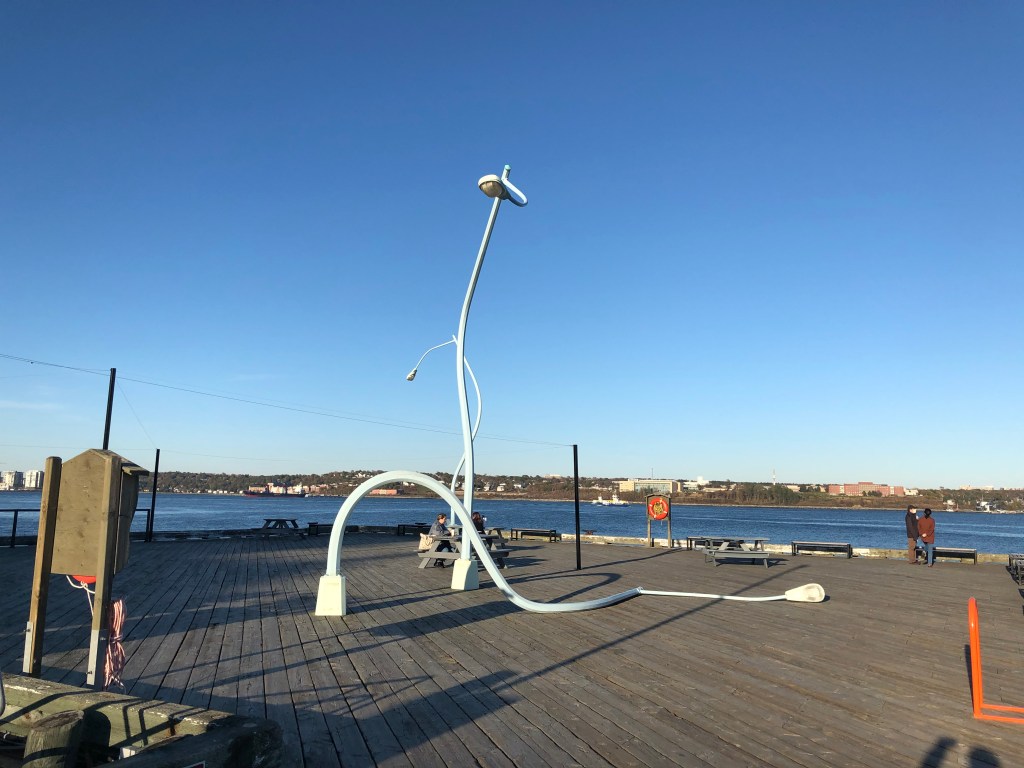
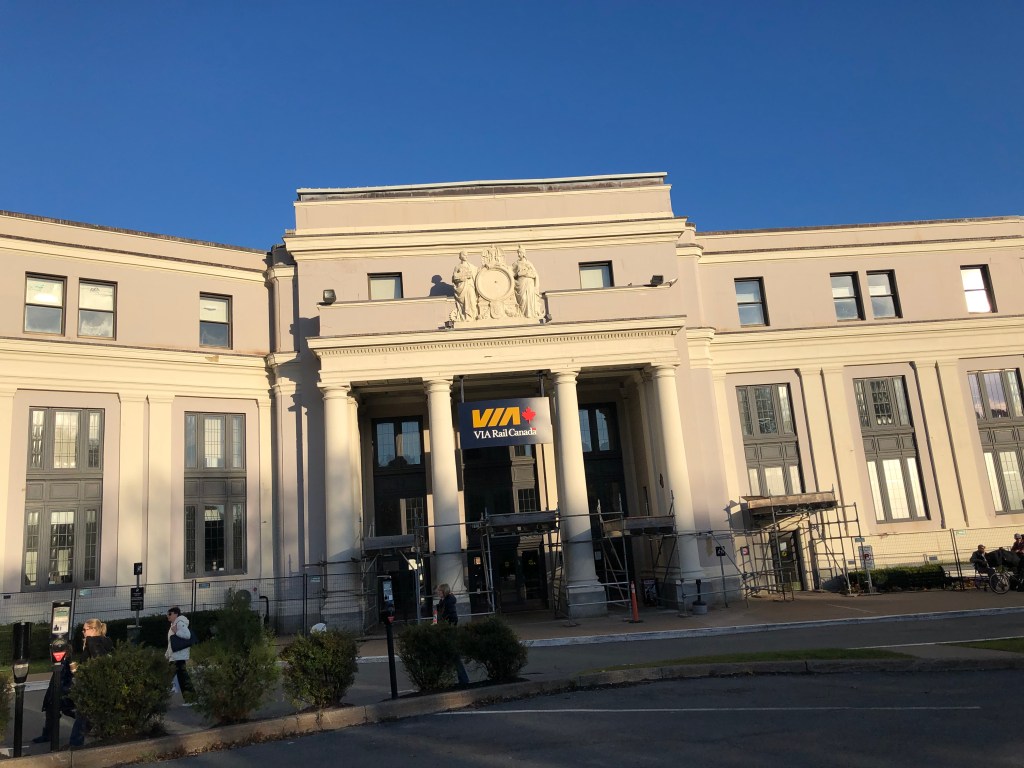

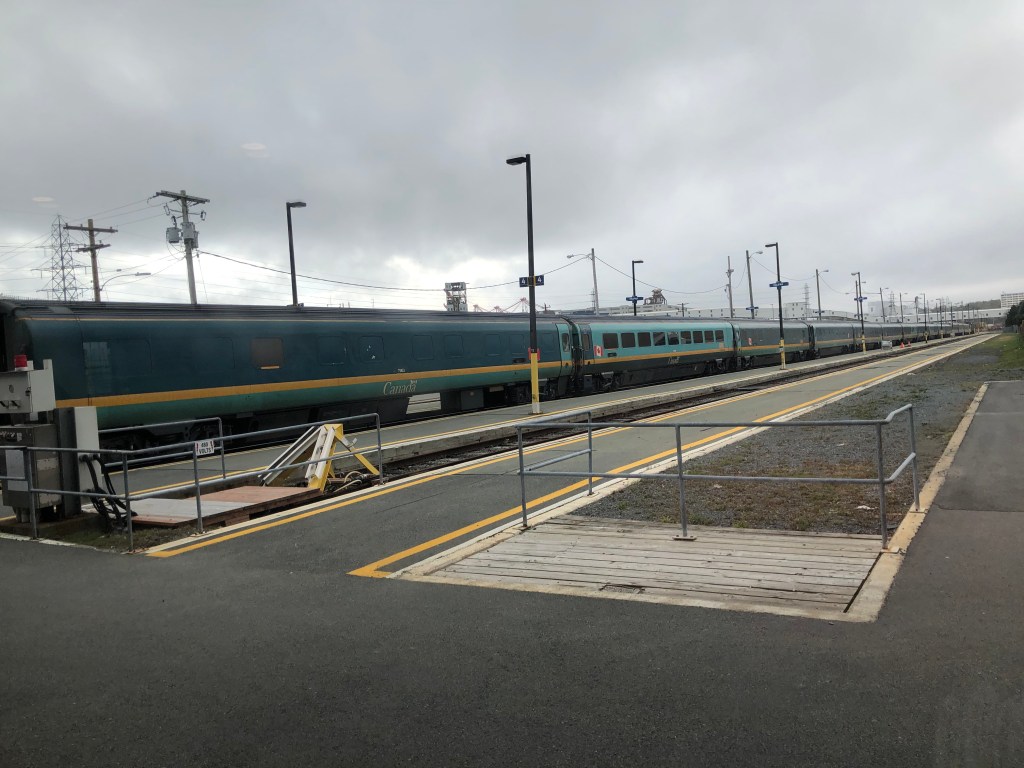
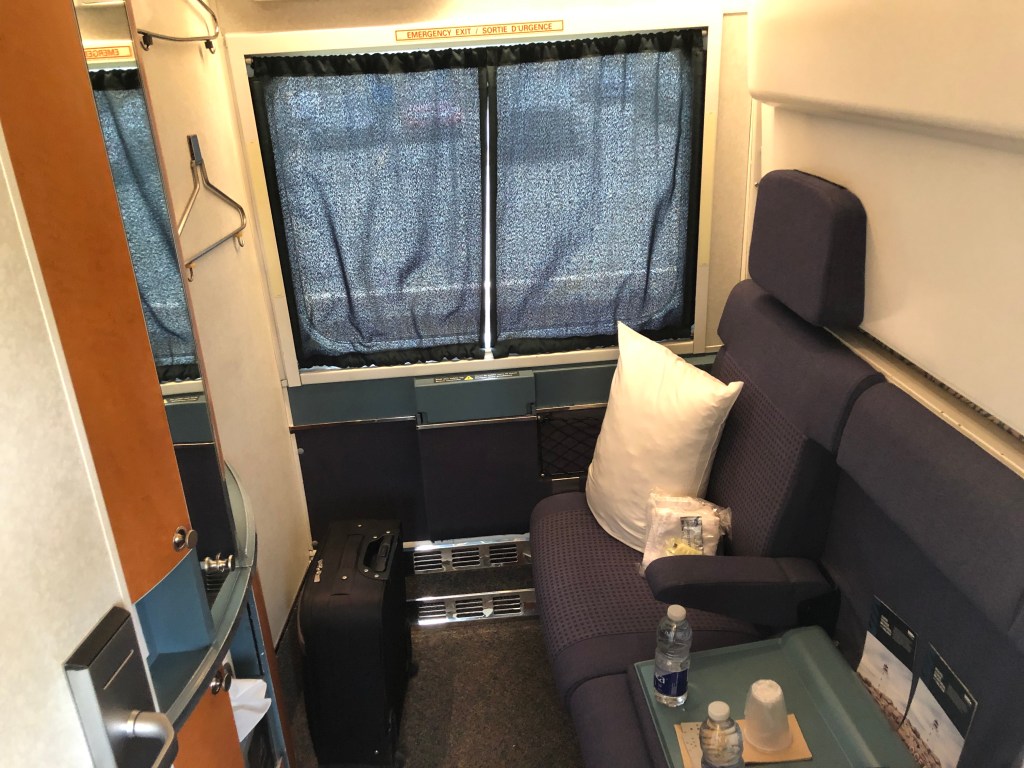


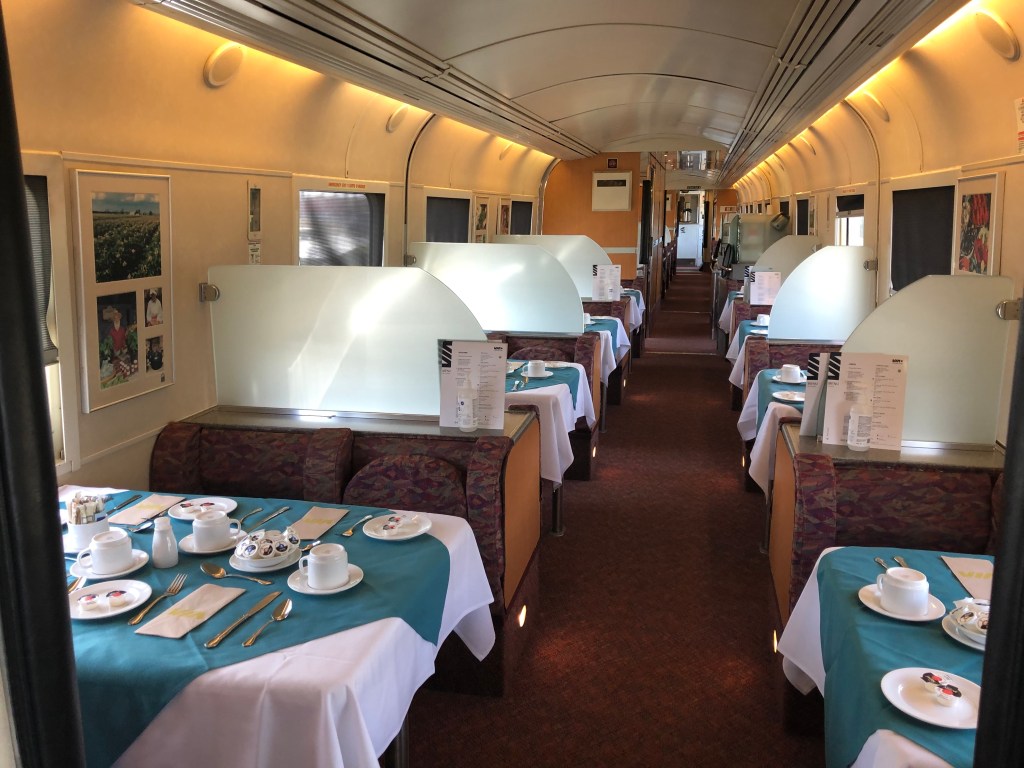
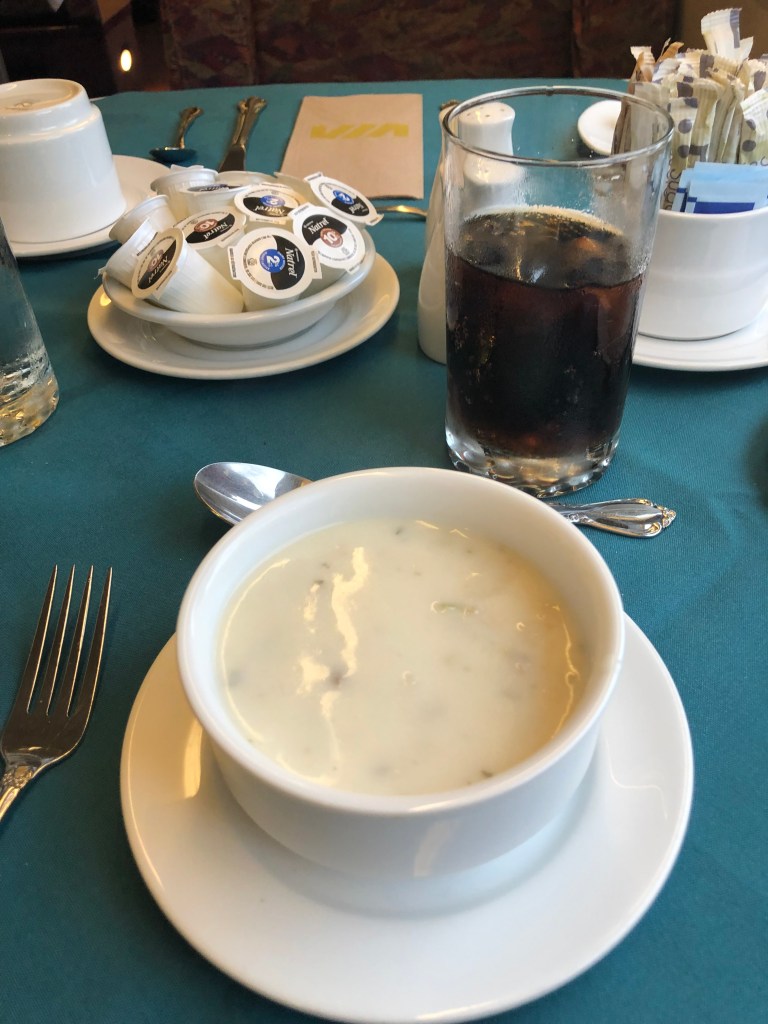
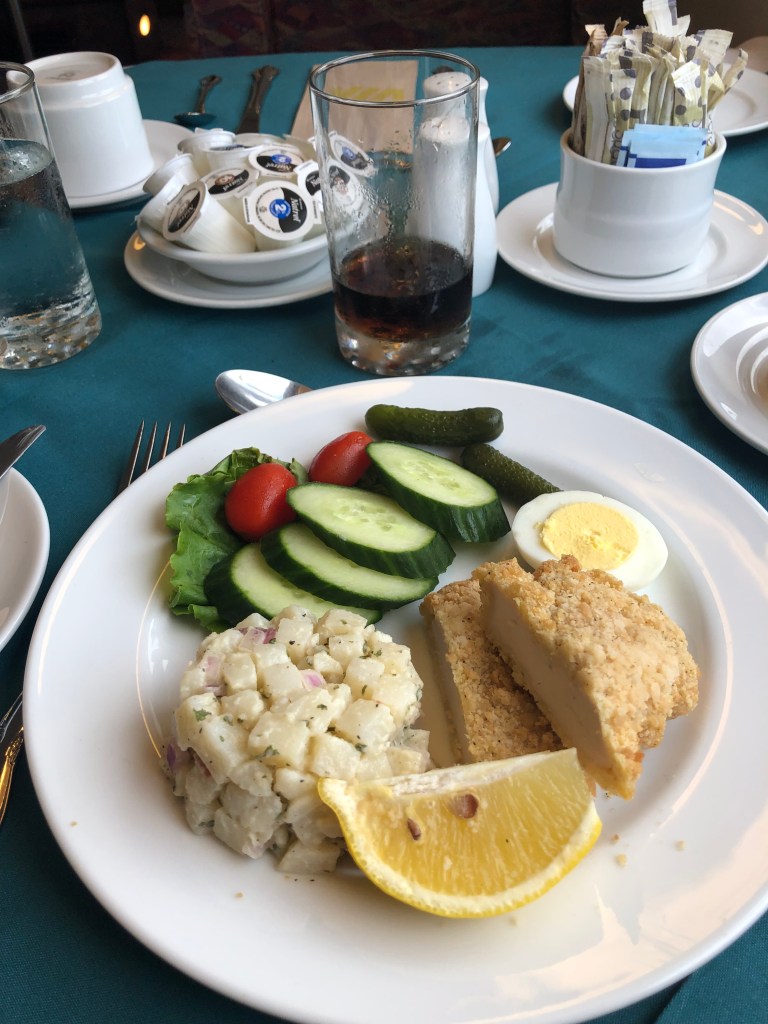
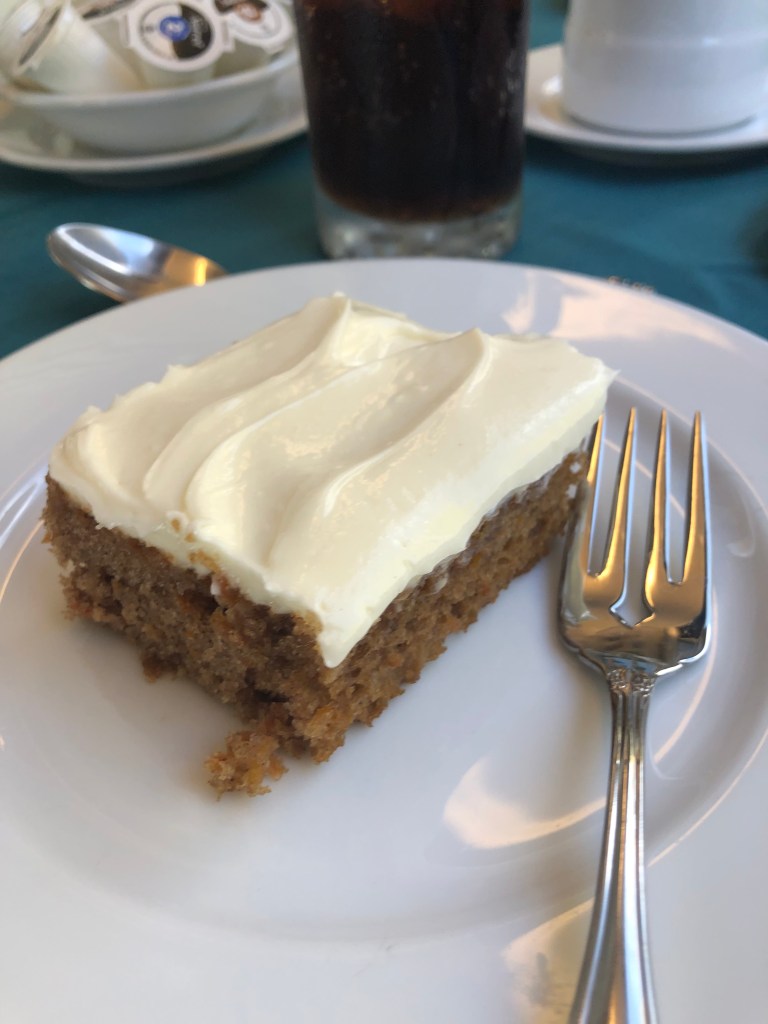


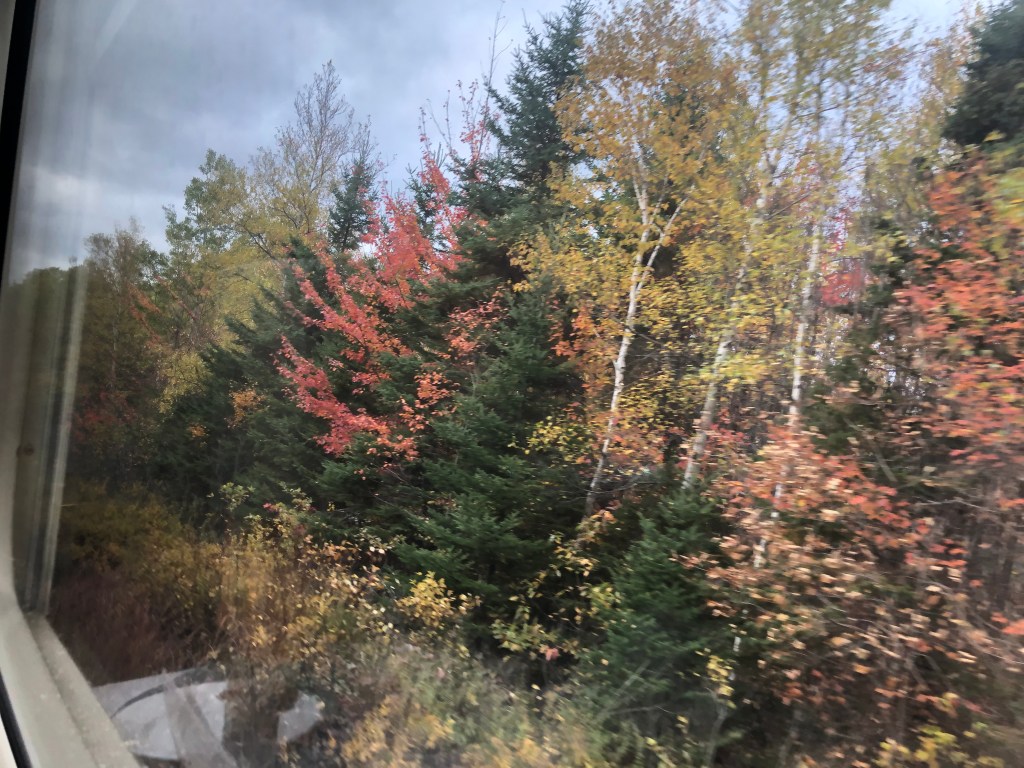


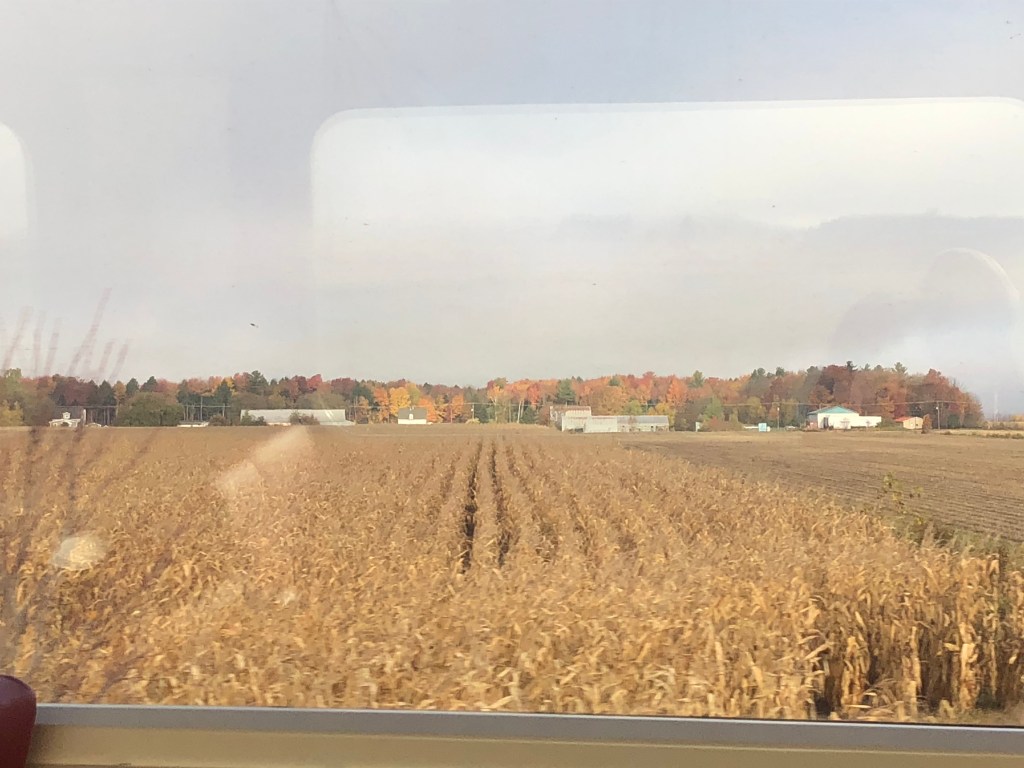

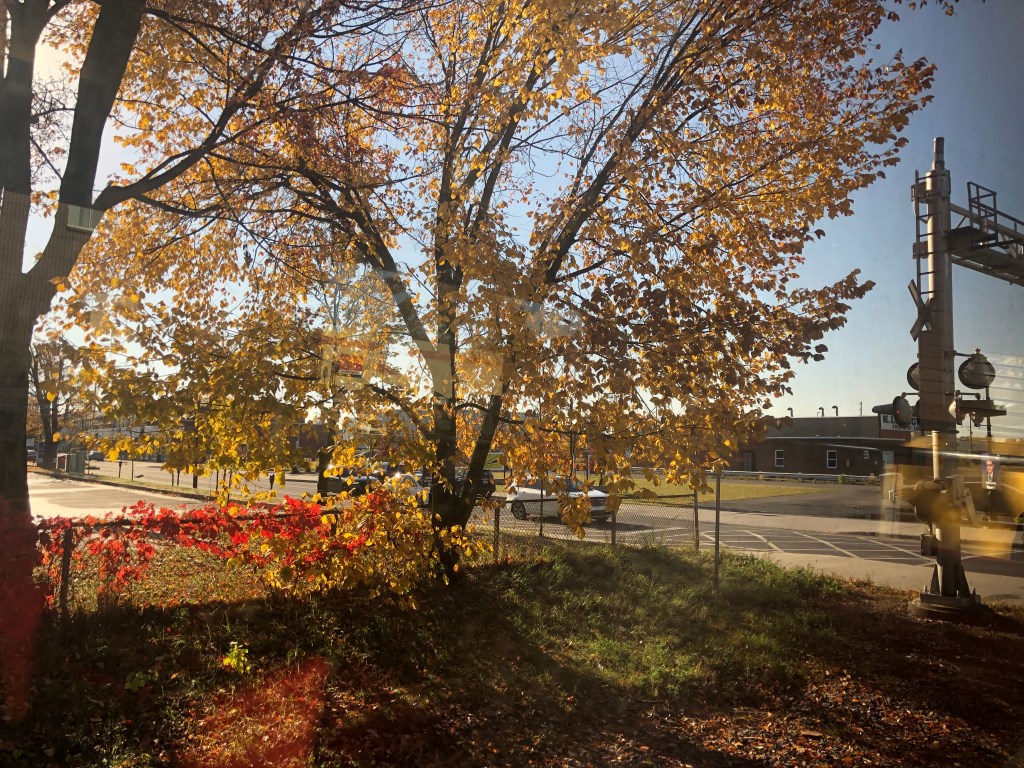
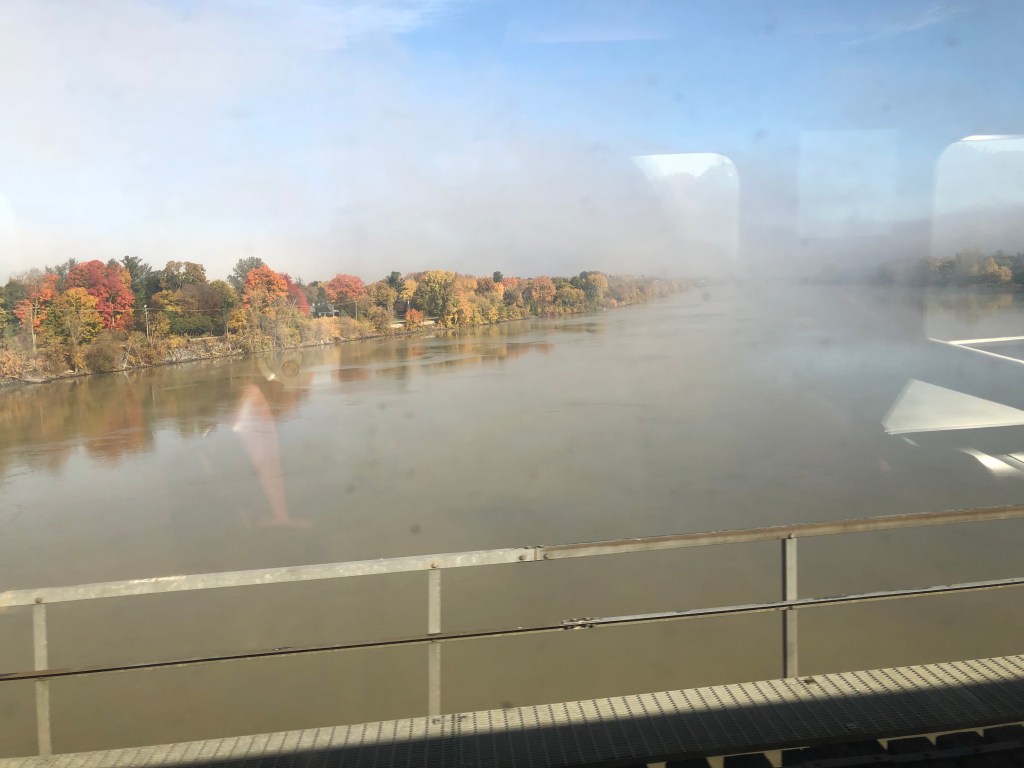
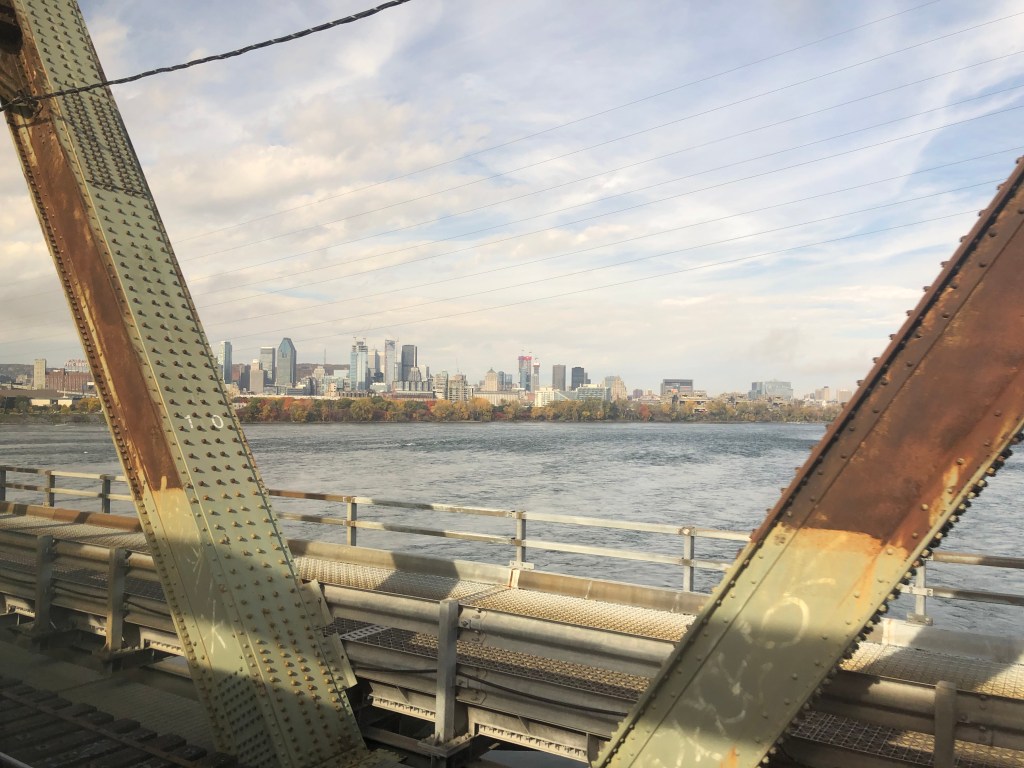
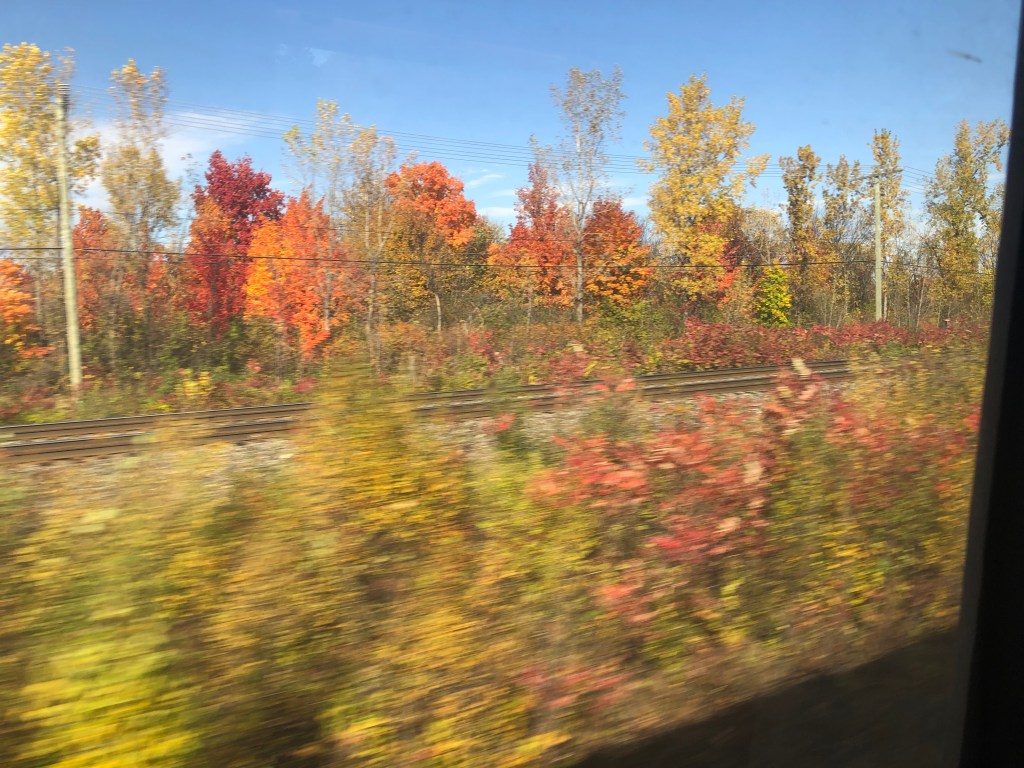


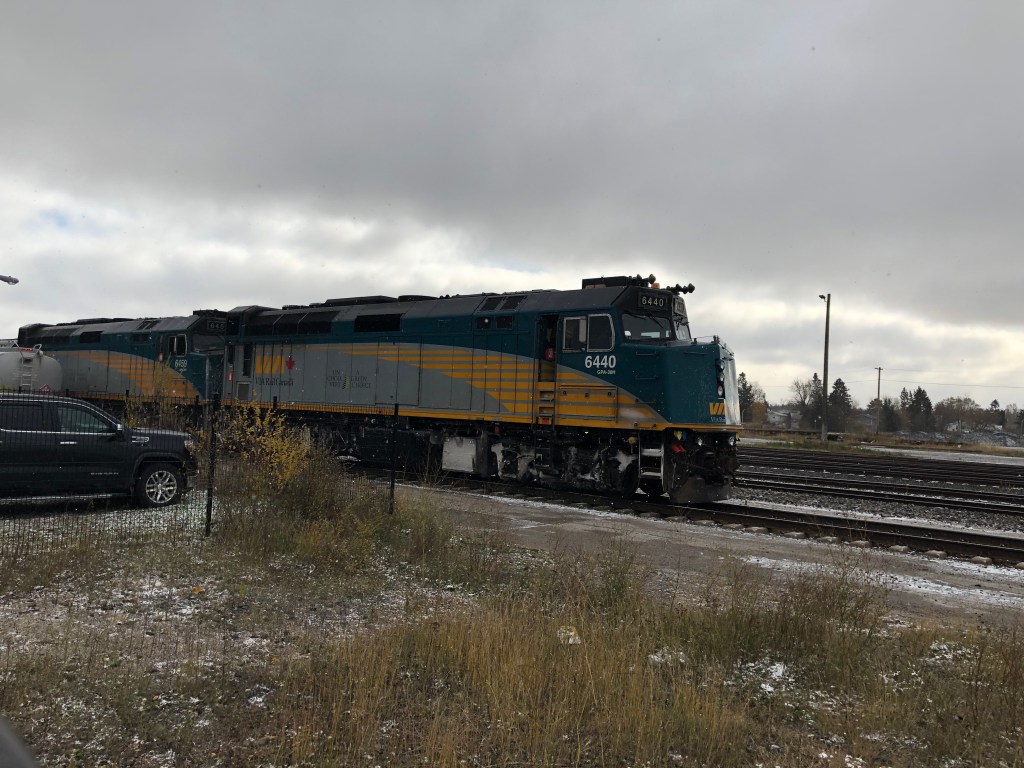
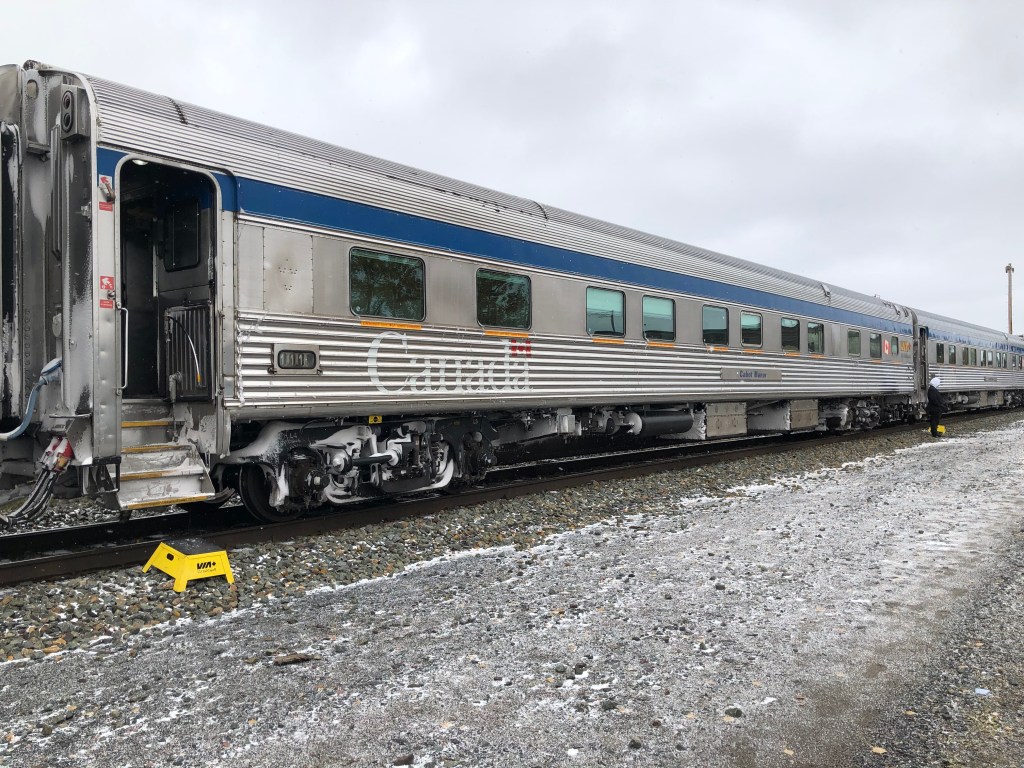


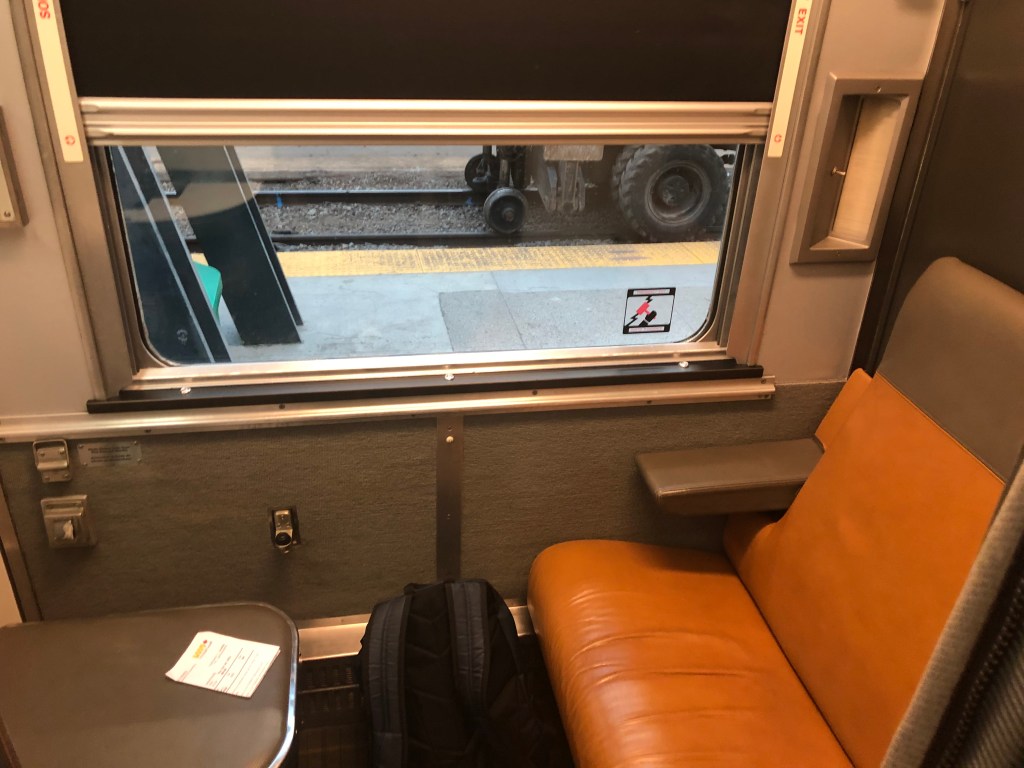
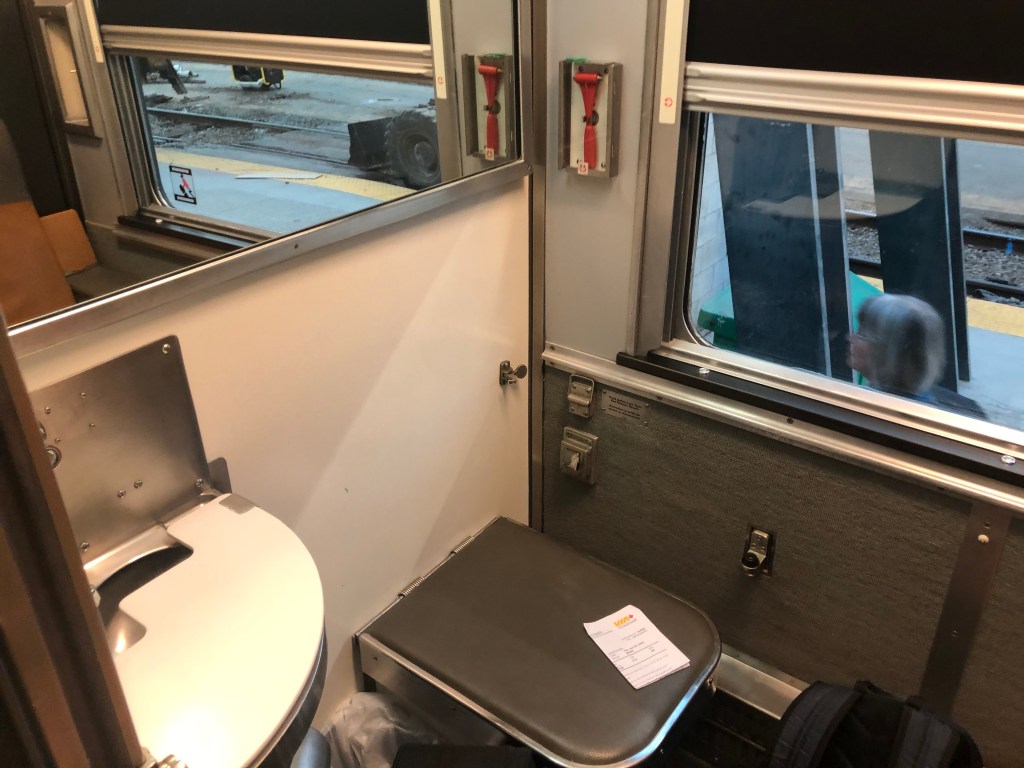
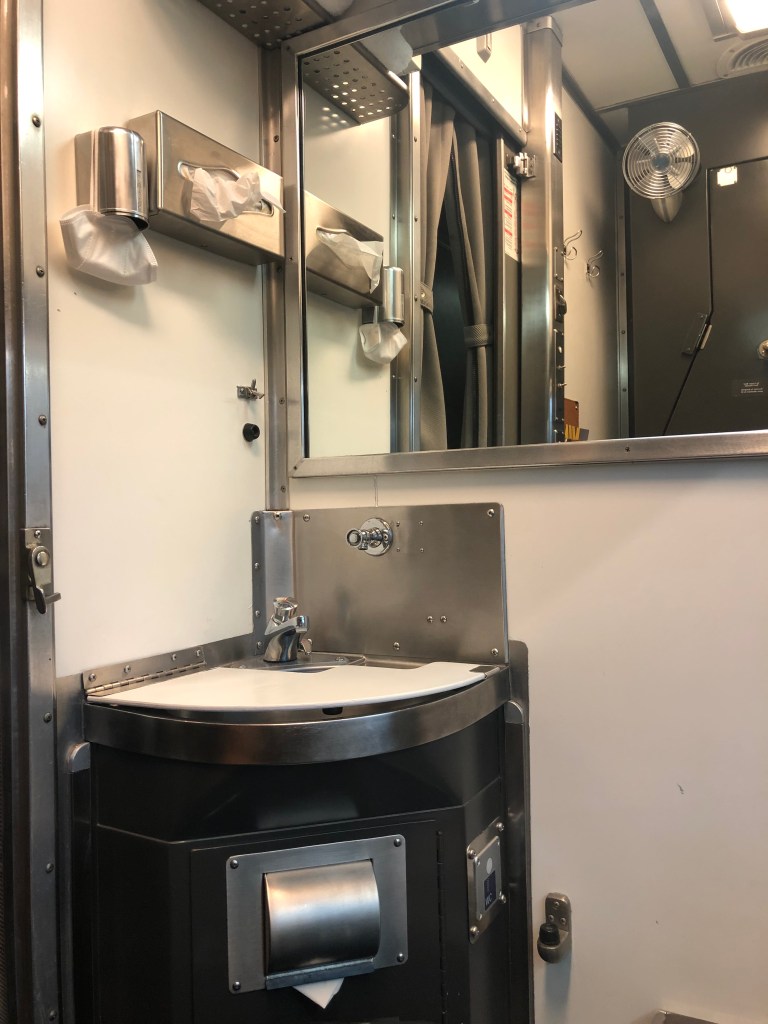
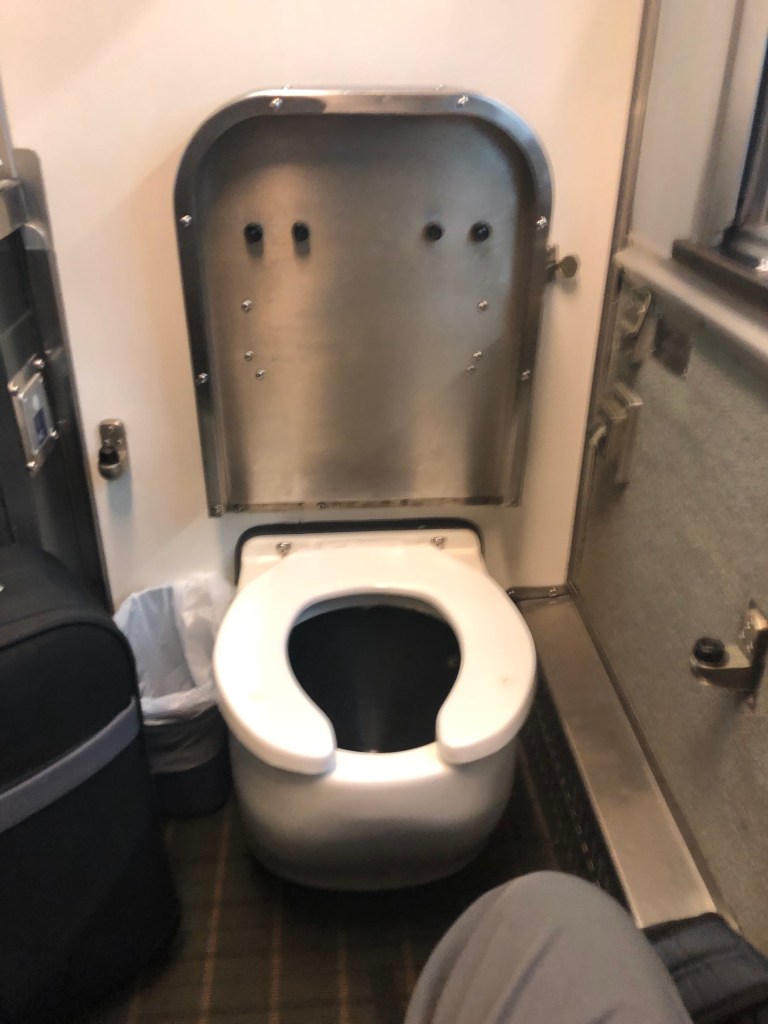
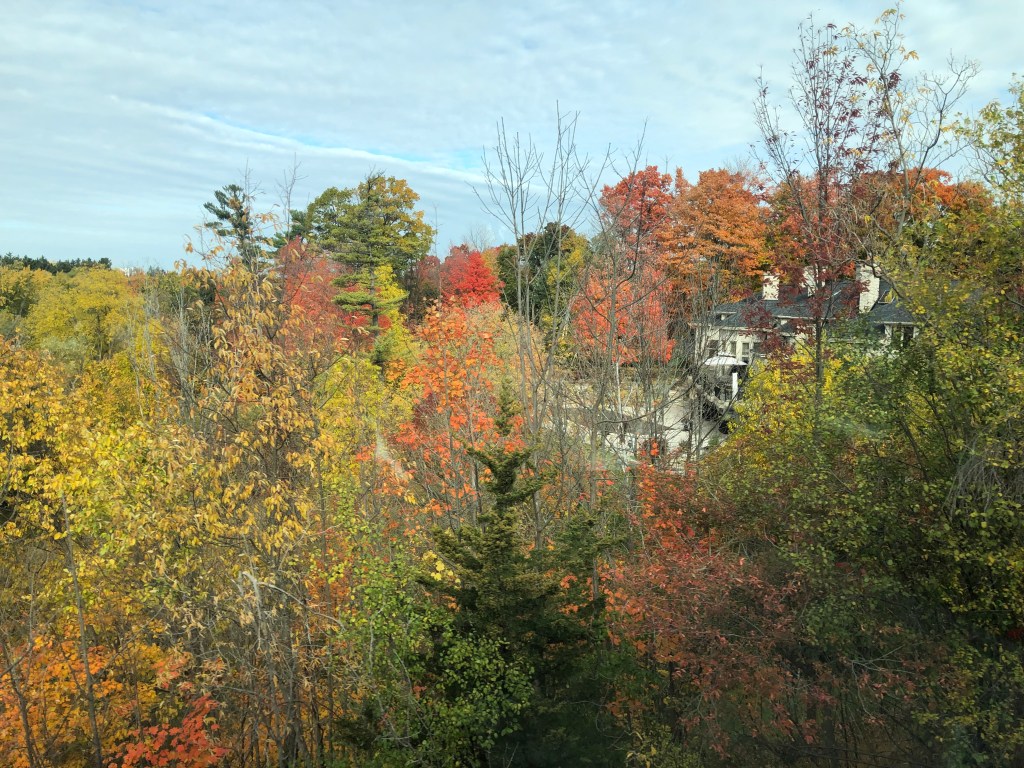
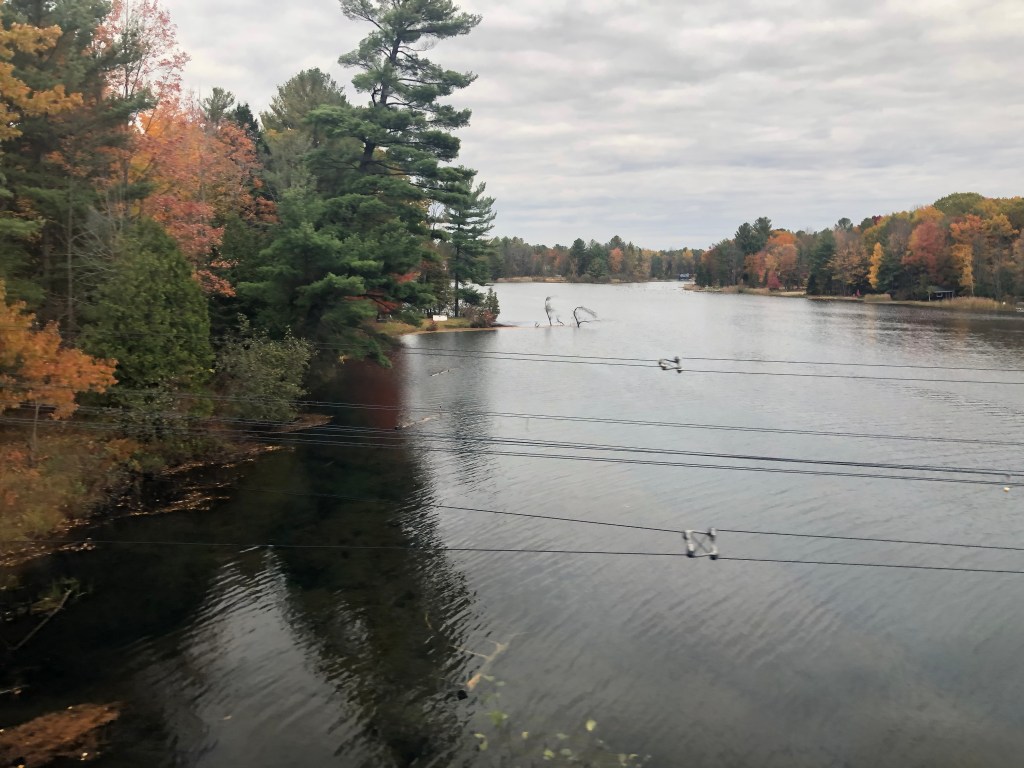
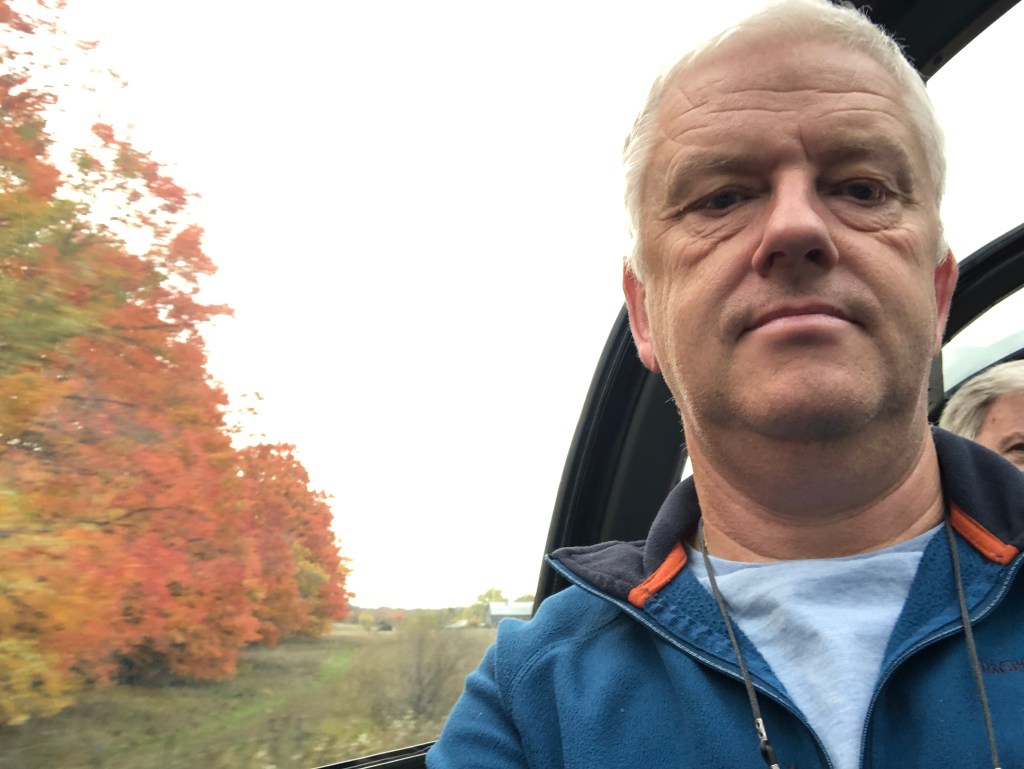
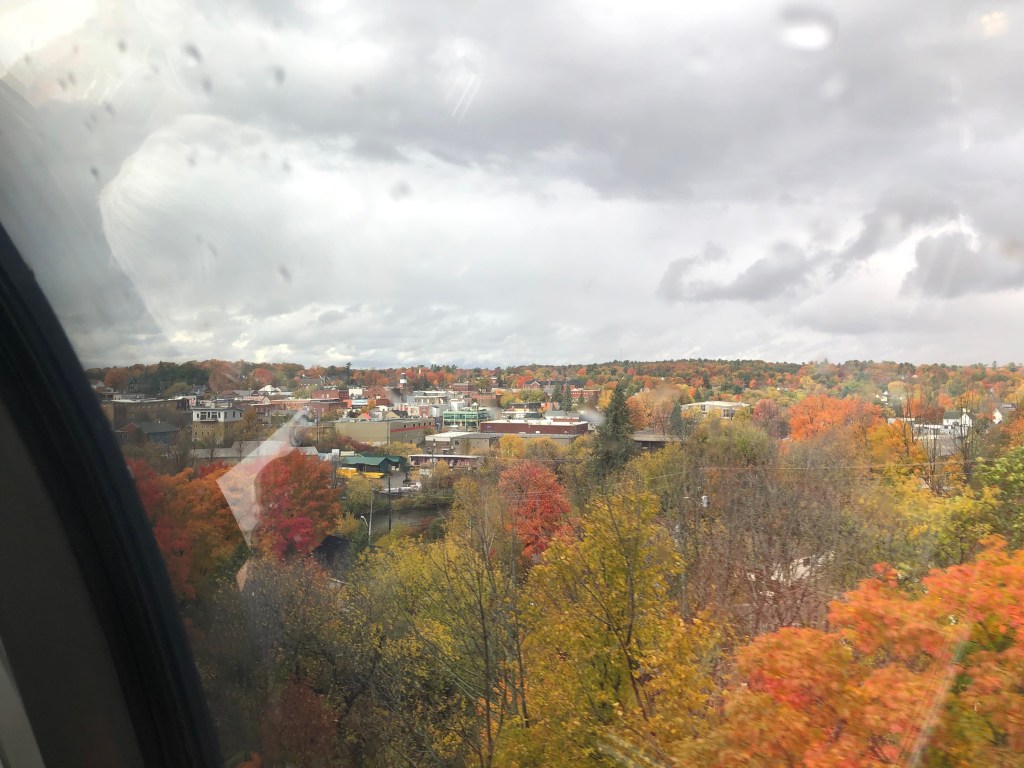
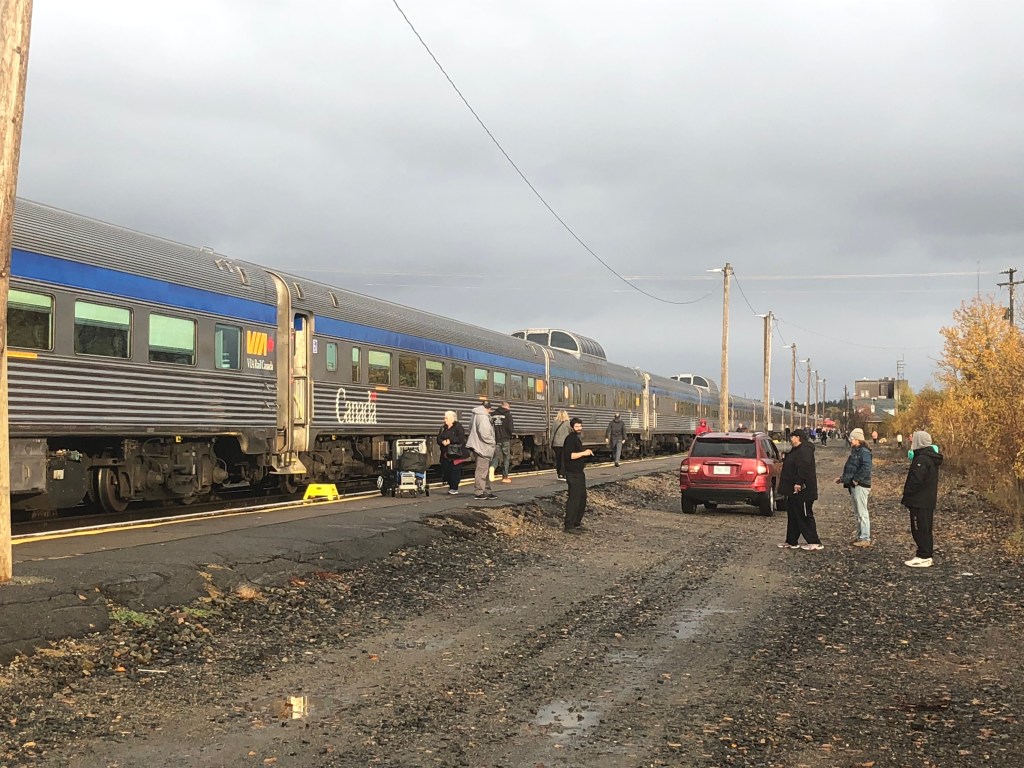

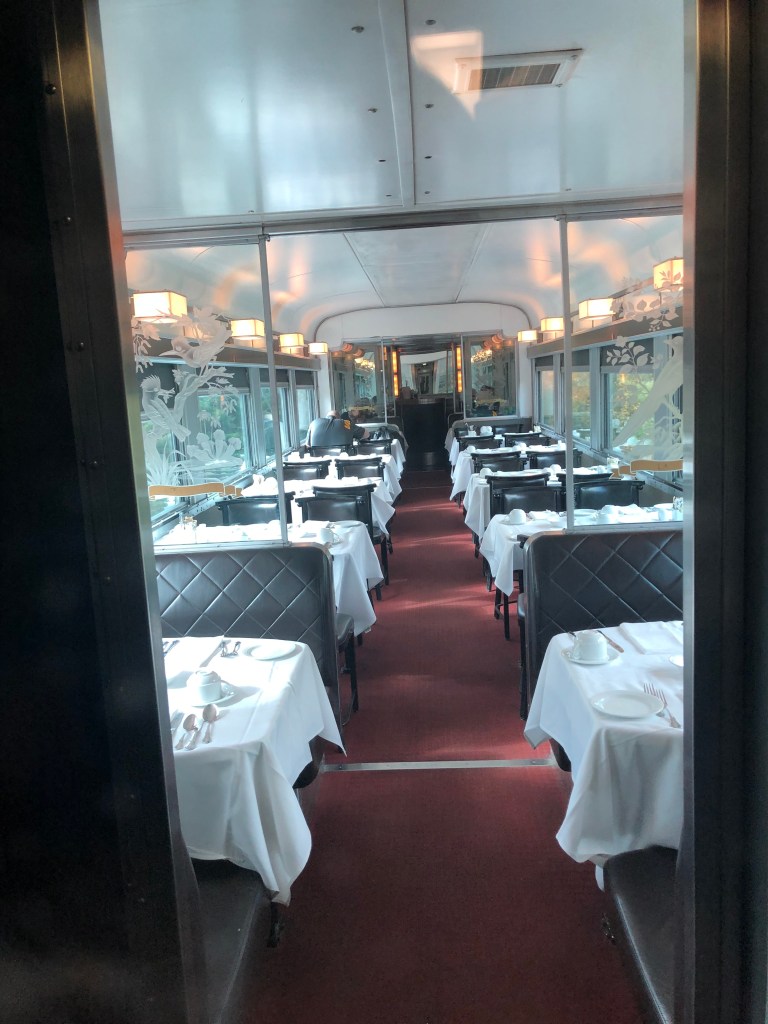
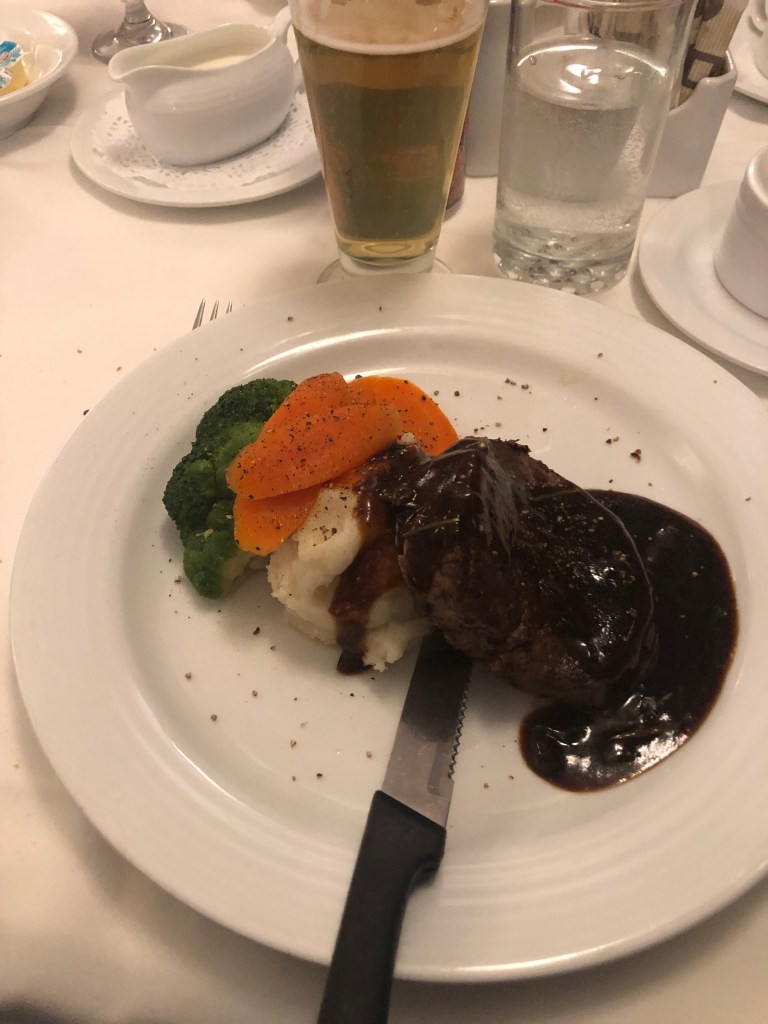
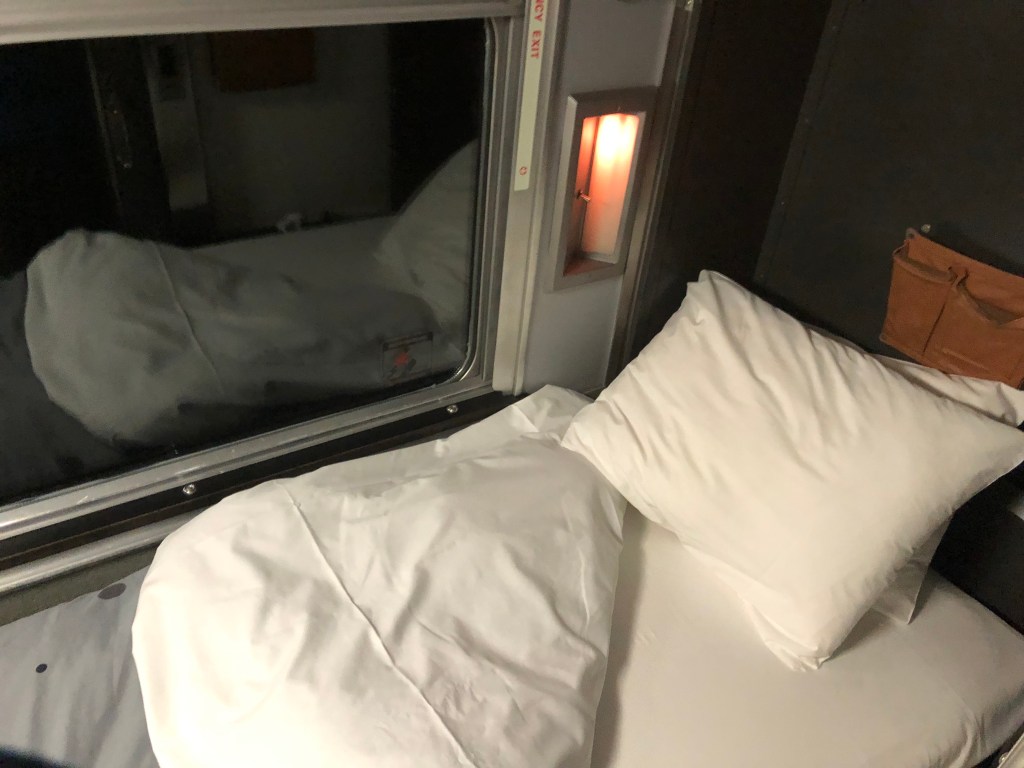

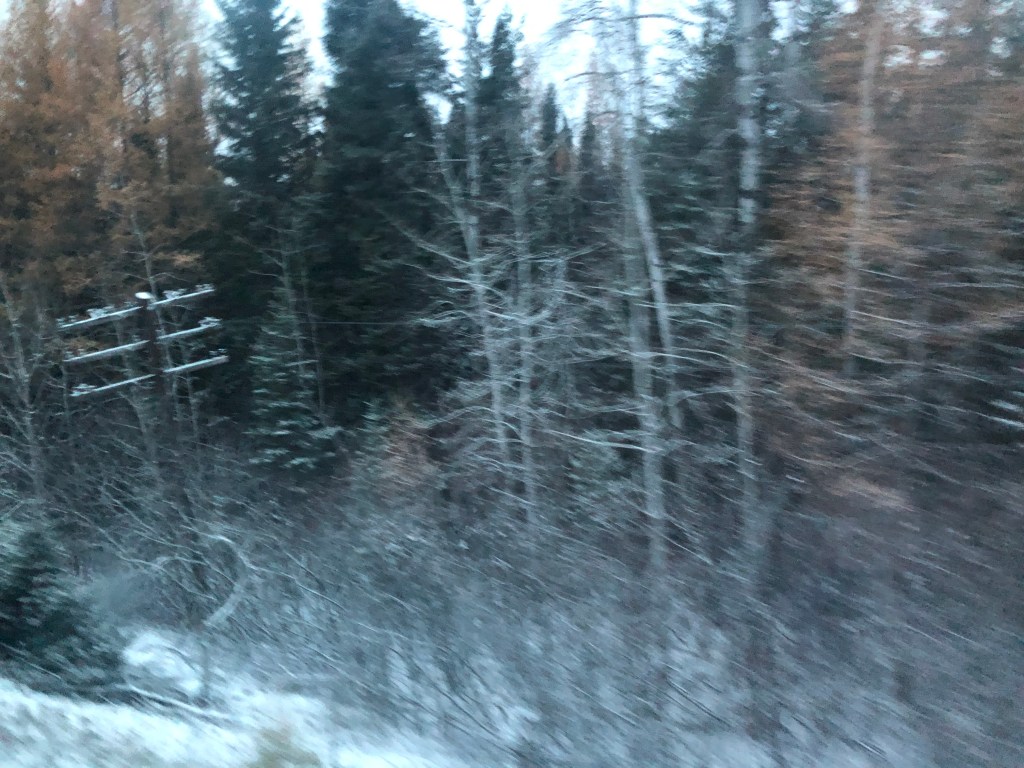
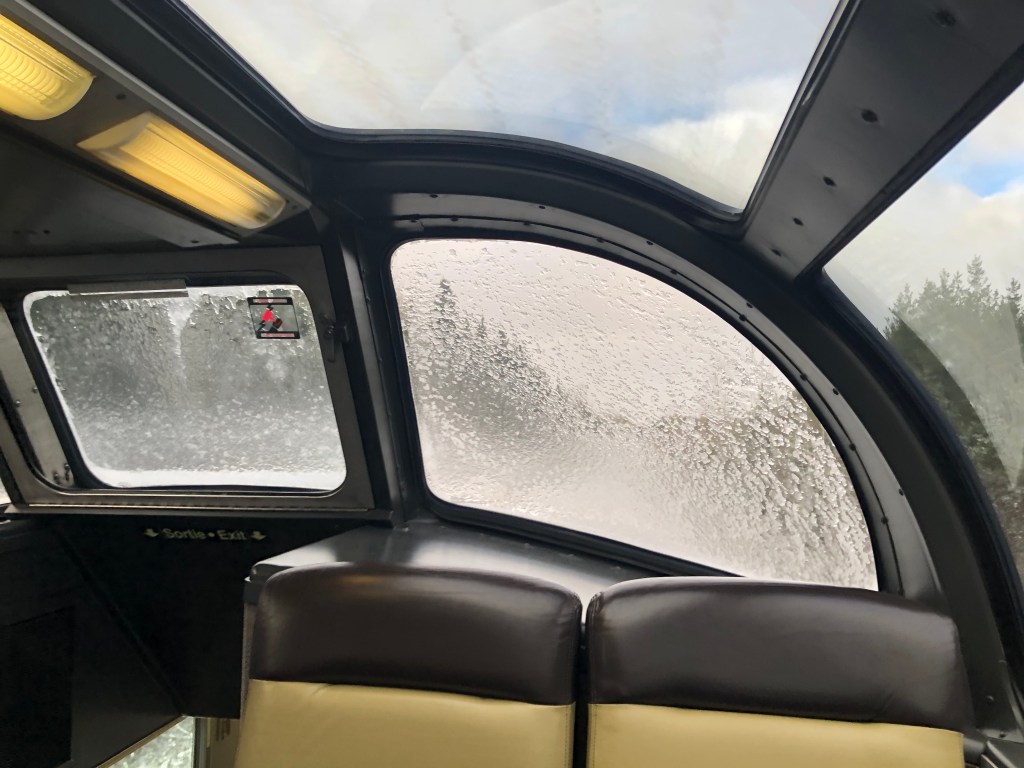
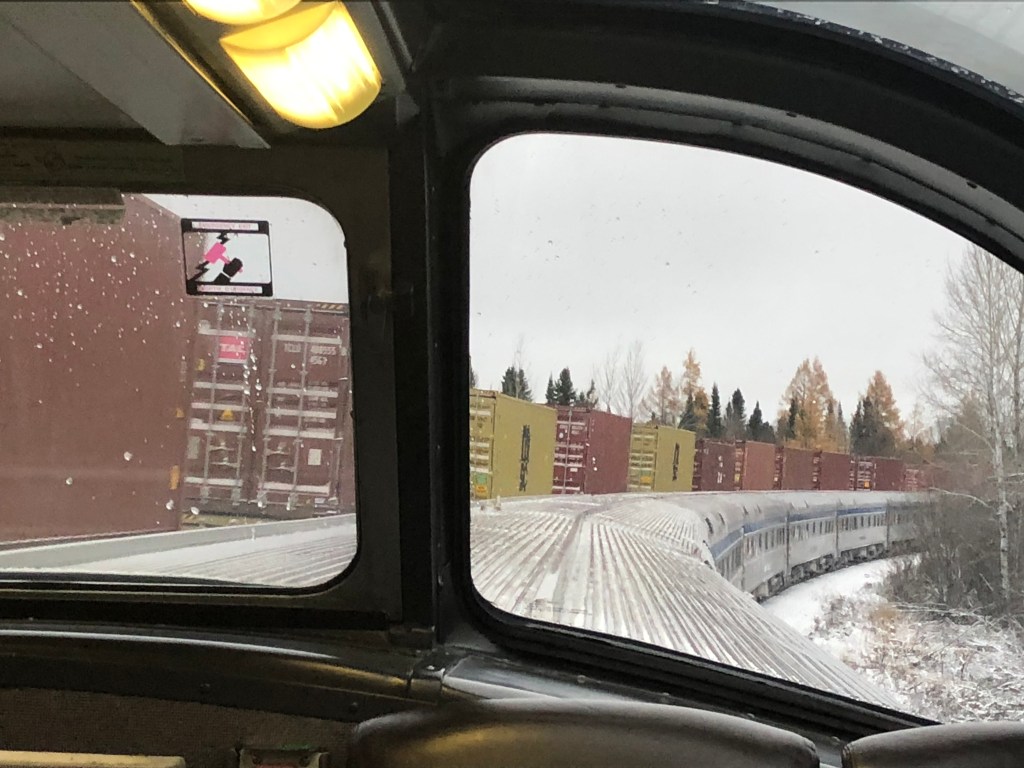
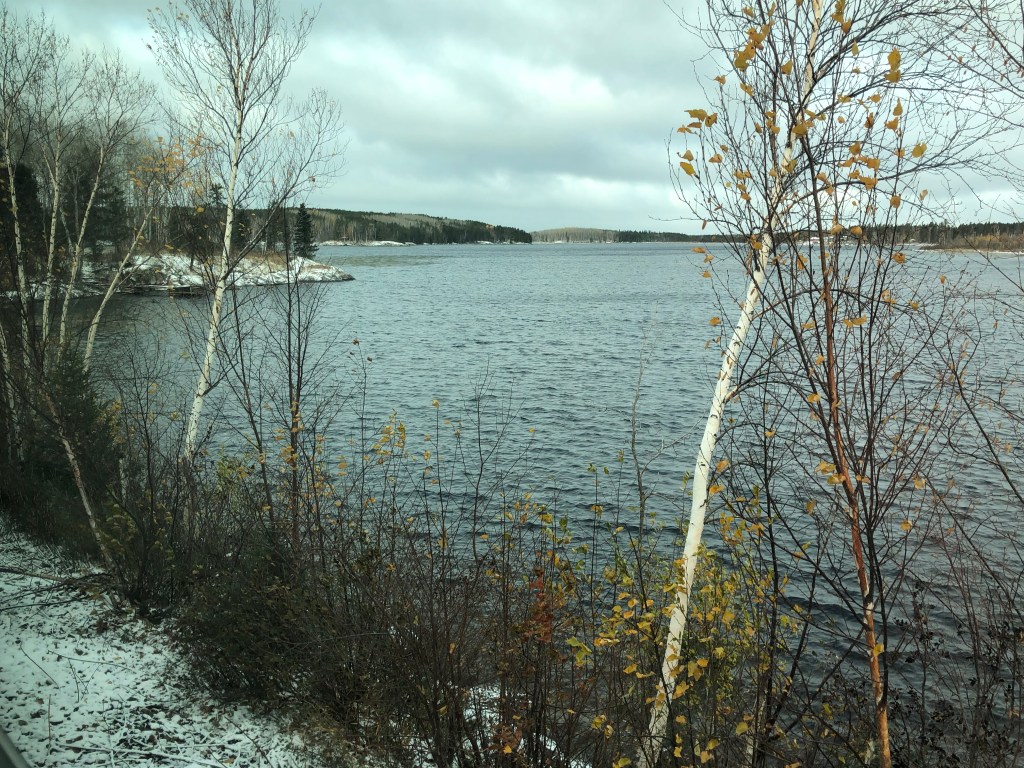

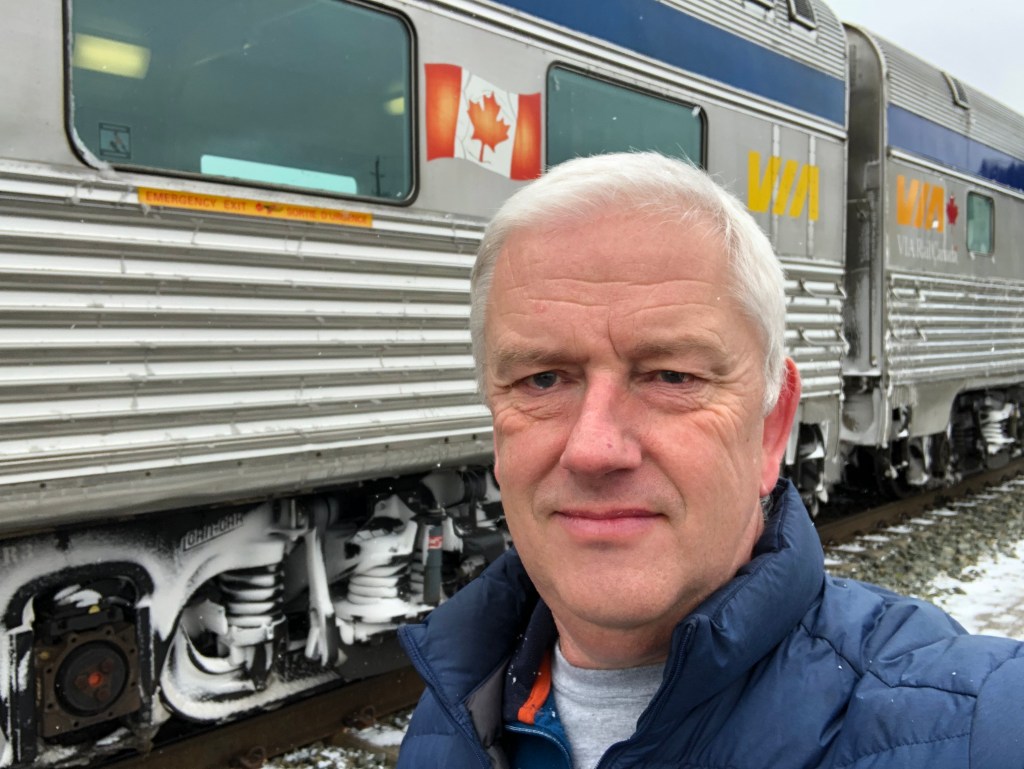
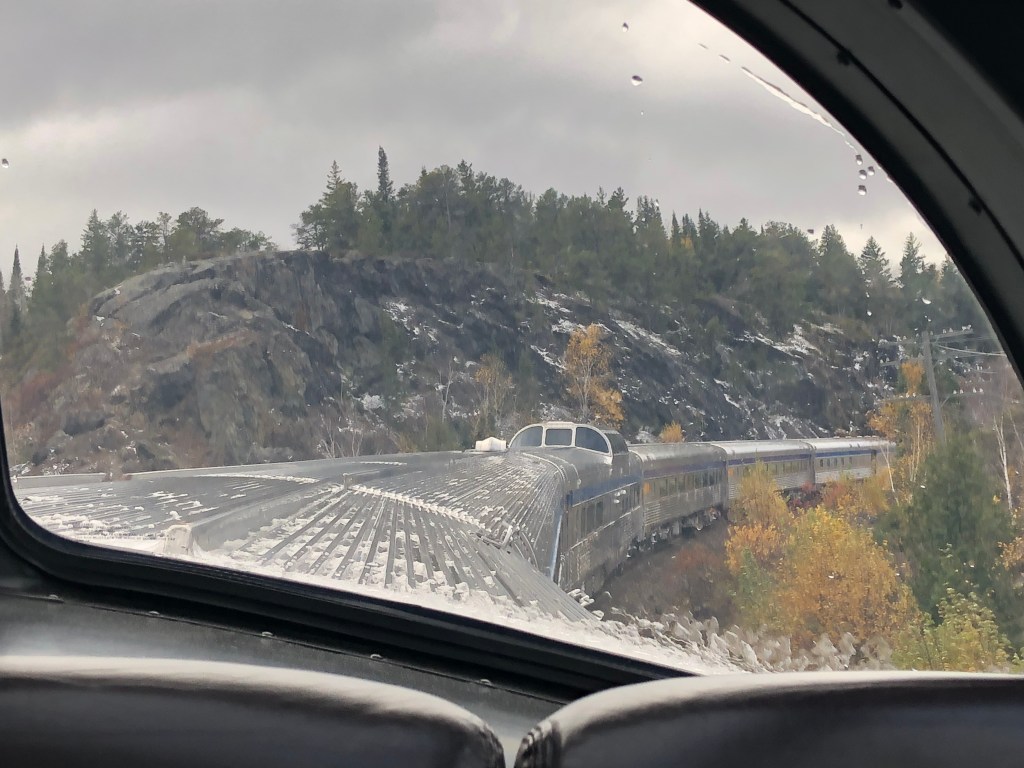
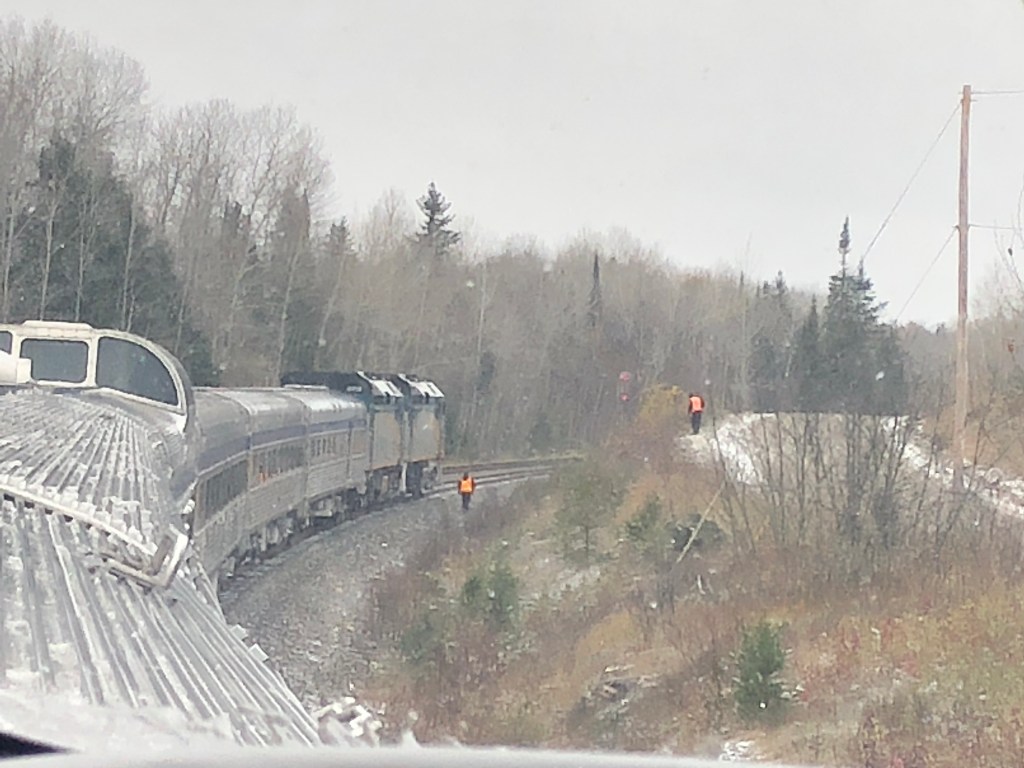

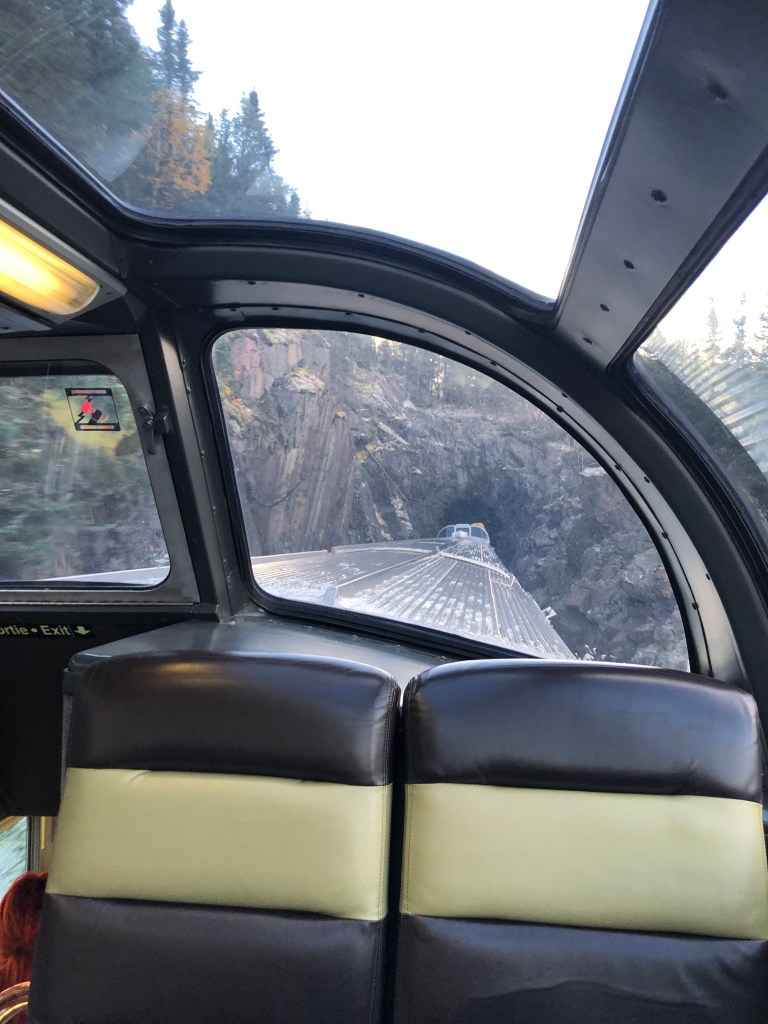
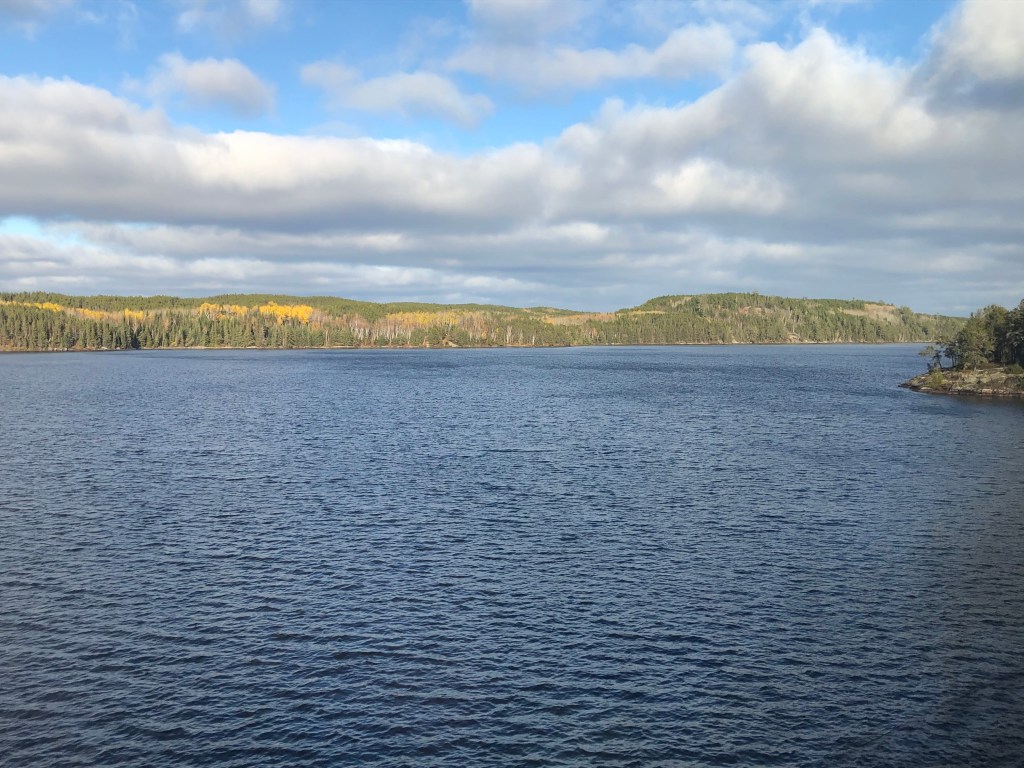

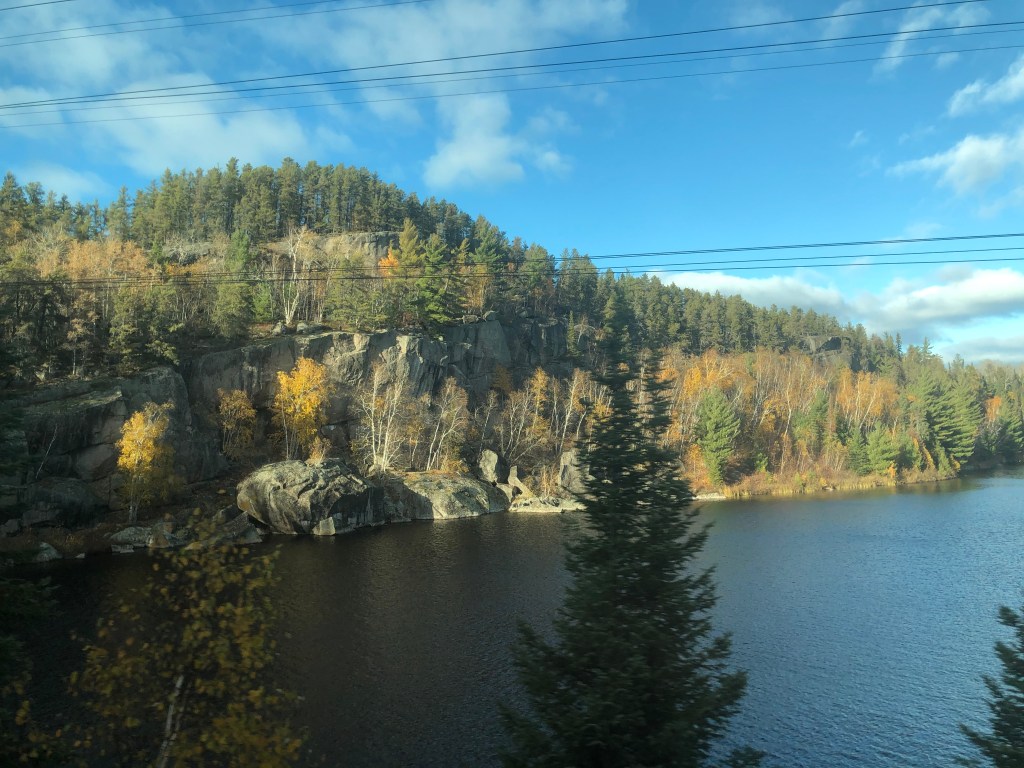
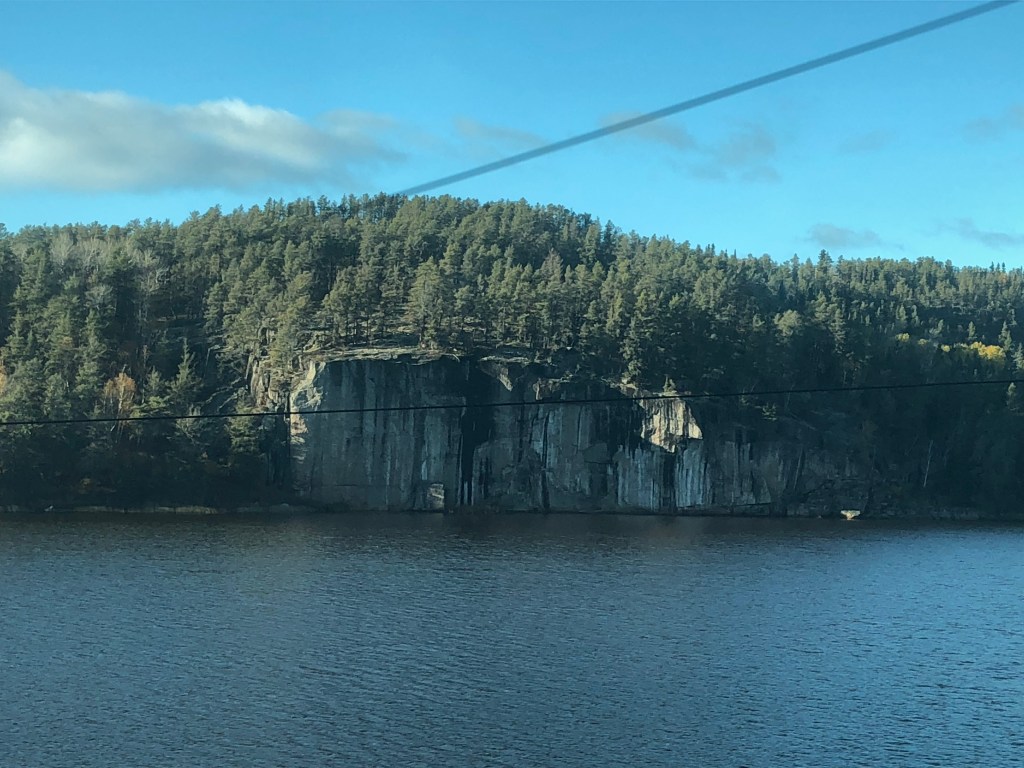

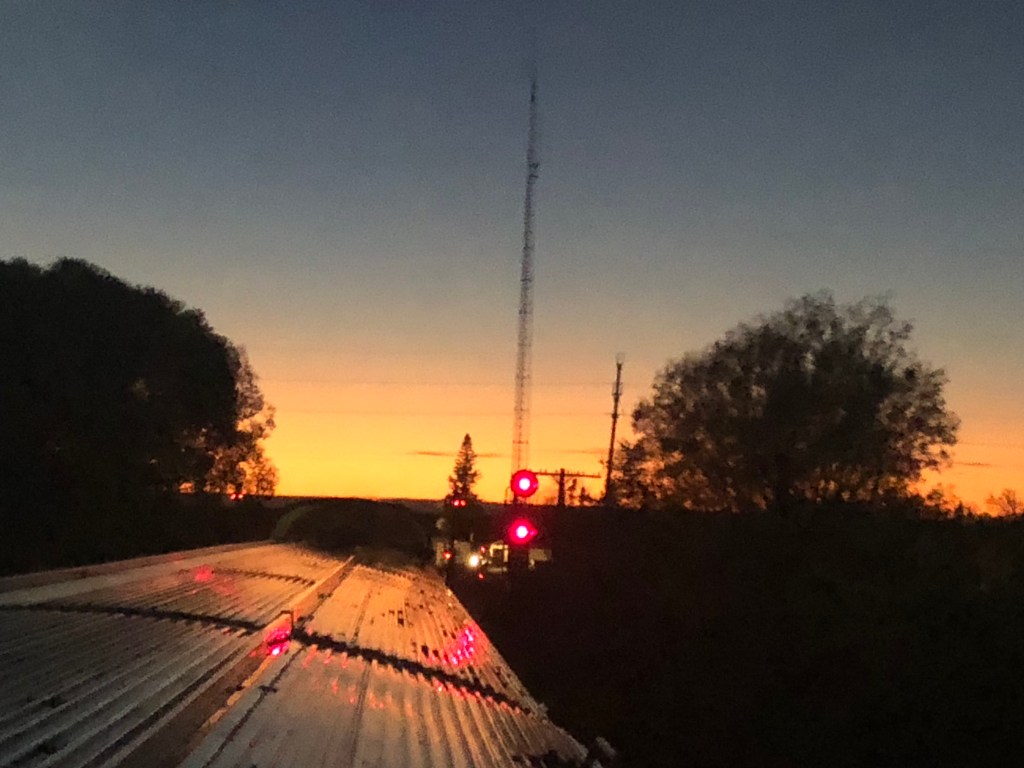
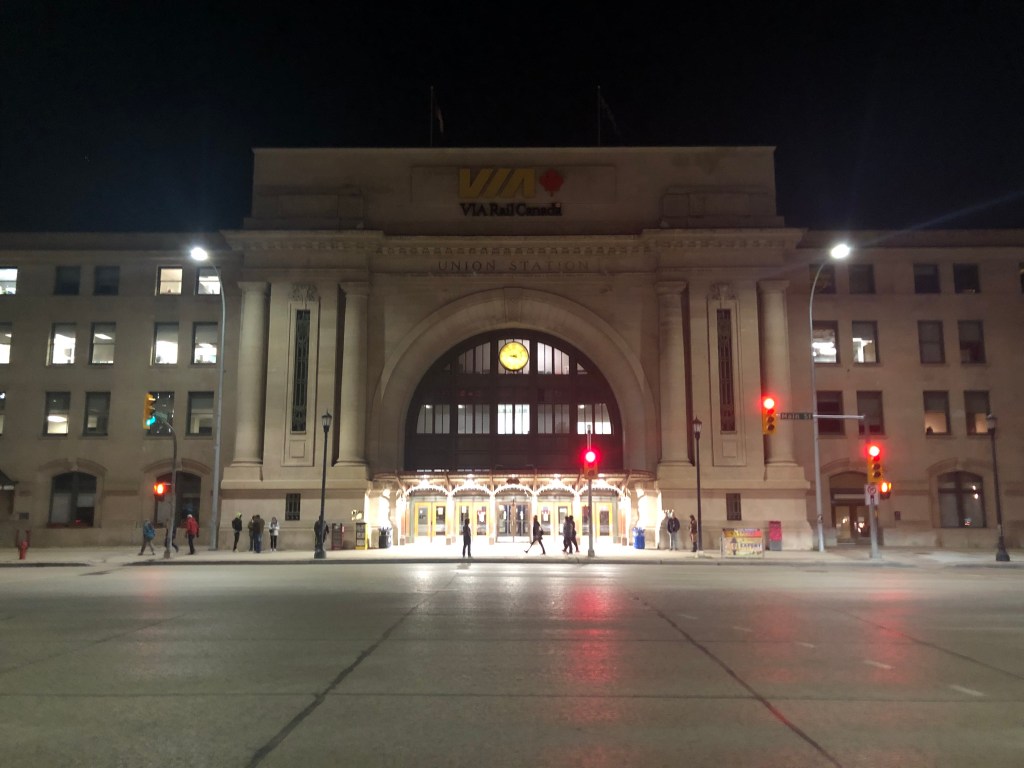
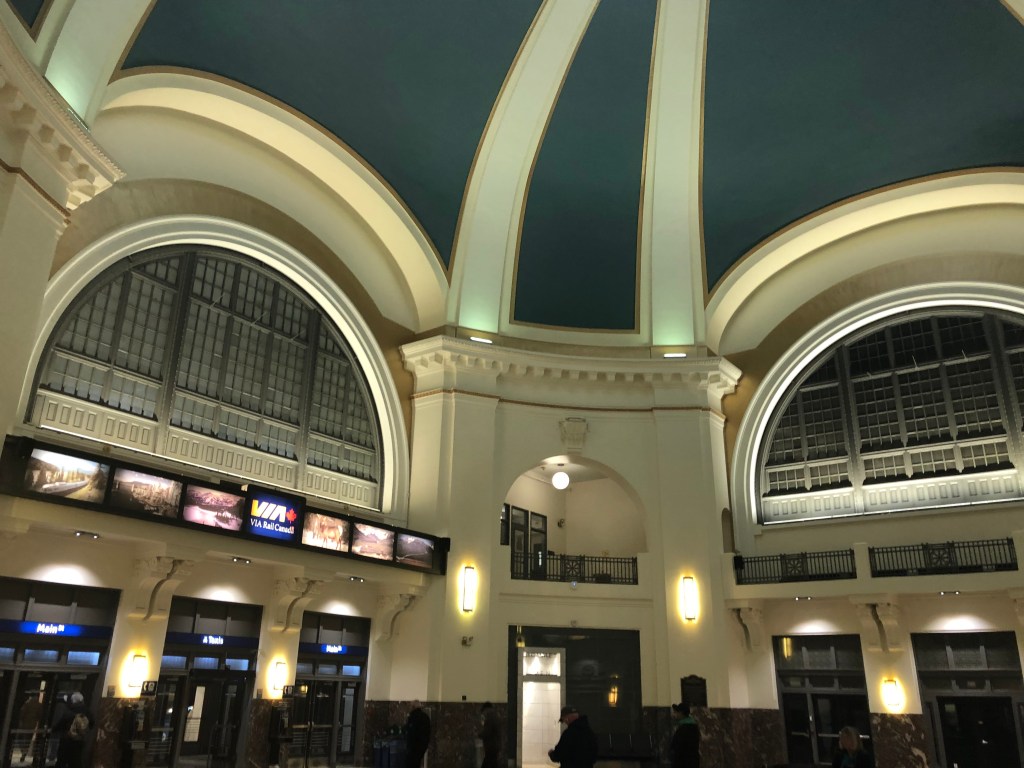

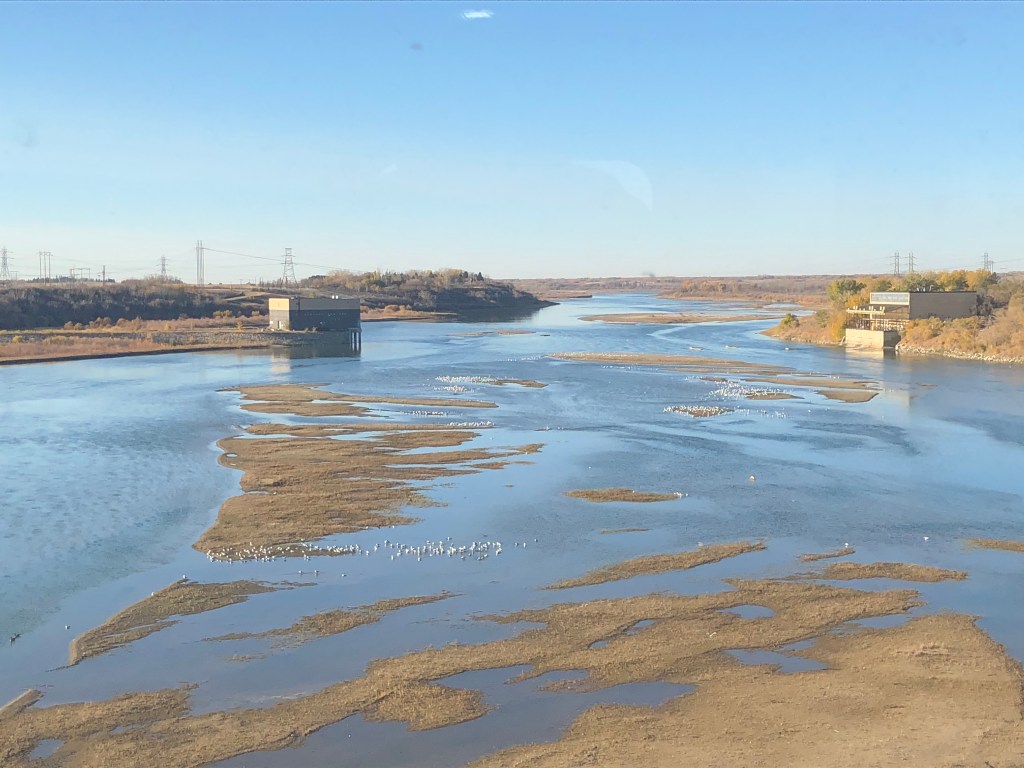
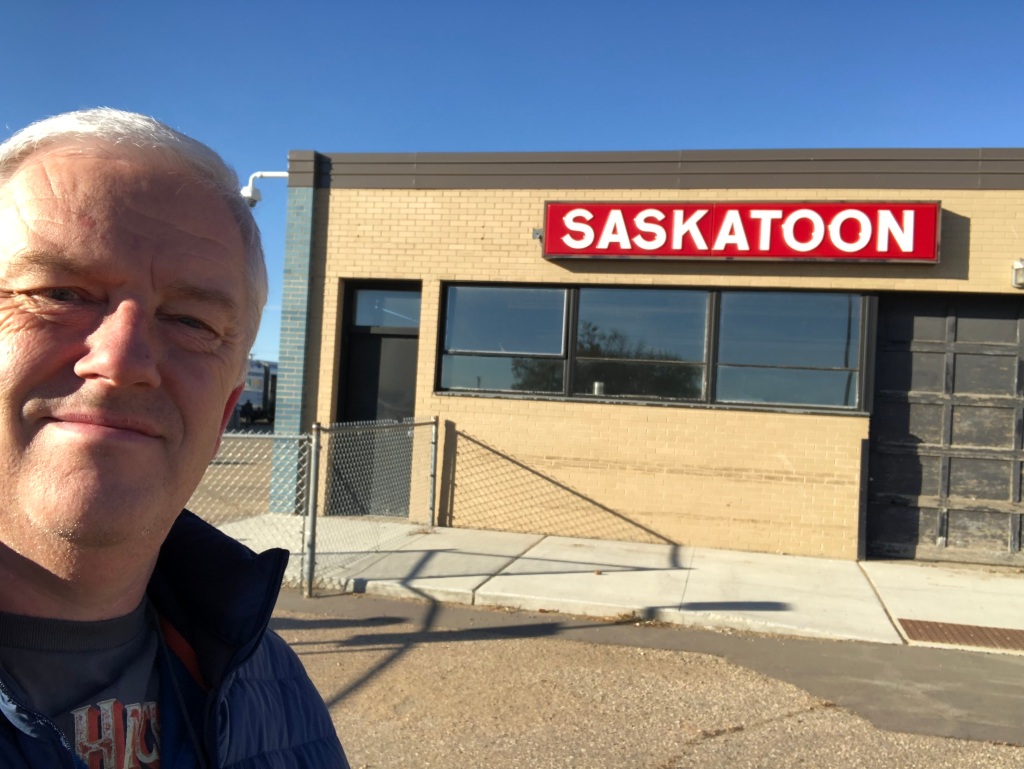
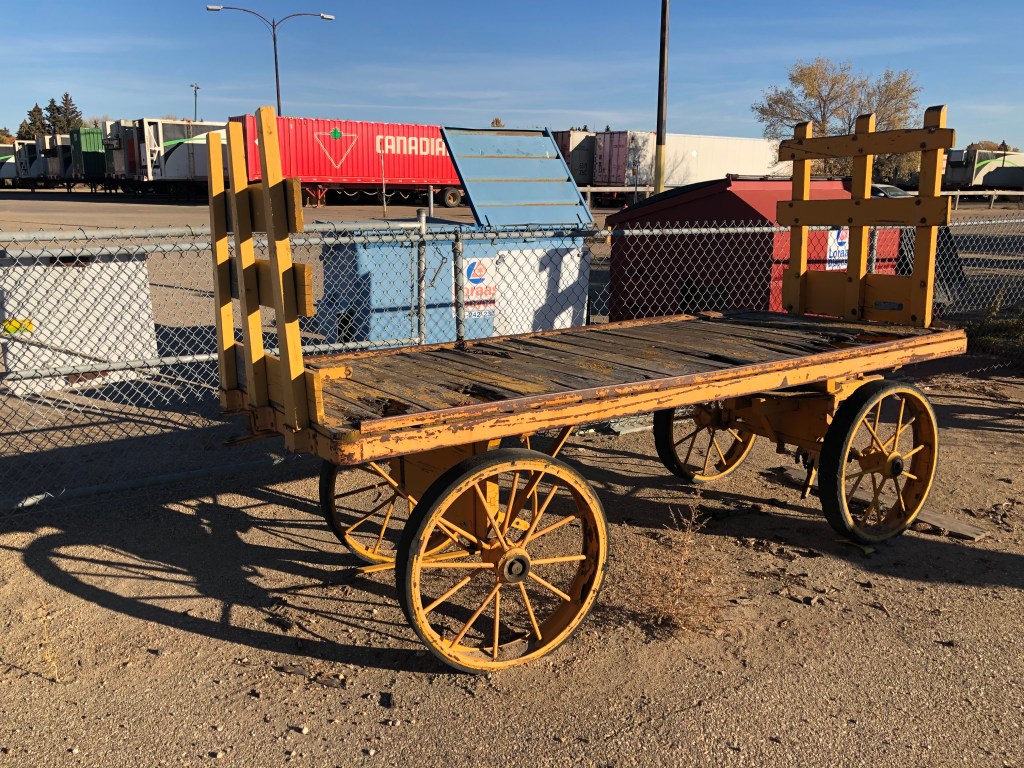
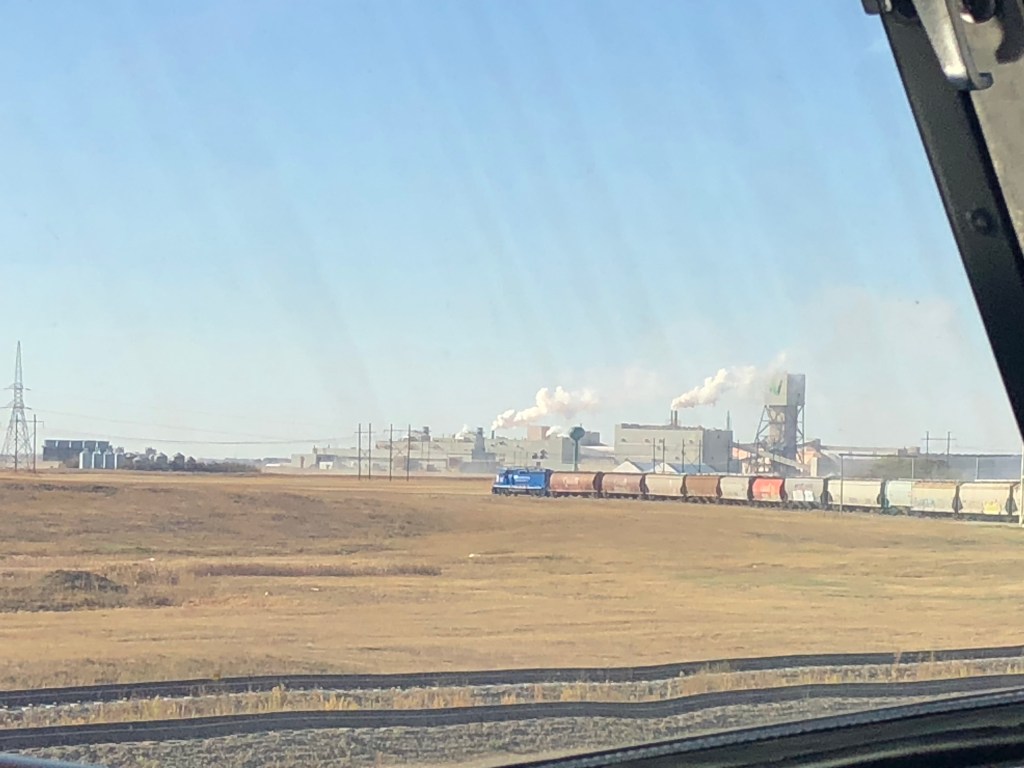


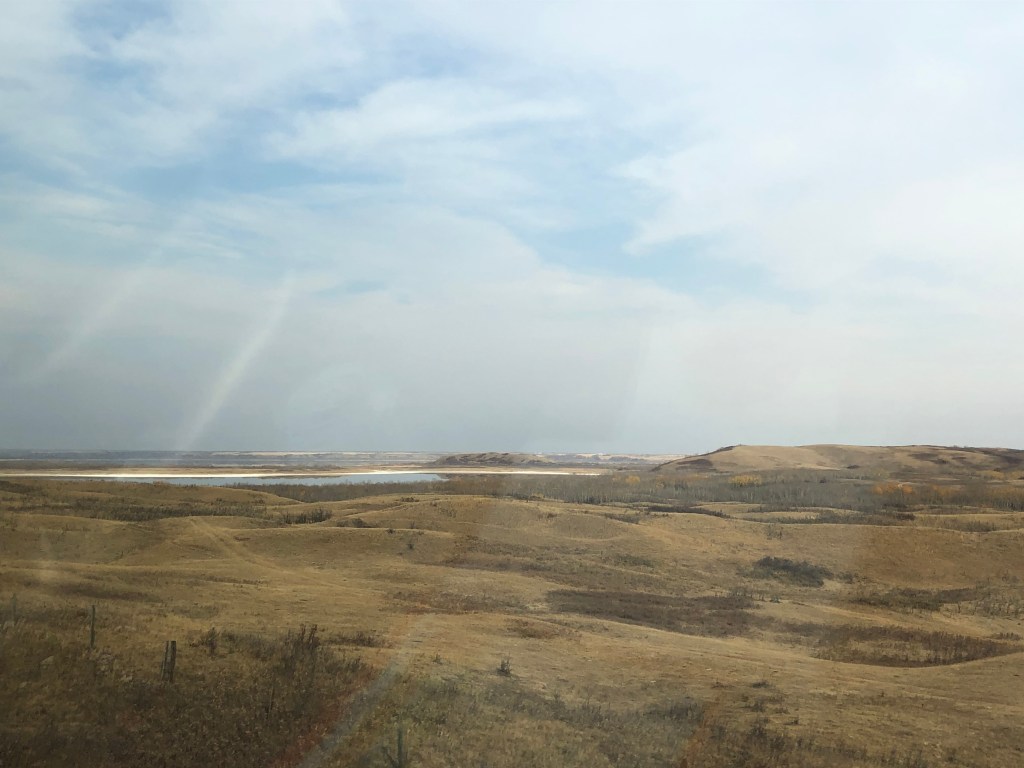
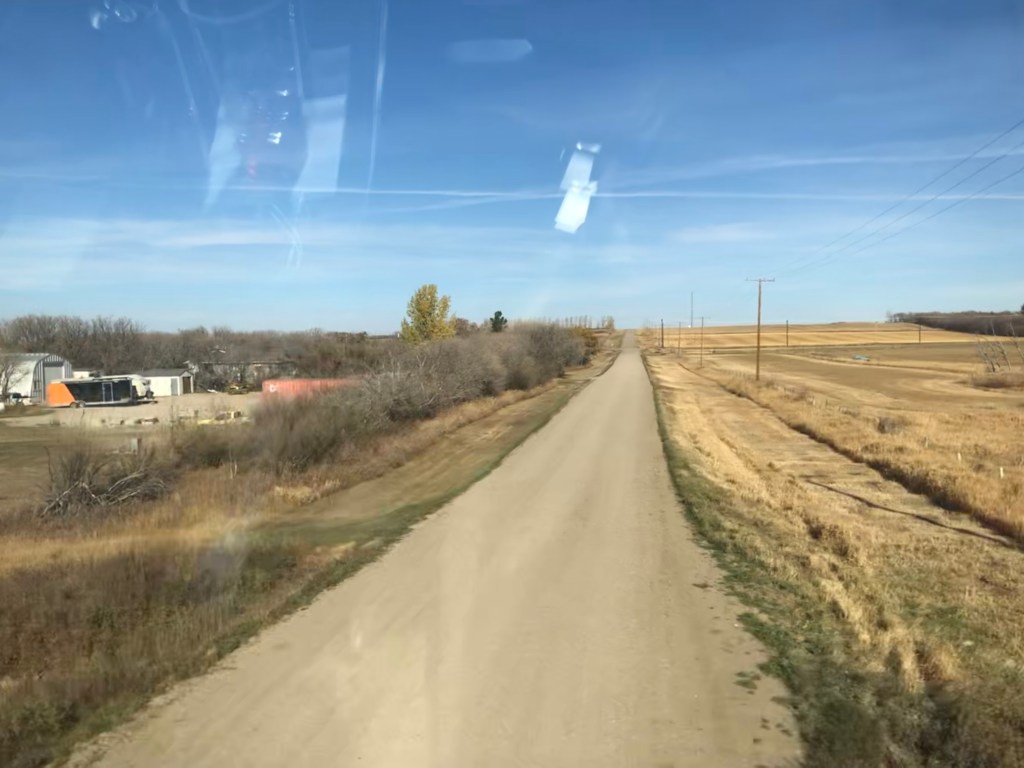
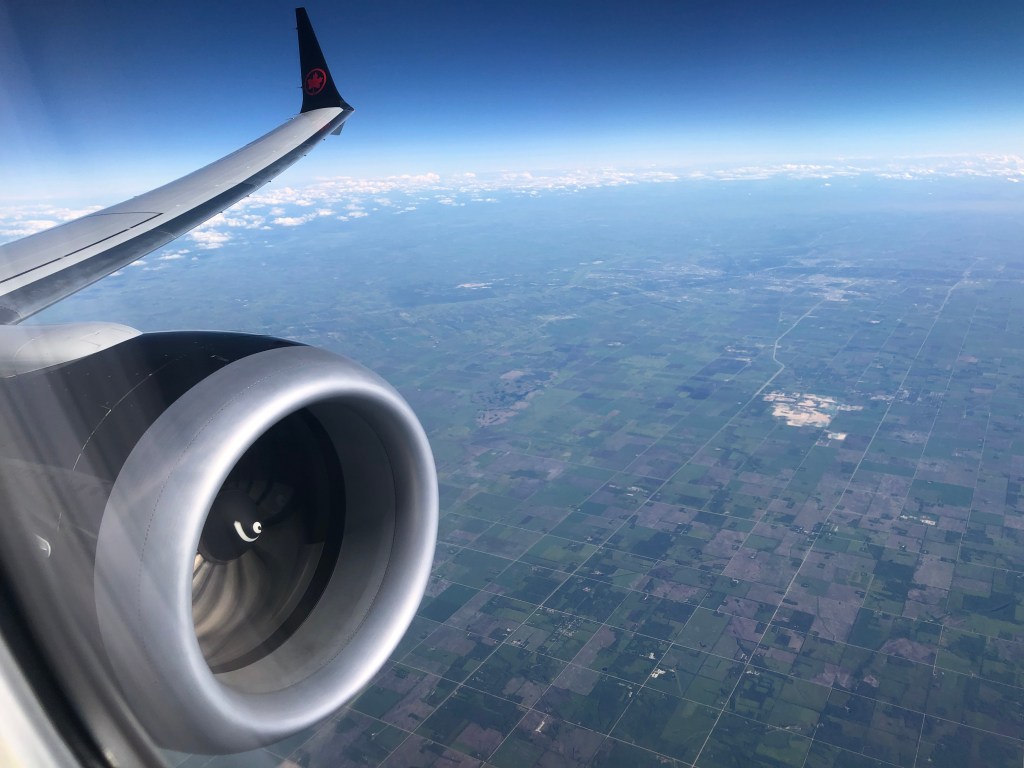


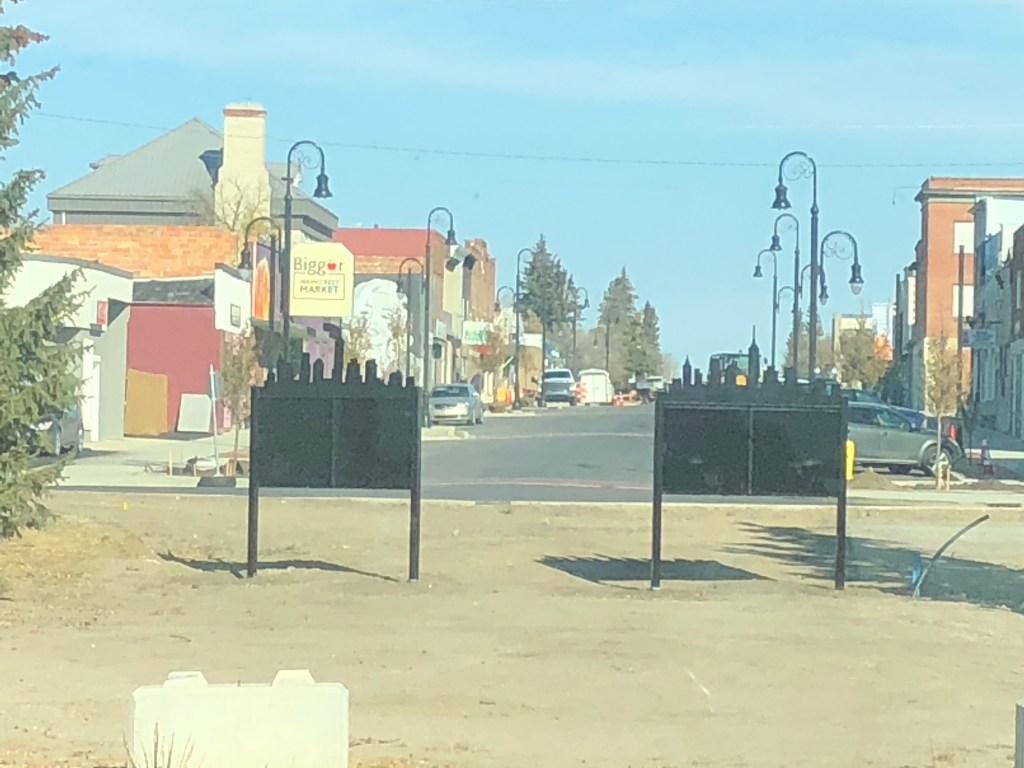


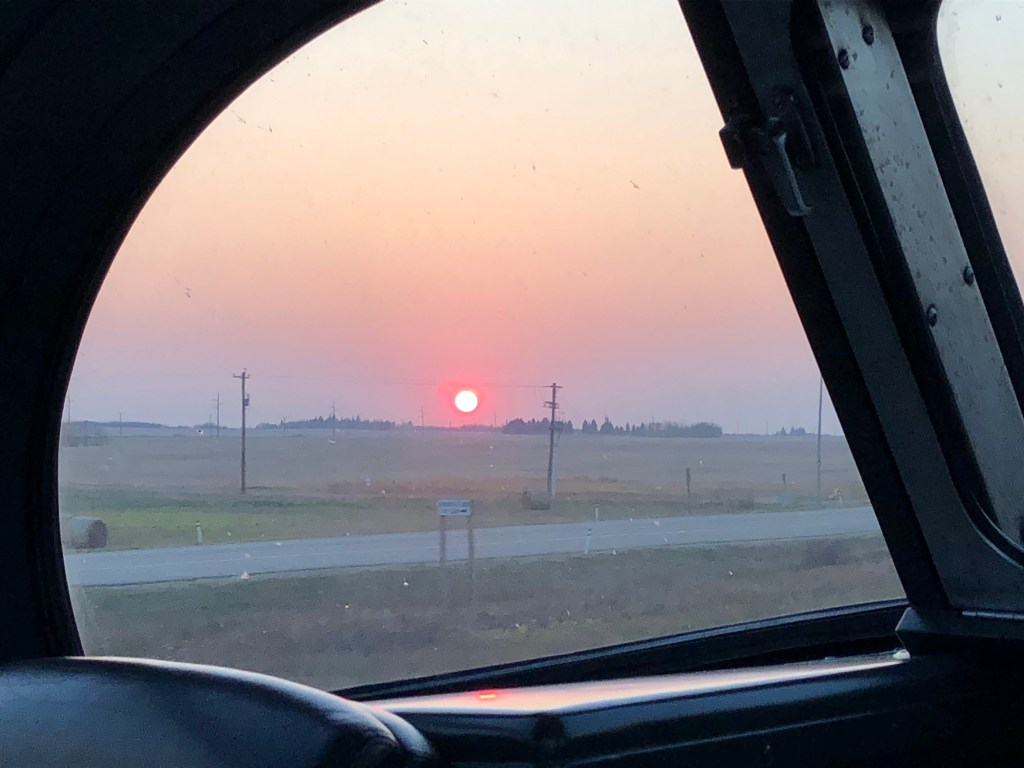
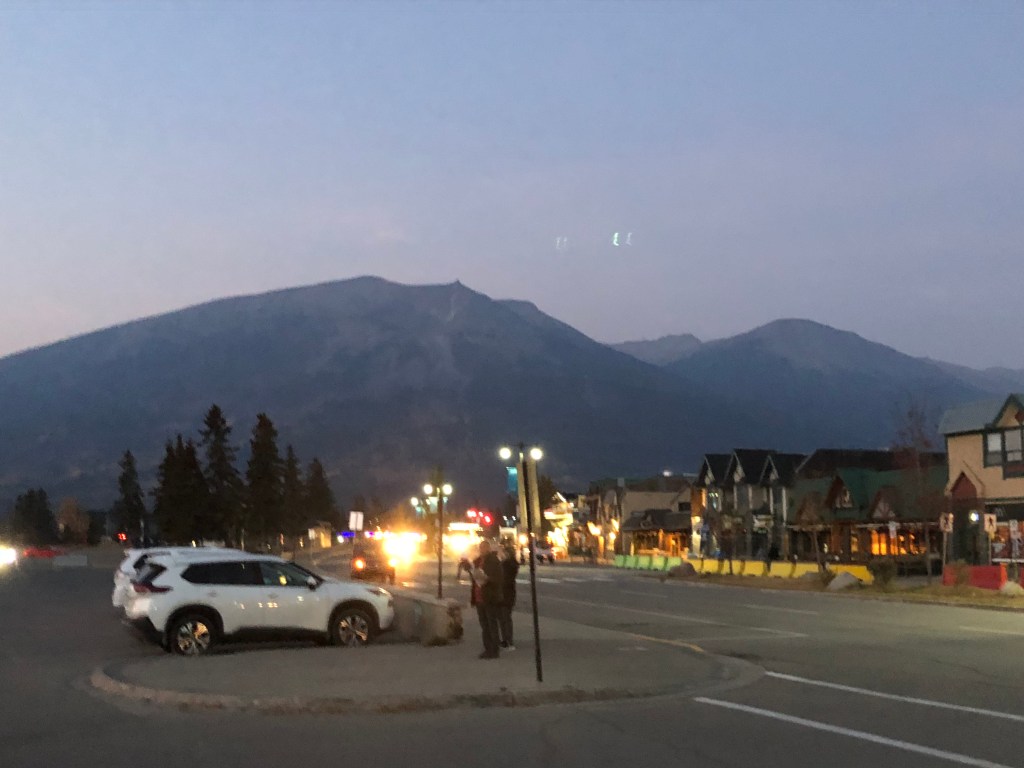
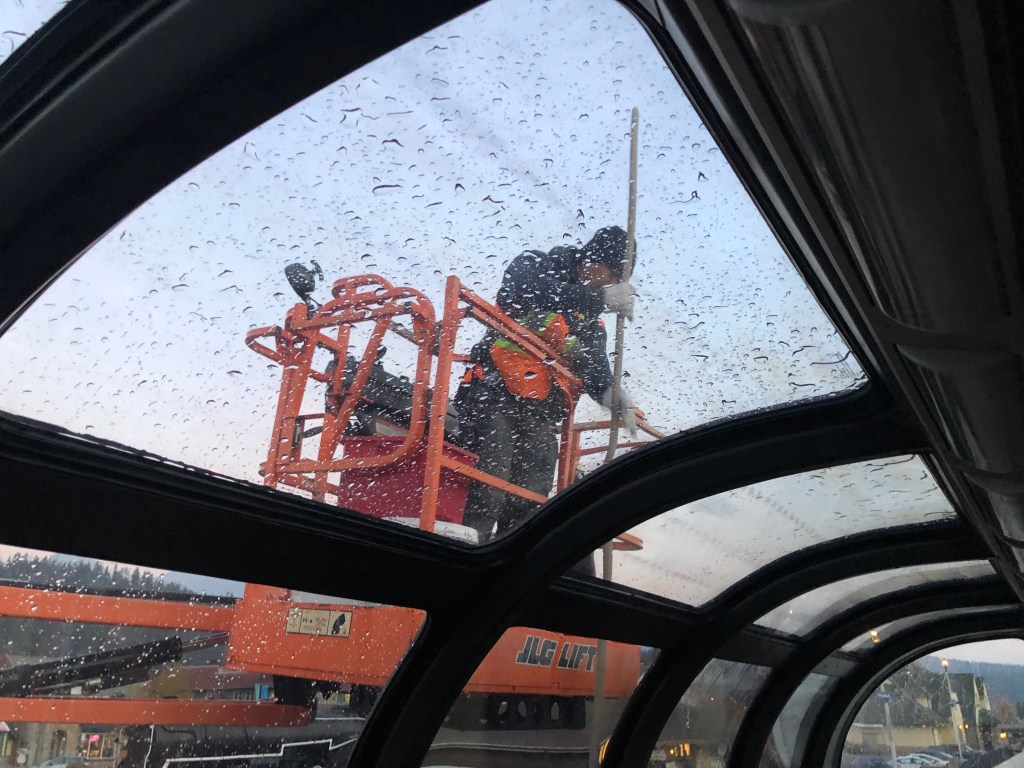

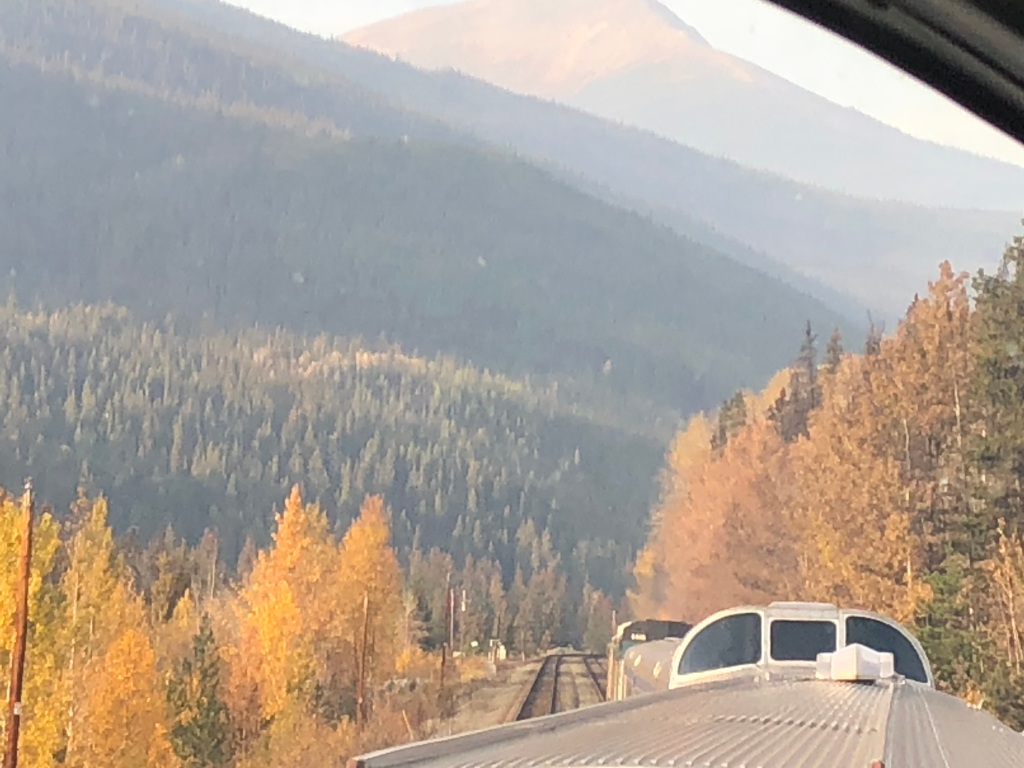


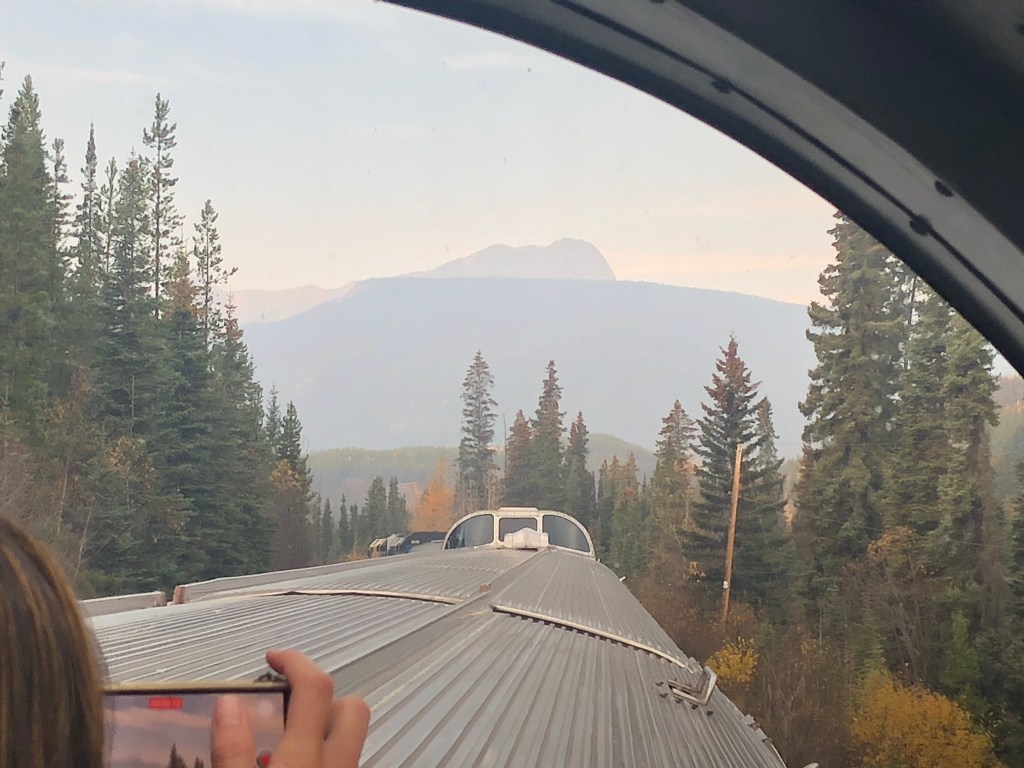

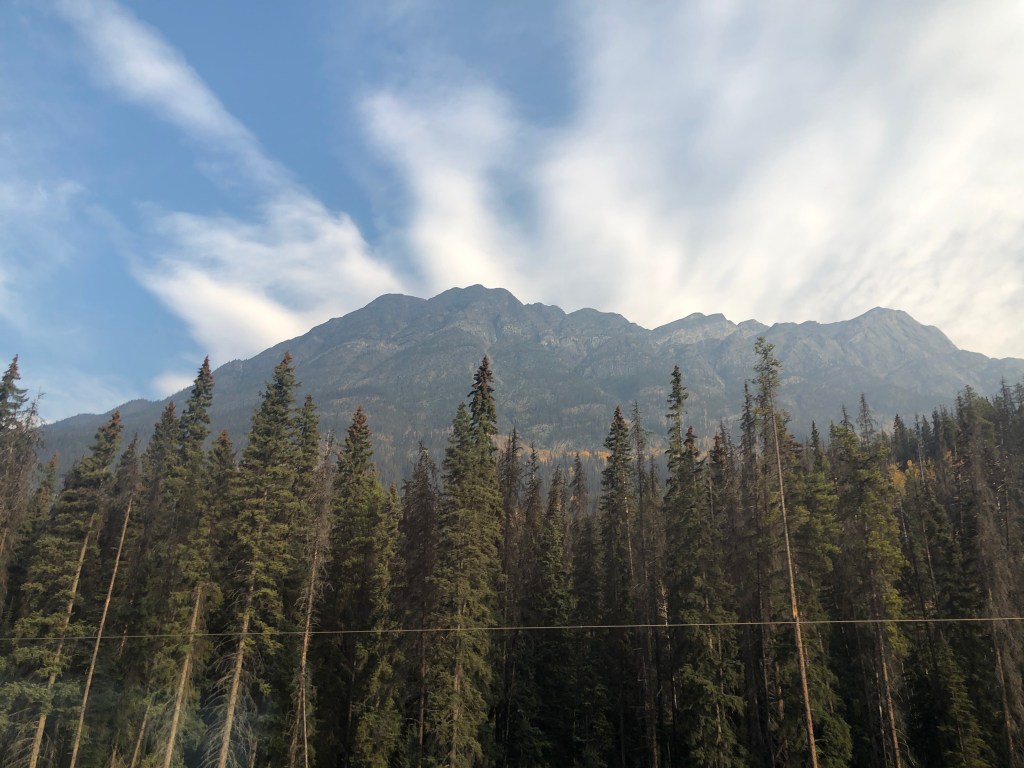
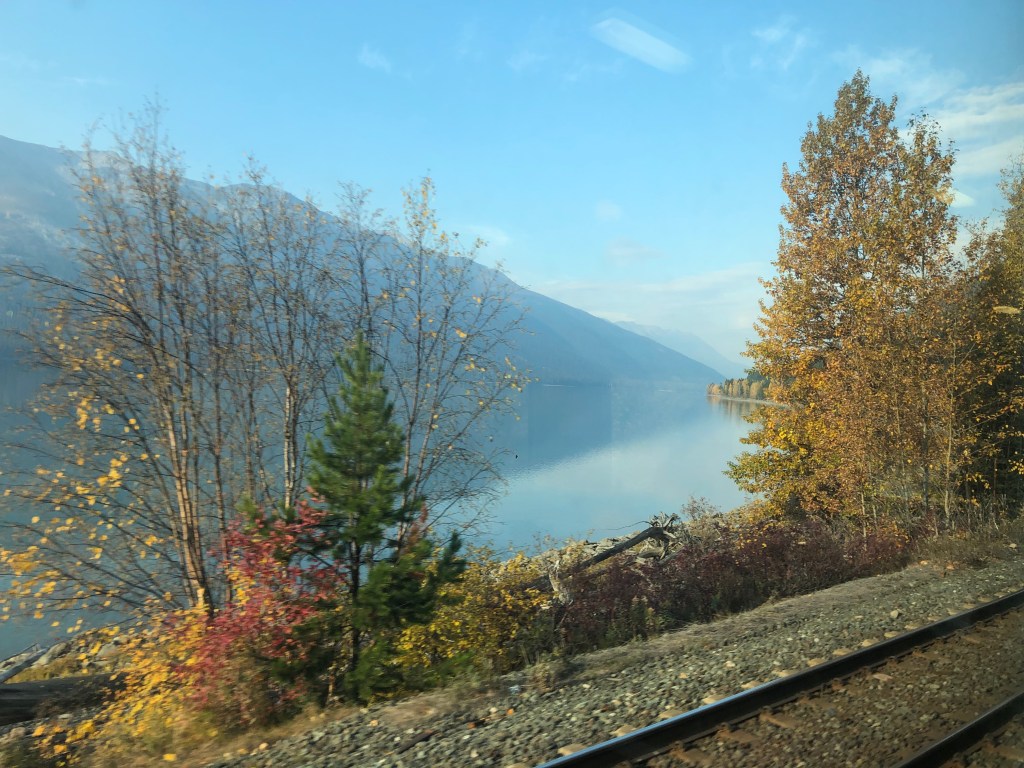

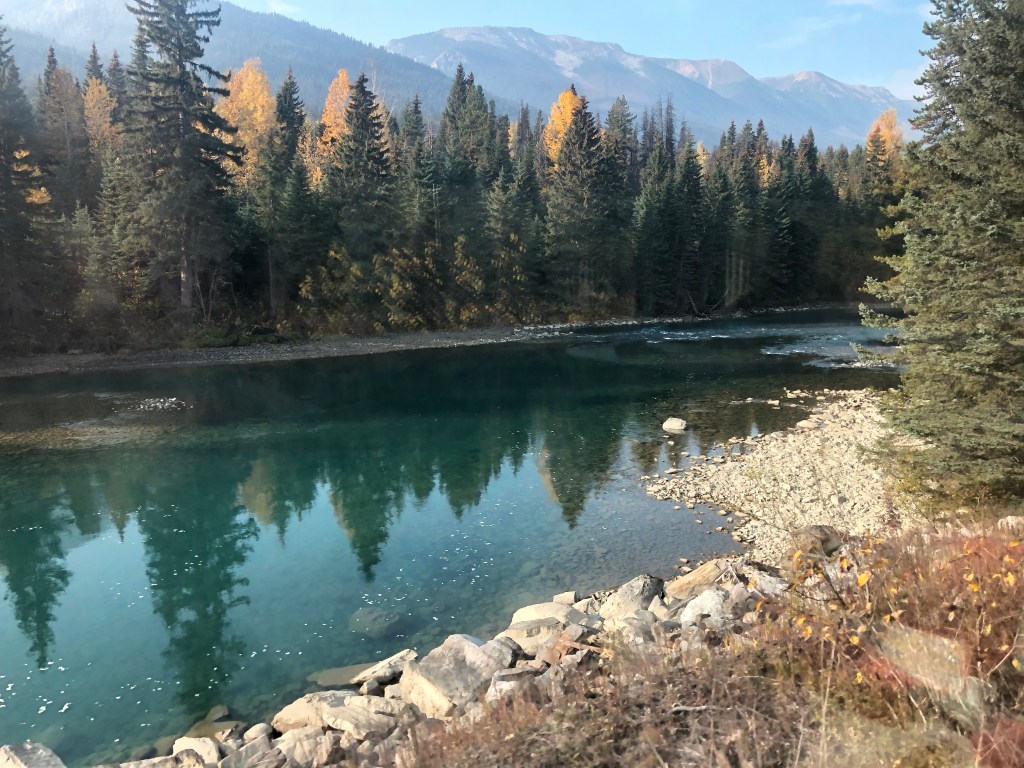


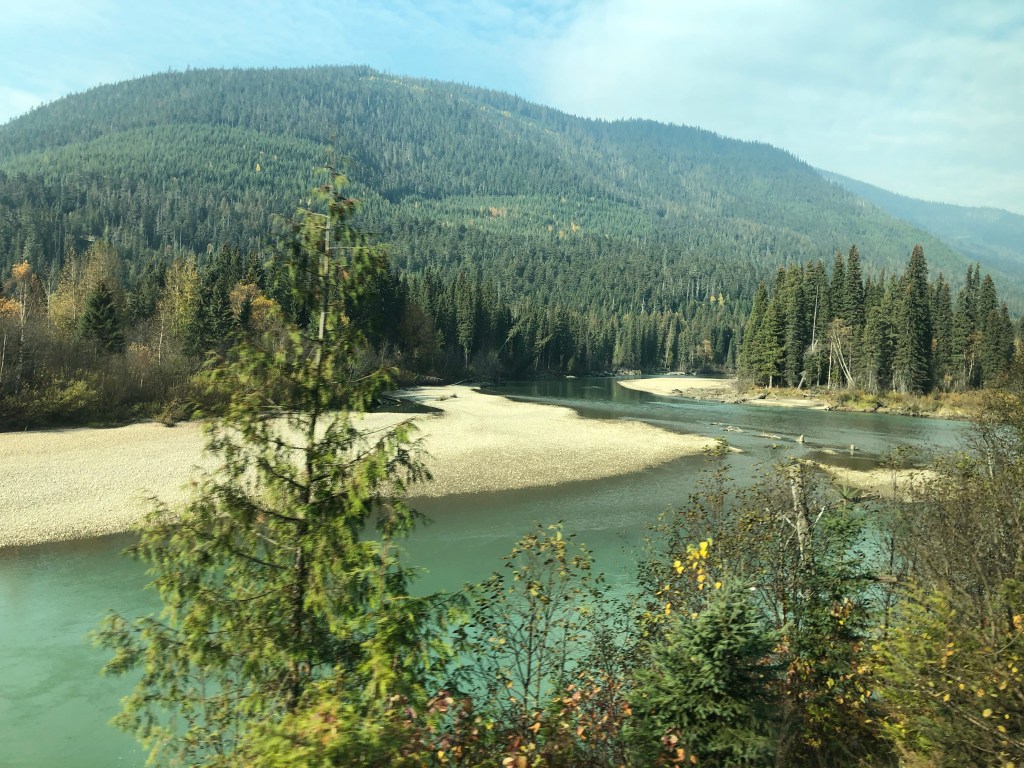
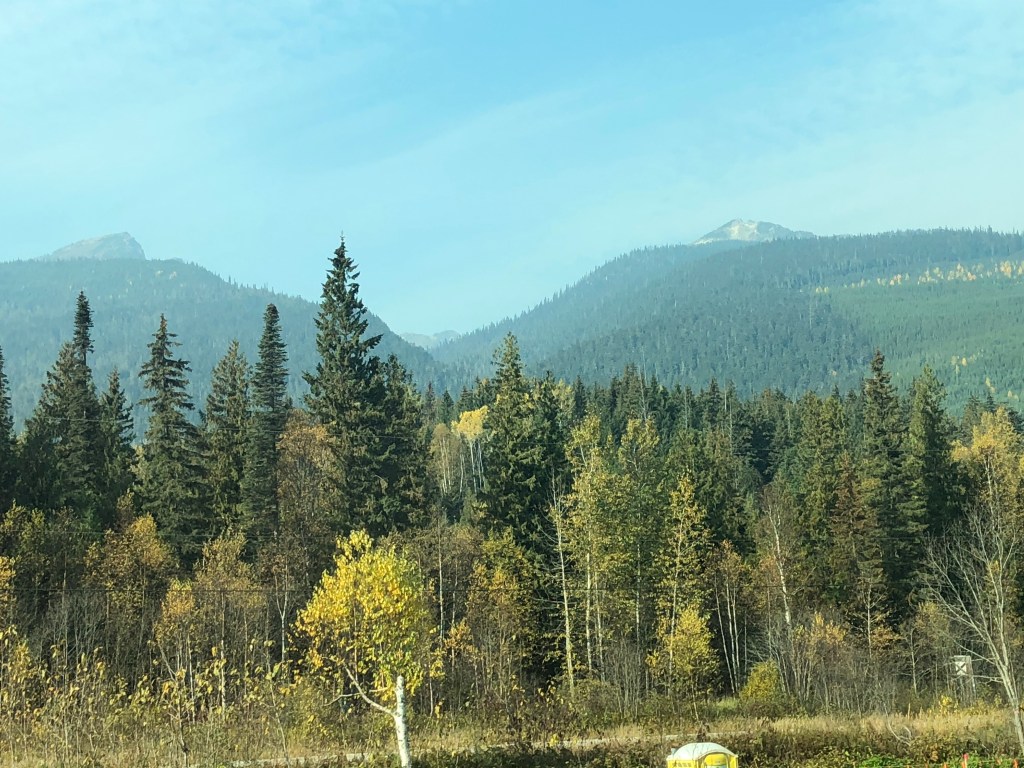
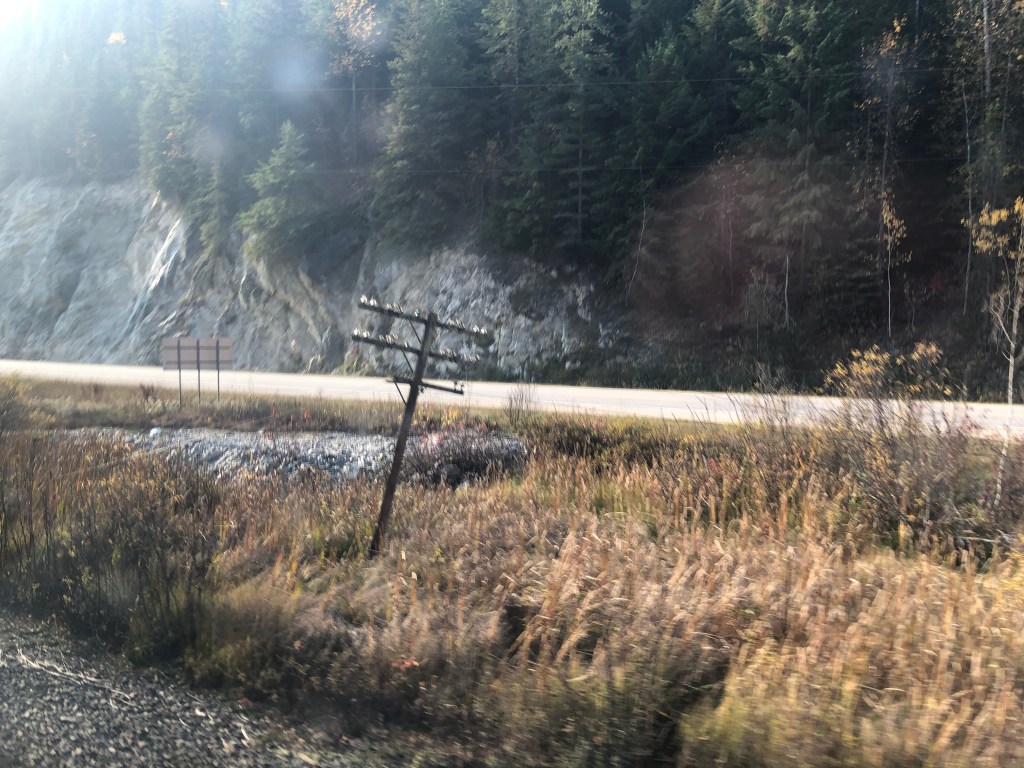
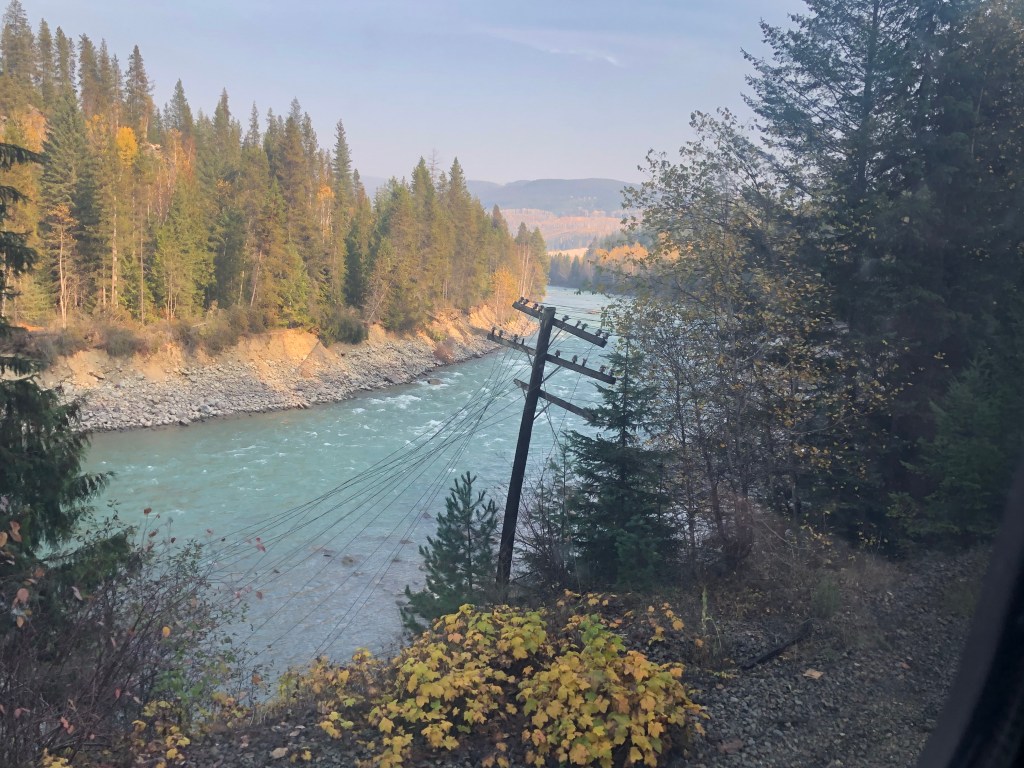
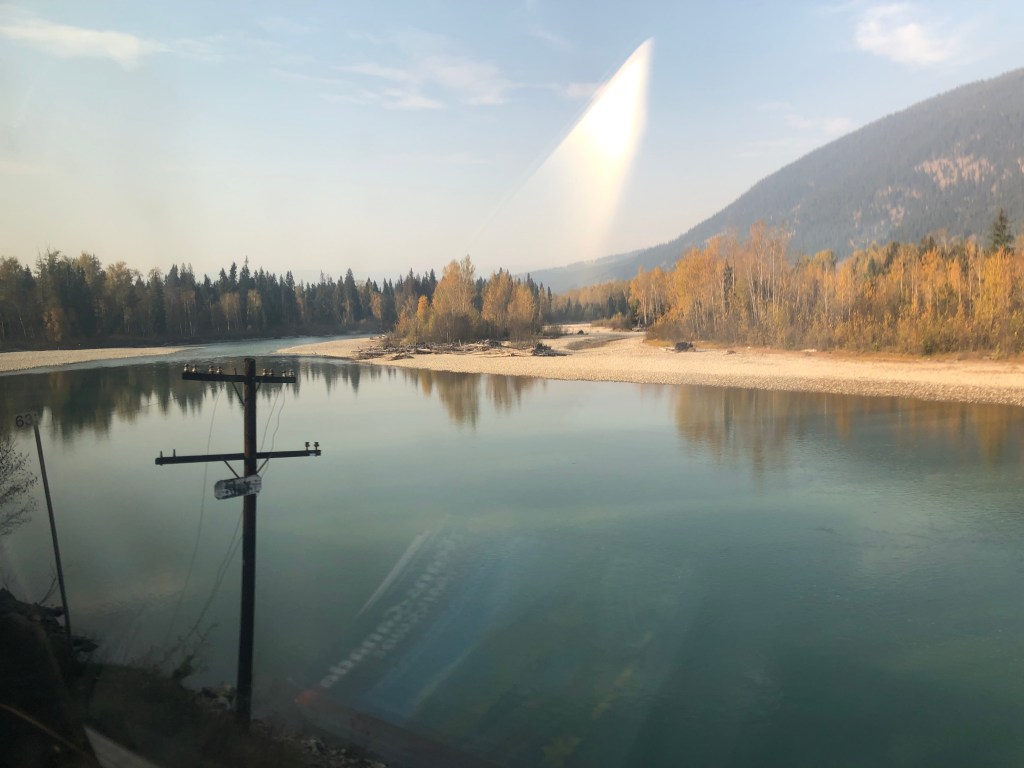
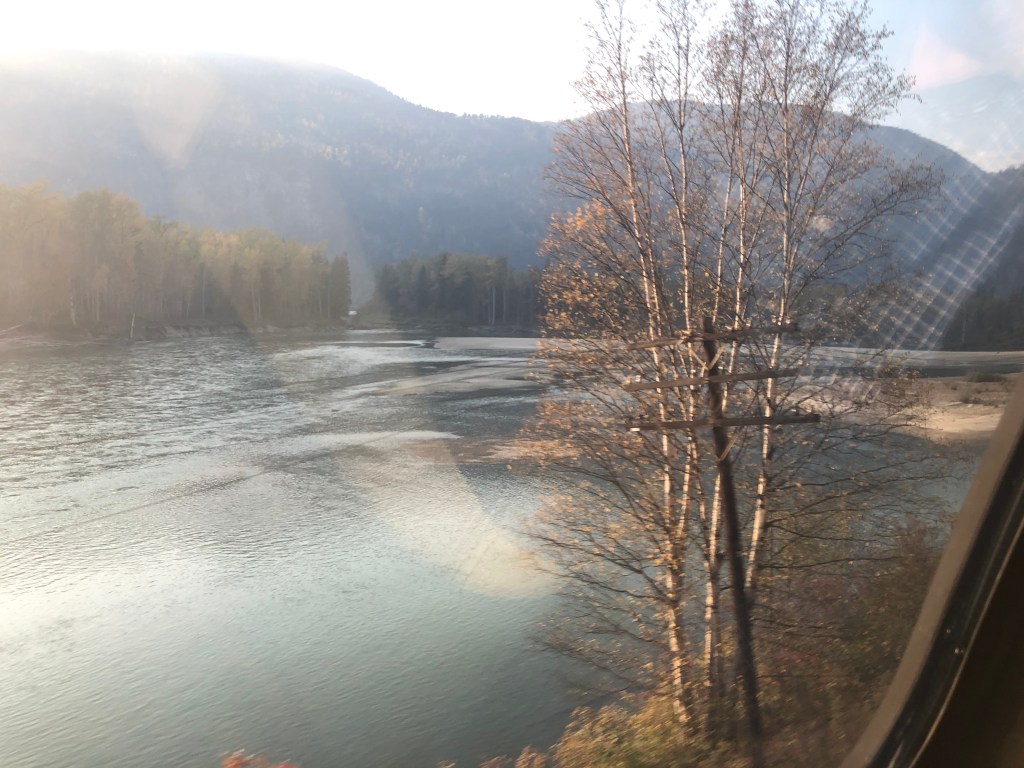
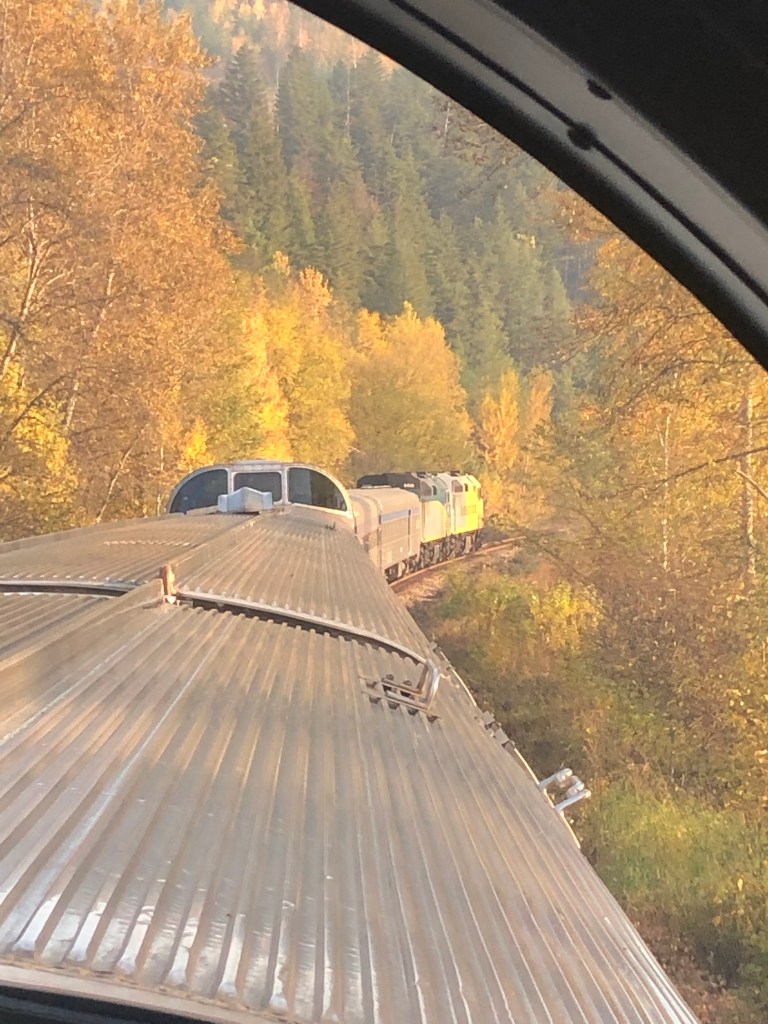
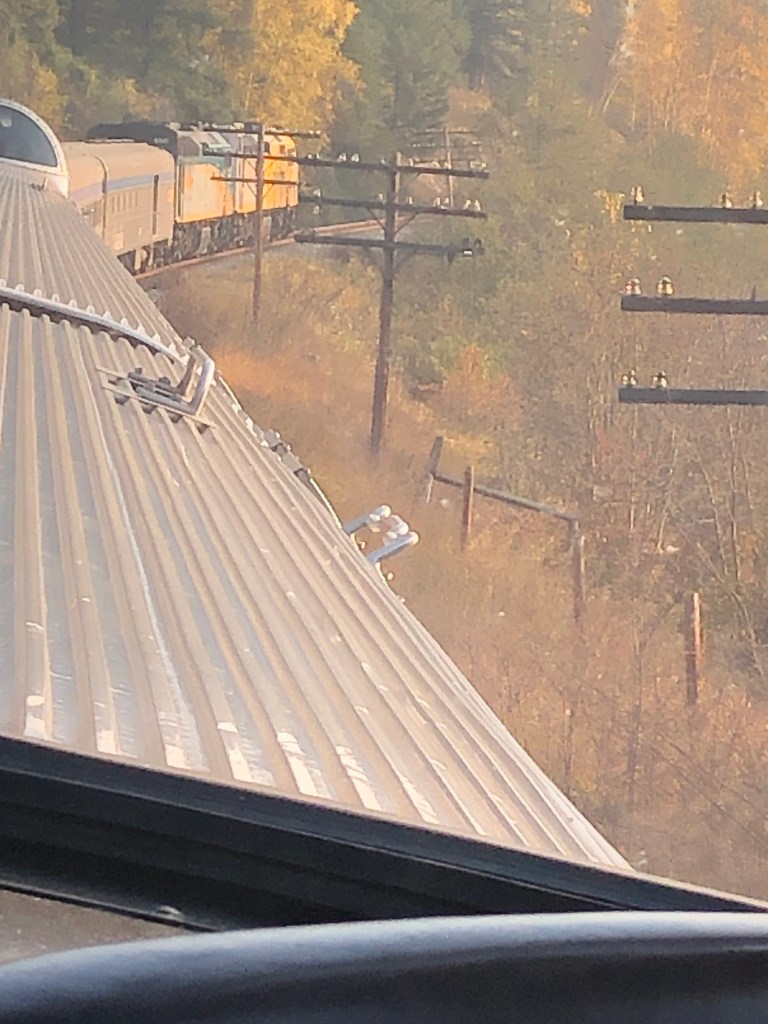


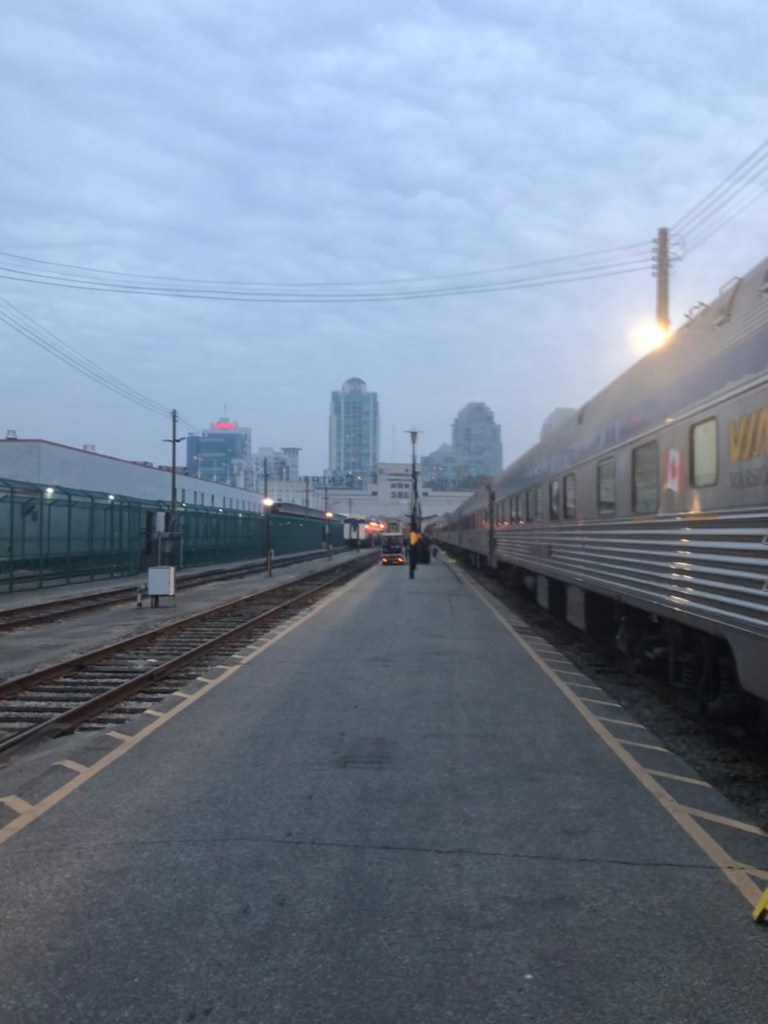
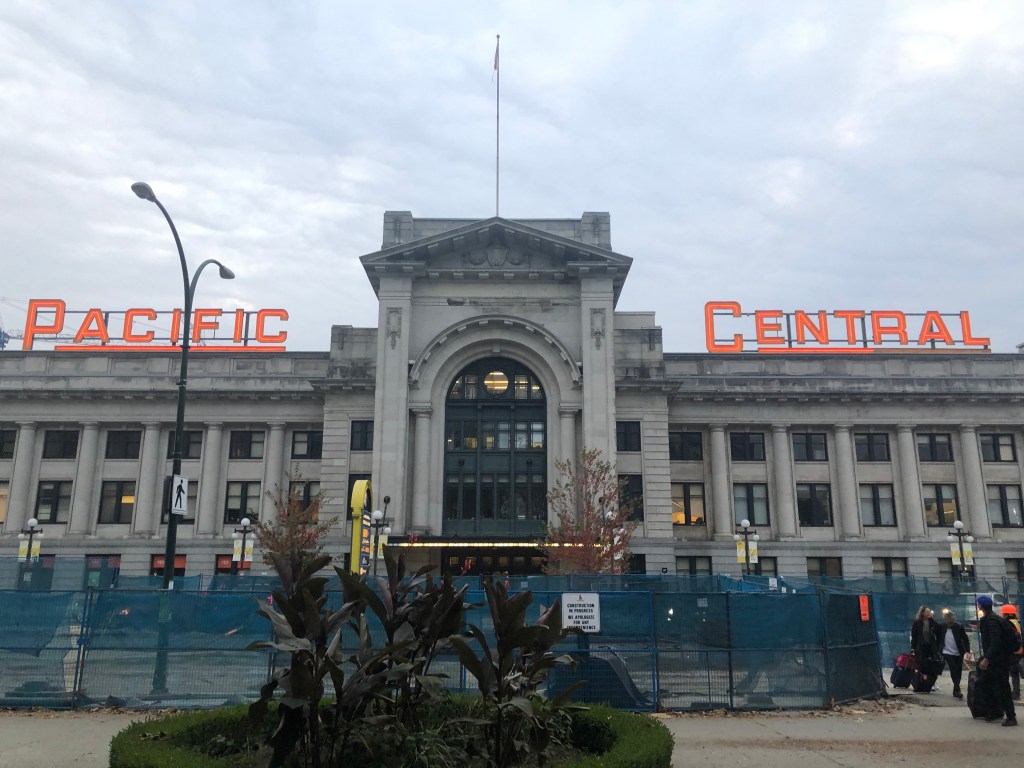
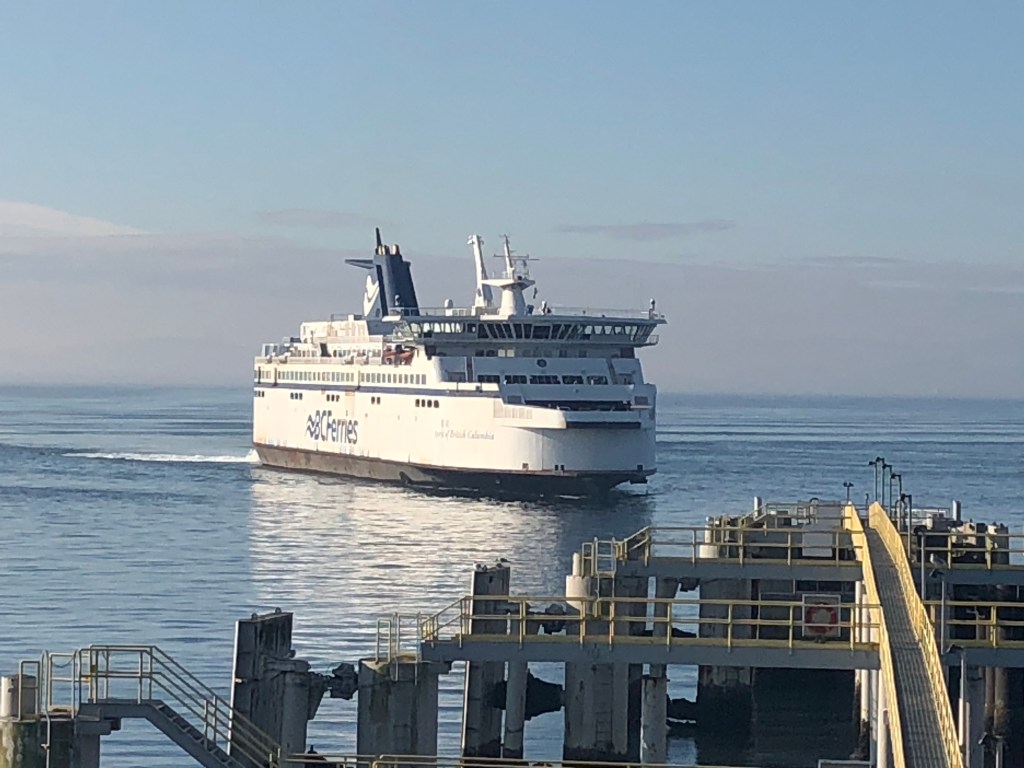
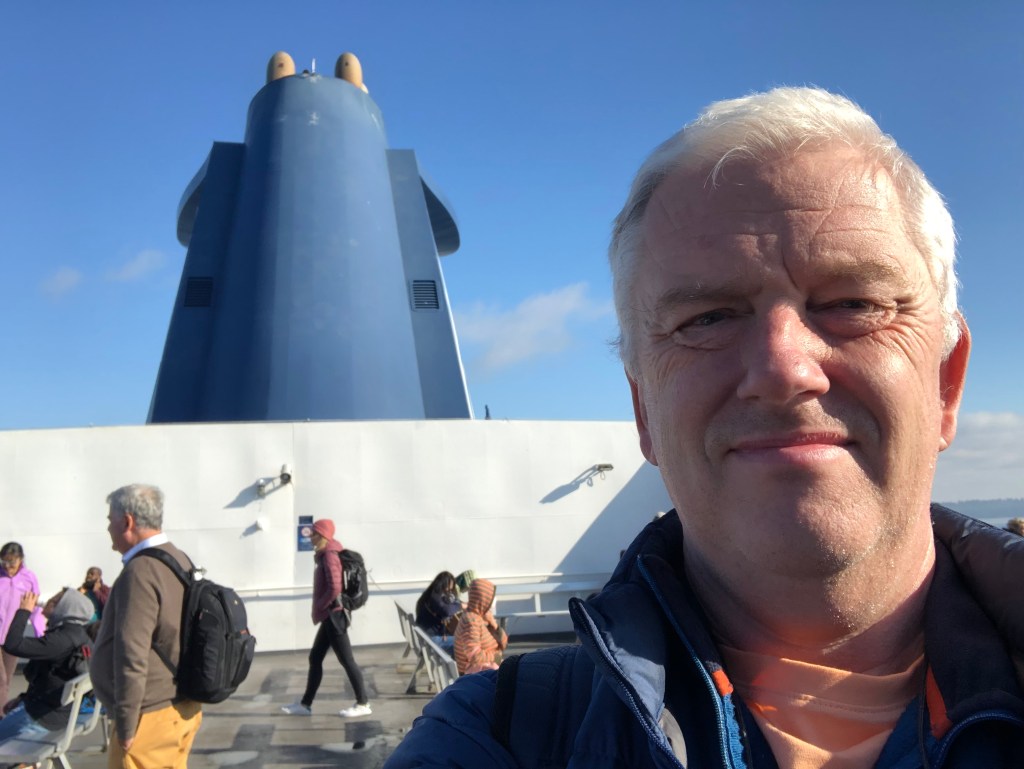

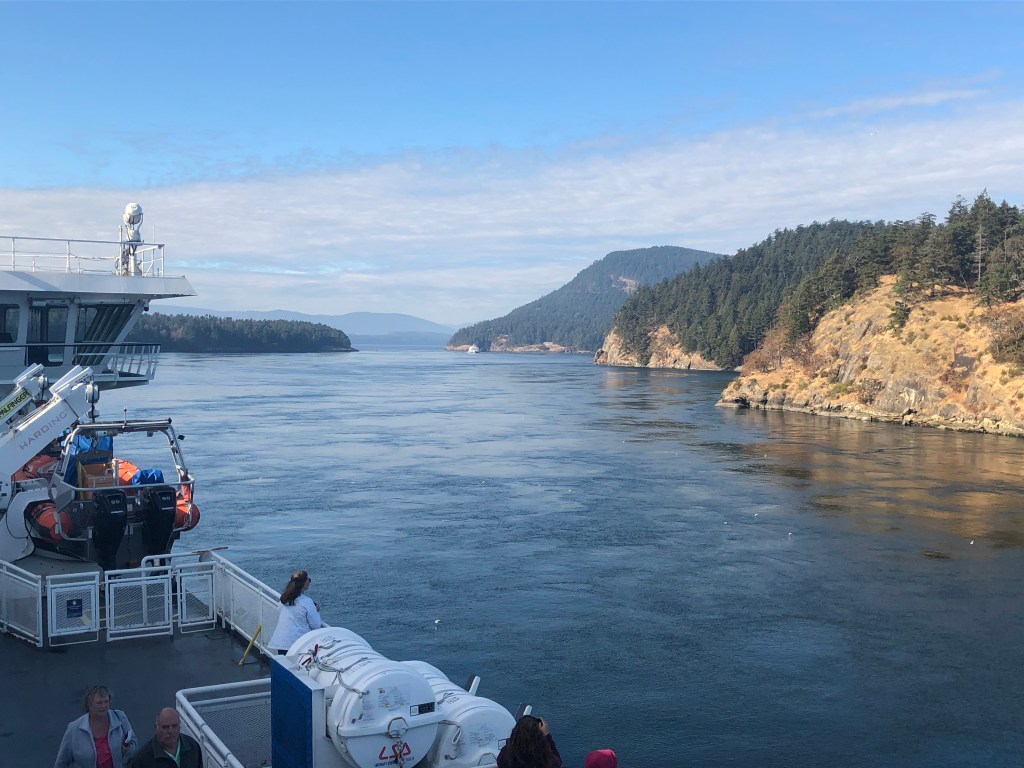
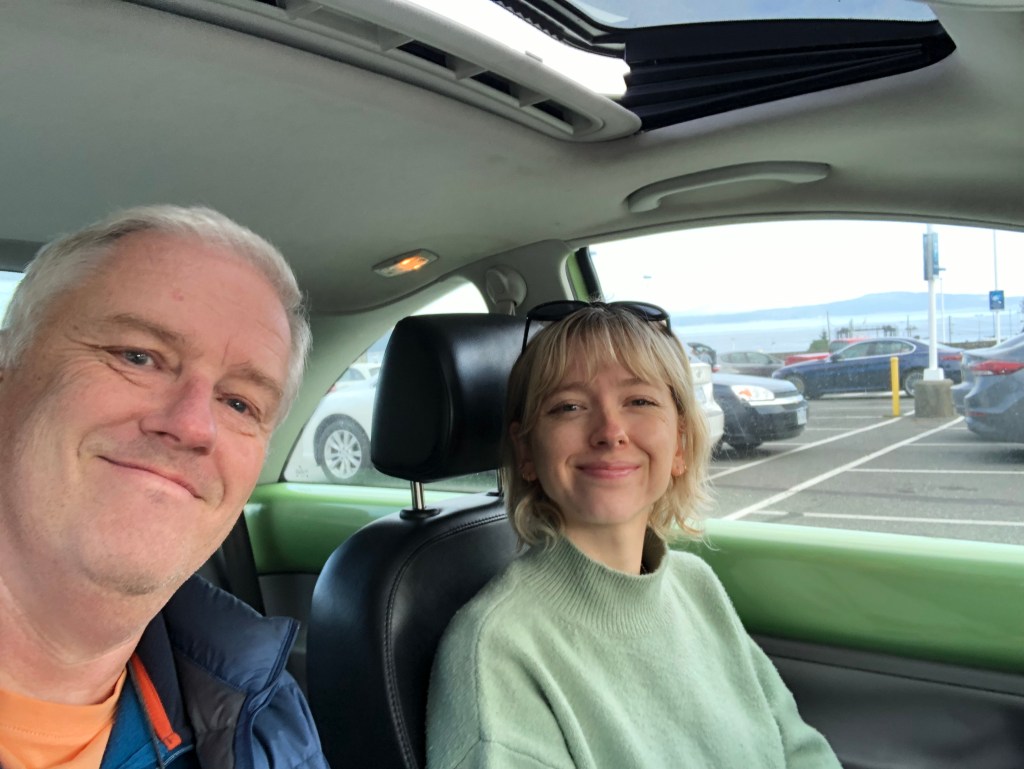
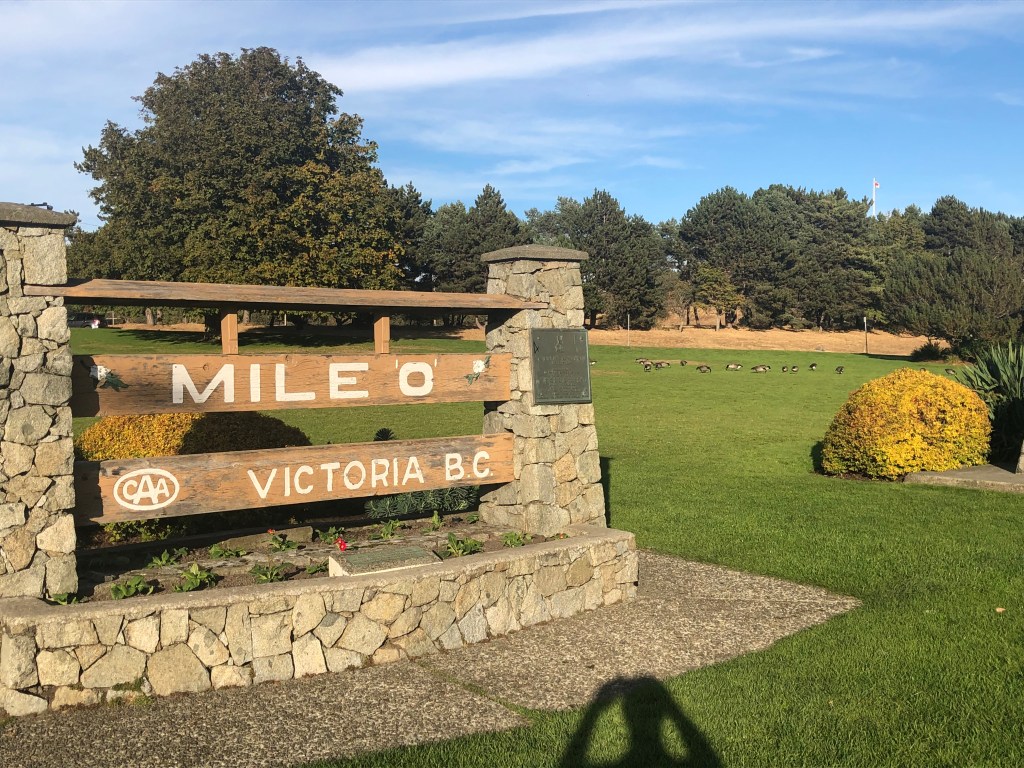
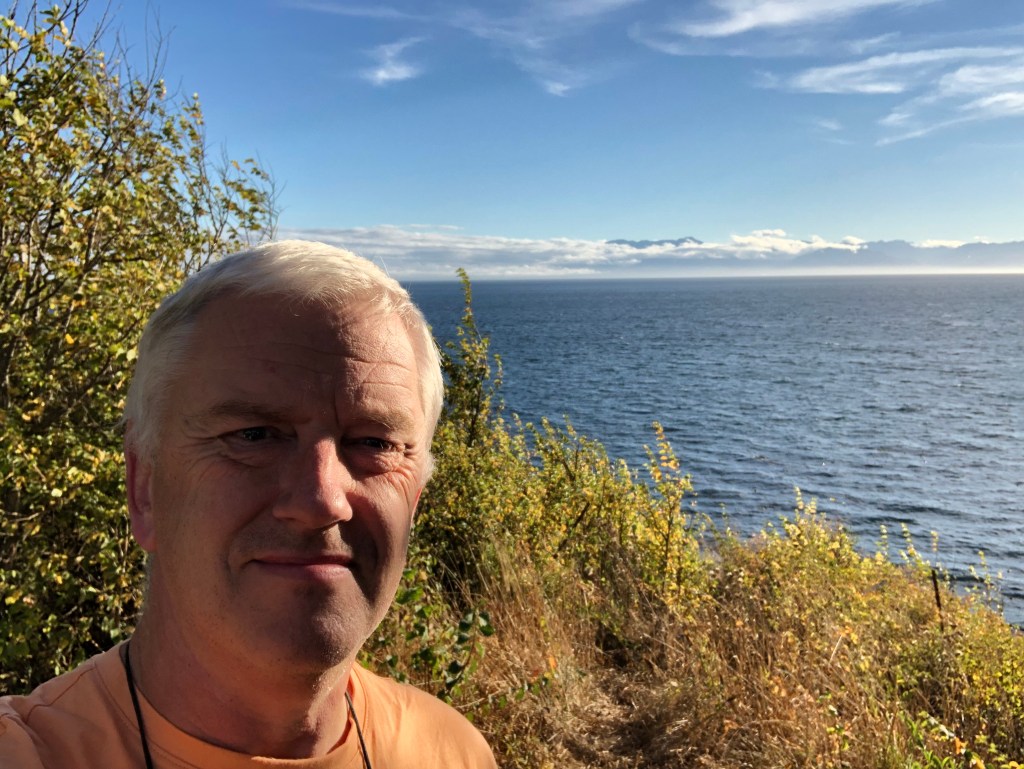


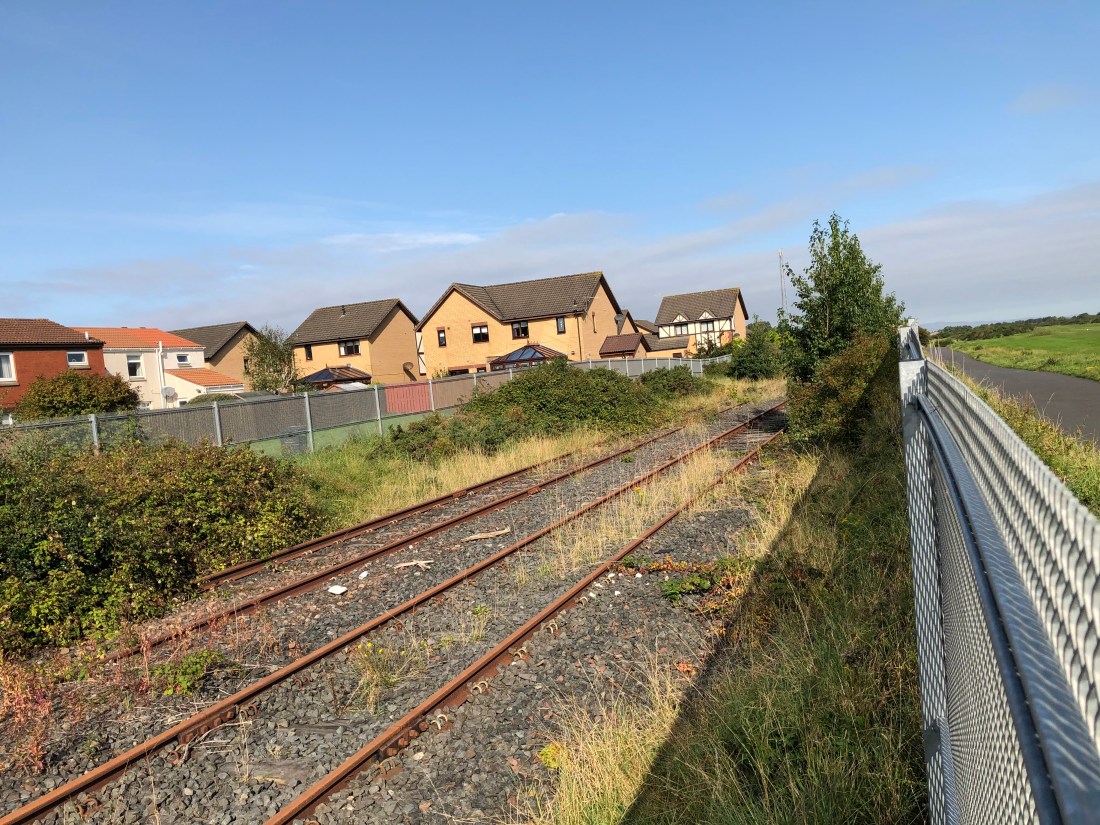


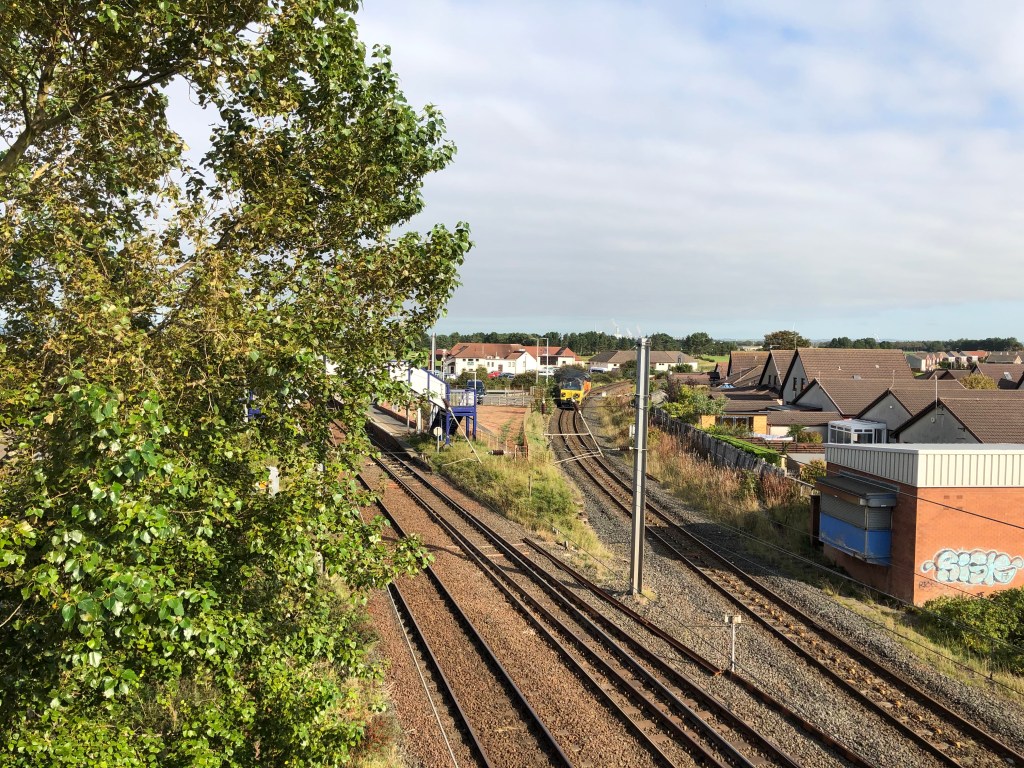
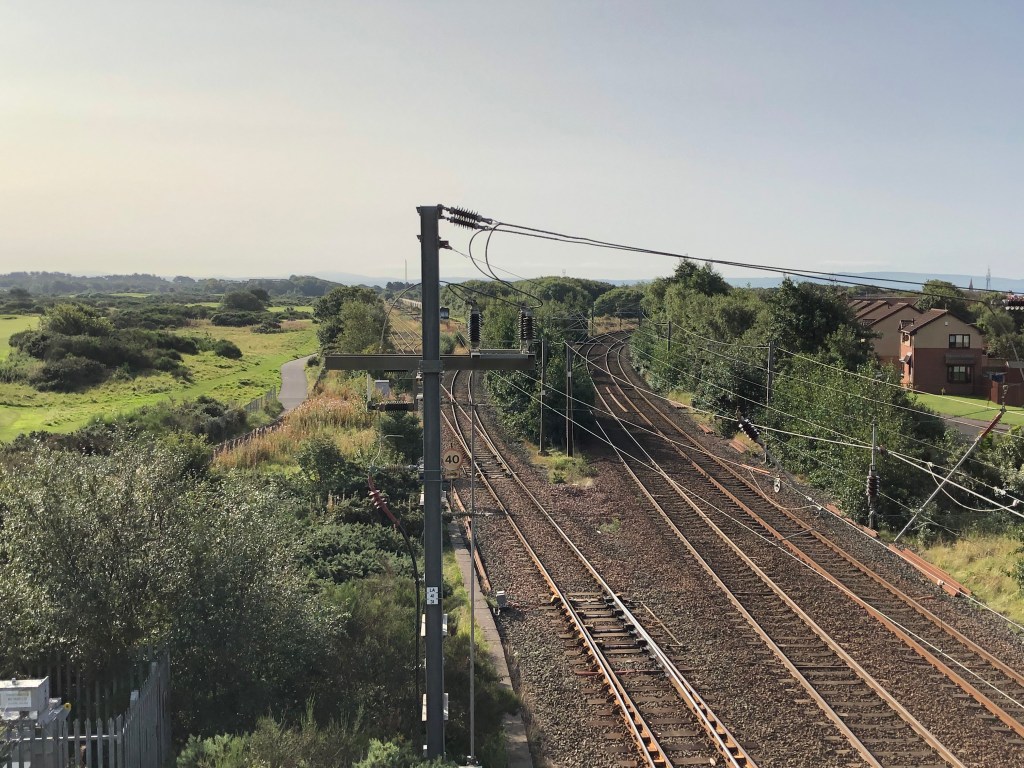
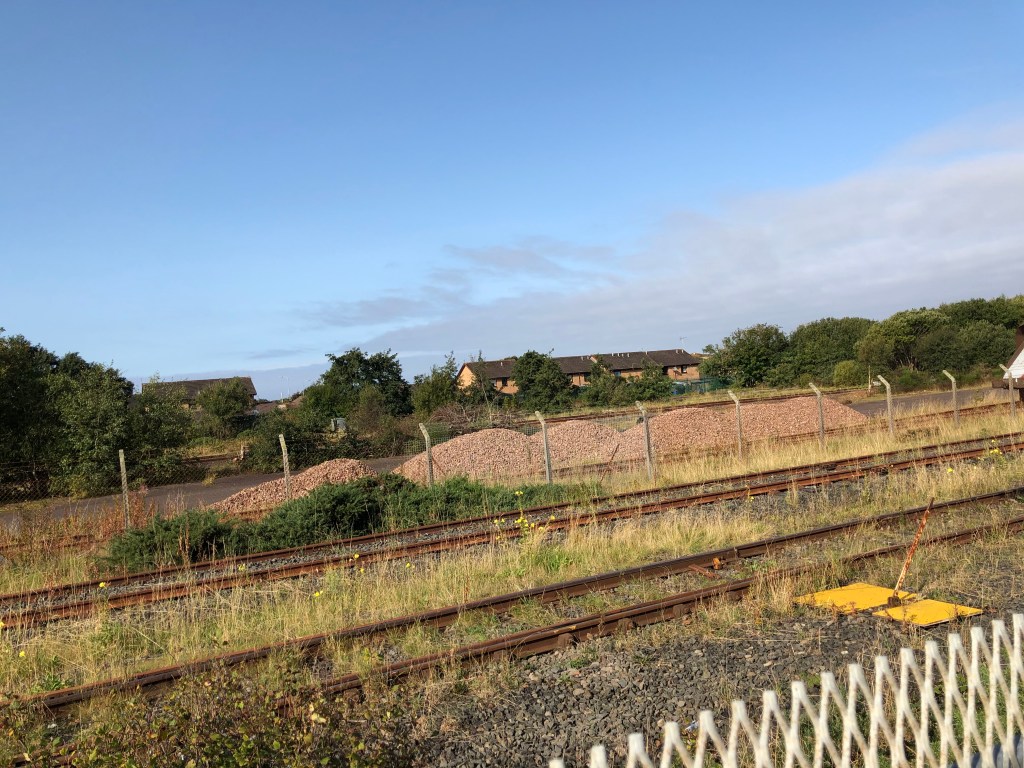


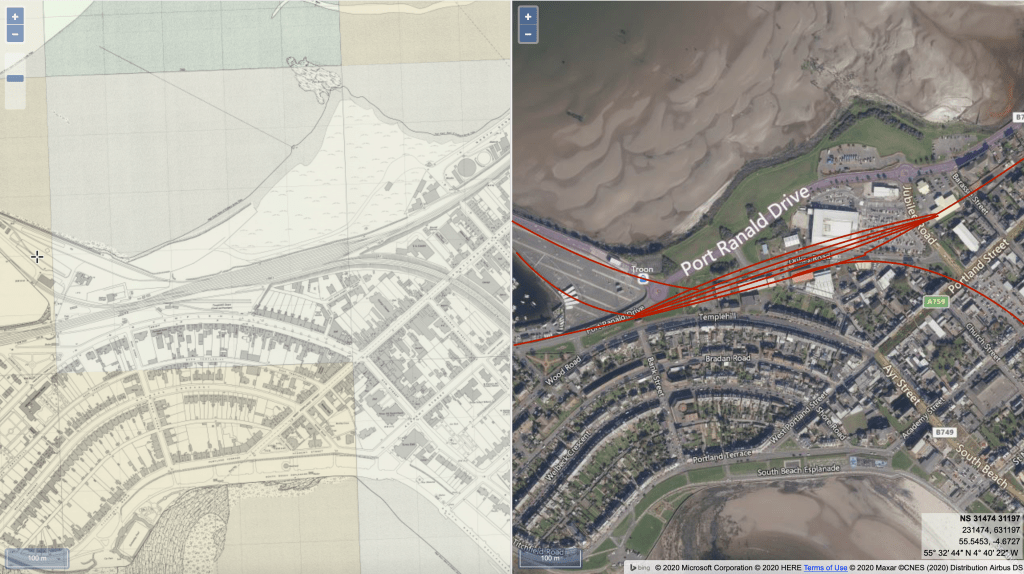
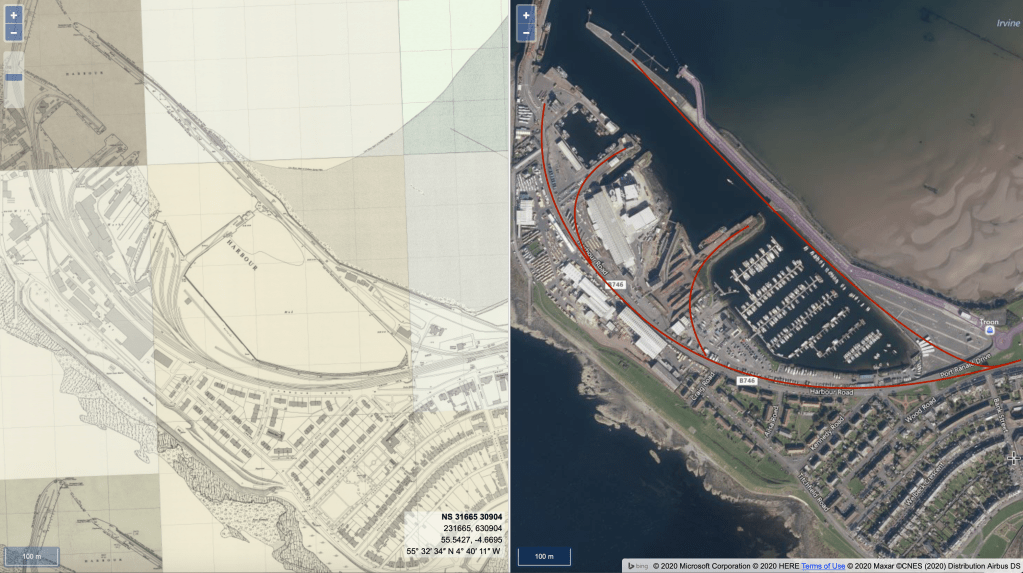
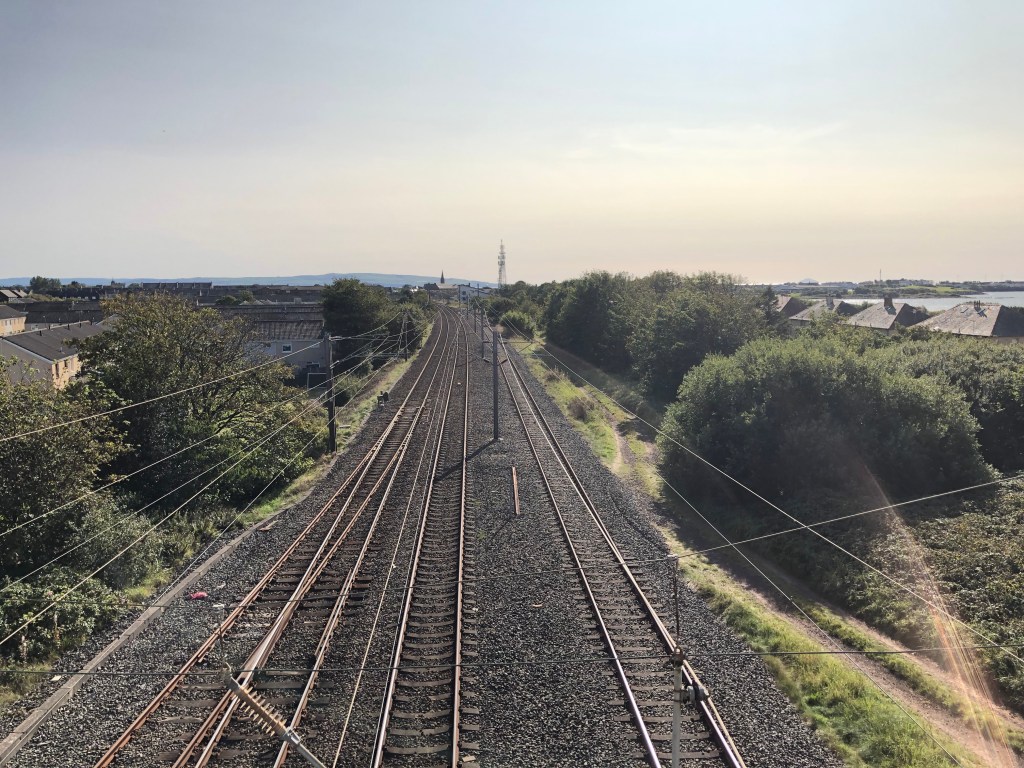


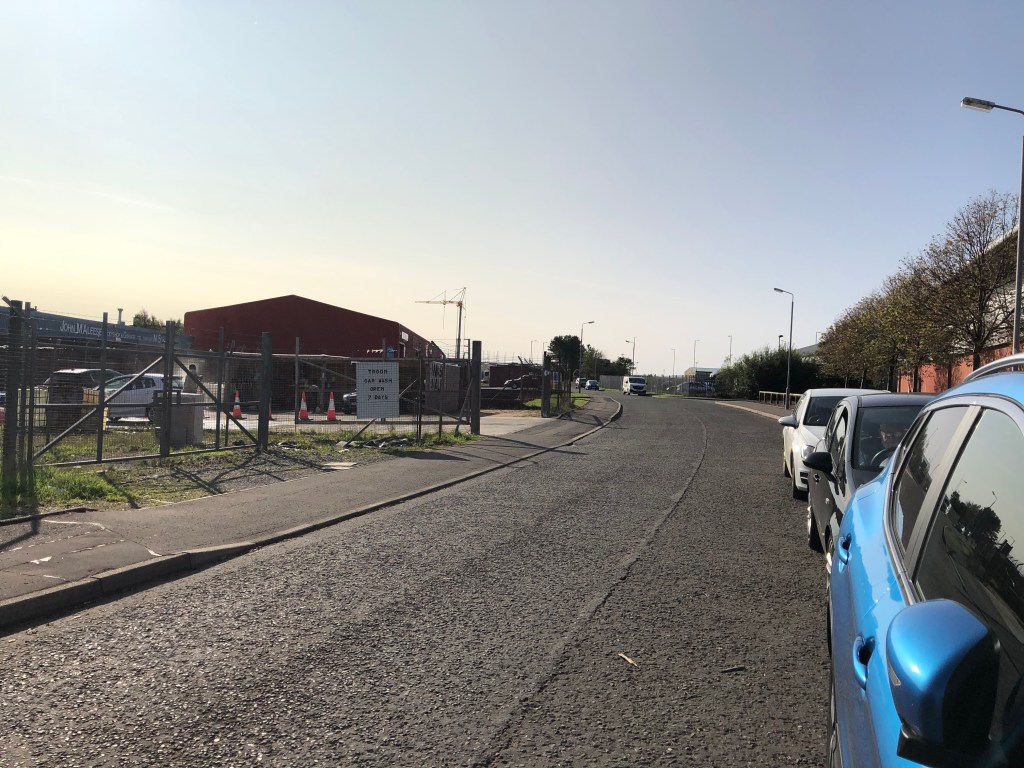
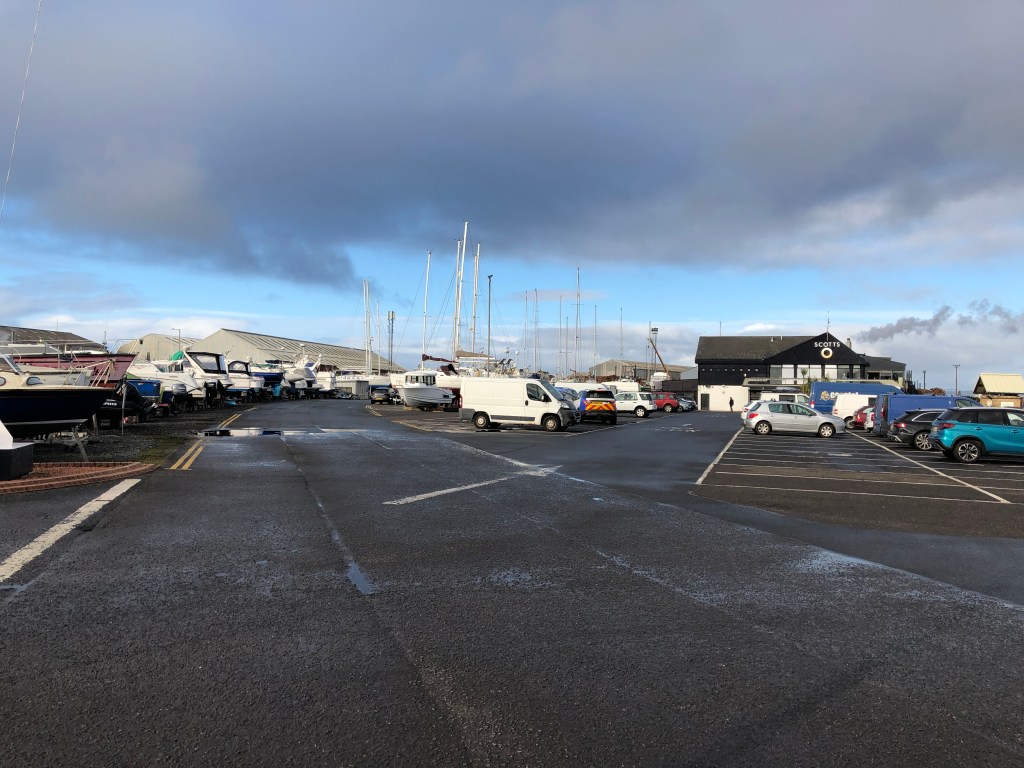

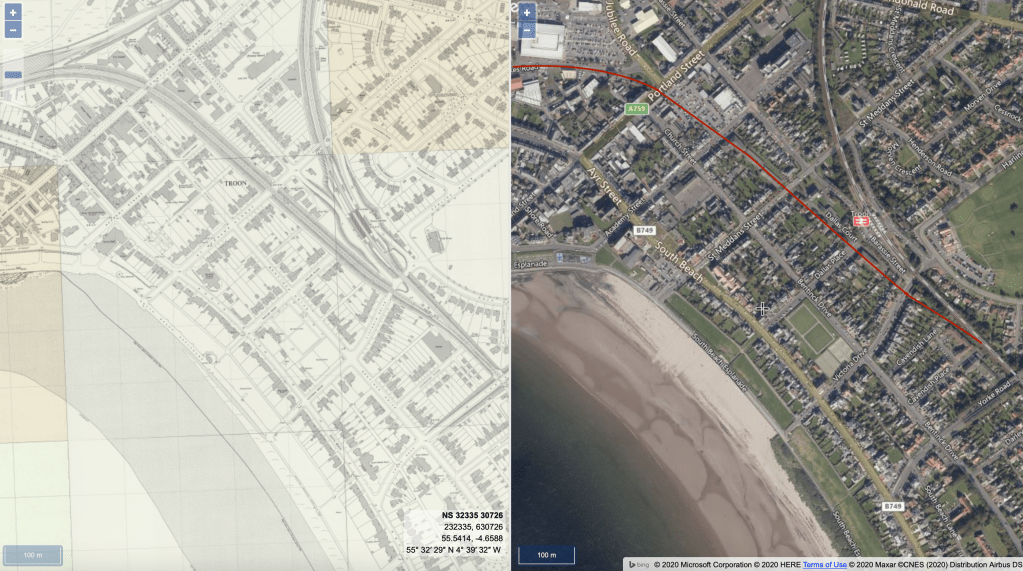
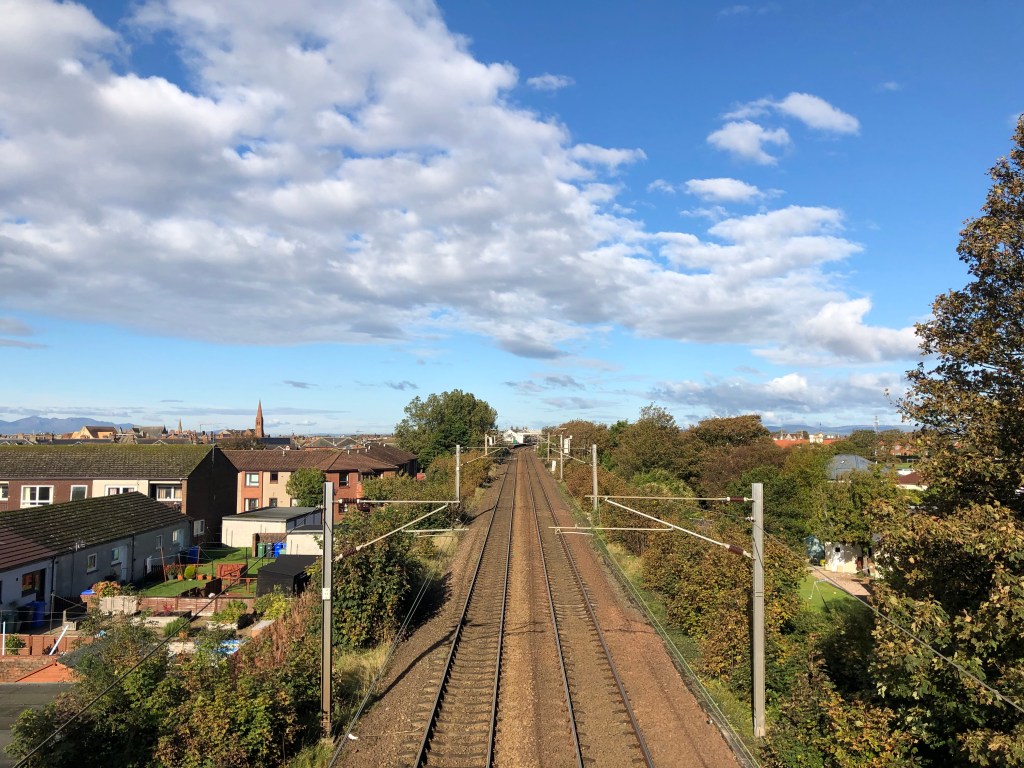

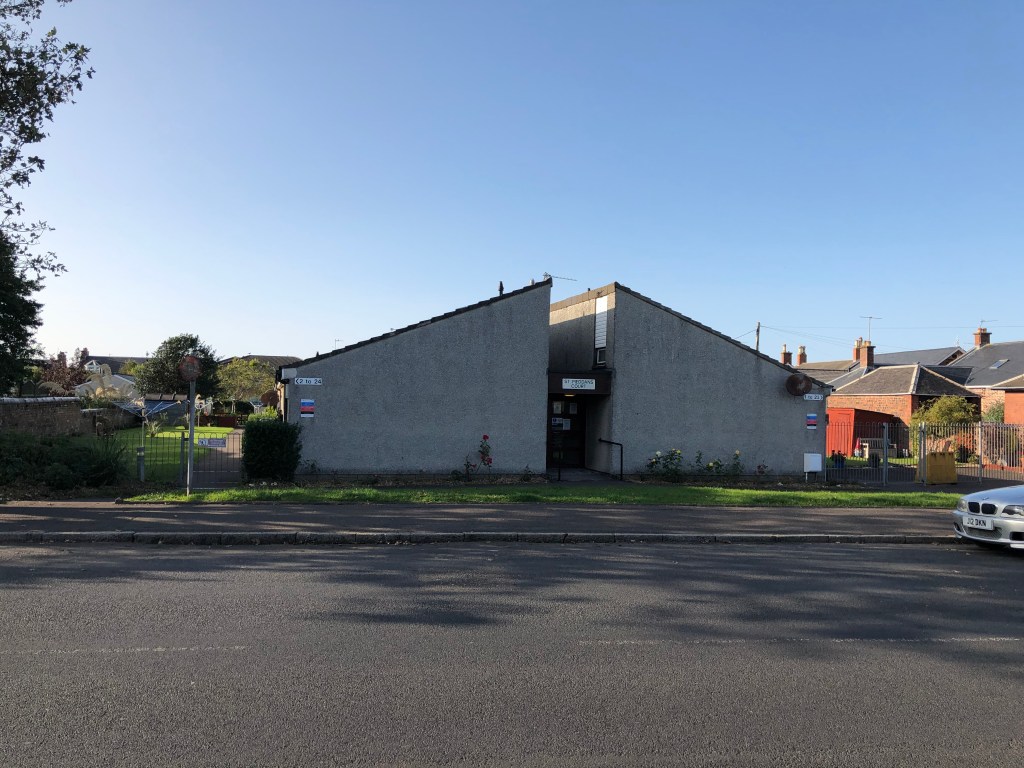
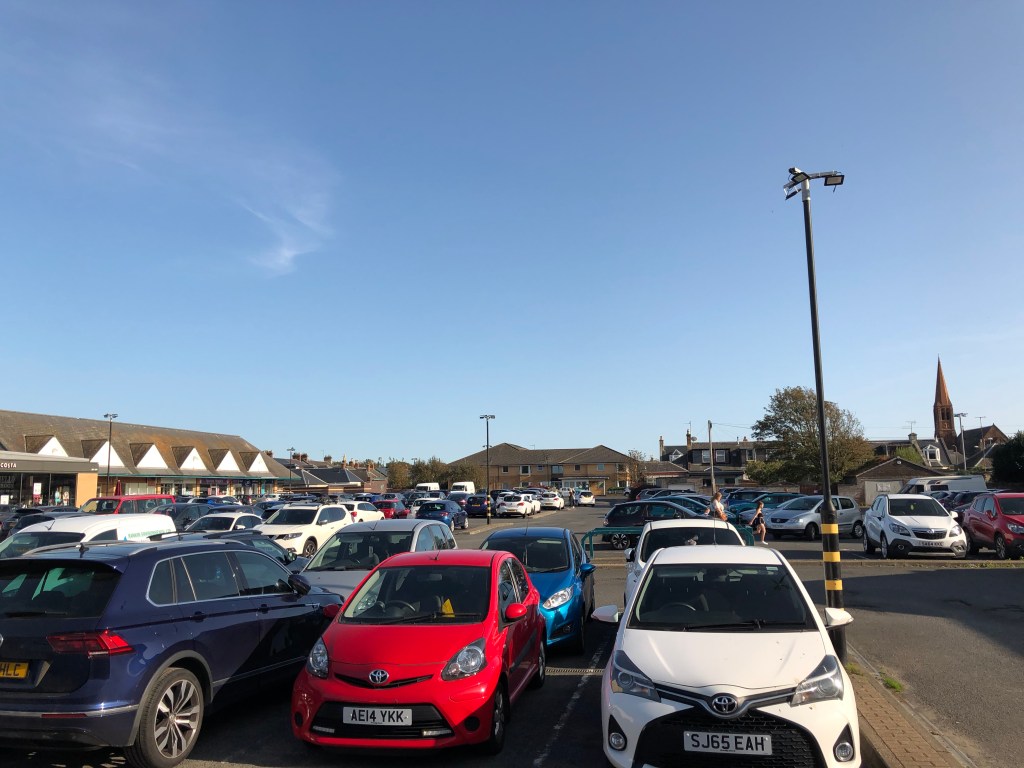
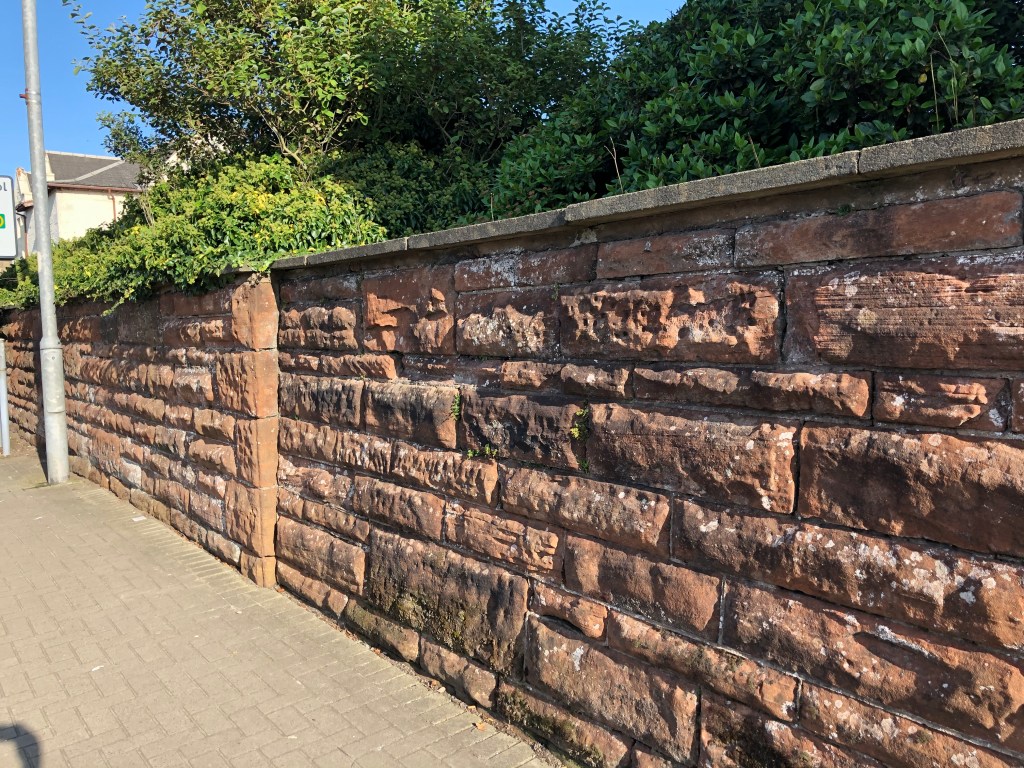

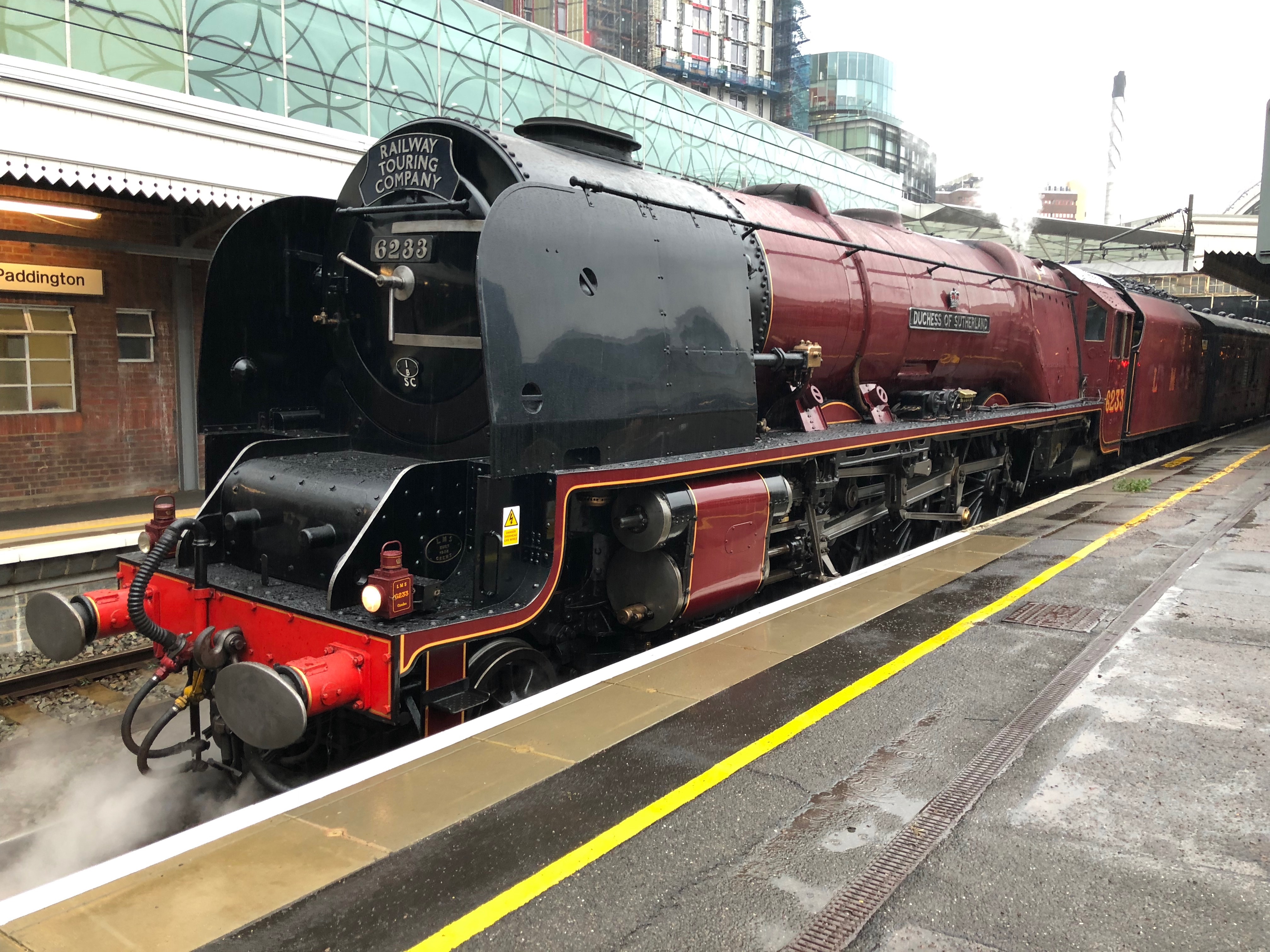
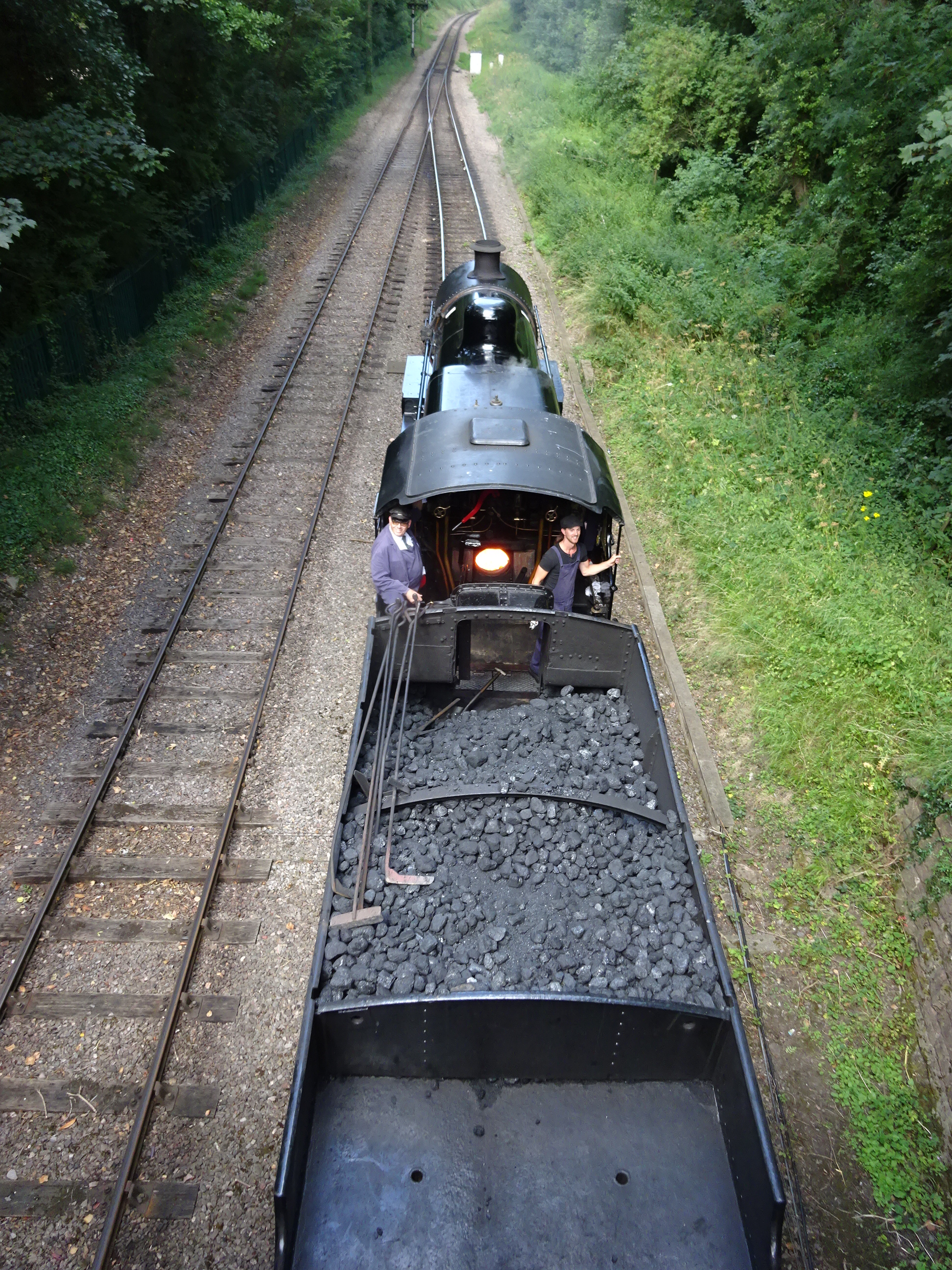
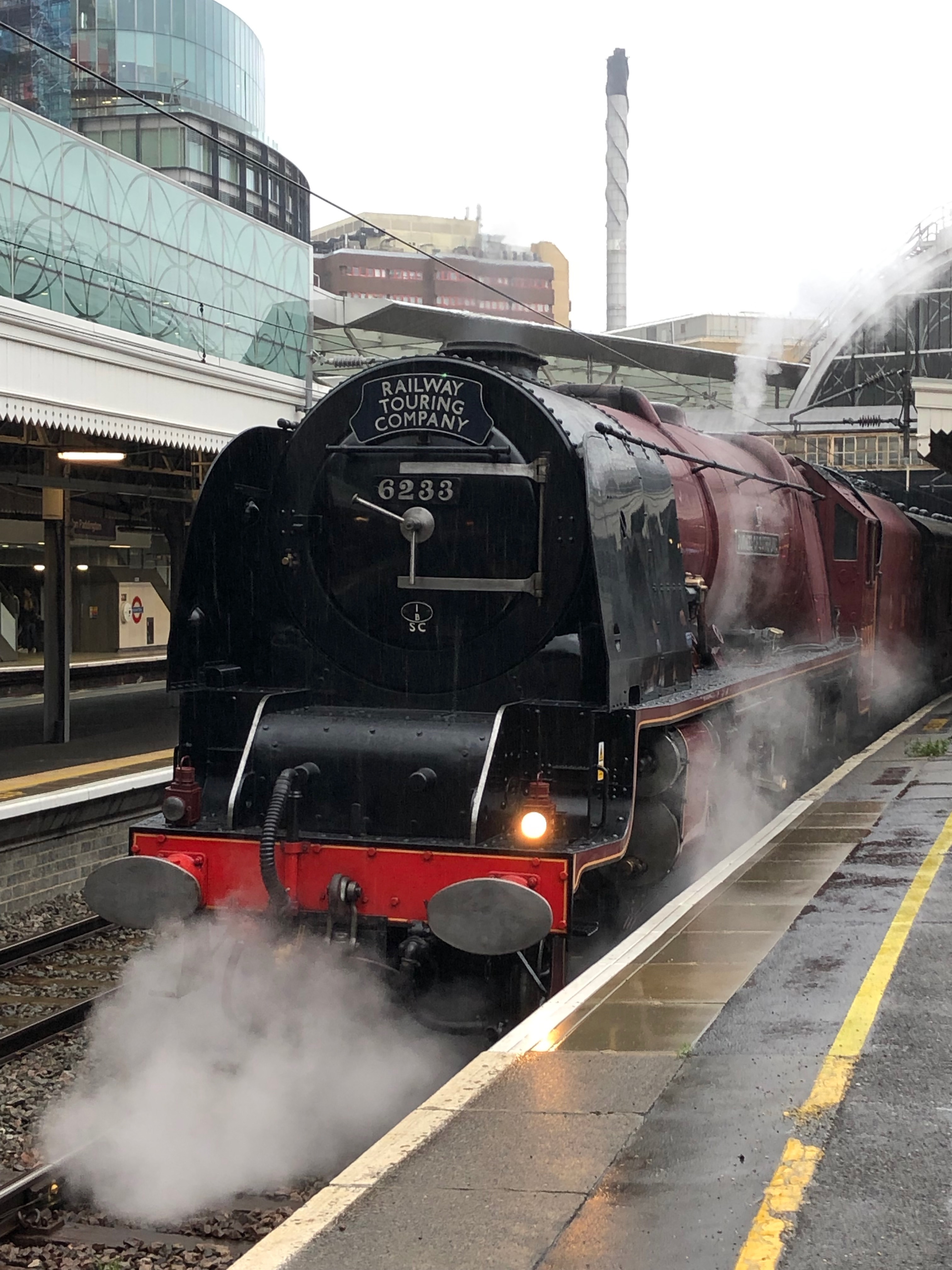
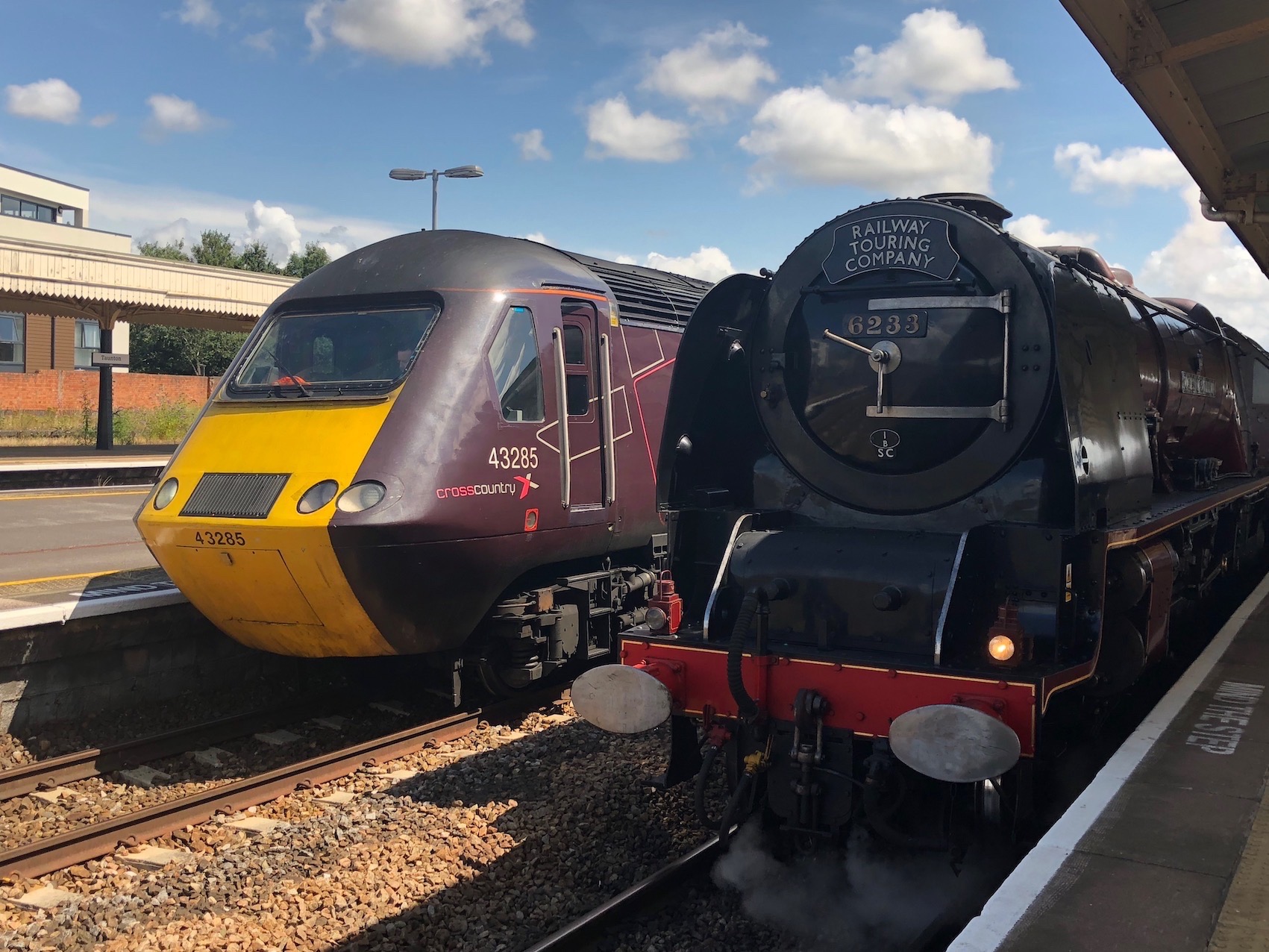
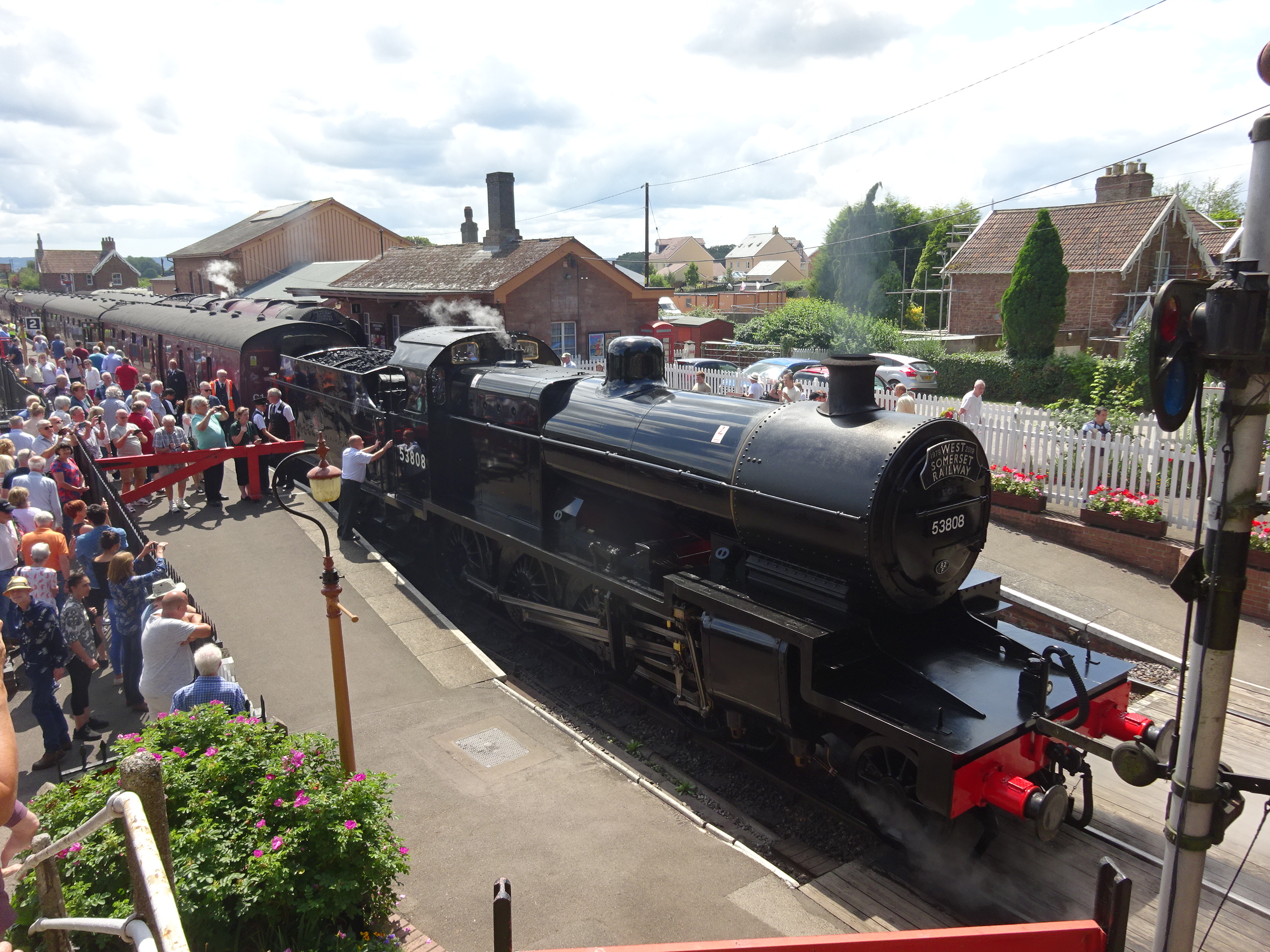
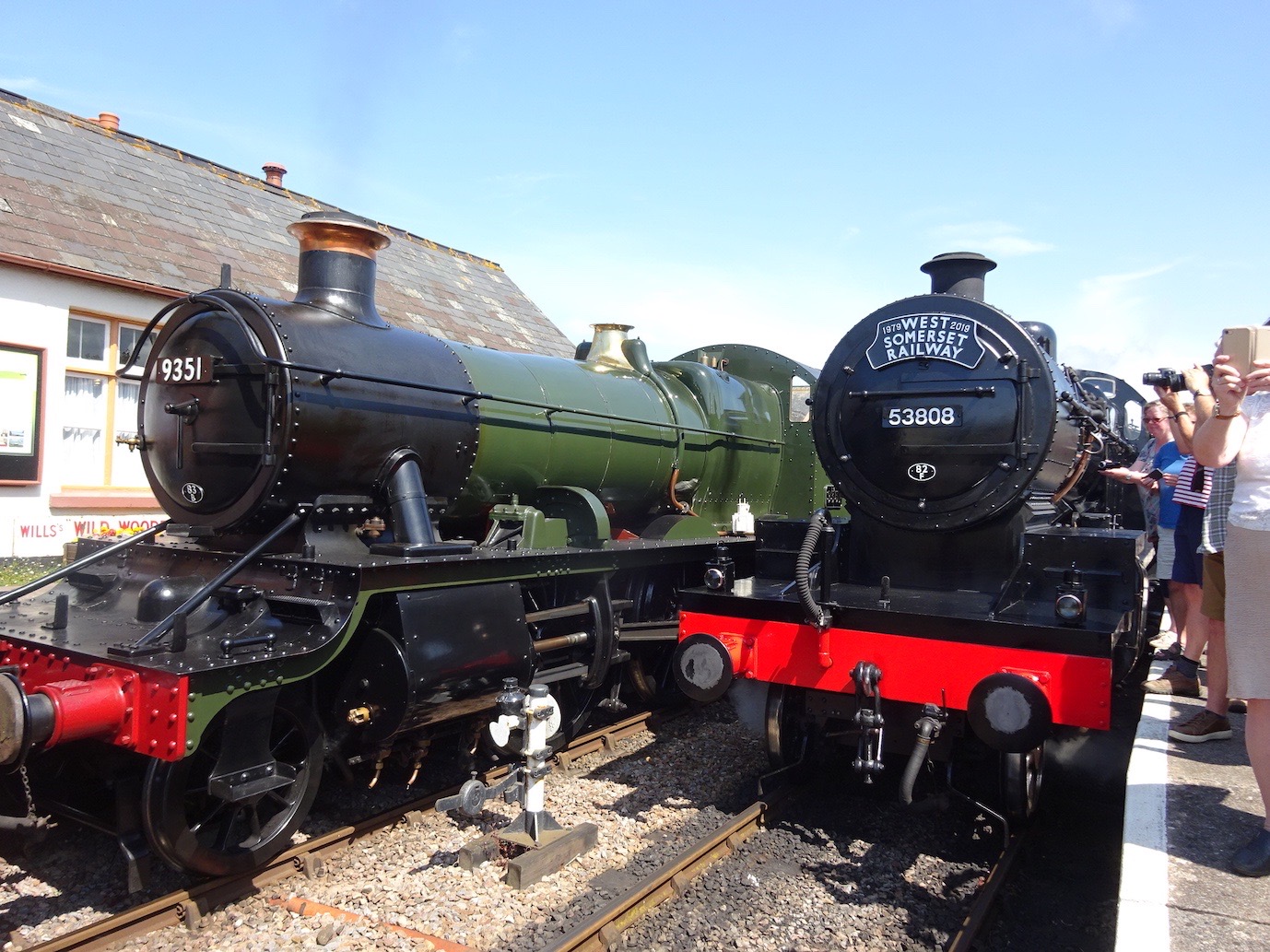
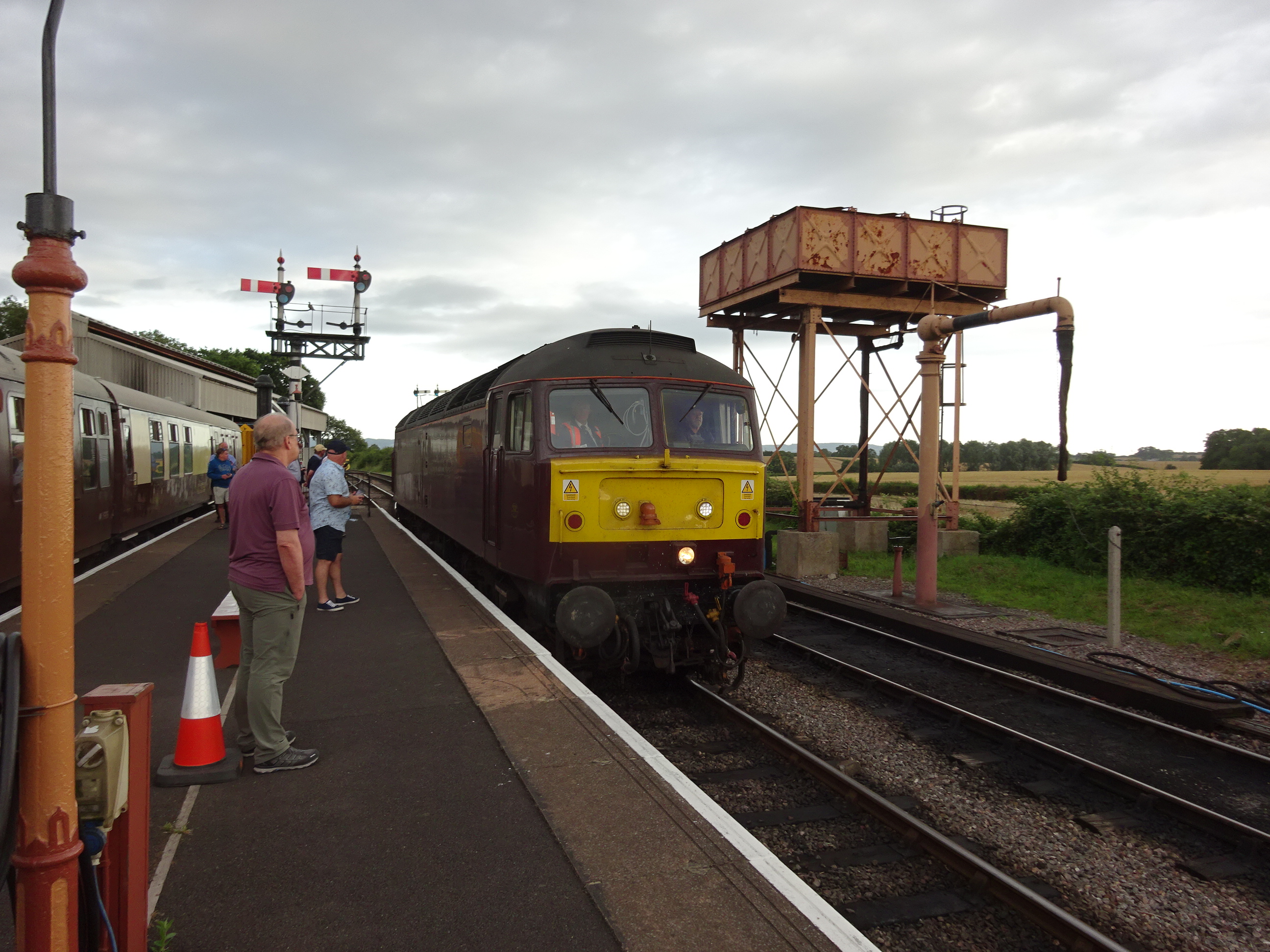
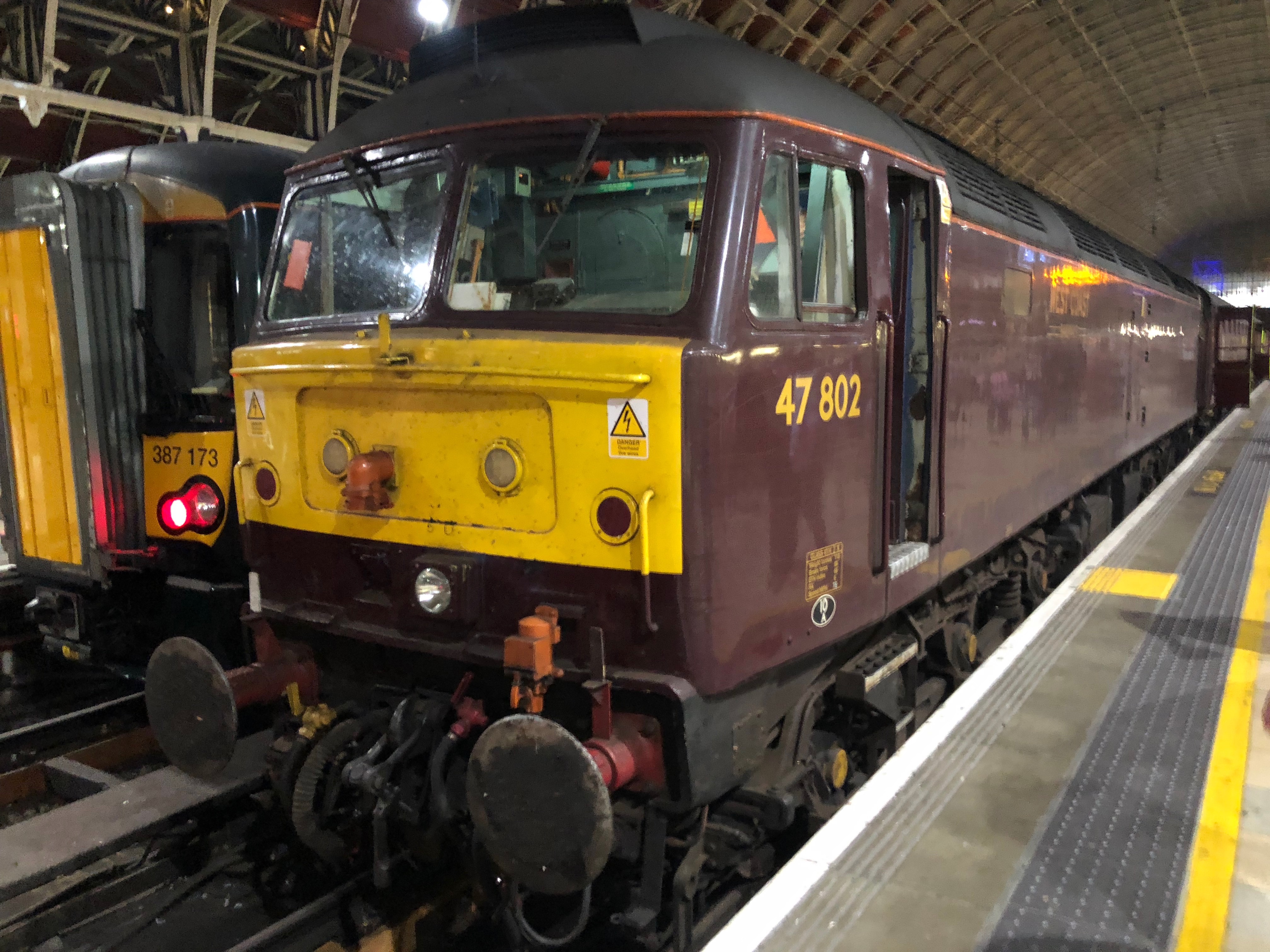
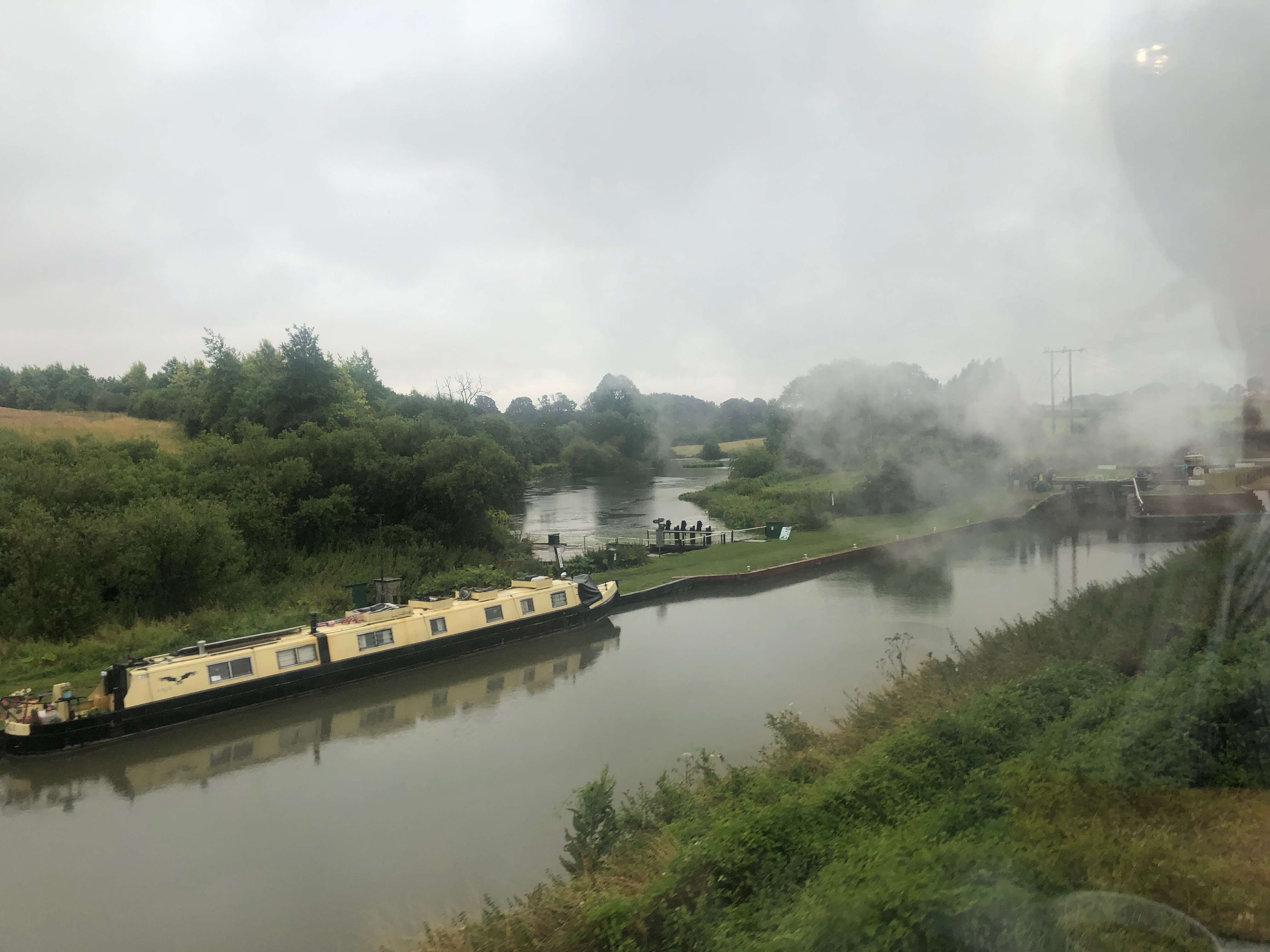
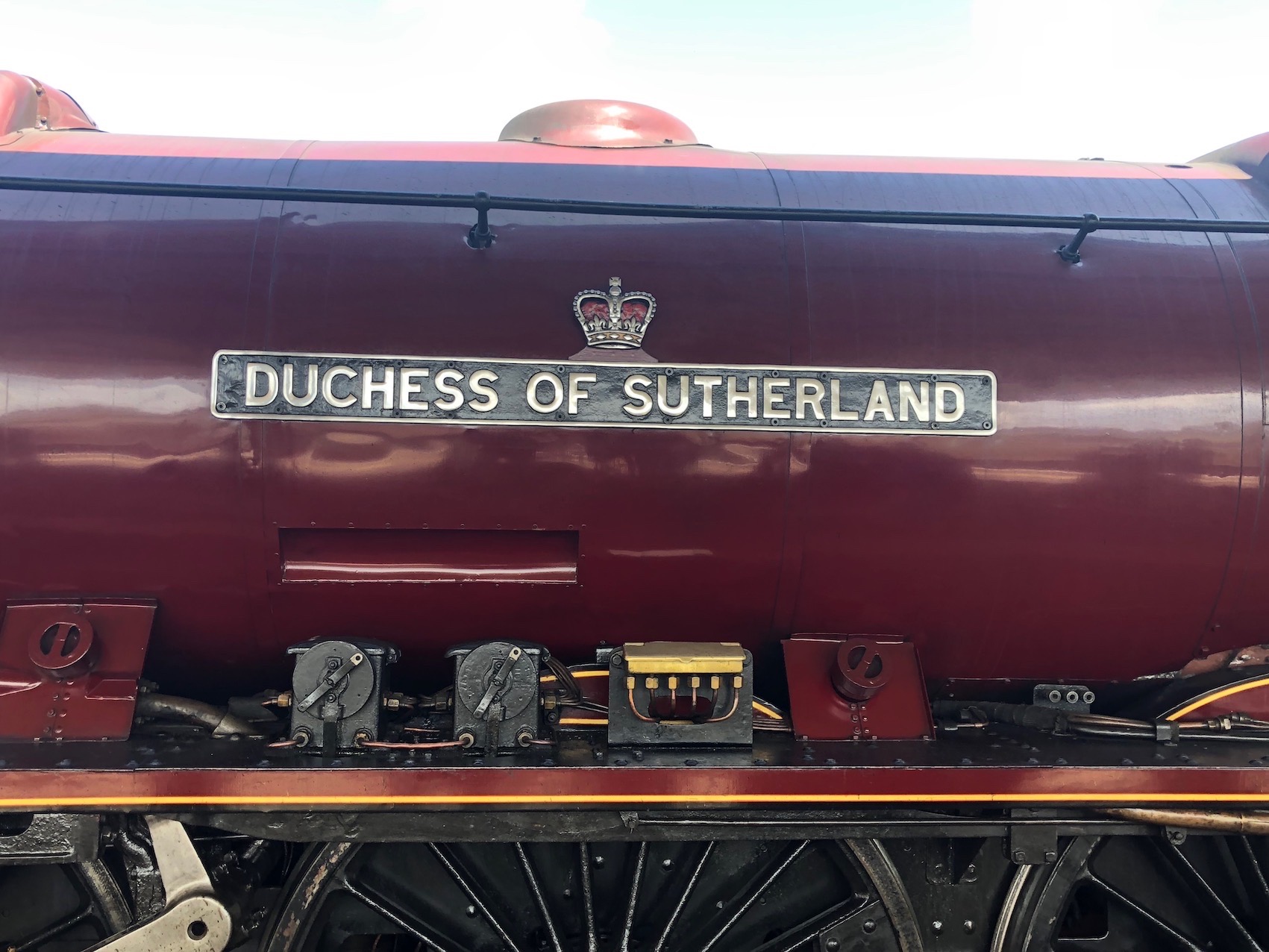
 Glad to be Grey