Technik Museums

Last year I blogged about a River Cruise I had taken on the Rhine. In it I mentioned that I’d visited a museum in the town of Speyer. I gave scant details about it and shared just three of the gazillion photos I had taken but that’s not because I didn’t like it. It was the Technik Museum and packed to the brim with aircraft, trains, u-boats, spaceships and other bits of mechanical hardware that make gentlemen of a certain age go a bit weak at the knees. As it happens Germany has two Technik Museums, this one at Speyer and a similar one at Sinsheim, some fifty kilometres away. Naturally, I had to do the set so a plan was formulated earlier this year. As with my trip to Amsterdam to fly on a DC-3 some three years ago, I would be accompanied by my friend and fellow avgeek Graeme for this journey. A year ago we had gone to Paris to visit the Musee de l’Air et Espace, taking the Eurostar to get there, but ended up having limited time at the museum itself due to us having to rearrange our return home plans thanks to a French ATC strike. Who’d have guessed? Anyway, we enjoyed the time we had there and resolved to visit more museums full of old aircraft. The plan for this year’s old plane extravaganza was a simple one: fly from Glasgow to Frankfurt with Lufthansa, get the train to Heidelberg, stay in the Ibis hotel next to the station and on the subsequent two days take the train to Speyer and Sinsheim to visit the museums. Although we knew little about it, Heidelberg proved to be a handy place between the two museums to base ourselves. Apart from a delay at German passport control and a late running train, getting to Heidelberg proved very straight forward and we were all set for our Technik Museums adventure.

Technik Museum Speyer

There must have been a reason why we chose to do Speyer first but I can’t remember what it was. A regional transport day pass was obtained at Heidelberg station for €19 and then a regional train delivered us to Speyer’s Hauptbahnhoff in about fifty minutes. A local bus got us to the museum via the city’s rather attractive (in the spring sunshine) main street. Before you enter the museum you get sight of several exhibits, some of which are situated outside the museum’s fence, others being mounted high on plinths and can be seen from some distance away. We each purchased a ticket that covered both museums including entry to the iMax theatres at both venues. They cost €52, a saving of €6 on buying them individually. If you don’t fancy the iMax, and as the various shows have been dubbed into German you might not want to, it is cheaper to buy individual tickets, €23 at each location. Children aged 5-14 get a discount, children under 5 go free. Armed with our tickets we passed through the turnstile and entered the first display hall. The museum has two main halls and an extensive number of exhibits situated outside. As mentioned, some of these are mounted on plinths and can be accessed by stairs. The most striking exhibit is a Boeing 747-200 formerly of Lufthansa that dominates the skyline both in the museum and beyond. Equally as impressive is a massive Soviet era Antonov An-22 in Aeroflot colours so naturally we made a beeline for both of those. It is quite bizarre climbing up stars to enter these behemoths of the sky and exploring all their nooks and crannies. However, there was much, much more to see. Although we didn’t count them there are supposedly more than 70 aircraft on display at Speyer and we must have seen them all. Commercial airliners, military aircraft, water bombers, wartime transports, cold war jets, we lapped it all up. The second display hall was dedicated mainly to spaceflight and contained a Soviet Buran space shuttle, not something you will see at any other museum. In fact it is fair to say that Speyer has got aviation pretty much covered. Not quite though as you will find out later.

The museum is not all about flight though. There is a big collection of railway locomotives, displays of cars, fire engines, some maritime stuff including an old U-boat and some mechanical organs. There is also a larger number of motorbikes that share the second hall with the space exhibition. It takes at least a day to see everything. We saw most but missed out on the motorbikes. The iMax showing was A Beautiful Planet including a lot of film taken on board the ISS. As mentioned, the soundtrack was dubbed into German and my German is limited to ‘ja’, ‘nein’ and ‘auf wiedersehn’ but the visuals were good enough to keep me awake for at least half of the show. There is a large cafe for lunch and much needed refreshment – it was a warm, humid day – and a big gift shop where I managed to not buy anything. The museum was very quiet on the day we visited. I’d expected groups of schoolkids on their end of term excursions but there were none. Having been there some fourteen months earlier took nothing away from the day at all, the museum is pretty awesome and Graeme was in full agreement. We retraced our steps to Heidelberg, grabbed a burger for dinner and prepared for Day Two.

Speyer photos coming up. Most will be from my previous visit as I felt I didn’t need to take any more so I could simply enjoy the exhibits.

Technik Museum Sinsheim

Once again we purchased €19 regional day tickets and jumped on a train going in the other direction. The journey was a bit shorter and there is a station right by the museum itself. The weather was less kind to us but we managed to avoid the worst of the rain by fitting in the outdoor exhibits between showers. Like Speyer, Sinsheim has mounted some of its aviation exhibits on plinths, most of which are on top of Hall Two. Not wanting to be outdone by Speyer and its huge aircraft exhibits, Sinsheim has got not one, but two supersonic airliners on the roof. An ex-Air France Concorde is mounted next to an ex-Aeroflot Tu-144. This is unique and a big deal for aviation enthusiasts. We were both going ‘wow’ and we hadn’t entered the museum yet. Once inside the gate we set off on our voyage of discovery once more. There are slightly fewer aviation exhibits at Sinsheim but it still took up a big chunk of the day seeing them. The stars were, of course, the supersonics. Last year, in our brief visit to the museum in Paris, we got to see two Concordes side by side which was pretty special. Seeing a Concorde next to the Tu-144, given the nickname ‘Concrodski’ by the western press, was on another level. We went inside both, the Tupolev first. The Tu-144 was, by a few months, the first supersonic transport aircraft to fly. It was slightly bigger than Concorde, went slightly faster and was slightly earlier into service. Funny, that. It wasn’t a success, however, for a number of reasons. That being said it was still quite incredible being on board one, even though it isn’t going anywhere any time soon. Having said that, and you can call me biased if you want to, but the Anglo-French Concorde is just a bit sexier than the Russian Tu-144.

What else is there to see at Sinsheim? Loads. In fact if your primary focus is cars then it beats Speyer hands down. Graeme likes Formula One and told me he’s never seen so many F1 cars in one place and he’s even attended some races. As well as racers, there are hundreds of vintage cars, sports cars, military cars, American limousines and there was a special exhibition in Hall 3 about Volkswagen vs Opel. There is also a large military display with tanks, trucks, armoured cars and so on with some of the wartime aircraft included. If tractors are your thing there is a section of Hall 2 dedicated to agricultural vehicles and like Speyer, they are very proud of their U-boat, this one being from the 70s but no less cramped inside. There is a big cafe again and the iMax show was Hubble, another one with footage from the ISS but in 3D this time. Yes, it was in German and yes, I did drop off more than once behind the polarising glasses but the showing was after lunch and a pint of Museum Lager so defy anyone else not to do the same. One other thing to note was the slides. To keep those kids entertained, who might otherwise be less than enthralled about examples of old engineering, there were numerous slides from the platforms on which some exhibits stood and the ground. There was one at Speyer too, a long one down from the 747. We didn’t indulge. Having spent most of the day there we headed back to Heidelberg and decided we ought to have something German for dinner, choosing Das Boots Haus where very large schnitzels were served with a most acceptable pils lager.

Our return home the following morning went off without a hitch and we both agreed that it had been a very successful trip. It might not be everyone’s idea of fun spending two days gazing at old bits of metal but if you are the sort that likes museums full of planes, cars, submarines, space vehicles, railway engines and plenty of other mechanical things then the Technik Museums really should be on your ‘to do’ list. Unless you have already done them in which case you could do worse than do them again.

Sinsheim photos coming up, all taken on this visit.

Not many museums have two supersonic airliners enticing you in.
I’ve no idea what this is.

Troon’s Lost Railways

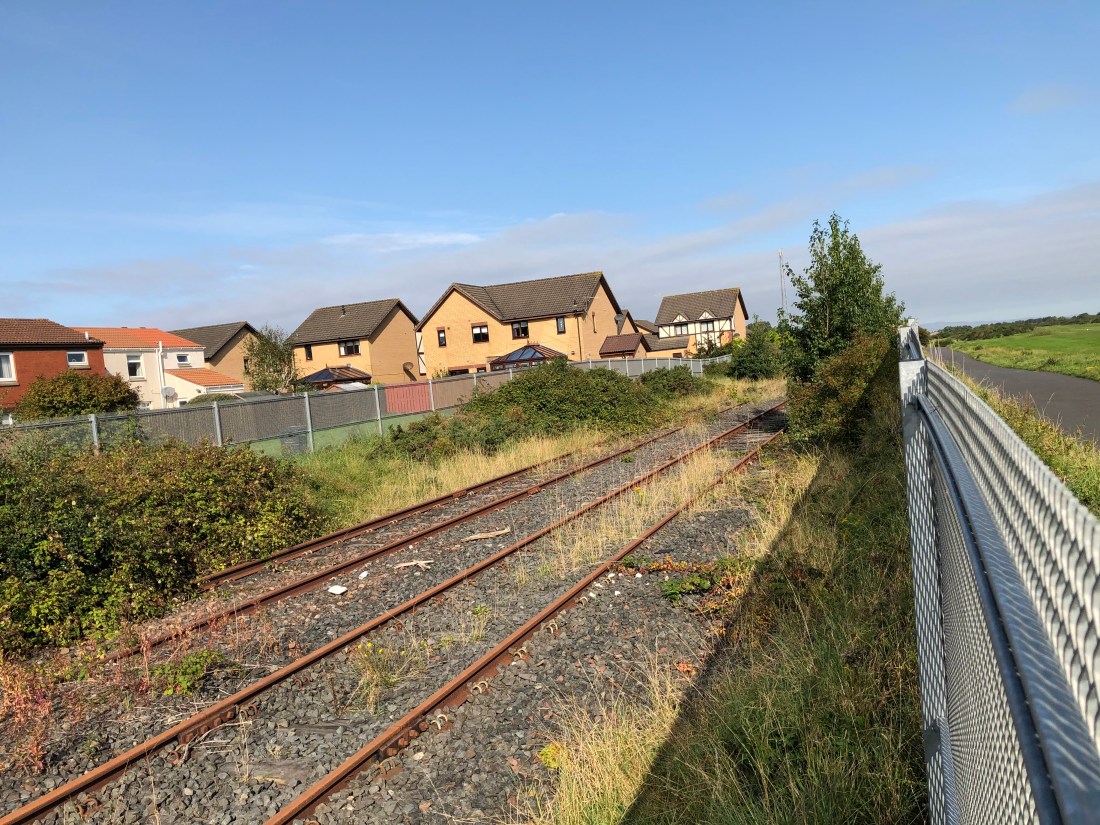
Abandoned track by Marr College.

I’ve walked a lot this year as regular readers of these blogs will know. Through necessity, many miles have been logged around the streets near to where I live and I’ve got to know Troon more intimately than I’d ever managed in the 37 odd years I’ve lived here. Troon is a small town on the Ayrshire coast, some thirty miles southwest of Glasgow. It is famous for golf with The Open Championship taking place at Royal Troon every nine years or so. Golf aside, however, Troon serves as a dormitory town for nearby large towns and the metropolis of Glasgow forty minutes away by train. Whilst a small amount of industry remains, it is hard to comprehend that the town used to be a busy place with factories, busy docks and shipbuilding being the major drivers of the local economy. In the first decade of the nineteenth century, William Henry Cavendish Bentinck, The Duke of Portland, the major landowner in this part of Ayrshire, commissioned a ‘plateway’ to run from Kilmarnock to Troon. (A brief history of the Kilmarnock and Troon Railway coming up – feel free to skip to the next paragraph if you wish.) Bentinck’s intention was for the railway to be used to carry coal from the many mines he owned in the area to Troon Harbour for onward shipment. Ireland was the primary destination for the coal. Whilst railroads were not new to Scotland – there is evidence of railways serving mines going back at least half a century earlier – the Kilmarnock and Troon railway would be different in that it crossed land, rivers and turnpike roads that were not under the Bentinck’s ownership. An act of parliament was required and in 1808 the Kilmarnock and Troon Railway was incorporated , the first railway line in Scotland to be so. The line was opened in 1812, possibly with wooden rails, but if so these were changed for iron rails just a few years later. Being a ‘plateway’ the guiding flange was on the L-shaped rail itself rather than the wheels of the wagons. The gauge was four feet and all wagons were horse-drawn. As part of its construction, a viaduct was built over the River Irvine near the village of Gatehead. The Laigh Milton Viaduct lays claims to be the first railway viaduct in Scotland, if not the world. In 1813 a regular passenger service was started, another Scottish first for the line. In 1837 the line was upgraded to allow the use of steam locomotives, an earlier attempt to utilise steam power having been unsuccessful. In 1846 the line was leased to the Glasgow, Paisley, Kilmarnock and Ayr Railway. Their line from Glasgow to Ayr ran just to the east of the town, crossing the KTR at Barassie. In 1899 ownership of the line passed to the Glasgow and South Western Railway, the successor to the GPKAR. The line still remains today, under the ownership of Network Rail. Passenger services between Kilmarnock, Ayr and Stranraer still ply the line along with goods traffic.

Thanks to the railways, by the end of the 19th century Troon was a busy place. The main line from Glasgow to Ayr now ran through the town with the original Ayr line acting as an ‘avoidance’ line. The section of the original Kilmarnock and Troon Railway continued to service the harbour along with a link from south of the new Troon Station. The harbour itself was a mass of sidings serving the port and other industries in that area. In addition, Barassie Works was a sizeable manufacturer and maintenance provider of railway wagons and coaches. The town itself grew and was shaped partly by the railways that had fuelled its expansion. In the early 1960s, however, the infamous Dr Beeching’s axe closed many railways and Troon was not immune. The curve to the harbour from the south was first to go in 1966 with the lines from Barassie to the harbour closing in 1973. Barassie Works closed at the same time. The Troon avoidance line closed in 1982, though some of the track remains for use as sidings. The Glasgow-Ayr line was electrified in 1985 and remains an important rail link for Ayrshire. The old rails have long since been removed and much of the track bed, once alive with the sound of steam and pistons, has been built over. Industrial heritage swept beneath the asphalt of human progress.

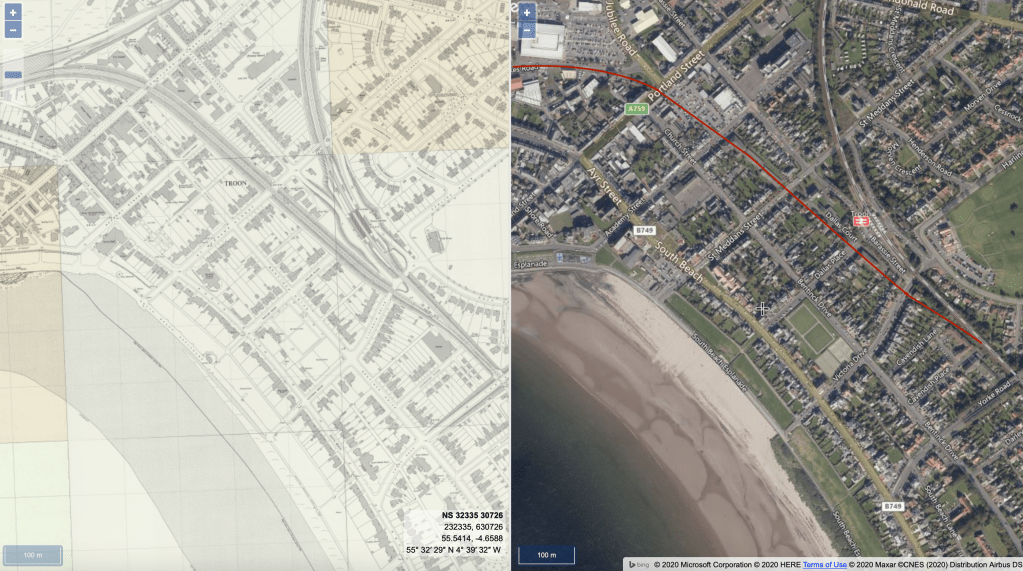
Whilst it’s hardly as exciting as shinning up Ben Lomond, one of our walking routes takes us along a cycle path that runs north to south to the east of the town centre. This runs for two miles alongside and then on the old Troon avoidance line. The fact that a railway used to run along there is quite obvious but it definitely piqued my interest in Troon’s old railways. I’ve got a couple of books about the railways of Ayrshire and discovered a website called Railscot full of interesting information. In addition to this there is a fascinating resource provided by the National Library of Scotland. On their Map Image website they have a side-by-side viewer that allows the user to have one of dozens of old maps on the left hand side and a modern satellite image on the right. Hover your pointer over one of the maps and a curser appears on the the over in the equivalent place. This works for all of the UK, not just Scotland. The maps go back to the late 19th century and provide history buffs with many hours of entertainment. For railway history buffs in particular, it is an invaluable tool for searching out long lost railway lines and infrastructure. I decided that I’d use the maps to search out Troon’s other lost railways. The old map I used was the OS 1:1250/1:1500 1944-1969. This was the most detailed and covered the time when the railways were at their most extensive. I started with the easy one.

Troon Avoidance Line

Avoidance Line North.
Avoidance Line South

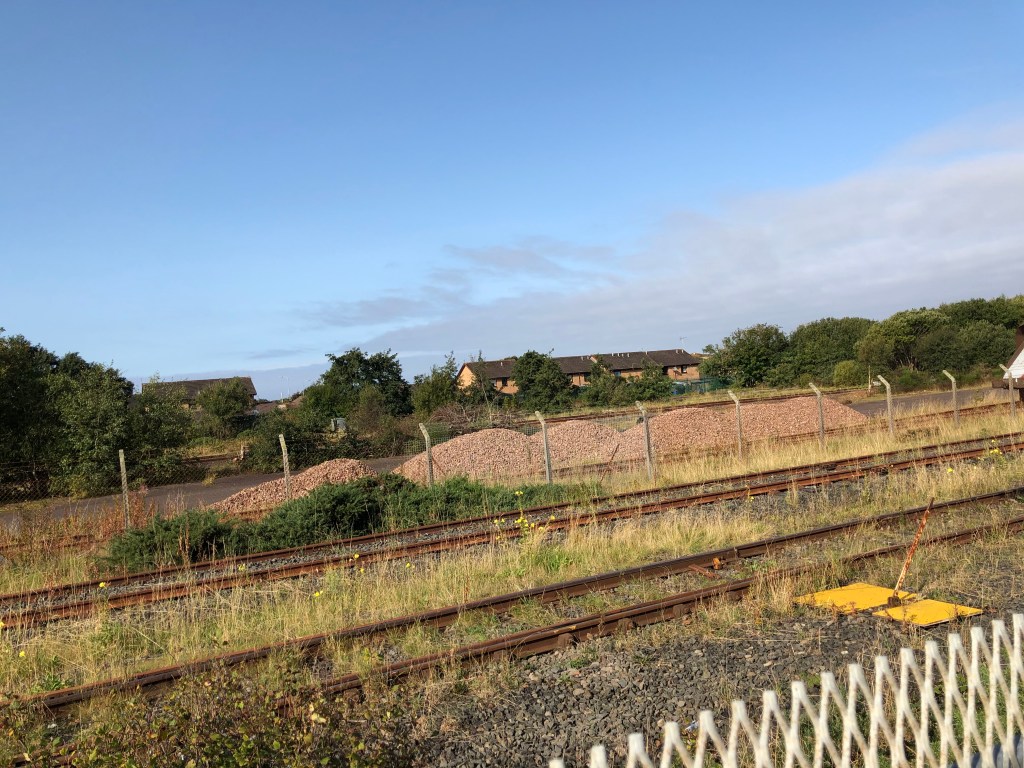
The Troon Avoidance Line was never really lost but the maps revealed things about it that I’d been unaware of. As mentioned above, this was the main line to Ayr until 1892 when the loop through the town was completed. It remained as a bypass for freight traffic and the occasional express passenger service. The line ran from Barassie Junction, past Troon’s municipal golf courses and Marr College. To the west of the line were extensive sidings and Barassie Works. Troon’s original station as situated just before the line passed under Dundonald Road with the station buildings, still in use as private dwellings, staggered. This closed to passengers in 1892 when the current station opened following the completion of the loop through the town. The old station continued as a goods yard. South of Dundonald Road the line continued between the municipal golf courses and the houses of Fullarton Crescent. Passing underneath Craigend Road the track rejoined the main line at Lochgreen Junction by Royal Troon’s Portland course. Closed in 1982, the track from Barassie Junction to Marr College remained as a siding along with some of the old Barassie Works sidings. Much of the Barassie Works site has been redeveloped for housing but a large area of abandoned sidings remains between the avoidance and main lines. Three or four sidings are still in occasional use. A small section of the avoidance line’s track bed by Marr College has the houses of Old Station Wynd on it whilst immediately south of Dundonald Road the track bed is overgrown as it passes the cemetery. After the line passes Willockston Road, once the site of a level crossing, the track bed has been tarmaced and is now part of a local cycle path which continues all the way to the former Lochgreen Junction.

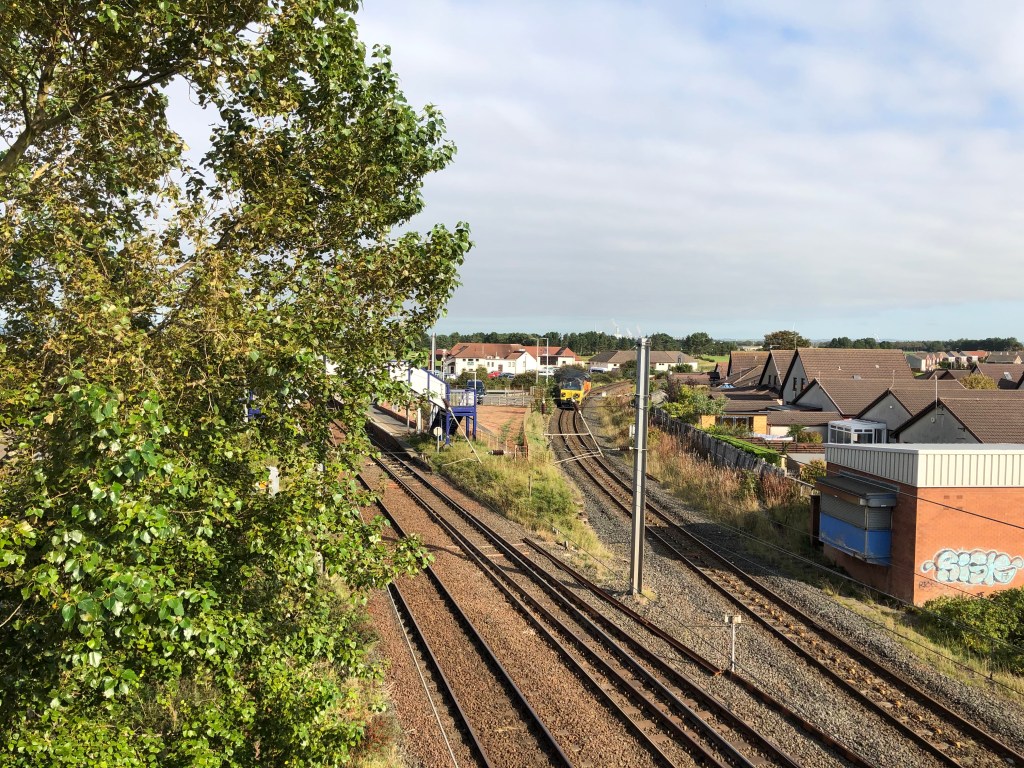
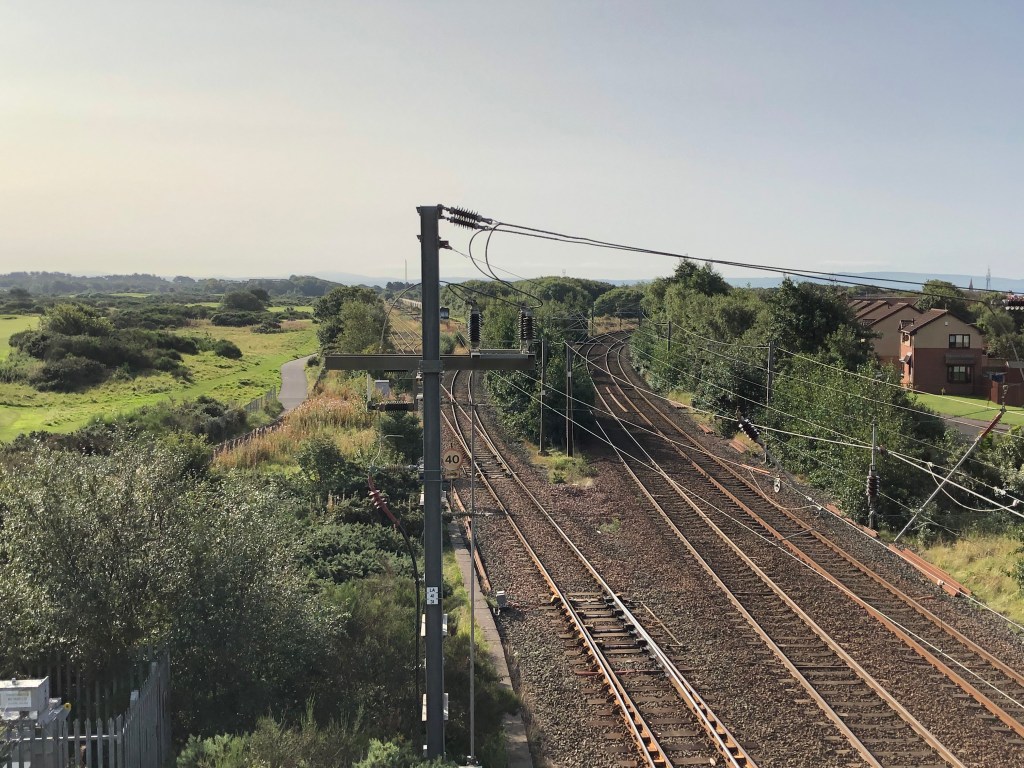
Barassie Junction looking north. The old Kilmarnock and Troon Railway branches off to the right, the main line to Glasgow to the left.
Barassie Junction looking south. Main line to the right, the Troon Avoidance Line to the left, now sidings.
Troon avoidance line, now sidings. The site of the Barassie Works behind.
Troon’s original station on the Glasgow-Ayr line.
The bridge that carried Dundonald Road over the line. One of two road bridges over the line. There was a footbridge at Marr College too but that is long gone.
Site of former Willockston Road level crossing.
Cycle path on the original track bed behind Fullarton Crescent.
Lochgreen Junction looking north.

Troon Harbour Branch

Troon Harbour Branch 1. Formerly Kilmarnock and Troon Railway.
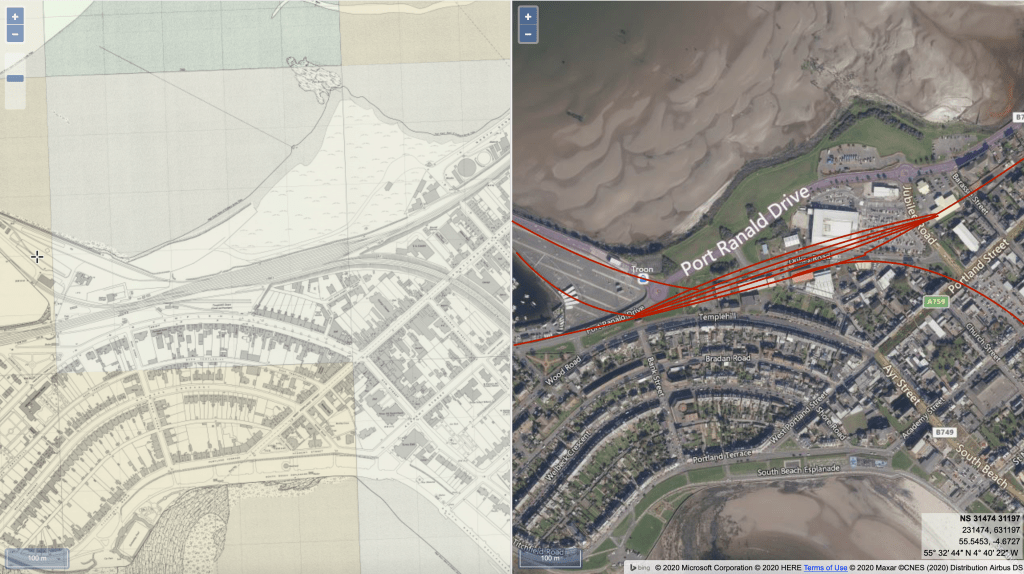
Troon Harbour Branch 2 – Templehill Junction.
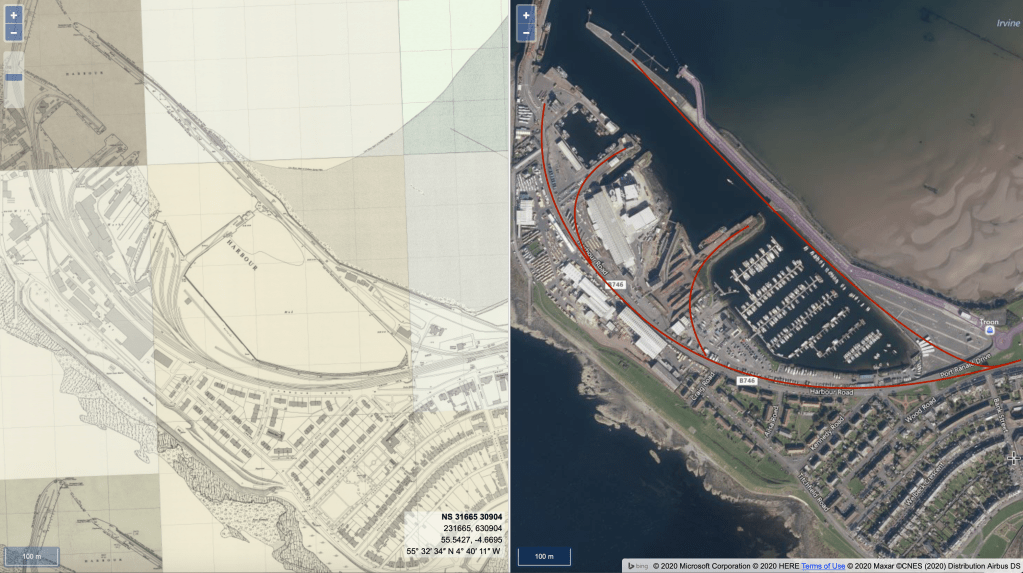
Troon Harbour Branch 3 – multiple sidings to service the harbour and allied industries.

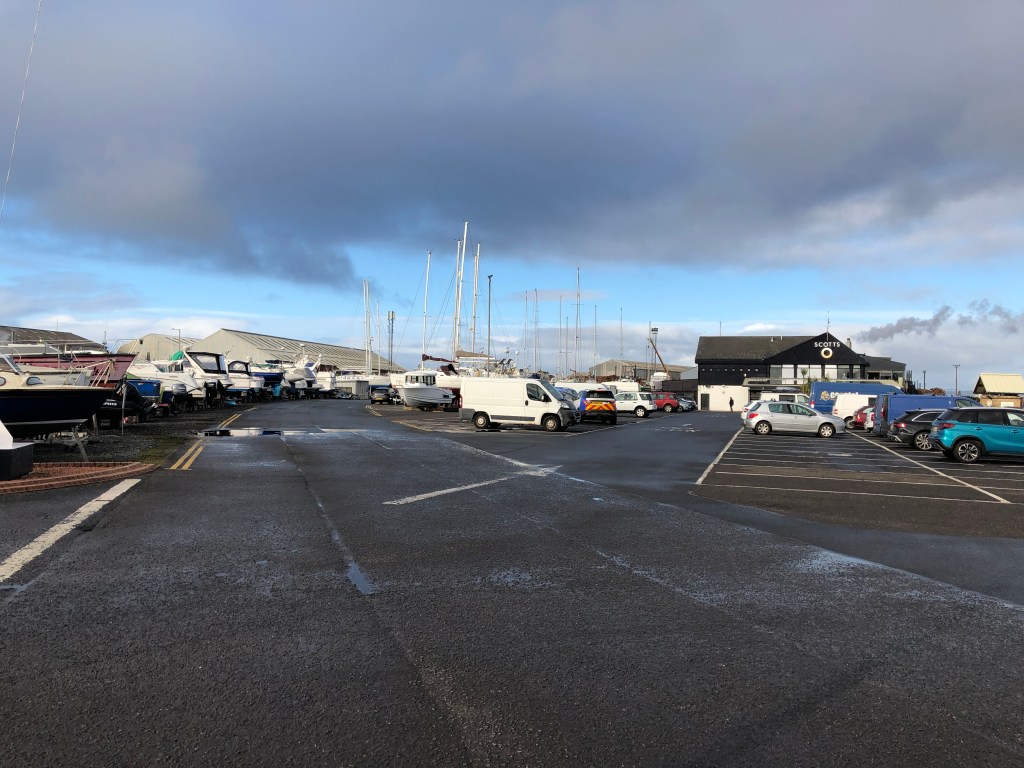
The branch to Troon Harbour followed the route of the original Kilmarnock and Troon Railway south from Barassie Junction. Running alongside the ‘new’ main line for half a mile, the track began to diverge behind the houses on North Shore Road. It curved westwards along what is now North Shore Lane, past the northwest corner of Portland Park football ground and through land now occupied by new sheltered housing and a Scottish Water facility. A bridge took it over Barassie Street and along an embankment where Troon Pool and Morrisons car park now stand. Here, the line split into multiple tracks, joining the curve from Troon Junction at Templehill Junction. The line then split further into a multitude of sidings connecting all parts of the harbour. Little evidence remains of this branch. For a number of years after I first arrived in Troon in 1983, one of the pillars of the bridge over Barassie Street remained alongside the old gas tower that sat next to the track. There has been much development since then and there is little to suggest Scotland’s first incorporated railway used to run there.

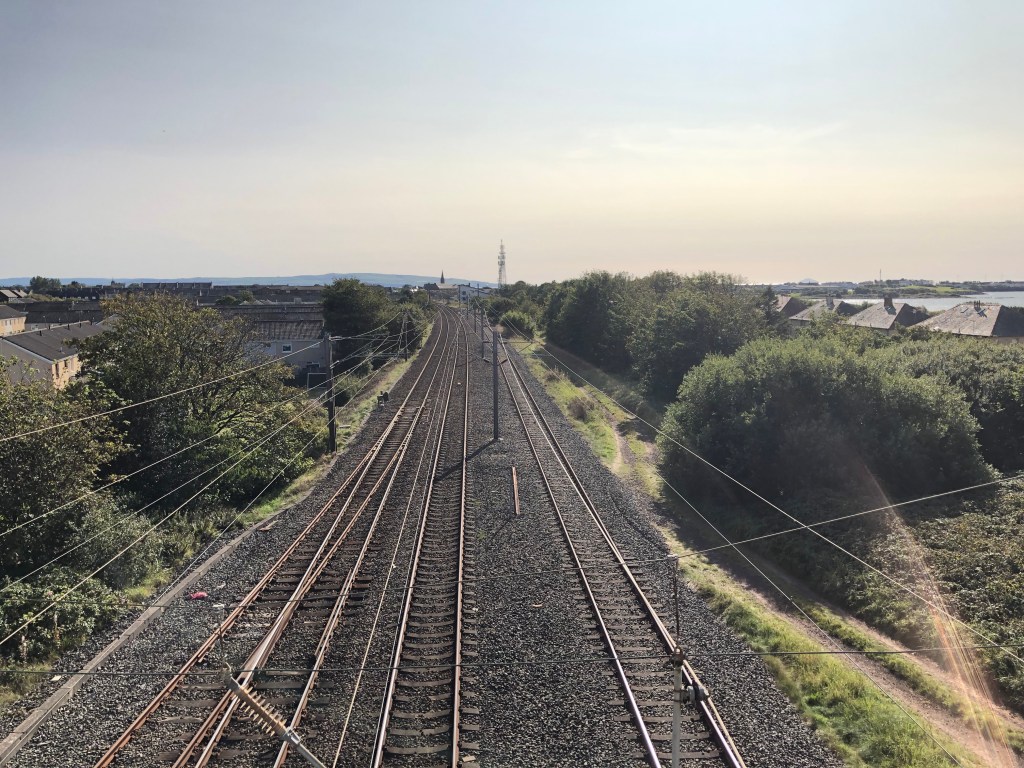
Mainline between Barassie and Troon. The branch to the harbour peeled off to the right here.
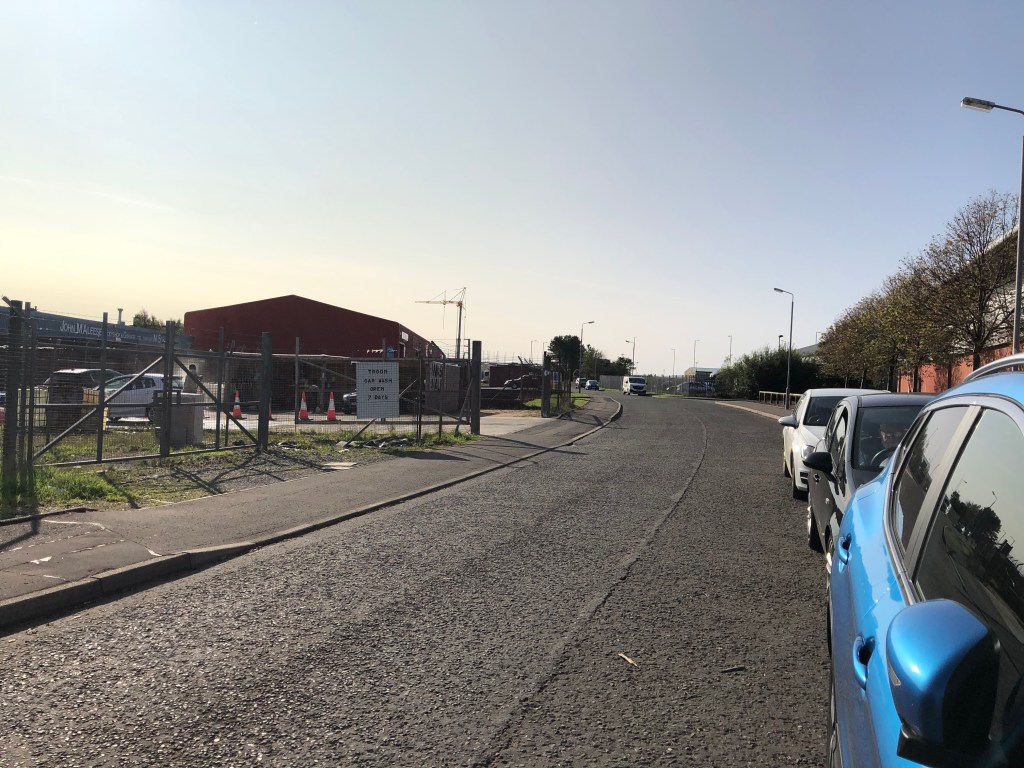
North Shore Lane follows the alignment of the branch line embankment.
Scottish Water building, site of the bridge over Barassie Street.
Troon Pool, the branch ran here on an embankment.
Dukes Road, built on the site of Templehill Junction.
Scotts car park. The branch split into many sidings here.
McCallums Restaurant and Wee Hurrie chip shop at Troon Harbour. This building used to be the Kilmarnock and Troon Railway’s powerhouse.

Troon-Templehill Curve

The Troon-Templehill Curve. Elevated on an embankment, if it were still here today it would chop Troon in half.

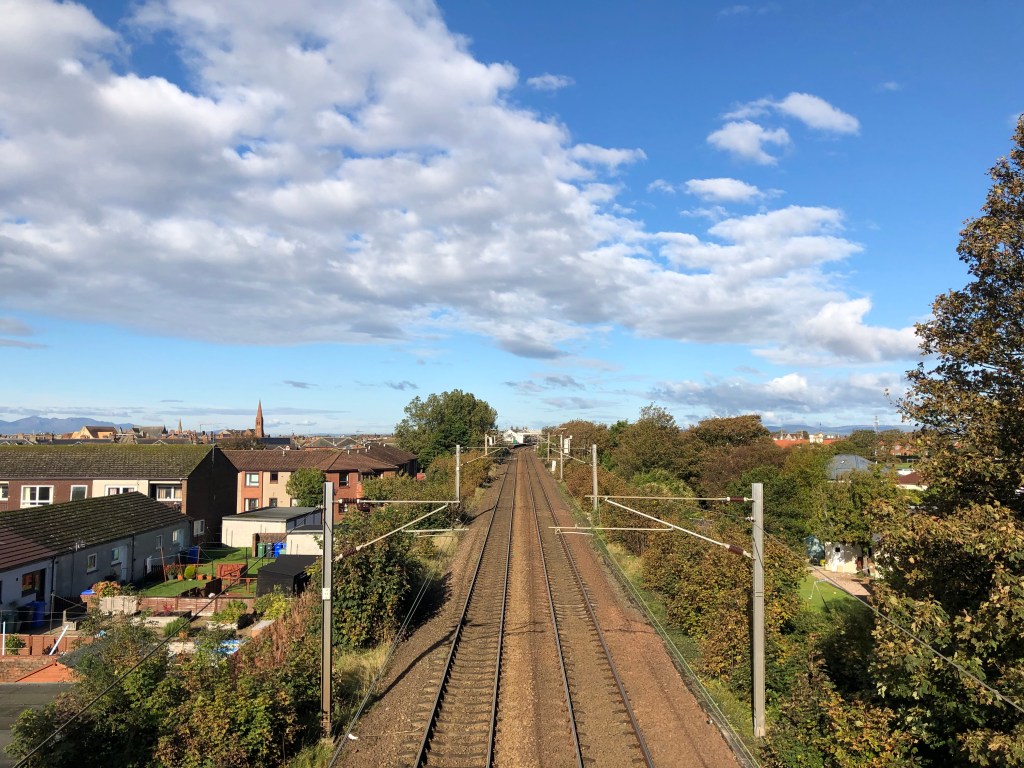
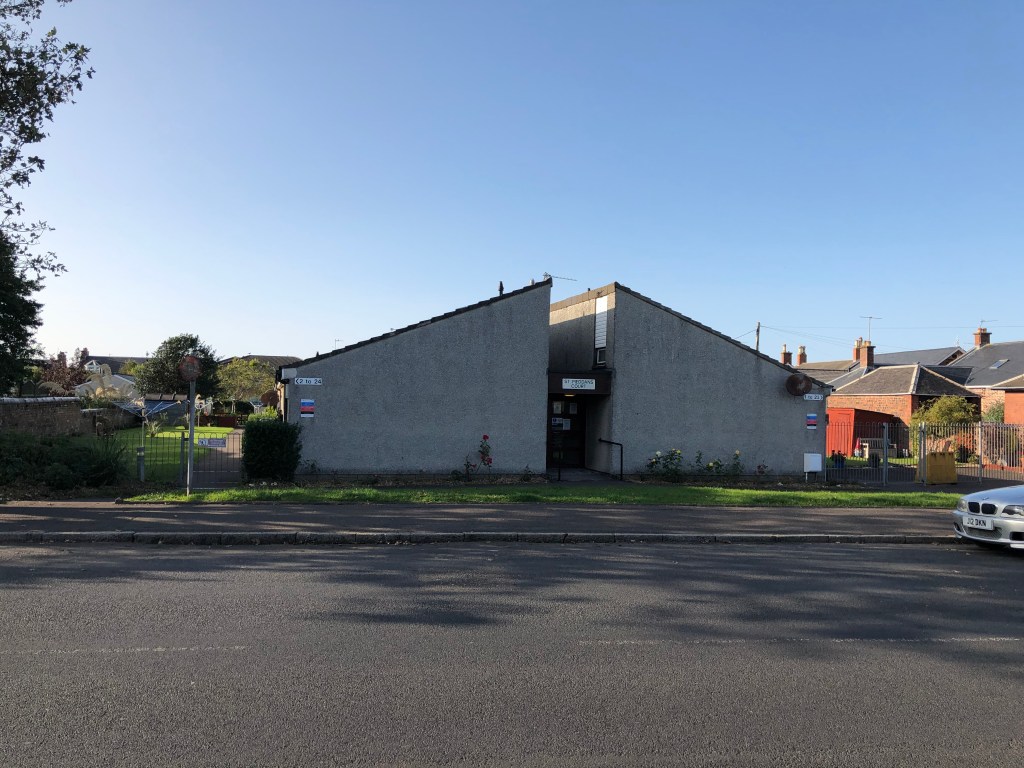
Whilst I knew of the Troon Avoidance Line and was aware that the harbour was served by a branch that had historical significance, the line from Troon Junction, just south of Troon’s ‘new’ station, to Templehill Junction, site of the current Dukes Road, was a complete surprise to me. The curve ran for two thirds of a mile along an embankment, crossing three roads on bridges, through what is now more or less the town centre. Being elevated above the roads and houses, this length of track must have held a commanding presence in the town. Once it was closed in the mid sixties, not only was the track lifted but the embankment and bridges were cleared too. Troon Junction was situated next to Cavendish Place with the embankment peeling off to the northwest. A bridge carried the line across Victoria Drive, the line continuing to the west of the ramp up to Troon Station and the Scout Hall along the line of what is now Dallas Court. Another bridge took it over St Meddans Street along the site of what is now Academy Court old people’s home. There was no bridge over Academy Street, the road coming to an abrupt end at the base of the embankment, which continued across the ground where the town centre car park now sits. Another bridge carried the line above Portland Street and the embankment curved to the left where the doctor’s surgery and the industrial units of Dukes Road now stand. Here it joined the harbour branch line with Templehill Junction being situated where the aptly named Branchline Industrial Estate now stands. The alignment of buildings, some roads and a few walls are the only clue as to where this railway used to be.

Site of Troon Junction from the Yorke Road bridge. The line to Templehill branched off to the left from just north of here.
The houses stand where the embankment once stood.
Academy Court stands where the curve ran and give an impression of the shape of the embankment cross section.
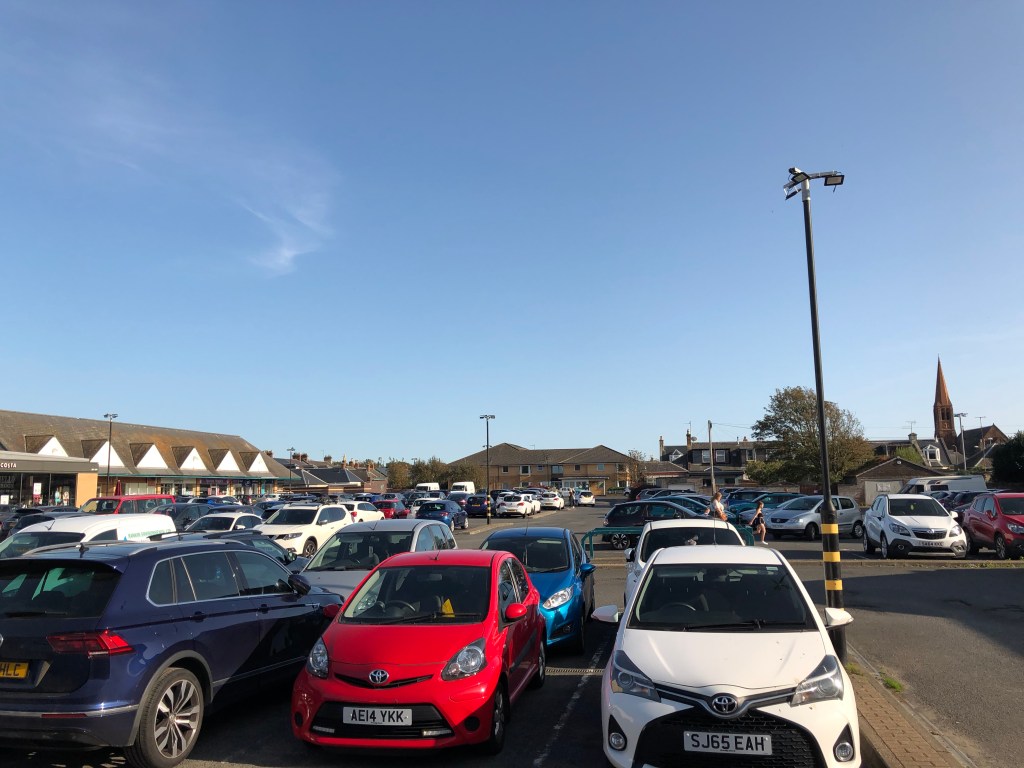
The site of this unremarkable car park once vibrated to the sound of passing goods trains.
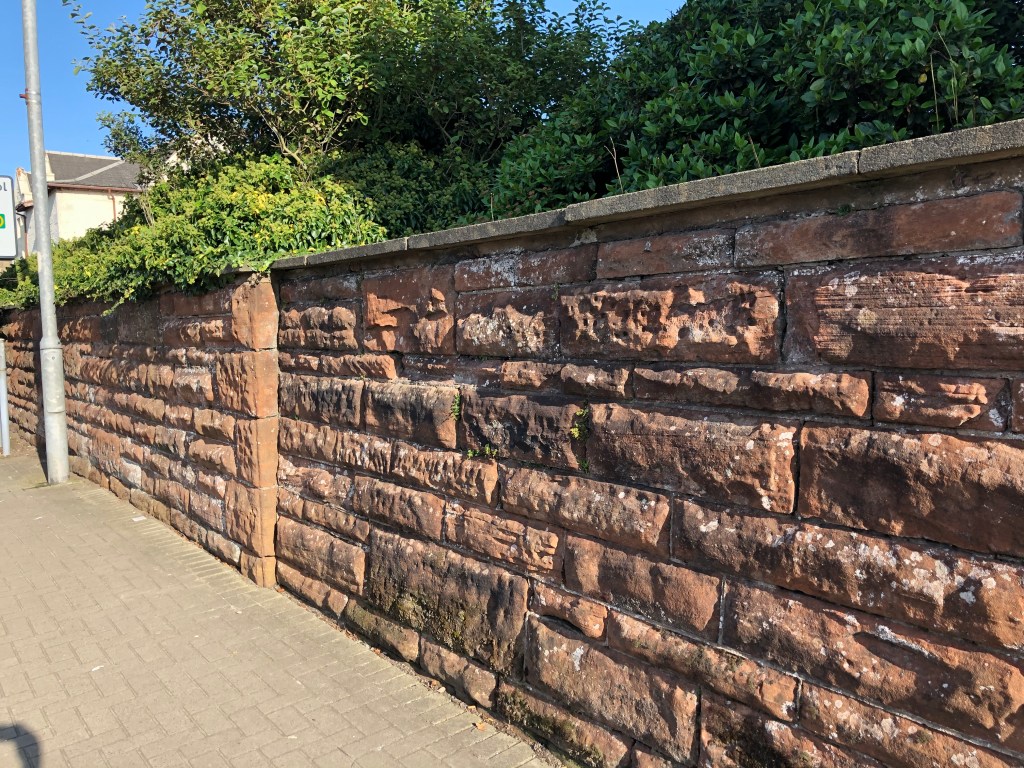
The wall between the car park and Portland Street. I suspect it used to be part of the support for the bridge over the road and a retaining wall for the embankment.
Union Street Lane. Part of the embankment at Templehill Junction. This and the previous photo is the only physical evidence of the Troon-Templehill curve that I could find.

Troon might be a small place but it has four or five miles of old railway if only you know where to look. Even if you do you might not find much but it’s quite fascinating to think that steam engines were too-ing and fro-ing along where familiar roads and landmarks now stand. At least it is to me, anyway.

If you are remotely interested in railway history in Ayrshire I recommend the following books:

Railways of Ayrshire by Gordon Thomson published by The Crowood Press.

Ayrshire’s Forgotten Railways A Walkers Guide by Alisdair Wham, published by The Oakwood Press.