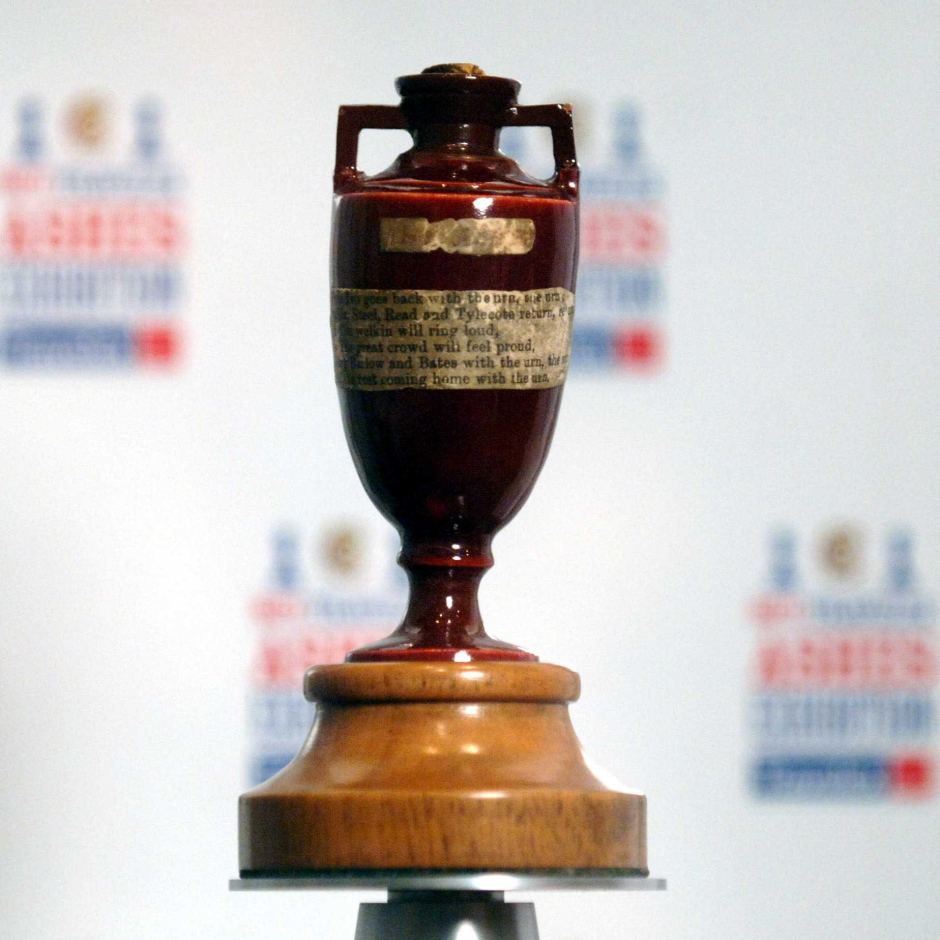
Cricket is a curious sport. Try to explain to anyone not brought up in a cricketing nation just how it works will almost certainly lead to blank stares and incredulity. On the surface a player throws a ball at three sticks 22 yards away and an opposing player uses a lump of wood to try and prevent that ball from hitting them. There is an old joke which explains the rules of cricket as one team out in the field, the other is in, each man that’s in the side that’s in goes out and when he’s out he comes in etc etc. It is not too far from the truth. Despite shorter forms of the game proving more popular in most cricket playing nations, the ultimate test in cricket is, aptly, the Test Match. The most revered series of Test Matches is The Ashes. Only two nations compete for The Ashes, England and Australia. It happens every couple of years, alternately in each country, and the trophy is a tiny urn said to contain the ashes of some burnt cricket bails. Look it up if you want to know why. To win this most innocuous of trophies, the two teams play each other five times. Each of these games can last up to five days. Win more games than the opposition and you claim The Ashes. Despite lasting up to five days, games can still end in a draw (or a tie, but that’s a different thing altogether and has only ever happened twice in the history of Test cricket, over 2,000 games) so a series of five games might end up even in which case the country that had The Ashes going in to a series retains it. Going into this summer’s Ashes series, Australia were the current holders of the urn. England needed to win the series to claim it back.
The Urn. All eleven centimetres of it. (Not my photo)
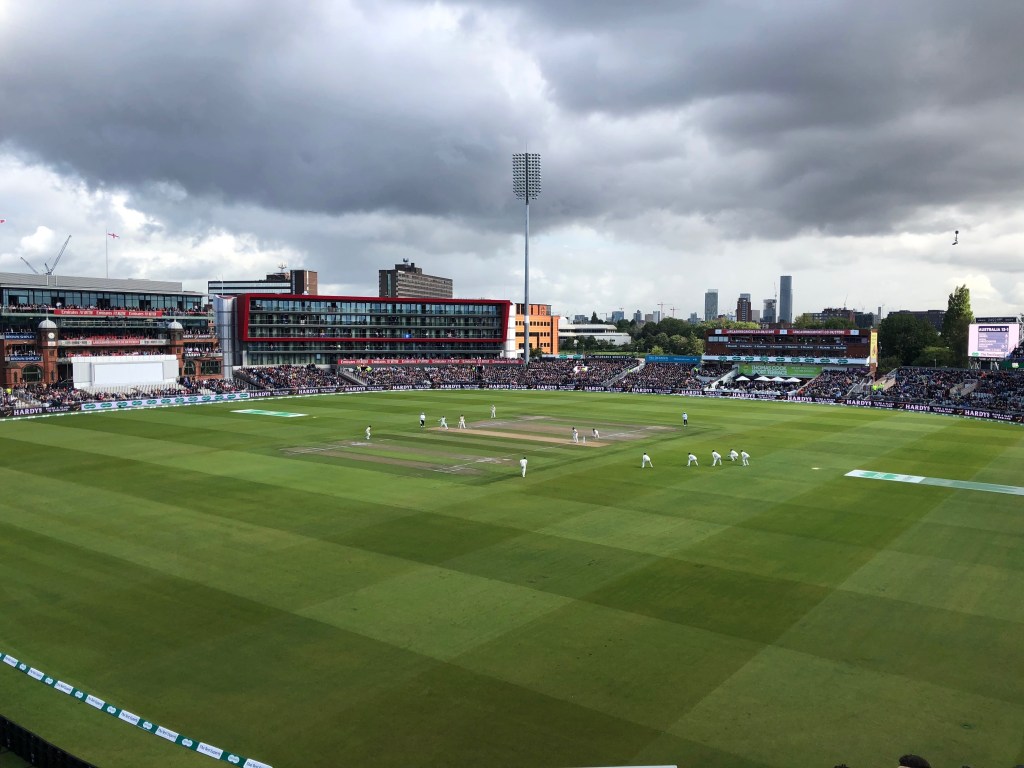
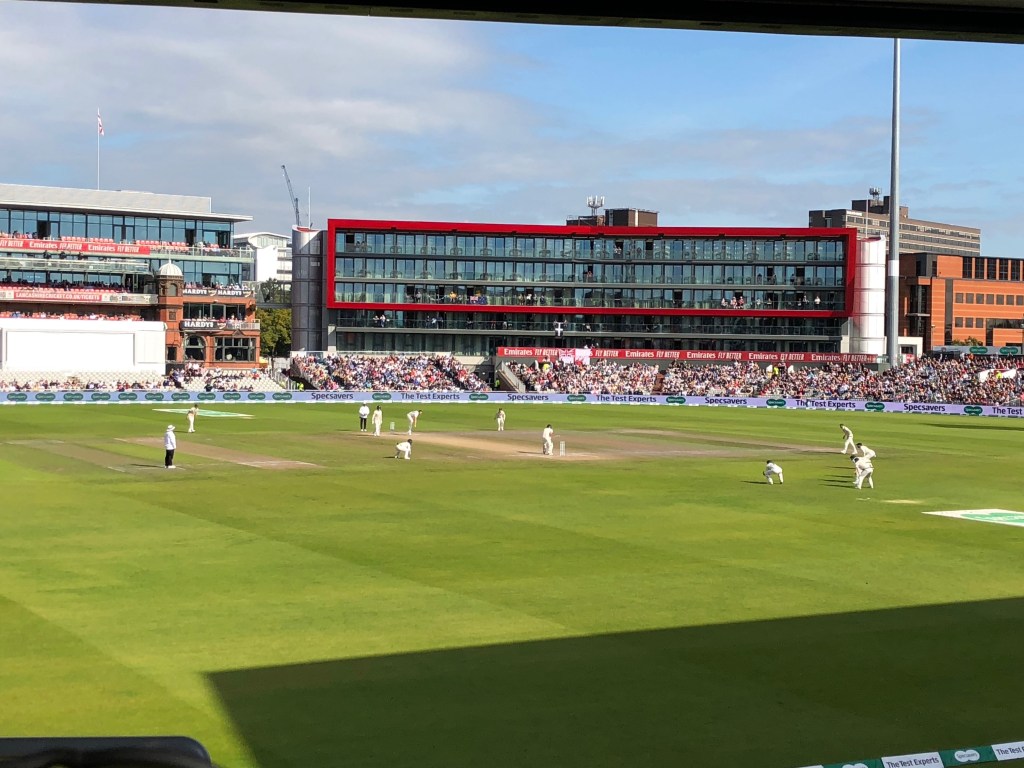
I recently went to the fourth game of the series which was standing at one game apiece and one game drawn. Don’t worry, I’m not going to do a full report on what happened. If you like cricket you will know already and if you don’t you will probably leave the page quicker than a Jofra Archer bouncer. The game was played at Old Trafford, Manchester, the home of Lancashire County Cricket Club. I’d bought the tickets a year ago in the closing overs of my career when I thought I’d better ensure I had stuff to do post retirement. In a fit of madness I bought two tickets for each of the five days. Those ten tickets alone cost me £600 but I was sure I’d get some takers for the second seat as it is The Ashes after all. I did. My sister Jill took days one and two, Malcolm, an old work friend, took days three and four and Jill promised to take day five should the game last that long. Jill and I had been to Antigua earlier this year to watch a Test Match which only lasted three days before England suffered a rather dismal defeat so we were hoping for a bit more of a contest this time. As it was, the game had less than an hour remaining when it concluded so I feel we had got our money’s worth.
(Almost) The first ball of the Test Match
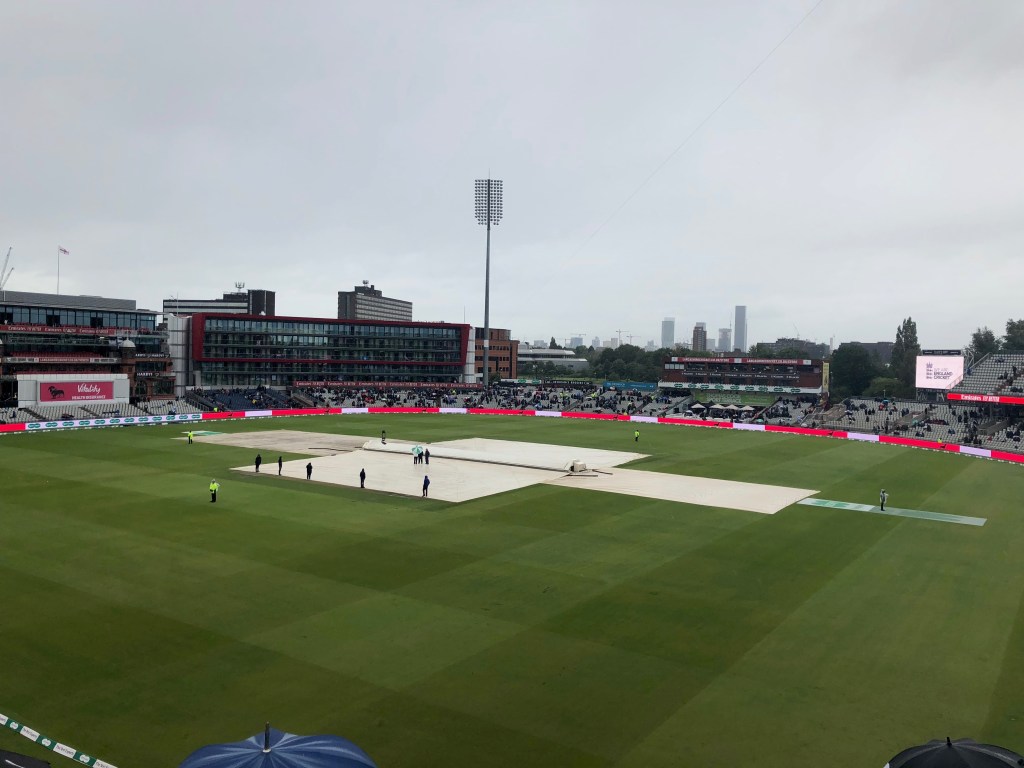
Cricket is a summer sport. It requires dry conditions and mild temperatures, not only to play but to watch too. September is a month where summer can linger or autumn can get a head start, especially ‘up north’ in a place like Manchester. On Day One of the Test it was cold and grey. We had had to wait an age for a tram to the ground and as it approached the tram stop we heard a roar that indicated not only had play got underway, England had got a wicket. Not long after we found our seats, they got another. This could be a good day we thought. It wasn’t. The play was interrupted by squally showers that whipped the covers on the Old Trafford pitch into a mad frenzy and soaked the poor saps whose job it was to stand on them in an effort to prevent them blowing into the Manchester Ship Canal. We got less than half a day’s play in total and after that good start, England were toiling in the face of the Australian batsmen. In particular, one Australian batsman called Steve Smith. A rather strange chap, he fidgets and faffs around between balls (stop sniggering right now) and is the number one rated batsman in the world. He was also banned for cheating a year or so ago when, as Australian captain, he encouraged his players to use sandpaper to roughen up the ball, a heinous crime in cricket. Much of the Old Trafford crowd were in no mood to let bygones be bygones and gave him a lot of stick. He responded by scratching his nuts, tapping his pads, waving his bat in the air as if swatting flies and dispatching deliveries to the boundary with monotonous regularity.
The view for large parts of Days One and Three
Cricket is a summer sport…
Day Two was more of the same, only without the breaks for rain. Smith went on to score a double century and if you don’t know what that is, it will suffice to say that you don’t witness them very often. Even some of those who booed him were applauding when he finally was out. Not that I saw that as I was in the lavatory at the time recycling the beer that inevitably comes with watching the cricket. By the end of the day Australia had declared – another cricket oddity – and England’s innings had got off to a modest start. Australia were on top, not a place you’d expect a land Downunder. Day Three dawned with grey skies and rain. It wasn’t nice. Play was delayed until half past one when the frontal system finally cleared over the Pennines. England did well for a while but stuttered a bit towards the end of the day. Unlike the other days, our tickets for Day Three had us in the Fosters Party Stand. This is a very large structure made of scaffolding and is of a temporary nature. It’s been there for several years – temporary must have a slightly different meaning in Lancashire – and is, as its name suggests, where the rowdier elements of cricket support congregate. Several thousand of them. Lots make the effort to come in fancy dress, inflatable objects such as giant watermelons and dinosaurs get bounced around, industrial quantities of beer gets drunk and the occasional fight breaks out. It’s an experience watching cricket in this location. Quite an amusing for a while, though after several hours it was getting just a bit tiresome for this observer. The ‘He’s got a pineapple, on his head’ song was quite funny at first, when it got to the fiftieth rendition of it I was kind of praying for the prickly fruit in question to be crushed into oblivion on the bonce of the latest subject.
A couple of party animals in the Fosters Party Stand
The lower terrace of the Lightning Stand, complete with frozen rigid ancient Aussies.
Day four saw us back in the Lightning Stand. It seemed to be a location where some of the visiting Australian fans were congregated. They were easily identifiable, not only by their identical green and gold shell suits but by the fact they were all well into their dotage and absolutely frozen stiff. The weather was fine enough but there was a distinct autumnal chill in the air that seemed to be quite a shock to those antipodean folk. Meanwhile, over in the Party Stand, several rotund gentlemen from northern England had removed their shirts to much cheering. Steve Smith made another load of runs in Australia’s second innings and by the end of the day England chances of regaining the little urn were receding rapidly. We were, however, going in to a fifth day which meant we’d get our money’s worth.
And so to that fifth and final day. Australia were hot favourites to win the game. They had 588 balls to get eight English batsmen out. England were way too many runs behind to win the game itself but there was just the merest glimmer of hope that they could bat all day without the Aussies getting all of those eight wickets. That would have meant the game ending in a draw and the dream of winning back the Ashes staying alive until the final game of the series. The smart money was on the Aussies finishing the game by the lunch break though. However, the remaining England batsmen put up some good resistance. It’s one of the oddities of the game of cricket that at time you can cheer when, basically, nothing happens. And cheer we did when the batsmen blocked the ball or avoided it altogether. Each time it meant one more of those 588 deliveries was ticked off. A few runs were scored but they were not important. Not getting out was the only thing that mattered to England fans. The Australians kept plugging away though and wickets fell. A couple in the first session. Another two in the second. The last hour arrived with England’s last batsmen at the crease, just one wicket remaining. Fifteen overs or ninety balls left. It had been quite an effort to drag things out that far. Nine balls later England’s final wicket fell and Australia had won the game, retaining the Ashes in the process.
So despite the result and the disappointment of Australia retaining the Ashes, how was the experience? Well, there were interruptions due to the weather and even when the rain stopped the mercury only occasionally popped above the 15 degree celsius graticule. A lot of bland lager was consumed at £5-50 per pint which meant many trips to a crowded lavatory with a suspiciously sticky floor which frequently coincided with a wicket falling. On three of the five days around ninety steps had to be negotiated up and down each time a lager or a wee was required. There are numerous food concessions on the concourse behind the stands and the aromas they generated raised an expectation of quality that taste suggested they rarely managed to achieve. The journey to and from the ground in the crowded trams could be uncomfortable though we did find a way round that involving a ten minute walk to and from a different tram stop. Some of the other spectators were annoying, especially in the Party Stand later on in the day after their twentieth pint. Oh, and did I mention, Australia dominated and won the bloody game. Despite all that I really enjoyed the experience and am pleased I was there from (almost) the first ball to the last. It was a long old slog of course, a Test in fact, but I’m glad I had the staying power. Will I be doing it again? I’ve already got tickets for next year’s Test Match at Old Trafford, against Pakistan. Not for the five days, however, just two. I think that’s more than enough for my bladder to cope with.
Sunshine on Day Five, though the sun would ultimately set on England’s attempt to regain The Ashes.
Day One, Morning Session. It went downhill from here.
For many years the epitome of exotic holidays for a British citizen was a trip to the Caribbean. Whilst the accessibility of other far flung places has perhaps meant the Caribbean is no longer the exotic destination of choice for many lillywhite sunshine deprived Brits, it is still a popular lure for a number of reasons. Firstly, it is only an eight or nine hour flight away. Secondly, many of the islands are former British colonies and retain an air of Britishness about them. The locals are more than happy to converse with you in flawless English whilst using the local almost indecipherable creole language between themselves. Lying in the tropical zone, the area is no stranger to rain and the threat of hurricanes but most of the time it is seemingly a paradise of sun-kissed golden sandy beaches where one can escape the drudgery of real life for a couple of weeks. Of course, paradise does not appeal to everyone. I’d been to the Caribbean once before. In 2001 we spent a fortnight in St Lucia on a family holiday at an all-inclusive resort. By day three both Elaine and I were ready to come home. The resort was nice enough, the sun shone and there was a non-stop supply of food and drink but we were bored. We are not beach people. Whilst we can appreciate the scenic nature of a nice beach, the thought of spending all day lying on one did not appeal. Getting horribly sunburnt whilst constantly getting sand in all your nooks and crannies is a bit of an anathema to us so quite why we decided to go on such a holiday I’ve no idea. We stuck it out though. The kids had made some new friends which kept them occupied, we took a couple of excursions out of the resort and even tried snorkelling, which went well, and water skiing, which was a disaster. After two weeks, however, we were delighted to board the Virgin 747 for the flight home.
I like sunshine but it doesn’t like me. Apologies for the scary picture.
That one trip sealed the fact that beach holidays are not really for us. By extension, the rest of the Caribbean, which offers little but sunny beaches, would remain undiscovered. There was just one reason why I might break that self imposed tropical moratorium – cricket. With many of the islands having been part of the British Empire, cricket is a popular pastime and whilst the heyday of the 1980s may be something of a distant memory, cricket is still well loved by many. Internationally, the individual sovereign islands combine to play as the West Indies and every four years or so the England cricket team will tour there, playing a number of Test Matches, T20 games and One Day Internationals. This year the Test Matches were being held in Barbados, Antigua and St Lucia. Whilst the thought of watching five days of cricket in the Caribbean was most certainly appealing to me, it wasn’t to Elaine. In nearly 33 years of marriage, I have not managed to persuade her of the delights of spending five days watching a cricket match which might not even finish with a result. I can’t understand why not. I needed to find another travelling companion. My ex-colleagues, for whom I frequently arrange a day at the cricket in places as far flung as Manchester and Southampton made what were, quite frankly, pathetic excuses. My sister Jill is made of sterner stuff though and so it was with her I made plans. Barbados was out of the running as it overlapped with Jill’s return from six weeks with her daughter in Australia. I didn’t fancy St Lucia again so that left Antigua. A few enquires led me to Howzat Travel, a company who you might have guessed by the title specialises in tours for the travelling cricket fan. Deals were struck, monies were paid, flights were booked and factor 30 was purchased.
Getting there wasn’t straightforward
The 30th of January dawned with a blanket of snow covering the ground outside jill’s house in Stockport. Excellent! It will be great to get away from it to the sunshine. Or it would have been had that snow made the journey to the airport a nightmare, followed by a subsequent flight delay of four to five hours, such is the havoc just three inches of the white stuff can cause in the UK. Still, eventually Thomas Cook Airlines delivered us to VC Bird International Airport in Antigua where our pick up was waiting to whisk us off to our accommodation, the Starfish Jolly Beach Resort on the island’s west coast. The cricket commenced the following morning and I’m going to talk about that experience right now. If you have no interest in the noble game then I suggest you skip a couple of paragraphs and rejoin me when I revert to a travel blog.
We did sit in the sun for an hour or so. The result for me was that sunburn picture above.
Howzat Travel had everything arranged. A fleet of minibuses pitched up at 08:15 to ferry us to the Sir Vivian Richards Stadium. Funded by the Chinese, this stadium was built in 2006 and is, on the surface, rather impressive. Two large stands at opposite ends of the ground and the floodlights dominate the skyline for much of the east of the island. Side on to the wicket is grass terracing, one of which proved popular with the Barmy Army, England’s band of noisy supporters, though this being cricket the word ‘noisy’ is a relative term. These guys were seemingly immune to sunstroke though definitely not to sunburn. Our tickets gave us seats in the South Stand, or Andy Roberts End if you prefer it. This afforded us shade all day which suited us fine. The plastic seating would probably suffice for a T20 game; for a Test Match it proved less than bottom friendly. Many food and drink stalls were set up behind the grass banking where the pink torsos of the Barmy Army had congregated. These started emitting extremely tempting barbecue aromas as soon as the umpires had called play. 330ml cans of Heineken were the beer of choice at the equivalent of £2.50 or you could treat yourself to a rather strong rum punch for five quid. Lunch break saw us try delicious kebabs for not much money though on one day I went to a different stall, got one with rice and was right royally ripped off in the process. It’s a good idea to ask about the price first as they rarely displayed them, such a good idea in fact that I didn’t. All in all it was a fabulous place to watch a Test Match, numb bums notwithstanding. For quite a lot of extra dollars you could treat yourself to the ‘party stand’ which was opposite the side where the Barmy Army’s glowing flesh was situated. Here you could if you wanted watch the cricket in a pool whilst helping yourself to drinks and enjoying the occasional visit of Sir Viv Richards himself. There were dancing girls and possibly quite a lot of other bits and pieces too. The downside was that there was a DJ with his big sound system that blasted out music of Caribbean origin at the end of each over. This could of course be heard all over the ground but it must have been deafening close up. We didn’t indulge, though the pool might have proven more comfy than our seat. We must remember to take a cushion next time. The stadium was nowhere near full. On days one and two there was very few local supporters though more turned up on day three, a Saturday. Visiting England fans dominated. It seems the longer form of the game has limited appeal to local cricket fans.
Our usual shaded perch, complete with surprisingly strong rum punch
So what about the cricket? I’ve been putting off having to talk about it for a reason. It didn’t go well. England had been well beaten in Barbados and needed to win here to keep the series alive. The first day they struggled to a modest total thanks to some hostile West Indian bowling and bad English shot selection. Day two saw the Windies build a first innings lead. England bowled well enough but unlike their opponents, the Windies batsmen were patient and did not throw their wickets away. It was good Test cricket. Day three saw England eventually dismiss the Windies and commenced their second innings with a 119 run deficit. We could do nothing but hope for a change in fortunes. Some patient batting and perhaps a bit of luck was all that was required for England to wipe out that deficit and just maybe set the Windies a challenging total. After all, there was still two and a half days of the game left. Not a bit of it. England were rattled out for 132 in just 42 overs. Yes, the Windies bowled very well on a helpful pitch but England seemed determined to surrender their wickets as if they were in a one day international run chase. They only just avoided the indignity of an innings defeat and the Windies were set a total of just fourteen runs to claim both match and series. It took them just thirteen balls, John Campbell nonchalantly hitting Jimmy Anderson for six to end the game with more than two days to spare. This was of course a big disappointment. My first overseas Test Match had ended prematurely with my team on the end of a drubbing. It is, however, a sporting contest and experiencing defeat is all part and parcel of being a sports fan. The result aside we really enjoyed the experience and it is one we would most definitely like to repeat.
The Barmy Army have a slightly more relaxed attitude to the possibility of melanoma
The original plan was to arrive on the Wednesday, go to the cricket on Thursday, Friday, Saturday, Sunday and, if required, Monday too. That would give us Tuesday as a lazy day before flying home on the Wednesday. However, with the cricket finishing prematurely we had three whole days to fill. This gave us a chance to try and get to know the island which is a definite plus when it comes to writing some sort of travel blog. Firstly, some background information. Antigua, along with the neighbouring island of Barbuda, is a sovereign state that gained full independence from the UK in 1982. It is part of the Commonwealth and retains the Queen as its head of state. It is a small island of 108 sq miles and is home to over 80,000 people. Most of those live in the northwest corner where the capital St John’s is situated with English Harbour in the south the only other major population centre. Formed of limestone and volcanic rock, Antigua was colonised by the British in the 1600s. The native flora made way for first tobacco, and then sugar plantations with slave labour imported from Africa brought in to work the fields. Whilst Britain abolished the slave trade in 1807, the Antiguan slaves were not emancipated until 1834 with conditions improving at a very slow pace thereafter. During the twentieth century the sugar industry declined with the last refinery closing in the early seventies. Antigua now survives largely on tourism. It claims to have 365 beaches, one for every day of the year and many of those are homes to hotels and resorts. Its British heritage mean it is popular with British holidaymakers but the USA and Canada is, perhaps, the largest market. All this information can be gleaned from Wikipedia of course but you can only get the true flavour of the place by going and having a look.
Antigua. It’s not that big.
Our first impressions of Antigua came from the drive from the airport in the dark and the drive to the cricket stadium the following morning. Those impressions were not good. The roads were in a dreadful state of repair and we passed through a number of villages on the outskirts of St John’s. In these there were many homes also in a dreadful state of repair and the place was littered with abandoned cars. It all reeked of poverty to me. These impressions were wrong, however. Whilst many Antiguans do lead a modest lifestyle by western standards it seems that all the tumbledown shacks are simply abandoned when their owners die. It’s just as easy to build a new one next door. Whilst this adds nothing to the attractiveness of a settlement at least most people are living in reasonable houses. As for the cars, there appears to be an awful lot of them and the roads got very busy at times. The majority of these cars are imported second hand from Japan and can be picked up relatively cheaply. It would be better if old cars were properly scrapped rather than left to rot but at society with that level of car ownership suggests a level of affluence above what you might initially have suspected. On two of the three free days we decided to take excursions. The first was a trip on a catamaran round the island’s 54 mile circumference. This necessitated a drive into St John’s. The town is a low rise maze of busy streets and does not appear to have much going for it for the tourist other than the port. There, a cruise liner was docked, its passengers sent off on excursions to sun kissed beaches or on island tours. Others remained on board, lapping up the sun with views of the local container port. Our catamaran, motorised rather than sail propelled, departed from the adjacent dock, a handful of the passengers making the short walk from the cruise ship to join us and a couple of dozen other tourists from nearby resorts.
The good Cat Excellence on the Green Island Beach
The trip was a good one. We stopped part of the way round to visit a small island with an even smaller beach for a couple of hours. There you could go for a snorkel or just sit in the sun and take the occasional dip in the warm sea. Drinks were included, as was a reasonable lunch before we set off again to complete the circuit. The trip showed us Antigua’s coastline (obviously) and presumably all 365 beaches, though no one was counting. We sailed past Long Island, an exclusive place for the rich and wealthy as demonstrated by the fact that Oprah has a house there. You can’t get more exclusive than that apparently. On the mainland many resorts and hotels were pointed out but in between whiles there was some interesting geology to see. Most of the time though it was just nice to zip along through the water feeling the breeze in your hair or, in the case of the bald blokes on board, on your shiny napper. On the drive back to the hotel the Liverpudlian couple who had accompanied us on the drive to the port earlier were now an extremely pissed Liverpudlian couple having taken full advantage of the free booze on board. I’d have taken my hat off to them in admiration had it not been for the fact that I feared it would have been use as a vomit receptacle.
Betty’s Hope windmills, used for pressing sugar cane
Devil’s Bridge
Whilst that was a splendid trip it did not really give us a flavour of Antigua other than the tourist paradise bit and we kind of took that as read. Our last chance was to book a jeep tour for the following day. This we duly did and at the appointed hour our jeep, which wasn’t a jeep, turned up to whisk us and one other person around the island to see all the sights. There weren’t very many of them as it turned out, though the running commentary was quite informative. The driver/tour guide was Shelley Jay. The first place he took us was the cricket stadium which, quite frankly, we’d seen enough of but the other passenger was happy just to give it a glance and we headed down to the sparsely populated southeast corner. There we had one or two scenic stops before visiting Betty’s Hope. This was an old sugar plantation and there is very little left of it other than a couple of windmills. A building houses an informative display and that is about it but it was still worth seeing, even if there is no more sugar cane swaying in the breeze. An interesting geological feature was next on the itinerary, a natural bridge formed in the limestone rock by costal erosion. Called Devil’s Bridge for reasons of superstition, it will probably collapse soon now in the same way that the Azure Window on Gozo did shortly after my visit a few years ago. The highlight of the tour was English Harbour and Shirley Heights. The latter looks down on the former and is very scenic view. English Harbour contains Nelson’s Dockyard where colonial building still stand next to the huge floating gin palaces of the wealthy. There was a museum. We didn’t go in. A ‘genuine Caribbean’ lunch was included at a small roadside restaurant. I had curried goat as it would be rude not to when you go to the Caribbean whilst Jill had salted cod which I don’t believe went down too well. The drive back took us past Boggy Peak, recently renamed Mount Obama after a certain US president, the highest point on the island at 1,319 ft. Whilst not quite as enjoyable as the catamaran trip, the tour certainly gave us a flavour of the island and put right my negative first impressions.
Where’s English Harbour? It’s over there, mate.
Our billet for the week was the all inclusive Starfish Jolly Beach Resort. This got its name from Jolly Beach on which it is situated, a mile of golden sands where spectacular sunsets can be observed. It is a delightful setting and whilst hardly deserted, was never too busy whilst we were there. The resort is, let’s just say, a ‘value’ destination. As well as our group, two other cricket tours utilised it and it served them all well. It was also popular with Canadians and Americans escaping a harsh winter and, unusually, Italians who seemed to occupy the northern end of the resort. The buffet meals, whilst hardly haute cuisine, were fine and the one speciality restaurant we tried was very nice. This was Mexican; there was Italian and Seafood restaurants too. You can drink as many cocktails as you like, rum punch and pina colada were our favourites though they also did a mean tequila sunrise, and beer proved to be a fine cure for dehydration. There were more that enough sun loungers, though that didn’t stop people reserving theirs with towels at 6am in the morning, a big pool, a small pool and entertainment with a Caribbean theme each evening. Everyone who worked there was lovely, as indeed were all the locals we met, the bloke that sold me a rip off lunch at the cricket aside. We had paid the single supplement and were rewarded with ‘Super Saver’ rooms. This had us a little worried and our concerns were not allayed by reading reviews on Trip Advisor. We needn’t have worried. The rooms were small and rather dated – the resort was built in the late seventies and has hardly been updated since – but the bed was comfy, the shower worked and the air conditioning wasn’t needed as the temperatures were rather pleasant rather than oppressively hot. This was perhaps just as well as Jill’s unit simply circulated the ambient air whilst mine did cool it first but at the cost of a huge din. For somewhere to sleep the rooms were perfectly adequate. There will be far classier resorts on the island but for what we needed the Jolly Beach Resort suited us down to the ground.
Sunrise at the Jolly Beach. Sunbeds already reserved, though not by us.
Sunset at the Jolly Beach.
So, Antigua? Did I like it? I wasn’t really expecting much but I was pleasantly surprised. Whilst there are many nice beaches it offers little in the way of scenery though karst and vulcanology do their best to keep it interesting. English Harbour aside, the towns and villages are not picture postcard pretty but they are living spaces rather than places to look at. You can eat well there for (usually) not much cost and enjoy plenty locally produced rum, sadly now made from imported molasses. You can watch cricket there which is of course a major plus. It is the national sport even if the locals don’t turn up for Test Matches. Its best feature has to be the friendliness of the people though. A more welcoming bunch you can’t imagine. Both Jill and I had a memorable week despite the cricket. Would I go back? Unless it was on another cricket tour, and I’d definitely do that, then I doubt it. I’m still not a beach holiday person and I think I’ve seen all the bits of Antigua that deserve to be seen that don’t involve getting sand up the crevice.

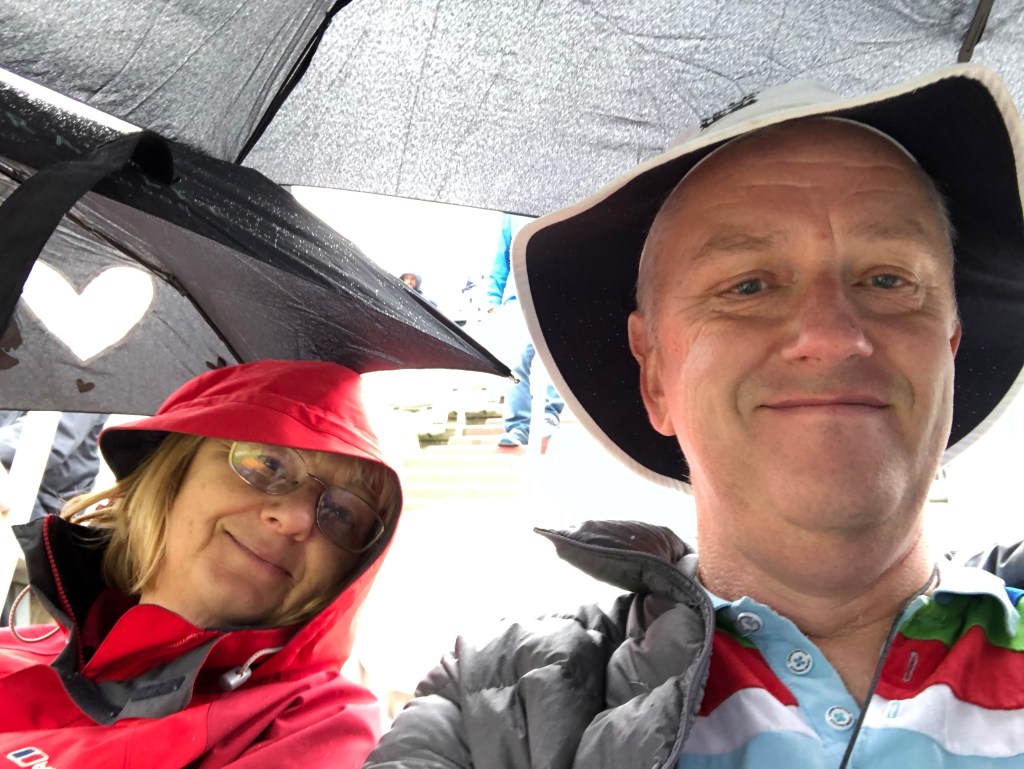
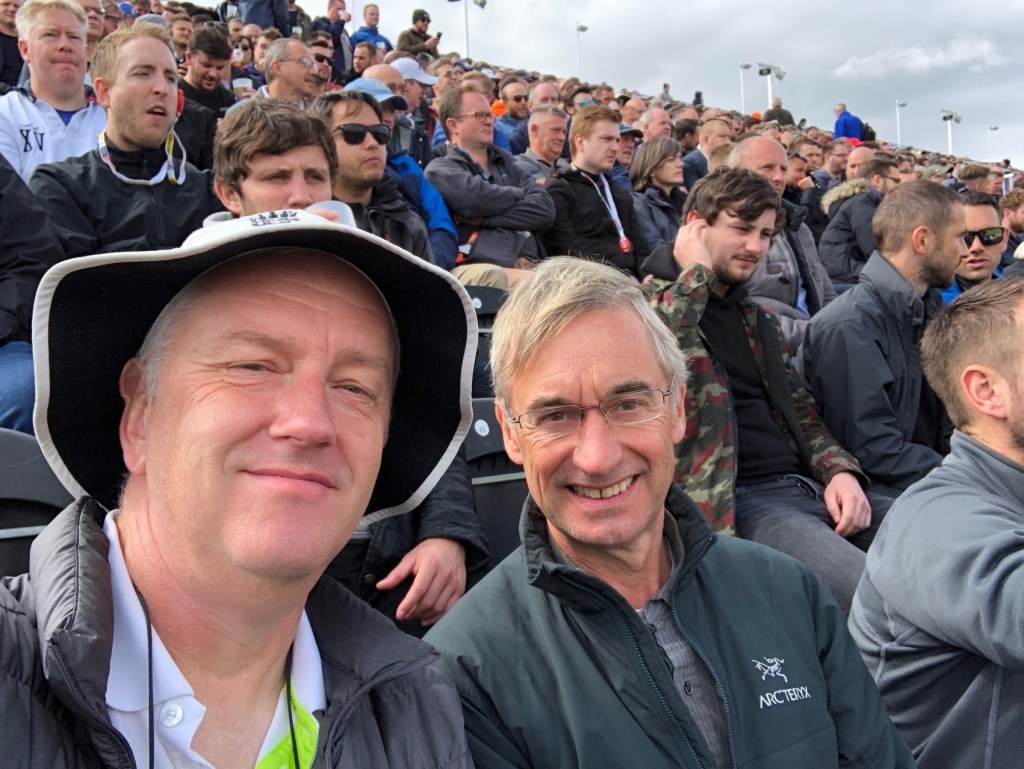



 Glad to be Grey