Queen of the Skies

The first Boeing 747 rollout. (Boeing photo)

Back in the seventies when I was developing my avgeekery, not that avgeekery was a term we used back then, there were two commercial aircraft of the era that caught the imagination of even those who had little interest in aviation. One was Concorde, the other was the Boeing 747. Whilst both these aircraft were designed to carry passengers, they took a very different approach to that task. Concorde was designed for speed. More than twice as fast as any airliner before or since, Concorde was a magnificent machine. Sleek and sexy, it was the star of the airline world. It could carry a hundred passengers between London and New York in three hours, quite an astonishing achievement for the 1970s. The Boeing 747 was big and chunky. It could carry four hundred passengers between London and New York in seven hours, the same time as the 180 seat 707s that were plying the route in tthe 1960s. You might think that Concorde would be a clear winner but no, the Boeing 747, still in production to this day, sold a hundred times more airframes than its supersonic rival. The reason was purely down to cost. Concorde was so expensive to buy and operate that even if an airline could fill every one of those one hundred seats on every flight, fares would have to be enormous. In the end British Airways and Air France were gifted eight production Concordes apiece and even then could only make it profitable on the London/Paris – New York run. There just wasn’t enough super rich folk in the world. The Boeing 747 had four hundred seats to fill which resulted in fares being dropped and a whole new market for long haul travel was tapped. Despite one or two hiccups on the way, the 747 allowed airlines to turn a profit on long haul services and the world to become better connected than ever.
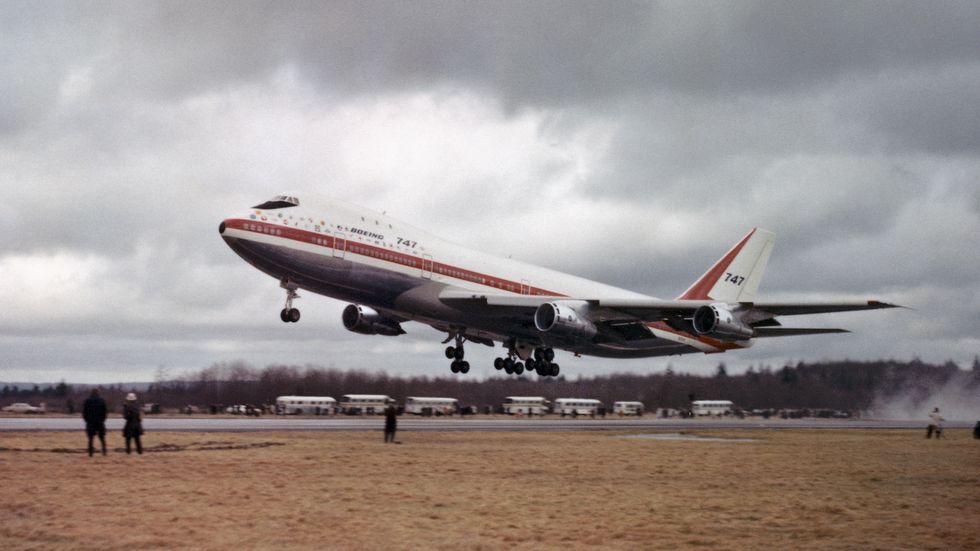
First flight, 9 February 1969 (Boeing photo)

Ok, that’s all very well and good I hear you say, but what is the relevance to today? On January 22 next year, the aircraft will celebrate the fiftieth anniversary of its first commercial service. Despite this, the type is still connecting cities around the world. Whilst the early 747s have almost completely disappeared, the 747-400 series, a version that first entered service in 1989, still flies for a number of airlines. Those airframes are nearing the end of their lives, however, and whilst the modern 747-8 version is still in production, it has proven to be a poor seller in the passenger aircraft market where more efficient twin engined aircraft are now the norm. In short, your chances of flying on a 747 are rapidly dwindling. The once huge British Airways 747 fleet is due to be phased out by 2023. I recently took a flight from London to Vancouver and back with BA and was delighted to find out that it would be a Boeing 747-400 that would be operating the service. I have been on 747s before but this might be the last time I had the chance. Back in the day there was nothing like a 747. It was enormous. In my spotting days I’d spend the day at Manchester Airport where the star of the show was the 747 operated by Canadian airline Wardair. It looked huge next to the One Elevens and 727s on the adjacent stands. That’s because it WAS huge and still is today. The distinctive hump at the front was like nothing else you were likely to see. Born from the need to raise the cockpit above the main deck to assist in the loading of the cargo version of the aircraft through the nose, the small passenger deck behind the flight deck was accessed by a spiral staircase. It used to house a cocktail lounge for first class passengers but airlines soon tired of that idea and used it to accommodate extra passenger seats. Later versions, including the -400 series had the hump stretched increasing the capacity of the upper deck. Sadly, the spiral staircase made way for a regular one as squeezing maximum revenue out of the aircraft’s cavernous interior became a priority. It was the first passenger aircraft to be wide bodied – back in the economy section seats were arranged ten abreast in a 3-4-3 pattern with two aisles. Twin aisled aircraft are commonplace now but not many fit ten seats in each row.
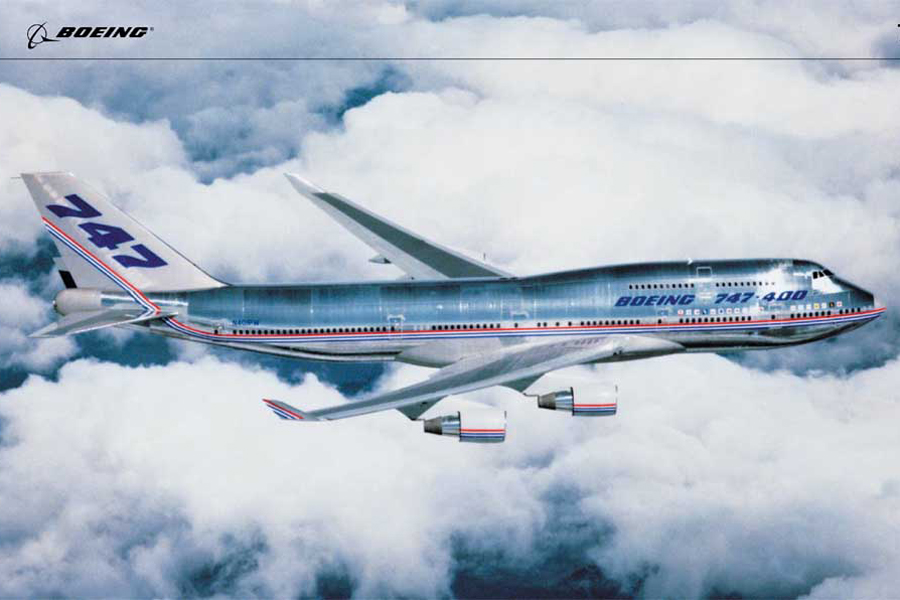
Boeing 747-400 first flight. Note the ‘stretched’ hump (Boeing photo)

The 747 was powered by four ‘high bypass’ turbofan engines. Feel free to google it if you want, for here it will suffice to say they were much bigger and more powerful than the other jet engines of the time. They are now the norm on airliners, big and small. It’s not a lie when I say the aircraft was a beast. My first time on one was in 1987, Heathrow to Singapore on a Singapore Airlines 747-300. This had the stretched upper deck but of course I never got anywhere near that. I just remember marvelling at the raw power of the engines as we commenced our take off roll. I was already fond of the 747 but after that flight I was smitten. Fast forward to 2019 and I’m back in Heathrow’s unimpressive Terminal Three. I present myself at the gate and the agent scans my boarding pass, which, because I’m really tech savvy, I had on my iPhone. Her computer made a rather disturbing noise and a puzzled look appeared on her face. Tapping a few keys on the keyboard she hit return and a new paper boarding pass was printed off. For reasons unexplained my Premium Economy seat had been changed to one in Club World, British Airway’s business class. You’ve got an upgrade said the agent and bid me on my way. A bit of luck there then. The seat was in the Club World section in the main cabin rather than the upper deck. Despite being a wee bitty excited to be flying the 747 once more, the flight was actually quite dull. It was an aisle seat and I missed having a window to look out of, even though there would have been nothing to see as the entire flight took place in the hours of darkness. If you are going to be bored, however, you might as well be bored in the relative comfort of Club World if you get the chance.

British Airways Club World cabin inside the hump, more spacious than the one on the main deck. (Photo taken in 2013 on flight from Moscow to Heathrow)
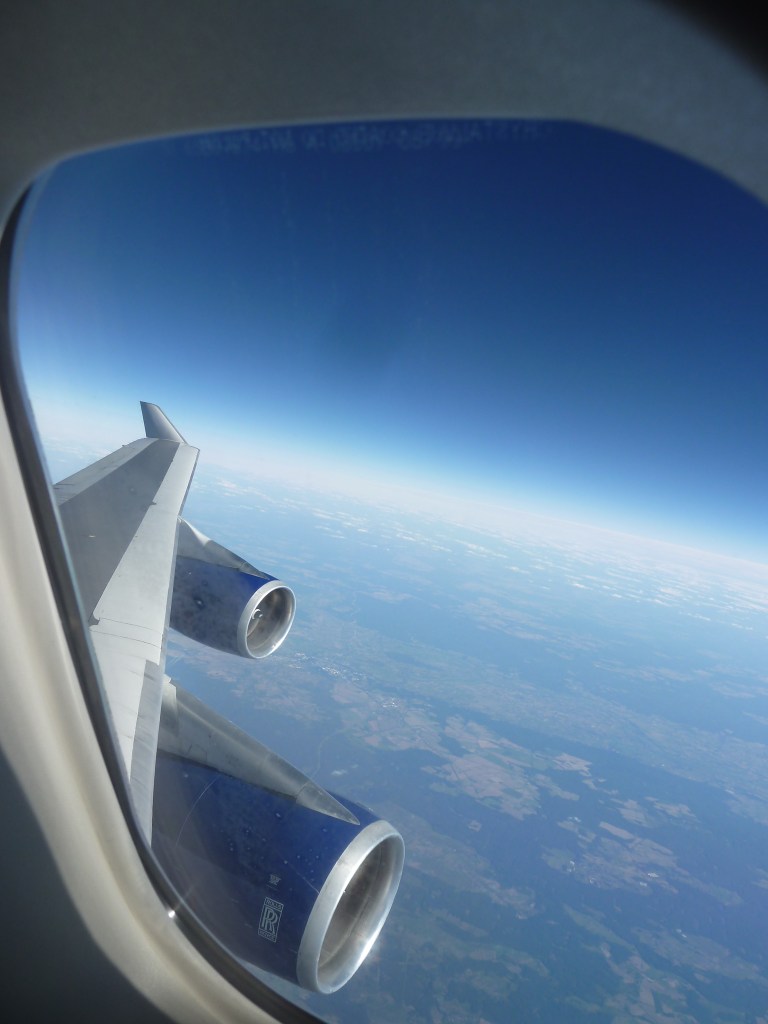
That wing, those engines… (Photo taken in 2013)

On the way back I had booked a Club World ticket (using Avios, I’m not so well off that I can go business class willy-nilly) and was hoping that they might upgrade me to First but no, I’ve obviously had my quota of upgrades. This time I had a window seat on the upper deck which was much better for a geek like me. It also meant a bit more privacy and plenty of storage space with a row of lockers beneath the windows. It is an ideal place to enjoy the 747 experience, mainly because you are facing rearwards and can see one of the magnificent wings and two of the four mighty engines that hold the beast aloft and allow it to hurtle through the air at Mach 0.85. (That’s fast by the way, not Concorde fast but you certainly wouldn’t want to get in the way of one) The upper deck consists of five rows of four Club World seats and feels more spacious and exclusive than the other Club World cabin down the stairs. I was all set for a restful red eye flight back to Heathrow when I noticed the four seats in the row behind were occupied by a family of five. Mum, dad, two small girls and a babe in arms. Oh good I thought. I know we were all babies and children once but when I was that age I never went in a plane, never mind the posh seats. We were too poor in Yorkshire tha nos. However, I need not have been so snobbish, the two girls were as good as gold and once the baby was plonked in a bassinet I never heard a peep from her. The dad on the other hand spent the entire flight getting up and down, accessing the several tons of hand luggage they had secreted round the cabin and generally faffing about. After a very acceptable dinner I had a quick look out of the window to see if I could see the aurora (I couldn’t) and settled down to sleep. I think I managed about four hours, a reasonable if unspectacular amount for an eight hour flight across eight time zones. We touched down on Runway 27R at Heathrow well ahead of schedule and made the short taxi to Terminal Three. Heading up the corridor I looked out of the window at the twenty-five year old 747 that had delivered my safely back to London. She still looked a beast. You may have noticed I’ve not used the ‘J’ word in this short epistle. I never liked the term ‘Jumbo Jet’. Yes, both are big but there the similarity ends. 747s tend not to be grey and wrinkly and don’t have a long manoeuvrable proboscis for a start. The Boeing 747 has since gained another nickname, not one that’s widely known outside of avgeek circles: Queen of the Skies. She may well be a big lump of a queen but a queen she is nevertheless. She’s the business. I’ll mis her when she’s gone.

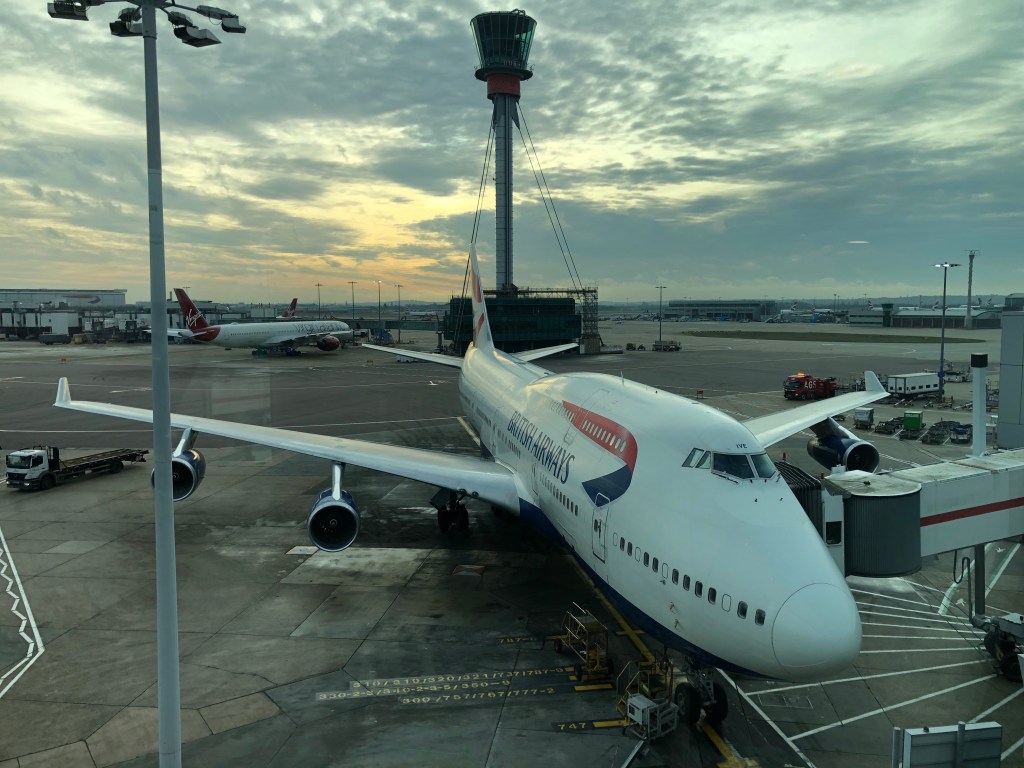
25 year old Boeing 747-400 G-CIVE at Heathrow having just delivered me from Vancouver.
The twilight of Heathrow, the twilight of the 747’s career.

Airbus

Airbus A350-1000. A fine machine but it does look much like all the others.

Back in the sixties three nations got together and agreed to design a passenger aircraft that would challenge the American dominance of the market. Several other countries would join France, Germany and Britain in the enterprise and Airbus Industries was born. The aircraft was a twin engined wide bodied high capacity airliner designed for short to medium range flights. The concept was already being developed in the USA by McDonnell Douglas and Lockheed but both those manufacturers opted for tri-jets with their DC-10 and Tristar aircraft respectively. So too did the airlines. By the mid 70s Airbus had only sold a handful of their A300s, to airlines owned by the same governments who had a stake in Airbus Industries. It turned out that the high capacity short haul business never really took off. Airlines preferred to run multiple flights a day with smaller aircraft on busy routes allowing passengers greater choice in their travel plans and the same aircraft could be used less frequently on thinner routes. In some markets the model worked. In Japan the A300 competed with Tristars and even a special short range version of the Boeing 747 on the domestic sector, but the most important market is the USA and here no one was really convinced. By the early eighties Lockheed was winding down the Tristar production, McDonnell Douglas had developed the DC-10 into a long range aircraft and the original Airbus concept was on its last legs. The company introduced the A310, a smaller version with a longer range. The problem was that twin engined aircraft were not allowed to operate across the oceans. The rules, called ETOPs, limited how far aircraft could fly from a suitable diversion airfield in the event of an engine shutdown. As engine reliability improved, those restrictions were relaxed and more of the world opened up to twin engined aircraft. The A310 and Boeing’s new twin engined 767 could now fly Transatlantic and with that the world changed. Fewer engines means lower costs and long haul travel, once the reserve of the well off, became affordable for many.

Today wide body twin engined airliners dominate long haul travel. Even the four engined double decker A380 (don’t EVER call it a Super Jumbo) couldn’t challenge the twin’s dominance. The economics of the two engines over four can’t be ignored and whilst there are several different types an airline’s management can choose from, they’ve all got just two engines slung beneath the wings. With the announcement earlier this year that Airbus is to cease production of the A380, for the first time since the De Havilland Comet launched the world’s first jet airliner service in 1952 you can’t go out and buy a new four engined jet airliner no matter how much money you find down the back of the settee.* The short-haul sector, for which the A300, DC-10 and Tristar were all originally developed, is dominated by narrow bodied types such as the Boeing 737 and Airbus A320, the latter being the aircraft that saved Airbus and launched it into the huge producer of aircraft that it is today. So why the history lesson? Well you know me, I’m a bit of an avgeek, and I had a chance to do something a little unusual recently – fly a couple of short-haul services on long-haul aircraft. Along with that I’d be flying on two types of aircraft I’d not flown on before, one new, the other old, and I’d get to do it in Business Class. That sounds like a day out to me, even if it did take place over two days.

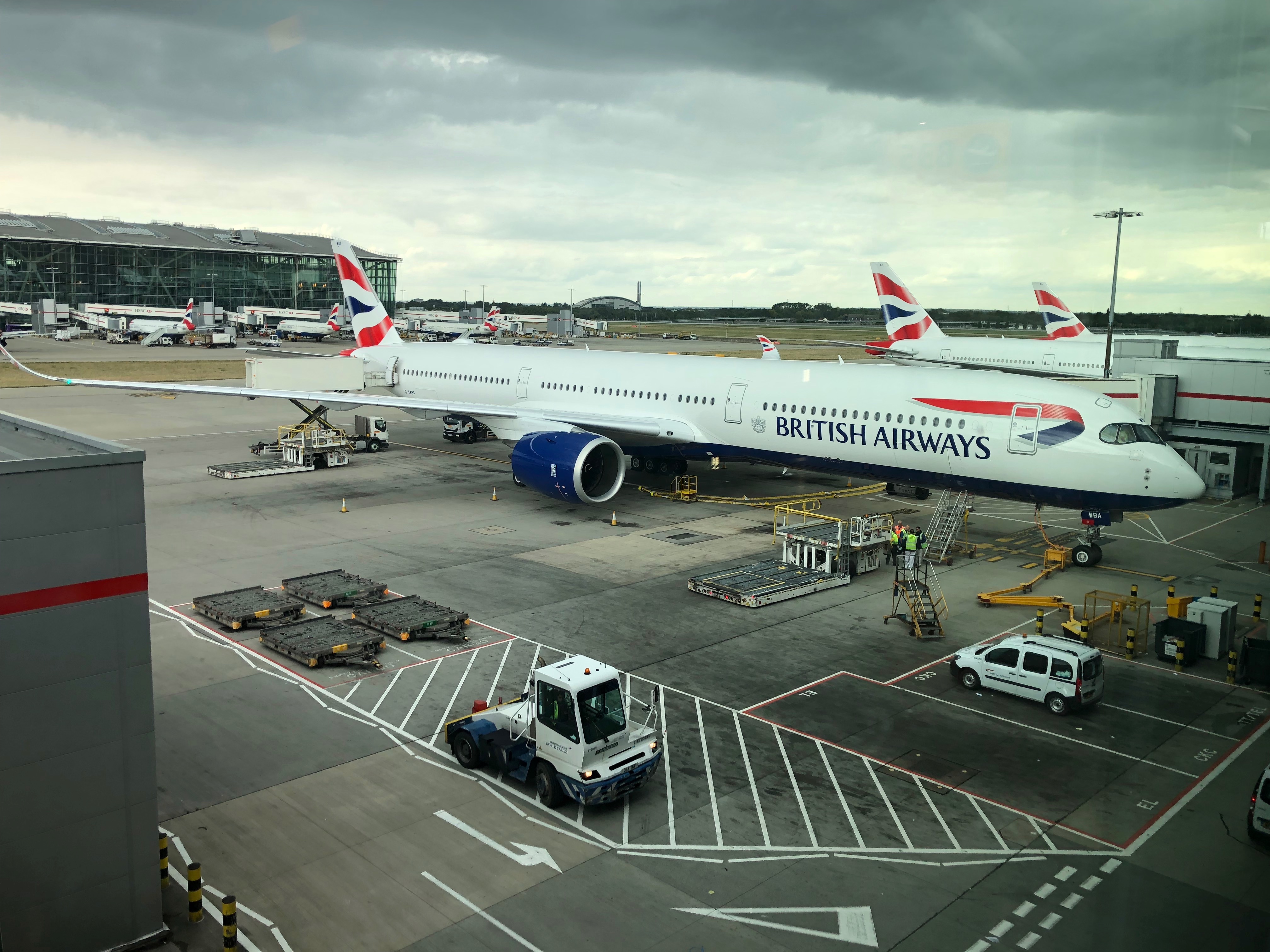
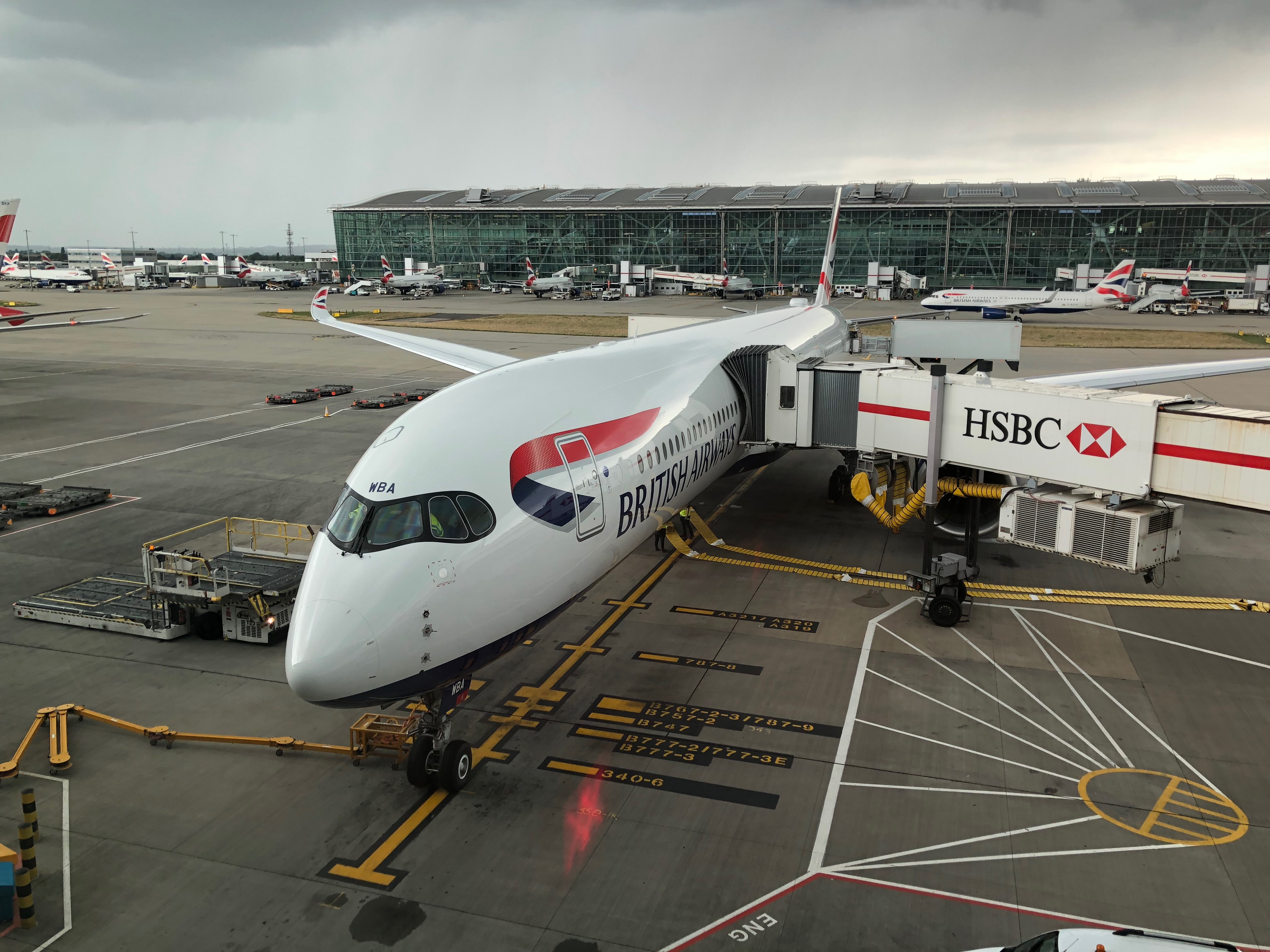
G-XWBA awaits me. I was getting a bit excited at by this point.

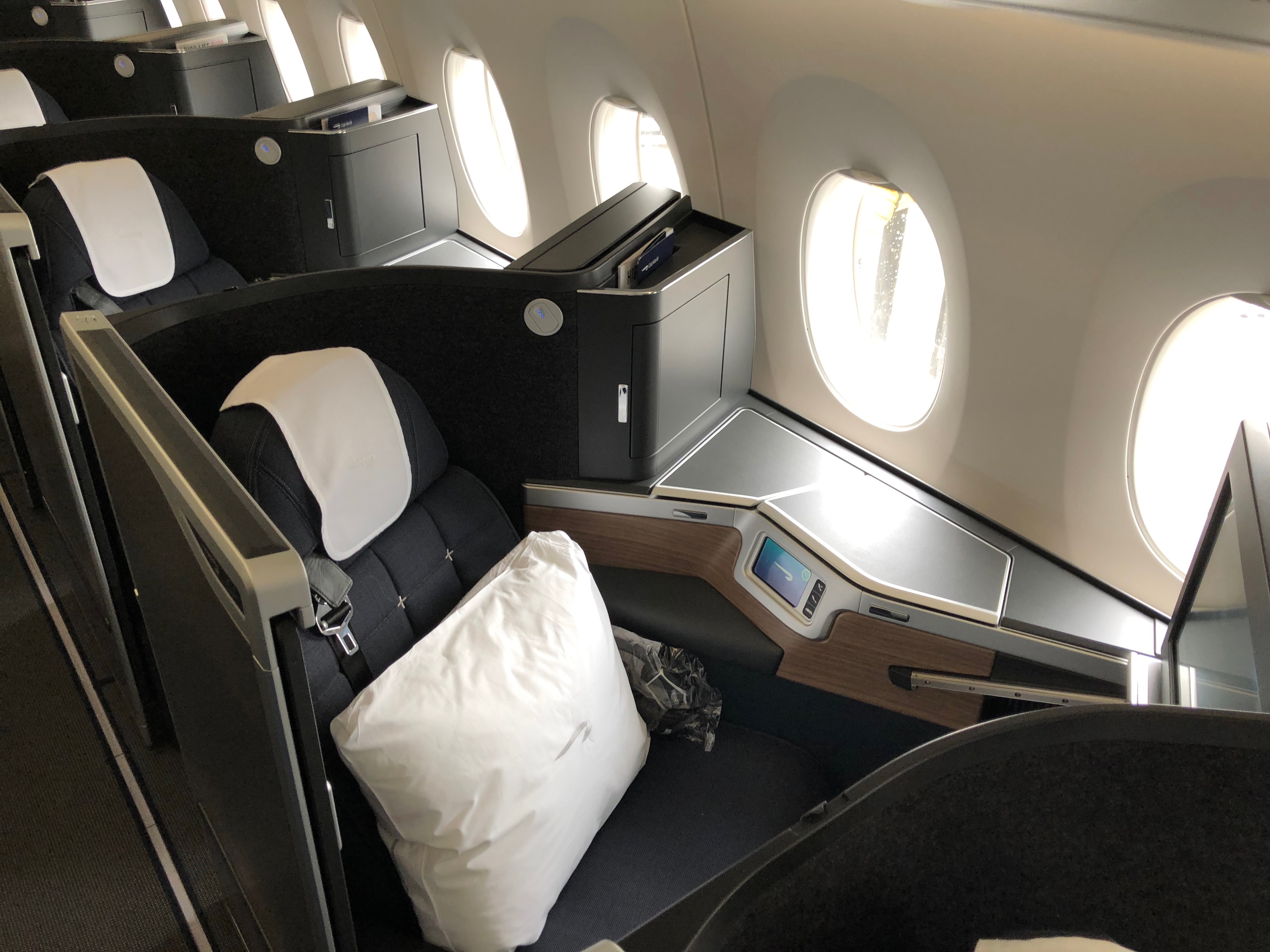
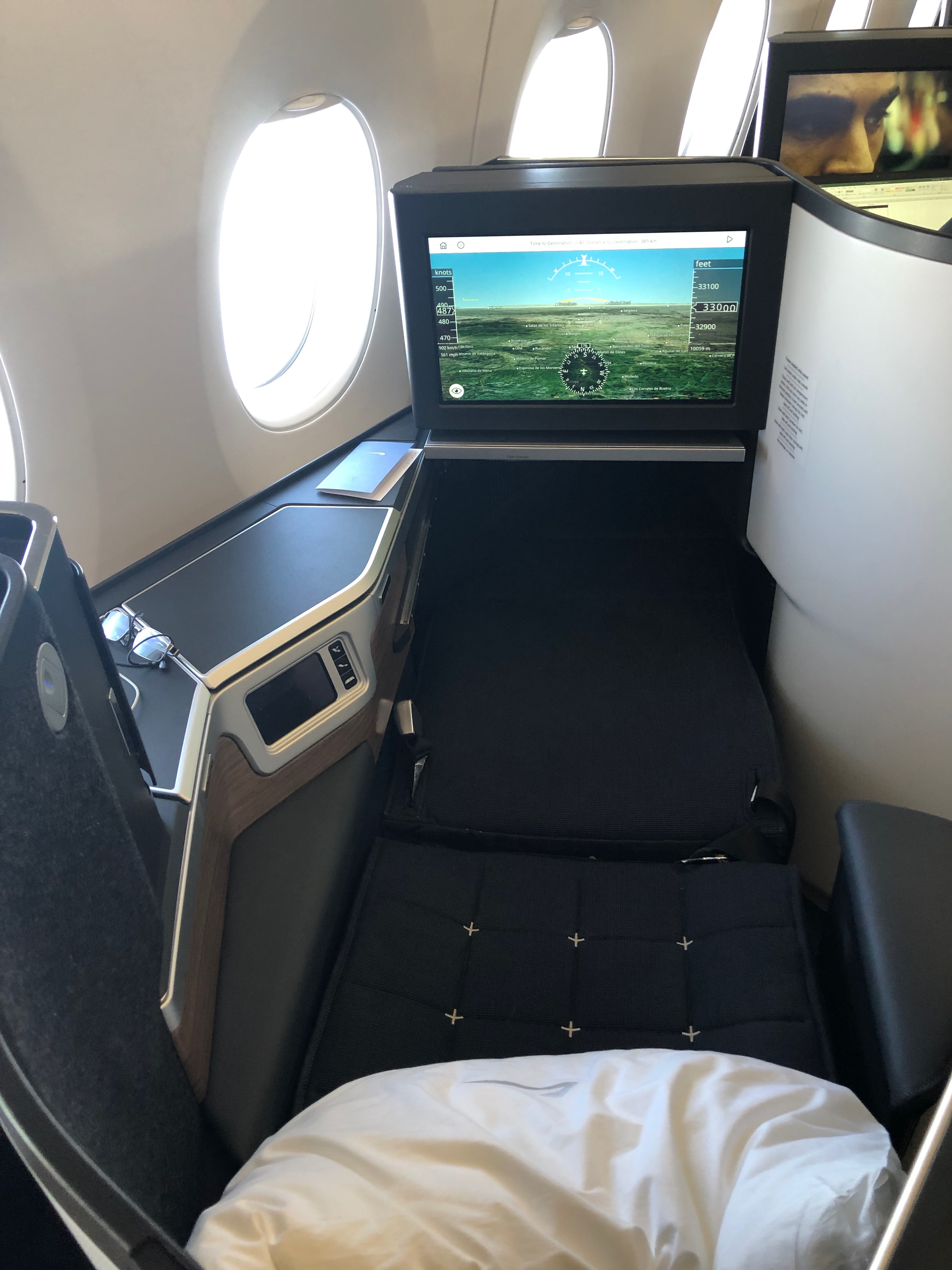
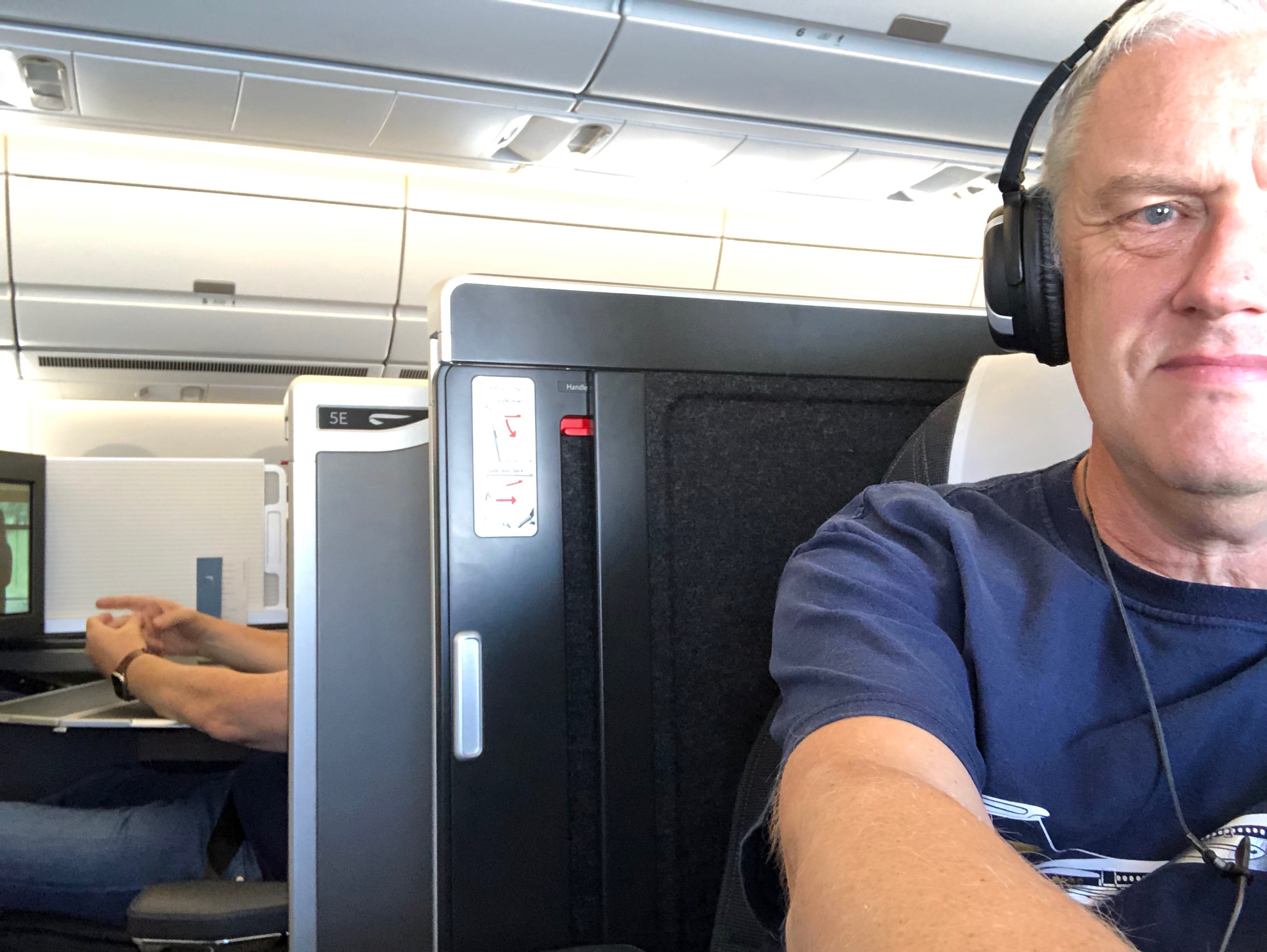
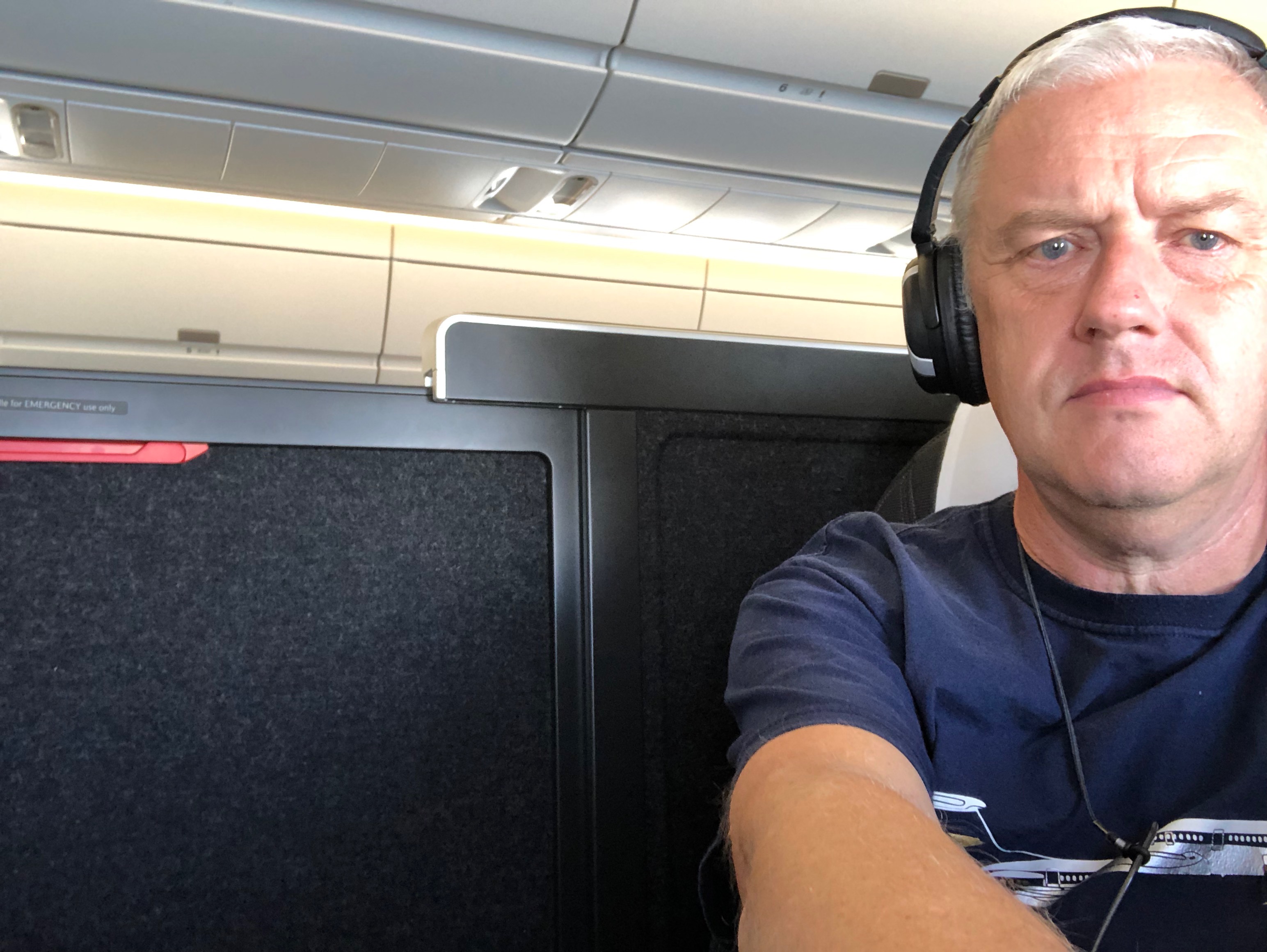
Both aircraft were Airbus products. The first was their latest model, the A350 XWB. The type entered service in 2015 but this was to be my first trip on one. British Airways had taken delivery of their first example just a couple of weeks earlier and were employing it on the short-haul route to Madrid throughout August for crew familiarisation reasons. It was due to take the place of the normal A320 on the BA464/465 schedule according to that font of all knowledge, the internet. I could have come back on it too but I noticed that Iberia operated one of their daily flights from Madrid to London with an A340. A bit more history – the A340 was launched in the mid-80s as a four-engined long haul wide body aircraft along with it’s twin engined sibling, the A330. Production ended in 2011 with 380 airframes built, the type ultimately falling foul of the inferior economics of four engined aircraft over twins. Iberia operate seventeen examples of the stretched -600 version. That Iberia utilised one on the London route was thanks to its cargo carrying potential. BA operate a daily Boeing 777 on the route for the same reason. Having never been in an A340 despite it being around for over 25 years, I had to try it out. The chance might never arise again as airlines divest themselves of the type in favour of more efficient twin engined types. I used Avios to book the flights as buying a Glasgow-London-Madrid-London-Glasgow Business Class ticket would have been rather expensive. On the appointed day (last Monday) I pitched up at Glasgow and caught the flight to Heathrow. I kept my fingers crossed that the internet was correct and the A350 would indeed be operating the Madrid flight and as I sat in the BA Lounge I caught a glimpse of it being towed to the the B Gates of Terminal 5. That looked promising. Once the gate was disclosed I headed to it and sure enough, BA’s first A350-1000, G-XWBA, was sat there. The flight was called and I wasted no time in boarding. BA had chosen the introduction of the A350 to its fleet to inaugurate its new Club World (Business Class) seat. It was about time they did as the old seat has been around for quite a few years now and has been bettered by just about every other airline going. The new seat, or suite as they like to put it, is much better. Every seat is set at an angle in what is called reverse herring bone configuration and has direct access to the aisle so there is no need to clamber over your sleeping neighbour if you need to go for a wee during the flight. A shoulder harness is included along with the regular lapstrap for use on take off and landing. The lap strap on its own suffices for all other phases of flight. Both the old and the new seat fold down into a flat bed but I have to say I never found the old one particularly comfortable when flat. The new one appeared to be much better when I briefly tried it out. There’s several cubby holes to store your bits and pieces, the table slides down from beneath the larger entertainment screen and most noteworthy of all it has a little door. Well, not really a door but a screen you can slide shut for extra privacy. This may seem a bit of a gimmick but I suspect it will be a welcome feature when trying to sleep on an overnight flight as it forms a barrier between you and the inevitable to-ing and fro-ing of the cabin crew and other passengers in the aisle. Aesthetically it is a little austere but I’d rather that than ostentatious and overall I was impressed. There are maybe airlines out there that have better Business Class seats but British Airways is back in the mix in my opinion.

British Airway’s great hope for the future, the new Club World ‘Suite’.
A flat bed. Decent sleep assured as long as you don’t have huge feet.
Door open…
…door closed.

The flight came with Club Europe service where food and drink are provided. Long haul passengers will get bigger meals, more drinks and will have access to a self-serve galley full of snacks and drinks. It was empty for the trip to Madrid unfortunately as I’d every intention of snaffling a few Mars Bars. Just less than two hours after taking off, we landed in Madrid and I had another aircraft type in the logbook. That’s not true, I don’t have a logbook. I do, however, log all my flights on a website called Flight Memory because I’m a bit of a saddo. For some reason knowing that this had been my 35th flight this year was important. With the return flight booked for 16:00 the following day, I had booked a hotel in the centre of Madrid which meant I could have the following morning to look round the place. I did. It seemed nice enough but not overly inspiring. I’m not sure I did it justice.

Madrid. Royal Palace. I’m sure there’s other interesting bits.
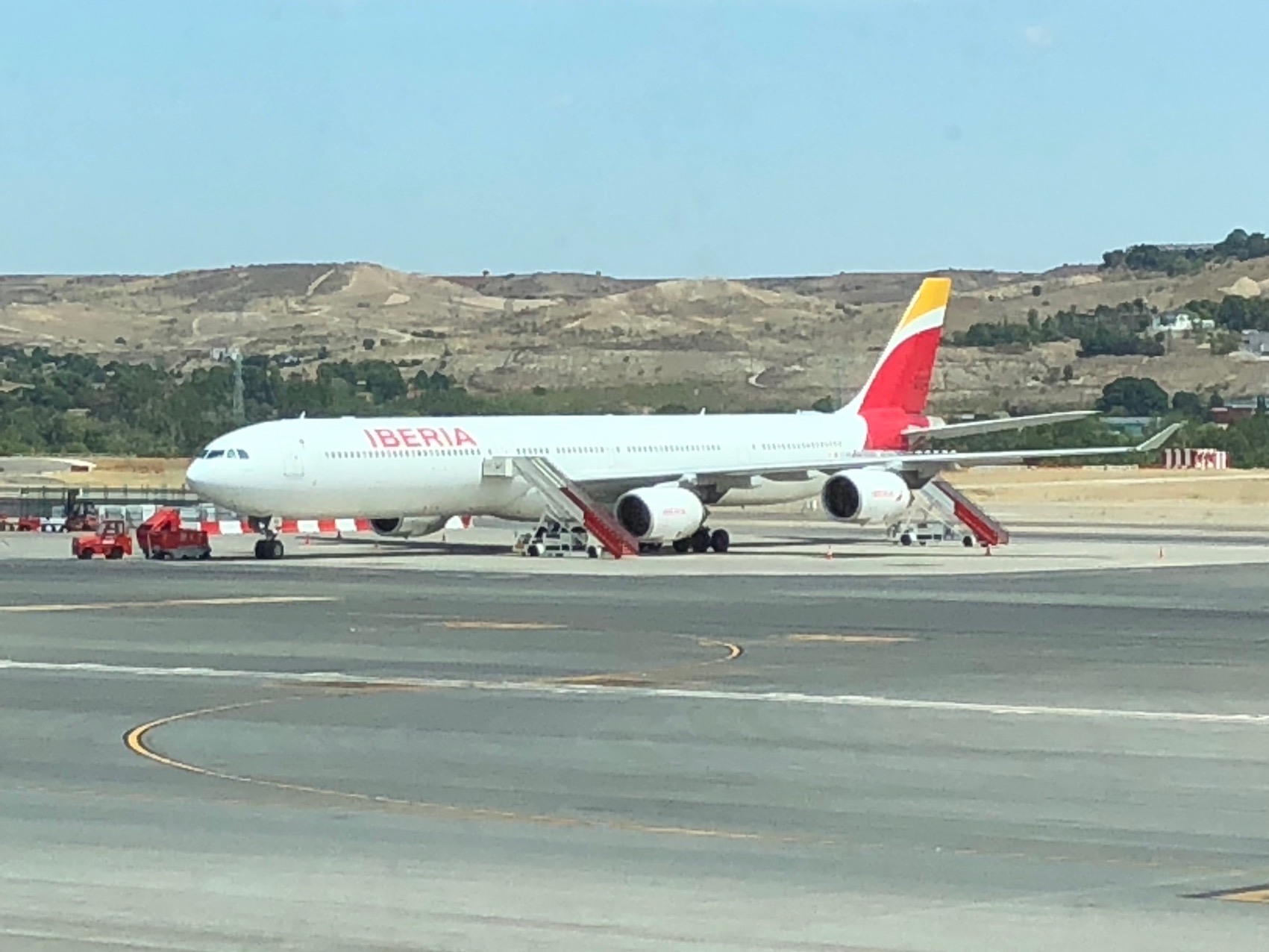
Airbus A340-600. To paraphrase and misquote Virgin Atlantic, 4 engines 4 short haul.

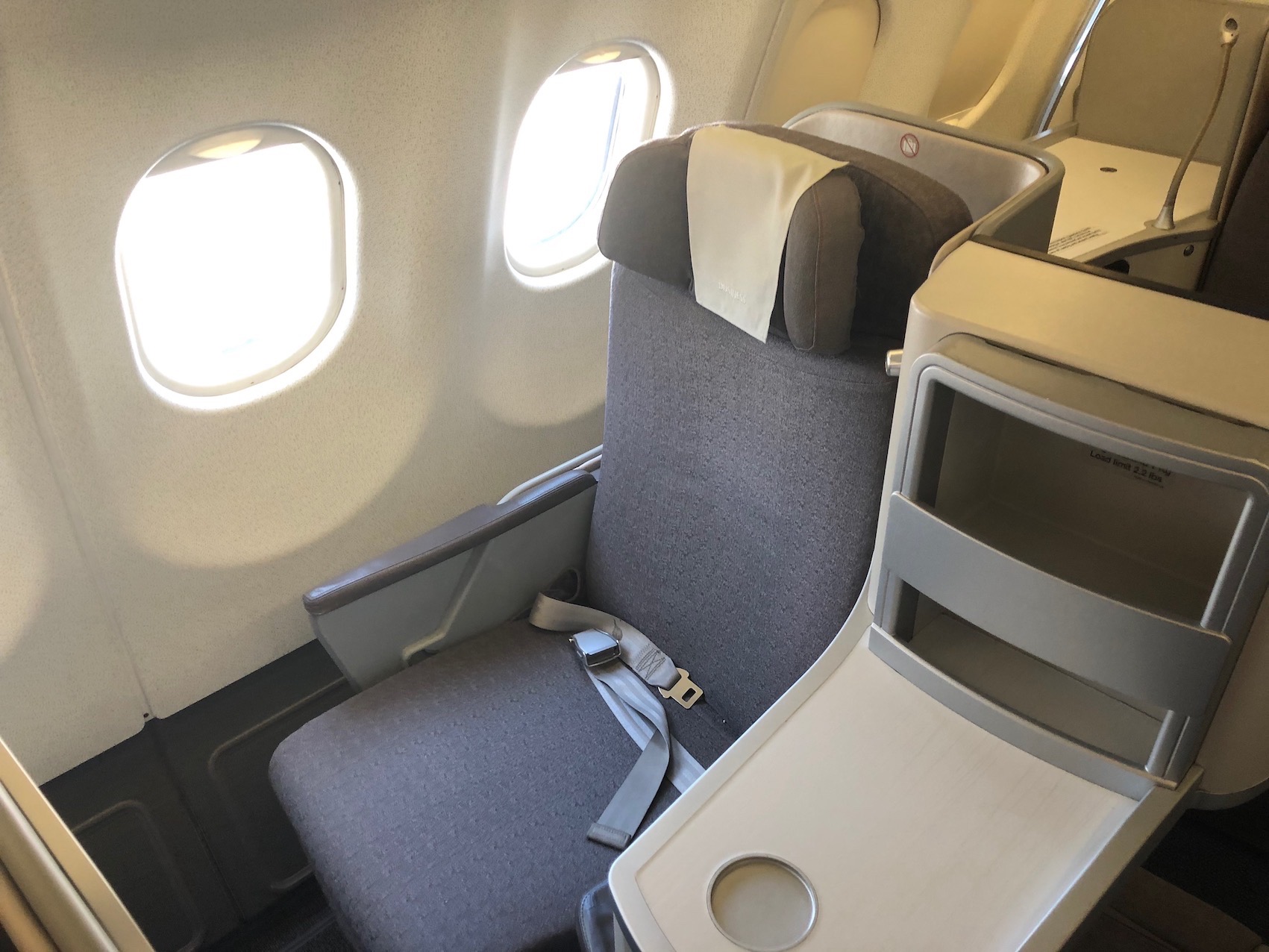
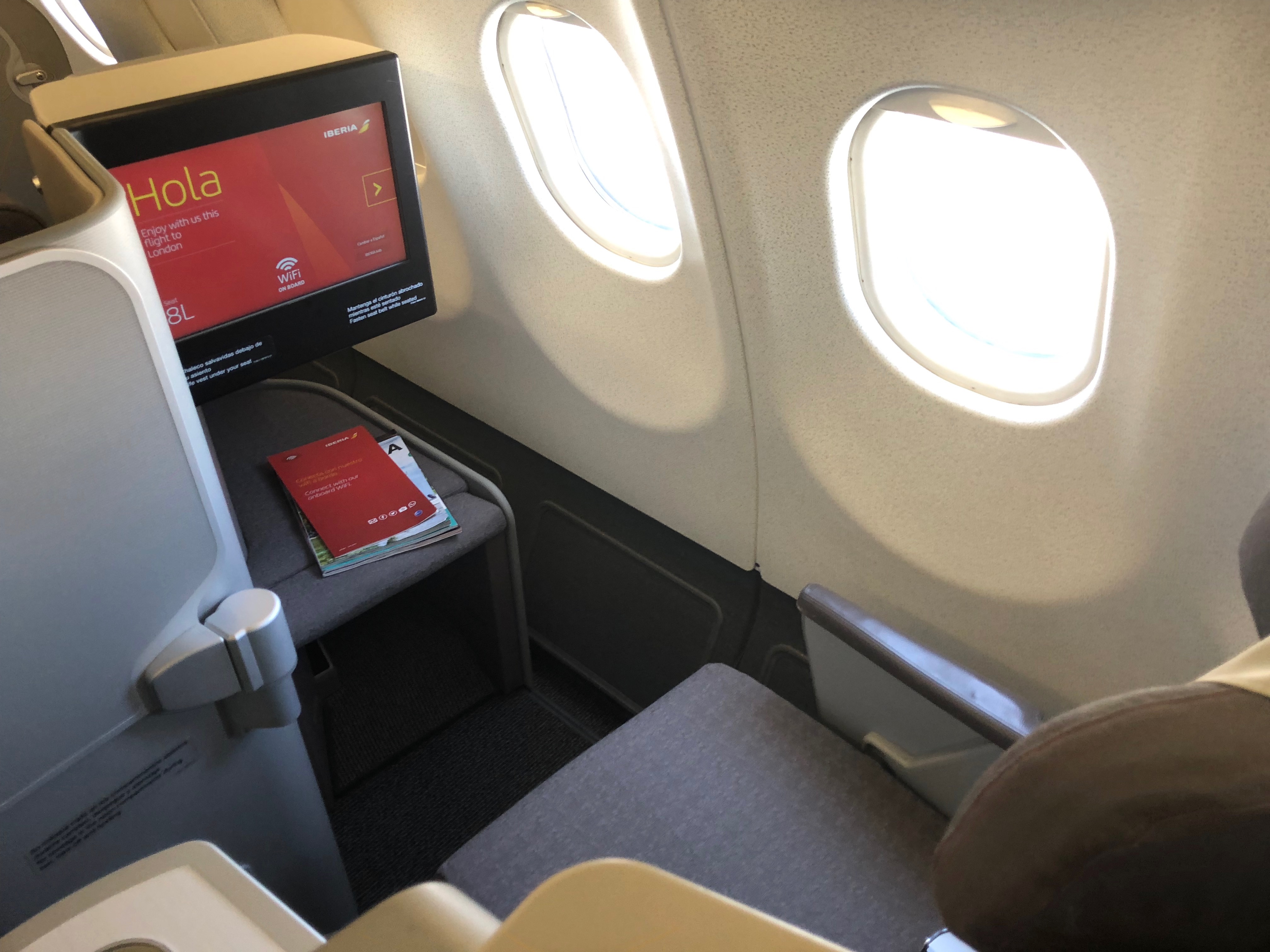
Back at the airport I had time for a spot of lunch in the Iberia lounge at Terminal 4S. One of the big advantages about Business Class travel is access to airline lounges. These vary in quality but are nearly always a more relaxing place to spend time before your flight than the main concourse. Food and drink is complimentary because let’s face it, it might be all of a couple of hours before you get another dinner on the flight. For me, the best lounges are the ones where you can sit and watch the planes. Simple pleasures and all that. As the A340 is a big plane, boarding started early. Another advantage of the Business Class ticket is you get to board via the priority line and as a result of that I was in my seat a good twenty minutes before the scheduled pushback. Add to that the half hour delay as they loaded all the air freight in the aircraft’s cavernous hold and I was more than well acquainted with Iberia’s Business Class seat before we’d moved an inch. Being a much older seat than the one I’d flown out on, there were a few signs of wear and tear but in general it was in good condition. The window seat I was in afforded a bit more privacy than the others and if anything there was a bit more personal space than on the BA seat. There was a large entertainment screen which was annoyingly unresponsive and a few storage options for your knick knacks. Once airborne I gave the flat bed a quick try. I don’t know why but it was not at all comfortable to lie on. I felt as though my feet were higher than my head which was a bit off putting but I guess we may have still been in the climb. As a seat though it was perfectly acceptable and sure as hell beat a normal short haul Business Class seat which are just economy seats separated from the rest of the plane by a curtain. The service was akin to that on BA coming out, a decent meal and drinks. Overall I preferred the flight with BA but there wasn’t really much in it.

Iberia’s business class seat.
The new BA seat is better unless you suffer from claustrophobic feet in which case Iberia wins.

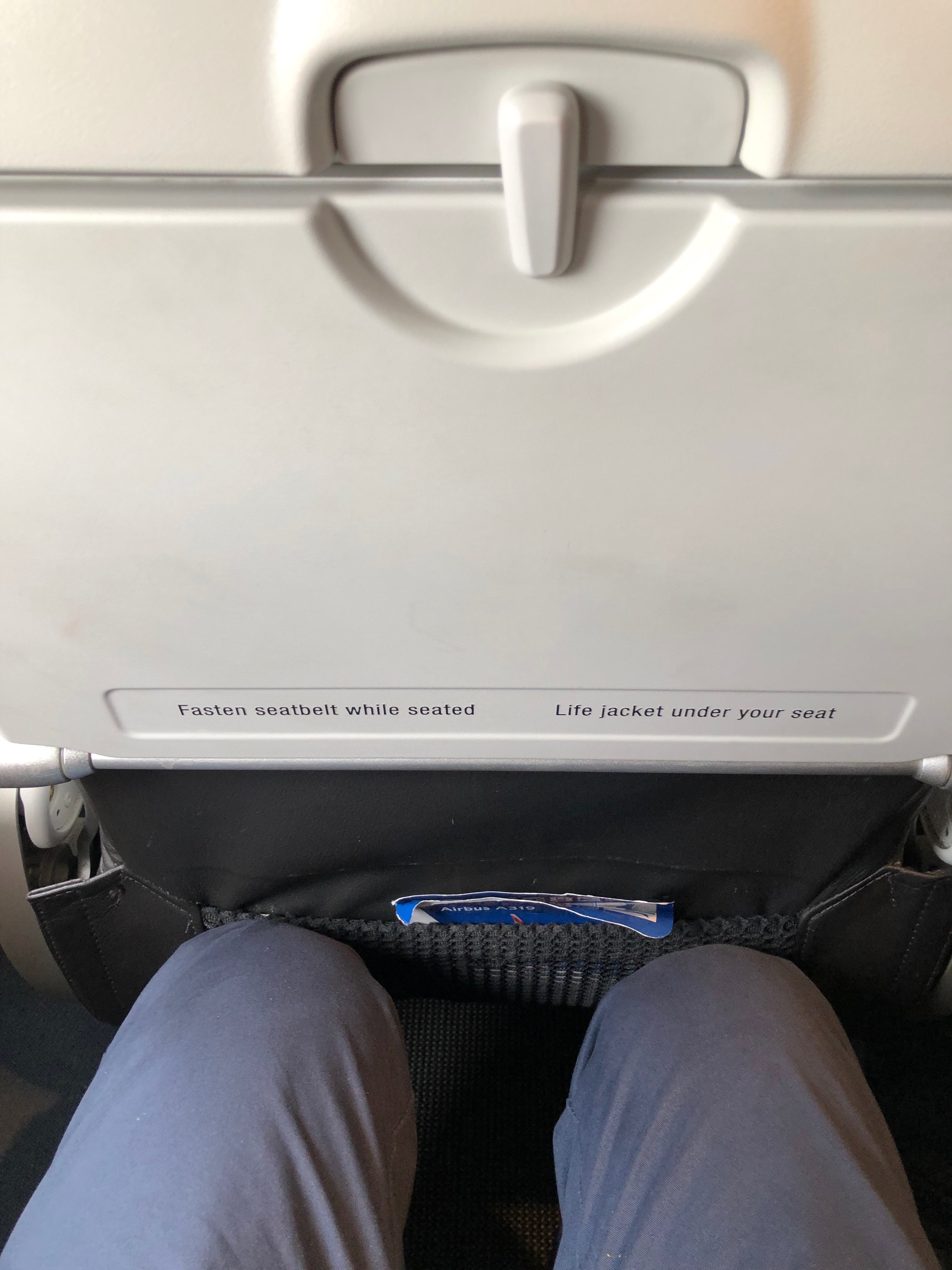
The delay meant I nearly missed the connecting flight to Glasgow as I hadn’t made it past the transfer security check by the appropriate time. A phone call from the BA agent was required and I hot footed it to the gate where the flight was boarding. Boarding a bus to a remote stand that is. The flight was in one of BA’s new A320 NEO aircraft. New it might have been but the Club Europe seat was still no different to the economy seats behind the curtain. I got another decent dinner but short haul business class is really not worth the extra money, unless someone else is paying of course. I’d go as far as to say it isn’t really worth the extra Avios either. On this occasion, however, the chance to sample the long haul seats of two different carriers made it a very good deal, especially for an avgeek.

This is the legroom you normally get travelling short haul business class.

Footnote: You can still buy a new four engined jet airliner as Boeing’s 747-8 is still in production. Very few passenger examples have been produced, however.

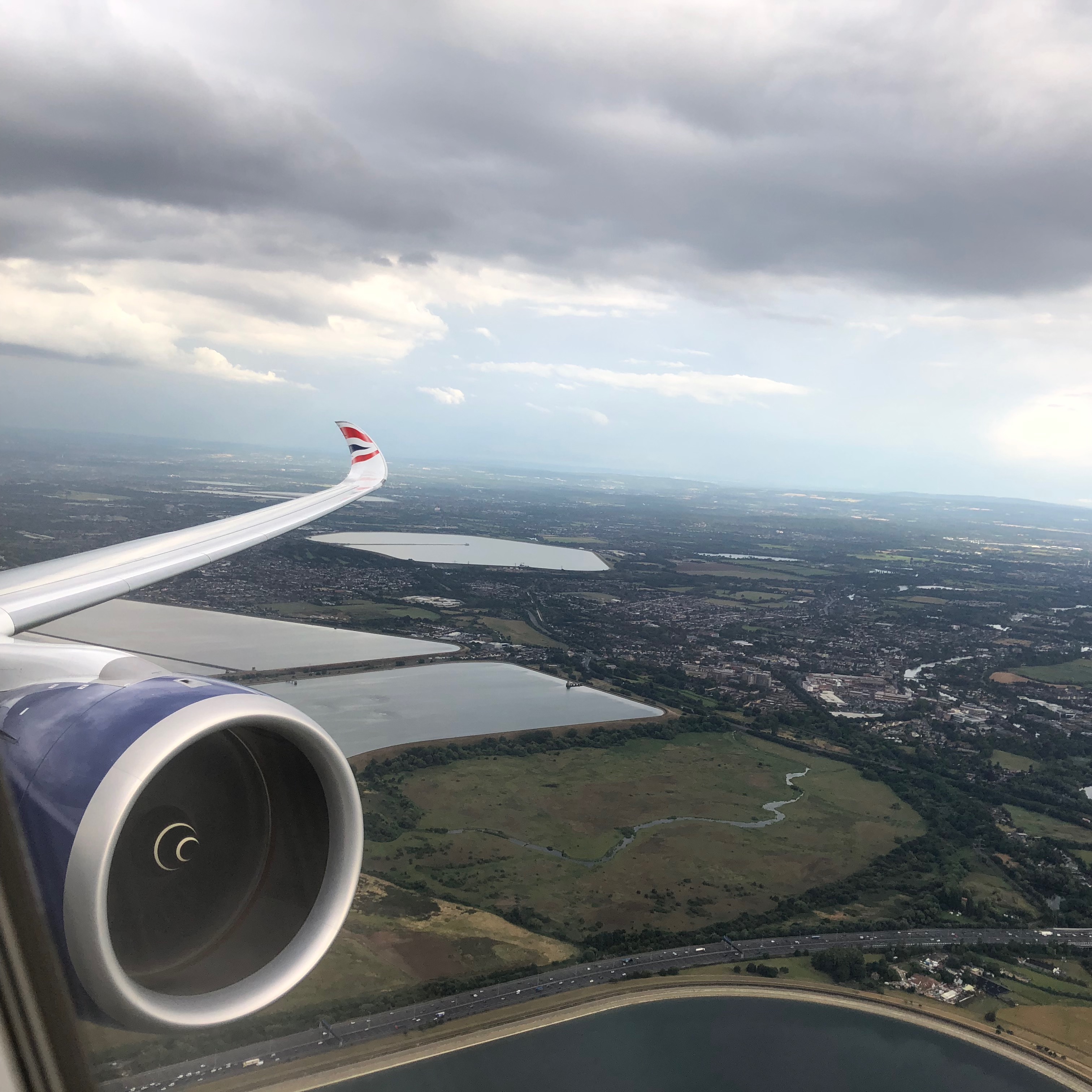
A350. One engine per wing and a cool looking winglet.
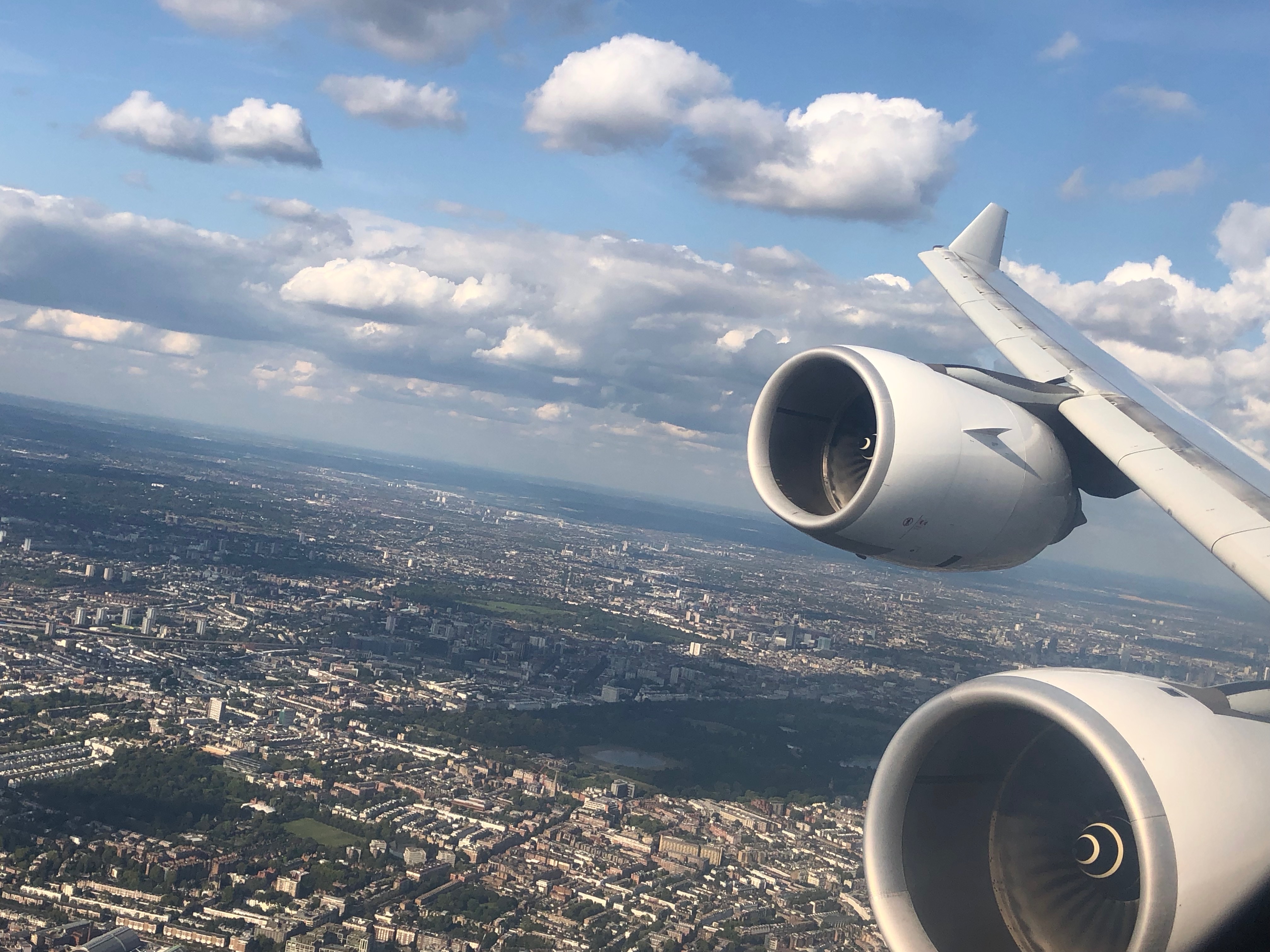
A340. Two engines per wing. Not as economical but makes for a more dramatic wing shot.