Slow Route To Victoria Pt 2

New York to Victoria

Rocky Mountain High

For Part One of the tale of my mega trip from my home in Troon to see my daughter in Victoria, Canada, using surface transport, click HERE.

I finished Pt 1 of this two part blog having disembarked the Queen Mary 2 in New York and getting a taxi to the Moynihan Train Hall in the middle of Manhattan. To get to Victoria within the rules I’d set myself I had to get across the North American continent without using aircraft. There are limited options for doing this. I quickly decided that train was the only mode of transport I would consider – Greyhound Bus never entered my thoughts – so I had looked into the various rail routes from the Atlantic to the Pacific. Whilst rail travel is by no means popular in the USA or Canada, there are a number of ways to cross the continent by train. I could have caught a train to Toronto and then taken The Canadian, a fantastic four day trip across Canada to Vancouver. I had done this before though and wanted to try something different. I decided that the US operator Amtrak had the best option, a three day journey to Seattle utilising two different trains. On reaching Seattle I could have taken an Amtrak bus to Vancouver where I could then get a ferry but I decided to stay the night in Seattle and get the FRS Clipper ferry the following morning directly to Victoria. I reserved roomettes on the trains some ten months in advance along with the transatlantic crossing on the QM2. The first train was The Lakeshore Limited. This runs from New York to Chicago, a 21 hour overnight journey. After five hour wait in Chicago, The Empire Builder would take me to Seattle in a total of 46 hours over two nights.

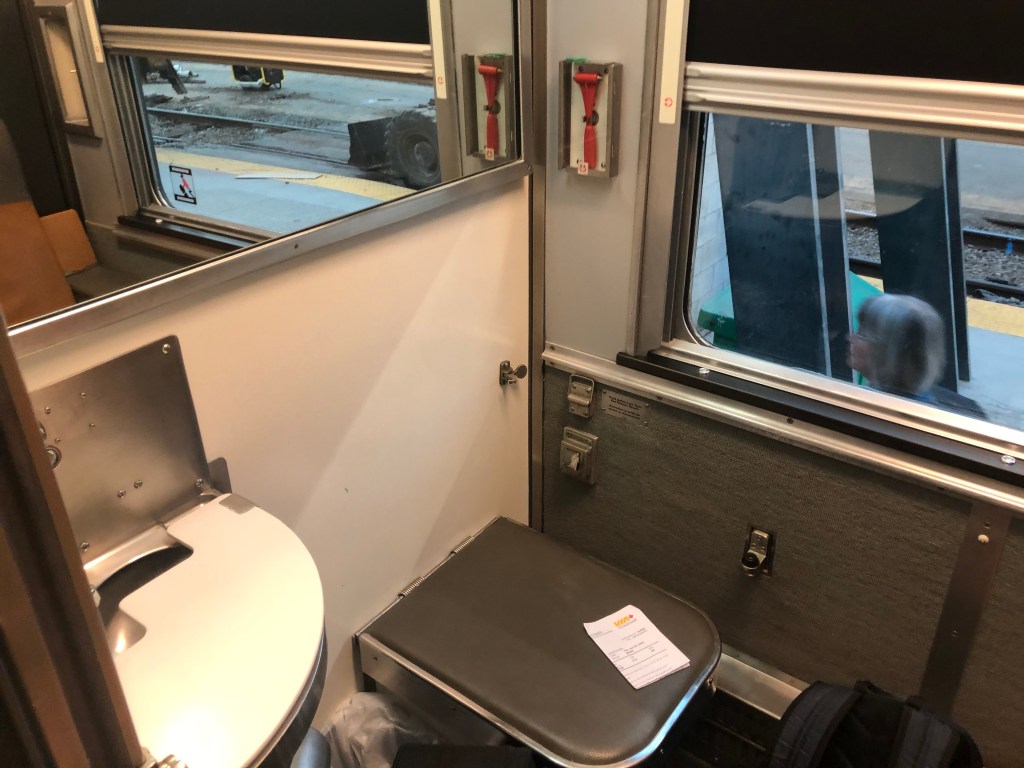
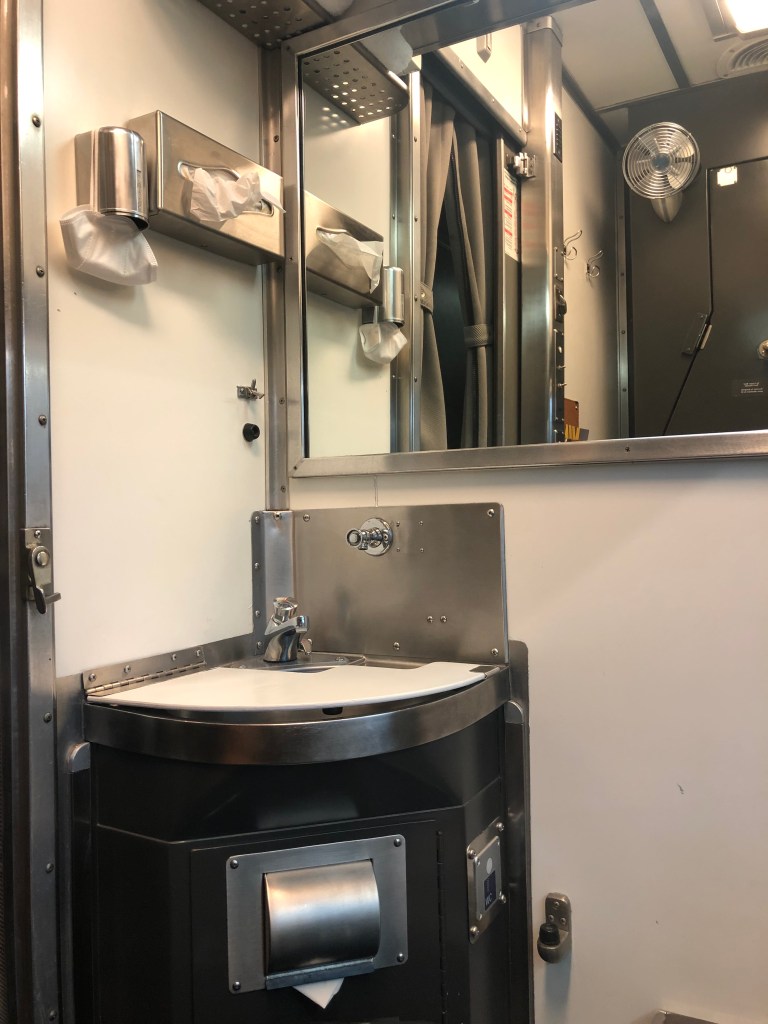
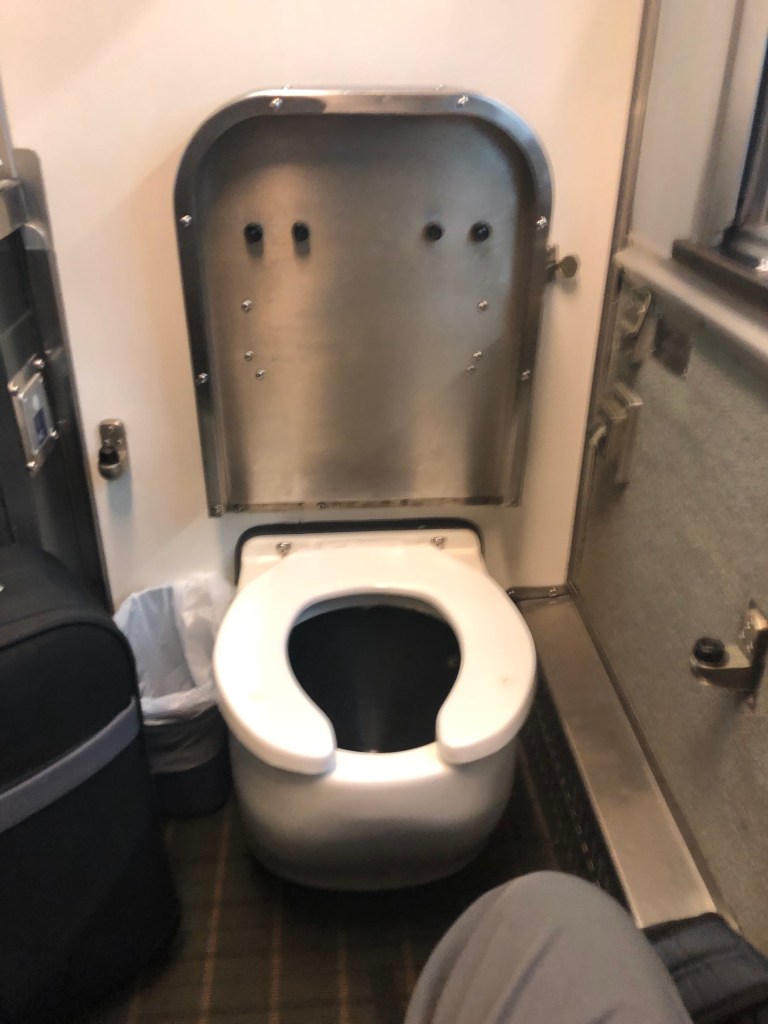
The Moynihan Train Hall is a new expansion of New York’s Penn Station. It was completed in 2021 and is rather magnificent. They say that first impressions count which meant my initial thoughts on Amtrak were very positive. On long distance trains you can check your luggage through to your destination which is a particularly good idea if you have a roomette. There isn’t a lot of room in there for a couple of suitcases. On the last day of the transatlantic voyage I had made sure to pack a small bag with the stuff required for three nights on the train and headed to the main Amtrak ticket office where the two suitcases were checked through all the way to Seattle. I then headed to a very nice business class lounge which is open to sleeper passengers. A much needed sandwich and a couple of drinks whilst overlooking the main concourse was very pleasant, especially after being in a bit of a rush to get there. About twenty minutes before departure we were called to head down to the train. I was in luck. I had been given an upgrade. Instead of a roomette I was in a bedroom which had more space and an en suite. Things were going well! It wasn’t a long train and it was easy enough to find my room. Sure enough, it was a bedroom rather than the roomette. That was about as good as it got for this first journey. We departed bang on time into the labyrinth of train tunnels beneath New York before emerging into the daylight in the north of the city. The car steward introduced himself and congratulated me on the cabin upgrade. He then mentioned the downside which was the best views were on the other side of the train. The track runs alongside the Hudson River for quite a long way and my views of this were through the corridor window. It wan’t much of a problem to be honest but it put a slight dampener on the joy of the upgrade. The room itself was, well, tatty. Trains to the east of Chicago use Viewliner stock which is old and badly in need of refurbishment or better still, replacement. Size is limited by the tunnels that run through New York and whilst they seem big enough, when you compare them to the Superliner stock that runs on the services to the west of Chicago they feel inadequate. The train consists of a couple of Viewliner sleeping cars, a restaurant car, baggage car and two or three coach cars but doubles in size when it reaches Albany and is coupled up to the Boston service. The bedroom features a bench seat that converts to a bed, with another bed that can be pulled down to form a bunk. There is a strange looking extra chair that serves no purpose other than to reduce the available space. I tried sitting in it but it was in a bad state of repair that I got straight out of it again. The en suite was a wet room so a bit of planning may be required as to the order of one’s ablutions. It was perhaps the best feature of the room as everything else was tired and worn. There was a little sink with a couple of plug sockets and a table by the window. When I booked the trip I seem to remember a room cost quite a bit more than a roomette. I’m glad I didn’t have to pay that premium.

We progressed along the eastern bank of the Hudson for a couple of hours before we reached Albany. I spent much of that trying to connect to the train’s wifi. I had bought a sim card before I departed the UK to use data in the USA and Canada. I was kind of hoping that the train’s wifi would mean I could stay connected to the outside world. It didn’t work. I was destined to be ‘off grid’ for my entire trip across the USA except for a couple of wifi hotspots I managed to briefly connect to. It was quite a major downer for me. I know we are supposed to enjoy being unconnected to the world from time to time but on a solo journey like this I do like to keep in touch with friends, family and above all Elaine. We had about an hour in Albany where I was able to use the station wifi and that was me off grid until I arrived at my hotel in Seattle. Down on the tracks the other half of the Lake Shore Limited had arrived from Boston and was shunted into our half to double the size of the train. We set off again into the evening. I had a dinner booking for 7:15pm so headed along to the dining car. I plumped for the Chicken Enchiladas. It wasn’t great. The meals are prepared in advance and heated up on the train and compared with my previous experience of train food across the border in Canada, it was poor. Later I wandered along the train to the cafe/bar where I bought a Twix. I mention this only because it got me a walk through the rest of the train to see how the coach passengers were getting on. They were making themselves comfortable for the night in their seats. These looked decent but I’d have hated to try and sleep the night on them. Stops at Utica and Syracuse gave me a brief chance to stretch my legs – such stops are called ‘smoke stops’ although smoking wasn’t compulsory – and eventually it was time for bed. With a little bit of difficulty I worked out how to set the bed up – I’m sure the car steward would have done it for me had I asked – and I settled down to try and sleep.

It wasn’t a great night. I slept on and off but along with the general rattling of a fifty year old Viewliner car and a very whiney A/C, every so often the train would make a rather violent sideways motion, possibly as we passed over the points onto another track. I got up and used the en suite. It was a bit bijou of course but the water was warm and at least I didn’t have to wander down the corridor to the ‘public’ shower. Breakfast was another reheated effort, ok but nothing special, and I settled back in the room as we passed through midwest farmland and the industrial outskirts of Chicago. We arrived five minutes early. I wasn’t unhappy to get off the train.

I had five hours in Chicago before the next leg of the journey. I happen to have relatives in Chicago, or, to be more precise, north of Chicago. What’s more, I had only met one of them before. We’ve known each other for a few years now through social media via other relatives in Canada who had got in contact with my mum via a genealogy website. David is my third cousin and was there with his wife Jane and daughter Erin. I had met Erin before when she was over in Edinburgh. The three of them were there to meet me getting off the train and later joined by Erin’s cousin Kiersten and we spent a happy few hours together wandering round downtown Chicago and enjoying one of the famous Chicago pizzas. It was delicious! Alas, Amtrak waits for no man, just freight trains, so I was back at the station in time to catch The Empire Builder to Seattle, a 2206 mile journey through seven states. I didn’t receive an upgrade on this train so on boarding I went to find my roomette. This wasn’t as easy as it should have been. It was Room 1 in car 730. I couldn’t find car 730. I found car 830 but if I know one thing about the number 830, it isn’t 730. I walked up and down the train a couple of times before I found an Amtrak employee. I was getting a bit flustered by then. I was informed that car 730 was down there. I’ve been down there I said and can only find car 830. She informed me that that was the correct car. It is called car 830 on the eastbound service and they don’t bother changing the number, presumably just to confuse first time passengers on the service. I finally discovered my roomette just as we made an on time departure from Chicago.

The Chicago Farewell Committee.

The stock used on trains to the west of Chicago is an improvement on that used to the east. The Superliner cars are double deckers and whilst not exactly new, my car was in a much better state than the Viewliner that had delivered me to Chicago. The roomette contained two seats facing each other which converted into the lower bunk with a pull out table between them. There was a small closet with a couple of hangers that should immediately be removed as they annoyingly clunk about with the motion of the train. Above is a pull down bunk which suggests the roomette can be used by two people but it would be a bit of a squeeze. It came in useful, however, as there is no space for bags on the floor. With the bed half pulled down my two pieces of hand luggage were placed on top out of the way along with the bedding for the lower bunk when in day mode. The downside was I cracked my head on the bunk whilst getting out of the seat on several occasions. There are two 110V US power sockets. The nearest toilet was across the corridor and downstairs there were more loos and a shower which was stocked with towels and bars of soap. There was also a luggage stack for larger items if you didn’t fancy checking in your suitcases. Carlos, the cabin steward, was in a roomette across the corridor and a thoroughly decent chap. The rest of the train consisted of more sleeper cars, several coach cars with similar seating to that on the previous train, a dining car and the panorama car which had a cafe on the lower deck. Thanks to the panorama car and the overall state of the train, it was a marked improvement on the Lake Shore Limited.

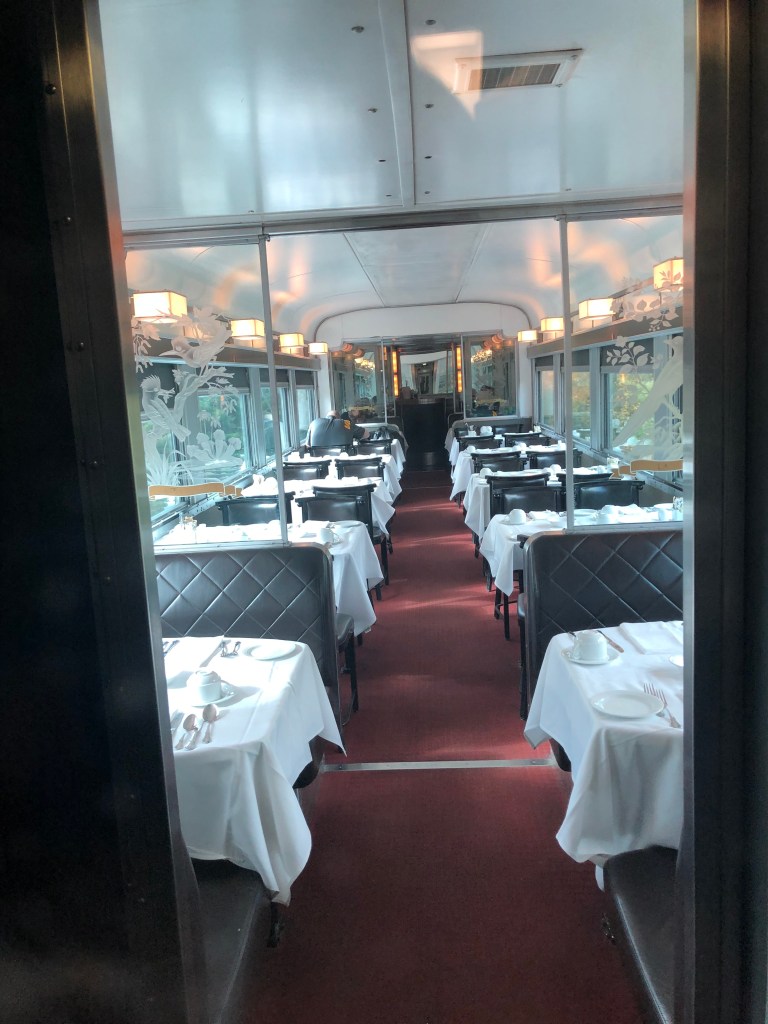
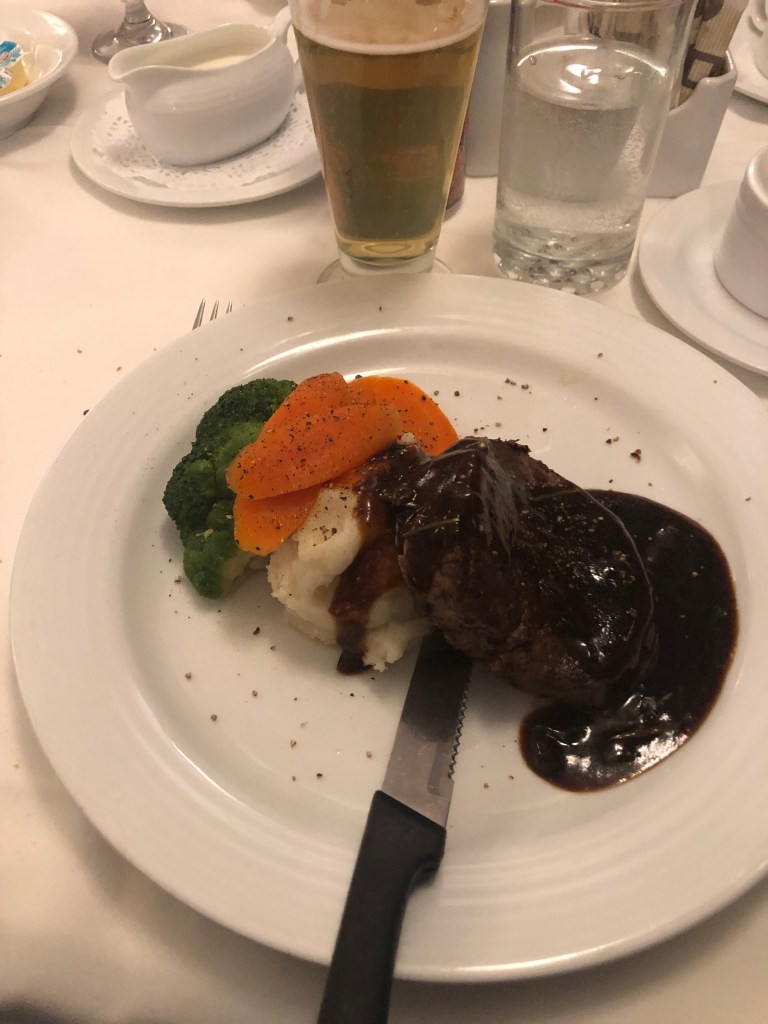
The train headed northwards to Milwaukee and then northwest towards Minneapolis. Progress was stop-start due to passing freight trains and a tech issue. Long distance Amtrak trains utilise lines owned by the fright companies in much the same way as ViaRail do in Canada so it was no surprise. As it turned out, these were the last delays of note we encountered and we were pretty much on time for the rest of the journey. I headed for dinner which as before is included in the fare for sleeper passengers. Coach passengers can pay $45 and are fitted in at the end of service for sleeper passengers. Like the train in general, the food was a big improvement on what I’d been served on the Lake Shore Regional. You are allocated a specific time for dinner and when called you are seated at the first available table. As a solo traveller this means you get to meet some interesting people. For the first dinner my dining companions were a university lecturer, an orthodox presbyterian minister and a young mum with an eleven month old baby. I’d end up sitting with the first two on other occasions but the mum got off somewhere in North Dakota in the wee small hours. Amtrak do a signature dish of Flatiron Steak so I decided to give that a try. It was pretty good. An alcoholic drink is included and along with the lecturer and minister I went for a beer. I headed for bed at around 10:30pm. I asked Carlos to make the bed up and took notes so I could do it myself the following evening. The bed and bedding were comfortable and I had high hopes for a decent night’s sleep.

What’s for dinner?

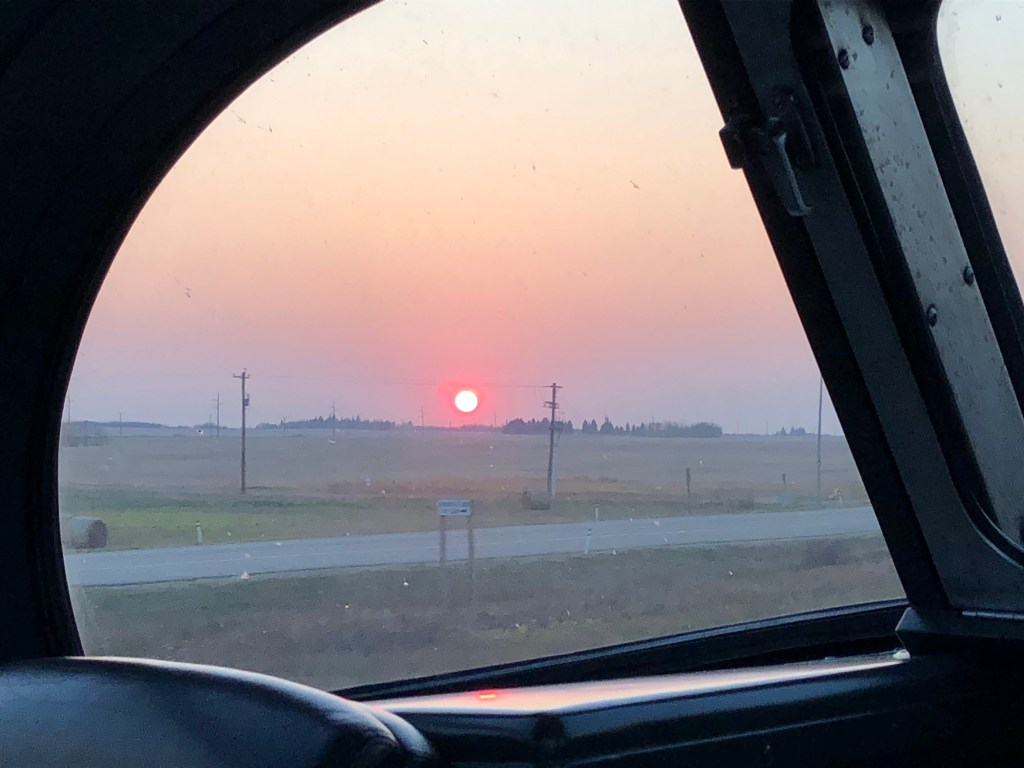
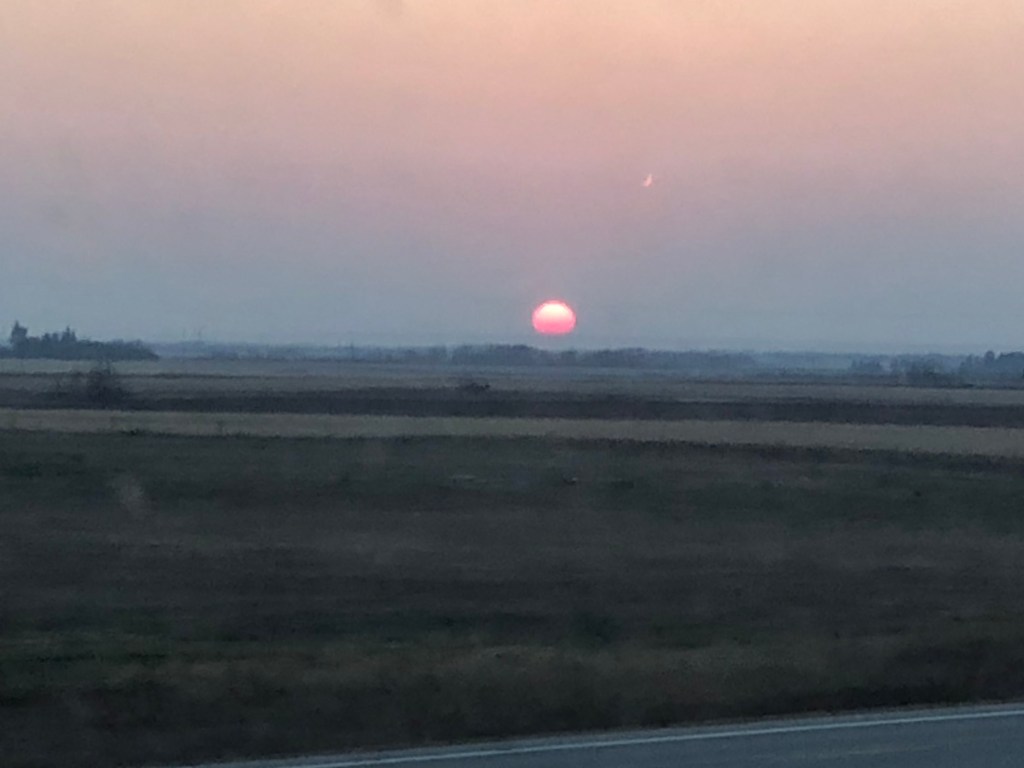
It was a decent night’s sleep. I did wake up at 04:50 but that was a good thing as I witnessed the most glorious pre-sunrise with northern skyline a shade of crimson that I have never seen before. We had just passed Fargo, North Dakota and after another couple of hours sleep I awoke again to the endless flat lands of the Great Plains. I headed to the lower deck to try the shower which was very good and after getting dressed I went to the dining car to get my name on the breakfast waiting list. Once called I had a good breakfast of omelette, sausage, potatoes and a croissant at a table shared with a grandad, mum and son on their way to Glacier Park. As usual, interesting stories were swapped and friendships that lasted for a whole day were forged, such is the nature of long distance train travel in these parts. At lunch I was sat opposite Bruce and Becca and next to Jim. Bruce was a recently retired dairy farmer from Wisconsin whilst Becca had homeschooled many daughters indeed. Jim was the presbyterian minister I’d met the night before. Once Bruce and Becca found out what Jim did that was it. I found myself in the middle of a long and involved doctrinal discussion and before long Bruce was thanking God for our Amtrak lunch. I was respectfully silent when it came to the ‘Amens’. As it happened I was wearing a Genesis tee shirt. Becca’s curiosity got the better of her. Sorry Becca, in this instance Genesis is a rock band who take their name from the first book of the Bible. She took it well but I could see the disappointment in her eyes. Eating aside, I spent most of the day in the panorama car. The Great Plains are pretty much the same as the Canadian Prairies. A few small towns, including Glasgow Montana which I was determined to get a photo of, and a lot of flat, dull countryside. I had loved it on The Canadian, just losing myself in the whole big country and even bigger sky thing. Was it the same on this journey? Almost, but not quite. I did enjoy the big country aspect but the big sky was overcast and rainy at times. There was, perhaps, a bit more of humanity’s odd endeavours to see, even if it was only a field full of abandoned cars or a line of nodding donkeys. No different to Canada but more frequently encountered. It wasn’t all plains either, the North Dakota Badlandnds provided some relief (literally) to the landscape. There were a number of smoke stops which meant I can now say I’ve set foot in North Dakota and Montana. Despite the summer solstice being just a few days away, it was getting quite chilly outside, just 5C in Shelby Montana. As the afternoon turned to evening and I went for dinner, the Great Plains started to give way to the Rocky Mountains.

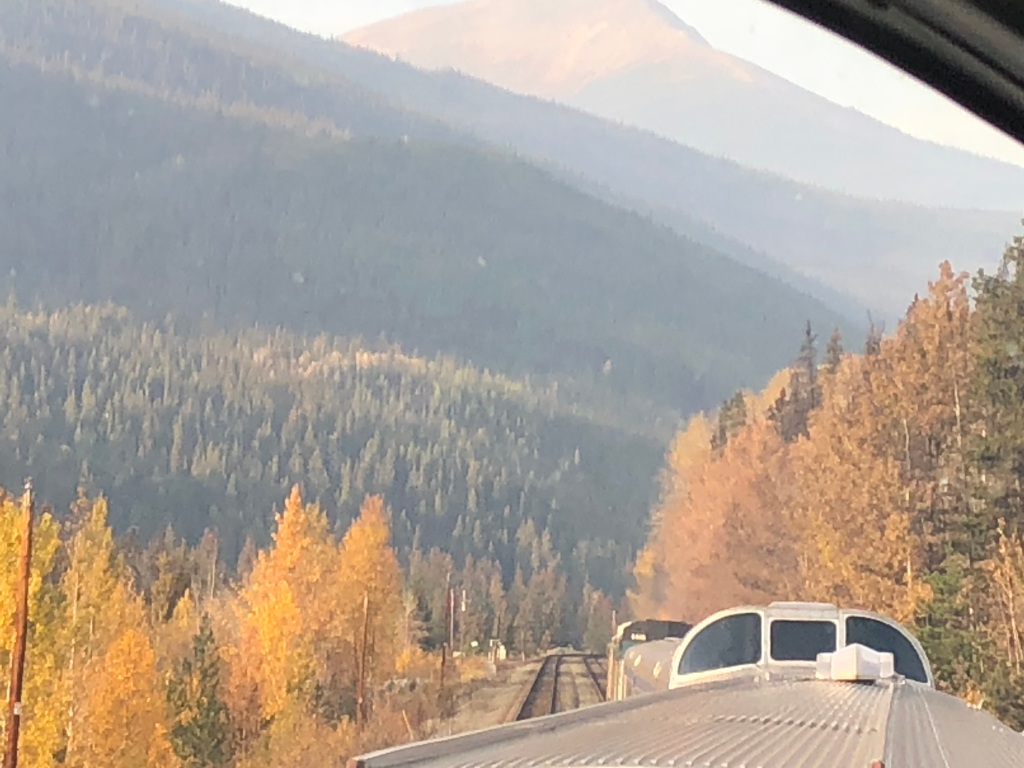
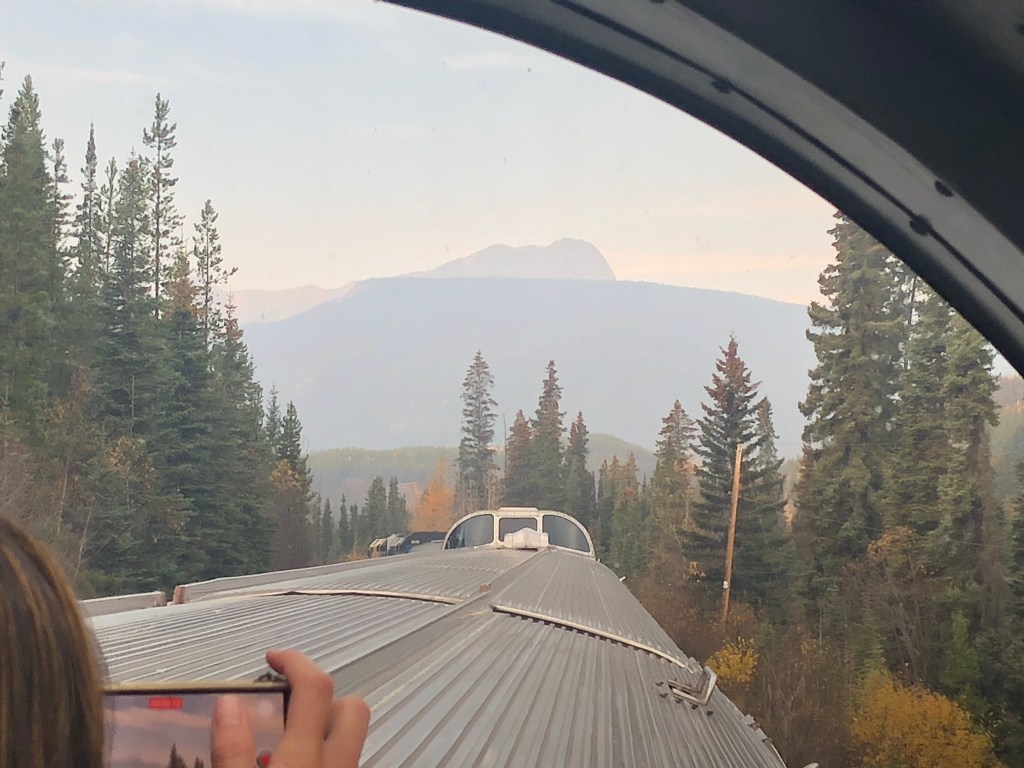
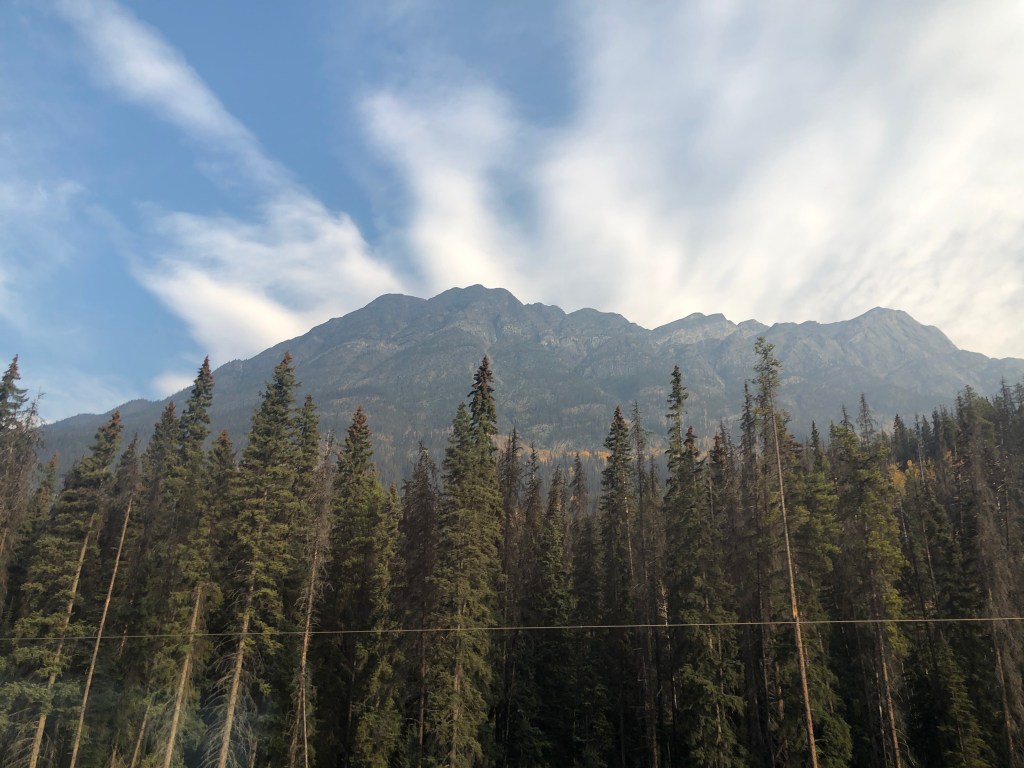
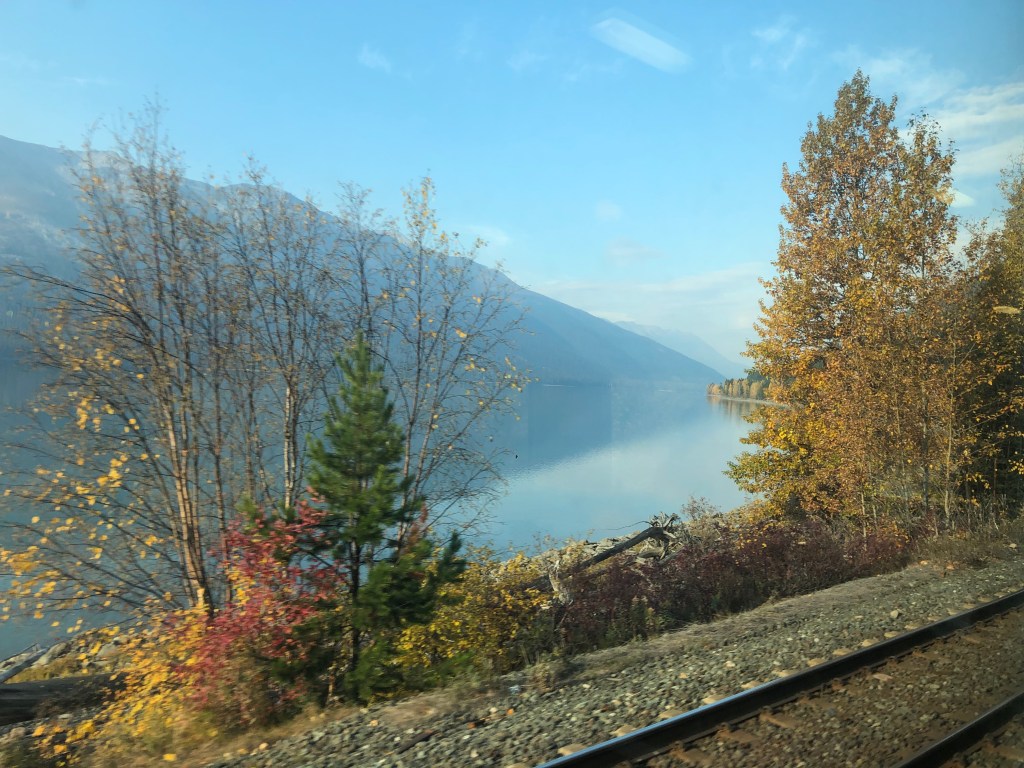
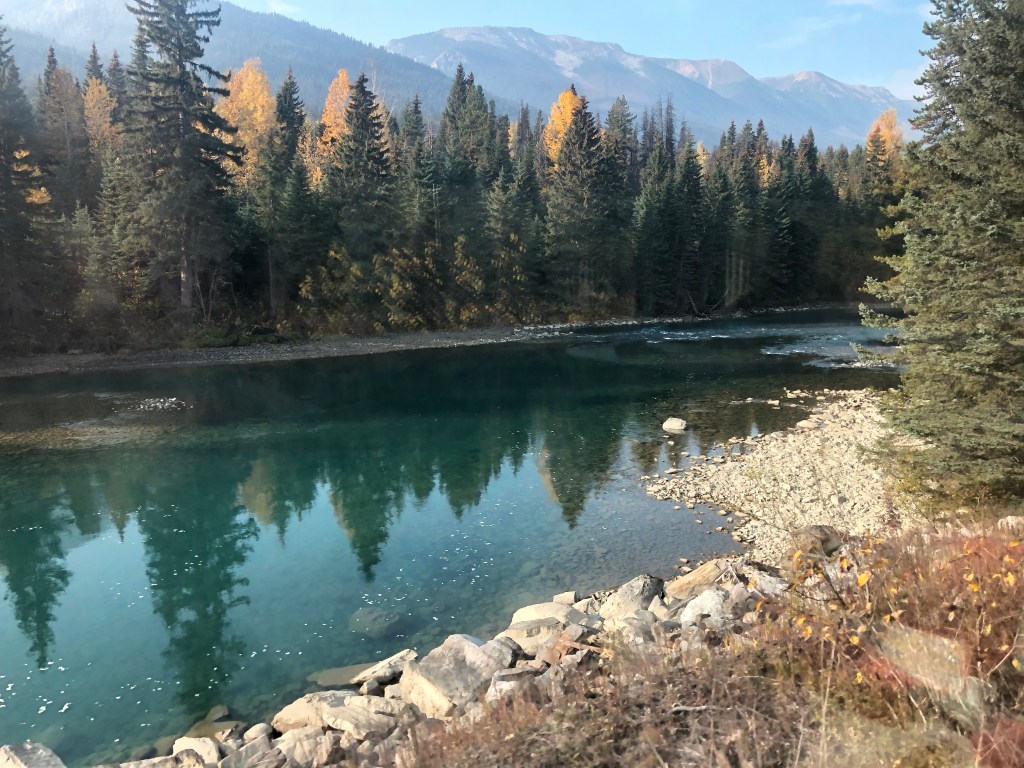
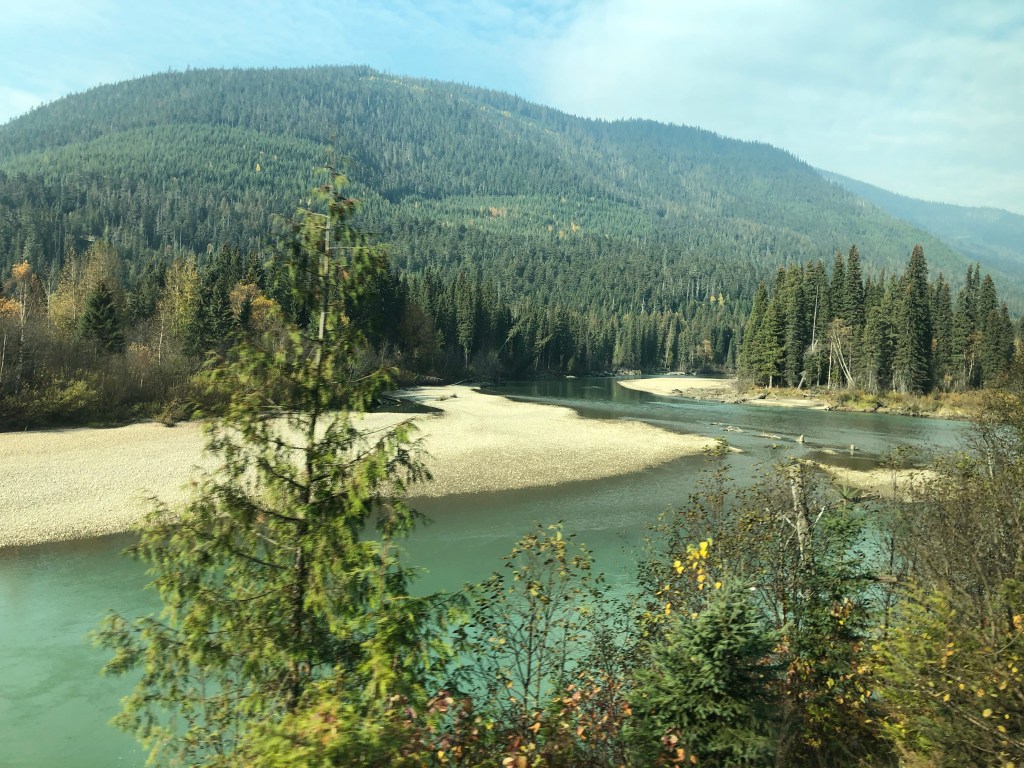
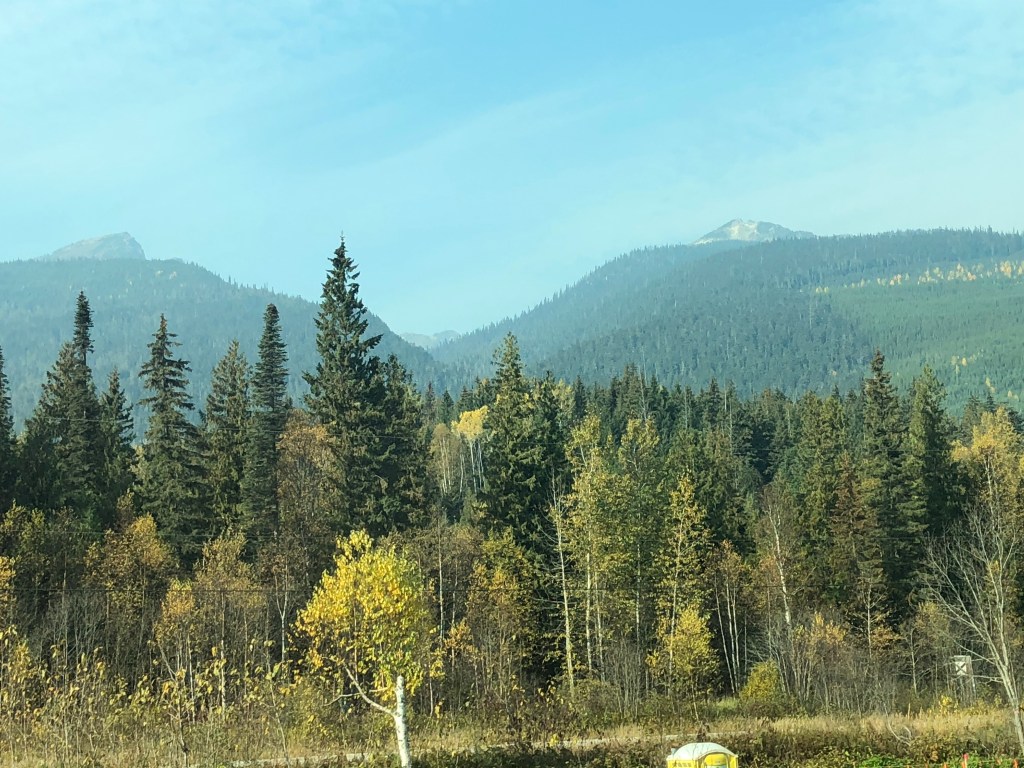
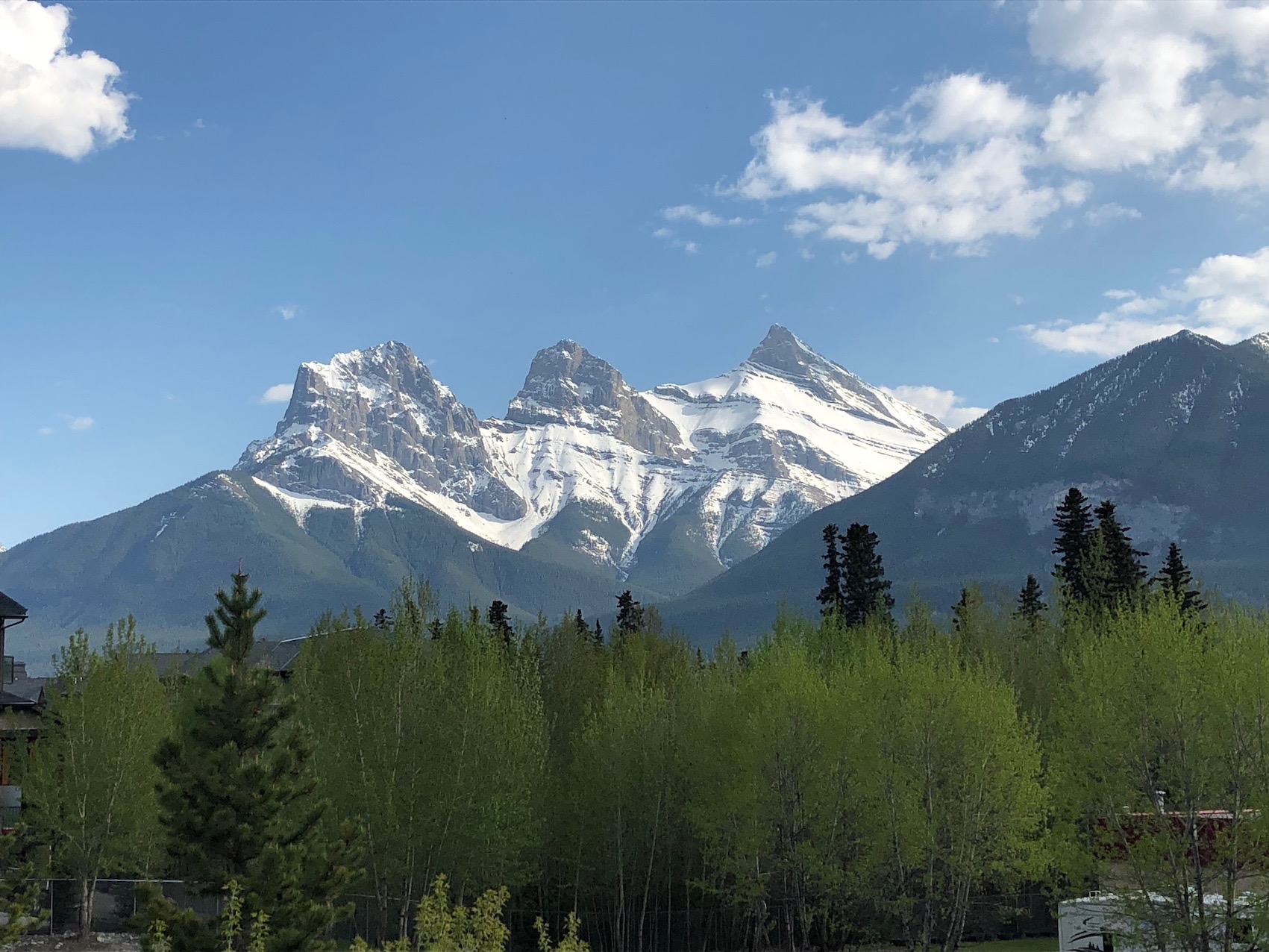
The Rockies are the scenic highlight of the trip. If you make the trip in winter, however, you aren’t going to see much of them due to lack of daylight. My trip was mid-June, close to the longest day which gave me an evening of Rocky action before the light finally faded. The views were good, though low cloud obscured some of the peaks. After a couple of hours we reached Whitefish, the final destination for a number of passengers and a smoke stop for the rest of us. When we commenced our journey the light had faded and the rest of the Rockies passed by unnoticed.

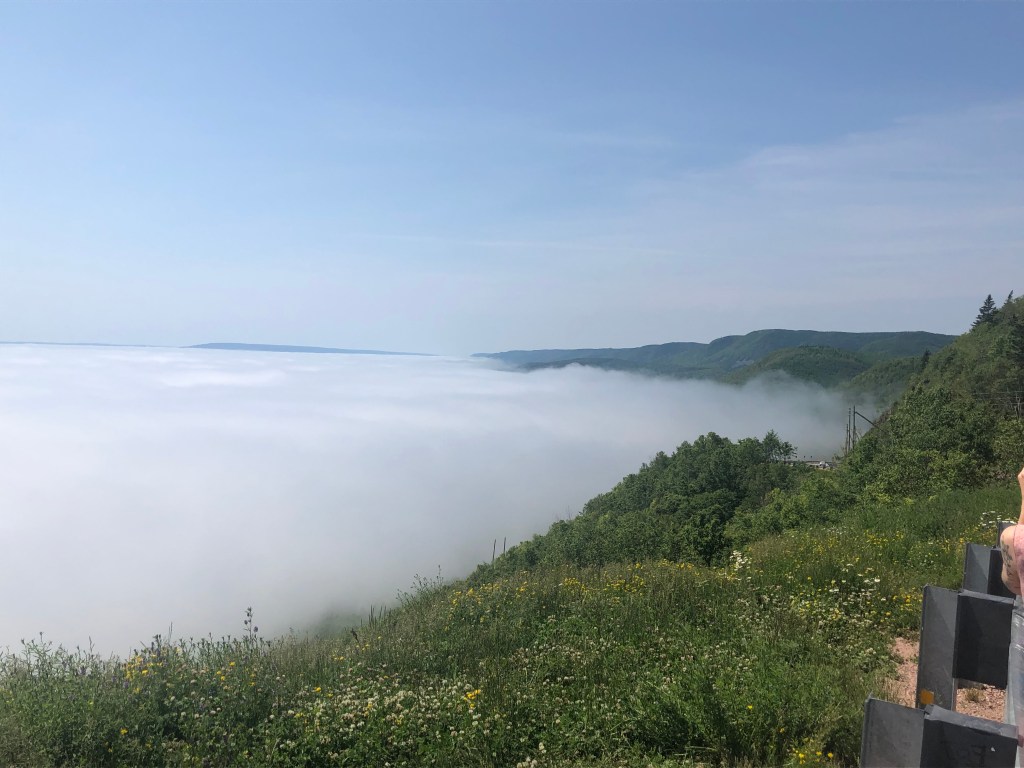
…a decent mountain photo.

I didn’t sleep particularly well and with gaining another hour overnight I was up and ready to go by 06:30. During the night we had stopped in Spokane where the train had split. One half, along with the panorama car, was going to Portland, Oregon with my half heading to Seattle. The dining car came with us which meant a decent breakfast whilst the fruit farms of eastern Washington State passed by. It was all rather pleasant. After breakfast, however, things started to drag. The train passed through the Cascade Mountains. This sounds scenic and they possibly are but deep in the valleys with tall trees lining the track views were fleeting at best. The route is by necessity meandering which limited speed to 25mph and with the panorama car on its way to Portland rather than Seattle I was pretty much restricted to the roomette for the rest of the journey. We eventually emerged from the Cascades and through more fruit farms before reaching the coast just beyond Everett. The track turned south and followed the Puget Sound into Seattle where the train would terminate. We were actually half an hour ahead of schedule which was a little bonus as by then I was ready for the rail part of the journey to end.

I would have to wait until the following morning to complete the journey though. Amtrak does operate to Vancouver but the train departs before the Empire Builder arrives and the afternoon service is by bus. I didn’t really fancy that so I had booked a night in Seattle and a seat on the FRS Clipper ferry direct to Victoria the following morning. I took a taxi to the Moore Hotel due to the fact I had no idea where it was thanks to my lack of internet access. There I was able to check in early which was a big bonus. The hotel had an air of faded glory but was perfectly fine for my needs. Importantly it had wifi and I managed to reconnect with the world. I also had an afternoon and evening to kill which I did do by wandering round the local area. It was a good area as it happens, with tourist hotspots like Pike Place Market and the aquarium just a few minutes away. It was a little less desirable in the evening as the hotel appeared to be just a block away from where the many homeless of the city gather but that is a problem in most major western cities. It was only a brief visit but overall I liked Seattle and will have to go again.

Mount Rainier along with a cloud pretending to be Mount Rainier

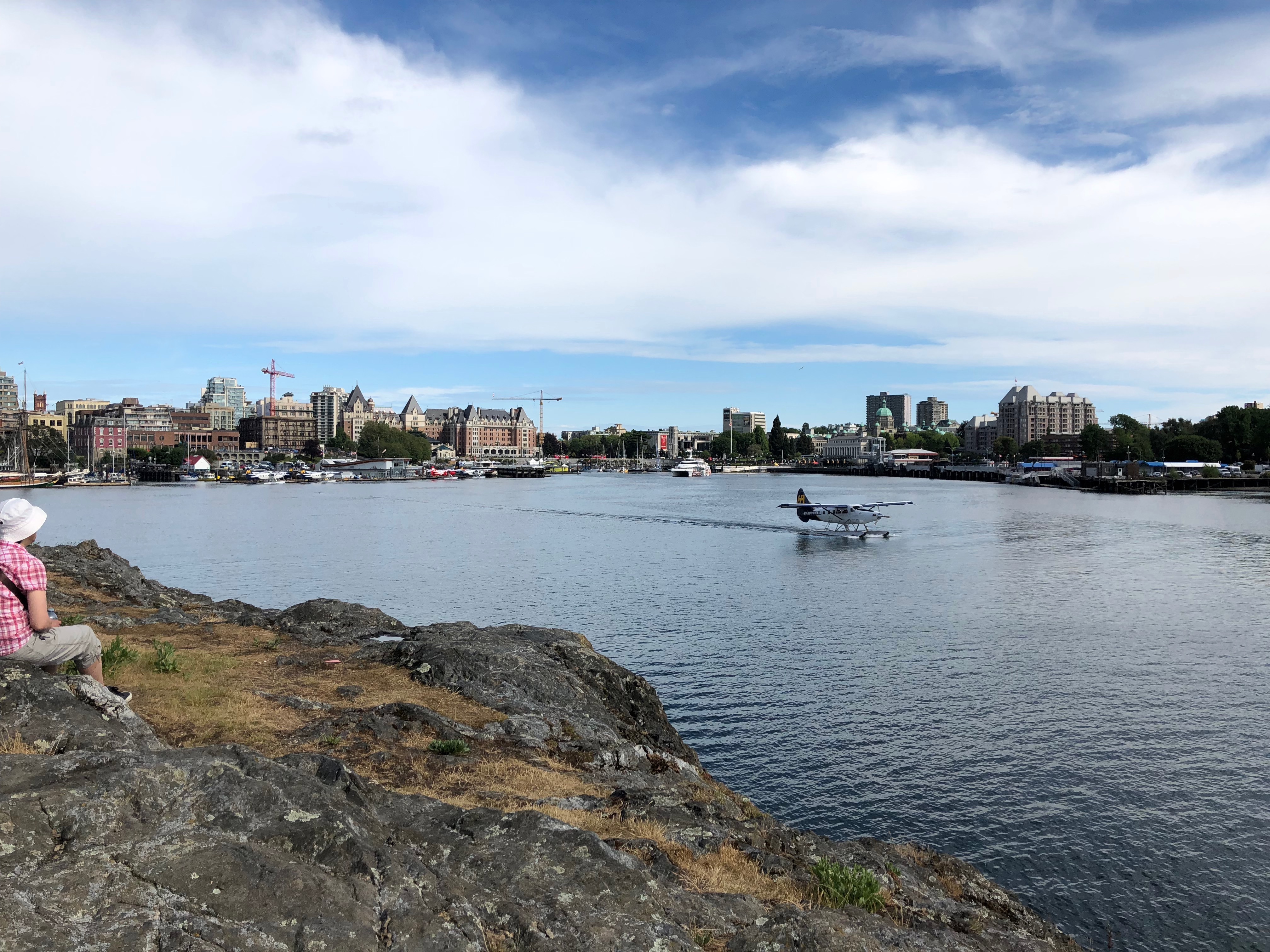
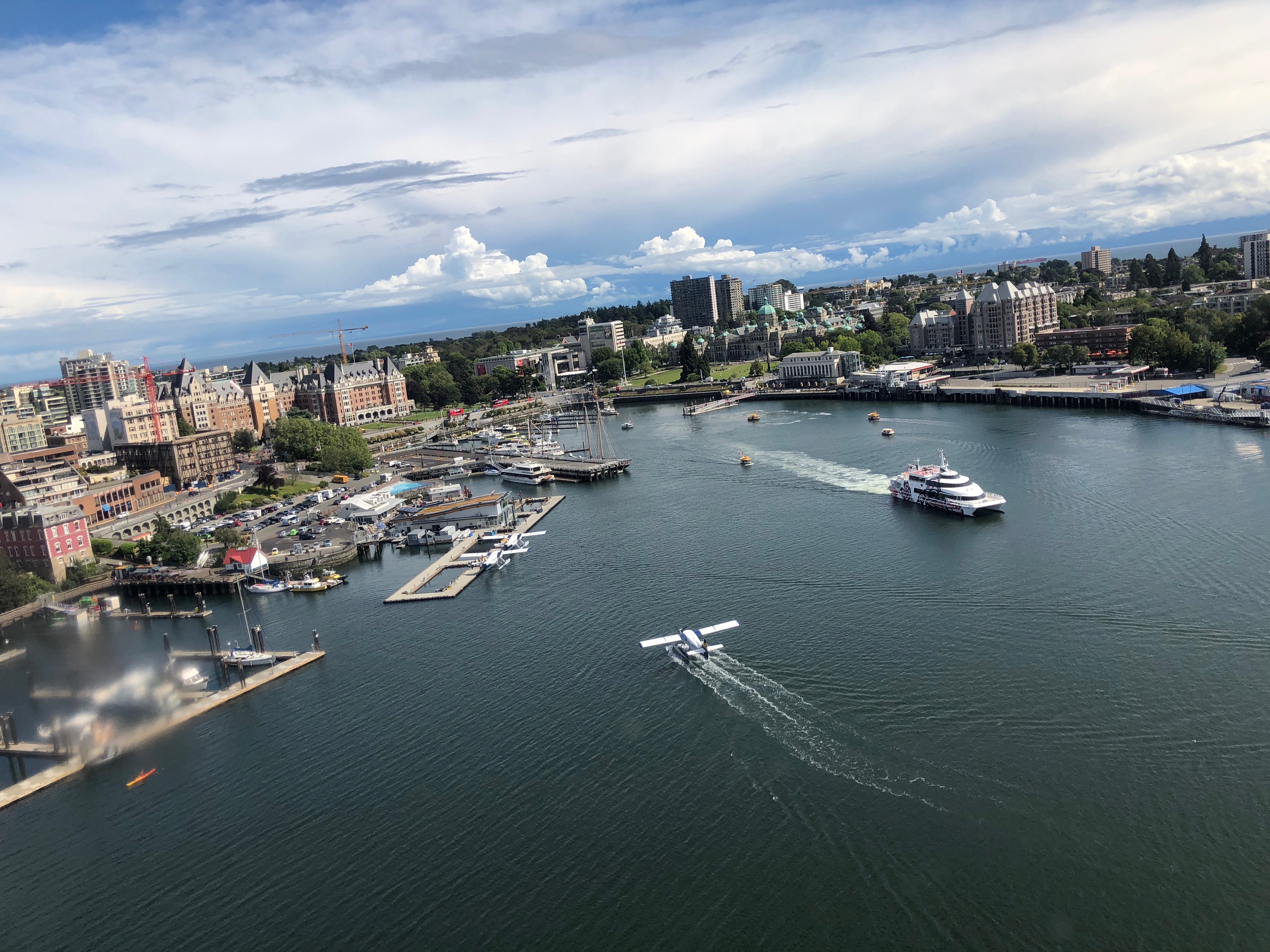
It was an early start the following morning. I needed to be at Pier 69 by 07:00 to check in for the FRS Clipper to Victoria. It wasn’t too far a walk from the hotel, even with two heavy suitcases in tow, and I was there in good time. Victoria Clipper V is a twin hull high speed passenger only ferry. Whilst it can be used simply for ferrying folk between Seattle and Victoria the schedules are timed for those Americans who fancy a day trip or short break to the capital of British Columbia, hence the 08:00 departure. At check in I had to pay $20 for each suitcase which was on top of the fare. A single fare isn’t much less than a return which is another indication that they prefer day trippers. There are three classes on board, I took the basic one which was perfectly fine. The journey took three hours to travel the 72 miles between Seattle and Victoria. It was a good run in perfect weather, up the Puget Sound and across the Strait of Juan Da Fuca at a healthy 29 knots. Slowing to a snail’s pace we entered Victoria Harbour and moored at our berth just a short distance from the BC Parliament Building. It took a while to clear Canadian immigration but once through, Rebecca was there to meet me and with the bags deposited in the boot of her ageing VW Beetle, I considered that this was Journey’s End.

FRS Clipper (in Victoria a couple of days later)
Eleven days and nine hours after leaving my house, Journey’s End.

Conclusion

At the beginning of Part One of this two part blog I explained why I set out on this adventure. Was it possible to get from Troon to Victoria on the far side of Canada using surface transport. The answer is, of course, yes as I have shown. Is it a practical way of getting between the two? It is, but only if you have a lot of spare time on your hands and are prepared to spend a fair amount of amount of cash or if you are really, really keen to avoid flying. From start to finish the journey took eleven days and nine hours. That is a significant chunk out of anyone’s life. You could possibly shave half a day off that time with different connections at either end but that’s about it. I’ll detail the cost below but we are talking in the region of £3,300 for the ‘fare’. That could be significantly reduced if you take a coach seat on the train rather than sleeping accommodation or sleeping in a hostel rather than hotels but had they been the only options, I wouldn’t have gone as I’m not a masochist. Of course there was more than practicality to my trip. For me the journey is part of the travel experience and it was an experience I enjoyed. As mentioned in Part One the QM2 crossing was great to do once but as a ‘cruise’ it was a bit of a dead loss with five days out of sight of land. They treat you nicely and everything but it does get a bit, well, boring. That arrival into New York though… As for the train, again I enjoyed the journey but I was a bit disappointed with Amtrak. The Lake Shore Limited wasn’t great, despite my upgraded room. Shabby carriages and below average food means I won’t be taking that train again any time soon. The Empire Builder had much better rolling stock and the food was pretty good. On both trains the car stewards were great but otherwise the service wasn’t the best. I can’t help but compare the journey with my rail trip across Canada in 2022. That was an epic journey that I’d do again in a heartbeat. Just about every aspect of it was better than the Lake Shore Limited and Empire Builder including the scenery. I believe the California Zephyr is the Amtrak service to go on if you want to be wowed by the scenery so maybe I’ll put that on the to do list. I might be sounding a bit ungrateful here as I really did enjoy the journey. I met some interesting people, saw some things that I’ll never see again and have memories that will last a lifetime, or at least until the dementia sets in. Would I do it again? As I’m unlikely to develop a fear of flying it’s a big ‘no’.

Costings:

  • Train Barassie – Glasgow £5.00
  • Train Glasgow – Southampton £61.19
  • Hotel Premier Inn Southampton £103.00
  • Ship Southampton – New York £1388.00
  • Train New York – Seattle £1450.44 ($1836)
  • Hotel Moore Hotel Seattle £152.00
  • Ship Seattle – Victoria £89.86 ($113.75)
  • Checked Bags Seattle – Victoria £31.60 ($40)
  • Taxis New York and Seattle £27.65 ($35)
  • TOTAL £3308.74

Notes: Above costings in US Dollars are converted at a rate of £0.79 to the dollar. In addition I would add the following ‘essentials’, Internet on board the QM2 £81.90 (special offer) plus at least £80 towards drinks on board the ship. I was in a shared taxi in New York which probably saved me £40. You might want to tip your cabin steward on the trains so maybe add another £30. The Barassie-Glasgow train was bought on the day with a Scottish bus pass discount. Train from Glasgow to Southampton was booked on trainline using a ticket split. Both the QM2 and Amtrak fares were booked ten months in advance. Premier Inn was booked direct online a few months in advance. The Moore Hotel was reserved through Expedia. FRS Clipper was booked online several months ahead.

The Maritimes

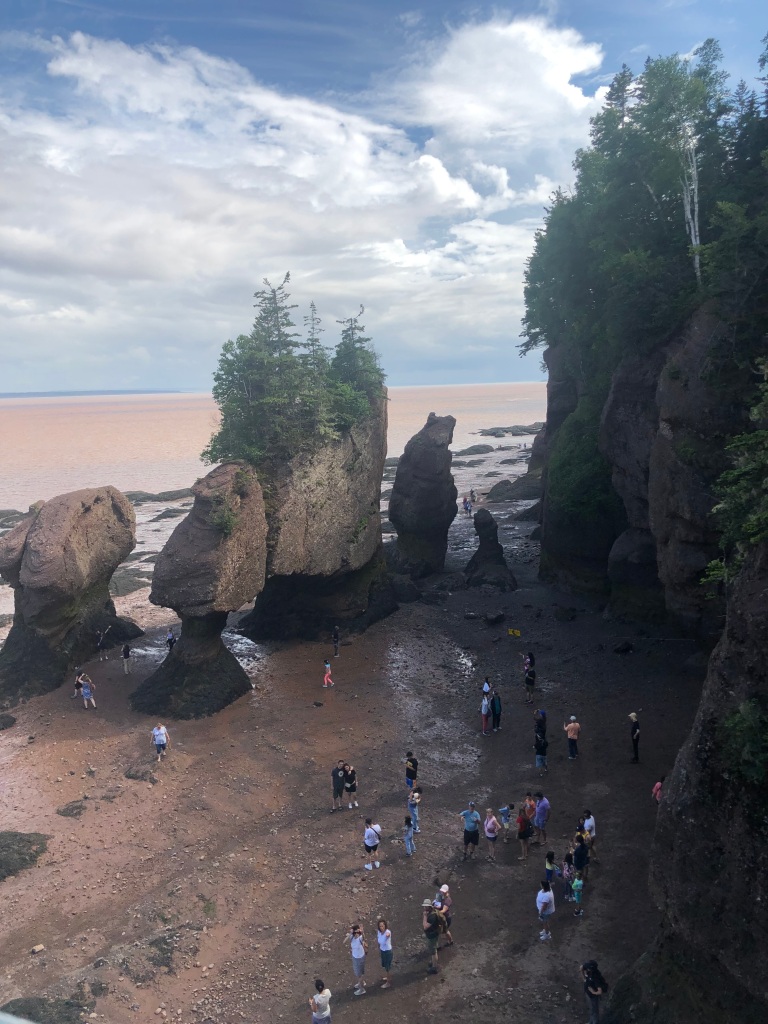
ET Rock, Hopewell, Bay of Fundy.

I’ve covered Canada before on this blog site but it’s a country I like and also my daughter lives there so I tend to go there a lot. It is also big and whilst it is true that the entire population with the exception of a few people who like really cold weather live within a hundred miles of the USA border, there’s an awful lot of tamed Canada left to visit before I even think about seeing the untamed bit. Nearly four years ago I booked a holiday in the east of the country for the summer of 2020. It was a really good itinerary if I may say so myself. We were to visit Nova Scotia, Prince Edward Island and have a few days in Montreal. Rebecca was going to fly across from Victoria, a flight almost as long as ours from the UK, to join us. Of course in March 2020 we went into lockdown and whilst it was by no means certain that the holiday was off at first, it soon became obvious that this holiday was to fall victim to the pandemic. It was pretty miserable having to cancel the holiday one Airbnb at a time. There was always a hope that we would get the chance to do it again but it wasn’t going to be for a while. Travel to Canada didn’t really become practical for two years. We went back to Canada last year but to the west and I followed that up with my Trans-Canada rail trip last autumn which included a couple of days in Halifax, one of the destinations of our original itinerary. By then, however, I’d already booked some flights to Montreal for summer 2023 and was soon spending some happy hours securing accommodation, again through Airbnb. In fact I looked to see if I could book the places we had intended going to in 2020. Only one of those was available so I booked it and worked out an itinerary around it.

Canada has ten provinces and three territories. Most are really rather huge but in the east there are three small ones that are collectively known as The Maritimes. These are New Brunswick, Nova Scota and the smallest province of them all, Prince Edward Island. We would visit all three along with Montreal in Quebec. Had we managed to fit in a trip to Newfoundland, this blog would be titled Atlantic Canada. The province of Newfoundland and Labrador is lumped together with the three Maritimes provinces to form Atlantic Canada. We toyed with the idea but that would have been a lot to fit in to the two weeks we had allocated for this holiday. Once finalised, the itinerary was this: Fly to Montreal and spend one night in the world’s grottiest airport hotel (in my defence I didn’t realise it was quite as bad as it was until we got there) and then fly to Halifax. Rebecca would fly into Halifax the same day and we’d spend three nights in the Nova Scotian capital city. Then it would be two nights in St Martins, New Brunswick, three nights on Prince Edward Island and three nights on Cape Breton Island which is the northern third of Nova Scotia. After that it was back to Halifax Airport to drop off the hire car and fly to Montreal where we would have three nights before returning home, Rebecca westwards, us eastwards.

Halifax

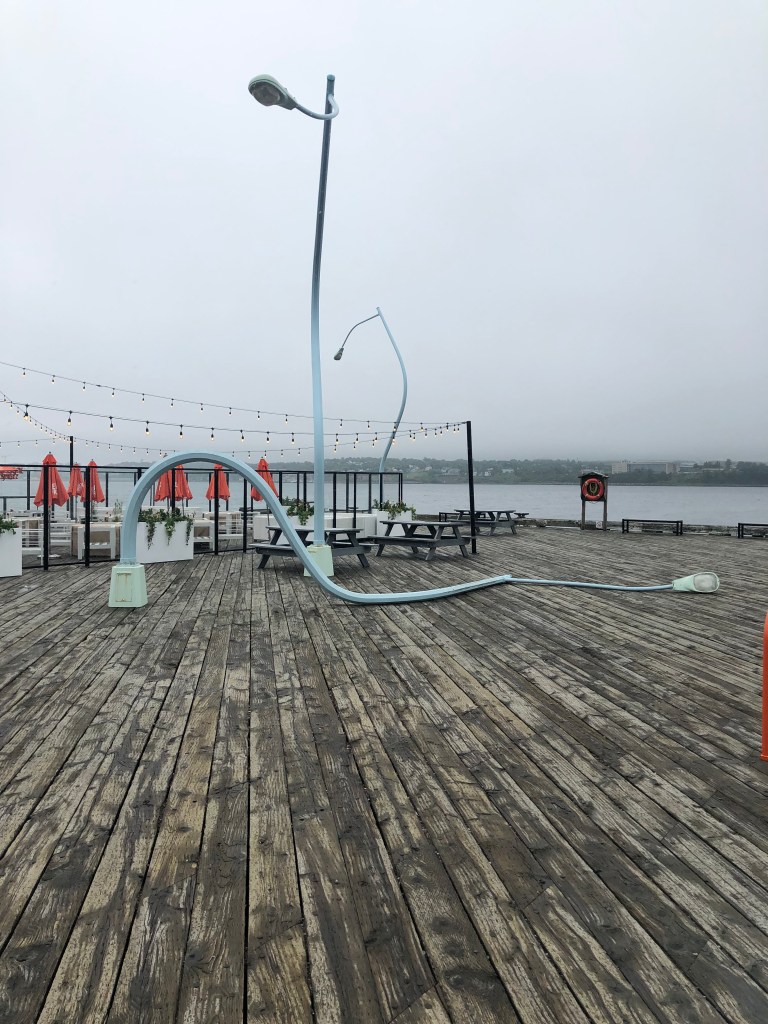
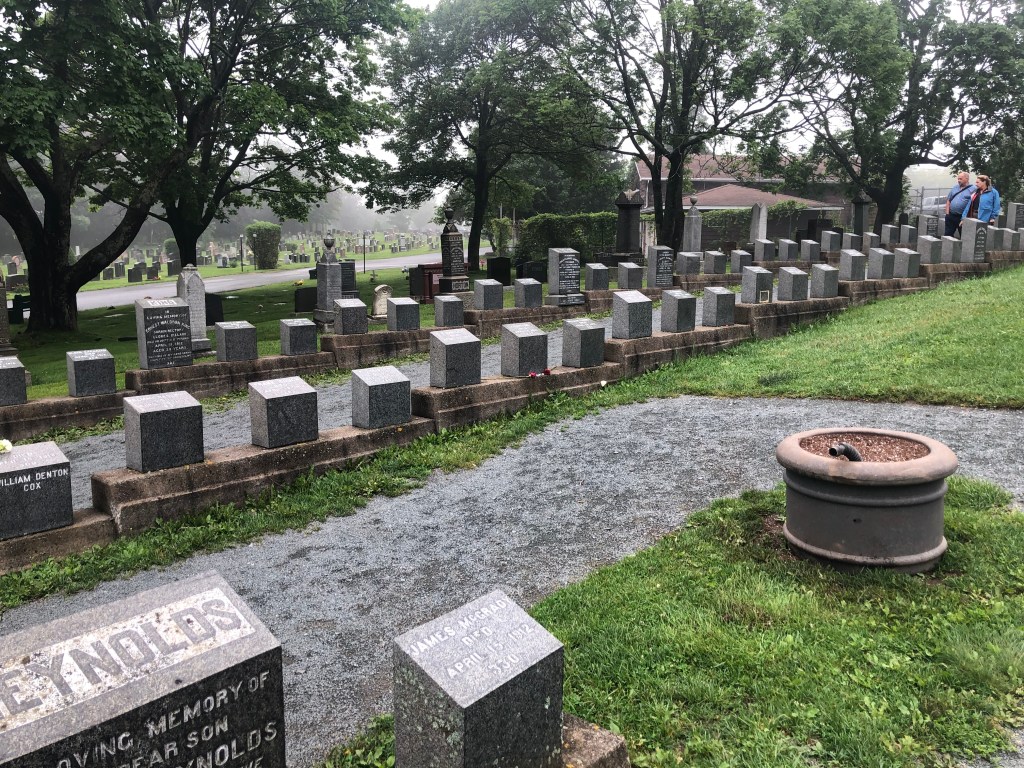
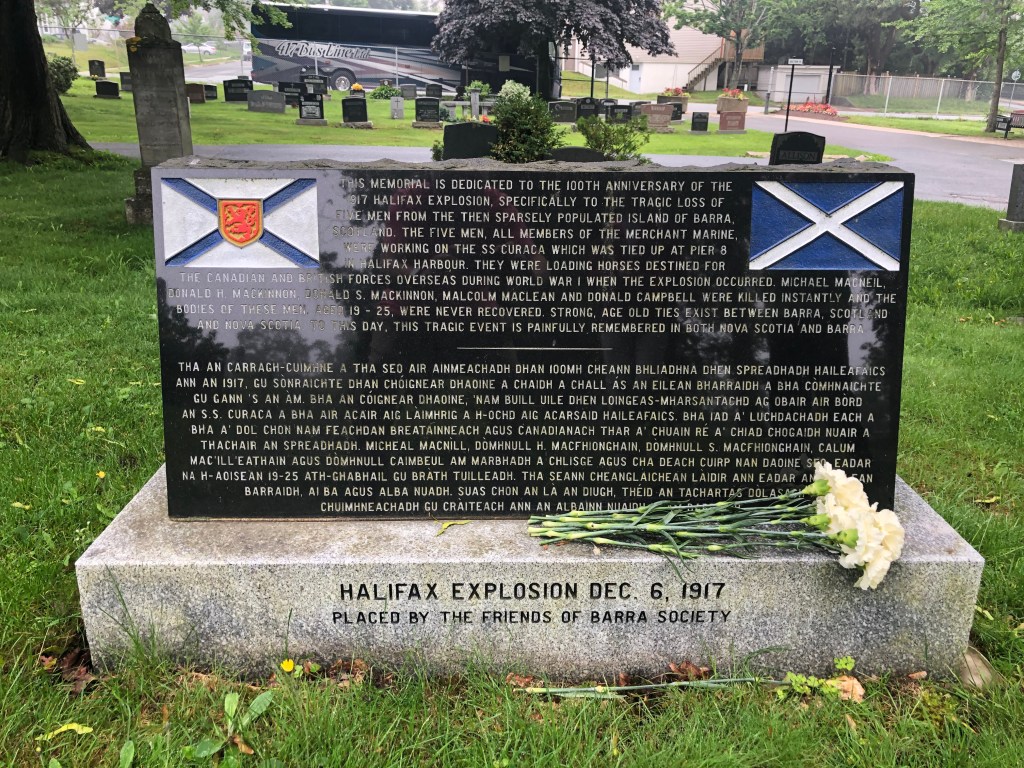
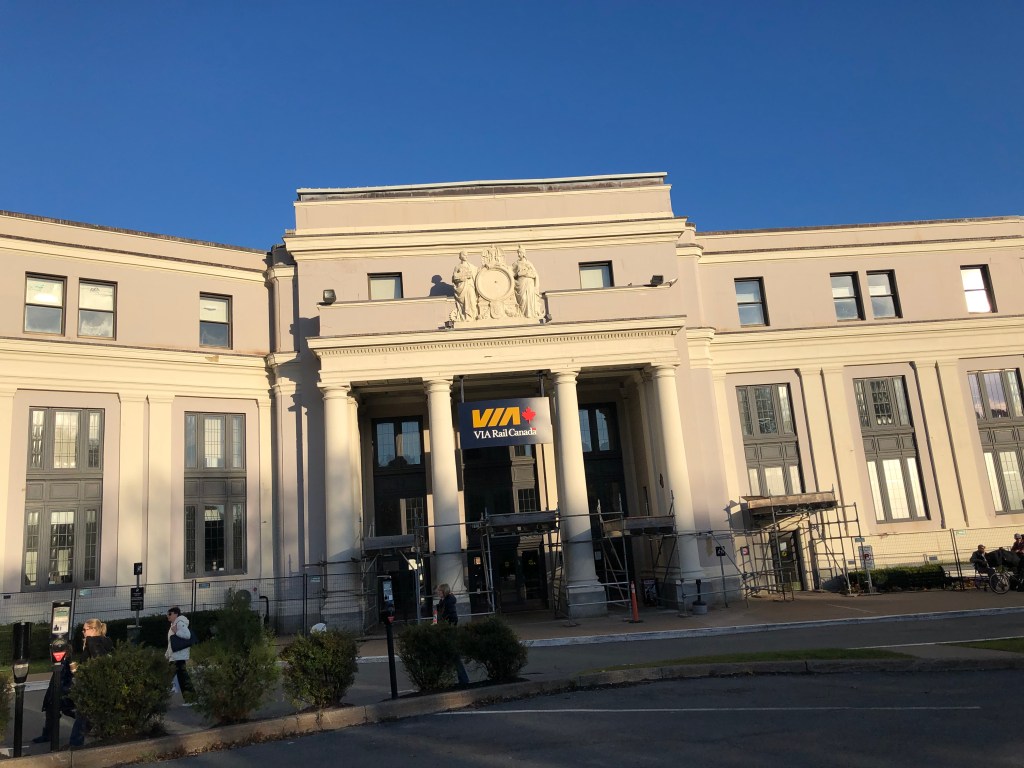
Our flight to Montreal arrived in the evening so we had decided to overnight in an airport hotel called L’Auberge de l’Aeroport. It was bad. Should you ever find yourself requiring a night in a Montreal Airport hotel, I’d give this one a miss. The airport transfer was handy though and we were back at the airport the following morning for our Air Canada flight to Halifax. Once there we collected the hire car keys and waited for Rebecca’s flight from Halifax. It was on time and we finally set off to Halifax, a half hour drive away. Our Airbnb was an apartment in an old house in a residential part of the town but only a ten minute walk from the centre. It was too late to discover the city other than the nearby Sobey’s supermarket where we stocked up on supplies. To be honest, visiting a supermarket is always quite a fun part of any foreign holiday, even in places like Canada where the prices had my inner Yorkshireman yelling “‘ow much?” This gave us two days to discover Halifax. The main thing we discovered over those two days was that it rains a lot. It didn’t rain at all when I was there last October but having extolled its virtues to Elaine and Rebecca, we got to see it at its gloomiest and, of course, wettest. It was a shame as it is actually a nice town. Not stunningly beautiful or particularly elegant but it has an attractive waterfront and a nice vibe about the place. Like a lot of Canadian cities there tends to be a lingering aroma of cannabis that not even the rain could dampen down and personally I could do without it but this is the world we live in I suppose. It has history, not all of it pleasant, and there are plenty of restaurants that cater for most tastes. It’s just a shame I can’t really comment more about it. The rain, along with the fact that Rebecca was feeling a bit under the weather (no pun intended) meant we didn’t really get the best of the place. After our third night we packed up and left but did call into Fairview Lawn Cemetery. This is a large public graveyard which just happens to be the last resting place of 121 victims of the Titanic disaster of 1912. The graves are set out in the shape of a ship’s hull and it is quite a moving place. There are memorials to some of the victims of the Halifax Explosion of 1917. Google it if you don’t know. It’s a sad story.
Memorial, in English and Gaelic, to five sailors from Barra who died in the Halifax Explosion of 1917.

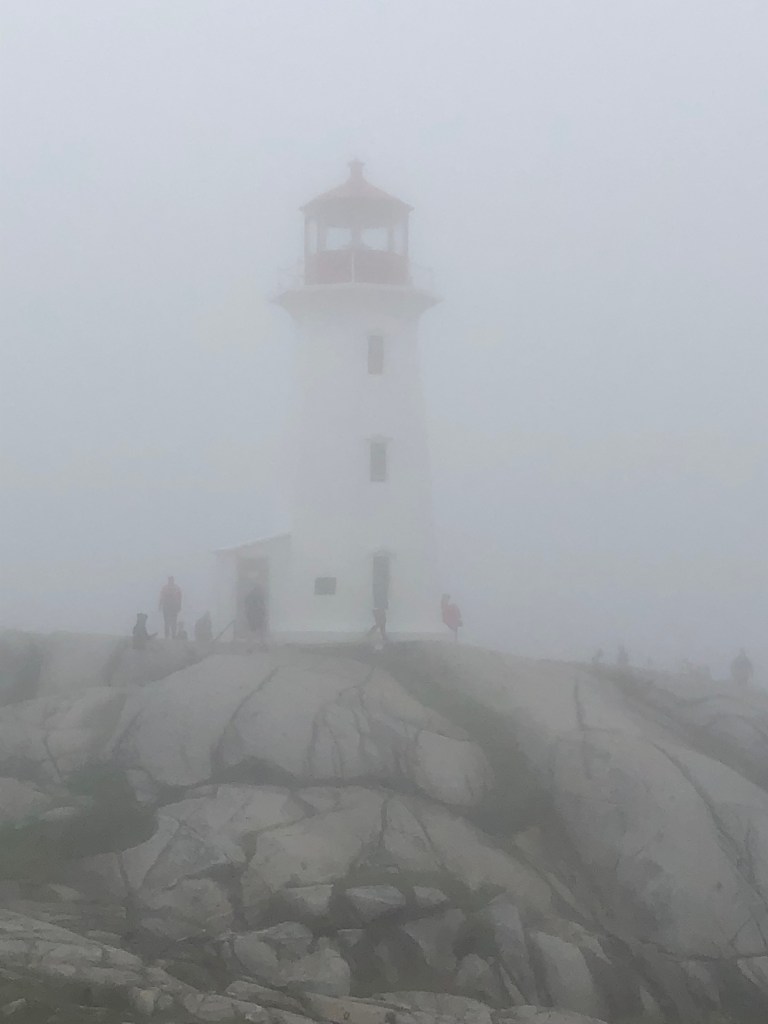
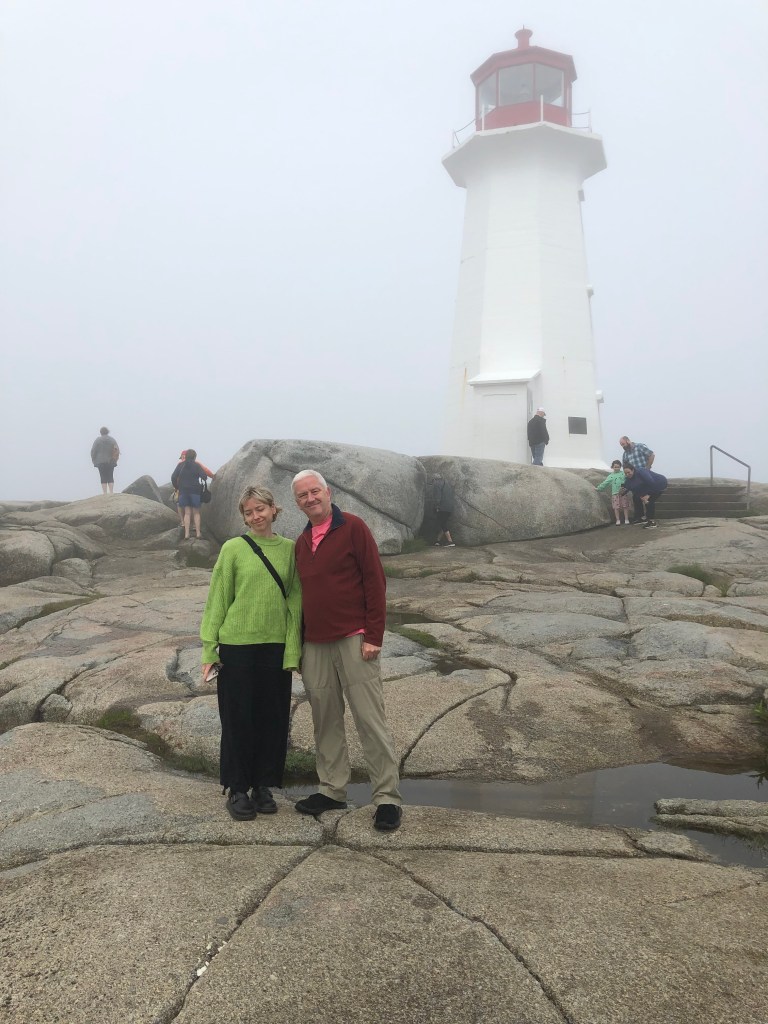
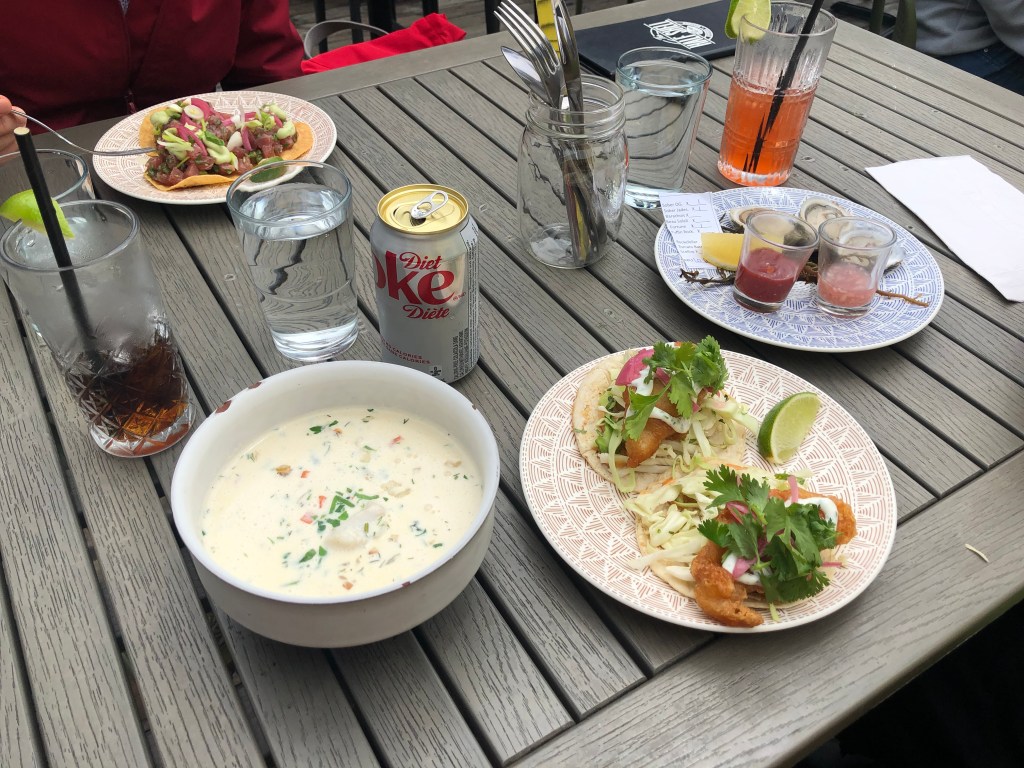
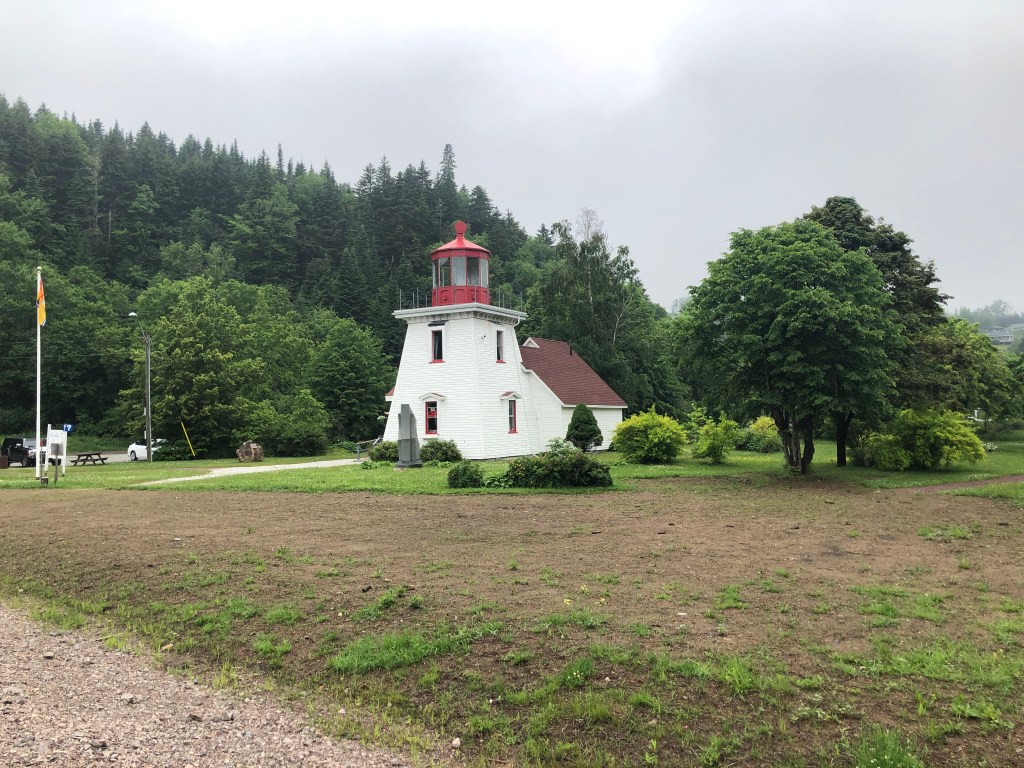
Leaving Halifax, we set out to discover Peggy’s Cove Lighthouse. There’s lots of lighthouses in the Maritimes but the most famous one of the lot is Peggy’s Cove. It’s an hour or so from central Halifax and stands on some impressive rocks that are lapped and sometimes battered by the waves of the North Atlantic Ocean. The good news was that the rain stayed away. The bad news was that it was replaced by fog. Instead of getting to see the famous Peggy’s Cove Lighthouse in all her dramatic glory, we finally got to see it peering moodily out of the mist. It was quite nice in a way but you can’t help feeling a little disappointed that the one day you are there it is totally invisible until you get within a couple of hundred metres of it. Just to the south is the memorial to those who died in the Swissair 111 crash in 1998 so I felt it only fitting that as an avgeek and former Air Traffic Controller we should pop in and pay our respects. We had lunch in the costal town of Lunenburg. This is a typical Nova Scotian fishing town of which I believe there are a few dotted along the coastline to the south of Halifax. It was very pretty and did a good line in seafood restaurants and we left wondering if we should have spent a bit more time discovering the others. However, we had to move on, driving to the port of Digby where we boarded the ferry across the Bay of Fundy to Saint John in New Brunswick. There we were greeted by an absolute cloudburst which accompanied us on our journey north to St Martins, a small town near which our next Airbnb was located.

Bay of Fundy

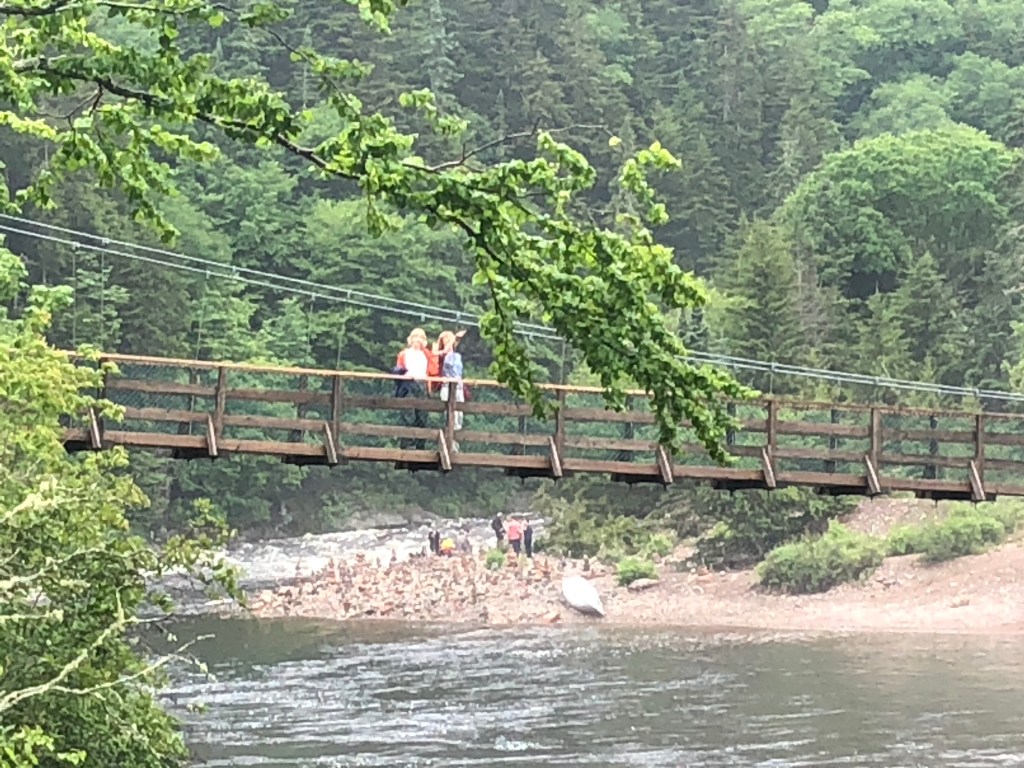
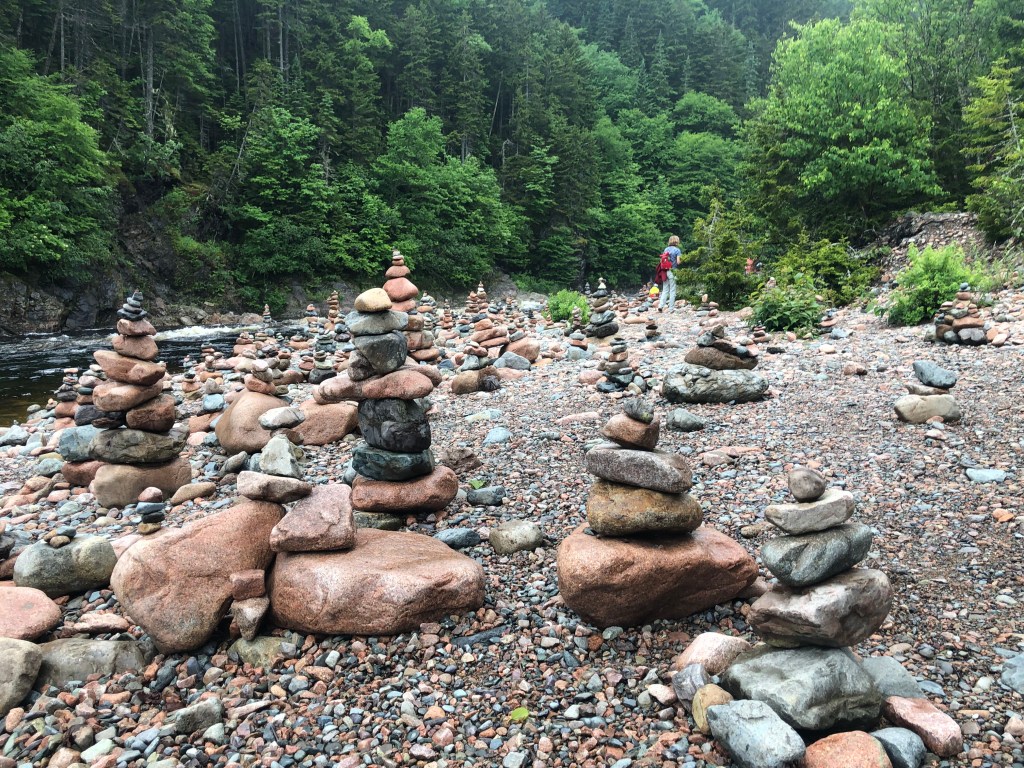
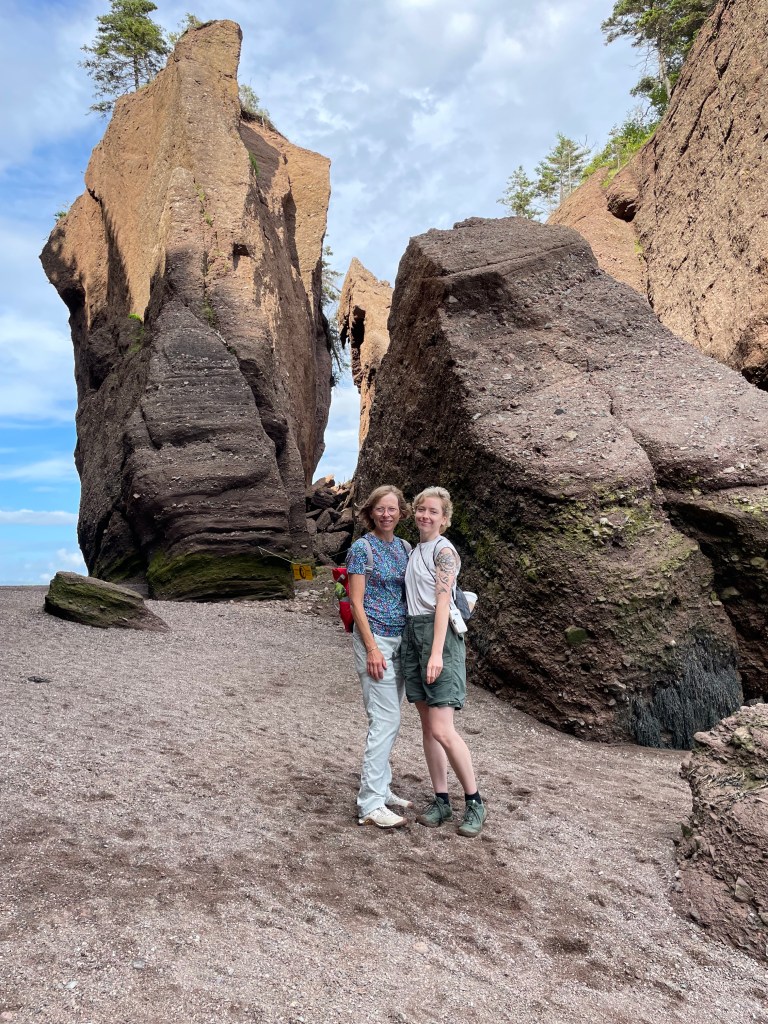
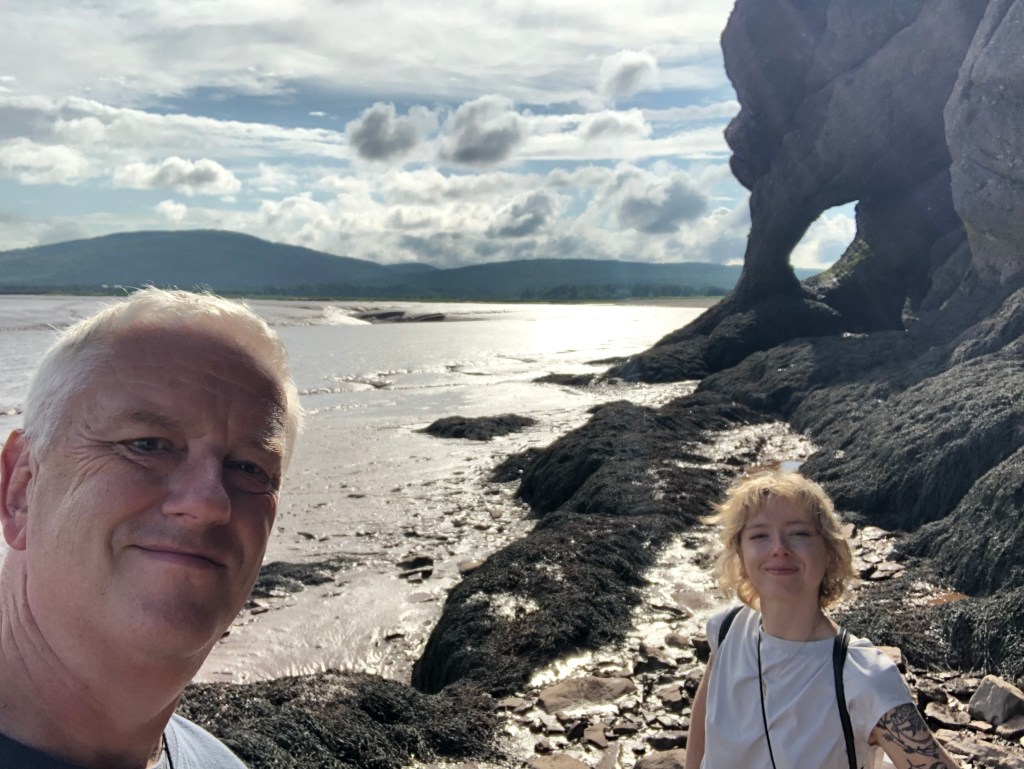
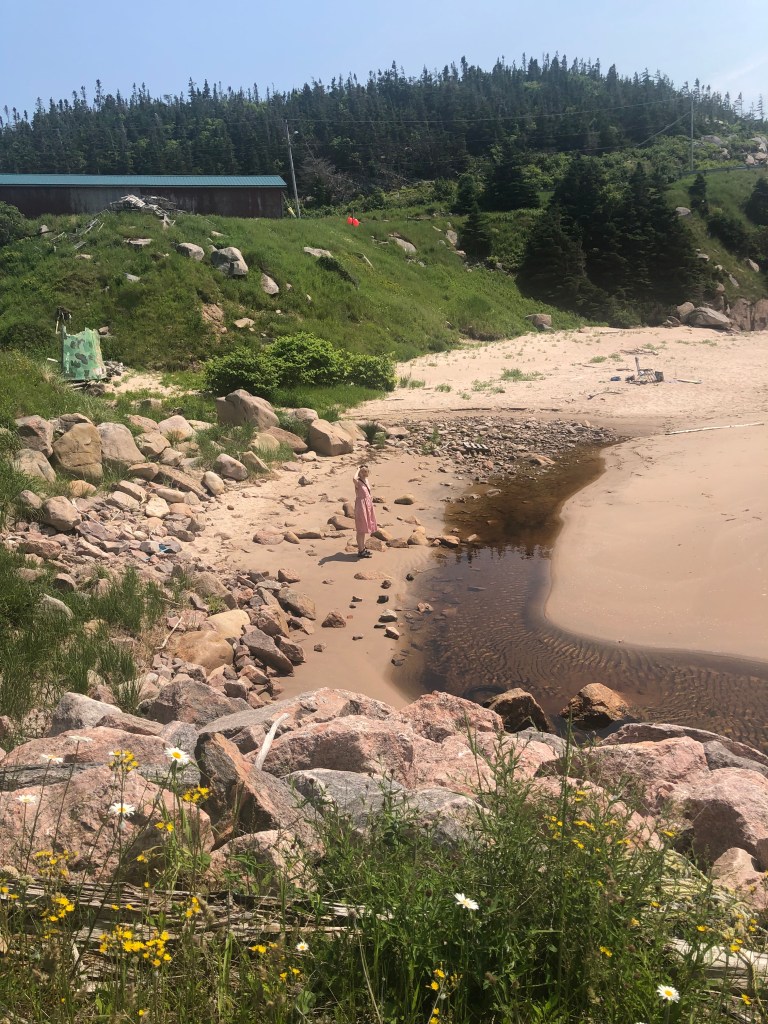
We only had two nights here so were forced to cram all our New Brunswick activities into one day. I do believe we managed it. The main attraction was the Bay of Fundy itself. Its situation means is has the highest tidal range of anywhere in the world. The best place to experience this was Hopewell Rocks which was a couple of hours drive away and the best time to see it was low tide which happened to be 6pm. That gave us time to have a look round the pretty St Martins harbour with its two covered wooden bridges before a drive along the Fundy Trail Parkway. True to form it was raining and also foggy so all the lookout points along the way were rendered rather useless. After a lunch break, however, the weather cleared allowing us a nice walk along the mouth of Big Salmon River. The Parkway has a lot of trails to offer so we couldn’t take full advantage of it but it is definitely worth a visit. It was another hour and a half to Hopewell Rocks and we arrived at a good time. If you have ever had cause to find information on the Bay of Fundy, the first images you will see are of the sea stacks of Hopewell, sitting on the seabed with the sea somewhere in the distance. Twice a day the base of these rocks are exposed by the retreating tide and lots of people go there to see them. Don’t be put off by the number of visitors though, it’s a fascinating experience. Just remember to take appropriate footwear as it is understandably quite muddy down there being underwater for half the day and all that. If you are brave or maybe foolhardy, you can scramble over the rocks at the southern end of the Hopewell National Park area which Rebecca and I did. Elaine, whose arm was in a cast due to a broken wrist she had suffered a few weeks previously whilst, incidentally, scrambling over rocks, wisely declined the chance. We met her later in the cafe with all our bones intact. It was an even longer drive back thanks to the Fundy Trail Parkway being closed in the evening but the long journey was worth it. Hopewell Rocks is a must-see place if you are on that part of the world.

Prince Edward Island

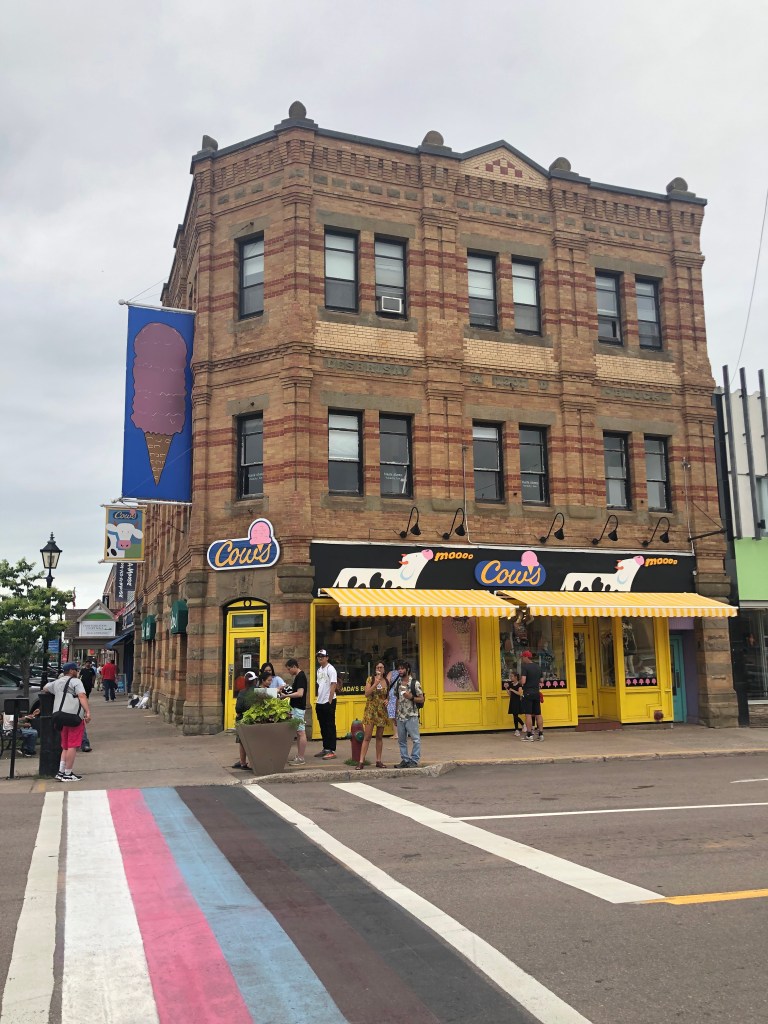
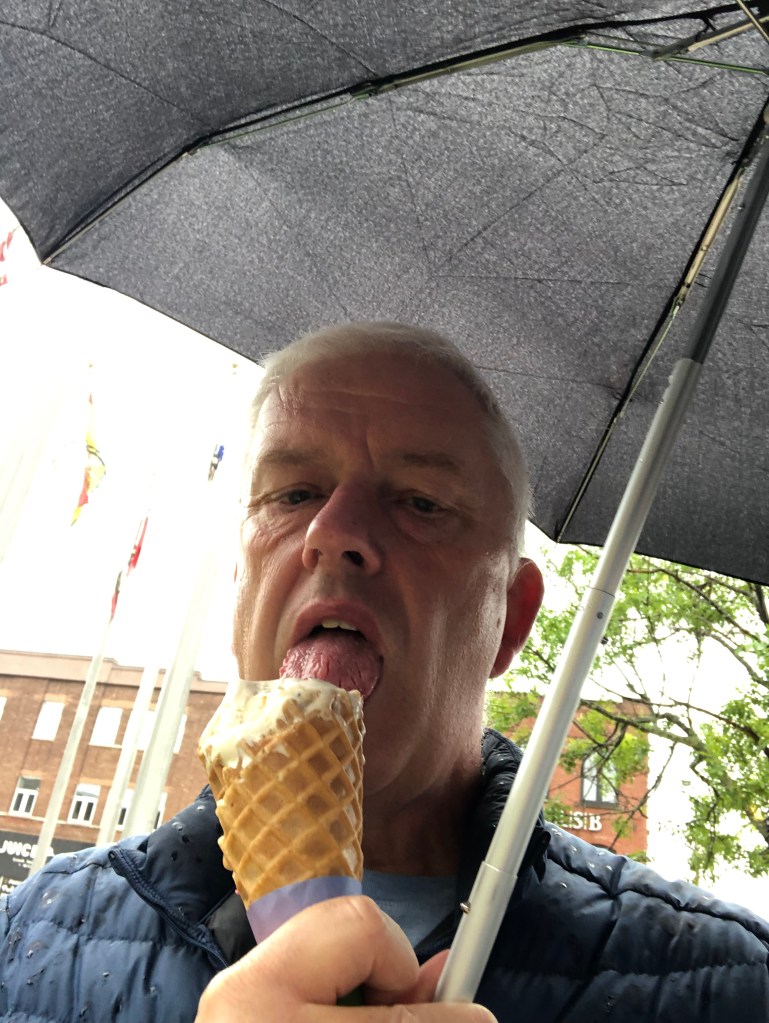
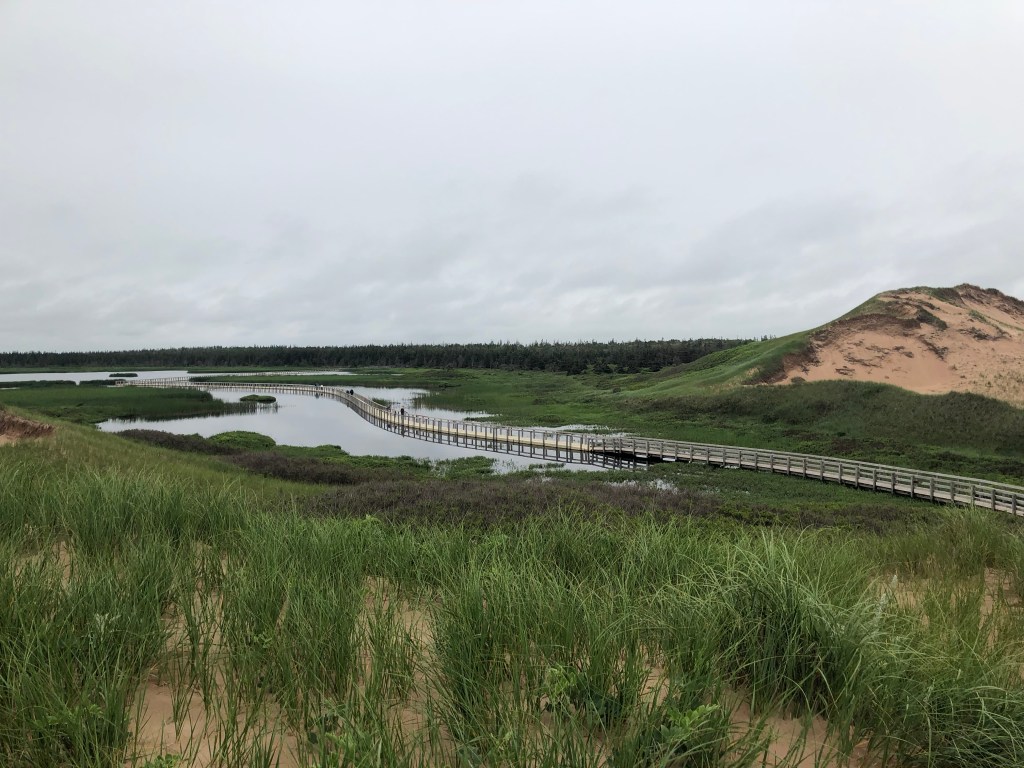
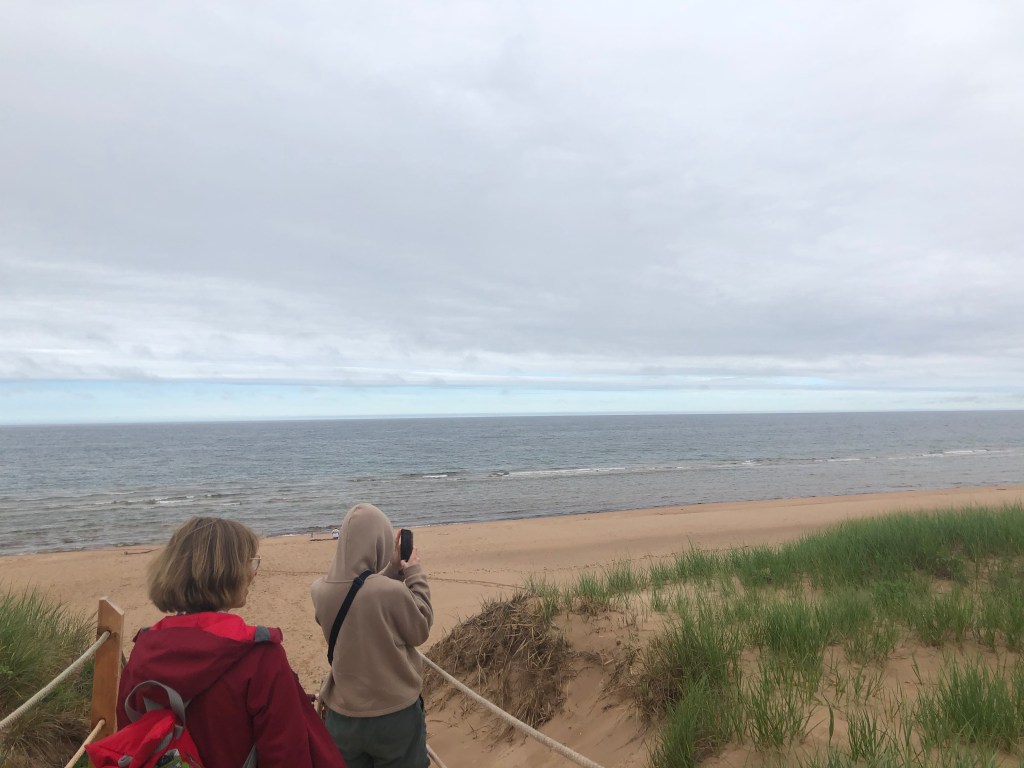
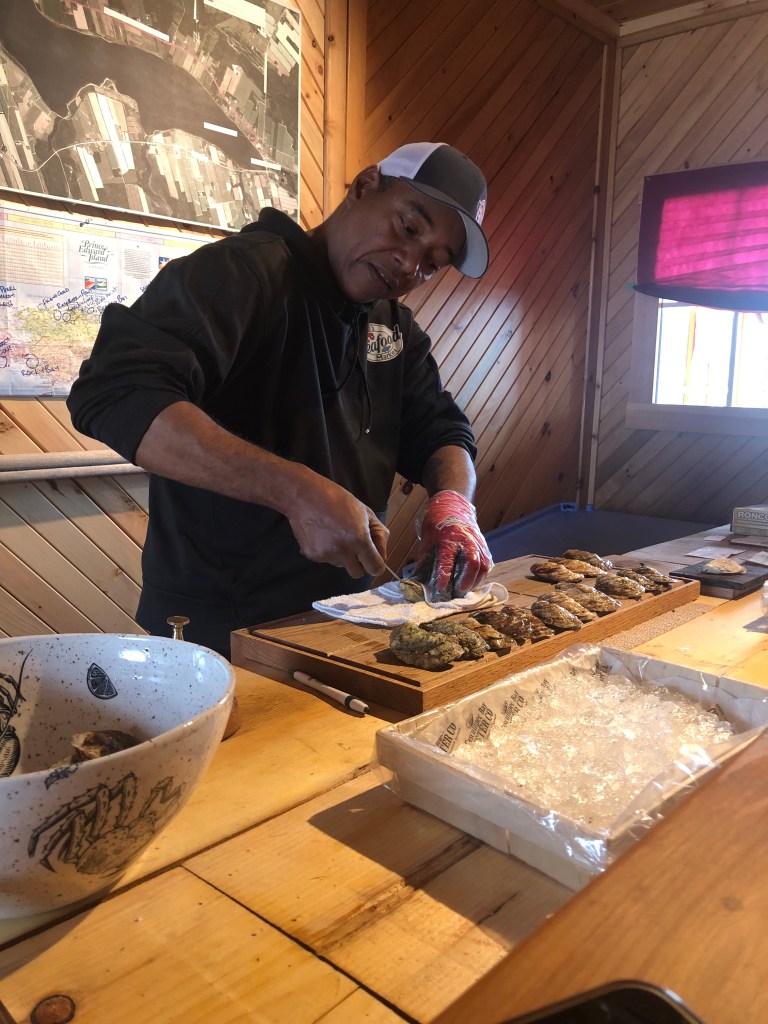
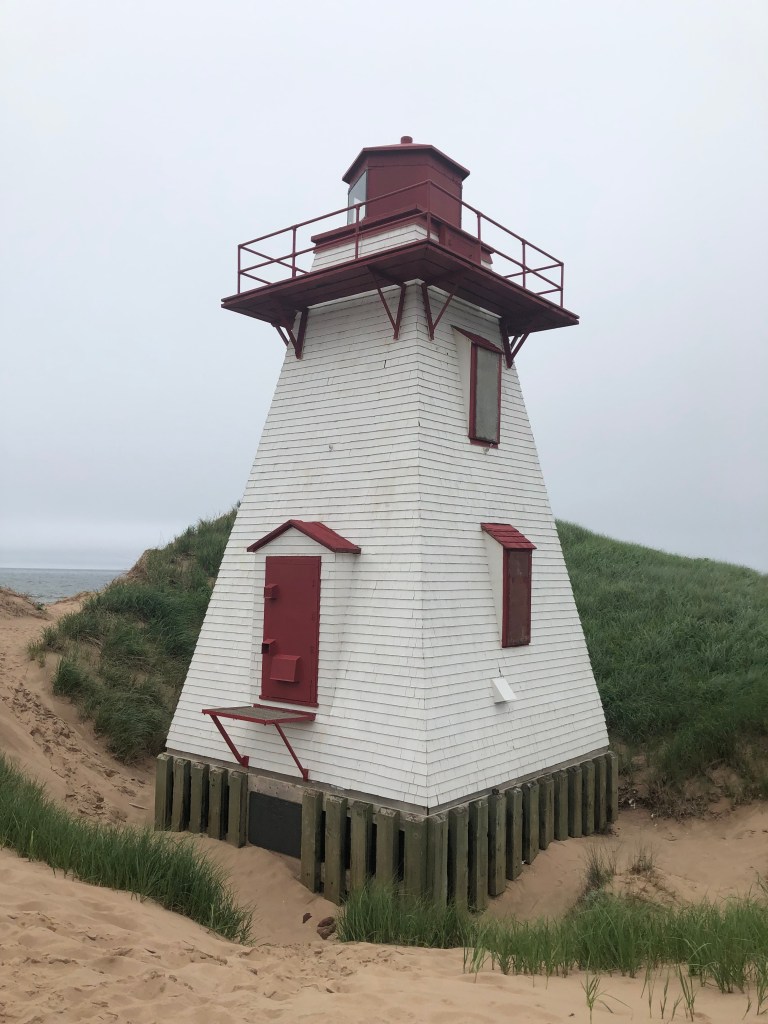
The following day was another road day. The drive was mainly on rather boring highways but we did cross the impressively long Federation Bridge. This eight mile structure, opened in 1997, connects Canada’s smallest province with the rest of the country. It claims to be, and who am I to doubt it, the word’s longest bridge over ice-covered water. We had already suffered some inclement weather on this trip but there would have had to have been something pretty wrong with the climate had the Northumberland Straight been iced over in July. Our billet in Prince Edward Island was a few miles east of the capital city, Charlottetown. The real draw of this place was it was on the owner’s smallholding which was home to quite a lot of animals. This pleased certain members of our party no end and, frankly, had we not gone anywhere else on the island I doubt there would have been any complaints. It takes more than a load of goats, dogs, donkeys horses and cats to make a decent travel blog though so we needed to get out and about and discover a bit of the island at least. Unfortunately the first full day we had there it rained all the time. So much so there were weather alerts issued by the Canadian meteorological office. We did visit Charlottetown which seems to be a nice place, but were restricted to indoor activities. Theres a few of those but probably not worth making a long trip for. Even the Cows Ice Cream factory was closed for the Canada Day public holiday so a visit to the shop there revealed nothing other than idle machinery. Nice ice cream though. There was an art gallery and a decent pub lunch but, well, that was it. The following day was much better. There are a lot of trails and hikes on PEI. We found one of them, the Greenwich Dune Trail. This took us through some woodland and across a floating pontoon to the dunes and ultimately a beach which was lapped by the waters of the Gulf of St Lawrence. It’s a nice little walk as long as you arm yourself with a decent insect repellent (we use the wonderfully named Flies Undone) as the mossies are persistent little buggers. We even had a picnic on the beach. The nearby village of St Peter’s Bay provided us with a most entertaining demonstration of how to eat oysters by Julio, a man who clearly loves his job as a champion schucker. He couldn’t persuade me or Elaine to try the phlegmy bivalves but Rebecca downed half a dozen of them. We drove back to base via another lighthouse which might not have been as iconic as Peggy’s Cove but at least it wasn’t shrouded in fog. The sun came out and we had a pleasant barbecue. With us leaving the following morning, we were done and dusted with PEI and hadn’t even been to see Anne of Green Gables which seems to be the one thing the province is famous for.

Cape Breton

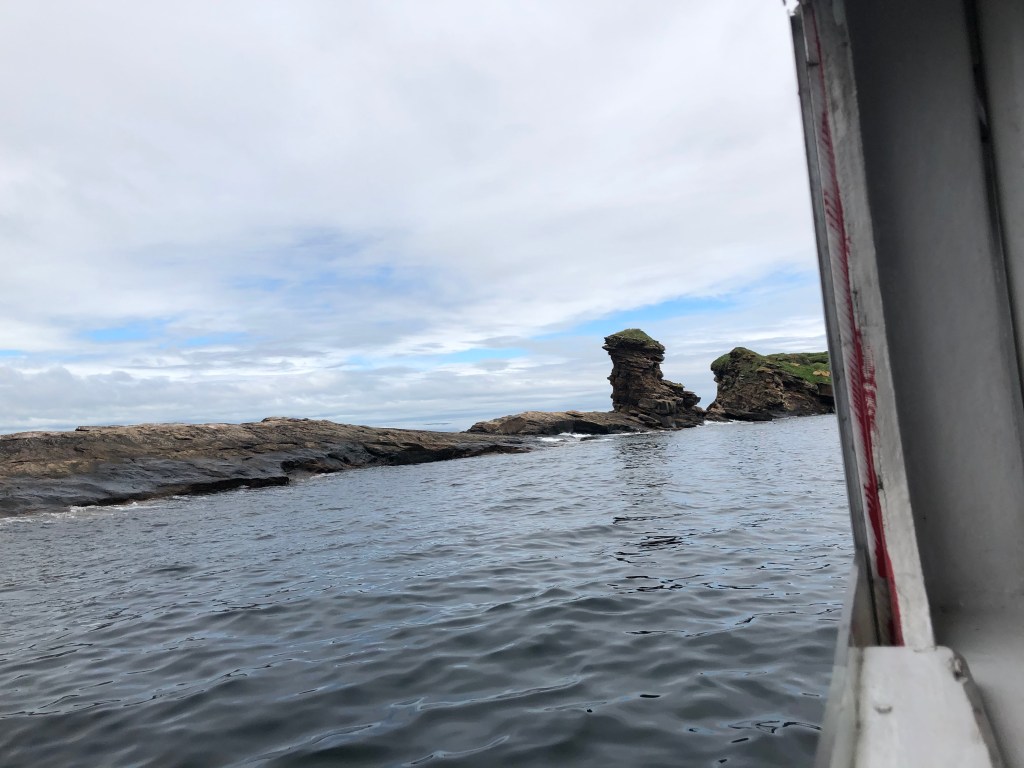
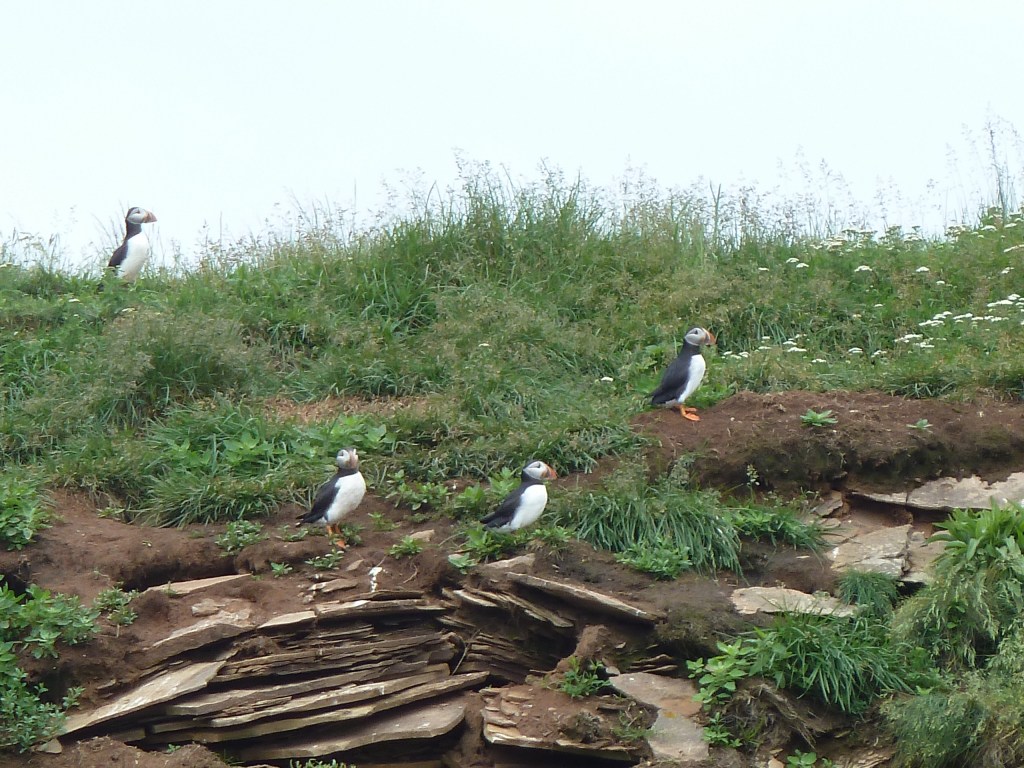
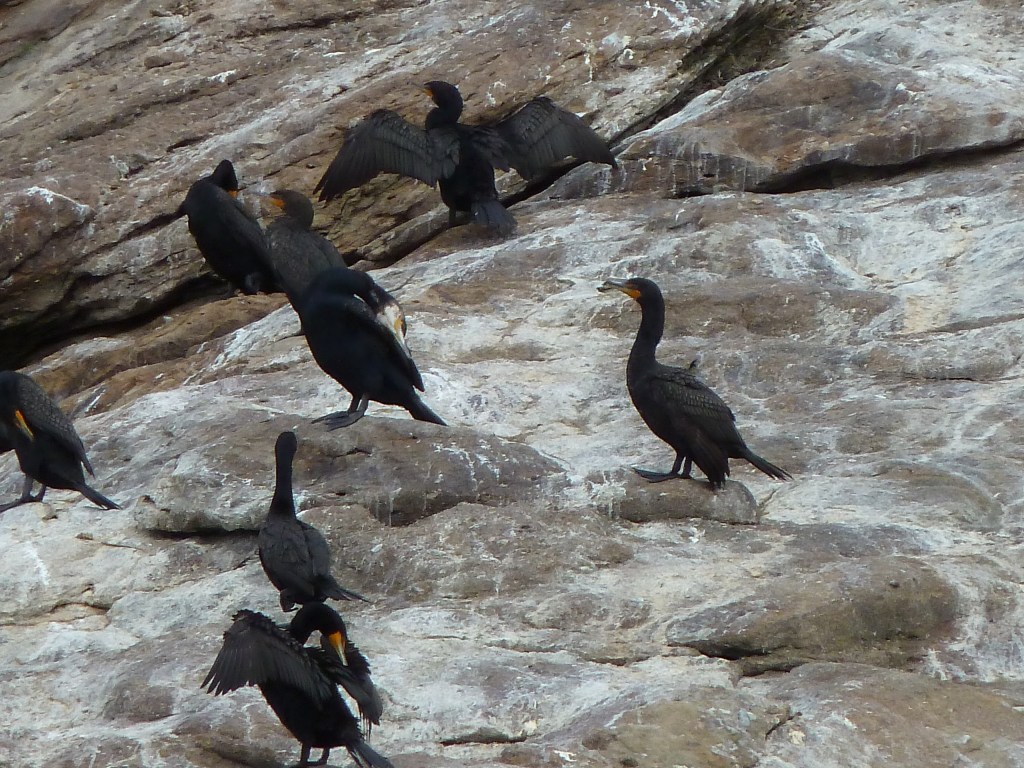
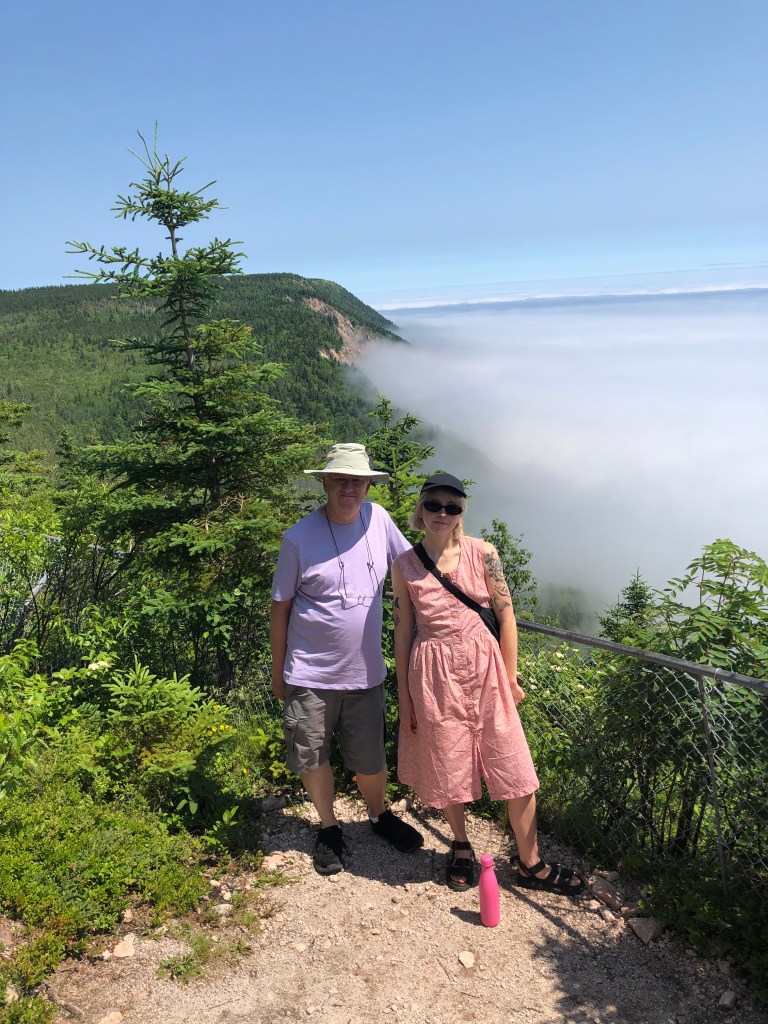
A word about ferries. To cross the Northumberland Strait you have a choice of the aforementioned Confederation Bridge of the Northumberland ferry. The latter sails from close to where we were staying on PEI to Caribou, Nova Scotia. We were booked on it. It was cancelled due to technical issues. It reopened just as we arrived in PEI. We booked on it again. It was cancelled again due to further technical issues. This meant we had to leave PEI via the bridge which was very much the long way round to get to our next stop which was near the top of Cape Breton Island. The drive was three hours longer than it would have been. This wasn’t exactly a great start to our three days in Cape Breton but things picked up. So much so in fact that I can say it was the best part of our trip. Cape Breton is basically the top bit of the province of Nova Scotia. It is separated from the rest of the province by the Strait of Canso across which the Canso Causeway carries the Trans Canada Highway. Whilst it is less than a mile from the southern part of Nova Scotia, it has a distinctly different feel. Cape Breton has a Gaelic heritage which is reflected in some of the place names. Road signs are often multi-lingual and Gaelic is still spoken in some of the villages. We were staying in the north of the island near the town of Sydney Mines. The industrial history was quite interesting, as was the fossil museum, but it is safe to say most visitors to that part of the world are there for the scenery. Our first exposure to the scenery was on a Puffin Boat tour. There’s a two of these to choose from. We chose Bird Island Boat Tours which basically did exactly what it said on the tin. We cruised round a couple of islands off Cape Dauphin which were home to numerous seabirds including the incredibly cute puffin. As it happens there were far more razorbills which look a bit like puffins but that only made it all the more special when the puffins came into view. The best place for scenery, however, was the Cabot Trail. This is a road trip around the very north of Cape Breton, a bit like the Canadian version of Scotland’s North Coast 500. We could have driven round it in the one day we had left but that would rather waste the opportunity to get out and enjoy the place so we concentrated on the eastern section. For perhaps the first time in the entire trip we had a lovely sunny day but even then there were patches of mist that took a while to burn off but I did manage to wear the sunhat I’d bought in Halifax Airport ten days earlier for the first time. After an insanely short trip on the Englishtown Ferry we went for a bit of a walk, had lunch at a seafood shack in a place called Neil’s Harbour (naturally I had to go there), discovered a remote fishing village and just for good measure had a look round an abandoned quarry too. It was worth the drive and left us wondering just how good the other side of the Cabot Trail could be. Maybe it’s a reason to go back. We had a barbecue that night back at the Airbnb where the mossies took a particular shine to my bare legs. The previous night we had visited Sydney, the biggest town in that part of the world. There is a gaelic festival that takes place every autumn which was no good to us as we were there in July but during the summer they have a ‘light’ version of it called Kitchenfest. There was some music happening in an Irish pub so I had to break my ‘no Irish pubs unless I’m in Ireland’ rule to attend. I’m not celtic music aficionado so I don’t know how authentic the music was but it involved fiddles and stuff so I know they were trying if nothing else. It was a pleasant evening. I even had a Guinness. I don’t like it very much but it got me (and Rebecca) into the swing of things. After three nights in Cape Breton we had to say goodbye to the place and made the four hour journey back to Halifax Airport. Nova Scotia is just a tiny part of Canada but it isn’t small. There, an Air Canada A220 whisked us off to Montreal and our much delayed Maritimes experience was over.

Montreal

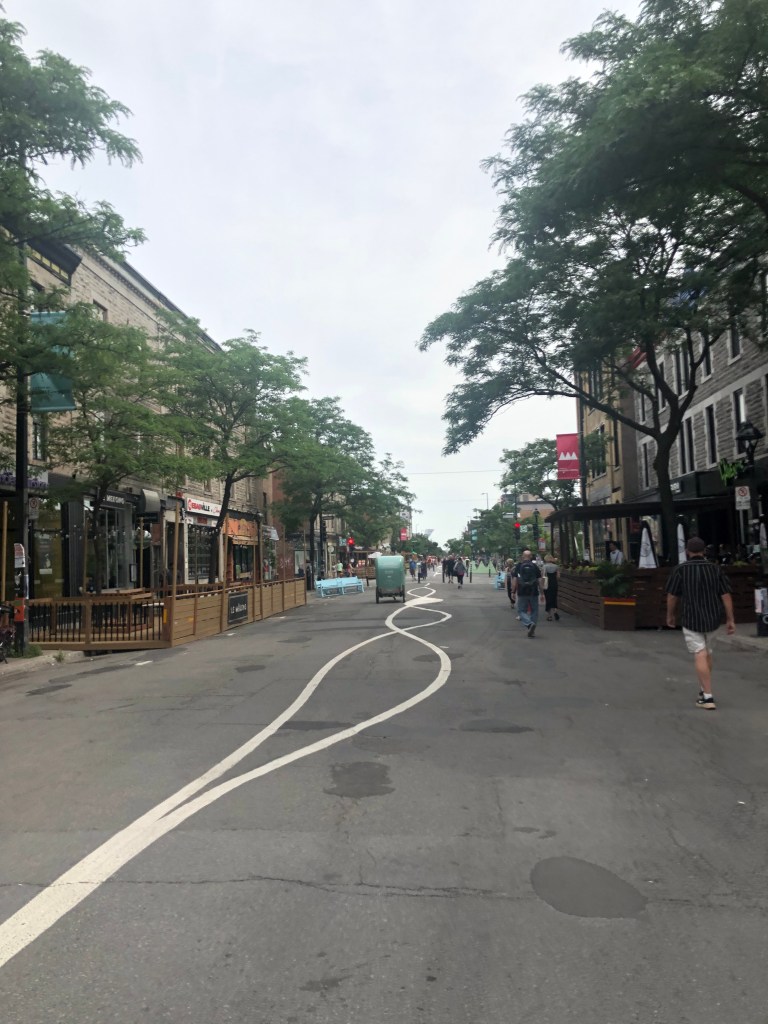
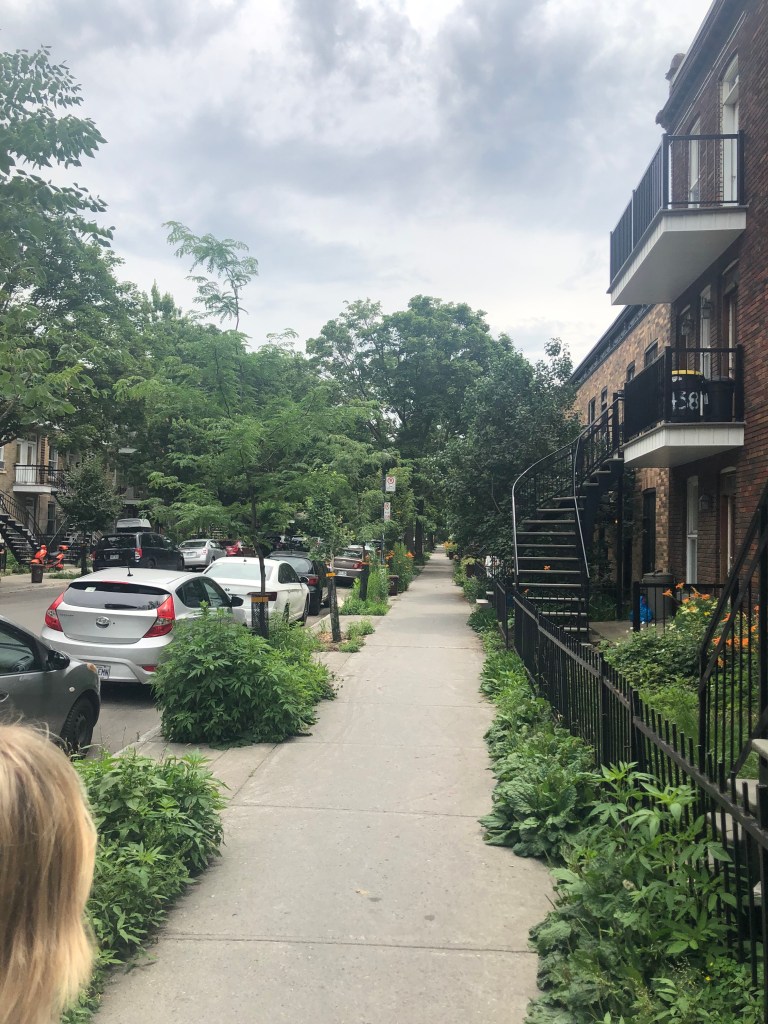
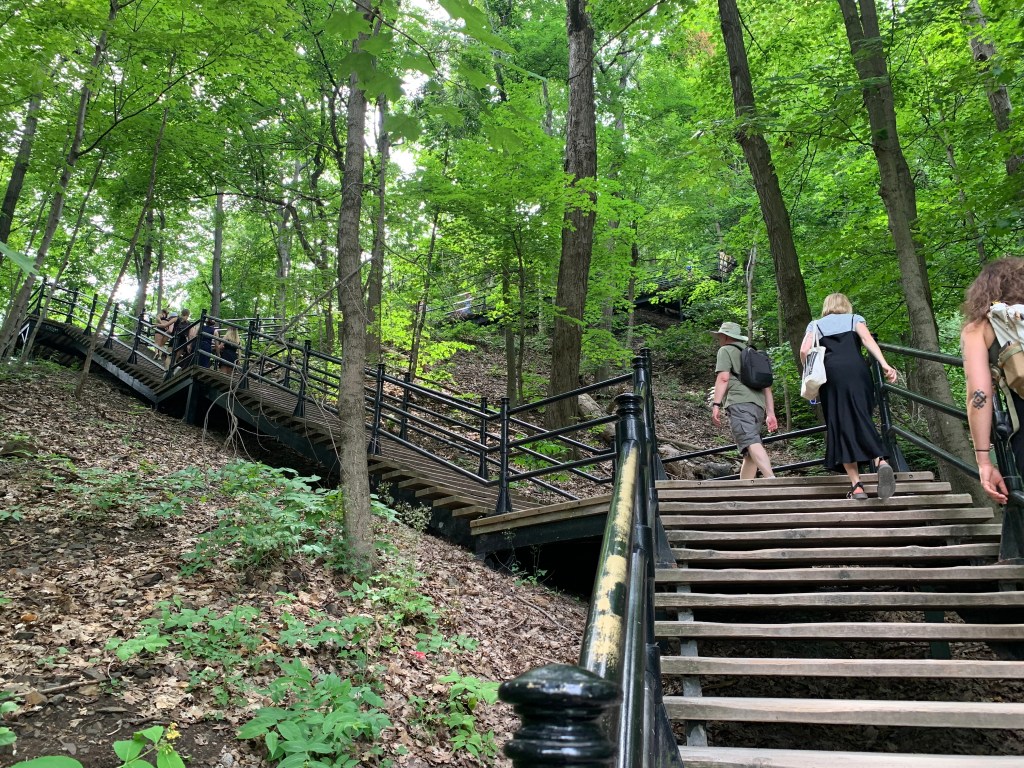
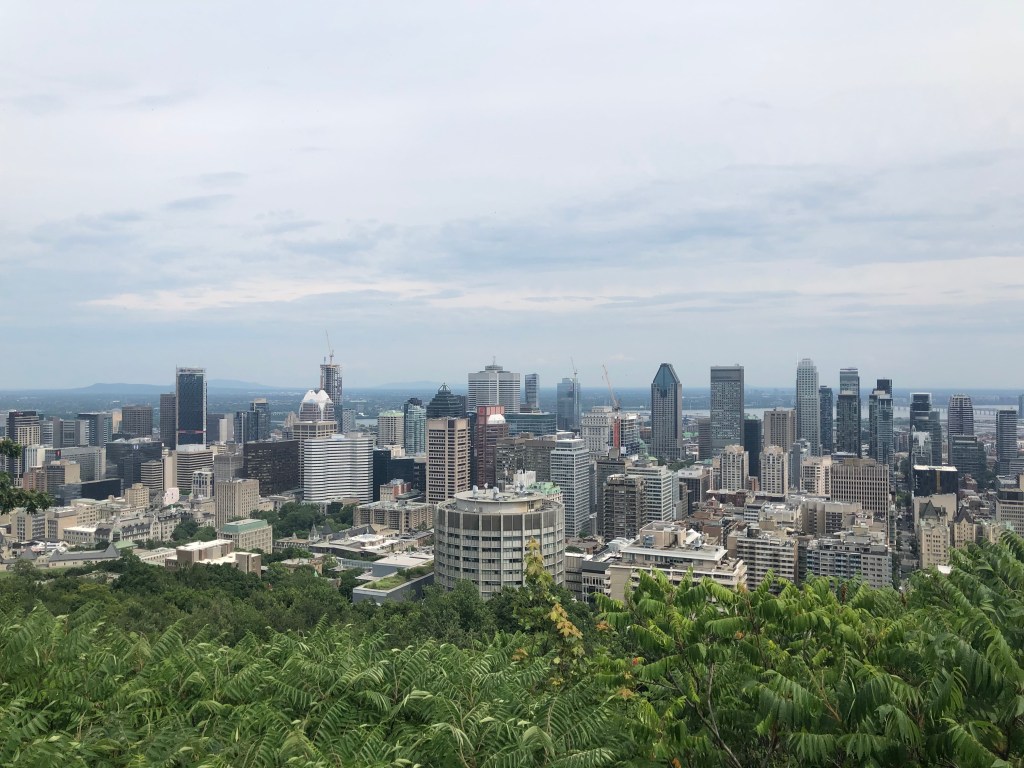
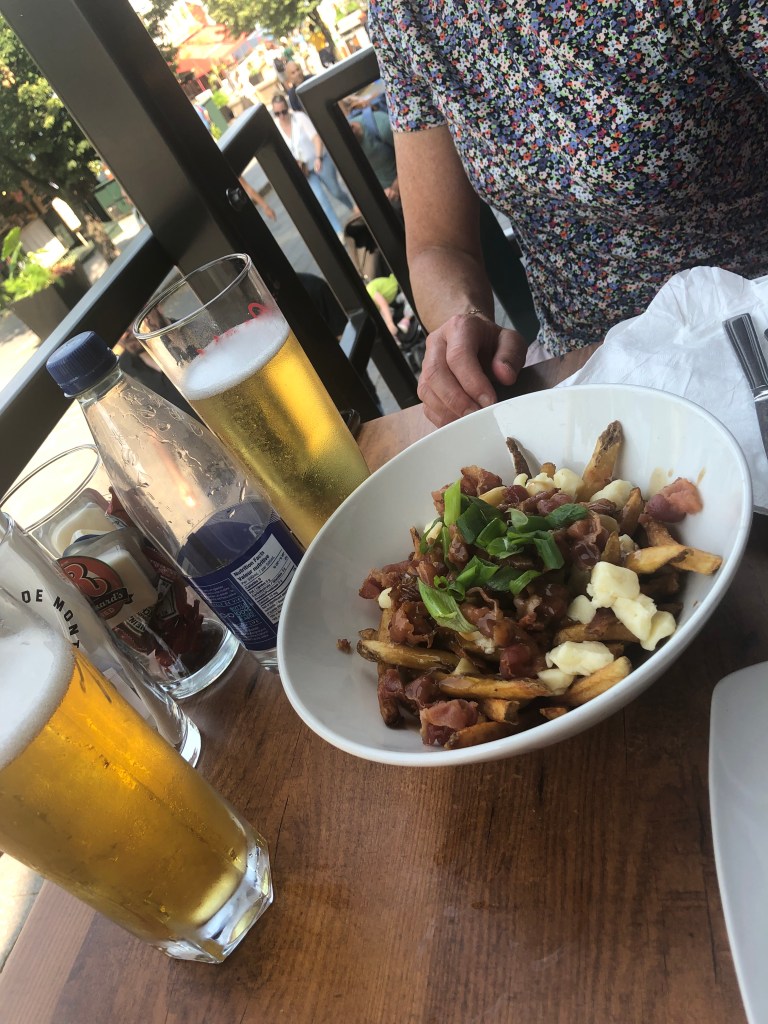
Montreal is in Quebec which is not part of the Maritimes but I’ll give you this as a bonus paragraph. We arrived on the evening of the 43rd Montreal Jazz Festival. Our apartment (not an Airbnb for a change but booked through Booking.com) was very central so we soon found ourselves walking through the street where Jazz was about to happen. It was packed with Jazz fans and, probably, non-Jazz fans who just happened to find themselves in Montreal that weekend. We discovered an interesting restaurant that served, amongst other things, fermented chips for dinner. Over the course of the next two days we ‘discovered’ the the city and came to the conclusion that it was rather nice. The European influence is noticable and not just because people speak French. My CSE French is understandably rusty as I took it 45 years ago but the locals weren’t particularly bothered and would break out into perfect English if they realised you were having a few problems understanding them, which was like every time they spoke. The city itself, at least the bit we wandered around, is full of tree lined streets and has a waterfront that is slowly being transformed from its derelict industrial past to something of a leisure destination. Mount Royal, after which the city is named, is a pleasant, if somewhat uphill, public park which affords views over the city and the St Lawrence. It was a humid day so we were sweating a bit by the time we reached the lookout point but it left us feeling virtuous which is of course half the fun. The next day it rained all day which meant wandering round under umbrellas and nipping into art galleries. Ironically, the day after that our activities were limited due to the fact it was hot and sticky so another museum, the old Governor’s house to be precise, provided us with shelter from the excesses of the weather. It was also the day we flew home, Rebecca heading to the airport in the afternoon, and us, after sitting in a pub and enjoying my first and only poutine in the place where it was invented, in the evening. Montreal had left a good impression and it’s a place we would like to go back to.

Maritimes, yes or no?

Four years in the making, The Maritimes provided us with some good memories. Yes, the weather wasn’t particularly great, in fact it was something of a washout some days, but between the rain clouds we saw some memorable things. We didn’t dislike anywhere we went but the highlights for me were the Bay of Fundy at Hopewell Rocks and the Cabot Trail in Cape Breton. The brief glimpse of Nova Scotia to the south of Halifax suggested it was a shame we didn’t have more time there and we certainly could have done with an extra day or two in Cape Breton. Would I recommend it? Yes, but take an umbrella just to be on the safe side.

Atlantic to Pacific By Rail

Prologue 1

I’d hoped that this blog site would be having regular updates by now with pandemic madness largely behind us but it just hasn’t happened. I don’t know why, it’s not as if I’m stuck in a lockdown stupor and haven’t been for some time. As the world has opened up again I’ve been doing stuff which might be of interest to other people but I feel that it has not been much different to what I was doing before. I’ve shared daily holiday blogs on Facebook but apart from the last blog, which was written five months ago, there’s been nothing I’ve done that has inspired me to return to Glad To Be Grey and get writing. Until now. I’m just back from what was an epic trip and if I can’t write a blog about this then I might as well give the site up.

Prologue 2

I first had the idea for this trip about a year ago. We had booked a holiday in Canada with our daughter for the summer of this year. This involved a rather indirect journey by air to and from Victoria in British Columbia where she resides. This got me wondering if there was any way to get to Victoria without using aircraft. The environmentalists will have you believe that your flight is directly responsible for the end of the world so maybe there’s a practical way to get there without killing your grandkids. The answer is of course no, so sorry grandkids, I’m still more than happy to take a plane (or four) to get to see my daughter and have a holiday. However, a seed was planted in my mind – travel to Victoria, which is 4,500 miles away from Troon, by surface transport. I soon found out it could be done and without too much difficulty. All I would need was a lot of time and a shedload of money. The plan was to get the train to Southampton and cross the Atlantic on the Queen Mary II. Once in New York I would cross the North American continent by train. There were a number of alternative routes I could have taken, even on a continent where rail travel is an afterthought. All itineraries would have ended in Vancouver where I would then have to get myself to the ferry terminal for a ferry to Vancouver Island where Rebecca would pick me up and transport me into the city of Victoria. This was a great idea, right up until I looked into the details for crossing the Atlantic on the QM2. The crossing takes seven days which is longer than is necessary as the ship could easily do it in five. Cunard want you to make a holiday if it apparently. The cheapest fare for a single occupancy cabin, presumably in the bilges, was in excess of £4000. Whilst I’m not averse to cruising holidays, four grand for a week of seeing nothing but ocean, and possibly a stormy ocean at that, was just too much. I came up with another idea.

What I would do was take the shortest possible flight to Canada which was Glasgow to Halifax, Nova Scotia. From there I would cross Canada by train to Vancouver, ending the journey to Victoria as mentioned above. The frustrated Travel Agent in me had a great time coming up with a suitable itinerary and I booked the trip in the early part of this year. The journey would be a solo one as Elaine really didn’t fancy spending five days on a train. In the summer, Canadian airline WestJet threw a spanner in the works by cancelling the Glasgow-Halifax flight. I rebooked myself with Air Canada from Heathrow to Halifax which included a connecting BA flight from Glasgow. Once in Halifax I’d spend a couple of days there before boarding the first of three different trains that would get me to Vancouver. It would take six days and six nights and get me from The Atlantic to The Pacific and as a bonus I’d arrive there on my birthday so Rebecca could buy me a beer.

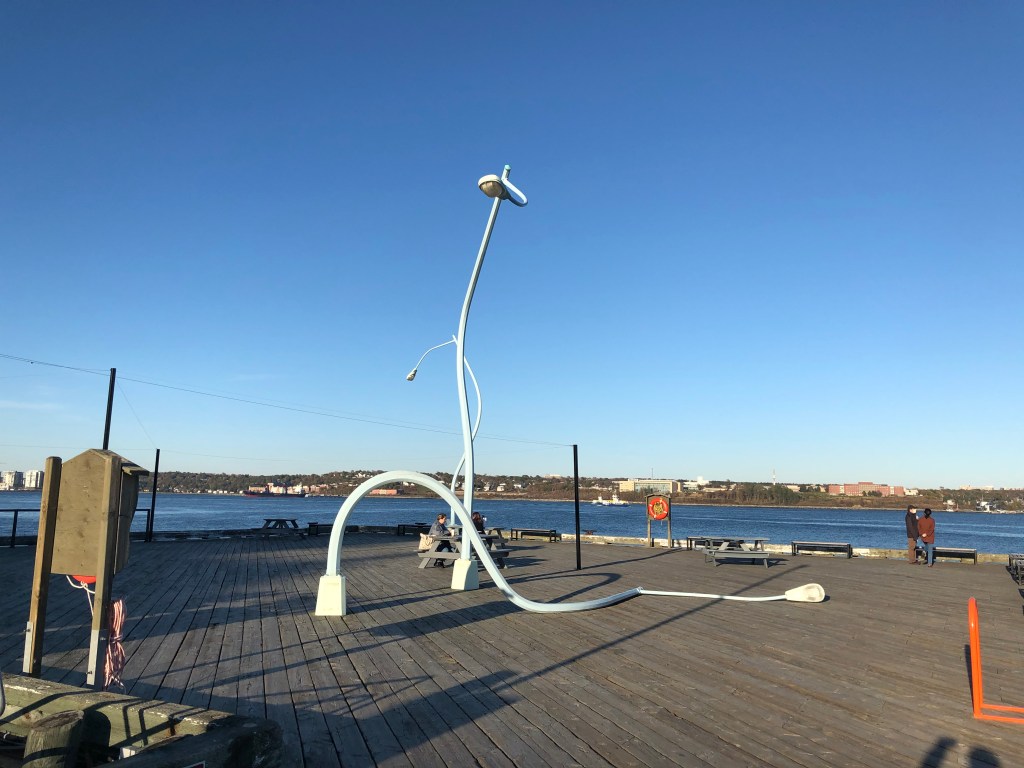
Halifax Harbour, Nova Scotia. It is an inlet of the Atlantic Ocean. I really should have taken a selfie here as the starting point.

The Ocean

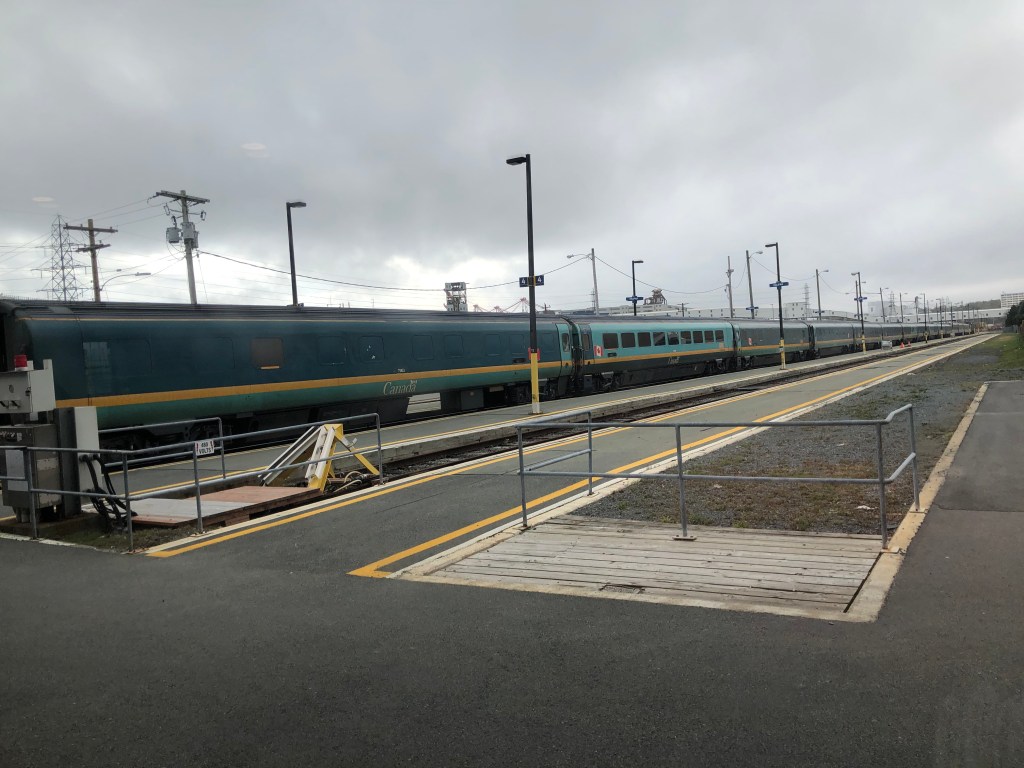
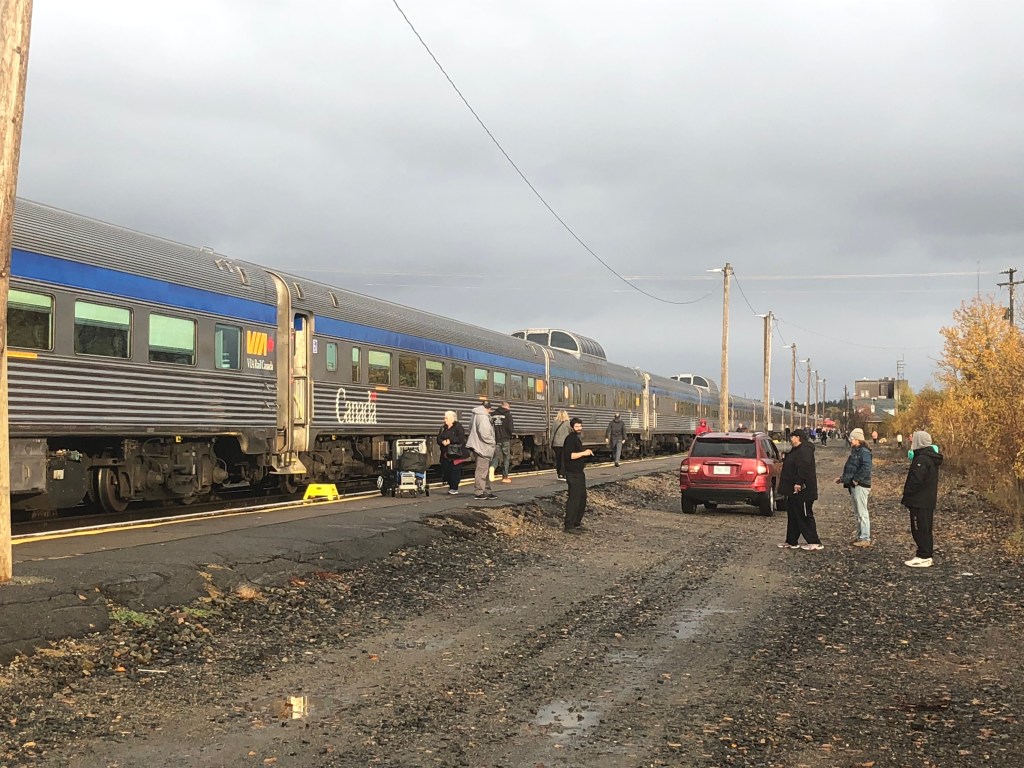
The Ocean. It’s quite difficult getting a Canadian train in one frame.

Halifax – Montreal

Trains in Canada are not really like trains in Europe. They give them names and numbers for a start. Train Number 15 is called The Ocean. It runs from Halifax to Montreal just two times a week. It is scheduled to take a leisurely 22 hours and, thanks to the small problem of the US state of Maine being in the way, follows a far from direct track through the Canadian provinces of Nova Scotia, New Brunswick and Quebec. Despite only servicing two arriving and two departing trains a week, Halifax has a pleasant station and it was to this I walked on Friday October 14th for the 1pm departure. My extra day in Halifax had proven essential as between them, British Airways, Heathrow Airport and Air Canada had failed to transport my bag to Halifax with me and it took another thirty hours or so for it to turn up. Until it did I had visions of it following me across Canada but never quite catching me up. The bag itself required checking in at Halifax Station so forward planning had been required to liberate sufficient items into a smaller bag to see me through the overnight journey to Montreal. The bag was duly tagged through to Toronto so I wouldn’t see it again for well over a day. I was advised that there was a lounge where sleeper passengers could relax before boarding. I found it, it was full of armchairs, a coffee machine and a fridge full of pop. One Diet Coke later and I got a bit bored and went back to the concourse where I confirmed my lunch and dinner sitting and waited for the boarding announcement. When it came I excitedly head for the train. Although the train was backed up right to the buffers, it was still a long walk to my carriage, or car as the Canadians (and me from now on) call it. These sleeper trains are long and along with two different types of sleeping car, consist of normal seating cars, restaurant car, lounge car and cars for the train staff. My car was a ‘modern’ Renaissance Class one. This meant it was nearly 30 years old. These cars had been built for Cross-Channel sleeper services through the Channel Tunnel and when those services failed to take off, the Canadians bought some of them specifically for The Ocean. They are getting a bit worn now but the advantage of these cars is that the cabins have en-suite facilities. They comfortably accommodate two people on generous seats in day mode and bunk beds at night. As there was only me it seemed rather spacious by sleeper cabin standards, not that I’ve got much experience in the matter.

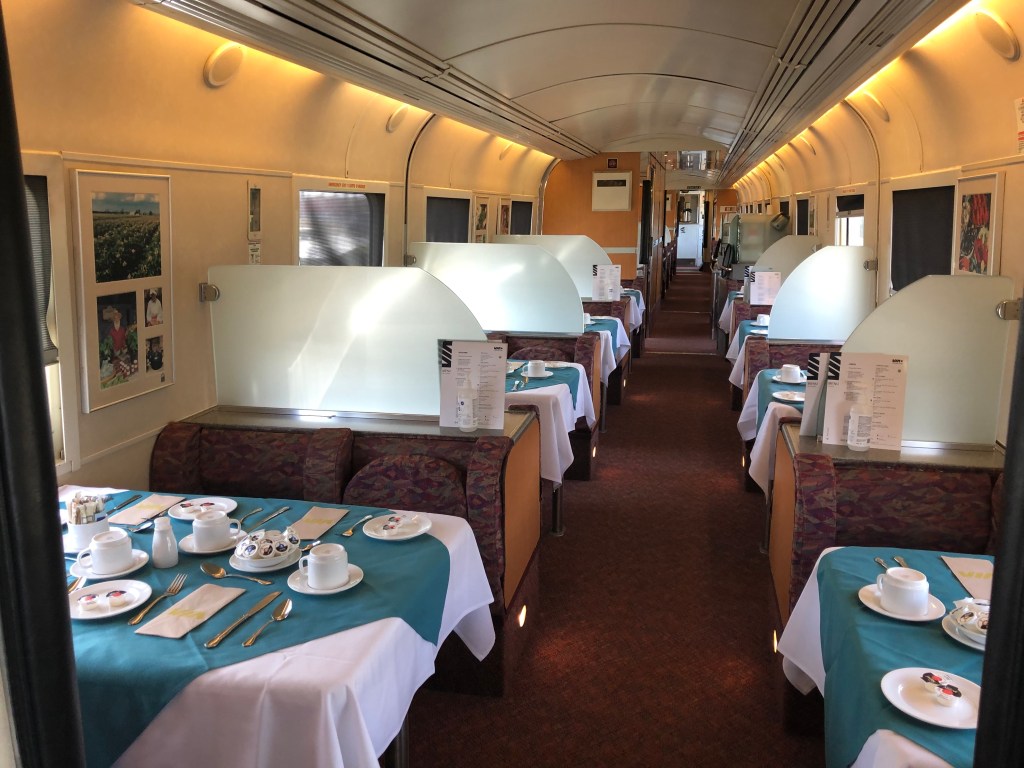
Restaurant Car.

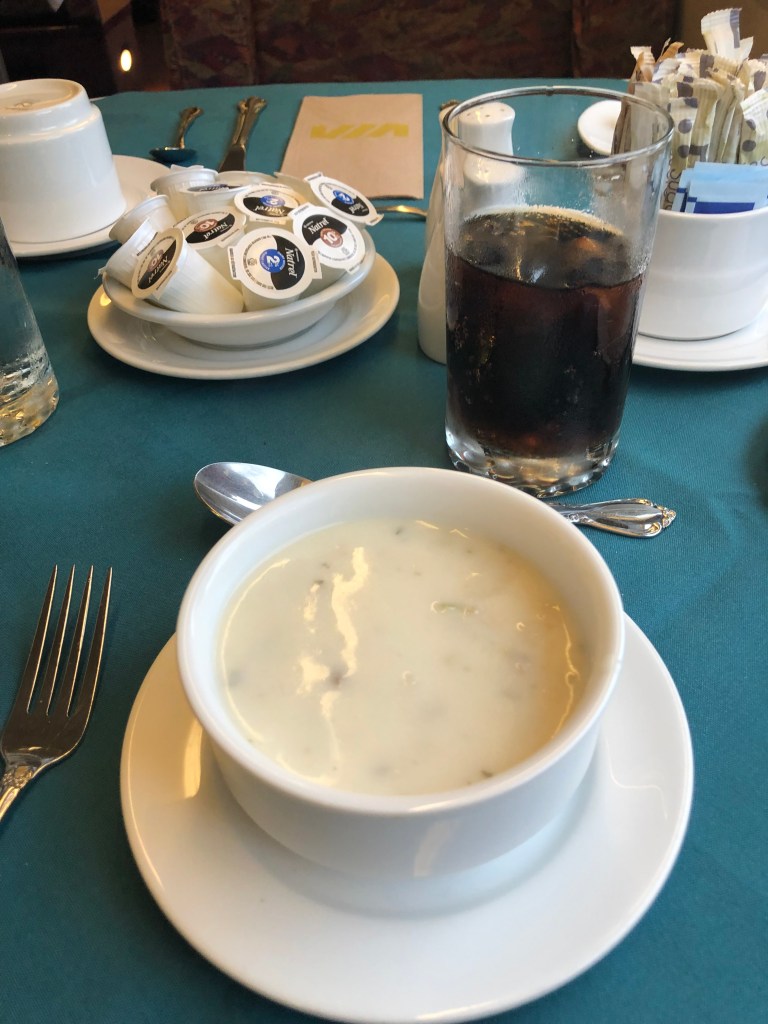
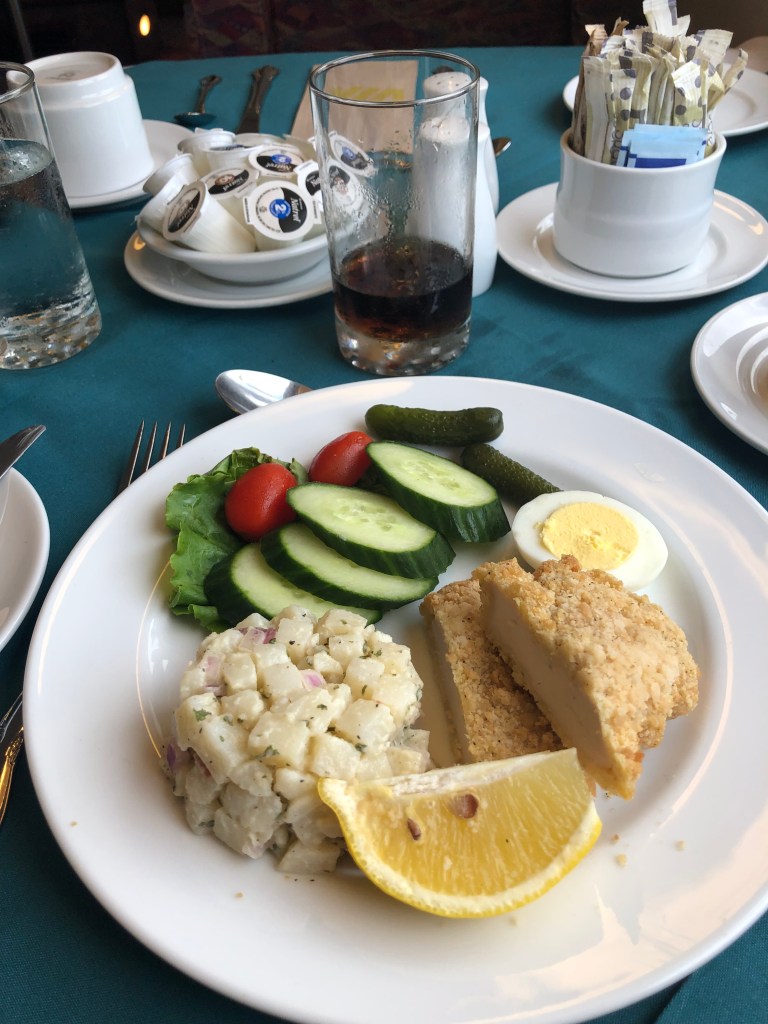
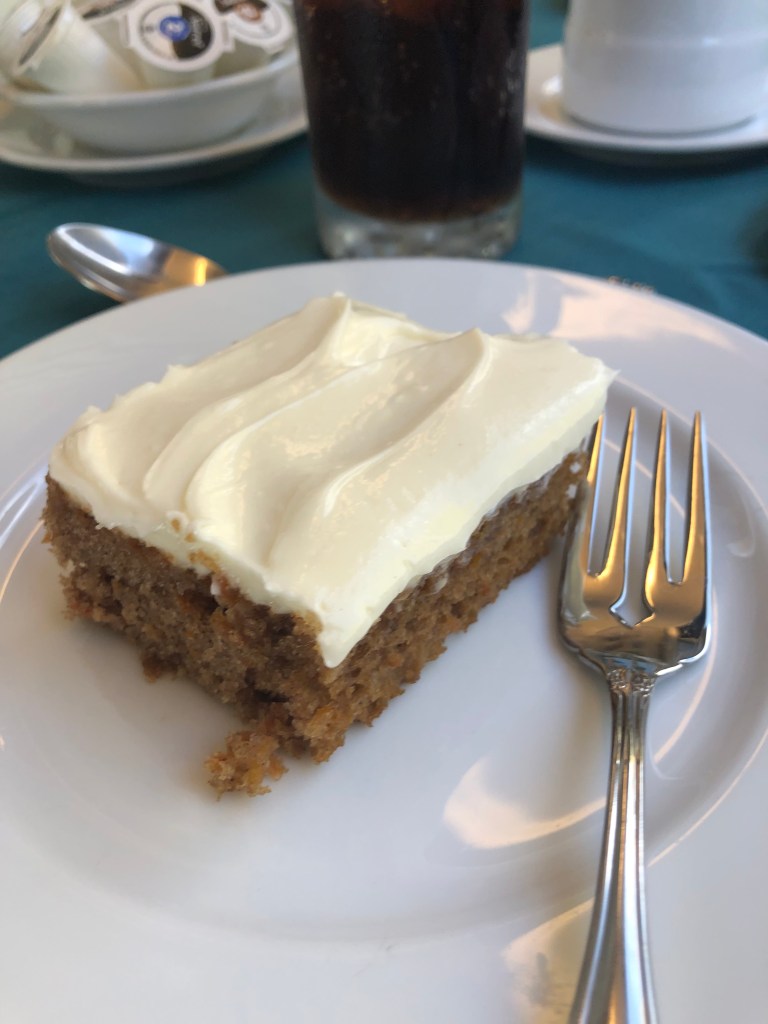
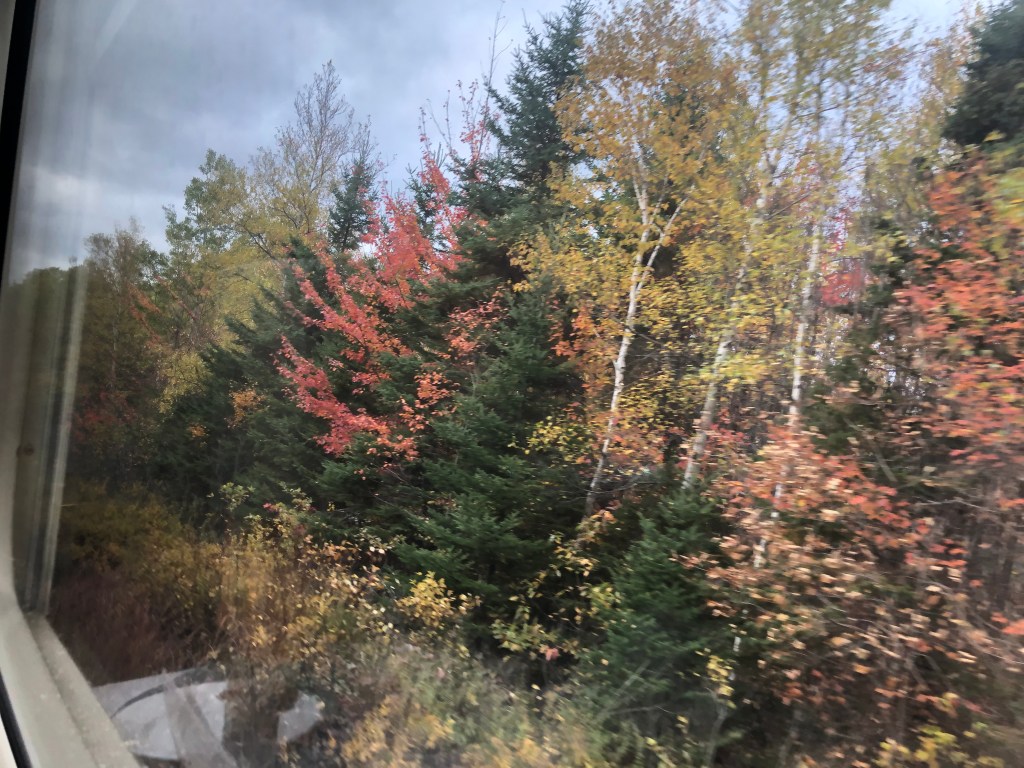
The train pulled out of Halifax bang on time. Whilst the cabin was comfortable I soon left it and made my way to the Lounge Car. Whilst this sounds a lot grander than it actually was, it was light and airy and you could see out of both sides of the train. It also had WiFi which I was surprised about. This, however, depended on the local cellphone coverage and as Canada is big – I might have mentioned this in previous blogs – it was a bit hit and miss as to whether there was any service. I had chosen second sitting for lunch and was called through to the restaurant car at 2:45pm by which time I was rather peckish. Sleeper passengers have meals included in their fare. A soup, chowder in this case – was followed by a choice of main courses. I had chicken schnitzel salad and followed it up with a quite a large slab of carrot cake. It was rather filling for a lunch and I can safely say I wasn’t peckish once I’d finished it. Lunch done, I continued to watch Canada roll by. Whilst I had not booked this journey in October to specifically view the autumnal colours, I was delighted to see the full spectrum of red and gold foliage passing by, sometimes tantalisingly close to the window. There were a number of stops at places like Truro, Amherst and Moncton. There were also numerous ‘flag’ stops at smaller settlements. These appear in the timetable even though we passed most without stopping. Eventually the sun set and the second sitting for dinner was called. Soup or salad for starter, a choice of three mains – butter chicken for me – and pecan pie for dessert. Soft drinks were free with meals or you could pay for an alcoholic one so it was a beer for me which I could have had for free as we were out of range of data and the card machine wasn’t working. I paid the following morning. I’m too honest for my own good sometimes.

The cabin in night mode. The bed definitely tilted away from the wall.

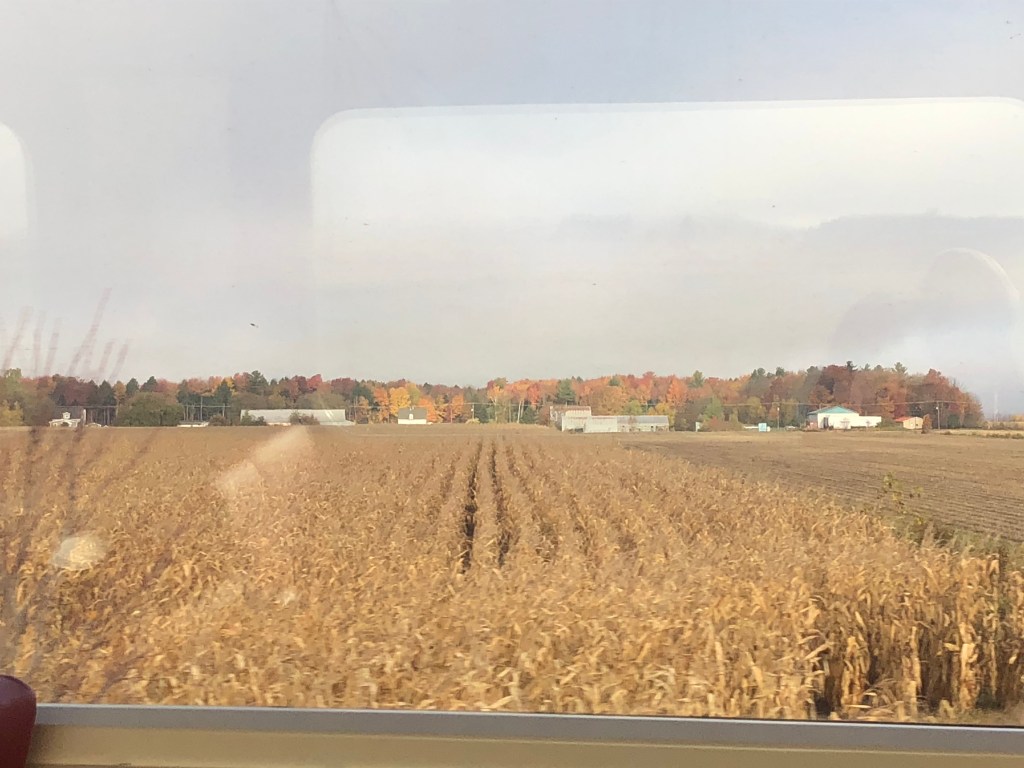
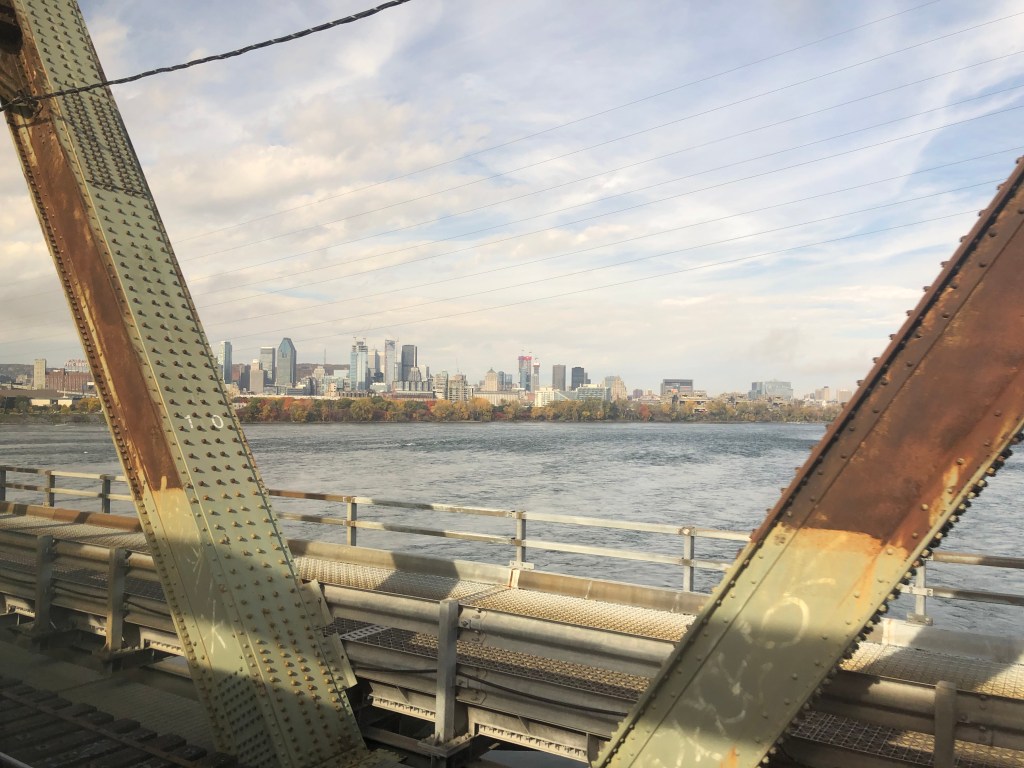
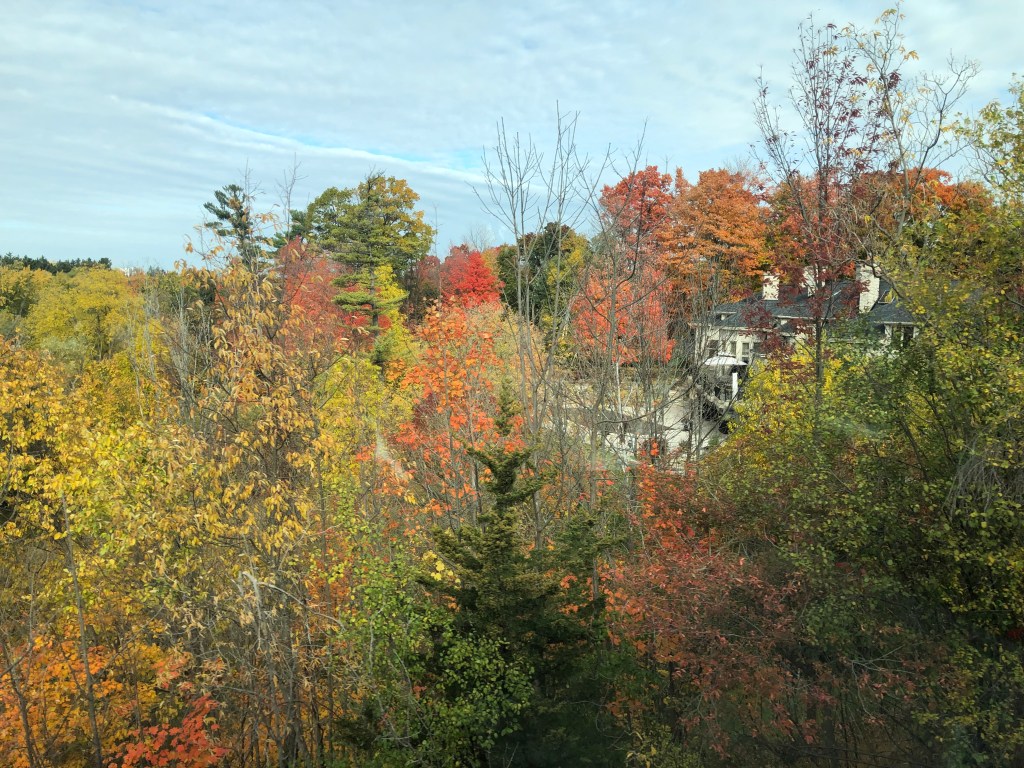
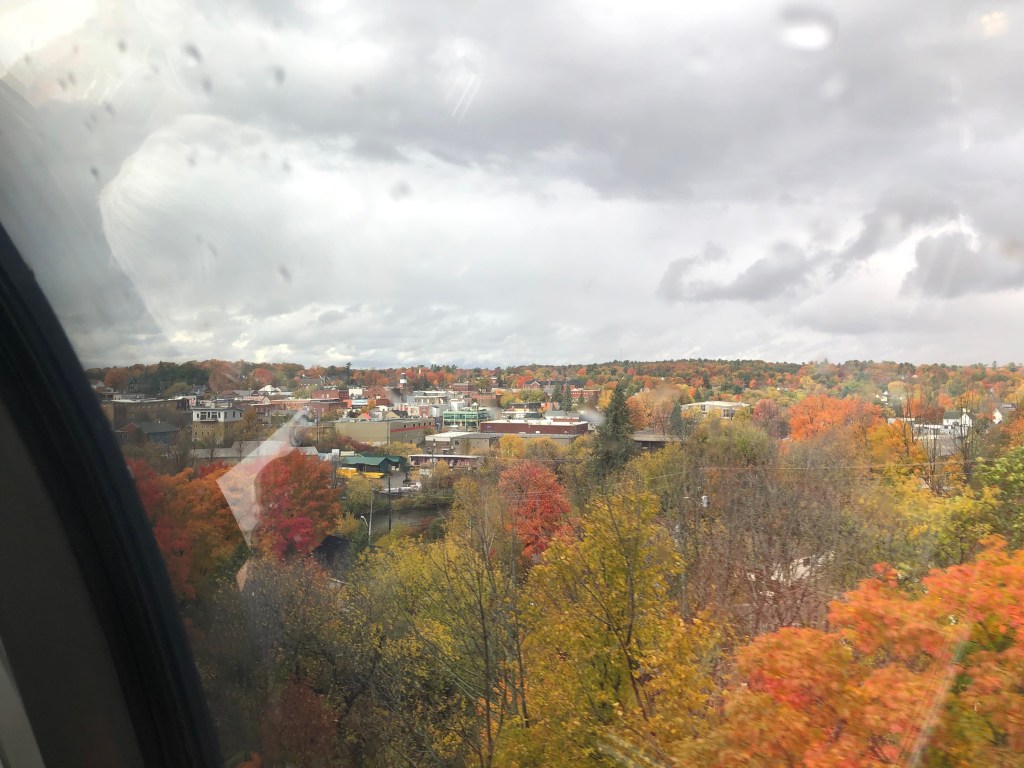
Eventually it was time for bed. The cabin had been transferred to night mode by the car attendant. It wasn’t the comfiest of beds. I found I could only sleep on my right hand side otherwise I was likely to fall out. The train rattles, rolls and is quite noisy but despite this I slept very well. That might have been down to medication I was taking for a cold I’d developed just as I was setting out for Canada a couple of days earlier. If it was the Canadian version of Night Nurse that resulted in me sleeping like a log then I’m mightily impressed. I woke up as the province of Quebec was passing outside, not that I could see much of it due to the morning mist. The clocks had also gone back an hour as I crossed into the second of five time zones on this trip. The en-suite was most welcome and fresh as a daisy I headed for breakfast. This is done on a first come, first served basis but I walked straight in. Breakfast is a big affair in Canada. Even I, who has a healthy appetite, couldn’t manage it all. Eventually the mist burnt off to reveal flat farmland and trees that were somehow even more spectacular than those I’d seen the previous day. Eventually we found ourselves in the suburbs of Montreal and crossing the mighty St Lawrence River, we pulled into Montreal Central Station, arriving an hour late just shy of 11am local time. This was a bit of a shame as I had hoped to get myself on the 11am train to Toronto but it was pulling out of the adjacent platform as I headed to the main concourse.

The Corridor

Montreal – Toronto

I had a couple of hours to kill before the 1:23pm train to Toronto. It was a nice day so I had a bit of a wander round Montreal, at least the bit of the city near the station. I got to see Notre Dame which, unlike its namesake in Paris, appears to not be fire damaged. However, the train was calling so I headed back to the station and awaited train number 67. Whilst this specific service does not have a name, all trains that run between Quebec City in the north to Windsor Ontario in the south are called Corridor trains. Trains linking Montreal and Toronto make up the bulk of these services with five or six of them a day connecting Canada’s two largest cities. The one I was on was scheduled to take five hours ten minutes. The train itself was much the same as trains in the UK and Europe. 2-2 seating in economy/second class, a trolly service for drinks and snacks and a couple of business/first class cars at one end of the train. It was busy too with most seats in my car taken. I was happy to see my checked bag had been transferred from The Ocean directly to one of the luggage stacks in my car. We pulled out of Montreal on time and headed southeasat. A brief stop at Dorval, for Montreal Airport, turned into rather longer one than anticipated but once we got a green signal we were soon rattling along at an impressive 95mph. Both Quebec and then Ontario continued to deliver on the autumn colours for much of the journey. We followed the St Lawrence and then the western shore of Lake Ontario but only saw them fleetingly as the train tried, and failed, to make up for the time lost at Dorval. It was a comfortable enough journey. The train itself was unremarkable though there appeared to be quite a few on board for whom train travel was a novelty. We pulled into Toronto’s Union Station fifteen minutes late which was a bit of a shame as I had a hockey game to go to and it was due to start at 7pm. I grabbed my bags and set off for my accommodation for the night. It was close to the station, as was the arena but unfortunately they were in opposite directions. A quick check-in and a dumping of the bags later, I hot-footed it to the Scotiabank Arena to see the Toronto Maple Leafs play the Ottawa Senators. I was sweating profusely by the time I made it to my seat which was way up in the gods. I only missed five minutes of action so I consider it a result. Speaking of results, the Maple Leafs won, 3-2.

Scotiabank Arena from the cheap, but not the cheapest seats.

My accommodation happened to be a hostel. Whilst I’m not really the hostel type – actually, I’m not even remotely the hostel type – this one had private rooms with facilities. With hotel prices for a Saturday night in Toronto being insanely expensive, especially when the hockey is on, I felt it was worth the risk of encountering caftan wearing, weed-smoking young people singing protest songs badly to get a bed for the night for seventy quid. I was right. The rooms were in a separate building to the dorms, were perfectly comfortable and I got a decent night’s rest. I decided to forgo the included breakfast though as I thought it might be a bit heavy on the avocado and oat milk.

The Canadian

The following morning I went through the rigmarole of sorting out luggage before heading back to the station for the next, and mightiest part of the journey. This was the 9:55am departure from Union Station to Vancouver aboard train Number 1, The Canadian. This takes 97 hours, traverses four time zones and five different provinces. It runs twice a week on a Sunday and Wednesday and passes through dozens of stations on the way. As with The Ocean, most of these are flag stops but there are plenty of compulsory stops too, due to a strict twelve hour working rule for the ‘engineers’, or drivers as we call them in the UK.

It might be worth a paragraph to explain a bit about the Canadian railway system here. Passenger trains in Canada are run by a state owned company called VIA Rail. Prior to 1978 the two rail companies, privately owned Canadian Pacific and state owned (since privatised) Canadian National had provided passenger services but these were experiencing huge losses since the early sixties when the Trans Canada Highway was completed. Having divested themselves of passenger services, the two companies concentrated on the highly profitable freight market. They retained ownership of nearly all the rail infrastructure and as such VIA Rail has to pay them to gain access to the tracks. The upshot of this is VIA Rail’s passenger services on all but the Corridor play second fiddle to freight. The Canadian uses the CN line which runs further north than its CP counterpart. For virtually its entire length this is a single track with passing loops. These passing loops are long as they have to accommodate freight trains which can be over two miles in length. They come around so frequently you wonder why they don’t just connect them all up and make it a much more efficient twin-track system. With a top speed of 70mph being achieved infrequently, extended stops for driver changes and refuelling, stops at passing loops and some bizarre shunting required to access certain stations, the whole 2775 miles from Toronto to Vancouver is covered at an average speed of 28.6 mph. The bullet train it is not.

Toronto Union Station. Just a bit of it. It is impressive.

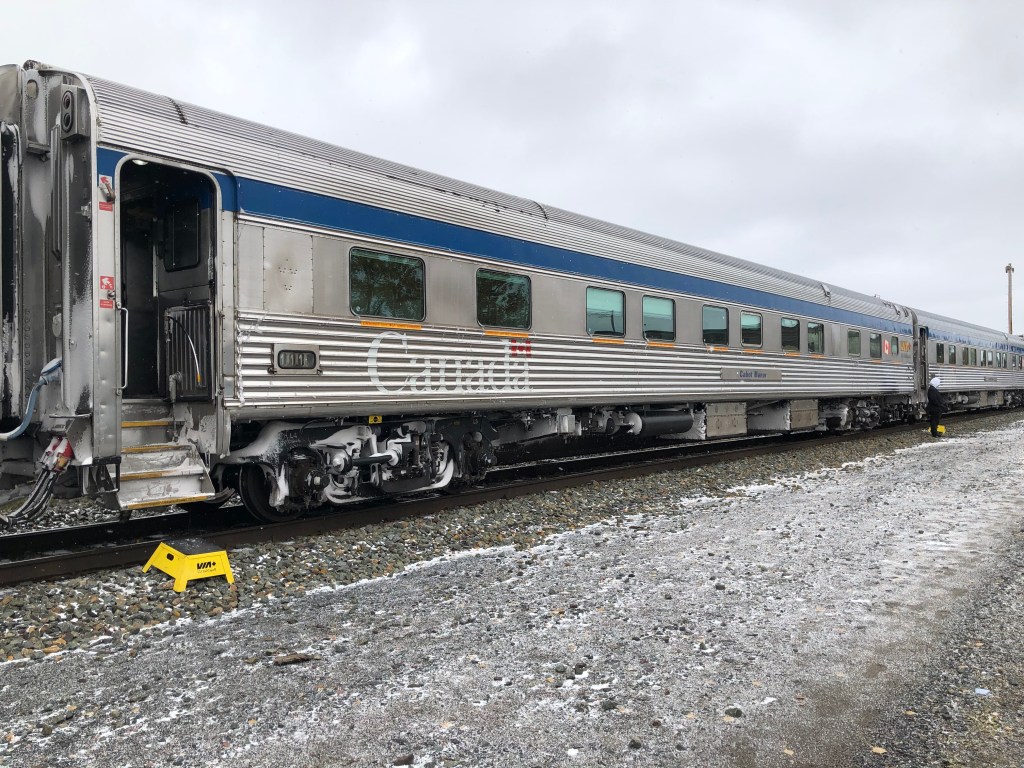
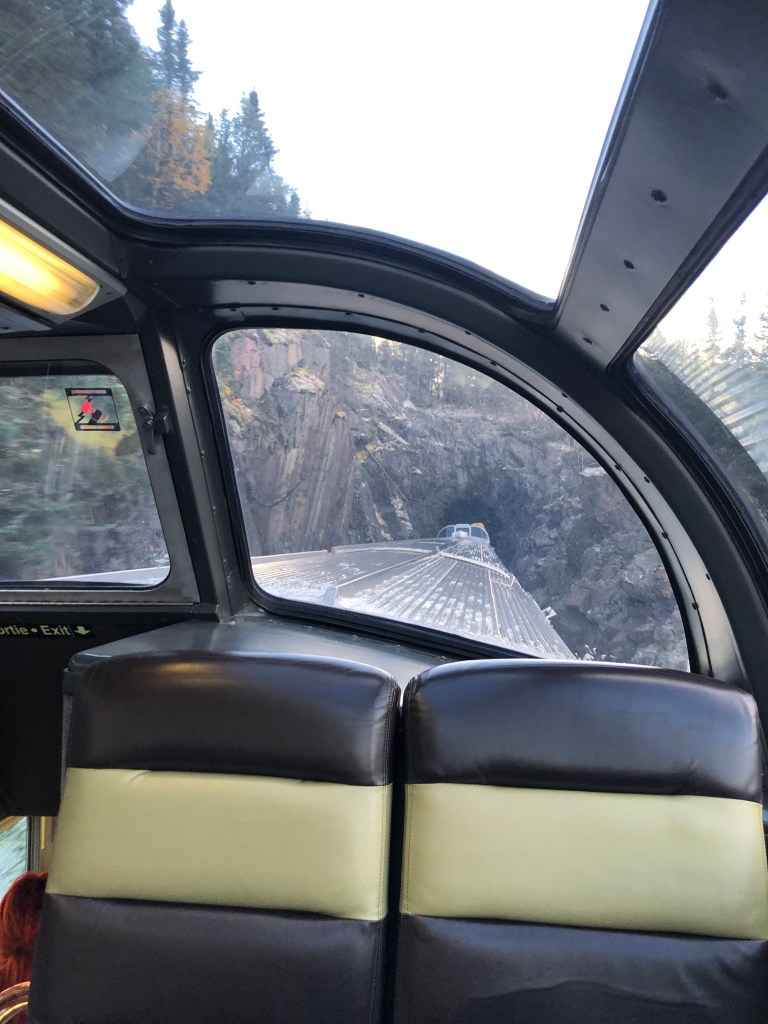
A far more leisurely stroll than the previous evening’s rush to Toronto Union Station, which is a very impressive building, meant I pitched up an hour before departure. As in Halifax there is a Business Class lounge where sleeper passengers could check in. It seemed very busy. Having done the necessary paperwork I went and deposited my suitcase with the baggage people and hoped I would see it again in Vancouver. Back in the lounge I wondered just how busy the train would be as the lounge itself was barely able to cope. I needn’t have worried. Once boarding was called, I caught a first glimpse of the train. It was huge. Twenty-two Stainless Steel cars, built in the 1950s, hauled by two diesel locomotives. The Canadian has four passenger classes. At the front of the train is the baggage car and two cars for the Economy (seating) passengers. Some of those seating passengers would do the entire journey to Vancouver including one woman with a large dog called Ellie. They are braver folk than me. Towards the rear were two Prestige sleeping cars each containing six luxury cabins with en-suite facilities. Behind that was the Park Car, a very well appointed lounge for the Prestige passengers with its own upstairs dome and a unique bullet shaped rear providing panoramic views of where you’d just been. Unfortunately Transport Canada, the regulator for all things public transport, had decided that this was unsafe and this particular journey was the first that required an extra empty car behind the Park car to serve as a buffer thereby spoiling the view. Between the economy and prestige sections lay the bulk of the cars which housed the sleeper passengers. There were approximately ten sleeping cars. Accommodation in each consisted of six double cabins, four singles, one of which was reserved for the car manager, and six semi-private bunk berths with night time privacy provided by heavy curtains. Passengers in these cars had access to two restaurant cars and two Skyline cars. The Skyline cars had a lounge area and a panorama dome upstairs. A third Skyline car was provided for the Economy passengers. There was another car for the train staff and I’ve possibly missed a few more so suffice it to say it was a long train. Almost half a mile long, yet still dwarfed by the endless freight trains we would pass.

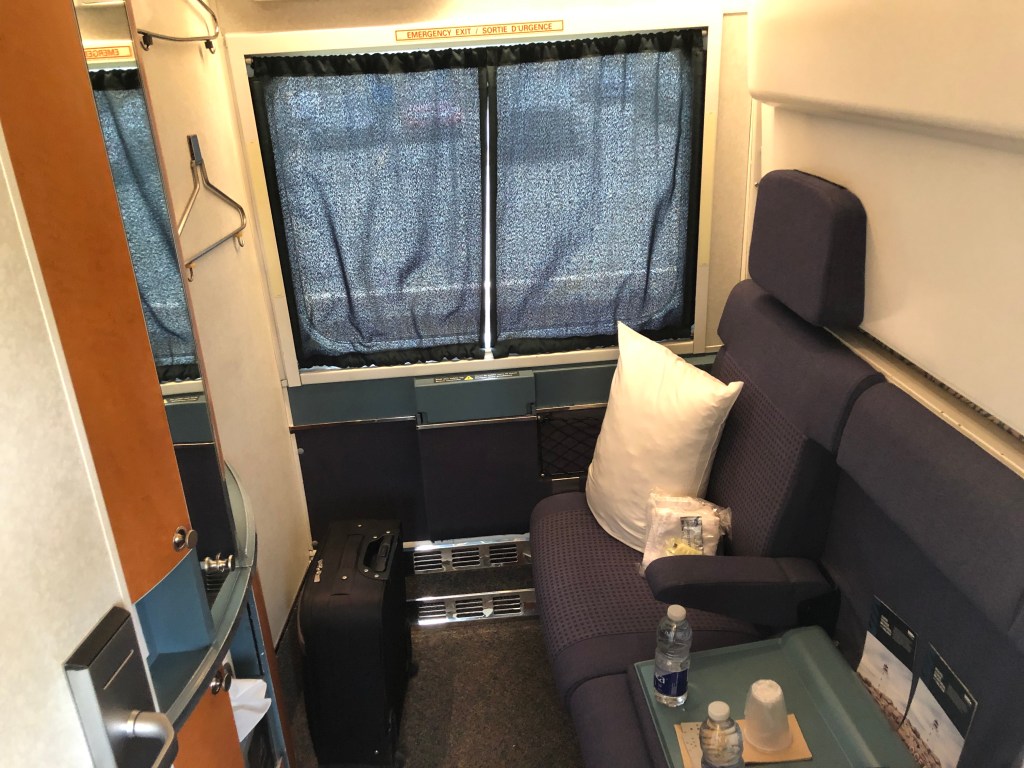
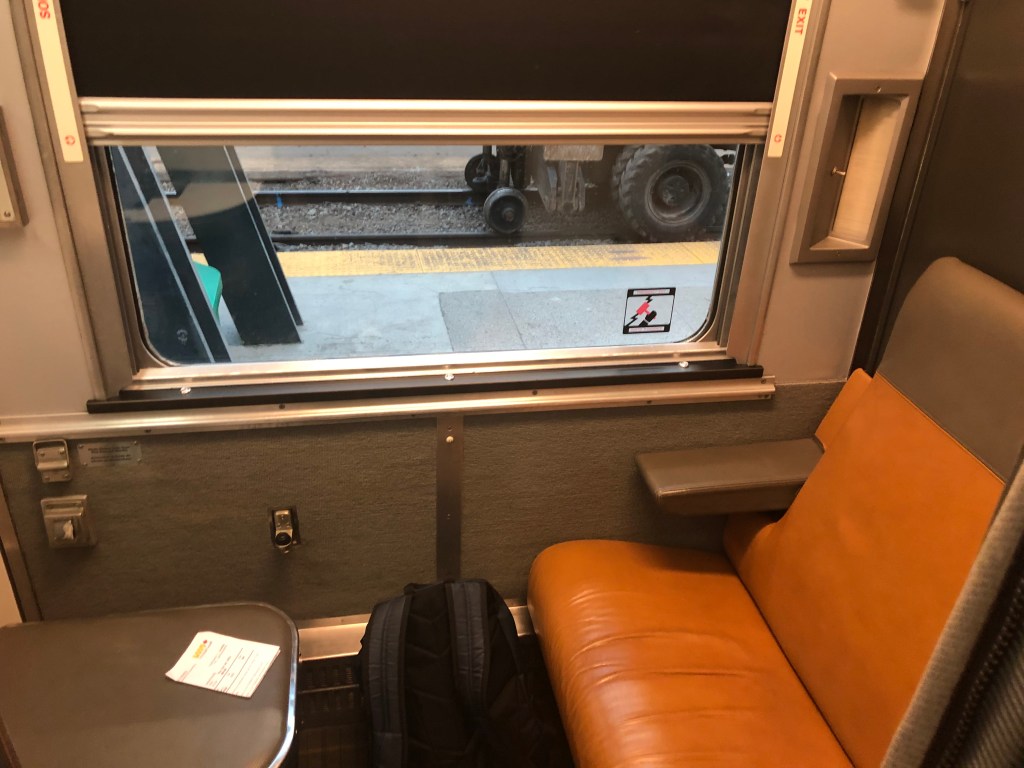
For my trip I had chosen a cabin for one. A Prestige cabin would have been nice but as they were all for two people the cost might have been prohibitive and they had all sold out when I came to book the trip anyway. Having been shown my cabin by car manager Gerard I was left to get acquainted with it. It was, well, bijou. In day mode there was a seat and a footrest. A sink was tucked up in the corner and that was about it. There was a solid sliding door and also heavy curtains which seemed like overkill but I’d soon find out why. But wait! What’s this? Lifting the lid of the footrest up revealed your own personal toilet. Erm, okay… For the night a bed is pulled down from the rear of the cabin and it takes up virtually all the space in the cabin. That included covering the toilet rendering it unusable at night unless you went to the faff of putting the bed up before you used it and back down again afterwards. I never used my personal loo at all, day or night, preferring the public ‘washroom’ at the end of the car. It seemed more hygienic to dispose of one’s body waste somewhere other than place you sat and slept. With the bed down there was hardly any floor space to stand. With the hard door open and the curtains closed you could expand slightly out into the corridor which helped when you were getting ready for bed. The hard door could be locked from the inside only. Leaving valuables in the cabin took a bit of a leap of faith at first but by the end of the trip iPhones were being left on charge unattended in open rooms, corridors and sometimes in the washroom shaver sockets. Apparently there have been no reports of things being stolen on The Canadian ever.

Day One: Toronto – Hornepayne

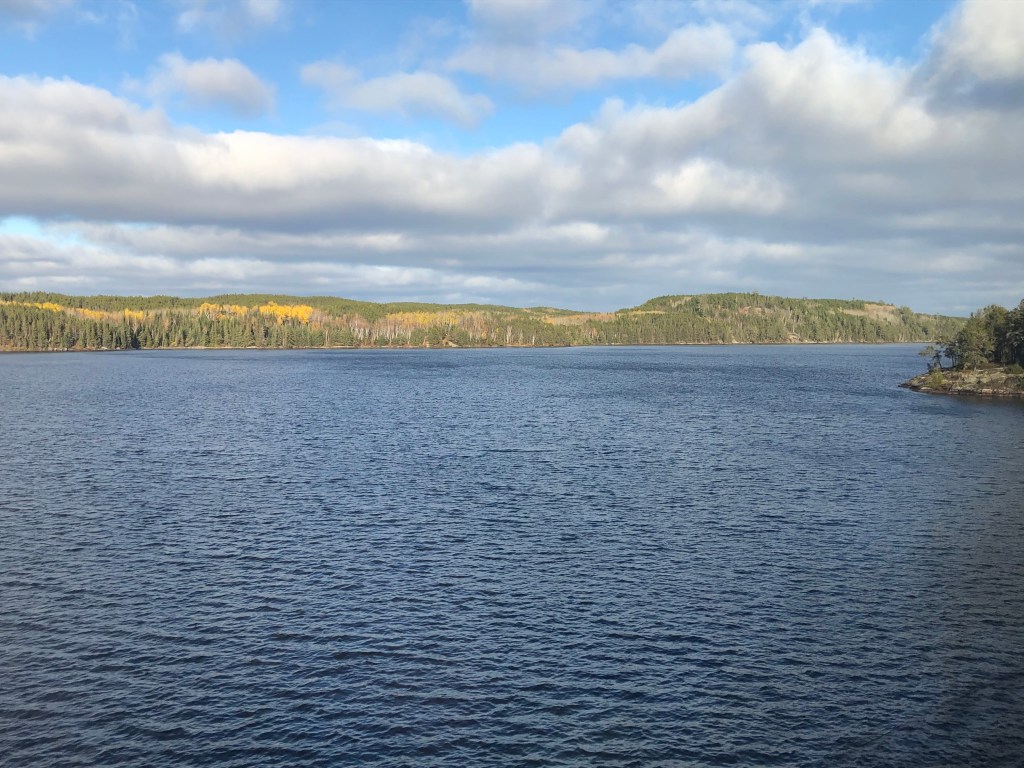
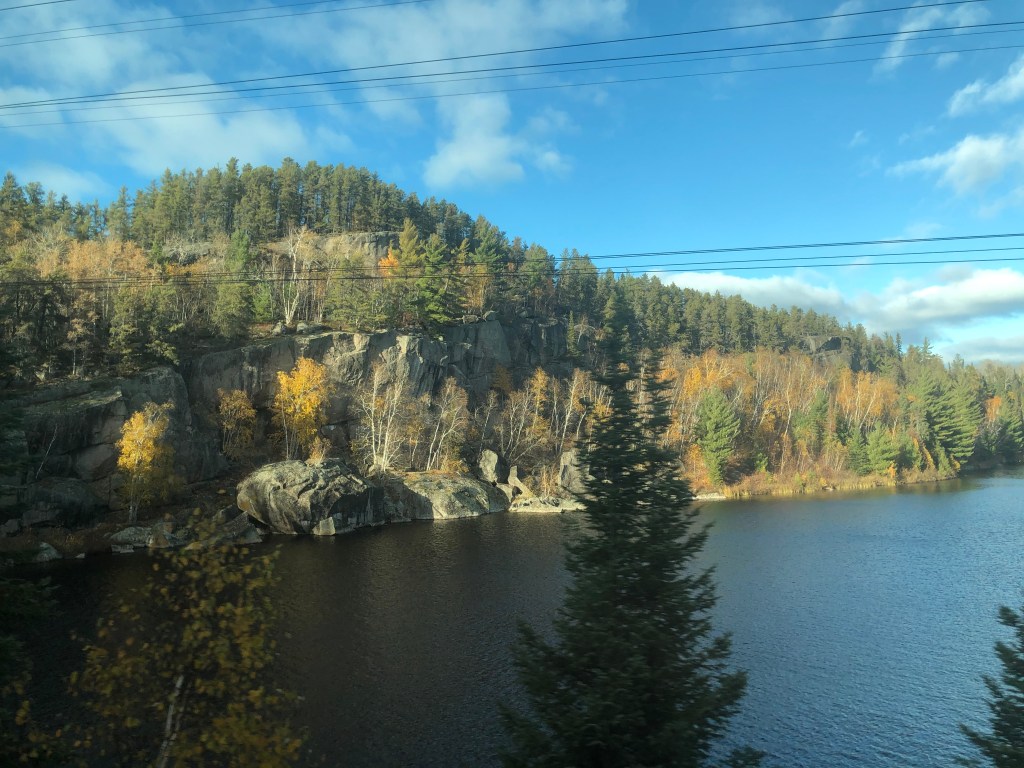
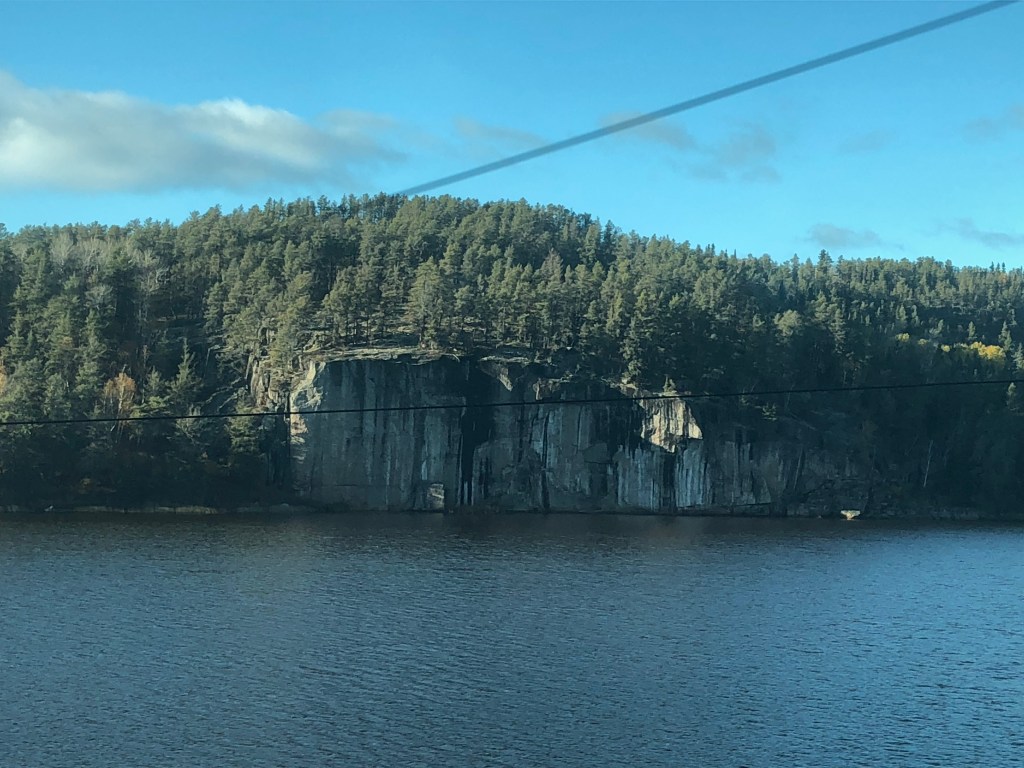
We pulled out of Union Station on schedule at 9:55am. For the first hour or so the train passes through largely unremarkable suburbs of Toronto. Some backing up and other jiggery-pokery was required to get us onto the correct track out of the city. It was an inauspicious start but gave me a chance to discover where everything was. I soon worked out that the Skyline car was the place I’d spend most of my conscious hours on board the train. The cabin was comfortable enough but as with The Ocean, it only gave access to one window. The Skyline had a couple of spacious areas to sit and, of course, the best part of the train, the panoramic dome. Twenty-four seats with views forward, backwards, left, right and even up thanks to its full length curved windows. In short, you could sit there completely surrounded by Canada. The dome could get busy at times but only rarely was full. The car had its own steward who would organise events and double as a barman. Tea and coffee were always available along with a few snacks. Soft and alcoholic drinks were available for purchase. Meals were arranged in two sittings, I was on the second today. Whilst the first sitting were being fed the Skyline car hostess gave those of us in the dome a talk about the history of the railway and more details of what to expect. There was no WiFi on the train. Contact with the outside world was restricted to Canada’s notoriously expensive cellphone data network which for long periods of the journey was unsurprisingly absent. By the time the second sitting was called to lunch we had left Toronto behind and passing through rural Ontario dotted with small settlements. As on The Ocean, lunch was a three course affair with a rather good cannelloni as the main. I wasn’t going to go hungry on this train either. In fact my emergency rations were barely touched by the time I reached Vancouver. We passed Parry Sound, a small town notable as being the birthplace of hockey legend Bobby Orr. Our first scheduled stop, where we could get off and stretch our legs, was in Caperol. Leaving there marked the beginning of the Canadian Shield. This is a vast area between the St Lawrence lowlands and the prairies. It is largely made up of boreal forest and ancient pre-Cambrian rock. Think lakes and trees then multiply that by several million and you’ll get the idea. Although we were leaving the vivd autumnal reds of Eastern Canada behind, the scenery was spectacular in a wild and unspoilt sort of way. Canada has many ‘Back of Beyonds’, the Canadian Shield is one of them that not many people know about. Eventually the light faded and the second sitting for dinner was called, steak and mash was the main. Unlike The Ocean, I was put on any table that happened to have a space which meant socialising with other people. As a shy, retiring type I felt a bit uneasy about this. I’m a silly sod. It was fine. We all had stories to tell including me. Eventually it was time for bed. The car steward Gerard had made up the bed as I ate. I hadn’t yet discovered the knack for getting changed without any floor to stand on but I managed it. It was time to sleep…

Day Two – Hornepayne – Winnipeg

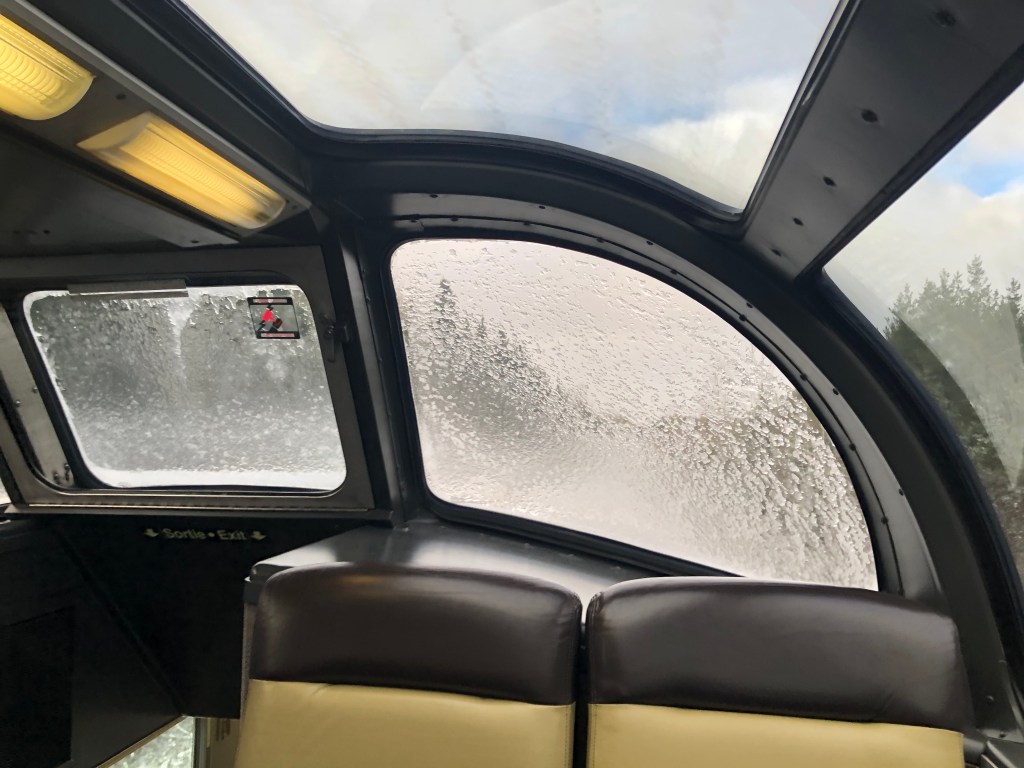
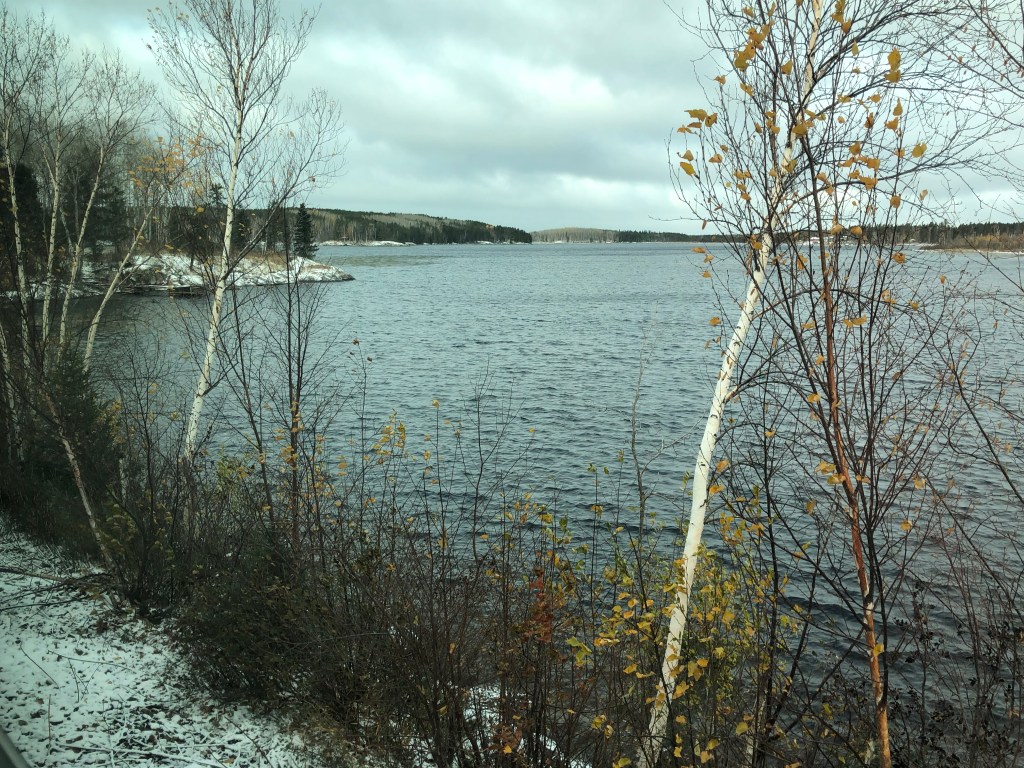
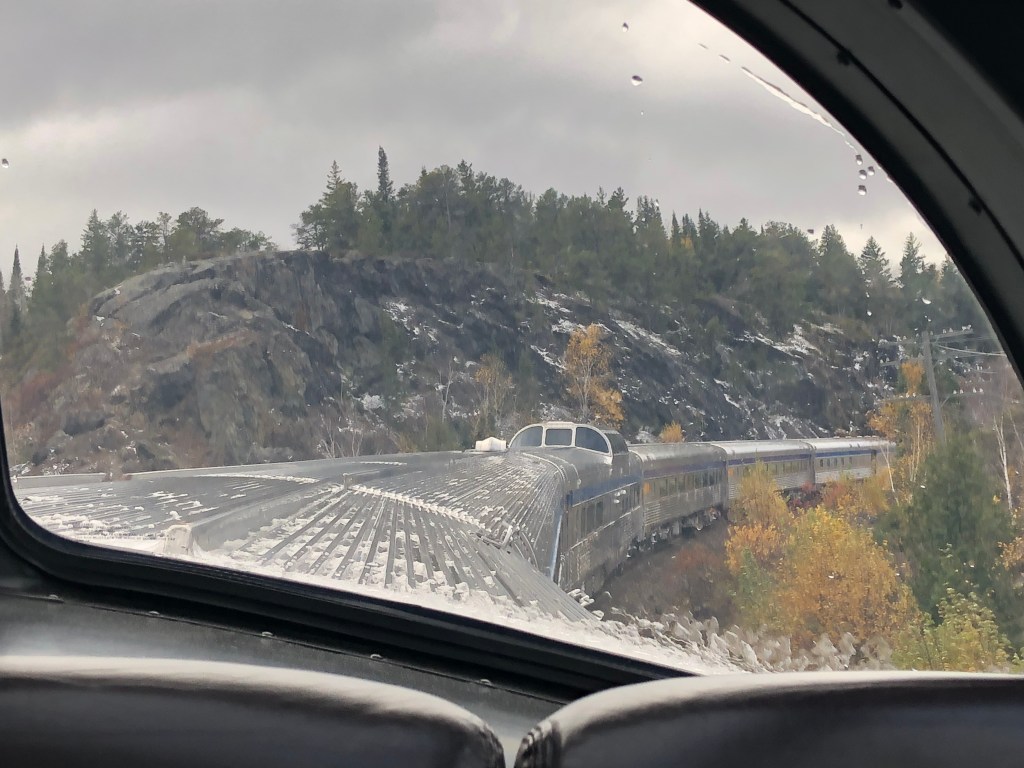
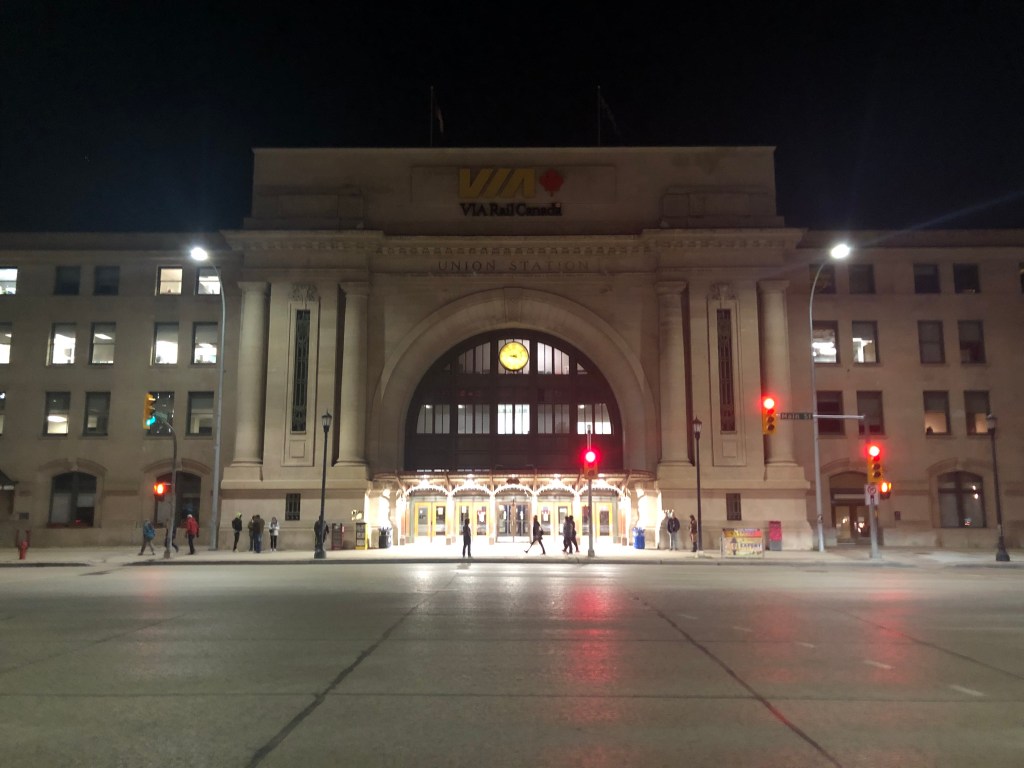
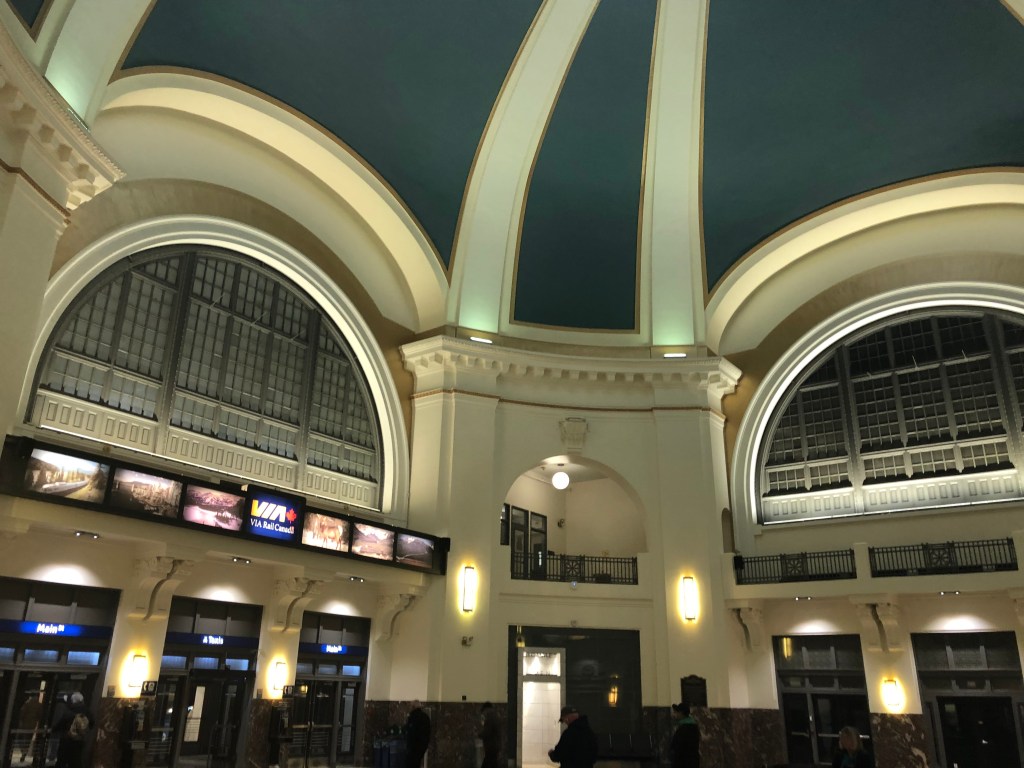
(Hornepayne was a technical stop in the middle of the night. I wasn’t tempted to step out and discover if it had anything to offer.) I had a terrible night. Whilst the bed was comfy enough and the bedding very nice, it could do nothing to stop all the rattling and racket of the train. My cabin was right over one of the car’s bogies and I felt every rough bit of track and there was plenty of that. To cap it all we had moved into another time zone so there was an extra hour in bed to endure. I needed to get out of bed and wander down the corridor to the toilet a couple of times (still better than trying to use the one in the room) and peeking out of the window the ground appeared to have taken on a white hue. Eventually nighttime became daytime and it became obvious that snow was covering the ground. Not much, but enough to turn an autumn Canadian Shield into a winter one. I pulled on some clothes and headed for breakfast. It’s first come, first served and I was stuck on a wait list. I went up into the dome, where ice on the window was spoiling the forward views, and waited. For quite a long time as it happens. I had either been forgotten about or not heard my name being called. So it was a late breakfast and last dibs for the day’s meal sittings which were being allocated by the waiting staff. It was to be first sitting or nothing which meant lunch would be only two hours after breakfast. It was an inauspicious start to my second day on The Canadian. However, things soon picked up. Each sleeping car has its own shower and it was pretty good. Refreshed, I headed back to the dome to watch a wintery looking Canadian Shield go by. It was really quite spectacular. Sure enough lunch came all too soon and in the early afternoon we came to a standstill in the only town for miles around, Sioux Lookout. It was time for a stretch of the legs again. The temperature was a chilly -4C with some light snowfall. Despite this, I wasn’t going to miss an opportunity to walk, even if it was only up and down the side of the train. With the new engineers arriving late, our stay there was a bit longer than anticipated but the bonus was the town has 4G and I was able to check in with home before we re-entered the data desert. Once they had turned up, the engineers moved us out of Sioux Lookout and it was more hours of the Canadian Shield, the snow eventually running out and returning the Shield to autumn once more. In the evening we finally managed to escape the surprisingly huge province of Ontario and enter Manitoba but the Shield hadn’t finished. As I watched the sun set over the front of the train, I actually felt very much at peace with a world that was gently rolling past me, increasingly unseen. We rolled into Winnipeg at about 9pm. The stop there was a couple of hours so I got off and went for a wander. Although the station is in the city, there wasn’t much to see at that time of the evening. It was -2C too so I spent most of the time in the station building which was quite impressive. Soon though it was back on board to see if I’d have a better night’s sleep.

Day Three – Winnipeg-Edmonton

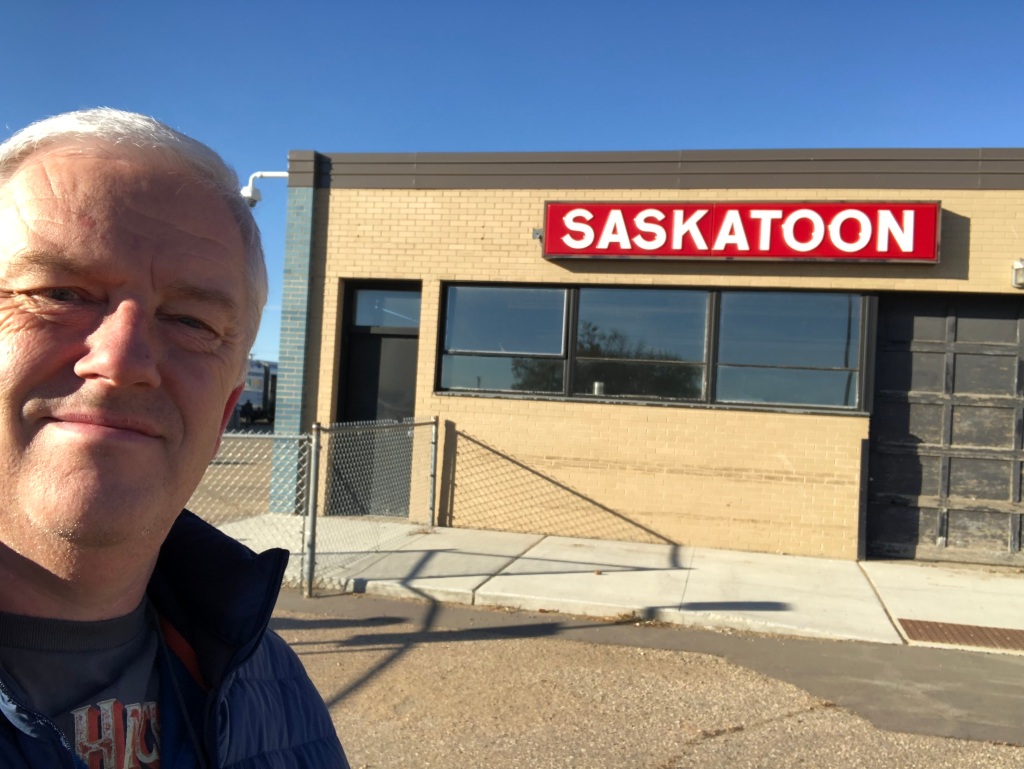
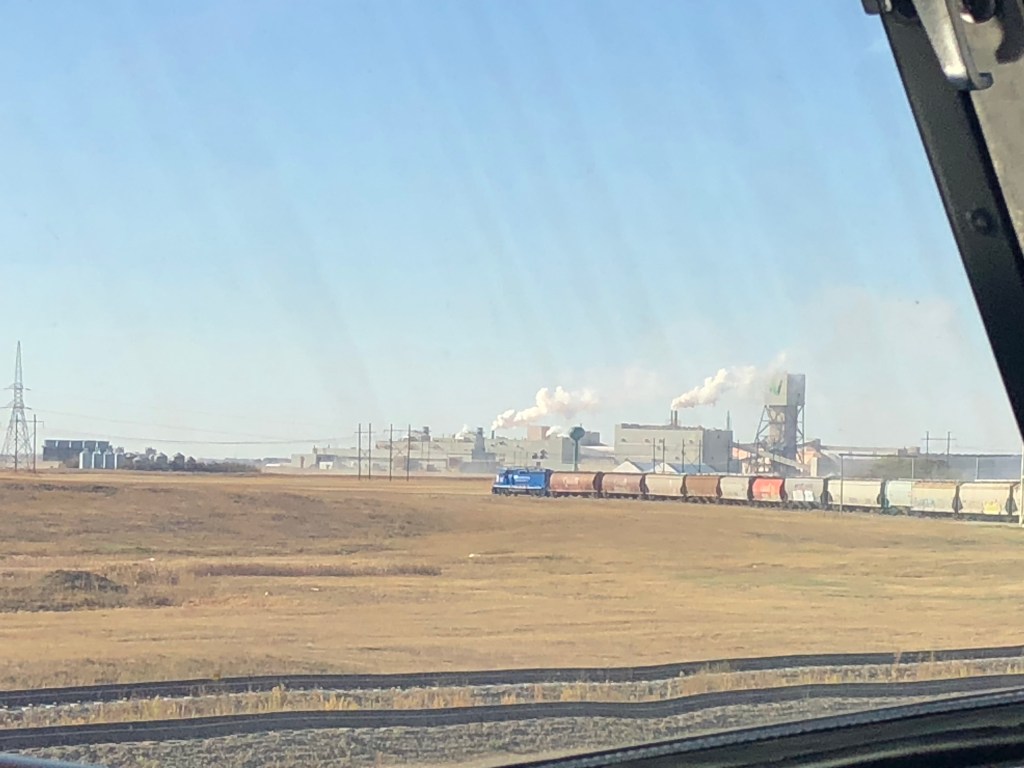
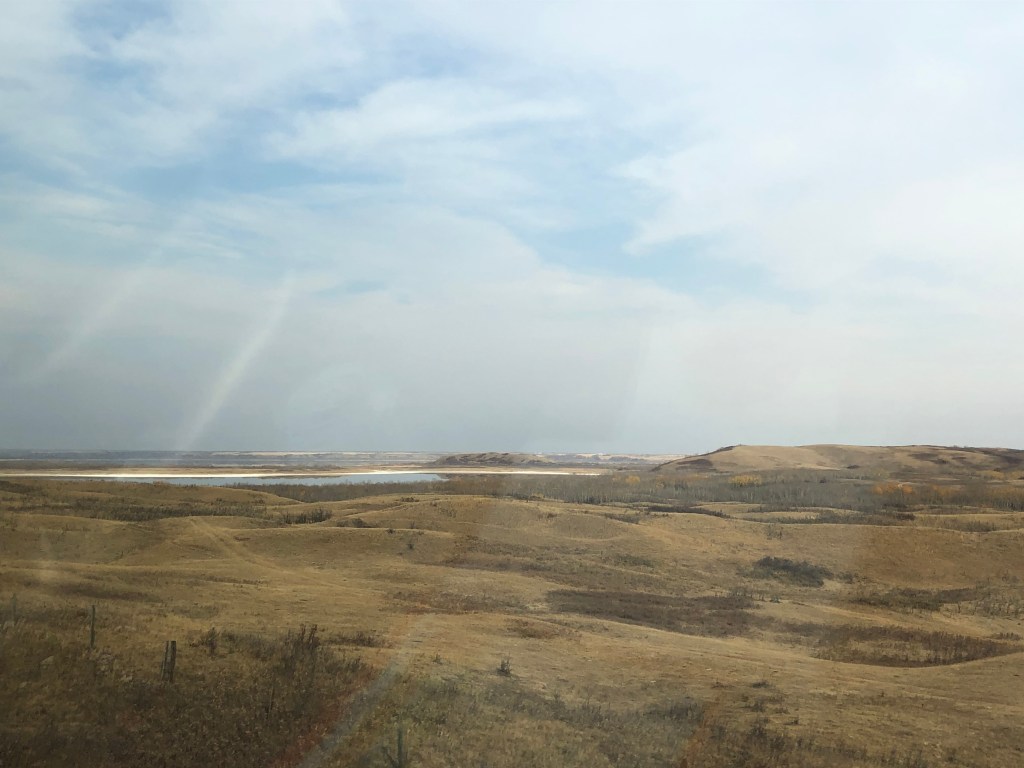
The train had a crew change at Winnipeg. Most of the onboard crew are based there. A new car manager introduced himself before I settled down for the night. I had a great night’s sleep, despite the same noise and motion problems as before. It might have had something to do with me taking another couple of Canadian Night Nurse capsules before lights out. I don’t think they should really be used as sleeping pills but never mind. The another hour had been added to the clock overnight and as I went for breakfast, we left the province of Manitoba and entered Saskatchewan. Today was Prairie day. Lying between the Canadian Shield and the Rockies are the Prairies, a vast area of lowlands and plains, largely grassland and very fertile. Despite leaving a good bit of it behind overnight, it would still take us the rest of the day to cross it. There were several introductions to the new crew members and I definitely felt as though I was getting into the swing of things as far as train living was concerned. We stopped for a couple of hours in Saskatoon. The station was out of town by a rather ugly logistics hub but it was good to stretch the legs in the cool sunshine. It took yet more reversing and waiting before we could get going again but you’ve just got to accept that that is the way with Canadian railways. Prairie day had always been a bit of a concern to me. Would I be bored crossing endless flatlands with nothing but the occasional grain elevator to relive the monotony? The answer to that was a great big no! I absolutely loved the day. The dome car was quiet so I got my preferred seat and spent virtually all day there, pausing only to have lunch. I simply lost myself in the enormity of the place. It was big country and even bigger sky. And whilst it certainly didn’t have the spectacular scenery of the Rockies or the Shield, the beauty was in the detail – a car graveyard, a Ukrainian Orthodox church, a small town with a Scottish sounding name and yes, the grain elevators. Grain is no longer transported by rail but the elevators remain, discharging vast quantities of grain into trucks, the town where they are situated proudly displayed on the side. There was even an old wooden elevator, no longer used but a reminder of an earlier, more innocent time. Eventually we passed from Saskatchewan to Alberta where nothing much changed, other than the addition of some nodding donkeys to the scene. Oil production is done on a micro scale here, such is the desire for Black Gold. As the sun set over the distant horizon it was time for dinner and socialising again. Interesting people, good food. Where else could you join in a discussion about the differences between Rugby Union, Rugby League and Aussie Rules Footie with a larger than life Australian lady and a couple from Vancouver? As we finished our dessert, the amount of lights outside the train informed us that we were approaching Edmonton. It still took an age to get to the station but once there we could stretch our legs in the late evening air. The station was a pretty soulless place. Edmonton’s city centre station, an impressive building by all accounts, is no more and the city is now served by something akin to a Portacabin on an industrial estate well out of town. It served as the destination for quite a few folk though, and the starting point for others. By the time we departed at midnight, I was already in bed. The next day was the one everyone was looking forward to, crossing the mighty Rockies.

Day Four – Edmonton – Kamloops

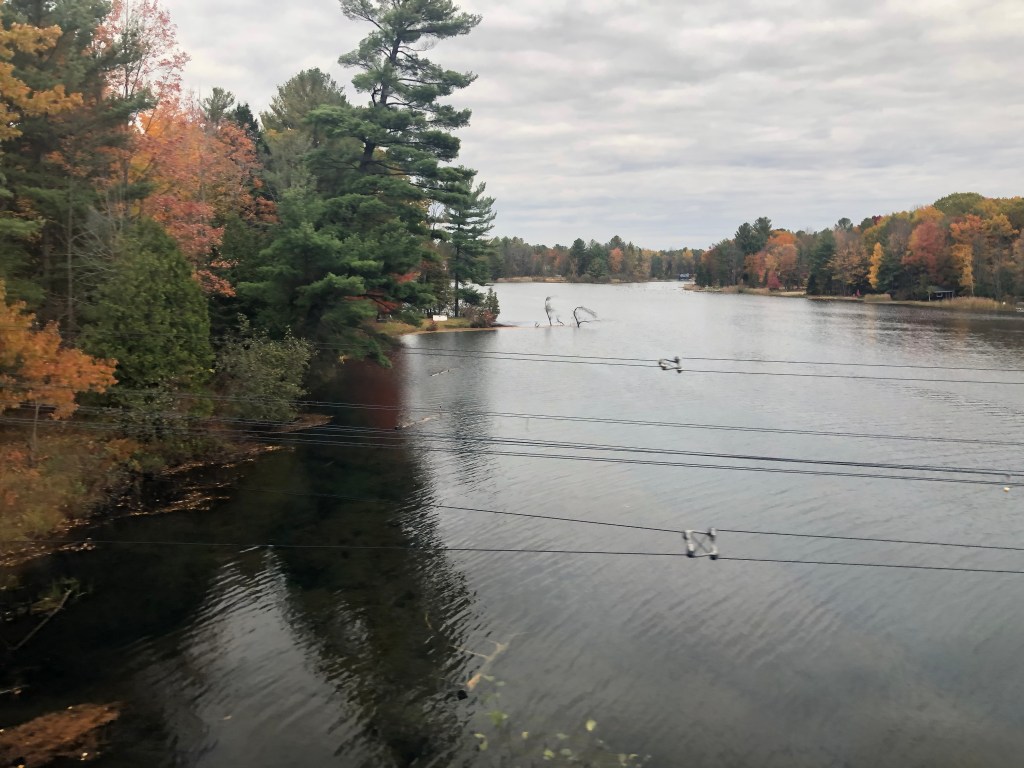
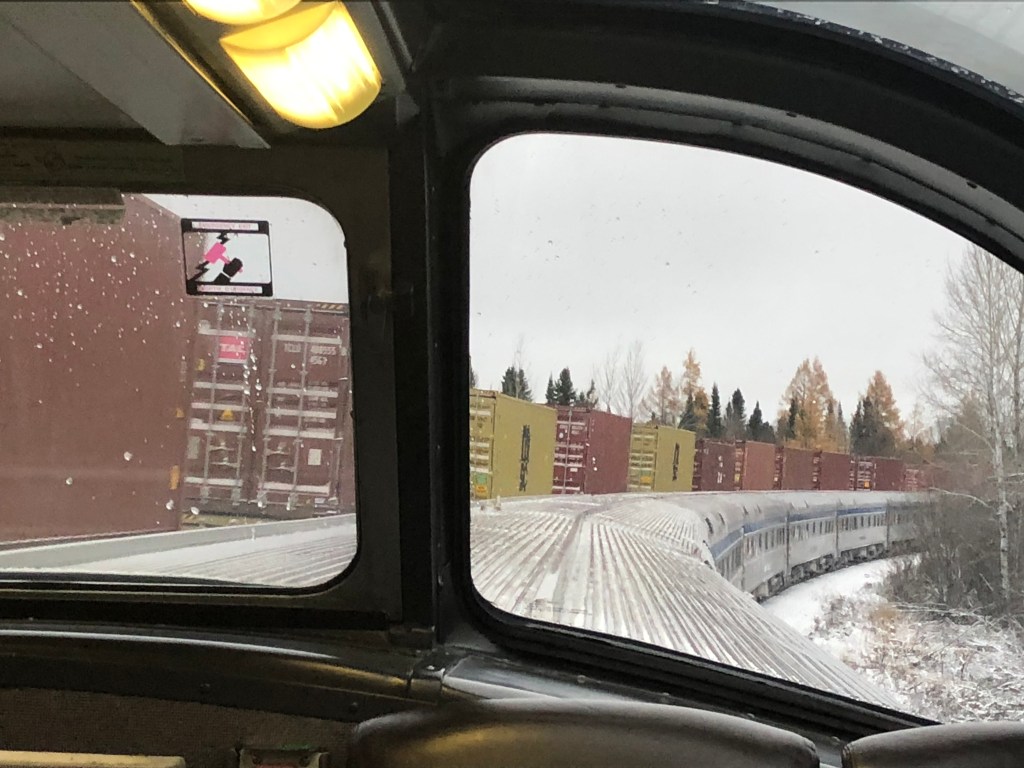
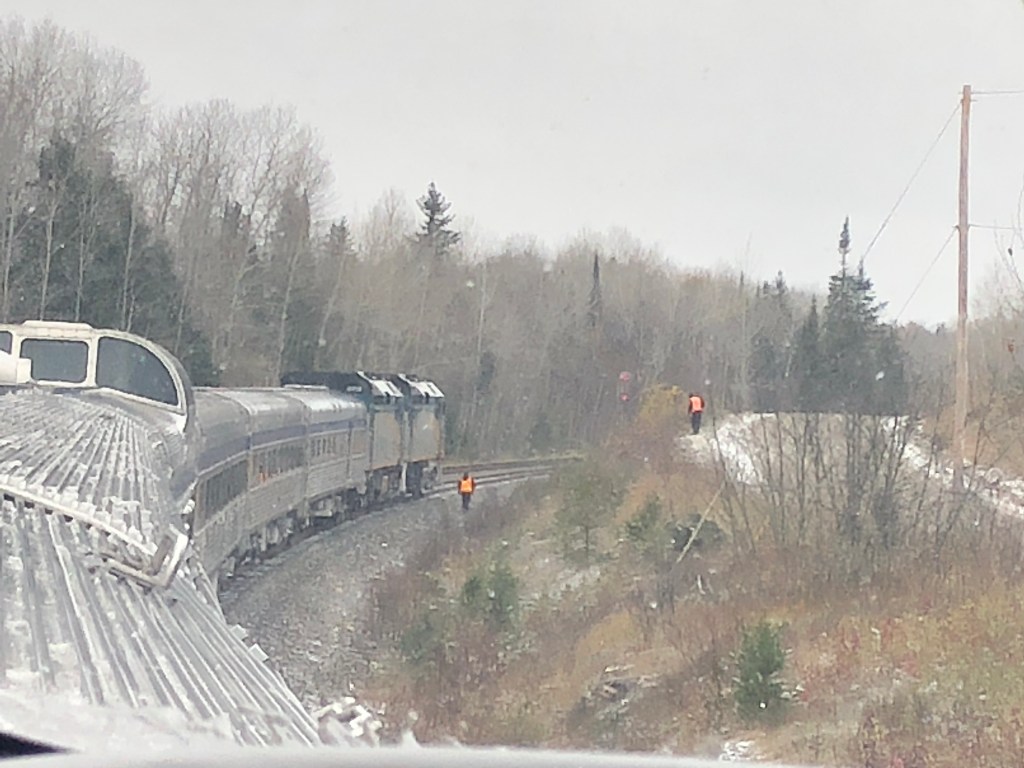
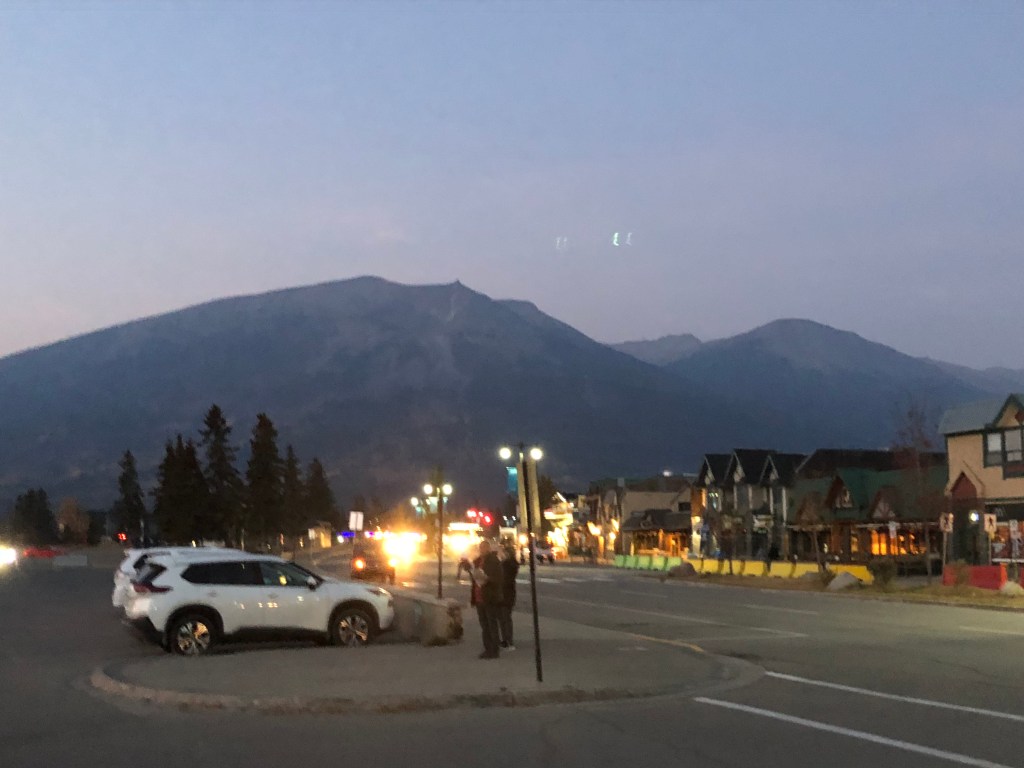
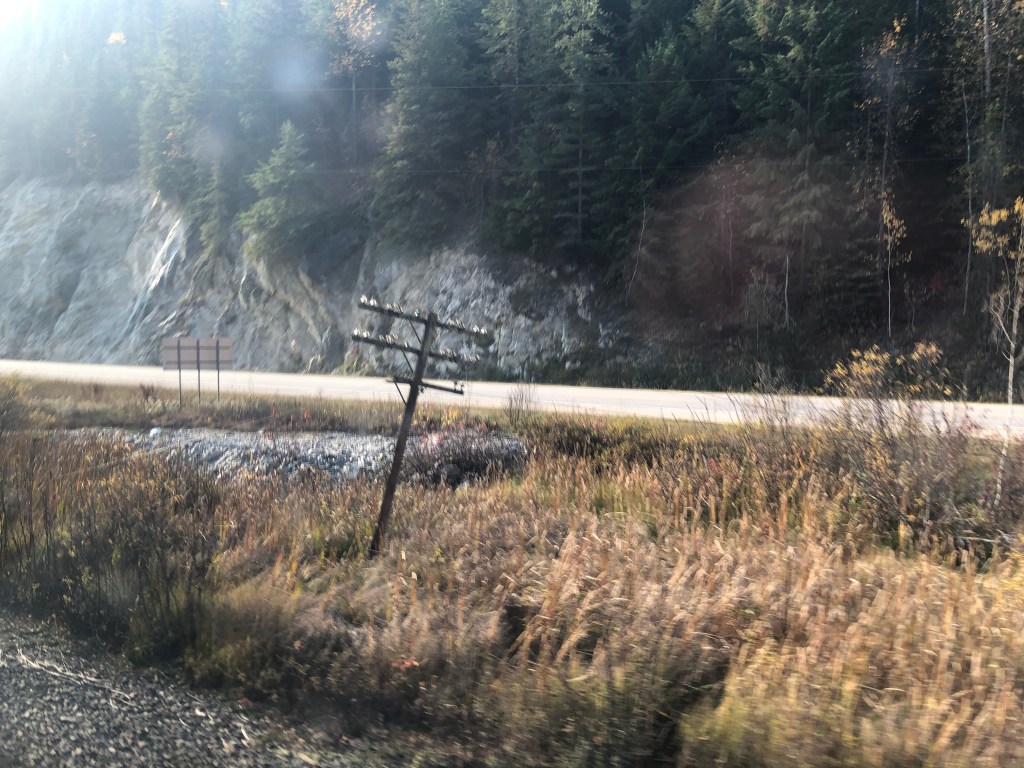
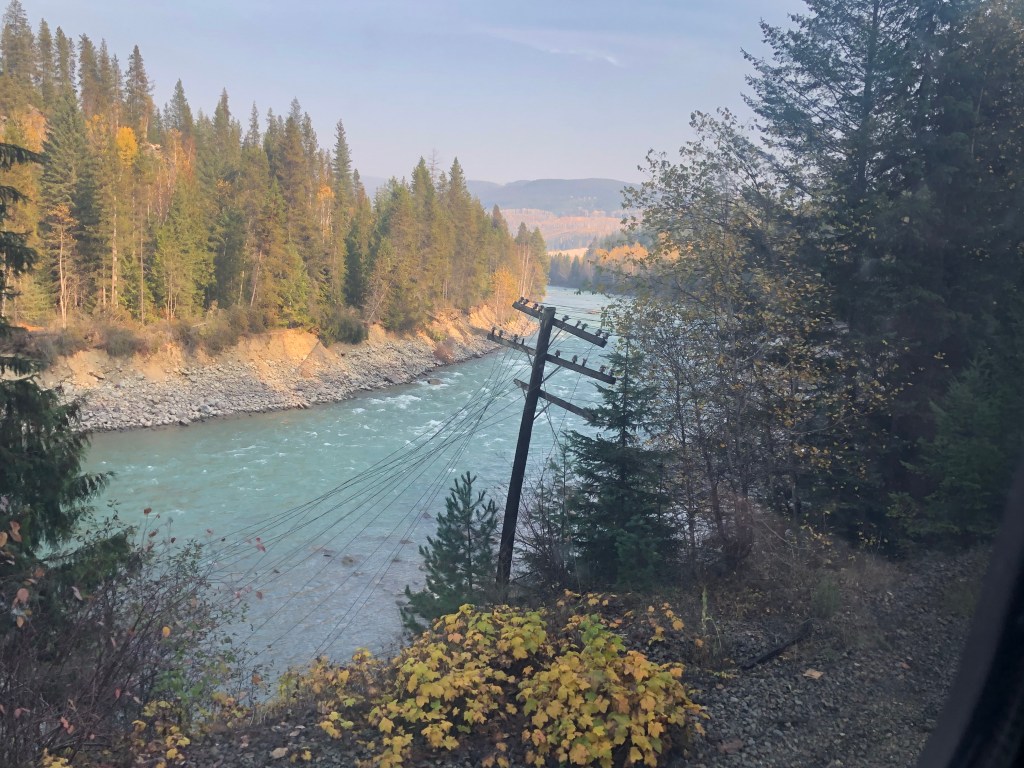
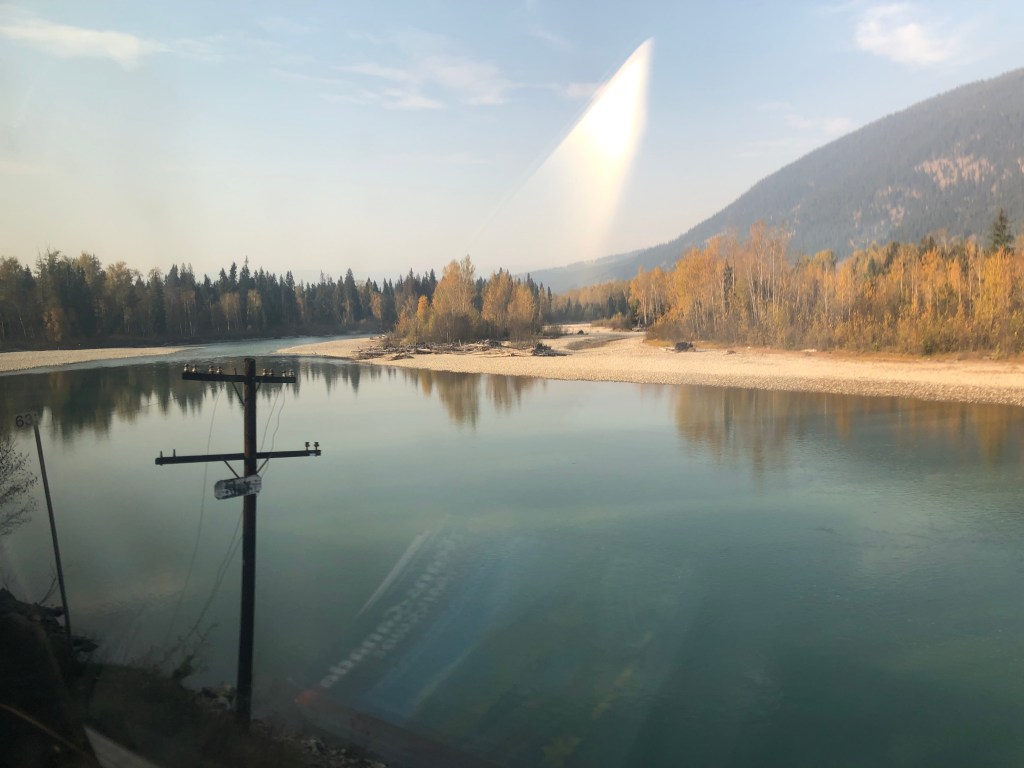
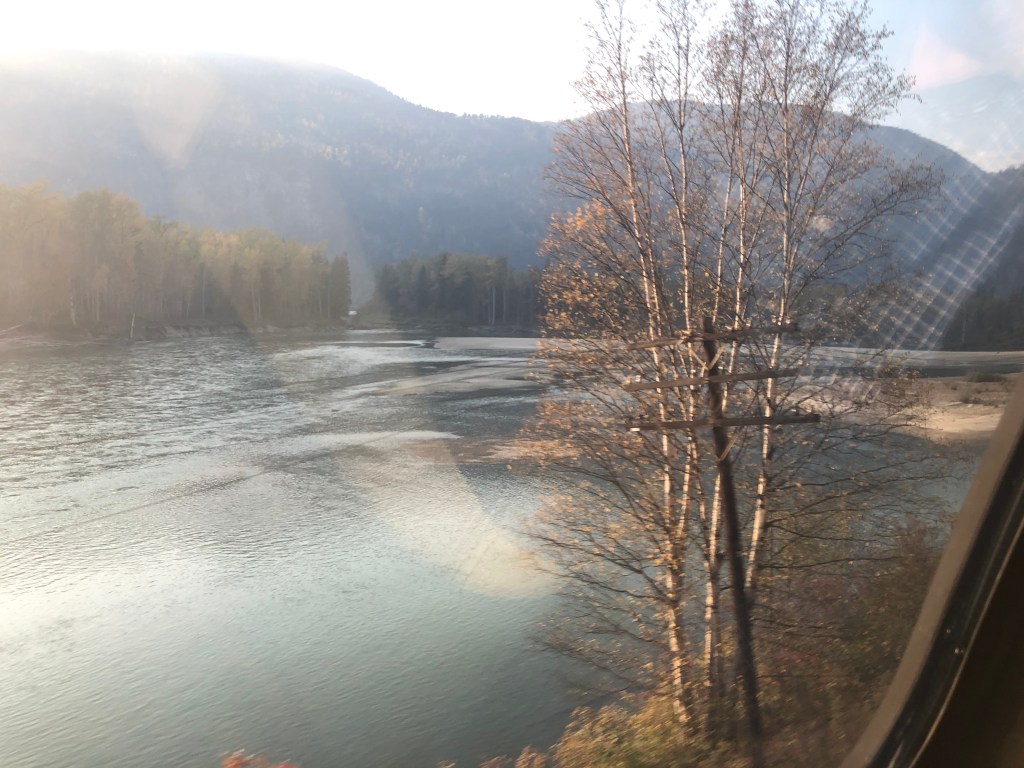
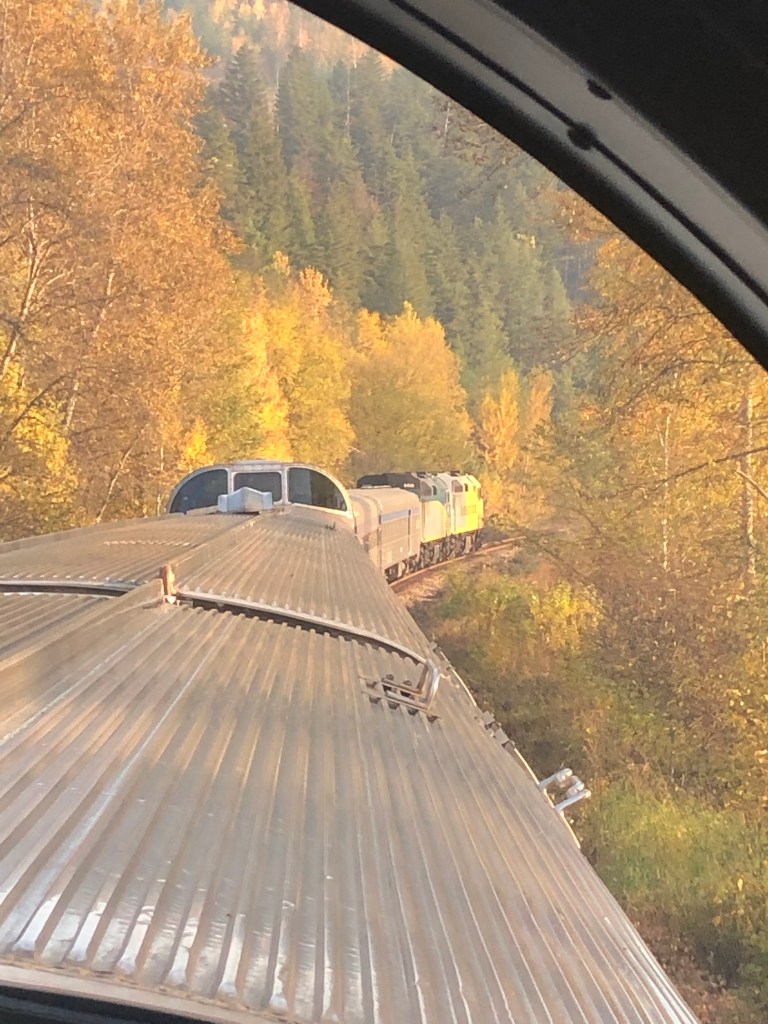
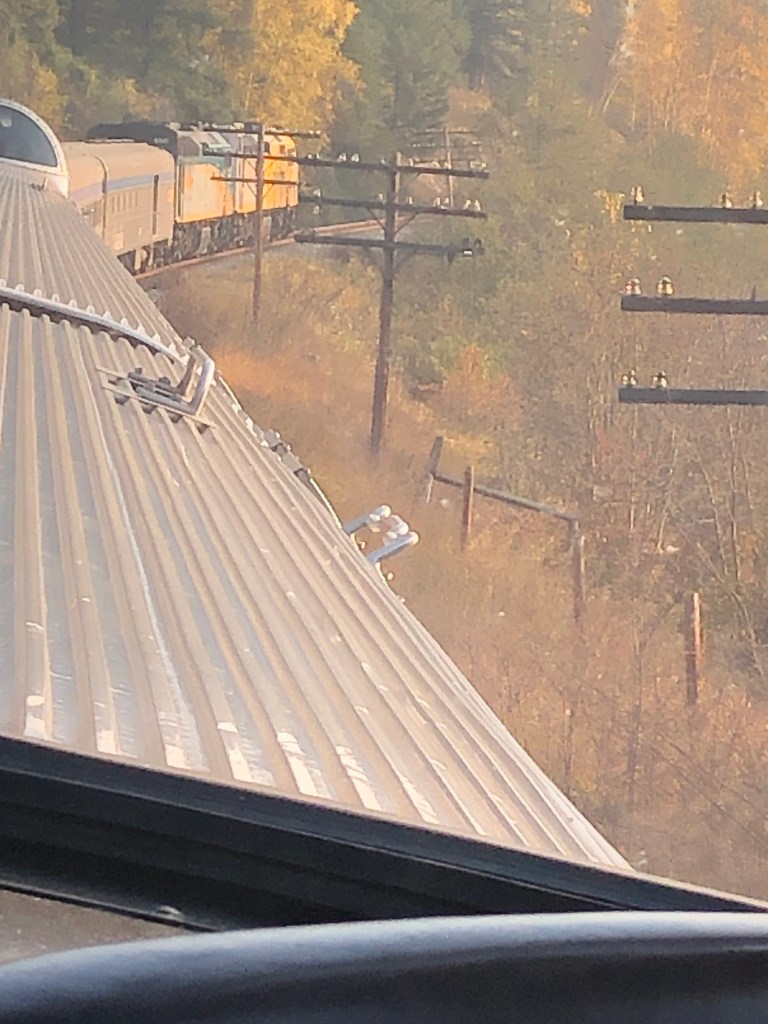
It was a patchy night’s sleep and I awoke at 5-30am as the train ground to a halt in the town of Jasper having arrived an hour ahead of schedule. There was a long stop here which would have been really nice if it had been scheduled later in the day when the town opened up. There was one enterprising gift shop that opened up along with a coffee shop but most of the town would remain in their slumbers until the train left. It’s a shame as it looked like a nice place. However, it was Rockies day and although we’d passed through quite a lot of them during the night, there was still plenty of Rocky action to come. The dome promised to extra busy today so I ignored the normal big breakfast and grabbed a few buffet items, claiming my seat early. It was a long wait until we set off. By then the place was understandably packed. The sun had risen over the mountains whilst we were stopped at Jasper giving us a preview of what was to come. It was, of course, fantastic. Mountains, trees, rivers, waterfalls, lakes and the regular sight of passing shipping containers heading eastwards on massive freight trains. Strangely enough, those didn’t spoil the view. What did spoil the view a bit was all the people in the dome car. It is perfectly understandable that they wanted to get the perfect photo but didn’t they know the I wanted to get the perfect photo too? After a while I decamped downstairs to the lounge area which was almost empty. You don’t get the stunning panoramic views that you get in the dome but at least there was no one jumping in front of me when another beautiful mountain gently sauntered past the window. After an early lunch I returned to a less busy dome car and spent most of the afternoon there. Emerging from the Rockies, we were told to put our watches back an hour as we entered the Pacific time zone. Finally I was in the same time zone as Rebecca in Victoria. The scenery remained spectacular, just not quite as spectacular as the Rockies. I became quite obsessed with the telegraph poles. Long since redundant, these poles, many with the wires still strung between them, once lined the entire track. Many of them remain in the Canadian Shield but they had all more or less gone from the Prairies. I suspect they were a valuable source of firewood for the harsh winters they have there. I was glad to see them back as we passed through the Rockies. Some have collapsed, some wires have snapped but many remain upright supporting cables that transmitted their last message many years ago. Eventually we started seeing signs of civilisation with some cultivated fields and isolated villages. This gave way to bigger settlements as we entered the furthest reaches of the town of Kamloops. As usual it took a lot of waiting and backing up to get into Kamloops. The town is a major railhead and the station part of the shunting yards so we were under strict instructions to remain on the platform. This was the last stop before journey’s end in Vancouver. There was to be just one last night onboard The Canadian.

Day Five – Kamloops – Vancouver – Victoria

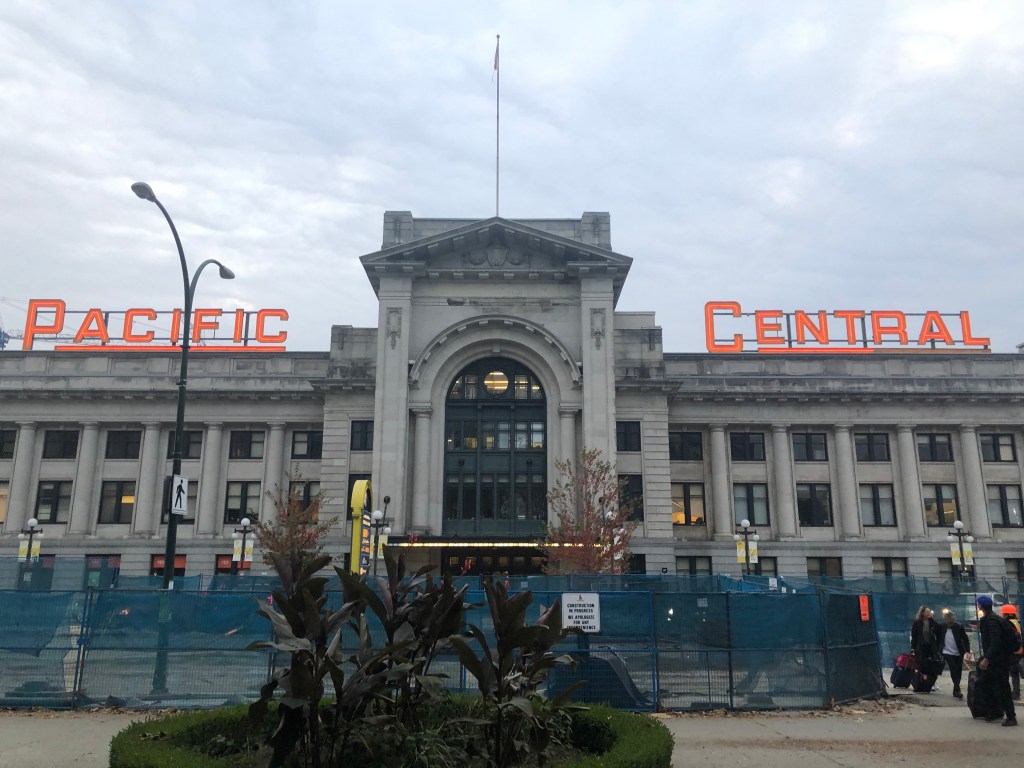
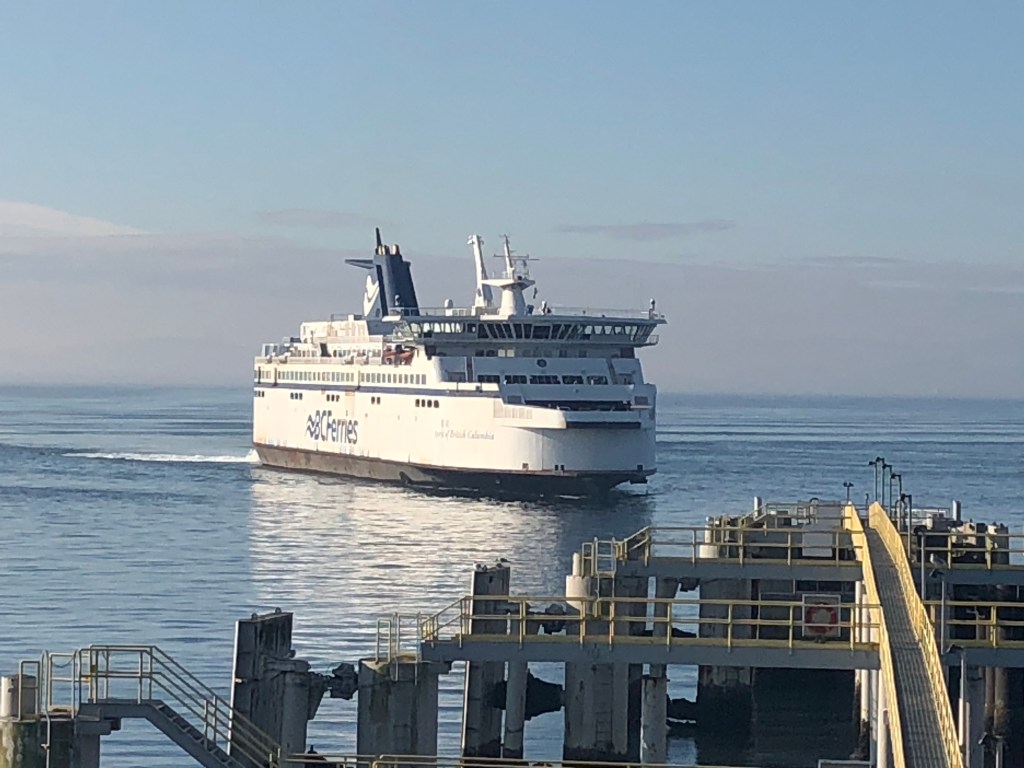
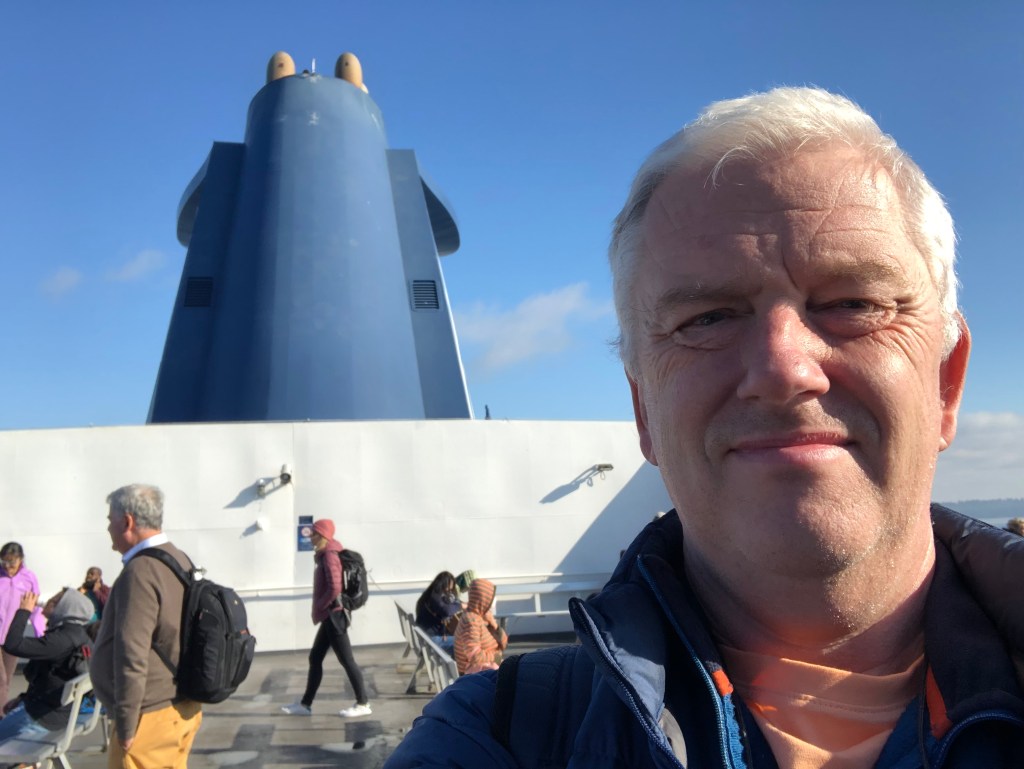
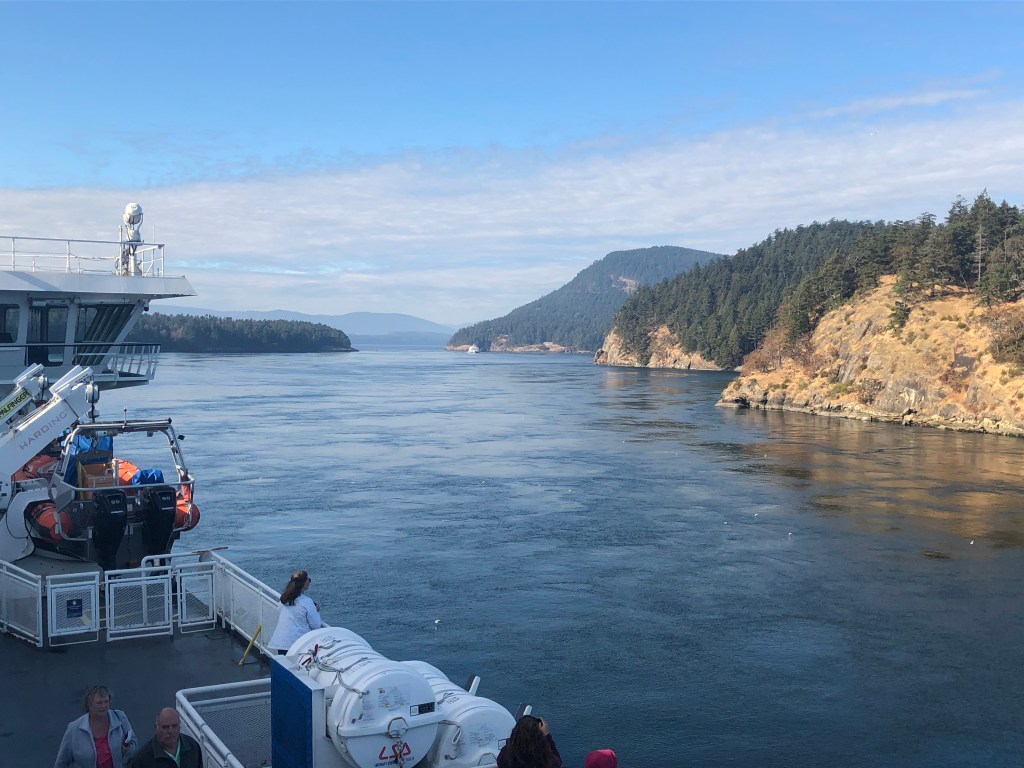
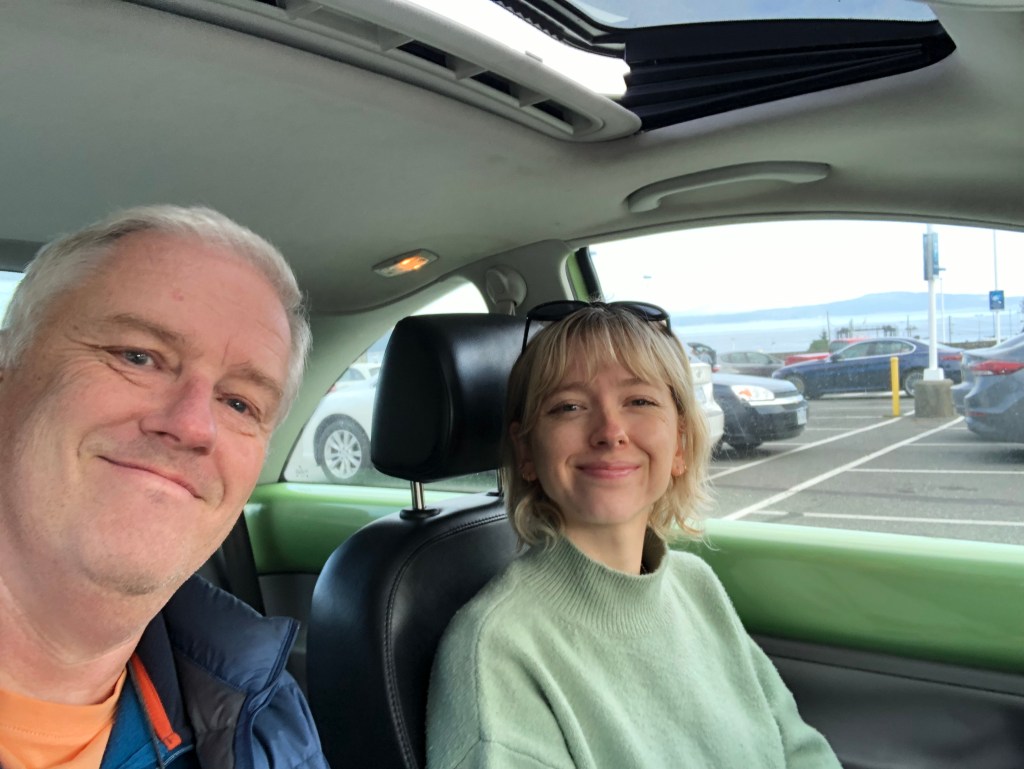
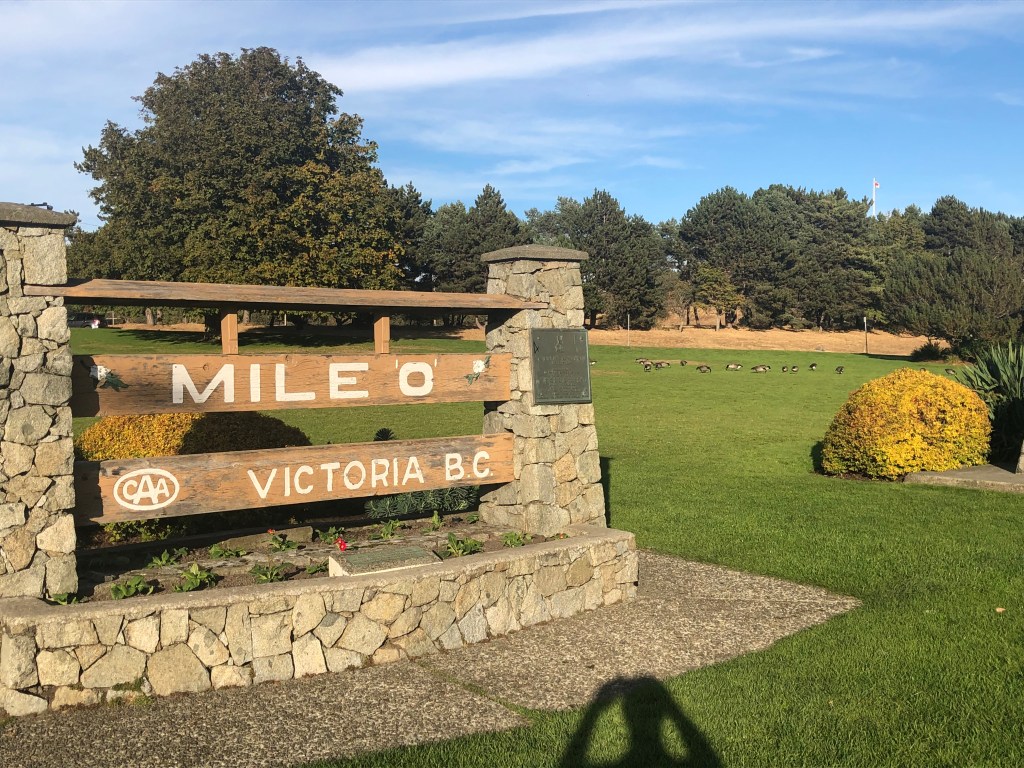
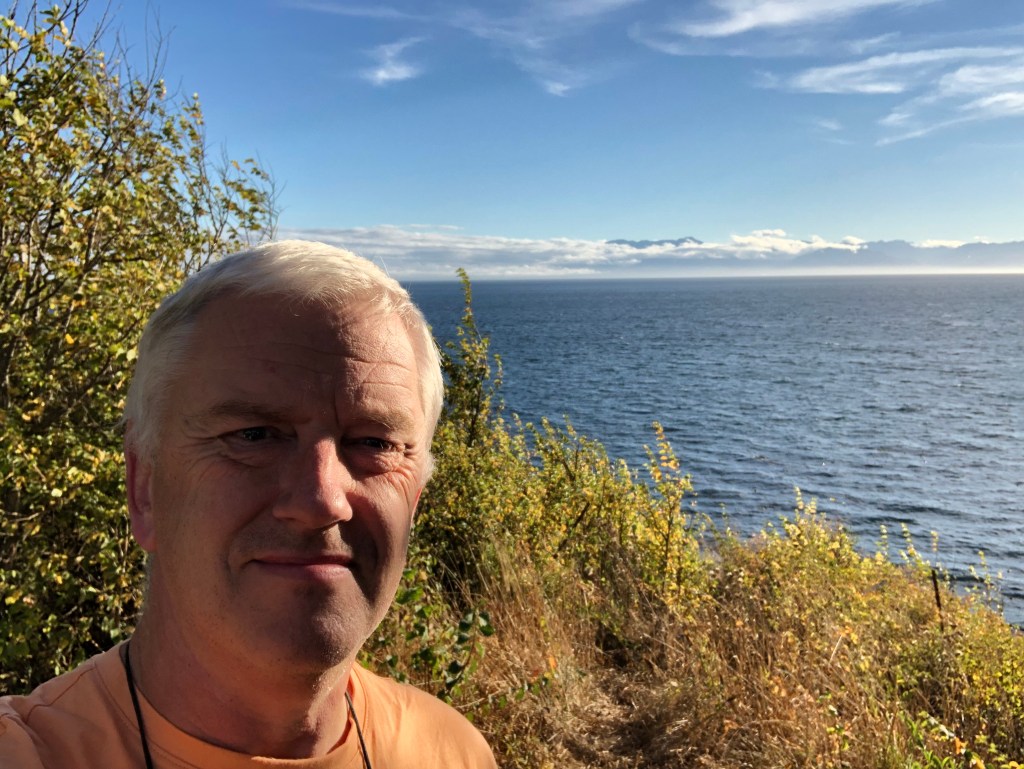
I slept reasonably well. The route from Kamloops to Vancouver has, apparently some spectacular bits to it as it follows the Fraser River for much of the way. You don’t get to see that at night of course but I guess it’s nice to know it’s there. I woke at 6am just as the train pulled into Vancouver’s Pacific Central Station. It was two hours early! I suspect the schedule has the inevitable delays built into it. We had to disembark the train by 8am so there was time to pack and for the usual morning activities concerning ablutions and breakfast. Then, at 7-45am on October 20th, my 61st birthday, I stepped down from the train and headed up the platform to the main concourse. No bells and whistles, no ceremony, that was it. The rail trip was over. It wasn’t quite the end of the journey though. Collecting my suitcase, I walked a mile or so to one of Vancouver’s Transit stations, went on the Skytrain for a few stops, transferred onto a bus which took me to the BC Ferries terminal at Tsawwassen and bought a foot passenger ticket to Swartz Bay. The Spirit of British Columbia was the ferry charged with the task of navigating through the Gulf Islands to Vancouver Island and once there, Rebecca was waiting for me with her 18 year old Volkswagen Beetle, Frog. We stopped in the town of Sidney for lunch and that birthday beer before heading to my hotel in downtown Victoria. It was just a short walk from there to Milepost Zero, the start (or end) of the Trans Canada Highway. Although the other Milepost Zero is in St Johns, Newfoundland rather than my starting point in Halifax, and I’d crossed the country by train, not car, it seemed a fitting place to take an end of trip selfie there with the Strait of Juan da Fuca, part of the Pacific Ocean in the background. Atlantic to the Pacific by surface transport, TICK.

7-45am and with no fanfare, I walk along the platform and my trip on The Canadian is over…
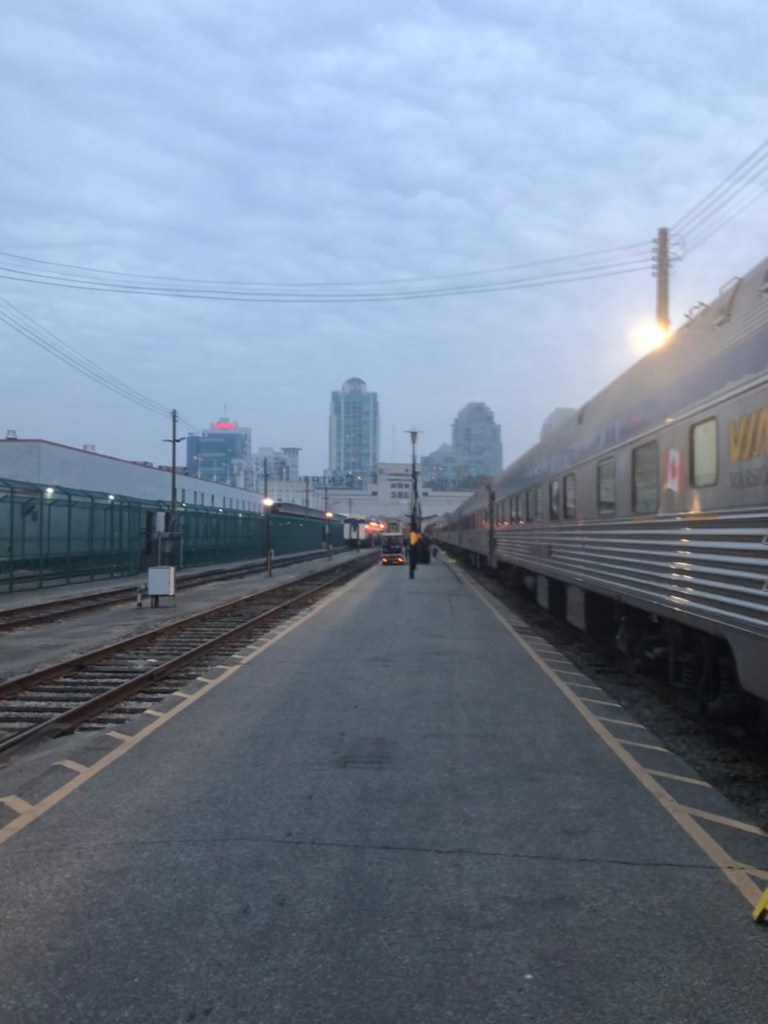
…and I leave Vancouver’s Pacific Central Station behind.
Rebecca was there to meet me with Frog.

Postscript

It is hard to convey to you just how much I enjoyed this journey. Of course it isn’t a practical way of travelling between Troon and Victoria. After a few days with Rebecca it took me about 23 hours from leaving my hotel to walking through my front door at home. In that time I’d flown from Victoria – Calgary – London – Glasgow including a cheeky little Business Class upgrade between Calgary and London for less than half the cost of the flight out and train fares. Even if environmentalism is your thing, I can’t imagine five days on a diesel hauled train releases any less CO2 than nine hours on a Boeing 787. I didn’t take the trip for practical reasons though. The journey was the experience and for me, an experience like no other I’ve had before. I found myself getting quite emotional about the colours of the Autumn trees. I was surprised at the size of the Canadian Shield. I already knew the Rockies were spectacular but there’s nothing wrong being reminded of the fact. The biggest surprise to me, however, was just how much I enjoyed the day in the Prairies, a place where the Earth seems infinite and the skies even bigger! It wasn’t just the sights though. The staff on board both long distance trains were lovely. A special mention to the Skyline Car host on the Winnipeg – Vancouver section, Edgard, who made our days through the Prairies and Rockies even better with his knowledge and friendliness. If you ever go on this trip here’s a tip – tip! Some tipped as they went, others at the end. We Brits aren’t particularly au fait with the concept of tipping but I tipped the restaurant staff, sleeper car host and the Skyline car host before Winnipeg where the crew changes and in Vancouver when the trip ended. Another aspect of a journey like this was meeting fellow travellers. On the Ocean this wasn’t an issue as it was lightly loaded and most people kept themselves to themselves. At meals I had a table to myself and there was no dome car where people would mix during the day. On The Canadian the only way to avoid mixing with the other passengers was to stay in your cabin for the entire trip. I met some very interesting people on the way. I’m not the most gregarious of people but I enjoyed the interaction with the other passengers. Most were from Canada and the USA. There was a smattering of Aussies and Germans. One Austrian couple were on honeymoon. Surprisingly, I think I was the only Brit in our section of the train though there was an Irish chap so full of the Blarney that he knew everyone’s name and life story by the time we reached the Canadian Shield. Whilst most were towards the older end of the age spectrum and travelling in pairs, there were plenty of other solo travellers, from a young Chinese girl in her early twenties to Enid, a similar age to the only other Enid I know (my mum), who was travelling as far as Edmonton in one of the curtained bunk beds.

So, the sights, people, food and drink were great. Were there any downsides? Well yes, sleep on board a train is not the easiest. My previous experience was on the Caledonian Sleeper and I didn’t find it easy then, despite being upgraded to the best accommodation on the train. Trains are noisy, rattly and bounce around a lot. I shouldn’t be surprised at this but during the day you tend not to notice. Lying in your bed at night trying to get to sleep you do. Having said that, only one of the five nights I spent on the two trains was particularly bad. It is the price you have to pay for the full experience. Another thing to consider is that whilst tourists make up the bulk of the passengers, this is not a tourist train. The scenic highlight is, of course, the Rockies yet we passed through a good part of it at night. Then we stopped in Jasper for several hours whilst it was closed. If the Rockies is your reason for going on this train, consider The Rocky Mountaineer. That is a tourist train and is scheduled to run in daylight hours and any night stops are spent in hotels on the way. However, it wasn’t just about the Rockies for me, it was about the entire journey from Atlantic to Pacific and for that I can have no complaints. I loved it.
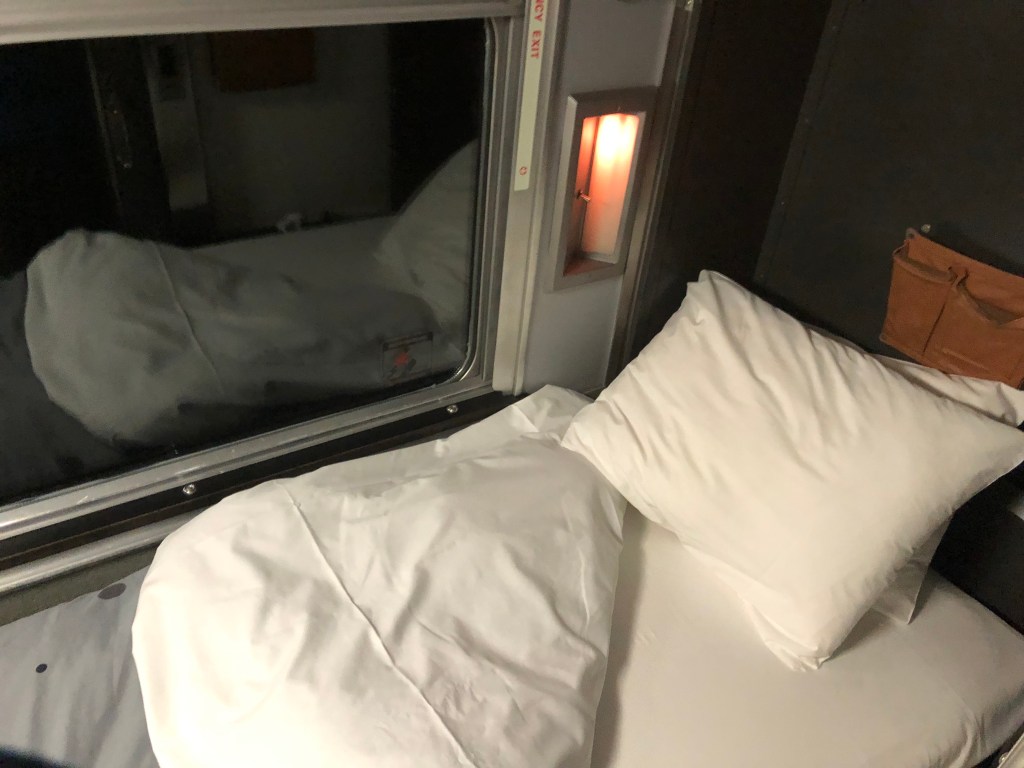
Taking notes…
…probably about the telegraph poles.

Oh Canada

I’m unlikely to leave Britain any time soon. I know the place is in a bit of a mess at the moment, the dark forces of the extreme left and extreme right are waiting to pounce on the Brexit mess, nationalism is out performing patriotism in certain regions and frankly, the weather is a bit shit, but I still feel the pros outweigh the cons even if I can’t really put into words what those pros are at the minute. If, however, I was forced into exile then I’ve got a pretty good idea where I’d like to spend the rest of my days. From the title of this piece you will have realised by now that this place is Canada and be wondering why when the weather there is probably worse than here but having spent over three weeks in the country recently, interspersed with a couple of weeks back home, I’ve become rather smitten with the place. 

First of all the bleeding obvious: Canada is big. Huge. Enormous. Massive. Only Russia can claim to be a bigger country and I’ve no desire to go and live there. I’ve visited bits of it before but it would take rather a long time and some seriously thermal underwear to get the feel of all of it. My recent visits have been restricted to the West and even in three weeks I only really scratched the surface. But what a surface it was. The reason I went there at the beginning of May was to support my daughter who had entered the Vancouver Marathon. She currently resides in Victoria which is three or four hours, no time at all in Canadian terms, by road and ferry from the large cosmopolitan city of Vancouver. In the end I entered the Half Marathon and you can read about that event in the blog two before this. Here’s a link so you can avoid the trauma of scrolling past the Sunday Swim blog: https://gladtobegrey.blog/2019/05/15/run/

Away from the race I spent most of the time staying with Rebecca in her boyfriend Warren’s flat in Victoria itself and got to like the place. It is the capital of British Columbia and whilst quite large – over 300,000 live in the Greater Victoria metropolitan area – has the feel of a smaller, more friendly place than it’s expanding neighbour of Vancouver across the water. It has, in Canadian terms at least, a mild climate. It also plays on its British heritage being named after Queen Victoria and with architecture, gardens and place names proudly remembering its colonial past. There are social problems of course – homelessness is a big issue as it is in the other cities we visited – but it came across to me as a genteel place where most people live happy lives. This comes at a cost as house prices have rocketed lately but that only goes to prove what a desirable place it is to live. 

Victoria Inner Harbour

A couple of weeks after that trip I returned with Elaine and our friend Caryn for a two week holiday. The itinerary was as follows: three nights in Victoria, fly to Calgary and pick up a hire car and drive to Canmore in the Rocky Mountains. Three nights were spent there before we moved on to Kelowna in the Okanagan Valley. Another three night stay was spent there before a two night stop in Whistler. After that we were to spend three nights in Vancouver before heading back to Victoria for a night and flying home. Rebecca was to accompany us on the road trip. Victoria again proved to be a most pleasant destination despite it raining quite heavily on the first day. There’s plenty to do there – we visited the Emily Carr House and the Royal BC Museum which kept us out of the rain. With the sun out, wandering round downtown was pleasant, Fan Tan Alley off Chinatown is supposedly Canada’s narrowest street and a popular place; in particular the Kid Sister ice cream shop impressed me no end on both occasions I visited it. The harbour is a great place to wander around and the unique water taxis are a fun way of seeing the city from the water. The harbour also serves as a floatplane base – more of floatplanes later – and if you are lucky you will see seals in the water and dogs on boats trying to out stare each other. Staying a couple of miles from the centre meant we got a feeling of what suburban Victoria was like and the pleasant theme continued there too. We watched Rebecca compete in the Oak Bay 10k to a backdrop of the Olympic Mountains in the USA, just across the Straits of Juan de Fuca. Large houses with well kept gardens, numerous specialist coffee shops and cafes and the odd babbling brook suggested a very nice place to live. Outside the city there are plenty of hikes – on my first visit we went out to the Sooke Potholes, a riverside trail a few minutes west of the city – and gardens to visit. The Butchart Gardens are well known but the HCP Garden, which we visited, is less so. Bald eagles circled overhead, hummingbirds buzzed around and, unusually, wild deer could frequently be seen in people’s gardens nibbling the lawn. As an avgeek I was also delighted with the BC Aviation Museum up at the airport.  As you might have gathered, Victoria impressed me greatly. It is popular with Canadian retirees attracted by the mild climate and year round golf, though maybe not the deer eating their rhododendrons. 

The Yellow Taxis of Victoria are rather quaint.
Sooke Potholes

Our flight from Victoria’s small airport to Calgary turned out to be an hour and a half’s delight. There was barely a cloud in the sky all the way and the views were stunning. They were also a reverse order prelude of what was to come with Point Roberts, the Okanagan Lake and the Rocky Mountains all looking at their best from 25,000ft. With a rather large hire car collected, there was much luggage to be carried after all, we immediately headed back west eschewing the delights of Calgary, a rapidly expanding city from what we could see. Our destination was Canmore. Located in the Rocky Mountains, it is some twenty miles from the larger and more well known Banff. A former mining town, the Trans Canada Highway passes through it as does the Canadian Pacific Railway. It is becoming a popular tourist destination in its own right and is situated just outside the Banff National Park meaning it is a cheaper option than it’s rather well to do neighbour. We were billeted in an Airbnb in a holiday village complex with views of the Three Sisters peaks. It proved to be an ideal base. The stars of the show are the mountains themselves and there are many activities to keep visitors happy. We drove the ridiculously scenic Icefields Parkway to visit the Athabasca Glacier where large snow buses take you on to the ice and later you can walk the glass floored walkway over the edge of the valley. Whilst in itself this was worth the early start and long drive, the sight of a black bear nonchalantly strolling down the hard shoulder of the road was one we will all treasure for the rest of our days. We saw several other bears that day though none as close as this one. We visited Banff on the way back. We avoided the hot springs but did discover the Bow River walk from the town to the huge luxury Banff Springs Hotel. It was delightful in the early evening sunshine. The following day Canmore itself provided the entertainment with a hike up to the small yet glorious Grassi Lakes and a raft trip along the Bow River. Here our fauna count increased significantly with, amongst others beaver, elk, ospreys and a Bald Eagle who appeared to be the boss of the area. Rebecca was particularly taken with Canmore and after only a short visit I can see why. It’s a very nice place in the summer, though I can only imagine how cold it gets in the winter. 

Three Sisters
Just a passing bear, thankfully not too hungry.
Grassi Lake
Bald Eagle

It took us a long time to get to West Kelowna. That was partially due to us stopping at Lake Louise. This is a popular stop on any tour of the area. It is extremely easy on the eye and the vivid turquoise colour of the water makes for a special photograph. The preceding winter had been harsh, however, and the lake was still covered in ice for our visit. It didn’t really matter, it was still outrageously picturesque, especially if you hiked up to the Fairview Lookout. This was made tricky by patches of ice and snow but Rebecca and I made it up and almost down again before I slipped and inelegantly landed in the slush. It was still worth it though. Much of the rest of the day was on the road. We passed from Alberta into British Columbia and later from the mountain to the Pacific time zone. The extra hour we gained came in useful. The Trans Canada Highway is being widened along the stretch we were driving on leading to some roadwork delays, and an accident caused a ninety minute hold up. As previously mentioned Canada is big. On a day like this it seemed it. Eventually we rolled into our accommodation in West Kelowna, another Airbnb with a view not quite as spectacular as the one in Canmore but not at all bad.

Lake Louise Skating Rink

The Okanagan region of southern British Columbia is the area around the large Okanagan Lake. It has its own micro climate which is milder than the rest of the country. Indeed, whilst we were there the temperature hovered around the 30C mark. A fertile region, it was popular with fruit farms and still is today, though the major fruit produced is now the grape rather than the apple. Vineyards cover the slopes that rise from the lakeside. Sampling all the wines that are produced could take a very long time indeed though it doesn’t stop people from trying. Kelowna is the major city and is somewhat larger than we had expected. It has a lovely aspect, however, with the lake on one side and mountains on the other. Up in those mountains once ran trains. The Kettle Valley Railway connected the region with the main Canadian Pacific line further north. For some reason known only to the surveyors it was built high in the hills, through forests and across canyons, so high in fact that it didn’t even visit lakeside Kelowna, the largest town in the region. The last train ran in 1973 but since then a section has been restored as a cycle and hiking track. We walked some of it which entailed a drive up a distinctly dodgy access road to its start. The route across Myra Canyon is spectacular and all the more impressive being where it is. Tunnels and cuttings were carved out of the rock as the track clung to the hillside but the standout attractions are the eighteen trestle bridges that traverse the chasms that shoot off the sides of the Canyon. Further south there is a section of the railway that is still operational as a heritage line. We didn’t get to try it unfortunately but did view it as we sampled cider in what was a break from the vineries. Like Canmore and the Rockies, Kelowna and the Okanagan is a place that warrants further attention. 

Trestle Bridge, Myra Canyon, Perfectly Safe
Blue Grizzly, Symbol of Kelowna
Drinking Wine, Symbol of the Okanangan.

It was another long journey to our next destination, Whistler. The quickest way would to have stuck to the freeway and passed through the Vancouver suburbs. For a short time penalty you can also go the scenic route via Cache Creek and Lillooet. The views on this route are spectacular and if you can, take it in turns to drive so everyone gets a chance to enjoy the views. You can also do worse than stop at Historic Hat Creek just outside Cache Creek. This was a roadhouse on the Cariboo Trail goldrush of the 1860s and remains as a tourist attraction, and a handy refreshment stop, to this day. Thankfully there were no hold ups on what was a quiet road, though the temptation to stop and just take in the views was high, and we arrived in Whistler for a couple of nights of R&R. Whistler is a ski resort and the village itself is less than fifty years old. Out of the ski season it still receives hoards of tourists drawn to the mountains for the many outdoor pursuits that take place, or just the scenery. It is a party town and sometimes those parties go on a bit too long. Our hotel was in the middle of the village and just across the way from our room was one bar that proved rather noisy. Lesson learnt, stick to out of town accommodation next time. The cable car up the resort’s two mountains, Whistler and Blackcomb, is expensive and as the hiking trails up the top were not yet open we gave it a miss choosing a walk that commenced in the village itself. Zip wire runs, white water rafting and mountain biking were just three of the activities that could be sampled. Rebecca and I decided to try the RZR off road adventure. These 4×4 buggies bounced us around trails through the forest where no vehicle should have been able to pass, covering us in dust and affording us some spectacular photo opportunities. It was great fun and I’d do it again in a heartbeat. If that doesn’t really sound like R&R then the hotel pool provided that but I was sad to leave Whistler with the zip wires untested. 

We Found the Lost Lake.
RZR Fun
Shannon Falls

The drive to Vancouver was a short one but, as with just about any drive in BC, scenic. The Sea to Road Highway offers a direct connection between the popular resort and the huge metropolis and, after a brief stop to admire the Shannon Falls just south of Squamish, we hit the inevitable traffic before reaching our Airbnb in a suburb just a few minutes southeast of downtown. Vancouver frequently pops up as people’s ideal city. It’s true that it is located in a lovely setting with the harbour backdrop being mountainous, the other side of downtown having English Bay with the large green space that is Stanley Park to the north. The city itself is, however, a fairly typical north American grid, the blocks populated with high rise office blocks and numerous apartment buildings to accommodate a burgeoning population. To the south the suburbs seem a nice place to live but go on for many kilometres, again in a grid pattern of named streets and numbered avenues. One tip is to avoid East Hastings street on the edge of downtown. We went down it on the bus and we were shocked at the amount of people living rough there. Homelessness is a big problem everywhere it seems. Here it appears to be monumental. I had run one street away in the Half Marathon and was completely unaware of what was happening just a block away. Vancouver does have its attractions, however, beyond the aforementioned setting amongst water and mountains. Grouse Mountain is one of the peaks that provide the backdrop to the harbour. You can ascend it by cable car or, if you are feeling energetic, you can take a trail that is worryingly called the Grouse Grind. We did. It was serious hard work. You climb 2800 ft over less than two miles. It is stepped, though the word step has a rather loose meaning here. It took Elaine and I an hour and a half, Rebecca with youth on her side did it in twenty minutes less. It’s not a task to be taken lightly but it is some sense of achievement when you reach the cafe and a welcome beer at the top. Once there you have a choice of activities to enjoy – falconry and lumberjack displays, chairlift to the peak, zip wires, a full waiter service restaurant amongst others, or you can simply admire the views. Don’t even think of walking back down, however, it’s dangerous and against the rules. A one way ticket on the cable car gets you back to the car park in six minutes. 

Grouse Grind. Relatively Easy Section.
Vancouver From The Peak of Grouse Mountain

I previously mentioned the seaplanes in Victoria Harbour. This neck of the woods is a seaplane heaven and both Harbour Air and the smaller Seaair operate services out of Vancouver Harbour. There are many scenic flights operated alongside scheduled services. On my first trip, the day after the Half Marathon, I indulged in Harbour Air’s ‘Mail Run’. This involved an early start with an 08:40 departure from Vancouver Downtown Airport (ie, the harbour) but was a magnificent experience. I flew to Ganges on Salt Spring Island. There I transferred from a fourteen seat Otter to a six seat Beaver to make the short hop to Maple Bay on Vancouver Island. The stay there was brief before returning to Ganges where I was left to discover the town for two or three hours. That’s plenty of time, believe me, nice though the place was. Then you take the scheduled flight back to Vancouver completing a memorable morning with four water take offs and landings. I don’t know why but there is something special about taking off and landing on water.

Seaplane Heaven
Short Final, Maple Bay Airport

If you happen to be in Vancouver in the summer you can take in a Bard on the Beach performance, a Shakespeare festival that has been running for thirty years now. We just about made it – the performance of Taming of the Shrew was the festival’s first preview of the season. We enjoyed it greatly but if Shakespeare is not your thing there is another open air theatre in Stanley Park that performs shows like Mama Mia. Remember to take a few layers as it can get a bit chilly in the evening. Our final day in Vancouver saw us do a day trip to the USA. Point Roberts is a geographical oddity, a Canadian peninsula south of Vancouver that dips below the 49th parallel  meaning the five square miles of it are in the USA. This tiny piece of land is the home to 1300 people and full border checks take place both ways at the one point of entry. It costs $6 for the visa waiver – your ESTA does not apply on land crossings -, a recording of your fingerprints and an honest answer to the question “why are you visiting Point Roberts?” Tourism worked for us. Once you are cross the border there really isn’t a lot to see but just being there felt strange, a US enclave where the 5th grade and over kids have to travel 27 miles through Canada each way to get to and from school at Blaine in Washington State. It is possible to walk along the border on Roosevelt Way, a road where the demarkation line is the northern grass verge. Whilst it is illegal to cross the border without presenting yourself to the border officials there really isn’t much stopping you. Just for a photo I stood in the USA with my left hand on a low wall in Canada. I wasn’t arrested. Having crossed legally back into Canada we met up with my third cousin for dinner. That’s the thing about Canada, you are almost assured to have relations there. My family and hers found out about each other through genealogy a few years ago, I share a common great great grandad with Donna on my mother’s side. 

Left Hand in Canada, Rest of Me in USA

And that was about it. We needed to get back to Victoria for two reasons – firstly to deliver Rebecca back home and secondly because our flight went from Victoria Airport. It meant a scenic cruise through the Gulf Islands on the ferry, a night in a traditional B&B which was an interesting but comfortable experience. The girls took the opportunity to go to the Fairmont Empress Hotel for afternoon tea as one really should when in Victoria – hint, the Earl Grey wasn’t very good – whilst I went on another seaplane ride, a forty minute jaunt round the local area, just for the hell of it.  

Short Final, Victoria Harbour International (Really) Airport

Canada is a magnificent place for a holiday. It has so much in its favour it is almost embarrassing. It’s easy to get to, the scenery is beyond compare, it might be big but the travel is generally easy, there’s activities aplenty to try and the people are warm, hospitable and speak very good English! In the bit where we were the weather was good, though it can of course be harsh in winter in the mountains. I get the feeling that the Canadians deal with the harsh conditions well, they have had enough practice by now. I’ll maybe have to go in the winter just to experience it. The country is, of course, more than just what lies west of Calgary – there’s an awful lot of North of course but the other areas that are likely to be visited are quite a long way to the East. I visited in Ottawa and Niagara last year and have also been to Toronto and Quebec in the past. I hope at some stage to visit the Maritimes, the eastern extremities of the country and nearer to where I live in Scotland than they are to where Rebecca resides in Victoria. As I said, Canada is a big place. I love it.

Run

My sporting achievements ended here

I was never much of an athlete. Growing up in Yorkshire in the seventies it was virtually compulsory to play football in the winter and cricket in the summer which I did, enthusiastically at first, but with a growing realisation that I wasn’t much good at either it became more of a chore and eventually I gave up. At secondary school we tried out different sports but I wasn’t much good at those either. I did manage to represent the school in the triple jump but that was basically down to the fact that I was just about the only person in my year that could string together the hop, skip and jump in the right order. I didn’t win any medals though and my athletic career quickly fizzled out. Just about the worst sport we did at school was the cross country run. This was the nightmare of heading out along roads, across fields and through snickets in the pissing rain with the cold wind blowing right up the Pennines. I’ve no idea how far they made us run, it was probably just a couple of miles, but it seemed like an eternity. Needless to say I was pretty hopeless at it and it put me off running for many, many years.

This lack of athletic prowess meant that through my twenties and into the thirties I never really did much exercise. Eventually, after dire and almost certainly accurate warnings from Elaine about the premature fatality rate amongst couch potatoes, I joined a gym. It wasn’t much fun but in theory it got the heart pumping three times a week. I was hardly getting myself well ripped but it was better than nothing. By my late forties, however, I was getting extremely bored of the gym. Then, some nine years ago the Sport Relief charity was encouraging people to ‘Run a Mile’. I’d done a bit of running on the gym treadmill though not much. However, I thought that I could possibly manage it and one evening I asked Elaine to drop me off a mile from the gym and I would see her there. I did it and a very reluctant seed was sown.

Every year in May Troon hosts a 10k run that is very well patronised. I decided to enter. I had about three months to build myself up from that one mile jog to six and a bit miles of running. That distance seemed huge but I got there and ran the race in a time I’ve failed to match in the subsequent two or three Troon 10k races I’ve competed in. I could hardly call myself a ‘good’ runner but I was happy with what I’d achieved in a short space of time. In a fit of optimism, probably misplaced, I entered the Edinburgh Half Marathon for the following year, 2011. It was a spring event but during the preceding winter as I tried to build up the distance I did my groin some mischief and had to pull out due injury. I did, however, grab a charity place in the Royal Parks Half Marathon in London the following October. Once recovered from the injury I built up the distances I was running and come the day, just nine days before my fiftieth birthday, I felt in good nick. I completed the race in 2 hours, 4 minutes and 7 seconds. This was much better than I’d expected. I do all my training runs solo and found that being in a race situation gives extra encouragement. I put it down to the fact there’s always a lady’s shapely Lycra clad bottom in front of me to try, usually unsuccessfully, and catch up with. Either way, I thank those unsuspecting pacemakers.

The end of the Royal Park Half Marathon. Apologies for the vest, it’s a charity thing.

That race was a rarity in that I actually enjoyed the run. It seemed to go on for ever but being part of a large event like that and passing some iconic sites in London meant it was fun. Although running was now my primary source of fitness, my gym membership ultimately lapsing, it was nearly always a chore. I persisted with it though. I was sure the Grim Reaper awaited me if I didn’t. I competed in two other half marathons. In September 2012 I ran the Great Scottish Run in Glasgow. It didn’t go well. I hadn’t prepared well for it at all and only decided to run at the last minute. I completed it in a rather pathetic time of 2 hours, 20 minutes 30 seconds but at least I did it. I hated every second. By 2015 my daughter Rebecca had taken up running, and living in Edinburgh at the time had entered the Edinburgh Marathon Festival half marathon. I thought I’d give it a go too. Thanks to a better build up I finished in a time of 2 hours 10 minutes 44 second which I was quite pleased with. It wasn’t a particularly enjoyable run though. Starting in the middle of Edinburgh the route quickly passed the foot of Arthur’s Seat and then failed to pass anywhere of interest on its way out to Musselburgh where you had to run a mile up a road to nowhere before heading back down it to the finish in a nondescript park.

The face belies the fact that I utterly hated the Great Scottish Run
Finishing the Edinburgh Half Marathon, thank God.

Since then, however, I’ve avoided races. Partially through injury – I did my ankle on holiday three years ago and couldn’t run for eight months – and partially through laziness. It was stupid as there is nothing quite like a race to encourage you to don the trainers and get out on the road. Well, in theory anyway. Last September Rebecca moved out to Victoria in Canada and promptly entered the Vancouver Marathon, to be run on May 5th this year. She had done her first full marathon in Paris a couple of years ago and this was to be her second. As a newly retired gentleman with some time in my hands I decided to go out to support her and promptly booked a flight. A few weeks later I had the idea that maybe I could do the marathon too. I quickly scotched that idea as I didn’t want to steal her thunder (that’s my excuse and I’m sticking to it) but I did feel I had the time to build up to the half marathon which took place on the same day. I filled out the online application form, paid quite a few Canadian Dollars and hey presto, I was a runner in my fourth half marathon.

I had six months to get into shape. Less when you consider I spent much of my first few months of retirement travelling and forgetting to take my running shoes. In fact training started in earnest at the turn of the year. My kids had cleverly got me a Garmin GPS watch for Christmas which recorded my runs and allowed me to see just how badly I was doing. There are many websites, books, magazines and pamphlets that inform a potential runner just how to plan his of her training in the run up to a big event. I read precisely none of these and just made it up on the spot. I could run five miles, I knew that. By the end of January I was to have run six. By the time February was over I’d have run eight at least once. March would see me top ten whilst in April I would do a twelve miler at some stage. All these targets were achieved and I’d run every two or three days, never on consecutive days though. The more I did it the better my pace was which is just as well as had I run the race at the pace I had been achieving in those early days I’d probably would have been caught up by the race’s paddy wagon and get disqualified. My run strategy was not exactly the approved way either. Conventional wisdom is that you run ten miles for pace then three miles to race. Sounds good doesn’t it? No, for me it was to run five miles like a winner, eight miles like a wanker. Fast miles at the start were seconds in the bank as far as I was concerned as I was definitely going to slow up towards the end no matter what. The first time I’d do the full distance, 13.1 miles or 21.1 km, was on the day of the race itself.

The Garmin watch was a revelation. As well as recoding time and distance, it beeps every 1km to give you ‘lap’ times. Not only was I improving my times. I could see where I was improving. This was certainly encouraging and meant I could set myself targets for the race itself. The first was to simply complete the distance without stopping or walking. The next target was 2 hrs 11 mins. That meant an average pace of 10 mins/mile and early on was a realistic target. More challenging was 2 hrs 6 mins 30 secs which would take the pace to under 6 mins/km. As my training progressed keeping 1 km lap times under 6 mins became important and I was achieving it for the first eight miles (13kms) or so, not so much for any distance beyond that. Still, seconds in the bank and all that. In my sights was the 2 hrs 4 mins and 7 secs, the time I’d achieved in the first half marathon and of course a personal best. The next target was two hours. Highly unlikely but a man can dream can’t he?

I flew out to Victoria on the Wednesday before the race. A long journey and an eight hour time difference is hardly the greatest preparation but I did my best to use it to my advantage. The half marathon was due to start at 7am on the Sunday so it was early to bed and early to rise on the preceding days. I did one five mile run on the Friday as final preparation which went well enough and we set out for Vancouver that evening. On the Saturday we went to collect our race numbers in the middle of town. We then checked in to our Airbnbs near the start line in the suburban south of the city. An old fashioned diner provided us with our pre race meal and we retired for an early night.

6am, fresh as a daisy, an hour before the start.

It was a 5am alarm. A bowl of granola was consumed and, in a bit of a change to my pre-run routine, I had a shower. As a solo runner there’s not much need for showering until the run is over but in a race there’s a fair bit of hanging around with loads of other folk. I’d been informed to arrive at the start an hour before the race. I had to check in a bag of post race essentials (iPhone, wallet, spare shirt, just about my whole life at that point in time) which would be available for collection at the finish line. Having done that there was indeed a whole load of hanging around but at least I smelled nice. Fifteen minutes prior to the start I was stationed in my starting coral. On applying to participate in the race you have to give an expected finish time. I’d given a conservative 2 hrs 15 mins and was corralled with others in the 2:05-2:15 group. There was someone bellowing warm up exercises over the tannoy, duly ignored, some psycho babble, duly ignored, the Canadian National Anthem, duly ignored and not just by me, by most competitors. At 7am on the dot the starter’s gun went bang. Off went the elite runners. We went nowhere. A couple of minutes later the first coral was sent on their way, then the next coral after that. My coral was the third and it wasn’t until ten past seven that we were allowed to start. Across the line I went, starting the Garmin as I did.

The route. It won’t mean much to those who have never been to Vancouver.

The half marathon course in Vancouver starts in Queen Elizabeth Park. After a minute you leave the park and head down Cambie Street towards downtown. This is a long, straight and above all downhill road. Running downhill can be a bit if a strain on the knees but the gradient was just right for a rapid start and having fought my way to the front of our coral I fairly flew the first three or four kilometres recording ‘lap’ times ten or twenty seconds less than I’d ever managed before. On crossing the bridge into the downtown area the course flattened out and all gravitational assistance ended. There was an up and down section in Chinatown, which of course could be any part of Vancouver but is the area north of that big stadium thingy. I nearly came to grief at the bottom of the down bit where the ground fell away a bit further than I’d anticipated but I managed to stay upright by swearing quite loudly. It doesn’t always work but I feel it helps. Continuing along Beach Ave and past English Bay we entered Stanley Park at the 12km marker. Here, a couple of other up and down sections awaited us, nothing too serious but a bit painful by then, as we snaked our way around the park. Eventually, the course emerged from the tree lined boulevards of Stanley Park where they had somehow crammed in 8 km which left 1 km (1.0975 km to be precise) to go. The finish was on the straight West Pender St in the middle of town and could be seen from 700 m away which I felt was a little cruel. My regular time checks had revealed that I was going a lot faster than I had anticipated by that point. Surely that couldn’t be right? It was hardly a sprint finish but I crossed the finish line and stopped the watch. I had beaten all the targets I had set myself including the fantasy two hour one. In fact I had smashed it by over three minutes. The official time was 1 hour 56 minutes 41 seconds.

I had planned my celebration should I achieve a good time. It was to involve jumping up and down, waving my arms around and shouting exaltations with no little amount of profanity. What actually happened was I stopped running, checked my watch and thought thank goodness it’s over. It wasn’t an anti-climax, far from it, I was shocked yet delighted with time. I was just needed to collect the medal and other handouts, retrieve my goody bag and go somewhere reasonably quiet to reflect on what had just happened. And of course tell people via social media, I wasn’t going to keep it to myself for very long, this is 2019 after all. So it was that the tourists wandering round Coal Harbour by the cruise ship terminal and the seaplane base got to see me remove my sodden shirt and replace it with a dry one, then sit on the wall in the glorious sunshine (and slightly chilly breeze) informing the world via the miracle of the mobile interwebs what had just happened.

Half an hour after the end. Not quite as fresh as a daisy.

Thanks to the early start the day was still young and it soon became a case of watching Rebecca in the full marathon. She duly completed it but not without going through a lot of pain – she had picked up a virus a week previously which she hadn’t completely shaken off and suffered badly form the effects of the continuous sunshine. It was quite upsetting to see her hurting like that. By the time I flew home four days later she was only just getting over it.

What of the future? I’ll almost certainly continue running. Not because I get a kick out of it other than setting new personal bests in races, but because it is an ‘easy’ form of exercise. Easy in that you just need some kit, a decent pair of running shoes and a stopwatch and you can set off from your front door. No need to go to a specific facility, arrange an opponent or become a member of a team. I will need to set myself further challenges though as without them it is easy to think I’ll give it a miss today. I’ve done a couple of runs since returning home. Both five miles, both very slowly. It seems the body is feels it needs a bit of a rest.