Technik Museums

Last year I blogged about a River Cruise I had taken on the Rhine. In it I mentioned that I’d visited a museum in the town of Speyer. I gave scant details about it and shared just three of the gazillion photos I had taken but that’s not because I didn’t like it. It was the Technik Museum and packed to the brim with aircraft, trains, u-boats, spaceships and other bits of mechanical hardware that make gentlemen of a certain age go a bit weak at the knees. As it happens Germany has two Technik Museums, this one at Speyer and a similar one at Sinsheim, some fifty kilometres away. Naturally, I had to do the set so a plan was formulated earlier this year. As with my trip to Amsterdam to fly on a DC-3 some three years ago, I would be accompanied by my friend and fellow avgeek Graeme for this journey. A year ago we had gone to Paris to visit the Musee de l’Air et Espace, taking the Eurostar to get there, but ended up having limited time at the museum itself due to us having to rearrange our return home plans thanks to a French ATC strike. Who’d have guessed? Anyway, we enjoyed the time we had there and resolved to visit more museums full of old aircraft. The plan for this year’s old plane extravaganza was a simple one: fly from Glasgow to Frankfurt with Lufthansa, get the train to Heidelberg, stay in the Ibis hotel next to the station and on the subsequent two days take the train to Speyer and Sinsheim to visit the museums. Although we knew little about it, Heidelberg proved to be a handy place between the two museums to base ourselves. Apart from a delay at German passport control and a late running train, getting to Heidelberg proved very straight forward and we were all set for our Technik Museums adventure.

Technik Museum Speyer

There must have been a reason why we chose to do Speyer first but I can’t remember what it was. A regional transport day pass was obtained at Heidelberg station for €19 and then a regional train delivered us to Speyer’s Hauptbahnhoff in about fifty minutes. A local bus got us to the museum via the city’s rather attractive (in the spring sunshine) main street. Before you enter the museum you get sight of several exhibits, some of which are situated outside the museum’s fence, others being mounted high on plinths and can be seen from some distance away. We each purchased a ticket that covered both museums including entry to the iMax theatres at both venues. They cost €52, a saving of €6 on buying them individually. If you don’t fancy the iMax, and as the various shows have been dubbed into German you might not want to, it is cheaper to buy individual tickets, €23 at each location. Children aged 5-14 get a discount, children under 5 go free. Armed with our tickets we passed through the turnstile and entered the first display hall. The museum has two main halls and an extensive number of exhibits situated outside. As mentioned, some of these are mounted on plinths and can be accessed by stairs. The most striking exhibit is a Boeing 747-200 formerly of Lufthansa that dominates the skyline both in the museum and beyond. Equally as impressive is a massive Soviet era Antonov An-22 in Aeroflot colours so naturally we made a beeline for both of those. It is quite bizarre climbing up stars to enter these behemoths of the sky and exploring all their nooks and crannies. However, there was much, much more to see. Although we didn’t count them there are supposedly more than 70 aircraft on display at Speyer and we must have seen them all. Commercial airliners, military aircraft, water bombers, wartime transports, cold war jets, we lapped it all up. The second display hall was dedicated mainly to spaceflight and contained a Soviet Buran space shuttle, not something you will see at any other museum. In fact it is fair to say that Speyer has got aviation pretty much covered. Not quite though as you will find out later.

The museum is not all about flight though. There is a big collection of railway locomotives, displays of cars, fire engines, some maritime stuff including an old U-boat and some mechanical organs. There is also a larger number of motorbikes that share the second hall with the space exhibition. It takes at least a day to see everything. We saw most but missed out on the motorbikes. The iMax showing was A Beautiful Planet including a lot of film taken on board the ISS. As mentioned, the soundtrack was dubbed into German and my German is limited to ‘ja’, ‘nein’ and ‘auf wiedersehn’ but the visuals were good enough to keep me awake for at least half of the show. There is a large cafe for lunch and much needed refreshment – it was a warm, humid day – and a big gift shop where I managed to not buy anything. The museum was very quiet on the day we visited. I’d expected groups of schoolkids on their end of term excursions but there were none. Having been there some fourteen months earlier took nothing away from the day at all, the museum is pretty awesome and Graeme was in full agreement. We retraced our steps to Heidelberg, grabbed a burger for dinner and prepared for Day Two.

Speyer photos coming up. Most will be from my previous visit as I felt I didn’t need to take any more so I could simply enjoy the exhibits.

Technik Museum Sinsheim

Once again we purchased €19 regional day tickets and jumped on a train going in the other direction. The journey was a bit shorter and there is a station right by the museum itself. The weather was less kind to us but we managed to avoid the worst of the rain by fitting in the outdoor exhibits between showers. Like Speyer, Sinsheim has mounted some of its aviation exhibits on plinths, most of which are on top of Hall Two. Not wanting to be outdone by Speyer and its huge aircraft exhibits, Sinsheim has got not one, but two supersonic airliners on the roof. An ex-Air France Concorde is mounted next to an ex-Aeroflot Tu-144. This is unique and a big deal for aviation enthusiasts. We were both going ‘wow’ and we hadn’t entered the museum yet. Once inside the gate we set off on our voyage of discovery once more. There are slightly fewer aviation exhibits at Sinsheim but it still took up a big chunk of the day seeing them. The stars were, of course, the supersonics. Last year, in our brief visit to the museum in Paris, we got to see two Concordes side by side which was pretty special. Seeing a Concorde next to the Tu-144, given the nickname ‘Concrodski’ by the western press, was on another level. We went inside both, the Tupolev first. The Tu-144 was, by a few months, the first supersonic transport aircraft to fly. It was slightly bigger than Concorde, went slightly faster and was slightly earlier into service. Funny, that. It wasn’t a success, however, for a number of reasons. That being said it was still quite incredible being on board one, even though it isn’t going anywhere any time soon. Having said that, and you can call me biased if you want to, but the Anglo-French Concorde is just a bit sexier than the Russian Tu-144.

What else is there to see at Sinsheim? Loads. In fact if your primary focus is cars then it beats Speyer hands down. Graeme likes Formula One and told me he’s never seen so many F1 cars in one place and he’s even attended some races. As well as racers, there are hundreds of vintage cars, sports cars, military cars, American limousines and there was a special exhibition in Hall 3 about Volkswagen vs Opel. There is also a large military display with tanks, trucks, armoured cars and so on with some of the wartime aircraft included. If tractors are your thing there is a section of Hall 2 dedicated to agricultural vehicles and like Speyer, they are very proud of their U-boat, this one being from the 70s but no less cramped inside. There is a big cafe again and the iMax show was Hubble, another one with footage from the ISS but in 3D this time. Yes, it was in German and yes, I did drop off more than once behind the polarising glasses but the showing was after lunch and a pint of Museum Lager so defy anyone else not to do the same. One other thing to note was the slides. To keep those kids entertained, who might otherwise be less than enthralled about examples of old engineering, there were numerous slides from the platforms on which some exhibits stood and the ground. There was one at Speyer too, a long one down from the 747. We didn’t indulge. Having spent most of the day there we headed back to Heidelberg and decided we ought to have something German for dinner, choosing Das Boots Haus where very large schnitzels were served with a most acceptable pils lager.

Our return home the following morning went off without a hitch and we both agreed that it had been a very successful trip. It might not be everyone’s idea of fun spending two days gazing at old bits of metal but if you are the sort that likes museums full of planes, cars, submarines, space vehicles, railway engines and plenty of other mechanical things then the Technik Museums really should be on your ‘to do’ list. Unless you have already done them in which case you could do worse than do them again.

Sinsheim photos coming up, all taken on this visit.

Not many museums have two supersonic airliners enticing you in.
I’ve no idea what this is.

DC-3

Douglas DC-3. Or maybe C-47. Or Dakota

It’s been a while since my last blog which dealt with the joys of wearing a moon boot after I had done my ankle some serious mischief during a walk in the country last August. Since then the world has gradually been opening up and I have been able to do some things that are enjoyable but not, perhaps, worth blogging about. I came close to doing a trip on one occasion that might have been worth putting pen to paper, or fingers to keyboard to be more accurate, but was thwarted by the weather. Those of you who are friends on Facebook might remember my grumpy post on that particular issue, along with other mini blogs that fit that platform but not this. Recently though I managed to take my first trip out of the British Isles since December 2019. It was a short one, just two nights, but not only did it mean my globetrotting has restarted, it also ticked off a bucket list item. If I can’t blog about bucket list items, I might as well give this site up so without further ado, here’s my first blog in nine months.

Back in February I flew to Dublin to fly in a Fokker 50, a particular type of aircraft I’d not flown in before. This was my first trip out of the UK since I visited my daughter Rebecca in Victoria, Canada in November 2019. Shortly after that the C word hit the world and all future plans went out of the window. That trip to Dublin was supposed to be a big step on the road to normality but once there, a howling gale blowing off the Atlantic a hundred miles or so northwest of Dublin in Donegal put paid to the flight so I had to return home having achieved nothing. As momentous as that trip was in terms of timing, it was a huge disappointment. I had, however, already booked my next foreign adventure and whilst Ireland is abroad, it is still part of the British Isles. This time the destination was Amsterdam in The Netherlands which is also abroad but somehow more abroad than Ireland. Once again the reason was to fly in an aircraft. It wasn’t a Fokker this time, though the factory in which that Fokker 50 had been built was next door, but a DC-3. What was so special about flying in a DC-3? The following two paragraphs will give you a brief history of this type of aircraft and the particular one I was to fly in. Skip them if you want to just read about me being bounced around by the turbulence.

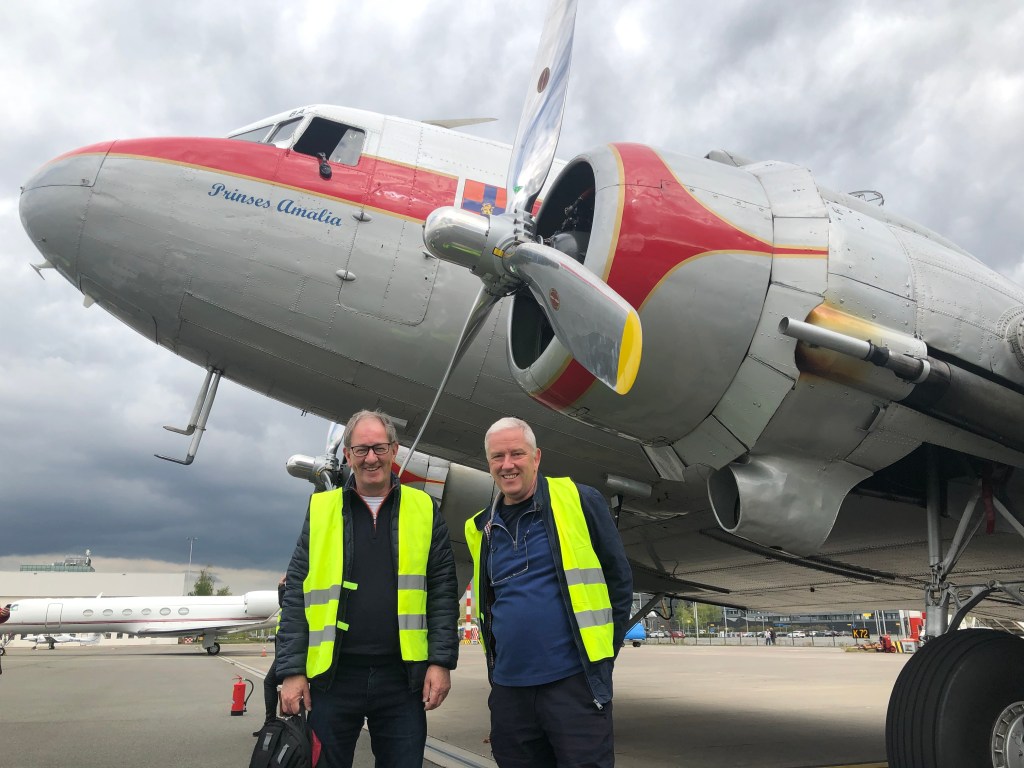
Old blokes in The Netherlands are much the same as old British blokes.

On December 17 1935 a new aircraft took to the skies over Santa Monica in California fresh out of the factory of the Douglas Aircraft Company. Designated the DC-3, it was primarily designed to the specification of American Airlines as the Douglas Sleeper Transport or DST, but was soon used in a more conventional daytime role as the USA’s first airliner that could transport passengers and make a profit at the same time. Hugely popular with the airlines before the USA entered World War 2, production was ramped up to an astonishing degree as the demand for transport aircraft soared. The military versions were known under a number of different designations, most commonly the C-47 Skytrain in the USAF and Dakota in the Royal Air Force. Simple and sturdy, the C-47 was of immense use to the allied forces during the war and no less a person as Eisenhower stated that it was one of the most vital pieces of military equipment used in winning the war. Over 16,000 were built including 3000 built under licence by the Soviet Union and, surprisingly, 500 or so built in Japan before that nation and the USA had a bit of a falling out. Production of the civilian version DC-3 ceased during the war and after hostilities ceased, the manufacturers were offering newer, more modern aircraft to the world’s airlines. However, there was a huge number of ex-military C-47/Dakotas going cheap and many airlines, both big and small, availed themselves of this reliable workhorse which more than other launched the post-war airline industry. For many years DC-3s could be found hauling passengers and freight on less glamorous air routes. Many new aircraft were designed as DC-3 replacements but few were successful. It seems the best replacement for a DC-3 was another DC-3. However, time took its toll and most were gradually withdrawn from service. Not all though. There are still airframes earning a Peso or two in South America. In Yellowknife, Canada, Buffalo Airways operate a number of DC-3s in the harsh, Northern climate and until 2019 utilised it on a scheduled passenger service to Hay River. Whilst there are no scheduled passenger DC-3 services any more, there is still the chance to fly in one as a number of the 80 or so still airworthy airframes offer air experience flights.

Low tail means high nose.

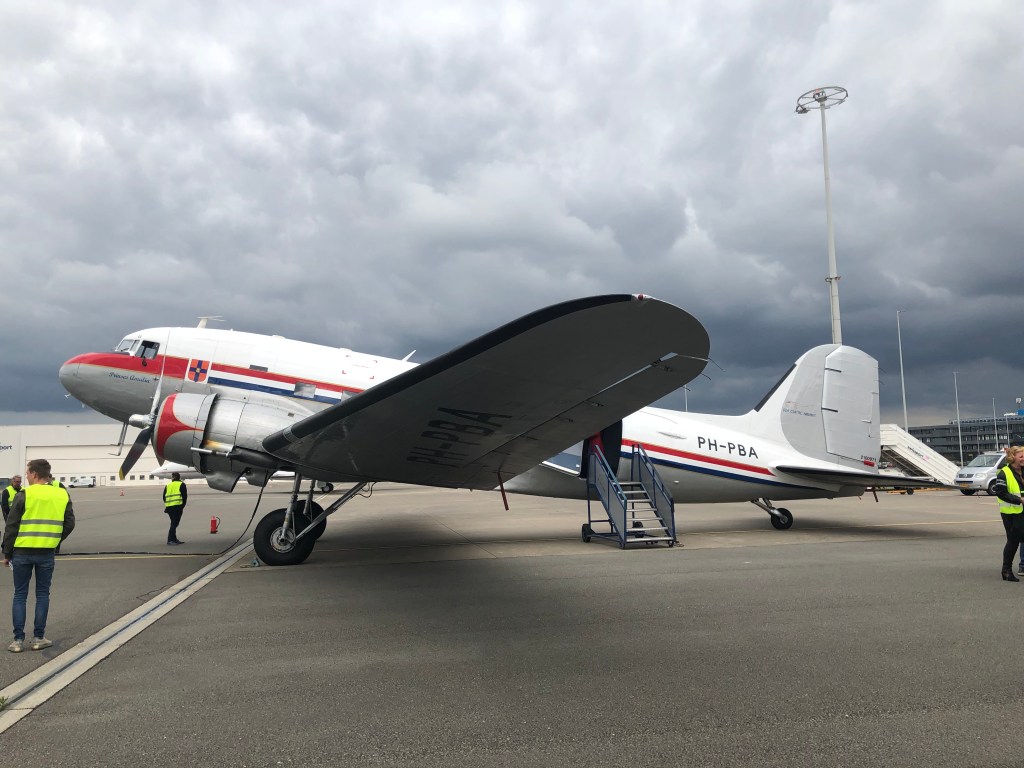
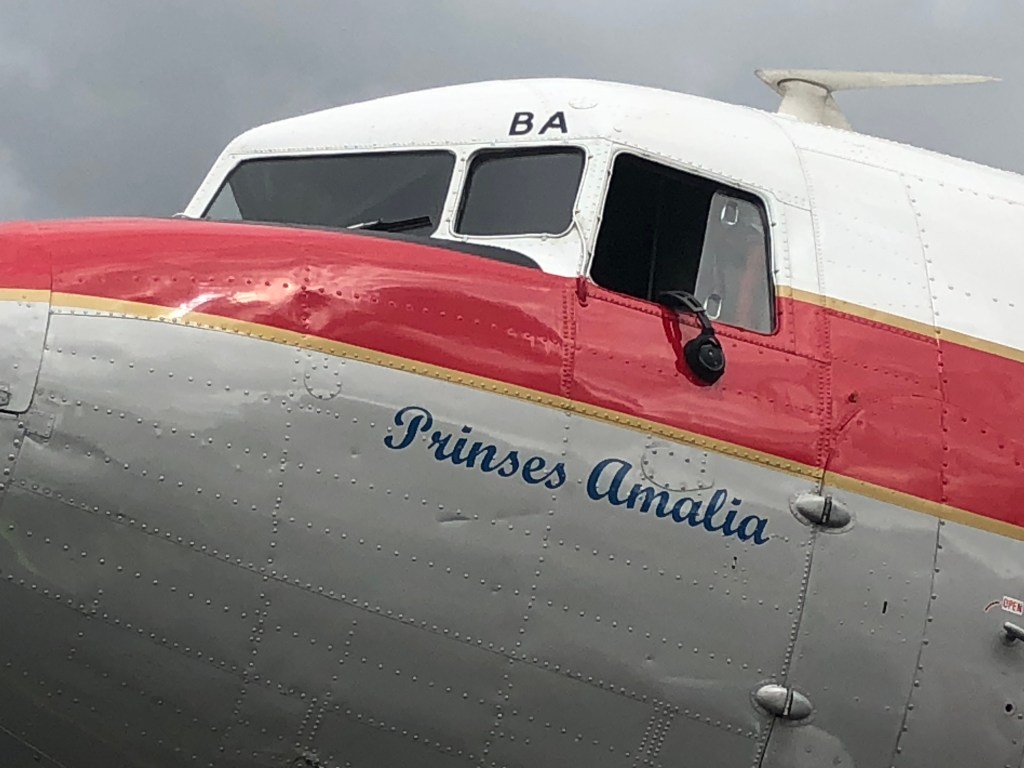
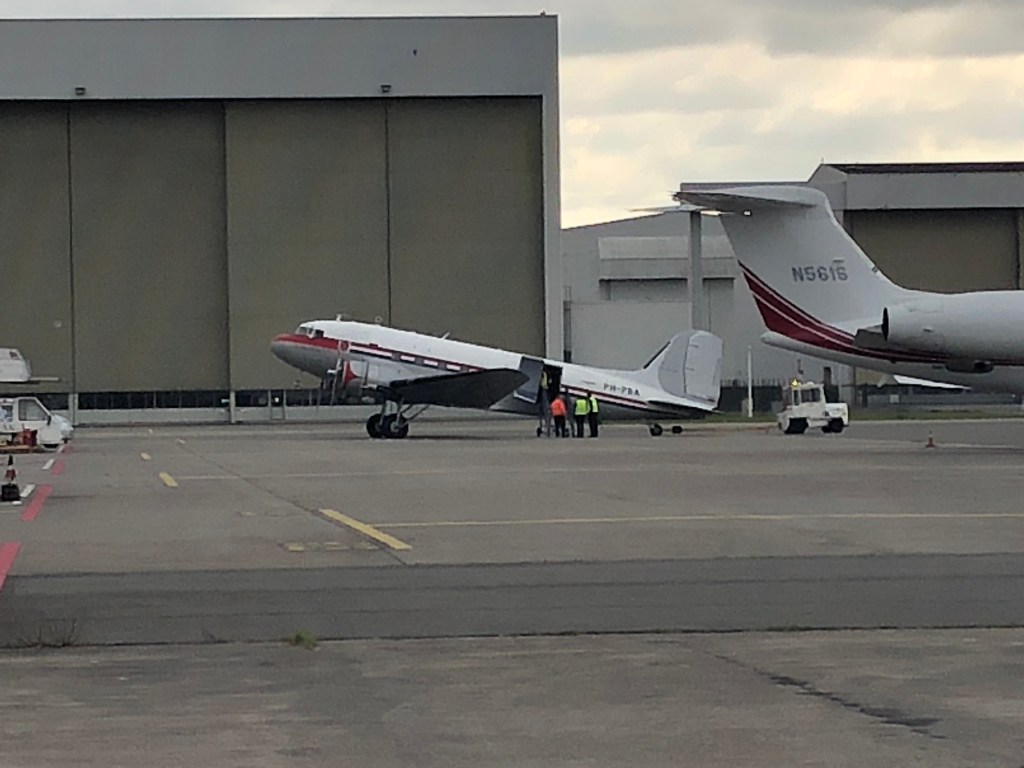
One of those PH-PBA. Built as a C-47 in January 1944 with serial number 19434, she was delivered to the USAF who designated her 42-100971. On June 6 that year she played her part in the allied invasion of Europe. Departing Cottesmore shortly before midnight on the 5th, Pilot Lt. Lee Ross and four other crew members delivered a ‘stick’ of 17 paratroopers to dropzone O near Ste Mere Eglise in Normandy. At 01:57 the 17 paratroopers jump into the night. Despite a bullet passing through the fuselage that had until a few seconds earlier contained the soldiers, 42-100971 returned safely to England. She would later be involved in Operation Market Garden, her first visit to The Netherlands although she didn’t land. Further paratroop dropping details over The Netherlands followed along with glider towing duties. On September 27 1944 she landed in The Netherlands for the first time. After the war she was acquired by HRH Prince Bernhard, a keen aviator and the consort of Princess Juliana, the future queen of The Netherlands. She was given the civilian registration PH-PBA and has remained on The Netherlands register ever since, seeing service with the Dutch Government, Dutch CAA and then the Prince Bernhard Alpha Foundation. Loaned to the Dutch Dakota Association and supported by Dutch airline KLM until 2016, PH-PBA is now licensed to fly 18 passengers on pleasure flights which, Covid break aside, it has been doing on spring, summer and autumn weekends for several years under the guise of DDA Classic Airlines.

The future Queen of The Netherlands is considerably younger than her namesake.

Back in the 1980s I was at an Air Display at Church Fenton in Yorkshire. At that display an airline called Air Atlantique were offering experience flights in a DC-3. I paid some money and was treated to a fifteen minute circuit. I can’t remember much about it. Years later Air Atlantique were forced to end passenger operations of their DC-3s due to European safety regulations and sent one on a farewell tour of the country. Flights were offered and I booked one from Edinburgh Airport. I drove over, entered the terminal, found the appropriate desk and was told that the flight had been cancelled due to some issue with the brakes. I got my money back but it was a bit of an anti-climax as I thought I may never get the chance again to fly in such an iconic aircraft. Roll forward to last year and I discovered the DDA Classic Airlines website. They were offering flights having somehow got round the same safety regulations that had forced Air Atlantique to stop passenger operations. I made the suggestion to my children that a voucher for one of these flights would be a good Christmas present and promptly forgot about it. On Christmas Day I was surprised and delighted to be presented with a voucher! Once the year’s flight schedule was announced I chose a day and crossed my fingers that covid restrictions wouldn’t scupper the journey. What’s more, I persuaded my friend and old work colleague Graeme to come along with me. He didn’t need much convincing. He’s just as much an avgeek as I am if not more so. Flights and hotel were booked, the DC-3 trip reserved and a keen eye was kept on the changing requirements for visiting The Netherlands. Luckily we ticked the appropriate boxes and were confident we wouldn’t be turned away by KLM or the Dutch immigration officials. The flight to Amsterdam went off without a hitch and we even had our passports stamped by a smiling immigration official on entering The Netherlands. Our hotel was the curious CitizenM just a couple of minutes from the central airport plaza. I say curious as I’ve never been in a hotel quite like it but it was comfortable, clean and they certainly came up trumps in supplying us with the airport view rooms I had requested.
Please don’t start the engine.

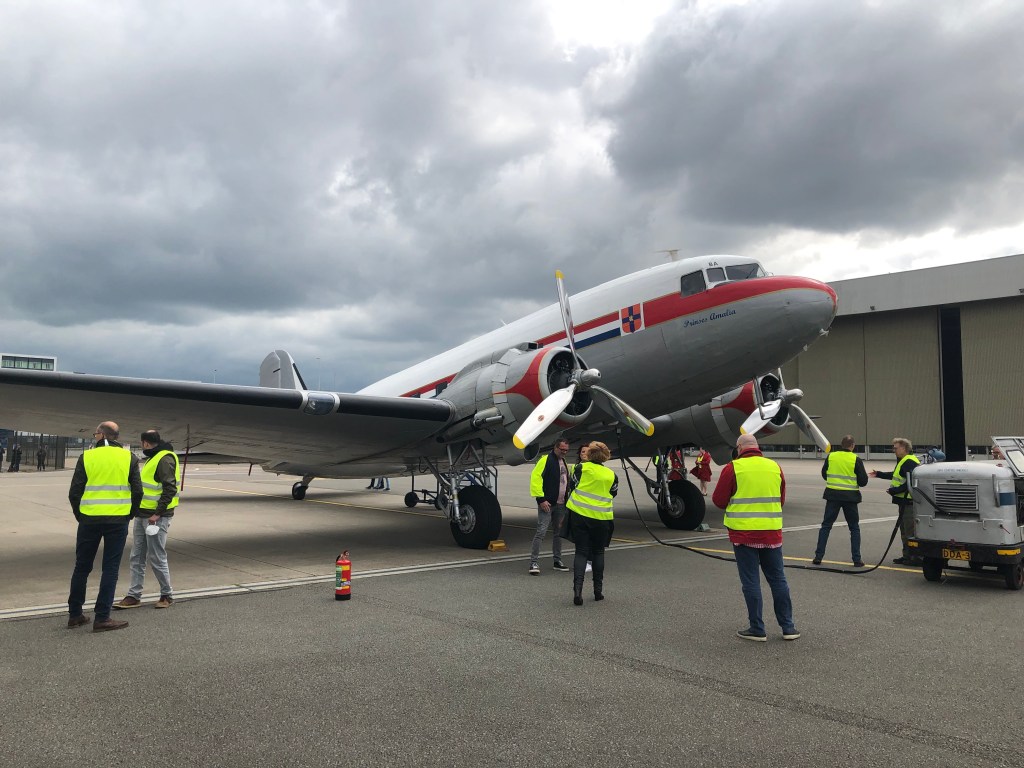
The DC-3 flight was the following day. Like the majority of flights offered by DDA Classic Airlines it was to depart from Schiphol but not the huge main terminal where we had arrived the previous day. We need to get a bus and head to the other side of the airport and the General Aviation Terminal. Having successfully negotiated this potential pitfall, we got off at the appropriate stop and could see our DC-3 parked amongst the business jets of the great and the good and/or the rich. When we found the desk in the terminal we were informed of a delay due to the previous flight having been held up due to the crosswinds. Surely we wouldn’t be scuppered by a mere zephyr at this late stage? Thankfully, no. Eventually one of the pilots pitched up and gave us a brief history of the aircraft in Dutch – I made out the odd word like ‘Market Garden’ and ‘Prince Bernhard’ but not much else and then we were handed high visibility vests and put on a minibus to take us across the apron to the star of the show. We were allowed to wander round and take pictures, which naturally we did, before boarding. PH-PBA is licensed to carry just eighteen passengers, little more than half the maximum number some airlines managed to squeeze in them back in the 1950s. Our seats were in Row 1 on the right hand side. One of the strange things about the DC-3 is that it is a taildragger, in other words it sits on two main wheels under the wing and a small tail wheel at the back. Not unusual back in the 1930s when it was designed, but virtually all post-war commercial aircraft were fitted with tricycle undercarriage with the main gear still under the wing but the other wheel under the nose. The taildragger arrangement meant that once we had boarded through the door at the rear, we had to walk up a fairly steep incline to our seats at the front of the cabin. Once there, we strapped ourselves into the seats, received a personal briefing from the hostess in English, and waited. All further announcements from her and from the cockpit were in Dutch but it mattered little, we were there to experience the aircraft and were not too worried about the name of the towns we were flying over.

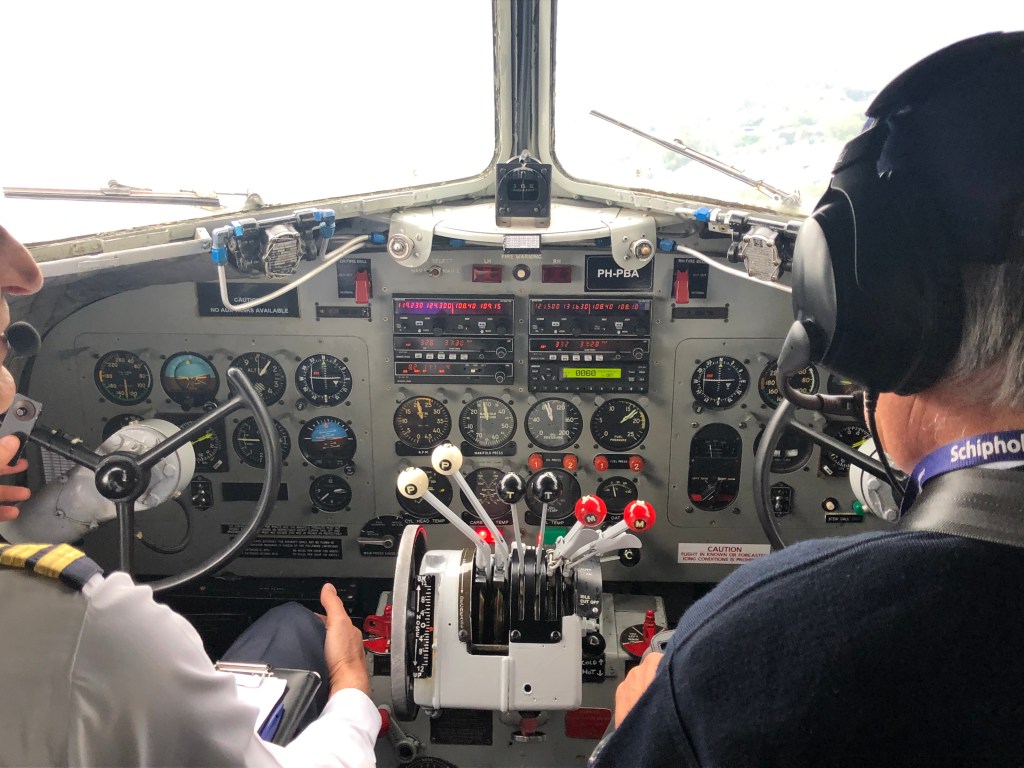
Our seats were right next to the right hand Pratt and Whitney R-1830-92 Twin Wasp radial piston engine. This powerplant is the most produced aircraft engine ever with over 170,000 built. As it fired up I feared that we might be in for a deafening experience but whilst it was hardly a whisperer, it wasn’t really too loud and a bit of radial engine roar is all part of the experience. Graeme was sat in the window seat, although that window is level with your ribcage and gazing out of it involves a bit of contortion. I had a view into the cockpit as the pilots taxied out to Runway 04. Before we entered the runway the pilots performed their power checks, causing the aircraft to vibrate against the brakes, and we then lined up. Cleared for take off, full power was applied and we commenced our roll down the runway. In a taildragger you get the unusual sensation of the rear of the aircraft lifting off first before the main gear break free from the asphalt and this 76 year old aircraft takes to the skies. This was it! I had finally got my second (and almost certainly final) flight in a DC-3! For someone who has genetically malformed smile muscles, I was grinning like a Cheshire cat. With a sweeping left turn directly over the airport’s central area, we headed for the Dutch coast. A DC-3 doesn’t break any records with its rate of climb but we were only going to 1000ft so we soon levelled off. Being that close to the ground meant it was a bit turbulent. Once level, however, DDA Classic Airlines allow you to unfasten your seat belt, get up and walk around the cabin, pop your head into the cockpit. So what if you fall over, bang your head or suffer some other mishap – thankfully I didn’t – health and safety is assumed to be your own responsibility. With just eighteen seats it meant there were plenty windows free to look out of and of course being able to visit the cockpit itself is an avgeek’s dream. I turned to Graeme after a few minutes of being bounced around and said: “This is fantastic!”.

With regular updates on our progress in Dutch, we didn’t really have much of a clue where we were, but we managed to narrow it down to ‘The Netherlands’ due to the fact that a) we weren’t airborne long enough to leave the country at Dakota speed and b) not many other places look quite as wet as The Netherlands. The last vividly coloured bulb fields of the tulip season were a bit of a giveaway too, as was the odd windmill. We maintained 1000ft which might have caused a few problems in other parts of the world but most of The Netherlands is either at or below sea level so it was plenty high enough. A quick read of the flight instruments revealed that we had an indicated airspeed of 130 knots which, at just 1000ft, is as near as dammit to the true airspeed. Thats 150 mph for those of you unfamiliar with nautical miles and knots. With due respect to The Netherlands though, we could have been flying over a featureless desert for all we cared, the star of the show was the DC-3 and we couldn’t fail to observe every nook and cranny of her whilst the towns and country of North Holland (we think) region passed serenely below. Eventually it was time to strap in to our assigned seats for the approach and landing back at Schiphol. This time I had the window seat whilst Graeme observed the pilots doing their thing. As mentioned, the window is not conveniently placed at eye level so to get the views I had to ‘sit’ in a rather prone position but as it was almost certainly my last ever landing in a DC-3 I wasn’t going to let a bit of discomfort get in the way of observing it. The main gear gently touched terra firma a mere 34 minutes after they had last made contact with the same strip of asphalt we had departed from. The tail wheel soon followed and we taxied back to the GA apron to park amongst the business jets of the wealthy. Nice though those Learjets and Gulfstreams were, if I were a multi-millionaire I’d be looking for a DC-3 as my personal runaround. Not very practical for getting to that important business meeting in Los Angeles perhaps but a damn sight more fun.

We had to return the hi-viz vests but we did come away with a certificate and a souvenir hat pin of a DC-3 which I would proudly stick on my headset if I was still working. Naturally I’ve got several hundred photos and several videos to look back on but the main thing to take away is, of course, the memories. Now, is there anyone offering flights on a DC-4 or a DC-6?

Time for bed

Just for good measure, here are a couple of three and a half minute long videos of the landing and take off.

Graeme’s video of the take off.
My video of the landing.

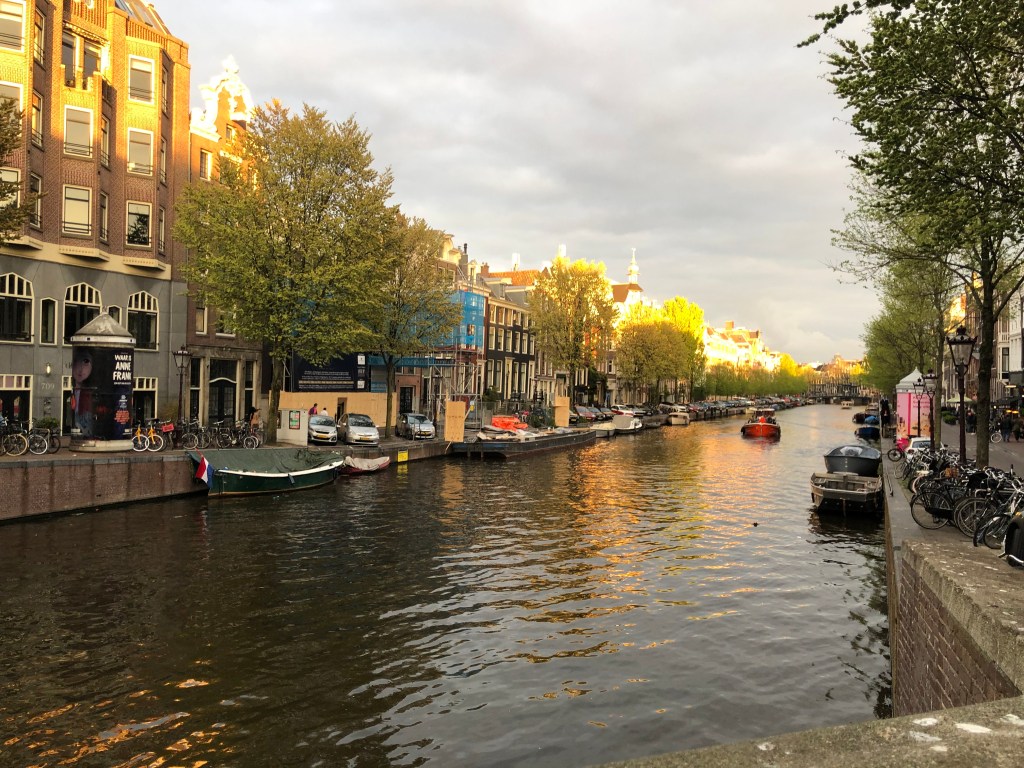
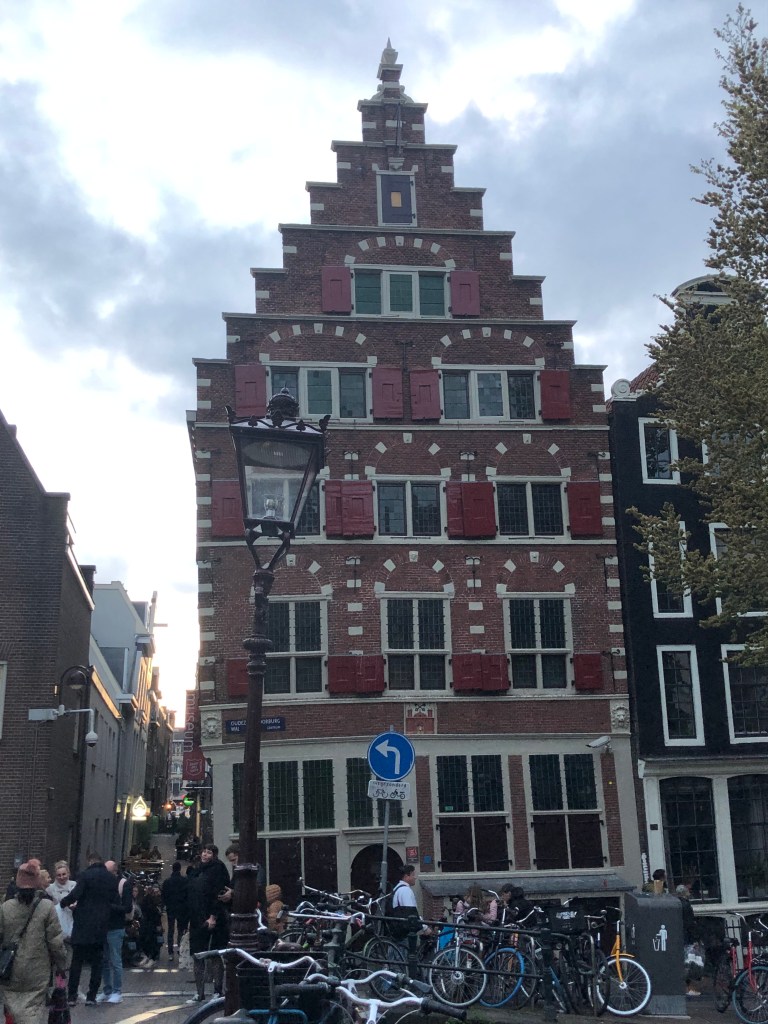
Postscript: whilst this trip was all about flying in an old aircraft, as mentioned in the first paragraph it was also significant in that it has restarted my globetrotting adventures. I love going abroad and have missed being able to do so. That’s not to say I’ve been totally housebound over the past couple of years, I’ve been able to do plenty of things in the UK as and when restrictions allowed and I dare say I’ve come to appreciate this great nation more as a result. There is just something special about stepping just a little bit outside your comfort zone though. Even Amsterdam, which is surely one of the easiest foreign cities to visit, throws up challenges to an irregular visitor like me. What tickets to get for the trains and buses, where to go to find decent food, how to avoid falling into the canals, how to try and avert your eyes at some of the window displays and so on. It’s made just that little bit harder when you are out of practice when it comes to foreign travel. I’m glad to say, however, that between us, Graeme and I worked things out quite quickly, even if we did end up inadvertently ‘stealing’ a couple of bus rides as our travel cards didn’t include that particular bus route. Whilst we only popped into the city on the evening after the DC-3 flight and the following morning, it was good to see a major European capital in all its sometimes naughty and frequently aromatic glory.

Collector

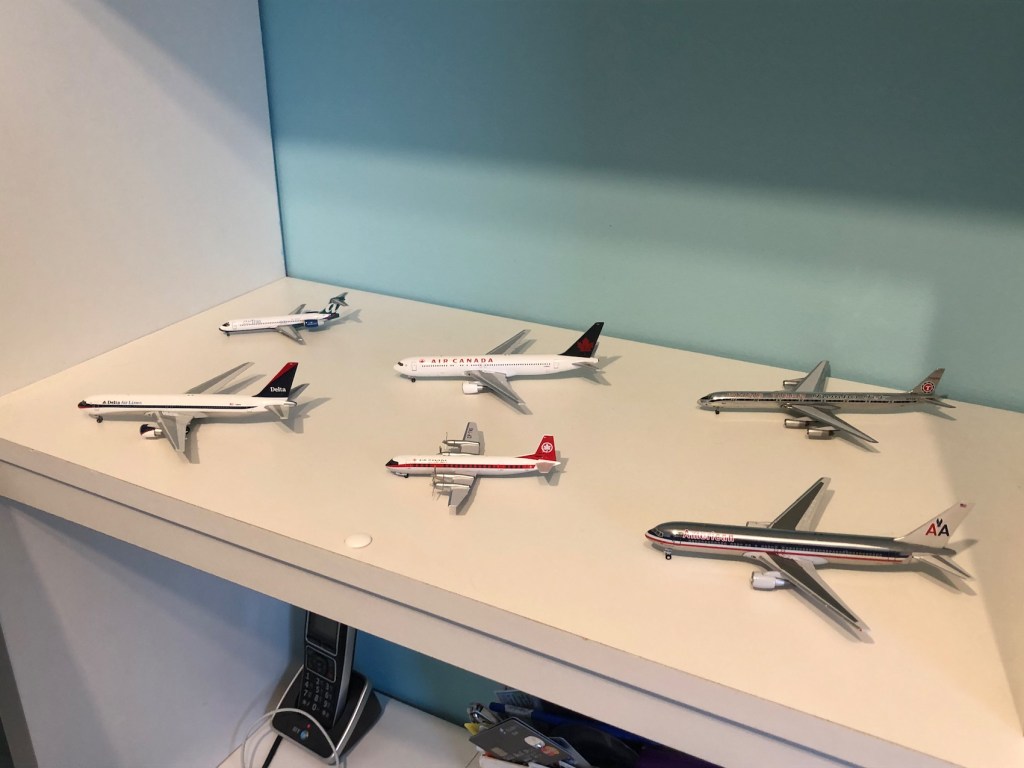
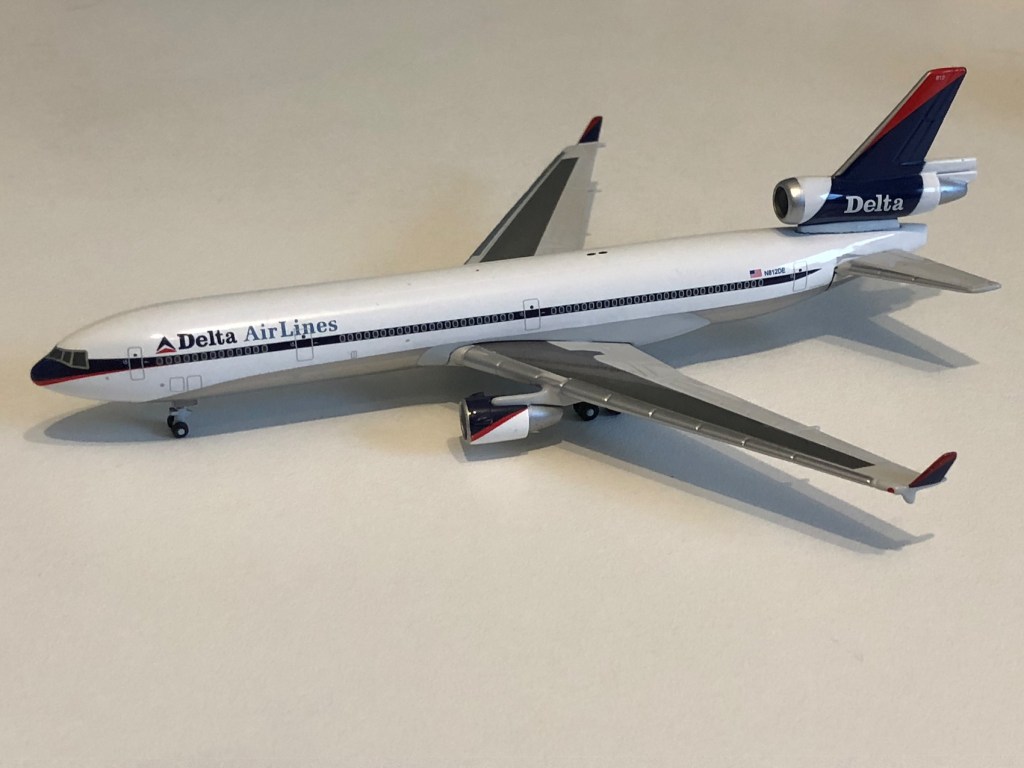
Back in 2003 I was at an air display at Duxford near Cambridge. As is the case at these events there were many stalls where visiting retailers attempted to sell you their wares. Most of those were aviation and military related and a number were selling aircraft models. At one I was glancing through the products when one in particular caught my eye. It was a 1:400 scale diecast metal model of Delta Airlines MD-11 N812DE. Now, whilst that might appear to be a lot of avgeek gobbledegook to you, to me it just so happened to be a model of a specific aircraft I’d flown in the previous year, from Gatwick to Atlanta just in case you were wondering. That looks quite nice I thought and handed over twenty quid to the bloke behind the table on which the box in which it was contained had been placed. I took it home, removed it from its box and proudly displayed it on the desk next to the computer. So began a bit of an obsession with diecast model aircraft, one that has only recently ended though in truth it had been tailing off over the past five or six years. As a hobby, collecting diecast aircraft is a bit rubbish really. All you have to do is find the ones you want, buy them then display them. It involves absolutely no physical exercise whatsoever and doesn’t really make your brain work, other than working out ways to justify the cost. At the height of my collecting I’d be buying several models a month. The four or five manufacturers of these models tended to release new ones every month and inevitably there would be something in those releases that I fancied. There was also the little job of finding models released earlier which meant I was something of a slave to ebay for a while. I couldn’t collect everything of course, that would have been absurd, but I developed my own collecting criteria and stuck to it. More or less. After a few years I started collecting 1:200 scale models too. Contrary to popular opinion these are not simply twice as big as their 1:400 counterparts, they take up four times as much shelf space and are actually eight times as big. More to the point they are generally about three times the price – a 747 for example might set you back £40 in 1:400 and £120 in 1:200 at today’s prices. Models were a bit cheaper ten years ago at the height of my collecting but it’s fair to say that a significant chunk of my salary would disappear every month to fuel this ‘rubbish’ hobby. Not only that, as my collection increased it wasn’t long before I ran out of display space. As a consequence, the vast majority of my models are stored in their boxes in the loft. I decided to stop actively collecting last year by which time I had amassed 434 1:400 scale, 79 1:200 scale and seven other scale diecast models, all meticulously catalogued on a spreadsheet of course. With the exception of a few military transport aircraft, all are civilian airliners.

A random selection of over five hundred models. If you ask me nicely I’ll show you the rest.

You sometimes get programmes on the telly which focus on collectors. Programme makers particularly like collectors of railway memorabilia and will find some chap whose collection of station nameplates, old buffers and semaphore signals that takes up three rooms in his house and both his garden sheds. They will interview his long-suffering wife and generally be slightly patronising towards him (it is always a him, never a her) and make out he’s a bit of a saddo. There is, however, something addictive about collecting. Once I started I couldn’t really stop until I’d got everything that fitted my collecting criteria, even knowing that I’d nowhere to display the damn things once they arrived. So yes, perhaps I am a bit of a saddo. That being said, I do like seeing them on the shelf and change the thirty or so that I can display at any one time every few months. As you know, I am an avgeek and they remind me of flights I’ve taken, the aircraft I grew up with and indeed those of the 50s and 60s which I find particularly fascinating. Other than that they just sit there doing nothing.

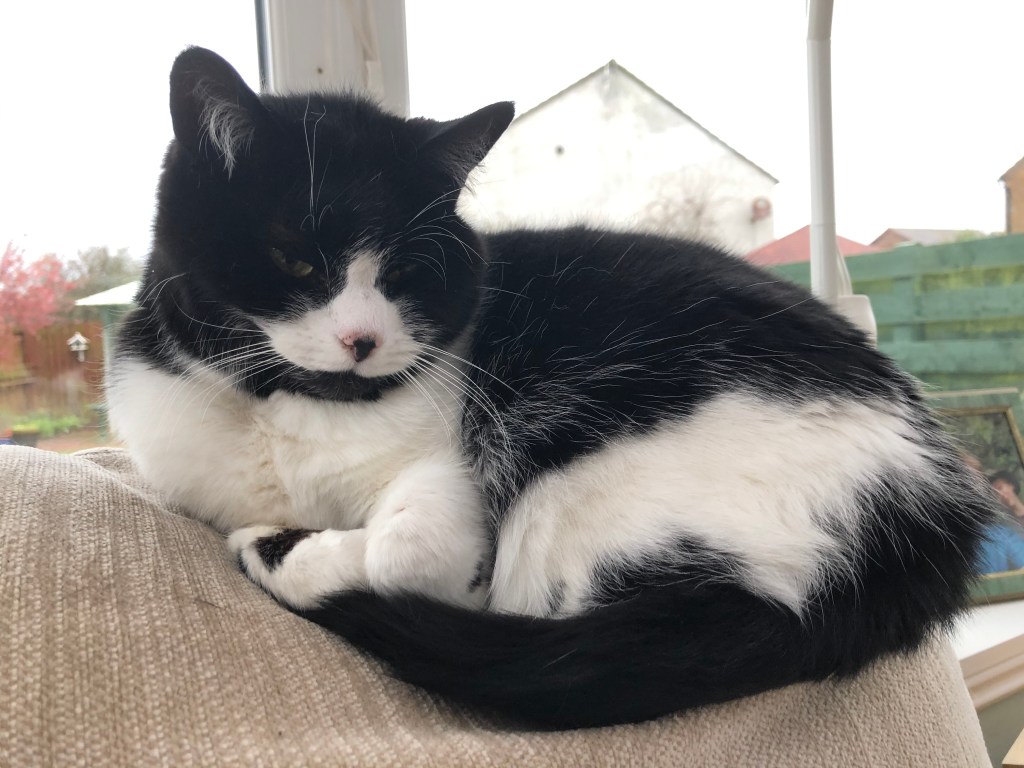
Pebbles the plane wrecker.

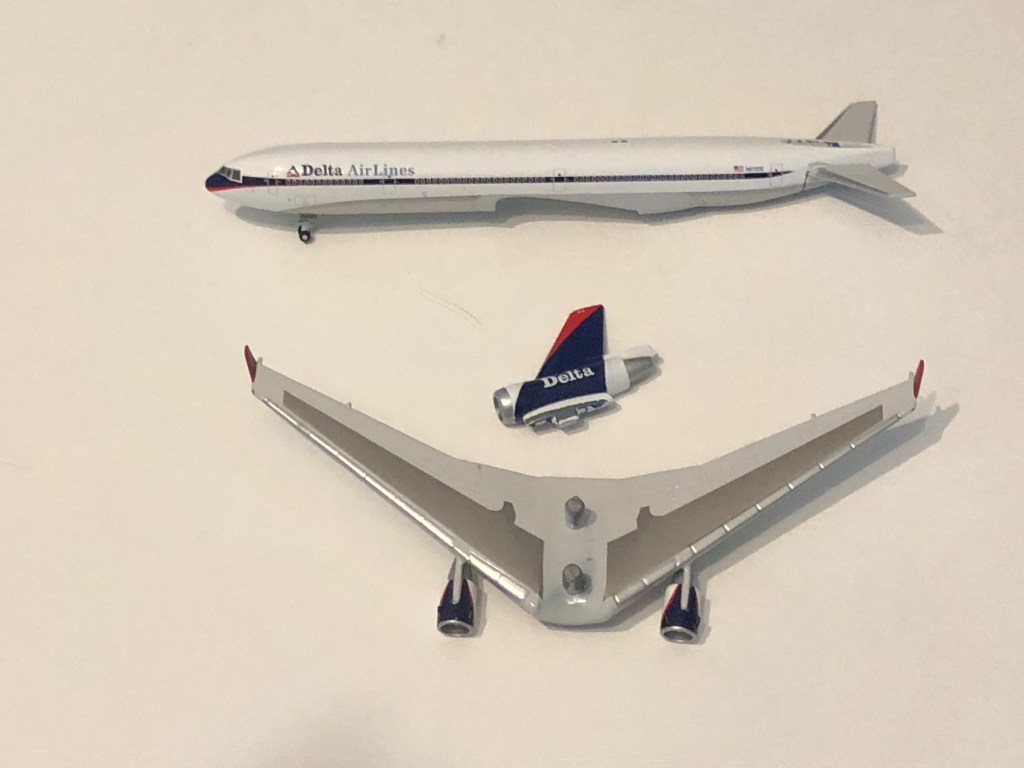
So why have I decided to ‘come out’ as a diecast collector saddo today? You can blame Pebbles for that. Pebbles is one of our two cats. She is fourteen years old and basically does nothing but sleep all day. Every once in a while though she gets a flea up her arse and starts haring round the house. This episode lasts a couple of minutes before she wanders back to one of her favourite sleeping destinations. Last night I was in the kitchen making the tea when I heard a bit of a crash. What’s that bloody cat doing I thought. I went upstairs, into the office and found a model on the floor. Not only that it just so happened to be that Delta Airlines MD-11 that had kick started my collection seventeen years ago. The tail and centre engine was detached – some of the more aviation savvy amongst you might realise why I immediately thought of Sioux City – and when I picked up the fuselage the wings fell off. Of all the models she could have targeted. I nearly shed a tear. I say nearly, I didn’t really, I was too busy cursing the cat despite her not being there any more. It was a reasonably easy fix. Wood glue, of which I have a bottle for just such an occasion, is strong enough to reattach the various bits and not too strong that it won’t come apart again if you need to adjust things. It will never be really ‘mint’ again though. Cooking fat. To prevent repetitions of this incident I could get rid of either my entire collection or the cat. It’s a tricky one. Too tricky to solve I think so I’ll probably end up keeping both.

Gentlemen, we can rebuild her…
Back together in all her glory, N812DE in 1:400.

Queen of the Skies

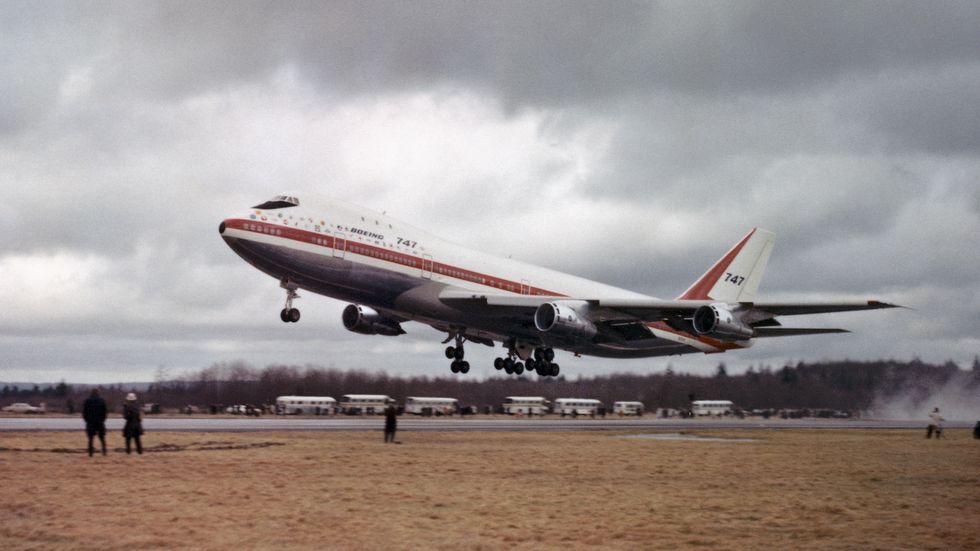
The first Boeing 747 rollout. (Boeing photo)

Back in the seventies when I was developing my avgeekery, not that avgeekery was a term we used back then, there were two commercial aircraft of the era that caught the imagination of even those who had little interest in aviation. One was Concorde, the other was the Boeing 747. Whilst both these aircraft were designed to carry passengers, they took a very different approach to that task. Concorde was designed for speed. More than twice as fast as any airliner before or since, Concorde was a magnificent machine. Sleek and sexy, it was the star of the airline world. It could carry a hundred passengers between London and New York in three hours, quite an astonishing achievement for the 1970s. The Boeing 747 was big and chunky. It could carry four hundred passengers between London and New York in seven hours, the same time as the 180 seat 707s that were plying the route in tthe 1960s. You might think that Concorde would be a clear winner but no, the Boeing 747, still in production to this day, sold a hundred times more airframes than its supersonic rival. The reason was purely down to cost. Concorde was so expensive to buy and operate that even if an airline could fill every one of those one hundred seats on every flight, fares would have to be enormous. In the end British Airways and Air France were gifted eight production Concordes apiece and even then could only make it profitable on the London/Paris – New York run. There just wasn’t enough super rich folk in the world. The Boeing 747 had four hundred seats to fill which resulted in fares being dropped and a whole new market for long haul travel was tapped. Despite one or two hiccups on the way, the 747 allowed airlines to turn a profit on long haul services and the world to become better connected than ever.

First flight, 9 February 1969 (Boeing photo)

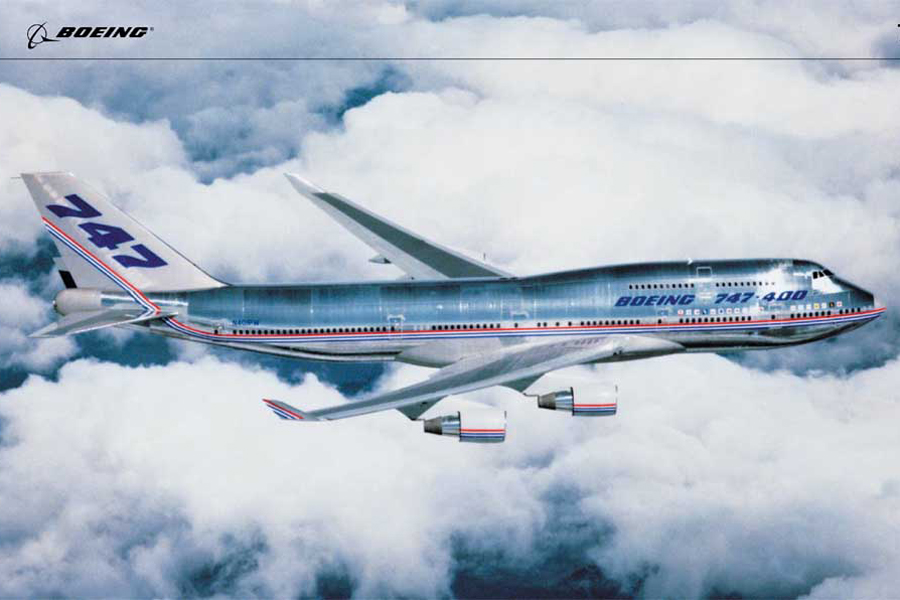
Ok, that’s all very well and good I hear you say, but what is the relevance to today? On January 22 next year, the aircraft will celebrate the fiftieth anniversary of its first commercial service. Despite this, the type is still connecting cities around the world. Whilst the early 747s have almost completely disappeared, the 747-400 series, a version that first entered service in 1989, still flies for a number of airlines. Those airframes are nearing the end of their lives, however, and whilst the modern 747-8 version is still in production, it has proven to be a poor seller in the passenger aircraft market where more efficient twin engined aircraft are now the norm. In short, your chances of flying on a 747 are rapidly dwindling. The once huge British Airways 747 fleet is due to be phased out by 2023. I recently took a flight from London to Vancouver and back with BA and was delighted to find out that it would be a Boeing 747-400 that would be operating the service. I have been on 747s before but this might be the last time I had the chance. Back in the day there was nothing like a 747. It was enormous. In my spotting days I’d spend the day at Manchester Airport where the star of the show was the 747 operated by Canadian airline Wardair. It looked huge next to the One Elevens and 727s on the adjacent stands. That’s because it WAS huge and still is today. The distinctive hump at the front was like nothing else you were likely to see. Born from the need to raise the cockpit above the main deck to assist in the loading of the cargo version of the aircraft through the nose, the small passenger deck behind the flight deck was accessed by a spiral staircase. It used to house a cocktail lounge for first class passengers but airlines soon tired of that idea and used it to accommodate extra passenger seats. Later versions, including the -400 series had the hump stretched increasing the capacity of the upper deck. Sadly, the spiral staircase made way for a regular one as squeezing maximum revenue out of the aircraft’s cavernous interior became a priority. It was the first passenger aircraft to be wide bodied – back in the economy section seats were arranged ten abreast in a 3-4-3 pattern with two aisles. Twin aisled aircraft are commonplace now but not many fit ten seats in each row.

Boeing 747-400 first flight. Note the ‘stretched’ hump (Boeing photo)

The 747 was powered by four ‘high bypass’ turbofan engines. Feel free to google it if you want, for here it will suffice to say they were much bigger and more powerful than the other jet engines of the time. They are now the norm on airliners, big and small. It’s not a lie when I say the aircraft was a beast. My first time on one was in 1987, Heathrow to Singapore on a Singapore Airlines 747-300. This had the stretched upper deck but of course I never got anywhere near that. I just remember marvelling at the raw power of the engines as we commenced our take off roll. I was already fond of the 747 but after that flight I was smitten. Fast forward to 2019 and I’m back in Heathrow’s unimpressive Terminal Three. I present myself at the gate and the agent scans my boarding pass, which, because I’m really tech savvy, I had on my iPhone. Her computer made a rather disturbing noise and a puzzled look appeared on her face. Tapping a few keys on the keyboard she hit return and a new paper boarding pass was printed off. For reasons unexplained my Premium Economy seat had been changed to one in Club World, British Airway’s business class. You’ve got an upgrade said the agent and bid me on my way. A bit of luck there then. The seat was in the Club World section in the main cabin rather than the upper deck. Despite being a wee bitty excited to be flying the 747 once more, the flight was actually quite dull. It was an aisle seat and I missed having a window to look out of, even though there would have been nothing to see as the entire flight took place in the hours of darkness. If you are going to be bored, however, you might as well be bored in the relative comfort of Club World if you get the chance.

British Airways Club World cabin inside the hump, more spacious than the one on the main deck. (Photo taken in 2013 on flight from Moscow to Heathrow)
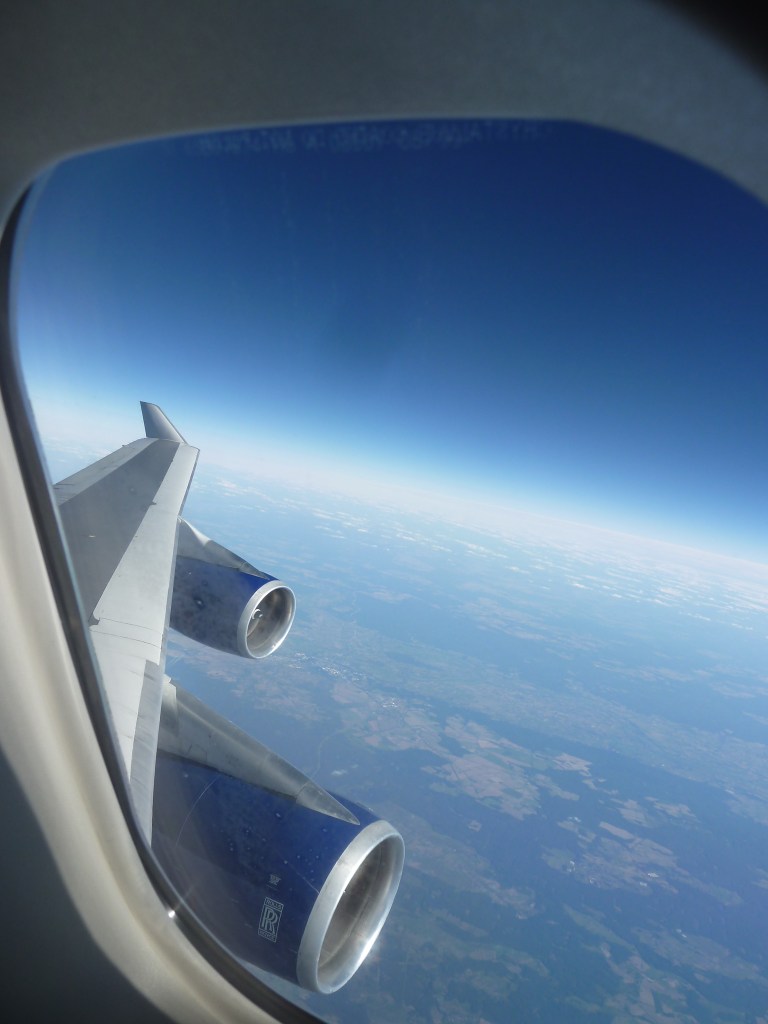
That wing, those engines… (Photo taken in 2013)

On the way back I had booked a Club World ticket (using Avios, I’m not so well off that I can go business class willy-nilly) and was hoping that they might upgrade me to First but no, I’ve obviously had my quota of upgrades. This time I had a window seat on the upper deck which was much better for a geek like me. It also meant a bit more privacy and plenty of storage space with a row of lockers beneath the windows. It is an ideal place to enjoy the 747 experience, mainly because you are facing rearwards and can see one of the magnificent wings and two of the four mighty engines that hold the beast aloft and allow it to hurtle through the air at Mach 0.85. (That’s fast by the way, not Concorde fast but you certainly wouldn’t want to get in the way of one) The upper deck consists of five rows of four Club World seats and feels more spacious and exclusive than the other Club World cabin down the stairs. I was all set for a restful red eye flight back to Heathrow when I noticed the four seats in the row behind were occupied by a family of five. Mum, dad, two small girls and a babe in arms. Oh good I thought. I know we were all babies and children once but when I was that age I never went in a plane, never mind the posh seats. We were too poor in Yorkshire tha nos. However, I need not have been so snobbish, the two girls were as good as gold and once the baby was plonked in a bassinet I never heard a peep from her. The dad on the other hand spent the entire flight getting up and down, accessing the several tons of hand luggage they had secreted round the cabin and generally faffing about. After a very acceptable dinner I had a quick look out of the window to see if I could see the aurora (I couldn’t) and settled down to sleep. I think I managed about four hours, a reasonable if unspectacular amount for an eight hour flight across eight time zones. We touched down on Runway 27R at Heathrow well ahead of schedule and made the short taxi to Terminal Three. Heading up the corridor I looked out of the window at the twenty-five year old 747 that had delivered my safely back to London. She still looked a beast. You may have noticed I’ve not used the ‘J’ word in this short epistle. I never liked the term ‘Jumbo Jet’. Yes, both are big but there the similarity ends. 747s tend not to be grey and wrinkly and don’t have a long manoeuvrable proboscis for a start. The Boeing 747 has since gained another nickname, not one that’s widely known outside of avgeek circles: Queen of the Skies. She may well be a big lump of a queen but a queen she is nevertheless. She’s the business. I’ll mis her when she’s gone.

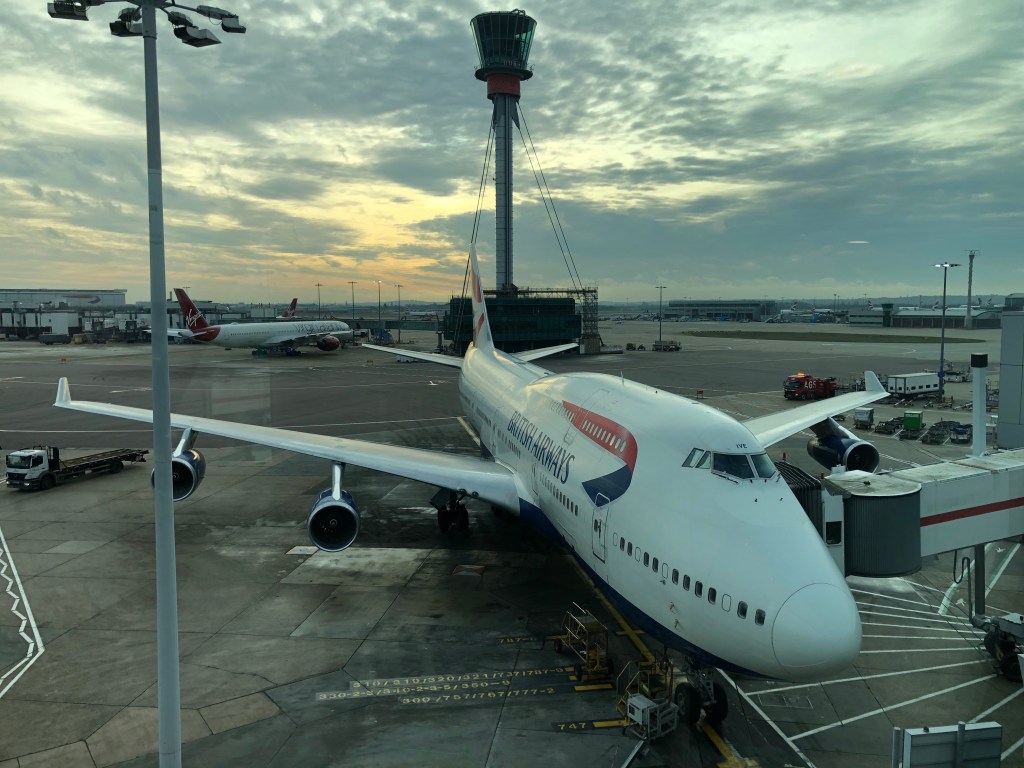
25 year old Boeing 747-400 G-CIVE at Heathrow having just delivered me from Vancouver.
The twilight of Heathrow, the twilight of the 747’s career.

Lancaster

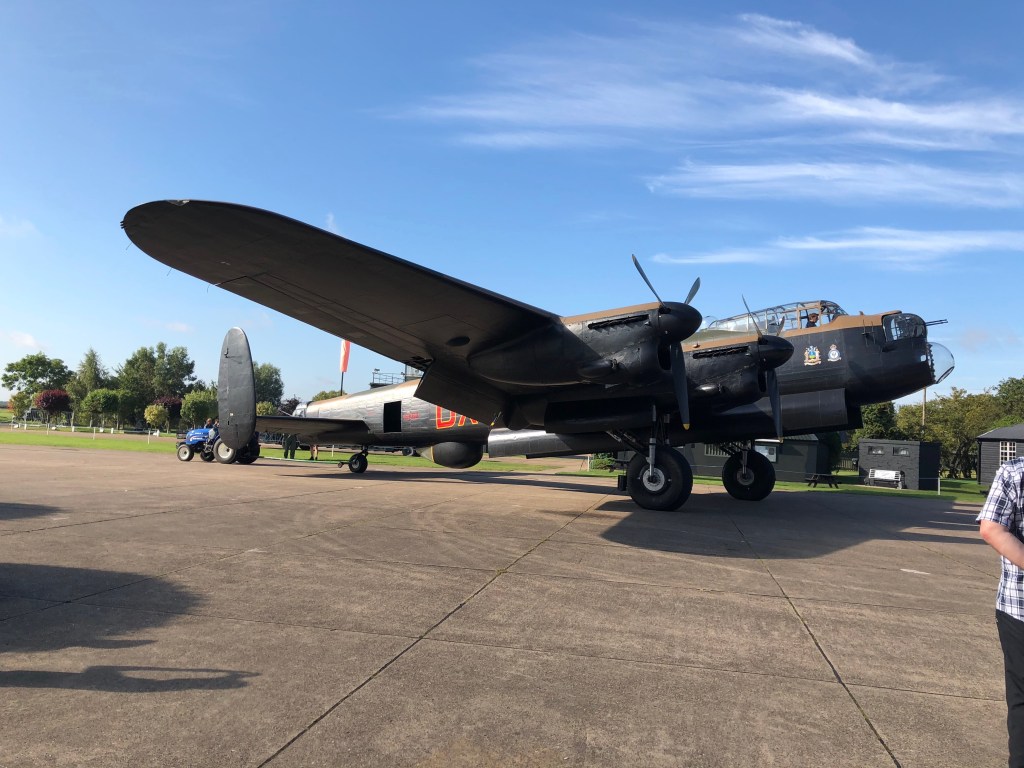
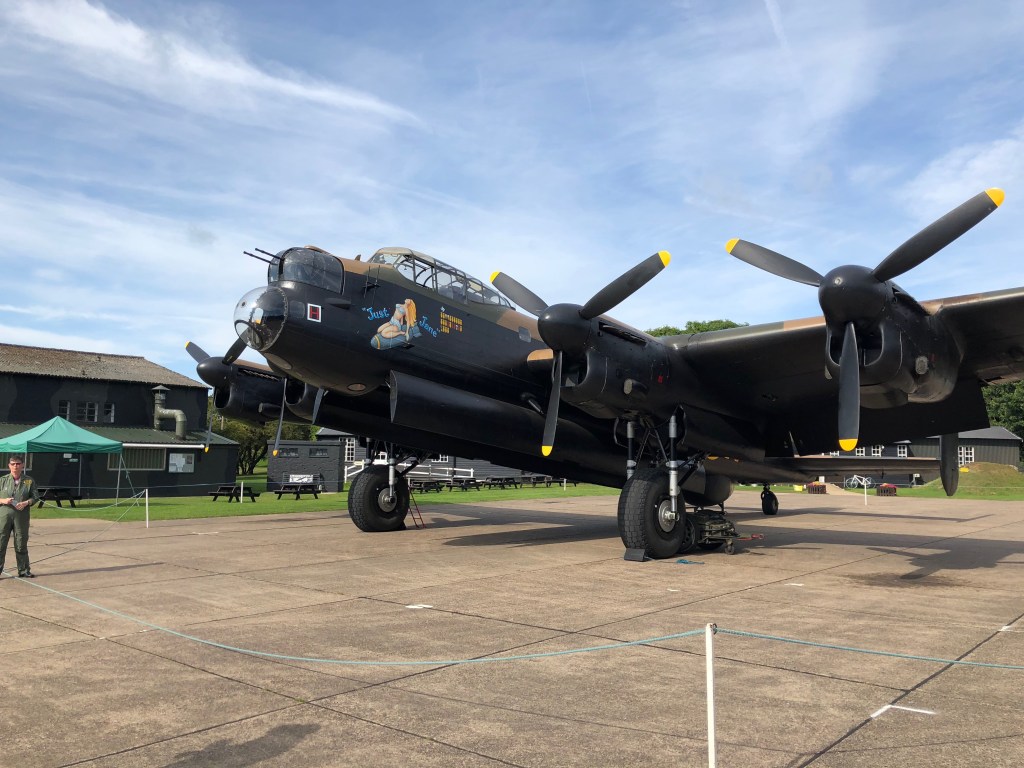
Avro Lancaster NX611 prepares for its next mission.

It’s eighty years since the start of World War 2 and over seventy-four since it ended. Despite the conflict receding ever further into the past, interest in it remains high even amongst people a generation or two removed from those who lived through it. It is of course important that we do not forget, if only to ensure such horrors do not happen again, but the war nostalgia is something above and beyond remembrance. Being an avgeek I’m drawn towards the stories of aerial warfare over that on land or sea. Amongst the numerous different type of aircraft that were produced, a handful stand out for whatever reason. In Britain, the Supermarine Spitfire was the outstanding fighter aircraft of the war and will be forever remembered as the aircraft that won the Battle of Britain, though its stablemate the Hawker Hurricane takes much of the credit too. Later on in the war it was the turn of the bombers. In January 1941 a new type took to the air for the first time, the Avro Lancaster. With its four Rolls Royce Merlin engines, it was a similar shape and size to the Handley Page Halifax that had entered service the previous year. In March 1942 the Lancaster entered operational service, proving itself to be more capable than the Halifax and soon became the favourite weapon of RAF Bomber Command. 7377 examples were built, half of which were destroyed during the war. Its job was simple: flatten German’s industrial cities, a task it tended to tackle at night time. With help from the American USAAF whose B17s favoured daytime raids, Germany was indeed flattened, if not into submission then to a severely weakened state, allowing allied ground forces to eventually claim victory in Europe. The cost of the bombing campaign was, however, horrendous. Over 125,000 men served with Bomber Command throughout the war. 55,573 of them paid with their lives, more than 44%. Let’s also not forget the fatalities in the towns and cities they bombed which ran into the hundreds of thousands.

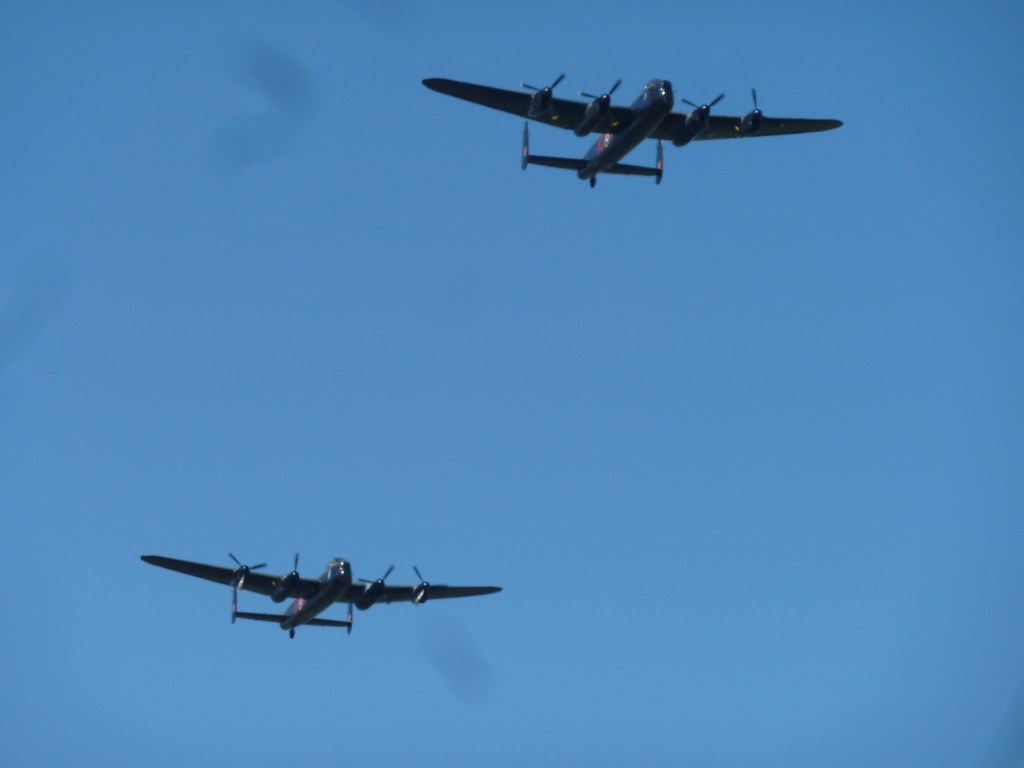
Just seventeen intact Lancasters remain, only four of which flew operational sorties during the war. Of those seventeen, just two are preserved in flying condition. One, serial number FM213, belongs to the Canadian Warplane Heritage Museum of Hamilton, Ontario. The other, PA474, is part of the RAF’s Battle of Britain Memorial Flight based at RAF Conningsby in Lincolnshire. In 2014 the Canadian Lancaster, affectionally known as Vera, spent the summer in the UK and we were treated to the sight of two Lancasters flying in formation for the first time in many, many years.

PA474 and FM213 in formation at the Scottish Airshow, September 2014.

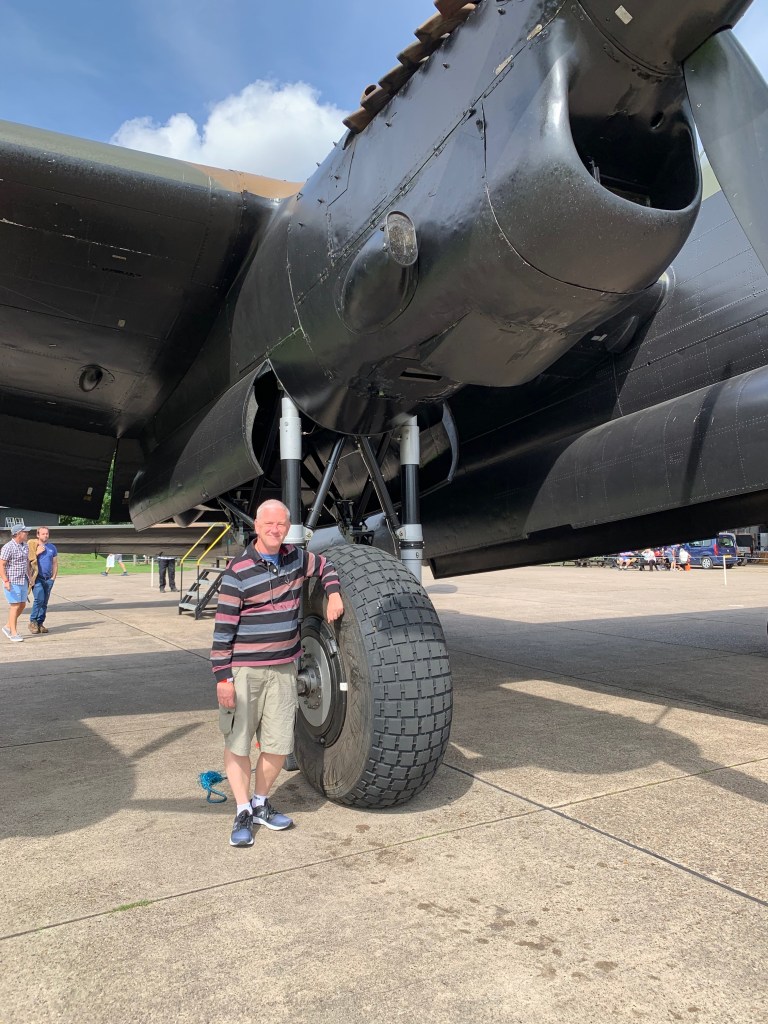
Two others are being restored to airworthy standard. One of those, FM104, I saw in Victoria, Canada earlier this year. It is planned to restore it to post-war Maritime Command configuration. It is currently in bits and there is a long way to go before it graces the skies once more. The other is NX611. This airframe is based at the Lincolnshire Aviation Heritage Centre at East Kirkby in Lincolnshire, just an RAF Typhoon’s jet blast away from the BBMF’s PA474 at Conningsby. Although it looks essentially complete, it is only three years into a ten year project that aims to get her airborne once more. In the meantime though, she can fire up her four Merlin engines and taxy round the airfield. Restoration is expensive. Funds are raised by various means. One of those is by selling Lancaster VIP Days to an eager population of avgeeks, those with an interest in military matters and, in some cases, veterans who flew on the aircraft when it was in active service. I retired just under a year ago. My retirement present from my wife was one such VIP Day. Last week the day finally dawned and we made our way to East Kirkby. The day consisted of a briefing, tea, coffee and cake, a hearty lunch and the chance to look round the museum. The main event was, of course, the chance to discover first hand this legendary aircraft and sense just some of the sounds, sights and smells that the Bomber Command aircrews will have experienced. It was an absolute privilege to be able to do so.

Just Jane. Taxy riders only beyond the barrier.

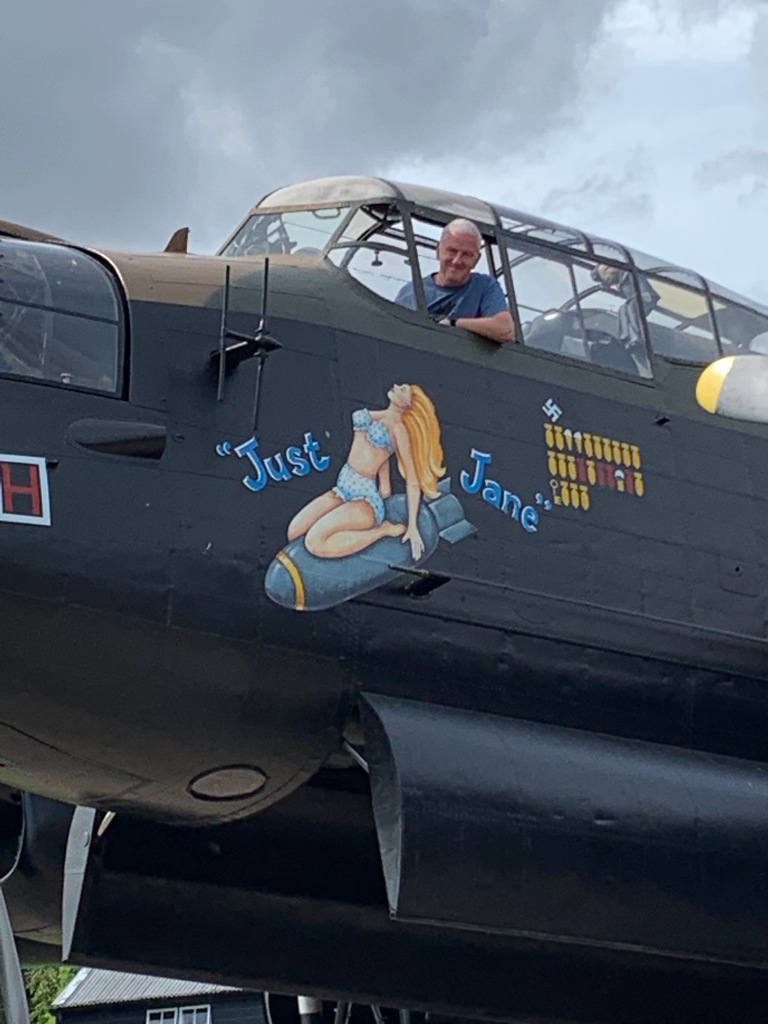
Here’s a brief history of NX611: built by Austin Motors, Birmingham in April 1945, she was intended to be part of the RAF’s Tiger Force in the Far East. The surrender of Japan meant that she, along with around 150 others, were not required and she was placed in storage. In 1952 she was one of seventeen examples sold to the French government where she was allocated to the French Naval Air Arm. She served as a maritime patrol aircraft, ultimately ending her service career in Noumeau on the Pacific island of New Caledonia. In 1964 she flew to Sydney and presented to the Historical Aircraft Preservation Society and in 1965 made the 12,000 mile, nine day journey back to Britain. In 1972 she was sold to a private owner who lent her to the RAF to act as gate guardian at Scampton for ten years. During that time she was acquired by Fred and Harold Panton, owners of a farm which included part of East Kirkby airfield. Christopher, the elder brother of Fred and Harold had been killed in an RAF Halifax bomber during the raid on Nuremberg in 1944 and the brothers wanted to commemorate him, and the other members of RAF Bomber Command in some way. Hence, the Lincolnshire Aviation Heritage Centre was born and the long task of restoring NX 611 begun when the aircraft was delivered to East Kirkby in 1987. In 1993 the first of its four Merlin engines was fired up and it has been wowing visitors to the centre ever since. Adorned with squadron markings DX on one side and LE on the other, 57 and 630 squadrons respectively, the aircraft now serves as a tribute to the two Lancaster squadrons based at East Kirkby during the war. The suffix letters F and H are a tribute to the museum founders, Fred and Harold Panton and the nose art is a reproduction of a wartime cartoon character from the Daily Mirror, Just Jane. NX611 is now known affectionately as Just Jane. A more detailed biography of Just Jane, along with some fine artwork, can be found here: https://www.silksheenphotography.co.uk/resident-aircraft/lancaster-just-jane-gallery-history/click-here-for-a-look-at-nx611-s-markings-1945-2014/

The first run of the day. Just Jane heads for the grass.

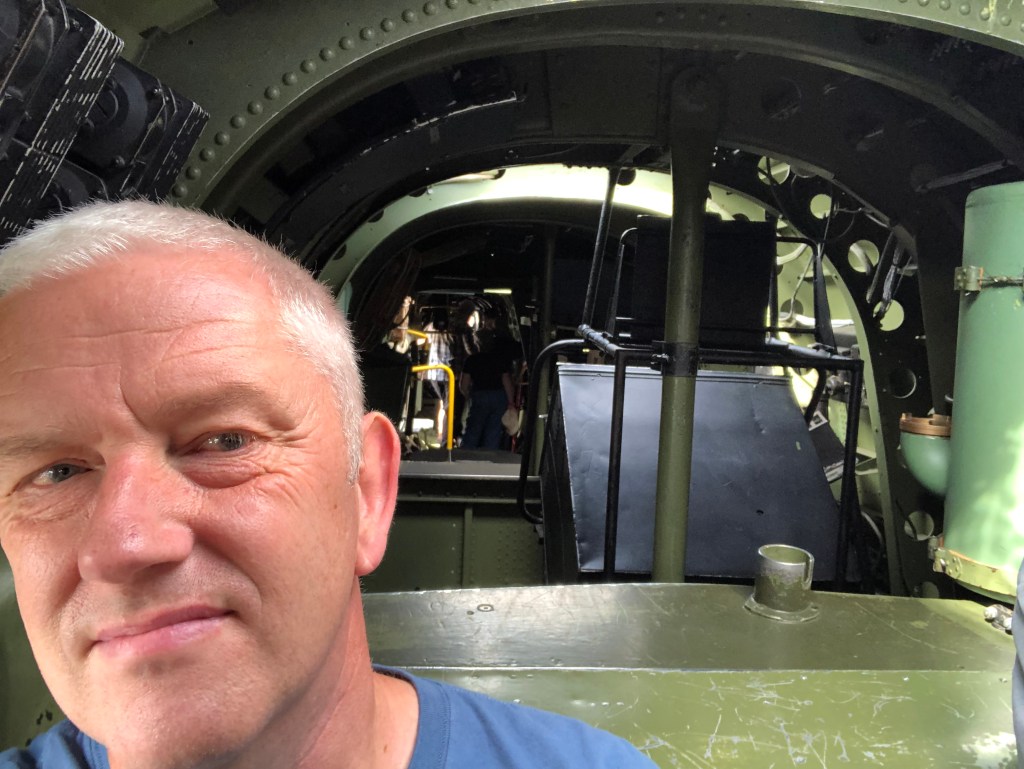
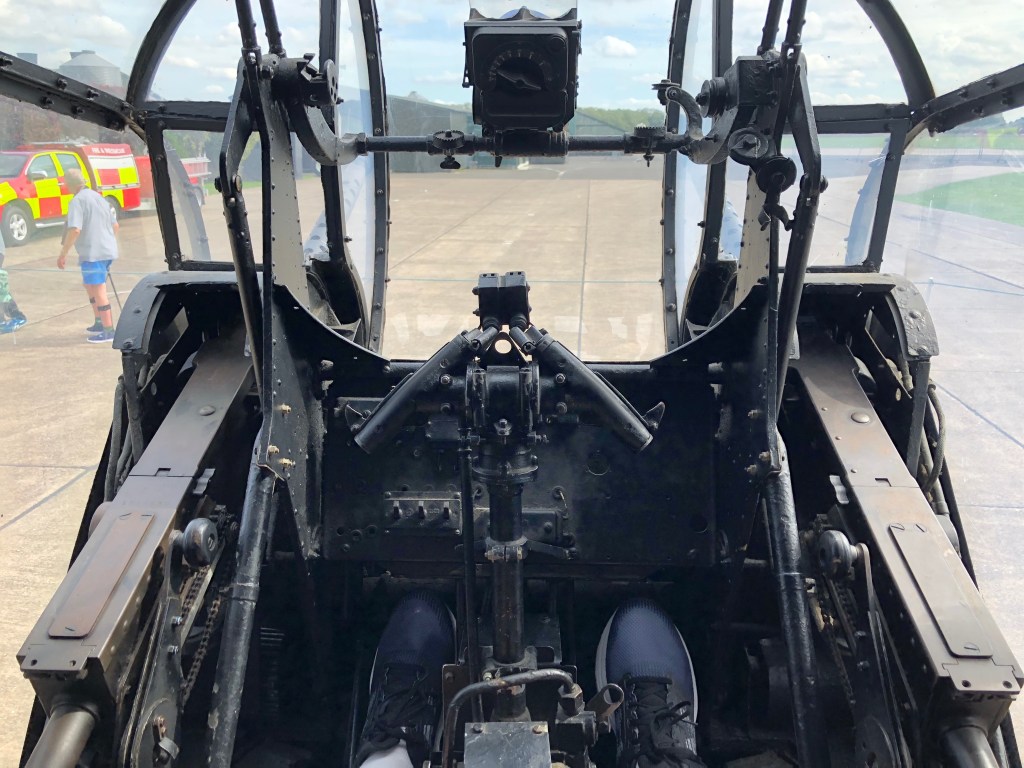
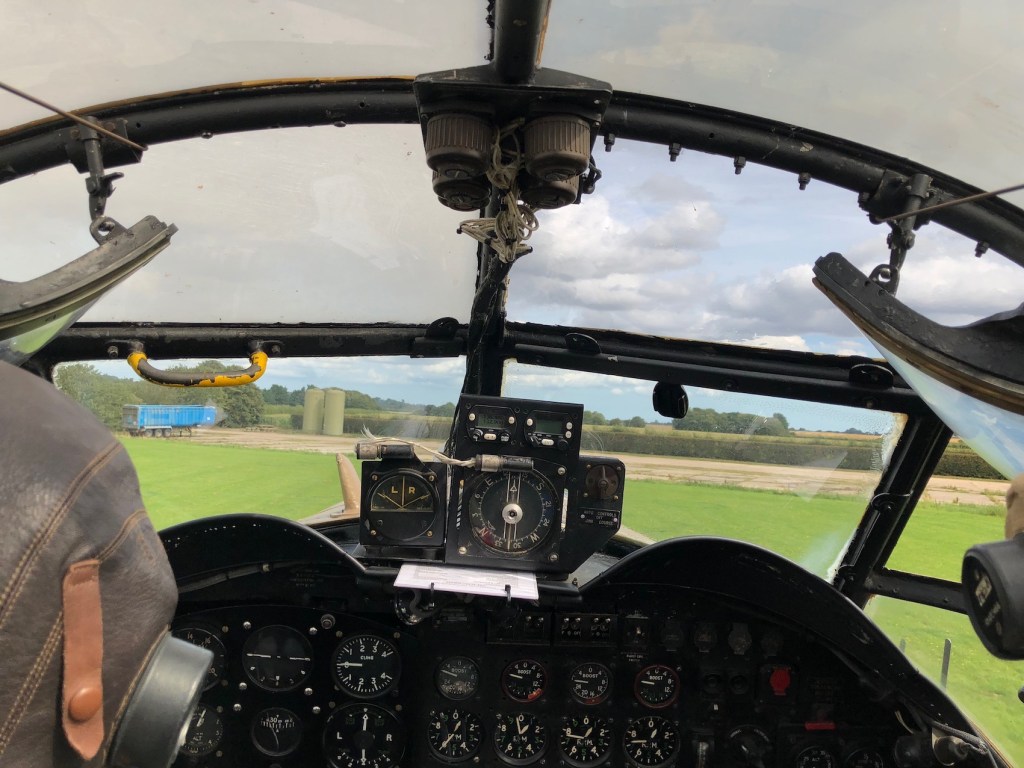
Those who were booked onto the taxy runs were split into two groups. I was in the second group which meant an afternoon run. This allowed me to observe the first run from the outside which served to increase the anticipation. At the appointed time the ten of us on the afternoon run congregated by the aircraft. There, a draw took place for the positions we would occupy during the taxy run. They are as follows: one Bomb Aimer in the nose, two stood behind the pilot and engineer in the cockpit, two seated by the small windows behind the cockpit at the radio operator’s station, three stood in the centre turret, one sat by the open door towards the rear and one Tail End Charlie in the rear turret. There is also the seat of the radar operator should you fancy a ride without an external view. None of the positions are considered to be the better than the others but I was more than happy with my allocation – stood in the cockpit behind the pilot. With multiple warnings to mind our heads we boarded the aircraft. The Lancaster is not a large aircraft by today’s standards but it stood next to it on the ground it seems plenty big enough. Inside, however, it is a tight, compact somewhat claustrophobic space. We got the tour of the front of the aircraft first. Fitting us in was no mean feat. Not only do you have to guard against banging against the metal ribs of the fuselage, the main wing spar passes through it just aft of the cockpit and clambering over it is by no means easy. The bomb aimer’s station in the nose is not easy to enter without bashing some part of your anatomy but once there it is relatively spacious and probably the most comfortable operational position on the aircraft. The cockpit, normally home to pilot, engineer and navigator, is a crowded place. With just the pilot, engineer and two passengers stood behind them it was positively overflowing. That being said, what a delight it was to be there. The navigator’s station is in the back of the cockpit and we were given dire warnings of court marshal should anyone plonk their backside on the fragile navigator’s table. Just behind the cockpit was the radio operator’s station, shoehorned in front of the spar. We did the tour of the rear of the aircraft after the taxy run. The mid turret was just about big enough to hold the three passengers and perhaps the most spacious seat was by the open door. The rear turret took no small amount of contortion to enter and was a bit of a squeeze when you did.

Just Jane looks longingly at Pilot Officer Hughes
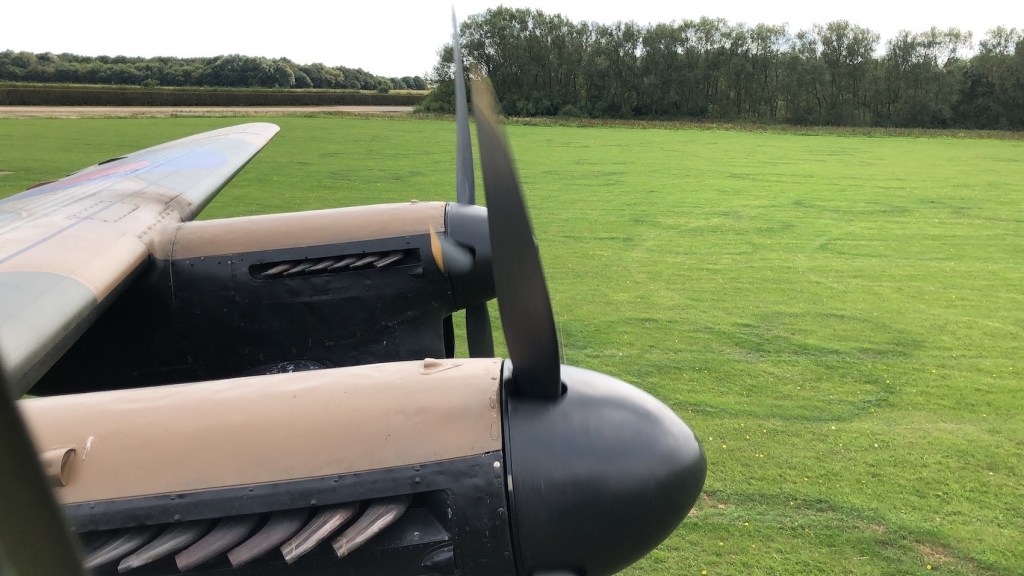
You really do get up close and personal with the Merlin engines.
With no small amount of effort, I made it over the wing spar.
Rear Gunner’s home for the mission. By a long way the worst seat on the aircraft.
Engine’s two and one start.

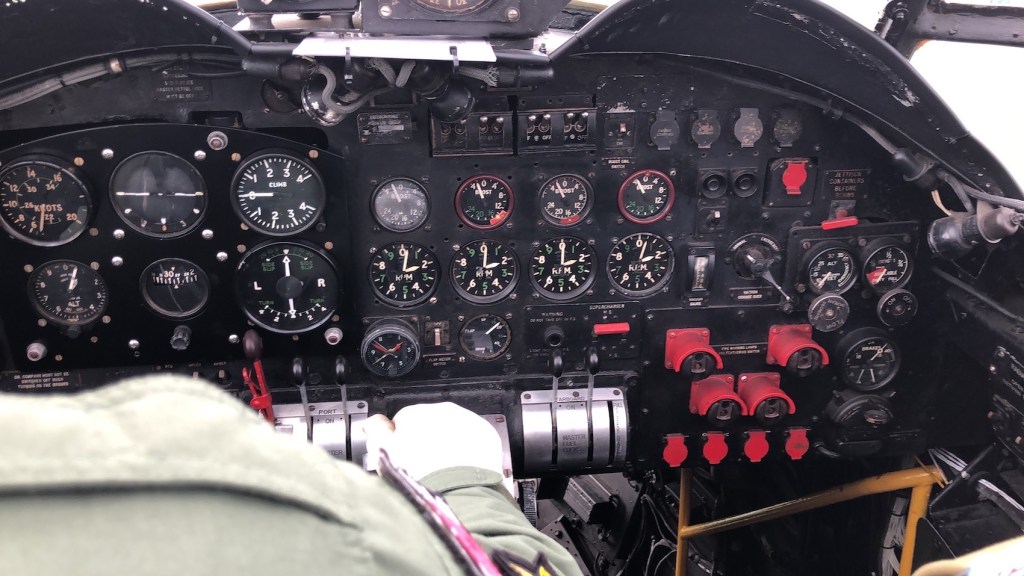
But what about the taxy run? Being in the cockpit gave me the advantage of observing the full start up procedure. It was not simply a case of flicking a switch and involved a substantial amount of teamwork between pilot, engineer and ground crew. Engines three and four, on the port wing, were started first. That was impressive enough. However, when numbers two and one, just to my left on the other side of some thin plexiglass, the sight of flames coming from the exhaust stacks and the loud, throaty rumble of the Merlins was just magnificent. With the pilot and ground crew exchanging signals the brakes were released and we started to move. Just a couple of feet as it happened, the pilot testing the brakes immediately, but soon we were off again heading slowly to the grass whilst an appreciative crowd watched as I had done earlier in the day. Once on the grass we taxied around to simulate what it must have been like at the commencement of another mission. I tried hard to imagine what would have been going through the minds of the airmen on board but unfortunately the avgeek in meant I spent the time just watching the dials in the cockpit, those marvellous Merlins doing their stuff, feeling damn well happy that I was there whilst saving just a little bit of concentration on not falling over as we bounced up and down on the grass. Eventually we lined up with what counts as a runway at East Kirkby and the pilot opened the throttles to 2000 rpm. Once the engines were stabilised he released the breaks and we were off to bomb the Rhur. For a few seconds anyway. A real mission would have required 3000 rpm, a lot more runway and a certificate of airworthiness. With the throttles cut we taxied back to the concrete where the pilot did another 2000 rpm engine run for the benefit of the spectators, not that any of the passengers were complaining. That completed, we were marshalled to our parking position and the Merlins fell silent for the day.

We taxy on to the grass
Four Merlins at 2000 rpm, release the breaks…
Simulated take off run.

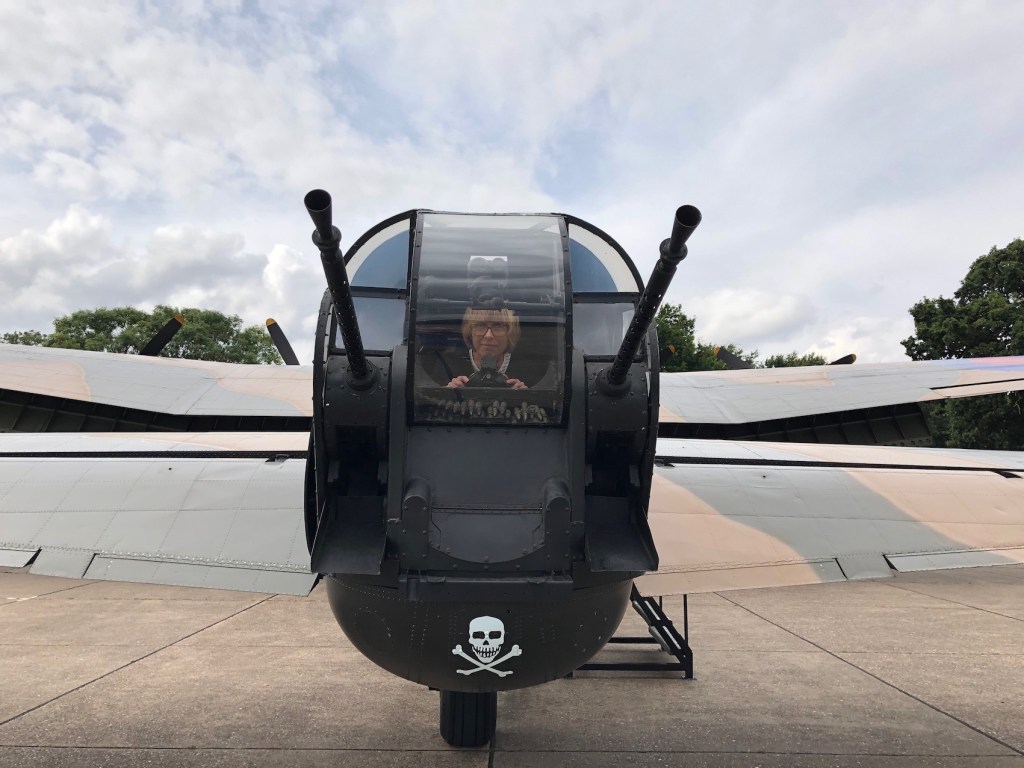
Elaine had got herself a guest ticket which meant she got a tour of Just Jane too and whilst she was being shown around I had a chance to reflect on what had taken place. Just Jane has been restored as a memorial to those brave men of Bomber Command who flew in the Lancaster and other bombers over Germany and the occupied nations during the war. It was essential, therefore, to try and imagine what it was like for them. I found that hard to do during the taxy run as I was simply in awe of the aircraft and yes, I should have maybe put the phone back in my pocket for a while as how many photos and videos do you actually need? Quite a few to be honest. Armed with the knowledge gained through the experience I have since tried to imagine what it may have been like. A fine aircraft though the Lancaster definitely is, it is not a comfortable place to spend eight hours at 24,000ft. Not only is it dark, cramped, full of head banging potential and rather squalid, it would have been freezing cold. Once you have ensconced yourself in whatever station you are trained for, you are pretty much stuck there for the entire mission with just the occasional trip to the Elsan toilet to prevent your muscles seizing up. It was wartime though. Comfort could wait until Nazi Germany was defeated. What set these men apart was how they dealt with the fear. Almost half of them would die in their attempt to liberate Europe. They must have known that their lives were subject to a toss of a coin. It wasn’t just death, it was the way they could die that must have played on their minds. Trapped in burning aircraft, spiralling down to earth knowing that your life is at an end. How do you live knowing that it could be you? Yet when the call came they strapped themselves into the aircraft and headed off into the unknown. What brought it home to me most was when I got the chance to sit in the tail turret. Over one third of Bomber Command’s fatalities were Tail End Charlies. The loneliest station on the aircraft and the least spacious, you spend eight freezing cold hours as a sitting duck, praying that the night time blanket of darkness will prevent the Luftwaffe from finding your Lancaster. An Me109 is twice as fast as a Lanc, infinitely more manoeuvrable and can fly much higher. If it finds you it is likely it will attack from behind. You have a machine gun and a limited amount of ammunition. It is no match for a German fighter. If the Lanc somehow makes it back to base it is more than likely your ground crew will have to remove you from the rear turret with a hose pipe. This you will know as you will have seen it before. All those who volunteered as flight crew in Bomber Command were heroes but none were braver than the Tail End Charlies.

Elaine experiences life as a Tail End Charlie.

Do I now know what it was like to be part of a bombing raid over Germany in 1944? No, a ride round an airfield can never replicate that. What I gained from the VIP Day, however, is something of an insight to what sort of environment the brave men of Bomber Command worked in. It certainly wasn’t a comfortable one. I can only imagine the fear they felt when they strapped themselves in to their Lancaster and headed eastwards into the black abyss and the relief at sighting Lincoln Cathedral on their way back to base, only to do it again and again and…

Up close and personal with a Lancaster. Worth every penny.

I can heartily recommend the Lancaster VIP Day and am particularly indebted to Elaine for organising it. They are not cheap but it is good to know that the money they make out of it is ploughed back in to the restoration of Just Jane back to flying condition. Whilst Just Jane remains firmly earthbound at the moment it is possible to book a flight as a fare paying passenger on the Canadian Lancaster. This is very tempting and something I’m considering but I don’t think the experience will better this one. To enable it to carry passengers it the inside has been somewhat sanitised and airline seats have been fitted. The inside of Just Jane is pretty much what it would have been like on an operational Lancaster during the war. Whilst we didn’t get airborne it was a real privilege to experience it as a wartime aircrew would have known it.

For details of the Lancaster Taxy Rides, click this link: https://www.lincsaviation.co.uk/lancaster-taxy-rides/