River Cruise

The Spirit of the Rhine. It’s long, narrow and low. It’s also hard to get a full photo of it.

It had to happen sometime. I’ve been retired for five and a half years now and I finally got round to taking that holiday favoured by retired folk, the river cruise. I’m surprised it took so long to be honest. It should, in fact, have happened two years ago. We were emerging from the covid pandemic when I caught it for the first time. Luckily for me it was something and nothing but for the people at Saga, the holiday company for those in the Autumn of their lives, it was a serious case of stay away from their boat. The holiday was cancelled four days before we were due to go. Having taken an ocean cruise with Saga last year, it was time to try again for the not so choppy waters of the Rhine this year. A cruise at the end of March was selected and we all managed to avoid catching transmissible diseases in the run up to the cruise, though by now we could have possibly boarded with ebola and no one would have been bothered. (I’m lying. If you catch ebola don’t go on a river cruise.) By ‘we’ I mean my sister Jill, mother and me. If you have read, or indeed choose to read my previous blog SAGA you will see how this threesome of travelling companions has come about and also my thoughts on Saga themselves. It’s a jolly witty read if I may say so myself! I may as well say so myself, nobody else will.

When it comes to river cruising, the choices are limited. There’s a finite number of navigable waterways in the world. ‘Normal’ cruising takes place on seas and oceans and there’s a ton of them to choose from and whilst cruise ships do tend to get concentrated in certain areas, the choice of itineraries is much greater than on rivers. In Europe you can go river cruising on the Danube, The Douro in Portugal, the waterways of the Netherlands and maybe somewhere in France at a push. The biggie, however, is the Rhine. Actually, the Danube is longer and a similarly important river cruise waterway but the Rhine gets my vote as the most important. Defining what is and isn’t the Rhine is tricky at either end of said waterway but the bit we are interested in runs from Lake Constance to the Hook of Holland and is measured in Rhine Kilometres, a unit of length that matches a normal kilometre except in one case which we will see later on. There’s 1032 of those but the first couple of hundred are not navigable. The rest, from Basel onwards, is fair game for river cruises and a surprisingly large number of commercial cargo vessels. The cruise we chose was called ‘Rhine in the Springtime’ and of the three or four departure dates available, we chose the first one of the year for the very sound reason that it was quite a bit cheaper than the others. ‘Cheap’ is a relative term. River cruises are not known to be at the budget end of the holidaying spectrum. What’s more, single occupancy of a cabin will cost you a hefty surcharge so a saving of a thousand pounds or so by taking a cruise so early it only just qualified for the ‘Springtime’ bit is not to be sniffed at.

As with the ocean cruise, Saga look after you. Included in the price is insurance and transfer to whatever port of exit you decide to use. For most folk on this cruise this was St Pancras Station where the Eurostar train would whisk them off to Brussels where a bus would pick them up and take them to the boat which was moored in Dusseldorf. We, however, took the flying option. This required us to be at Heathrow Airport for a 12:55 departure so we asked Saga’s UK travel service to take us down the day before. We booked an airport Premier Inn for the night allowing us a more leisurely short ride to the airport the following morning. We spoke to others who had been picked up at three in the morning for the flight or the train so felt the extra expense of the hotel for the night was more than worth it. The flight went directly to Dusseldorf from where we were met and sent on a short bus ride to the boat. We were welcomed on board and shown to our cabins.

Our home for the next eight nights was The Spirit of the Rhine. This was one of two river cruising boats built specifically for Saga back in 2020/1 (bad timing there), the other being The Spirit of the Danube. They promised a big upgrade in the standard of vessel Saga had been using up to then and both my mum and sister, who had been on the older boats, stated that Spirit of the Rhine delivered that promise. As for me, I had nothing to compare it with but find it hard to believe the Spirit of the Rhine could be bettered. It can carry up to 182 passengers – there were approximately 160 on our cruise – with a crew of around 40. Typical of Rhine cruisers, it is 135 metres long by 11.4 meters wide. There are 91 cabins over three decks. 20 are on the Lower Deck. Being near the water line, these have thin, fixed windows and are 14 sq metres. Nicely appointed but a little tight. On the Middle and Upper Decks the rooms are 17 sq metres and have large French balconies. A French balcony is basically a French door with a fence across it to stop you from falling into the Rhine. Other river cruiser boats manage to squeeze an actual balcony in their cabins but they are tiny and I think the French balcony is better by having that space behind the doors. Whatever, these cabins are a fair bit more expensive than the Lower Deck ones, with the Upper Deck costing slightly more than the Middle Deck, but I think they are worth the extra expense. The Lower Deck cabins might feel a bit claustrophobic after a while. I was on the Middle Deck, my mum and sister were on the Upper Deck. We were each in a designated single cabins but from what I could see they were exactly the same as the other cabins on the Middle and Upper Decks, just with one less chocolate on the bed in the evening. There is a reception amidships with the Lorelei Lounge ahead and the main restaurant on the deck below. There is a small, speciality restaurant at the stern on the Upper Deck and they’ve squeezed a small gym – two treadmills and two exercise bikes – on the lower deck. On top there is the sun deck which extends almost the full length of the boat, interrupted only by the wheelhouse which is mounted on hydraulic jacks so it can be lowered to fit under the lowest of bridges. There’s plenty of chairs and loungers and also a small splash pool if you fancy watching the German countryside going by whilst sat in warm water. That’s about it for the public areas. It might not sound a lot but there’s plenty of space for all on board. It’s not a cruise ship though, places to go are limited and theres no casino, beauty salons, bars other than the main one or theatre like on a Saga ship and certainly no surfing simulators, water slides and go-kart tracks like on the mega cruise ships. There’s a large chess board on the sun deck though…

We didn’t move from our mooring until the following morning. Such is the way with some itineraries. It was perhaps just as well as some of the passengers arriving by train had picked up a delay and didn’t get in until late that evening. The rest of us got to sample the catering for the first time. Dinner was served at 7pm. You could have gone in a bit later but with most of the passengers being Brits we all tended to file in at that time in an orderly fashion. There were tables of six and four and it was a case of taking whatever available table you fancied. Sometimes we’d share a table of six, others we got a table of four to ourselves. The menu was four courses, starter (choice of two), soup (two), main (three) and dessert (two, plus a cheese option). The food was almost without exception excellent. There was always some simple items available in addition to the mains – grilled chicken, a small steak or salmon – for those with a more delicate palate. Or, indeed, if you just fancied something relatively plain for a change. Wine, beer and soft drinks were available, all served by the very attentive staff. Portion sizes were just right, not too big, not too small. As an alternative to the main restaurant, the small Rhinefells restaurant at the rear of the ship could be booked for evening dinner. We did this on the second night. It was nice but the food was not really any different to the main restaurant. It was a more intimate atmosphere and you could observe the chefs preparing your dinner but the menu appeared to stay the same throughout the cruise so we felt there was no need to try and book it for another night. All the food on board was included in the price of course. Breakfast was a buffet with a large array of items to choose from. An egg chef prepared fried eggs and omelettes to order otherwise you just got your own stuff and tucked in. We Brits love a buffet breakfast so no one was complaining though we thought the sausages weren’t particularly great. Lunch was also a buffet with some extra items delivered by the waiting staff directly from the kitchen on request. Once again it was good stuff and allowed you to have as big or as small a lunch as you wanted. A lighter version was served in the Rhinefells restaurant. In the afternoon sandwiches and cakes were available in the Lorelei Lounge and on one afternoon afternoon tea was served in there. Drinks were also included, both with meals and in the Lorelei Lounge all day. The selection of included drinks was more limited than on a sea cruise but still perfectly adequate and we didn’t spend an extra penny whilst on board, though there were plenty premium brands available at extra cost.

Life on board the boat tended to take place in the Lorelei Lounge. Some time was spent on the sun deck, especially for the scenic parts of the cruise, but a March date was never going to see a battle for the sun beds. The lounge was a pleasant space where, as already mentioned, drinks were available from 9am to midnight and nibbles were served in the afternoon. It was the place where the cruise director would give us the appropriate information for our ports of call, the Captain introduced his staff and Michael, the resident entertainer, would, well, entertain us. He’d run quizzes, compare a few games, play a bit of piano lounge music, encourage us to hit the dance floor, tell the odd joke and also sing. He did a pretty good job at keeping most of the passengers entertained and didn’t massacre the songs from the musicals which was good. If you are used to ocean cruising, you might think the entertainment was a bit on the sparse side but for the size of ship you couldn’t really expect anything else. On a couple of evenings visiting musicians serenaded us. One was a trio from the Moselle region who performed typical German drinking songs which, like the drink, went down rather well. The other was a couple of chaps from Alsace who were supposed to perform some folk music from that region but we figured they were just giving us a few light tunes which went on a bit too long. Whatever, there was always something in the evening to help pass the time.

Resident entertainer Michael. He’s from Yorkshire you know.

River cruises are, of course, much more than killing time on the boat. Our itinerary had us visiting seven different places though we didn’t see much of Dusseldorf where we boarded. On the itinerary was Cologne, Koblenz, Rudesheim and Speyer where we then turned about and headed north, visiting Bingen and Nijmegen before we arrived in Amsterdam where we spent a full 24 hours before the cruise ended and we came home. ‘Scenic’ cruising only happened on a couple of afternoons. Between Koblenz and Rudesheim lies the Middle Rhine Gorge, all romantic castles, near vertical vineyards and picture postcard towns. Plus, with tracks on either bank, quite a lot of trains. Having cruised this section, passing the Lorelei (or Loreley) Rock on the way south, we cruised it again in the other direction which was not a bad thing. We were lucky with the weather both times. Much of the other time we were moving was in the dark and the for bits that did take place during the day, the scenery tended to be interesting rather than pretty. The Rhine has attracted a lot of industry over the years and it there’s no way of avoiding it. Passing the Bayer Pharmaceutical plant in Leverkusen isn’t going to be high on anyone’s list of ‘must see’ sights but at least we can say we’ve seen the birthplace of Asprin. The river is marked on both banks every 100m. The Kilometres are shown as a number, zero is somewhere in Switzerland, 1032 next to the North Sea. A ‘+’ sign is placed at the half KM with poles placed every 100m. The 529 and 530km indicators are, however, only 580m apart due to a surveyor’s cock up. I got as much pleasure out of seeing that anomaly as I did from seeing the Loreley rock.

The stops were all interesting with the exception of one. Sorry about that Bingen. Excursions were available at all locations but the uptake wasn’t great and the ones at Cologne and Bingen were cancelled. Some excursions were included in the price and we Brits weren’t going to miss out on them. A walking tour of Speyer and a coach trip from Nijmegen to Arnhem and ‘A Bridge Too Far’ were the first two. In Amsterdam, where we were mored a couple of miles out of the centre, we were bused into the city and took a canal cruise. In the afternoon a shuttle bus was organised for those who fancied an independent wander round the city. Those leaving by Eurostar got a bonus tour of a tulip farm on the day of departure but not those who flew. The extra paid for excursions were walking tours at Koblenz, the Mechanical Music Museum plus wine tasting at Rudesheim and the Technik Museum at Speyer. We didn’t join any of those. Mum and Jill had done the Mechanical Music Museum before and the Technik Museum was just a short way from the boat so I went myself, paid at the gate and saved twenty quid. Walking tours are a big thing on river cruises and whilst Jill and I did the included one in Speyer, it was better discovering the locations at your own pace. Saga boats even have little gizmos you can use to have a self-guided walk around most ports of call. We tried this in Bingen without much success and elsewhere we just did our own thing. In Cologne we visited the famous cathedral. In Koblenz we took the cable car over the confluence of the Rhine and the Moselle. In Rudesheim we took another cable car and mum and Jill sampled Rudesheimer coffee. I don’t like coffee but I’m sure it was delicious. In Bingen I did manage to discover an interesting crane. Sorry again Bingen. There’s plenty to see wandering round Amsterdam as I’m sure you know. Not that I saw those bits, I went on a tram ride instead.

So, river cruises, yes or no? For me the jury is still out. I think I need to take another to form an honest opinion. I couldn’t really fault Saga. Whilst I have nothing to compare it with, the boat was excellent, the staff were great, food and drink were fantastic and I fail to see how all that could be bettered. Yes, it was the first cruise of the season so there was the odd teething problem, the onboard wifi wasn’t great and a few more excursions suitable for the less mobile passengers would have been good but these are straws I’m clutching at. So why the indecision? I’m just not sure river cruising is really me. Certainly if my mum wants to take her kids on holiday again we will probably plump for an ocean cruise as there are more choices, both in terms of itineraries and what to do on and off the ship. Having said that, the Danube looks an interesting river….

DC-3

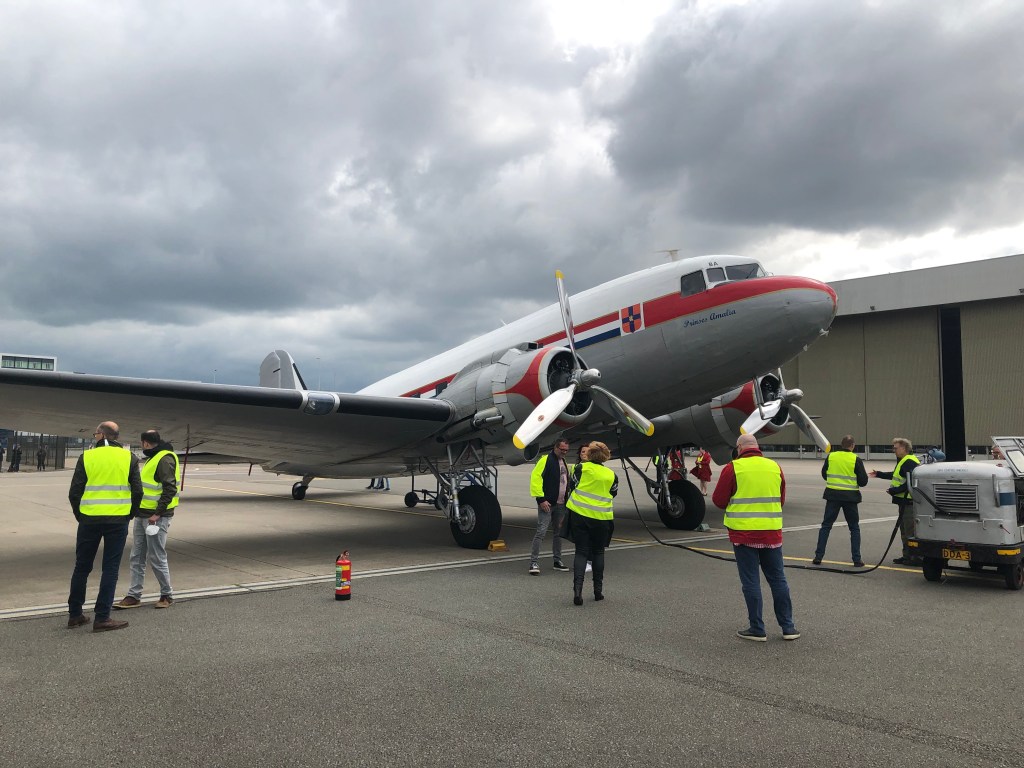
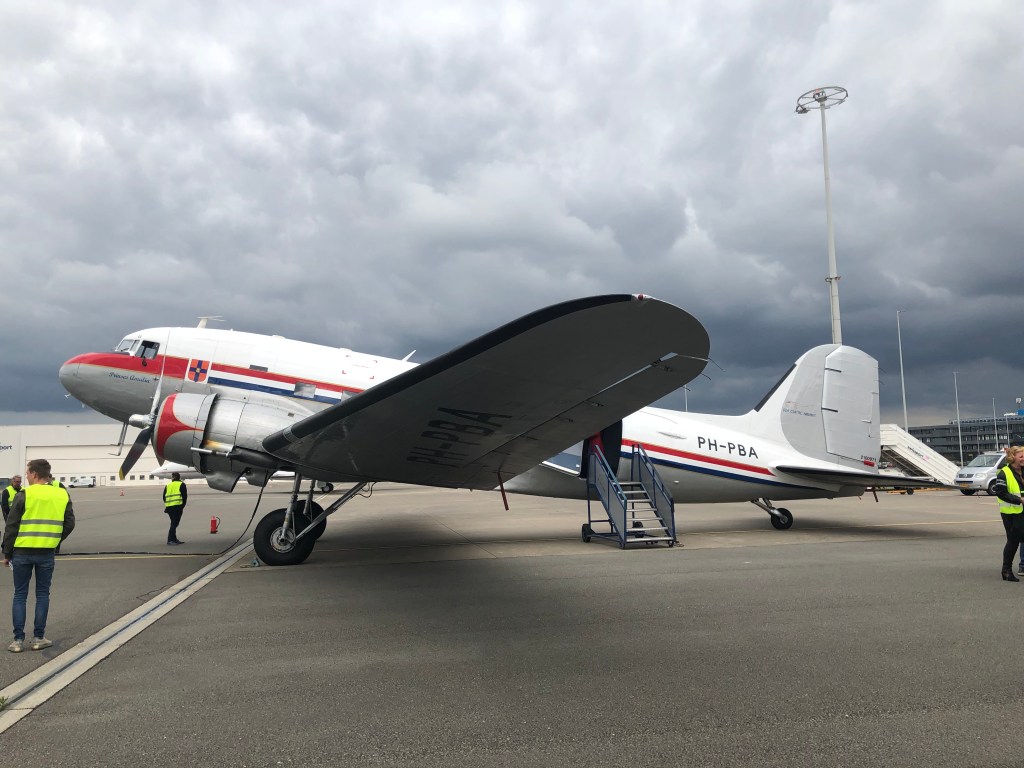
Douglas DC-3. Or maybe C-47. Or Dakota

It’s been a while since my last blog which dealt with the joys of wearing a moon boot after I had done my ankle some serious mischief during a walk in the country last August. Since then the world has gradually been opening up and I have been able to do some things that are enjoyable but not, perhaps, worth blogging about. I came close to doing a trip on one occasion that might have been worth putting pen to paper, or fingers to keyboard to be more accurate, but was thwarted by the weather. Those of you who are friends on Facebook might remember my grumpy post on that particular issue, along with other mini blogs that fit that platform but not this. Recently though I managed to take my first trip out of the British Isles since December 2019. It was a short one, just two nights, but not only did it mean my globetrotting has restarted, it also ticked off a bucket list item. If I can’t blog about bucket list items, I might as well give this site up so without further ado, here’s my first blog in nine months.

Back in February I flew to Dublin to fly in a Fokker 50, a particular type of aircraft I’d not flown in before. This was my first trip out of the UK since I visited my daughter Rebecca in Victoria, Canada in November 2019. Shortly after that the C word hit the world and all future plans went out of the window. That trip to Dublin was supposed to be a big step on the road to normality but once there, a howling gale blowing off the Atlantic a hundred miles or so northwest of Dublin in Donegal put paid to the flight so I had to return home having achieved nothing. As momentous as that trip was in terms of timing, it was a huge disappointment. I had, however, already booked my next foreign adventure and whilst Ireland is abroad, it is still part of the British Isles. This time the destination was Amsterdam in The Netherlands which is also abroad but somehow more abroad than Ireland. Once again the reason was to fly in an aircraft. It wasn’t a Fokker this time, though the factory in which that Fokker 50 had been built was next door, but a DC-3. What was so special about flying in a DC-3? The following two paragraphs will give you a brief history of this type of aircraft and the particular one I was to fly in. Skip them if you want to just read about me being bounced around by the turbulence.

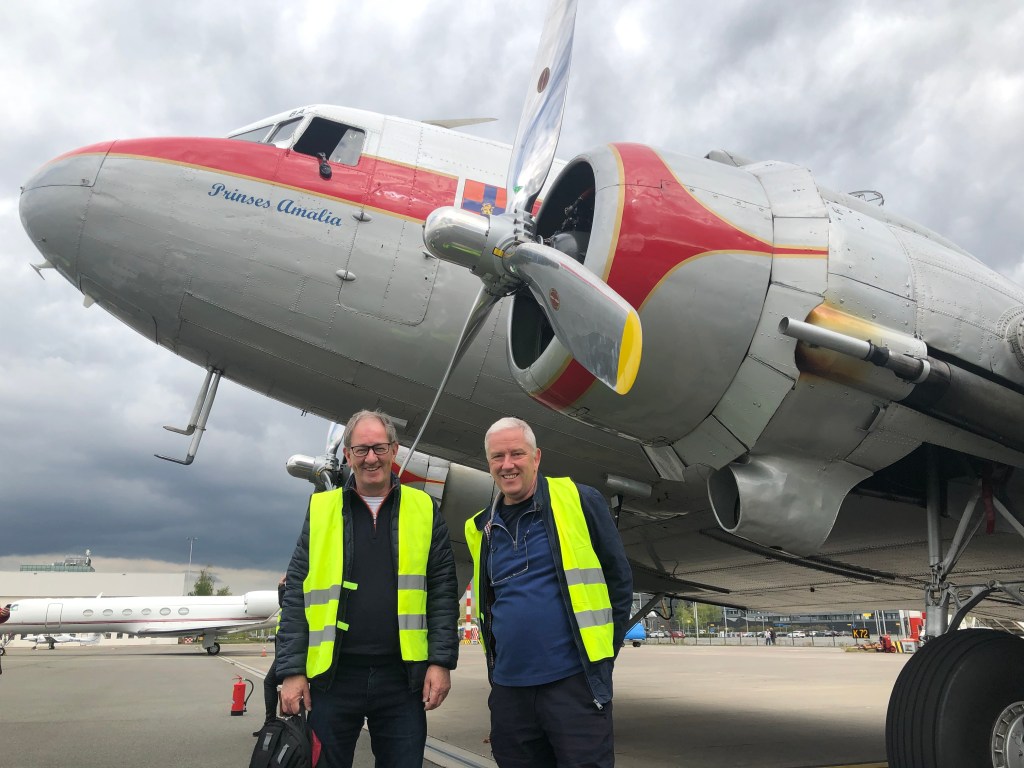
Old blokes in The Netherlands are much the same as old British blokes.

On December 17 1935 a new aircraft took to the skies over Santa Monica in California fresh out of the factory of the Douglas Aircraft Company. Designated the DC-3, it was primarily designed to the specification of American Airlines as the Douglas Sleeper Transport or DST, but was soon used in a more conventional daytime role as the USA’s first airliner that could transport passengers and make a profit at the same time. Hugely popular with the airlines before the USA entered World War 2, production was ramped up to an astonishing degree as the demand for transport aircraft soared. The military versions were known under a number of different designations, most commonly the C-47 Skytrain in the USAF and Dakota in the Royal Air Force. Simple and sturdy, the C-47 was of immense use to the allied forces during the war and no less a person as Eisenhower stated that it was one of the most vital pieces of military equipment used in winning the war. Over 16,000 were built including 3000 built under licence by the Soviet Union and, surprisingly, 500 or so built in Japan before that nation and the USA had a bit of a falling out. Production of the civilian version DC-3 ceased during the war and after hostilities ceased, the manufacturers were offering newer, more modern aircraft to the world’s airlines. However, there was a huge number of ex-military C-47/Dakotas going cheap and many airlines, both big and small, availed themselves of this reliable workhorse which more than other launched the post-war airline industry. For many years DC-3s could be found hauling passengers and freight on less glamorous air routes. Many new aircraft were designed as DC-3 replacements but few were successful. It seems the best replacement for a DC-3 was another DC-3. However, time took its toll and most were gradually withdrawn from service. Not all though. There are still airframes earning a Peso or two in South America. In Yellowknife, Canada, Buffalo Airways operate a number of DC-3s in the harsh, Northern climate and until 2019 utilised it on a scheduled passenger service to Hay River. Whilst there are no scheduled passenger DC-3 services any more, there is still the chance to fly in one as a number of the 80 or so still airworthy airframes offer air experience flights.

Low tail means high nose.

One of those PH-PBA. Built as a C-47 in January 1944 with serial number 19434, she was delivered to the USAF who designated her 42-100971. On June 6 that year she played her part in the allied invasion of Europe. Departing Cottesmore shortly before midnight on the 5th, Pilot Lt. Lee Ross and four other crew members delivered a ‘stick’ of 17 paratroopers to dropzone O near Ste Mere Eglise in Normandy. At 01:57 the 17 paratroopers jump into the night. Despite a bullet passing through the fuselage that had until a few seconds earlier contained the soldiers, 42-100971 returned safely to England. She would later be involved in Operation Market Garden, her first visit to The Netherlands although she didn’t land. Further paratroop dropping details over The Netherlands followed along with glider towing duties. On September 27 1944 she landed in The Netherlands for the first time. After the war she was acquired by HRH Prince Bernhard, a keen aviator and the consort of Princess Juliana, the future queen of The Netherlands. She was given the civilian registration PH-PBA and has remained on The Netherlands register ever since, seeing service with the Dutch Government, Dutch CAA and then the Prince Bernhard Alpha Foundation. Loaned to the Dutch Dakota Association and supported by Dutch airline KLM until 2016, PH-PBA is now licensed to fly 18 passengers on pleasure flights which, Covid break aside, it has been doing on spring, summer and autumn weekends for several years under the guise of DDA Classic Airlines.

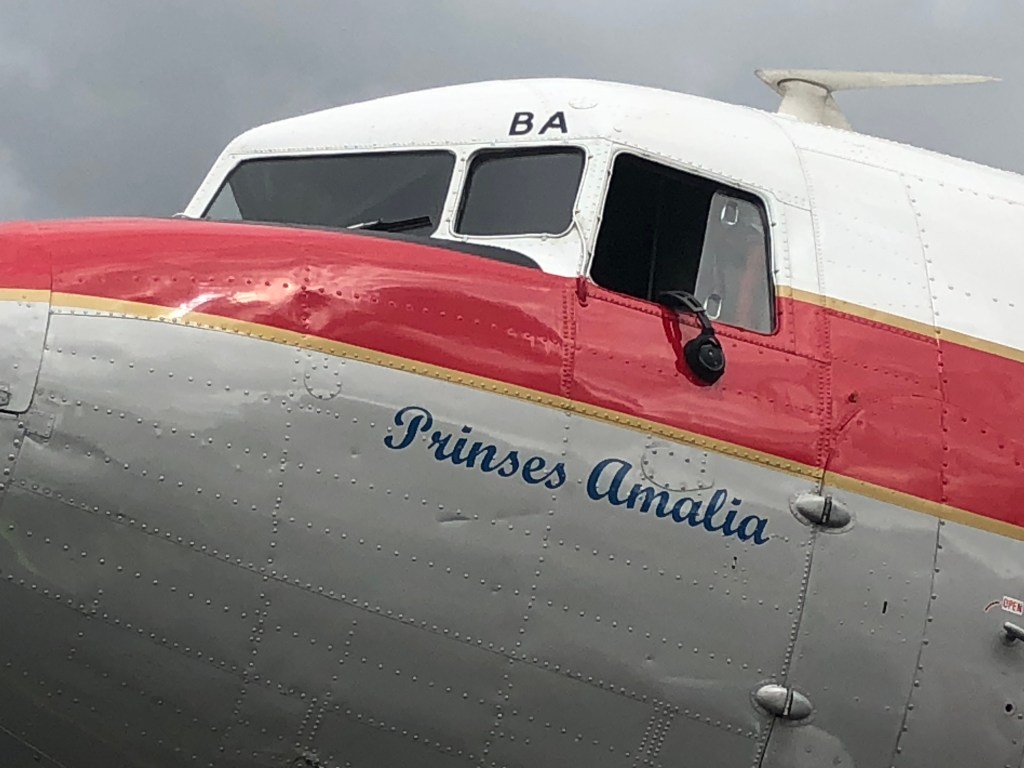
The future Queen of The Netherlands is considerably younger than her namesake.

Back in the 1980s I was at an Air Display at Church Fenton in Yorkshire. At that display an airline called Air Atlantique were offering experience flights in a DC-3. I paid some money and was treated to a fifteen minute circuit. I can’t remember much about it. Years later Air Atlantique were forced to end passenger operations of their DC-3s due to European safety regulations and sent one on a farewell tour of the country. Flights were offered and I booked one from Edinburgh Airport. I drove over, entered the terminal, found the appropriate desk and was told that the flight had been cancelled due to some issue with the brakes. I got my money back but it was a bit of an anti-climax as I thought I may never get the chance again to fly in such an iconic aircraft. Roll forward to last year and I discovered the DDA Classic Airlines website. They were offering flights having somehow got round the same safety regulations that had forced Air Atlantique to stop passenger operations. I made the suggestion to my children that a voucher for one of these flights would be a good Christmas present and promptly forgot about it. On Christmas Day I was surprised and delighted to be presented with a voucher! Once the year’s flight schedule was announced I chose a day and crossed my fingers that covid restrictions wouldn’t scupper the journey. What’s more, I persuaded my friend and old work colleague Graeme to come along with me. He didn’t need much convincing. He’s just as much an avgeek as I am if not more so. Flights and hotel were booked, the DC-3 trip reserved and a keen eye was kept on the changing requirements for visiting The Netherlands. Luckily we ticked the appropriate boxes and were confident we wouldn’t be turned away by KLM or the Dutch immigration officials. The flight to Amsterdam went off without a hitch and we even had our passports stamped by a smiling immigration official on entering The Netherlands. Our hotel was the curious CitizenM just a couple of minutes from the central airport plaza. I say curious as I’ve never been in a hotel quite like it but it was comfortable, clean and they certainly came up trumps in supplying us with the airport view rooms I had requested.

Please don’t start the engine.

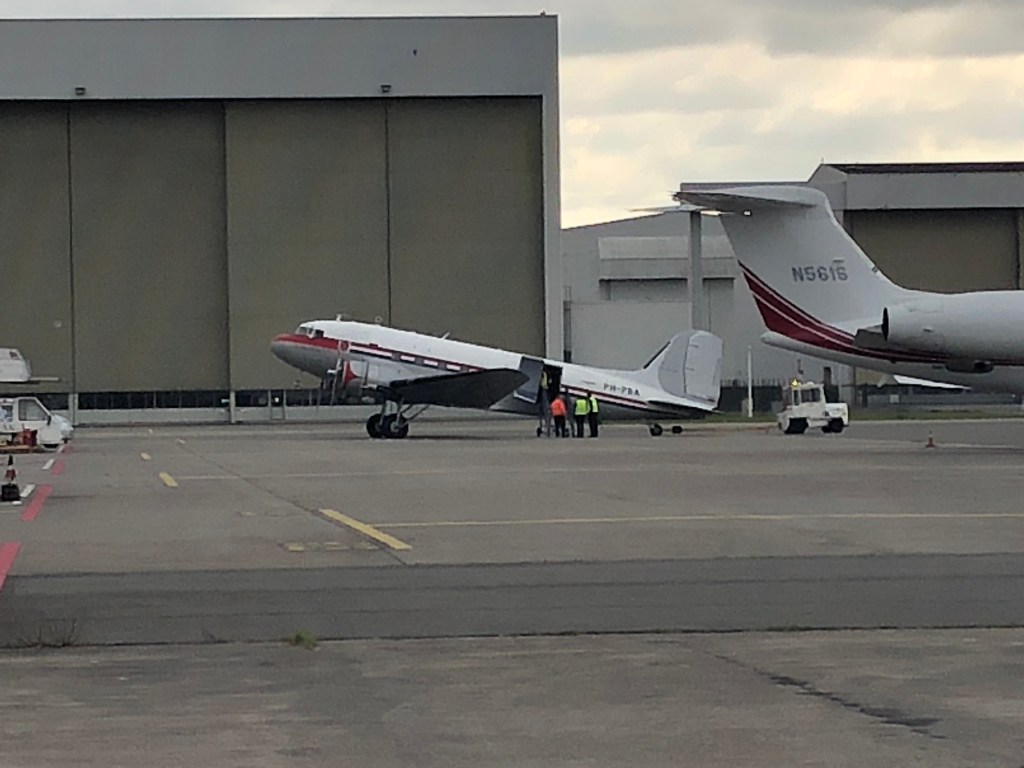
The DC-3 flight was the following day. Like the majority of flights offered by DDA Classic Airlines it was to depart from Schiphol but not the huge main terminal where we had arrived the previous day. We need to get a bus and head to the other side of the airport and the General Aviation Terminal. Having successfully negotiated this potential pitfall, we got off at the appropriate stop and could see our DC-3 parked amongst the business jets of the great and the good and/or the rich. When we found the desk in the terminal we were informed of a delay due to the previous flight having been held up due to the crosswinds. Surely we wouldn’t be scuppered by a mere zephyr at this late stage? Thankfully, no. Eventually one of the pilots pitched up and gave us a brief history of the aircraft in Dutch – I made out the odd word like ‘Market Garden’ and ‘Prince Bernhard’ but not much else and then we were handed high visibility vests and put on a minibus to take us across the apron to the star of the show. We were allowed to wander round and take pictures, which naturally we did, before boarding. PH-PBA is licensed to carry just eighteen passengers, little more than half the maximum number some airlines managed to squeeze in them back in the 1950s. Our seats were in Row 1 on the right hand side. One of the strange things about the DC-3 is that it is a taildragger, in other words it sits on two main wheels under the wing and a small tail wheel at the back. Not unusual back in the 1930s when it was designed, but virtually all post-war commercial aircraft were fitted with tricycle undercarriage with the main gear still under the wing but the other wheel under the nose. The taildragger arrangement meant that once we had boarded through the door at the rear, we had to walk up a fairly steep incline to our seats at the front of the cabin. Once there, we strapped ourselves into the seats, received a personal briefing from the hostess in English, and waited. All further announcements from her and from the cockpit were in Dutch but it mattered little, we were there to experience the aircraft and were not too worried about the name of the towns we were flying over.

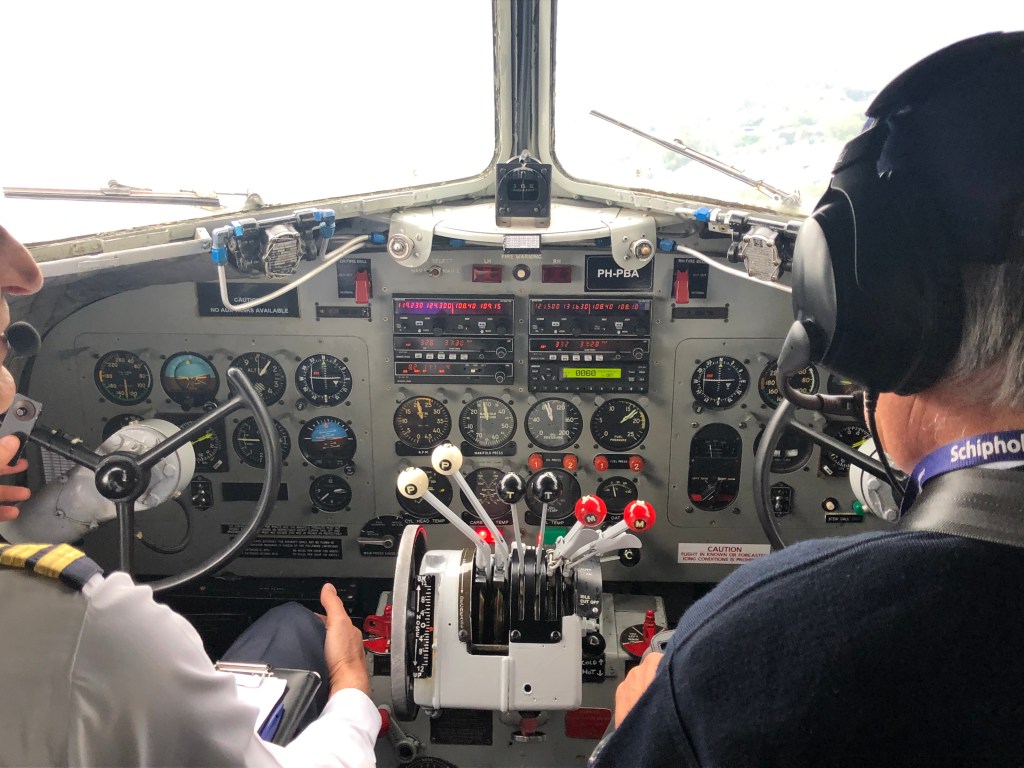
Our seats were right next to the right hand Pratt and Whitney R-1830-92 Twin Wasp radial piston engine. This powerplant is the most produced aircraft engine ever with over 170,000 built. As it fired up I feared that we might be in for a deafening experience but whilst it was hardly a whisperer, it wasn’t really too loud and a bit of radial engine roar is all part of the experience. Graeme was sat in the window seat, although that window is level with your ribcage and gazing out of it involves a bit of contortion. I had a view into the cockpit as the pilots taxied out to Runway 04. Before we entered the runway the pilots performed their power checks, causing the aircraft to vibrate against the brakes, and we then lined up. Cleared for take off, full power was applied and we commenced our roll down the runway. In a taildragger you get the unusual sensation of the rear of the aircraft lifting off first before the main gear break free from the asphalt and this 76 year old aircraft takes to the skies. This was it! I had finally got my second (and almost certainly final) flight in a DC-3! For someone who has genetically malformed smile muscles, I was grinning like a Cheshire cat. With a sweeping left turn directly over the airport’s central area, we headed for the Dutch coast. A DC-3 doesn’t break any records with its rate of climb but we were only going to 1000ft so we soon levelled off. Being that close to the ground meant it was a bit turbulent. Once level, however, DDA Classic Airlines allow you to unfasten your seat belt, get up and walk around the cabin, pop your head into the cockpit. So what if you fall over, bang your head or suffer some other mishap – thankfully I didn’t – health and safety is assumed to be your own responsibility. With just eighteen seats it meant there were plenty windows free to look out of and of course being able to visit the cockpit itself is an avgeek’s dream. I turned to Graeme after a few minutes of being bounced around and said: “This is fantastic!”.

With regular updates on our progress in Dutch, we didn’t really have much of a clue where we were, but we managed to narrow it down to ‘The Netherlands’ due to the fact that a) we weren’t airborne long enough to leave the country at Dakota speed and b) not many other places look quite as wet as The Netherlands. The last vividly coloured bulb fields of the tulip season were a bit of a giveaway too, as was the odd windmill. We maintained 1000ft which might have caused a few problems in other parts of the world but most of The Netherlands is either at or below sea level so it was plenty high enough. A quick read of the flight instruments revealed that we had an indicated airspeed of 130 knots which, at just 1000ft, is as near as dammit to the true airspeed. Thats 150 mph for those of you unfamiliar with nautical miles and knots. With due respect to The Netherlands though, we could have been flying over a featureless desert for all we cared, the star of the show was the DC-3 and we couldn’t fail to observe every nook and cranny of her whilst the towns and country of North Holland (we think) region passed serenely below. Eventually it was time to strap in to our assigned seats for the approach and landing back at Schiphol. This time I had the window seat whilst Graeme observed the pilots doing their thing. As mentioned, the window is not conveniently placed at eye level so to get the views I had to ‘sit’ in a rather prone position but as it was almost certainly my last ever landing in a DC-3 I wasn’t going to let a bit of discomfort get in the way of observing it. The main gear gently touched terra firma a mere 34 minutes after they had last made contact with the same strip of asphalt we had departed from. The tail wheel soon followed and we taxied back to the GA apron to park amongst the business jets of the wealthy. Nice though those Learjets and Gulfstreams were, if I were a multi-millionaire I’d be looking for a DC-3 as my personal runaround. Not very practical for getting to that important business meeting in Los Angeles perhaps but a damn sight more fun.

We had to return the hi-viz vests but we did come away with a certificate and a souvenir hat pin of a DC-3 which I would proudly stick on my headset if I was still working. Naturally I’ve got several hundred photos and several videos to look back on but the main thing to take away is, of course, the memories. Now, is there anyone offering flights on a DC-4 or a DC-6?

Time for bed

Just for good measure, here are a couple of three and a half minute long videos of the landing and take off.

Graeme’s video of the take off.
My video of the landing.

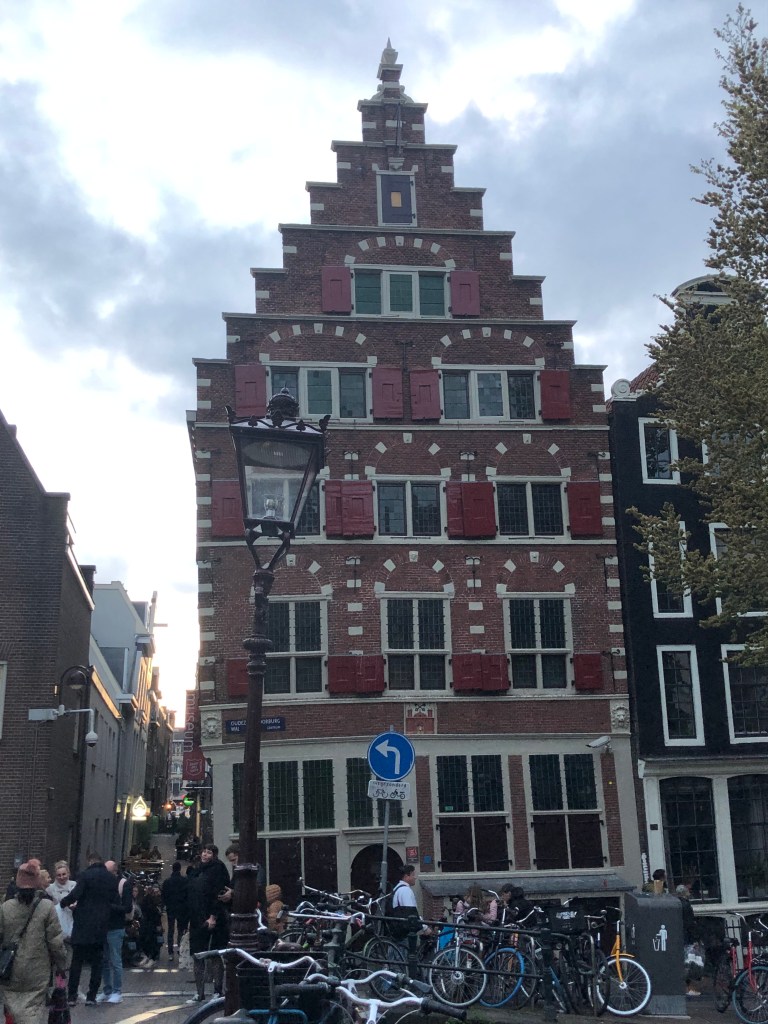
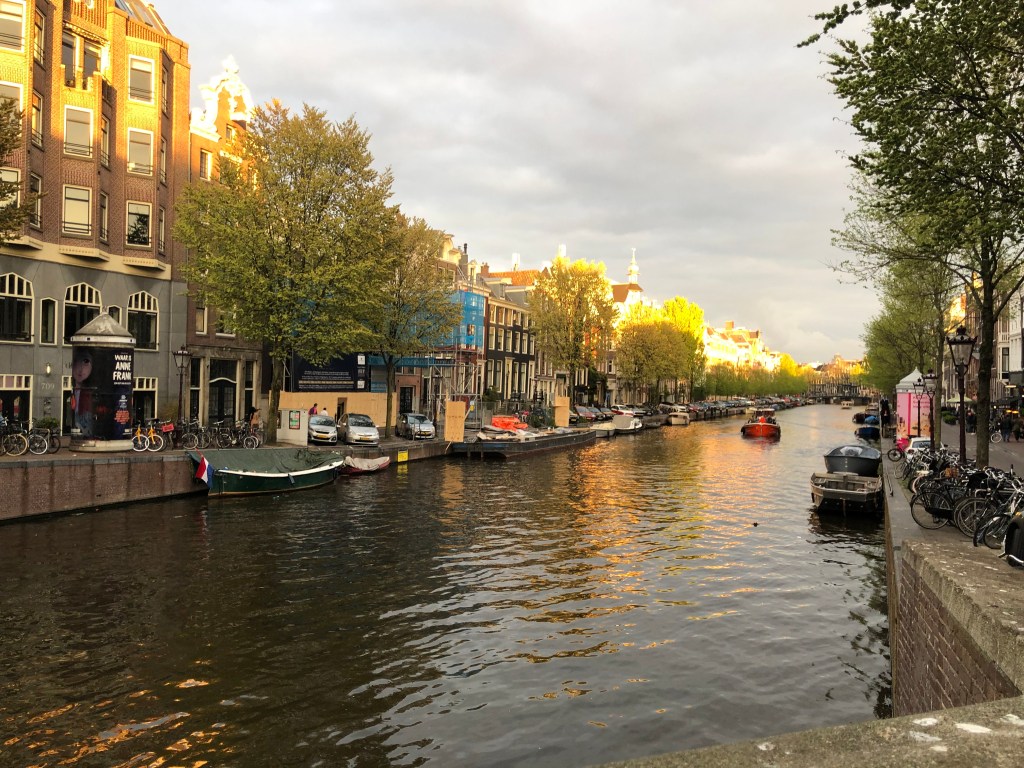
Postscript: whilst this trip was all about flying in an old aircraft, as mentioned in the first paragraph it was also significant in that it has restarted my globetrotting adventures. I love going abroad and have missed being able to do so. That’s not to say I’ve been totally housebound over the past couple of years, I’ve been able to do plenty of things in the UK as and when restrictions allowed and I dare say I’ve come to appreciate this great nation more as a result. There is just something special about stepping just a little bit outside your comfort zone though. Even Amsterdam, which is surely one of the easiest foreign cities to visit, throws up challenges to an irregular visitor like me. What tickets to get for the trains and buses, where to go to find decent food, how to avoid falling into the canals, how to try and avert your eyes at some of the window displays and so on. It’s made just that little bit harder when you are out of practice when it comes to foreign travel. I’m glad to say, however, that between us, Graeme and I worked things out quite quickly, even if we did end up inadvertently ‘stealing’ a couple of bus rides as our travel cards didn’t include that particular bus route. Whilst we only popped into the city on the evening after the DC-3 flight and the following morning, it was good to see a major European capital in all its sometimes naughty and frequently aromatic glory.