Genesis – a Revelation

873A65ED-C04E-4831-B4EA-F5190275F67A
Music happening coertesy of Steve Hackett, his band and a full philamonic orchestra

To a lesser or greater degree music plays a part in most people’s lives. So much so that it seems that many organisations think that we can’t live without it. It is played in shops, doctor’s waiting rooms, in lifts, before and increasingly during sporting events, by the bloke who has come to hang your wallpaper and on the phone when your call is so important that there is no one to answer it for half an hour. You would have thought that this would be counter productive. What is considered good music is entirely subjective which suggests that bad music is likewise found in the ear of the beholder. Consequently there is more than a good chance that you will consider music that you can’t escape from is, not to put too fine a point on it, crap. Subjecting your potential customers to sounds that annoy them is not, I would have thought, good sales technique. Morrisons plays music to its customers, Tesco doesn’t. I prefer Tesco. Go figure. (The lack of an apostrophe in Morrisons may also be contributing factor).

Now you’ve done the figuring you may assume I’m not a fan of music. That is not true. I’m not a fan of MOST music but some I enjoy a great deal. I was perhaps a late starter as I was sixteen or seventeen when I stated to take an interest in the contemporary music of the time. That was in the late seventies, the time when punk rock has turned the world of popular music on its head. I could have been part of that new wave but even then I despised the nihilistic nature of punk. No, as a rather pretentious young chap who used words like ‘nihilistic’ I threw my lot in with progressive rock, exactly the sort of thing punk was supposed to have destroyed. To be honest at first I was only trying to impress girls. The fact I failed miserably was, however, more to do with me being an awkward, spotty, greasy haired oik than the genre of music I gravitated to. Okay, maybe the genre of music I gravitated to didn’t help. Nevertheless I was developing a new interest and on a voyage of discovery that quickly led me to a band rather aptly called Genesis. They were not a new band having been going for a good decade or so but because of the recent rise of punk they were distinctly uncool.  This didn’t prevent their popularity rising throughout the eighties, however, and by he 1987 tour they were playing massive venues like Wembley Stadium and selling it out four nights on the trot. I took great delight in being part of that bandwagon and loved seeing them each time they toured. I did have one regret though. I’d missed the best bit.

Having discovered the band I was eager to discover their back catalogue. At that time it meant saving up to buy their old LP records from a curious discount record shop in the Packhorse Arcade in Huddersfield. I would have liked to have got them in chronological order as that sort of thing is somehow important to a man but the shop only stocked what it could get hold of on the cheap at the time. Therefore my first of their older albums may have been Trick of the Tail from 1976 followed by Nursery Cryme from 1971 then 1973’s Selling England by the Pound. Eventually I had all seven of their previous proper albums – there was an earlier one that had been produced by Jonathan King that doesn’t count – and it was these that became my favourites. Nearly forty years on I find myself playing these seven albums frequently and the subsequent seven not nearly as much. I like the newer ones but the older ones stir my soul.

Records are one thing but the ultimate goal is to experience the band playing live. In the case of Genesis it is not likely to happen. They got together eleven years ago to do a tour and I was all set with my mate David to see them in Amsterdam. Alas, the day we were due to fly out was the day two jihadist wankers decided to try and blow up Glasgow Airport, succeeding in only burning themselves to death and singing the paintwork in the check-in hall. The fact that our flight was cancelled and I never got to see the gig was perhaps an unintended consequence of their actions but you won’t find me shedding a tear whenever someone dies a horrible death in some misguided belief that seventy two virgins are waiting for them. I’m sure the gig would have been great, in fact I know it would as I have a recording of it, but the set list owed more to later era Genesis than earlier. There is a way of hearing the sounds of 1970s Genesis live though without waiting for he band to reform and embark on another farewell tour. Enter the world of tribute bands. These are not limited to Genesis of course. There’s a whole generation of music fans who pay to see musicians playing the songs of bands that have either split up, taken a different musical direction, died or a mixture of the three. This generation naturally despises the music their children listen to, as their parents did of theirs, and hark back to the days when our record collection was something  to be revered, a new album release was a major event and the mad scramble to get tickets to see our musical heroes in the flesh at places like Manchester Apollo. Tribute bands now fill the live music void. Sometimes, if you are lucky, you may get a long since departed band member cashing in on earlier fame and gathering together some musicians to play the old songs once more. If you are really, really lucky you will get to see both in two nights.

7836F5CF-F439-4FD4-B78C-0DDD1454D122
O2 Apollo, formerly Manchester Apollo. New name, same smell.

Last Monday I went with a couple of other retired gentlemen to see Steve Hackett perform his Genesis Revisited tour at Glasgow’s Royal Concert Hall with, and this upped the prog level by several notches, the Heart of England Philanonic Orchestra. Hackett was the band’s guitarist from 1971-77, the very period I consider to be their finest. He has been a prolific solo artist since then but in the past few years he has realised precisely what his fans want. Yes, a couple of his own songs are great but for most of the gig we want to be bombarded with music from his time with Genesis. He and his band certainly delivered on that front and the audience left happy on a wave of pure nostalgia. The following evening I found myself at Manchester Apollo with my sister Jill.  The first time I saw the real Genesis was at this venue in 1980 so in a way the journey had come full circle. Performing that evening was tribute band The Musical Box, though calling them a tribute band does them a disservice. Hailing from Montreal they have been authentically reproducing Genesis concerts from the Peter Gabriel years of 1971-75, right down to the sets and lighting. They have been doing this for over 25 years. Tuesday night was something different. Entitled ‘A Genesis Extravaganza’ they played a collection of music from 1970-77. Apart from one heckler who objected to a medley of tunes at the start by hurling a string of obscenities in a thick Mancunian accent before he took the advice from everyone else to ‘piss off’, everyone there had a ball.

664FA8DA-C23F-49DB-AA23-B0F2EBD739B4
Denis Gagne of The Musical Box pretending to be Peter Gabriel pretending to be a fox in a red dress whilst singing The Musical Box. It makes perfect sense to Genesis fans.

‘Everyone’ of course consisted by and large of fifty-something men who were there back in the hayday of the real Genesis or in my case, wishing they had been there. There were ladies there too, just as there were back in the day, but progressive rock always appealed to rather more men than women. I don’t know why this is. Maybe because it got us chaps out of dancing as Kool and the Gang was always preferred by the local disco’s DJ. Whatever, you would be hard pushed to find a group of people as happy as all these somewhat mature chaps as they wallowed in nostalgia. Will the youngsters of today be able to do that in thirty years time? Will there be a Beyoncé tribute band? Will someone have to dress up as Olly Murs to make those who have collected all his records happy? Could it be that even now there are some musicians getting ready to form Someford and Son? I’m not sure that music today has quite the same meaning to folk as it did back then. Then again, I’m a fifty something bloke and that’s the sort of thing I’m supposed to say. I’ve also got my Hackett ticket booked for his next tour in November next year. He’s planning on doing all of the seminal 1973 release Selling England by the Pound. Doesn’t that sound fantastic?

Anathema

It has been suggested to me that a review a Prog Rock gig is not, perhaps, the way to win an increased readership of these blogs and may in fact lead to folk unsubscribing. I’m more than prepared to believe that but bear with me, I’m not going to leap into a long and involved critique of the band and what their music means to me other than to say I like it. Music, and prog in particular, lends itself to endless analysis and debate but that would bore the pants off me, never mind non-believers like just about everyone else. So thanks for reading and I’ll see you next time.

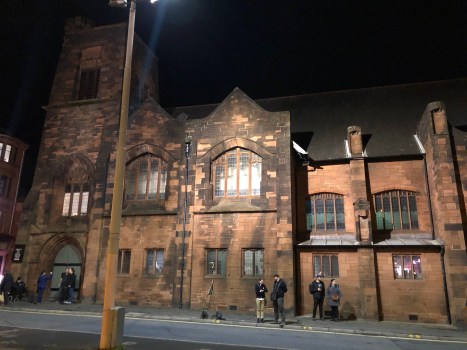
No, just kidding, you are not getting away with it that easy. What follows is a review of a concert that didn’t quite work. The band is called Anathema. A (very) quick bio: Formed in the early nineties they started playing a genre called Doom Metal. If that sounds grim to you, it is. They grew out of that though and are now an established Prog band  consisting of brothers Danny and Vincent Cavanagh and a few others, notably vocalist Lee Douglas. Situated towards the rock end of the Prog spectrum, the concert I saw was, however, to be an acoustic set. The location they chose to display their undoubted acoustic talents was the Mackintosh Church in the Maryhill area of Glasgow. Charles Rennie Mackintosh was an architect and artist who in the late 19th and early 20th century single handedly built Glasgow. Well, perhaps not quite all of it but his presence is felt across the city and he is pretty much revered by the local population. One of his first jobs was to design a church for the Free Church. Queen’s Cross Church is what he came up with and that is where I found myself on Thursday evening. I have to say that from the outside I thought it a rather ugly building with a peculiar squat spire. It improved a bit inside with a notable barrel-vaulted roof but in keeping with most Scottish churches it is functional rather than impressive. The Free Church in particular are known for being a bit of a humourless bunch so I suspect Mackintosh was pandering to the client rather than letting his imagination run riot. The Free Church divested itself of the building in the 70s and it is now the home of the Charles Rennie Mackintosh Society who, as the architect’s premier fanboys, probably would dispute my opinion of their headquarters. You can go and visit it. There’s a tearoom apparently.

IMG_2433.jpg
The Mackintosh Church. A mixture of Gothic, Scottish and God Fearing styles.

Whilst no longer a place of worship and penance, the Mackintosh Church as it is now known is preserved as if it is. Thus, the altar was the stage and the seating consisted of pews. As well as the church, the building houses the church hall which had been press ganged into use as a bar for the evening. I’m sure the vibration I could feel was the former elders of this particular Free Church turning in their graves at the thought of the demon drink being sold there. Mackintosh never really considered the needs of a smallish rock audience when he designed the building and the one lavatory therein proved inadequate. The gig promoter was ahead of the game though, two portaloos were pressed in to service outside the back entrance, a load of fun in the dark. I claimed my section of a particular pew next to the aisle and therefore nice and central. Pews are not the most comfy of seats at the best of times. God abhors comfort and anyway, you are supposed to be on your knees praying half the time. No longer consecrated though, the Mackintosh Society had placed a slightly more bottom friendly almost full width cushion on each one. I say almost as the cushion for the pew I was on failed to reach the end  and consequently I had one arse cheek on it and the other on hard wood a couple of inches lower. Stop giggling at the back. Being up against the pew’s end board my ‘good’ seat was turning into a bit of a pain. Not to worry, once the band were on such discomforts would all be forgotten. I’d not seen Anathema before and was looking forward to it hugely.

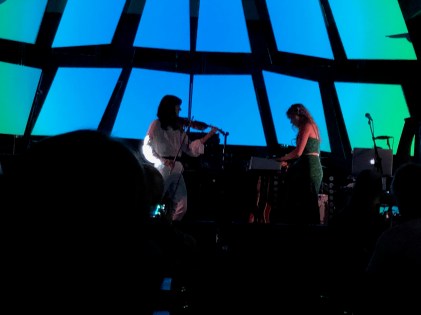
It was a bit of a surprise and not a good one when I discovered that I’d have to wait the best part of two hours as the band weren’t due to take to the stage until 21:30. There was no less than three support acts. The first two both consisted of a bloke with a keyboard and a Mac laptop showcasing their own compositions. No doubt it was thought that this sort of thing would appeal to a Prog audience but neither seemed to be getting much attention. The we had the official support. This consisted of a girl with a keyboard and a Mac laptop. She, however, was accompanied by another girl with a violin and this made all the difference. An instrumental duo that called themselves Ava, what they lacked in lyrical content was made up for by some rather enthusiastic playing. I thought they were rather good and later spent £6 on their EP. Despite this unexpectedly interesting aside, my prize seat was taking its toll and in the end I lifted the cushion end and sat on the wood, much to the surprise of the person sat to my left. This hardly increased the comfort level but at least both buttocks were now the same distance above the ground.

IMG_2427.jpg
Ava get stuck into the violin, keyboard and Apple Mac. 

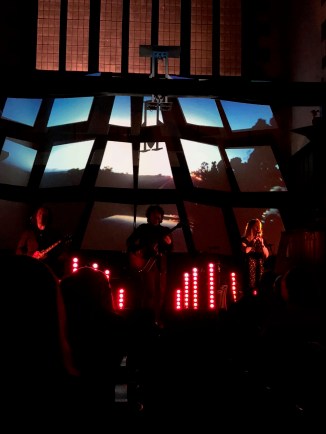
Eventually the band pitched up and got stuck into some classic Anathema songs. The audience was appreciative of course but a trifle reserved. At one stage Danny Cavanagh, who had the job of introducing the songs, suggested that we may like to stand up as the next song was had a bit more umph to it. The audience duly obliged and on the song’s conclusion they all sat down again. Maybe it was the church setting, stand up when the vicar instructs for a hymn, sit down afterwards. Also it could have been that the umph of the song in question was tempered by this being an acoustic set. Being stood amongst the pews left little room to dance or bounce around which is perhaps what Danny was expecting. On the plus side the next time we stood up for a song with promised umph I pulled the cushion along until it reached the edge and for a few blissful minutes I had something soft to sit on. It was a bit of a shame for the person at the far end of the pew but that’s rock and roll for you. After an hour and a half of pleasant but de-umphed music we were invited to stand once more for one of my favourite songs, Untouchable. It starts quiet and builds up to a noisy crescendo but no matter how hard they battered those acoustic guitars it was never going to capture the power of a well bashed Fender. Or Gibson, I’ve no idea what make they use. At the conclusion of that song the band said thanks and buggered off never to return. It seems that 23:00 was the cut off time and they’d reached it so no encore. I felt a bit short changed, as did half the audience who hung around awaiting the band to return to the stage. In the end we followed the other half out of the building and into orange glow of the sodium street lights.

IMG_2429.jpg
Danny and Vinny Kavanagh with vocalist Lee Douglas perform one of the not stand up songs.

At £22 per ticket it would be churlish to complain too much. I did enjoy the music even though I felt it lacked something, specifically electric guitars. Ava may prove to be a good discovery and the violinist got to play on a couple of the Anathema songs which was nice. The location, however, did not prove to be a good gig venue and just an hour and a half of the band I had paid to see seemed to me to be a bit short. Most of the bands I go and see would only have finished three songs in that length of time.

So there you go, I reviewed a Prog gig. I hope stories of my slight disappointment and especially my discomfort got you through the pain. I’ve got a couple of other Prog gigs to go to next week. Don’t worry, I’m unlikely to subject you to any more reviews. Unless I have to sit on a spike or something.


Subcrawl

Glasgow has its own underground railway. It is, according to Wikipedia, the third oldest underground metro system in the world after London and Budapest. The network is entirely underground, maintenance sheds aside, and consists of a twin loop of track that has not been expanded since it opened in 1896. The loop is six and a half miles long and you can travel on the Outer (clockwise) or Inner (anticlockwise) tracks between the network’s thirteen stations. The chances are, however, that if you visit Glasgow you won’t travel on it at all. Perhaps you would take it from the centre of Glasgow to the West End but to be perfectly frank there’s no reason to get off at most of those fifteen stations unless you are a local. Come to think of it, there are some stations that even the locals seem to avoid, located as they are in once populous areas where dwellings have disappeared in the ever changing urban landscape of Scotland’s biggest city. The Subway as it is now known has an air of Hornby about it. The trains are three carriage units and are rather small. Whilst there has been some modernisation of the stations, some still have island platforms between the Outer and Inner tracks and the orange colour of the network’s logos and the trains themselves lend a slightly toytown feel to the service. It is said that the locals refer to the Subway as the “Clockwork Orange” although it is more likely that no one has ever referred to it this way at all, ever. Such as any subterranean transport system can be, it is rather cute.

IMG_2379.jpg
Not the Clockwork Orange
IMG_2398.jpg
Typical inviting Subway station edifice. This one is Ibrox
IMG_2388.jpg
Island platform between the inner and outer, shake it all abouter.

So why am I prattling on about it? It’s hardly the stuff a good blog is made of is it? The Subway is the base for a legendary Glasgow activity, namely the Subcrawl. This is where a group of chaps purchase an all day ticket for the Subway, a bargain at £4.10, jump on the train to get off at the next station and visit a local hostelry where they could quench their thirst before descending into the bowels of Glasgow once more. The two minute journey to the next station will have induced a raging thirst in the participants once again so another round of refreshing beverages will be sought from another nearby public house. And so it goes on, calling at every one of the thirteen stations. Glasgow, being Glasgow, one is never too far from a pub and whilst the quality of the establishments will vary, a successful Subcrawl can be had without much in the way of effort. This activity is beloved of students from the city’s seats of higher education. It is also quite liked by some of my work colleagues. Or should I say ex-colleagues? On Monday it was the two week anniversary of my final shift and what better way to celebrate the fact I don’t have to work with the buggers any more than joining them on their latest subterranean public transport based excuse for drinking slightly more alcohol than is recommended by the chief medical officer of Scotland who, as a graduate of the University of Glasgow, is probably no stranger to the Subcrawl herself. My word, that was a long sentence.

There was just one slight problem. When it comes to imbibing alcohol I am very much a lightweight. Now it used to be that a man who admitted that he couldn’t handle his ale was considered by his contemporaries to be a bit of a girl but nowadays most girls can put away a vast quantity of alcohol too so a different simile has to be sought. So as a self confessed wet lettuce it was with a little trepidation I arrived at pub number one on the Subcrawl, the Times Square, next to the Subway starting point for this particular day, St Enoch station. It was 11am. At this stage there was half a dozen of us and whilst five pints of lager were ordered, I opted for a bottled beer in the hope that less volume meant less alcohol. Drinks suitably quaffed we headed down the stairs and caught the first train of the day. We were doing the clockwise journey which meant passing under the Clyde to Bridge Street. There really is nothing at all at Bridge Street. It used to serve the community of the Gorbals but over the years the tenements and high rises have been cleared. Somehow though, The Laurieston pub has remained. From the outside it looks like the roughest old boozer you could possibly imagine. Inside, however, the good, ancient people that run the establishment have made an effort to make it a bit more welcoming with, it has to be said, varying levels of success. They love Subcrawlers though, possibly because no one else dares to venture in, and have several photograph albums full of previous Subcrawl groups. This meant upon the conclusion of our lager, a bottle for me, pints for the professionals, we were dutifully snapped for the benefit of future groups.

IMG_2381.jpg
The Laurieston. Someone appears to have stolen the roof
IMG_2387.jpg
The starting line up in the Laurieston

Our next stop was Kinning Park. Some of the more knowledgable amongst you will realise that West St and Sheilds Rd lie between Bridge St and Kinning Park and yes, we did miss out these two stops. It was deemed that they were perhaps just too depressing and besides which we had a lunch appointment to keep. This was not at Kinning Park’s District Bar from where we walked to the next station, Cessnock, where we took the train to Ibrox. Formally known as Copland Road, Ibrox station was renamed Ibrox in 1977 when Strathclyde Transport noticed that it was next door to Ibrox football stadium, home to Rangers FC. It is extremely busy on match days and deathly quiet at all other times. It proved a handy stop for us though as a reservation had been made in the stadium restaurant. It was here we were joined by some extra members and we enjoyed views of the hallowed turf that were unobstructed by footballers and suchlike. Of course lager was drunk with the meal before we set out once more to the last station south of the river. This was Govan. Made famous by one Rab C Nisbett, Govan provided us with a pub that was truly awful by even the low standards we had experienced up till then. Brechin’s Bar may have just been having an off day. Well, something was off, the place stank very much of an open sewer. Several group members visited the gents where they claimed the aroma improved slightly. We didn’t stay long.

IMG_2403.jpg
Brechin’s. It got worse…

Passing back under the Clyde, the next stop was Partick where the Rosevale Tavern awaited us. North of the river the quality of the establishments moved up several notches, or if we just compare them with Brechin’s, several hundred notches. I enjoyed my last lager at the Rosevale as after the short hop to Kelvinhall and discovering The Sparkle Horse, I switched to vodka and coke, another little ruse of mine for limiting total alcohol intake. Unless that is I got ordered a double. Maybe that did happen as my memories of the this establishment and the subsequent ones is a little hazy. By this time one bar was merging into another. At Hillhead we visited the Curlers Rest, yes, I know it should have an apostrophe, even Brechin’s managed that, and at Kelvinbridge we went to The Doublet, where presumably hoes were compulsory. Our penultimate stop was St George’s Cross. The organiser of this venture has a slight fondness to Rangers FC, hence the lunch stop at Ibrox. He was also looking forward to pub at the St George’s Cross which was The Royalty Bar. Something to do with a garden gnome in Rangers attire apparently. Alas, our walk from the station in the rain was in vain, the pub was closed so alternate facilities were sought. We found the suitably apostrophised Munro’s where more lager/vodka/assorted other poncy drinks were procured.

IMG_2413.jpg
Slightly higher class of establishment in the West End

We stayed on the train at Cowcaddens for no better reason that Cowcaddens has nothing to offer and emerged from the Subway one last time at Buchanan St, where a short walk took us to the Schilling Brewing Co. There we settled down to discuss our conclusions, drink more alcohol and share a few pizzas. I made the 11pm train back to Troon. I may indeed be a wet lettuce but by pacing myself I survived the whole trip and returned home with only modest levels of inebriation. Alas, I can’t claim the Subcrawl certificate as we avoided three stops all together and combined two stations for one pub thereby only visiting eleven drinking shops. Perhaps I’ll have to do it properly next time by visiting fifteen, assuming my old colleagues want to bring such a wet lettuce along of course.

A Little Light Football

This retirement thing is opening up a whole new world of experiences. I’ve been living in Troon for over thirty-five years now. Back in the days when I first arrived in the small, pleasant if slightly dull town I was a big fan of the Beautiful Game. Well, a big fan of football at least. As a supporter of Huddersfield Town it was only rarely beautiful. Being a fan of an English club whilst living in Scotland presented a few problems back in the day. It’s hard to believe but in the pre-Sky days you couldn’t watch English football. You might get to see a few goals from the Match of the Day games played after the Scottish highlights on Sportscene but that was about it. There was one solution, however, and I invested in a big TV aerial which would pick up the broadcasts from Northern Ireland. Despite them not being English broadcasters either, BBC Northern Ireland and Ulster TV showed the English football programmes. Reception was dependent on climatic conditions but it was that or never ending games involving Rangers and Celtic. Scottish football wasn’t a total no-go area though, for a couple of seasons I went fairly frequently to watch Ayr Utd. It was quite entertaining too. One of those seasons they won whatever league they were in, the Scottish Division Two and a Half or something, and scored a shedload of goals in the process, most of them by a bloke called Henry Templeton. Of course the early nineties saw the dawn of the English Premier League and Sky TV. For the cost of a subscription, English football was available three or four times a week. It even included the lower leagues where the club I supported resided. This was great for a footie mad English exile. By the mid-nineties though I started to fall out of love with football.

The main reason for this was that I discovered Ice Hockey and your average hockey game is way more exciting than a normal football match. There were other contributory factors though, the main one being that football was turning into more of a soap opera than a sport. I still maintained an interest in Huddersfield Town and would watch any England games I could but the idea of watching something like Arsenal v Liverpool as a neutral no longer featured in my life. A couple of years ago Town started to be quite good which revived in me a modicum of interest in the sport as a whole but not too much. Whilst I’m glad they got to the Premier League the hype, money and over the top reporting still turns me off from any game that doesn’t involve them. There is, however, a whole world of football that doesn’t live in this over-hyped world. Some of it takes place a mile or so from my house. For the first time in those thirty-five years as a Troon resident, I went to watch Troon FC.

IMG_2370.jpg
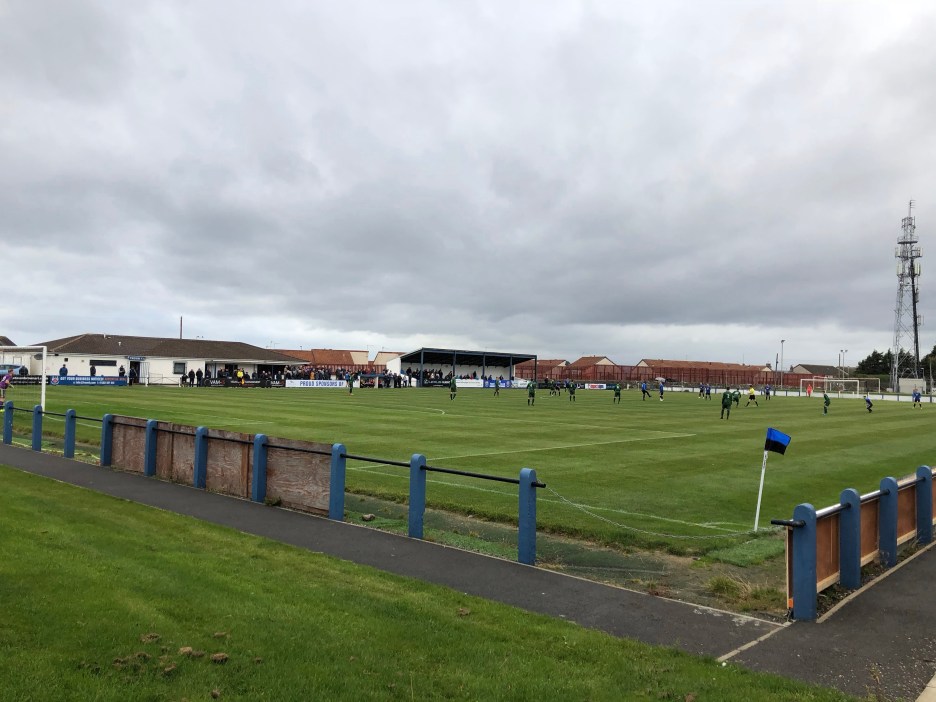
Kick Off at Portland Park

Troon FC play in the Scottish Junior Leagues. I’ve always wondered if they deliberately use the word ‘junior’ to confuse those not in the know. ‘Junior’ in this context does not mean children/youth football. The players range from seventeen to forty+ and come in all shapes and sizes. It’s broadly equivalent to the English non-league set up but is affiliated to rather than run by the Scottish FA. The game I paid the princely sum of £6 to watch saw Troon facing a team called Lochee Harp which Google informed me comes from a suburb of Dundee called either Lochee or Harp, I’m not sure which. It was a Scottish Junior Cup game. The leagues are regionalised and Troon’s usual opponents are from the West of Scotland so this was a rare opportunity to see them play a club ffom the East. Portland Park is Troon FC’s home. Apart from the pitch it doesn’t consist of much – a clubhouse, changing rooms, a tiny covered terrace and a single turnstile is about it but you don’t attend Junior football for comfort. The action on the pitch was actually quite good. As a spectator you can’t afford to be of a prudish disposition though. Many years ago I worked in the building industry which didn’t teach me much about bricks and mortar but I did learn how to swear quite effectively. Even the brickies and labourers of J G Minter Ltd may have blushed at the amount of ‘fuckings’ that were being bellowed out during the game. Not by the crowd you understand, but by the players and coaching staff. Aimed at teammates, opposing players, the match officials or occasionally some higher power, the profanity flowed like Prosecco and gin at a hen do. The Troon goalie, a surprisingly agile chap considering his ample girth, almost exploded in a raging apoplectic torrent of abuse aimed at his defenders when he conceded a goal. This despite the fact Troon were still held a four goal lead. The thing is, apart from the word ‘fucking’, repeated many, many times, I had absolutely no idea what he was actually saying. Anger seemed to have reverted him to an ancient dialect of Scots that was indecipherable to me. The sentiment was quite clear though.

55992373314__3C6021C2-1AC0-45B2-98C1-9FB827602294.jpg
Quality Catering

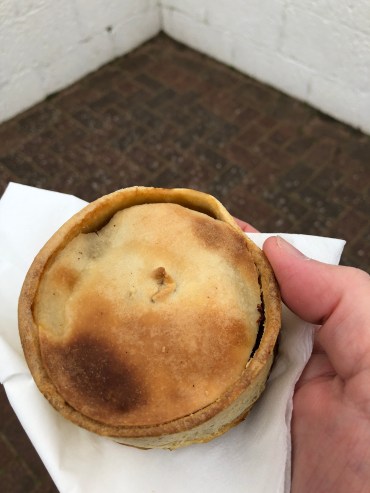
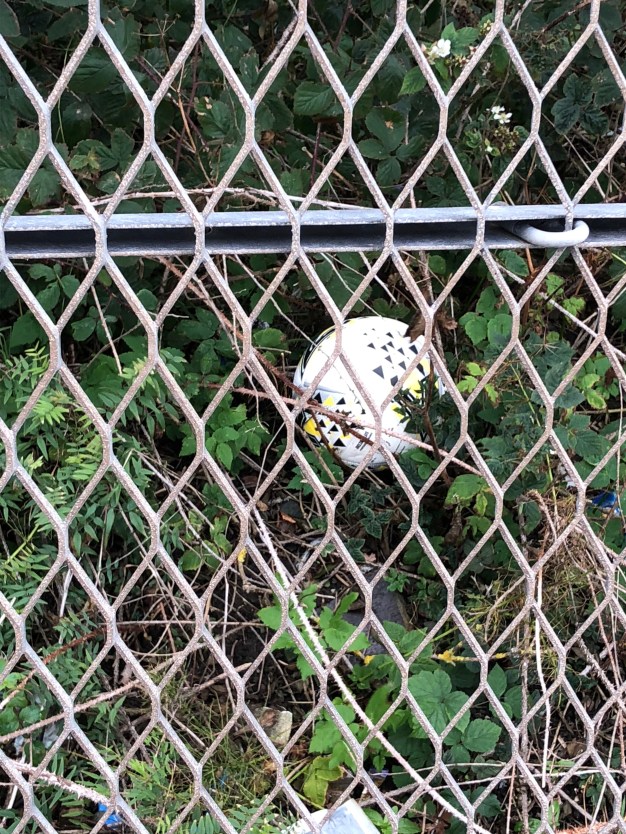
The crowd, which I estimated probably wrongly at 120 or so, seemed largely oblivious to the profanity and in fact some of them were quite oblivious to the football too. The clubhouse serves larger at £3 a pint and there is a kiosk selling a surprisingly wide range off pies which seemed to be more of a draw than the game. I had been informed that the Onion Pie was the half-time snack of choice and it was indeed quite tasty thanks to the afore mentioned onions that were mixed in what can best be described as minced meat of indeterminate origin. Those comestibles are an important little earner for the club as it is the sort of business that walks a fine line between solvency and oblivion. The profits of today’s game were likely wiped out when the match ball was kicked onto the adjacent Ayr-Glasgow railway line. Numerous other balls were kicked between the fence and the railway embankment, landing in the bushes. There is a designated getter. This poor bloke has to get on all fours and crawl under a gap in the fence and risk getting cut to shreds by the brambles to retrieve the latter-day sheep’s bladder. Almost inevitably, as soon as he has returned the ball to the dugout at the opposite side of the pitch one of the players has displayed his limited talents by booting the replacement ball back amongst the blackberries. The Ball Getter is almost certainly a volunteer who has loved the club for years. After the sixth time he crawled back under the fence it looked as if that love was wearing a bit thin.

IMG_2371.jpg
Match Ball in the Brambles. Again.

The game ended with Troon winning 5-1 and progressing to the next round of a competition where the ultimate prize is a place in the Final at a glamours stadium like Partick Thistle’s Firhill. I quite enjoyed the experience. No electric scoreboard, no music blaring out when a goal was scored, no Neymar-like play acting, no VAR, no million pounds a month contracts, just two sets of players booting a ball around to the best of their abilities and swearing a lot. Will I go again? I probably will. I might even not leave it thirty-five years.


To Ukraine for a Plane

My retirement was but a week old before I left the country. I had of course planned the trip some time earlier in anticipation of the final shift having taken place but even so it seemed as if I wasn’t going to hang around contemplating my free time for too long. The Retirement World Tour is of course an established thing which many people talk about and some of them actually do. That month in Australia, the cruise to the Galapagos Islands, the African safari, a fortnight in Bridlington, you know what I’m talking about. Nice as those would have been I wasn’t about to set off on a major adventure like that by myself and as Elaine is not retiring yet a different, shorter form of fun was sought. It was a You Tube video that gave me the idea. The destination was to be Ukraine.

DSC00358.jpg

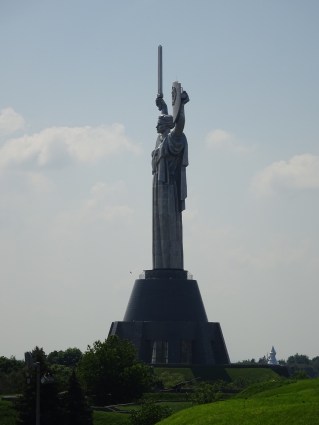
Mother of the Motherland Statue, Kiev (Taken on my previous visit)

It was going to be my second visit to that country. The first took place a couple of years ago when I went with my kids. I must add here that if you are not aware, my kids are grown up, in age at least, and Ukraine is not really the best place to take your seven year olds when a Disney park would be easier to get to. No, eschewing theme parks and the seaside we went to a country embroiled in a civil war to visit the site of the world’s worst nuclear disaster. This seemed strange to some people but those people will never experience the abandoned town of Pripyat or the village of Zallisya, consumed by the forest. It was a fascinating few days. With Chernobyl ticked off the list what could possibly cause me to want to return though? That You Tube video showed that without much effort or indeed money, you could book a flight in an Antonov An-24 from Kiev to Lviv. Said aircraft was designed in the 1950s by the Soviet Antonov Design Bureau and as such it is one of the last remaining examples of a classic turboprop airliner. As an avgeek with a particular fondness for classic propliners it seemed too good an opportunity to miss. Getting to Kiev meant a flight to Gatwick with British Airways, a train across London to the awful Luton Airport where the Hungarian low cost airline Wizz Air flew me to Kiev’s ‘other’ airport, Zhuliny landing at one o’clock in the morning. The return was even less direct. I booked a ticket with Air Baltic to Gatwick which meant a four hour connection in Riga but there was a good, solid reason for that. Well, for me, maybe not anyone else.

It will suffice to say that there are easier ways of getting to and from Kiev so don’t let my bizarre routing put you off. What will you find when you get there though? I didn’t see much of Kiev this time round but from my previous experience it is a city that’s worth visiting. It has plenty of history, interesting buildings, some nice parks and is ludicrously cheap. A decent hotel room can be had for the equivalent of thirty quid a night, a meal for three or four pounds, a trip of any length on the underground is about 15p and if you want to visit the excellent State Aviation Museum, and let’s face it who wouldn’t, you will still have change from £1.50. All at current exchange rates. It is also just a bit different from your normal large European city. Whilst it is slowly embracing western consumerism, it has yet to shake off all of its Soviet past, despite its relationship with former ‘mother’ Russia being at an all time low. Indeed, it is Russian backed rebels who are fighting the Ukrainians in the afore mentioned civil war. Thankfully this is many miles away in the east of the country and Kiev itself is immune to its effects, a few demonstrations aside. My hotel bore the hallmarks of its Soviet past. I chose it as it was close to the airport, a fact I was pleased about following the late arrival. A ten minute walk took me to lodging from a different era. A young lad, seemingly resenting the fact he was on a night shift, reluctantly checked me in and charged my credit card with the 1700 UAH that Booking.com said they would. That’s just £47 for the two nights. Somewhat bigger than I thought, I discovered via a lift that played elevator music (probably Richard Clayderman, wasn’t it always?) as one ascended, my room on the third floor. The room was a reasonable size and clean. There were two single quilt covers folded on the bed and two single quilts in the wardrobe. The decor was, shall re say, a bit retro. The bathroom lacked shelves on which to place your ablution paraphernalia but for £22 a night those bits and pieces can sit on the table in the bedroom. This was a hotel whose glory days were long since past but it had decent wifi so fitted the bill for me perfectly. On my previous visit I had inflicted on my children a bizarre floating hotel that basically turned out to be a knocking shop where you could call the concierge if you fancied a bit of ‘romance’. There was a fair bit of noisy ‘romance’ going on in the room above me which kept me awake I seem to remember. No such naughtiness was evident in the ironically named Royal Congress Hotel and two decent night’s sleep were had.

DSC00111.jpg

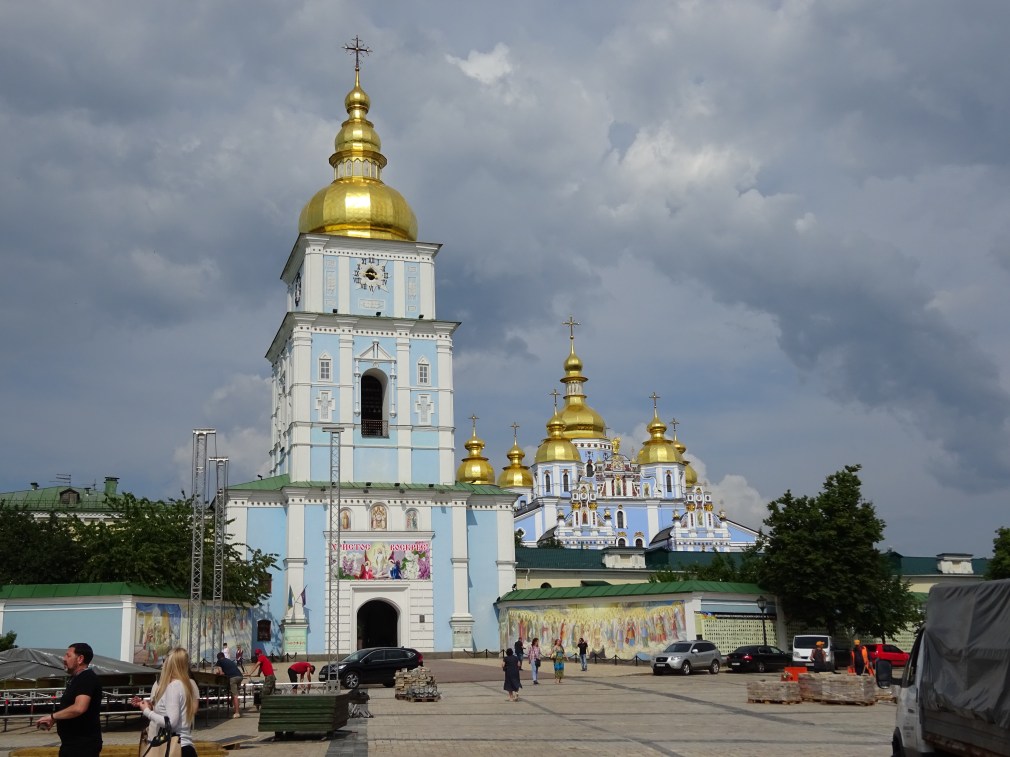
Kiev’s golden domes (Taken on my previous visit)

Good though that sleep was it didn’t last very long. Just five and a half hours after lights out my iphone alarm demanded that I woke up and as there was no bedside table I had to get out of bed anyway to turn the bloody thing off. My flight to Lviv departed at 10am and I wanted to get to the airport in good time. Unfortunately the Kiev weather had decided to take the equinox literally and a late summer heatwave before I had arrived had given way to the grey skies and rain of autumn. It didn’t dampen my spirit though; a classic Soviet airliner awaited me so dodging the puddles I made my way to Zhuliny’s small domestic terminal. Just two flights were showing on the departure screen, Odessa and Lviv, both by the airline Motor Sich. An offshoot of a Ukrainian aero engine company, Motor Sich operate a small fleet of aircraft from the Soviet and immediate post-Soviet era on scheduled and charter flights. They seemed to provide the only custom for the domestic terminal which, somewhat surprisingly, had a business lounge. I should state here that I bought a Priority Pass card in the summer and can access many business lounges. Some are good, others are not but I’ve paid the money so I’ll be damned if I’m not going to use them. (Yorkshire again, sorry) The lounge in the domestic terminal was the most bizarre one I’ve ever seen. A glass screen separated it from the rest of the terminal and it could seat about ten people. A continental breakfast buffet was available and if you were truly desperate there were bowls of what I assumed to be scrambled egg with sausage that you could bung in a microwave. I wasn’t so I didn’t stay long.

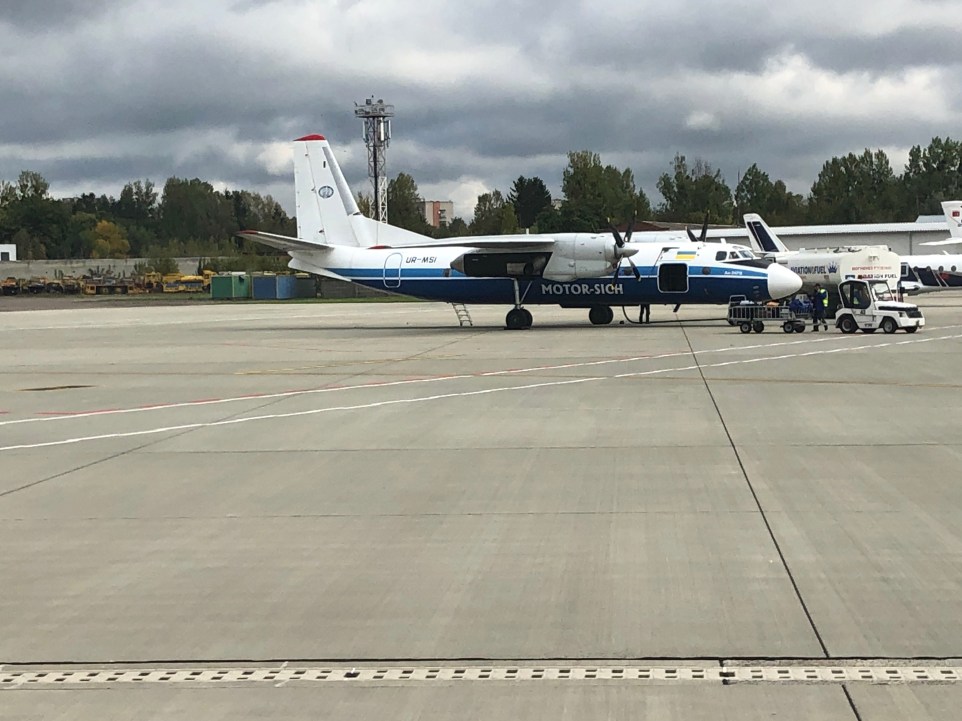
With the Odessa bound passengers whisked away to their waiting Antonov, a bus pitched up to take we Lviv passengers to ours. As it honed into view my excitement level was reaching fever pitch. This may well sound odd to you and virtually everyone else in the world for that matter but that Antonov An-24 ticked so many boxes for an avgeek like me. It was an old, classic Soviet airliner, a world away from the Boeing 737s and Airbus A320s that make up the majority of the world’s airline fleets. It smelled like a museum exhibit, had huge round windows, made some strange noises and bits of seat trim hanging off. It had been originally delivered to Aeroflot in 1972 making it 46 years old and it looked, felt and smelled like it. I was sat in the front row. Not a great row to be honest. It was up against the bulkhead which restricted leg room and the window was behind you which meant a strained neck by the end of the flight. Not to worry, this was a rare, possibly the only chance I would get to fly in this type of aircraft and I’d be damned if was wasn’t going to enjoy it. There was a hostess on board who served us a cup of water, a sandwich and some lemon tea for nothing which is more than I got on British Airways, Wizz Air, Air Baltic and EasyJet, the other airlines I used on this trip. All too soon we were on the ground in Lviv but I did have the return flight to look forward to some six hours hence.

IMG_2261.jpg

46 year young, my Antonov An-24 on the ground at Lviv

Whilst the point of the trip was the flight there was no reason to sit around Lviv’s airport for that time so I made my way into the city by trolleybus. For some strange reason, I quite like electrically powered urban transport systems and whilst that normally means trams, trolleybuses fit the bill too. Don’t ask me why, they are generally a bit tatty, not very comfortable and, on this occasion, cold but they offer something a normal bus doesn’t. Don’t forget to validate your ticket though, you don’t want a ticket inspector to think you are trying to dodge the 15p fare as he might give you an on the spot fine of a fiver. Riding the trolleybus does, however, give you a sense of doing what the locals do in a way that jumping in a taxi does not. The number nine route terminated near the centre of Lviv and soon I was experiencing Ukraine’s seventh largest city. It seemed pleasant enough but I was at something of a loss of how to fill my time when I saw a wallybus tour about to start. A wallybus by the way is our family’s pet name for those land train things that carry tourists around cities and seaside resorts. I’ll explain why some other time. This cost 100 UAH, about three pounds or less if you didn’t require earphones. Splash out, the tour makes no sense whatsoever without them. I learnt lots of things about Lviv, none of which I can remember of course, but it was a pleasant if a rather bouncy experience that took up an hour of my time. I was back at the airport a couple of hours prior to departure and had to wait for the check-in desk to open. Once it did I asked the girl for a window seat near the back. She gave me 9D which I hoped was a bit better than 1D.

IMG_2274.jpg

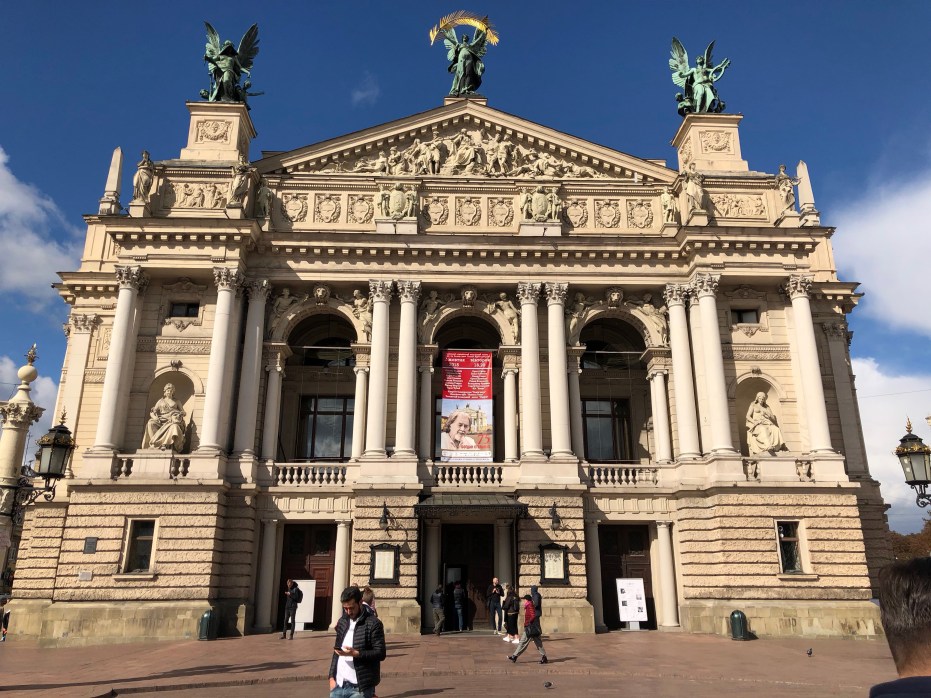
Lviv Opera House

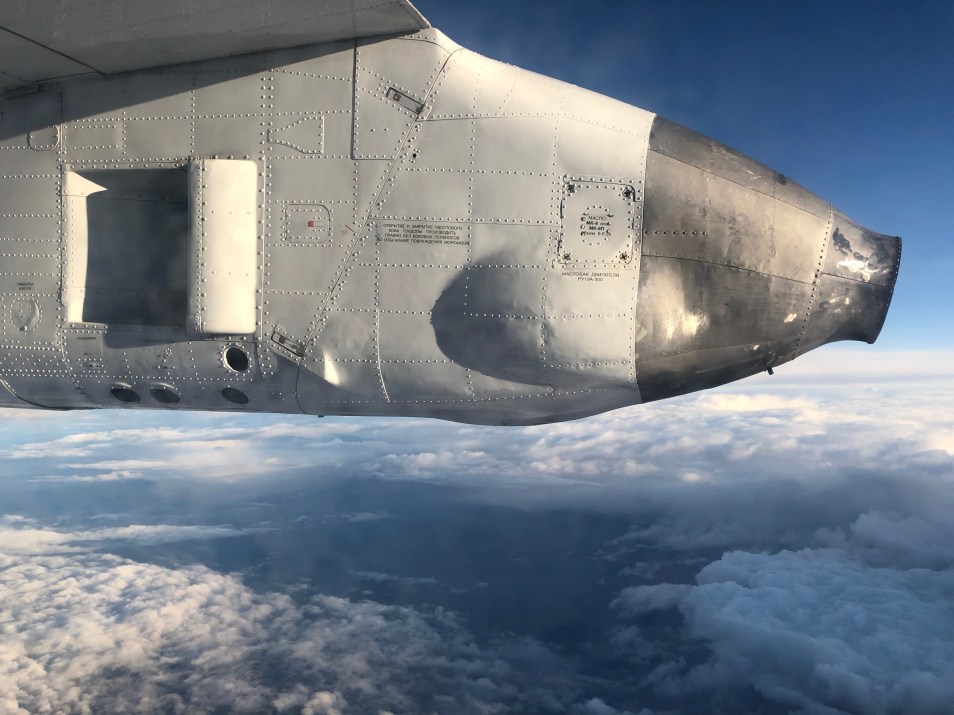
Lviv’s airport terminal was built for the Euro 2012 football tournament and is, perhaps, a bit grander than a city like Lviv would otherwise expect. It too had a business lounge for domestic passengers only this one was huge. I had it to myself which felt a bit weird. Still, I drank half the beer that was on offer (one of two bottles of Stella) and consumed some of the snacks before leaving the bored girl on the desk in peace. It was another bus transfer to the aircraft which was exactly the same An-24 that had brought me. I don’t think it had moved in the meantime. Finding seat 9D, the check in girl had done me proud. It was perfectly aligned with the window and I couldn’t have been happier. The same hostie as before served not a sandwich this time but a large jam tart, I wasn’t complaining – it was very a very nice jam tart – and enjoyed every one of the 85 minutes I was airborne in that venerable Russian (Ukrainian more likely) classic airliner. I was back in the hotel by half past seven. The kitchen was closed. Just as well it had been a big jam tart.

IMG_2294.jpg

Perfect view from 9D

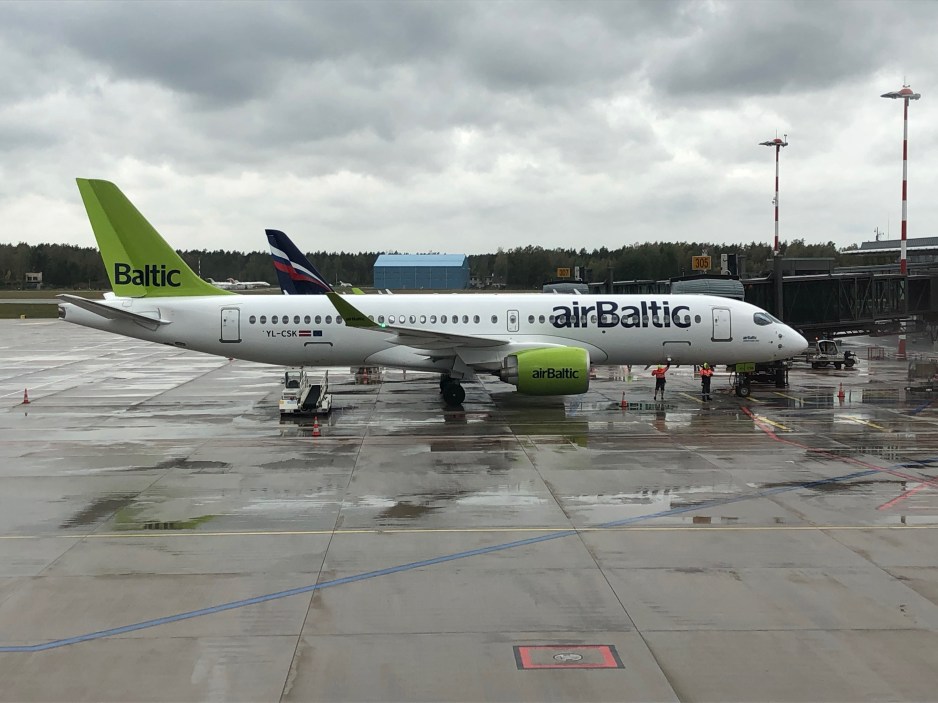
It was an early start the next morning. My flight departed at 9:40 but rather inconveniently it departed from Boryspil, Kiev’s main airport and quite a few miles out of town. That meant an early trolleybus to Kiev railway station where the airport bus goes from. Everything went to plan and after spending some time in a rather poor business lounge I found myself on another airside bus which transported us to a remote – very remote – stand where an Air Baltic Dash 8 aircraft was waiting. This made the 1 hr 50 minute journey across Belarus to Riga in Latvia where I was to transfer to Air Baltic’s Gatwick flight some four hours later. Not a good idea, then, to go straight to the gate in the non-Schengen area when the business lounge is by the Schengen gates. Having discovered this I had to pass the wrong way through the transfer security point, pass through passport control and customs, head upstairs to departures and pass through security again. That’s a lot of passing. It might not seem worth the hassle but it had two advantages – the lounge, once I’d got there, was excellent, and I can now say with total accuracy that I’ve been to Latvia. We all make silly rules up and one of mine is that if you transfer through an airport but stay airside that doesn’t count as a visit to the country in which the airport is situated. Once I’d stepped out into the arrivals hall at Latvia I could tick another country off the list. The flight to Gatwick was on board one of Air Baltic’s Airbus A220-300s, an aircraft that until recently was called a Bombardier CS300. A trade spat between Canada and the USA led to Airbus taking over the programme and renaming the aircraft. All of which would be a bit dull were it not for the fact that I’d never flown in one before. This was the reason that I had chosen this indirect routing to get back to Blighty.  In contrast to the Antonov, the A220 was brand new having only been delivered a month earlier. I was impressed. Not as much as with the Antonov of course but it was certainly a very nice aircraft from a passenger perspective. Well, an extra lavatory for the steerage passengers wouldn’t have gone amiss, especially when the bloke in front spent fifteen minutes in the cubicle. What on earth (above earth to be precise) was he doing in there? Come to think of it, don’t answer that question. EasyJet completed the journey by flying me back to Glasgow and whisper this quietly, they were twenty minutes ahead of schedule. I feel as though I should maybe return a bit of my latest EU261 claim.

IMG_2332.jpg

One month old, my Airbus A220-300 at a damp Riga Airport

So that was the Retirement World Tour of Ukraine all done and dusted. I loved it.

IMG_2238.jpg

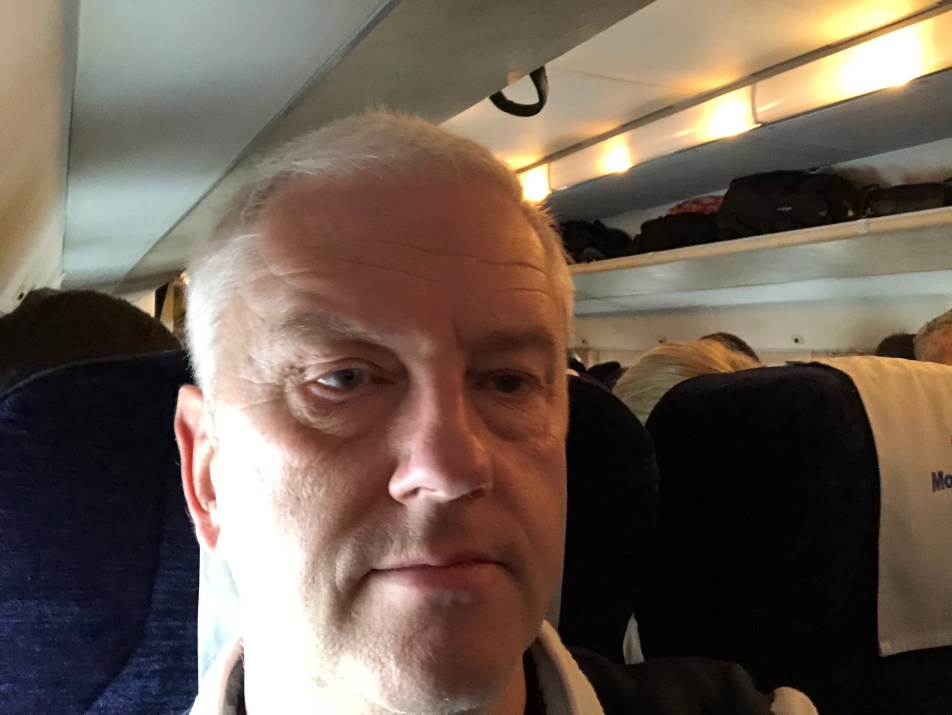
Me loving it


Dipping my Toes in the Murky Waters of Blogging

People seem to enjoy my musings on Facebook whenever I post stuff about my holidays, short breaks, day trips and so on. As a recently retired bloke it is maybe time to take this blog malarkey a step further and produce a blogging site of my own, free from the annoying stuff you can’t avoid on Facebook and concentrating on things that interest me. They may well not interest anyone else and let’s face it, anyone talking about trams is going to have a limited audience, but hell, I’ve got some time on my hands now and I’ve developed a fondness of writing about stuff I find interesting. Travel is first and foremost amongst that and I hope to be doing a lot of travelling over the next few years. Those travels will at times combine my other interests – I’m a self confessed avgeek – that’s aviation enthusiast to the uninitiated – and as such the journey is sometimes the destination, I also enjoy sporting events, particularly Ice Hockey and Cricket, and discovering new stadiums and arenas. Most of all though, I enjoy seeing the world, from the splendid United Kingdom where I reside to places completely alien to me. Chernobyl in the Ukraine, Fraser Island in Australia, the Timanfaya lava field in Lanzarote and many other places have captured my imagination over the years. There’s plenty more to see and write about and I’m hoping plenty of time to do it. After all, I don’t need to do any of this any more.

8039d927-de12-4c1e-8e56-055200b262ce

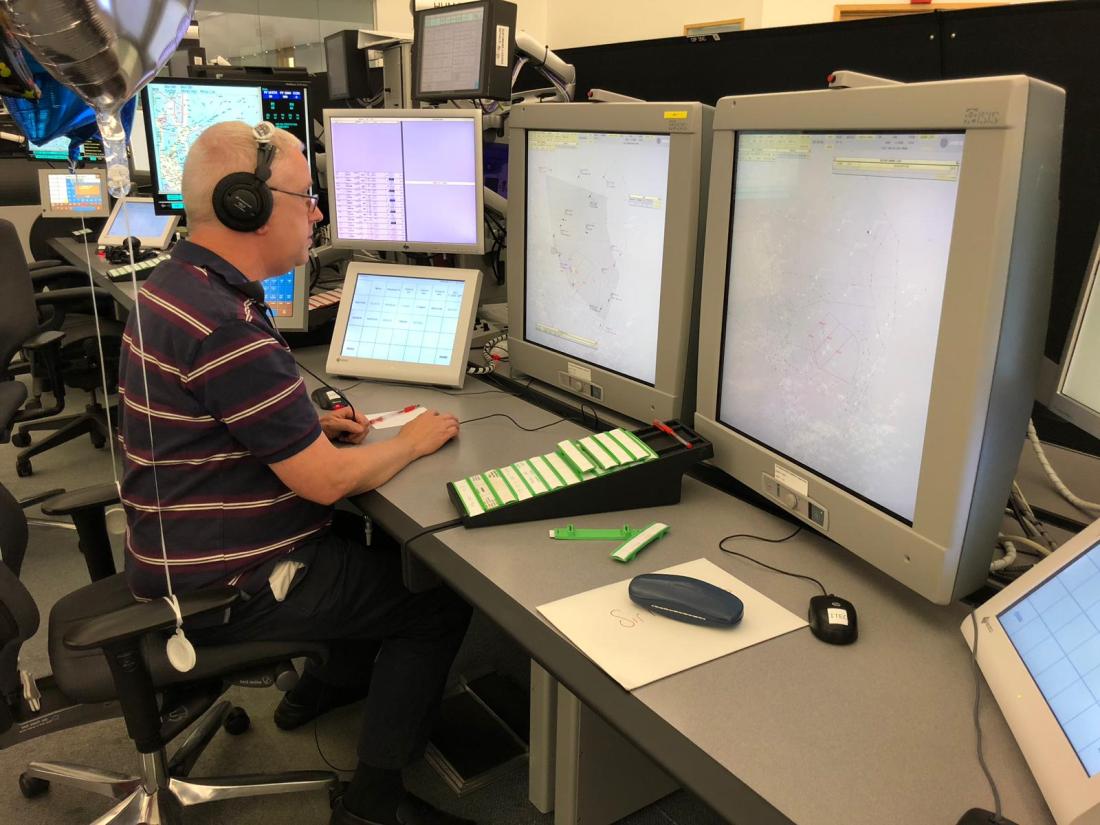
I spent 37 years controlling aircraft. This was the last seconds of the last session of my last shift. I loved the job but it is now in the past. Let’s see what the future brings.