Fifty Fifty

Apologies for the lack of blogs recently. I tend to find that January is a time of planning the year’s adventures rather than actually partaking in any so it’s been hard to find something worth blogging about. We have had a General Election and Brexit since my last blog but I doubt you want to hear my opinions on both of those when you have access to so much well informed debate and reasoned discussion through social media. Politician X is a c***. F*** Politician Y. Politician Z is an f***ing c***. All classy stuff of which I’m not going to add to here. You are far more interested in where I go on my holidays, my embarrassing ailments and of course my brief dalliance with swimming in the nuddy.

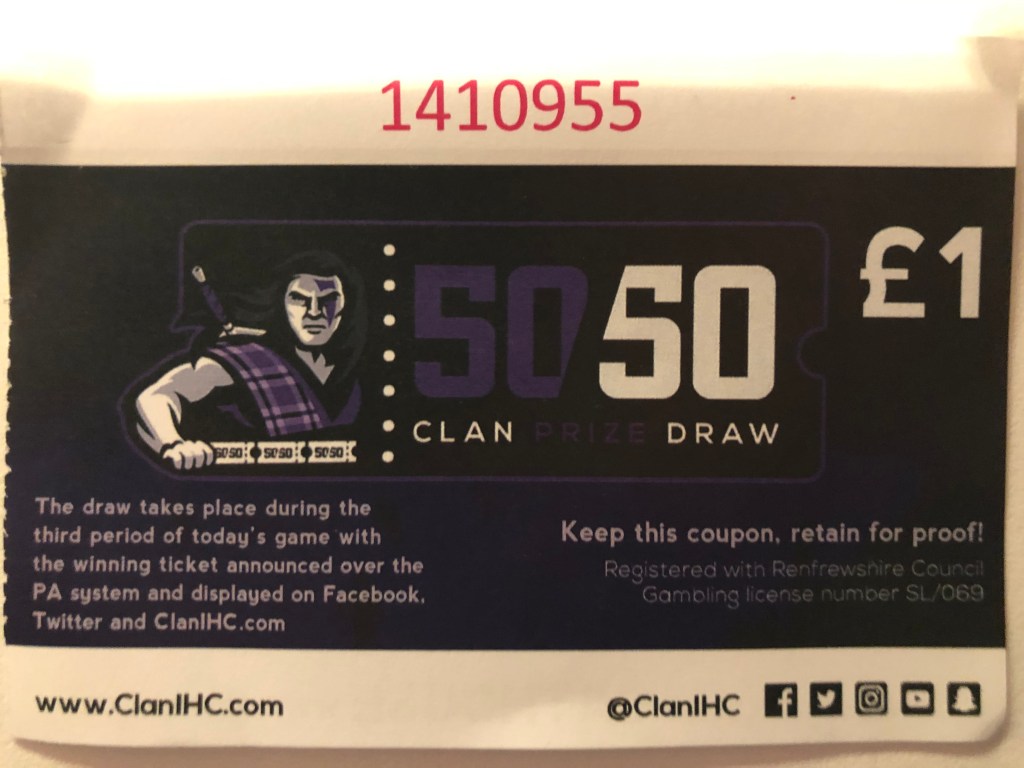
Behold the 50/50 ticket of good fortune.

For my first blog of 2020 I’m visiting the subject of good fortune. As you know, I like Ice Hockey. A tradition at professional hockey games is a thing called the Fifty Fifty. This is basically a raffle. You buy a ticket for, say, a pound. Other people also buy a ticket and by the beginning of the third period the total number of tickets sold is tallied up. One ticket stub is then drawn at random and the owner of the ticket to which it was formerly attached wins a cash prize consisting of exactly half the amount of money collected. The other half is then used to bolster the hockey club’s finances, usually on the premise of assisting junior development. It is quite a simple premise. The more tickets that get sold, the bigger the prize and of course the less chance you have of winning it. I was recently at an NHL game in Vancouver where the ticket sales were constantly updated on the big screen. The last I saw it appeared that nearly C$120,000 had been spent on 50/50 tickets meaning some lucky chap was going to leave the game C$60,000 richer. The Rogers Arena has a capacity of over 18,000 and those sales suggest each person present bought an average of C$15 worth of 50/50 tickets, approximately £9. Of course not everyone buys them so some fans must make a major investment in an attempt to win the prize. Add in some overpriced arena food and drink, and a seat which will have cost anywhere between £50 and £250 and hockey night in Canada isn’t exactly for those a bit short of cash.

I digress. I watch my hockey in Glasgow where the Glasgow, formerly Braehead, Clan have been playing for the past ten seasons. They have had a 50/50 draw if not from their inception, for as long as I can remember. Prizes were initially a couple of hundred pounds but as the club became more popular and the new fanbase caught on to the tradition the prize totals crept up. For a number of seasons I bought a ticket or maybe two. By the 2015-16 season I was generally buying five a game. I must add here that I’m not a gambler. I’ve bet on a horse just a couple of times in my life and I’m £10 worse off than I would have been had I not stepped inside a betting shop. That still irks. Gambling has zero appeal to me. Entering a lottery which aims to raise money for good causes is different, however. It is a form of charity and yes, there is a small chance you might win something worthwhile but you justify it knowing that the money you’ve spent is going to be put to good use. Such was my reasoning for buying 50/50 tickets at the hockey, even if the real beneficiary was not a charity but a commercially run sports club that still has no trophies to its name. I never won of course. I never really expected to. I did check the number whenever the winning ticket was announced midway through the third period but the closest I got was when that number was just two away from mine. Had I only been one person ahead in the queue to buy the ticket it would have been me. Hey-ho. Eventually I stopped buying the 50/50 tickets. I think we were having a particularly bad season and felt less inclined to part with any more money than was strictly speaking necessary.

I was at a hockey game the other night. This was different. It was a testimonial game for a player, Matt Haywood, who joined the club when it was formed in 2010 at the age of 19. The fact he is still there is quite remarkable for the sport of ice hockey. Such loyalty and service were deemed, rightly in my opinion, to be worthy of a testimonial year and one of the events was this game which featured the current Clan team take on one made up of ex-Clan players. I paid for my seat some months ago and turned up for the evening’s activities along with nearly 3,000 others. This was a good turnout on a Tuesday evening in February. The ‘game’ consisted of two periods of not at all serious hockey separated by a skills challenge period. At the end of the first period I took a stroll into the concourse and had a look at the merchandise. On the way back into the arena I decided that as it was a testimonial game I’d invest in some 50/50 tickets. It was a good cause after all. I had a fiver in my wallet so bought five, plonking them in my pocket and basically forgetting about them for the next hour or two. Midway through the third period the announcer informed the crowd to get their tickets ready as the draw had been made. Normally he would inform us of the total prize money but he did not have that information to hand on this occasion. I dug the tickets out of my pocket.

“The winning ticket is number one, four, one…”. Good start I thought.

“Zero, nine…”. Blimey, I’m still in the game.

“Five…”. Ooer!

“Five”. I looked at my top ticket. 1410953. I hope they are in sequence! Next ticket: 1410954. Looking promising. Next ticket: 1410955. Ya dancer! (Glasgow rubs off on you sometimes). But hang on. Was that the number he said? I turned to a group of ladies sat behind me.

“Did he say one four one zero nine five five?”, I asked.

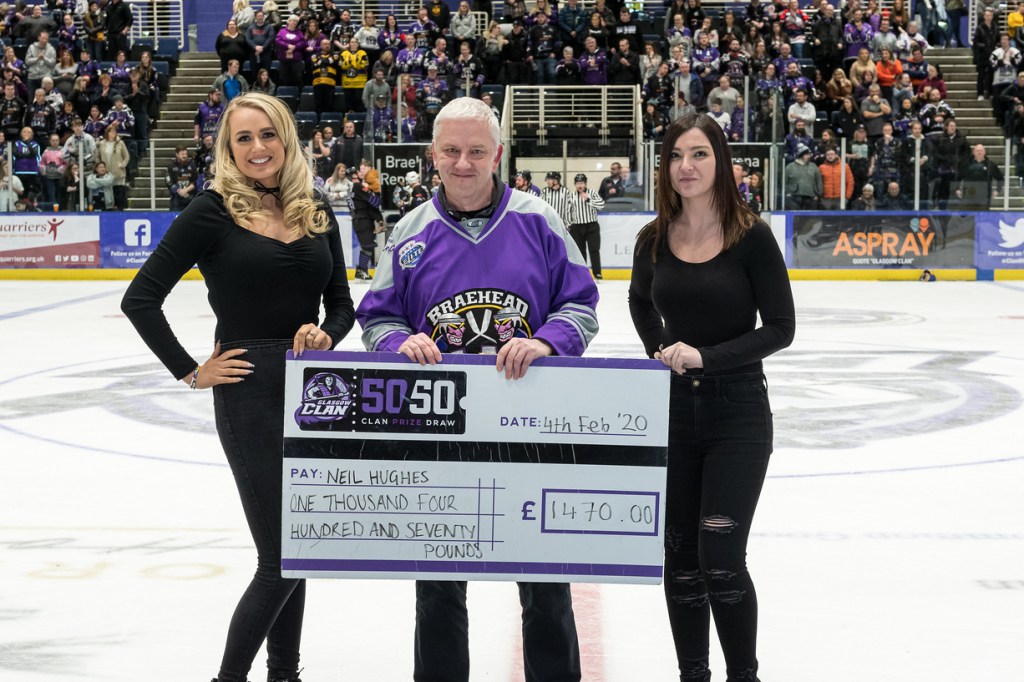
“Not sure”, they said. Eventually we sort of agreed that the number announced was the same as the third ticket in my pile and that I was indeed the winner of what at the time was a mystery prize total. After a celebratory fist pump with the ladies I headed out of the arena to the concourse to claim the prize. I must add here that in a normal game this is one thing that puts me off the 50/50 draw. If I ever managed to win it I may well receive a significant amount of cash but I’d miss what could be an exciting end to the game. This game, however, was not a serious affair as witnessed by the final score, 19-17 to the ex-Clansmen, so walking out before its conclusion was no great hardship. At the desk in the foyer I stated my claim. The two volunteer ladies who run the draw at every Clan game were still tallying up the takings. Tracy, who works for the Clan and I know of old, was also on hand and wrote the winning amount on a big presentation cheque that has been doing the job for many seasons. The total takings for the 50/50 draw was £2,940. The prize money, as written on the cheque, was £1,470. That is not the end of it of course. There is an official presentation at the end of the game. Before I was led down to the ice, however, I was handed an envelope. It took me a bit by surprise. It contained my winnings in £10 and £20 notes. I hadn’t really given any thought to how I’d receive the money. Armed with an envelope of banknotes and a large imitation cheque I headed into the bowels of the arena. Almost as soon as the game ended I was gesticulated onto the ice where there was rubber matting laid out to reduce the chance of slipping. Kevin the announcer, who I also know of old, informed the fans that the winner of the 50/50 was Neil Hughes and I marched out with the big cheque to monumental applause. Well, maybe a ripple of polite applause. And not an insignificant amount of apathy. I got my photo taken with the cheque and a couple of pretty girls and wandered back to the area behind the players’ benches. I hung around to watch further presentations and the speech by Matt Haywood and that was that. The cheque was left ready for the name of next Saturday’s winner to take the place of mine, I said goodbye to Tracy and headed out into the departing crowds. I did nip back to the mech desk though and bought a tee shirt. I thought it was the least I could do.

Gambling is a sin and the wages of sin are, in this case, a flipping great wodge of cash.
I accept the prize to a muttered chorus of ‘Lucky Bastard’ from the stands. The girl to my right seems more delighted than me. Picture: Al Goold (www.algooldphoto.com)

I drove home delighted with my good fortune yet with a slight sense of unease. Did I deserve to win? Yes, it’s a game of chance but there are many people who buy 50/50 tickets religiously every game. Surely they are more deserving than me? For some of those £1,470 would make a big difference to their lives, maybe buy them a well deserved holiday, a much needed new washing machine or perhaps enable them to renew their season tickets for next year. I eventually came round though and thought ah well, it’s a game of chance, ‘deserve’ doesn’t really enter into it. I was there ten years ago when Matt Haywood started his Clan career after all. The next question is just what to spend it on. Elaine said that we could use it to pay for some work we are having done in the garage. Well yes, but the truth is we would be paying for that anyway. This money should be spent on something above and beyond. The banknotes were deposited in the bank the following day. There the money will remain until I decide how it should be used. Come to think of it, our telly is 13 years old and perhaps it’s time for a new one…

Ten years with the Clan (just like the bloke in the Clan jersey watching in the background) number eleven, Matt Haywood. (The one with the beard, not the ribbon) Picture: Al Goold (www.algooldphoto.com)

Queen of the Skies

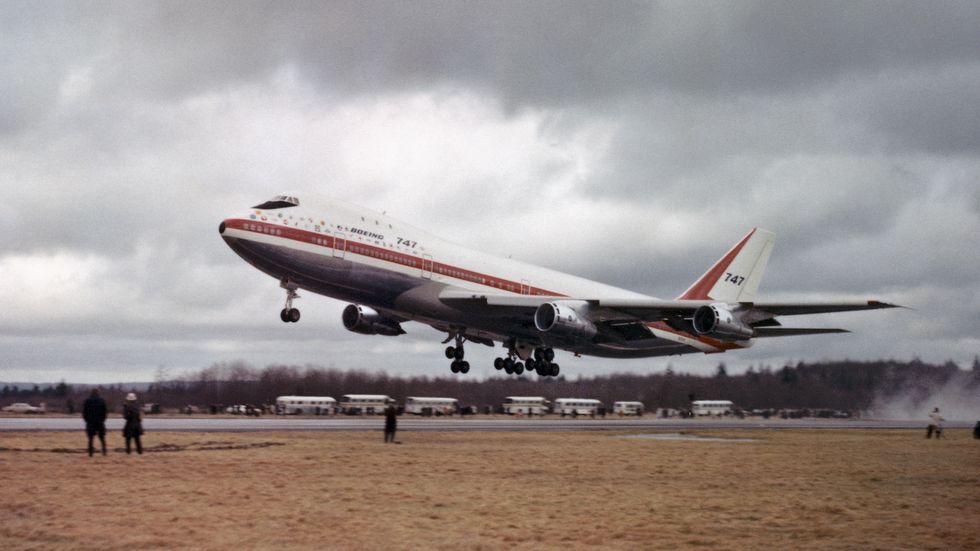
The first Boeing 747 rollout. (Boeing photo)

Back in the seventies when I was developing my avgeekery, not that avgeekery was a term we used back then, there were two commercial aircraft of the era that caught the imagination of even those who had little interest in aviation. One was Concorde, the other was the Boeing 747. Whilst both these aircraft were designed to carry passengers, they took a very different approach to that task. Concorde was designed for speed. More than twice as fast as any airliner before or since, Concorde was a magnificent machine. Sleek and sexy, it was the star of the airline world. It could carry a hundred passengers between London and New York in three hours, quite an astonishing achievement for the 1970s. The Boeing 747 was big and chunky. It could carry four hundred passengers between London and New York in seven hours, the same time as the 180 seat 707s that were plying the route in tthe 1960s. You might think that Concorde would be a clear winner but no, the Boeing 747, still in production to this day, sold a hundred times more airframes than its supersonic rival. The reason was purely down to cost. Concorde was so expensive to buy and operate that even if an airline could fill every one of those one hundred seats on every flight, fares would have to be enormous. In the end British Airways and Air France were gifted eight production Concordes apiece and even then could only make it profitable on the London/Paris – New York run. There just wasn’t enough super rich folk in the world. The Boeing 747 had four hundred seats to fill which resulted in fares being dropped and a whole new market for long haul travel was tapped. Despite one or two hiccups on the way, the 747 allowed airlines to turn a profit on long haul services and the world to become better connected than ever.

First flight, 9 February 1969 (Boeing photo)

Ok, that’s all very well and good I hear you say, but what is the relevance to today? On January 22 next year, the aircraft will celebrate the fiftieth anniversary of its first commercial service. Despite this, the type is still connecting cities around the world. Whilst the early 747s have almost completely disappeared, the 747-400 series, a version that first entered service in 1989, still flies for a number of airlines. Those airframes are nearing the end of their lives, however, and whilst the modern 747-8 version is still in production, it has proven to be a poor seller in the passenger aircraft market where more efficient twin engined aircraft are now the norm. In short, your chances of flying on a 747 are rapidly dwindling. The once huge British Airways 747 fleet is due to be phased out by 2023. I recently took a flight from London to Vancouver and back with BA and was delighted to find out that it would be a Boeing 747-400 that would be operating the service. I have been on 747s before but this might be the last time I had the chance. Back in the day there was nothing like a 747. It was enormous. In my spotting days I’d spend the day at Manchester Airport where the star of the show was the 747 operated by Canadian airline Wardair. It looked huge next to the One Elevens and 727s on the adjacent stands. That’s because it WAS huge and still is today. The distinctive hump at the front was like nothing else you were likely to see. Born from the need to raise the cockpit above the main deck to assist in the loading of the cargo version of the aircraft through the nose, the small passenger deck behind the flight deck was accessed by a spiral staircase. It used to house a cocktail lounge for first class passengers but airlines soon tired of that idea and used it to accommodate extra passenger seats. Later versions, including the -400 series had the hump stretched increasing the capacity of the upper deck. Sadly, the spiral staircase made way for a regular one as squeezing maximum revenue out of the aircraft’s cavernous interior became a priority. It was the first passenger aircraft to be wide bodied – back in the economy section seats were arranged ten abreast in a 3-4-3 pattern with two aisles. Twin aisled aircraft are commonplace now but not many fit ten seats in each row.

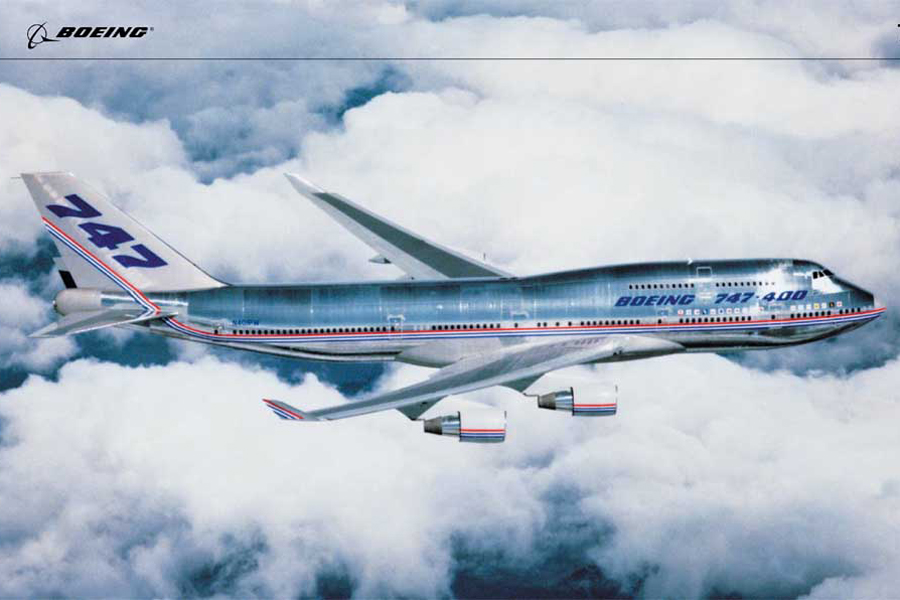
Boeing 747-400 first flight. Note the ‘stretched’ hump (Boeing photo)

The 747 was powered by four ‘high bypass’ turbofan engines. Feel free to google it if you want, for here it will suffice to say they were much bigger and more powerful than the other jet engines of the time. They are now the norm on airliners, big and small. It’s not a lie when I say the aircraft was a beast. My first time on one was in 1987, Heathrow to Singapore on a Singapore Airlines 747-300. This had the stretched upper deck but of course I never got anywhere near that. I just remember marvelling at the raw power of the engines as we commenced our take off roll. I was already fond of the 747 but after that flight I was smitten. Fast forward to 2019 and I’m back in Heathrow’s unimpressive Terminal Three. I present myself at the gate and the agent scans my boarding pass, which, because I’m really tech savvy, I had on my iPhone. Her computer made a rather disturbing noise and a puzzled look appeared on her face. Tapping a few keys on the keyboard she hit return and a new paper boarding pass was printed off. For reasons unexplained my Premium Economy seat had been changed to one in Club World, British Airway’s business class. You’ve got an upgrade said the agent and bid me on my way. A bit of luck there then. The seat was in the Club World section in the main cabin rather than the upper deck. Despite being a wee bitty excited to be flying the 747 once more, the flight was actually quite dull. It was an aisle seat and I missed having a window to look out of, even though there would have been nothing to see as the entire flight took place in the hours of darkness. If you are going to be bored, however, you might as well be bored in the relative comfort of Club World if you get the chance.

British Airways Club World cabin inside the hump, more spacious than the one on the main deck. (Photo taken in 2013 on flight from Moscow to Heathrow)
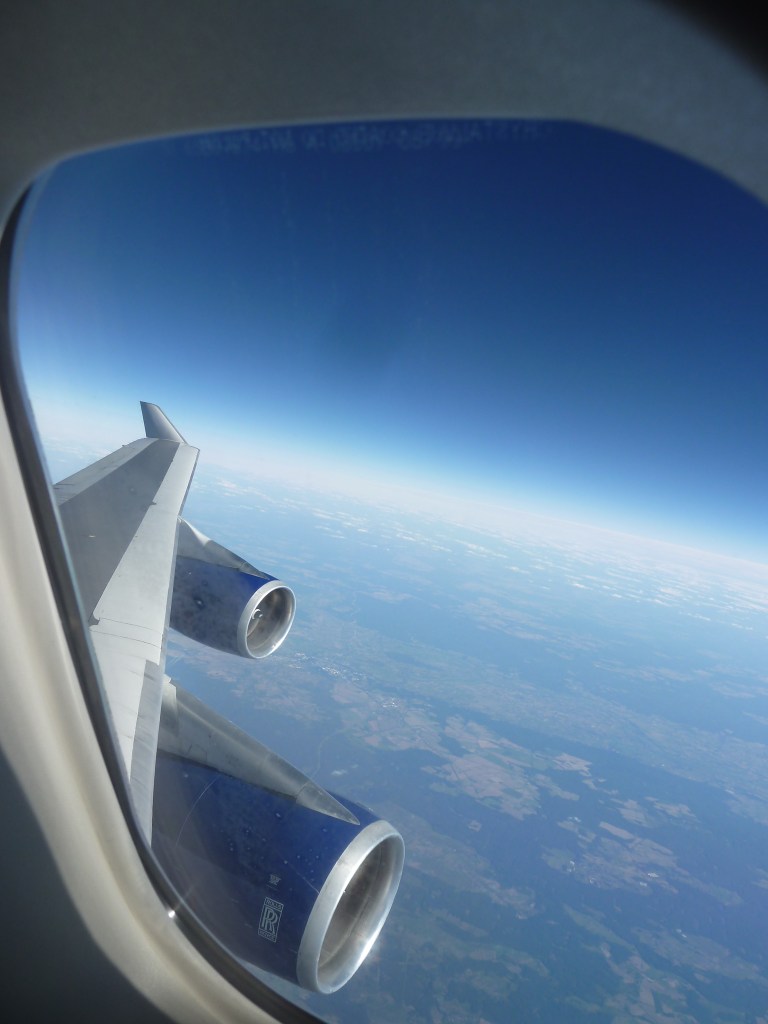
That wing, those engines… (Photo taken in 2013)

On the way back I had booked a Club World ticket (using Avios, I’m not so well off that I can go business class willy-nilly) and was hoping that they might upgrade me to First but no, I’ve obviously had my quota of upgrades. This time I had a window seat on the upper deck which was much better for a geek like me. It also meant a bit more privacy and plenty of storage space with a row of lockers beneath the windows. It is an ideal place to enjoy the 747 experience, mainly because you are facing rearwards and can see one of the magnificent wings and two of the four mighty engines that hold the beast aloft and allow it to hurtle through the air at Mach 0.85. (That’s fast by the way, not Concorde fast but you certainly wouldn’t want to get in the way of one) The upper deck consists of five rows of four Club World seats and feels more spacious and exclusive than the other Club World cabin down the stairs. I was all set for a restful red eye flight back to Heathrow when I noticed the four seats in the row behind were occupied by a family of five. Mum, dad, two small girls and a babe in arms. Oh good I thought. I know we were all babies and children once but when I was that age I never went in a plane, never mind the posh seats. We were too poor in Yorkshire tha nos. However, I need not have been so snobbish, the two girls were as good as gold and once the baby was plonked in a bassinet I never heard a peep from her. The dad on the other hand spent the entire flight getting up and down, accessing the several tons of hand luggage they had secreted round the cabin and generally faffing about. After a very acceptable dinner I had a quick look out of the window to see if I could see the aurora (I couldn’t) and settled down to sleep. I think I managed about four hours, a reasonable if unspectacular amount for an eight hour flight across eight time zones. We touched down on Runway 27R at Heathrow well ahead of schedule and made the short taxi to Terminal Three. Heading up the corridor I looked out of the window at the twenty-five year old 747 that had delivered my safely back to London. She still looked a beast. You may have noticed I’ve not used the ‘J’ word in this short epistle. I never liked the term ‘Jumbo Jet’. Yes, both are big but there the similarity ends. 747s tend not to be grey and wrinkly and don’t have a long manoeuvrable proboscis for a start. The Boeing 747 has since gained another nickname, not one that’s widely known outside of avgeek circles: Queen of the Skies. She may well be a big lump of a queen but a queen she is nevertheless. She’s the business. I’ll mis her when she’s gone.

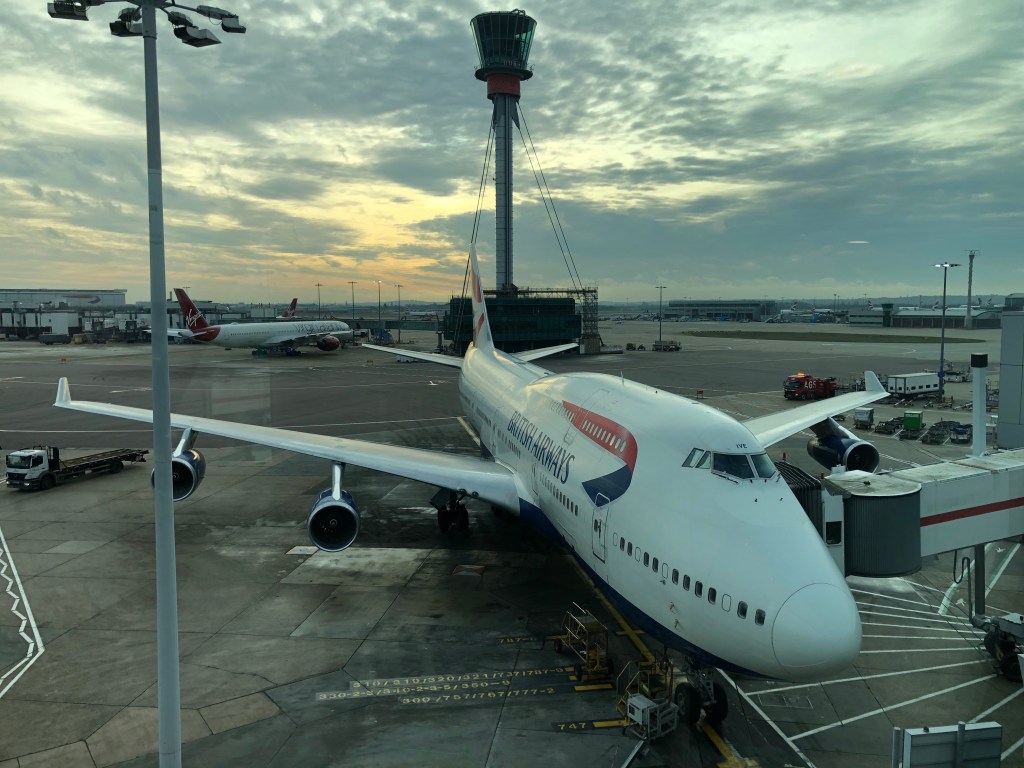
25 year old Boeing 747-400 G-CIVE at Heathrow having just delivered me from Vancouver.
The twilight of Heathrow, the twilight of the 747’s career.

Berlin

What is the ideal destination for a weekend city break? Of course this is a highly subjective question but I believe I know of a city that ticks most of the boxes – Berlin. It’s accessible being just a couple of hours away by plane from many British airports. It’s easy to get around once you are there. Most people seem to have a good grasp of English. It is surprisingly good value for money. When it comes to things to do it has an embarrassment of riches. Above all else though, it has more than any other city I can think of, it tells the story of the twentieth century and whilst not everyone is a history buff, you can’t fail to be captivated by the stories the city tells of events that happened not so very long ago. It might not be the prettiest city in the world but boy does it make up for it with its recent history. I first went to Berlin in 2011 along with Elaine and Rebecca. I made my second visit a couple of weeks ago with my son Nicholas who couldn’t make it that first time for some reason. Would Berlin live up to what I remembered of it? Would it have changed?

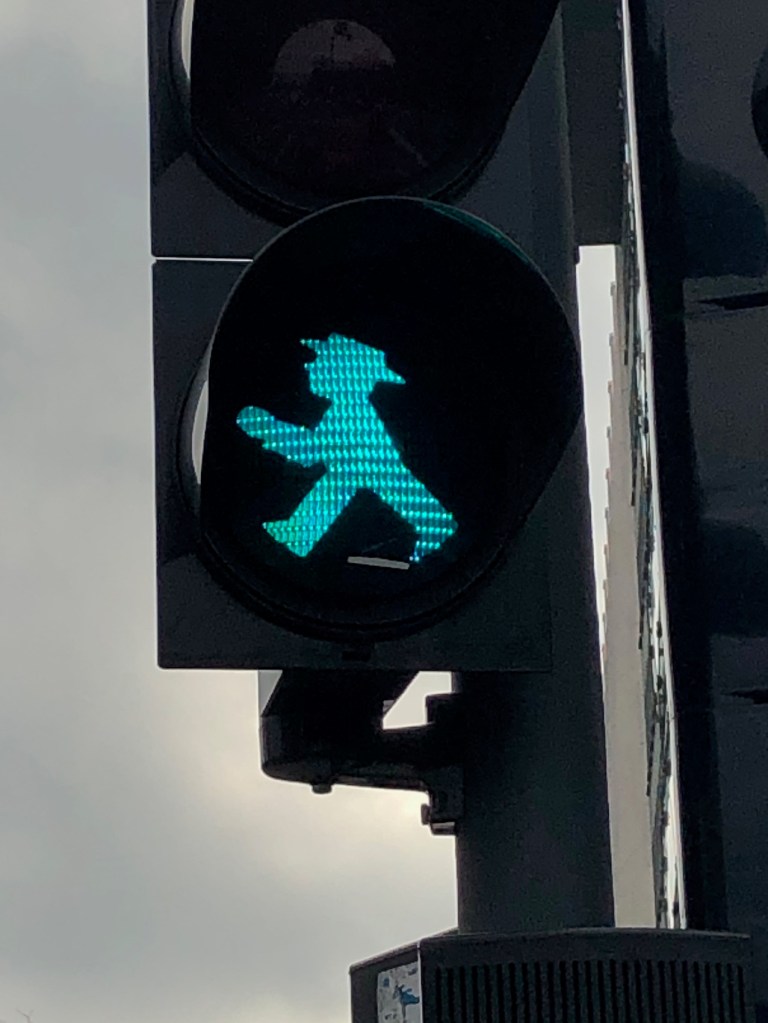
Ampelman. Something cheerful to emerge from old East Berlin.

We flew with EasyJet from Glasgow direct to one of Berlin’s two airports, Schonefeld. That is something that hadn’t changed in eight years. Schonefeld is the airport that used to serve East Berlin and does not give a great first impression of the city. Neither, I believe, does Tegel, the one remaining West Berlin airport. To the south of Schonefeld lies a new airport that was supposed to replace those two no longer fit for purpose facilities. Due to open in 2012, Brandenburg Airport, or Willy Brandt Airport as it has been renamed, remains closed to traffic. Germany’s legendary efficiency has seemingly been absent in this project to present the capital city’s bold new face to visitors from all over the world. The building stands empty apart from the contractors endeavouring to fix a multitude of problems that have delayed its opening by eight years and counting. One alleged problem is that no one knows how to turn the lights off. When it opens, if indeed it ever does, it will likely be now too small for the expected numbers of passengers. All in all, Berlin’s airport situation is not a great start or end to your Berlin experience.

Don’t let that put you off though. Once out of Schonefeld, you jump on a train and are in the centre of town in twenty minutes. Unlike some cities I could mention, that airport train doesn’t cost an arm and a leg. It is also one advantage Schonfeld has over Tegel where a service bus is your only public transport option. Getting around is, in fact, very straight forward. You can buy passes on the public transport for seven euros a day, about the price of three individual trips. You can also invest in the Berlin Welcome Card where you not only get your transport for however long you stay, you get a 25% or more discount to many of Berlin’s numerous attractions and some restaurants. Our five day card cost €42 and covered transport to and from the airport. Buy it online and collect at the information desk in the arrivals hall. We saved €20 each on the Trabi Safari alone and with a couple of other discounts the card just about paid for itself. Just remember to validate the ticket the first time you use it and cary it with you all the time – Berlin works on a random check system where plain clothed inspectors will appear out of nowhere to make sure you have a valid ticket.

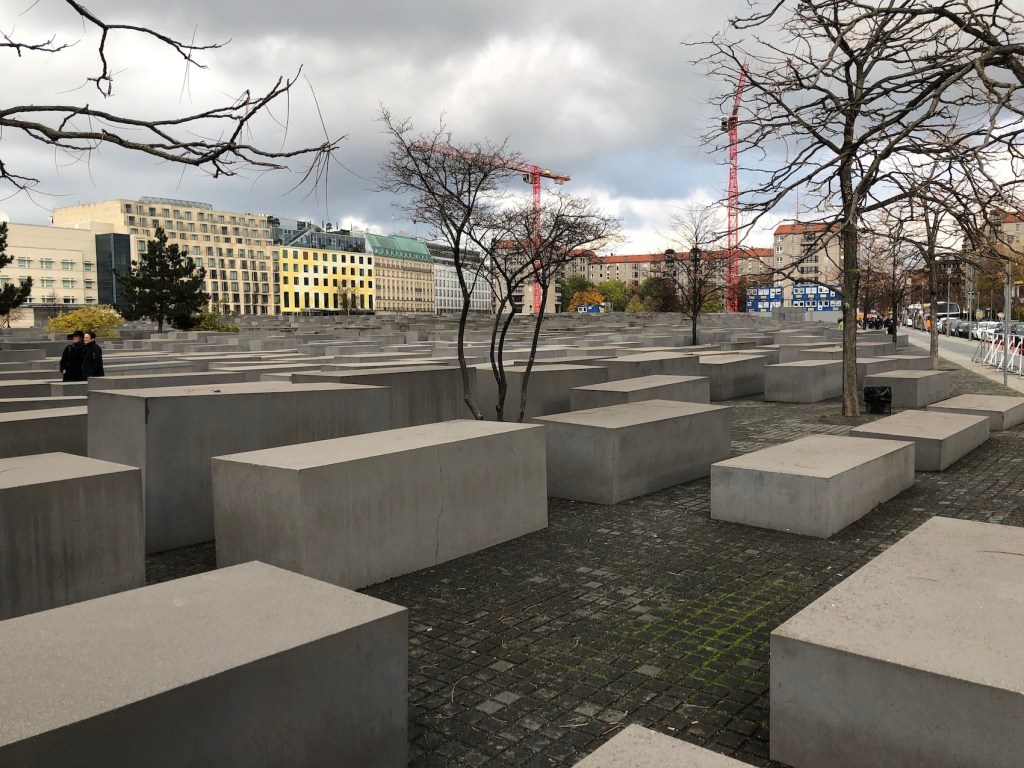
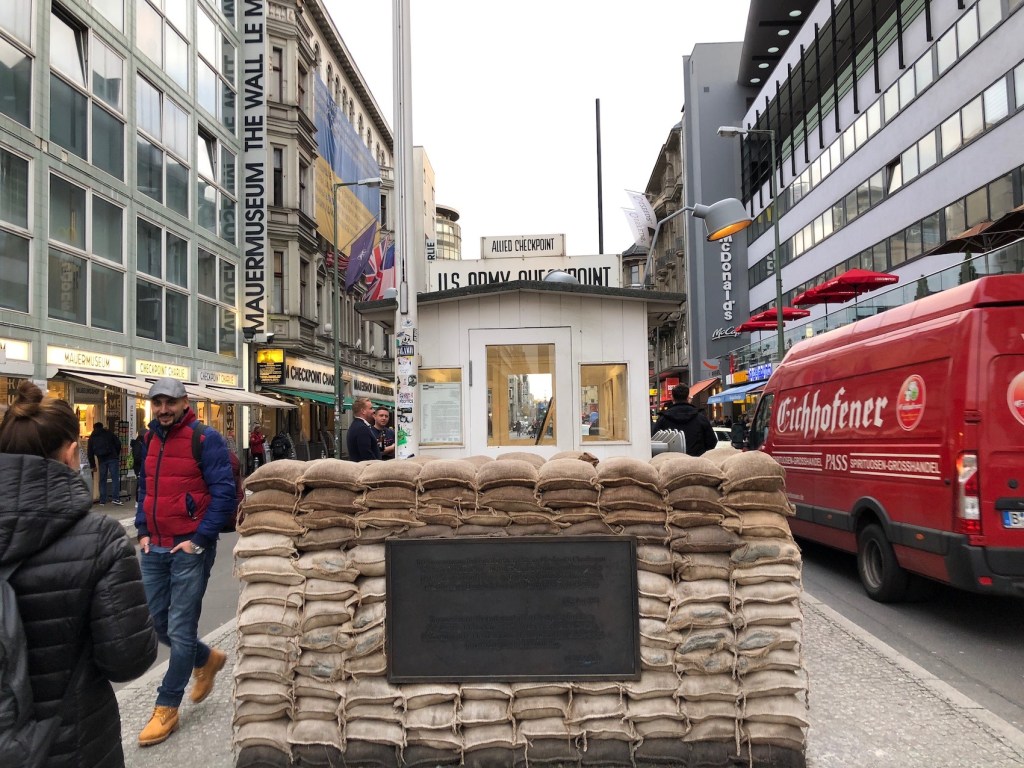
The public transport system is extensive and widespread and the chances are that your hotel will be close enough to a station or stop that staying central is not exactly vital. What constitutes ‘central’ though? The Brandenburg Gate probably takes that honour. It turned out that our hotel was just a ten minute walk to the iconic symbol of the city and a similar distance from Checkpoint Charlie, another icon, this time of the Cold War and division of the city. The area was ‘Mitte’ meaning ‘Middle’ which suggested we’d chosen a well situated hotel and indeed many of Berlin’s major attractions were close by. So what attractions to see? There are many. It turned out that on the weekend we were there was the thirtieth anniversary of the fall of the Berlin Wall. This was a big occasion for the once divided city of Berlin and indeed the entire once divided country of Germany. We spent the first afternoon wandering around the Mitte area and took in the Holocaust Memorial, Checkpoint Charlie and the Brandenburg Gate. The latter was cordoned off for the thirtieth anniversary party that was due to take place a couple of evenings later. The Holocaust Memorial is nearby and consists of over 2700 concrete slabs of various sizes. To my mind it didn’t really work as a memorial to the appalling slaughter of six million Jews by the Third Reich but others may disagree. There is a museum below the memorial which tells just some of the stories from that dark period of the twentieth century and it was that which brought it home to me rather than the monoliths. Checkpoint Charlie, a replica American guard booth stood at the former border between East and West Berlin serves as a reminder of another tyranny. The Checkpoint Charlie Museum is next to the guard post and has a wealth of information about the division of Berlin and the attempts, quite often fatal, of those who wished to pass from the totalitarian regime of Socialist East Germany to the freedom of the West. It is a fascinating place that opened not long after the wall was erected and has been telling its story ever since.

Holocaust Memorial
Checkpoint Charlie

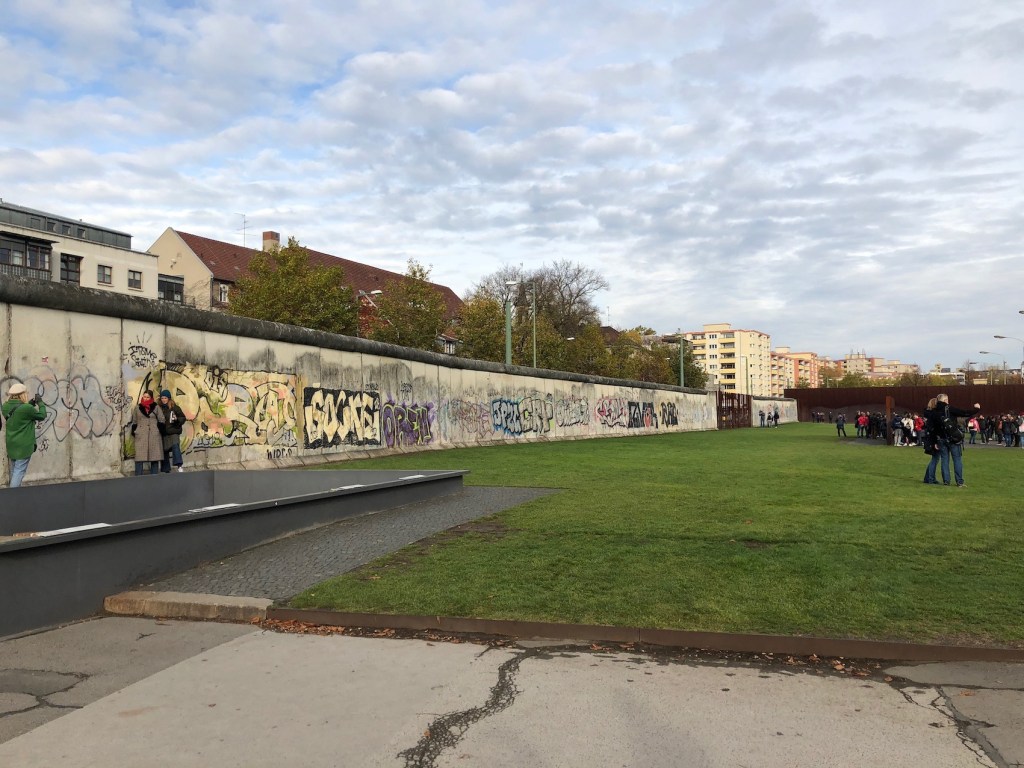
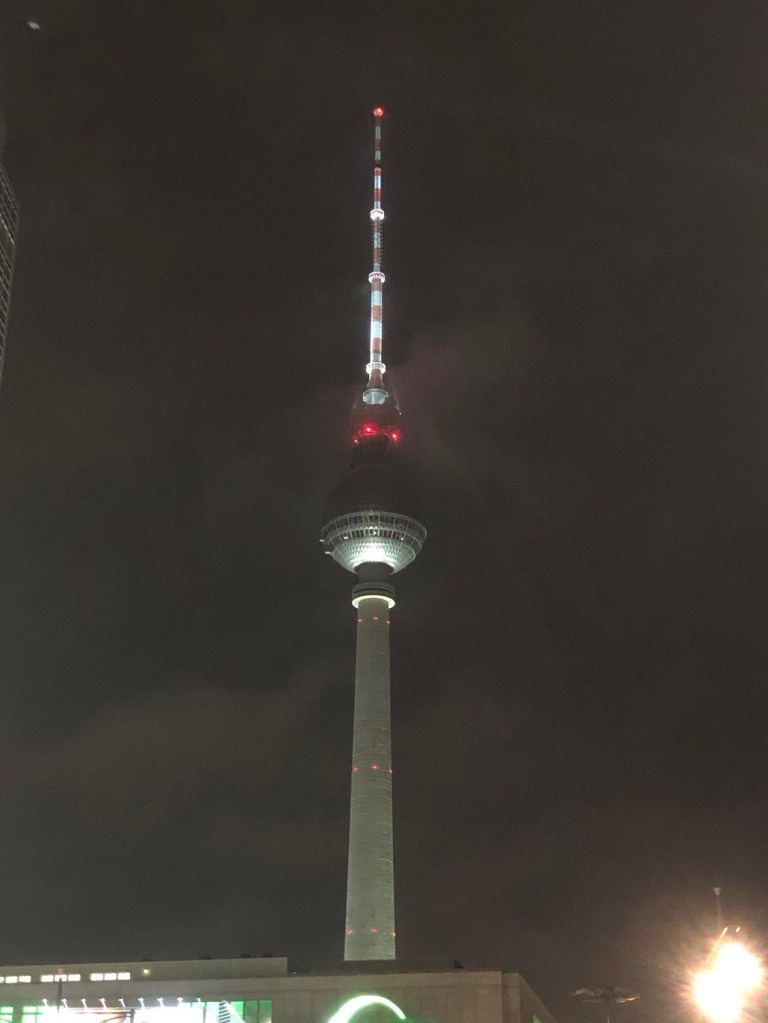
With the Berlin Wall being the hot topic that weekend we decided to find out more the following day. We booked ourselves on to a Berliner Unterwelten Tour. There are a number of tours to choose from but the one entitled ‘Under the Wall’ seemed to be most apt. We were led through a doorway and into a labyrinth of subterranean rooms that were part of Berlin’s U-Bahn underground railway system. Here we were told stories of those who risked their lives to escape the East. Initially, the subway proved a handy way of escaping as a number of West Berlin lines passed beneath East Berlin. Once the East Germans grew wise to this, escapees took to the sewers. Eventually the sewers were blocked too. The tour went on to Bernaur Strasse where we entered the basements of a couple of buildings. The stories here related to those who tunnelled to safety beneath the wall with actual tunnels on display. It was a fascinating insight into the lengths people would go to in helping those in the East get to the West. Bernaur Strasse is also home to the Wall Memorial which includes a stretch of the Berlin Wall itself. There’s a museum and many information boards which try and paint the picture of what it was like thirty years previously when the city was still divided. It was still hard to imagine the Death Strip on the Eat German side. We later went up the TV Tower. This is unusual in that it is a Berlin icon that was built in the East. Like tall things in other cities you go up it for the view which, as it happened, wasn’t that good when we went due to the lack of sunlight and reflections off the windows. It did, however, show you just how big the city is.

Berlin Wall. Photo taken from where the Death Strip was. Thirty years and a day before, simply standing in this position could earn you a bullet.
East Berlin TV Tower. A misty evening was perhaps not the best time to go up it.

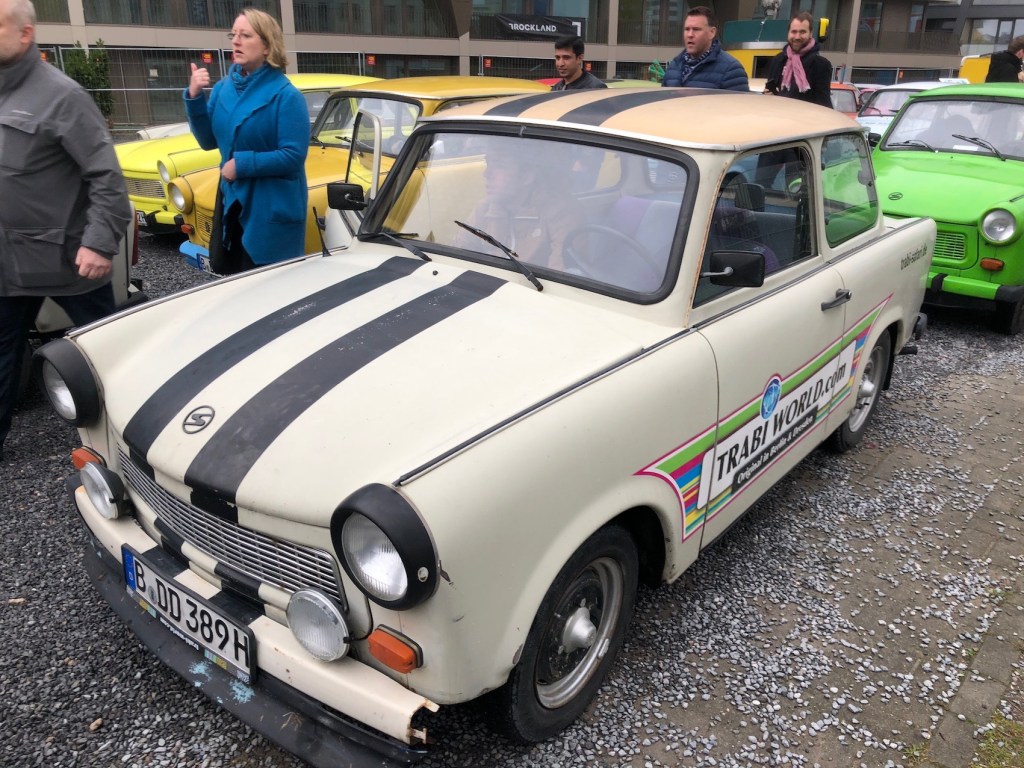
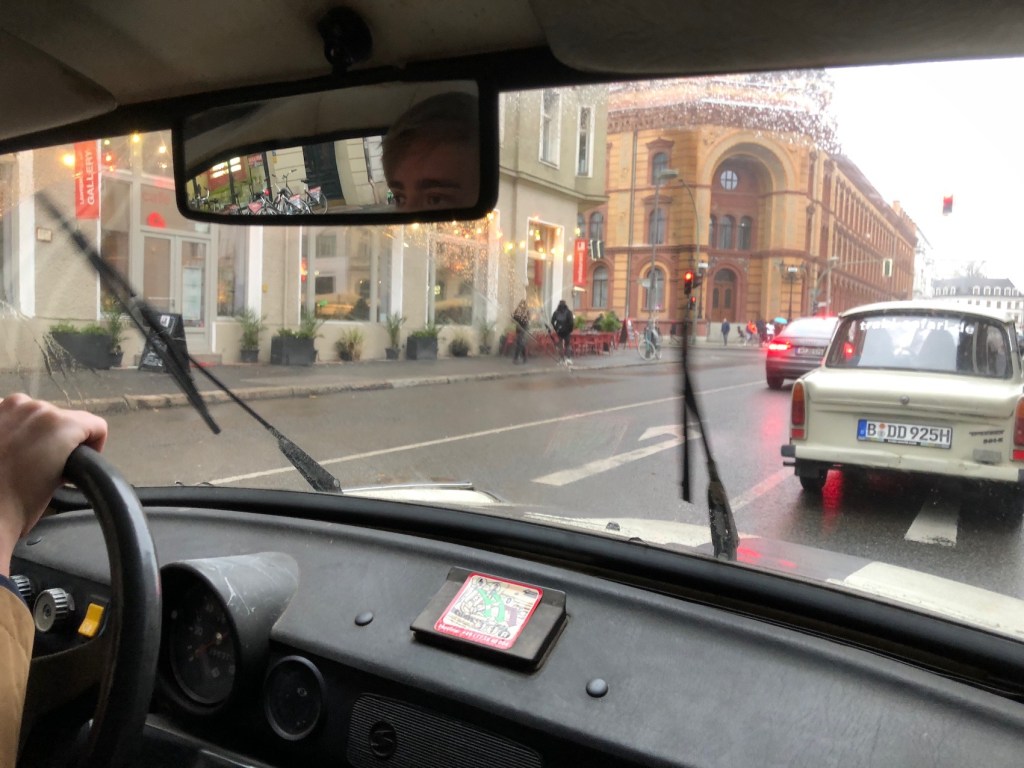
The size of the city became clearer the following day when we embarked on a Trabi Safari. Over three million Trabant cars were produced in East Germany from the mid-fifties to 1991 when production ceased with the unification of Germany. In that time the design scarcely changed meaning that whilst those in the West were driving around in state of the art Volkswagen and Mercedes Benz vehicles, those in the East were, if they were lucky, travelling in a small plastic 600cc two stroke engined car which was noisy and polluting. When the wall came down, these cars became something of a cult and thirty years on you can hire one to go on a tour of Berlin. The starting point is near Checkpoint Charlie and after a rudimentary induction into the car’s interesting foibles such as the steering column mounted gear shift, we were on our way in a convoy of seven. This was led by a tour leader who kept in contact via walkie-talkie. We must have driven through quite a bit of Berlin but in truth we spent much of the time concentrating on avoiding hitting cyclists who seem to believe they are immortal, ensuring the car didn’t stall, battling our way through heavy Berlin traffic (on the wrong side of the road of course) and generally feeling vulnerable in a car that is unlikely to score highly in a latter-day safety test. It was great fun though, despite the offset foot pedals, very heavy steering and a foot break that only worked if you applied all your strength through your right leg. I don’t believe I have ever been photographed as much either. Every time we stopped at the lights, which was often, we were enthusiastically snapped by tourist who were delighted to see these machines still tootling round Berlin. That evening we joined in the 30th anniversary celebrations of the wall coming down. We didn’t stay long as it involved a lot of speeches and neither of us are exactly fluent in German but it was nice to be there for such a significant anniversary.

Our Trabi was in classic Papyrus White with Go Faster stripes which didn’t make it go any faster.
The Trabi Tour took in many famous sights but what we mainly saw (and smelled) was the Trabi in front.
Mauerfall 30 concert. Thirty years to the day after the Berlin Wall came down.

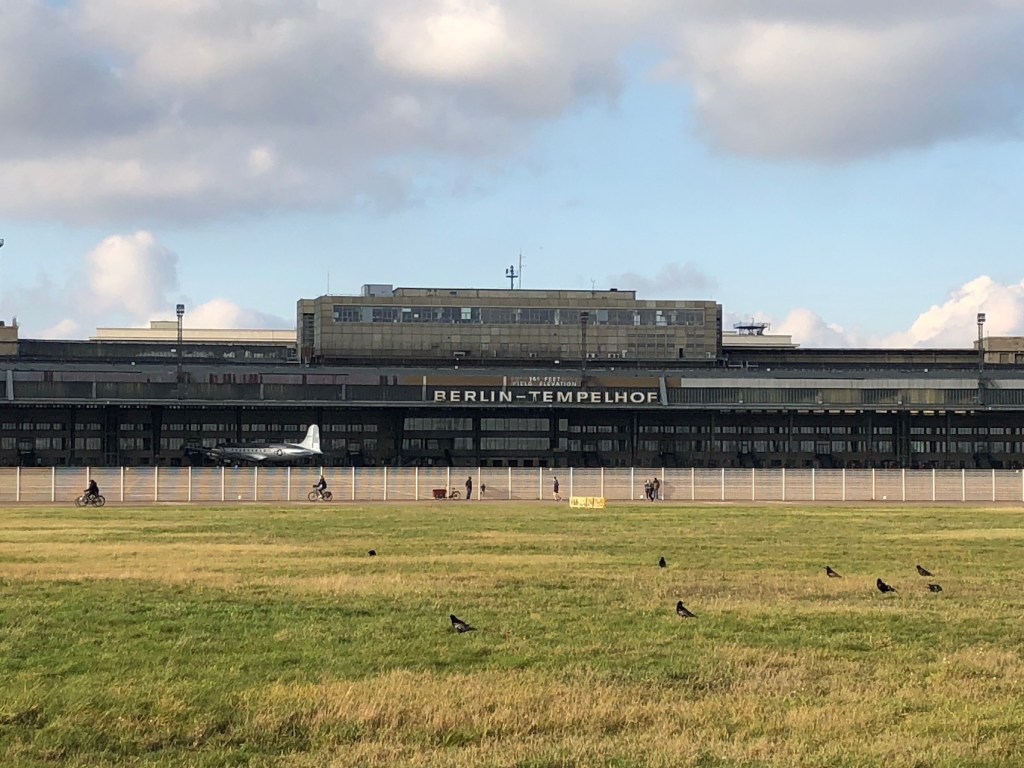
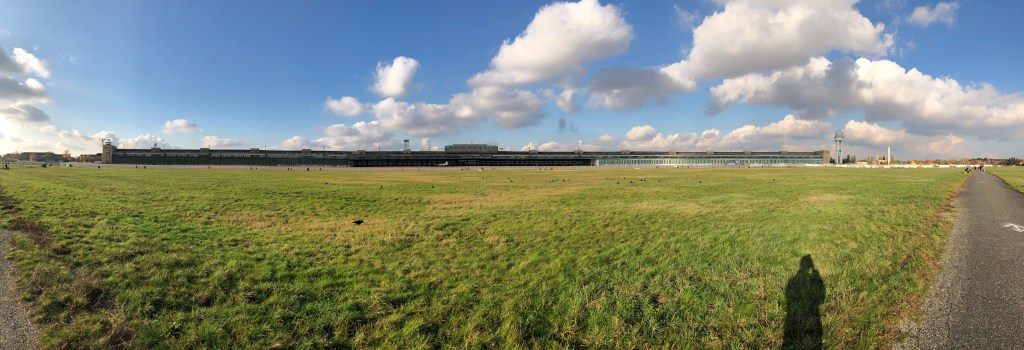
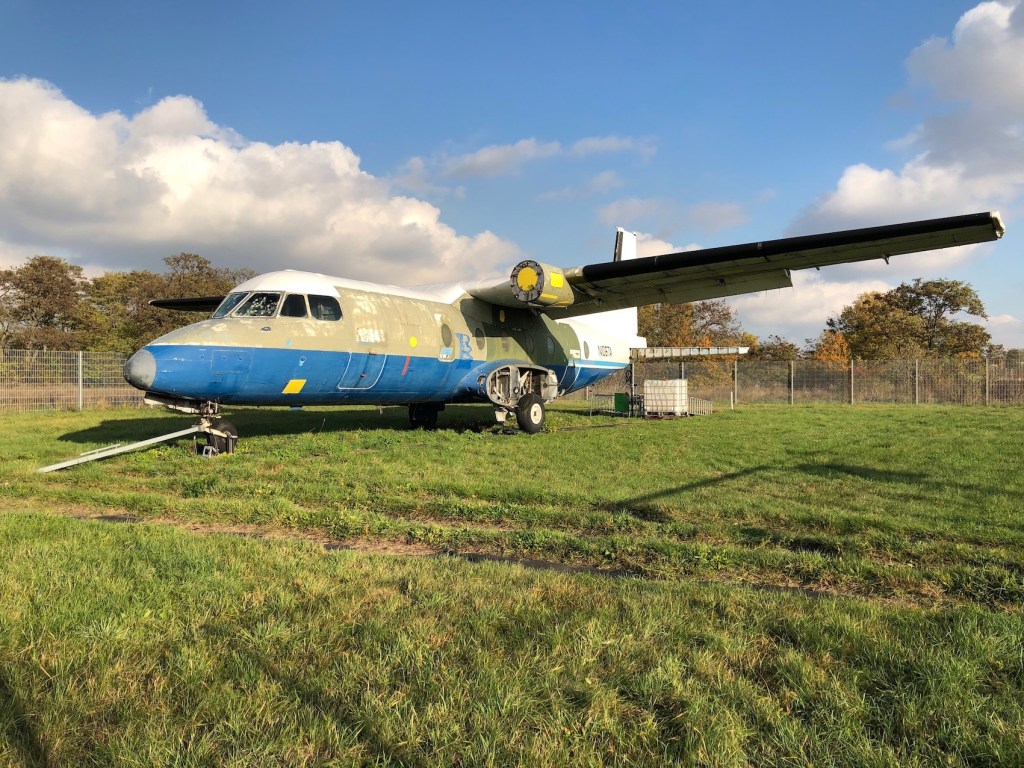
In the time that remained we visited three other attractions. The first was Tempelhof Airport. As an avgeek I was particularly looking forward to this but when I got there the English tour had sold out. This was a shame as the airport building, built in the 30s, is a 1.2km long arc shape and a truly massive bit of architecture. It was part of Albert Speer’s plan to rebuild Berlin to the glory of National Socialism and as horrendous as that creed was, it left the city with some impressive, if not particularly pretty, buildings. Tempelhof closed as an airport in 2008. Some eleven years on there are still signs to departures and arrivals and, from what I could see through the windows, retains its check in desks and passenger concourse. The airfield itself was turned into a public park. Not that they did much to it. It too is much like the terminal that served it in that it is largely unchanged. Airport signs are still evident, as are the markings on the two parallel runways. The old fire service training aircraft was left behind too and can be found rotting away in one corner of the field. The park is popular with the locals and whilst it was a shame to miss out on the tour of the building, wandering round an airfield with such an interesting history was still a rewarding couple of hours. In 1949 when the Soviets in effect blockaded West Berlin, Tempelhof along with Tegel and Gatow airports was of vital importance. For its part in the Berlin Airlift, Tempelhof deserves to be remembered.

Tempelhof Airport. You can only get the entire building in the frame if…
…you use the panorama setting on your camera and stand quite a long way away from it.
This Nord 262 used to belong to the Tempelhof Fire Service. It’s not going anywhere soon.

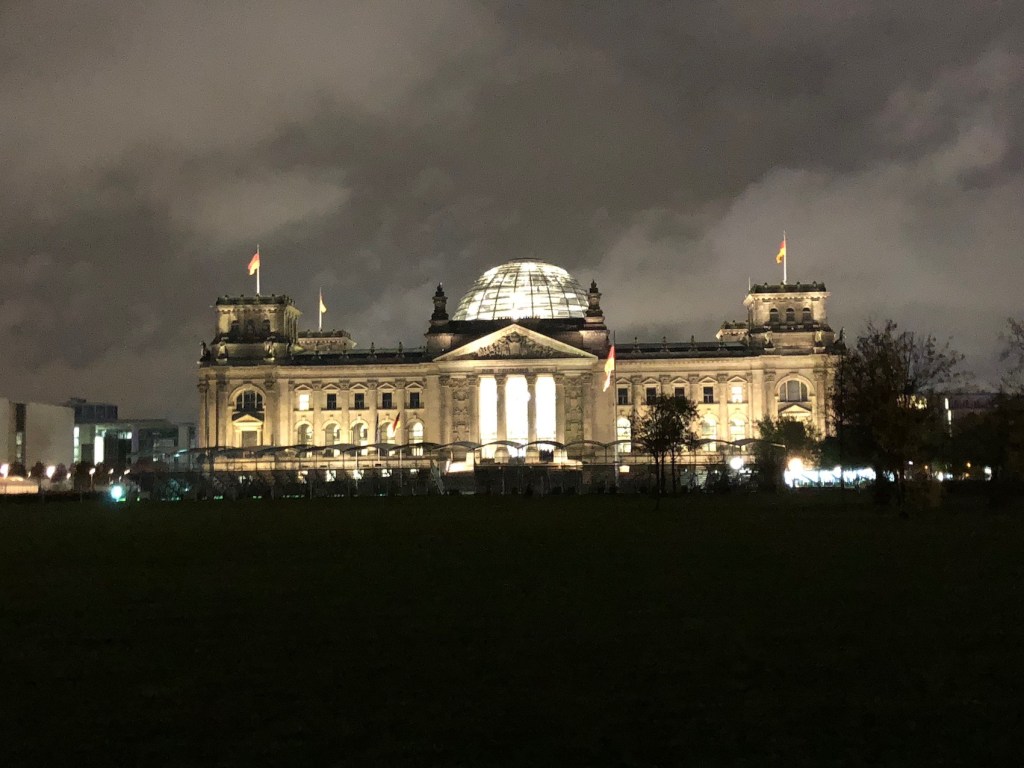
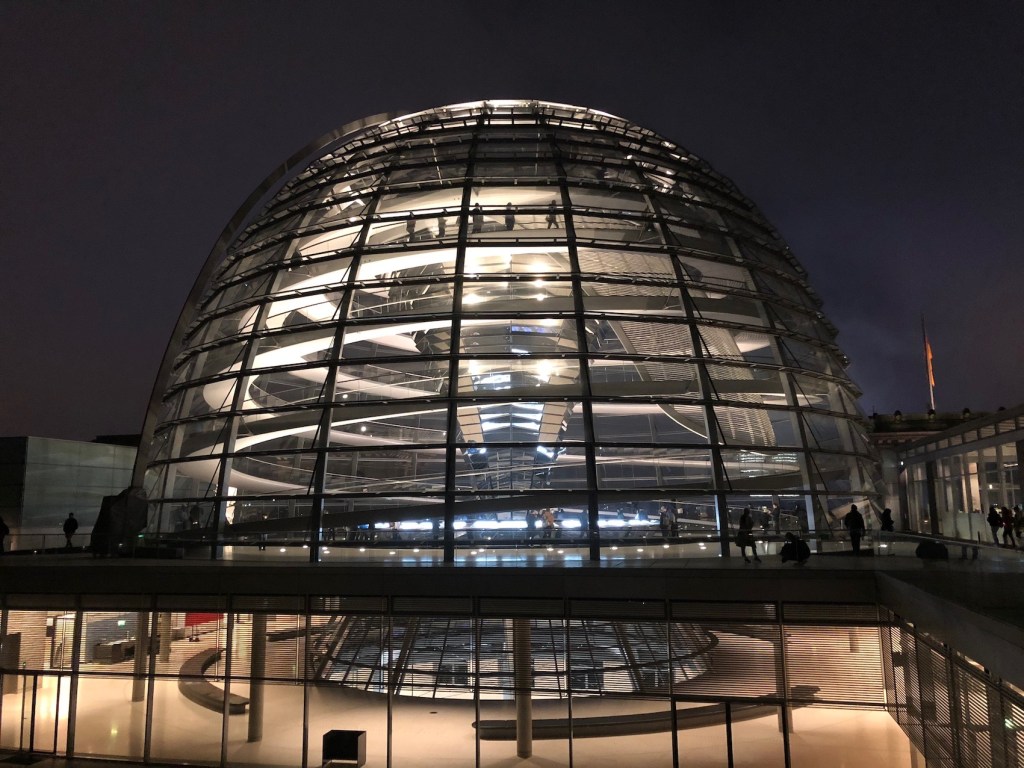
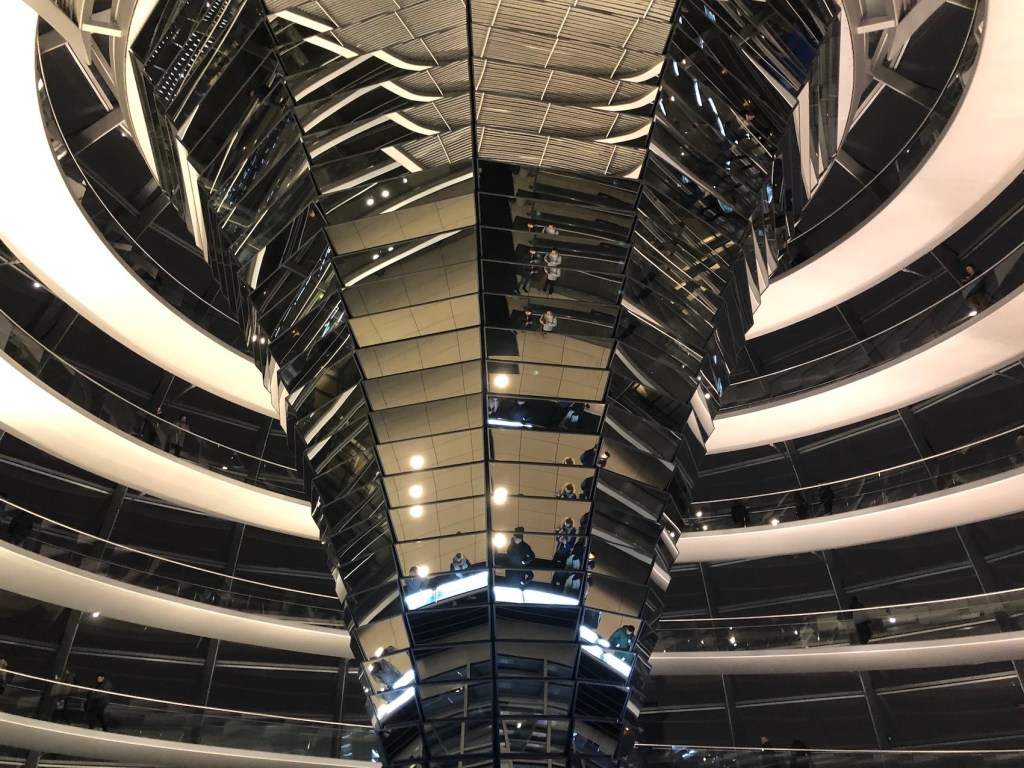
In the evening we visited the Reichstag Dome. Germany’s parliament moved back to Berlin following the reunification of Germany in 1991. Later that decade, the old Reichstag (parliament building) was completely renovated. The architect was British, Sir Norman Foster. Foster retained the towers on each corner and the traditional frontage of the building but had a blank canvass for the rest. On the top of the building he placed a glass dome with 360 degree views to represent the reunification of Germany. You can request to visit the dome. It is a popular thing to do so worth planning ahead for and is free. We could only get a timed slot on the Sunday evening. It is most certainly worth it though. From a distance the dome might seem out of place on what from the outside looks like an old building. Up close and inside, however, it looks magnificent. An audio guide explains things as you wander up one of the spiral ramps to the top. Due to the dark and misty conditions it was difficult to identify the buildings that were being pointed out but that didn’t really matter. The dome itself was impressive enough. An array of mirrors hangs from the centre reflecting so much light down on to the Bundestag below that a large shade, which follows the sun, had to be installed to prevent Germany’s politicians from being blinded. You’ve got to jump through a security hoop or two to get there but it was more than worth it.

The Reichstag complete with glass dome.
It is quite magnificent when you get up close and personal, both outside…
…and in.

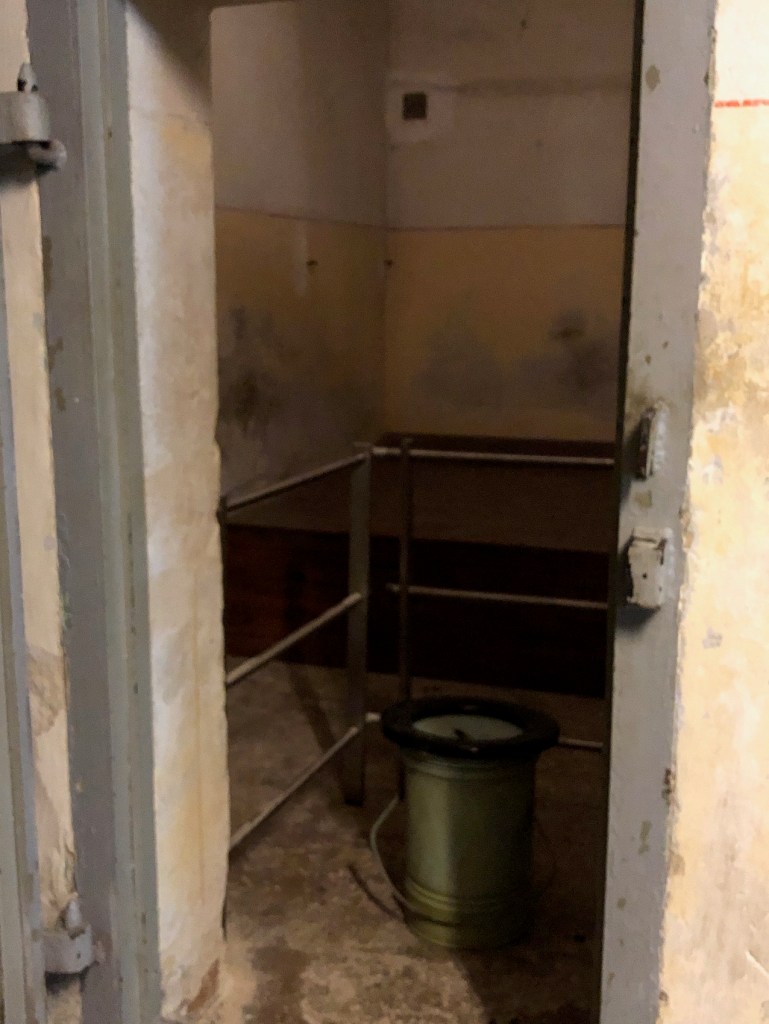
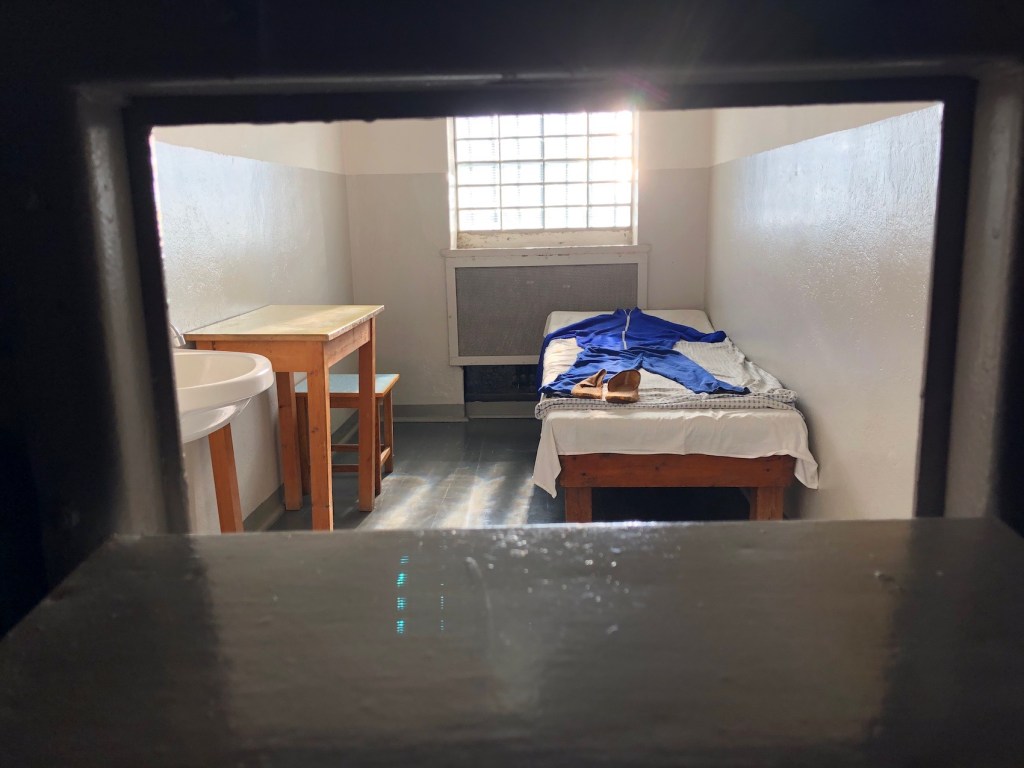
Our last ‘attraction’ was the Stasi Prison in Hohenschonhausen. This tells the story of the political prisoners who were incarcerated there between the end of the second world war until the reunification of Germany. You need to take a tram to a nondescript area in the East of the city to where an old factory had been repurposed into a prison. The Soviets controlled it until 1951 when it was handed over to the Stasi, East Germany’s secret police force. The tales of Soviet mistreatment of the prisoners were horrendous but somehow the East German’s psychological torture of just about anyone they suspected was more sinister. Physical torture wasn’t particularly effective in soliciting information so the Stasi developed techniques whereby the prisoners were kept alive but completely isolated from other human contact. After weeks or even months the interrogation would start by which time a prisoner would be far more likely to crack. The visit was a fascinating one but it only served to emphasise that Socialism and the hard left is no better than Fascism and the extreme right.

Russian cell. Five or six inmates, filth, regular beatings.
East German cell. One inmate, clean, no beatings, almost total isolation. Guess which one was most effective for extracting information?

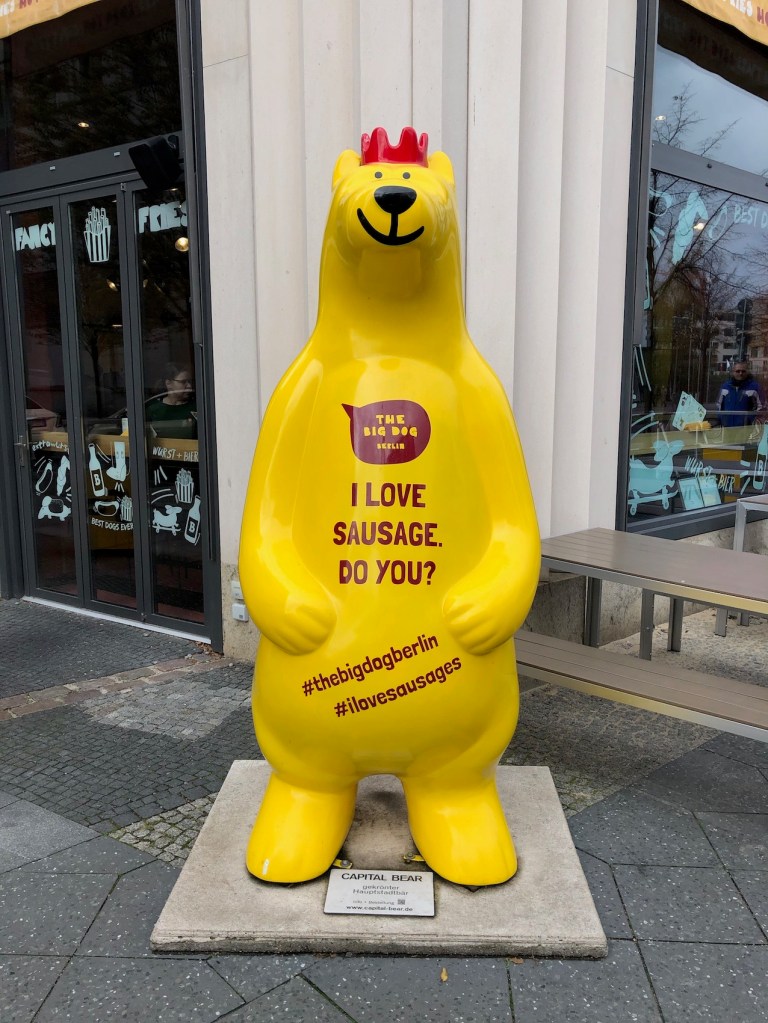
You will not be short of things to do in Berlin. Neither will you be short of places to eat. Germany is not overly renowned for its cuisine. Despite this, Berlin is blessed with twenty-three Michelin Star restaurants and despite my natural reluctance to spend money on fancy food, we went to one of them. You can read about that experience in the blog before this one. As for the rest of the time, Berliners love their sausages, especially with a mild curry dip. Currywurst can be found all over the place, as can kebab shops thanks to the large Turkish community. That aside there is the usual mix of world cuisines to choose from, so much so you can avoid sausages altogether if you wish. The Germans also produce a vast range of beer to wash this food down with. We visited a Munich style beer house near Alexanderplatz just because it was there. Sadly, we found it full of British stag groups which probably meant it was quite an authentic Bavarian experience.

Berlin in a nutshell.

For the second time in my life, Berlin delivered. It’s hard to think of a city that can match it for things to do. I may have to make an effort to go back. If nothing else I want to do the Templehof Tour but there are many other things we didn’t see on this visit. I’ll maybe try and choose a week when Eisbaren Berlin are at home too.

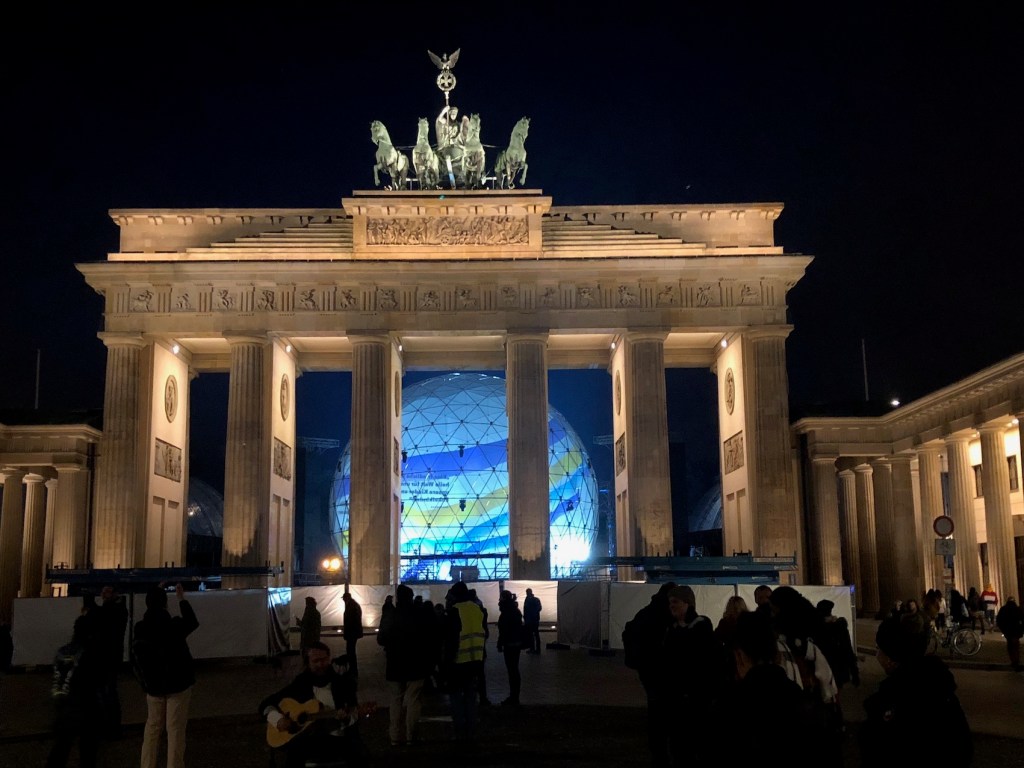
Brandenburg Gate. The symbol of division thirty years ago, now a monument to a confident, unified city.

Michelin Star

Those of you who know me will be well aware that over the years I have developed a classic case of middle aged spread. Whilst it is increasingly common these days, I’d much rather not have a belly that sticks out and I would be in denial if I were to ignore its existence. Some gentlemen get a beer belly after years of downing more than the recommended intake of alcohol but not me. My belly is down to eating more food than I needed over the course of my adult life. The thing is, whilst I like my food, I’d hardly describe myself as a foodie. I can get more pleasure out of a plate of banger and mash than something that has been concocted with the utmost culinary skills on programmes like Master Chef. Haute cuisine can be a work of art but where’s the substance? I’ve avoided Michelin Star restaurants for that very reason. It seems odd that the ultimate accolade for a restaurant is the award of one, two or even three stars by a French tyre company but those stars allow for those restaurants to charge top dollar for a huge plate upon which is placed a rather small amount of food. It might be visually appealing but whether or not it tastes good is surely subjective. I was in Berlin recently. German food tends to be no-nonsense stuff like sausages, sausages and more sausages. Berlin in particular likes to serve its sausage with a bland curry sauce. The hundreds of outlets that serve currywurst are hardly likely to be awarded a Michelin Star any time soon. Berlin is a big place though and it turns out there are twenty-three establishments that have been awarded one or two Michelin Stars this year. Great places for me to avoid then? Perhaps not…
Bieberbau Restaurant featuring Herr Bieberbau’s fine plasterwork.

My travel partner for this Berlin trip was my son Nicholas. He is a well travelled chap in his own right and a bit more adventurous than me when it comes to food. Not long back from Peru, even he couldn’t eat the guinea pig that was on offer but stated that the alpaca burger he tried was delicious. He has been known to splash quite a lot of money to eat at Michelin Star restaurants in various locations and was keen to try one of those twenty-three establishments in Berlin. I must admit I was a bit sceptical but a quick look at the menu of the one he had chosen suggested that there might be one or two things that I could eat. It might have been a case of knowing where the nearest burger joint was to cure the hunger that I was likely to be suffering from post meal but I told him to go ahead and make a reservation. The establishment was called Restaurant Bieberbau. The Bieber in question was not the much maligned Canadian ex-child star Justin but one Richard Bieber who, in the 1890s, was a master plasterer. The plasterwork is indeed quite spectacular once you’ve entered what is, from the outside, a rather unassuming restaurant amongst the residential apartment blocks in the suburb of Wimersdorf. We went in and were shown to our table. It was busy for a November Thursday evening – soon every table would be occupied. It seems some Berliners are not just satisfied with endless sausages. Whilst neat and tidy, there was nothing in particular to suggest the restaurant was grander than any other. The service was pleasant but quite informal. We were offered an aperitif. We chose something pink and fizzy which was a nice way to get things going.

Our choices for the evening. Mix and Match allowed, thankfully.
Aperitif and amuse bouche. Not hard boiled eggs.
Hors d’oeuvre. I don’t know what it was but it tasted nice.

We looked at the menu. There wasn’t a whole heap of choice. There were two fixed menus of five courses and that was it. You could choose three, four or all five courses and you could also mix and match from both menus. This was a bonus as, apparently, it’s not often you can do that in this type of place. Whilst we were deciding what to order we were brought an amuse bouche each. I maybe a bit naive but I’d never hear the term ‘amuse bouche’ before, though my rudimentary French translated it to ‘mouth amuser’. Ooer missus! A small hors d’oeuvre in effect, the chef had chosen to amuse our mouths with some savoury chopped vegetables on of all things a small meringue. Well, I for one was amused. We both plumped for five courses, made our menu choices and awaited the first course in anticipation. However, before it arrived we were presented with another amuse bouche! I’m not sure what it was but it reminded me of bhel poori, an Indian snack, only without the spices. For the first course which now technically was the third, we’d both plumped for the Pate of Flaming Venison. Apart from the wobbly fat that held it all together, it was delicious. Pate containing pate? Inspired! To accompany this we had been given a basket of various breads and something to spread on it which wasn’t butter. Nicholas is better informed than me and said it was pumpkin cream. Gosh! It was nice enough but I’m not ditching the Lurpak just yet. Two of the three types of bread passed muster though the other one was so full of seeds it was a bit like the stuff Elaine makes to feed the birds.

Assorted bread with pumpkin cream.
Pate of Flaming Venison with Chicken Pate and green bits. Served with jelly. Yes, jelly.
Frothy Onion Soup for me, something decidedly fishy for him.

For the second course I chose the Soup of White Onions with Beef Tatar, Fine de Clair and Chervil. I’ve no idea what fine de clair is but I’m aware that beef tatar is raw beef. The soup itself had been whipped into a froth and being white looked a bit like a bowl of spit or, if you want to be a tad less gross, a vanilla milkshake. It tasted great though, even the bits of raw mince it contained. It must have been the fin de clair that made the difference though onion soup is usually pretty awesome anyway. Nicholas went for the trout which got the thumbs up. I really don’t like fish and although I did try a bit you’ll have to take his word for it. We accompanied our food with drinks that were quite reasonably priced. Nicholas went for red wine whilst I stuck with good old fashioned lager. I believe a lot of these restaurants charge a lot of money to do ‘wine pairing’ so top marks to Bieberbau for letting you wash their food down with whatever you fancied.

Wine pairing. I chose lager wine to pair with all five courses.
Course Three. Quail for him, bavette for me. Did I eat those sprouts though?
Nope.

On to what you may describe as the main course. I felt I couldn’t go too far wrong with Bavette with Red Win Jus. The fact it was served with Brussels sprouts was a little concerning as no one in their right mind likes Brussels sprouts but basically we were talking meat and two veg here. Of course when we have meat and two veg normally, say a Sunday Lunch, the meat comes with a pile of roast potatoes as well as the veg but this was not a Toby Carvery. The two slices of beef flank were of course cooked to perfection, and that to me means very definitely not bleeding. A bit of raw beef in the soup was fine; I’d have been less than enamoured had my Bavette been prepared with only a cursory trip to the griddle. As for the veggies, well, the artichokes were good but the sprouts were sprouts and as such I had to push them to one side. There was also some green paste that it was all served on which was probably pea puree. It was ok but no substitute for the missing potatoes. It’s a good job for the Bieberbau that I’m not awarding Michelin Stars. Lack of potato would be a severe black mark. Red Wine Jus? It’s basically gravy, nice gravy but gravy nevertheless. I think I’d prefer it if they’d called it gravy but Michelin is French so I guess they’ve got to pamper to those Gallic types. Nicholas went for the Quail. He liked it but I think he would have preferred the beef.

Cheese course. Conventional for him, extraordinary for me.
A pre-pudding. I like the idea of pre-pudding.

The cheese course came next. Nicholas went for a rather conventional organic cheese collection. Several cheeses served with some carrot and pear concoction. I went for the Aged Jersey Gouda which was a bit of a revelation. Some croutons were covered in a cabbage slaw and then topped with grated cheese. It was fantastic. I don’t know if it was the aged Gouda or what but it had been a good call. With just the last course – dare I call it pudding? – to go, we were presented with coffee that looked like sump oil. It turns out it was meant for the table next to us so it was a little bonus. Well, I say bonus. I don’t drink coffee so Nicholas drank both of them. I’m not sure he would describe it as a bonus to be honest. I don’t think he slept for the following 36 hours. Before our pudding arrived we were served a pre-pudding. I’m not sure it counts as an amuse bouche but a mixture of pear, blackberry and vanilla amused my bouche very nicely. The ordered puddings subsequently arrived. We’d both gone for the Baked Apple with Zotter Chocolate served with bread ice cream. I have a sweet tooth so I felt I was going to be on to a winner with that. I was. Bread ice cream though? It was very good. Who’d have thought?

‘Bonus’ coffee/Trabant sump oil.
The actual pudding. Bread ice cream anyone?
Petit fours. Call me fussy but whilst the jelly cubes were great I’d have preferred the pastry thingies to be a little less well-fired.

A little aperitif and some petit fours later and we were done. It had taken the best part of four hours which sounds a long time but was perfectly paced. Our five courses turned out to be nine with the amuse bouche, hors d’oeuvre, pre-pudding and petit fours, plus a replenished bread basket. It had indeed been small portions on big plates but overall there was more than enough food to satisfy my legendary hunger and the McDonalds contingency stop on the way back to the hotel was not required. The service was good, friendly and not over-pretentious. Will I be going to more Michelin Star restaurants in the future? Maybe. I enjoyed the experience which was, for me at any rate, a unique one. I also enjoyed the food far more than I’d expected. I don’t see myself becoming a foodie just yet though. We went to a burger restaurant a couple of day later where I enjoyed the food just as much. It was, however, a good burger joint. Michelin recommended.

Zummerzet

West Somerset on the road to Back of Beyond

When I retired it was my intention to see a bit of the world. It’s a big place and there are plenty bits of it I haven’t discovered. Some of those bits are not too far from home, in fact discovering bits of Britain to which I am unfamiliar can be as much fun as visiting places a ten hour flight away. To be fair, I wasn’t completely unfamiliar with Somerset. Many years ago I went there with my mum, dad and sister, staying in Weston-Super-Mare. I know we visited Cheddar Gorge and the Wookey Hole Caves but more than that I can’t remember. I believe it was the last holiday I ever spent with my dad. Earlier this year I got a bit of a preview of the west of the county when I went on a steam train excursion that took me from London to Minehead and back. What I saw of Somerset looked very nice but there wasn’t much exploring to be done other than the couple of hour we had in Minehead. With some time off in October, Elaine and I decided that Somerset might be a good place to spend a few days. Airbnb came up with a place that looked ideal so we booked it along with flights to Bristol and a hire car. Once safely ensconced in our Vauxhall Corsa which unusually but thankfully had a spare wheel, we set off from the airport to discover the county of Somerset (and a bit of Devon).

You can wait a long while for a bus round here.

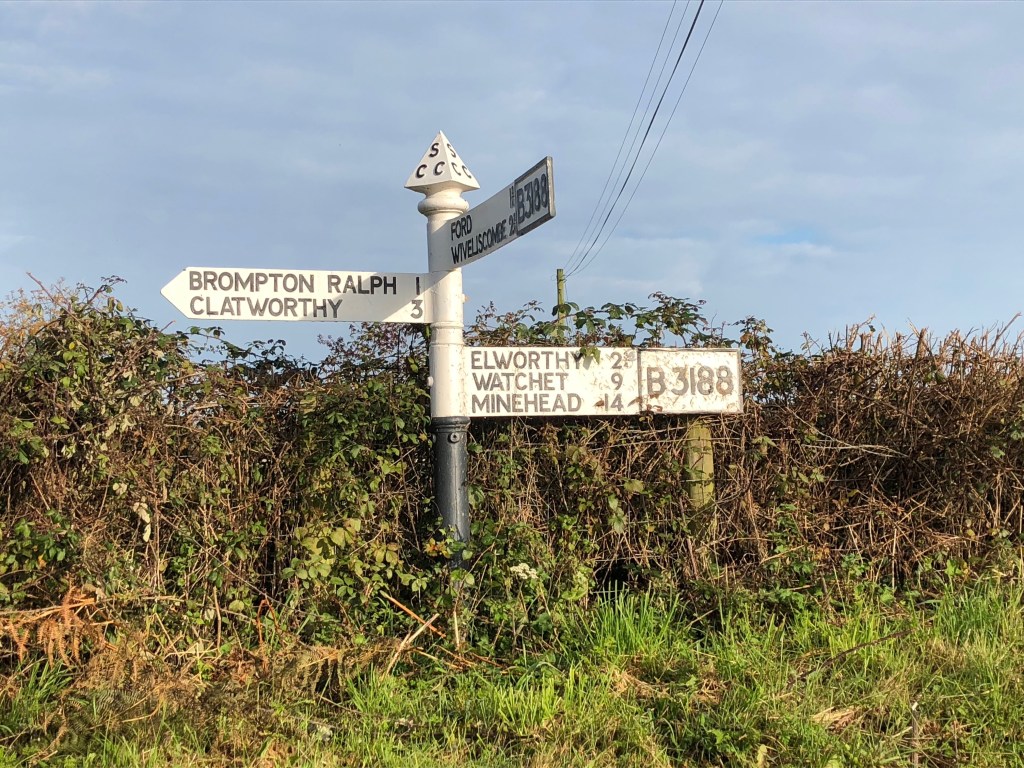
It turned out that it is quite a big place. The Airbnb was situated a mile or so outside Brompton Ralph. No, we had never heard of it either. This is unsurprising as despite being only ten miles from the county town of Taunton, Brompton Ralph is the epitome of Back of Beyond. The instructions as supplied by the Airbnb owner were accurate which is just as well as Google Maps had some funny ideas about what constitutes a semi-decent road round there. Even with the instructions there was no avoiding single track roads with, if you were lucky, passing places as long as you didn’t mind disturbing the hedge. Speaking of which, the hedges were frequently high making a drive along such lanes rather claustrophobic and, at times, scary, especially when a tractor was coming the other way. When we found the accommodation, an hour and a half had passed since we set off from the airport. Somerset is no Rutland. The accommodation was a modern annexe to the owner’s modern house set in a five acre garden surrounded by farmland. It was very comfortable and well equipped. There was no mobile phone signal and whilst good wifi was provided, the internet had two speeds: slow and oh for God’s sake. Not that this mattered of course, we weren’t there to phone anyone or watch Netflix. It got quiet and very dark at night. I saw the Milky Way. The real one, not the chocolate version.

Dunster Castle
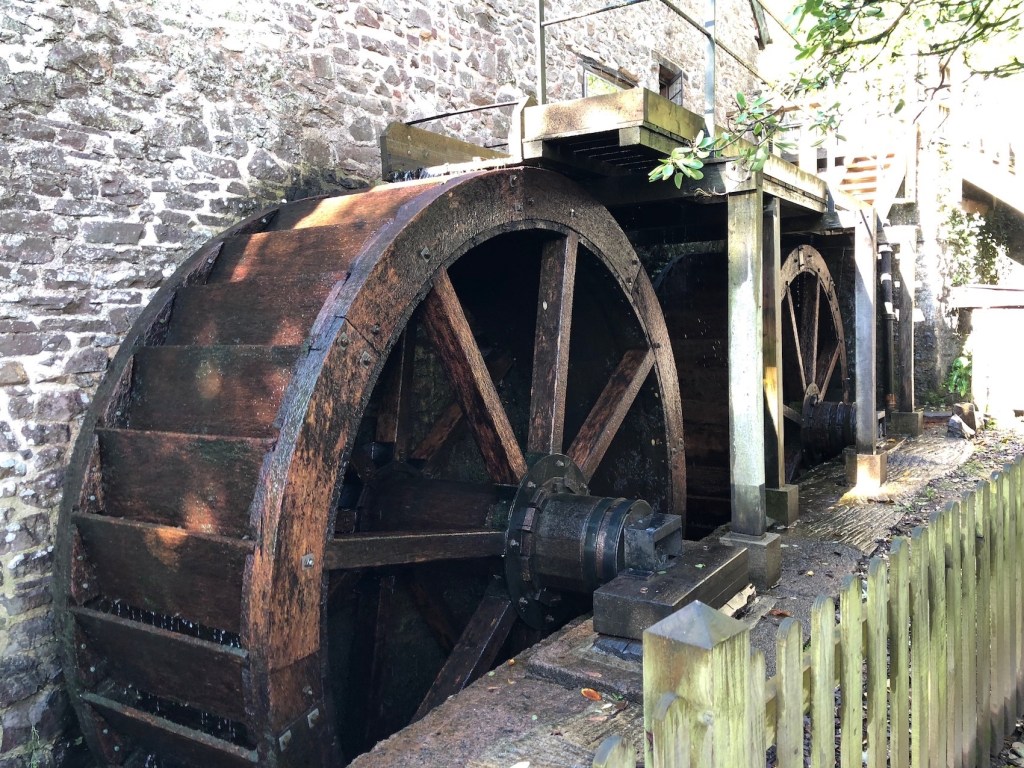
Traditionally milled flour was available

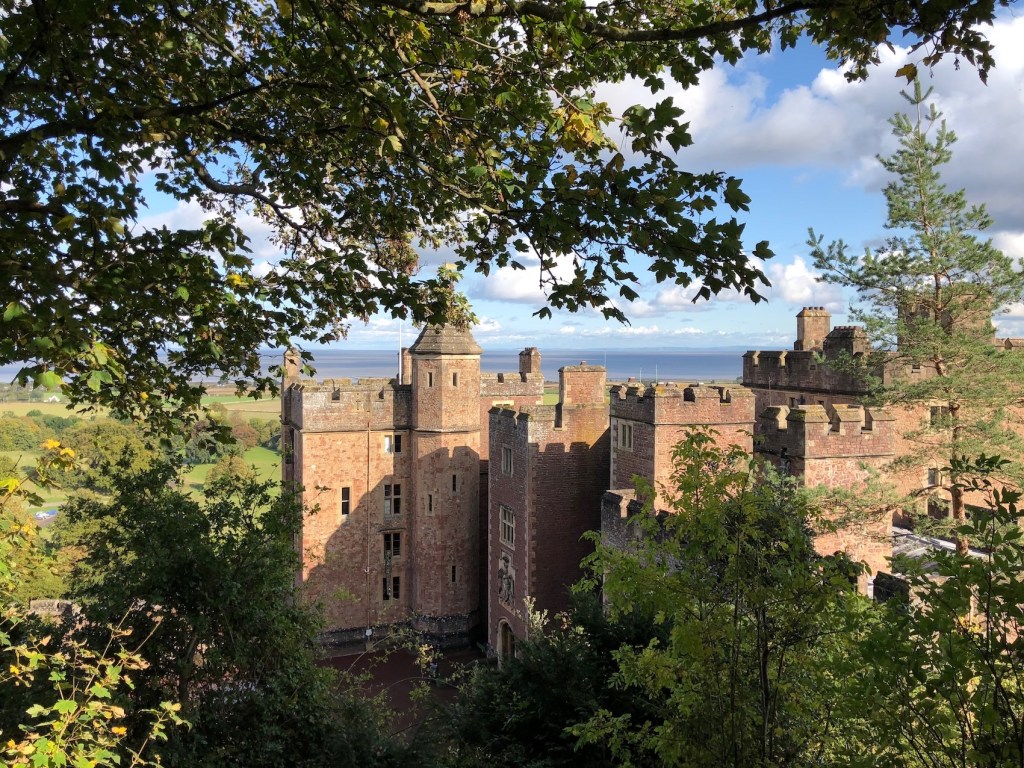
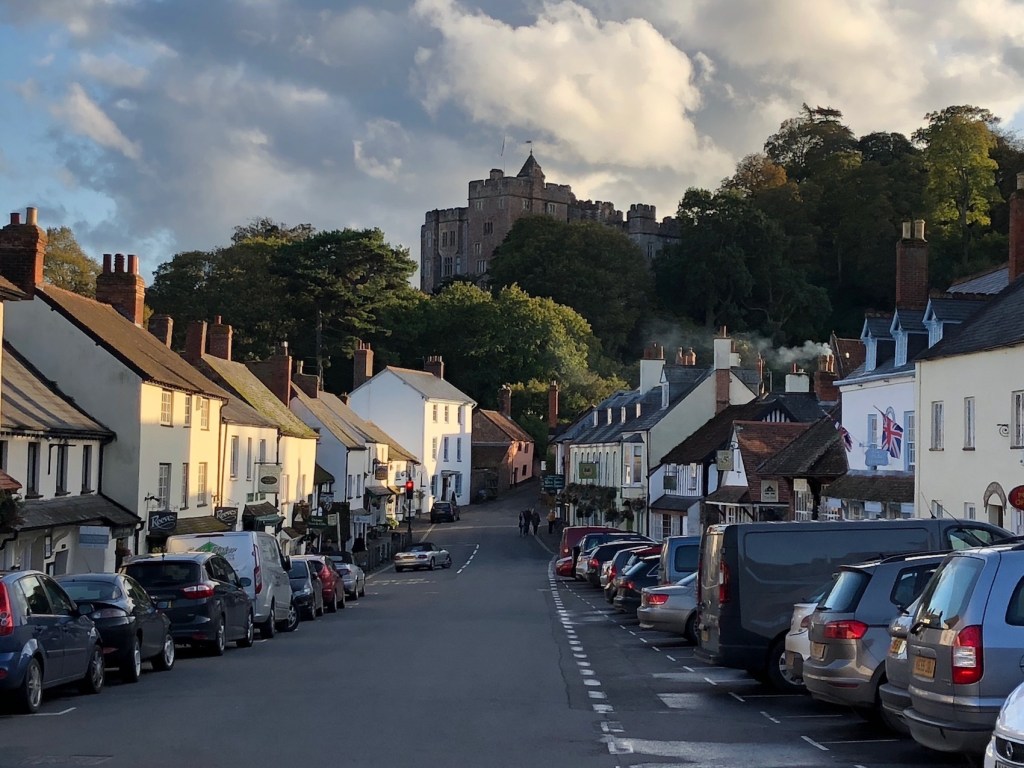
The following day we began our discovery of West Somerset. Well, not quite. The hire car had a puncture. With no phone signal (I’m sure the owners would have let us use the landline had they been in at the time) there was no way to contact the recovery service so it was a case of changing the wheel myself. As mentioned, we were thankful the car had one, it is by no means a given nowadays. Wheel changed, we set off for Dunster Castle. This isn’t really a castle, though it once was, more a country house set on a hill or tor as they are known down there. It is owned by the National Trust and was doing a brisk trade on this October Saturday. It looks a quite a magnificent building from a distance and proved to be so close up too. The gardens are basically the sides of the tor and kept pristine despite the difficulties the gardeners must have in pruning the pansies on a near vertical face. We got on the attic tour which showed some of the rooms that have been left empty and unrestored and are just as interesting as those grand rooms with portraits of the family ancestors on the walls. If you like old buildings, this is a good ‘un. If you don’t it’s a nice place to have a wander around. As indeed is the village of Dunster at the bottom of the hill. It basically consists of two streets and relies on the tourist trade to keep its shops going but is none the worse for that. We went into Minehead for tea where I had the most enormous mixed grill. After it I vowed never to eat meat again. That lasted all of a day.

Dunster Castle overlooks Dunster village.

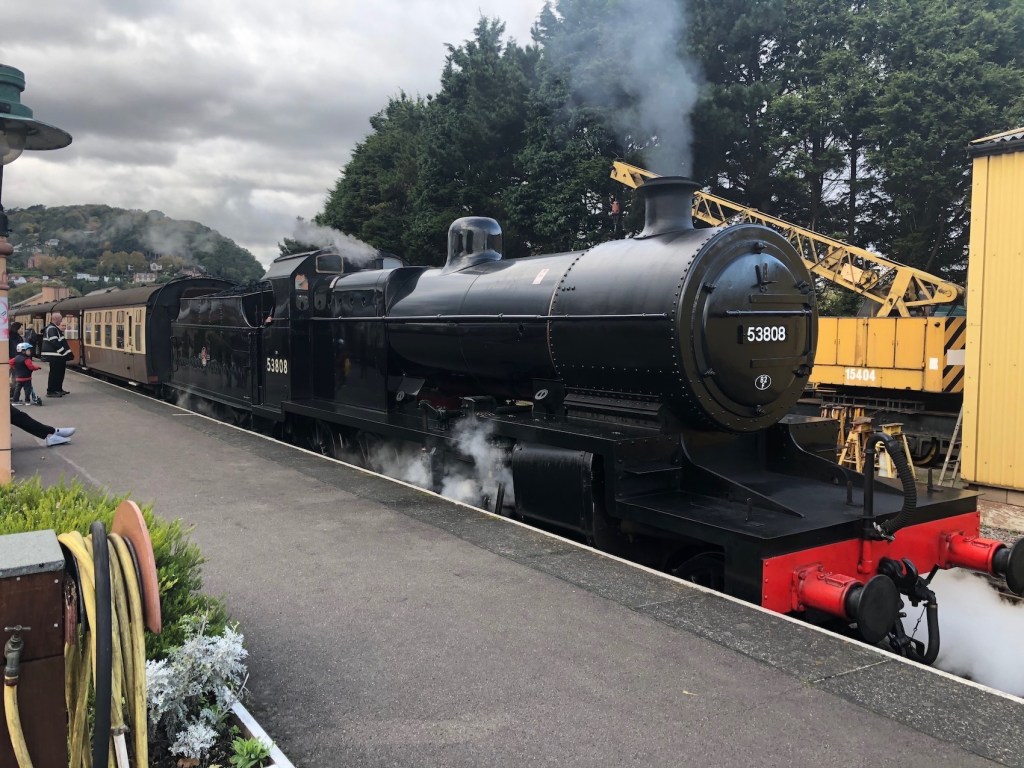
The following day just happened to be my birthday. What better way to spend it than messing around on old trains? I know I’d been on the West Somerset Railway’s track earlier this year but as we were so close it would have been rude not to go on it again. The WSR is one of longest preserved rail lines in the country at 22 miles. It runs from Bishops Lydeard in the south to Minehead on the coast and there are eight stations between the two. It is quite a big organisation with fifty full time staff and around a thousand volunteers catering for 200,000 visitors a year. Whilst it is loved by steam enthusiasts, families, day trippers and just about anyone else visiting that part of the country, it also proves a handy thing if you fancy a walk. We bordered the train at Bishops Lydeard and, hauled by the same locomotive that had been on duty when I was there in the summer, we chugged sedately to Watchet. Here we disembarked and set off to walk the eight or so miles to Minehead. The walk is part of the West Somerset Coast Path and, as you might imagine, follows the coastline though once you leave Watchet there’s a bit of woodland to pass through. Once clear of the trees there are some glorious views to be had across the Bristol Channel and of the Quantock Hills. There’s quite a lot of static caravan parks too but one of those in Blue Anchor did have a cafe where we had lunch. Once in Minehead we had a bit of time to have a wander around before boarding the train to take us the full length of the railway back to Bishops Lydeard. The train is limited to a rather pedestrian 25mph but with the smoke and steam from the engine up my nostrils I was hardly going to complain about the journey taking an hour and twenty minutes.

West Somerset Railway loco number 53808, affectionally known as Gladys (by me and me only)
Steam and old railway stuff. It brings a tear to the eye.
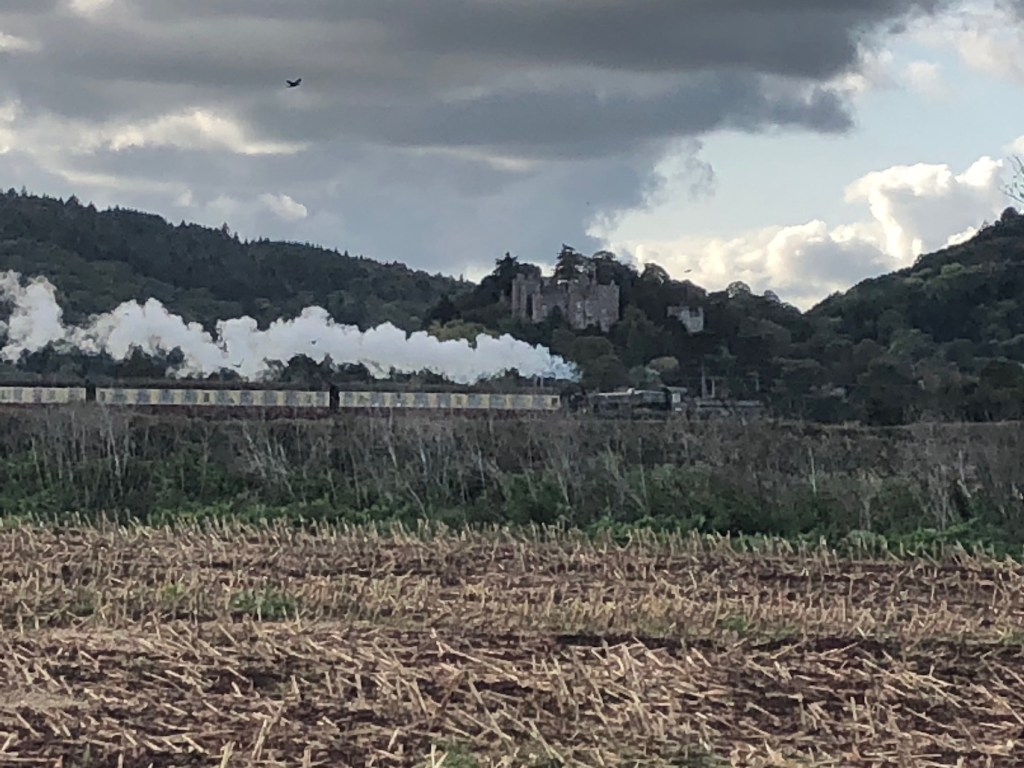
Gladys hauls the Down service past Dunster Castle as we took the coast path.

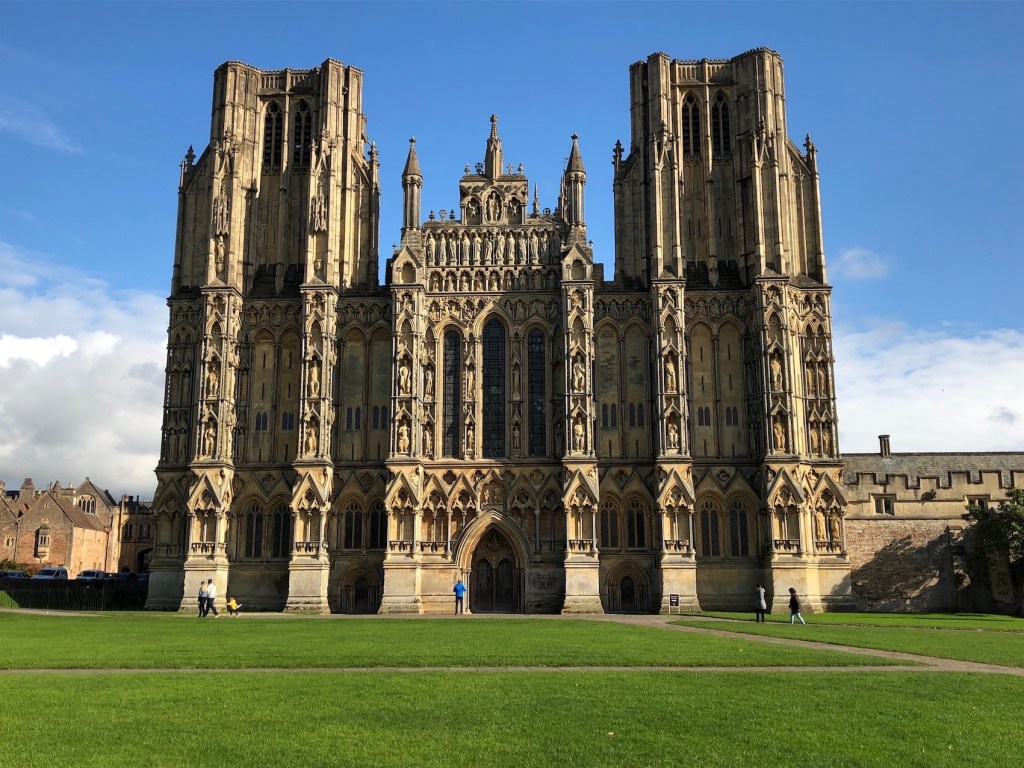
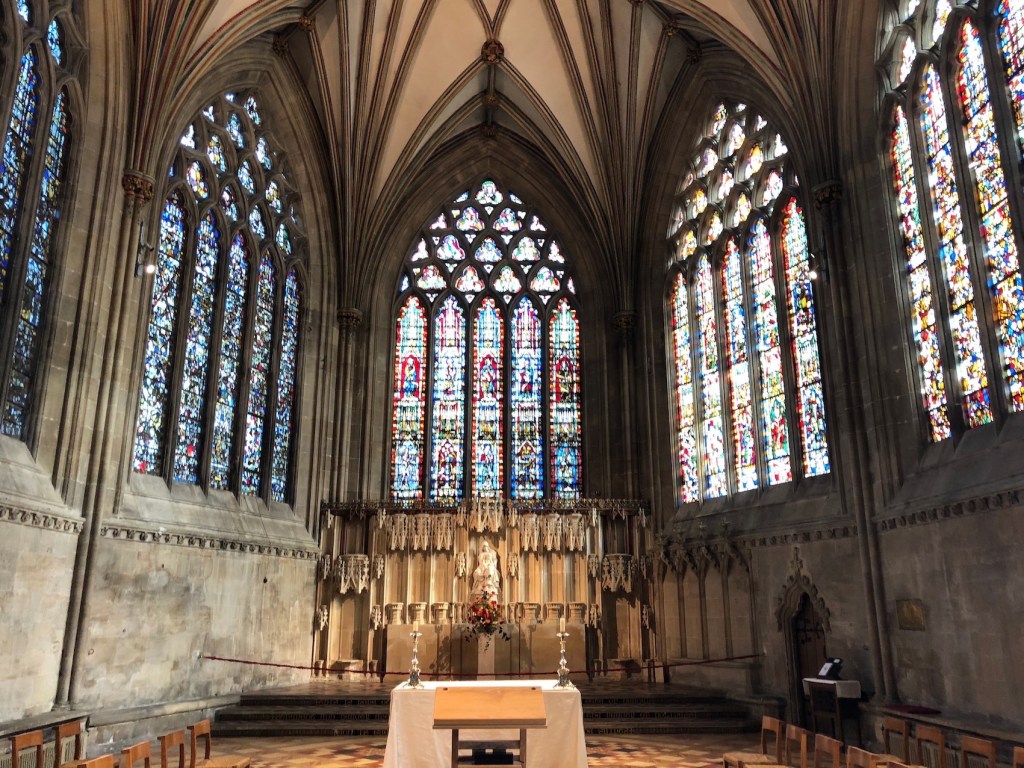
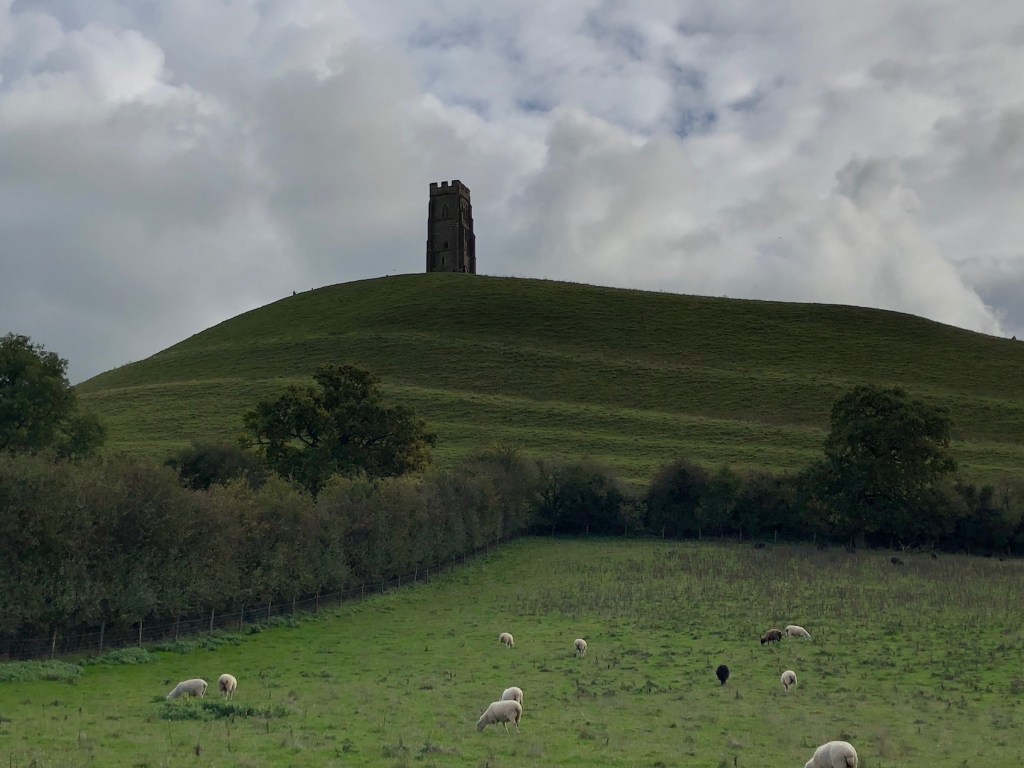
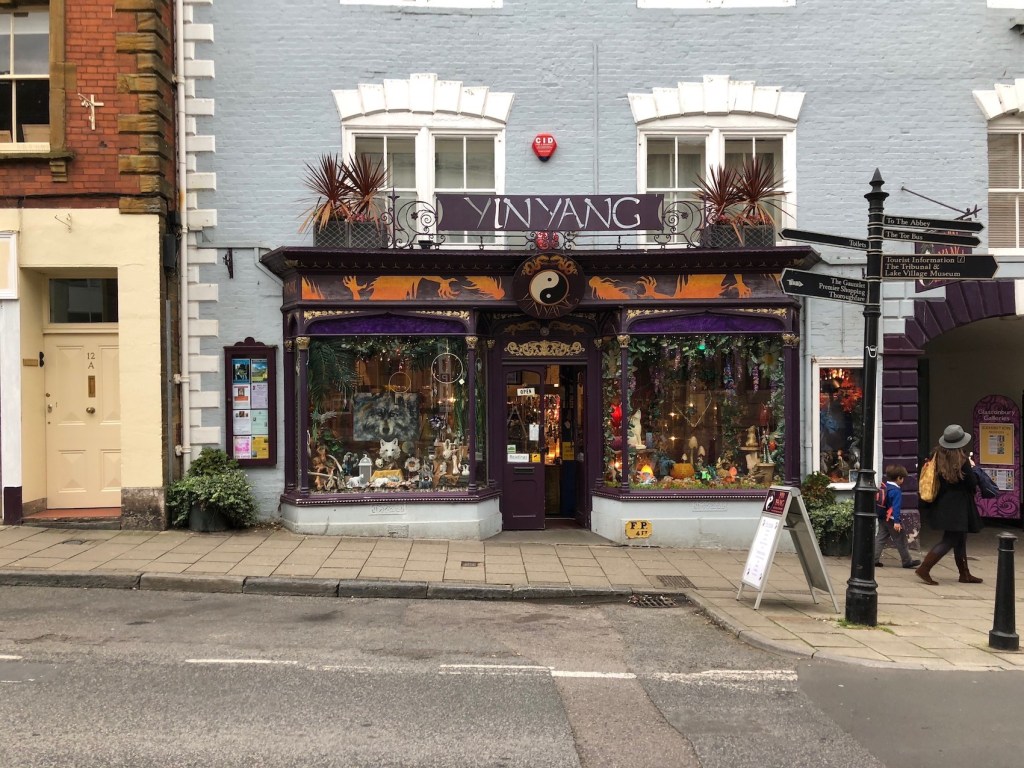
As I mentioned earlier Somerset isn’t particularly small and it was an hour and a half’s drive to Wells, our destination on the following day. Wells lays claim to being the smallest city in England though the square mile of the City of London means it loses out on a technicality. It’s a pleasant little place though with a whopping cathedral, and the adjacent Bishop of Bath and Wells palace wasn’t exactly bijou either. It doesn’t matter what your religion is or indeed if you don’t have a religion at all, the great cathedrals of England are really quite awesome. Wells is no exception and what’s more you can get in for free, assuming you have a sufficiently brass neck to avoid making the suggested donation that looks for all the world like an entrance fee. Fair enough. We paid up. There was a school concert happening which provided a pleasant musical accompaniment to our visit. It climaxed with the Circle of Life from the Lion King which makes a nice change from the hymns and stuff you normally get in a place of worship. We decided to abort our plans to head further northeast to Bath and instead headed back a few miles to Glastonbury. Instead of a big cathedral, this small town has a big hill called Glastonbury Tor towering above it. We walked up to the top and were rewarded with nice views over the Somerset Levels. We also walked back down again and ended up in the town which was, well, it’s hard to describe. I’ve never been to a place with so many pagan, hippie, new world and crystal healing shops. The tor has been associated with paganism and religion for millennia and the place is a mecca for your latter day tree hugger. Many of the better off hippies actually live there. King Arthur is buried in the grounds of the abbey apparently. Please excuse my scepticism. We stopped off in Wellington for tea on the way back. This was another small town but much more straight laced than Glastonbury. It had both a Waitrose and a Wetherspoons. More my sort of place I think.

Wells Cathedral. Impressive for a city the size of a postage stamp.
Quite impressive on the inside too.
Glastonbury Tor. An easy amble to the top.
Typical Glastonbury retail outlet. Yinyang hiddle hi po…

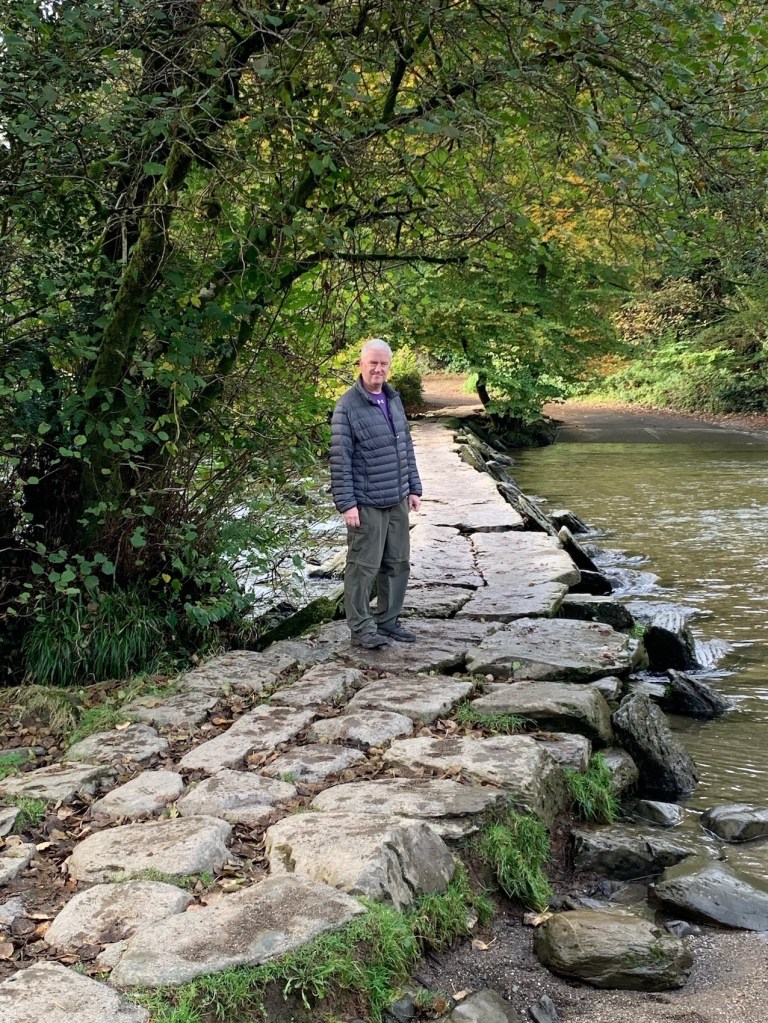
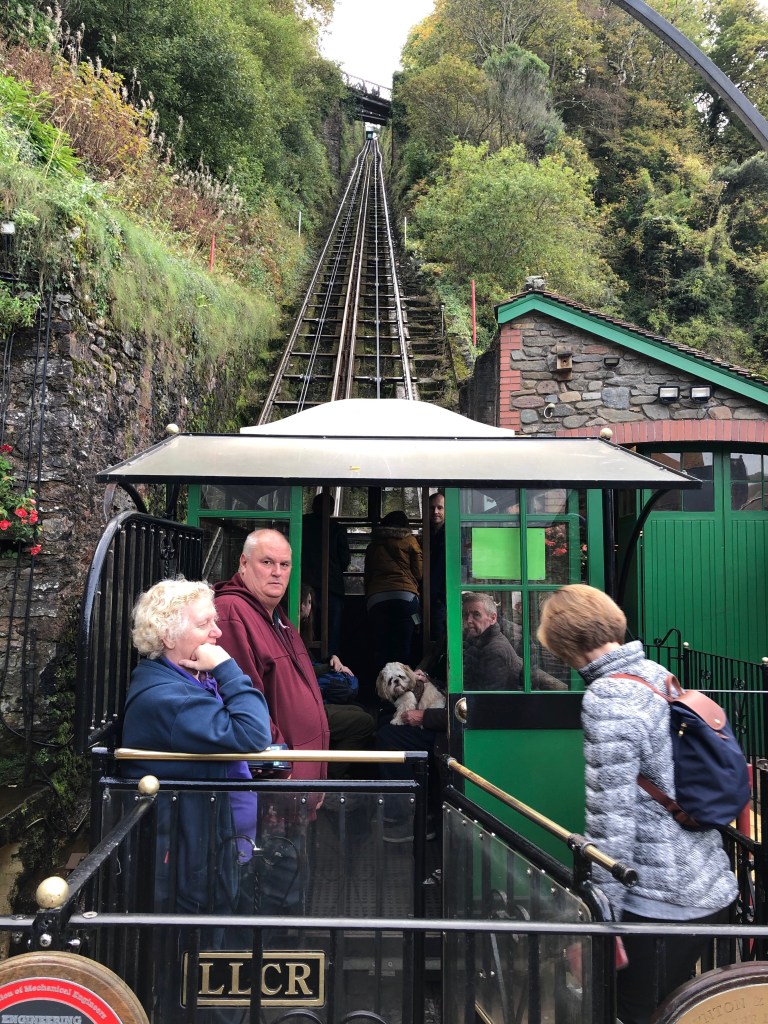
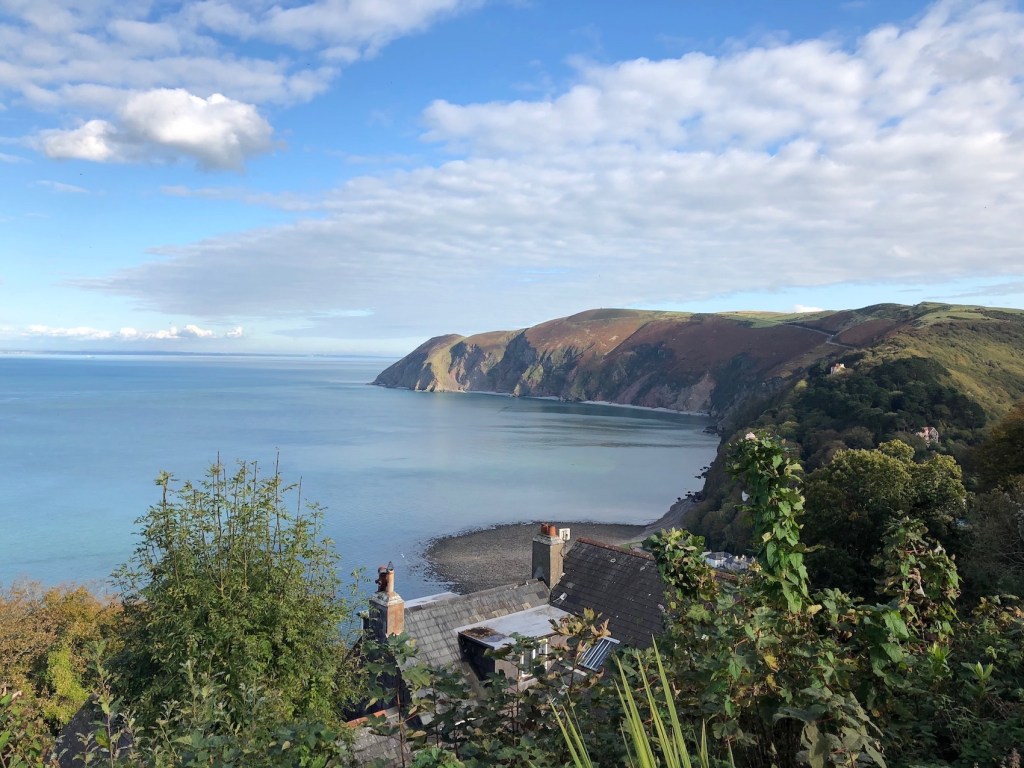
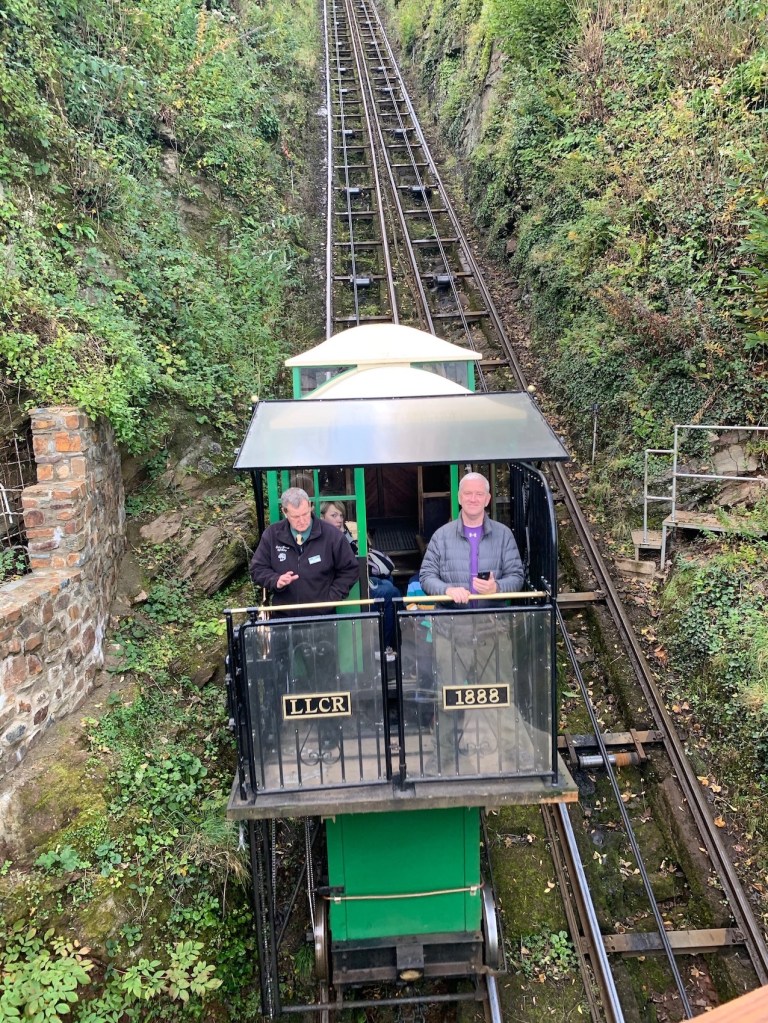
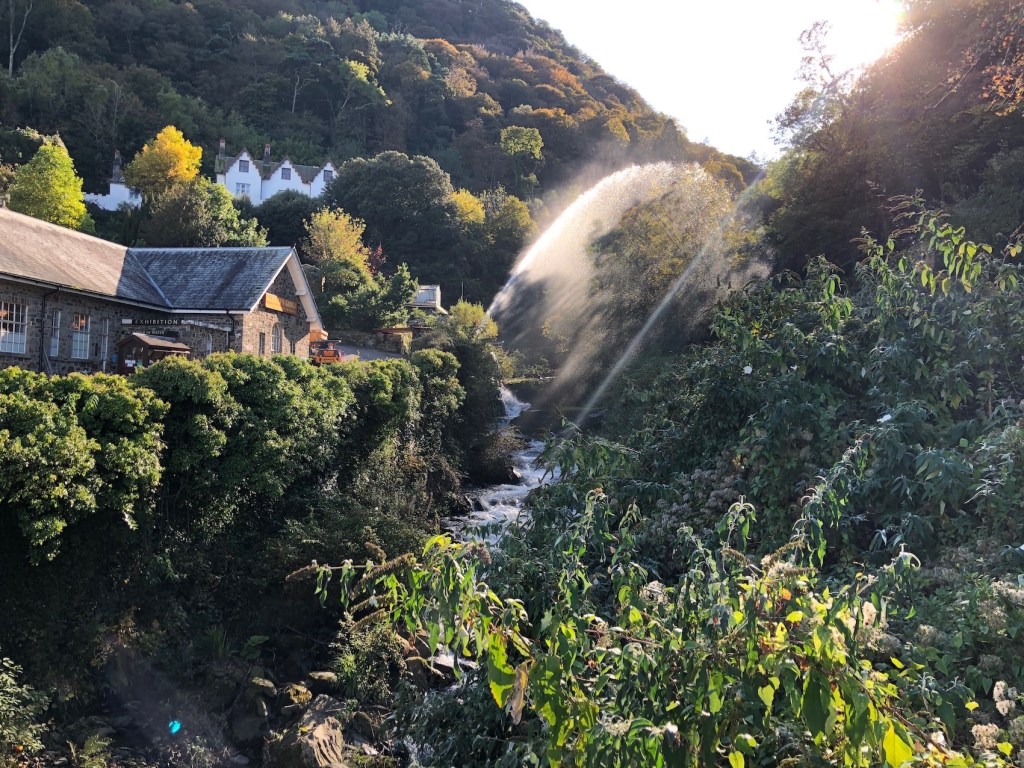
We spent the next day in Devon. I know I’m supposed to be extolling the virtues of Somerset here but Exmoor, most of which is in Devon, was just a few miles to the west and decided we had to go and have a look. Exmoor is Dartmoor’s less well known sibling but it fills all the criteria of a moorland national park. It’s got moors, though a lot of the land is farmed too. It is a bit remote, has small lanes, you are likely to have to avoid a feral horse or two and there are hidden towns that you’ve never heard of before. It also had a very nice area called the Tarr Steps. The steps referred to a clapper bridge across the River Barle. If you are unaware as to what a clapper bridge is, just think of a straight Stonehenge – piles of stones with big flat stones between them. A bit like a normal stone bridge really only with no mortar holding the stones in place. They regularly collapse whenever the river swells following heavy rainfall. The one at Tarr Steps is the longest one in the country. We did a little circular walk along both riverbanks and had lunch at the adjacent pub. It felt as tough we were miles from anywhere, probably because we were. After this we headed to Lynton and Lynmouth, twin villages on the coast, one at the top of a cliff, the other at the bottom. Between the two is the Cliff Railway, a funicular powered by water. It’s quite a simple concept – the two carriages are linked with a cable, the one at the top fills a tank with water, the one at the bottom empties its tank. The heavier car descends the track pulling the lighter car up. Once it reaches the bottom the operation is repeated and without the need for electricity the two cars spend the day ferrying people up and down the steep cliffs. Of course you don’t just go to Lynton/Lynmouth just for that. Well, I could but most people would want something else. You get that though with the views, not to mention a whole world of ice cream opportunities. It’s a nice place.

About the step out over the Tarr Steps.
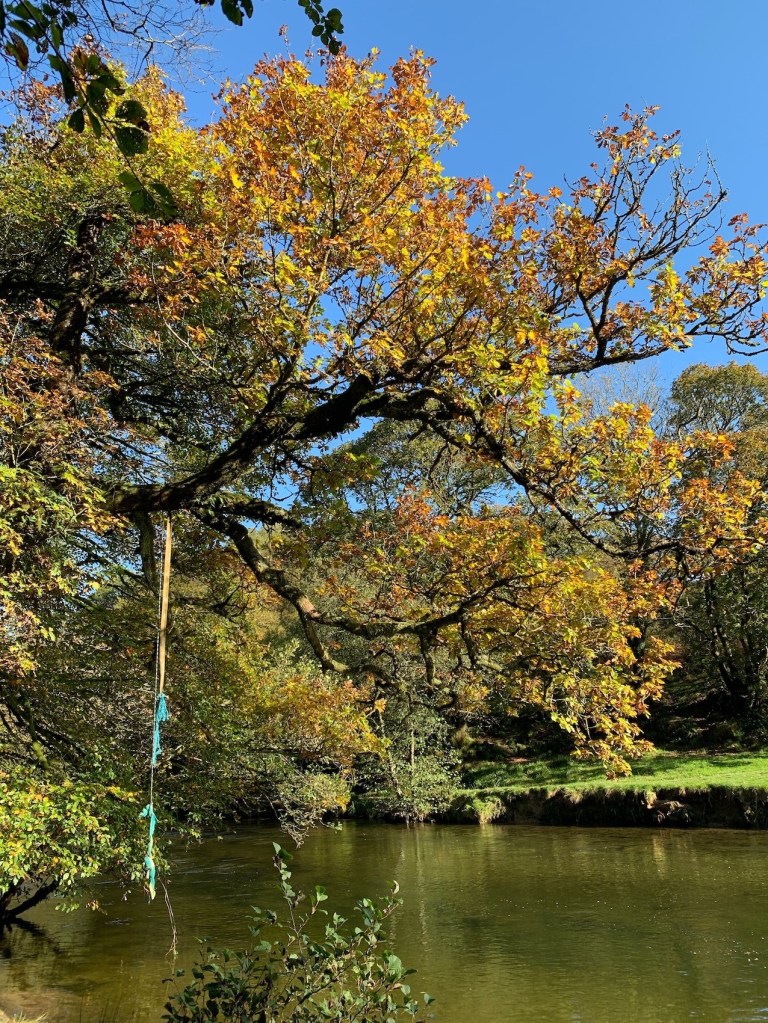
We declined the offer of the rope swing to get us to the other side.
Lynton and Lynmouth Cliff Railway. The longest and steepest water powered funicular in the world, not that there’s much competition.
Nice views from the top.
Who is that coming down?
Lynmouth valley. Water, trees, hills, six quid entrance fee.

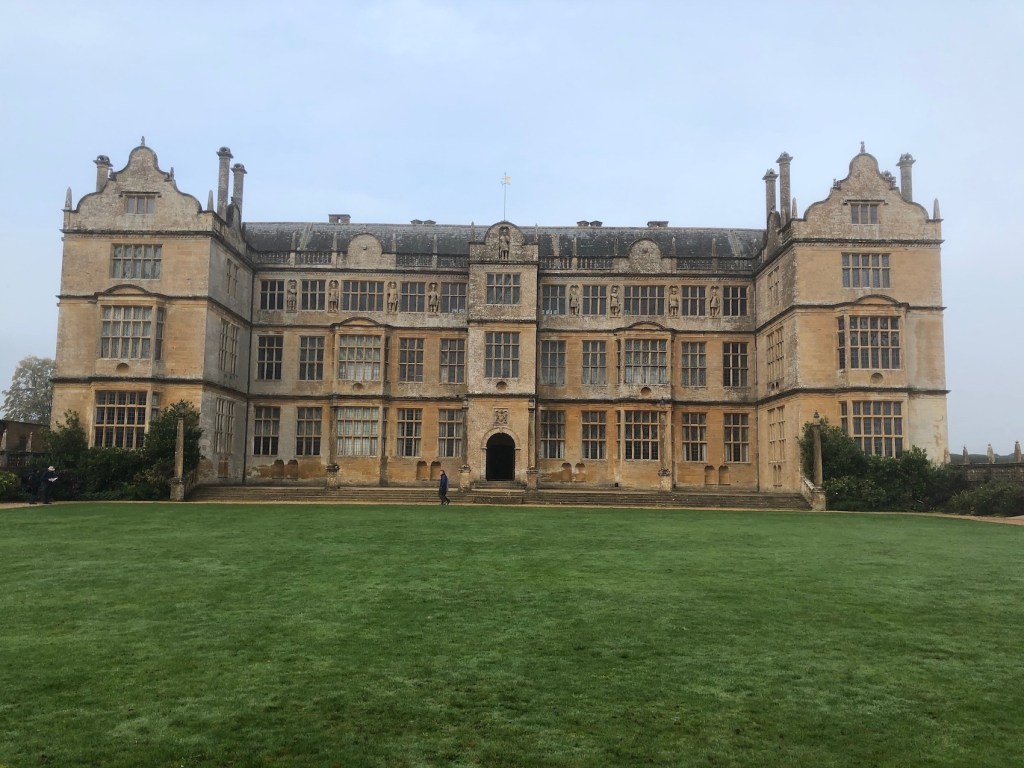
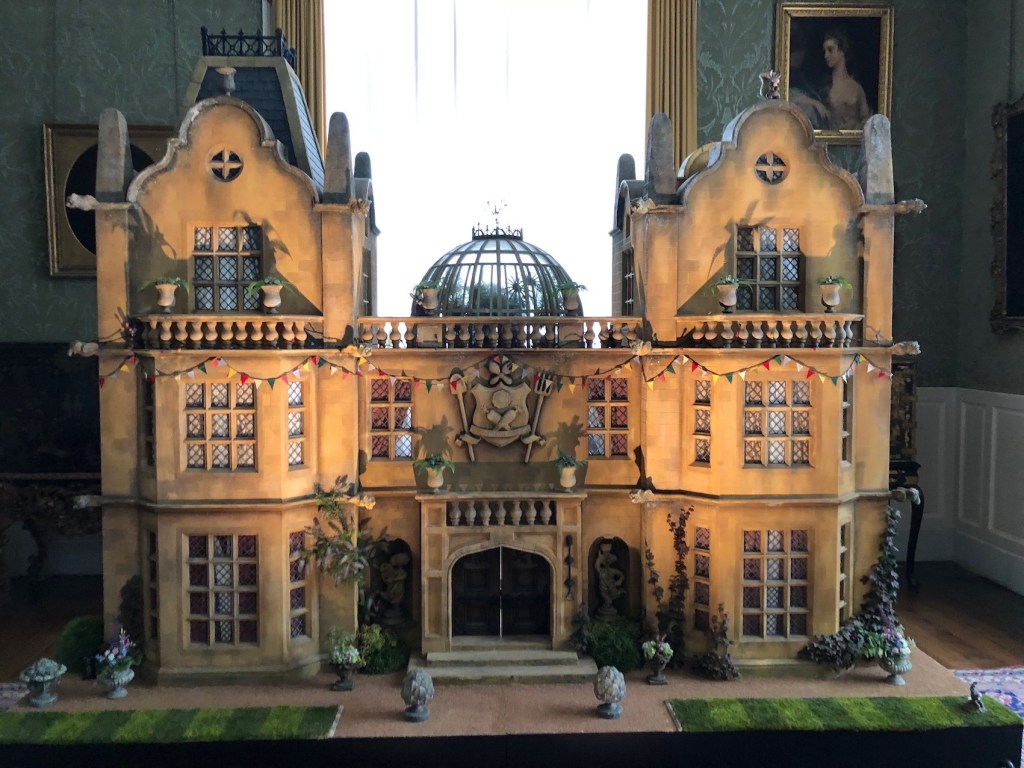
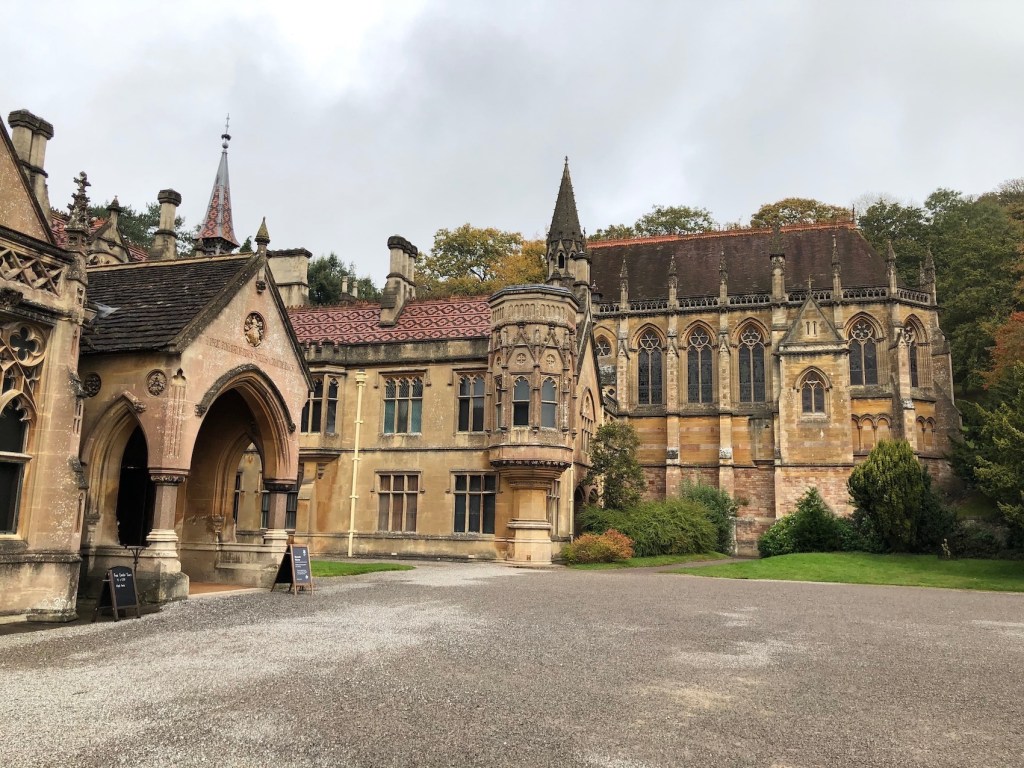
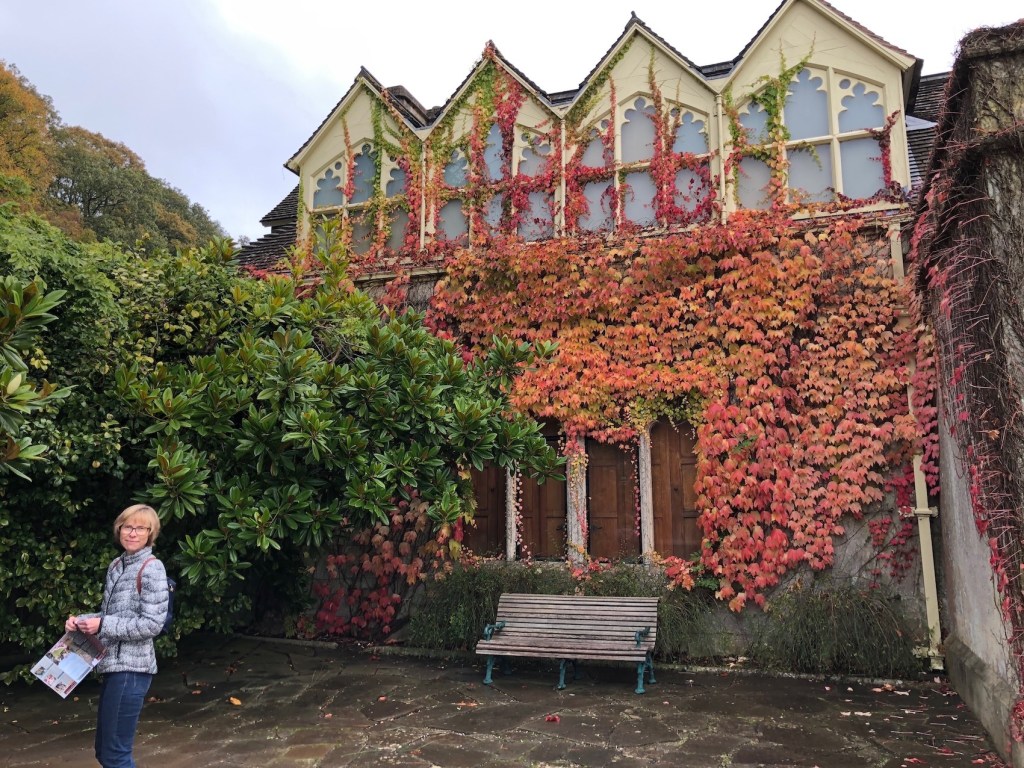
Over the next couple of days our further travels took us to a couple of other National Trust properties. You are spoilt for choice with NT properties in this neck of the woods. Montacute House near Yeovil is an Elizabethan Mansion. Whilst it has undoubtedly a rich history from the Elizabethan period it has achieved much greater fame as the basis for Tottington Hall in the film Wallace and Gromit and the Curse of the Were Rabbit. Such is fame nowadays. The other house was Tyntesfield. We stopped here on the way back to the airport which gave us limited time. It wasn’t enough, the house and gardens are spectacular and huge and warranted much longer than a couple of hours. The house is Victorian, built by one William Gibbs whose phenomenal wealth came largely from Peruvian bird shit. Guano was big business (sorry) back then.

Montacute House
Tottington Hall. Its the spitting image of Motacute.
Tyntesfield, just before the fire alarm went off.
The house that bird shit built displaying its autumn colours.

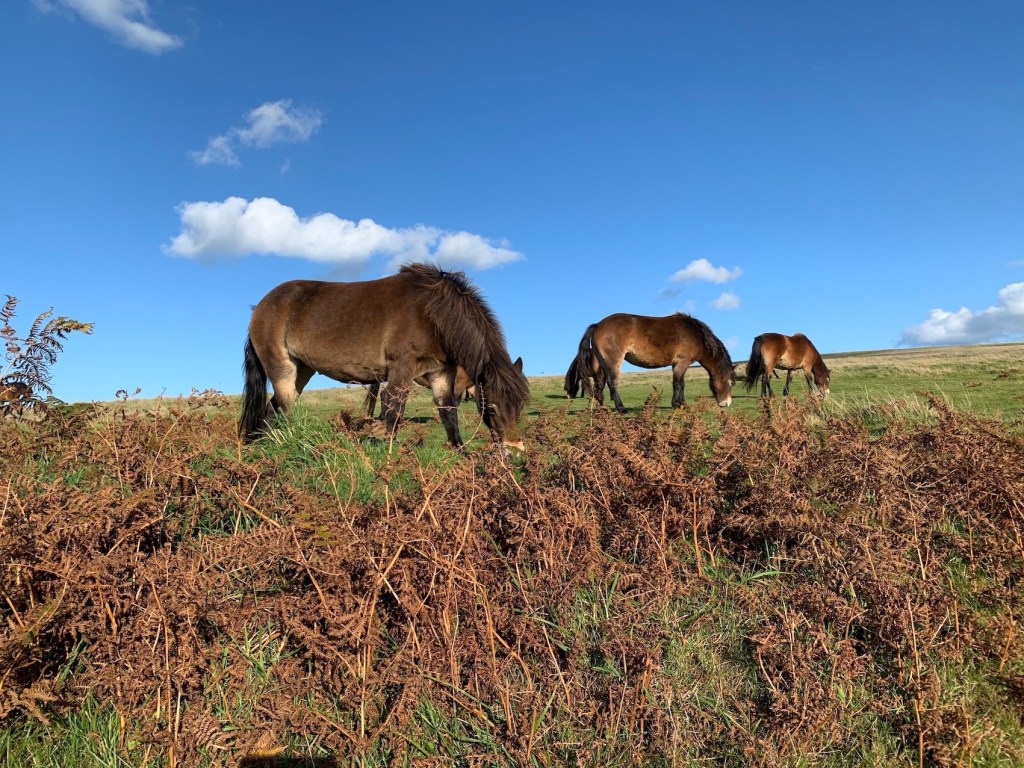
So there you have Somerset (and a bit of Devon) in a nutshell. We wondered if six nights might be a bit too much but, as it turned out, it isn’t near enough to do the place justice. We would definitely go back, perhaps staying somewhere a little bit more central. It was lovely being on the edge of Exmoor but it did feel like a place you wouldn’t want to get a puncture.

The ponies appreciate the remoteness.

Merrick

Watch Your Feet. Sound advice.

When I was working, the shift pattern was one of six days on and four days off. Notwithstanding the fact that the first of those days off may well have been spent sleeping off a couple of night shifts, such a shift pattern did afford us quite a few days at leisure. Quite a large number of my colleagues used the time to indulge in the pastime of hill walking. It is quite a popular pastime in Scotland, probably something to do with the abundance of hills in the country. Whatever the reason, it is seen as virtuous and healthy over that other favourite Scottish pastime of getting completely shitfaced. Some of my colleagues managed both though not usually at the same time. Those hilly types would think nothing of getting up at some God unearthly hour in the morning, piling into the car and driving several hours to the back of beyond, cooking up a hearty breakfast on a Primus stove before bagging a couple of Munros before a lunch of beer and crumpets at a nearby hostelry. In the rain. And, once above a thousand feet, almost certainly the fog. Munros I hear you ask? These are Scottish mountains that rise 3000ft or more above sea level. Scotland is so lumpy that there’s loads of them. Some bloke called Munro catalogued them all, hence the name. Some other bloke called Corbett then went and listed all the hills between 2500 and 3000ft high. There’s quite a lot of Corbetts too.

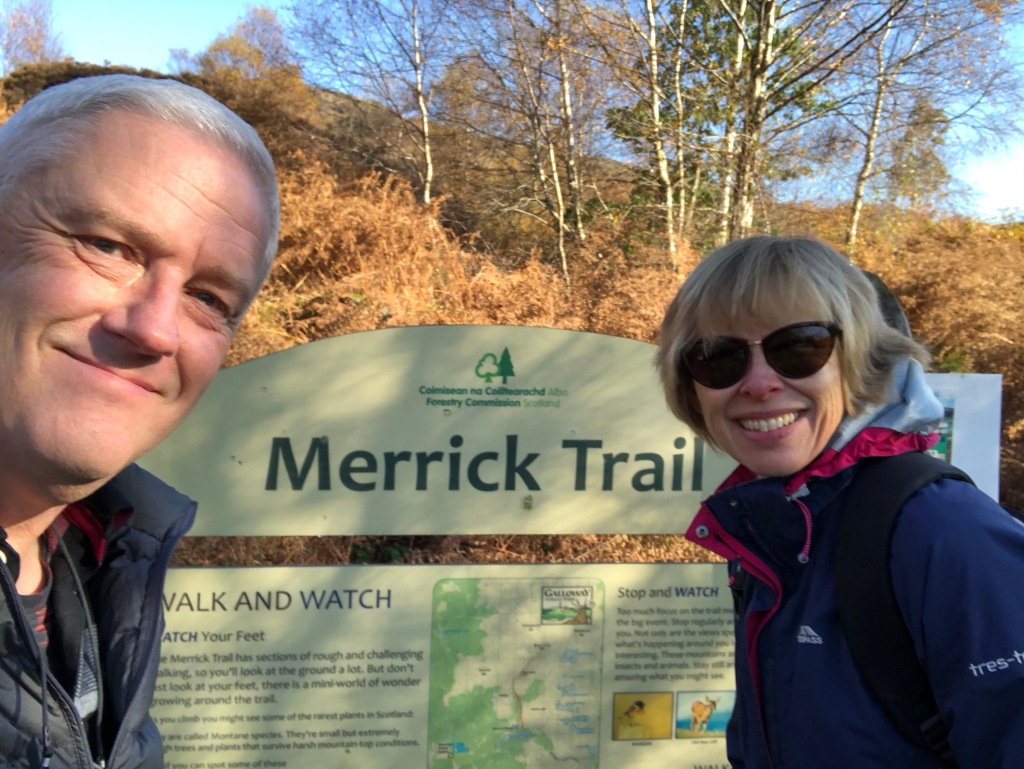
So why all the extensive and possibly inaccurate information on Scottish hills and those who ascend, and hopefully descend them? Well I like a walk. Elaine likes a walk too and completed the 1000 mile challenge for 2019 by mid July. When we go for a walk, however, we have tended to stick to the level. Some undulations on the way are perfectly acceptable but serious, knee busting hill walks have by and large been off the agenda. Earlier this year we did venture up Conic Hill on the banks of Loch Lomond and it made a nice change to our hoofs through Fullerton Woods and around Troon. We even went the long way round but, apart from the short climb up an eroded path to the summit, it wasn’t particularly challenging. The views from the top were very nice though, even if the summit was rammed with other folk deciding that a sunny summer Saturday was not only nicely alliterate but also ideal for hiking up to the 1184ft summit of Conic Hill. We have, however, had the intention of scaling a proper hill such as Goat Fell on Arran or even Ben Lomond, a hill that just creeps into the Munro category by a few inches and will probably lose that status soon thanks to the cumulative erosion of the thousands of hardy folk that walk to the top every year. The thing is, good intentions are one thing, doing it is another. Unlike your serious hill walker, shit weather is a bit off putting to us and the Scottish hills are particularly good at shit weather. Then there’s the logistics of getting there and all sorts of other excuses that have put us off. Then came today. The forecast was for a perfect Autumn day. We decided to take the plunge. We were going to bag our first Corbett.

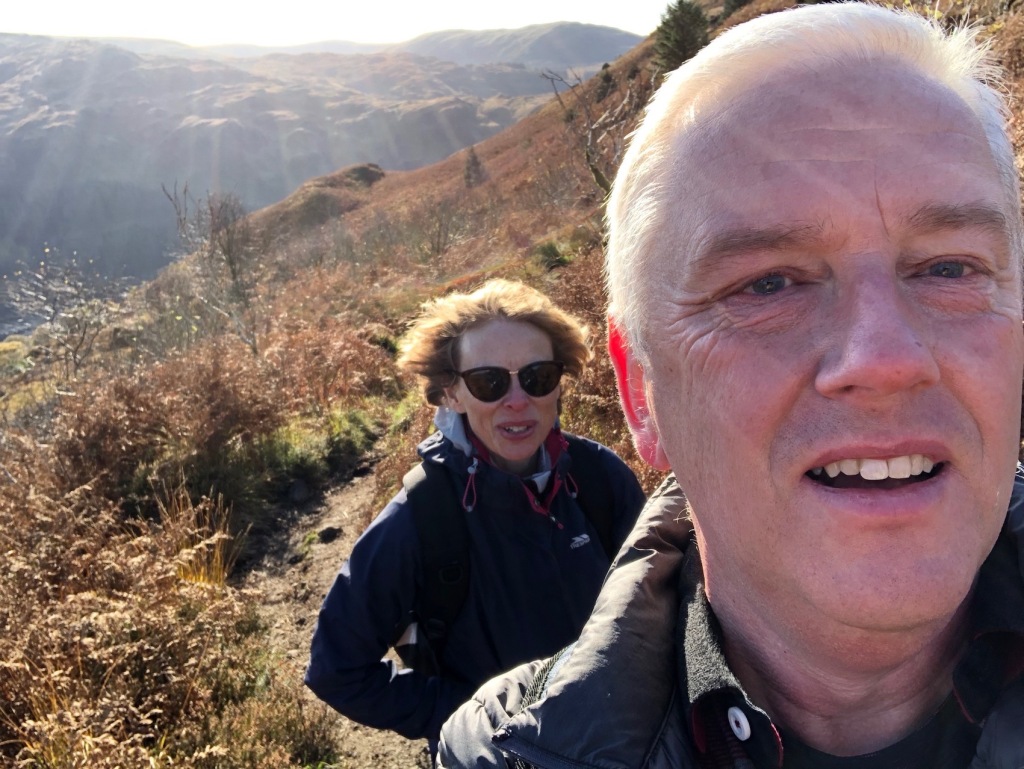
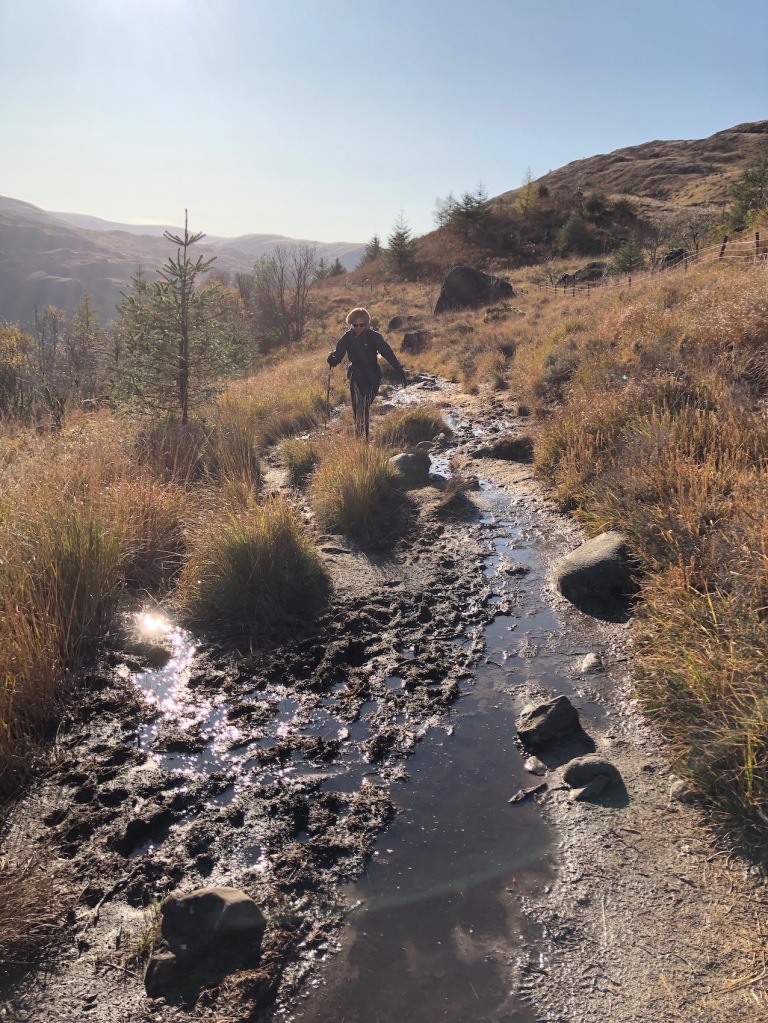
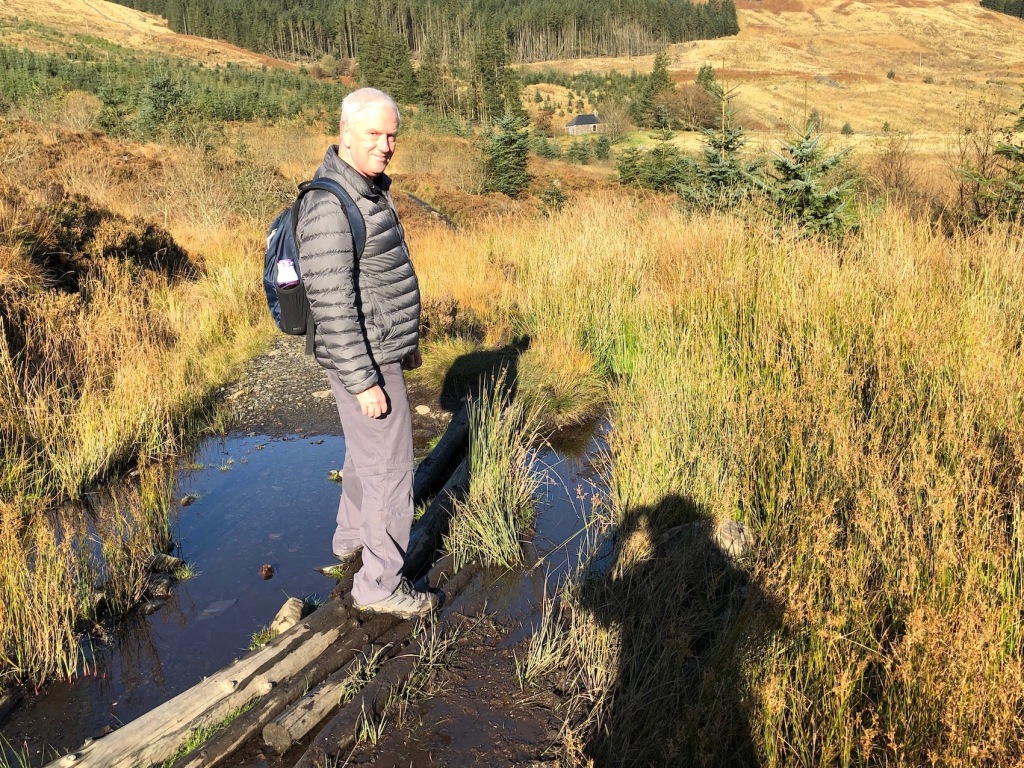
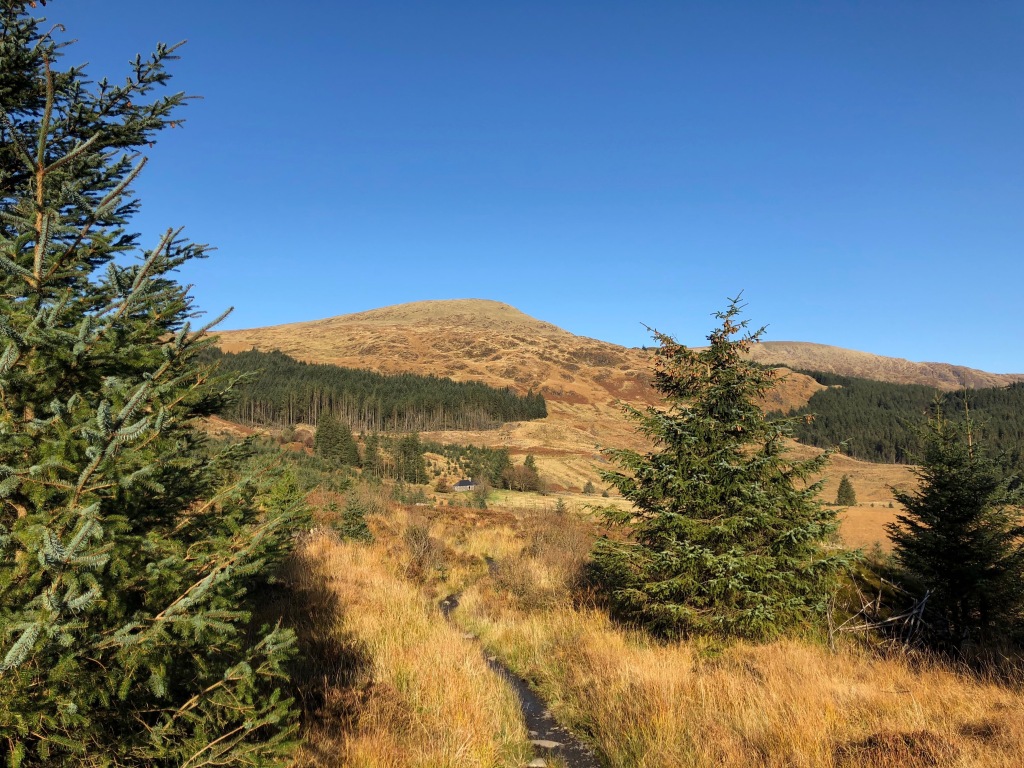
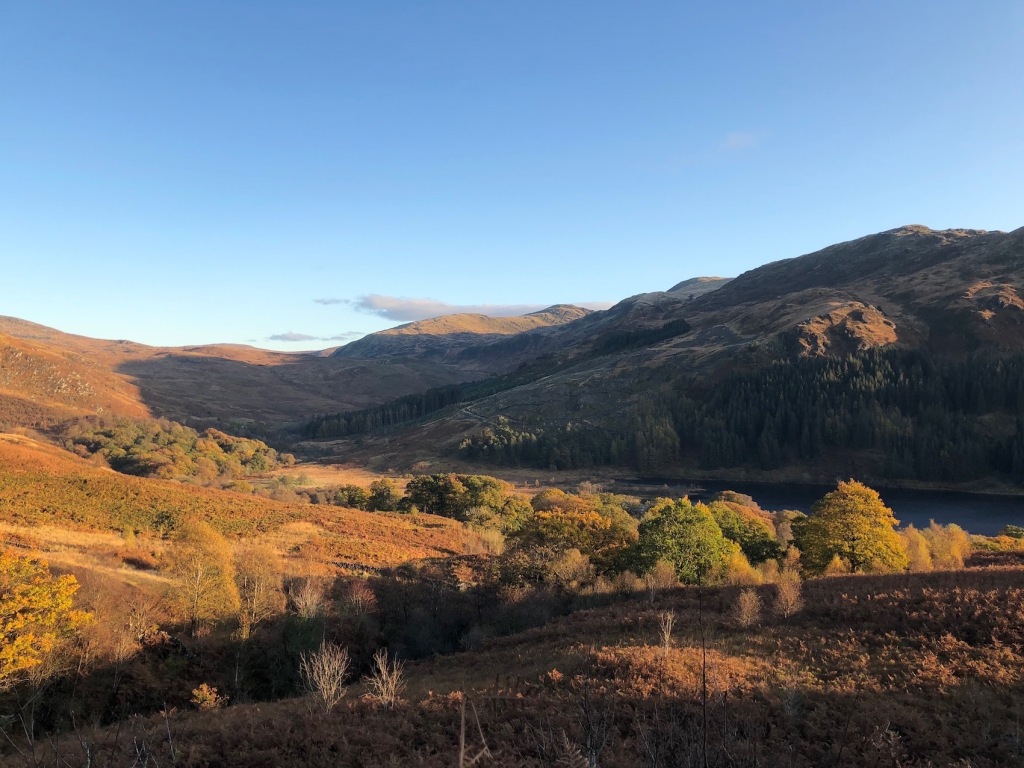
We decided that Goat Fell and Ben Lomond would require an early start and the cat had kept us awake overnight so maybe another day for them. We chose The Merrick. The Merrick lays claim to be the highest hill in the Southern Uplands. With many towering Munros up north this may be a very lame claim to fame but it does rise 2766ft above sea level and to walk up it from the car park at the foot of the trail utilises pretty much all of those feet. The hill is part of The Range of the Awful Hand, a series of five hills that look a bit like fingers, though perhaps a few drams of whisky had been drunk by those responsible for its rather splendid name. To get to the summit you have to first reach the summit of one of the other ‘fingers’, Benyellary, and traverse a broad ridge on to the Merrick before a last climb to the top. It’s a little over four miles up and, assuming there’s no navigational errors, the same on the way down. Armed with our finest walking shoes – yes, boots would be better but I’m not getting skinned ankles whilst braking them in for anyone – and a rucksack full of extra layers and sandwiches from the local Co-Op, we headed down the scenic road to Loch Trool and bought an OS Map from the visitor centre just to show we were taking things seriously. The weather was gorgeous, not a cloud in the sky and visibility as far as the eye can see. Yes, I know visibility is always as far as the eye can see but you know what I mean. In the car park we changed into our walking shoes and off we set. Almost immediately we were rewarded with stunning views. The autumnal colours combined with the waters of Loch Trool and the Buchan Burn, which we shadowed for the first three quarters of a mile or so, were stunning. The path was, shall we say, a bit on the aquatic side. In places it was part bog, part burn and we soon became reasonably adept at leaping from stone to stone to prevent the depressing feeling of mud getting over the top of our shoes and inside. Gore tex is great but there’s got to be a gap somewhere to get your foot in. There was one steep section which was something akin to a rock staircase only with more mud and less stability than is normally the case. However, we navigated the frequent swampy bits and made it to the bothy. For those of you that don’t know what a bothy is, it is basically an old house that has been made more or less watertight for hill walkers to seek refuge in if required. It was a bit bleak but it was shelter of sorts for those who needed it. Not that we did of course, we’d only just got going.

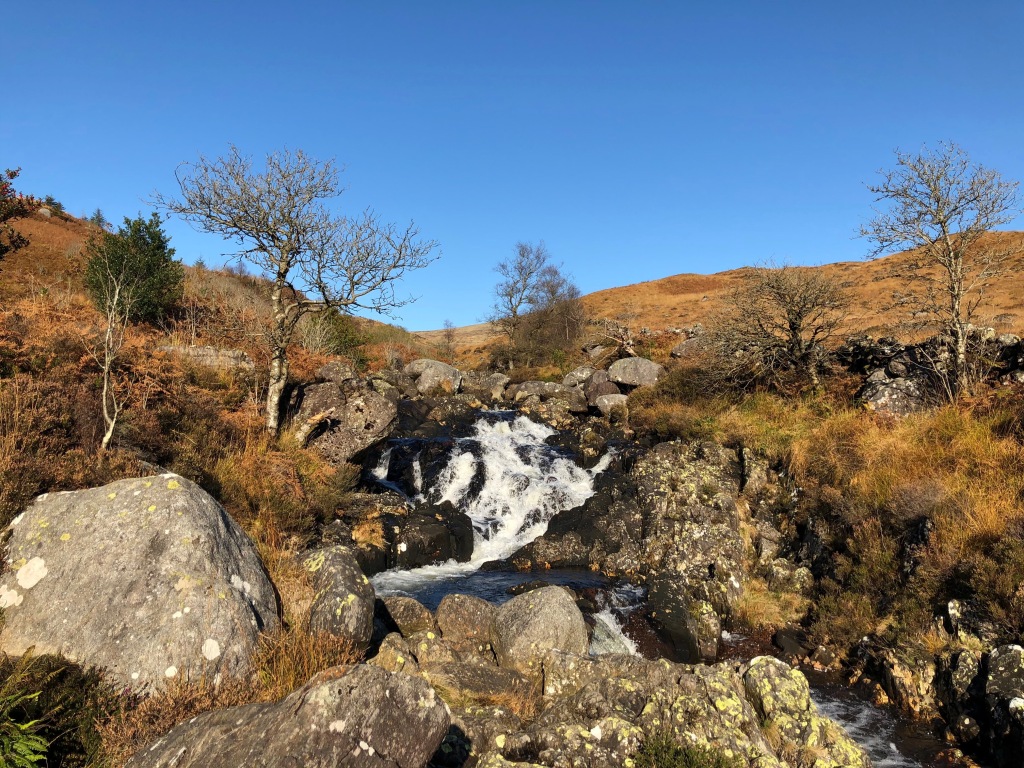
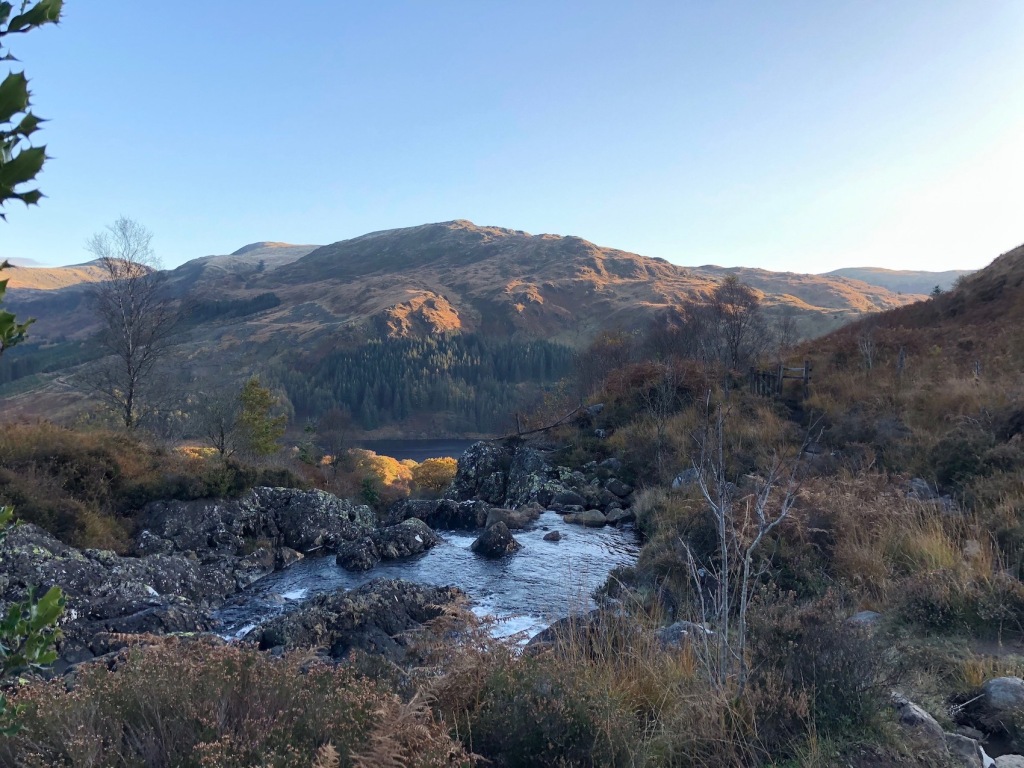
The Buchan Burn. A most pleasant start.
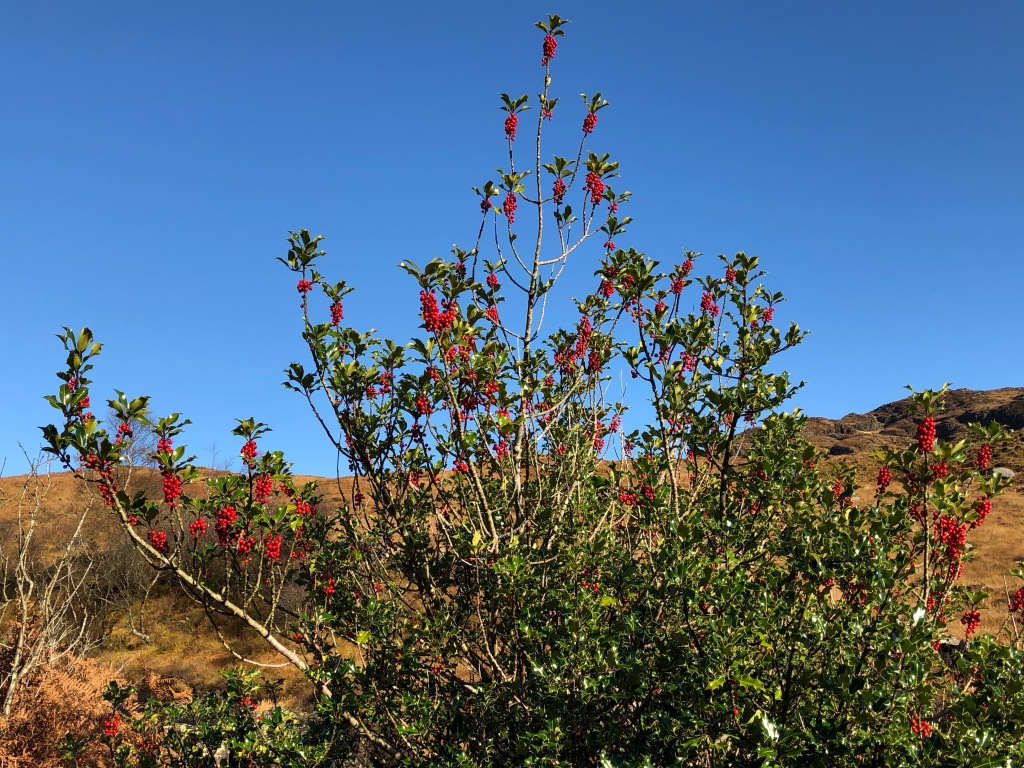
A few holly trees provided a colour contrast to the golden autumnal shades.
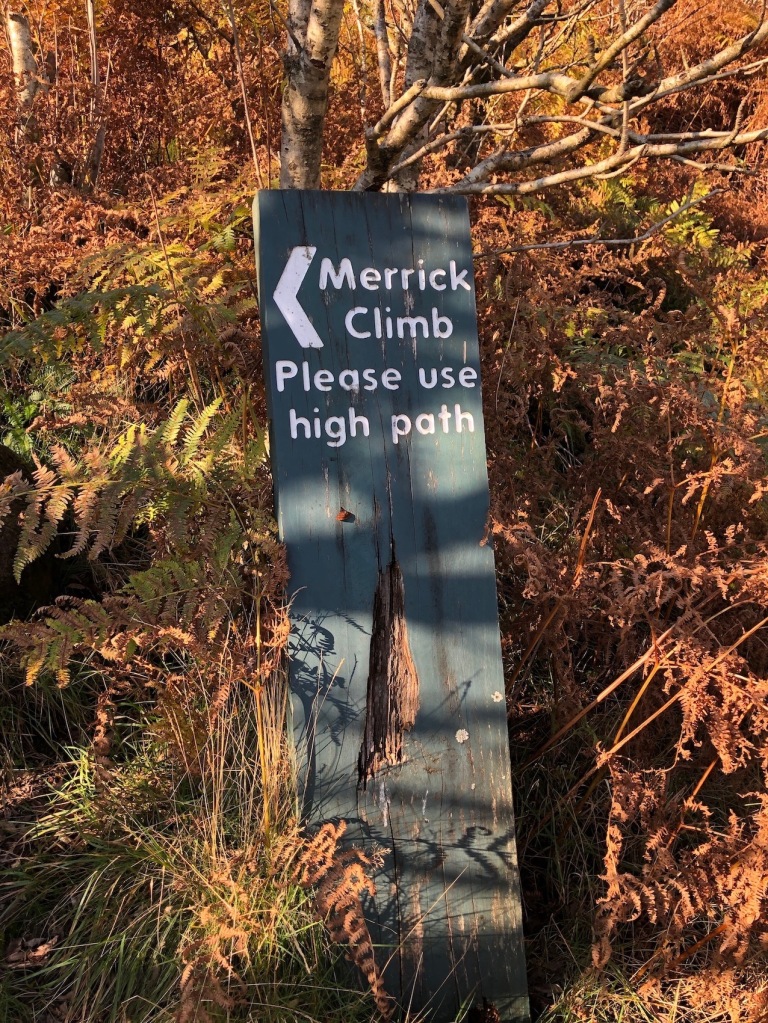
Never mind that it involves a dodgy climb up some wobbly rocks…
…we took the High Road…
…and somewhat muddy road…
…and at times really quite flooded road…
…to yonder Bothy. The hill behind is Benyellary, our ultimate destination The Merrick is to the right.
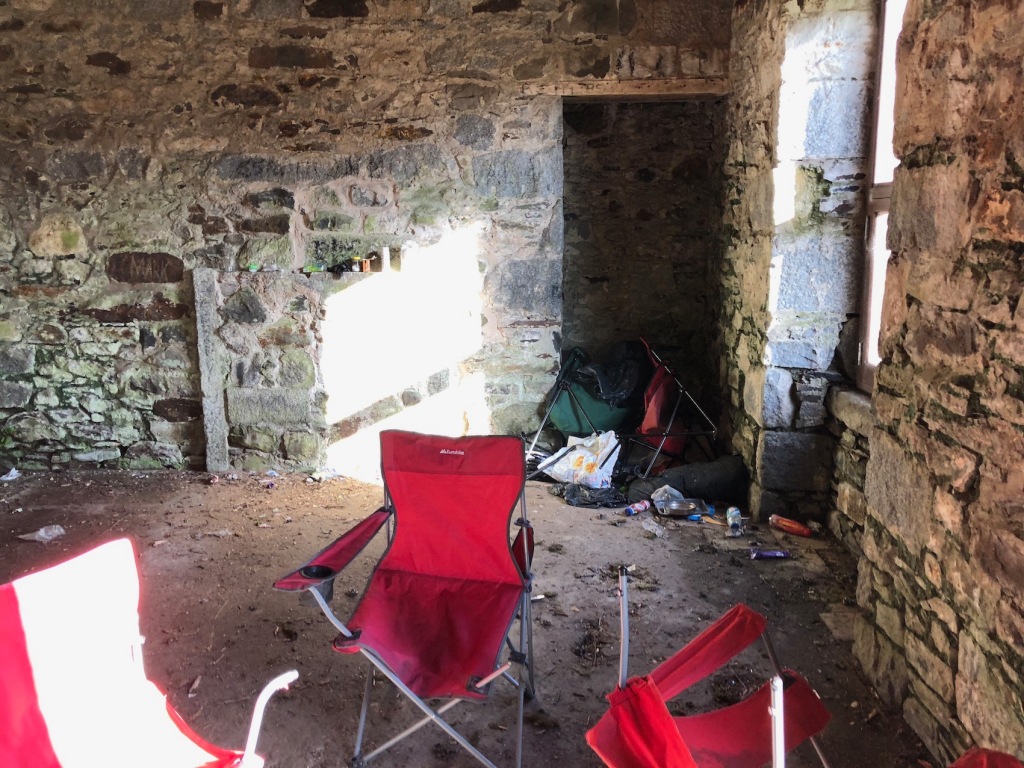
Our new house in the country?
A little bit of internal work required perhaps, but shelter from the elements at least.

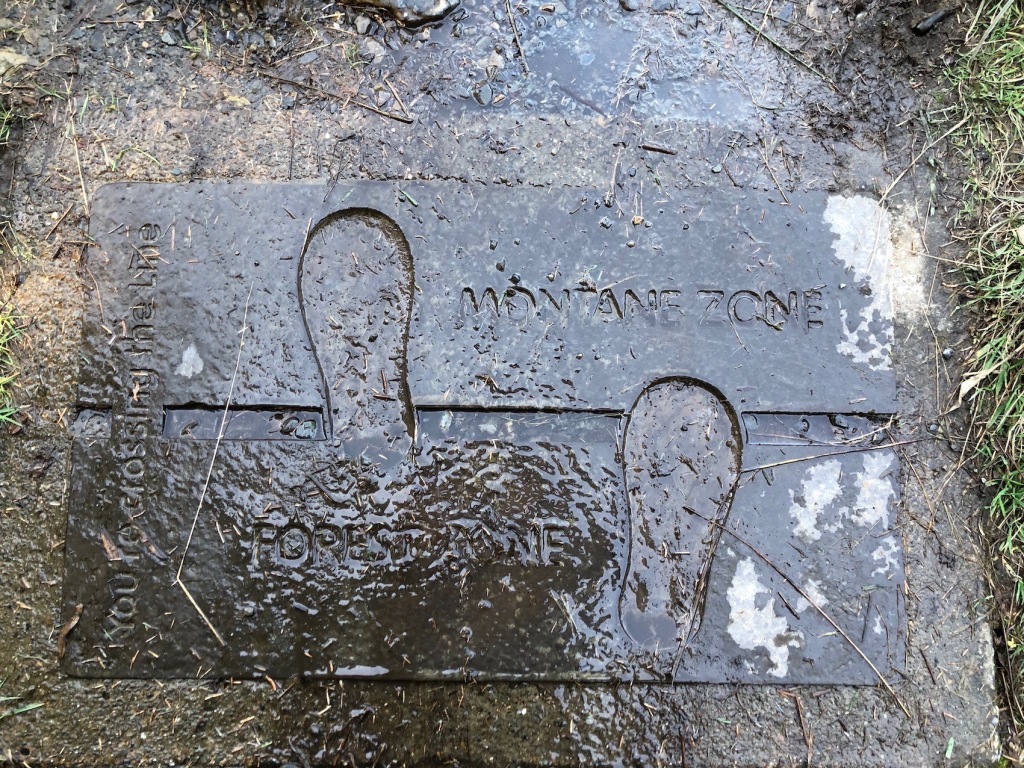
Passing the bothy we entered a forested area where the path became steeper and a bit more precarious. Just how precarious it was I’d discover on the way down. Emerging from the wood we passed a stone that announced we were leaving the Forest Zone and entering Montane Zone. Montane apparently means mountainous but I guess there was limited space on the stone for the extra letters. Here the path went up Benyellary above the tree line at quite a steep gradient. On the way up we made many stops, some of which were to admire the spectacular views, others to prevent us keeling over and dying, such was the effort required. We pushed on though, eventually reaching the summit of Benyellary where a bitterly cold wind, almost completely absent on the climb up the leeward side of the hll, suddenly appeared and had us delving around our rucksacks for the jackets we had removed as we built up a sweat on the way up. We pondered whether we had come far enough. The summit of the Merrick seemed a fair way away and the cafe at the visitor centre, which had a nice selection of cakes, was due to close at four o’clock. However, by a unanimous vote of one to nil we ventured out towards The Merrick.

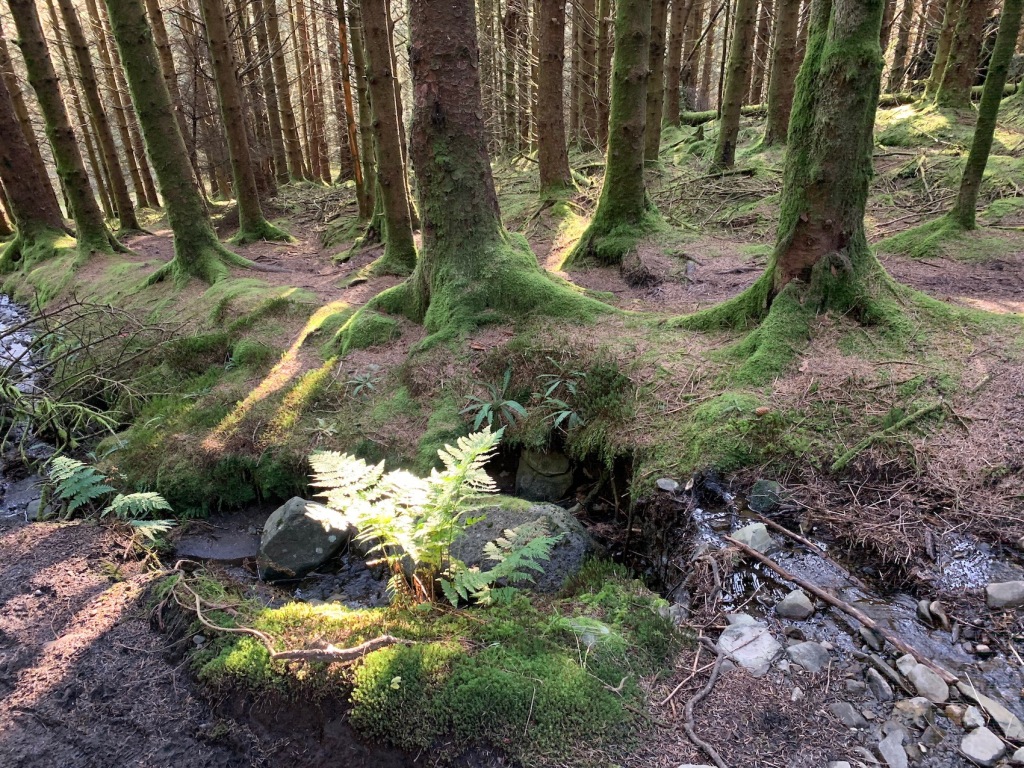
Through the Forest of Eternal Peril
Crossing the line into the Montane Zone. The International Date Line it ain’t but it was a line nevertheless.
Above the line where no tree dares to tread, or at least take root.
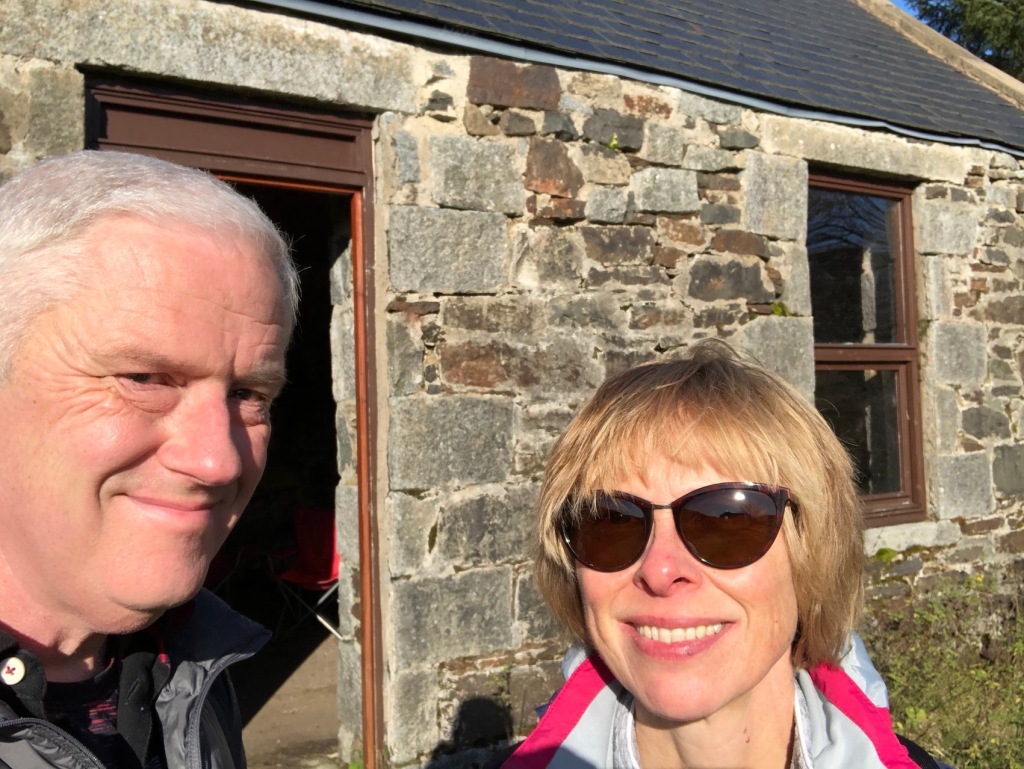
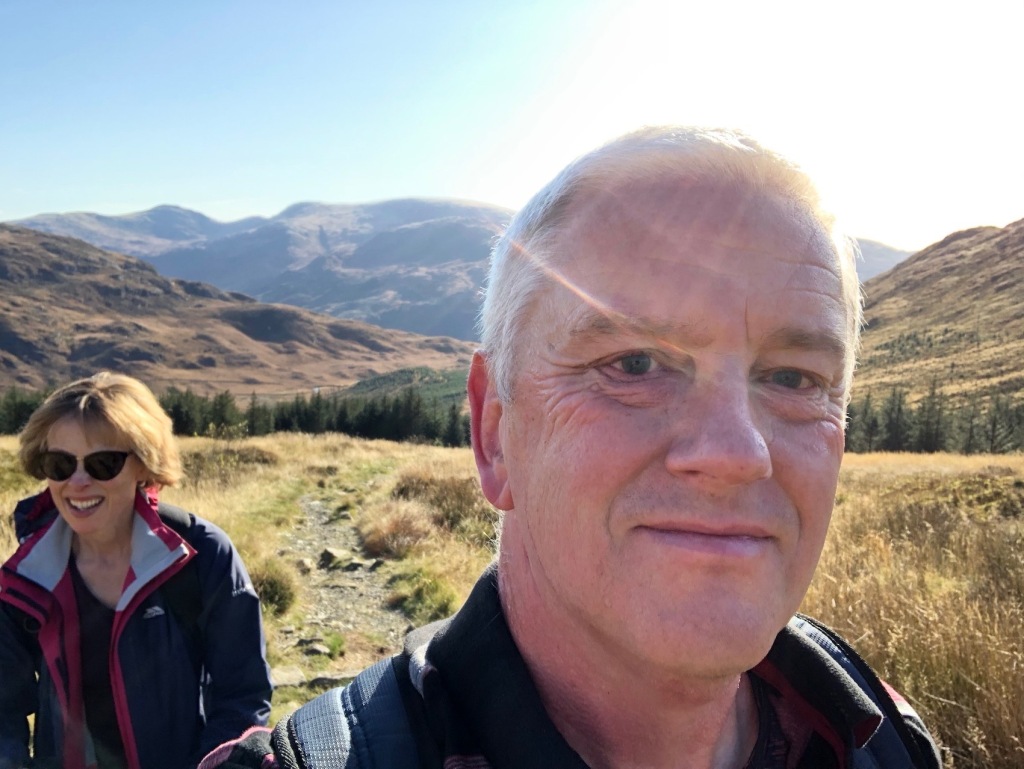
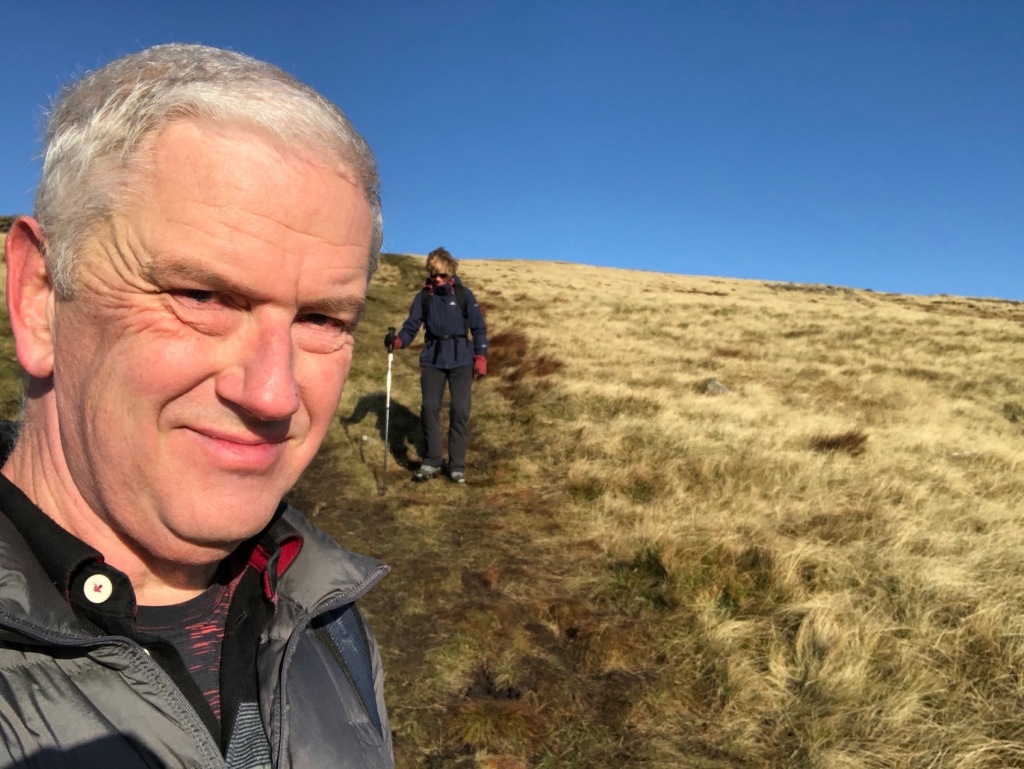
Those are not smiles, they are grimaces. This bit was seriously hard work…
…and regular stops were made to take in the views and to regulate our breathing.
However, we made it to the top of Benyellary where as you can see, the breeze picked up a bit.

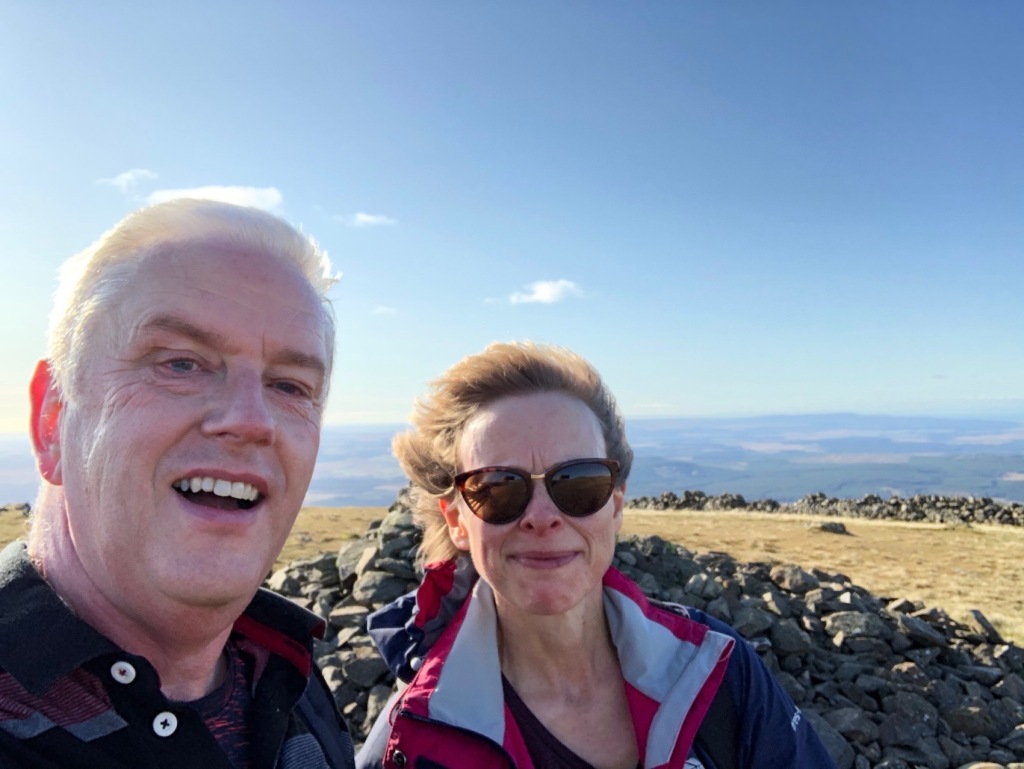
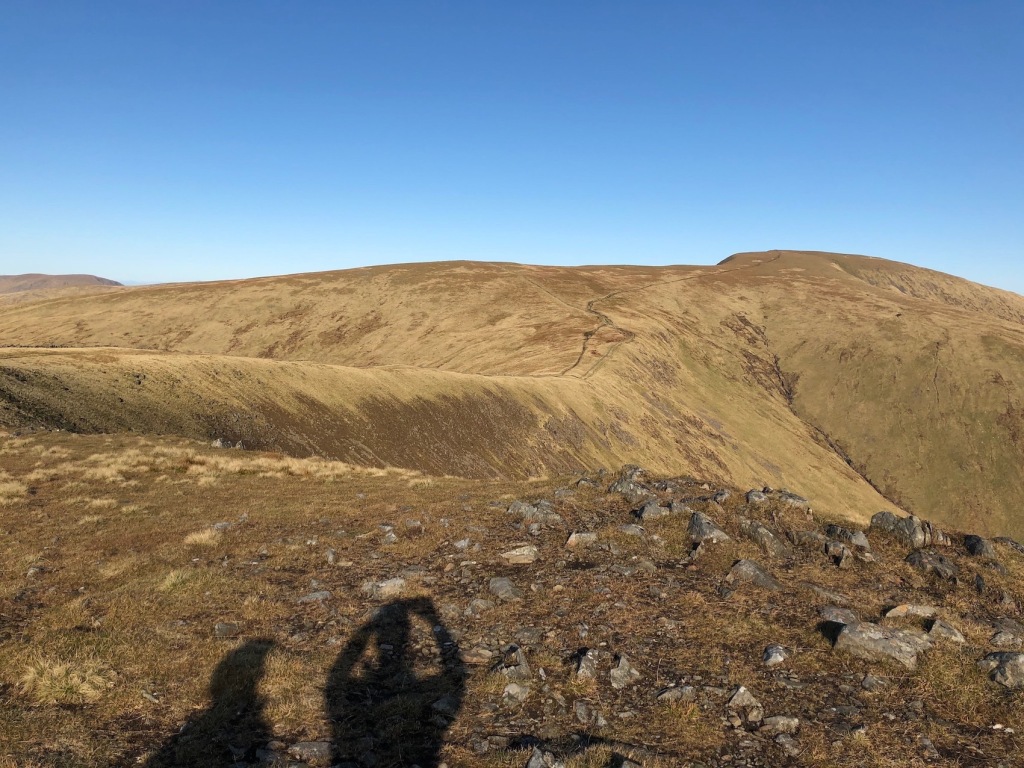
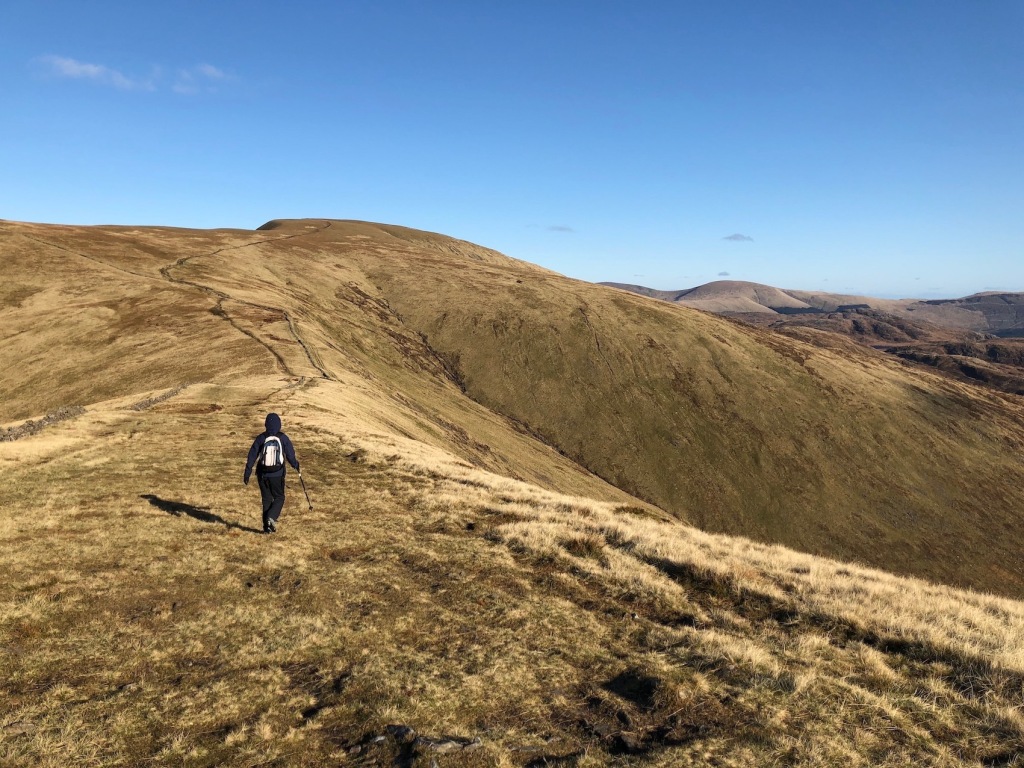
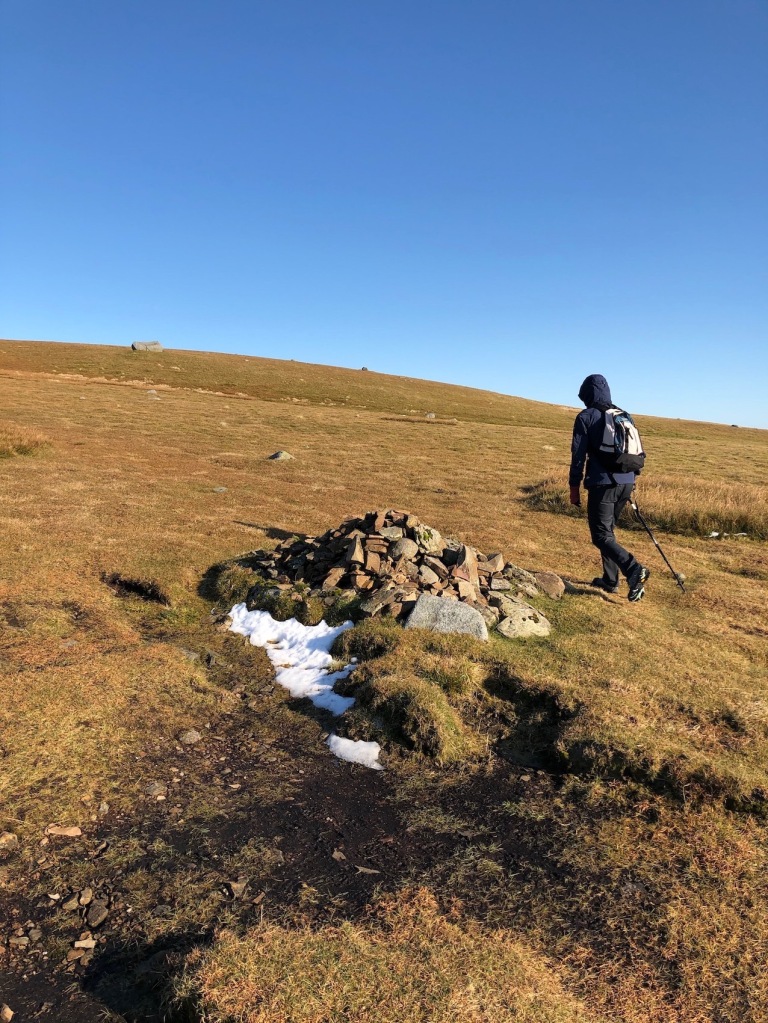
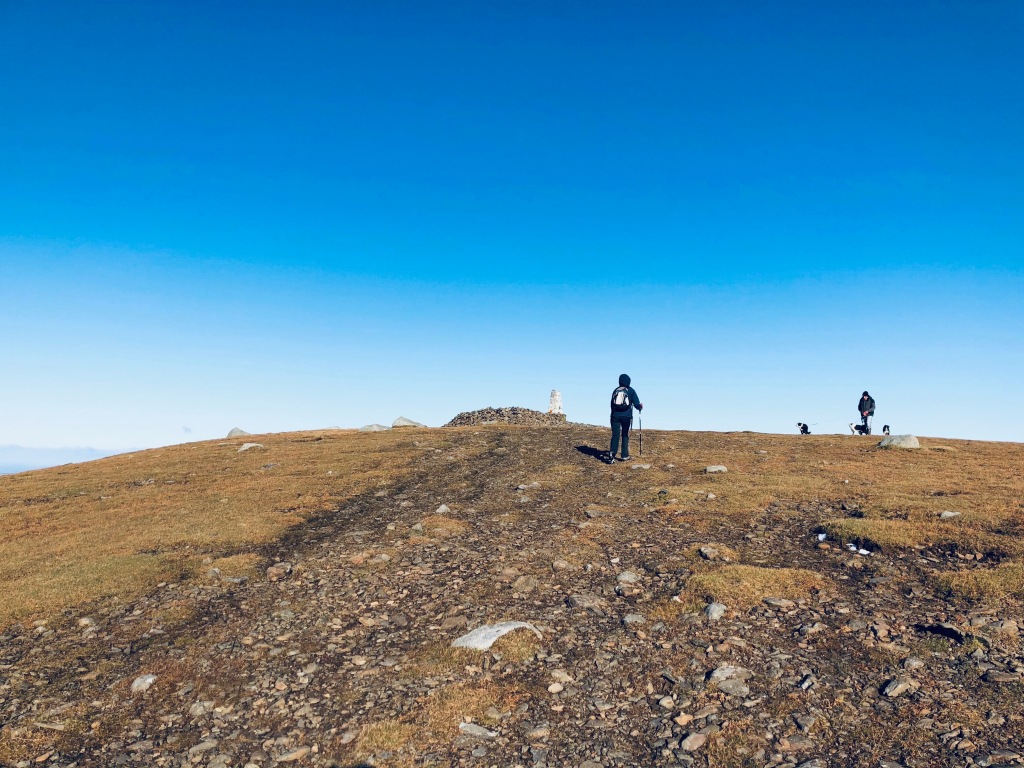
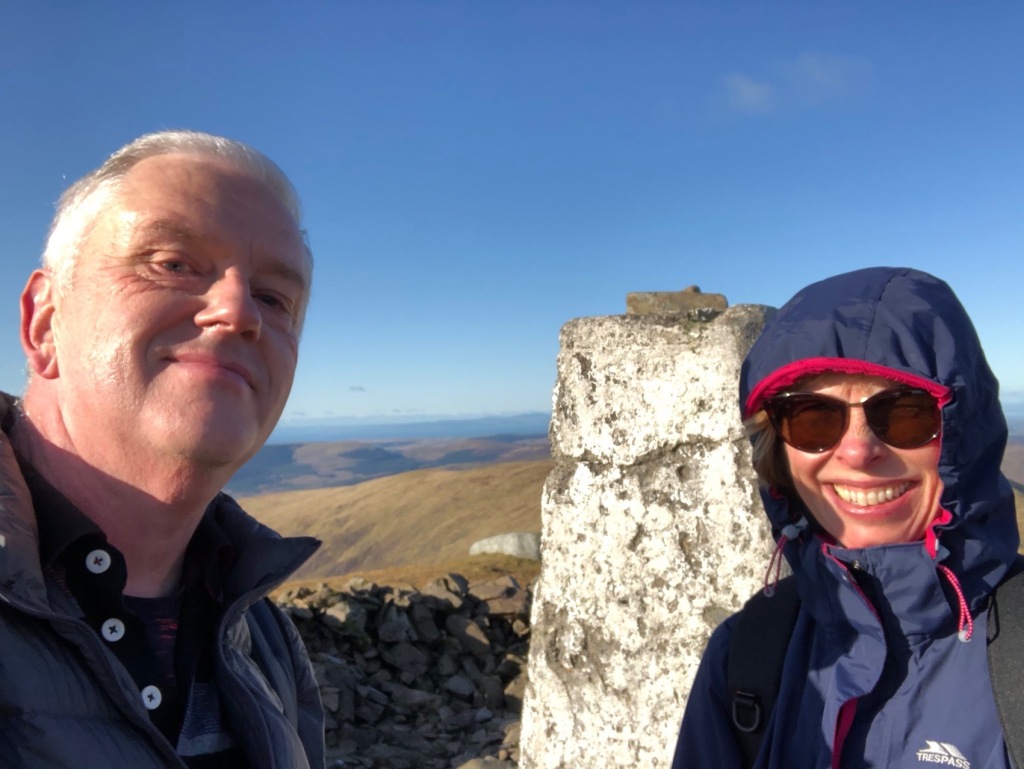
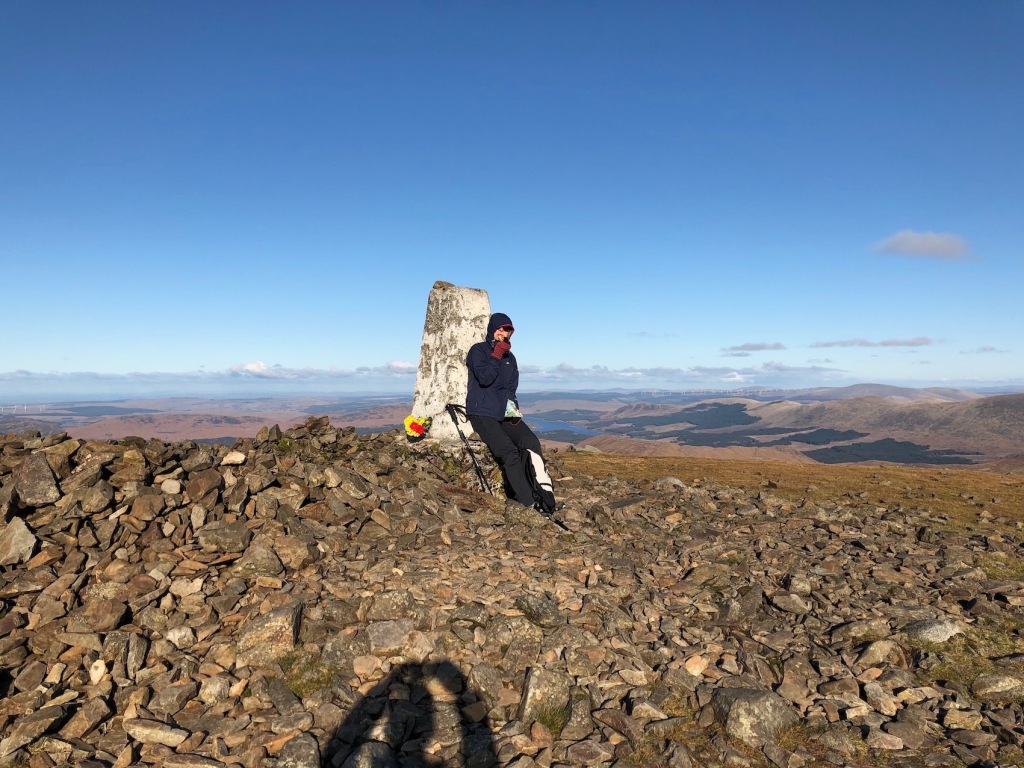
To get there we had to cross a ridge called Neive of the Spit for reasons that are lost in time. It was quite broad so despite the stiff crosswind there was little chance of being blown over the edge. It was a quite boggy in places but once traversed there was a bit more up involved to make it to the summit. On that last push we encountered a few patches of snow. We knew it was cold but not that cold. Eventually we made it to the cairn and trig point that marked the summit of The Merrick. We took the necessary selfie, ate our Co-Op sarnies whilst sat on some frosty rocks, briefly surveyed the glorious 360 degree vista before deciding it was too bloody cold to hang around and setting off back down. It had taken us 2 hours and 16 minutes to get there. It would take us exactly the same length of time to get back down again.

The Merrick awaited us but could we make it there and back down to the visitor centre in time for tea and cakes? Spoiler alert – no.
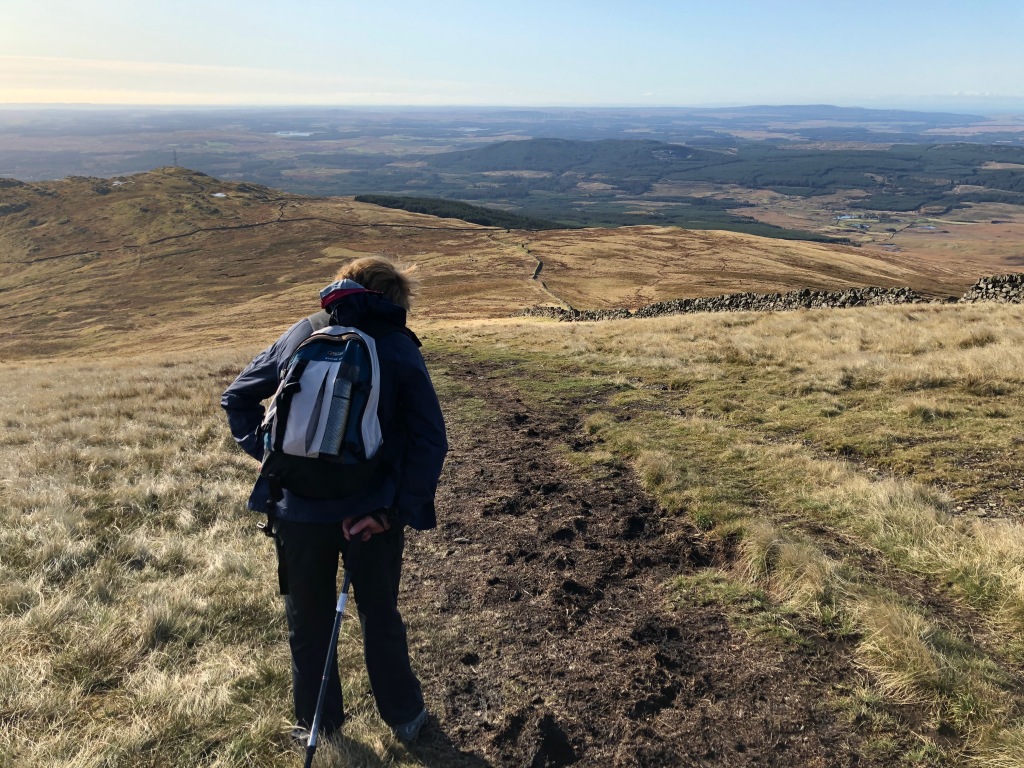
Heading out over Neive of the Spit, from Benyellary…
…braving the harsh winter snowdrifts…
…we approach the summit of the Merrick only to find some bloke with three dogs had beaten us to it.
The inevitable Summit Selfie. Yes, it was cold…
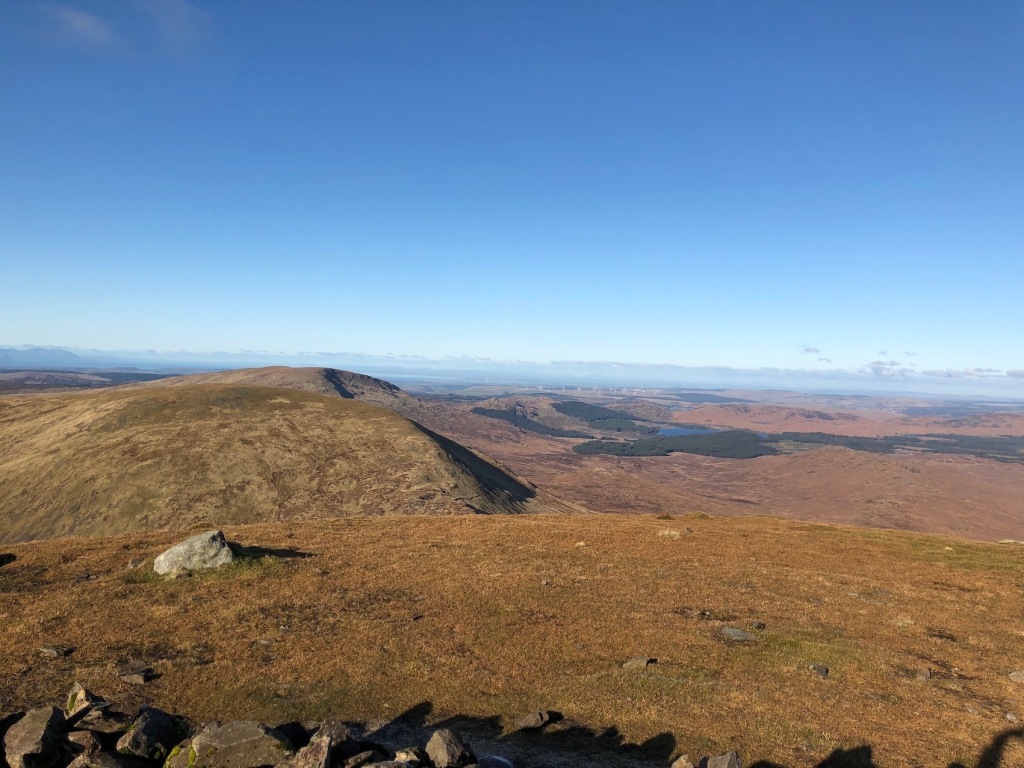
…but really quite glorious. Here we look back towards our house.
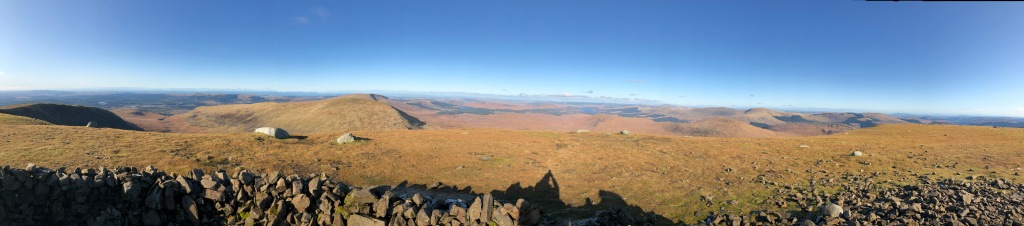
…and here’s a panorama shot that fails miserably to convey the spectacular vistas we observed that day.
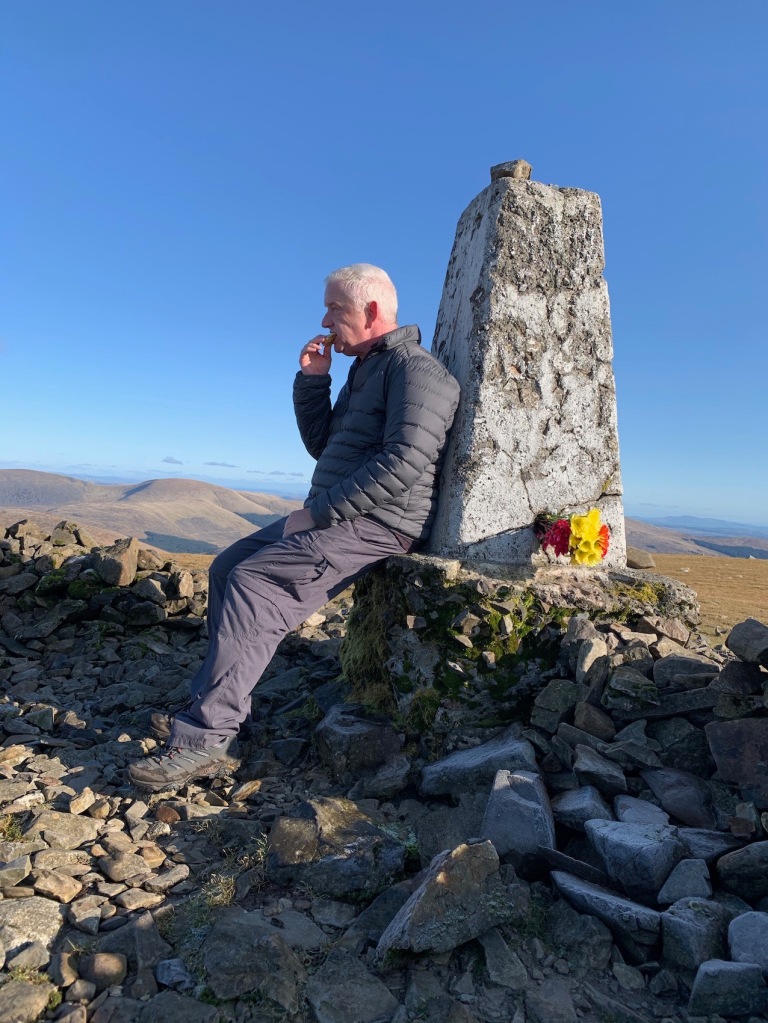
The trig point and cairn provided minimal shelter for a picnic…
…but we ravenously devoured our Co-Op sandwiches anyway.

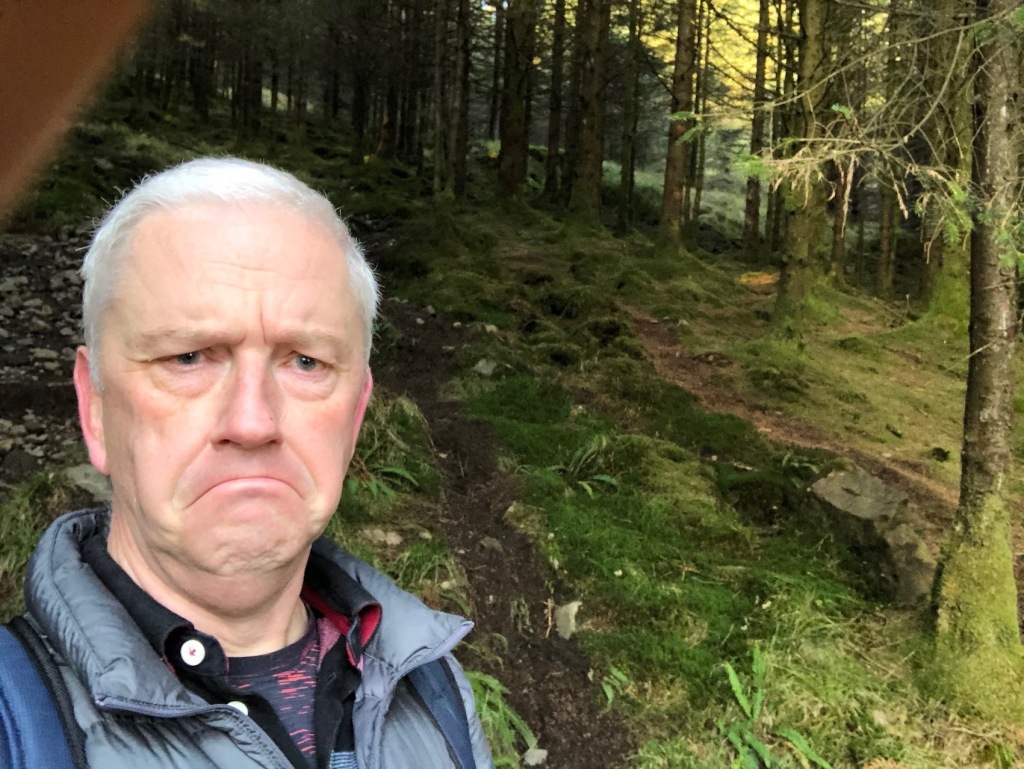
Just a word about going down. According to the physics of potential and kinetic energy, going down should be a damn sight easier than going up. That is, indeed, true in terms of expending energy, especially when you are lugging the sort of mass I have to carry about with me. Consequently, the heart attack inducing steep section that took us to the top of Benyellary did not bother our tickers on the descent. Simple physics does not take other factors into consideration though. You can’t just curl up in a ball and let gravity do all the work. You’d end up with broken bones and everything. You are in fact fighting gravity’s inexorable desire to get you to the bottom of the hill quickly rather than alive. Feet, knees and thighs take the brunt of the strain of trying to keep you upright, a task made all the more harder by a terrain that has scant regard for the safety of less than sure footed humans. The bit in the woods was particularly treacherous. With an inevitability that was just a little annoying, I lost my footing on a particularly evil rock and fell forward, pirouetted round and fell in a rather pathetic heap onto the ground, most of which was other rocks and therefore rather unforgiving. I wasn’t badly hurt which was a bit disappointing as a mere grazed knee does not warrant being helicoptered off the hill which would have made for a better story but I was less than impressed with the situation. We made it back to the car, carefully and without further incident and headed for the visitor centre for celebratory cake. It was a minute past four. It had just shut.

And, after a chilly ten minutes at the summit he headed back down.
Back through the wooded bit where I had just come to grief.
We were, however, rewarded with some delightful views for the brief moments we were not watching our feet…
…as the sun sank lower in the sky…
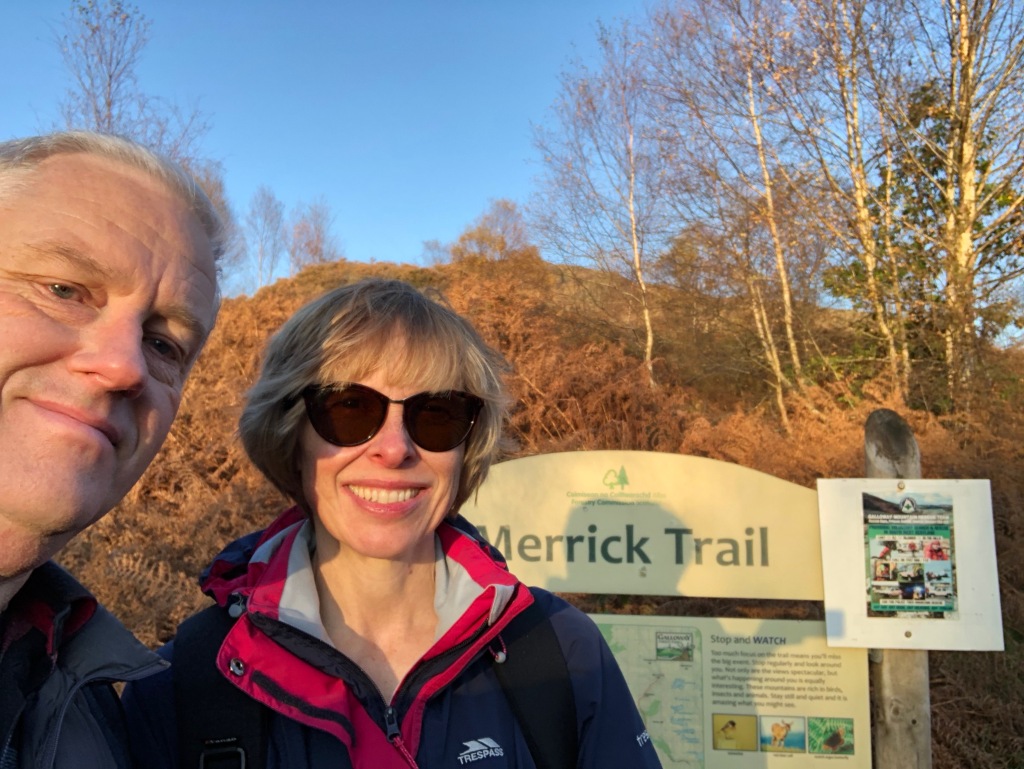
…and we said our final goodbyes to the Merrick Trail.

Apart from the worryingly high heart rates and of course my inglorious fall, we really enjoyed our trek up the mighty Merrick. So, is hill walking for us? Yes and no. Yes, we will definitely do some more hills, even though we are both physically in pain at the moment and my injured knee has blown up like a football. No as in I don’t think we will ever class ourselves as serious hill walkers. We passed one going up the hill as we were on the way down. He had a rucksack the size of an office block on his back. He explained that he was going to spend the night on the hill. Other than seeing the universe in a true, dark sky, I can see absolutely no benefit in doing something like that. It will be icy cold, pitch black from five o’clock, exceptionally uncomfortable, a bit spooky and that’s all before the serious question of what to do when you want a poo. I like hills. I don’t love them that much though.

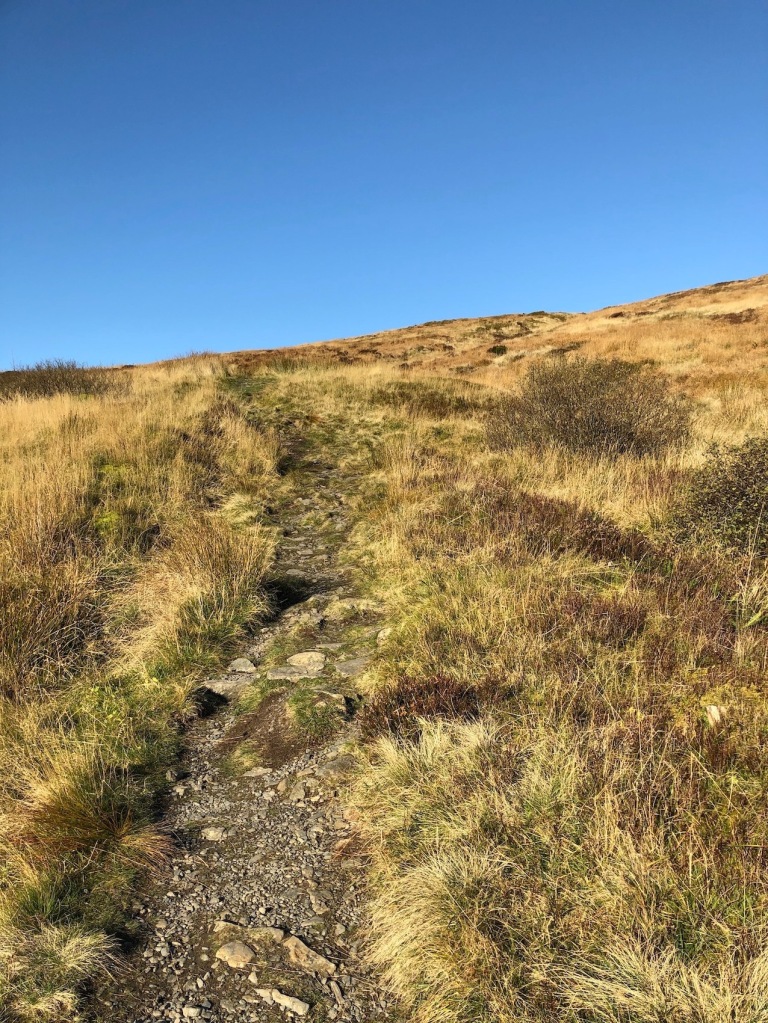
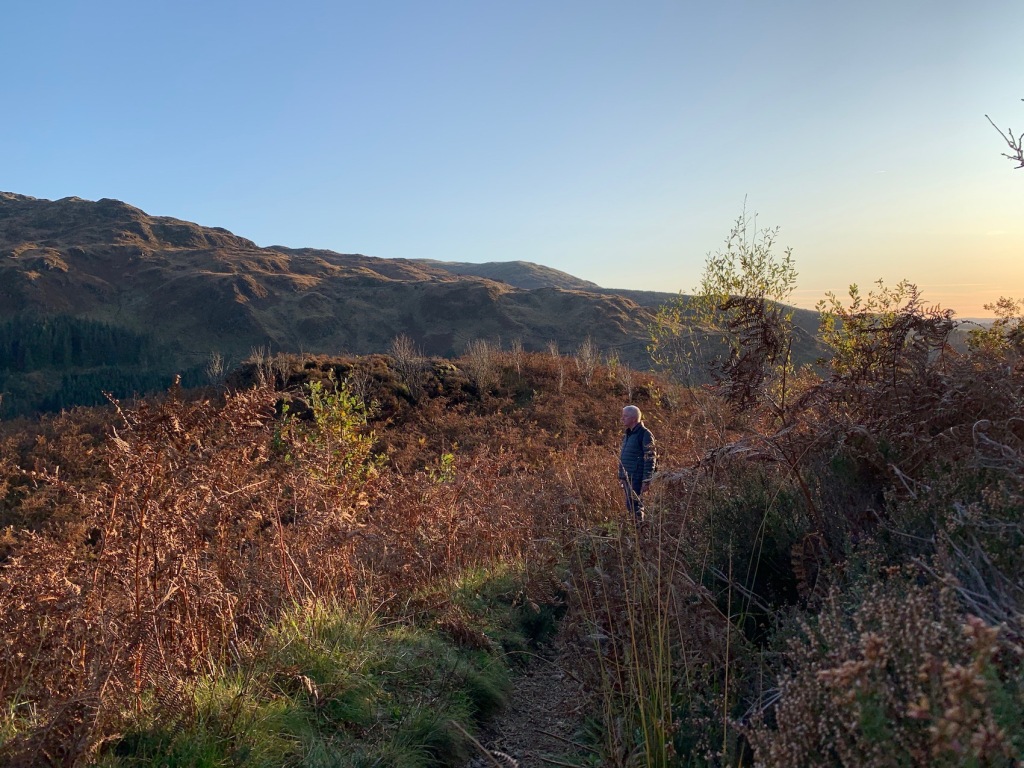
Much like the first photo only five hours, eight miles and quite a bit of up and down later.

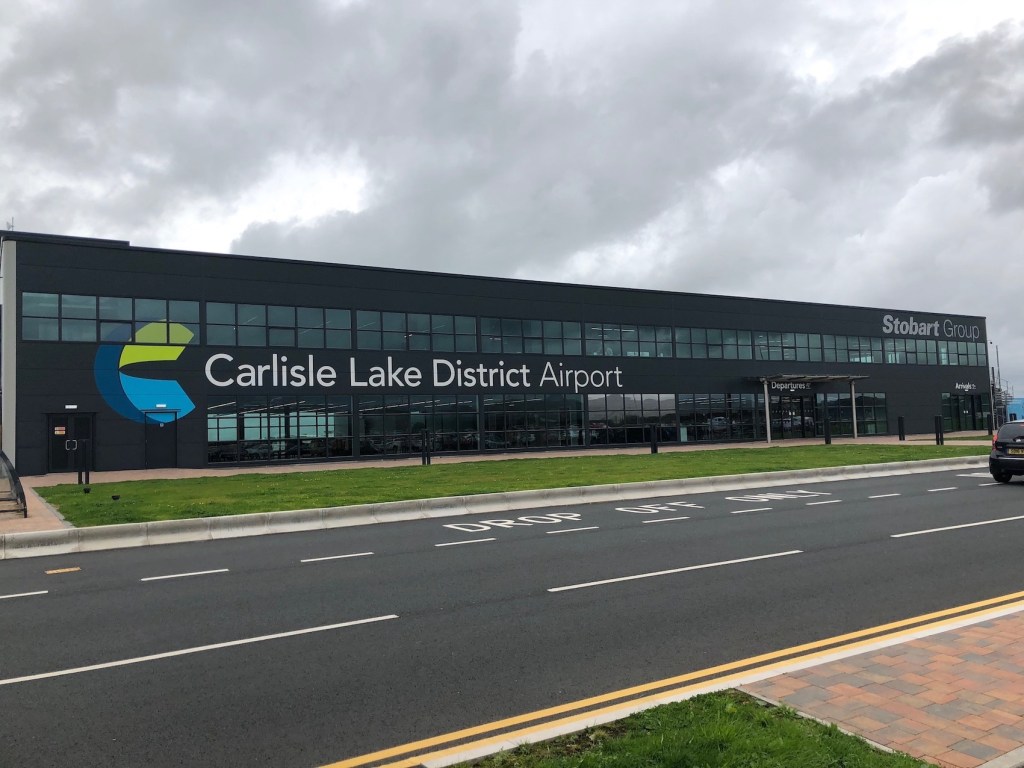
Carlisle Airport

Britain’s newest airport obviously means business.

It is said that the best way of making a small fortune in the aviation business is to start with a big one. The Stobart Group, the company which made its fortune through the haulage business and the legendary Eddie Stobart lorries, is keen to buck the trend. In 2008 it bought the moribund Southend Airport in Essex and spent a large sum of money building a new terminal, control tower and railway station. In 2012 it reopened as London Southend Airport and has found a small niche in the huge air transport market that is the southeast of England. In 2014 Stobart went in to the airline business when it purchased Air Arann, an Irish regional airline. The Stobart Group is based in Carlisle in the top left hand corner of England. Carlisle has had an airport since the end of World War 2 when RAF Crosby-on-Eden was taken over by the local council. Since then it has had several attempts at introducing scheduled services, all of which were short lived and the airport survived on the back of general aviation and flight training. In 1994 the council sold it and after passing through various hands it was acquired by the Stobart Group in 2009. The airport was hardly a viable concern but the land on which it stood was put to use by Stobart when a new distribution facility was built on it. The airport itself remained under-utilised until this year. After some delay, a new terminal was opened and once again scheduled flights are operating to and from Carlisle.

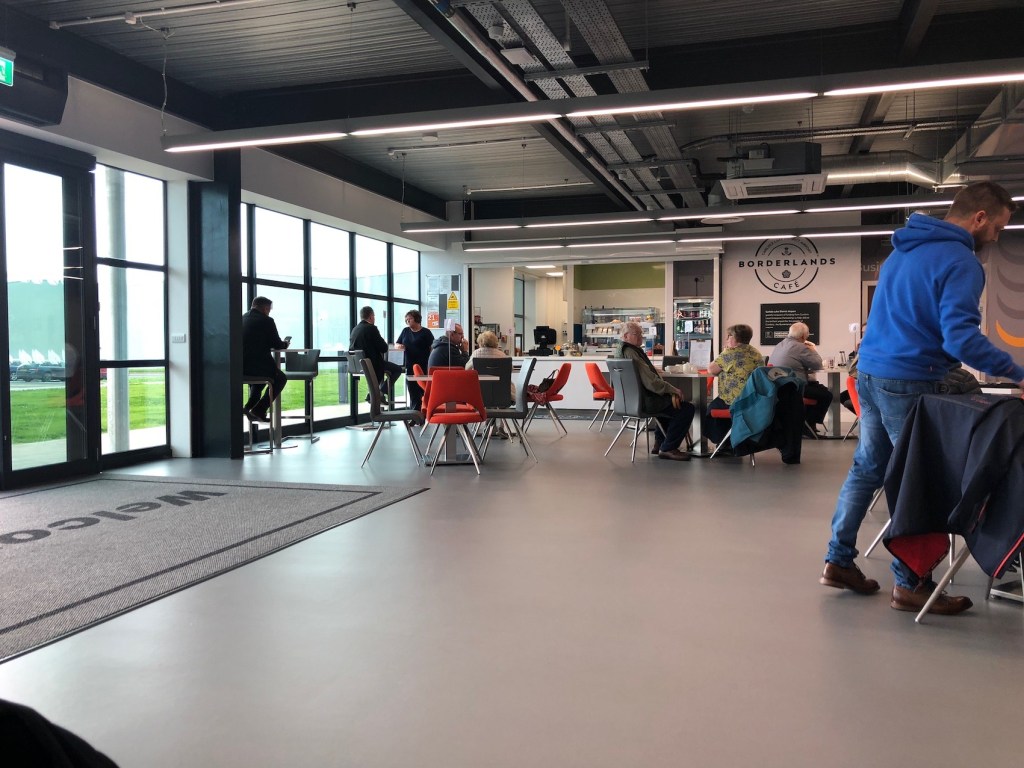
The main concourse consists mainly of Borderlands Cafe.

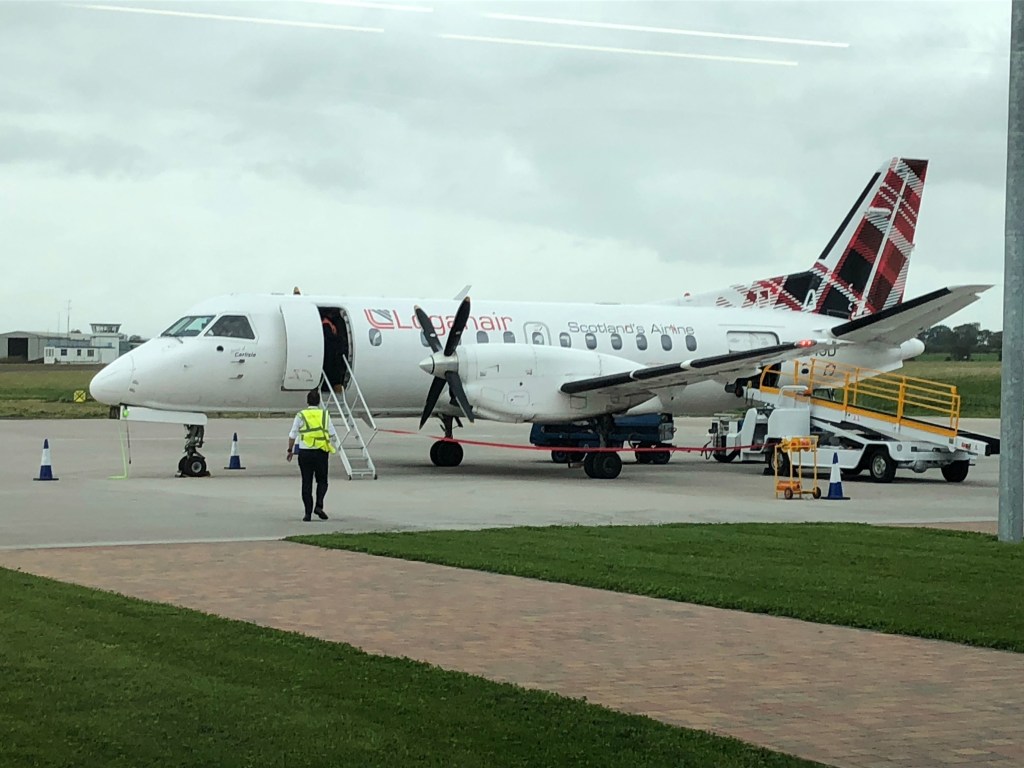
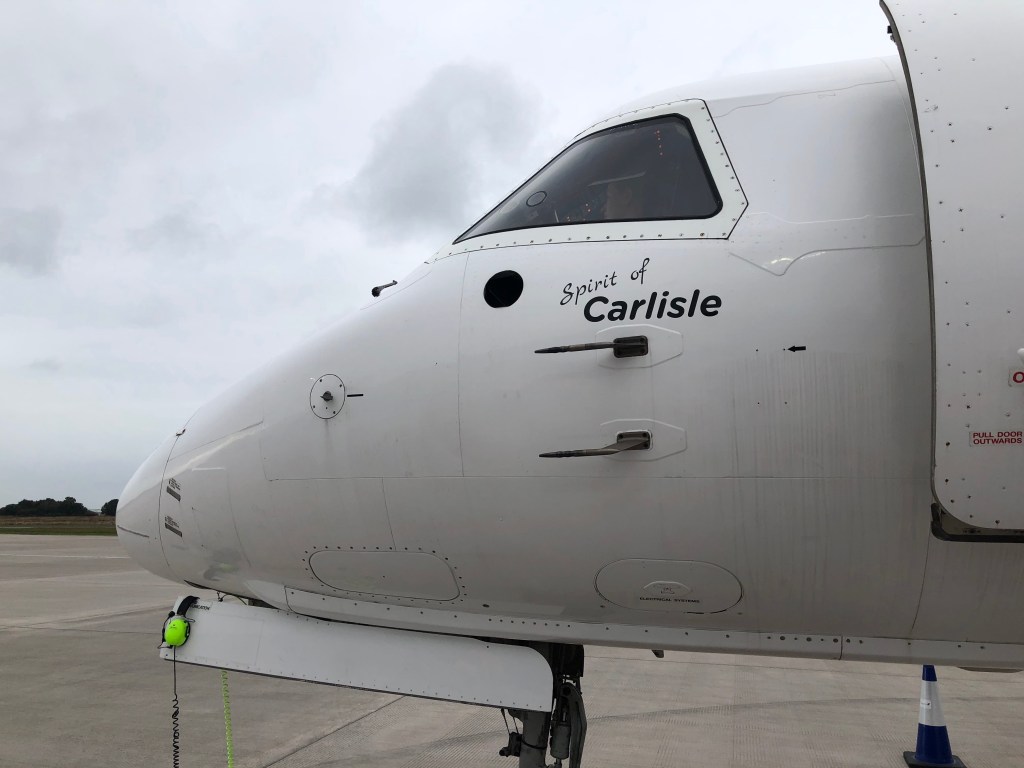
Those services are limited. There are only three destinations served, Dublin, Belfast and Southend. The timetable shows that each city is served once a day, initially on five days a week, now just four days: Monday, Thursday, Friday and Sunday. One aircraft is based at the airport to make these twelve weekly flights, a Saab 340 with 34 seats. If every seat was filled, which they won’t be, the airport would be handling little more than 21,000 passengers per year. Heathrow handles that in about three hours on average. A big operation it isn’t. The airline operating the flights is Loganair but the aircraft they use is in fact leased from an Estonian company called Nyxair who provide the flight crew. It is fully painted in Loganair colours and has been named Spirit of Carlisle for the duration of its service from the airport. Will the service last longer than the previous abortive attempts to operate flights from Carlisle? Time will tell. The backing of the Stobart Group will help of course. It is they who invested the money to upgrade the airport and build the new terminal so they will be keen to see some return from that investment. I suspect they will be hoping to attract a bit more business than twelve flights a week.

The thing is Carlisle isn’t really a great place for an airport. Newcastle Airport is an hour or so to the east, Manchester Airport a couple of hours to the south and both Glasgow and Edinburgh are a couple of hours to the north. Not exactly close but not too far away either. The town already has very good links with much of the rest of Britain. The M6 skirts the edge of town and the West Coast Mainline provides a fast and frequent rail connection with London. Carlisle is a reasonably sized town but, in my opinion at least, it is not quite big or remote enough to warrant an airport. In an attempt to broaden its appeal it was renamed Carlisle Lake District Airport but it’s hard to see a change of moniker having much effect. What do I know though? It could just be the start of something. Maybe some low cost airline will see a hole in the market that they could fill. Maybe Loganair will be pleasantly surprised and increase capacity on the routes they already serve. Or perhaps it will go the same way as all the previous attempts at linking Carlisle with the world by air. I hope not.

Spirit of Carlisle awaits its passengers.

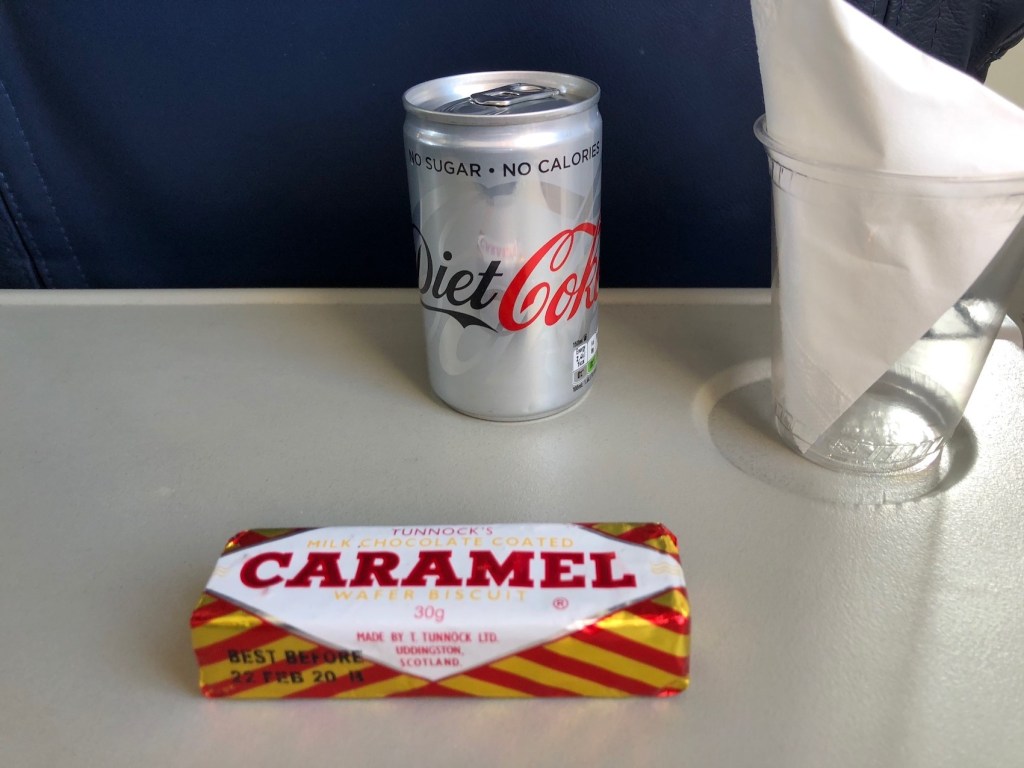
With all that in mind I thought it a good idea to sample Carlisle Lake District Airport whilst I could. I got the train down to Carlisle. There is a minibus shuttle service from Carlisle Station to the airport which was free but now costs £5. It links to the individual flights. I was the only person on it and in fifteen minutes it had dropped me off right outside the terminal building. The terminal was quite impressive for an airport with such a modest range of services, though it turned out much of the building was reserved for Stobart Group offices. Through the main doors lay the cafe/waiting area/check in/bag drop. It was light and airy and a pleasant place to wait though there were no views across the airport itself, not that there was anything much to see. I know it’s a bit geeky but when at an airport I do quite like to see some planes. This being lunchtime, the cafe was doing quite a brisk trade, not only with passengers but with meeters and greeters and Stobart Group employees. There was one check in desk staffed by a friendly airport employee. Eventually the aircraft arrived from Belfast and we were called for boarding. We passed through a door into a small security area where checks were completed as vigorously as they would be anywhere else. We emerged into the gate area with enough seats for a Saab 340 load of passengers to sit and wait. An old couple were given assistance to board before the rest of us were allowed to make our way across the apron to the aircraft. It turned out that the old gentleman was 87 years old and making his first ever flight. When this was announced to us he received a round of applause. There was one cabin crew member, locally recruited, who was tasked with looking after the twenty or so passengers on this flight down to Southend. We taxied out, took off, soon disappeared into cloud and that was my first and possibly last experience of Carlisle Lake District Airport. Just a quick word on the flight: flying Loganair is a bit like flying used to be twenty or more years ago. A hold bag is included in the fare, most likely due to the small size of their aircraft rather than an altruistic gesture on their behalf, and they provide inflight service at no extra cost. This is limited to a soft drink and a biscuit but was most welcome nevertheless. The airline is keen to emphasise its Scottishness despite this particular flight remaining wholly in England and flown by Estonians. Though flying in the Saab is not exactly a quiet experience and the cloud that covered much of the country rather spoiled the views, the flight was quite a pleasant one.

It maybe an Estonian owned aircraft on an English service but Loganair remain resolutely Scottish.
Complimentary Coke and a Tunnock’s Caramel Wafer. You don’t get that with Ryanair, or even British Airways.

Southend might seem an odd destination for any flight, not just a headline service from Carlisle. It is, however, very well connected to London with three trains an hour taking fifty minutes to deposit the weary traveller at Liverpool Street Station. This isn’t much longer than the connections to Luton and Stansted. The airport’s station is literally across the road from the terminal so there is limited faffing about before you are on your way to the capital. It also serves the large population of Essex and east London. It is frequently voted as London’s best airport and has attracted services from the big low cost carriers Easy Jet and Ryanair. Handily, it also connects with Glasgow. Flybe originally served that route but found it unsustainable on their 119 seat E195s so now Loganair operate the service with 50 seat E145s. It was one of these I’d booked on to get me back home. It did, on time and with another drink and Tunnocks biscuit served en route.

The Stobart Group have turned Southend Airport into a success, albeit a modest one when compared with its huge competitors dotted around the southeast of England. Will they turn Carlisle into a similar success or will it be a millstone round their neck, turning a large fortune into a small one on the way? Your guess is as good as mine.

Hope they remembered to remove the earphones…

Apollo 11

Buzz photographed by Neil On the Moon for Goodness Sake.

What is mankind’s greatest achievement? Democracy? The Declaration of Human rights? The ascent of Everest? The Steam Engine? Powered Flight? Prog Rock? Ok, it’s a subjective question that is impossible to answer but if we are talking about stretching the limits of human ability there is, as far as I’m concerned, one event that ranks above all others: putting a man on the moon. A year ago I wrote a blog about the first of the twelve men who have walked on the surface of our closest celestial neighbour. Neil Armstrong was a hero of my seven year old self and has remained so ever since, partially due to the enormity of what he did but mainly due to the fact we shared a first name. Come on, I was only seven at the time. This summer saw the fiftieth anniversary of that first mission to the surface of the moon. It certainly received some publicity and a few television programmes were aired in the run up to the actual day but not nearly as much as an event as huge as that deserved. There was, however, a movie released called Apollo 11, the mission name of that first moon landing. I didn’t get a chance to see it at the time. I put it right the other day thanks to the Silver Cinema screening at Kilmarnock Odeon.

The film was a documentary of that first moonshot. It consisted of archive material recorded throughout the mission, some of it familiar but much of it less so. There was no narration added – the voices you heard were those transmitted at the time. A minimal amount of graphics were added for clarity but the story was allowed to tell itself through the words and actions of those who were there. Even the score was composed using the musical instruments available at the time in a deliberate attempt to transport the viewer back to 1969. The result was excellent. There was no need to put a 21st century slant on a 20th century achievement. The story commenced with the Saturn V rocket being transported to the launch pad and ended with Armstrong, Aldrin and Collins waving to the crowds during ticker-tape parades. There is plenty of archive material available to see on the internet of course but it was so much more impressive on the big screen. The docking of the Command Module with the LEM (Lunar Module) was shown in split screen with footage from each vehicle. Aldrin’s descent down the ladder to the lunar surface as filmed by Armstrong was one of my favourite bits – I don’t think I’ve seen that before. The moon is a desolate place; the bigger the picture the more desolate it seems. It was ninety minutes well spent.

The fiftieth anniversary inevitably leads to a few questions. If it was such a monumental achievement why has no one gone back since the final Apollo mission in 1972? It is quite an easy question to answer. Money. It cost an eye wateringly huge amount of cash to get those astronauts to the moon. So much in fact that three further missions were cancelled to save the USA some cash. To go back now would cost even more. Technology is more advanced now but it all costs and the physical effort in getting a useful payload out of Earth’s gravitational sphere of influence is no less expensive no matter how much the tech has advanced. The moon itself offers little in the way of return on that huge investment, at least at the moment. If it had been found to be full of useful minerals with actual value such as uranium or cream cheese we may well have had moon bases by now. With that in mind, should we have gone in the first place? Hell, yes. I know it was a country’s vanity project whose president, John F Kennedy, was desperate to get there before those pesky commies, but pushing the boundaries of exploration has been a human trait since humans evolved. That they managed it within a few short years is astonishing, no matter how much money they threw at it. Yes, the lives of White, Chaffey and Grissom were sacrificed on the way but no one said it would be without risk. “We choose to go to the moon and do the other things, not because they are easy but because they are hard” said Kennedy back in 1963. I’ve often wondered what the other things were.

Of course there are those who think it was all a hoax. We couldn’t possibly put a man on the moon in such a short amount of time with in an era when the calculations were done by slide rule. This despite the huge amount of evidence to the contrary and the claims of the conspiracy theorists debunked with the greatest of ease. Wankers.

It matters not that there’s nothing much there. It matters not that it was a vanity project. Neither does it matter that it was at huge expense and outrageous risk. As for the fact some people doubt it happened, that matters least of all. Fifty years ago we went to the moon. It remains mankind’s greatest achievement.

The Greatest Story Ever Told?

One Year On

A year ago…

September 17th 2018 saw me perform my last act as an Air Traffic Controller and enter the world of retirement. A year on seems like a good time to take stock of what is a big, life changing event for anyone who gets to that stage in life. I entered retirement with no grand ideas of what I would be doing to fill my time. I had the vague notion that I would like to see a bit of the world, indulge my inner avgeek, enjoy some cricket and maybe go to a gig or two. In other words, just do things I enjoy as much as is practical. Since then I’ve visited Ukraine, the Yorkshire Dales, Texas, New Orleans, Czechia, Antigua, Canada twice, Isle of Man, London and the home counties, the West Midlands, the West Country, Lincolnshire and Manchester. I’ve flown on obscure Soviet aircraft, numerous seaplanes, enjoyed Business Class service on three different airlines and even had a ground ride in a Lancaster bomber. I’ve ridden on steam trains, classic diesels and even trains so bad they were good. I attended two complete Test Matches and watched Ice Hockey in three different countries. I ran a Half Marathon having spent much of the winter preparing for it. I even went to Campbeltown for the day, just for the hell of it. And yes, I got to half a dozen Prog Rock gigs. Amongst all that lot I had time to fit in an operation on my finger. I’ve enjoyed it all (apart from the finger surgery), even when the cricket results didn’t go our way. Looking back, it seems I have fit quite a bit into one year of retirement. The best bits, however, were the times I got to spend with Elaine. She spent much of the first seven months of the year attempting to complete the 1000 mile challenge. I accompanied her on many of her walks, both around Troon and further afield. As she is still working most of my jaunts around the world have been without her. Whilst I wouldn’t miss them, I always look forward to coming home.

Clandestine Highlight of the Year

Whilst I’ve undoubtedly been busy, I can’t say there haven’t been any dull days. Life’s routines don’t stop when you finish work. You still have to visit Tesco, make the tea, empty the dishwasher, vac the floor and so on. I’m not the most practical of chaps so I’m not the sort to dive headlong into DIY projects and I’d rather sit and look at a blank wall than take up the classic retiree pastime of gardening. Thankfully Elaine is a keen gardener and we have a nice garden without any input from me. It’s a bit hypocritical I know but me and shovels are uneasy bedfellows. Consequently, there’s been times when I haven’t much to do. It doesn’t yet worry me though. One of the reasons for starting this blog was to fill time and I’ve become quite the fan of You Tube which, amongst all the dross, has a few channels of really good content.

Avgeek Highlight of the Year

So what have I learned from this past twelve months? Fist and foremost, I’ve realised that I don’t miss work. Not one iota. By and large I enjoyed the job and it certainly provided me with plenty of mental stimulation but the thought of going back to it, if that was possible, is not one I have had since leaving. Do I miss the company of my former colleagues? Yes, but it is not as if we have lost touch. Those whom I consider to be good friends I see from time to time, I stay in contact with others through social media which, for all its perceived downsides, is a great way of keeping in touch. I certainly don’t miss the early alarm calls or the night shifts one bit. Would I recommend retirement to those lucky enough to be able to consider it? Yes, of course, with the caveat that everyone is different and the decision is a personal one. There are people who retire and regret it as their life suddenly lacks focus. I’m not one of those people.

What of the next twelve months? More of the same I think though not, perhaps, to the same extent. I was guilty of doing a bit too much last autumn in my haste to hit the retirement ground running, but certainly I hope to visit more interesting places and enjoy events, be they sporting, musical or aviation. I may look for a Half Marathon to do next year as there is nothing like an impending race to get you back out on the road. As for the immediate future, I’ve got a couple of things in the pipeline for October and November. I don’t think they will be the last.

Personal Highlight of the Year

Silver Screen

Your Silver Screen Production for Thursday is…

I’ve been retired a year now. Whilst I’ve no desire to return to paid employment I can’t really say that I feel like a retired person. It’s more like I’ve been on a long holiday and I’m still as young as I was, well, a year ago. Not young then but not old. However, occasionally you do something that reminds you of your advancing years and impending dotage. I, along with Elaine who isn’t even retired yet, went to the cinema. Nothing particularly old about that I hear you cry. Well no. But not many young people go along to a special afternoon screening for the older movie goer at Kilmarnock Odeon called the Silver Screen. Last week they decided to show Rocketman, the musical biopic of Elton John. Elaine and I had not seen this when it was first released and decided that a wet Thursday afternoon was a good time put that right. We reserved our tickets using that new fangled internet thing and jumped in the Volvo (we don’t actually have a Volvo, we are not that old just yet). We were somewhat surprised to find the car park was fairly busy (with Volvos) – perhaps the Silver Screen was a bit more popular than we had anticipated.

We collected our tickets from the machine and immediately headed for Costa Coffee which seemed to be where the Silver Screenies were congregating. Note to selves – get there a bit earlier next time as by the time we reached the front of the queue everyone was getting up and heading for Screen Two. On the way we were collared by a tombola seller raising funds for the local hospice. He obviously knew his market and was doing a decent trade. I won a tub of sweeties. In the cinema it was free seating and older folk have had a lifetime of learning how to elbow other folk out of the way in their quest for their favourite seats. It was filling up rather quickly but we found a couple of seats without much disapproval from the Silver Screeneies whose walking sticks we tripped over as we passed along the row. The clientele was, shall we say, mature. The light from the projector that was showing the adverts reflected off a number of grey mops of hair (including mine most likely) as folk entered the room and took their seats. Silver Screen is an apt name for this weekly event. I don’t remember the adverts being particularly tailored for this audience. I’m sure one of them was for McDonalds and I don’t think that esteemed organisation has yet gone down the road of Happy Meals for senior citizens. Maybe they should. Moderately Content Meals perhaps? The trailers too seemed aimed at a more general audience though I detected a sense of anticipation when the Downton Abbey trailer was played. Soon it was time for the main event.

Never mind the trailers though, I wasn’t convinced Rocketman would be suitable for an elderly audience. It contained a lot of bad language, quite a bit of drug misuse and, not to put too fine a point on it, a significant amount of gay rumpy-pumpy. Do old people approve of that sort of thing? I was half expecting a round of tutting and well I nevers but to their credit the oldies remained stoic and any disapproving utterances were kept to a level that was drowned out by the sound of classic Elton John tunes. Then again, the Silver Screenies were not that much older than me. Elton himself if 72, round about the apparent age of your average the Silver Screenie. Whilst none there present are likely to have lived the life of excess that Elton did, they are hardly likely to be ignorant of such matters. They could also have been big fans of the music. I guess I think seventy somethings should all be like my Grandad who liked Nana Mouskouri, but he’s been dead for forty years; today’s grandads are much more likely to be into Elton than the bespectacled Greek chanteuse. The movie going experience was much the same as any normal trip to the cinema: people chatting during the quiet bits, sweet wrappers crinkling annoyingly and even someone using their smartphone to conduct a Whats App conversation and take a photo of the action. The fact they left the flash on perhaps said something about their age though.

So what did I think of the film? I liked it. Not as much as Bohemian Rhapsody, the biopic of Queen and Freddy Mercury of last year, but it was a good, well produced movie. I’m not going to do a full review of it other than to say I really hope my kids feel better about me than Elton obviously does of his parents. As for the Silver Screen, will we be back? Assuming they are showing a film we want to see and are at a bit of a loose end on a Thursday afternoon then hell yes. Tickets are only three quid each and we oldies love a bargain.

The Silver Screenies Prepare for Sex and Drugs and Rock and Roll with a Tub of Jelly Beans.